Culture Culture 4 min read

Hollywood wars

Frank Sinatra had a rival: 10 celebrity feuds you won't believe
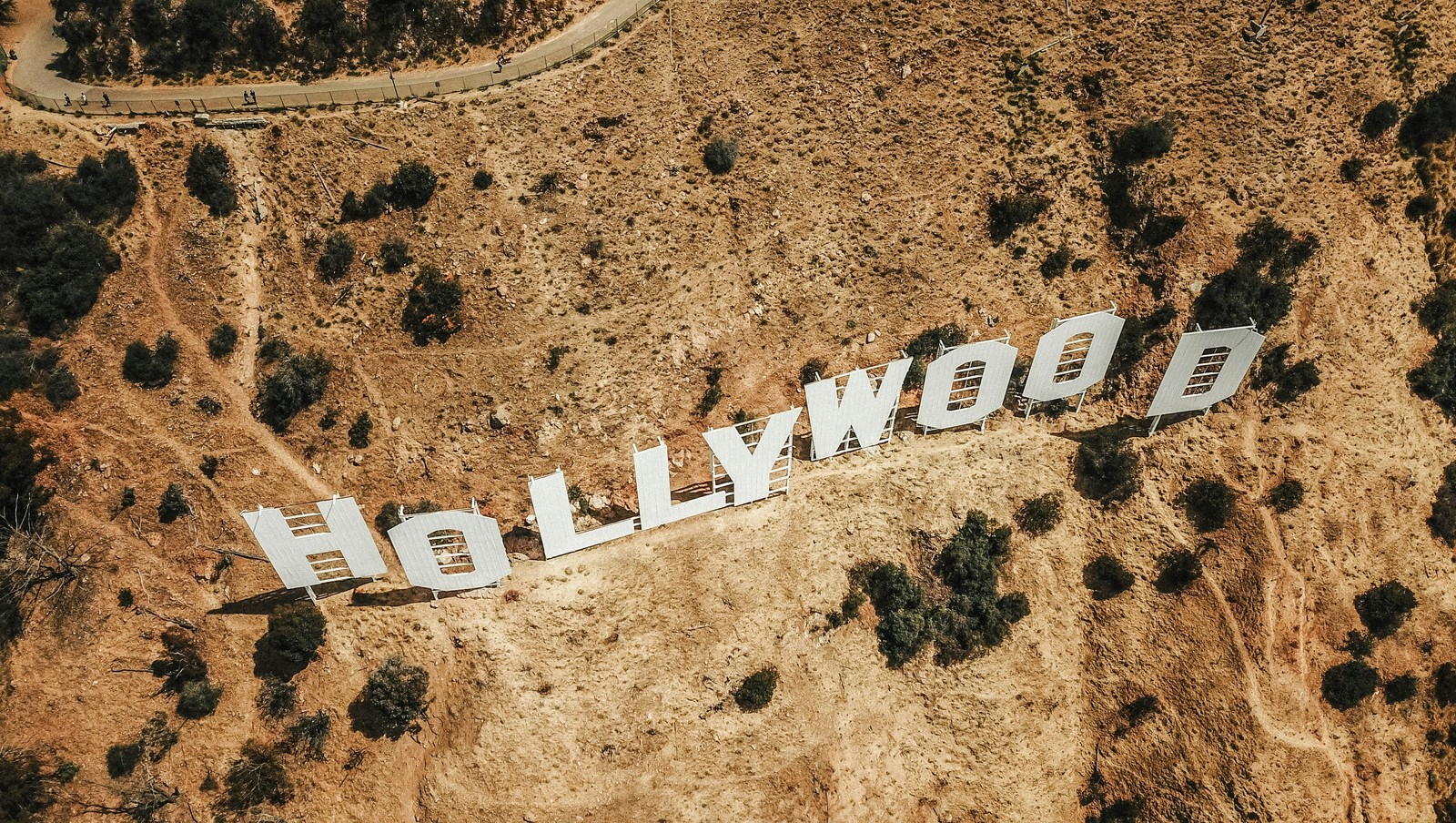
Image: Justin Aikin

It happens to everyone: you get along better with some people than with others. Among celebrities, it’s no different: clashing egos, feuds, and rivalries are far from uncommon. From endless disputes over trivial matters to major betrayals and public fights, today we’re going to look back at 10 celebrity rivalries that made headlines. If you think celebrity feuds can’t surprise you anymore, think again.

1
Marlon Brando vs. Frank Sinatra
Image: Dushawn Jovic

Frank Sinatra and Marlon Brando are names that hardly go unnoticed anywhere in the world. These stars of music and cinema crossed paths during the filming of Guys and Dolls in 1955, and it didn’t take long for a clash of egos. Brando’s method-acting style often conflicted with Sinatra’s more traditional approach, while Sinatra saw Brando’s performance as pure pretension. Their very different ways of thinking and working led to a long-standing animosity that lasted for years and, according to some sources, included everything from insults to threats.

2
Betty White vs. Bea Arthur
Image: Joshua Hoehne

It’s hard to believe that these two women, who played best friends on The Golden Girls (1985-1992), couldn’t stand each other in real life. Apparently, Bea Arthur, who was more reserved, was often irritated by Betty White’s cheerful, outgoing humor. According to people who worked on the set, the two actresses didn’t get along at all, but they remained totally professional, and we have to admit that, on this side of the screen, you’d never know it.

3
Joan Crawford vs. Bette Davis
Image: philippe collard

Joan Crawford and Bette Davis were divas of Hollywood’s Golden Age, both highly successful and Oscar winners. Ironically, it was their similarities that led to one of the most famous feuds in the industry, as professional competition slowly turned into personal resentment. In 1962, they finally worked together on What Ever Happened to Baby Jane? , and according to reports, fights, insults, pranks, and even acts of sabotage were constant throughout filming.

4
Debbie Reynolds vs. Elizabeth Taylor
Image: Satria Aditya

Love triangles don’t exist only in fiction. And that’s what happened between Debbie Reynolds and Elizabeth Taylor. The two were close friends before Elizabeth had an affair with Debbie’s husband, singer Eddie Fisher. The scandal ended Reynolds’ marriage in the late 1950s and dominated headlines and magazine covers.

Surprisingly, it didn’t end there. Years later, Reynolds reached out, and the two actresses reconciled. Their bond was sealed when they worked together on These Old Broads (2001), a comedy written by Carrie Fisher, one of the daughters Reynolds had with Eddie Fisher.

5
Johnny Carson vs. Joan Rivers

Image: Ioann-Mark Kuznietsov

American late-night television wouldn’t be the same without Johnny Carson and Joan Rivers. Carson was the king of TV, hosting The Tonight Show for 30 years, while Rivers was a frequent guest host. Their friendship ended when Rivers accepted her own competing show on Fox. Carson reportedly never forgave her and banned her from The Tonight Show for the rest of his life.

6
Sylvester Stallone vs. Arnold Schwarzenegger
Image: Nemesia Production

Sylvester Stallone and Arnold Schwarzenegger are undeniable icons of action cinema, which boomed in the 1980s and 1990s. But the battles weren’t just on screen; they spilled into real life. The two actors developed a long-running rivalry fueled by intense professional competition to be seen as the ultimate action star and land the biggest roles. They often criticized each other on TV and clashed at public events, but over the years, tensions eased, and these rivals eventually became close friends.

7
Madonna vs. Elton John
Image: Jason Leung

The music world is not immune to feuds. In fact, one of the most famous rivalries unfolded in pop music between two giants of the genre: Madonna and Elton John. The fight began in the early 2000s, when Elton publicly criticized the Queen of Pop, accusing her of lip-syncing. Although the tension lasted for years, there is good news: in 2025, the British singer apologized to Madonna, and the two reconciled, announcing it in a post on her Instagram.

8
Richard Gere vs. Sylvester Stallone
Image: Markus Spiske

The Terminator wasn’t Stallone’s only rival. The star of Rocky also had a major feud with Richard Gere that nearly turned into a real fistfight. Tension began while filming The Lords of Flatbush (1974), when Stallone reportedly felt Gere was showing off in his role and openly criticized him. Things boiled over during a lunch break in a car, when Gere splashed mustard on Stallone, who reacted by elbowing him and throwing him out of the vehicle. The incident ultimately led to Gere being let go from the film.

9
Magic Johnson vs. Larry Bird
Image: Markus Spiske

Two NBA superstars collided in the 1980s. We’re talking about Magic Johnson and Larry Bird, who had different playing styles and approaches to the game and were constantly compared by the press and the public. This intense on-court rivalry eventually jumped off the court, creating real personal tension between them. Over time, however, both stars lowered their guard, grew closer, and ultimately formed a strong friendship.

10
Sarah Jessica Parker vs. Kim Cattrall
Image: Kit Suman

Although Carrie and Samantha were best friends on Sex and the City , the actresses behind them didn’t share that bond in real life. The rivalry reportedly began during filming, as they never got along. Kim Cattrall openly criticized the pay gap between Sarah Jessica Parker and the rest of the cast, and these professional tensions gradually turned personal. Cattrall later stated, "We were never friends," and after the series ended, their relationship did not improve.
History History 7 min read

Like you've never seen it before

Why did Lincoln keep a Confederate bill? 10 shocking Civil War facts

Image: Schriever, James B., photographer, Public domain, via Wikimedia Commons

The Civil War is one of the most studied chapters in American history. We've learned about its battles, generals, and figures in school, books, movies, and documentaries. But beyond the famous stories lies a fascinating world of little-known facts that changed the country forever. From the nation's first official paper money to the surprising origins of everyday conveniences, here are 10 incredible Civil War stories that will make you see this defining chapter of American history in a whole new way.

1
The Wilmer McLean paradox

Image: Civil War Glass Negatives, Public domain, via Wikimedia Commons

Do you believe in fate? If not, maybe this story will change your mind.

When the Civil War began, Wilmer McLean was an ordinary 47-year-old man living with his family in Manassas, Virginia. But during the First Battle of Bull Run on July 21, 1861, his house was taken over and used as Confederate headquarters. Hoping to escape the war, McLean moved his family 120 miles away to the quiet village of Appomattox Court House. It seemed like the perfect decision, until history caught up with him. Four years later, the war ended exactly where McLean thought he had found peace. On April 9, 1865, General Robert E. Lee surrendered to Ulysses S. Grant, just in the parlor of McLean's new home. As McLean later joked, "The war began in my front yard and ended in my front parlor."

2
Lincoln's Confederate bill

Image: Carol M. Highsmith, Public domain, via Wikimedia Commons

On April 14, 1865, just five days after Confederate General Robert E. Lee surrendered to Union General Ulysses S. Grant, President Abraham Lincoln was shot by actor and Confederate sympathizer John Wilkes Booth during a performance of Our American Cousin at Ford's Theatre in Washington, D.C.

When authorities searched Lincoln's pockets that night, they found the everyday items you'd expect: spectacles, a pocketknife, a handkerchief embroidered with his initials, a watch fob, a sleeve button, and a leather wallet. But one discovery stunned them. Inside the wallet was a Confederate five-dollar bill, the only currency Lincoln was carrying. Historians believe he picked it up as a souvenir during his recent visit to Richmond, the former Confederate capital.

3
Women disguised themselves to fight

Image: Sarah Emma Evelyn Edmonds, Public domain, via Wikimedia Commons

It's well known that women played a vital role in the US Civil War, serving as nurses, spies, and organizers. Clara Barton, a famous example, brought supplies to wounded soldiers on the battlefield and later founded the American Red Cross. But there's another interesting female role that many people have never heard of.

We’re talking about the thousands of women who disguised themselves as men so they could fight. One of the best-documented was Sarah Emma Edmonds, who enlisted in the Union Army under the name Franklin Thompson. Serving as a soldier, nurse, and spy, she fought in major campaigns, including the First Battle of Bull Run and the Peninsular Campaign. After contracting malaria in 1863, she left her unit rather than risk being exposed in a military hospital and was charged with desertion. Years later, her fellow soldiers testified on her behalf, and in 1884, Congress granted her an honorable discharge and a military pension.

4
Brothers on opposite sides

Image: Mathew Benjamin Brady, Public domain, via Wikimedia Commons

The Civil War didn't just divide the nation; it tore families apart. Few stories capture that tragedy better than this one.

The sons of prominent Kentucky Senator and passionate Unionist John J. Crittenden, brothers Thomas Leonidas Crittenden and George Bibb Crittenden, both became generals… but fought on opposite sides of the war. George served as a Confederate major general, commanding troops at the Battle of Mill Springs, while Thomas became a Union major general, fighting in major campaigns including Shiloh, Stones River, and Chickamauga. While they never directly faced each other on the battlefield, their choices caused immense emotional and social fractures within their family. Both survived the war, and today, they are buried in the same Frankfort State Cemetery, finally reunited in the soil of their home state.

5
Standardized clothing sizes

Image: Valentin Ivantsov

When was the last time you had a suit or dress made just for you? Today, we simply walk into a store and buy the size that fits, but before the Civil War, that wasn't how Americans bought clothes.

Before the 1860s, most clothing was custom-made by tailors or sewn at home. But that became a major problem when the war began, and the Union suddenly had to outfit more than a million soldiers. Measuring and tailoring every uniform by hand was impossible. Instead, military officials collected thousands of body measurements, identified common size patterns, and created one of the first standardized sizing systems: Small, Medium, and Large. After the war, clothing manufacturers adopted the same templates for civilian garments, helping give birth to America's modern ready-to-wear clothing industry.

6
Postal home delivery system

Image: Wolfgang Vrede

Today, having letters and packages delivered right to your front door is so routine that we rarely stop to think about it. But for many years of American history, that convenience didn't exist.

Before the Civil War, Americans had to pick up their mail at the local post office. When the war began, families desperate for news of sons, husbands, and fathers crowded into post offices, often waiting for hours. Seeing the heartbreaking scenes, Cleveland postal clerk Joseph Briggs began delivering letters directly to people's homes, sparing families long waits and needless anguish. His neighborhood deliveries were such a success that they inspired Postmaster General Montgomery Blair and Congress to create the nationwide Free City Delivery Service on July 1, 1863.

7
The US first official paper money

Image: National Museum of American History, Public domain, via Wikimedia Commons

Today, most of our money exists in a digital form. However, when we picture money, we still think of dollar bills and coins. They've been part of our lives for so long that it's hard to imagine a time when the US government didn't print paper money at all. But that time did exist.

Before the Civil War , the federal government issued no standardized national paper currency. It minted gold, silver, and copper coins, while Americans relied on thousands of different banknotes printed by private, state-chartered banks, many of them unreliable and prone to failure. Everything changed in 1861 , when the Union needed money to finance the war. Congress authorized the first federal paper currency, known as Demand Notes, followed by Legal Tender Notes in 1862. Americans soon nicknamed them "greenbacks" because of their green ink, a name that has survived ever since.

8
A town changing hands 10 times

Today, US Route 50 follows much of the old Northwestern Turnpike, a historic road linking Winchester, Virginia, with Parkersburg on the Ohio River. But during the Civil War, living along that route was anything but convenient.

Because the turnpike provided access to the Shenandoah Valley, the Baltimore & Ohio Railroad, and key mountain passes, the town of Romney (now in West Virginia) became a strategic prize for both the Union and the Confederacy. As armies pushed forward and fell back, each side repeatedly captured and abandoned the town. While most cities and regions remained firmly on the same side for the entire war, historians generally agree that Romney changed hands at least 10 times, making it one of the most frequently occupied towns of the Civil War.

9
The war with the most Medals of Honor

Image: Alexeinikolayevichromanov, CC BY-SA 4.0, via Wikimedia Commons

The Medal of Honor is the nation's highest military award for valor. During the Civil War, about 1,525 service members received it. That may not sound extraordinary… until you compare it with every major American war that followed.

The numbers are striking: 126 Medals of Honor were awarded in World War I, 464 in World War II, and 266 during the Vietnam War. A total of 856 combined, far fewer than in the Civil War alone. But there’s a reason for that. The Medal of Honor was created during the Civil War; at the time, it was the only US military decoration for valor. With no other awards recognizing battlefield heroism, it was presented under standards that were far broader than those adopted in later wars.

10
Can openers

Image: OlegD

It's hard to imagine a kitchen without a can opener. But surprisingly, canned food existed for decades before anyone invented it.

Although canned food had been around since the early 1800s, people often had to open cans with a hammer and chisel. That finally changed when American inventor Ezra J. Warner patented the first practical can opener in 1858. Even then, it remained a curiosity until the Civil War, when the huge demand for canned rations, including Gail Borden's condensed milk for Union troops, made it indispensable. The war turned the can opener from a strange invention into an everyday tool, paving the way for the handheld versions we still use today.

Geography Geography 3 min read

Which is your favorite season?

Beyond Vermont: Discover 12 amazing places to watch the fall foliage

Image: Pixabay

Everybody knows that Vermont is a popular destination for watching the leaves change color in the fall. However, as locals know, there are many other places in our gorgeous country where one can marvel at the rainbow created by nature during the autumn months. Did you know about these 12?

1
McKenzie River Scenic Byway, Oregon

Image: Atanas Malamov

Oregon is famous for its stunning landscapes, and autumn months are no exception. The McKenzie River Scenic Byway stretches from the vineyards of the Willamette Valley to the forests of the Cascade Mountains .

The best time of the year to visit if you want to enjoy the vibrant colors is mid-to-late October.

2
Charlottesville, Virginia

Image: Mitchell Kmetz

The endless forests and rolling hills of Virginia, especially in the foothills of the Blue Ridge Mountains, create breathtaking landscapes painted in red, orange, yellow, and green during October and November.

3
French Lick West Baden, Indiana

Image: Adam Bouse

Nestled in the hills of Hoosier National Forest, French Lick West Baden is a resort town that showcases some amazing views when it comes to fall foliage . The best time to visit is from mid-October to early November.

4
Mississippi River Valley, Minnesota

Image: Josh Hild

The Mississippi River Valley in southern Minnesota is home to vibrant forests, steep hillsides, and picturesque river towns , waiting to be explored by those eager to make the trip.

The best time to see the foliage change is from late September to mid-October.

5
Breckenridge, Colorado

Image: Thomas Morse

Breckenridge, Colorado, bursts into vivid colors every late September, with the changing leaves of the aspen trees creating a gold, red, and orange rainbow in the heart of the Rocky Mountains.

6
Northwoods, Wisconsin

Image: Dave Hoefler

Thousands of lakes and vast forests that stretch across five counties can be found in the Northwoods of Wisconsin. From mid-September to early October, visitors are treated to some of the best foliage in the region, with vibrant shades of orange, red, yellow, and purple.

7
Highlands, North Carolina

Image: Wes Hicks

Imagine a lush rainforest with waterfalls, rivers, and lakes to explore, combined with the typical colors of the leaf change season. Such a place exists in North Carolina. The mountain town of Highlands, perched at over 4,100 feet on the Highlands Plateau in Nantahala National Forest, offers breathtaking fall foliage, with the best viewing time in mid-October.

8
Whidbey Island, Washington

Image: Toan Chu

Washington’s ultimate road trip, the Cascade Loop, winds along the Puget Sound via the Whidbey Island Scenic Byway . Peak fall colors along this drive commonly occur between late September and mid-October showcasing brilliant shades of gold, orange, and red.

9
Tunnel of Trees, Michigan

Image: AJ Yorio

A place known as the Tunnel of Trees will hardly disappoint visitors who come during the foliage change season. This 20-mile scenic route follows the historic Michigan 119 highway between Harbor Springs and Cross Village . The canopy of gold, orange, yellow, and purple leaves is typically on display from late September to mid-October.

10
North Lake Tahoe, California & Nevada

Image: Ben Carless

The stunning Lake Tahoe is framed by the peaks of the Sierra Nevada range on its north shore. Its hundreds of hiking trails wind through diverse tree species that display vivid red, orange, and yellow foliage from mid-September to late October.

11
The Ozarks, Arkansas

Image: Derek Livingston

The Ozark Mountains are most famous for their neighboring lake of the same name, but the amazing autumn colors are a spectacle that deserves all the attention during October. The palette of bright golds, reds, and oranges is especially stunning in the Buffalo National River area near the small town of Ponca.

12
Anchorage to Kenai drive, Alaska

Image: Derek Livingston

Alaska is nothing short of breathtaking, and fall is no exception. Its vast landscapes come alive with vibrant shades of red, purple, yellow, and orange from late August through September.

One of the best ways to experience the season is on the 160-mile drive along the Seward and Sterling highways from Anchorage to Kenai, following two National Scenic Byways.

Explore more American facts

Choose your favorite category!

General
General

As American as apple pie—the very best America has to offer!

Culture
Culture

Delve into the astounding richness of American lore.

Geography
Geography

Hop in and explore vast and diverse American landscapes.

History
History

Discover the key moments that shaped the United States.