History History 4 min read

What’s in a name?

Would you have used "BackRub" daily? The original names of popular brands
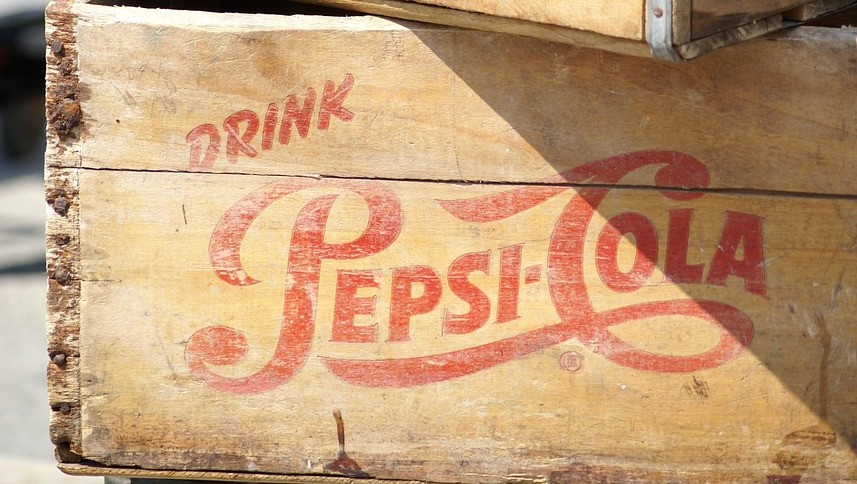
Image: Iulia Buta

Which name do you like better for the world’s biggest search engine: Google or BackRub? Believe it or not, a lot of people were supporting the latter at some point. It’s hard to imagine a world where "BackRubbing" information is a daily habit! Here, we go over the original names of very famous brands and explore why they didn't stick. Do you wish any of them had been used?

1
BackRub
Image: Deepanker Verma

Before it became the verb we all use today, Google was known as BackRub. The name referred to the search engine’s ability to analyze backlinks (links from one webpage to another) as a way to rank search results.

But it sounded more like a massage parlor than a tech startup. In 1997, they wisely rebranded to Google, a twist on "googol," the term for the number 1 followed by 100 zeros.

2
Brad’s Drink
Image: NIKHIL

It was going to carry around the nickname of its creator forever. Caleb Bradham was a pharmacist in New Bern, North Carolina. He invented a drink back in 1893 as a refreshing, energizing tonic for digestion, which included pepsin , a digestive enzyme.

A few years later, Brad decided on a more marketable name than his own : Pepsi-Cola.

3
Taco-Tia
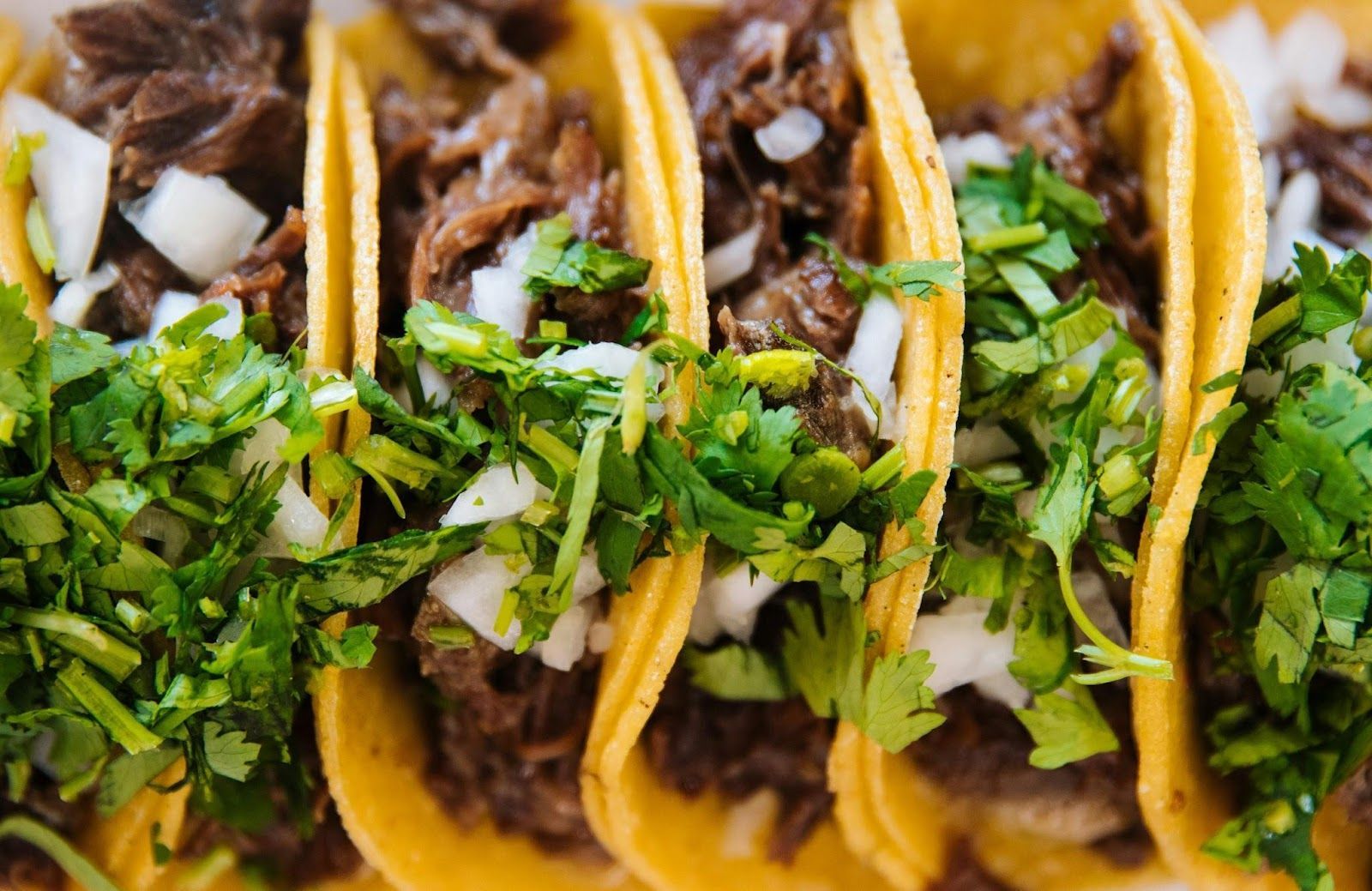
Image: Jeswin Thomas

Glen Bell owned Bell’s Drive-In, a stand selling hot dogs, when he noticed long lines outside a Mexican restaurant. He decided he needed to learn how to make tacos.

Over a few years, he refined his concept and opened a new chain selling Mexican food, which received several names over time, including Taco-Tia. Eventually, he landed on Taco Bell. It was conveniently Americanized , easy for mainstream customers to remember and pronounce, and suggested a memorable logo.

4
Sound of Music
Image: Josip Ivankovic

At first, this mega-electronics retailer was all about stereos. Founded in the 60s, Sound of Music specialized in home audio equipment. But after a tornado wrecked their main store in the 80s, they ran a massive clearance sale and told people they would get their "best buy" there.

By the end of the day, they had pretty much sold out. The sale was such a hit that, in 1983, they decided to rebrand entirely as "Best Buy".

5
Tote’m Stores
Image: Piccinng

Once upon a time, you didn’t pop into a 7-Eleven—you got your goods home from Tote’m Stores. The chain got its original name because customers "toted" their purchases.

In 1946, to highlight their revolutionary new hours (7 a.m. to 11 p.m.—wild for the time), they wisely rebranded as "7-Eleven."

6
Blue Ribbon Sports

Image: NEXT Distro

If it had been called "Blue Ribbon Sports," there would probably not be a swoosh . This company began as a distributor for Japan’s Onitsuka Tiger running shoes.

But in the 70s, as they launched their own footwear line, they realized they needed a brand with more bite. They chose "Nike," after the Greek goddess of victory. The swoosh logo was designed that same year for just $35.

7
AuctionWeb
Image: appshunter.io

The original name was straightforward, but also boring. eBay's original incarnation was AuctionWeb, launched in 1995 by Pierre Omidyar as a side project under his larger personal domain, eBay.com (which stood for his consulting firm Echo Bay Technology Group ). When he found that the domain echobay.com was already taken by a mining company, he settled on ebay.com. Later, as the online auction section became wildly successful, Omidyar dropped AuctionWeb entirely and adopted eBay as the company name.

8
Pequod
Image: Gema Saputera

The founders of this coffee shop were inspired by Herman Melville’s Moby-Dick. They wanted the quality of the coffee to be connected with seafaring and adventure . So, their first choice was "Pequod," the name of Captain Ahab’s doomed whaling ship.

That name didn’t have enough of a punch, however, so they decided to go for a wink at another character in the same book, with a much more marketable sound: Starbucks.

9
Pete’s Super Submarines

Image: Mustafa Fatemi

It was the 60s when 17-year-old Fred DeLuca opened a sandwich shop in Connecticut with financial help from a family friend: Dr. Peter Buck. In his honor, DeLuca named it "Pete’s Super Submarines."

The business grew, however, and the name was a bit of a mouthful. They needed a name that was shorter, catchier, and easier to advertise on the radio. They rebranded as "Subway," winking both at their food (subs) and the fast, urban lifestyle they hoped to serve.

10
Cadabra

Image: ANIRUDH

Too spooky, right? Amazon nearly had a name that conjured magic tricks. In 1994, Jeff Bezos registered the name "Cadabra," short for abracadabra . That lasted until someone pointed out how much like "cadaver" the name sounded.

Bezos then considered "Amazon," the name of the immense river. Not only did it suggest something vast, exotic, and full of potential, but it also placed the brand at the top of alphabetical listings —an old-school SEO move.
General General 4 min read

Not all fun and games

Who were the least-liked presidents in the history of the US?

Image: Sora Shimazaki

Becoming President of the United States is a tremendous honor, but it's not always a bed of roses. For one reason or another, quite a few who made it to the Oval Office weren't exactly well-liked or left office with reputations that are, at best, debatable. Historians haven’t overlooked Herbert Hoover’s inaction during the Great Depression, just as the public hasn't forgotten Nixon's role in the Watergate scandal. Join us as we take a look at 10 presidents often considered among the least popular in American history!

1
Richard Nixon (1969–1974)

Image: History in HD

One of the most controversial presidents in US history, Richard Nixon, led the country from 1969 to 1974. Although it's true that Nixon was indeed popular for his foreign policy achievements before the Watergate scandal, his involvement in that unforgettable episode forced him to resign, making him the first and only US president to step down from office.

2
Herbert Hoover (1929–1933)

Image: Tomasz Zielonka

Judging a president goes beyond assessing their decisions: a lack of empathy for the people they serve can be just as damaging. Herbert Hoover was president when the Great Depression began, following the stock market crash of October 1929. He maintained a largely hands-off approach that was harshly criticized as inadequate and led many to see the president as out of touch with the suffering of Americans.

3
Ulysses S. Grant (1869–1877)

Image: Library of Congress

Ulysses S. Grant, the 18th US President, was a polarizing figure. As a Union general, he played a crucial role in securing victory during the Civil War. However, during his presidency, there were several scandals related to corruption that affected his image negatively, both during his time in office and for many years afterward.

4
Andrew Johnson (1865-1869)

Image: Library of Congress

After Abraham Lincoln's assassination, Andrew Johnson served as the US president from 1865 to 1869, just six weeks after becoming Lincoln's vice president. It was a critical period in American history, and he is remembered for opposing many Reconstruction efforts . He even vetoed several key congressional initiatives, including the Civil Rights Act of 1866, though Congress overrode many of his vetoes. In 1868, Johnson became the first US president to be impeached.

5
James Buchanan (1857-1861)

Image: Library of Congress

Often ranked among the least popular presidents, James Buchanan led the nation during a period of deep internal division, just before Abraham Lincoln took office. Despite the growing tensions, he chose to stay out of the conflict. He's most often criticized for his inaction as Southern states began seceding from the Union and making only minimal efforts to prevent the Civil War.

6
Chester A. Arthur (1881–1885)

Image: Library of Congress

Some presidents aren't necessarily considered unpopular because of any specific scandal or failure, but rather they simply went unnoticed. One such figure is Chester A. Arthur, who served as president from 1881 to 1885 after the assassination of James A. Garfield. Although many historians view him as a capable and reform-minded leader, Arthur remains one of the most overlooked presidents in US history.

7
Warren G. Harding (1921–1923)

Image: Library of Congress

Warren G. Harding, the 29th President of the United States, is often regarded by historians as an ineffective leader. Although Harding himself wasn't directly involved, corruption scandals implicating members of his administration along with his inaction in response to them–did the most damage to his reputation and legacy.

8
Millard Fillmore (1850–1853)

Image: Pixabay

Millard Fillmore, who served as US president from 1850 to 1853, is widely criticized for decisions that deepened national divisions , most notably his signing of the Fugitive Slave Act. The law inflamed tensions in an already fractured nation, pushing the country even closer to civil conflict.

9
John Tyler (1841–1845)

Image: Joanna Kosinska

In 1841, John Tyler became the first vice president to assume the presidency following the death of a sitting president. His assumption of office was unexpected even for himself–and his frequent clashes with Whig Party leaders didn't help his image among voters. In fact, he was expelled from the party while still in office. To make matters worse, years after his presidency, Tyler sided with the Confederacy during the Civil War.

10
Zachary Taylor (1849–1850)

Image: Library of Congress

Zachary Taylor became the 12th President of the United States in 1849, but his sudden death in July 1850 meant his time in office lasted only 16 months. While he isn't necessarily disliked, he's less remembered, partly because of his short time in office.

General General 5 min read

CONCRETE JUNGLE

Explore “The Big Apple” With These 10 Iconic New York City Landmarks!

Image: Barth Bailey

Is New York the most iconic city in America, if not the world? Countless songs and books have been written about 'The City That Never Sleeps.' From its jaw-dropping architecture to its amazing culture, New York City draws millions of tourists every year. Naturally, this magnificent metropolis can be a bit intimidating for first-time visitors. Bearing that in mind, we have selected ten of the most iconic NYC landmarks that celebrate everything that makes this city so wonderful. Enjoy!

1
Statue of Liberty

Image: Erik Lindgren

We’ll start with what’s probably this city’s most famous icon. Lady Liberty has welcomed the "huddled masses" that arrived in NYC since the 19th century. You probably know that this statue was a gift from France to the American people, but did you know Gustave Eiffel, the engineer behind the iconic Eiffel Tower, built its metalwork?

Another fun fact: While nowadays the Statue of Liberty is world-known for its green hue, this wasn’t always the case. In fact, when she was inaugurated in 1886, Lady Liberty sported a reddish-brown color more befitting of copper , the metal she is made of. However, after years of oxidation due to exposure, the statue eventually became green.

2
Empire State Building

Image: Dana Andreea Gheorghe

The state of New York’s official nickname is "The Empire State": Some credit George Washington with coming up with this term, inspired by this state’s wealth and disposition. In that sense, this magnificent skyscraper stands as a proud homage to this sentiment and is one of the most recognizable figures in NYC’s skyline.

This 102-story skyscraper is located in the Manhattan borough and was, for a while, the tallest building in the world. It has been featured in over 250 films and TV shows since one of the most iconic scenes in movie history was filmed there: 1933’s King Kong showed the titular giant ape perched on top of the tower.

3
Brooklyn Bridge

Image: Brandon Day

At the time of its inauguration in 1883, the Brooklyn Bridge was the longest suspension bridge in the world: It stood as an engineering masterwork, both for its length and its innovative and unique design. But what’s truly amazing is that the Brooklyn Bridge has continued to amaze and inspire millions of New Yorkers for over 140 years.

The bridge was designed by John A. Roebling, assisted by his son and chief engineer Washington Roebling. This NYC landmark eventually became a family affair: After John Roebling fell ill and was bedridden, his wife Emily contributed to see the project to completion.

4
Broadway

Image: Eddie Bugajewski

Looking for a night at the theatre? Then Broadway is the place to be. This street is synonymous with excellent plays and musicals, up to the point that it has become a metonym for the entire industry. Broadway offers 41 professional theaters, each with 500 seats or more, offering quality performances for thousands of people each year.

Alongside London West End’s district, Broadway is known as the highest level of theater entertainment in the English-speaking world. In that sense, Broadway represents the crème de la crème of American theater, up to the point of inspiring the name of other NYC theaters, which are known as "Off-Broadway" or "Off-off-Broadway".

5
Central Park

Image: Dana Andreea Gheorghe

Looking for a quick stroll through green scenery? Then head on to the most famous NYC park. While definitively the most iconic, you might be surprised to learn that Central Park is not the biggest park in the city: In fact, it’s only in sixth place. Having said that, this iconic location is still massive enough to fill a big part of New York City’s skyline with its lush green.

Central Park was built over a period of approximately 50 years during the 19th century, from its proposal in the 1840s to its completion in 1876. Nowadays, it features several iconic monuments and features, like the USS Maine National Monument, the Strawberry Fields Memorial, and the Central Park Zoo, which showcases over 160 different animal species.

6
New York Public Library Main Branch

Image: Chris Ladouceur

Libraries are known as "the guardians of knowledge", and New York City’s Public Library is no exception: With approximately 53 million items, this New York institution has preserved American culture and knowledge since 1895.

While the library has over 90 locations across the city, its most famous location is probably the main branch building, located in Manhattan. This location, officially known as the Stephen A. Schwarzman Building, showcases the library’s famous stone lions guarding its entrance. Fun fact: These lions were nicknamed ‘Patience’ and ‘Fortitude’ by NYC Mayor Fiorello La Guardia.

7
Brooklyn Botanic Garden

Image: Pascale Amez

Standing at the heart of Brooklyn since 1911, Brooklyn Botanic Garden houses over 14,000 plants and trees, which welcome approximately 800,000 visitors every year. Besides showcasing these lovely specimens, the Garden offers educational and conservation programs, as well as a special garden inspired by the works of William Shakespeare.

While everything in the Brooklyn Botanic Garden is certainly worth visiting, its main attraction is its 200 cherry trees, featured across its Cherry Walk and Cherry Esplanade. Thousands of tourists from all around the world gather in the garden during Spring, to watch these gorgeous trees blossom.

8
Grand Central Terminal

Image: Afif Ramdhasuma

You would think there’s not a lot of tourist value in a train station, but trust us: Grand Central Terminal is definitively worth the visit. This stationnot only showcases beautiful Beaux-Arts architecture and design, but it also perfectly encapsulates the busy and energetic everyday that New Yorkers take so much pride in.

Notably, the terminal has been featured in countless films and TV shows: Approximately 25 large-scale films are shot in the terminal each year. Most of these films have been shot on the famous 'Track 34,' which doesn’t block filming since it doesn’t have structural columns.

9
Met Museum

Image: Changqing Lu

We could have included a great number of museums in this list: After all, New York City is home to hundreds of fine art institutions. However, we ended up choosing the most visited museum in the United States, and one of the most respected cultural establishments in the world: The Metropolitan Museum of Art, also known as " the Met ".

Founded in 1870, the Met is located in located right next to the eastern edge of Central Park. The museum houses over 1.5 million objects, including Ancient Egyptian art and paintings from masters like Van Gogh, Monet, and Picasso.

10
Flatiron Building

Image: Serge Pelletier

This iconic building showcases the resilience and strength of New Yorkers. While nowadays is known as a New York institution, at the time of its opening it was sometimes called "Burnham's Folly": Many believed that the building, designed by Daniel Burnham, would eventually be knocked down by the wind due to its unique triangular shape.

And yet, this skyscraper still stands, 120 years after its inauguration. Its sleek and avant-garde design has truly cemented the Flatiron building as an architectural wonder.

Explore more American facts

Choose your favorite category!

General
General

As American as apple pie—the very best America has to offer!

Culture
Culture

Delve into the astounding richness of American lore.

Geography
Geography

Hop in and explore vast and diverse American landscapes.

History
History

Discover the key moments that shaped the United States.