General General 3 min read

Ghost in the machine?

12 warning signs that can reveal a virus in your computer

Image: Michael Geiger

Computer viruses can be sneaky, as they attempt to go as undetected as possible while their nasty work is being accomplished. They can be picked up by clicking on malicious attachments or links, or they may be installed on your computer without your knowledge. Fortunately, most antivirus programs today can handle these threats, but it’s always wise to be aware of these 12 warning signs—just in case.

1
Too slow

Image: Milad Fakurian

If your computer suddenly starts running much slower than usual, this could be a virus infection giveaway, since viruses can cause a computer to perform significantly worse than usual by consuming a lot of resources .

2
Too hot

Image: Artur Solarz

If your computer's fan suddenly becomes unusually loud, this could be a virus warning. If this happens, the computer is being pushed to its limits by some software , possibly a virus, causing the CPU to heat up.

3
Increased random pop-ups

Image: KOBU Agency

Pop-ups are a common nuisance on the internet. However, if you notice a sudden increase in random pop-ups, it could indicate that your computer is infected with a virus. Some pop-up ads contain malware that, if clicked, can install itself on your computer and run without your knowledge. These pop-ups may appear as error messages, or even messages claiming your computer has a virus .

4
Repeated crashes and freezes

Image: Joshua Hoehne

A computer may crash or freeze when running a resource-intensive program or app. However, if it crashes or freezes frequently without any demanding programs running , it could be a sign of a virus infection .

5
Browser homepage changes

Image: Nathana Rebouças

A browser’s homepage should not change unless the user modifies it. At most, it may open a separate tab after an update, but it won’t alter the homepage. If your browser’s homepage unexpectedly switches to a different website , your computer may be infected with a virus .

6
Unknown programs

Image: KOBU Agency

An unknown program or app appearing on a computer could be an indicator of virus presence. A hidden virus may be launching programs that the user did not download .

7
Computer battery draining

Image: Roberto Sorin

As we’ve learned, viruses consume a lot of resources, and a computer’s battery is no exception . When a computer’s battery life quickly drops, this could mean a virus is running in the background and spreading to affect the system.

8
Missing files and corrupted data

Image: Markus Spiske

Missing or corrupted files can also indicate a virus infection on a computer. Heuristic viruses often target files, causing them to disappear or become unreadable . This not only disrupts the workflow but also poses a significant threat to personal and professional information, such as important documents, cherished photos, or critical work files.

9
Unfamiliar files and folders

Image: Cookie the Pom

Computer viruses not only make files disappear but also create files and folders to disguise their presence. Some viruses modify files on a computer by giving them almost identical names, allowing them to blend in with the rest of the documents.

10
Disabled security tools

Image: Ed Hardie

Antivirus programs and security tools are some of our best allies against computer viruses. That’s why, when a virus infects a computer, it often disables security features to make its job easier. Some viruses are specifically designed to disable security tools, giving them access to the computer’s data and private information. If an antivirus program has been disabled, it could be a sign that a virus has shut it down.

11
Unknown emails in the Sent folder

Image: Justin Morgan

Checking the Sent messages folder in one’s Inbox every once in a while is a smart thing to do. Some viruses gain access to a target’s contact list and send emails from their address , spreading malware to other recipients.

12
Unable to access the computer or accounts

Image: Simon Hattinga Verschure

A computer virus may completely block a genuine user’s access . If you realize that you can’t access your online accounts or your entire computer, this can be a sure sign that a virus is running on your computer.

Culture Culture 5 min read

Relive the classics

How did these 10 TV lines become more famous than their shows?

Image: TopSphere Media

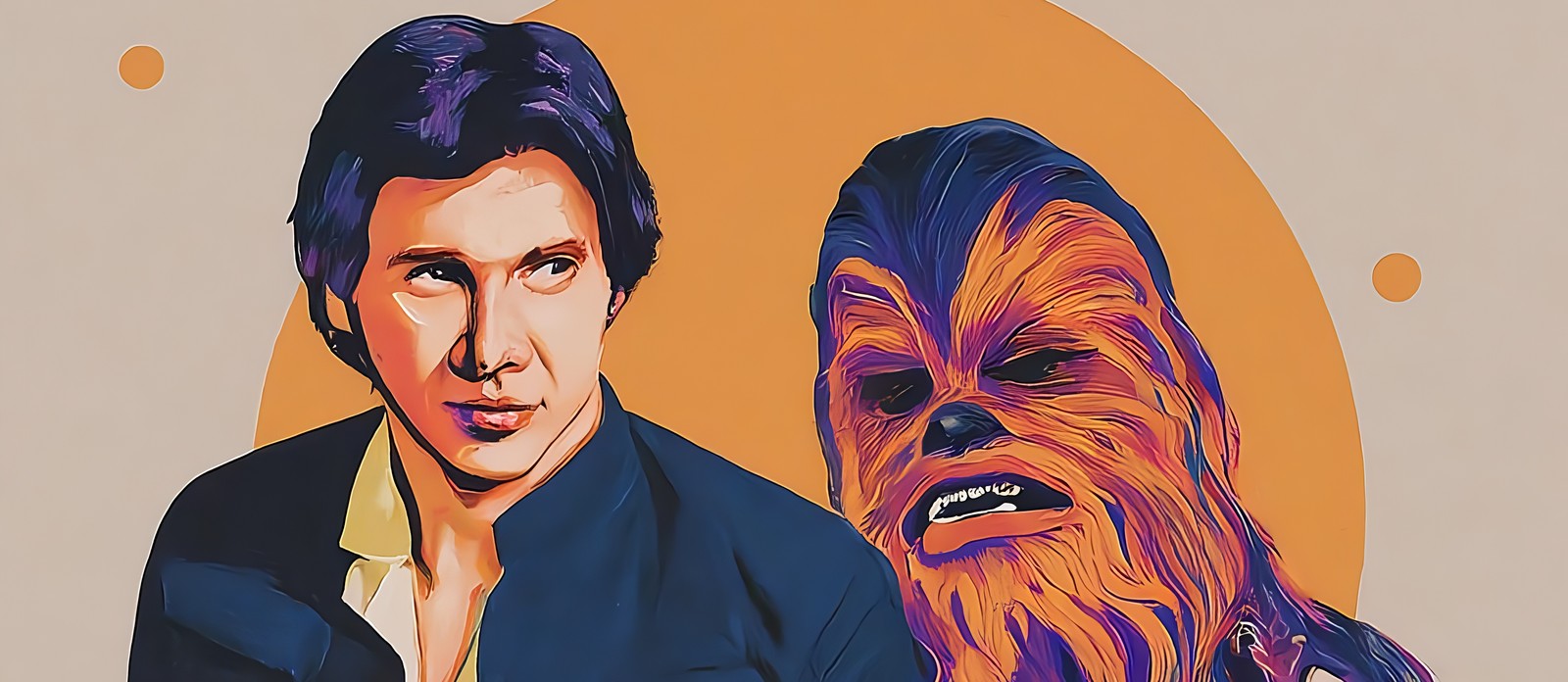
Some TV lines and catchphrases are so famous that even people who’ve never seen the show know them well. Though they were created decades ago, one thing is certain: just reading these quotes will bring back all those memories. From "What’chu talkin’ ’bout, Willis?" to "Here’s Johnny!", we’re revisiting 10 unforgettable TV lines that are part of pop culture history.

1
"Here’s Johnny!" - The Tonight Show Starring Johnny Carson

Image: Carl Lender, CC BY 2.0, via Wikimedia Commons

The Tonight Show is one of the longest-running and most influential programs in television history. The late-night show premiered in 1954, but Johnny Carson took over in 1962 and became the face of the show for three decades. It was Ed McMahon, Carson’s longtime sidekick and announcer, who gave birth to the iconic introduction: "Heeeeeere’s Johnny!" The phrase took hold so firmly in American culture that it was referenced endlessly across other shows and media, most famously parodied to terrifying effect by Jack Nicholson in Stanley Kubrick’s The Shining (1980).

2
"What’chu talkin’ ’bout, Willis?" - Diff’rent Strokes

Image: Louise Palanker, CC BY-SA 2.0, via Wikimedia Commons

It’s impossible not to picture Gary Coleman’s face when you hear "What’chu talkin’ ’bout, Willis?" The line, uttered by Arnold (Coleman) to older brother Willis (Todd Bridges), became so famous that it’s still used today to express confusion, even by young people around the world who don’t know it comes from the NBC sitcom Diff’rent Strokes (1978–1985). The catchphrase helped catapult Coleman to international fame, but it was repeated so often that, by the later seasons, he admitted he sometimes refused to say it.

3
"Ayyyyyy!" - Happy Days

Image: ABC, Public domain, via Wikimedia Commons

Yes, the power of a catchphrase can be so strong that some of the most memorable ones are just one consonant-free syllable. A perfect example is the signature line of Arthur Fonzarelli, A.K.A. Fonzie, or "The Fonz," from Happy Days (1974–1984). Played by Henry Winkler, Fonzie was the coolest guy on TV, so all it took was a leather jacket, a thumbs-up, and an "Ayyyyy!" to make him immortal.

4
"Dy-no-mite!" - Good Times

Image: Aleks Dorohovich

Actor Jimmie Walker rose to fame playing J.J. Evans on the American sitcom Good Times (1974–1979). His clever and energetic character had a trademark: "Dy-no-mite!", his exclamation of excitement, approval, or surprise. The line became so famous that it appeared everywhere, from T-shirts to posters, and for many viewers, it’s the thing they most remember about the show.

Although the line was undeniably a hit, the actor admitted in later interviews that he wasn’t entirely sure it would take off. Who could have predicted what was coming?

5
"I love it when a plan comes together!"- The A-Team

Image: Fotopersbureau De Boer, CC0, via Wikimedia Commons

"I love it when a plan comes together!" was the iconic catchphrase delivered by George Peppard’s character in The A-Team (1983–1987). At the end of many episodes of the action series, Lieutenant Colonel John "Hannibal" Smith would light or just hold his cigar as he delivered the line, signaling that his plans (usually elaborate, risky, and a little over the top) had worked out perfectly. Over time, the phrase became part of popular culture and is still used today whenever everything falls into place.

6
"Book 'em, Danno" - Hawaii Five-O

Image: CBS Television, Public domain, via Wikimedia Commons

"Book ’em, Danno" was the iconic line delivered by Jack Lord’s character, Detective Steve McGarrett, to his partner Danny "Danno" Williams (played by James MacArthur) on Hawaii Five-O (1968–1980). The utterance often came at the end of an episode when the bad guy had finally been caught. It became hugely popular and turned into a cultural shorthand for "case closed" in the 1970s.

7
"Lucy, you got some 'splaining to do!"- I Love Lucy

Image: TV Guide, Public domain, via Wikimedia Commons

Desi Arnaz and Lucille Ball played the ultimate sitcom couple, Ricky and Lucy Ricardo, on I Love Lucy (1951–1957). Whenever Lucy got caught up in one of her classic schemes or hilarious misunderstandings, Ricky would step in to deliver some version of "Lucy, you got some ‘splaining’ to do!"

Even though the line was never delivered exactly the same way, Ricky would always demand an explanation in similar terms, with variations like "Lucy, something needs ‘splaining’" or "What needs ’splainin’?"

8
"Is that your final answer?" - Who Wants to Be a Millionaire?

Image: Idea SV, CC BY-SA 3.0, via Wikimedia Commons

Maybe it’s just nostalgia, but it’s hard not to feel the tension when you hear "Is that your final answer?" That classic line from Who Wants to Be a Millionaire? originated with Chris Tarrant, the original host of the British version, which debuted in 1998. But it was Regis Philbin, host of the American version (which premiered in 1999), who helped the phrase achieve worldwide fame.

The question added a moment of suspense, often making contestants second-guess themselves. Over time, its impact went far beyond the game, becoming an indisputable part of the cultural lexicon

9
"Live long and prosper" - Star Trek

Image: NBC Television, Public domain, via Wikimedia Commons

You may remember Leonard Nimoy’s voice as Spock delivering his signature "Live long and prosper" in the original Star Trek (1966–1969). As a traditional Vulcan greeting, the line was often paired with the iconic hand gesture, where the fingers split to form a "V" shape. The phrase went on to transcend generations, which makes it even more surprising that it wasn’t part of the original script; it was Nimoy who came up with both the gesture and the phrase for the show.

10
"Norm!" - Cheers

Cheers (1982–1993) is one of those shows that’s hard to forget, and anyone who’s seen it will instantly remember the shout of "Norm!" This was the familiar greeting from the bar’s staff and regulars every time Norm Peterson, played by George Wendt, walked through the door. Norm is one of the few characters to appear in all 275 episodes of the series, so that moment became a beloved and frequent (very frequent) ritual.

Culture Culture 4 min read

How to blend in with the locals

12 regional slang words that you might want to learn

Image: DJ Johnson

English might be the official language of all Americans, but this doesn’t mean it’s spoken the same everywhere. Across the 50 states and the territories, slang is just another way to express the idiosyncrasies of each region and its unique realities. Check out these slang phrases; they might come in handy in the future.

1
Philadelphia: Jawn

Image: ActionVance

Meaning: used as a placeholder for a noun.

When in Rome, do as the Romans do. When in Philly, be aware that the word jawn can and will be used in every sentence, no matter if the jawn in question is a thing, person, event, or place. If it’s a noun, it can be jawn’ed.

2
New England: Grinder

Image: Yoad Shejtman

Meaning: a sub sandwich.

Subs must be one of the most widely known American sandwiches, and rightfully so. Its possibilities when it comes to fillings are seemingly endless, no matter your personal tastes. But you must consider that not every sub is called a sub. If you are passing through New England and fancy a sandwich, looking for a grinder will get you there quicker.

3
Midwest: Schnockered/ Schnookered

Image: Vinicius amnx Amano

Meaning: Schnockered: wasted/ Schnookered: scammed

Is there a connection between excessive alcohol consumption and being easy to deceive? Midwesterners apparently think so, because they use very similar terms for both situations. We tend to agree; nothing good can come from doing business while under the influence.

4
New York: Schlep

Image: Keagan Henman

Meaning: a difficult task, to carry something with difficulty.

As far as hectic places go, New York seems to be leading the rankings. No wonder they have a dedicated slang repertoire for difficult situations. If you are planning on visiting the Big Apple, take it easy; you will most likely encounter a schlep.

5
Florida: No-see-ums

Image: Maxim Mogilevskiy

Meaning: tiny biting midges.

Ah, Florida! The land of cruises, alligators, and invisible attacking bugs. These welcoming critters are known for attacking at dawn and leaving itchy marks that will sting for days. They go by the government name of Ceratopogonidae, but the no-see-ums nickname seems more accurate.

6
Boston: Regular

Image: Kelly Sikkema

Meaning: coffee with cream and sugar.

Forget about americanos, lattes, and espressos, a regular is the Boston way to go. Associated with a popular Dunkin’ order, it will come already creamed and sugared. Not advisable for diabetics and lactose intolerants.

7
Puerto Rico: A mi, plín!

Image: Ana Toledo

Meaning: I don’t care.

Puerto Rican slang can be hard to decipher even if you speak some Spanish, but this makes it even more unique. This phrase —literally translated as ‘to me, plin’— is commonly used to express that something or someone is of no concern to you. What is a ‘plin’? We don’t really know, but to us, plin!

8
Pacific Northwest: The mountain is out

Image: Caleb Riston

Meaning: there is good weather

Mount Rainier is one of the icons of Seattle and the Pacific Northwest, even though the stormy weather can often make it difficult to admire. On the days when the sky is clear and cloudless, this natural wonder "is out" and can be seen in its entirety. For the locals, the mountain being out has become synonymous with lovely weather and sunny skies.

9
Texas: Fixin’ to

Image: Pete Alexopoulos

Meaning: about to.

We are including this phrase as Texan slang, but you might hear it from Southerners of other states. What do they use it for? Not to talk about repairs, but to say they are about to do something or getting ready for something. Important: do not confuse it with ‘fixins’, a way to refer to side dishes or condiments.

10
Alaska: Sourdough

Image: DDP

Meaning: a long-time resident.

Alaska is filled with natural wonders, but it has always been a tough place to live in, especially during the time of the pioneers. These brave people relied on a few food sources, one of them being sourdough starter to make bread and biscuits. In time, seasoned Alaskans came to be referred to as ‘sourdough’, as a way of honoring their resilience and love for the territory. Opposite to a ‘sourdough’, you can find a ‘cheechako’ or newcomer.

11
Utah: RM

Image: Taylor Brandon

Meaning: someone who returned from their missionary service.

Utah is known for many things, one of them being its high number of Church of Jesus Christ of Latter-day Saints members (commonly known as Mormons). Many members of the Church choose to serve as missionaries, an activity that can take them to a different state or even a different country for up to two years. Once they come back, they might be referred to as RM, or ‘returned missionary’.

12
Hawaii: Da kine

Image: little plant

Meaning: placeholder for something.

If you are in Hawaii, you might notice locals using this phrase to refer to various things, similar to how other English speakers use ‘whatsit’ as a placeholder. A common phrase in Hawaiian Pidgin, ‘da kine’ can be used for objects, people, places, ideas, and much more.

Explore more American facts

Choose your favorite category!

General
General

As American as apple pie—the very best America has to offer!

Culture
Culture

Delve into the astounding richness of American lore.

Geography
Geography

Hop in and explore vast and diverse American landscapes.

History
History

Discover the key moments that shaped the United States.