Culture Culture 3 min read

Memorial facts

Why does the Lincoln Memorial have 87 steps? The real reason
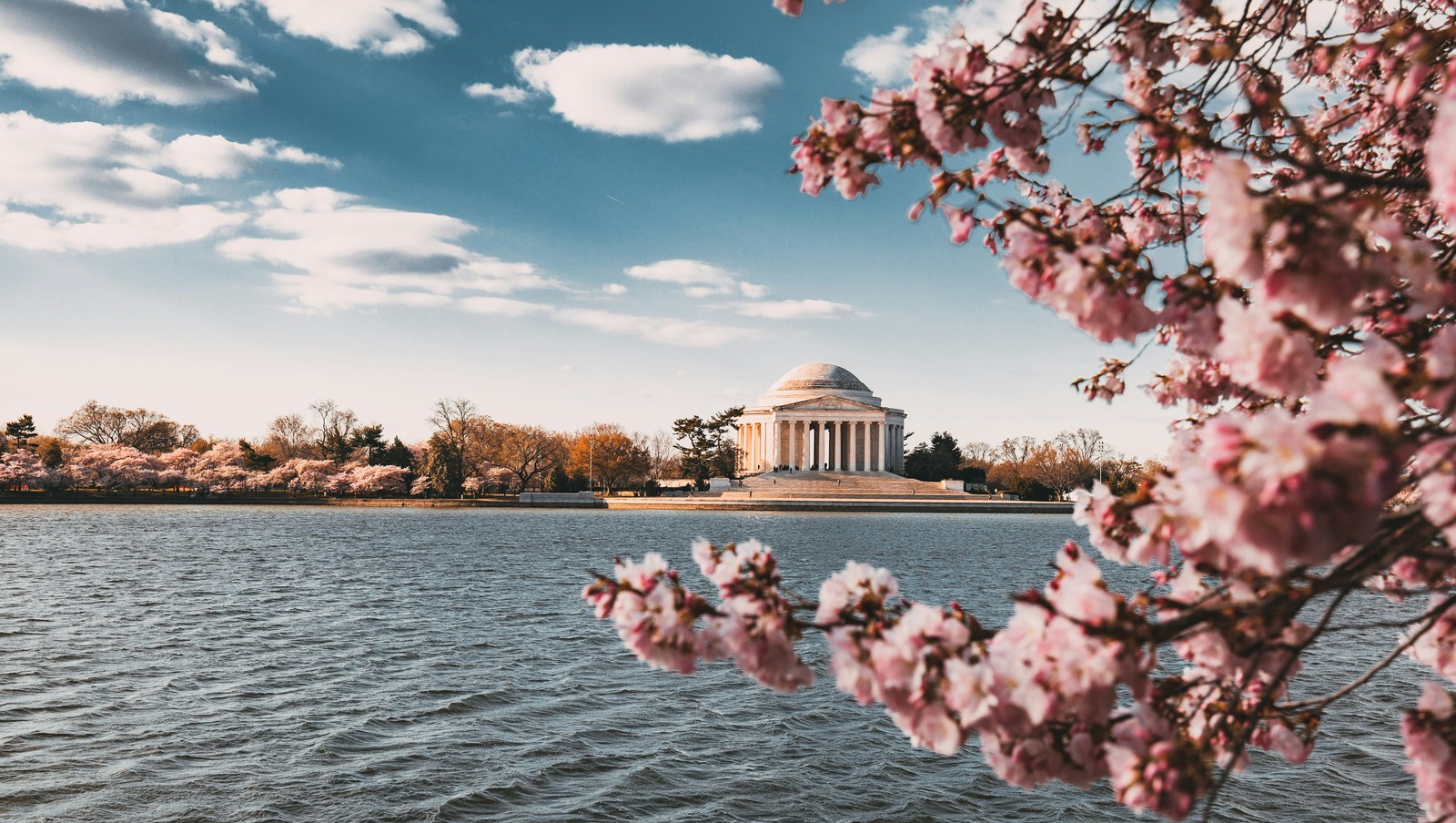
Image: Kyaw Tun

Washington, DC, is known for its many landmarks, but the Jefferson and Lincoln memorials stand out, drawing millions of visitors every year. And even though they’ve been part of the city for decades, there’s still a lot that most people don’t know about them. If you want to discover 10 facts you probably never learned in school, this article is for you!

1
87 steps
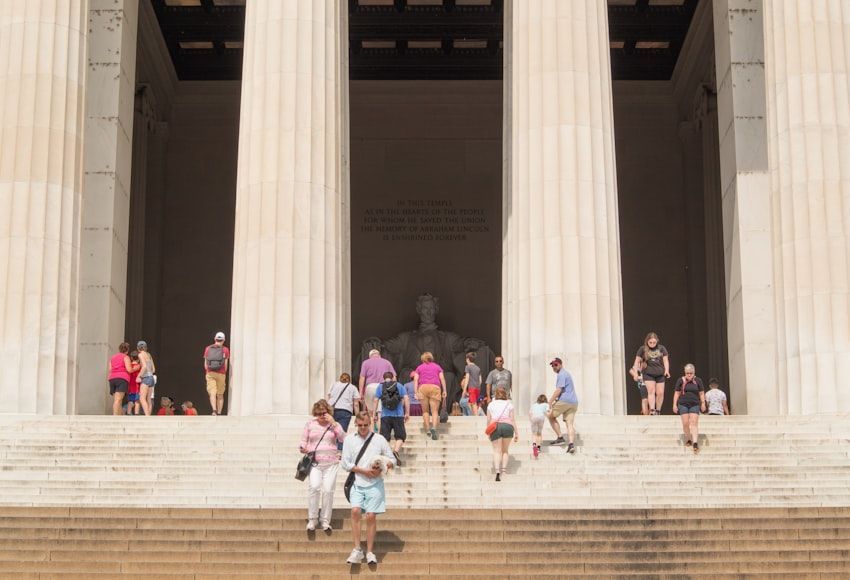
Image: Ryan Stone

In case you haven't counted them, there are exactly 87 steps leading up to the Lincoln Memorial. But why does that number matter? Although the National Park Service says it wasn’t intentional, many people connect it to the opening line of Lincoln’s Gettysburg Address: "Four score and seven years ago...", a coincidence that's hard to ignore.

2
Hidden underground chamber
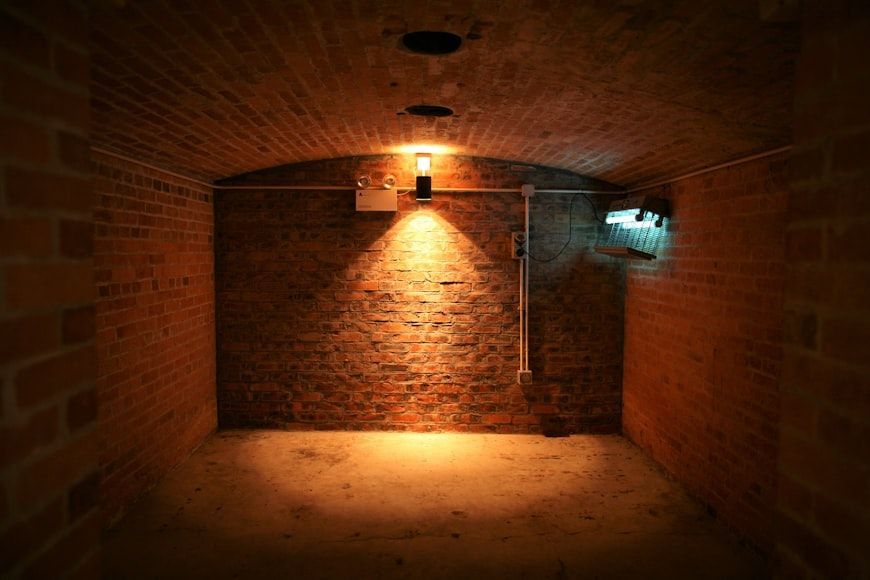
Image: Kdwk Leung

The Lincoln Memorial is more than what you see at first glance; there’s an entire hidden world beneath it. That’s right! Underground lies a large chamber built as part of the monument’s foundation. Giant concrete columns support the structure above, and there are also narrow corridors where workers once walked. You can even find graffiti and markings left by those builders in the early 1900s. Although the public can’t visit this space yet, the National Park Service has said it hopes to open it in the future.

3
A pyramid?
Image: Andrew Backhouse

Can you imagine a giant pyramid rising over the landscape of Washington, DC? It’s hard to picture, but it could have happened. Among the many design proposals for the Lincoln Memorial were some extravagant ideas, including a huge pyramid. In the end, the Greek temple design we know today won out.

4
The typo
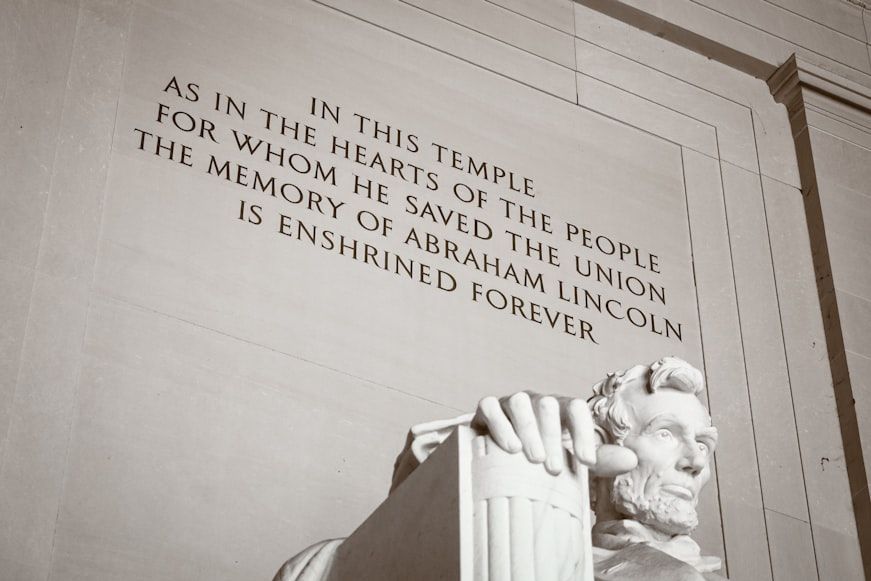
Image: Andre Schofield

To err is human, and the Lincoln Memorial is no exception. As you may know, Lincoln’s Gettysburg Address and his Second Inaugural Address are engraved on the interior walls. But the carver made a small mistake when transcribing the Second Inaugural Address, writing "euture" instead of "future" in the line "high hopes for the future." Although the error was corrected, people say that if you look closely enough, you can still see it.

5
Lincoln's friends made it happen
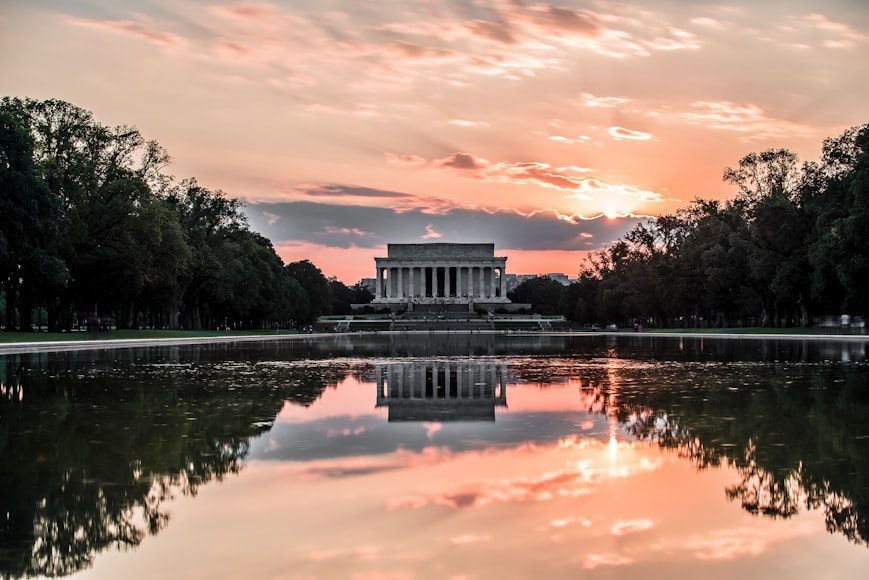
Image: Casey Horner

For years, several proposals to build a memorial to Abraham Lincoln failed in Congress. Fortunately, Senator Shelby Collum and Speaker of the House Joseph Cannon joined forces to get the final bill approved. These men had known Lincoln and felt that a memorial to Honest Abe was both fitting and necessary.

6
Who is Thomas Jefferson looking at?
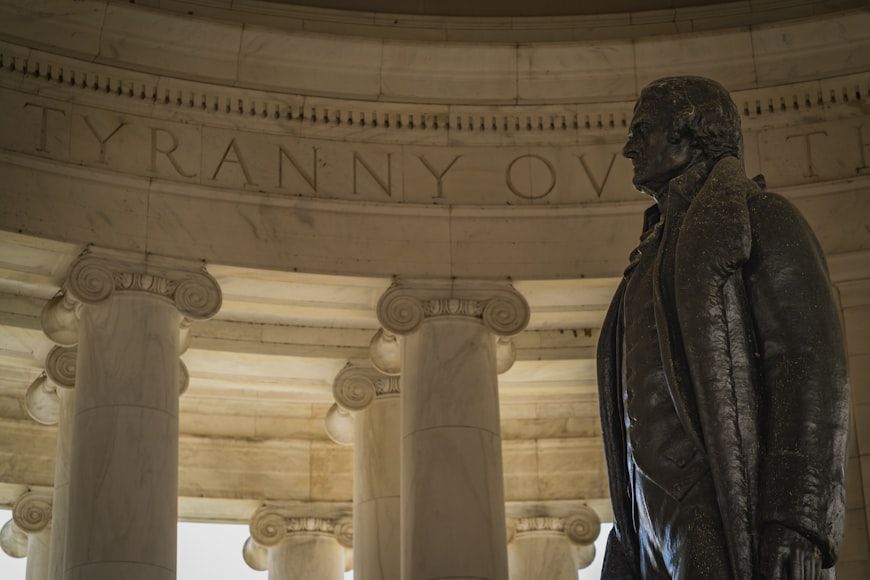
Image: J. Amill Santiago

It’s well known that the statue of Thomas Jefferson inside his memorial faces north toward the White House and the Washington Monument. But there’s another interesting interpretation. Also to the north is the statue of Alexander Hamilton on the south side of the US Treasury Building. Since Jefferson and Hamilton were once colleagues who later became political rivals, some like to imagine that Jefferson’s bronze likeness is keeping a cautious, almost "watchful eye" on Hamilton.

7
FDR specifically requested the Jefferson Memorial
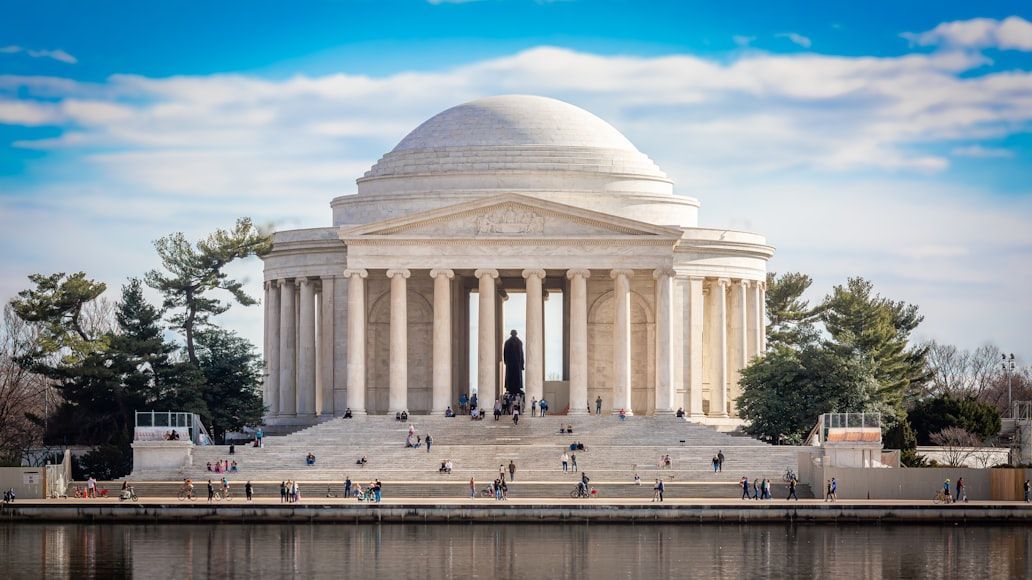
Image: Rafik

Since the early 20th century, there had been talk of building a memorial to honor Thomas Jefferson. But nothing moved forward until Franklin D. Roosevelt took office in 1933. An admirer of Jefferson, FDR pushed tirelessly for the project until Congress approved it. But he was not only the one who requested it; he even delivered the dedication speech when the memorial was completed in 1943.

8
10,000 pounds
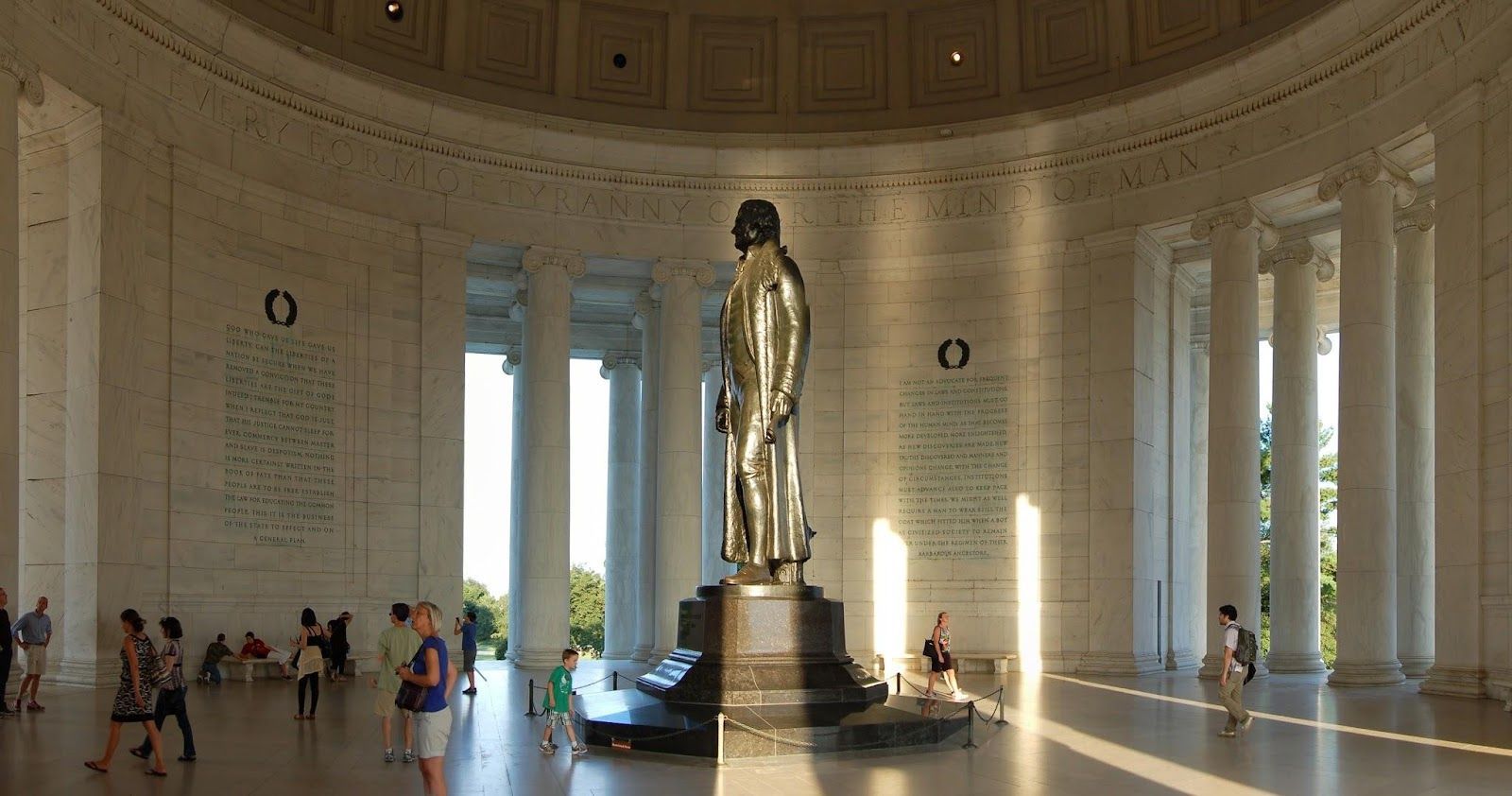
Image: Michael Kranewitter, Public domain, via Wikimedia Commons

We all know Jefferson was a great man, but do you know how big his statue is? It stands around 19 feet tall and weighs an astonishing 10,000 pounds; that’s a lot of bronze! Originally, the statue was a painted plaster model because, when it was dedicated in 1943, metal shortages from World War II made bronze unavailable. Four years later, in 1947, the bronze statue we see today was installed.

9
Once a popular beach
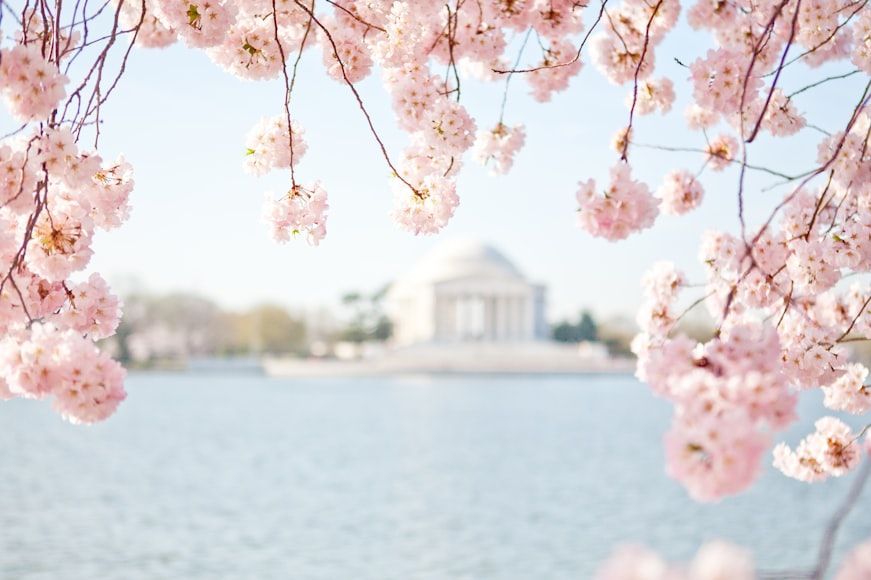
Image: Amelia Cui

Before becoming the site of the Jefferson Memorial, the Tidal Basin Beach was a popular beach in Washington. That's right; at the beginning of the 20th century, the area was used for swimming, boating, and picnics. This, coupled with the need to cut down some cherry blossom trees for construction, sparked controversy and turned some people against the project.

10
Created by a landfill
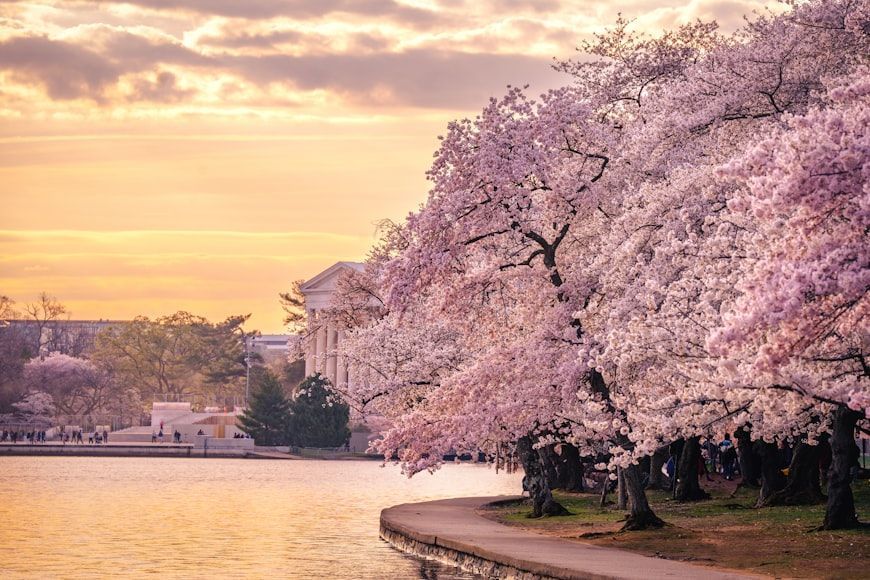
Image: Sharosh Rajasekher

Before the Jefferson Memorial could be built, the area had to be transformed. The Tidal Basin was originally shallow and surrounded by marshland, so workers filled it with material dredged from the Potomac River to create a stable foundation. Definitely a big effort.
Geography Geography 4 min read

Discovering America

What's the easternmost point of the US? If you say Maine, think again!

Image: Jon Sailer

We’ve all picked up "facts" about the fifty states somewhere along the way, but not all of them hold up. Some are half-truths passed around for generations , others are just plain wrong. So, in an attempt to set the record straight once and for all, we’ve gathered some fun truths that clear up the biggest mix-ups about our states.

1
Arizona skips Daylight Saving Time

Image: Christoph von Gellhorn

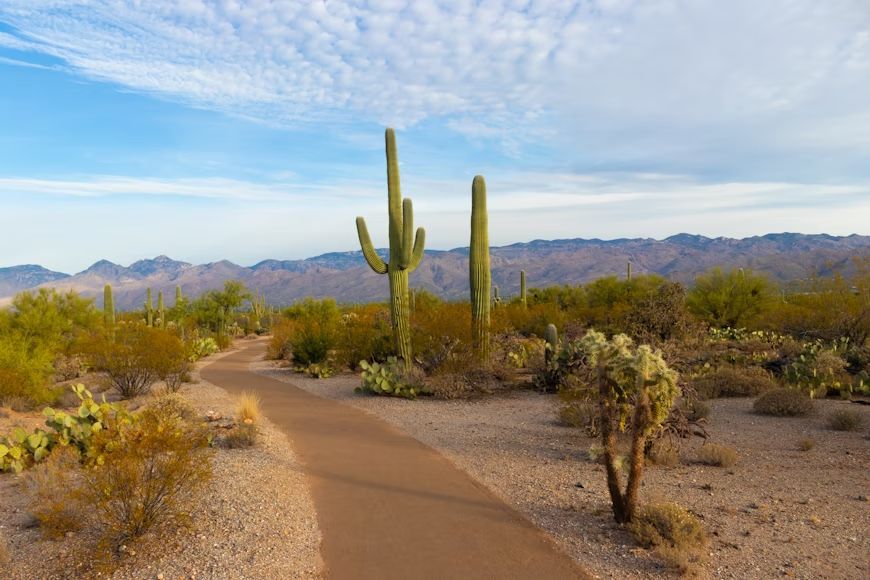
This is partly true because most of the state doesn’t bother with Daylight Saving Time . They stopped changing the clocks back in 1967. The exception is the Navajo Nation, which stretches into Utah and New Mexico and keeps DST so all its communities stay on the same schedule. Now, as for the smaller Hopi reservation, inside the Navajo Nation, it sticks with Arizona time… Yes, quite confusing if you’re not a local.

2
Georgia isn’t really the Peach State

Image: Jessica Furtney

Georgia loves its peaches, sure, but the state’s top fruit money-maker is actually blueberries . In recent years, blueberries have brought in several times more cash for farmers than peaches. Meanwhile, California grows far more peaches than Georgia ever has. The nickname stuck from the old days when Georgia peaches were famous for their flavor, not their volume. So while the pride is real, the peaches aren’t quite the powerhouse people may think.

3
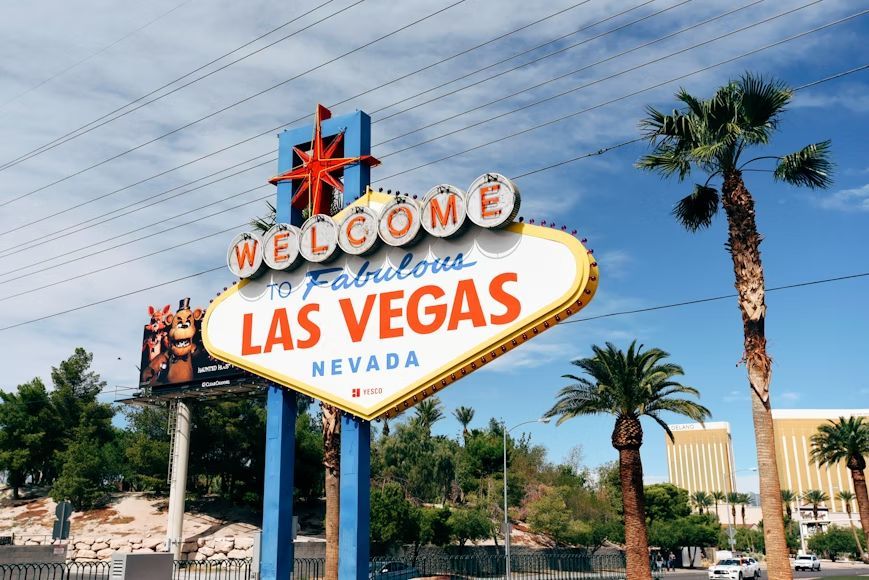
Nevada didn’t record the hottest US temperature

Image: tommao wang

You probably think of Nevada’s desert heat as unmatched, but the all-time record belongs to California’s Death Valley . In July 1913, it hit a mind-melting 134 degrees Fahrenheit, the hottest temperature not only in America but the hottest ever recorded on Earth!

4
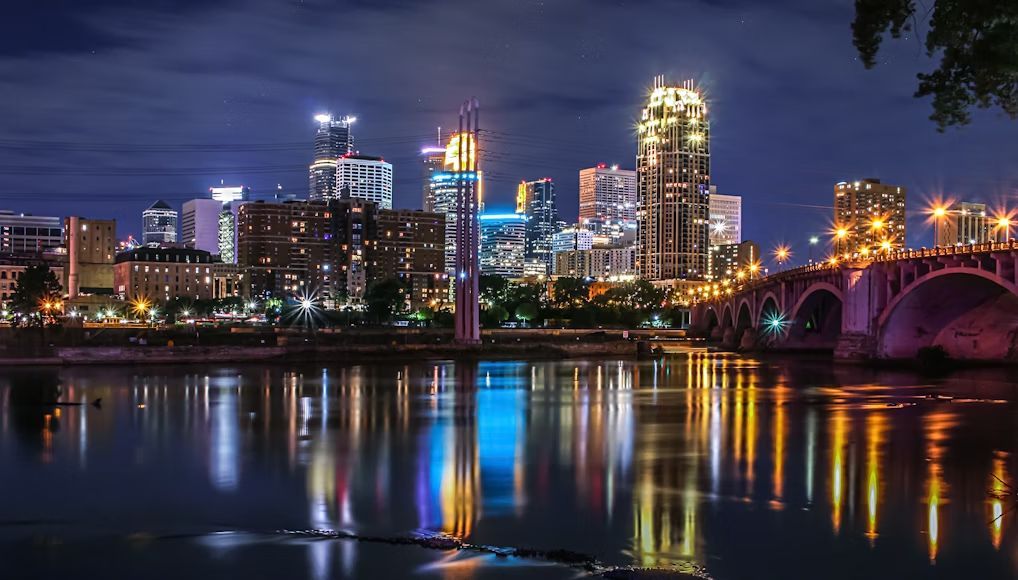
Minnesota doesn’t have the most lakes

Image: Tom Conway

Minnesota proudly calls itself the "Land of 10,000 Lakes," but that’s selling itself short… The real number is closer to 12,000. However, Alaska wins this battle . The state has more than 3 million lakes over five acres in size. In fact, Alaska contains over 40 percent of the nation’s surface water. If you love fishing, kayaking, or just staring at a quiet stretch of water, the true lake capital of America is far up north.

5
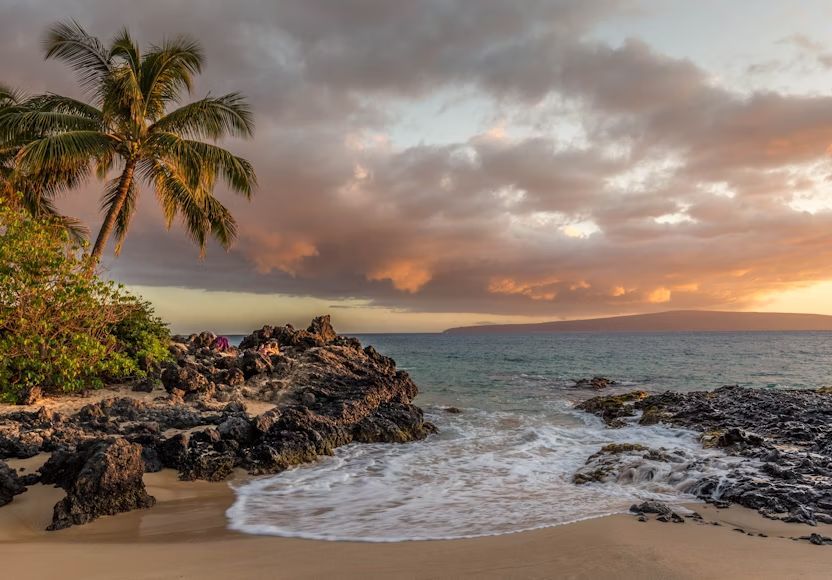
Pineapples aren’t native to Hawaii

Image: Christian Joudrey

Pineapples are everywhere in Hawaiian imagery, but the plant actually comes from South America , mainly Paraguay and southern Brazil. Spanish explorers likely brought them to Hawaii in the 1500s after spreading them across the Pacific to places like the Philippines and Guam. Hawaii’s climate turned out to be perfect for growing them and by the 1900s, the islands were producing so many pineapples that the fruit became a symbol of Hawaii itself.

6
Maine isn’t the country’s easternmost point

Image: Chris Henry

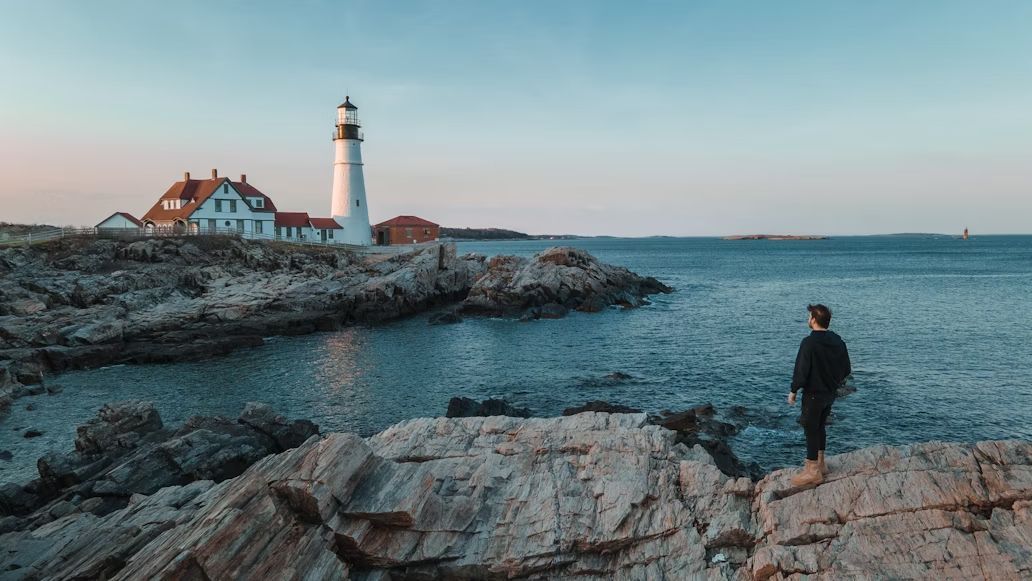
If you’re a Geography geek, you’ll love this one. You might picture Maine’s rocky coast as the eastern tip of America, but the actual easternmost point is thousands of miles away, on Alaska’s Semisopochnoi Island in the Aleutians. How is that possible? Well, that’s because it crosses the 180th meridian, putting it in the Eastern Hemisphere. That means part of Alaska technically sits farther east than anywhere in Maine.

7
The biggest US earthquake didn’t happen in California

Image: Lala Miklós

California has suffered some big earthquakes in its history, but the most powerful earthquake in America struck Alaska in 1964 . It hit Prince William Sound with a magnitude of 9.2. It was so strong it shook the ground for four and a half minutes and triggered massive tsunamis. In today’s dollars, the damage would total more than $2 billion. Alaska sits on a collision zone of tectonic plates, making it one of the world’s most seismically active regions.

8
The Everglades isn’t America’s biggest swamp

Image: Joshua J. Cotten

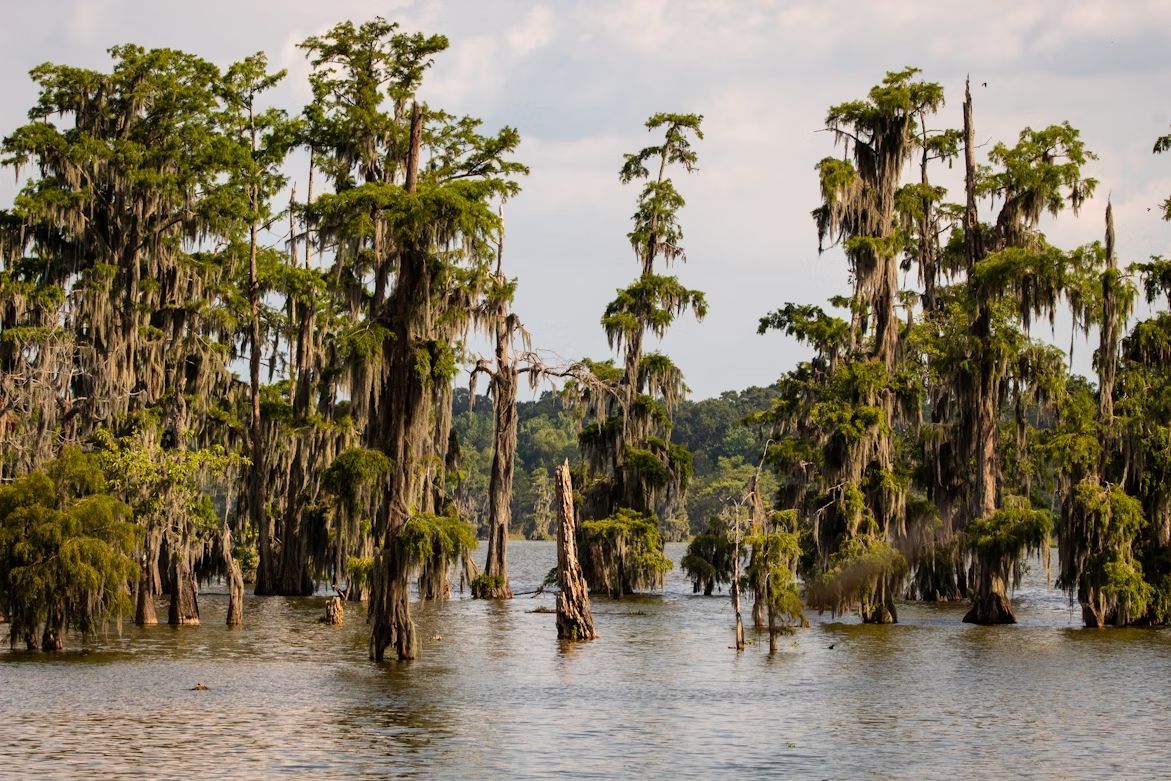
A lot of people picture the Florida Everglades when they think of swamps, but technically, the Everglades isn’t a swamp at all. The real title of the largest swamp in the United States goes to Louisiana’s Atchafalaya Basin , which spans about 1.4 million acres. This swamp has a vast mix of cypress forests, bayous, and marshes, and it’s more than twice as productive as the Everglades when it comes to wildlife and plant life.

9
Big cities aren’t always capitals

Image: Mackenzie Cruz

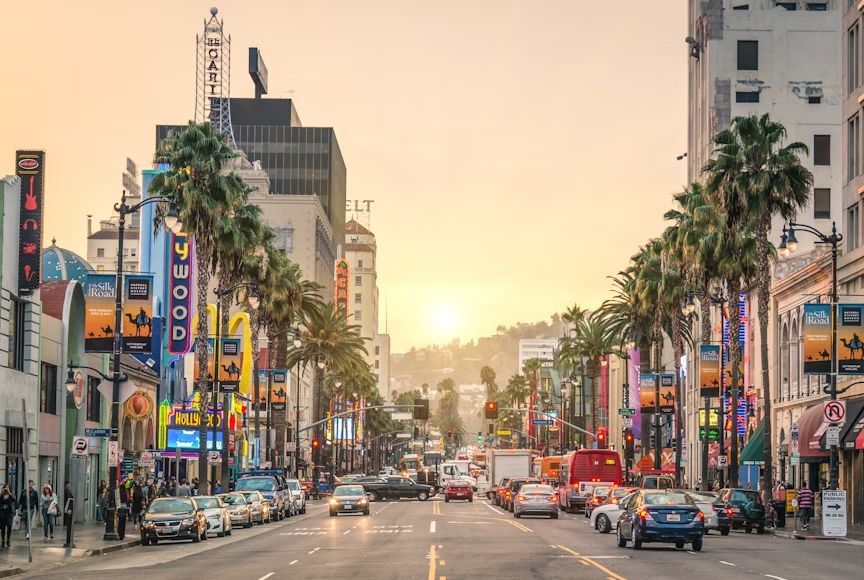
It surprises people how often the biggest city isn’t the state capital . New York City? Not the capital… Albany is. Chicago? Nope, that honor goes to Springfield. Pennsylvania’s capital isn’t Philly or Pittsburgh, it’s Harrisburg. Even California’s capital isn’t L.A. or San Francisco, it’s actually Sacramento. Out of fifty states, only seventeen have their most populous city as the capital.

10
Alaska isn’t divided into counties

Image: Rod Long

Alaska likes to do things its own way. Instead of counties, it’s split into boroughs , and a massive area known as the Unorganized Borough has no local government at all. People out there don’t pay property taxes, but that freedom comes with challenges, limited services, fewer job options, and tough living conditions.

General General 4 min read

Embracing our multilingual nation

Do you know what is the second most spoken language in the United States?

Image: Houcine Ncib

In the United States, the number of people who speak a language other than English at home has nearly tripled over the last three decades, increasing from 23.1 million to 67.8 million. According to the 2019 American Community Survey by the Census Bureau, more than 350 languages are spoken across the country , making it one of the world's most linguistically diverse nations. In this article, we’ll explore the 12 most spoken languages in the United States. Can you guess how the rankings go?

1
12. Portuguese

Image: Etienne Girardet

Today, there are over 845,000 Portuguese speakers in the United States, making it the 12th most spoken language after English.

The Portuguese-speaking community is composed of immigrants from both Portugal and Brazil. Since the 1960s, many Portuguese immigrants have settled along the coast of Massachusetts, where they could continue their traditional fishing activities. Besides Massachusetts, Portuguese is most commonly spoken in Connecticut, Rhode Island, and Utah.

2
11. Hindi

Image: Rohan Solankurkar

Hindi is the most widely spoken Indian language in the United States, with more than 890,000 people speaking it . Hindi belongs to the Indo-European language family and has been included on the U.S. State Department's list of critical languages due to strategic commercial interests in South Asia.

Hindi-speaking Indians began immigrating to North America in the early 19th century. The community has primarily settled in large cities such as New York City, Washington D.C., San Francisco, Los Angeles, and Chicago.

3
10. Russian

Image: Tessakay

There are currently almost 950,000 Russian speakers in the United States. Did you know that Russian is one of the two official languages aboard the International Space Station? NASA astronauts typically take Russian language courses to communicate with their Russian counterparts.

Another well-known Russian-speaking community is in New York's Brighton Beach neighborhood, often referred to as "Little Odessa." Cultural events, festivals, and markets featuring traditional Russian foods, music, and crafts are common sights here. Los Angeles is another city where Russian is regularly used.

4
9. Korean

Image: 昆 阿

Over the past few decades, the number of Korean speakers in the United States has grown significantly, with nearly 1,100,000 people now speaking Korean .

Los Angeles is home to the largest Koreatown in the country, and many residents in other major cities speak Korean at home, helping to maintain and promote the heritage of this Asian culture in the United States.

5
8. Arabic

Image: Rawan Yasser

With more than 1.2 million speakers, Arabic is the eighth most spoken language in our country.

Arabic is spoken in immigrant communities from countries such as Egypt, Lebanon, Syria, Iraq, and Yemen. These communities are most prominent in states like California, New York, and Michigan, where Arabic is commonly heard in homes and community centers.

6
7. German

Image: FotosFuerBlogger

German is widely spoken in states with high populations of German ancestry, such as Pennsylvania, Wisconsin, and Texas. When including Yiddish, Pennsylvania Dutch, and other West Germanic languages, there are over 1,450,000 German speakers in the United States.

Cities like Fredericksburg and New Braunfels, Texas, were founded by German immigrants and continue to celebrate their heritage with festivals such as Oktoberfest. In Pennsylvania, a large number of Pennsylvania Dutch speakers—predominantly among the Amish and Mennonite communities—speak this German dialect, which is not, as one might expect, Dutch.

7
6. Vietnamese

Image: Huynh Van

The number of Vietnamese speakers in the United States is similar to that of the previous language on this list, with more than 1.5 million people speaking the language of this Southeast Asian country.

In recent decades, the number of Vietnamese immigrants has been increasing exponentially. Most have settled in California, followed by Texas, Florida, Washington, and Georgia.

8
5. Tagalog

Image: Emmanuel Nicolas Jr.

Despite being the fifth most spoken language in the United States, Tagalog is often overlooked. For those who have never heard of it, Tagalog is one of the official languages of the Philippines.

A significant number of Filipino immigrants have settled in the United States since the early 19th century. According to the U.S. Census Bureau, there are currently more than 1.7 million Tagalog speakers . Thirty-eight percent of Filipinos in the United States live in California, with relatively large concentrations also in Hawaii and Texas.

9
4. French

Image: Erik Mclean

If we include Patois, Cajun, Haitian, and Louisiana Creole—a hybrid of French and various African languages—French is the fourth most widely spoken language in the United States.

The French influence, which dates back to the 17th century, is evident in a wide variety of American English words and phrases. Today, there are nearly 2.1 million French speakers in the country.

10
3. Chinese

Image: 五玄土 ORIENTO

The Chinese language, including its different variants such as Mandarin, Cantonese, and Hokkien, contributes significantly to the cultural diversity of the United States. Although the gap between the second and third most spoken languages in the country is considerable, the number of people who speak Chinese is still representative.

With approximately 3.5 million Chinese speakers across the country, the greatest influence of this culture can be found in states with the highest concentrations of Chinese immigrants, such as New York and California.

11
2. Spanish

Image: Leeloo The First

Spanish is the second most spoken language in the United States and one of the fastest-growing languages in the country. This is no surprise, as approximately 19% of the total population is of Hispanic origin.

According to the U.S. Census Bureau, more than 40 million people speak Spanish in addition to English in the United States. Hispanic communities are found throughout the nation, with the largest concentrations in California, Texas, Florida, and New York.

12
1. English

Image: Wilhelm Gunkel

Although it is not surprising that English is the most widely spoken language in the United States, it is still not recognized as an official language. However, more than half of the 50 states have passed laws granting it official language status.

English speakers make up a large percentage of the U.S. population, with approximately 78 percent speaking only English . American English is also incredibly rich, composed of dozens of regional dialects with distinct grammar, vocabulary, and pronunciation.

Explore more American facts

Choose your favorite category!

General
General

As American as apple pie—the very best America has to offer!

Culture
Culture

Delve into the astounding richness of American lore.

Geography
Geography

Hop in and explore vast and diverse American landscapes.

History
History

Discover the key moments that shaped the United States.