General General 6 min read

Are we there yet?

Every parent should read this article before embarking on a road trip

Image: LeManna

Traveling with children can be one of life's most rewarding adventures and one of its biggest challenges. A trip that looks effortless on social media often involves careful planning, a healthy dose of flexibility, patience, and a willingness to expect the unexpected. Fortunately, experienced parents, pediatricians, and travel experts agree on several practical habits that help reduce stress and keep kids happier on the road.

1
Choose flights that work with your child’s schedule
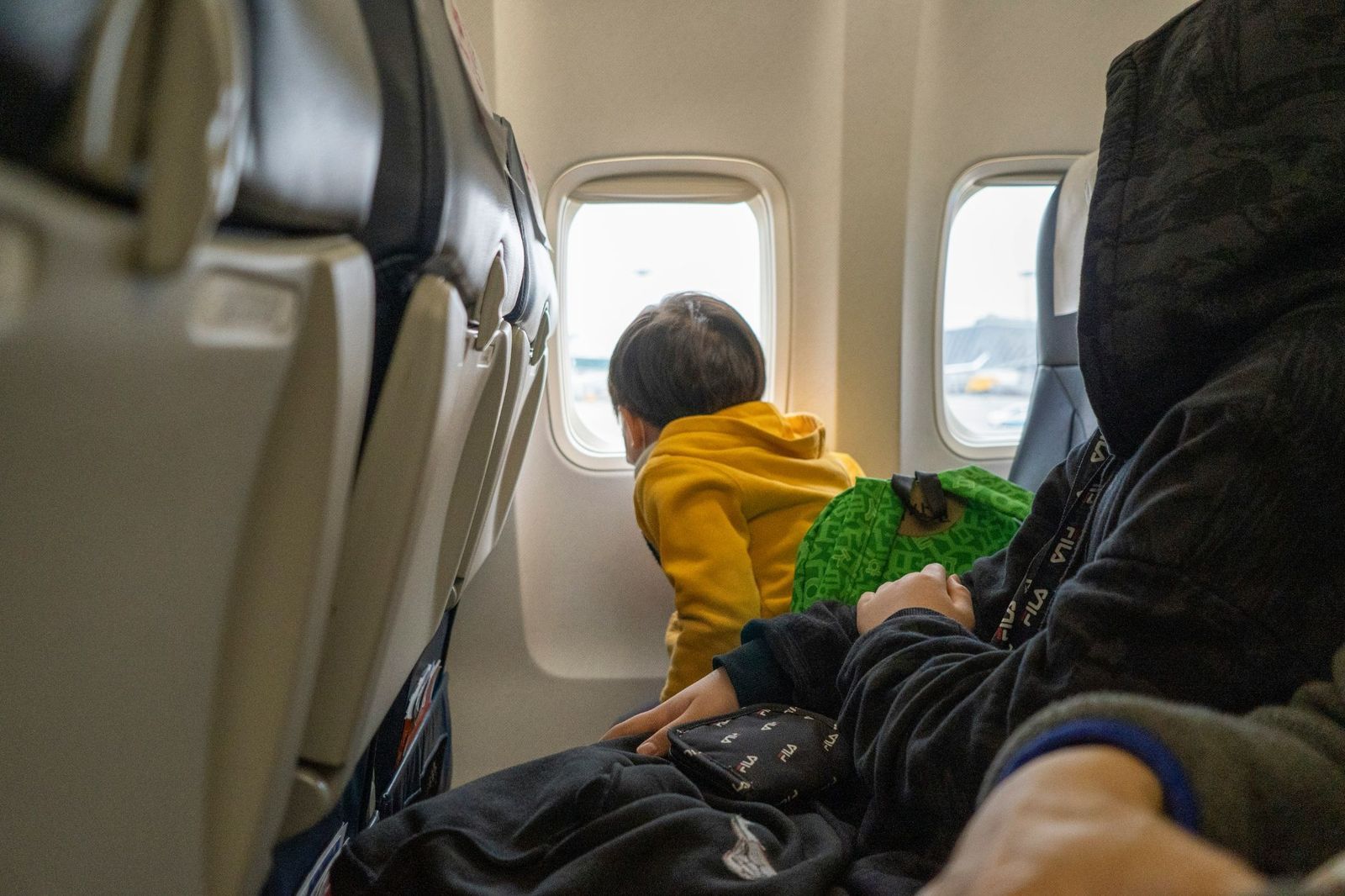
Image: minho jeong

Of course, it’s tempting to book the cheapest flight available, but the lowest fare isn't always the best value when you're traveling with young children. Whenever possible, look for departure times that line up with your child's regular nap or bedtime . A sleepy child is often far more likely to relax, or even sleep, through a good portion of the journey, making the experience easier for everyone on board.

Direct flights can also be worth paying a little extra for. Every layover means another security check, another boarding process, and another opportunity for delays to throw off routines. Pediatric experts also recommend arriving at the airport with plenty of time to spare, reducing the stress of rushing through terminals with children and luggage. Starting the trip calmly often sets the tone for everything that follows.

2
Bring more snacks than you think you’ll need
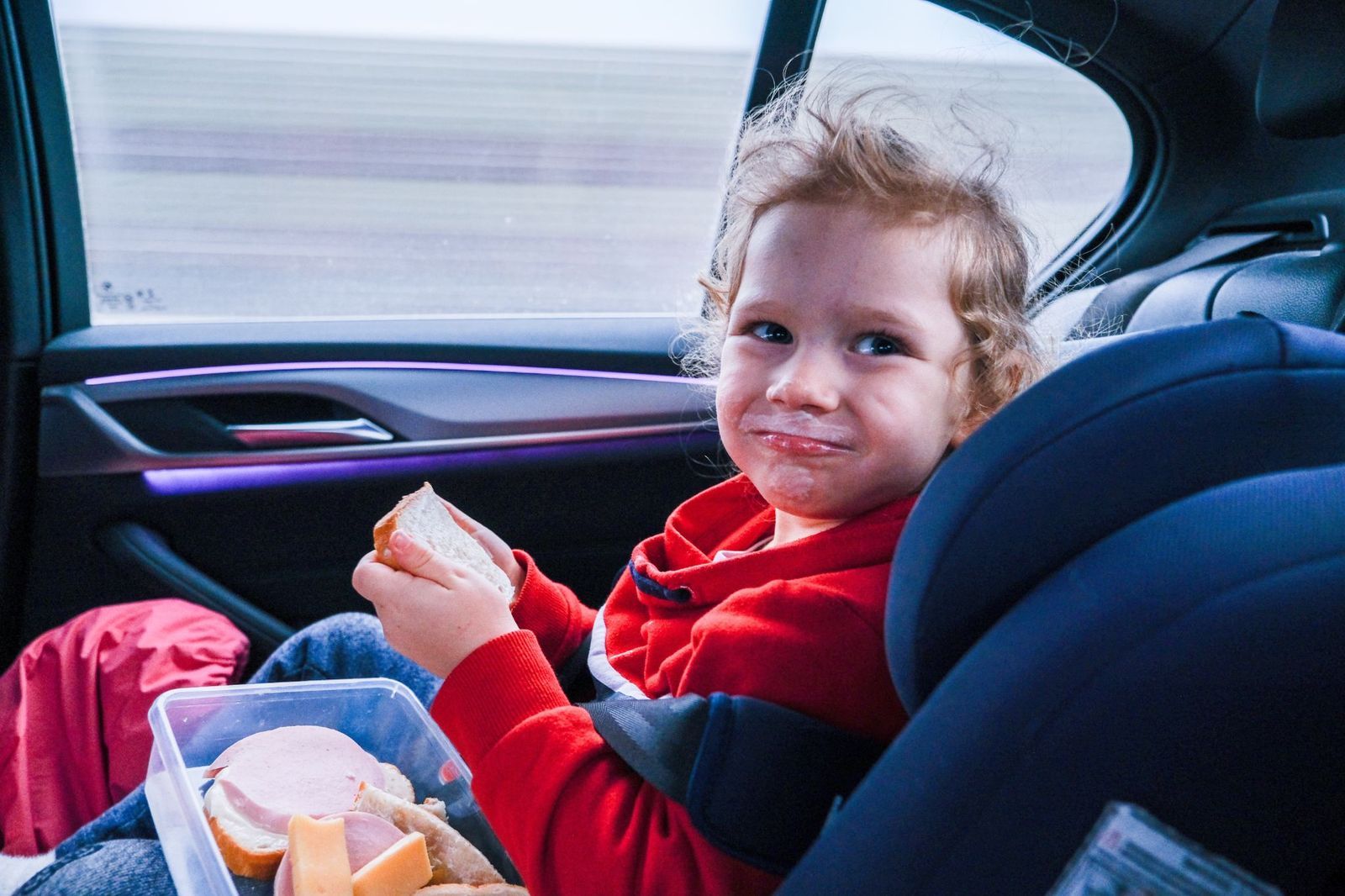
Image: laowaika

If there's one piece of advice nearly every experienced parent agrees on, it's this: pack extra snacks. Delayed flights, long security lines, traffic jams, and unexpected detours have a way of stretching meal times, and hungry children rarely become more patient as the hours pass .

Choose foods that travel well and don't require refrigeration, such as crackers, granola bars, dried fruit, applesauce pouches, or pretzels. Keeping familiar snacks within easy reach can also help picky eaters adjust to new surroundings. Even if you never open every bag, having plenty available provides peace of mind—and may help avoid an expensive airport food stop.

3
Download entertainment before you leave

Image: Tatiana Diuvbanova

Modern travel has become much easier thanks to tablets and smartphones, but they're only helpful if the content is actually available when you need it. Airplane Wi-Fi isn't always reliable, mobile signals disappear in remote areas, and onboard entertainment systems occasionally malfunction.

Before leaving home, download favorite movies, television shows, audiobooks, music playlists, and age-appropriate games directly onto your devices . Packing headphones and portable chargers is just as important. Having entertainment ready to go means you'll never have to rely on an internet connection to keep little travelers happily occupied during long stretches of the journey.

4
Pack a complete change of clothes

Image: Vika Strawberrika

Children have an incredible talent for finding the one puddle, juice box, or muddy patch capable of soaking an entire outfit. That's why seasoned travelers rarely leave home without packing at least one complete change of clothes in their carry-on luggage .

Include fresh socks, underwear, and a lightweight sweater in addition to a clean outfit. A plastic bag for dirty clothing is another simple addition that can make life much easier. Some parents even pack an extra shirt for themselves, since babies and toddlers have a remarkable ability to spread spills well beyond their own clothes.

5
Reserve seats together whenever possible

Image: KieferPix

Sitting together isn't simply more convenient; it makes traveling significantly easier. Being close allows parents to quickly hand over snacks, help with entertainment, comfort nervous children, and manage unexpected situations without disturbing other passengers .

While many airlines try to seat families together, it's never guaranteed unless seats are selected in advance. Booking early increases your chances of staying together throughout the flight. For infants and toddlers traveling in their own seats, using an FAA-approved child restraint system provides an additional layer of safety during turbulence and takeoff.

6
Include flexibility in your plans

Image: Davor Geber

One of the quickest ways to create unnecessary stress is to try to pack every hour of the vacation with activities. Children naturally move at a different pace than adults, and even the most exciting attraction can become overwhelming after a long day.

Instead of scheduling four major attractions in a single afternoon, consider planning one primary activity with plenty of free time around it . Unexpected playground visits, leisurely lunches, or simply taking a break at the hotel often become some of the most enjoyable parts of a family vacation. Leaving room for spontaneity allows everyone to enjoy the trip rather than race through it.

7
Follow proper car seat and booster seat rules
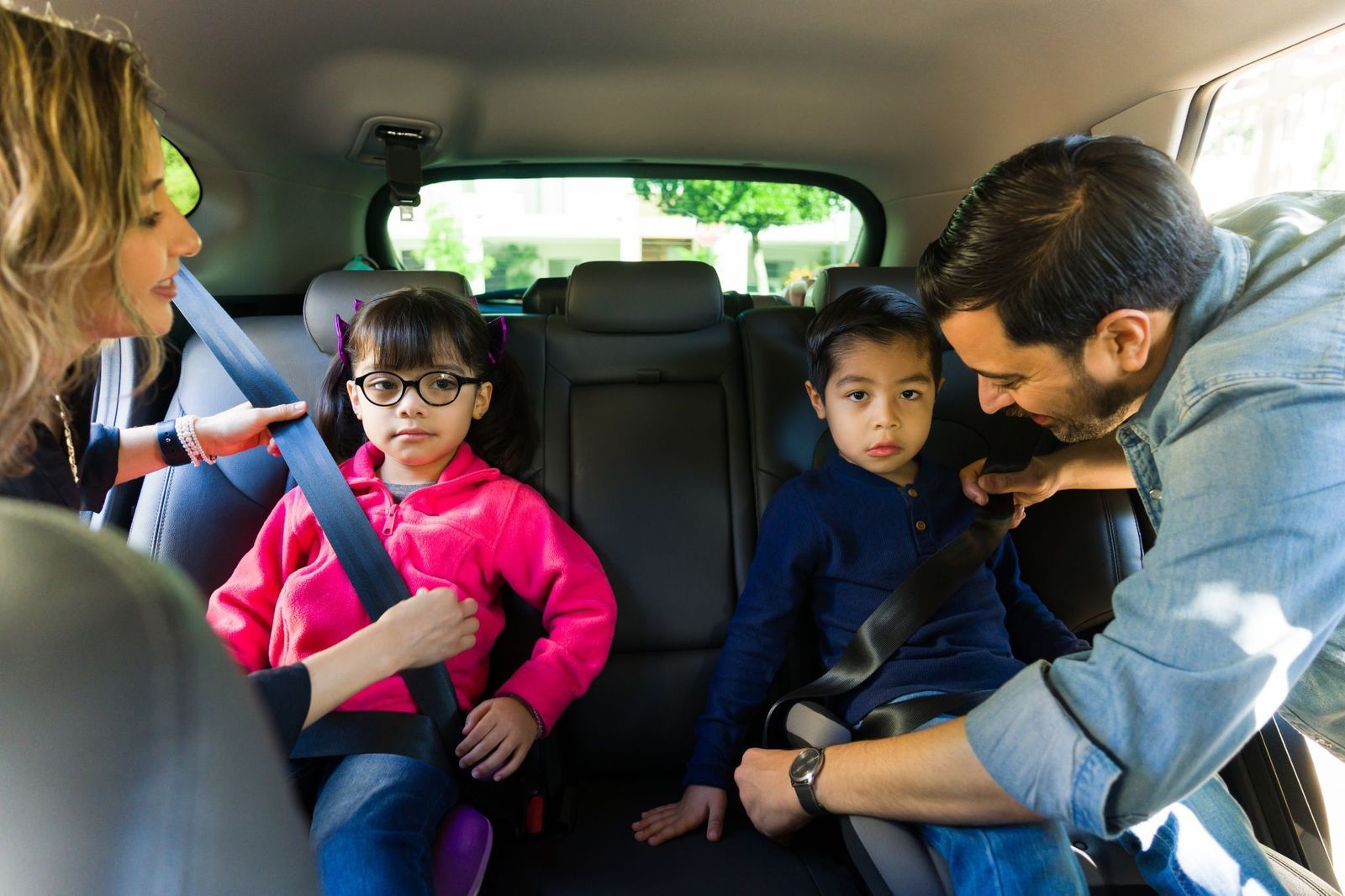
Image: antoniodiaz

Whether you're driving your own vehicle or renting one at your destination, using the correct child restraint is one of the most important safety decisions you'll make. Motor vehicle crashes remain one of the leading causes of injury and death for children, making proper car seat use essential.

Health and safety experts recommend keeping children rear-facing as long as possible before transitioning to forward-facing seats, followed by booster seats until an adult seat belt fits correctly . Children under 13 are generally safest riding in the back seat. Taking a few extra minutes to install a seat correctly can make a tremendous difference in protecting young passengers.

8
Plan regular breaks on road trips

Image: Romvy

Adults may be able to drive for hours without stopping, but children usually need regular opportunities to stretch, move around, and burn off energy. Long periods of sitting can quickly lead to boredom, frustration, and restless behavior.

Planning a break every two or three hours gives everyone a chance to use the restroom, grab a snack, or simply walk around for a few minutes . Scenic overlooks, parks, picnic areas, and playgrounds can transform routine stops into enjoyable parts of the journey while helping drivers stay refreshed as well.

9
Bring a familiar comfort item
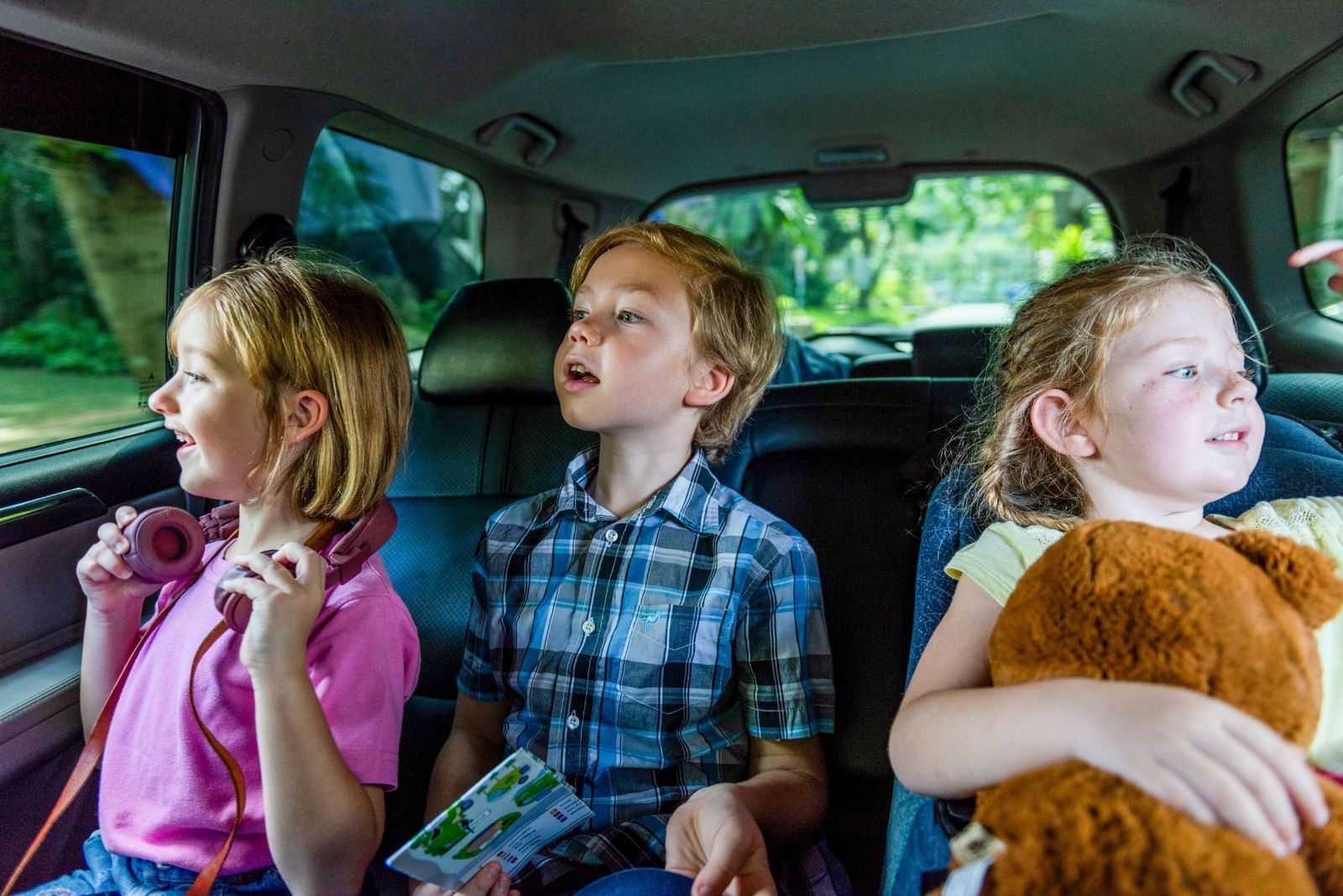
Image: Rawpixel.com

New places can be exciting, but they can also feel overwhelming for younger travelers. A favorite stuffed animal, blanket, bedtime book, or small pillow provides a comforting reminder of home when everything else feels unfamiliar .

Psychologists often refer to these cherished belongings as "transitional objects" because they help children cope with change and unfamiliar situations. Even older children sometimes appreciate having a familiar item nearby while sleeping in hotels or staying with relatives. Small comforts can make a surprisingly big difference after a busy day of sightseeing.

10
Involve kids in the planning

Image: Ground Picture

Vacations become even more exciting when children feel like active participants instead of passive passengers. Depending on their age, let them help choose a restaurant, pick one attraction to visit, or learn interesting facts about the destination before leaving home .

Younger children often enjoy marking locations on a map or helping pack their own travel bag, while older kids may enjoy researching museums, hiking trails, or local foods. Giving every child one special choice during the trip encourages enthusiasm and creates memories they'll feel personally connected to.

11
Keep bedtime routines as consistent as possible

Image: BaLL LunLa

Travel naturally disrupts daily schedules, but maintaining familiar bedtime habits can help children settle down more easily in new surroundings . Reading the same bedtime story, brushing teeth in the usual order, or listening to a familiar lullaby signals that it's time to sleep, even if bedtime happens in a hotel halfway around the world.

Well-rested children generally handle busy sightseeing days, long flights, and unfamiliar environments much better than overtired ones. While vacations don't require military precision, preserving a few comforting routines often helps the entire family enjoy each day a little more.

12
Remember that perfect trips don’t exist
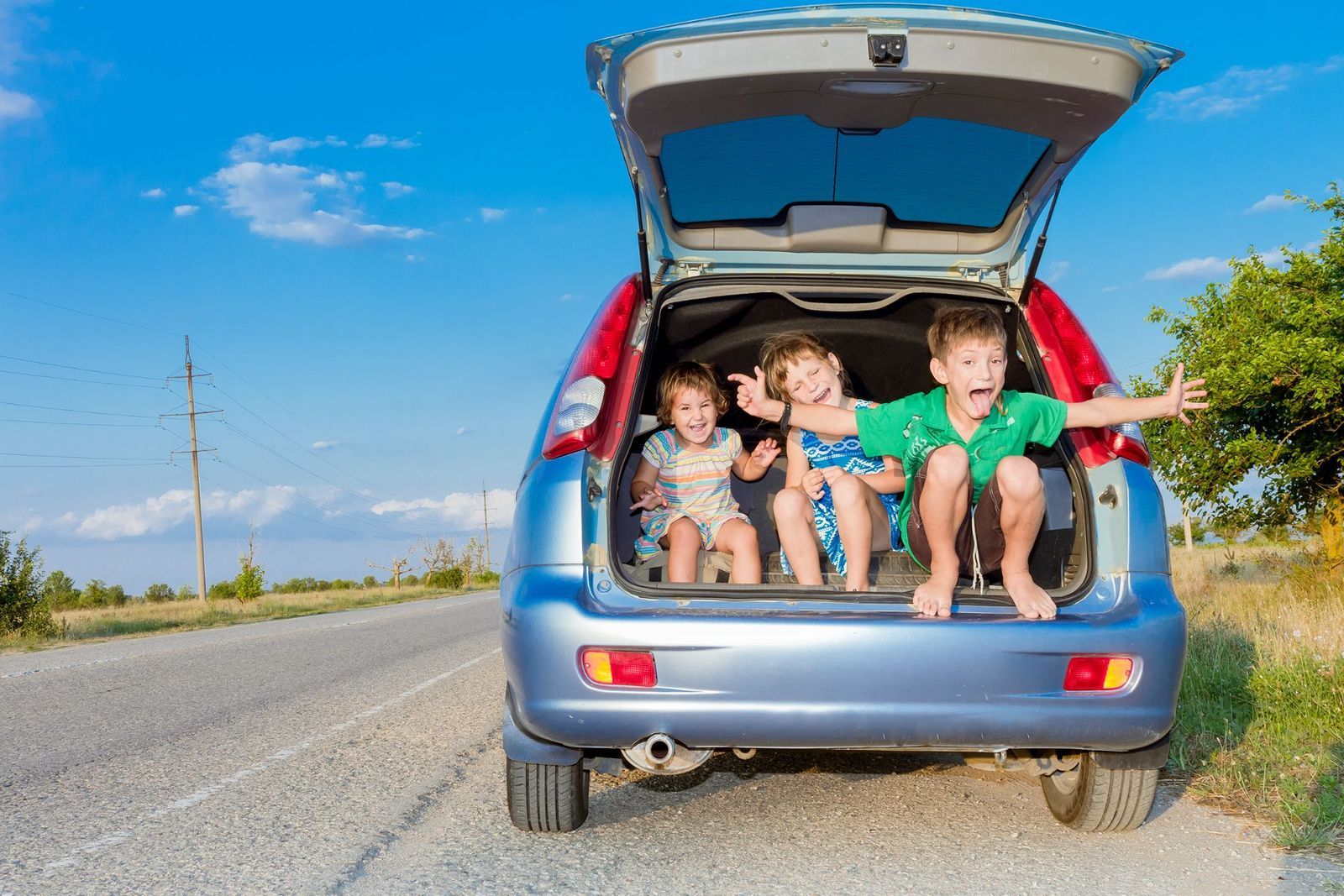
Image: Elena Yakusheva

Perhaps the best family travel advice has nothing to do with luggage, flights, or packing lists. Even the most carefully planned vacation will probably include a delayed flight, unexpected rainstorm, forgotten toy, or missed reservation somewhere along the way .

The families who seem to enjoy traveling the most aren't necessarily the ones whose trips go perfectly; they're the ones who treat surprises as part of the adventure. Years later, it's often the unexpected moments that become the funniest stories and the happiest memories. A successful family vacation isn't measured by perfection, but by the experiences you share along the way.


General General 4 min read

The secrets of the greenback

Dollar bills are green for this reason

Image: Pepi Stojanovski

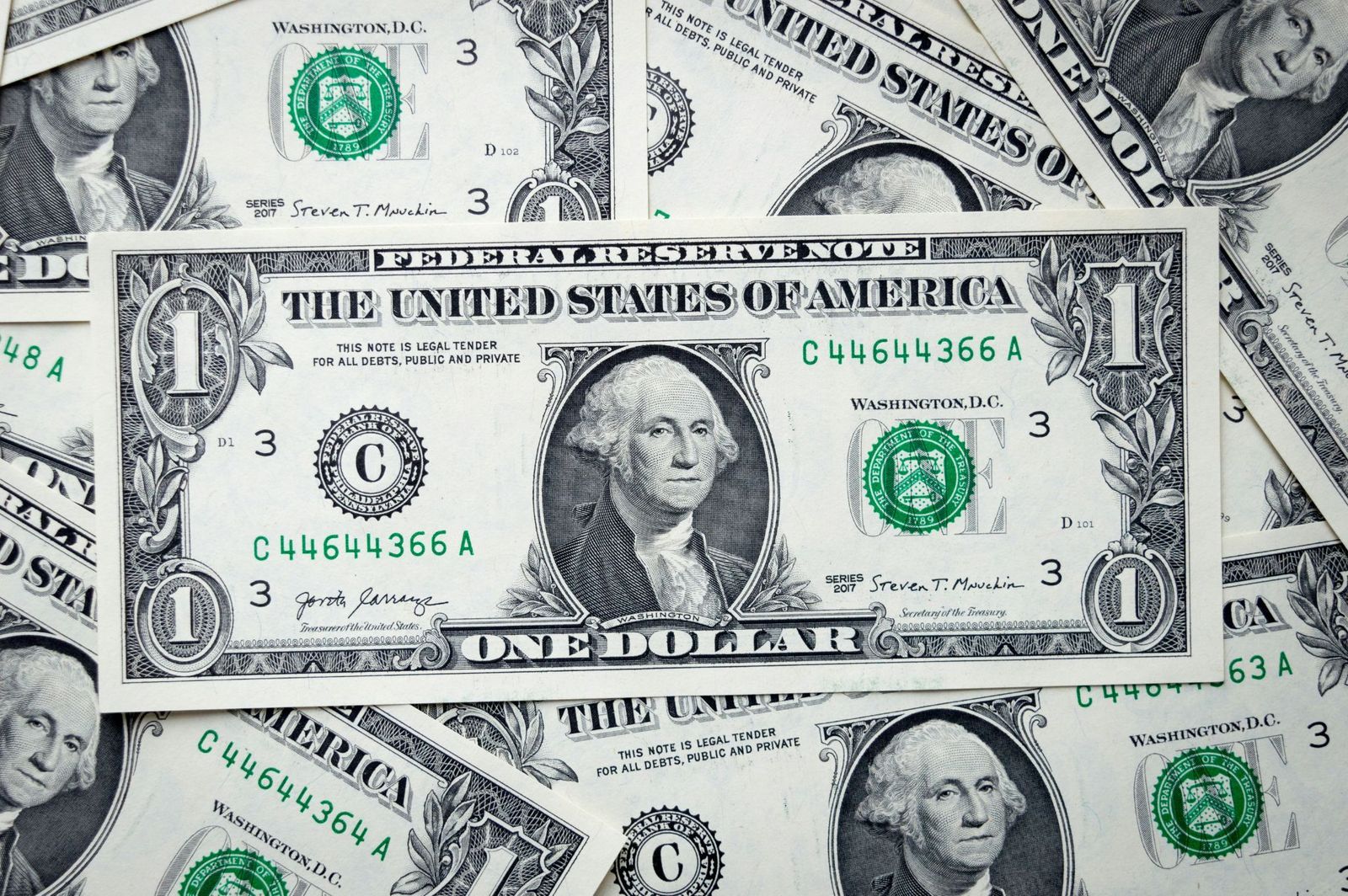
The U.S. dollar is one of the most powerful and recognizable currencies in the world, but its physical form is unique for many other reasons . From its composition to its symbols, dollar bills and coins are carefully designed to combine history, security, and convenience. Let’s explore our national currency!

1
What are bills made of?

Image: Viacheslav Bublyk

Unlike other currencies, dollar bills are not made of paper or plastic. U.S. dollar bills are made from a special fabric blend composed of 75% cotton and 25% linen. This mix makes the bills extremely durable and resistant, and they can be folded about 4000 times before tearing.

2
What bills are valid?

Image: U. S. Government, The Bureau of Engraving and Printing, Public domain, via Wikimedia Commons

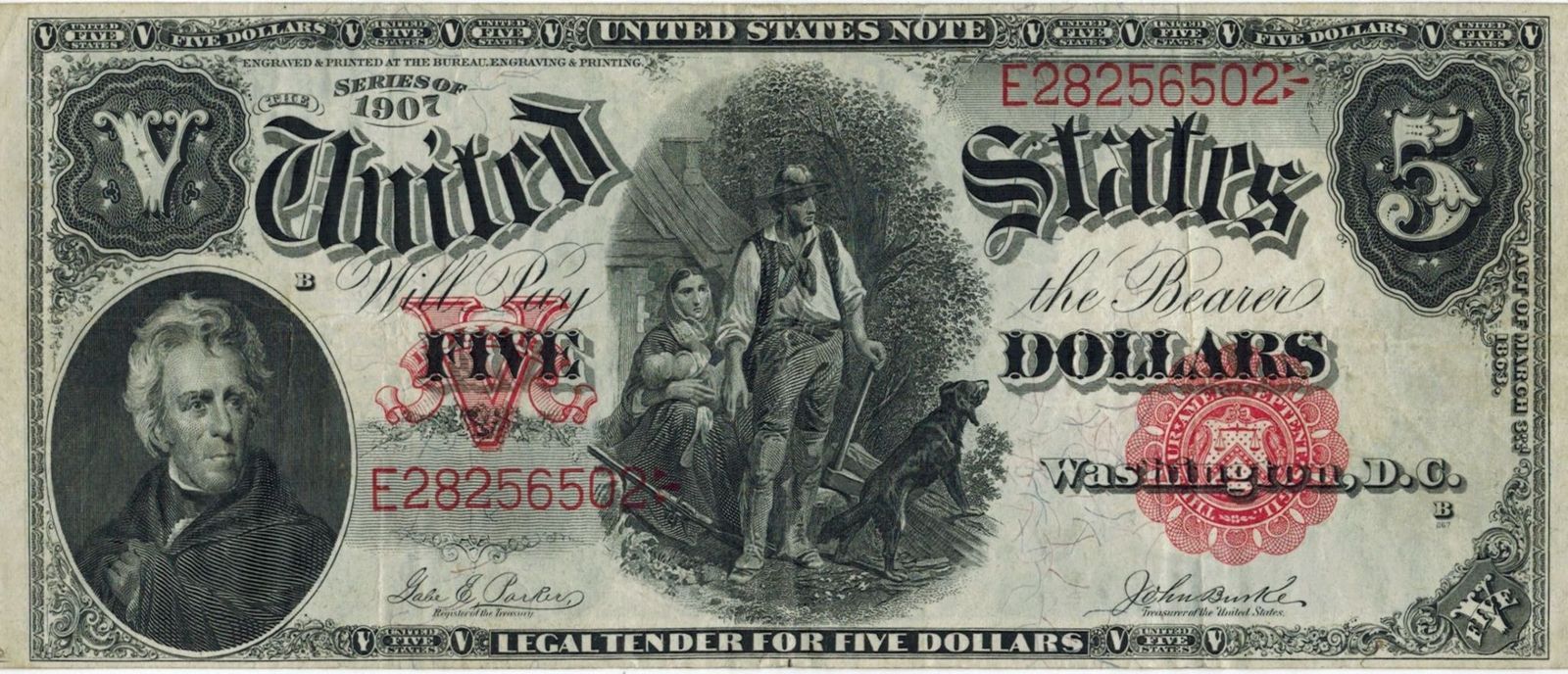
Any U.S. dollar bill that was legally printed is valid, no matter how old, as American currency does not have an expiration date. While some bills might not be accepted by businesses of foreign exchange services due to their condition or if they are a discontinued version of the bill, the bills themselves are still valid, and American banks will accept them, though they might take them out of circulation.

3
American leaders

Image: Lukasz Radziejewski

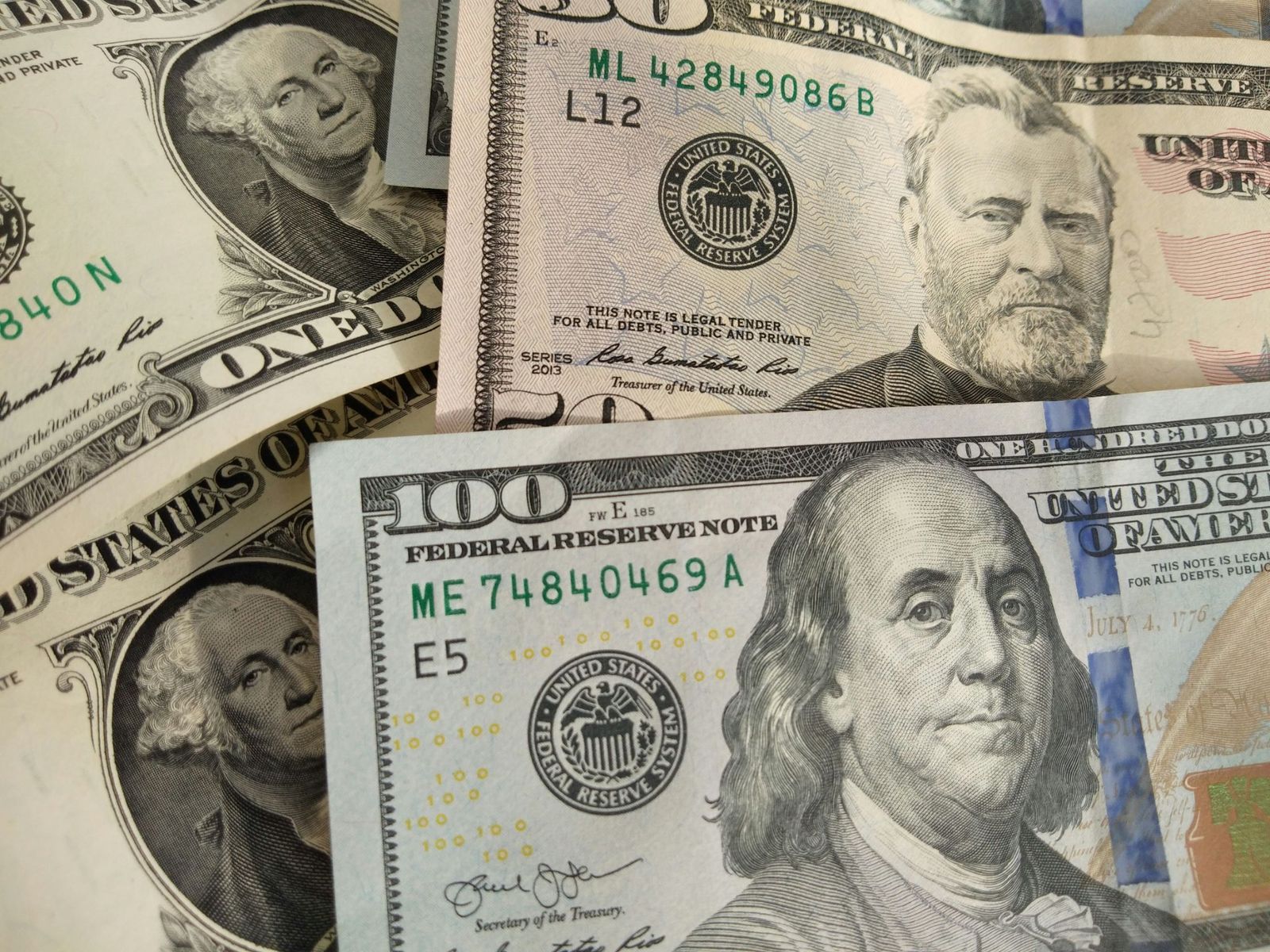
Five bills have a depiction of an American president. The exceptions are the $10 bill, with Alexander Hamilton on the front, and the $100 bill, with Benjamin Franklin. The $1 bill, depicting George Washington, is extremely symbolic: several elements are repeated 13 times as a nod to the thirteen colonies, and it showcases the Bald Eagle and the Eye of Providence as a sign of God watching over America.

4
A change in size

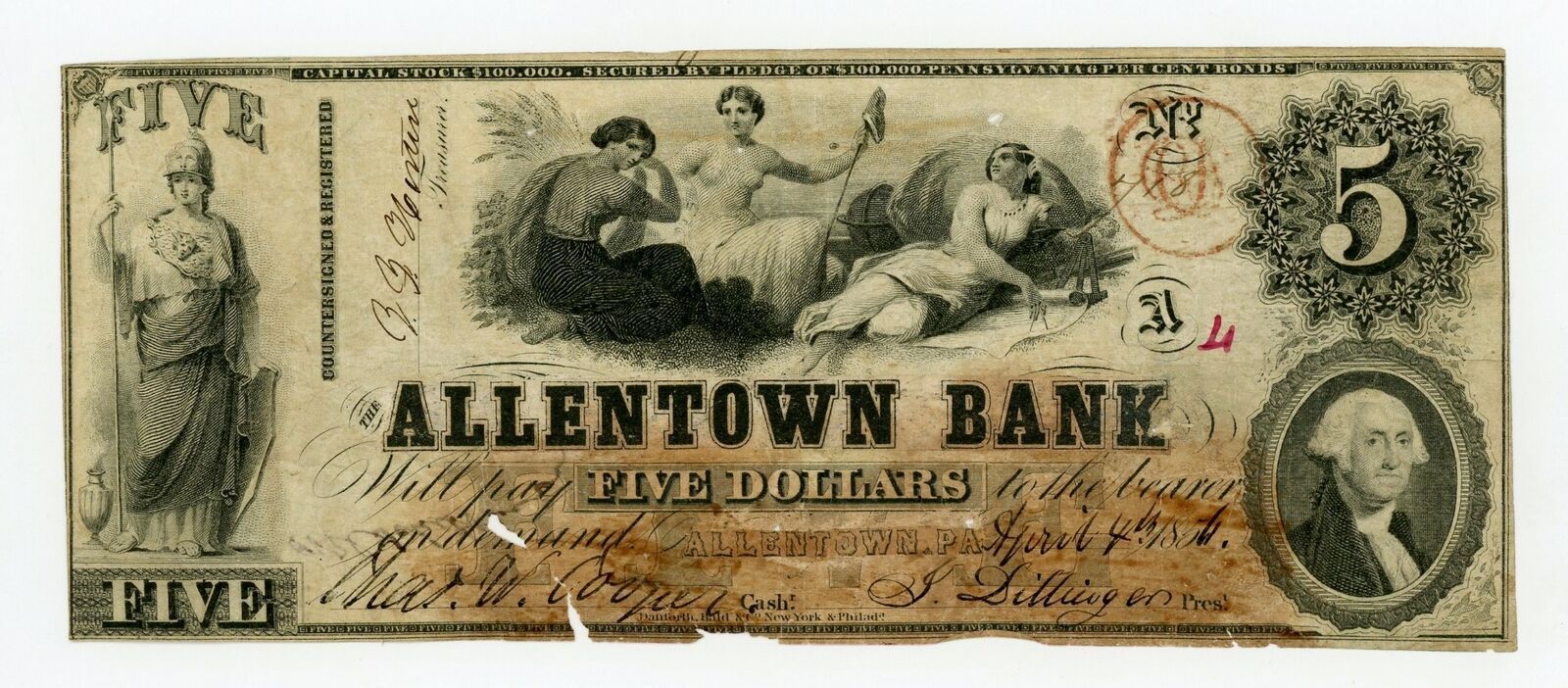
Did you know that dollar bills used to be so big that they were nicknamed "horse blankets"? Original dollar bills were 7.4 × 3.1 inches. In 1929, the Treasury Department reduced the size of bills to 6.14 × 2.61 inches to reduce production costs and materials. Old bills, though still valid, are worth much more as collector items.

5
Uniformity

Image: Avinash Kumar

Besides their value and design, all dollar bills have the same size (6.14 × 2.61 inches), color, and weight (1 gram) , which sets American currency apart from other countries where bills of different values are differentiated by size, color, or both. Why doesn’t the U.S. implement differences among bills? The cost of adapting vending machines, bank drawers, and ATMs to new bill sizes would cost billions of dollars.

6
Hard to copy

Image: United States Treasury Department, Public domain, via Wikimedia Commons

Originally, dollars were not green, but black. As time passed, green ink was favored, as it was cheap and did not fade as much as black. The new color also prevented people from using black-and-white cameras to create counterfeit money. Currently, dollar bills are predominantly green, but newer versions also include extra colors, such as pink, orange, or purple.

7
A $100,000 bill?

Image: The original uploader was Durova at English Wikipedia., Public domain, via Wikimedia Commons

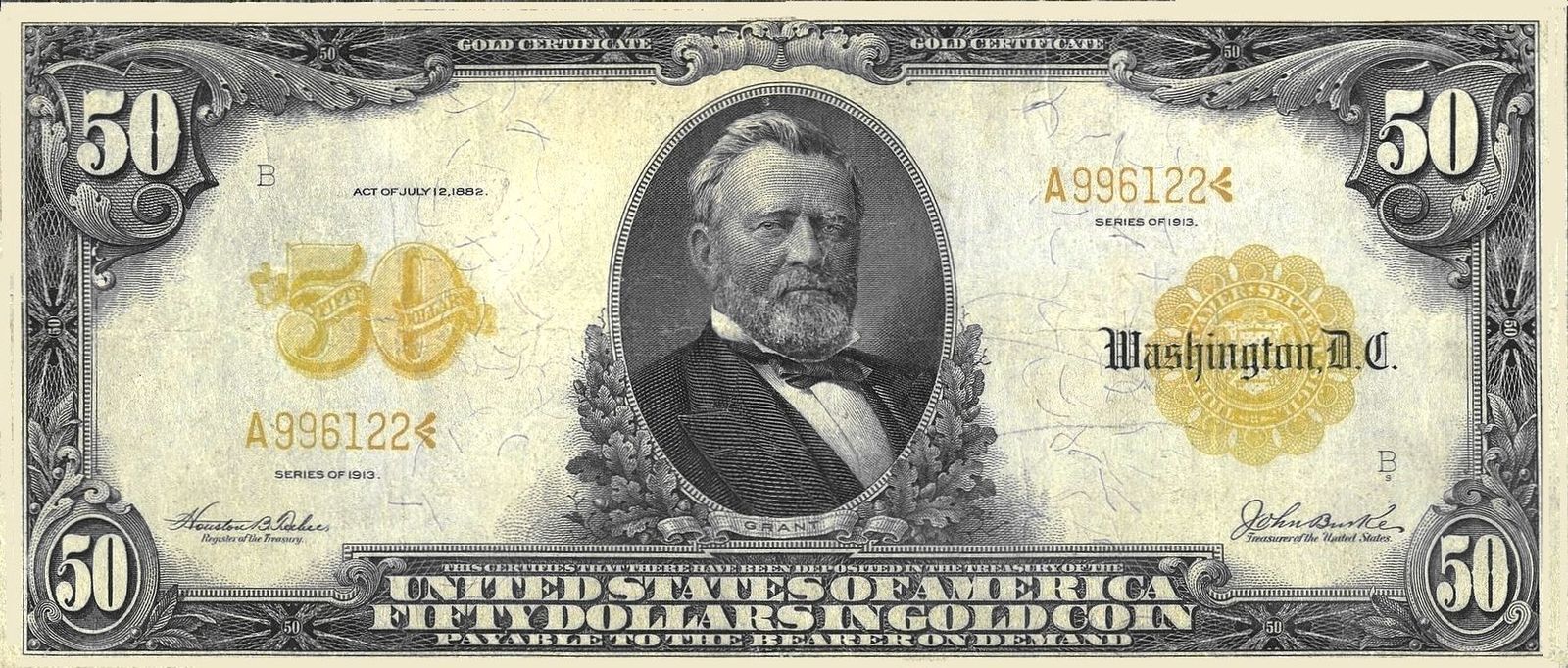
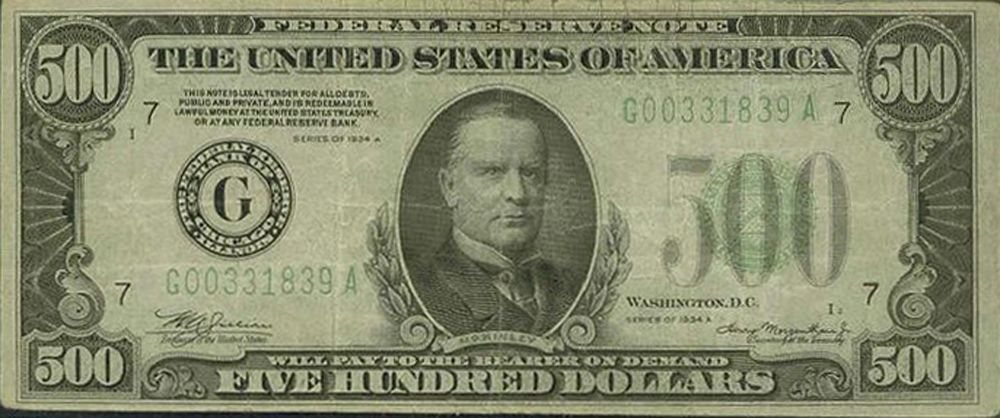
Have you ever seen a $500 or 1,000 dollar bill? What about a $100,000? Up until 1945, the U.S. Treasury printed $500, $1,000, $5,000, $10,000, and $100,000 notes , in addition to the values currently in use. These higher-value notes were mainly intended for bank and government use, but were sought by criminals as they made it easier to hide large amounts of money. Even though they were officially discontinued in 1969, these notes are still valid, though rare, and they have a high worth as collector's items.

8
No numbers

Image: Quilia

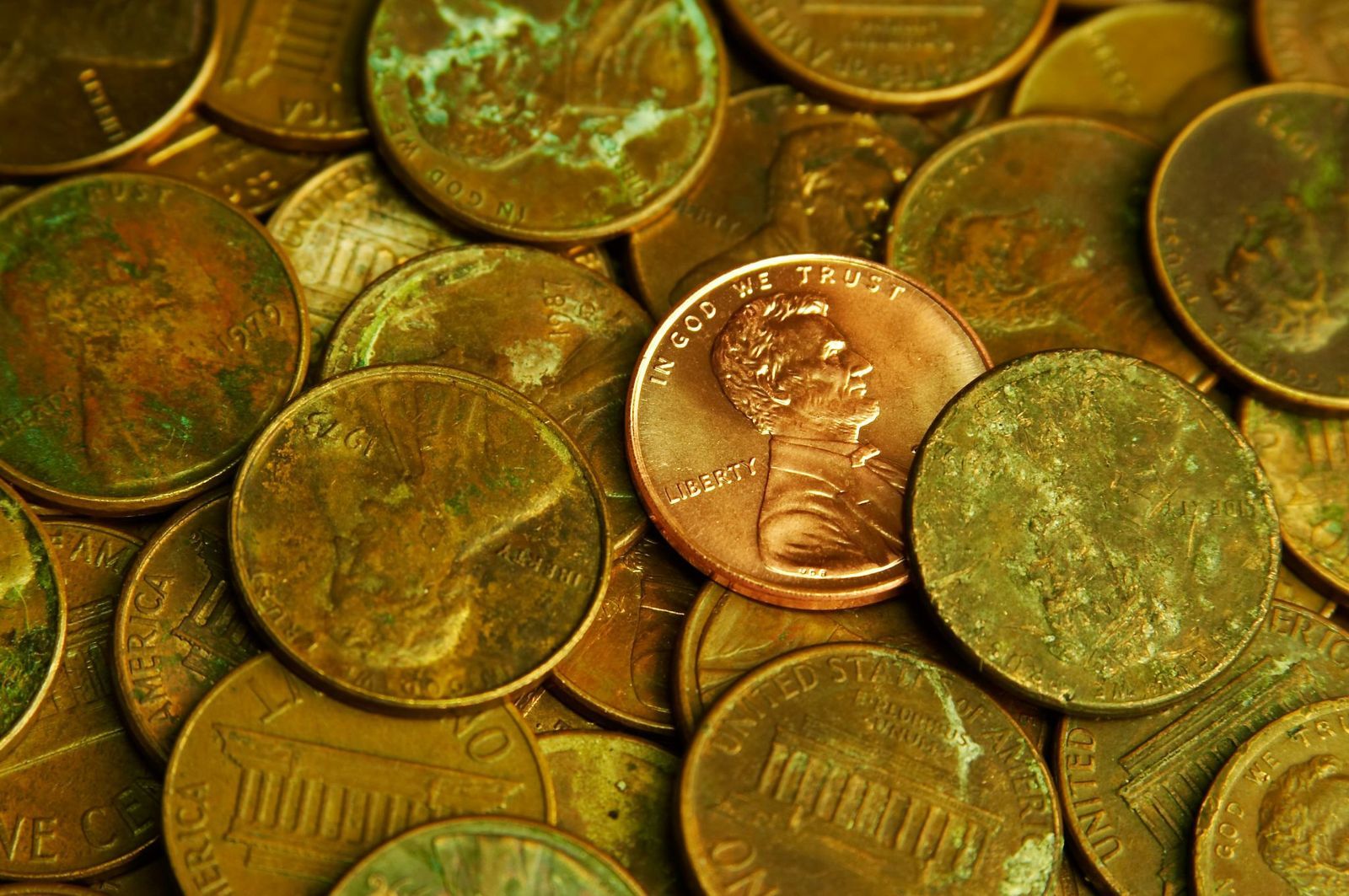
Unlike bills, American coins have different sizes and colors related to their value. Originally, gold, silver, and copper were used for coins, but modern coins are made of copper, zinc, or nickel. Besides their size and design, the value of each coin is printed in letters, not in numbers , alongside depictions of American presidents.

9
Liberty for all (the coins)

Image: Money Knack

By law, all American coins must include six specific details : the word ‘Liberty’, the name of our country, the national motto "In God We Trust", the oldest American motto "E Pluribus Unum", the value of the coin, and the year. Each coin also includes a mint mark that shows where it was made: "P" for Philadelphia, "D" for Denver, "S" for San Francisco, and "W" for West Point.

10
A global currency

Image: Logan Voss

The American dollar is one of the most powerful currencies in the world, acting as a backbone for international trade and finances. It is estimated that two-thirds of the physical dollars in circulation are outside American territory. Besides the U.S. and its territories, eight sovereign nations have the U.S. dollar as their official currency, with several more accepting it as legal tender.

Geography Geography 5 min read

Stories carved by the Colorado River

The missing pieces of the Grand Canyon: 10 incredible facts

Image: jesus esteban

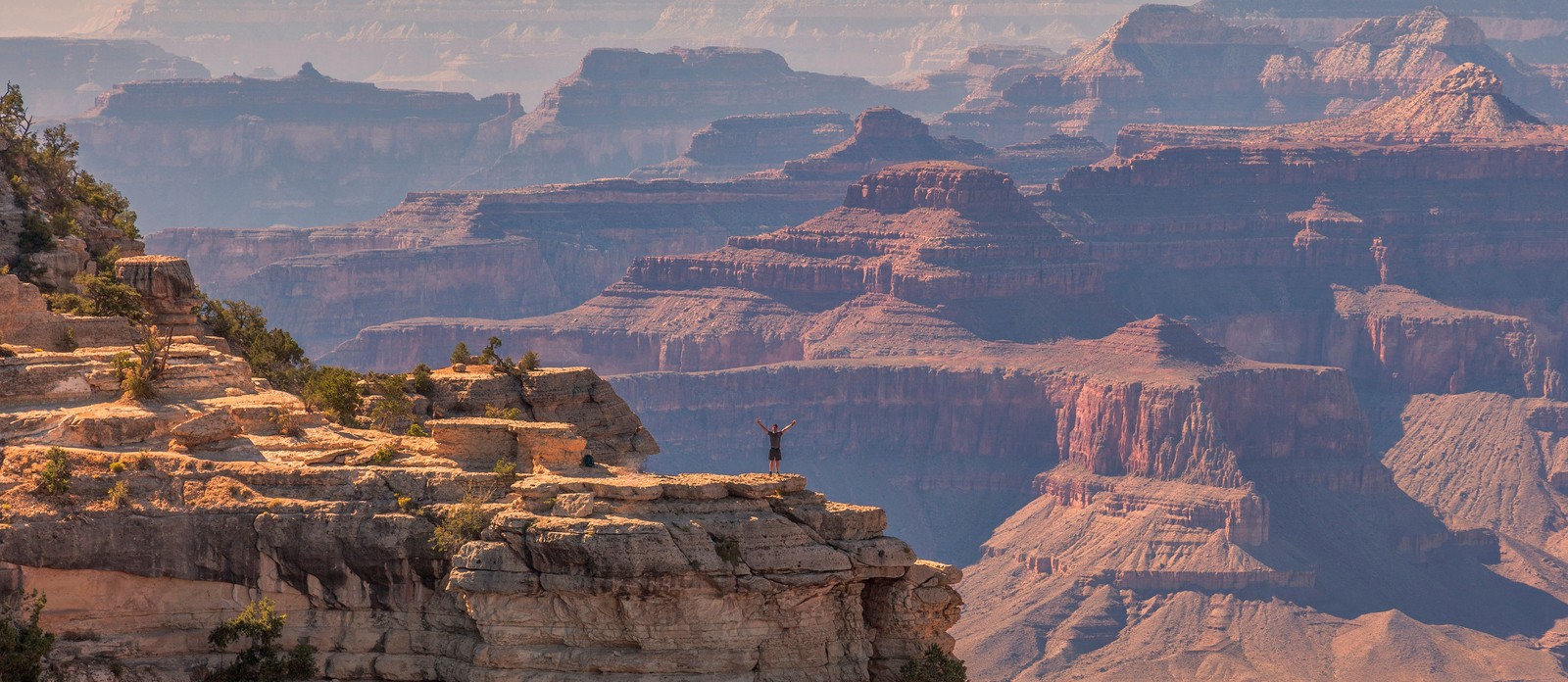
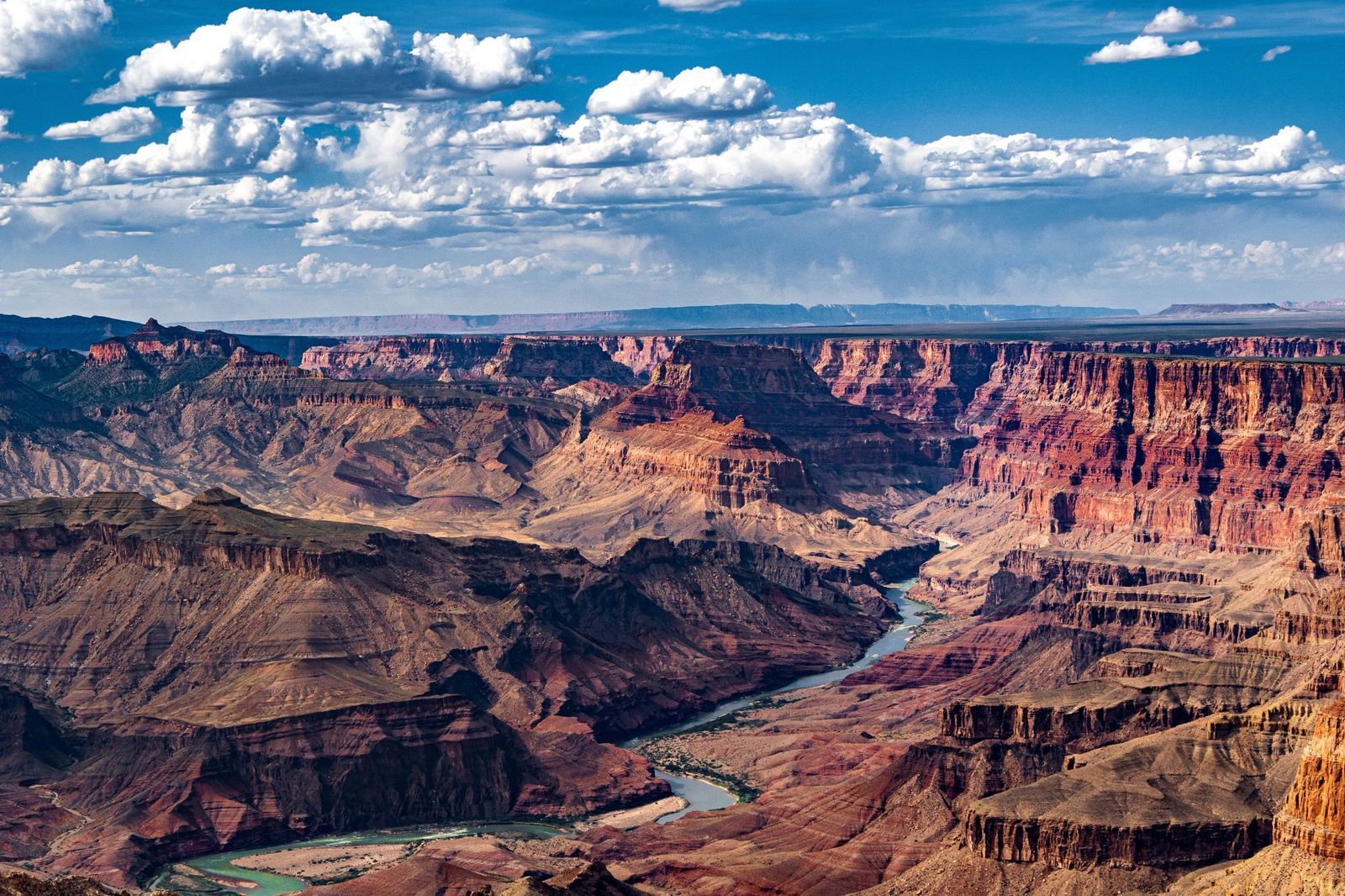
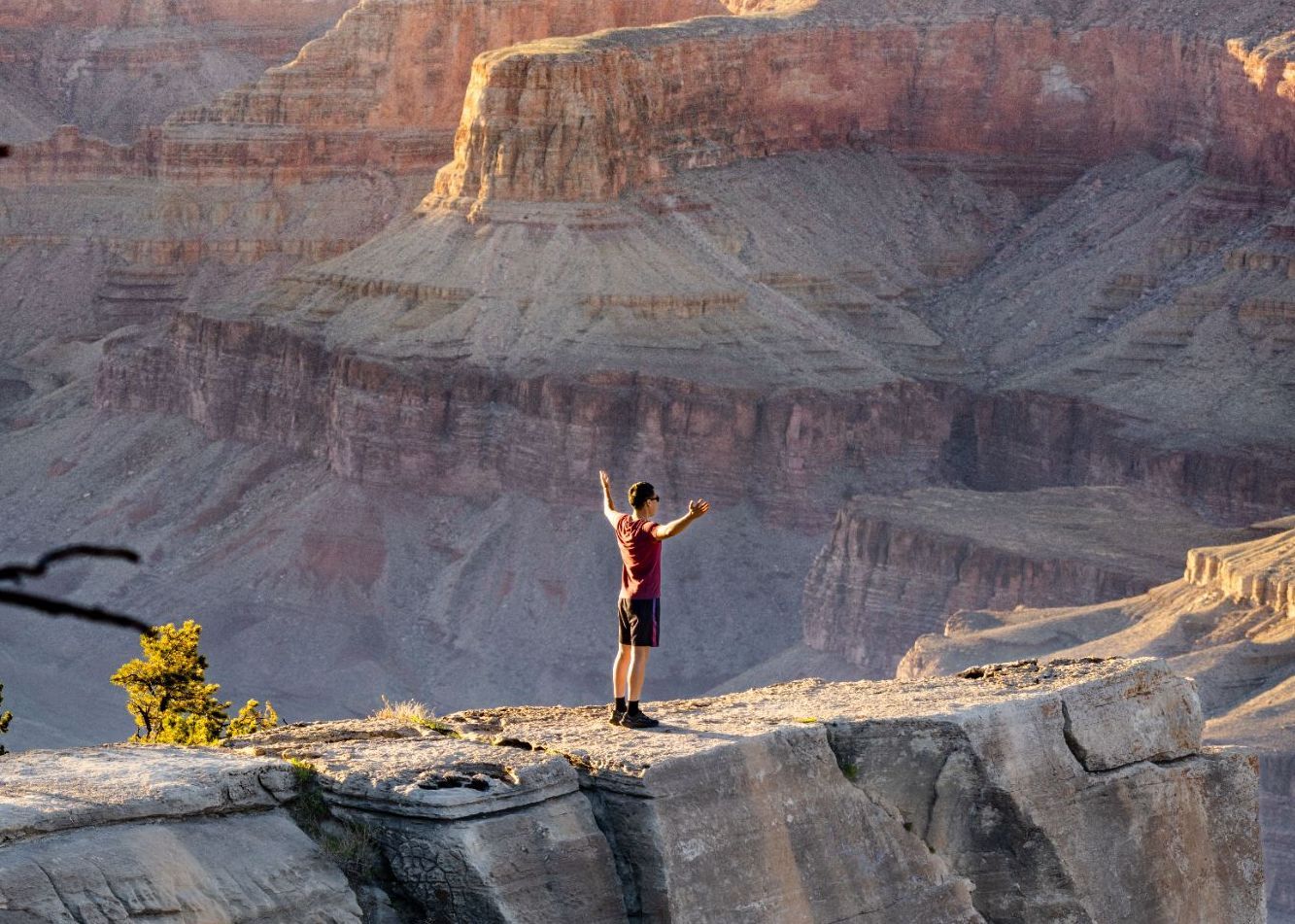
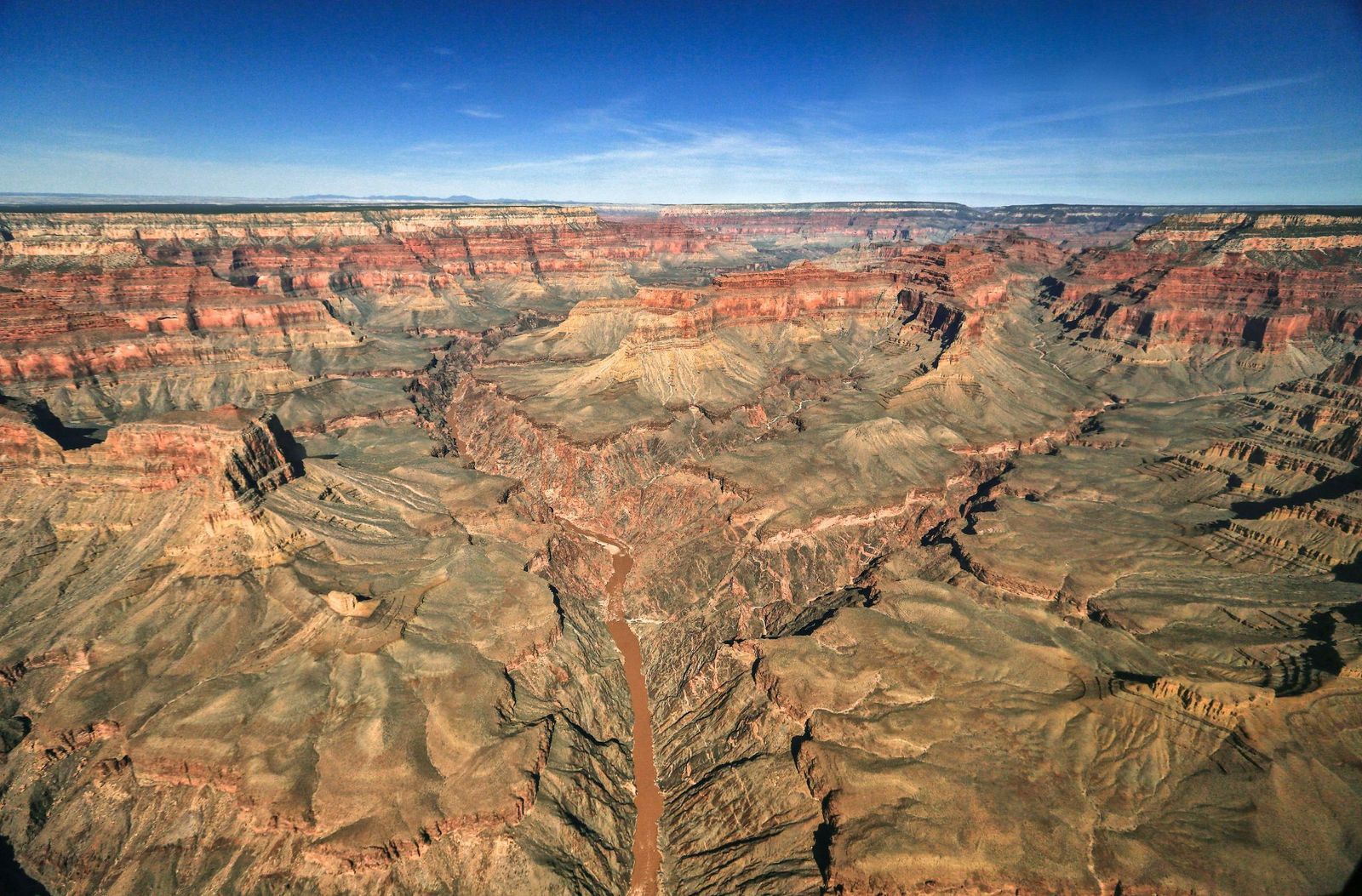
The Grand Canyon is bigger than Rhode Island. It's deeper than four Empire State Buildings stacked end to end. Its rocks are older than dinosaurs. But those stats alone don’t quite capture its immensity — and are hardly the most shocking. There are nuclear shelters, hidden villages, and billion-year mysteries involved. Read on to learn 10 lesser-known facts about the Grand Canyon.

1
There's an unexplained billion-year gap

Image: John Graybosch

Look closely at the canyon walls, and you'll notice something strange: a clean, sharp line where ancient rock simply stops, and a much younger layer begins directly above it.

This geological puzzle is called the "Great Unconformity," and it represents over a billion years of rock layers that are simply absent , as though that stretch of time never happened. In some spots, rock dated 1.8 billion years old sits directly beneath rock that is only 520 million years old. Where did the missing billion years go?

The leading theory involves the violent breakup of an ancient supercontinent, but scientists are still piecing it together.

2
During the Cold War, it hid a nuclear fallout shelter

Image: Lauri Väin from Tallinn, Estonia, CC BY 2.0, via Wikimedia Commons

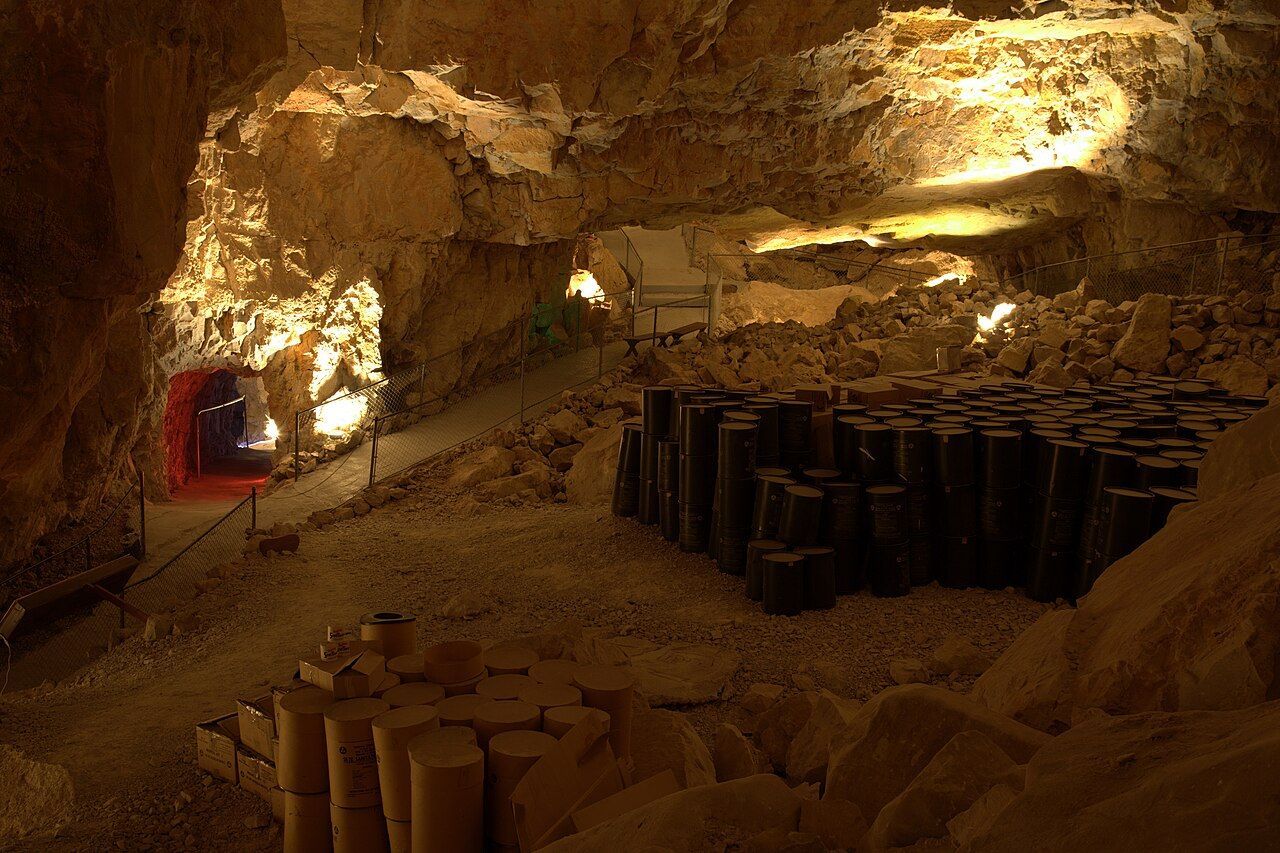
During the Cuban Missile Crisis in 1962, the U.S. government converted part of the Grand Canyon Caverns into a fallout shelter. This dry cave system, more than 200 feet underground, was stocked with enough food and water to sustain 2,000 people. Naturally, it was never occupied, and the supplies were never used.

The caverns have since been transformed into a tourist attraction, with organized tours winding through the same underground chambers that were once intended as a refuge from nuclear war. You can even book a night's stay there.

3
The Federal Aviation Administration was founded after a crash over the canyon

Image: Alexandre Henry Alves

In 1956, two commercial passenger planes collided in midair over the eastern Grand Canyon, killing all 128 people on board both crafts. Rescue teams struggled to reach the wreckage deep inside the canyon, and the extreme heat of the crash had caused the planes' aluminum to fuse with the bedrock. There were no survivors.

The disaster exposed a terrifying truth: the U.S. air traffic control system was dangerously outdated, relying on pilots' visual estimates and rough guesswork from controllers , with no way to separate fast-moving aircraft from slow ones, or instrument-flying planes from those navigating by sight. Congress responded by passing legislation that created both the Federal Aviation Administration (FAA) and the National Transportation Safety Board.

4
A hoax suggested that an Egyptian civilization had lived there

Image: abdurrohman dzar

In 1909, the Arizona Gazette reported that an explorer named G. E. Kinkaid had discovered a vast underground citadel inside the canyon, filled with artifacts linked to ancient Egyptian civilization. He even claimed the expedition had been funded by the Smithsonian.

This story described hieroglyphics on the walls, mummies in the chambers, and relics pointing to a direct connection with the Egypt of the pharaohs. It was incredibly detailed, and it was, of course, a hoax. No evidence for any of Kinkaid's claims ever surfaced.

5
Fewer than 100 people have ever hiked its full length

Image: Abhishek Navlakha

Among the few people who have completed the through-hike of the Grand Canyon is Jen Hogan, the first woman to accomplish it, finishing her journey in 2021–2022.

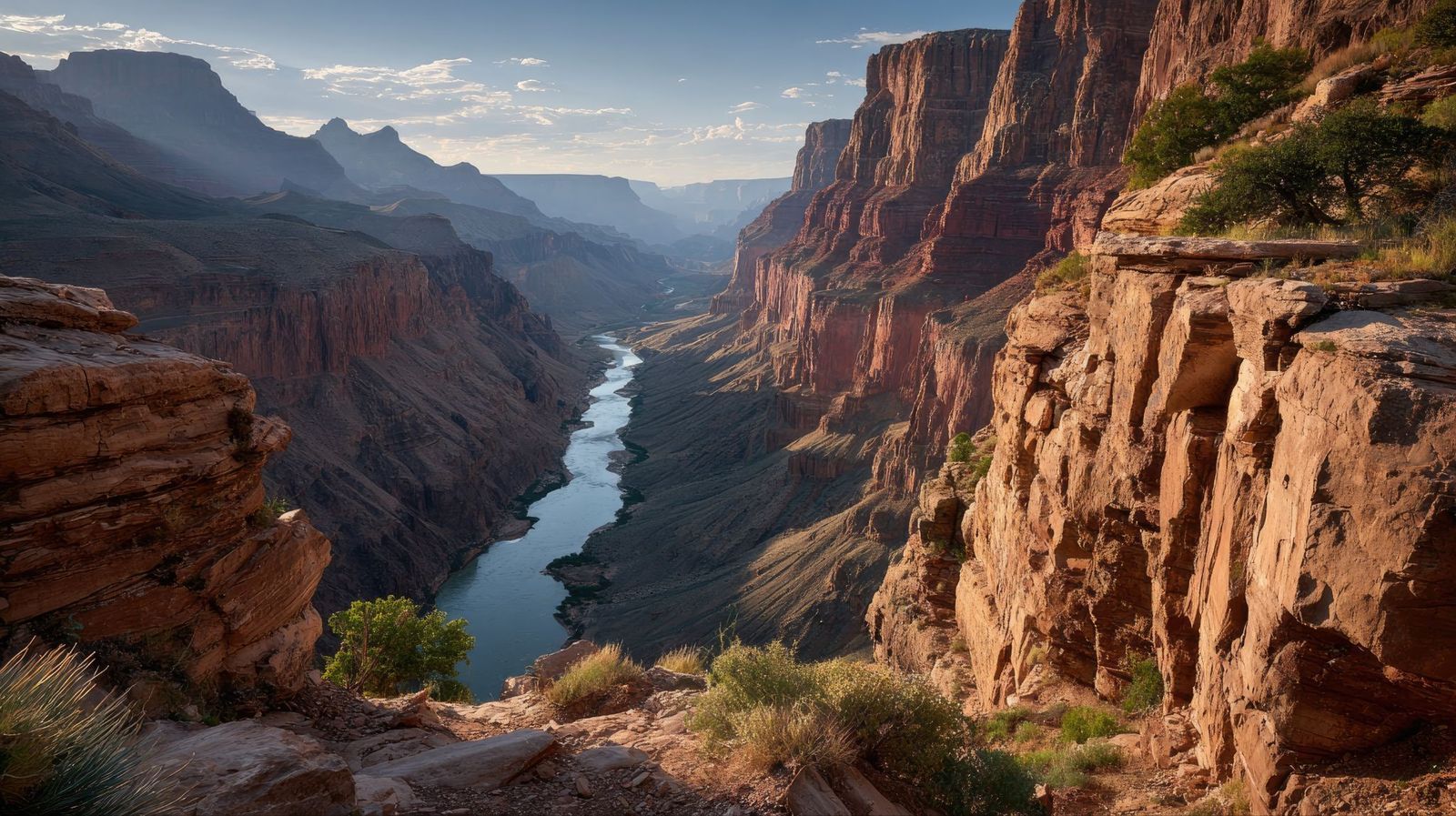
It’s a full 800-mile length below the rim. The route involves extreme heat, flash floods, near-impassable areas, and stretches with no water or trail whatsoever. Around 60 or 70 people have reportedly accomplished it. This makes it one of the most exclusive feats on Earth.

6
The Grand Canyon's rocks predate dinosaurs entirely

Image: MARIOLA GROBELSKA

Visitors scanning the canyon walls for fossils are often surprised to learn they won't find any dinosaur bones here. The rock layers of the Grand Canyon are simply older than dinosaurs. This fact alone can be shocking: staring at its walls means staring at marine fossils from as far back as 1.2 billion years ago. Some of its caves hold the remains of ancient mammals. The canyon is a window into a world that existed long before the dinosaurs, when the land that is now Arizona lay beneath a shallow sea.

7
The park is bigger than Rhode Island

Image: AussieActive

Numbers alone rarely capture the Grand Canyon's scale, so here's a different approach. Rhode Island covers about 1,214 square miles, and the Grand Canyon National Park spans 1,904 square miles.

The canyon's depth exceeds four Empire State Buildings (which is 1,454 feet) stacked on top of one another. That’s 6,093 feet at its deepest point.

8
But it's not the deepest canyon on Earth

Image: Naeemphotographer2

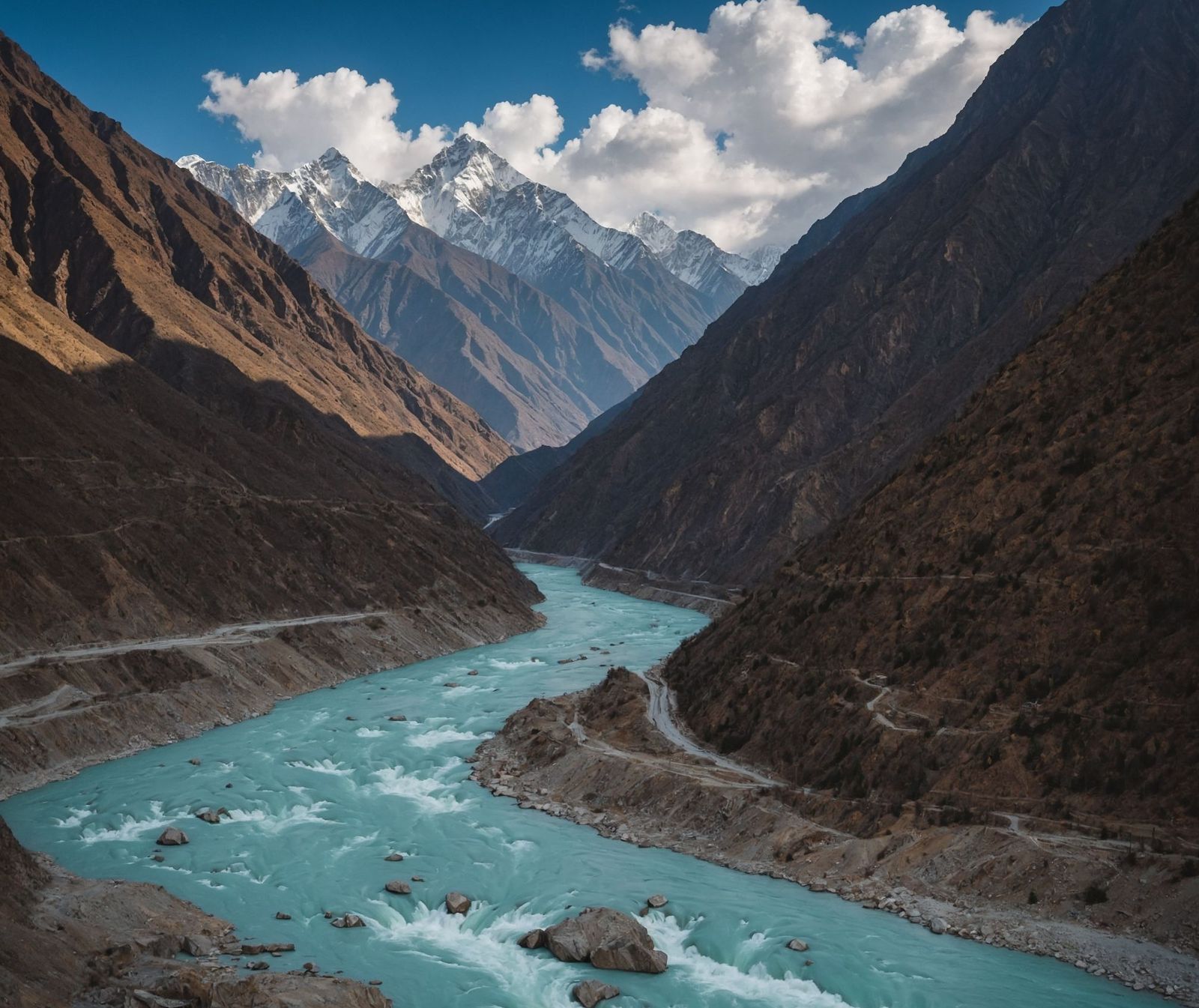
For all its grandeur, the Grand Canyon does not hold the depth record. Pictured above, the Yarlung Tsangpo Grand Canyon in Tibet, China, plunges to 17,567 feet, which is nearly three times deeper. Carved by the Yarlung Tsangpo River as it cuts through the eastern Himalayas, that canyon is so remote and extreme that it remained largely uncharted until the late 20th century.

9
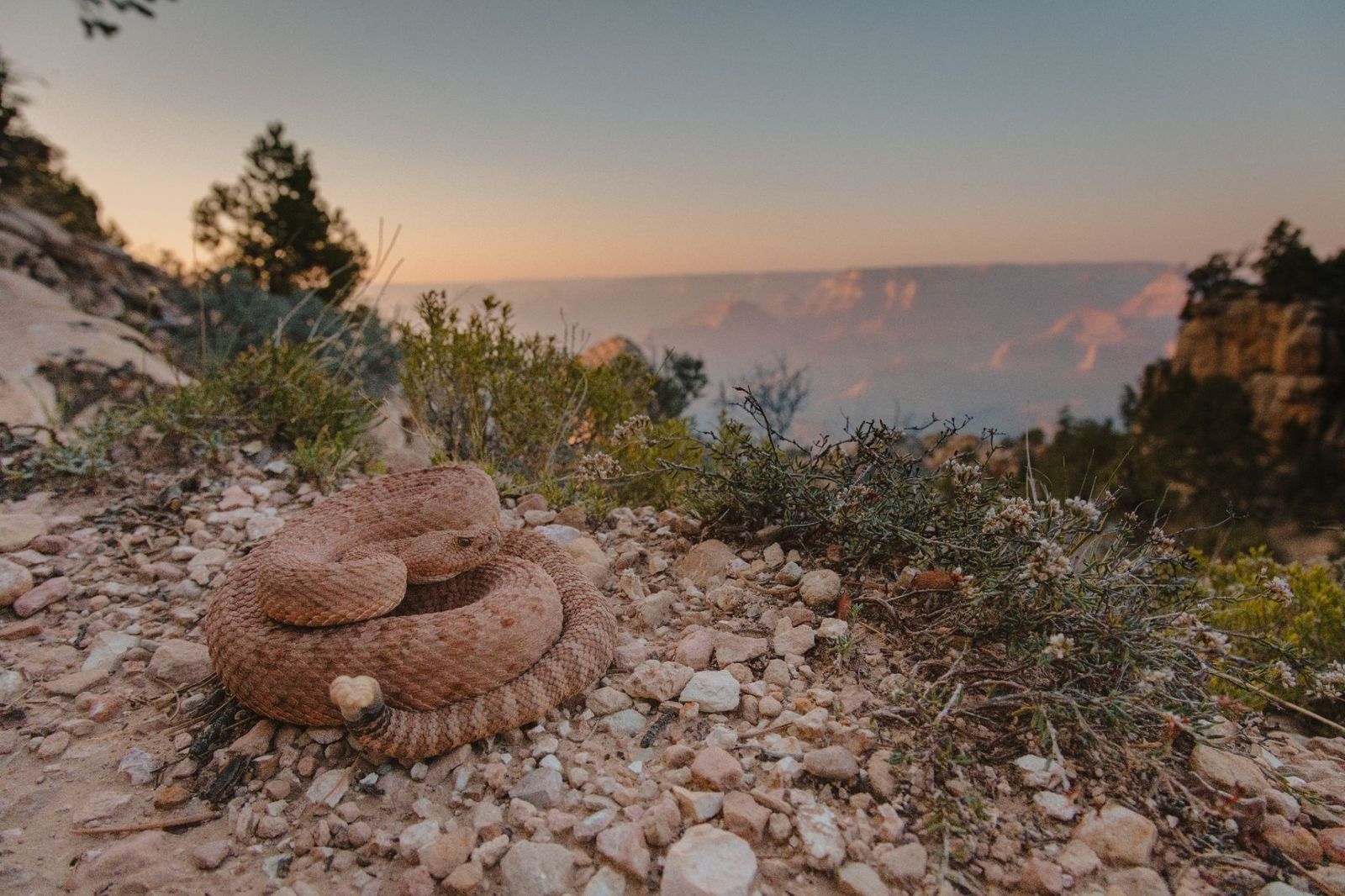
It is home to a pink rattlesnake found nowhere else on Earth

Image: Alexander Wong

The Grand Canyon Pink Rattlesnake has a pinkish-red coloring that matches the canyon's own distinctive rock walls so closely that it's nearly invisible. It is found nowhere else in the world. Officially classified as Crotalus oreganus abyssus , it has darker diamond-shaped markings along its back that deepen the camouflage further.

10
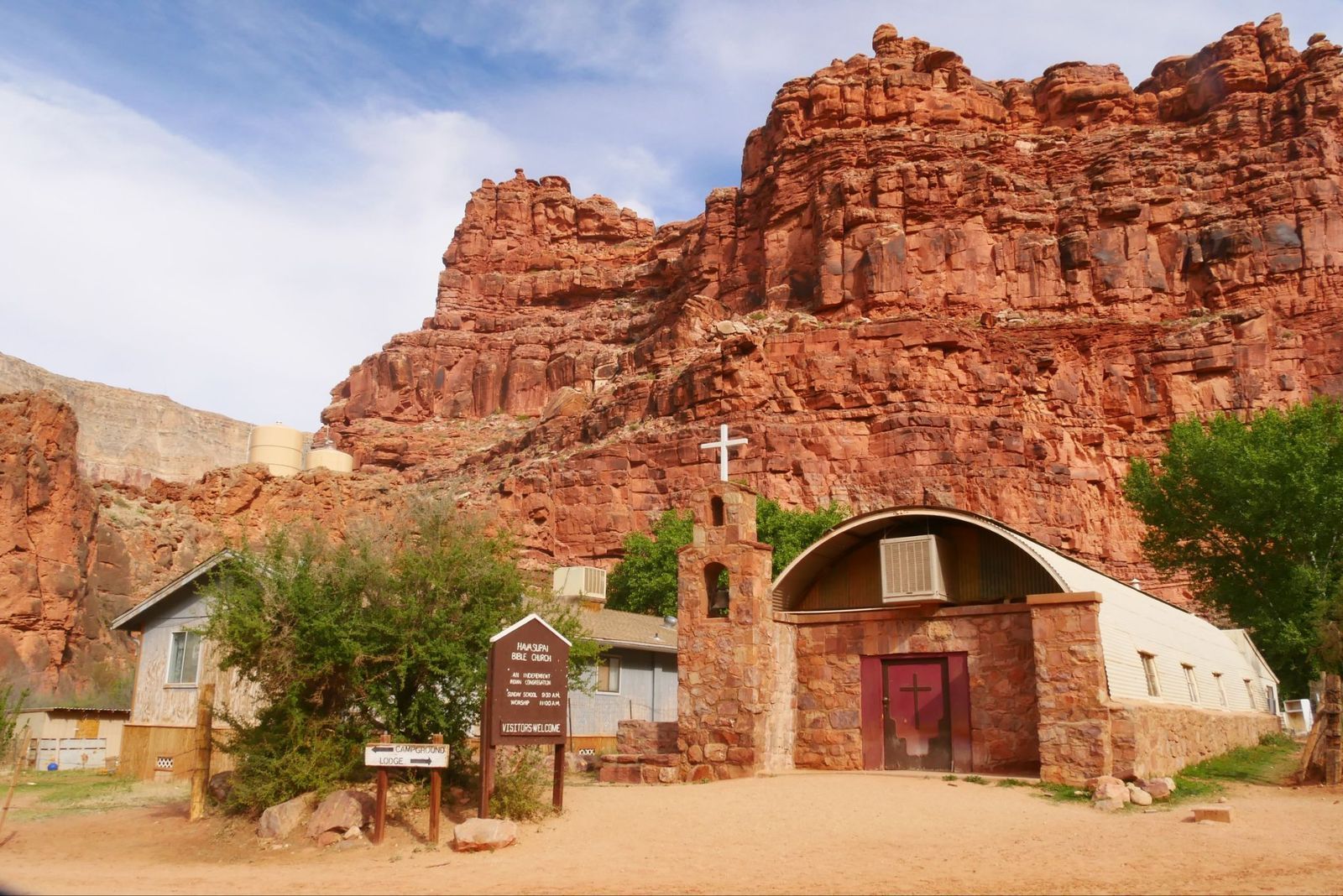
There's a village at the bottom: Supai Village

Image: joojoob27

For over 1,000 years, the remote village of Supai has been home to the Havasupai Tribe, the People of the Blue-Green Waters. It is located an eight-mile hike from the rim, but sits roughly 3,000 feet deep inside the Grand Canyon.

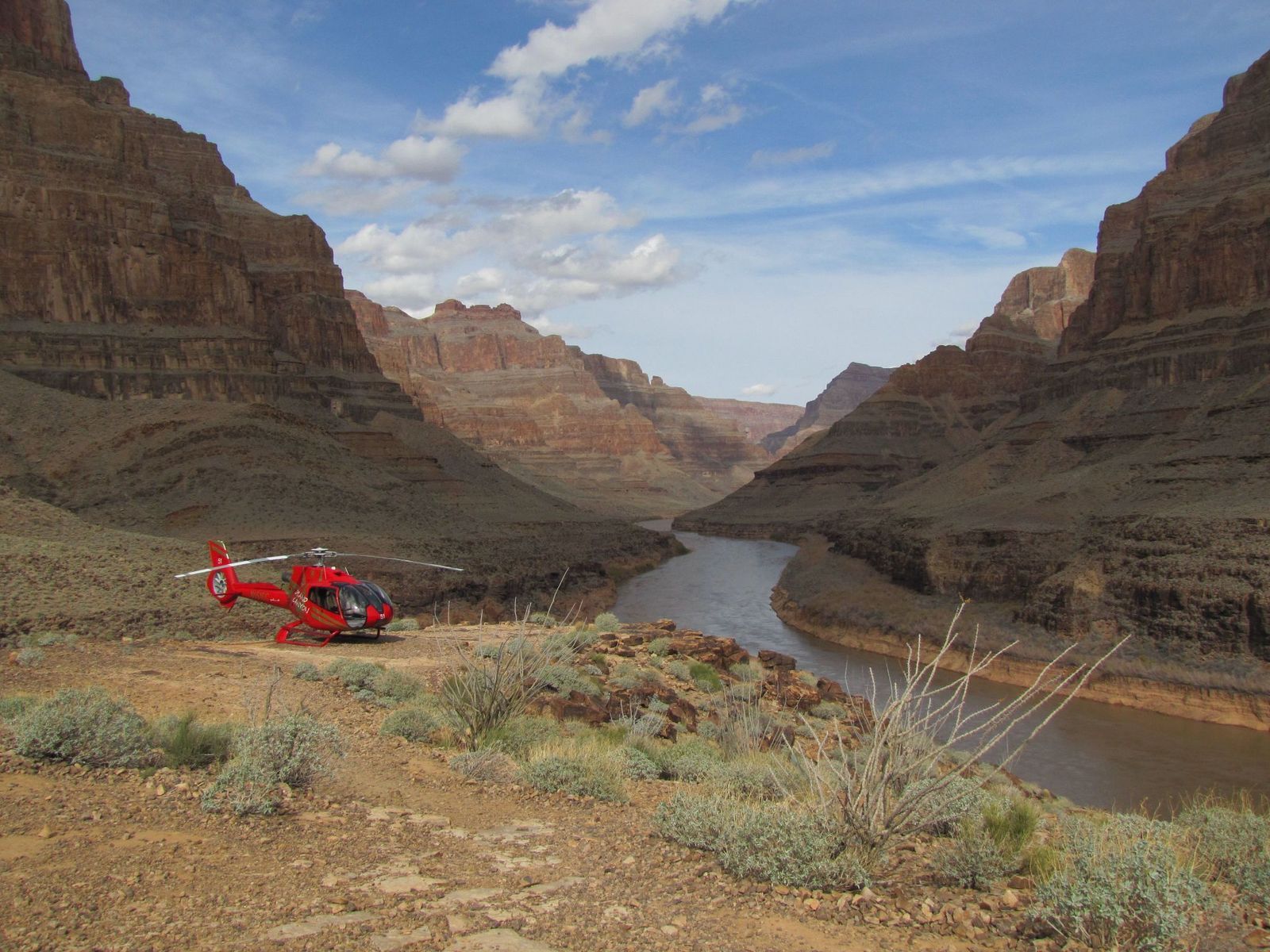
The U.S. Department of Agriculture has called it the most remote community in the contiguous United States, and it has no automobiles and no road access. The only ways in are on foot, by mule, or by helicopter. It is also the only place in the United States where the postal service still delivers mail by mule train.

Explore more American facts

Choose your favorite category!

General
General

As American as apple pie—the very best America has to offer!

Culture
Culture

Delve into the astounding richness of American lore.

Geography
Geography

Hop in and explore vast and diverse American landscapes.

History
History

Discover the key moments that shaped the United States.