History History 6 min read

Space Race

The bra makers who secretly built the Apollo spacesuits
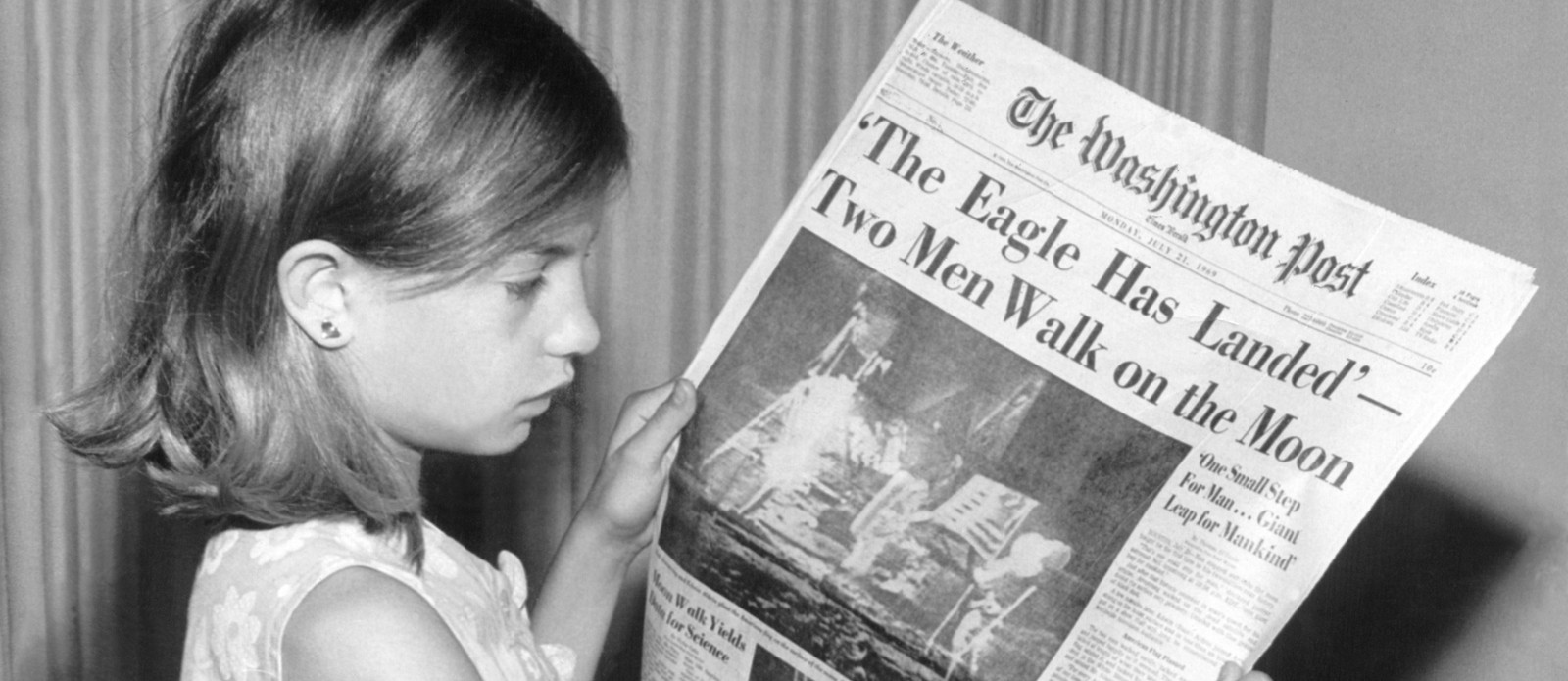
Image: Jack Weir (1928-2005), Public domain, via Wikimedia Commons

Did you know that Apollo 11 had just 25 seconds of fuel to spare when it made its historic 1969 moon landing? Or that a chimpanzee named Ham flew to space first to prove it was safe for humans? Behind the Apollo 11 flag, the spacesuits, and that giant leap sits a decade of secrets, near misses, and stories NASA never advertised. Here are 10 true stories from the Space Race that will change how you see those famous photographs.

1
Apollo 11 touched down with roughly 30 seconds of reserve fuel
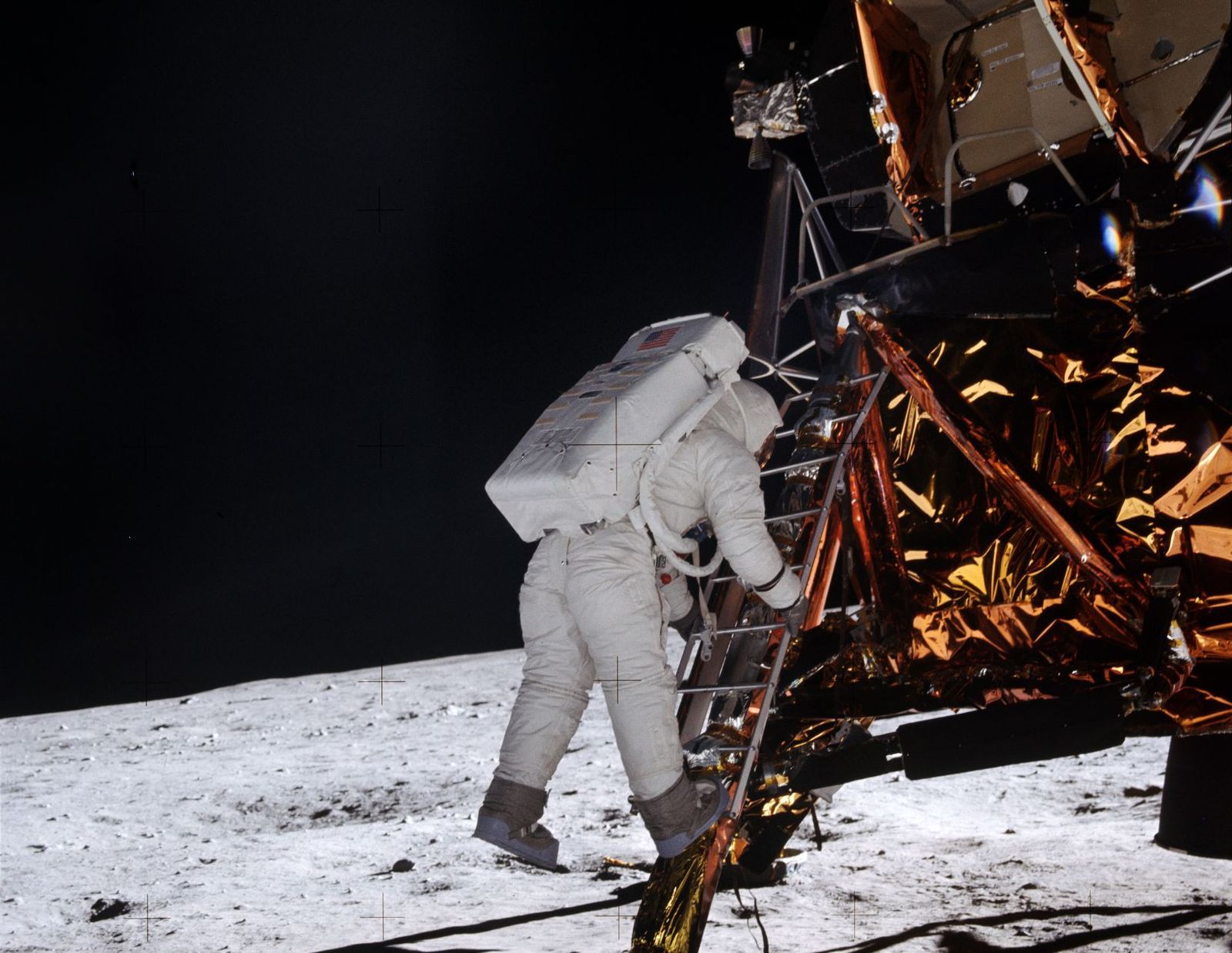
Image: Neil A. Armstrong, Public domain, via Wikimedia Commons

As Eagle descended toward the Sea of Tranquility on July 20, 1969, Neil Armstrong looked out the window and realized the computer was guiding them straight into a field of car-sized boulders.

He took semi-manual control, tilting the module forward to search for a clearer patch of ground while Mission Control in Houston counted down the remaining fuel out loud . Sixty seconds. Then 30. Buzz Aldrin called out altitude and speed as dust kicked up by the engine made it nearly impossible to judge distance. Armstrong finally set Eagle down with somewhere between 20 and 25 seconds of fuel left before an automatic abort would have kicked in, a margin thinner than most people realize watching the calm broadcast years later.

2
The iconic lunar flag was an altered five-dollar store-bought banner
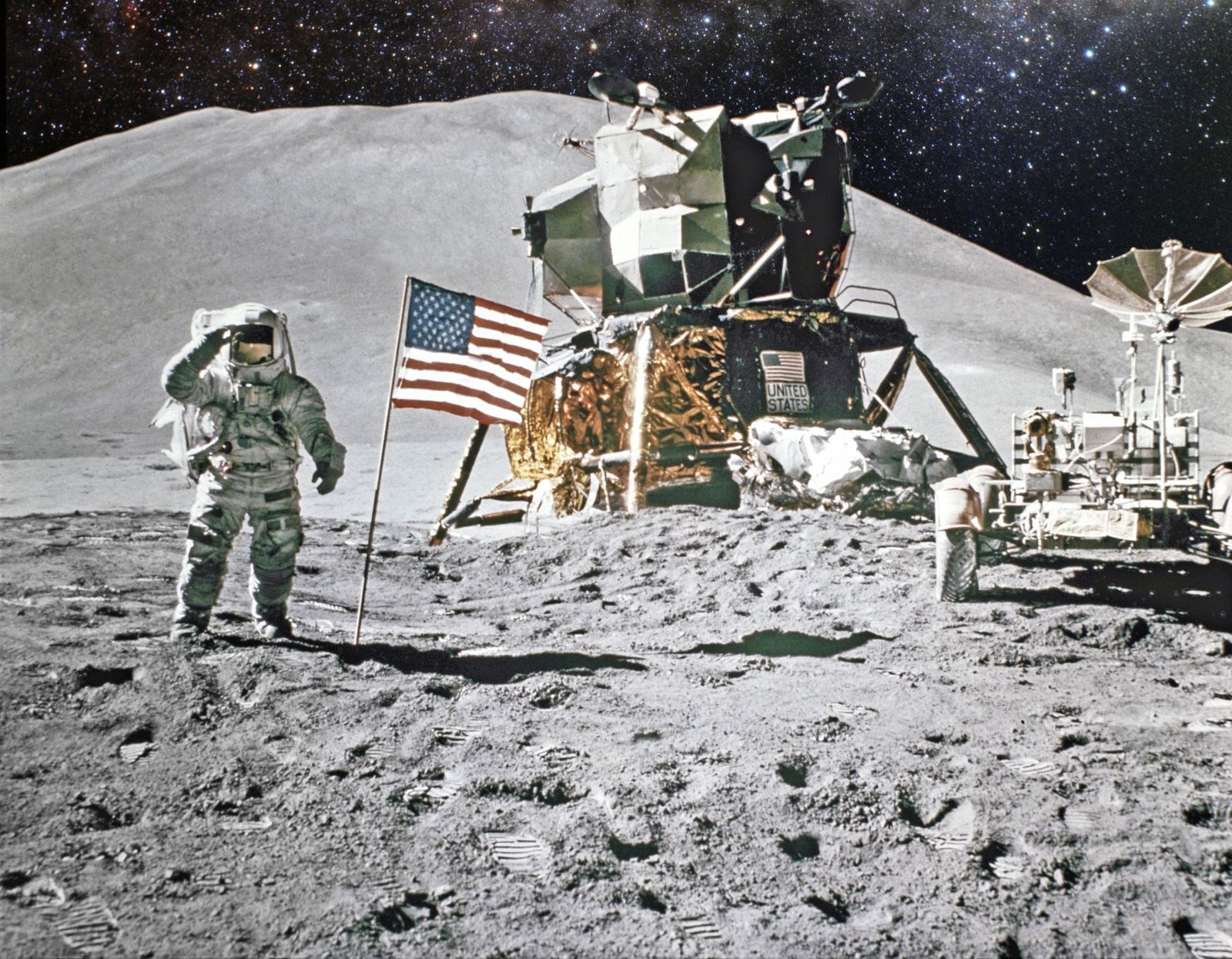
Image: Castleski

With less than three months before launch, NASA engineer Jack Kinzler was handed an unusual assignment: figure out how to make a flag look like it was flying on a world with no wind.

Kinzler, known around the Manned Spacecraft Center as Mr. Fix It, remembered watching his mother hang curtains as a child and sketched a horizontal rod that would run through the top of an ordinary nylon flag , letting it hang stiff instead of drooping.

3
Playtex seamstresses hand-stitched the Apollo spacesuits
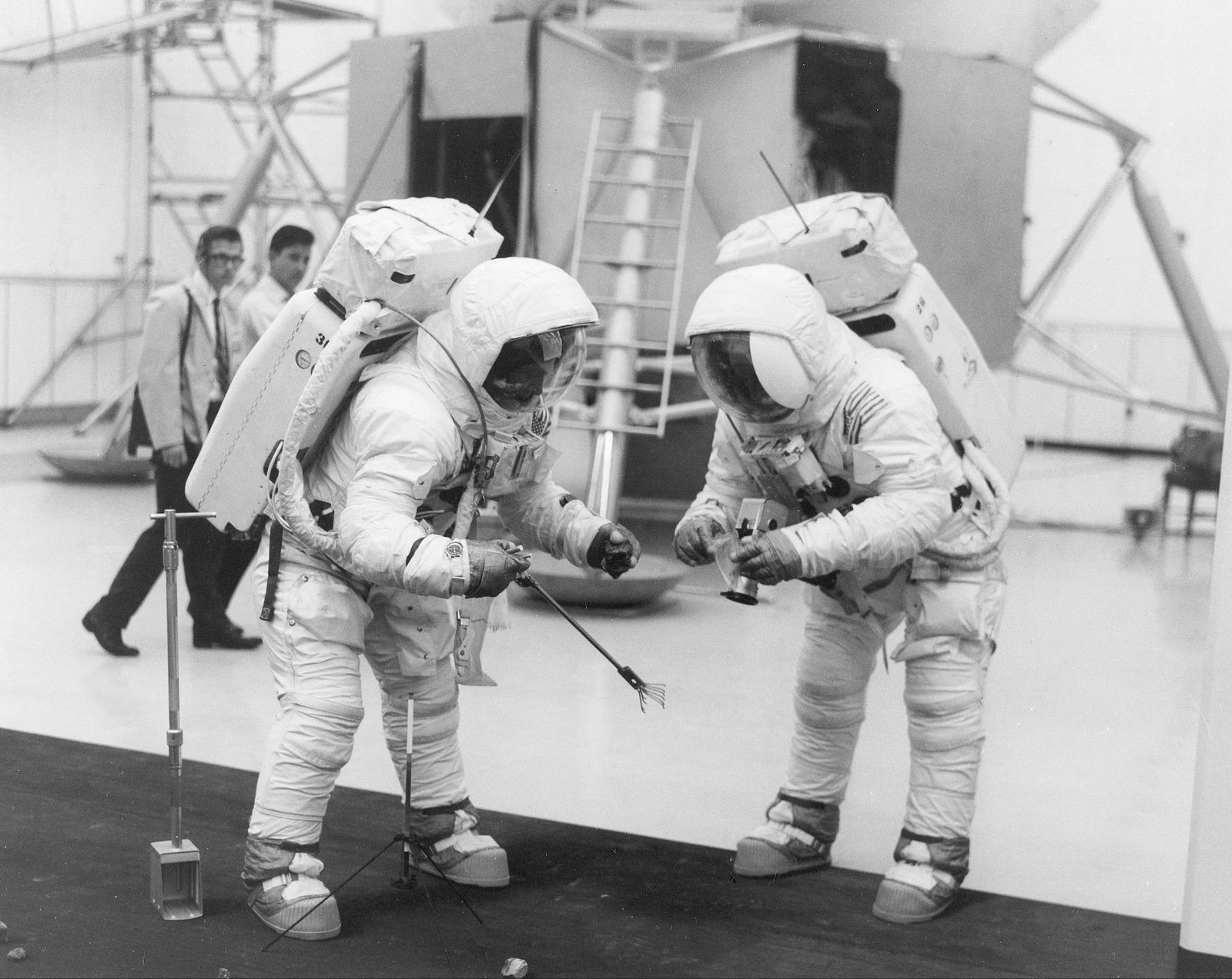
Image: Project Apollo Archive, Public domain, via Wikimedia Commons

In a former girdle factory in Dover, Delaware, women who had spent years sewing Playtex bras and girdles found themselves building the suit that would keep Neil Armstrong alive on the Moon.

NASA had tried stiff, engineered suits from aerospace contractors first, but nothing offered the mobility required for a human body. The International Latex Corporation, the company behind Playtex, won the contract instead, and its seamstresses stitched together 21 layers of nylon, Teflon-coated fabric, and rubber by hand, working to a tolerance of one 64th of an inch on ordinary Singer machines. No automated equipment could be trusted with a mistake that meant the difference between life and death in a vacuum, so the same hands that once sewed Cross Your Heart bras sewed history instead.

4
Ham the Astrochimp completed a suborbital flight in 1961
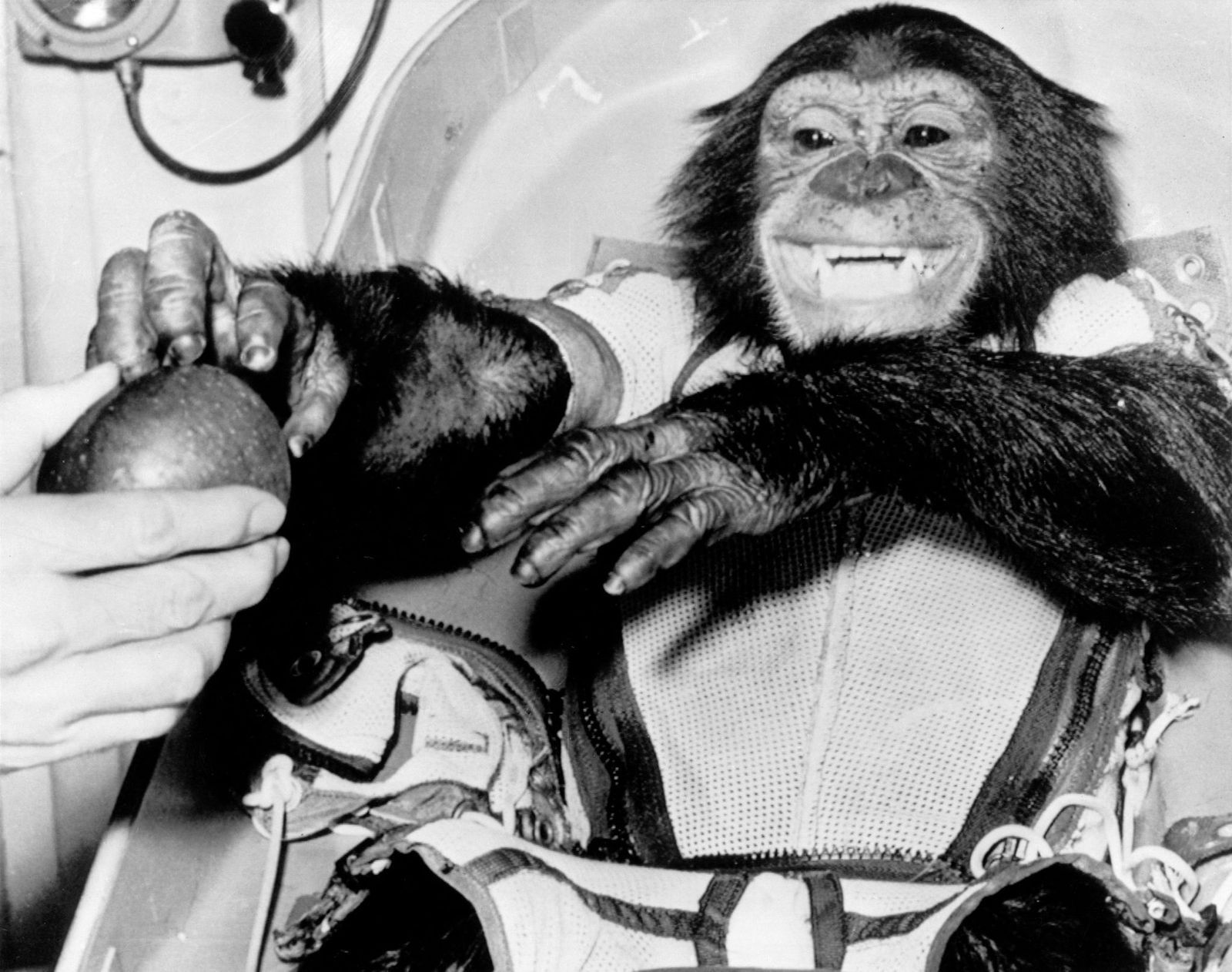
Image: NASA, Public domain, via Wikimedia Commons

Three weeks of training at Holloman Air Force Base in New Mexico came down to one morning: January 31, 1961.

A three-and-a-half-year-old chimpanzee, known to engineers simply as Number 65, was strapped into a Mercury capsule atop a Redstone rocket that launched from Cape Canaveral, Florida. His job was to pull levers in response to lights, proving an astronaut's mind could still function under the crushing forces of launch. A malfunction pushed the flight higher and faster than planned, reaching 157 miles and landing far off course in the Atlantic. He survived, tired and dehydrated but unharmed , and only afterward was given the name Ham, for the lab that trained him. Three months later, Alan Shepard became the first American in space.

5
Michael Collins became the most isolated person in human history
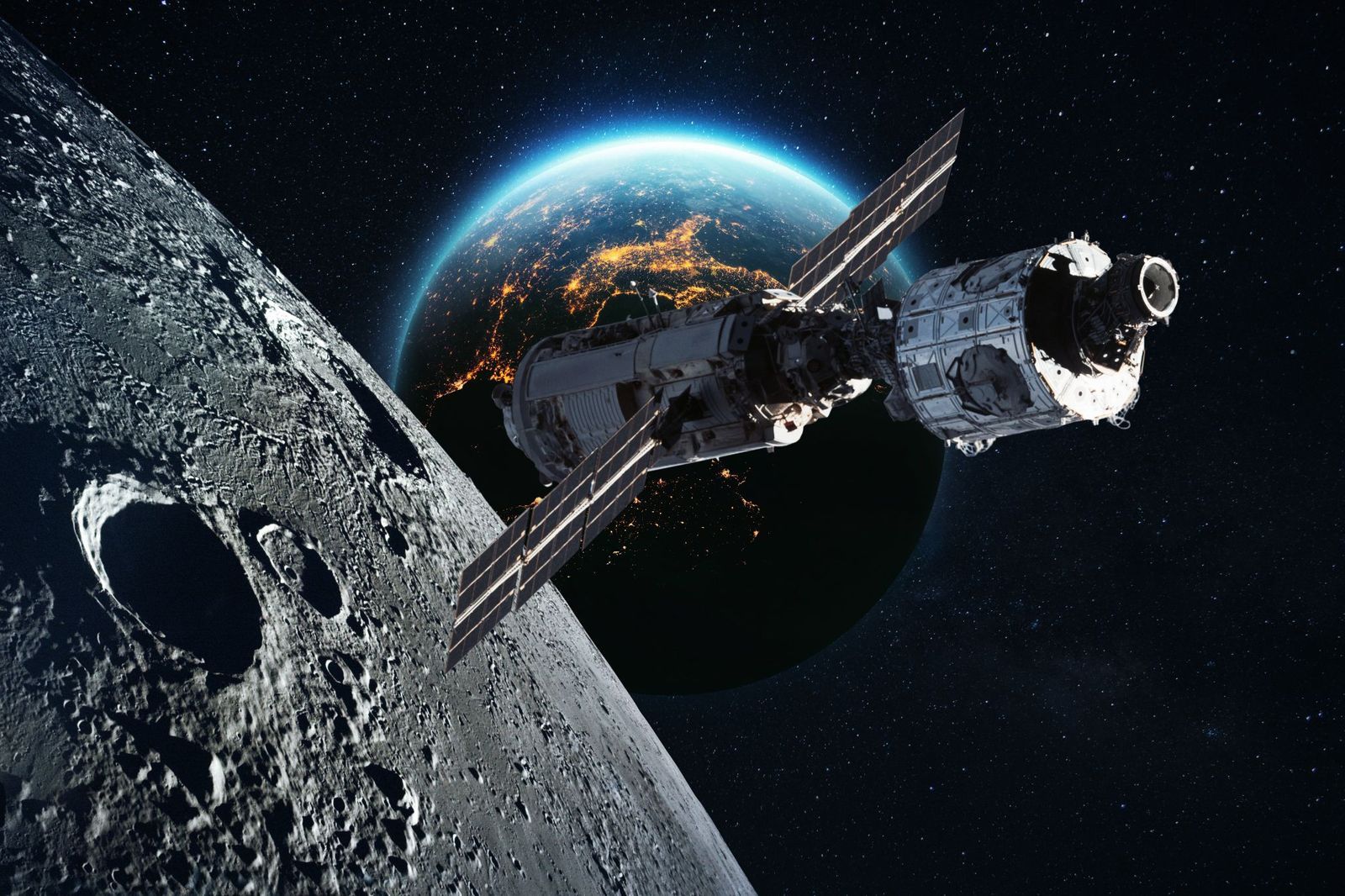
Image: Alones

While Neil Armstrong and Buzz Aldrin walked on the lunar surface, their crewmate Michael Collins circled overhead alone in the command module Columbia.

For roughly 47 minutes of every two-hour orbit, the entire body of the Moon passed between Columbia and Earth, cutting off every radio signal from Mission Control and from his two crewmates below. Flight commentator Charlie Duke described it on the air: "not since Adam has any human known such solitude." Collins later wrote that he never actually felt lonely during those blackout stretches, only quietly aware that he was, by any physical measure, the single most isolated human being who had ever lived, with three billion people on one side of the Moon and just himself on the other.

6
The Soviet Union made the first lunar impact in 1959
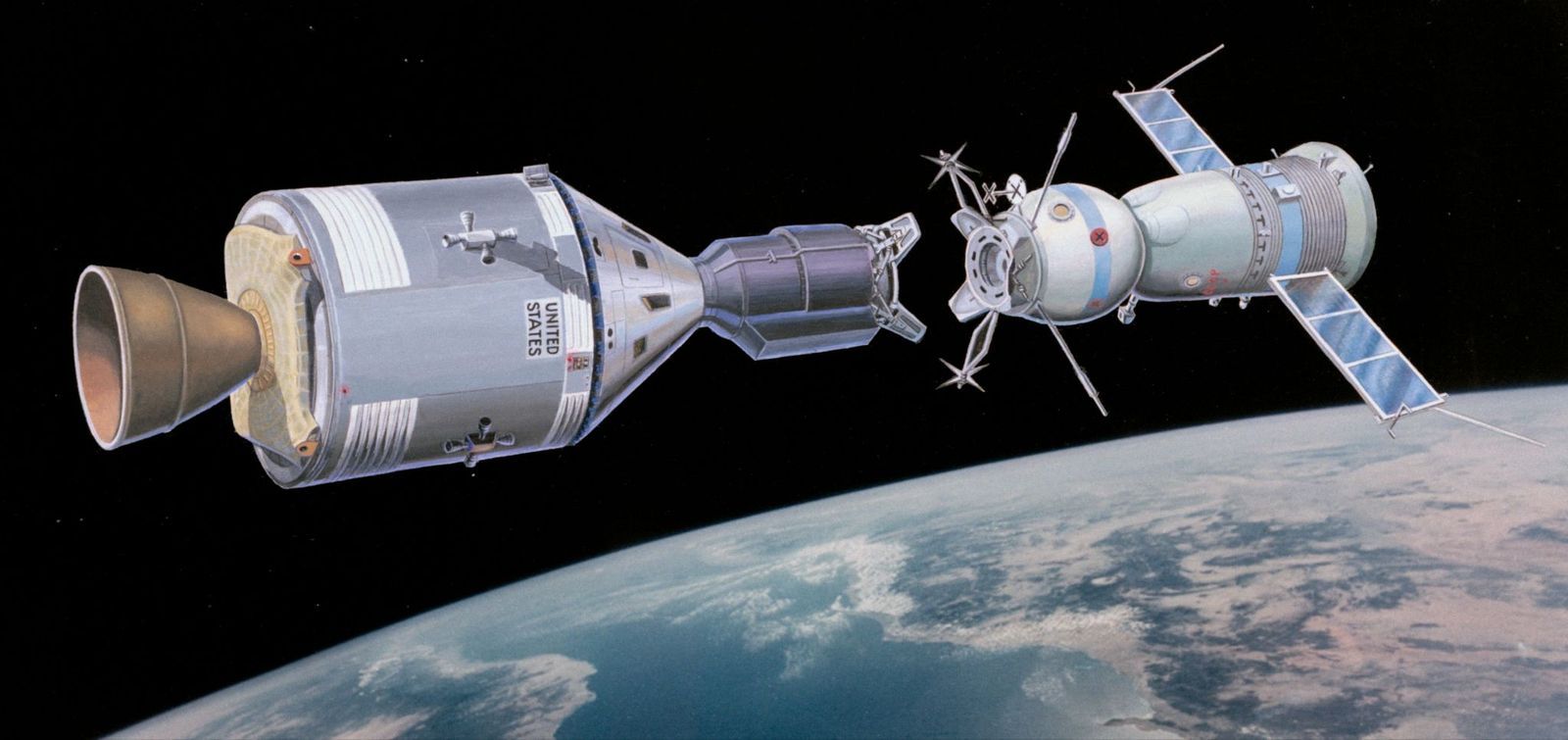
Image: R. Bruneau, Public domain, via Wikimedia Commons

On September 12, 1959, a Soviet spacecraft the size of a large beach ball lifted off from Baikonur, deep in the Kazakh steppe. Two days later, Luna 2 slammed into the Moon near the craters Aristillus and Autolycus , becoming the first human-made object to ever touch another world.

Engineers in Moscow had built in a strange detail: the probe carried small metal pennants stamped with the hammer and sickle, meant to scatter across the lunar surface on impact. The timing stung in Washington. Soviet premier Nikita Khrushchev arrived in the United States for a state visit just days later, carrying a replica pennant as a gift for President Eisenhower, a not-so-subtle reminder of who had reached the Moon first.

7
Apollo 11 concluded the initial Space Race
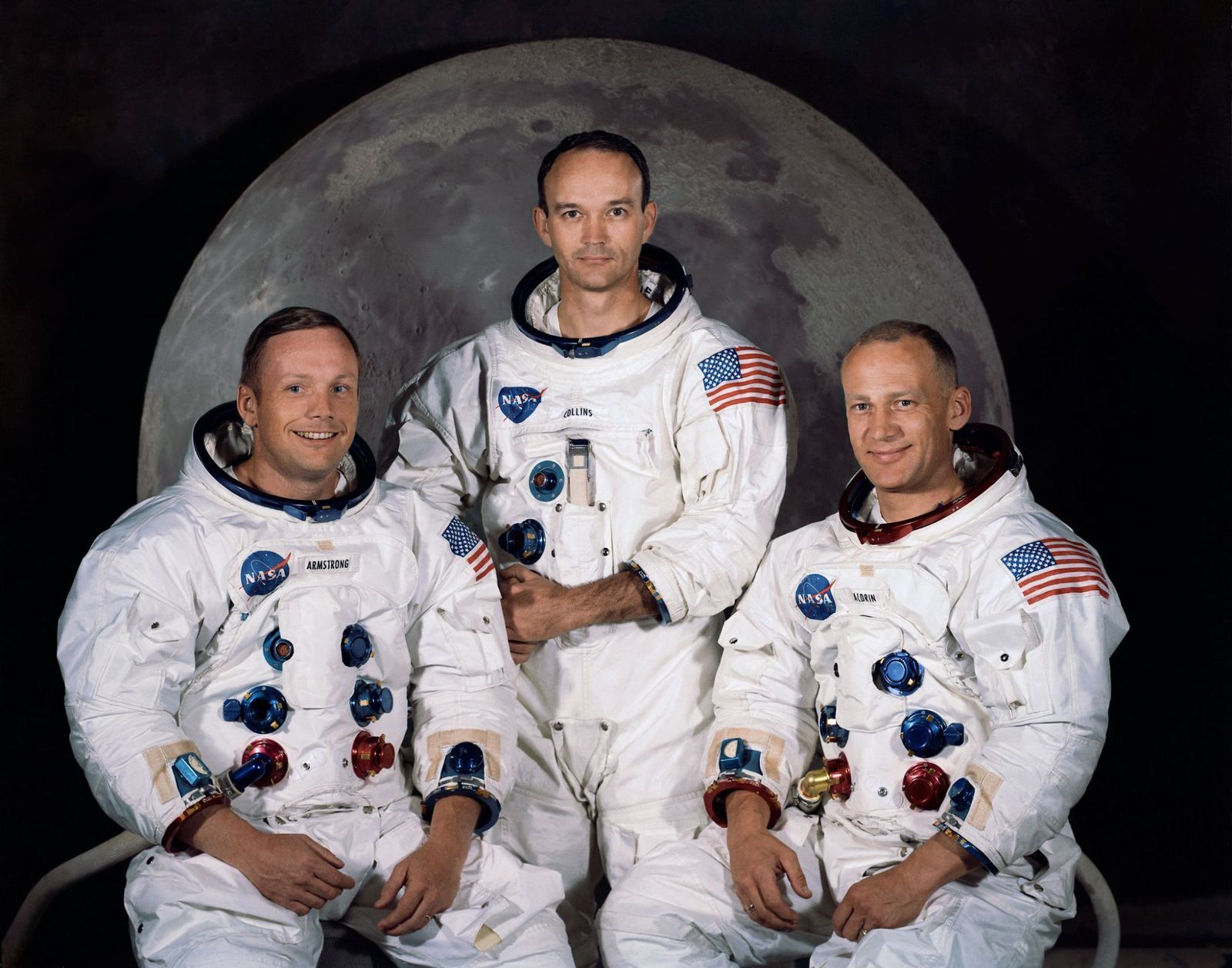
Image: NASA, Public domain, via Wikimedia Commons

In May 1961, President John F. Kennedy stood before Congress and made a promise that sounded impossible: the U.S. would land a man on the Moon and bring him home safely before the decade was out.

Eight years, several deaths, and one nearly disastrous fire later, Neil Armstrong stepped off the ladder of the lunar module Eagle on July 20, 1969 , and told millions watching on television that it was one small step for a man. Buzz Aldrin followed him down minutes later while Michael Collins orbited above in the command module. The landing settled a technological race that had begun with Sputnik in 1957, and for the United States, it closed the gap the Soviets had opened years earlier.

8
The lunar module was built without seats
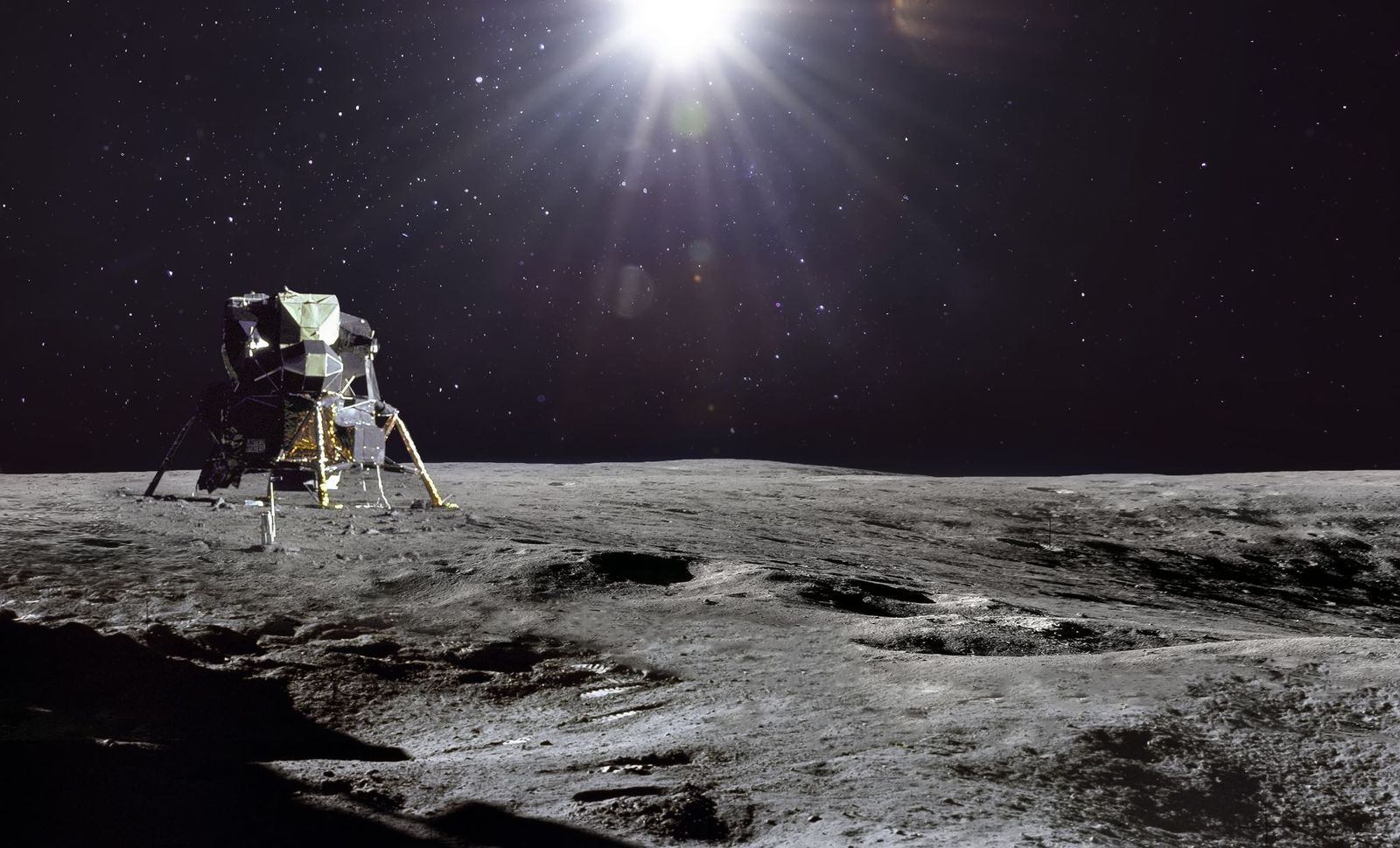
Image: Dima Zel

Every extra pound sent to the Moon meant thousands of extra pounds of fuel needed to get it there, so NASA engineers stripped the lunar module Eagle down to its bare essentials, cutting anything that was not strictly necessary for survival.

One of the first things to go was seating. Neil Armstrong and Buzz Aldrin flew their roughly 60-mile descent to the lunar surface standing up , held in place by cables and foot restraints, much like subway commuters gripping a pole during rush hour. Standing also gave the astronauts a clearer view out the small triangular windows, which mattered enormously once Armstrong realized the automatic system was steering them toward a boulder field. The decision made purely for weight savings ended up helping save the landing itself.

9
Apollo 11 astronauts signed an official customs declaration upon return

Image: Andrey_Popov

After traveling nearly half a million miles round trip, the crew of Apollo 11 still had one more piece of paperwork waiting for them back on Earth.

On July 24, 1969, the day their capsule splashed down in the Pacific near Hawaii, Neil Armstrong, Buzz Aldrin, and Michael Collins signed a standard United States Customs form filed at Honolulu Airport. Under departure point, the document read simply Moon. Arrival was listed as Honolulu, Hawaii. In the cargo section, the astronauts declared moon rock and moon dust samples, treating a piece of another world the same way any traveler might declare a bottle of duty-free perfume. The form even asked about any condition on board that could spread disease, and the honest answer at the time was simply to be determined.

10
Apollo 8 astronauts captured the "Earthrise" photograph
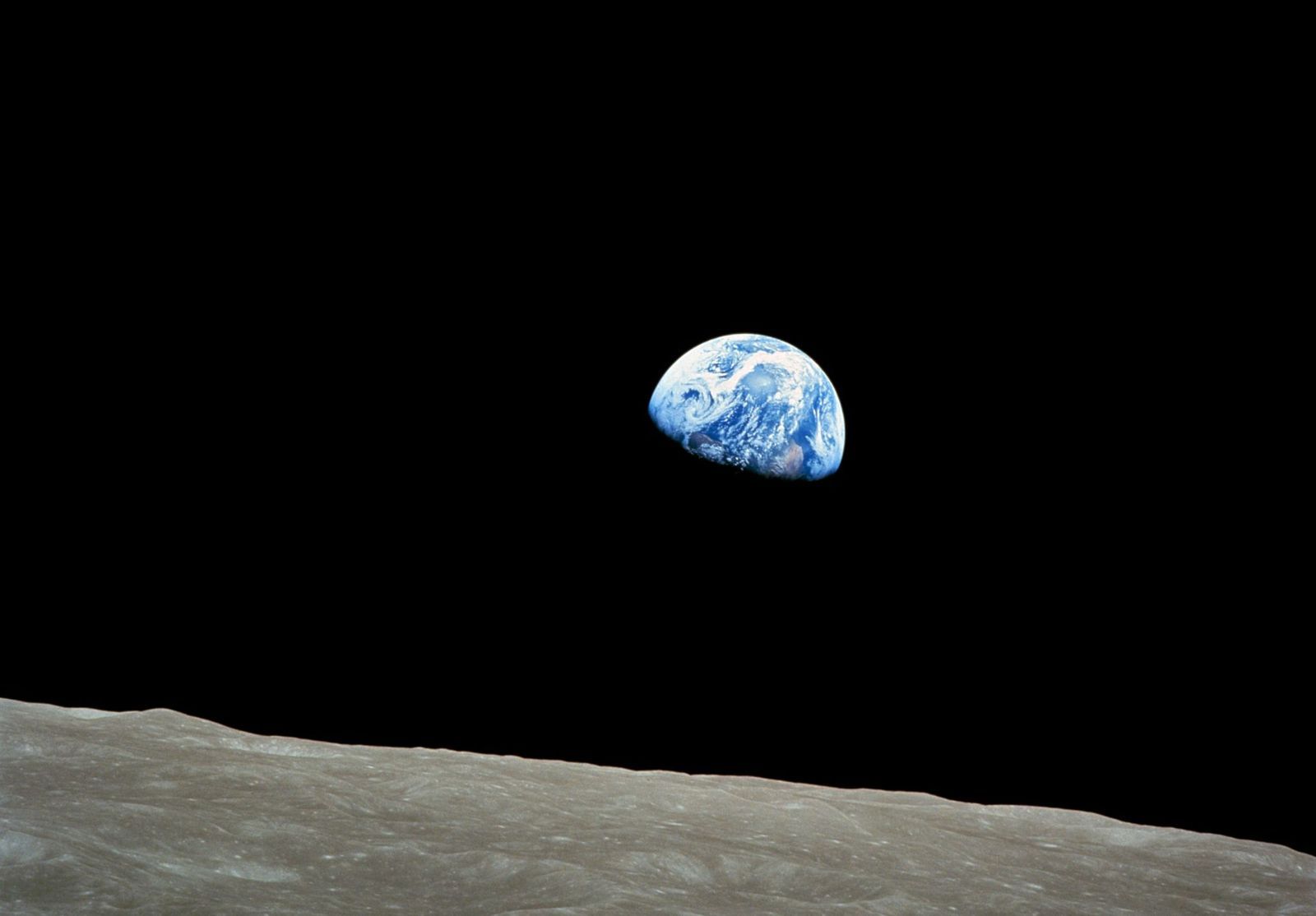
Image: National Aeronautics and Space Administration, Public domain, via Wikimedia Commons

On Christmas Eve of 1968, astronaut Bill Anders was aiming his camera at the gray, cratered surface below when something in the window caught his eye. Earth, blue and impossibly small, was rising over the lunar horizon.

Anders, Frank Borman, and Jim Lovell had just become the first humans to orbit the Moon, and none of NASA's flight plans had accounted for this moment. Anders grabbed a color film magazine and fired off the shot in a matter of seconds, later admitting the photo was never on the schedule. Back on Earth, the image ran in newspapers worldwide and is widely credited with helping launch the modern environmental movement, giving people their first real look at how fragile and alone their home planet truly is.

Culture Culture 3 min read

I want to believe

11 famous hoaxes in American history that fooled everyone

Image: Hartono Creative Studio

The fact that not every little thing in our world can yet be explained makes life a bit more interesting for many of us. And that urge to believe in certain things has fostered many myths and hoaxes that continue to fool people to this day. How many of the following 11 do you know?

1
The Cardiff Giant

Image: Anton Ivanov

In 1869, workers digging a well in Cardiff, New York, uncovered what appeared to be a 10-foot-tall petrified man. Locals rushed to see the "giant," paying admission to witness history in the soil.

But, as it turned out, it wasn’t ancient at all. A man named George Hull had buried the statue as a prank and made some quick money from the curious crowd.

2
War of the Worlds Broadcast

Image: Michal Balog

This very famous hoax took place on the eve of Halloween 1938. Orson Welles’s radio adaptation of The War of the Worlds aired as if it were breaking news . Many listeners tuning in late thought Martians had really landed in New Jersey.

Some packed up their cars or called the police in panic. Though no invasion occurred, the broadcast became a legend in media history.

3
The Balloon Boy

Image: Ankush Minda

In 2009, Americans watched live TV coverage of a silver balloon drifting across the skies of Colorado , fearing that a six-year-old boy was trapped inside . The story gripped the nation for hours.

When the balloon finally landed empty, police discovered the child hiding safely at home. His parents later admitted it was a publicity stunt gone wrong.

4
The Feejee Mermaid

Image: Nsey Benajah

In 1842, showman P. T. Barnum unveiled a marvel: a preserved "mermaid" supposedly from the South Seas . Crowds lined up to see the half-fish, half-woman curiosity.

The truth was stranger still. It was the upper body of a monkey sewn onto a fish tail and covered in papier-mâché.

5
The Great Moon Hoax

Image: Ganapathy Kumar

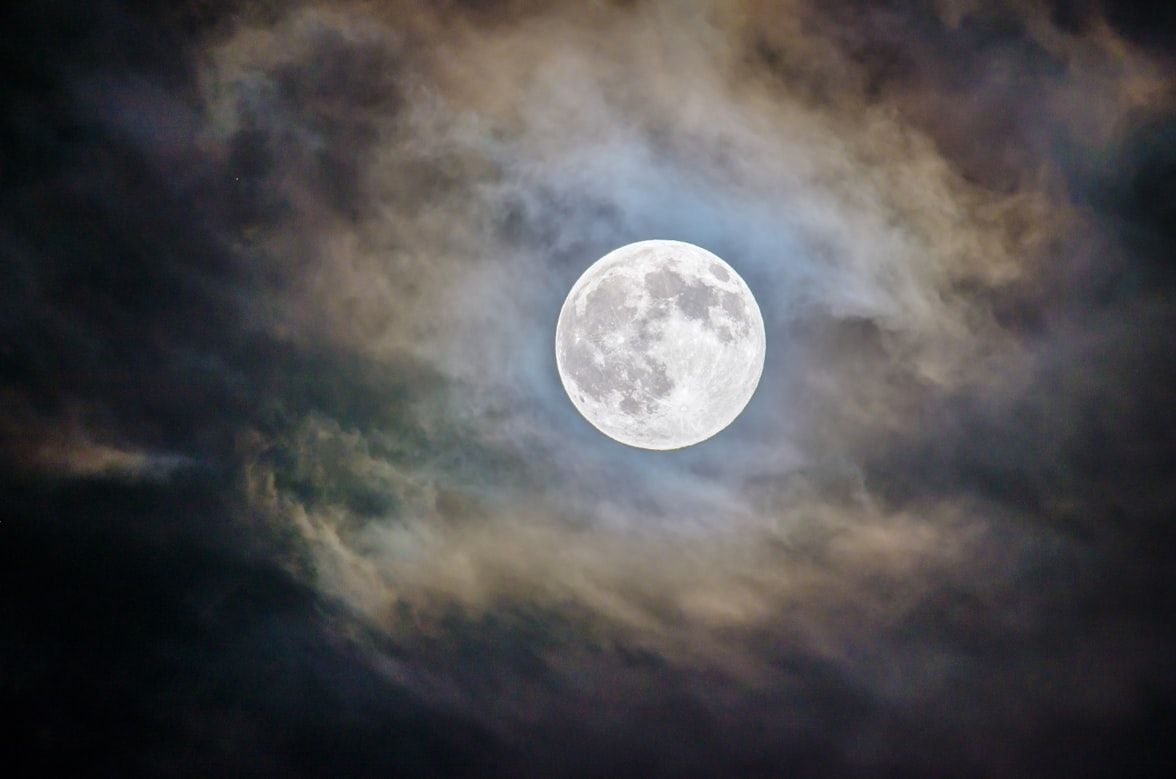
Readers of The New York Sun in 1835 were astonished by reports claiming that scientists had spotted bat-like people and crystal palaces on the Moon through a powerful new telescope.

The story was pure invention, but circulation went up. By the time the truth came out, the paper’s readership had reportedly increased dramatically.

6
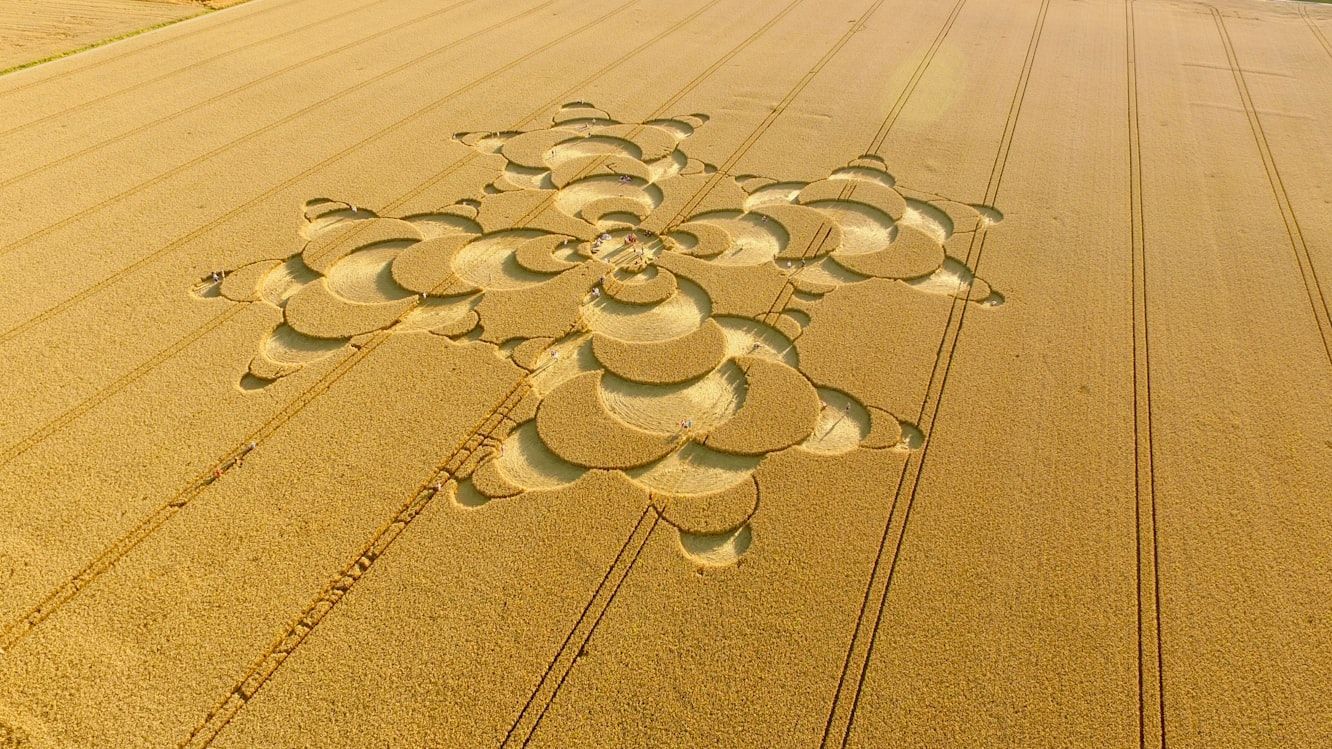
The Crop Circles Craze

Image: Agent J

When perfect circles began appearing overnight in wheat fields , people talked about UFO landings. The shapes seemed too precise to have been made by human hands.

But, in 1991, two Englishmen confessed they’d used boards and ropes to flatten the crops. While this revelation explained many of the formations, the mystery lives on in popular imagination.

7
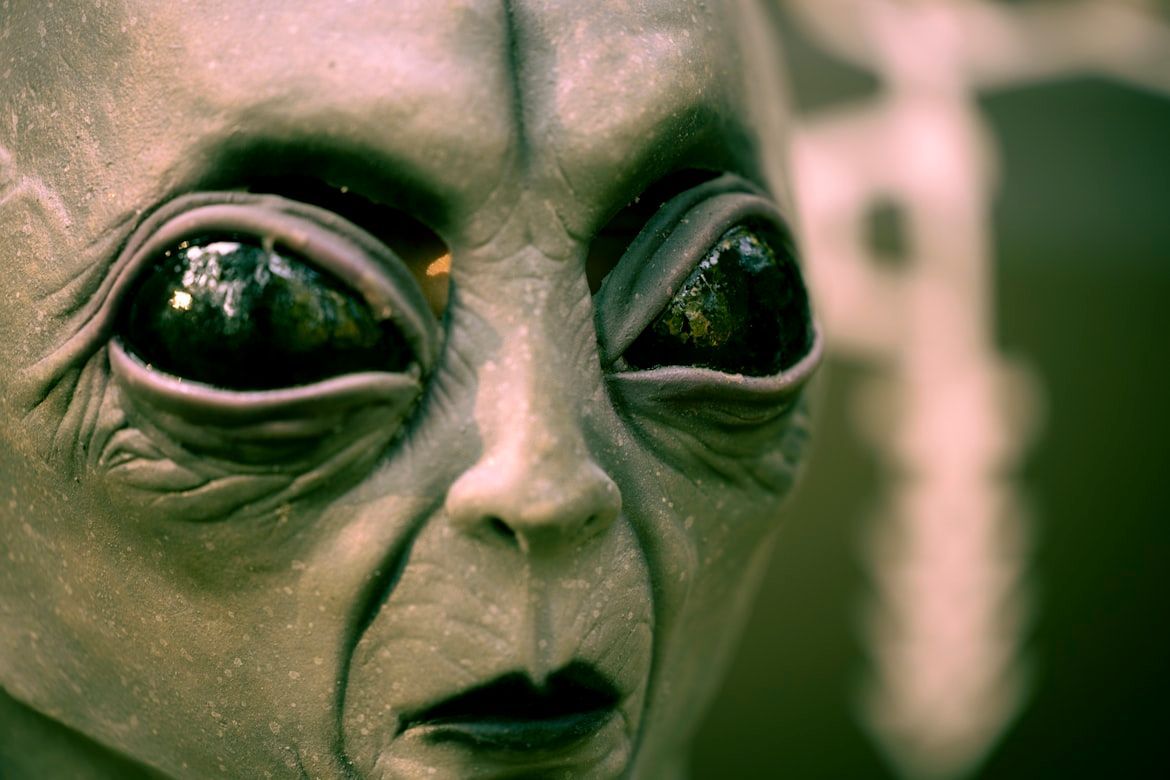
Alien Autopsy Film

Image: Leo_Visions

In 1995, a grainy black-and-white video surfaced, showing doctors dissecting what seemed to be an alien recovered from the 1947 Roswell crash. The footage spread quickly worldwide.

Years later, the filmmaker admitted that the film was staged, using latex models and fake organs.

8
The Manti Te’o girlfriend hoax

Image: Kaleb Becker

Notre Dame football star Manti Te’o captured hearts when he revealed that his girlfriend had died of leukemia . Sports fans wept over the tragic love story.

But reporters later learned that the woman never existed. It was an elaborate online catfishing scheme.

9
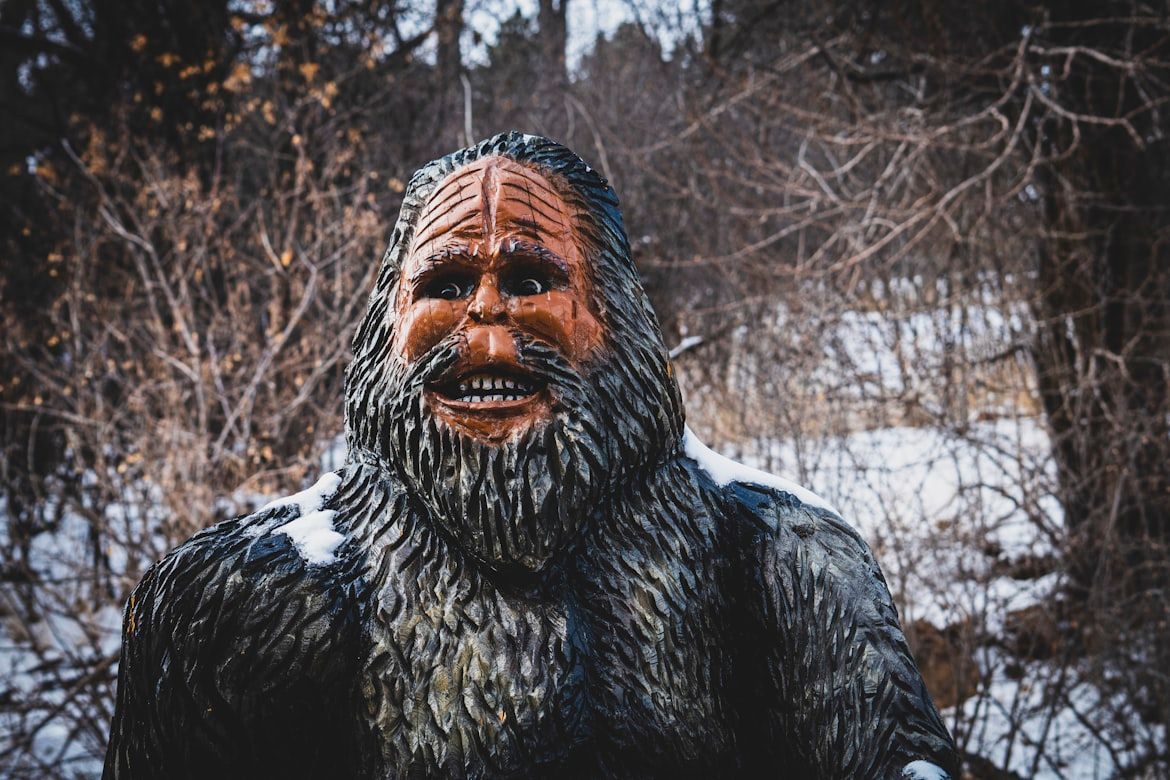
The Patterson–Gimlin Bigfoot film

Image: Jon Sailer

In 1967, a short film shot in California showed a large, hairy creature striding through the woods . Many viewers thought this was real proof of Bigfoot´s existence.

Decades later, one participant claimed it was a man in a gorilla suit, but that claim failed to convince many people who prefer to believe in the existence of this creature.

10
The Drake’s Plate of Brass

Image: David Dibert

In 1936, a shiny brass plate found in California seemed to confirm that explorer Sir Francis Drake had landed there in 1579. Historians called it a priceless relic.

For decades, the plate was displayed proudly, until metallurgical tests in 1977 proved it was modern . It had been made as a practical joke among historians that went too far.

11
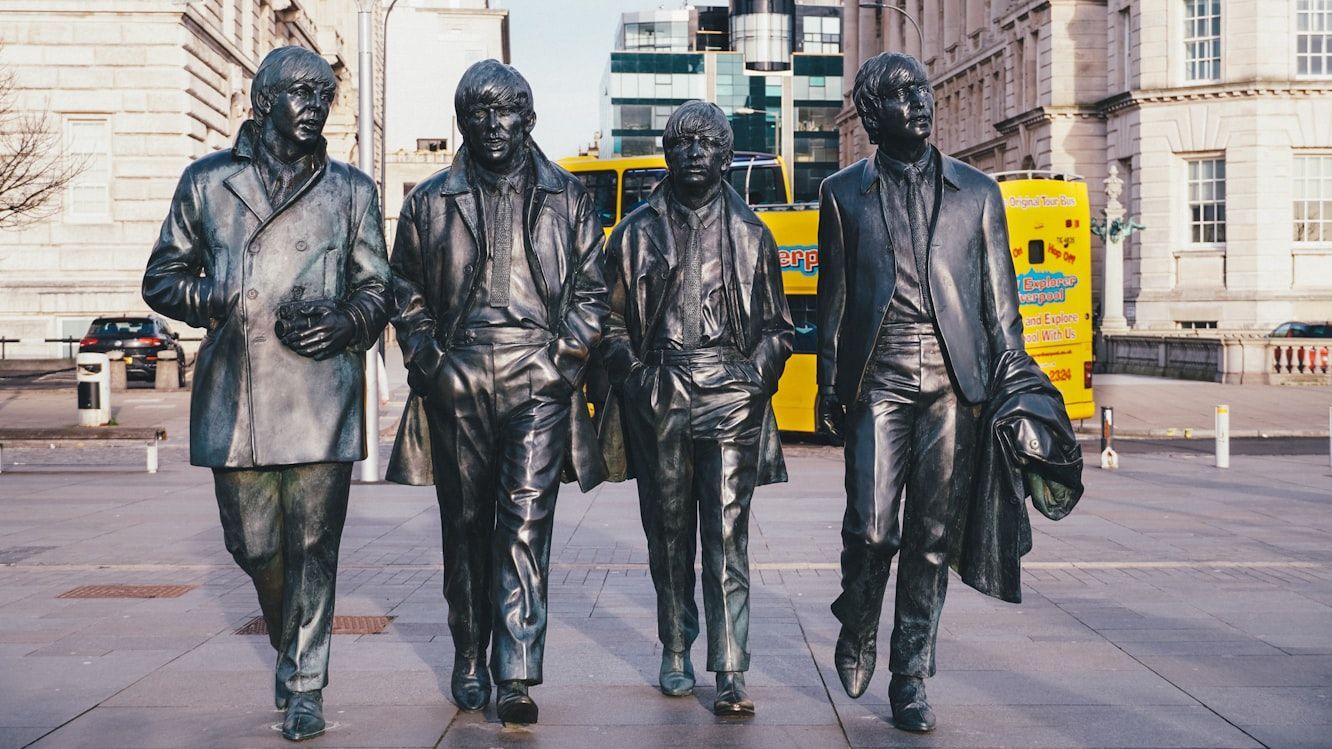
Paul Is Dead

Image: Jiamin Huang

The final entry on our list might not be American per se, but it drew much attention on these shores. In 1969, rumors spread that Beatle Paul McCartney had died and been secretly replaced by a double . Fans scoured album covers for "clues" like hidden messages and backward songs.

Paul, very much alive, later joked about it. The bizarre theory became a lasting pop-culture phenomenon.

Culture Culture 5 min read

Why do these 10 magnificent American estates now stand in ruins?

Image: Tama66

Beyond the manicured lawns of modern suburbs and the gleaming glass of city centers lie the skeletal remains of America’s Gilded Age and eccentric architectural dreams. These abandoned mansions, once symbols of immense wealth or unbridled ambition, now serve as monuments to the passage of time. Whether they were built for defense, ego, or artistic expression, these 10 sites stand as beautiful reminders of the people who once dared to dream about eternity. Would you like to know more? Continue reading!

1
Dundas Castle, Roscoe, New York

Image: Annie Spratt

Also known as Craig-e-Clair, this castle was built by Ralph Dundas in the early 20th century. It is an architectural marvel of stone and copper.

Dundas died before the castle was completed, and his wife was reportedly committed to a sanitarium shortly after. Consequently, no member of the Dundas family ever actually lived in the mansion. This has led to the "Ghost of Dundas Castle" legends, with locals claiming to see a woman in white wandering the unfinished halls, waiting for a housewarming party that never happened.

2
Rockwell House, Milledgeville, Georgia

Image: Clem Geiss

Built in 1838, the Rockwell House is a stunning example of Federal-style architecture, but its beauty is shadowed by a dark past. It was originally built for Colonel Samuel Rockwell, a prominent lawyer.

Local lore whispers about the "Rockwell Ghost," believed to be a young girl who died during a yellow fever outbreak. However, the house’s most tangible secret lies in its survival; it has endured multiple fires and periods of extreme neglect. In recent years, it has become a focal point for preservationists who uncovered hidden structural reinforcements that suggest the house was built to be an impenetrable fortress of its era.

3
Elda Castle, Ossining, New York

Image: Nitrogel

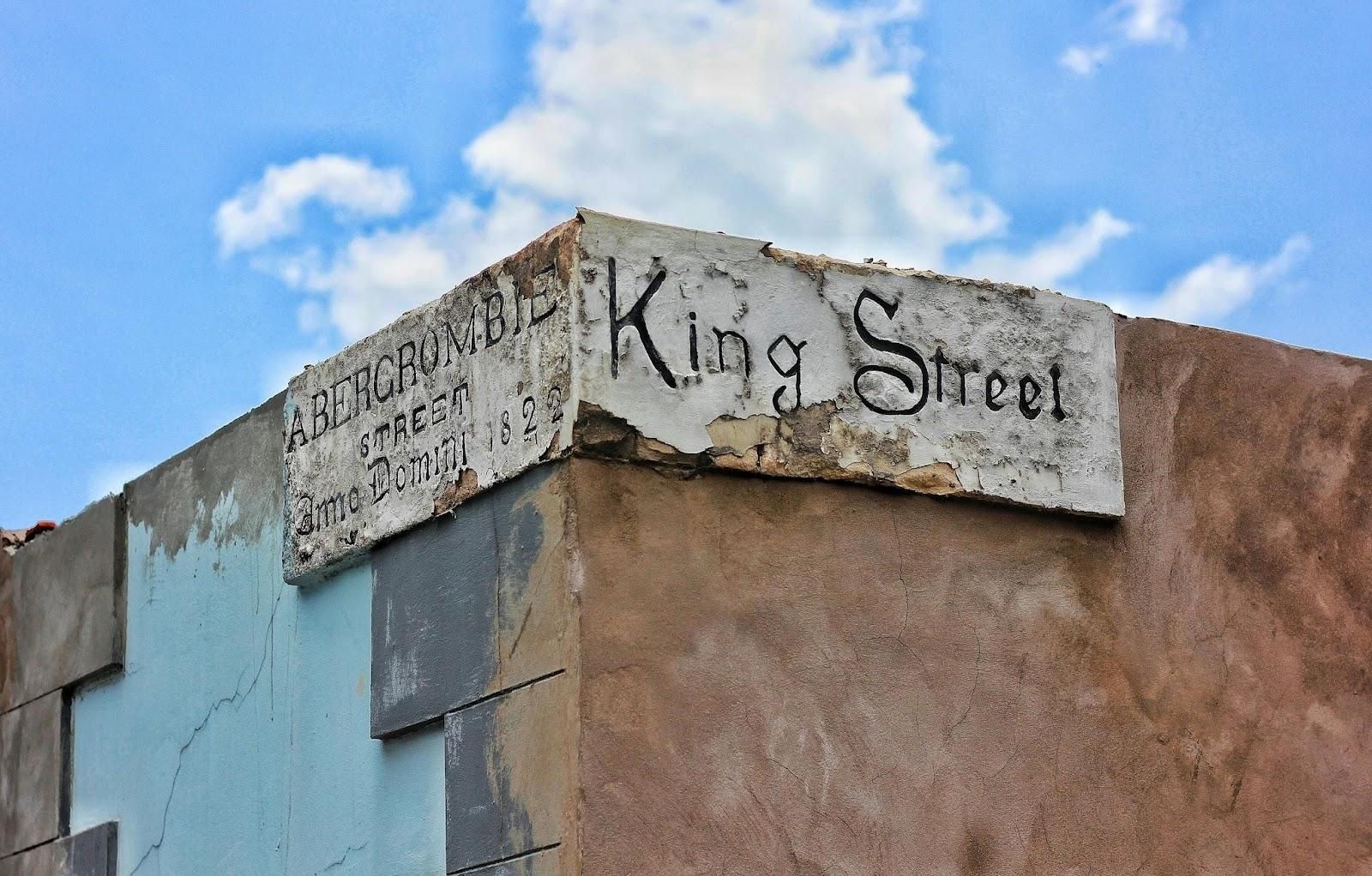
If the name David Abercrombie sounds familiar, it’s because he co-founded the clothing company Abercrombie & Fitch . But in the 1920s, he also built this granite castle, named Elda (an acronym of his children’s names), as a secluded retreat.

The castle features a network of spiral staircases and open-air porches designed to blend the indoors with the rugged wild. Its abandonment, however, is a sheer tragedy. After the family moved out, the castle was used as a research facility and later fell victim to vandals. Legend has it that a fire in the 1940s was started by squatters, leaving behind a charred stone husk that resembles a medieval ruin more than a 20th-century home.

4
Mongo's Castle, Memphis, Tennessee

Image: Denny Müller

A stark contrast to the classical mansions of the South, Mongo’s Castle was the passion project of Mongo Bebe, a man who built his home out of scrap stone, Ashlar blocks, and found materials.

The house is a maze of folk-art eccentricity. The builder intended it to be a community center and a symbol of African-American heritage and self-reliance. It stands today as a decaying puzzle, with many neighbors still unsure of the structural logic behind its towering, uneven walls.

5
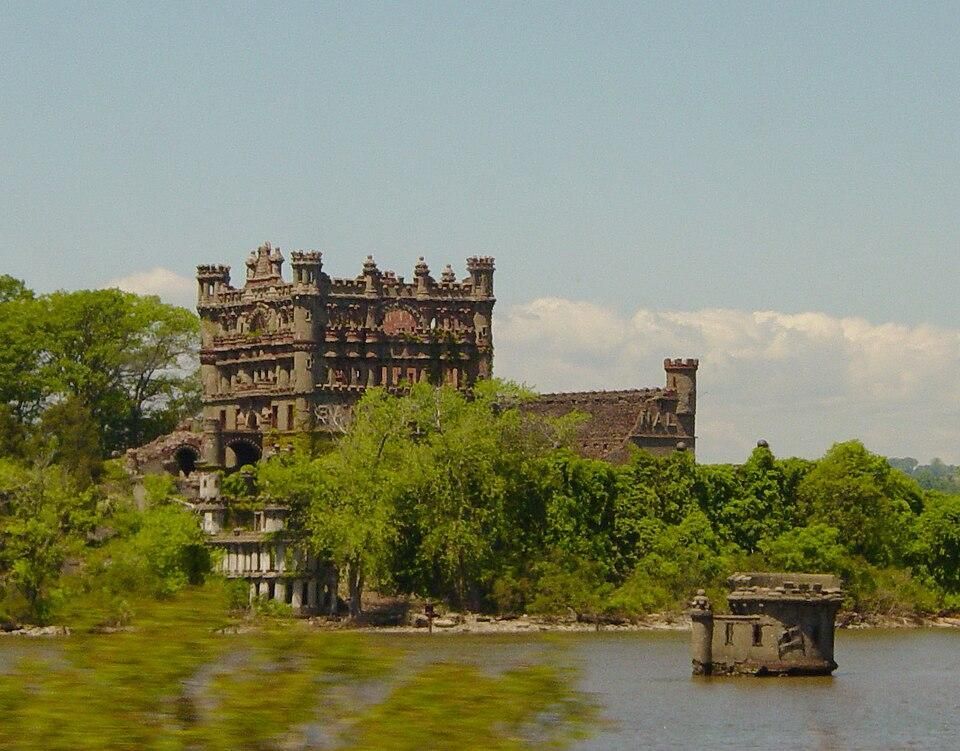
Bannerman's Castle, Pollepel Island, New York

Image: Leonard G., Public domain, via Wikimedia Commons

Rising from the Hudson River, this castle was never intended to be a home; it was a giant advertisement and warehouse for Francis Bannerman VI’s military surplus empire.

In 1920, 200 tons of gunpowder and shells exploded in the castle’s powder house, blowing out a significant portion of the walls. The ground is still considered unstable due to the remnants of military munitions, and the inscriptions on the walls are actually warnings and advertisements for the Bannerman business. Do you dare visit this mansion?

6
Castle Mont Rouge, Rougemont, North Carolina

Image: Florian Delée

This whimsical, onion-domed castle looks like it belongs in the Russian countryside rather than the North Carolina woods. It was designed by sculptor Robert Mihaly, but he ended up abandoning the project in the early 2000s following a personal tragedy and financial hurdles.

The castle remains an "empty sculpture," filled with intricate marble work and unfinished turrets. The bizarre architectural fusion lacks a standard floor plan, making it nearly impossible to convert into a functional residence without destroying its artistic integrity.

7
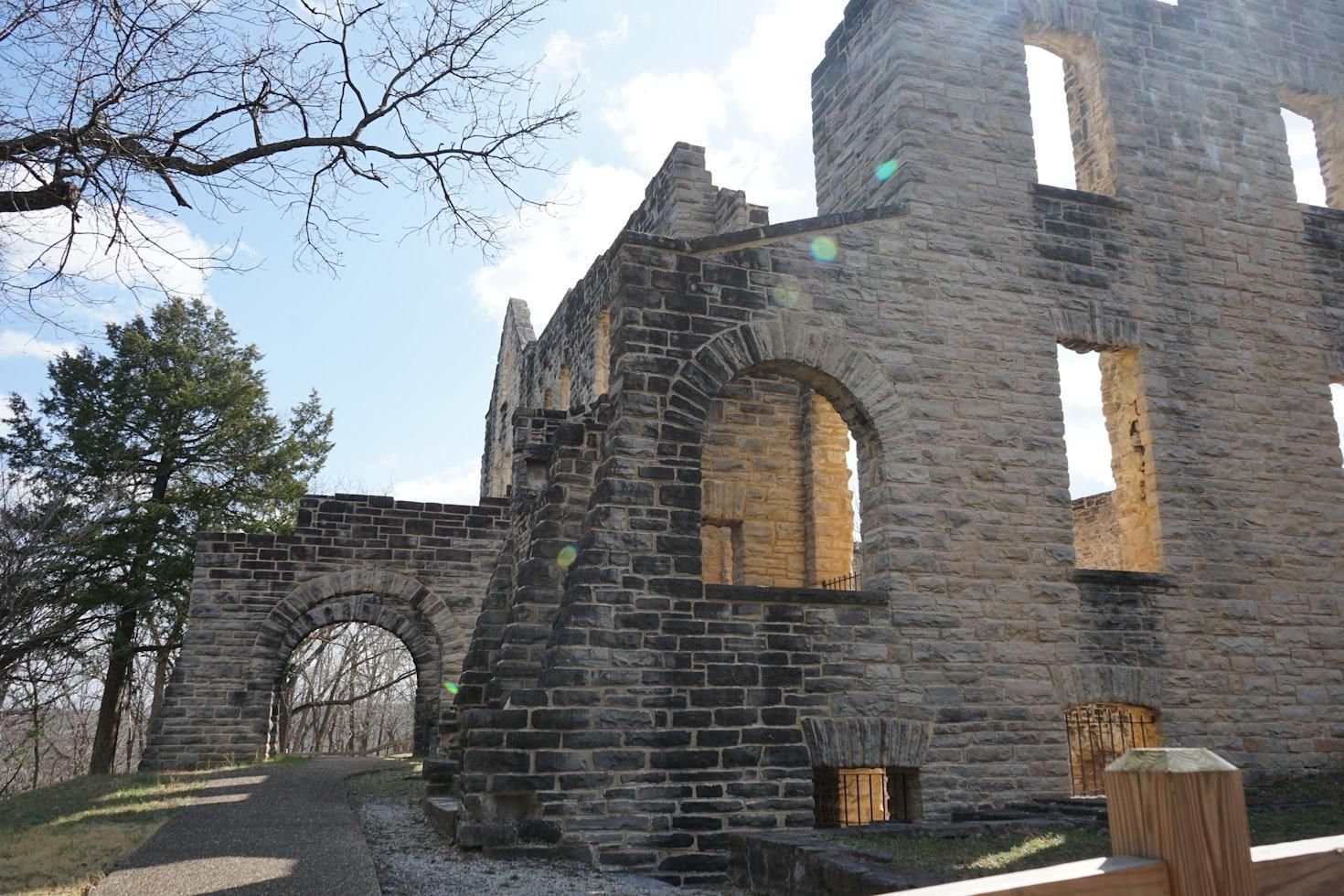
Ha Ha Tonka Castle, Camdenton, Missouri

Image: Hannah McBride

Robert Snyder, a wealthy Kansas City businessman, began building this European-style castle in 1905. He wanted a retreat that overlooked the breathtaking Ha Ha Tonka Spring.

Yet, Snyder never got to see his dream finished; he was killed in one of Missouri’s first recorded automobile accidents just a year after construction began. His sons finished the castle, but it was gutted by a fire in 1942. There’s a hidden network of caves beneath the castle, which were rumored to be used by outlaws and later as a natural "refrigerator" for the estate’s kitchen.

8
Carleton Island Villa, Cape Vincent, New York

Image: Tama66

This once-magnificent villa was built for William Wyckoff, who made a fortune with the Remington Typewriter Company.

The Secret: Wyckoff’s dream turned into a nightmare on the very first night he stayed in the house. He suffered a massive heart attack and died in his sleep. His wife had passed away a month prior, leaving the villa to a son who had no interest in it. The house has stood empty for over 70 years, its secret being the tragic "cursed" timing that prevented it from ever functioning as a family home.

9
Dicksonia Plantation, Lowndesboro, Alabama

Image: Theo Bickel

Dicksonia was a quintessential antebellum mansion, featuring the massive columns and wrap-around porches synonymous with the Old South.

Unlike many plantations that were destroyed during the Civil War, Dicksonia survived the conflict only to be destroyed by a mysterious fire in 1939. Its "ghost pillars," however, remained standing long after the wooden house burned away. These towering brick columns became a haunting landmark , representing the structural skeletons of a forgotten social order.

10
Wyndcliffe, Rhinebeck, New York

Image: Peter Herrmann

This house is the literal origin of the phrase "Keeping up with the Joneses." Though often referred to as a "Mystery Mansion" by urban explorers, this is the ruin of Wyndcliffe, the estate of Elizabeth Schermerhorn Jones.

Elizabeth’s mansion was so grand and intimidating that it prompted her neighbors—including the Astors—to build even larger homes to compete. The secret of Wyndcliffe is the psychological impact of its architecture; it was built to inspire envy, and its current state of absolute decay is a poetic commentary on the fleeting nature of social status.

Explore more American facts

Choose your favorite category!

General
General

As American as apple pie—the very best America has to offer!

Culture
Culture

Delve into the astounding richness of American lore.

Geography
Geography

Hop in and explore vast and diverse American landscapes.

History
History

Discover the key moments that shaped the United States.