History History 7 min read

The surprising life of FDR

Why did he work late into the night? 10 surprising facts about FDR
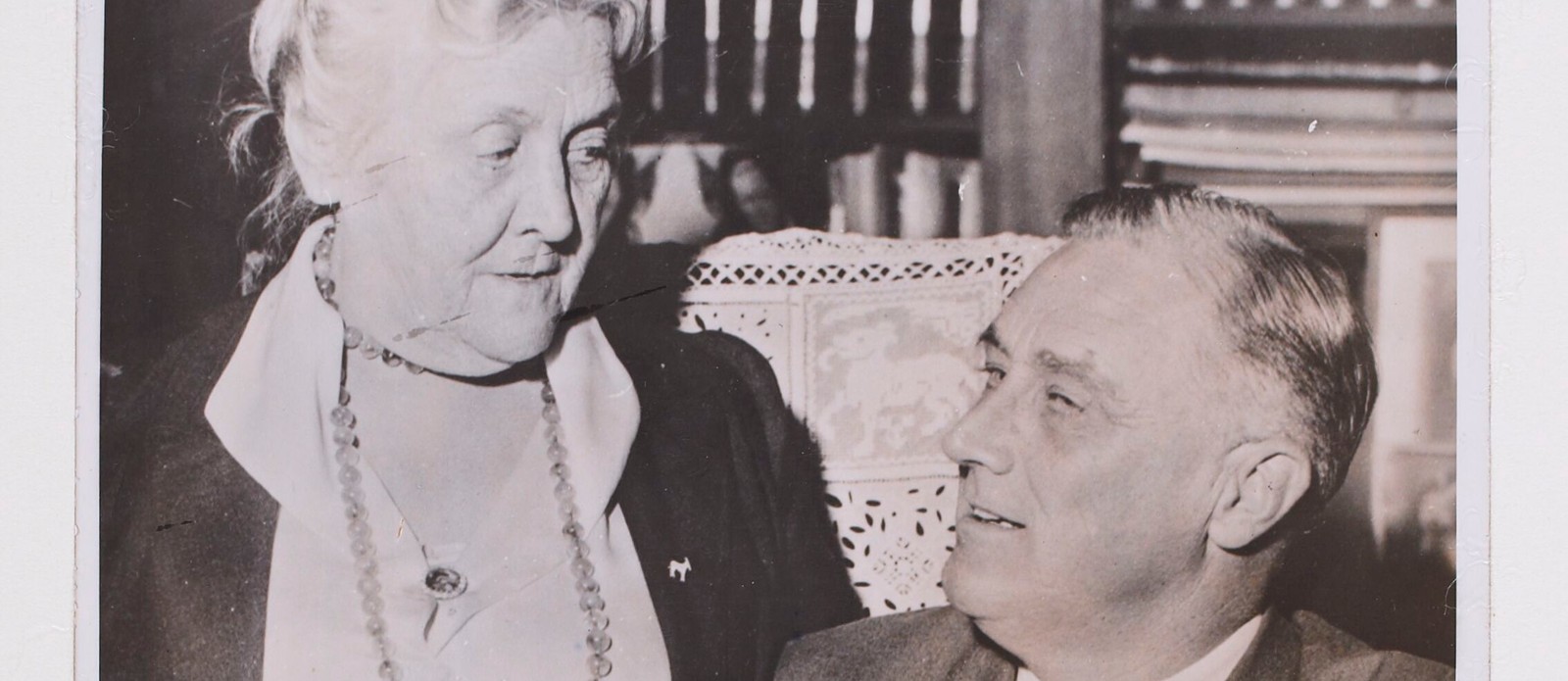
Image: Bibliothèque nationale de France, Public domain, via Wikimedia Commons

You probably know Franklin Delano Roosevelt as the president who guided America through the Great Depression and World War II, launched the New Deal, and helped create Social Security. But that's only part of the story. This was also the president who served hot dogs to the British royal family, became the first commander in chief to fly while in office, relied on lucky charms, and never lost his love of practical jokes. He was related to more presidents than you might realize and had a few surprising quirks that rarely make it into history books. Here are 10 fascinating facts about FDR that they didn't teach you in school.

1
He served hot dogs to British Royalty
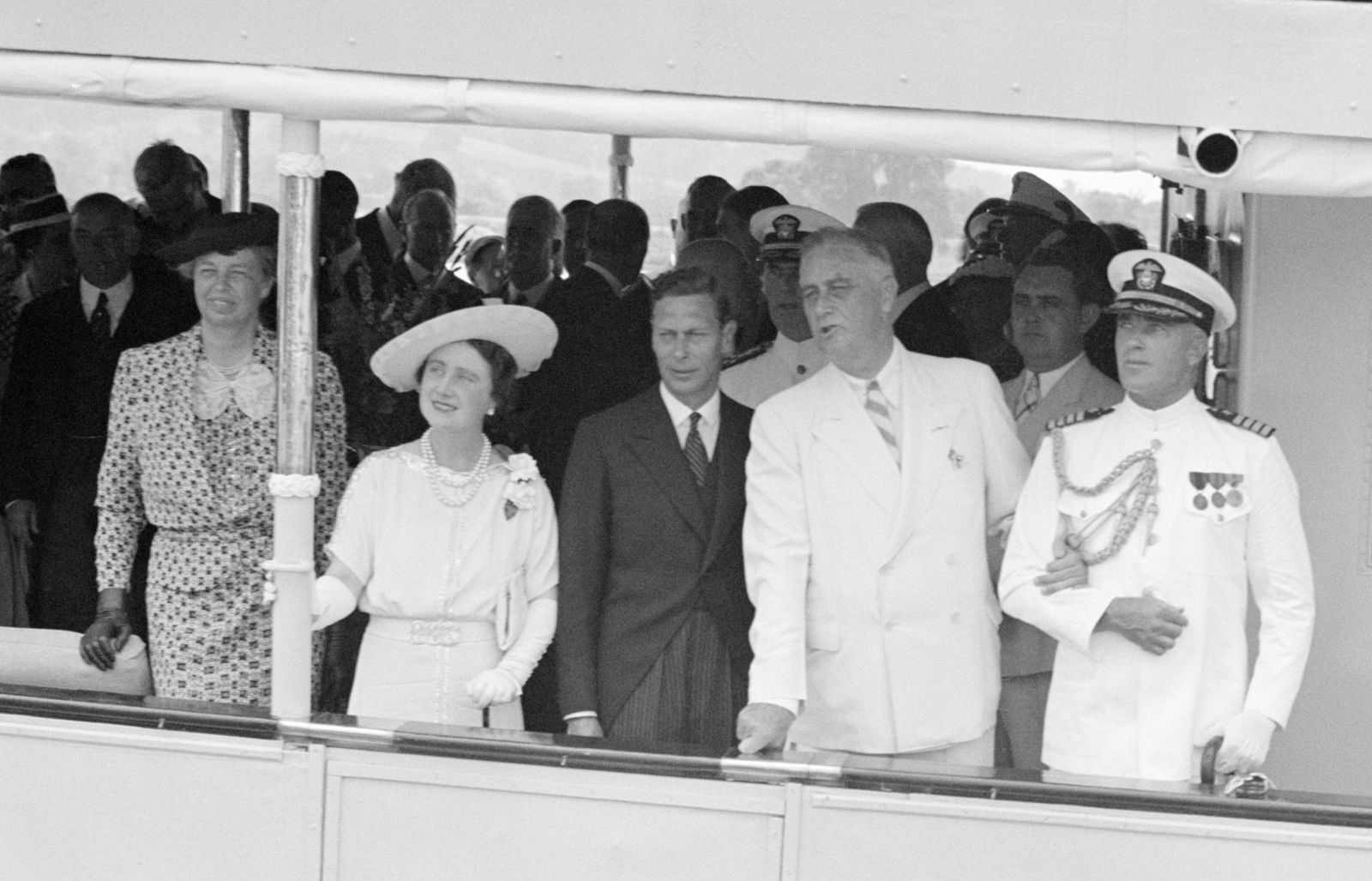
Image: Harris & Ewing, photographer, Public domain, via Wikimedia Commons

In 1939, for the first time ever, a sitting US president hosted the reigning British monarchs on American soil. And it wasn’t just a formal state meeting; it was a picnic.

On June 11 of that year, President Franklin D. Roosevelt and First Lady Eleanor Roosevelt welcomed King George VI and Queen Elizabeth to their home in Hyde Park, New York. Instead of an elaborate diplomatic banquet, the menu was unexpectedly simple and quintessentially American: hot dogs and beer. According to FDR, the queen politely tried hers with a knife and fork, while the king ate several with his hands and seemed to enjoy them. Behind the scenes, the visit was more than symbolic, yet folksy hospitality. With war already looming in Europe, both sides were quietly strengthening ties that would soon become crucial during WWII.

2
The first sitting president to fly on a plane
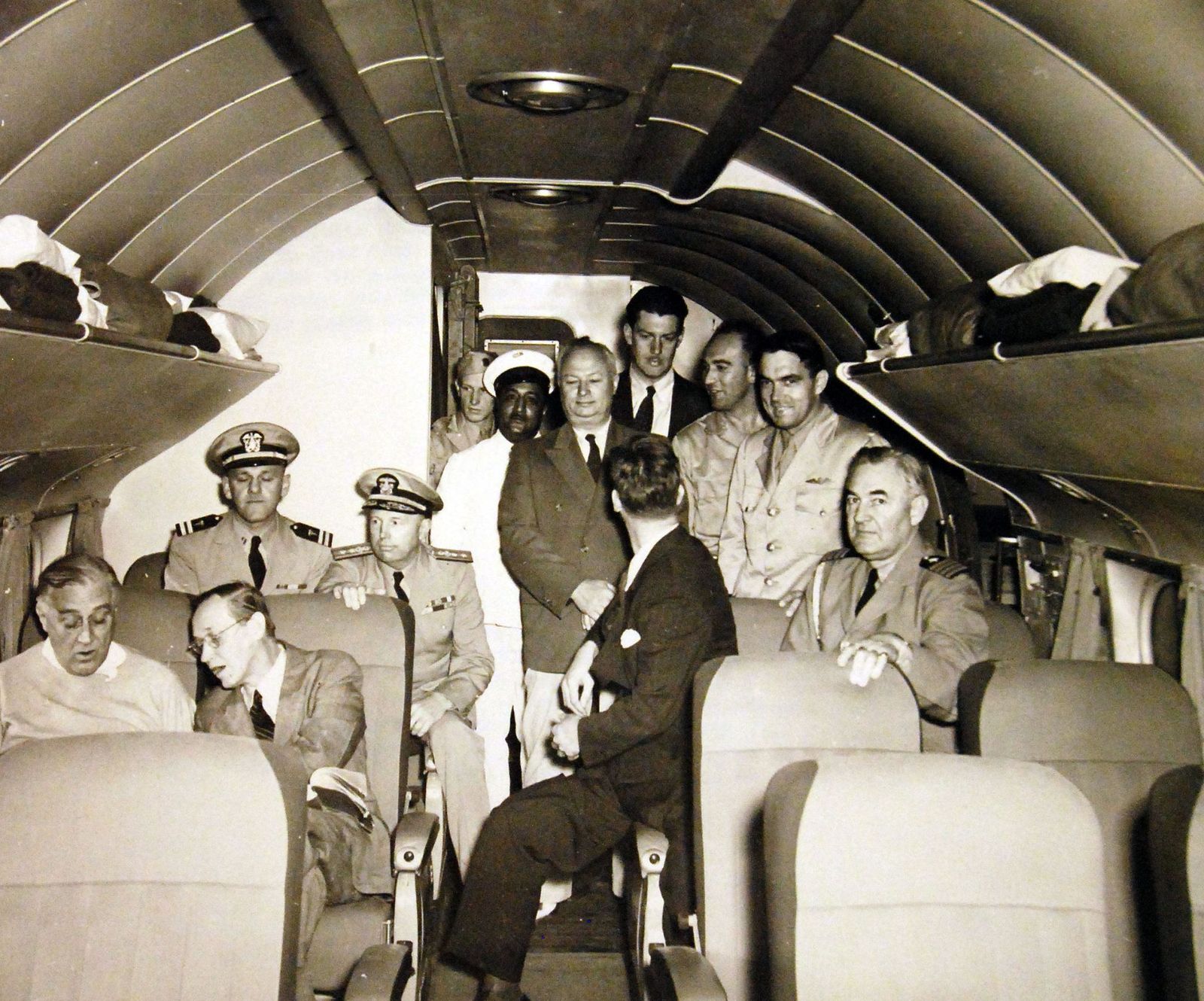
Image: National Museum of the U.S. Navy, Public domain, via Wikimedia Commons

While FDR made history in many ways, one of his lesser-known firsts took place thousands of feet above the ground.

On January 11, 1943, in the middle of WWII, he became the first sitting US president to fly in an airplane. At a time when air travel was still far from routine, he embarked on a secret 7,000-mile journey from Miami, Florida, to Bathurst, Gambia, before continuing to Casablanca, Morocco. The trip wasn't taken for leisure; German U-boats had made Atlantic sea travel risky, so Roosevelt crossed the ocean aboard a Boeing 314 flying boat known as the Dixie Clipper . His destination was the Casablanca Conference, where he met with British Prime Minister Winston Churchill to discuss wartime strategy.

3
Highly superstitious
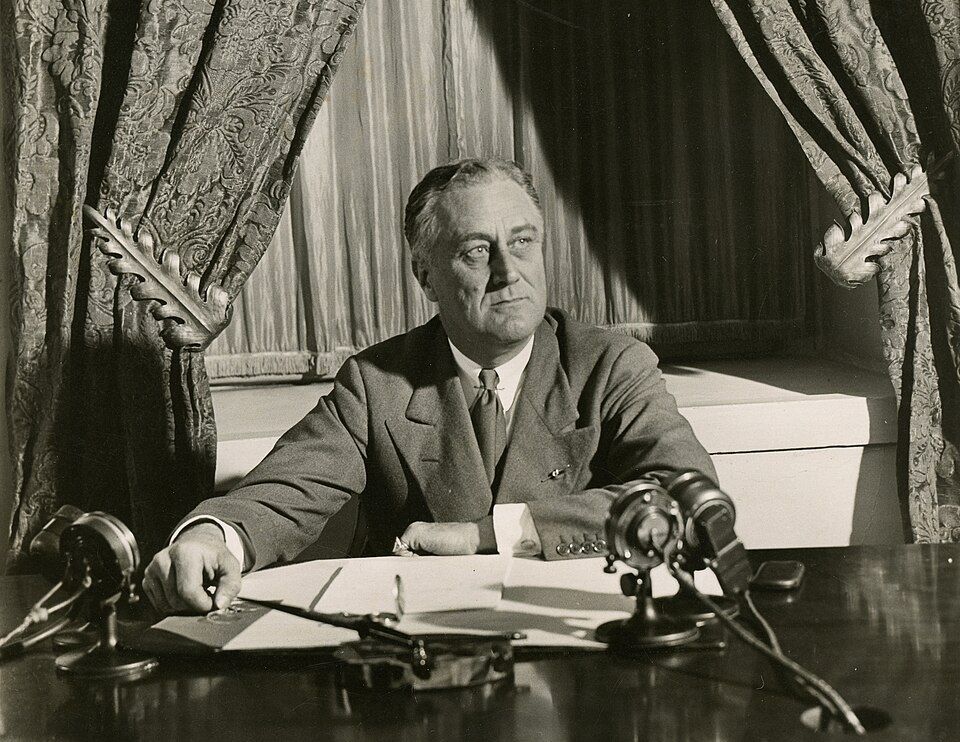
Image: Franklin D. Roosevelt Presidential Library and Museum, Public domain, via Wikimedia Commons

Are you the type to knock on wood to avoid bad luck? Or would you walk under a ladder without a second thought? If you're in the first group, you would have fit right in with Franklin D. Roosevelt.

FDR famously declared that "the only thing we have to fear is fear itself," but he also had a surprisingly superstitious side. According to people who worked with him in the White House, Roosevelt kept his desk and personal items arranged in a precise order that he believed brought good luck. He also disliked the number 13: family members and aides recalled that he avoided hosting dinners with 13 guests and was reluctant to begin important trips on Friday the 13th. He even had a lucky charm, a brown felt fedora that he wore during all four of his presidential campaigns. We can't say it didn't work.

4
He loved practical jokes
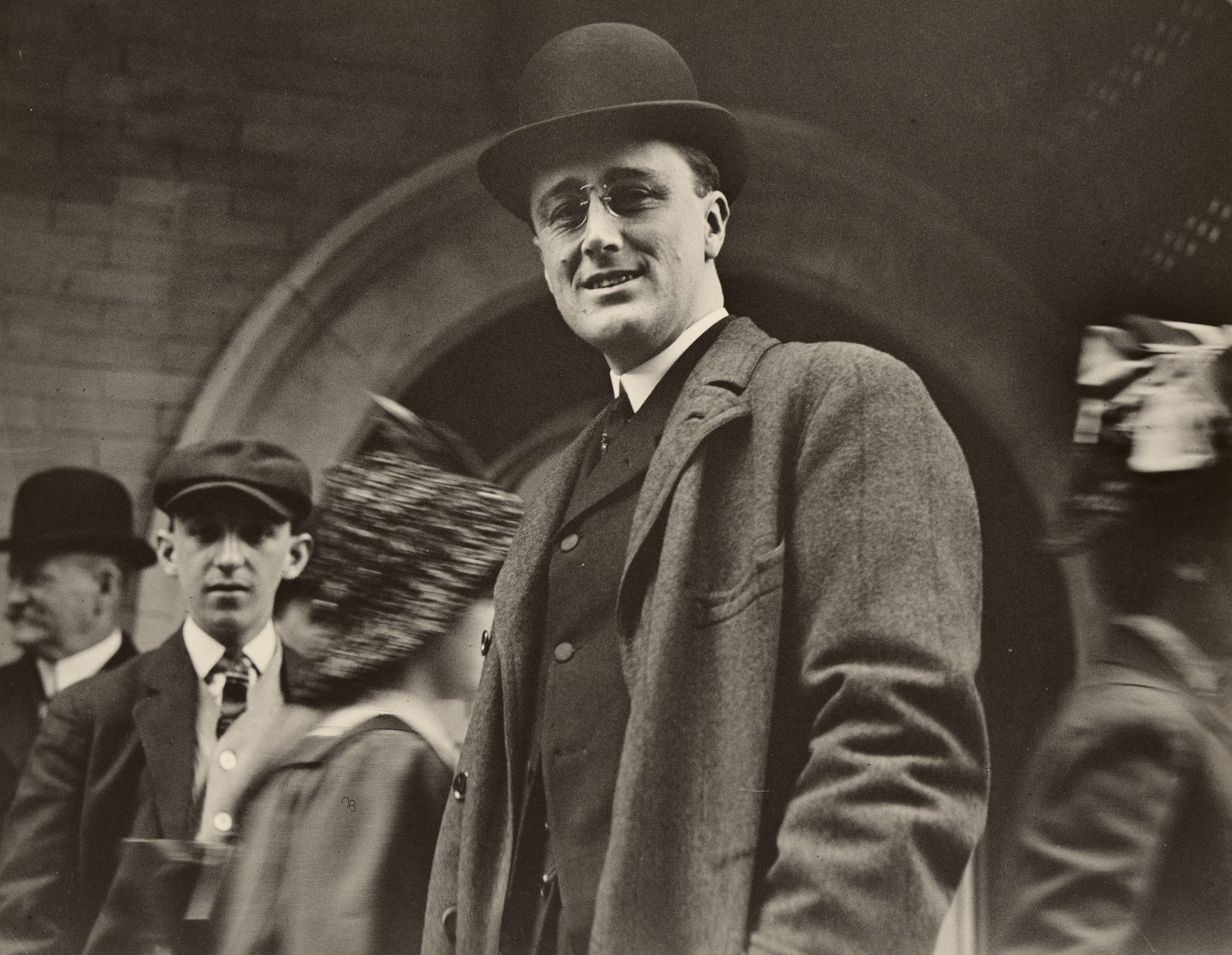
Image: Underwood & Underwood, Public domain, via Wikimedia Commons

With all his responsibilities, talents, and interests, FDR still found time to joke around.

According to his biographers, Roosevelt loved practical jokes and kept his playful streak throughout his life, even pulling pranks well into his presidency. In the tense world of politics, that sense of humor became one of his trademarks. He enjoyed classic gags, including putting bubbling powder in drinking glasses to surprise White House guests, or slipping completely made-up words into conversations and then watching with delight as his staff scrambled to check the dictionary. Friends and aides also noted that he had a unique ability to laugh off rumors, criticism, and political attacks that might have rattled other leaders.

5
Peculiar work schedules
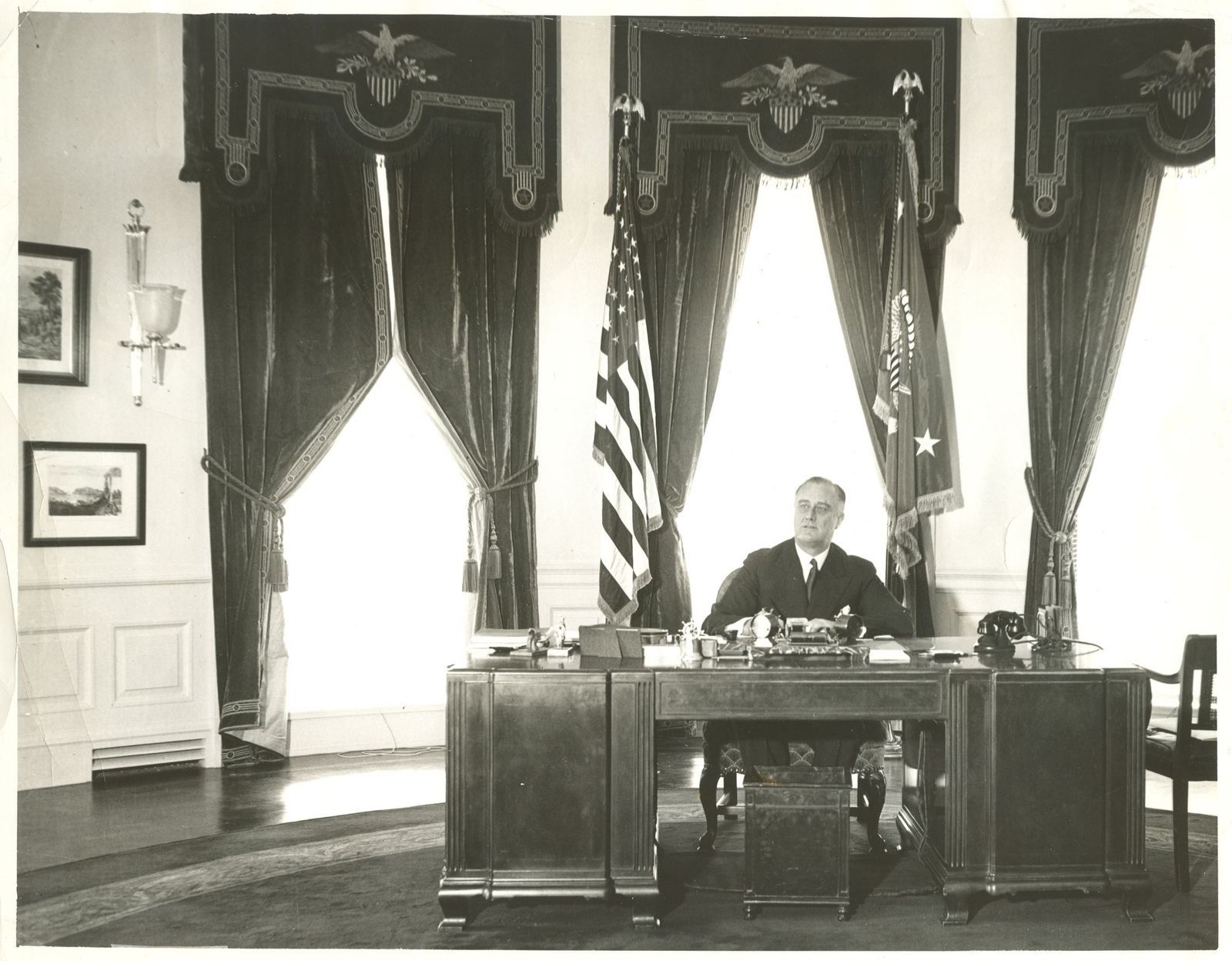
Image: Franklin D. Roosevelt Presidential Library and Museum, Public domain, via Wikimedia Commons

Jokes didn't distract FDR from his work. If anything, they helped him cope, and he certainly had plenty of work to do. In fact, Roosevelt was known for his unusual working hours.

Unlike many other presidents who were early risers, he often worked late into the night and typically didn't begin his day until around 9 am. During WWII, while overseeing a global conflict, he regularly spent his evenings reviewing reports, making decisions, and meeting with advisers long after most Americans had gone to bed. What makes this even more impressive is that he maintained this pace as his health steadily declined. Doctors urged him to slow down and limit his workload, but Roosevelt frequently ignored that advice. For a wartime commander-in-chief, there was always one more decision to make.

6
He appointed the first female cabinet member
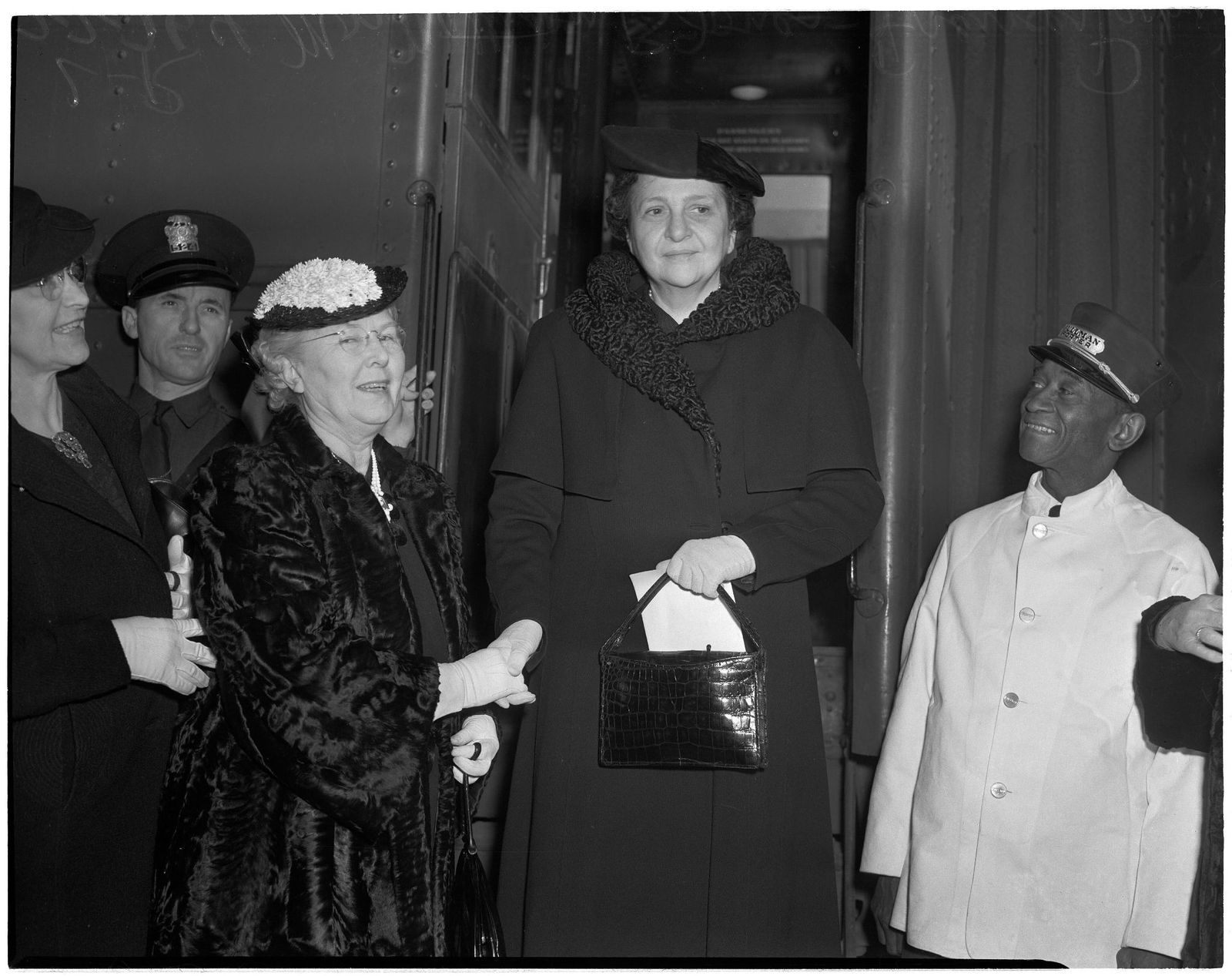
Image: Los Angeles Daily News, CC BY 4.0, via Wikimedia Commons

Among his many historic firsts, FDR was the inaugural POTUS to appoint a woman to a Cabinet position, a decision that reflected both his political instincts and his willingness to recognize talent and intelligence where he found it.

In 1933, he chose labor advocate Frances Perkins as Secretary of Labor. It turned out to be one of the most consequential appointments of his presidency. Perkins served from 1933 to 1945, making her the longest-serving Secretary of Labor in American history. And as if that weren't enough, she became one of the chief designers of the New Deal.

7
11 presidential relatives
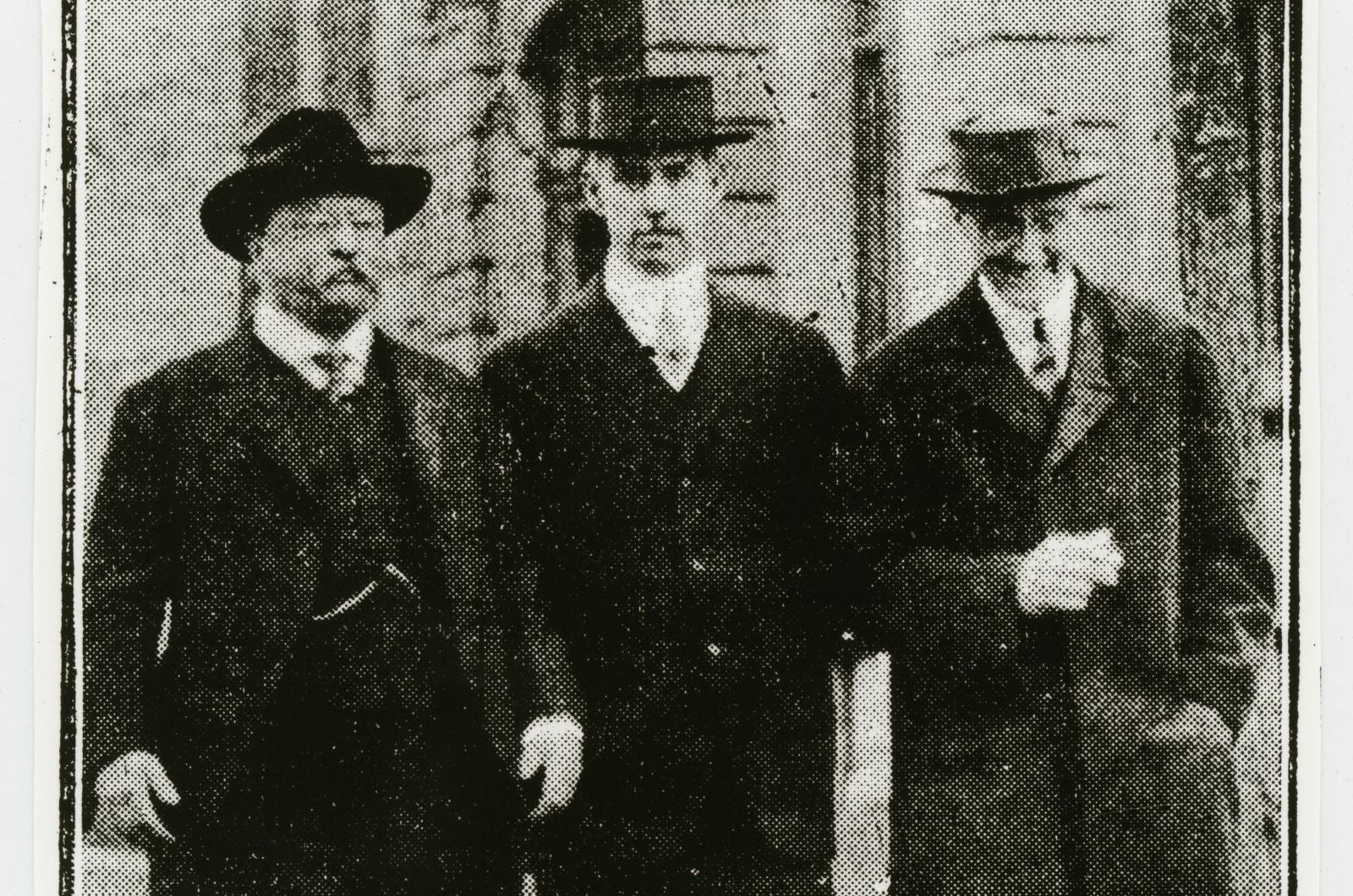
Image: Franklin D. Roosevelt Presidential Library and Museum, Public domain, via Wikimedia Commons

Most people know that Franklin D. Roosevelt and Theodore Roosevelt were related: the 32nd president was a distant cousin of the 26th. But few realize just how extensive FDR’s presidential family tree really was.

In fact, genealogists have traced Franklin Roosevelt’s family connections to at least 11 US presidents. FDR was not only related to Theodore Roosevelt and his own wife, Eleanor Roosevelt (his fifth cousin once removed), but also to an impressive number of other commanders in chief. Among those connected to him by blood were George Washington (with whom he shared ancestors from English nobility and the early settlers of Virginia), John Adams, John Quincy Adams, James Madison, and William Harrison. Through marriage and extended family ties, he was also related to Ulysses S. Grant, Benjamin Harrison, Zachary Taylor, Martin Van Buren, and William Howard Taft.

8
His illness may not have been polio
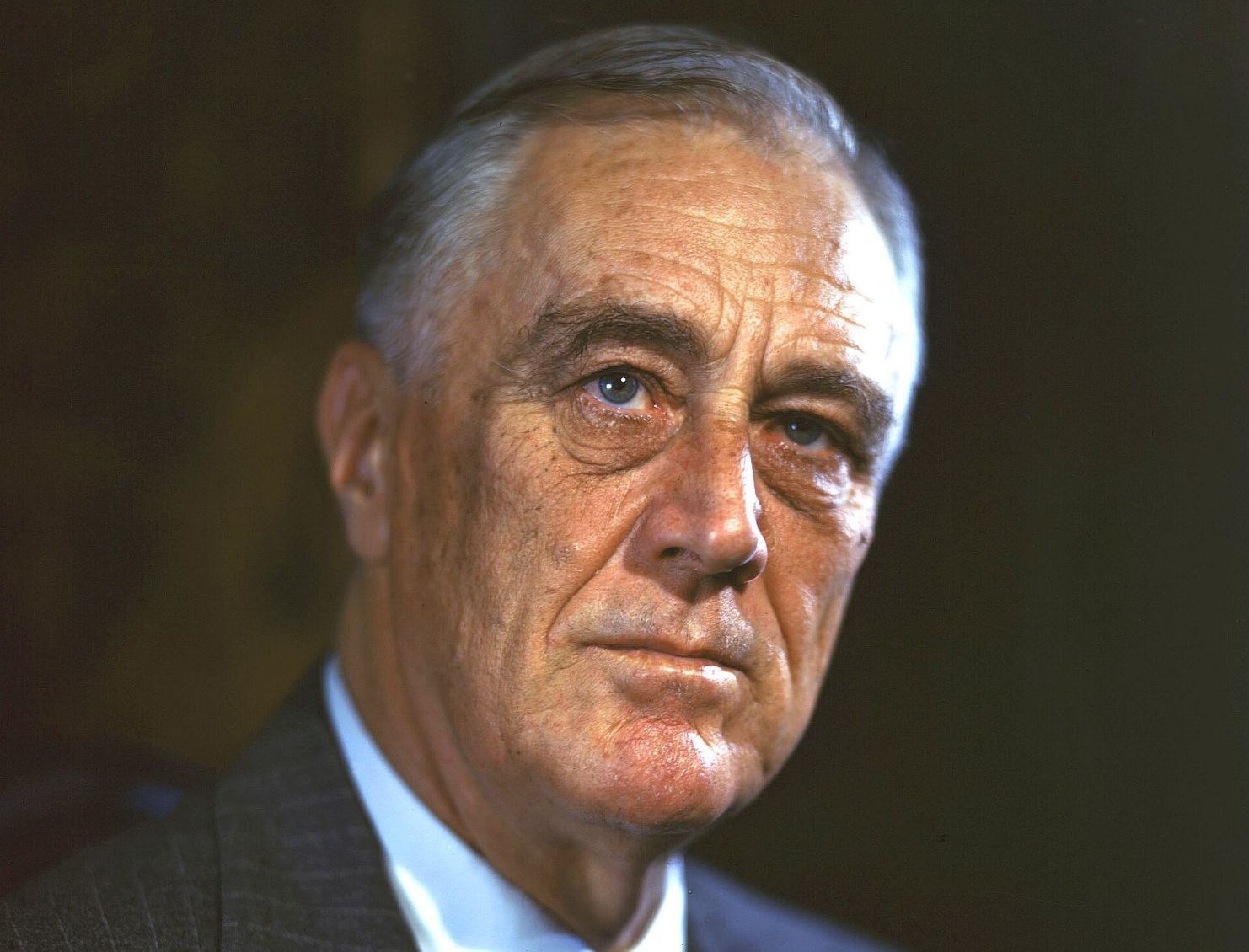
Image: Leon Perskie, CC BY 2.0, via Wikimedia Commons

As is well known, FDR was struck by a serious illness in 1921 at age 39 that left him permanently unable to walk unaided. But during his presidency, he worked hard to keep public attention focused on his leadership rather than on his body, so while Americans understood he had been diagnosed with polio, few knew about the paralysis.

To stand at public events, Roosevelt relied on heavy steel leg braces and canes that helped him project confidence and strength throughout his presidency. However, although doctors at the time diagnosed him with polio, some modern medical researchers have suggested that his symptoms may have been more consistent with Guillain-Barré syndrome (GBS), a rare autoimmune disorder.

9
He didn’t graduate from law school
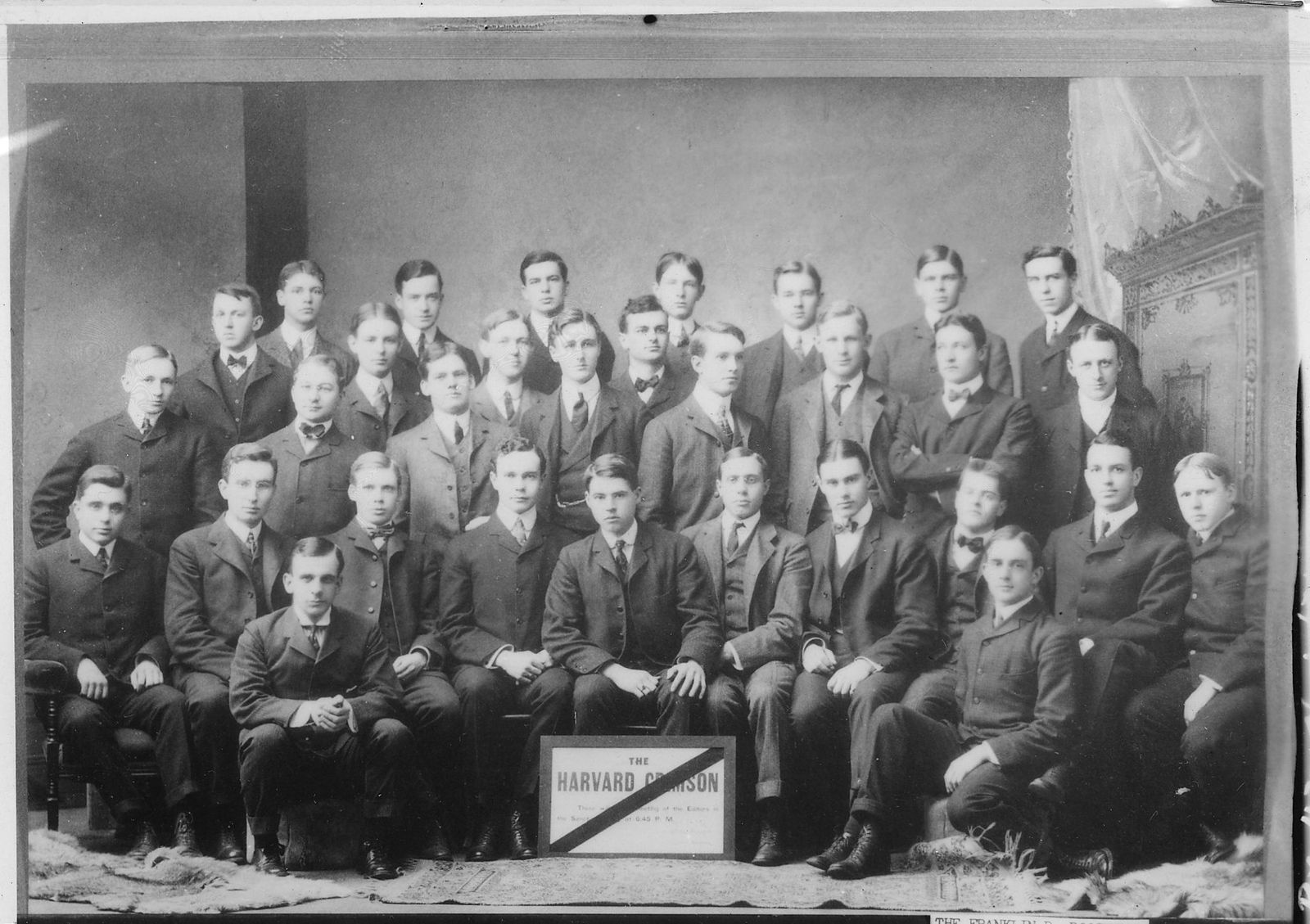
Image: National Archives and Records Administration, Public domain, via Wikimedia Commons

FDR was a bright and curious man who threw himself into subjects that fascinated him, but when something failed to hold his interest, he wasn't afraid to move on.

After earning a History degree from Harvard University in 1903, he enrolled at Columbia Law School, but he found that he simply didn't enjoy it. According to the Miller Center at the University of Virginia, Roosevelt showed little enthusiasm for the legal profession, and maybe that’s why he never achieved a Law degree. Even so, he passed the New York bar exam and began practicing after it, but the experiment lasted only a few years. Then, in 1910, an opportunity came along that interested him far more: local Democrats in New York asked him to run for the state Senate. Roosevelt eagerly accepted, and his political career was underway.

10
Expert in many fields
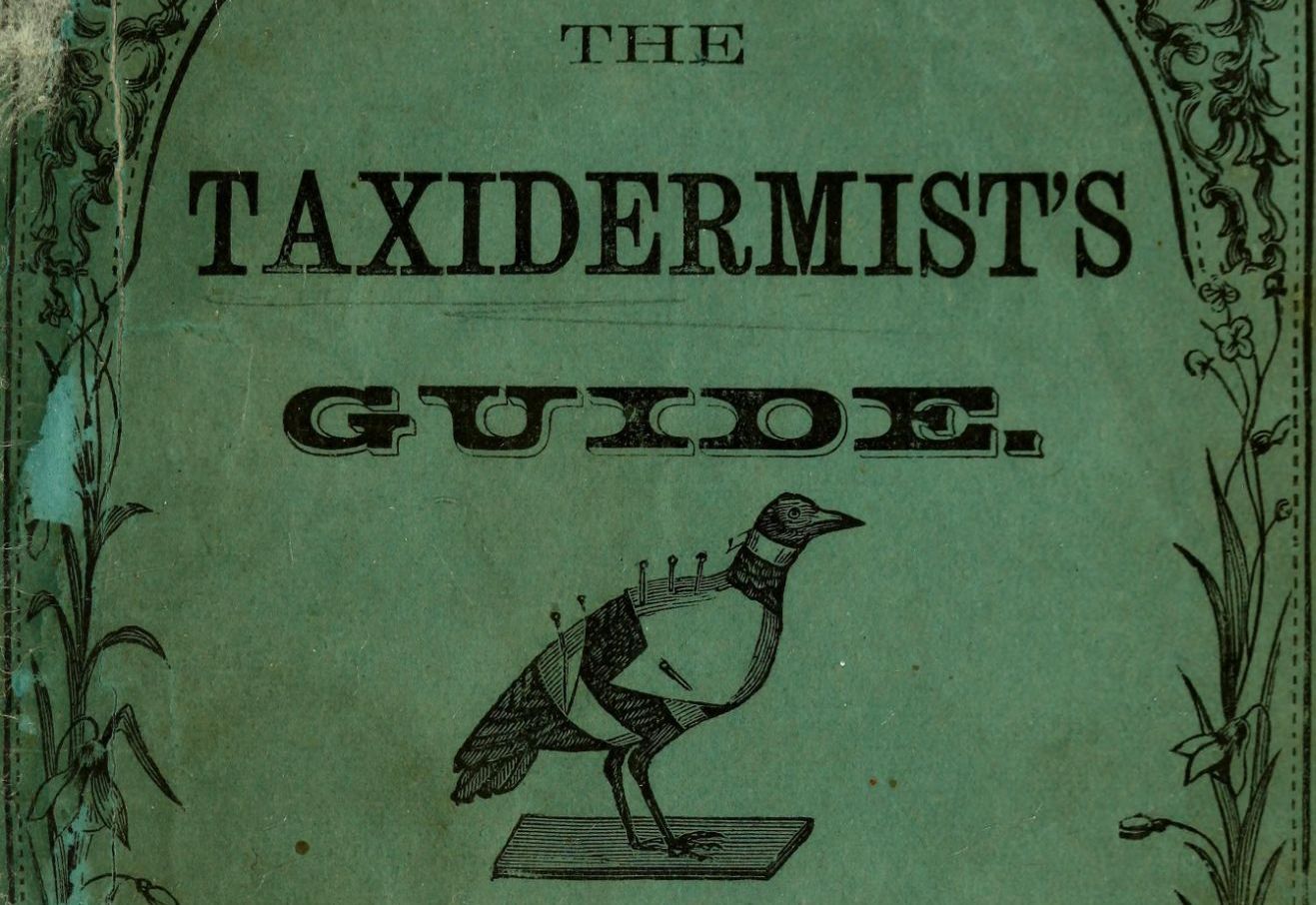
Politics and wartime strategy weren't FDR's only talents. Long before he entered the White House, he acquired a deep interest in nature.

Growing up in Dutchess County, New York, Roosevelt developed a fascination with birds that went far beyond a childhood hobby. By age 11, he was already learning taxidermy, eventually becoming a skilled self-taught naturalist and bird expert. Over the years, he identified and cataloged roughly 300 bird species. His detailed field journals and collection of more than 300 Dutchess County specimens are still considered some of the most complete records of local bird life from that era.

Culture Culture 3 min read

I want to believe

11 famous hoaxes in American history that fooled everyone

Image: Hartono Creative Studio

The fact that not every little thing in our world can yet be explained makes life a bit more interesting for many of us. And that urge to believe in certain things has fostered many myths and hoaxes that continue to fool people to this day. How many of the following 11 do you know?

1
The Cardiff Giant

Image: Anton Ivanov

In 1869, workers digging a well in Cardiff, New York, uncovered what appeared to be a 10-foot-tall petrified man. Locals rushed to see the "giant," paying admission to witness history in the soil.

But, as it turned out, it wasn’t ancient at all. A man named George Hull had buried the statue as a prank and made some quick money from the curious crowd.

2
War of the Worlds Broadcast

Image: Michal Balog

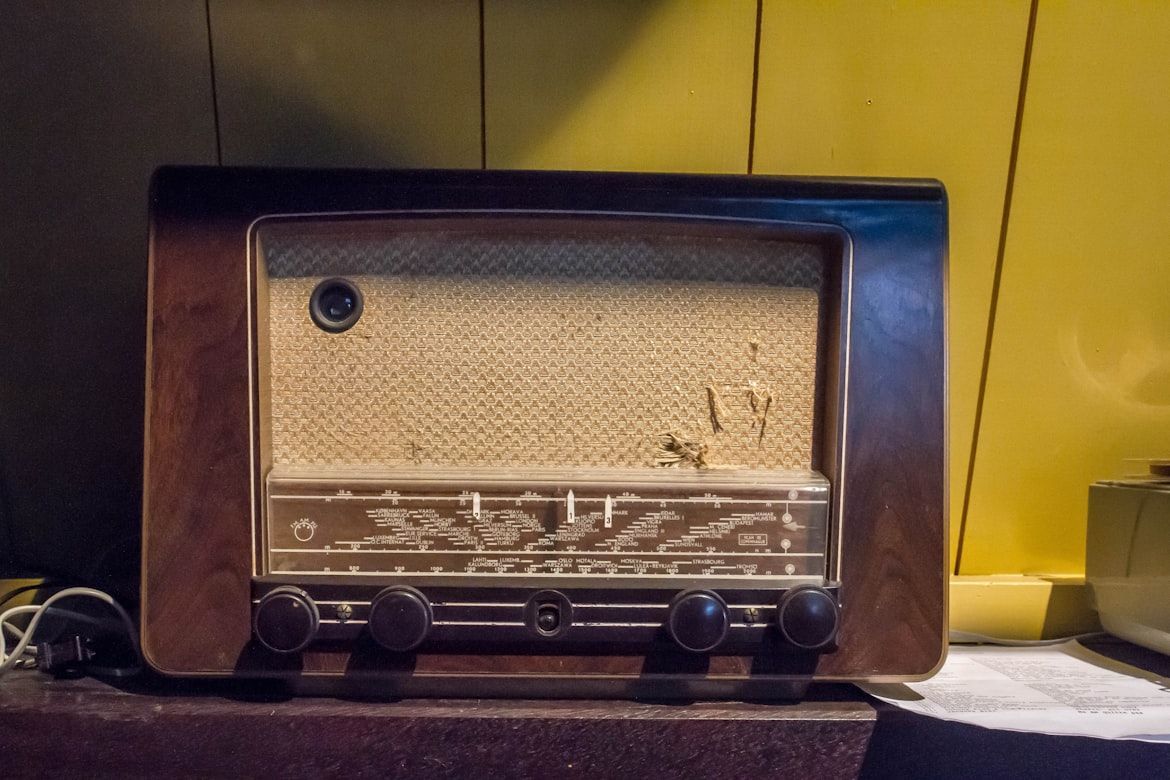
This very famous hoax took place on the eve of Halloween 1938. Orson Welles’s radio adaptation of The War of the Worlds aired as if it were breaking news . Many listeners tuning in late thought Martians had really landed in New Jersey.

Some packed up their cars or called the police in panic. Though no invasion occurred, the broadcast became a legend in media history.

3
The Balloon Boy

Image: Ankush Minda

In 2009, Americans watched live TV coverage of a silver balloon drifting across the skies of Colorado , fearing that a six-year-old boy was trapped inside . The story gripped the nation for hours.

When the balloon finally landed empty, police discovered the child hiding safely at home. His parents later admitted it was a publicity stunt gone wrong.

4
The Feejee Mermaid

Image: Nsey Benajah

In 1842, showman P. T. Barnum unveiled a marvel: a preserved "mermaid" supposedly from the South Seas . Crowds lined up to see the half-fish, half-woman curiosity.

The truth was stranger still. It was the upper body of a monkey sewn onto a fish tail and covered in papier-mâché.

5
The Great Moon Hoax

Image: Ganapathy Kumar

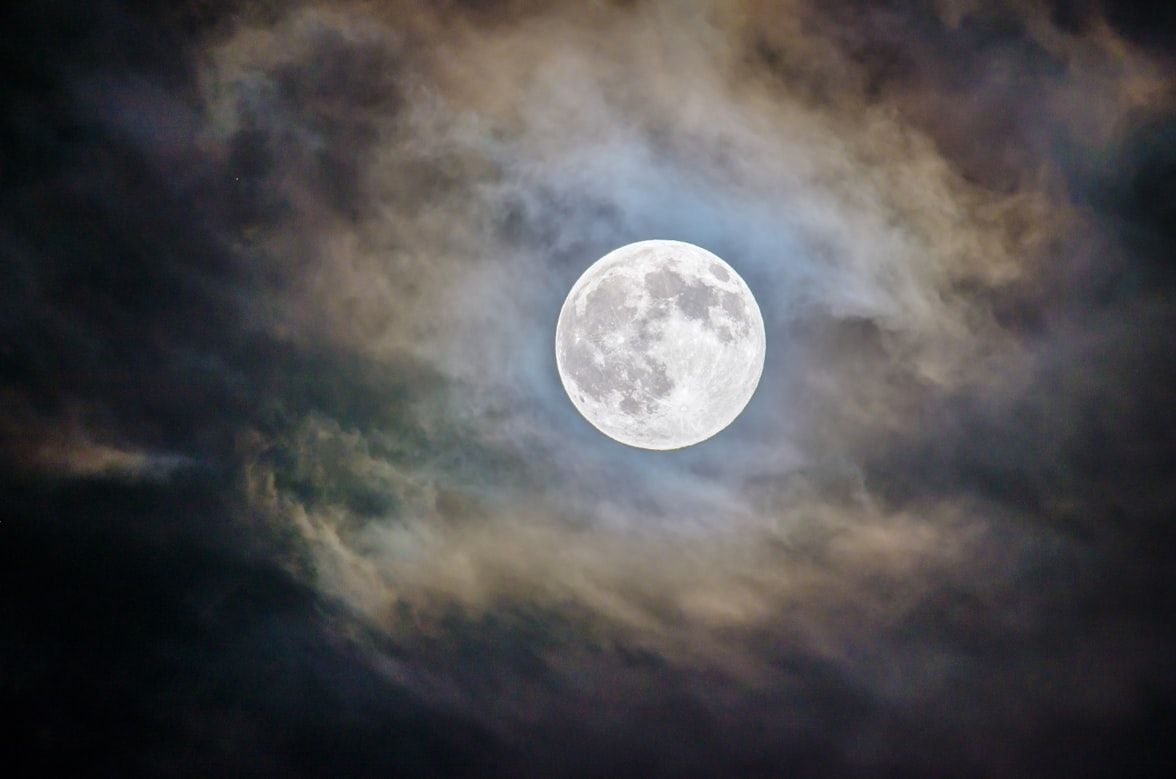
Readers of The New York Sun in 1835 were astonished by reports claiming that scientists had spotted bat-like people and crystal palaces on the Moon through a powerful new telescope.

The story was pure invention, but circulation went up. By the time the truth came out, the paper’s readership had reportedly increased dramatically.

6
The Crop Circles Craze

Image: Agent J

When perfect circles began appearing overnight in wheat fields , people talked about UFO landings. The shapes seemed too precise to have been made by human hands.

But, in 1991, two Englishmen confessed they’d used boards and ropes to flatten the crops. While this revelation explained many of the formations, the mystery lives on in popular imagination.

7
Alien Autopsy Film

Image: Leo_Visions

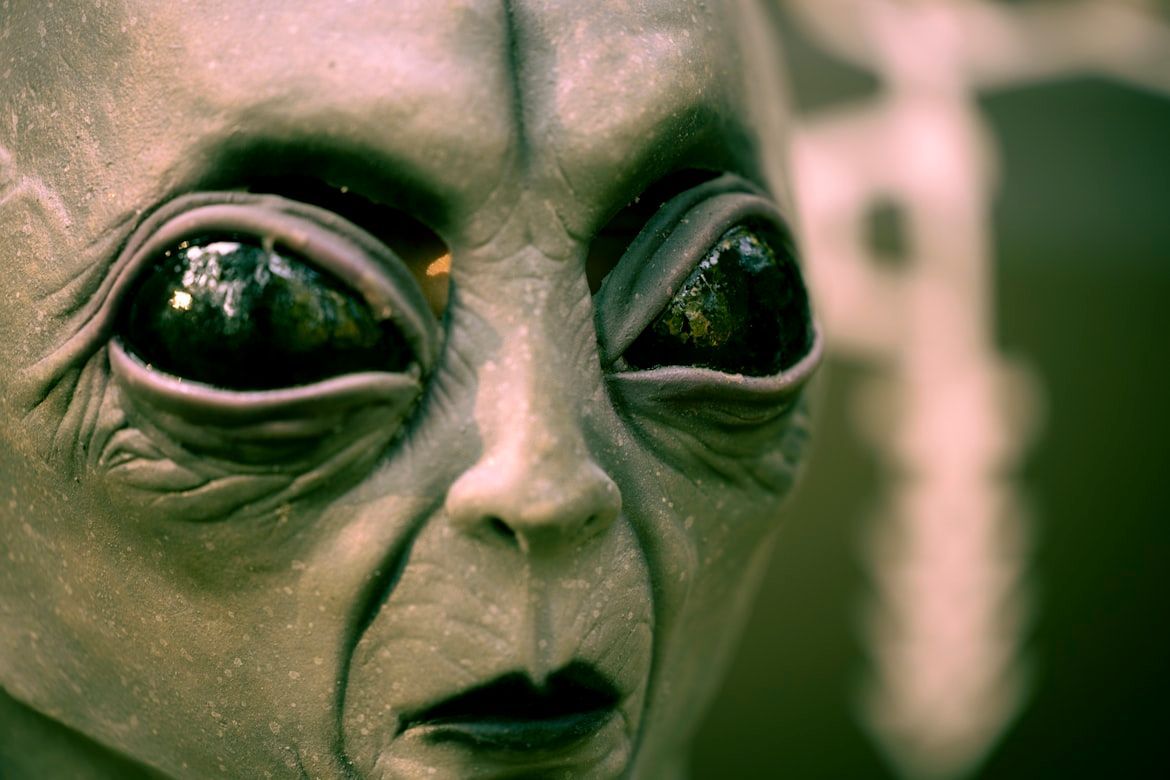
In 1995, a grainy black-and-white video surfaced, showing doctors dissecting what seemed to be an alien recovered from the 1947 Roswell crash. The footage spread quickly worldwide.

Years later, the filmmaker admitted that the film was staged, using latex models and fake organs.

8
The Manti Te’o girlfriend hoax

Image: Kaleb Becker

Notre Dame football star Manti Te’o captured hearts when he revealed that his girlfriend had died of leukemia . Sports fans wept over the tragic love story.

But reporters later learned that the woman never existed. It was an elaborate online catfishing scheme.

9
The Patterson–Gimlin Bigfoot film

Image: Jon Sailer

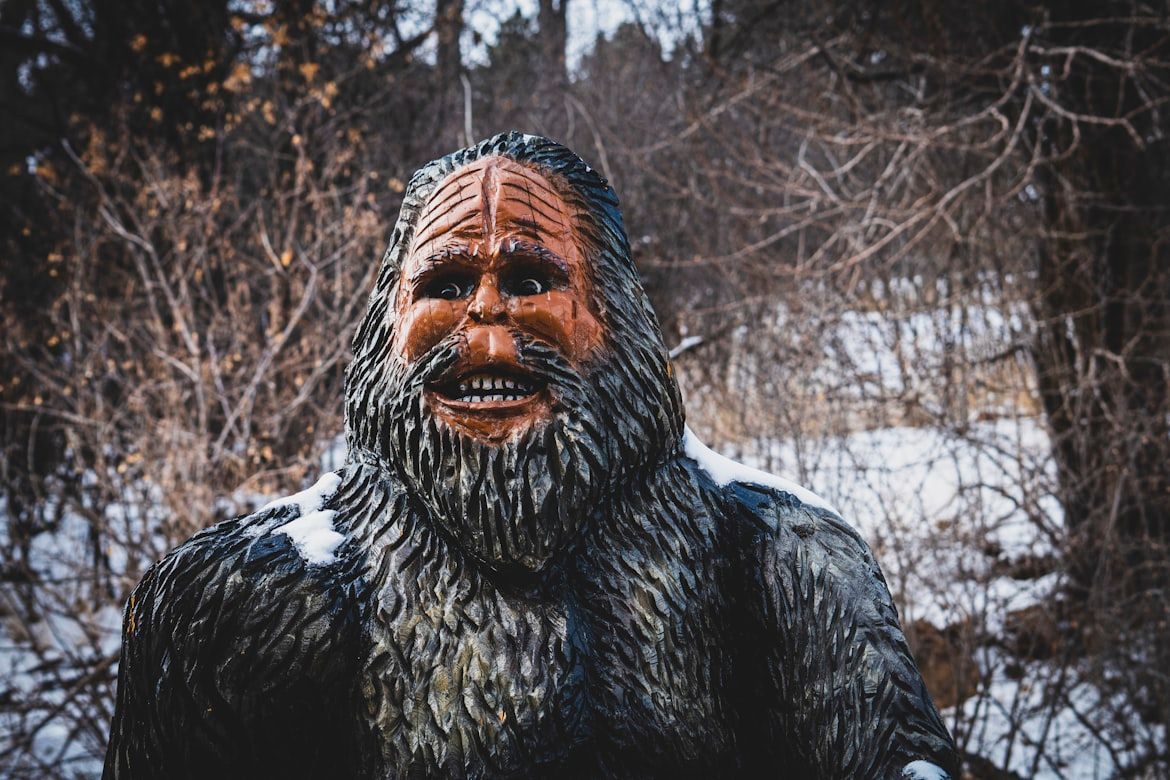
In 1967, a short film shot in California showed a large, hairy creature striding through the woods . Many viewers thought this was real proof of Bigfoot´s existence.

Decades later, one participant claimed it was a man in a gorilla suit, but that claim failed to convince many people who prefer to believe in the existence of this creature.

10
The Drake’s Plate of Brass

Image: David Dibert

In 1936, a shiny brass plate found in California seemed to confirm that explorer Sir Francis Drake had landed there in 1579. Historians called it a priceless relic.

For decades, the plate was displayed proudly, until metallurgical tests in 1977 proved it was modern . It had been made as a practical joke among historians that went too far.

11
Paul Is Dead

Image: Jiamin Huang

The final entry on our list might not be American per se, but it drew much attention on these shores. In 1969, rumors spread that Beatle Paul McCartney had died and been secretly replaced by a double . Fans scoured album covers for "clues" like hidden messages and backward songs.

Paul, very much alive, later joked about it. The bizarre theory became a lasting pop-culture phenomenon.

Culture Culture 5 min read

Why do these 10 magnificent American estates now stand in ruins?

Image: Tama66

Beyond the manicured lawns of modern suburbs and the gleaming glass of city centers lie the skeletal remains of America’s Gilded Age and eccentric architectural dreams. These abandoned mansions, once symbols of immense wealth or unbridled ambition, now serve as monuments to the passage of time. Whether they were built for defense, ego, or artistic expression, these 10 sites stand as beautiful reminders of the people who once dared to dream about eternity. Would you like to know more? Continue reading!

1
Dundas Castle, Roscoe, New York

Image: Annie Spratt

Also known as Craig-e-Clair, this castle was built by Ralph Dundas in the early 20th century. It is an architectural marvel of stone and copper.

Dundas died before the castle was completed, and his wife was reportedly committed to a sanitarium shortly after. Consequently, no member of the Dundas family ever actually lived in the mansion. This has led to the "Ghost of Dundas Castle" legends, with locals claiming to see a woman in white wandering the unfinished halls, waiting for a housewarming party that never happened.

2
Rockwell House, Milledgeville, Georgia

Image: Clem Geiss

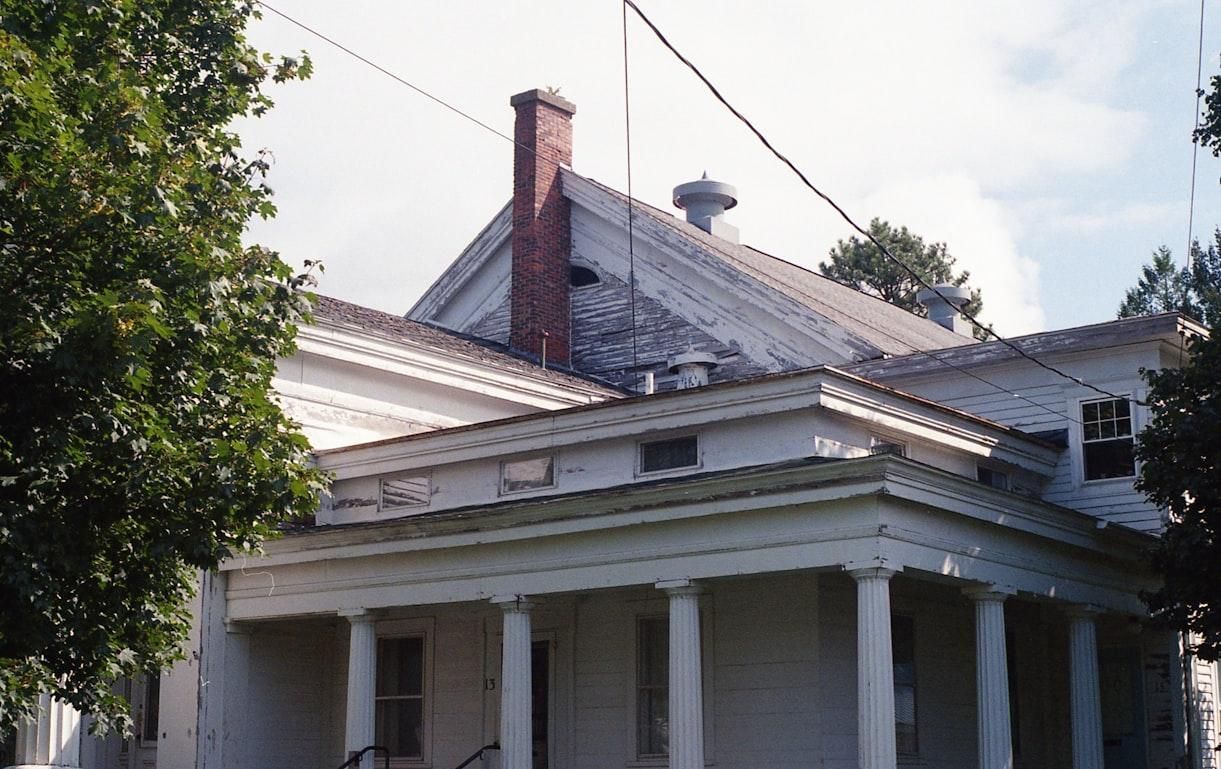
Built in 1838, the Rockwell House is a stunning example of Federal-style architecture, but its beauty is shadowed by a dark past. It was originally built for Colonel Samuel Rockwell, a prominent lawyer.

Local lore whispers about the "Rockwell Ghost," believed to be a young girl who died during a yellow fever outbreak. However, the house’s most tangible secret lies in its survival; it has endured multiple fires and periods of extreme neglect. In recent years, it has become a focal point for preservationists who uncovered hidden structural reinforcements that suggest the house was built to be an impenetrable fortress of its era.

3
Elda Castle, Ossining, New York

Image: Nitrogel

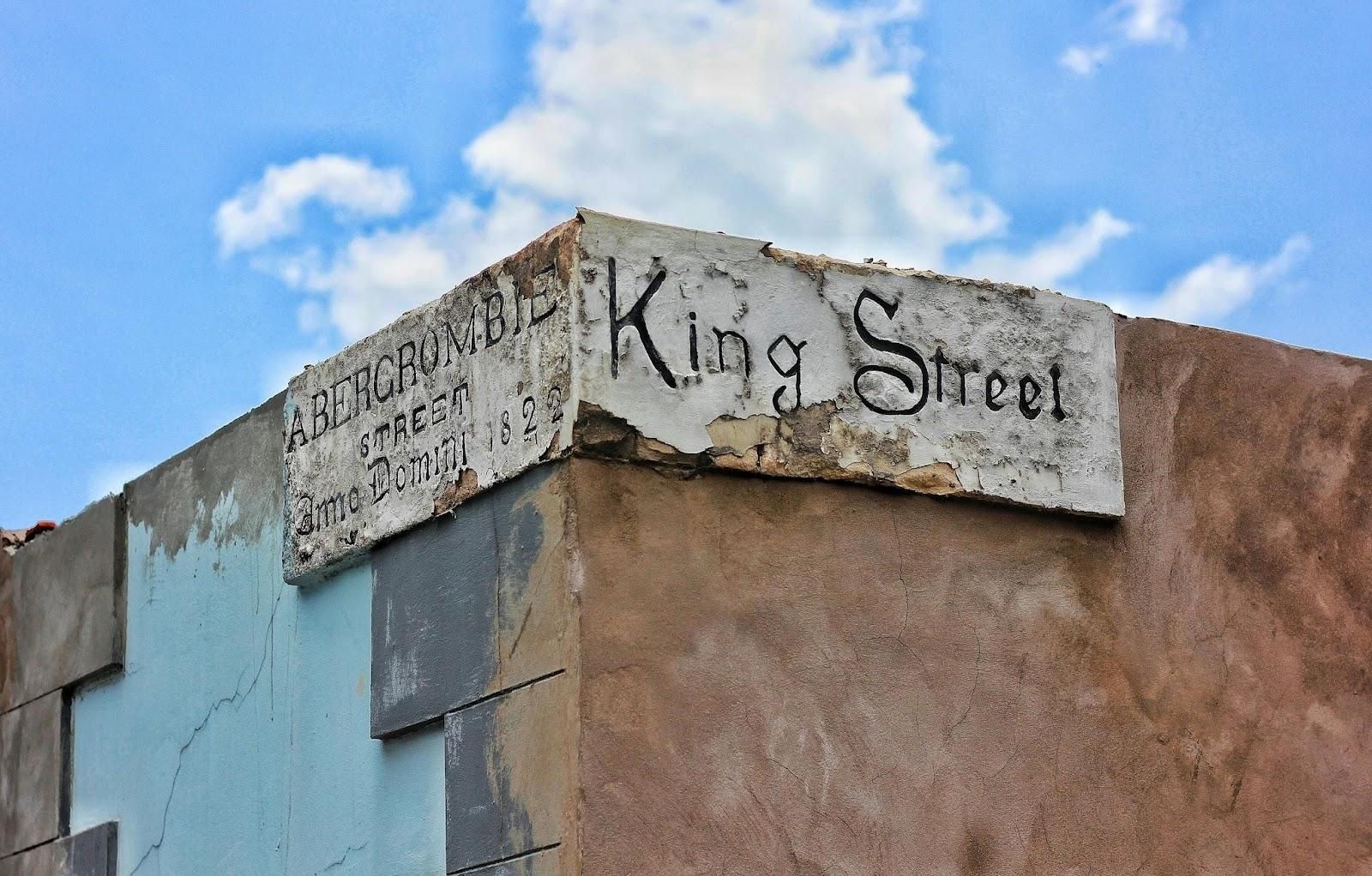
If the name David Abercrombie sounds familiar, it’s because he co-founded the clothing company Abercrombie & Fitch . But in the 1920s, he also built this granite castle, named Elda (an acronym of his children’s names), as a secluded retreat.

The castle features a network of spiral staircases and open-air porches designed to blend the indoors with the rugged wild. Its abandonment, however, is a sheer tragedy. After the family moved out, the castle was used as a research facility and later fell victim to vandals. Legend has it that a fire in the 1940s was started by squatters, leaving behind a charred stone husk that resembles a medieval ruin more than a 20th-century home.

4
Mongo's Castle, Memphis, Tennessee

Image: Denny Müller

A stark contrast to the classical mansions of the South, Mongo’s Castle was the passion project of Mongo Bebe, a man who built his home out of scrap stone, Ashlar blocks, and found materials.

The house is a maze of folk-art eccentricity. The builder intended it to be a community center and a symbol of African-American heritage and self-reliance. It stands today as a decaying puzzle, with many neighbors still unsure of the structural logic behind its towering, uneven walls.

5
Bannerman's Castle, Pollepel Island, New York

Image: Leonard G., Public domain, via Wikimedia Commons

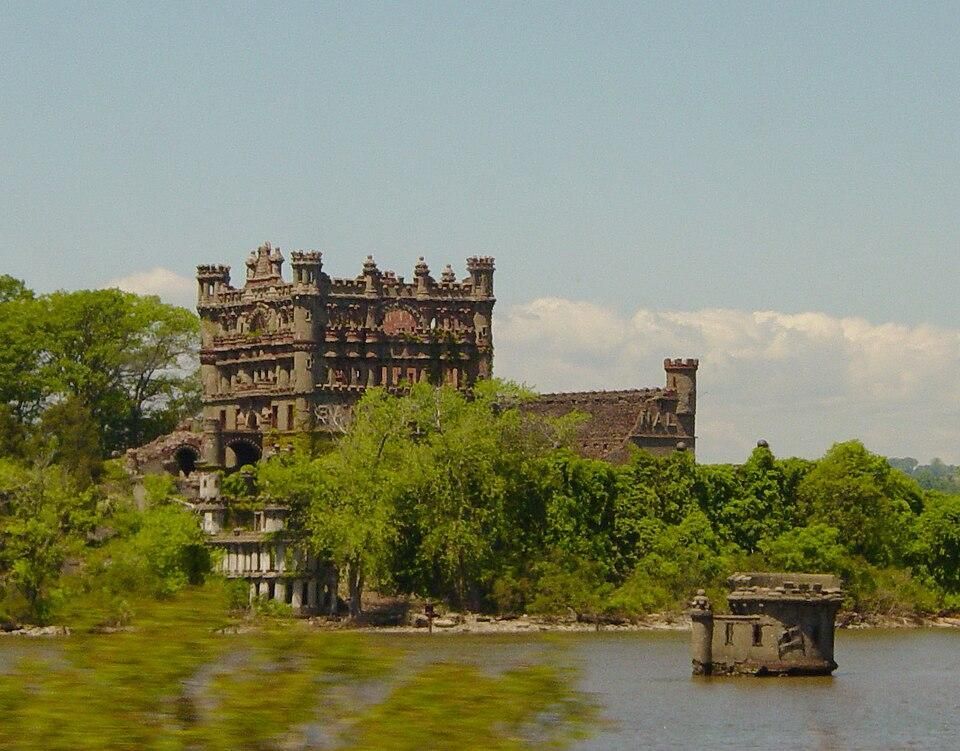
Rising from the Hudson River, this castle was never intended to be a home; it was a giant advertisement and warehouse for Francis Bannerman VI’s military surplus empire.

In 1920, 200 tons of gunpowder and shells exploded in the castle’s powder house, blowing out a significant portion of the walls. The ground is still considered unstable due to the remnants of military munitions, and the inscriptions on the walls are actually warnings and advertisements for the Bannerman business. Do you dare visit this mansion?

6
Castle Mont Rouge, Rougemont, North Carolina

Image: Florian Delée

This whimsical, onion-domed castle looks like it belongs in the Russian countryside rather than the North Carolina woods. It was designed by sculptor Robert Mihaly, but he ended up abandoning the project in the early 2000s following a personal tragedy and financial hurdles.

The castle remains an "empty sculpture," filled with intricate marble work and unfinished turrets. The bizarre architectural fusion lacks a standard floor plan, making it nearly impossible to convert into a functional residence without destroying its artistic integrity.

7
Ha Ha Tonka Castle, Camdenton, Missouri

Image: Hannah McBride

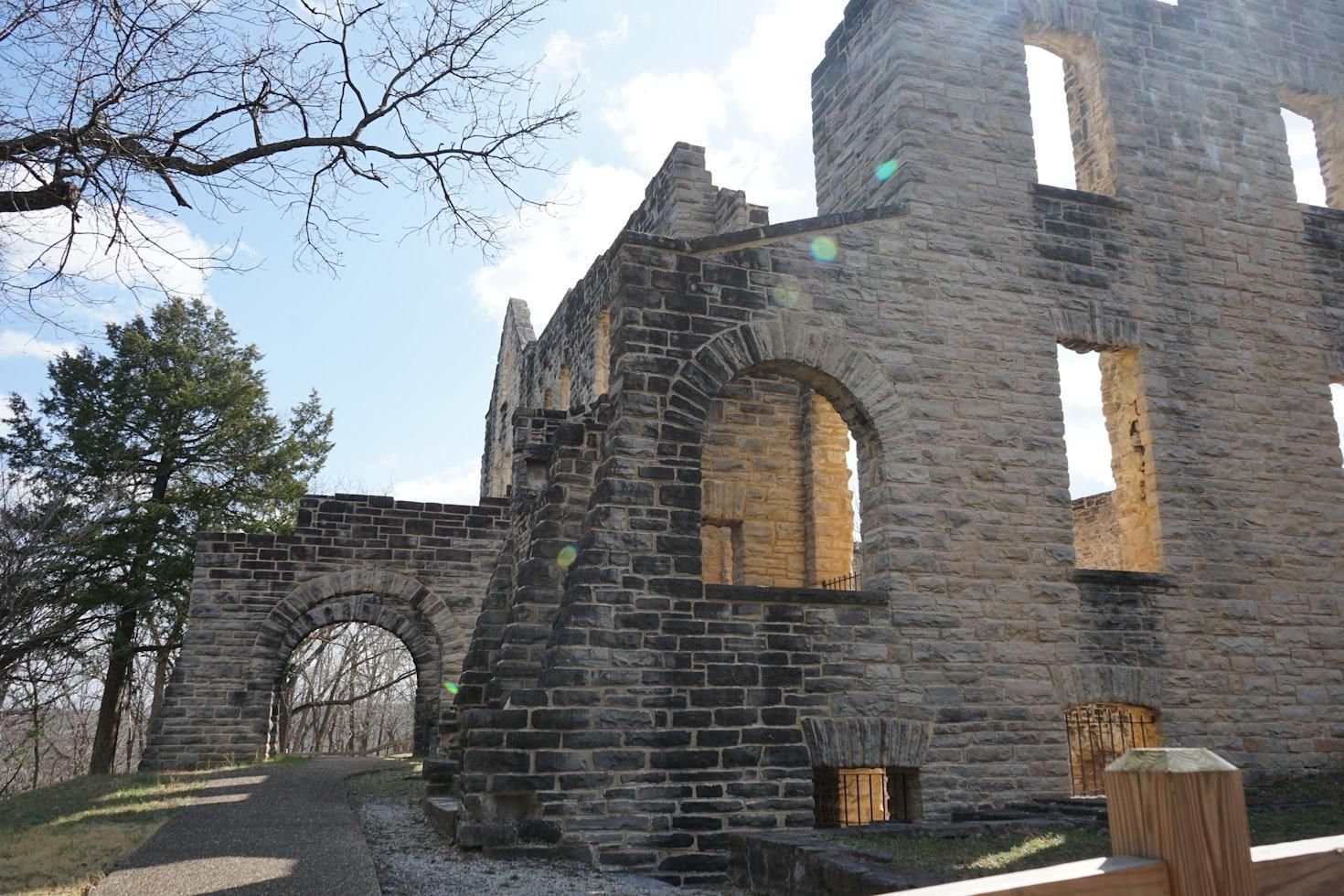
Robert Snyder, a wealthy Kansas City businessman, began building this European-style castle in 1905. He wanted a retreat that overlooked the breathtaking Ha Ha Tonka Spring.

Yet, Snyder never got to see his dream finished; he was killed in one of Missouri’s first recorded automobile accidents just a year after construction began. His sons finished the castle, but it was gutted by a fire in 1942. There’s a hidden network of caves beneath the castle, which were rumored to be used by outlaws and later as a natural "refrigerator" for the estate’s kitchen.

8
Carleton Island Villa, Cape Vincent, New York

Image: Tama66

This once-magnificent villa was built for William Wyckoff, who made a fortune with the Remington Typewriter Company.

The Secret: Wyckoff’s dream turned into a nightmare on the very first night he stayed in the house. He suffered a massive heart attack and died in his sleep. His wife had passed away a month prior, leaving the villa to a son who had no interest in it. The house has stood empty for over 70 years, its secret being the tragic "cursed" timing that prevented it from ever functioning as a family home.

9
Dicksonia Plantation, Lowndesboro, Alabama

Image: Theo Bickel

Dicksonia was a quintessential antebellum mansion, featuring the massive columns and wrap-around porches synonymous with the Old South.

Unlike many plantations that were destroyed during the Civil War, Dicksonia survived the conflict only to be destroyed by a mysterious fire in 1939. Its "ghost pillars," however, remained standing long after the wooden house burned away. These towering brick columns became a haunting landmark , representing the structural skeletons of a forgotten social order.

10
Wyndcliffe, Rhinebeck, New York

Image: Peter Herrmann

This house is the literal origin of the phrase "Keeping up with the Joneses." Though often referred to as a "Mystery Mansion" by urban explorers, this is the ruin of Wyndcliffe, the estate of Elizabeth Schermerhorn Jones.

Elizabeth’s mansion was so grand and intimidating that it prompted her neighbors—including the Astors—to build even larger homes to compete. The secret of Wyndcliffe is the psychological impact of its architecture; it was built to inspire envy, and its current state of absolute decay is a poetic commentary on the fleeting nature of social status.

Explore more American facts

Choose your favorite category!

General
General

As American as apple pie—the very best America has to offer!

Culture
Culture

Delve into the astounding richness of American lore.

Geography
Geography

Hop in and explore vast and diverse American landscapes.

History
History

Discover the key moments that shaped the United States.