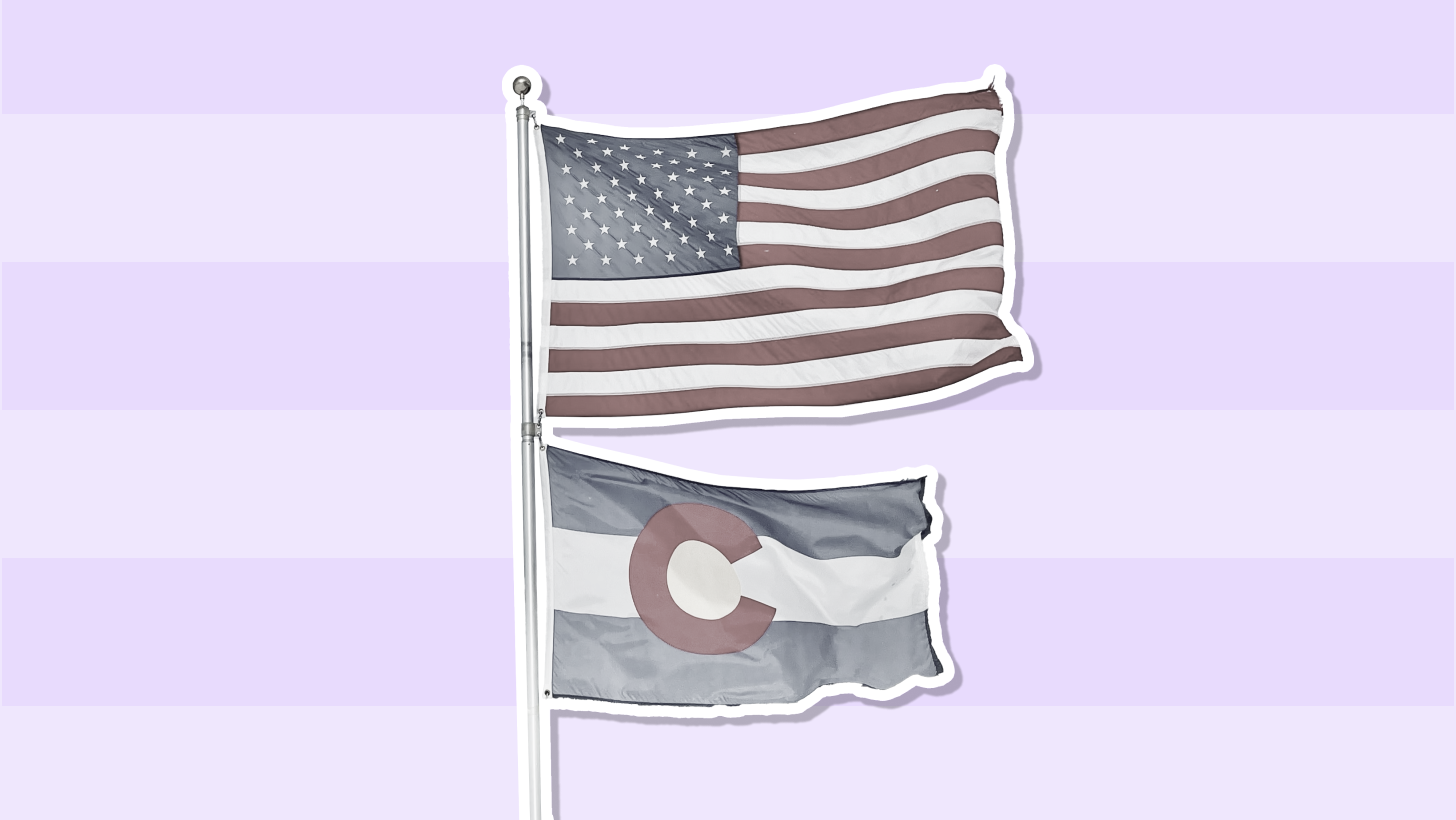
History History 5 min read

Origin stories

This U.S. state shares a name with a mythical island rich in gold
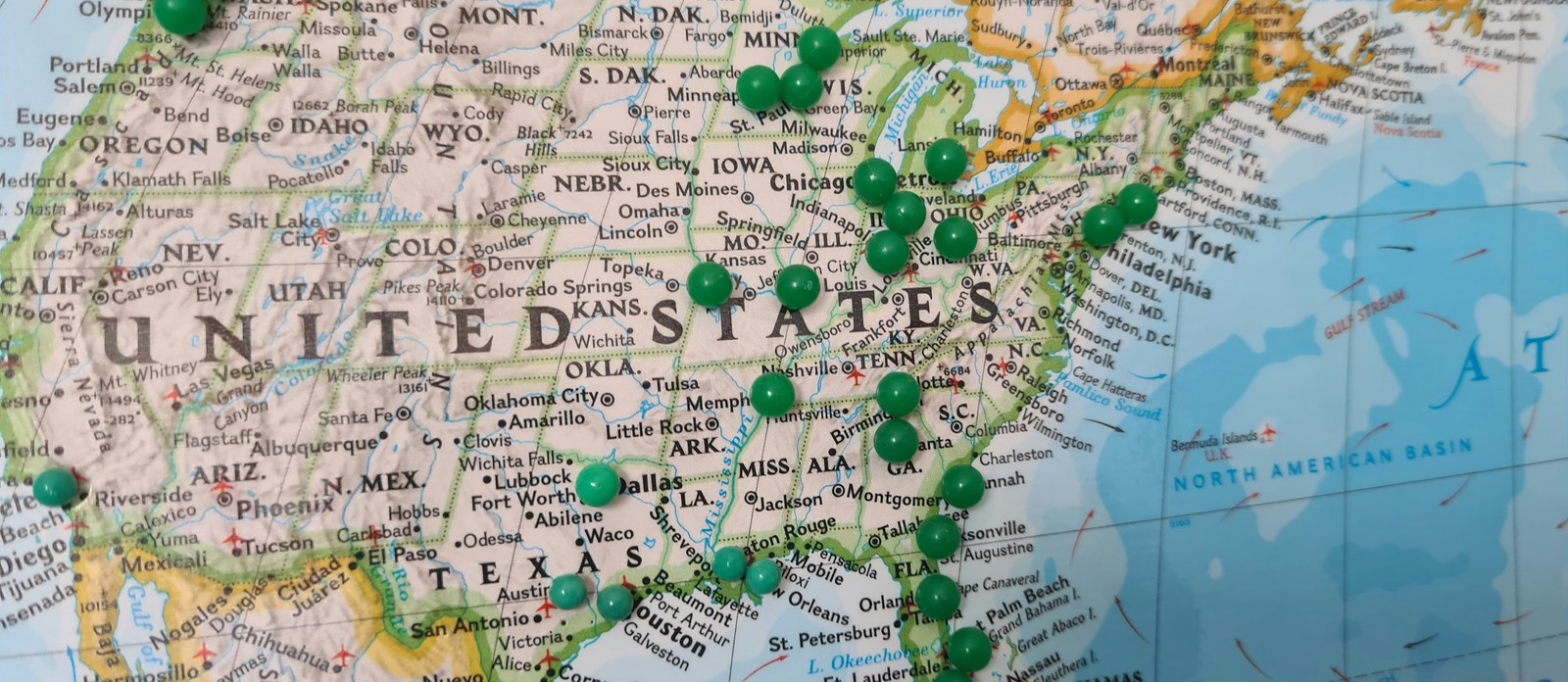
Image: Nico Smit

Twenty-six of our 50 states were once Spanish or French territory, or both. So it’s no wonder that Spanish and French culture permeates American traditions, food, customs — and state names, too. Here are 10 state names with French or Spanish origins.

1
California
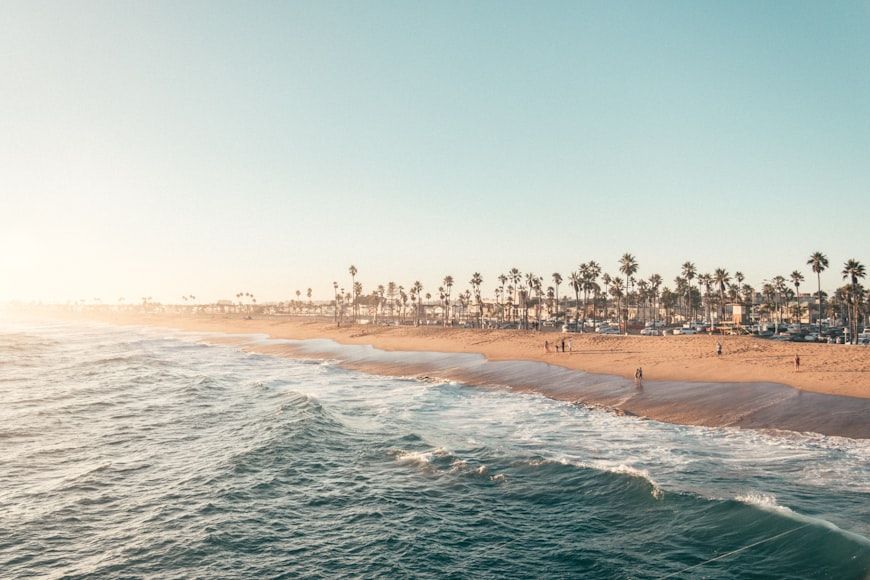
Image: Gustavo Zambelli

All across the Americas, we can find places named after fictional and mythical locations, a result of the arrival of European explorers on the unknown continents. In 1533, Hernán Cortés arrived in what is now Baja California, Mexico. Mistakenly believing that the peninsula was an island, coupled with the arid landscape and the rumor of abundant gold, he named it after an island from the book Las Sergas de Esplandián (The Adventures of Esplandián).

This novel, written by Garci Rodríguez de Montalvo in 1510, features the island of California , governed by the queen Calafia (a play on the Arab calipha , a title given to leaders and rulers). The fictional California is rich in gold and is described as a terrestrial paradise near the Indies, so, despite not being an island, the real California was aptly named.

2
Louisiana
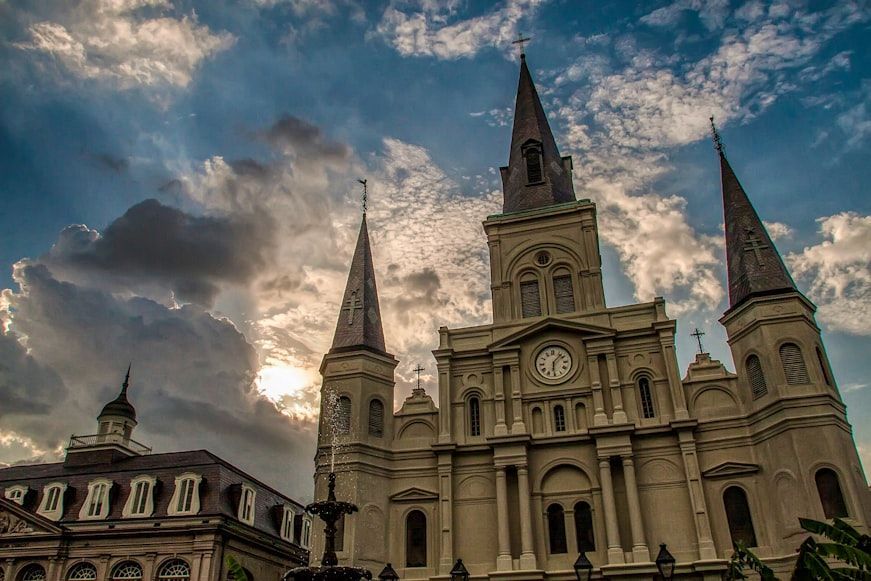
Image: Mick Haupt

Before being the name of a state, Louisiana designated all the French territories west of the Mississippi River , covering either the whole or part of 15 current U.S. states, including Arkansas, Iowa, Nebraska, Oklahoma, and Missouri, among others. Originally named La Louisiane (‘the land of Louis’), the name was given to the Mississippi basin by the French explorer René-Robert Cavelier in 1682.

Who was Louis? Sixteen kings of France had the name Louis, but this territory was named after Louis XIV, also known as "The Sun King" . During his 72-year-long reign, still the longest of any monarch in history, France greatly expanded its colonial territories, among which was Louisiana. After the Louisiana Purchase in 1803, the anglicized name remained, but only for a much smaller portion of land, which gained statehood in 1812.

3
Florida
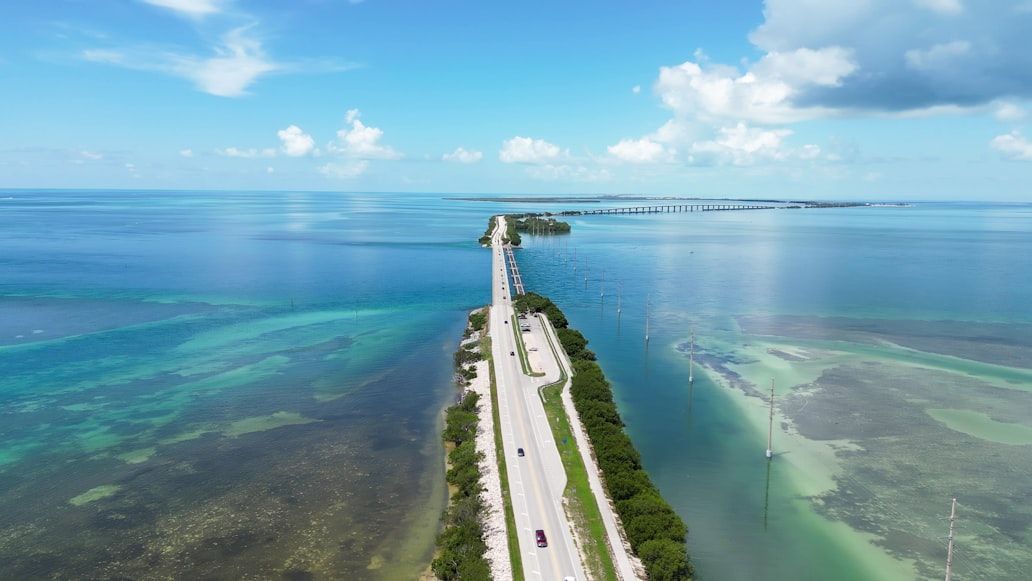
Image: Julius Hildebrandt

One of the European strategies for naming territories was to reference the day of arrival, a practice often used by the Spanish , and evidenced by the many places named after Catholic saints. Florida is an example of this custom.

Spanish explorer Juan Ponce de León arrived in the territory around the time of Easter while looking for the mythical fountain of youth. In Spanish, Easter is sometimes called La Pascua florida (‘the flowery Easter’) because it usually falls in spring, which led Ponce de León to name the territory La Florida .

4
Maine
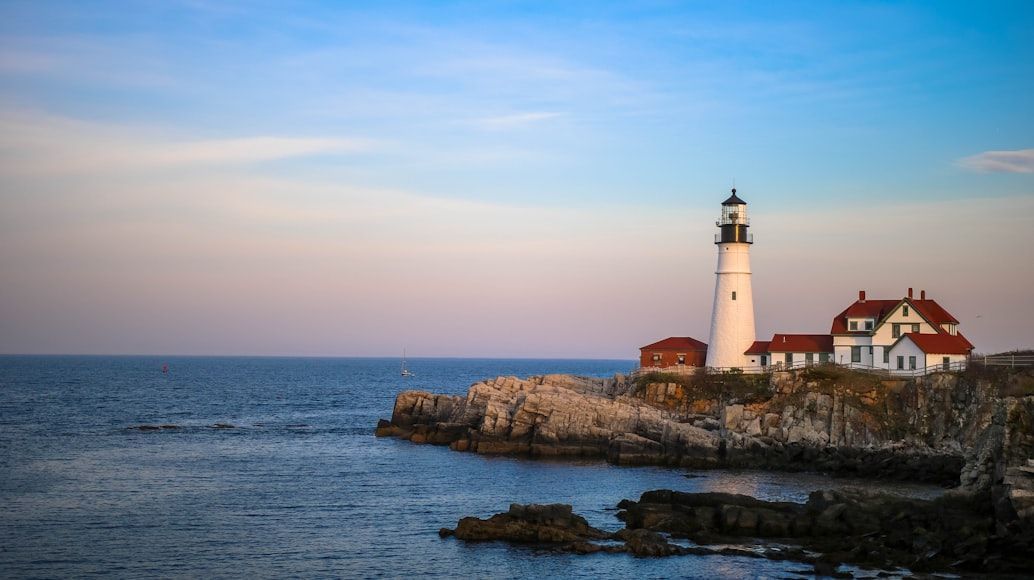
Image: Mercedes Mehling

There is more than one theory for the origin of Maine, and there is no certain answer. While many claim that ‘Maine’ is derived from ‘main land’, there is another widely supported theory that makes a connection with a French province, and that is backed up by the enormous influence of Acadian French people in the state of Maine .

According to this theory, the Maine territory was named after a French province of the same name —nowadays the region of Sarthe and Mayenne— in turn named after the ancient Cenomani Gaulish tribe.

5
Vermont
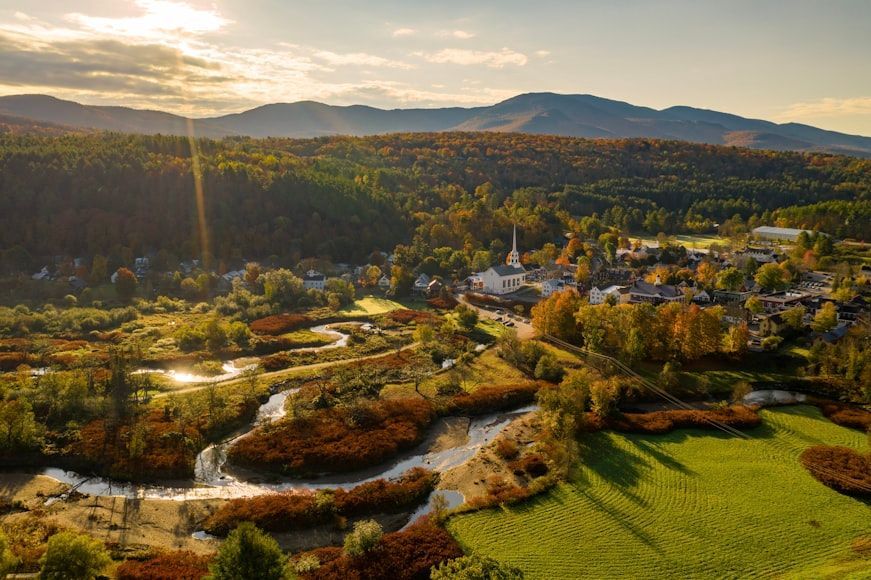
Image: Jeffrey Clayton

Although the Vermont territory was initially explored by the French, it might come as a surprise to know that its French name was given by an English-speaking American . In 1777, the territory declared independence from Britain and constituted a new republic. At first called ‘New Connecticut’, it adopted the name ‘Vermont’ by suggestion of physician and scholar Thomas Young.

Young came up with the name, meaning ‘green mountains’, inspired by a local militia known as ‘the Green Mountain Boys’. However, be it ignorance or poetry, the translation was made into a correct but archaic French. While Vermont does mean ‘green mountain’, the most accurate translation would have been montagne verte .

6
Colorado
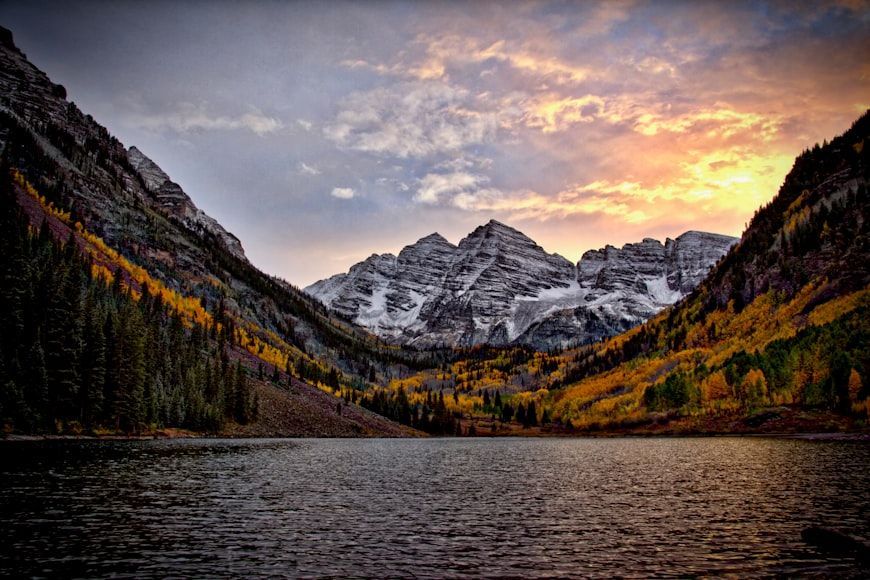
Image: Mike Scheid

Originally, Colorado referred to the Colorado River, named by the Spanish during the 16th century. The area under that name was acquired by the U.S. in the Louisiana Purchase and through the Treaty of Guadalupe Hidalgo , with the Territory of Colorado officially established in 1861 and named after the river.

Why was the river named this way? In Spanish, colorado means ‘red colored’ or ‘ruddy colored’. During the spring thaw, the melted mountain snow would mix with reddish-brown silt , giving the river a red hue.

7
Montana
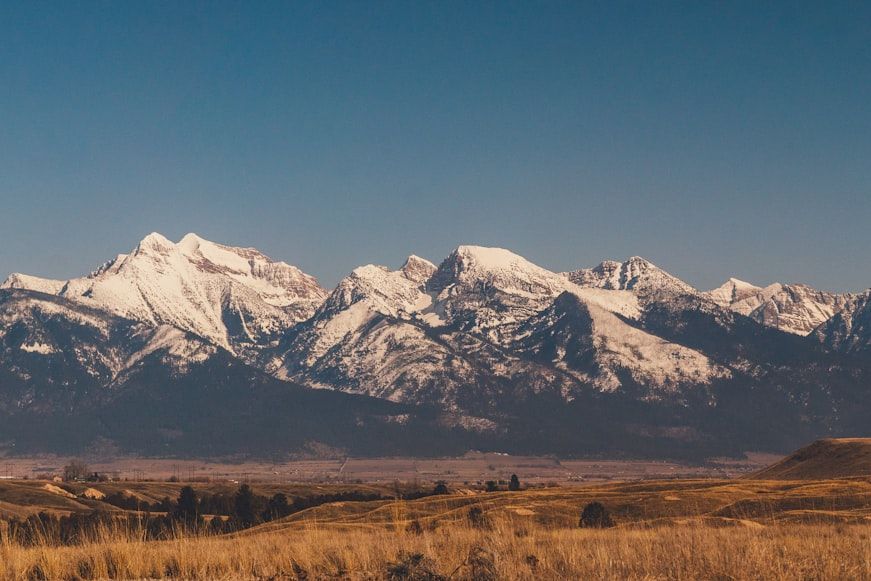
Image: Nic Y-C

This one is another case of a name chosen by English speakers. The word ‘Montana’ is an anglicized version of the Spanish montaña, ‘mountain’. But while there certainly are mountains in Montana, part of the territory consists of plains. Why name it so, then?

The Spanish had named the western mountainous region Montaña del Norte (Northern Mountain). When the Montana Territory was created in 1864, the name was suggested as a tribute to the Rocky Mountains . Some complaints arose in defense of the plains, and the alternative name ‘Jefferson’ was proposed, but Montana won in the end.

8
Nevada
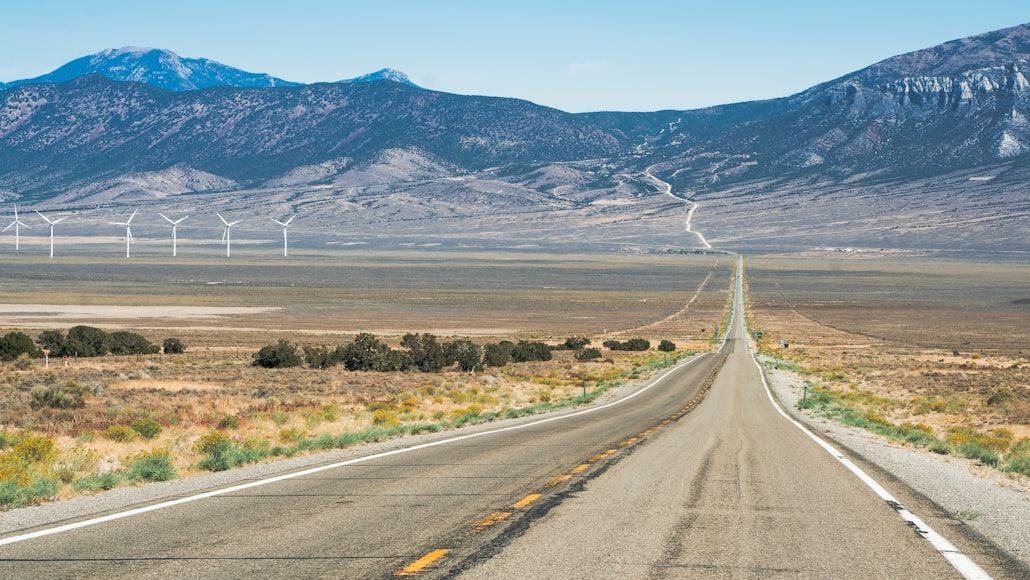
Image: Abhi Verma

The majestic Sierra Nevada mountain range is one of the natural wonders of the Western United States, so it makes sense that a territory would be named in its honor. Named Sierra Nevada or ‘snowy peak’ by the Spanish, the first record of the name dates back to 1776 , and was most likely inspired by a Spanish range of the same name.

In 1861, the Territory of Nevada was officially established, and most sources agree that it was named after the mountain range. However, the main part of the Sierra Nevada range belongs to California, with only the Carson Range being in the Nevada territory.

9
Arizona
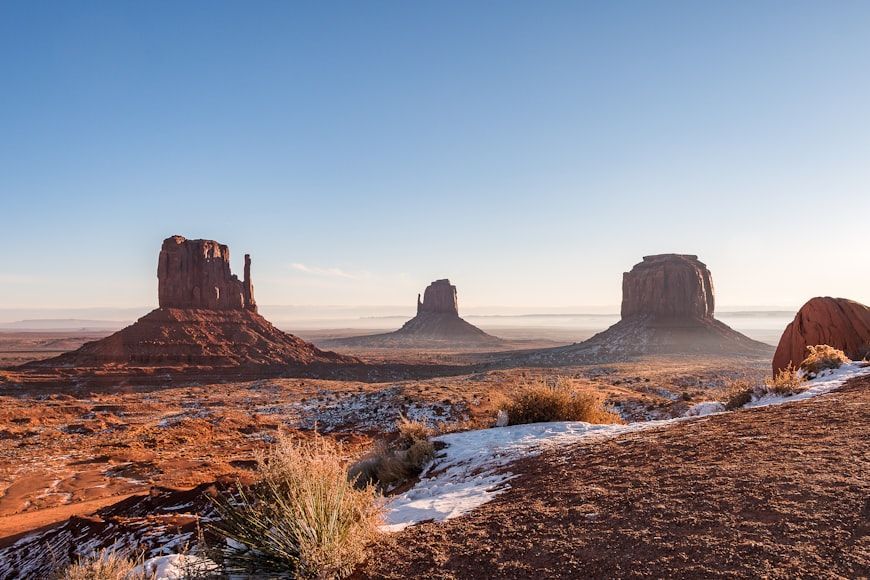
Image: Cayetano Gil

The origin of ‘Arizona’ is disputed, with theories pointing towards it being the Spanish version of a Native American name. However, other theories disagree, claiming that it is a Basque name, haritz ona , meaning ‘good oak, given by Spanish settlers who came from the Basque region.

There is a final theory which, although heavily disputed, is supported by popular stories. This theory claims that the original name was Árida zona (‘arid zone’) , a description of the desert climate.

10
Oregon
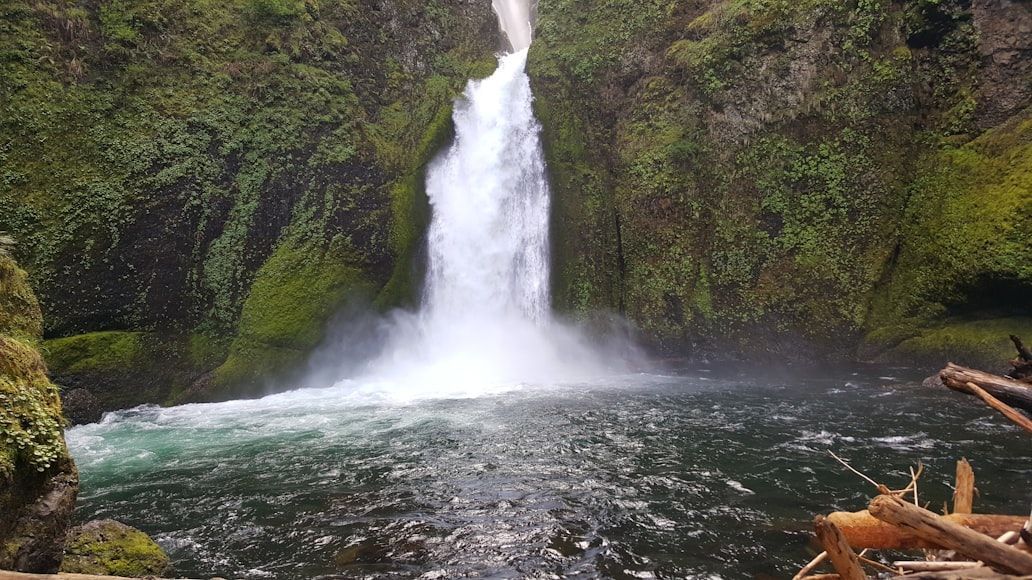
Image: Peter Robbins

No one really knows what ‘Oregon’ means, but everyone has a theory. Although there are stories that link it to Native American names or spelling errors, the first record of the name is from a 1598 Spanish chronicle, which refers to the territory as ‘_Orejón_’ (‘big-eared’) . Whose ears were being described is unclear.

An alternate theory links the name to French instead of Spanish, based on a 1765 petition by a British explorer that calls the area ‘ Ouragon’, a possible corruption of the French ouragan , ‘hurricane ’, in reference to the turbulent waters of the Columbia River.

Culture Culture 6 min read

From fact to fiction

Real-life Americans who inspired iconic fictional characters

Image: Jose Betancourt

Some stories you just can’t make up—like that of a tough archeologist wrestling pythons, a media mogul rising and falling before the eyes of the world, or an eccentric millionaire genius forever scarred from malfunctions of his own inventions. Some unforgettable fictional characters were based on the lives and feats of real people who, willingly or not, found themselves caught in movie-like plots. Read on to explore the lives of 10 Americans who changed the world so significantly that writers decided to immortalize them.

1
Roy Chapman Andrews - Indiana Jones

Image: Intricate Explorer

Roy Chapman Andrews was an American explorer, adventurer, naturalist, and paleontologist who made it out of brawls with pythons, a whale, and armed bandits. He was erroneously reported dead a couple of times and led expeditions across the deserts of China and Mongolia—despite having a fear of snakes . One might safely say that he was the real-life Indiana Jones.

Though neither George Lucas nor Steven Spielberg, the producers behind the franchise, have ever confirmed the claims, they are fully aware of the number of parallels between the movie hero and the former director of the American Museum of Natural History , who collected dinosaur eggs as a hobby. Even Andrews’ granddaughter, Sara Appelbee, believes that Indy was at least inspired by her grandpa.

2
Chuck Wepner - Rocky Balboa

Image: Luisa Frassier

A number of real-life pugilists are said to have inspired Silvester Stalone’s hero —or at least his iconic training methods, such as pulling carts or punching meat packs. Philly boxer Joe Frazier, who even had a cameo in the first movie, was one of them. Also, the nickname "Rocky" was taken from Rocco "Rocky" Francis Marchegiano, an Italian-American heavyweight champion who finished his career undefeated.

But the heart and soul of Rocky was the boxer, Chuck Wepner. Stalone has recounted many times that it was after watching Wepner give his all against the legendary Muhammed Ali that he got the idea for an underdog boxer who would never quit. Wepner’s career and his unyielding spirit later inspired other movies, like Chuck (2016) and The Brawler (2019).

3
Belva Gaertner & Beulah Annan - Velma Kelly & Roxie Hart

Image: tadah

In 1924, reporter Maurine Dallas Watkins covered courthouse stories for the Chicago Tribune . One day, she was asked to write about the trial cases of two women accused of shooting their partners. A few months later, she quit the Chicago Tribune and proceeded to publish a play she had written: Chicago .

The two women were Belva Gaertner and Beulah Annan, both by then acquitted of the charges of murdering their respective partners. The ever-changing accounts of their alibis for the crimes, as well as the audience’s fascination with them, was what inspired Watkins to write the characters of Velma Kelly and Roxie Hart , whose storylines closely resemble those of Gaertner and Annan. Watkins, who had described Gaertner and Annan as the "beauty of the cell block" and the "most stylish of Murderess Row," later sustained that she believed both women were guilty.

4
Draper Daniels & Mary Wells Lawrence - Don Draper & Peggy Olson

Image: S O C I A L . C U T

5

It is known that the multi-award-winning TV show Mad Men focused on showcasing the lifestyle and operations of grand advertising agencies from Madison Avenue, New York, in the mid-20th century. Although parts of the show were exaggerated for dramatic effect, some experts sustain that the anti-hero Don Draper was likely based on Draper Daniels—at least in terms of his career accomplishments.

Daniels was the creative director of the legendary agency Leo Burnett and led famous campaigns for Marlboro, a leading cigarette company in the 1950s. One can only hope that his personal life was less turbulent than that of the fictional character, but the show perfectly transmitted the ingenuity of a big-buck creative director . Did you know that his apprentice, Peggy Olson, was also based on a real-life publicist? It is believed that Mary Wells Lawrence , an advertising legend and pioneering female leader in the industry, inspired the character of Peggy, a hungry and charismatic young writer who is only at the beginning of a brilliant career.

6
William Randolph Hearst - Charles Foster Kane

Image: Zoe

Citizen Kane (1941), widely considered one of the best films ever made, was famously inspired by the life of media mogul William Randolph Hearst. Charles Foster Kane, just like his real-life counterpart, rose from humble beginnings to immense wealth by building a newspaper empire . In this case, the history of personal scandal depicted in the movie did match reality.

Like Kane, Hearst had a mansion complete with private zoos and priceless art collections. Both men had political careers and a heavy presence in the press and media. Hearst did not take the movie lightly; the portrayal was so thinly veiled that the story offended him greatly, particularly the inclusion of a doomed romance that paralleled his relationship with actress Marion Davies.

7
Pocahontas

Image: EricThriller

We know that Disney's Pocahontas (1995) is a highly romanticized version of historical accounts, but Pocahontas indeed was a real-life Native American woman in the 1600s. The movie took great liberties with facts. For example, Pocahontas was only 10 or 11 years old when she met English newcomers, not the young woman suggested in the film.

She was indeed the daughter of Powhatan , their tribe chief, and early accounts claim that she intervened to prevent the execution of English sailor John Smith, though these tales have been disputed over the centuries. The story of her life, captivity, transformation to Christianism and marriage to John Rolfe have been represented in several films, plays, books, and paintings throughout time, even though historical records of her life are scarce.

8
Howard Hughes - Tony Stark

Image: Igor Bumba

Sure, perhaps Iron Man never existed. But Tony Stark might have, in a way. The billionaire genius who became Marvel's icon was heavily inspired by real-life American industrialist and aviator Howard Hughes. Both Stark and Hughes were visionary inventors, known for their technological prowess, complex personal lives, and eccentric personalities.

During his lifetime, Hughes was one of the richest and most influential people in the world, and, like Tony Stark, he behaved accordingly. Hughes had romantic entanglements with Hollywood stars and led a luxurious lifestyle. This was parodied in Stark’s playboy personality and his interactions with the press. Interestingly, Hughes, an enthusiastic pilot, carried several injuries he had sustained from being in four different plane crashes. These wounds were paralleled by those in Stark, who carried a literal gap in his body after an accident caused by a malfunction of his own technology.

9
Peggy Lee - Miss Piggy

Image: cottonbro studio

Yes, even Miss Piggy drew inspiration from a real person. That person was none other than Peggy Lee, the legendary jazz singer , songwriter, and actress with a 70-year-long career. Lee was known for her sultry voice and sassy but commanding stage presence, a diva superstar personality. Does that remind you of a certain Muppet?

Miss Piggy’s signature traits include her charm and her conviction that she is destined for stardom . Many of Peggy Lee's qualities, even physical traits like her blond hair, were gracefully taken in by Miss Piggy’s creators, but not all. For instance, the tendency to karate-chop Kermit the Frog when she is mad at him might have been ad-libbed.

10
The Unsinkable Molly Brown

Image: Jean-Christophe André

Molly Brown survived the sinking of the RMS Titanic, and her persona even made it to the 1997 James Cameron film. In it, Kathy Bates played Margaret Brown, aka "The Unsinkable" Molly Brown. A socialite, activist, and philanthropist, she showed stellar leadership and bravery during the disaster as a first-class passenger who helped several people into lifeboats before being forced to board one herself.

In the movie, she is portrayed as a strong, outspoken woman ready to defy social conventions and eager to make space for more people in the lifeboats. Reportedly, that night in 1912, she insisted that the boat return to save others, but her pleas were ignored. Real-life Molly Brown was known for her flamboyant personality ; she spoke several languages and traveled extensively. She even tried her hand at acting.

11
Buzz Aldrin - Buzz Lightyear

Image: Kindel Media

Finally, it must be said: Buzz Lightyear was named and designed in honor of none other than Buzz Aldrin, the second person to walk on the Moon . Of course, as one of the faces and emblems of space exploration, Aldrin served as a direct inspiration for the beloved space ranger from the Toy Story franchise.

Sure, Buzz Lightyear was just a toy, but the yearning in his eyes when he looked at the stars was powerful enough to represent any astronaut. Was Aldrin honored by this nod to him? Yes, he even participated in several Disney events where both Buzzes discussed space travel, and the real astronaut gave the character advice about venturing "to infinity and beyond."

History History 3 min read

Lesser-known tales

California's Grizzly is extinct? 10 stories behind American symbols

Image: Fr. Daniel Ciucci

It’s one thing to be acquainted with American symbols, but it’s another to learn—years later—the unexpected, hidden stories behind them! Did you know that California’s subspecies of grizzly bear (yes, the one on the flag) has been extinct for over a hundred years ? Or that Texas’s state dish was allegedly invented by prisoners? Maybe you know some of the facts listed here—but we’re sure you don’t know them all!

1
California’s state animal is extinct

Image: Levi Meir Clancy

The California grizzly bear adorns the state flag, but you won’t find one in the wild anymore. Once abundant throughout the region, this was a subspecies of Grizzly also known as "California golden bear."

By the 1920s, this majestic animal had disappeared from the wild, but it has remained a powerful symbol of the state, featured on the flag since the Bear Flag Republic’s short-lived attempt to break from Mexico in 1846.

2
The American flag was (probably) designed by a teenager

Image: Sharefaith

In 1958, around the time Alaska and Hawaii were being added to the Union, an Ohio high schooler named Robert Heft stitched a 50-star flag for a class project . His teacher gave it a B–, scoffing that the brand-new design "lacked imagination."

However, not long after, Heft’s design was selected from thousands of submissions sent to President Eisenhower to determine the official flag. That teacher later changed the grade to an A.

3
Texas’s state dish may have been invented by prisoners

Image: Zak Chapman

Chili con carne is the Lone Star State’s official dish. While its exact origins are uncertain, some say that Texan prisoners in the 1800s were the minds who concocted the dish. According to this version, the stew—made with beans, thin strips of beef, and chili peppers—was the local equivalent of bread and water: a kind of Texan gruel .

4
Alabama's state nut was once a life-saver

Image: Antoni Shkraba

Pecans aren’t just Alabama’s official nut—they’re also symbols of resilience from the Depression era. When cotton crops failed in the 1930s, families turned to harvesting pecans to survive. The nuts became a form of currency , traded for goods, and even used to make mortgage payments. Today, Alabama produces over 30 million pounds annually.

5
The Star-Spangled Banner was once a drinking song

Image: JosephHershMedia

You may know that America’s anthem has a boozy British past. The melody originated as "To Anacreon in Heaven," a raucous 18th-century tavern tune sung by a London gentlemen’s club. A relative of Francis Scott Key noticed that his poem fit perfectly with the melody—and thus, the anthem as we know it was born.

6
The Great Seal almost had a turkey

Image: Roman Manshin

Can you imagine if the Great Seal of the United States featured not a mighty eagle, but a turkey? It was none other than Benjamin Franklin who proposed the turkey as America’s symbol, calling it " a bird of courage ."

Instead, he dismissed the bald eagle as "a lazy scavenger." Congress ultimately overruled him, but Franklin did have a point: turkeys are known to be fiercely protective.

7
The flag’s colors weren’t meant to mean anything—at first

Image: Jon Tyson

Red, white, and blue may seem deeply symbolic today, but in 1775, the Continental Navy chose them simply to match the British flag’s palette. A rebellious decision, if you think about it. The "valor, purity, justice" meanings were tacked on later by poets and politicians.

8
Is South Carolina’s flag really what it seems?

Image: Jaden Dessureault

South Carolina’s flag features a blue background with a palmetto tree and what appears to be a crescent moon. But there are stories that sustain that the silver symbol isn’t a moon at all —it’s a gorget, the curved neck armor worn by 18th-century soldiers. Historians have searched for records to back this theory, but no nods to gorgets have officially been found.

9
Colorado’s flag was once a confusing disaster

Image: Olga Kovalski

When Colorado unveiled its bold "C" design in 1911, it forgot one crucial detail: specifying which shade of blue to use for the background. For 26 chaotic years, flags fluttered in everything from pale sky blue to deep navy—until officials finally standardized the hue in 1937.

10
One of Illinois’ state symbols was chosen by… kids

Image: Peter Schad

Illinois’ state snack was chosen by the most powerful lobbyists of all: children. When a group of fourth graders learned their state produced a large portion of America’s popcorn , they launched a 2003 campaign so persuasive that lawmakers had no choice but to make it official.

Explore more American facts

Choose your favorite category!

General
General

As American as apple pie—the very best America has to offer!

Culture
Culture

Delve into the astounding richness of American lore.

Geography
Geography

Hop in and explore vast and diverse American landscapes.

History
History

Discover the key moments that shaped the United States.