General General 6 min read

Gloriously weird America

Not even travel guides will tell you about these 10 odd American stores
Image: Ricky Singh

You've been to the mall. You've been to the big-box stores. But have you ever walked into a shop and thought: what on earth is this place, and why am I already in love with it? The stores on this list will do exactly that; and fair warning, you'll probably want to visit more than one. We'll ease you in gently, starting with a store that sells everything in a single color and a gift shop that celebrates terrible paintings, before working our way toward bizarre things you won't be able to unsee. Which one would you visit first?

1
The Purple Store – Online (with a location at Pike Place Market, Seattle, WA)
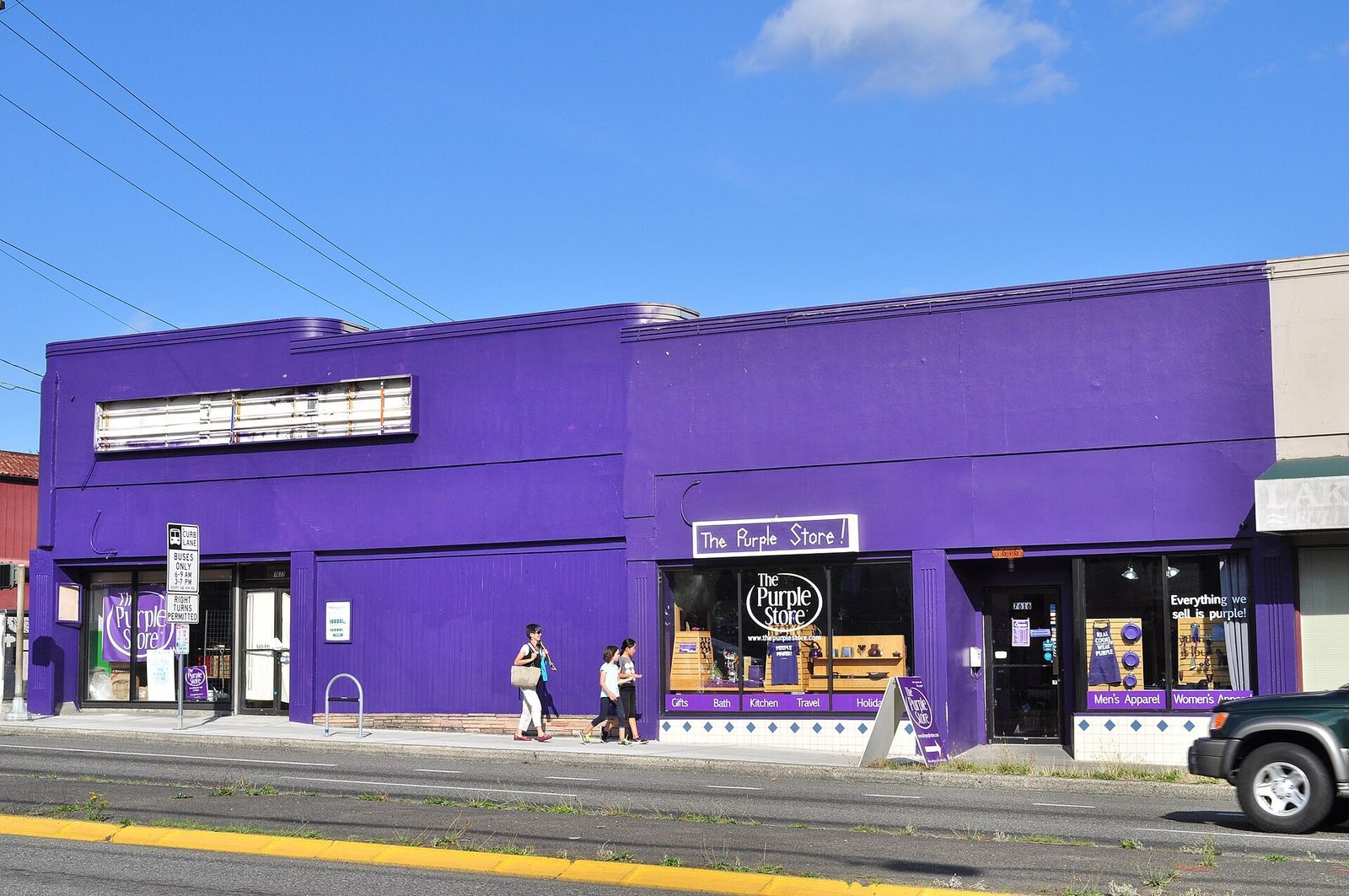
Image: Joe Mabel, CC BY-SA 3.0, via Wikimedia Commons

The Purple Store does exactly one thing: it sells purple items. Every single thing in the store is purple . Shirts, socks, kitchen appliances, furniture, jewelry, dog collars, dice, cowboy hats—if it exists and can be purple, The Purple Store has it.

This is the store for the person in your life who is very, very serious about their favorite color, or for anyone who finds the concept of a store with a strictly enforced color policy absolutely hilarious and also kind of admirable.

2
The Museum of Bad Art Store: Somerville, MA

Image: Markus Spiske

The Museum of Bad Art exists to celebrate paintings that tried hard, fell short, and ended up magnificent for entirely the wrong reasons. The gift shop sells prints, books, and merchandise built around the museum's collection of gloriously terrible masterpieces .

Nobody here is embarrassed: the art is bad, everyone knows it, and that's precisely the point. This is the store for people who believe that effort deserves recognition regardless of outcome, and for anyone who has ever hung a painting in their living room that wasn't quite right and left it there for fifteen years anyway.

3
Marty's Reliable Cycle: Westfield, NJ

Image: hidde schalm

Operating since 1946, Marty's Reliable Cycle is the kind of place that shouldn't still exist but absolutely does. It's famous nationwide not just for its vintage bicycle inventory, but for its ceiling-to-floor stacks of cycling memorabilia, spare parts, and decades of accumulated everything that give it the feel of a very organized avalanche.

Walking in feels like stepping into a time capsule where someone hit pause around 1978. Cyclists make pilgrimages here. If you're passing through New Jersey and remotely enjoy bicycles, nostalgia, or both, it's worth the detour.

4
The Sock Drawer: Providence, RI
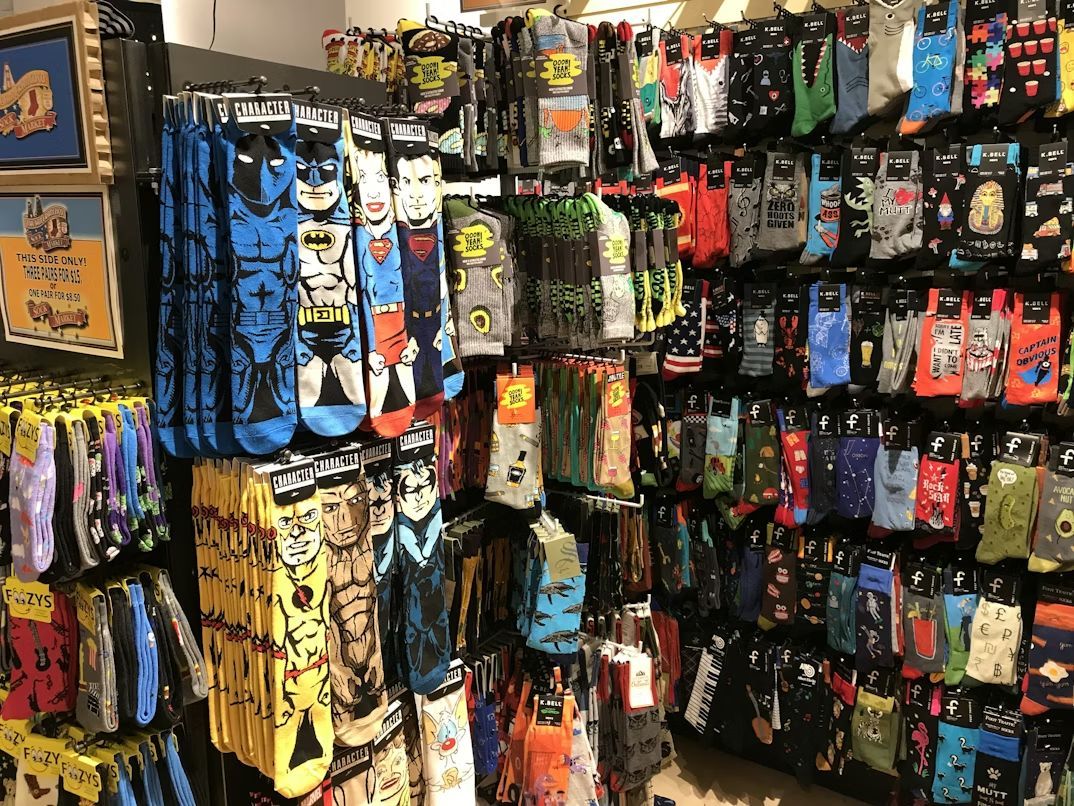
Image: Guido Coppa

The Sock Drawer is devoted entirely to novelty and compression socks in every pattern, theme, and level of absurdity imaginable . Cats riding tacos. Flaming hot dogs. Historical figures on argyle. If you can think of it, there’s a good chance The Sock Drawer already has it in stock.

What makes it more than a joke is that it also carries medical-grade compression socks for people who need them, meaning you can solve a circulation problem and walk out with a pair of socks featuring a screaming eagle at the exact same time.

5
Archie McPhee: Seattle, WA
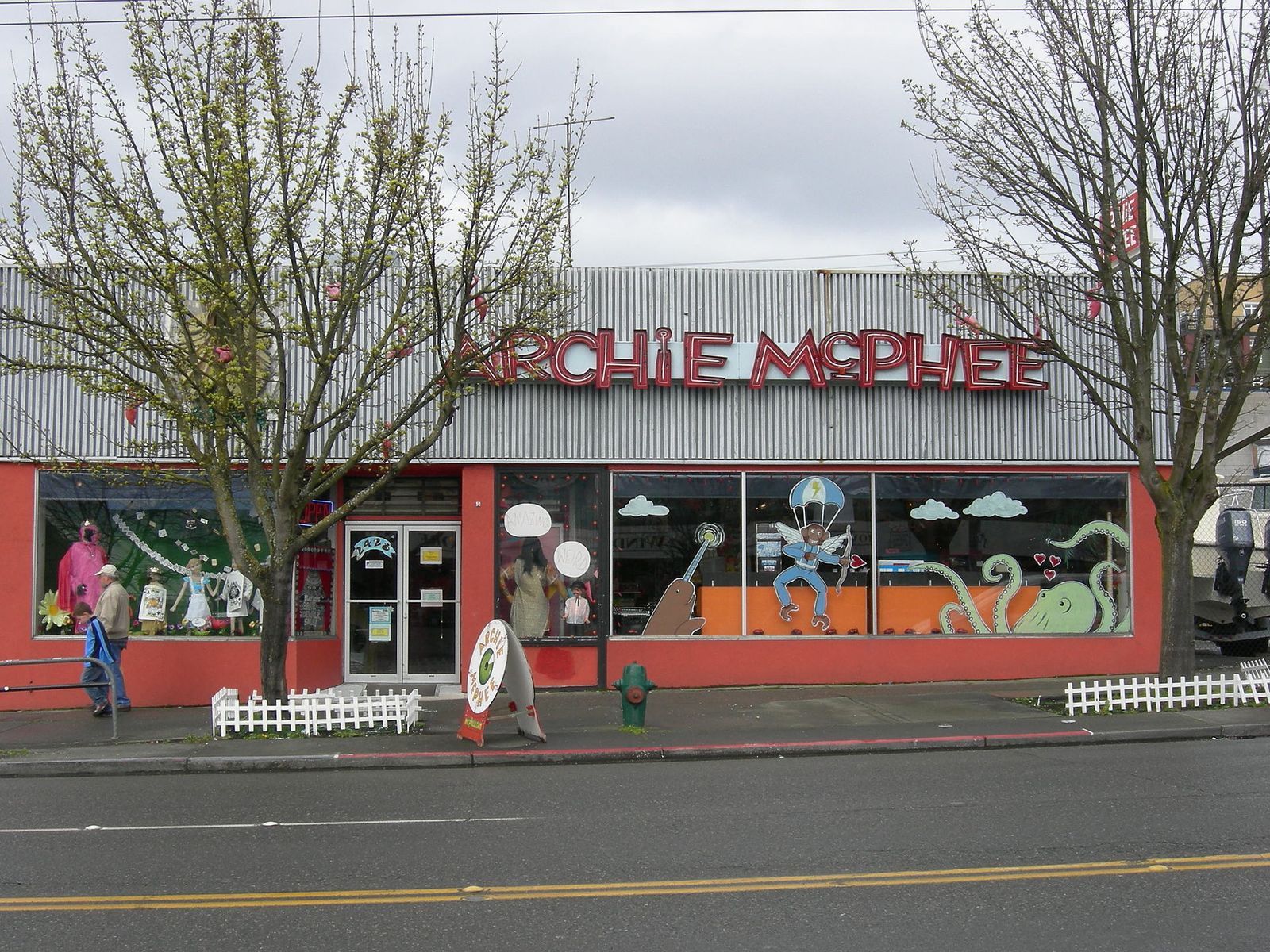
Image: Joe Mabel, CC BY-SA 3.0, via Wikimedia Commons

Archie McPhee has been selling rubber chickens, bacon-scented soap, canned unicorn meat, and inflatable Stonehenge for decades, and it shows no signs of slowing down or becoming even slightly more sensible. It is the undisputed gold standard of American novelty shops: the place other weird stores aspire to be when they grow up .

The genius of Archie McPhee is that everything is absurd, but nothing feels accidental. Someone sat down, thought very carefully about what the world needed, and concluded the answer was a horse head mask and a bag of dismembered gummy bears. They were right, and the store has the loyal following to prove it.

6
Wall Drug: Wall, SD
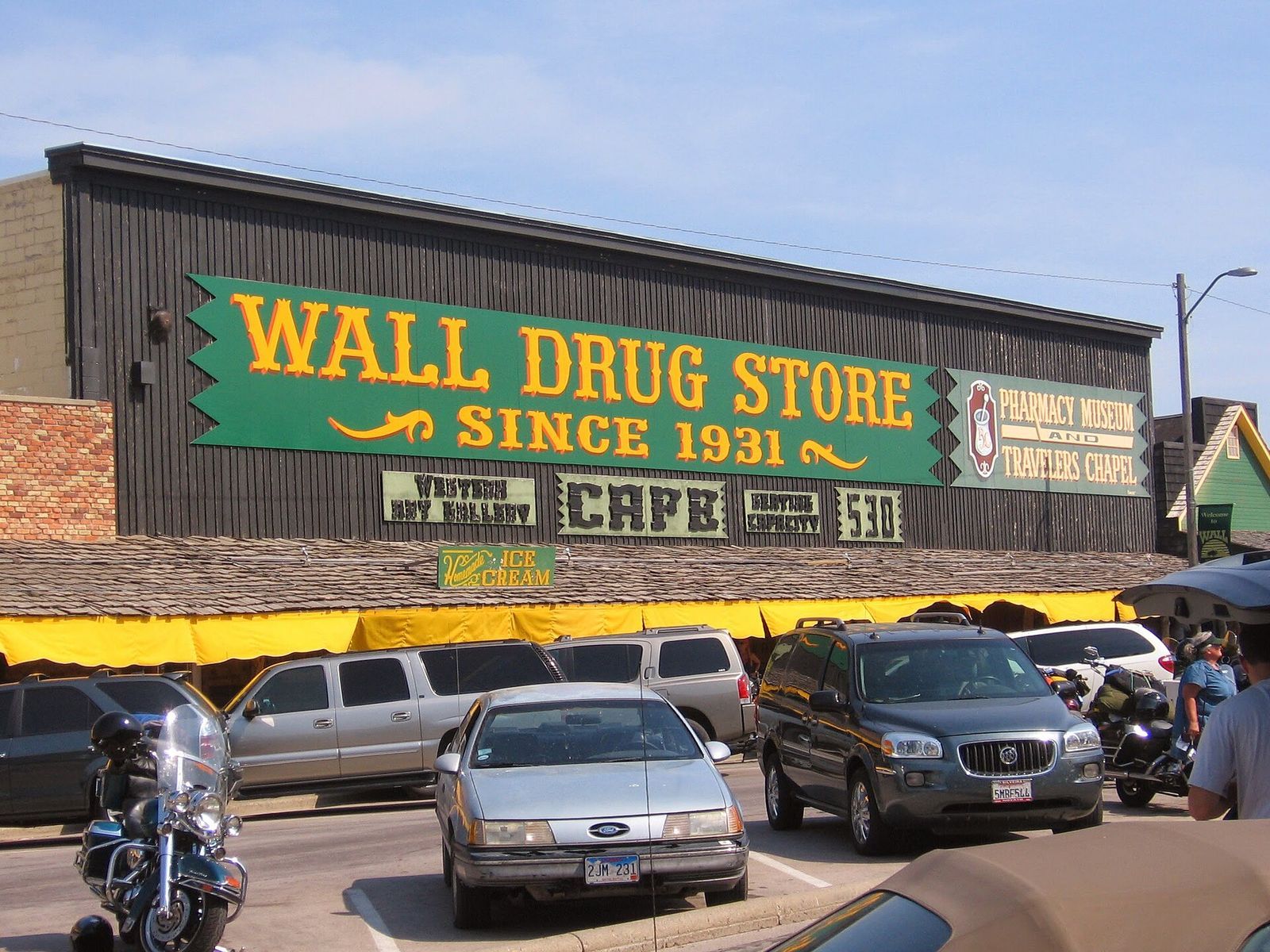
Image: Runner1928, CC BY-SA 4.0, via Wikimedia Commons

Wall Drug started as a modest drugstore in 1931 in the middle of South Dakota and somehow became one of the most aggressively advertised destinations in America. Signs for it appear thousands of miles away, and the complex has grown to fill an entire block with shops, exhibits, animatronic dinosaurs, and attractions that resist easy categorization. A five-cent cup of coffee is still on the menu.

Nobody drives to Wall Drug because they need something. They go because the signs wore them down over five straight states and they finally gave in. Once inside, the sheer scale of the thing (part store, part roadside attraction, part collective hallucination) becomes impressive.

7
Possumbilities: Fredericksburg, VA

Image: Khải Đồng

Possumbilities is a gift shop, wildlife education center, and opossum advocacy organization all rolled into one cheerfully strange package. Run by a licensed wildlife rehabilitator named Karen Brace, the store sells opossum-themed merchandise —plushies, mugs, apparel, hand-crocheted baby opossum figures— and features live opossum ambassadors on-site Thursday through Monday.

This is the store for anyone who has ever been told that opossums are ugly and gross and wants to argue the point. Imagine stopping in Fredericksburg on a road trip, wandering into what looks like a small gift shop, and coming face-to-face with a real, live opossum named Stuart. That is a story you'll tell at every barbecue for the rest of your life.

8
Unclaimed Baggage: Scottsboro, AL
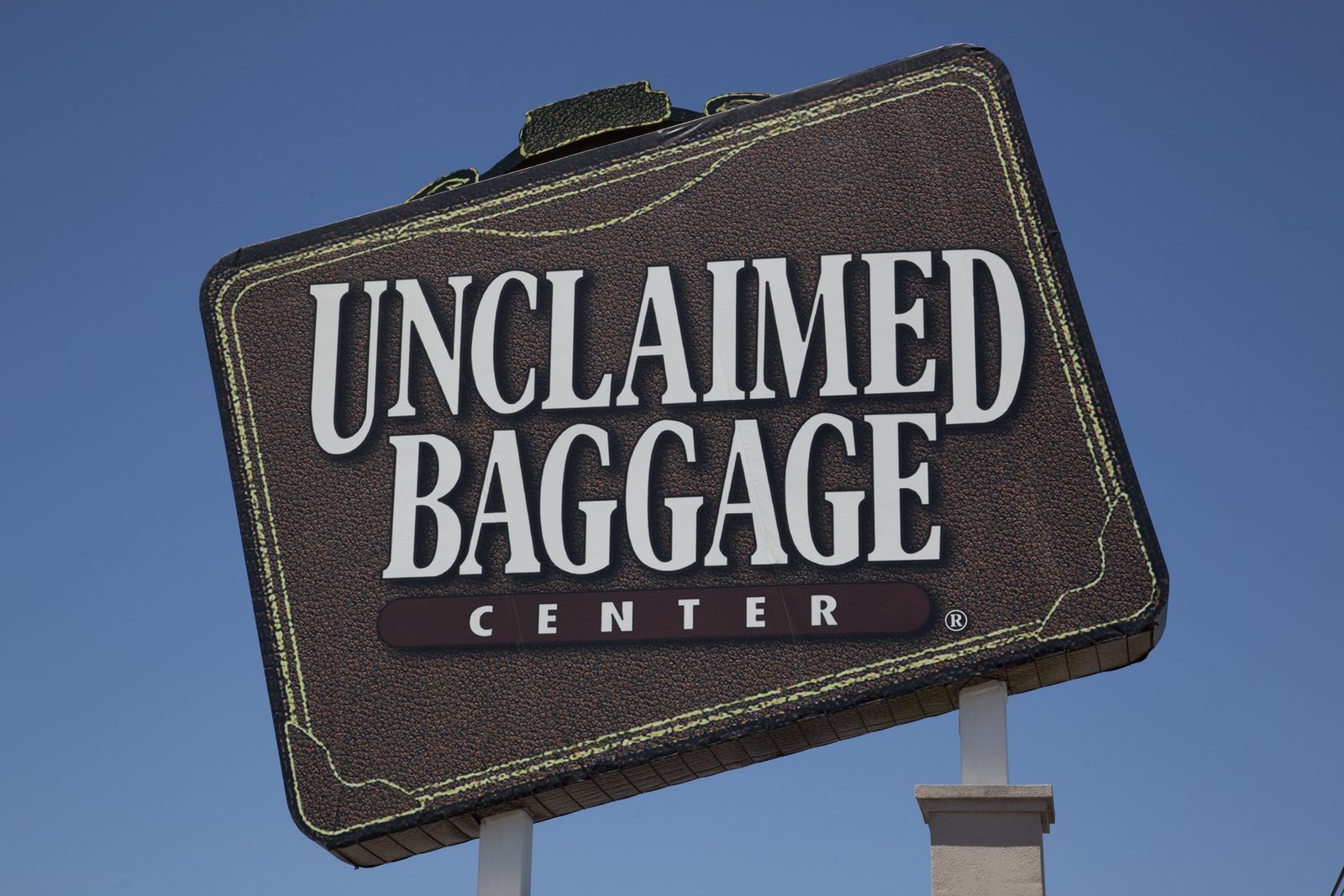
Image: Carol M. Highsmith, Public domain, via Wikimedia Commons

Unclaimed Baggage is exactly what it sounds like : a store that buys luggage that airlines have given up on reuniting with its owners—after a full three-month search—and sells the contents to the public . Items are cleaned, tested, appraised, and priced at up to 80% below retail value. New inventory arrives daily, because bags are lost daily.

Over the years, the store has turned up a NASA Space Shuttle camera, an Egyptian burial mask from around 1500 BC, a live rattlesnake, and a puppet from the Jim Henson film Labyrinth . The everyday inventory includes designer clothes, electronics, jewelry, and sporting goods, but the real draw is the promise that you have no idea what you'll find.

9
Ye Olde Curiosity Shop: Seattle, WA
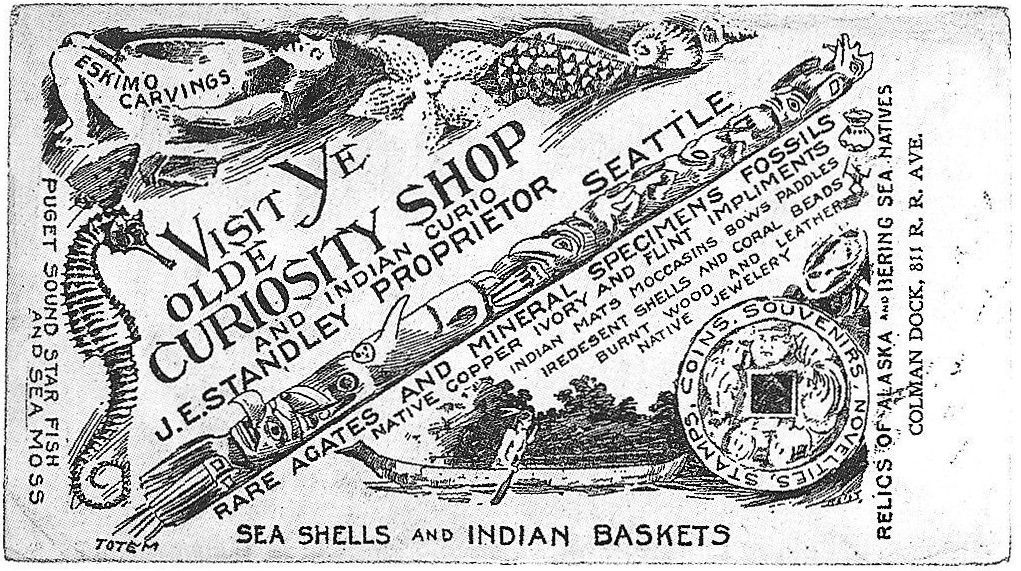
Image: Ye Olde Curiosity Shop, Public domain, via Wikimedia Commons

Ye Olde Curiosity Shop has been operating on Seattle's waterfront since 1899 and in that time has assembled a collection of genuine mummies, shrunken heads, narwhal tusks, and oddities that blur the line between souvenir shop and sideshow attraction. You can buy a snow globe or stand two feet from an actual mummified human body.

It’s the kind of place that would be impossible to open today and which survives partly on reputation, and partly on morbid curiosity.

10
The Mütter Museum Store: Philadelphia, PA
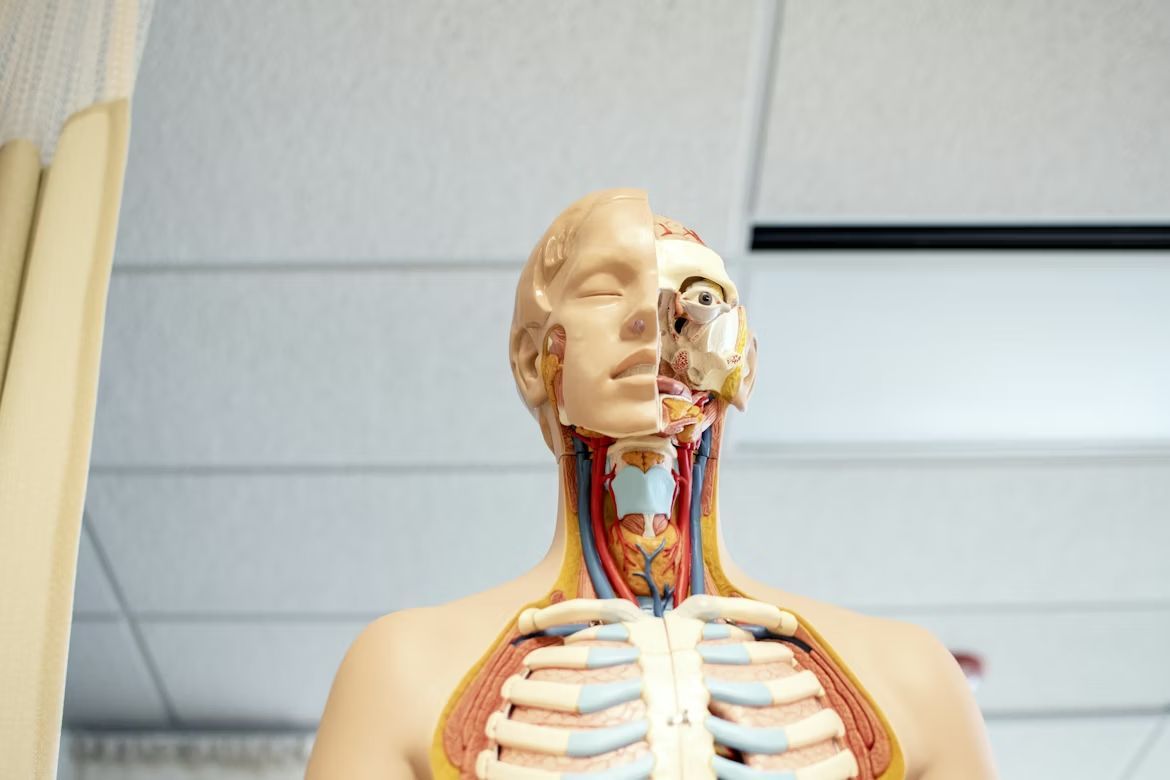
Image: Nhia Moua

The Mütter Museum is a medical history museum housing anatomical specimens, preserved human remains, and things in jars that no one entirely expects to find in downtown Philadelphia . Its gift shop sells anatomical models, medical curiosity replicas, and books that somehow make the whole experience feel educational and gift-able rather than deeply alarming—most of the time.

You can buy a soap shaped like a human brain, a replica Civil War surgical kit, or a calendar featuring unusual medical case studies from the 1800s. It's oddly tasteful given the subject matter, and the store has developed a devoted following.

Culture Culture 4 min read

Rediscovering the inventor

Did he save a child's life? Discover 10 fun facts about Thomas Edison!

Image: WikiImages

The history of the United States of America wouldn't be the same without the contributions of Thomas Edison. Known for being a great businessman and inventor who patented more than 1,000 creations, Edison also had many other facets you may not have known about. From strange marriage proposals to his poetic last words, join us to discover 10 incredible facts about the Wizard of Menlo Park!

1
Young inventor

Image: Randy Fath

Although we all know that Edison was an inventor -and one of the best- very few know that his passion was already loudly expressed at the young age of 10.

At that age, while other children were naturally playing ball in the park, Edison was already interested in chemistry, physics, mathematics, and electricity. At 12, he set up his first laboratory in the basement of his parents' house, where he began to do his first experiments! Some stories claim that explosions in the basement were more frequent than their parents would have liked.

2
Self-taught

Image: Nicola Tolin

Edison's educational path was very different from the one many of us probably had. In fact, Edison had almost no formal education.

Thomas Edison attended school for only a few months. Due to some hearing problems he developed as a child, his mother decided to homeschool him, teaching and encouraging him, which awakened his impressive curiosity and appetite for knowledge.

By the time he was a preteen, he was already an autodidact. This fact was crucial on his way to becoming one of our country's most important inventors.

3
Young entrepreneur

Image: Jingda Chen

The young Edison was not only curious and intelligent; he was also an entrepreneur.

When he was just a boy of 12, he sold snacks, candy, cigars, magazines, and newspapers on the Grand Trunk Railroad. From that age, he displayed a determined character, which enabled him to raise money for his experiments.

But his ambition was so strong that he started his own newspaper, the Grand Trunk Herald. That's right! Little Edison assembled and printed his newspaper and sold it to passengers and people who frequented the train stations.

4
Hero

Image: Sugden Guy sugden

Did you know that Edison was also a hero? That's right!

In fact, we could say that his act of heroism as a teenager was the event that started his great career. By the age of 15, Edison was working and traveling on the Grand Trunk Railroad, where he became close to a station master and telegraph officer. One day, Edison spotted the station master's two-year-old son playing on the tracks as a train sped toward him. Without hesitation, he jumped and rescued the child.

The boy's father was so grateful that he offered to teach Edison how to use the telegraph system. And what do you think? He accepted immediately!

5
Marriages

Image: Fernando @cferdophotography

Between labs and experiments, Thomas Edison also had time for love.

Thomas Alva Edison married twice in his life. His first wife was Mary Stilwell Edison, whom he married in 1871. Mary and Thomas had three children. Sadly, she passed away in 1884 after 13 years of marriage.

His second marriage was in 1886 to Mina Miller Edison. With her, Edison had three more children. As it couldn't be otherwise, it's said that Edison asked Mina to marry him in a rather peculiar way: he proposed using Morse code!

6
His children's nicknames

Image: Sandie Clarke

Thomas Edison's creativity was evident in everything he did, and there's an anecdote that exemplifies this perfectly.

The inventor's passion and humor blended and resulted in fun and loving nicknames for his first two children. As we told you, by 1876, Edison already had two children from his first marriage. They were Marion and Thomas Jr., whom Edison called "Dot" and "Dash," respectively. Yes, you got it: it was a reference to Morse code!

7
First phonograph recording

Image: Call Me Fred

As you probably know, in 1877, Thomas Edison introduced the phonograph. It was the first device capable of recording and reproducing sound!

As a result of his experiments, this device completely changed the history of communication. But what did the first recording made with the phonograph say?

Edison made a cute choice for his first recording: a recitation of the beloved nursery rhyme "Mary Had a Little Lamb." That was the first time in history that anyone heard a previously recorded voice!

8
His work team

Image: The National Library of Norway

It seems that Edison had a tendency for affectionate nicknames and monikers.

Edison didn't reserve nicknames just for his children; he also gave them to the members of his large staff. Many people worked in Edison's famous laboratory at Menlo Park, which he referred to as his "invention factory." Engineers, scientists, technicians, and people with different kinds of expertise gathered there to help make the great inventor's ideas possible. Edison affectionately referred to them as his "muckers," a nickname that shows not only his sense of humor but also his strong team spirit.

9
His health

Image: Dan Meyers

One of the best-known aspects of Edison's health was his hearing loss when he was very young. Contrary to what one might think, Edison stated that this fact didn't negatively affect his career development. In fact, he believed it helped him focus and dedicate more time to his inventions and discoveries.

However, as an adult, he developed some other health problems. Some sources suggest that Edison's habits, including long hours in the lab and a poor diet, contributed to health issues like heart problems and diabetes.

10
His last words

Image: Jonathan Borba

Edison's life was full of adventures, discoveries, love, and many other things. The American inventor didn't abandon his creativity even when it was time for him to leave this world.

It's said that, at the age of 84 on his deathbed, Thomas Edison looked at his wife, Mina, and uttered the words, "It's very beautiful over there."

While it's difficult to make a unique interpretation of these nice and calm words, their poetic and inspirational character is undeniable.

History History 5 min read

Nostalgia alert

Where do bell-bottoms really come from? Flashback to the '70s and '80s!

Image: Rachel Moore

Those of us who grew up during the 20th century know what we mean when we say that some decades had a lot to celebrate. From disco music to the early video game craze, the 1970s and 1980s left behind countless moments, objects, songs, and fads that we still remember today. If you're a true nostalgic like us, this article is for you. Join us as we explore the 10 things we miss most about the 1970s and 1980s. Let's get started!

1
Bell-Bottom Pants

Image: Annie Spratt

If you're attending a 1970s-themed costume party, what would you wear? Beyond your personal style, no '70s wardrobe could be complete without a good pair of bell-bottom pants.

These pants were everywhere back then. Available in all colors and styles, they were worn by young and old alike. While their stardom spanned from the late 1960s to the early 1980s, bell-bottoms actually emerged much earlier. When? In the 19th century!

The first to wear this style of pants were American sailors in the 1800s. But their purpose wasn't to look trendy. Sailors implemented them because the wide design made it easy to roll them up when it was time to get their feet in the water.

2
Polaroid Cameras

Image: Josh Carter

Your current cell phone camera is probably better than the analog cameras of the 20th century. But let's be honest—there's nothing quite like holding a physical photo you just took, right?

Okay, we admit it: nostalgia is kicking in. But still, who can deny that a picture is a beautiful memory that gives a sweet, homey touch to your house? Thanks to Polaroid cameras, those of us who grew up in the 1970s and 1980s know this all too well.

Although Polaroid cameras first emerged in the late 1940s , it wasn’t until 3 decades later that they reached their peak popularity, becoming an unmistakable symbol of the era.

3
Music videos

Image: Jakob Owens

While music videos existed before the 1980s, that decade turned them into a global sensation.

One song marked a major turning point in the world of music videos. You probably already guessed it: we’re talking about Michael Jackson’s "Thriller." Released in 1983, this was one of the first music videos to feature substantial production value and investment, making it worldwide famous and setting a trend that would influence the industry for decades. Other unforgettable examples from the era include the animated masterpiece "Take On Me" by A-ha (1985) and the vibrant aerobic-themed "Physical" by Olivia Newton-John (1981).

While music videos remain a key part of the music industry today, they’ve evolved to be shorter and more dynamic, often prioritizing quick impact over storytelling.

4
Synthesizer Sound

Image: Orkun Azap

One of the most iconic and recognizable features of '70s and '80s music is the use of synthesizers.

First introduced in the 1960s, synthesizers grew in popularity over the following decades, until they became part of nearly every sound of the era—from rock and funk to pop, disco, and electronic music.

A great '70s example is Stevie Wonder 's "Superstition," which showcases the innovative use of synthesizers. By the '80s, the synthesizer sound had reached new heights, thanks to bands like Depeche Mode and Duran Duran , who helped define the decade's musical identity.

5
Disco Balls

Image: Greyson Joralemon

If there's one thing that screams 1970s, that's undoubtedly disco music. With icons like the Bee Gees, KC The Sunshine Band, and Donna Summer, disco emerged in America and quickly got the whole world onto the dance floor.

In addition to platform shoes and satin shirts, one of the objects that went hand in hand with this type of music was the famous mirror ball, also called the disco ball. Discotheques often showcased spectacular disco balls, and famous artists included them in their music videos, making those shiny spheres the stars of the era.

6
Roller Skates

Image: Nick Fewings

Disco wasn’t the only sensation of the era—roller skates were a big deal, too. In fact, the two often combined: during the '70s and '80s, roller discos became a hit, where people danced on wheels!

Roller skates were so popular at the time that they made their way into films and music videos, including the 1980 cult classic Xanadu and Cher’s iconic 1979 music video for "Hell on Wheels."

Although roller skates were invented in the 18th century, it was the 20th century that catapulted them to the height of their fame. Were you lucky enough to strap on a pair and join the fun?

7
Arcade

Image: Carl Raw

If you were young in the '80s, you probably had a joystick or an arcade token in your hands, as arcades were the ultimate hangout spots for teenagers back then.

We bet you remember titles such as "Space Invaders," released in 1978, or the legendary "Pac-Man," which arrived to revolutionize the entire industry in 1980. Other unforgettable classics included "Donkey Kong" and "Frogger," both released in 1981.

So, what was your high score? Did you dominate the leaderboard or keep coming back for just one more game?

8
Atari 2600

Image: Senad Palic

What do you usually do when you're bored at home? For most of us, it's watching a movie or scrolling through our phone screens. But a few decades ago, the entertainment industry looked entirely different.

In 1977, home recreation changed forever with the arrival of the Atari 2600, one of the first home gaming consoles. From that moment on, gamers could enjoy their favorite games without ever leaving the comfort of their homes.

9
Slang

Image: Buse Doga Ay

But it wasn't just about fashion, music, and games. We can't forget the prominence of slang during these two emblematic decades.

One of the first terms that comes to mind is "groovy," remember that one? It was used to describe something cool or excellent. Maybe you remember a friend saying, "I love your outfit, super groovy!" Another memorable expression from the era was "Gag me with a spoon," used to convey disgust or displeasure, as in "That's so cheesy! Gag me with a spoon!"

Other unforgettable slang words included "bummer," "rad," "hip," and "tubular," each capturing the spirit of the '70s and '80s in its own unique way.

10
Cabbage Patch Dolls

Image: silvia trigo

If you didn't have one at home, you probably knew someone who did—or maybe even had more than one. We're referring to the famous Cabbage Patch Dolls, the toy that caused a sensation during the early 1980s.

Launched in 1982, the Cabbage Patch Dolls quickly made their way into most American homes. Their popularity was so massive and abrupt that they are remembered as one of the most iconic trend crazes of the 20th century. People would form long lines outside toy stores just to hug one of these dolls. In fact, the craze was so intense that the media dubbed it the "Cabbage Patch Kid Frenzy."

Explore more American facts

Choose your favorite category!

General
General

As American as apple pie—the very best America has to offer!

Culture
Culture

Delve into the astounding richness of American lore.

Geography
Geography

Hop in and explore vast and diverse American landscapes.

History
History

Discover the key moments that shaped the United States.