I want to believe

Why do we knock on wood for good luck? 12 common superstitions explained
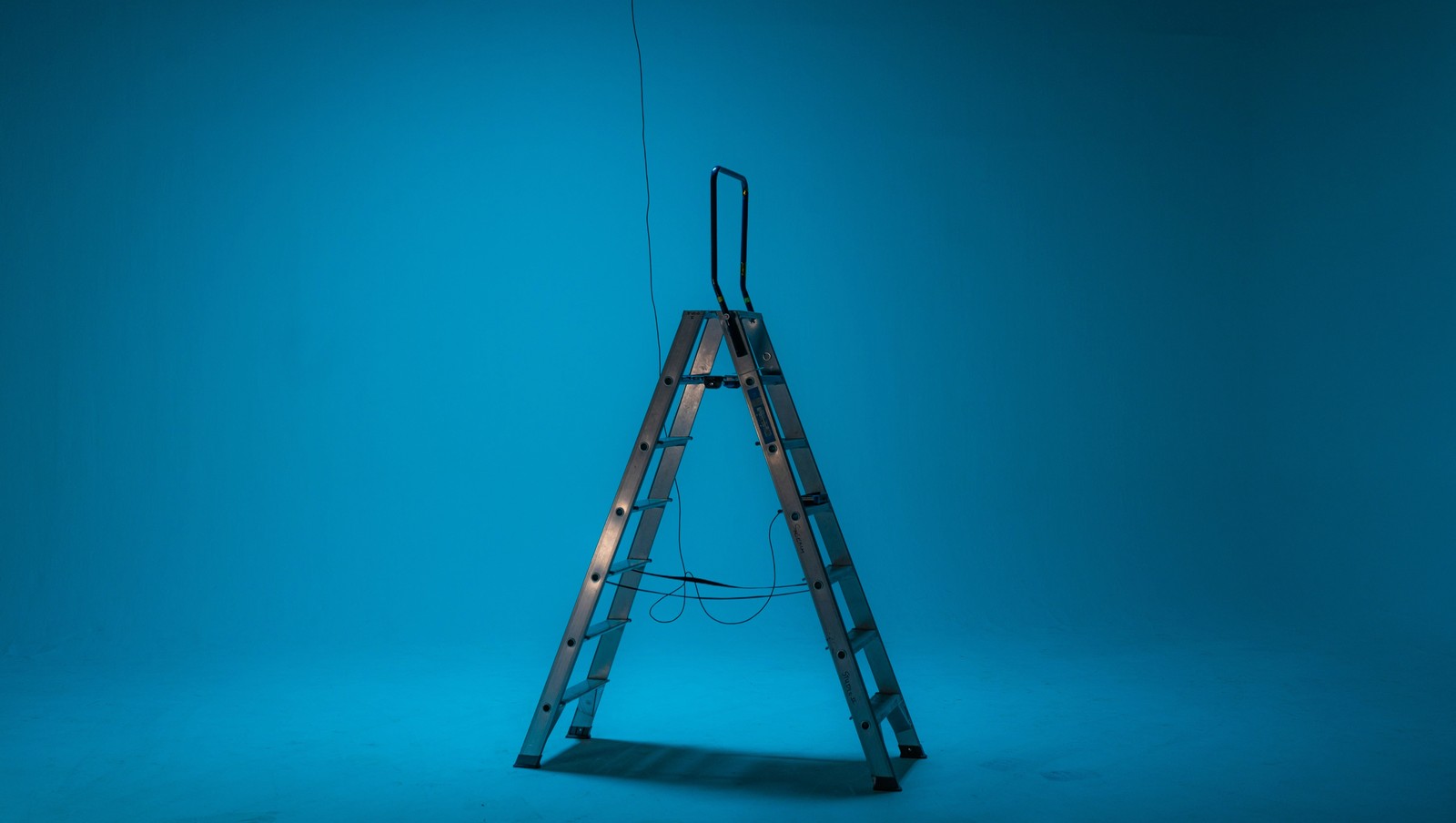
Image: Susannehs

We’ve all heard about the seven years of bad luck that are said to follow if we break a mirror, or why tossing salt over one’s shoulder is supposed to keep misfortune away. Superstitions have been a part of everyday life in the U.S., often passed down through generations without much thought to their origins. Let’s take a look at the origins of 12 common superstitions that continue to influence how people think and act today.

1
Breaking a mirror

Image: Savannah B.

As we’ve all heard, breaking a mirror is said to bring seven years of bad luck— a belief that dates back to the Romans . They thought a mirror didn’t just reflect your face, but also your soul.

Because the Romans also believed that life renewed itself every seven years, the curse was thought to last exactly that long.

2
Walking under a ladder

Image: Nick Fewings

This superstition has its roots in medieval Europe, where ladders leaning against walls formed a triangle, a shape that symbolized the Holy Trinity .

Walking through it was seen as breaking the sacred shape and inviting misfortune. Today, most people avoid it not only out of superstition but also for simple safety.

3
A black cat in your path

Image: Emmeli M

In the Middle Ages, black cats were linked to witchcraft and were thought to be witches’ companions—or even witches in disguise. Crossing paths with one was considered dangerous .

Though many cultures view black cats as lucky, in the U.S., the old stigma has persisted.

4
Knocking on wood

Image: Glen Carrie

The habit of knocking on wood to ward off bad luck likely comes from ancient pagan traditions. Trees—especially oaks—were believed to house protective spirits .

Touching or knocking on wood was a way to call on those spirits for protection. The phrase and the action traveled across centuries, and now it’s a common phrase in everyday conversations.

5
Opening an umbrella indoors

Image: Kato Blackmore 🇺🇦

The superstition that opening an umbrella indoors brings bad luck originates from 18th-century England. Early umbrellas were large, stiff, and often had metal spokes.

Opening one indoors could cause injury or break household items , so the "bad luck" warning worked as a practical safety rule.

6
Friday the 13th

Image: Nik

Friday has long been considered unlucky in Christian tradition because it was said to be the day of the Crucifixion. The number thirteen was also viewed as ominous, connected to the Last Supper .

When the two were combined, Friday the 13th gained its spooky reputation. Despite rational explanations, some hotels skip floor 13, and many people still avoid major plans on that date.

7
Spilling salt

Image: ekaterina shishina

Salt was once precious and expensive, symbolizing purity and friendship. Spilling it was considered wasteful and unlucky in ancient times.

The practice of tossing a pinch over your left shoulder comes from folklore, supposedly to blind the devil lurking there . It’s a tiny gesture that still lingers on dinner tables today.

8
Four-leaf clover

Image: Barbara Krysztofiak

The four-leaf clover is a symbol of good fortune dating back to the Celts, who believed the rare leaves provided protection against evil spirits .

Since clovers typically have only three leaves, the fourth leaf came to symbolize rarity and luck.

9
Rabbit’s foot

Image: Timofei Adrian

Carrying a rabbit’s foot for luck traces back to African and European folklore, where rabbits were seen as fertile, magical creatures .

The superstition spread through American culture in the 19th century, especially in the South. Even though it might seem unusual—and potentially unsanitary—the lucky rabbit’s foot remains a well-known charm today.

10
Wishbone

Image: Museum of New Zealand Te Papa Tongarewa

The tradition of making a wish on a wishbone originates with the Romans, who, in turn, borrowed it from the Etruscans. They believed that birds held divine powers .

Breaking the bone with someone else was thought to transfer luck to the person who ended up with the larger piece .

11
Coin in a fountain

Image: Lila Mitchell

Tossing a coin into water to make a wish has its roots in ancient Europe. Wells and springs were considered sacred, often associated with gods or spirits.

People dropped coins as offerings for health or good fortune . Today, fountains across the U.S. and around the world collect millions of coins.

12
Wishing upon a star

Image: Ali

The superstition of wishing upon a star comes from ancient Greece and Rome, where falling stars were believed to carry messages from the gods .

Even today, looking up at the night sky and spotting a shooting star inspires many people to make a wish.


Hidden depths

America’s lost ocean: How the Great Lakes came to be

Image: Randy Laybourne

Like legendary giants, the Great Lakes are North America's watery core, influencing commerce, climate, and culture. Stretching across the U.S. and Canada, these five immense lakes—Superior, Michigan, Huron, Erie, and Ontario—contain an astounding 84% of North America's fresh surface water. Here are 11 fascinating facts about these monumental lakes that may have flown under your radar until now.

1
Lake Superior lives up to its name

Image: Jacob Skowronek

Lake Superior is the largest, deepest, and coldest of the five. It holds more water than the other four lakes combined—enough to cover North and South America in a foot of water. At 31,700 square miles, it’s the largest freshwater lake by surface area in the world.

2
Only one is fully American

Image: Ioann-Mark Kuznietsov

Lake Michigan is the only Great Lake entirely within the jurisdiction of the United States. It touches four states—Wisconsin, Illinois, Indiana, and Michigan—and its shores are home to major cities like Chicago and Milwaukee. As if this wasn’t enough, this lake also boasts the world’s largest freshwater sand dunes.

3
They create their own weather

Image: Srikanta H. U

The Great Lakes have a powerful influence on regional weather, especially through the phenomenon of "lake-effect snow." As cold air sweeps over the warmer lakes, it picks up moisture, resulting in heavy snowfall in cities like Buffalo, Cleveland, and Chicago. The lakes also generate localized storms that can rival oceanic tempests in intensity. Yet, not all is harsh; these unique conditions help create microclimates that are perfect for agriculture, supporting a range of crops across the region.

4
A shipwreck graveyard

Image: Vlad Tchompalov

Prone to stormy and unpredictable weather, the Great Lakes are home to over 6,000 shipwrecks. The most infamous of these, the SS Edmund Fitzgerald, sank in Lake Superior during a violent storm in 1975, inspiring Gordon Lightfoot's iconic ballad. In fact, many of these wrecks are remarkably well-preserved, thanks to the cold freshwater, which slows down the decay process and keeps these sunken ships intact for decades.

5
They contain a fifth of the world’s freshwater

Image: Sime Basioli

The Great Lakes hold about 21% of the world's fresh surface water. That’s roughly six quadrillion gallons—enough to submerge the lower 48 states under about 10 feet of water. Given this staggering quantity, it's no surprise that the lakes are crucial to American drinking water, agriculture, and industry.

6
The Erie Canal’s role

Image: Lucy M

Opened in 1825, the Erie Canal linked the Great Lakes to the Atlantic Ocean via the Hudson River, transforming trade and settlement patterns. It played a pivotal role in making New York City an economic powerhouse and significantly accelerated the movement of goods between the Midwest and the East Coast. While most traffic now flows through the larger St. Lawrence Seaway, the Erie Canal remains a key chapter in U.S. history.

7
When the Niagara Falls stood still

Image: Vishwesh Jirgale

In 1969, engineers temporarily halted the flow of Niagara Falls due to concerns that erosion was progressing so rapidly the falls could disappear in a few years. After a thorough inspection by the Army Corps of Engineers, they concluded that no immediate maintenance was necessary. Despite this, the endeavor was far from futile—it provided valuable insights that would guide future preservation efforts for the iconic falls.

8
America’s forgotten "Third Coast"

Image: Richard Main

The Great Lakes coastline spans about 10,900 miles, which makes it longer than the U.S. East and West Coasts combined. This hidden "Third Coast" features sandy beaches, towering cliffs, and picturesque lighthouses, making it a popular destination for tourism and outdoor recreation.

9
Once an ancient ocean

Image: Andrzej Kryszpiniuk

Millions of years ago, the region now holding the Great Lakes was covered by an ancient sea. Over time, glaciers carved out the massive basins, which filled with meltwater after the Ice Age. The evidence of this transformation is still visible in the region’s fossils and rock formations.

10
Chicago River’s historic reversal

Image: Jake Leonard

In 1900, engineers reversed the flow of the Chicago River to prevent sewage from polluting Lake Michigan, the city’s drinking water source. Using a system of canals, the river was redirected toward the Mississippi River watershed, an astonishing feat of engineering that still works to this day.

11
Protected by an international treaty

Image: Hermes Rivera

The 1909 Boundary Waters Treaty between the U.S. and Canada governs the Great Lakes, ensuring cooperative water management. It led to the creation of the International Joint Commission, which helps both nations resolve disputes and protect this vital natural resource.

Movies that were to be

Were these movies cursed? Films that never got finished

Image: DS stories

Some movies flicker out before they’re even made. What do you call a film with a famous director, a finished script, and a dream cast? In many cases, unfinished. Hollywood’s drawers are filled with a graveyard of unfinished movies in varying stages: scripts, production plans, casting decisions, and even filmed footage. But they all remain tantalizing what-ifs. Let’s look into the stories of some flicks that never achieved their full potential!

1
The mythical "Kill Bill Vol. 3"

Image: Til Man

Ah, yes, the revenge of the revenge. Quentin Tarantino has been teasing Kill Bill Vol. 3 for nearly two decades. He’s talked about giving the character of Nikki time to grow up and take center stage in the third installment, even floating the idea of casting Zendaya or another grown-up actress in the role.

But as of now? It’s all smoke and samurai swords. Tarantino claims he has one more film left in him, and every fan theory points to Vol. 3 as the final strike.

2
The loaded history of "The Man Who Killed Don Quixote"

Image: Iuliia Dutchak

Johnny Depp and Jean Rochefort were originally set to take the leads, battling windmills as Cervantes’ mad knight and his companion. But this is another case of a film that seemed hexed.

Terry Gilliam first attempted the project in 2000, but many disasters ensued. Health issues, floods that wrecked the sets, and insurance company failings led to the project's dramatic collapse. In 2018, Gilliam finally released a version starring Adam Driver and Jonathan Pryce. But fans agree—it wasn’t that version.

3
Kubrick’s "Napoleon"

Image: Nicolas HIPPERT

The holy grail of unmade epics. Stanley Kubrick devoted years to this project—allegedly reading over 500 books, creating a card catalog of Napoleon’s daily life, and scouting locations across Europe.

He wanted Jack Nicholson in the lead and even planned to use actual armies to stage the battles. MGM said yes… then said nope. The budget was colossal, and Kubrick ultimately shelved it. Though he carried the idea to his grave, the script survived. Steven Spielberg has since talked about adapting it into a miniseries.

4
The irony of "Superman Lives"

Image: Yogi Purnama

Superman Lives was meant to reboot the Man of Steel, with Tim Burton at the helm and Nicolas Cage sporting long black hair and a glow-in-the-dark suit.

But after years of rewrites, studio shake-ups, and ballooning budgets, the whole thing collapsed under its own weight. Though it was never filmed, test footage of Cage in costume became internet legend. And if you really want the full story, the documentary The Death of Superman Lives: What Happened? is the way to go.

5
Jodorowsky’s "Dune"

Image: Francisco Gomes

Alejandro Jodorowsky’s Dune was meant to be a 10-hour odyssey, starring Salvador Dalí as the Emperor, Orson Welles as Baron Harkonnen, and featuring music by Pink Floyd. Yes, really.

However, as one can imagine, the budget grew past sanity. No studio could afford Jodorowsky’s vision. The 2013 documentary Jodorowsky’s Dune explores how this unmade film went on to influence countless others—from Star Wars to Blade Runner .

6
The true "The Thief and the Cobbler"

Image: Fabian Centeno

Richard Williams, the man behind Who Framed Roger Rabbit , spent nearly three decades working on _The Thief and the Cobbler_—a painstakingly hand-drawn masterpiece, inspired by Persian art and silent comedy.

However, by the 1990s, delays and mounting costs led the studio to reconsider its decision. The film was recut, rewritten, and released under various titles, with added songs and jarring voice-overs. The truth is, the original version was never fully completed.

7
The cursed "Blood Meridian"

Image: Erik

So many doomed attempts have been made that Cormac McCarthy’s brutal novel is often labeled "unfilmable." Blood Meridian is a violent fever dream, soaked in sun and sand—which might sound easy to bring to the screen.

Ridley Scott tried. So did James Franco and Todd Field. But each version was ultimately abandoned. In 2024, New Regency announced a new adaptation was in the works. As of now, however, it still seems cursed— Blood Meridian remains untouched by the screen.

8
Orson Welles’ "The Other Side of the Wind"

Image: Andre Moura

Yes, a version was released by Netflix in 2018… but it wasn’t quite what its director originally envisioned.

Orson Welles began shooting The Other Side of the Wind in the early ’70s, imagining a satirical, semi-autobiographical tale about a fading director staging a comeback. But financial chaos, legal snarls, political drama, and even missing reels meant that Welles never lived to finish it.

9
"At the Mountains of Madness" featuring Tom Cruise

Image: Balazs Busznyak

Imagine Tom Cruise battling ancient, brain-melting monsters in Antarctica—based on H.P. Lovecraft’s most mind-bending novella. Now picture Guillermo del Toro directing that nightmare in IMAX 3D. So what happened? It’s not entirely clear, though budget concerns likely played a role. You never know, though. Del Toro has shared some original concept art and designs that just might be revived someday.

10
The Rat Pack’s "The Rogues"

Image: Brice Cooper

A film called The Rogues , starring the Rat Pack, appears in fan lore and anecdotal sources—though there’s little documented proof. Frank Sinatra. Dean Martin. Sammy Davis Jr. The Rat Pack was Hollywood’s smoothest syndicate, both on and off-screen.

In the mid-’60s, they began filming The Rogues , a heist flick in the spirit of Ocean’s 11 . But egos clashed, schedules frayed, and the project derailed mid-production, as legend has it.

Explore more American facts

Choose your favorite category!

General
General

As American as apple pie—the very best America has to offer!

Culture
Culture

Delve into the astounding richness of American lore.

Geography
Geography

Hop in and explore vast and diverse American landscapes.

History
History

Discover the key moments that shaped the United States.