Culture Culture 6 min read

The Five-Sided Puzzle Palace

A man lived there secretly? Stunning facts about the Pentagon
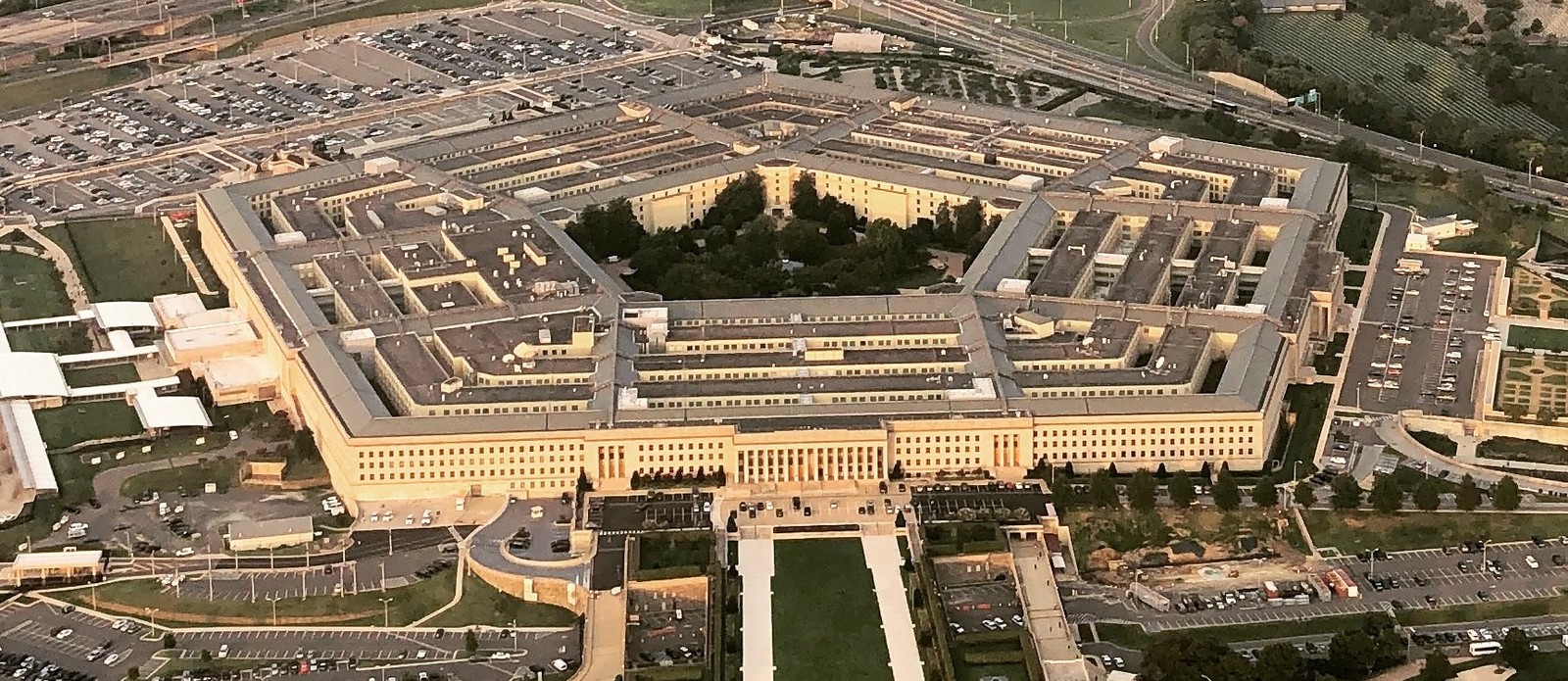
Image: Touch Of Light, CC BY-SA 4.0, via Wikimedia Commons

Did you know that construction on the Pentagon building began on September 11, 1941, exactly 60 years before it was attacked? The home of the US Department of Defense has stood for more than 80 years. Although its iconic shape is intriguing in itself, it hides deeper secrets that many Americans have never heard of. Did you know it feeds 26,000 people a day—at a McDonald's, a Five Guys, a Taco Bell, and over 30 other restaurants? Or that a man secretly lived inside its walls for years? Let’s dive into the Pentagon building’s secrets.

1
A renovation project saved thousands of lives on 9/11
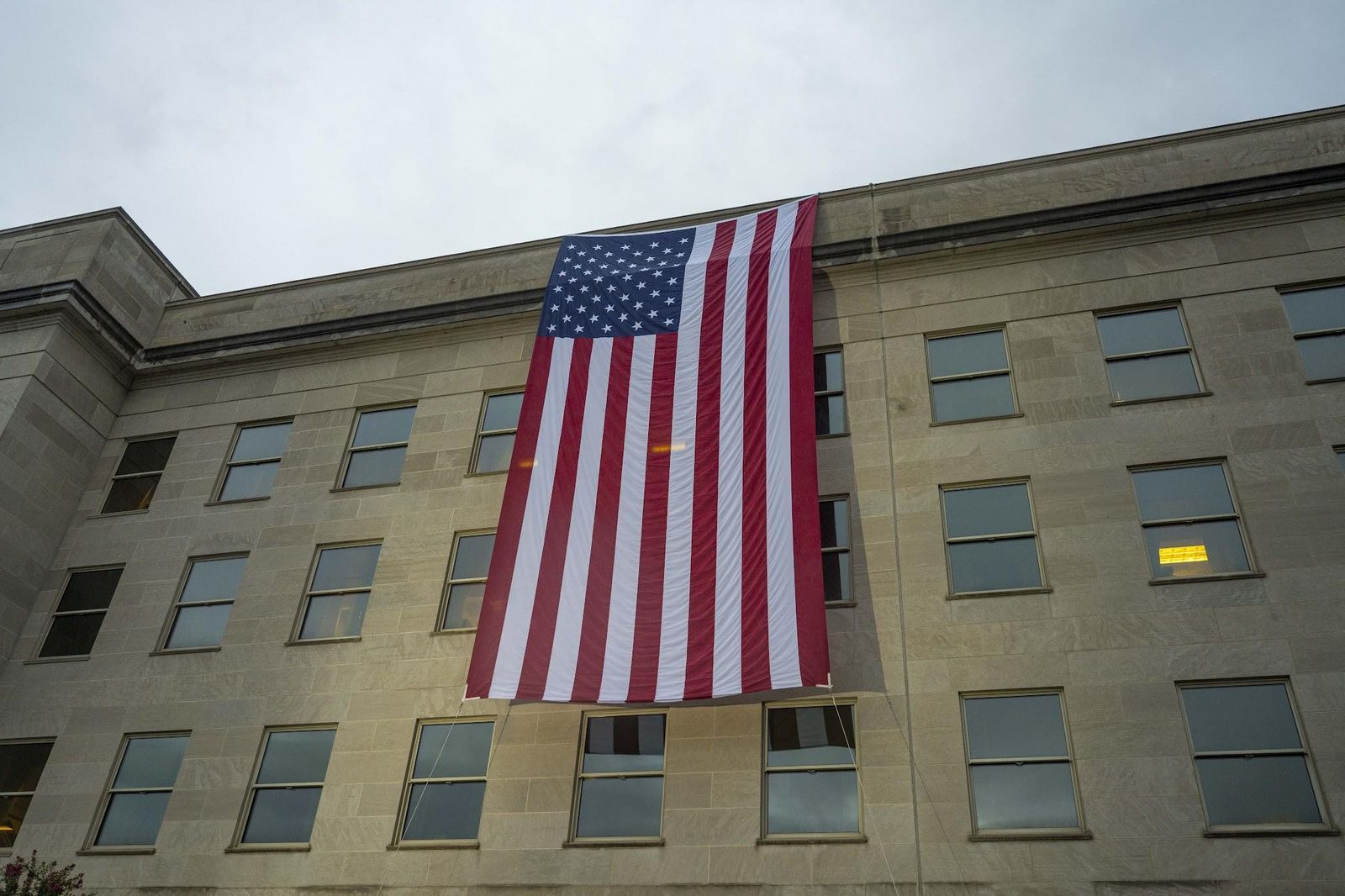
Image: Office of the Secretary of Defense - Public Affair, Public domain, via Wikimedia Commons

On September 11, 2001, American Airlines Flight 77 struck the Pentagon at 9:37 a.m., killing 189 people. Few people know this part: the death toll could have been much higher. But there was a renovation project underway at the time of the attacks.

The Pentagon’s five-sided structure is divided into five "wedges," and workers had been renovating them one at a time. Flight 77 struck the wedge that had just been completed. Of the 4,500 people who normally worked in that section, only about 800 had moved back in. Without the reinforced construction and the incomplete occupancy, experts believe the casualties would have been catastrophically higher.

2
The Cold War and the hot dog stand
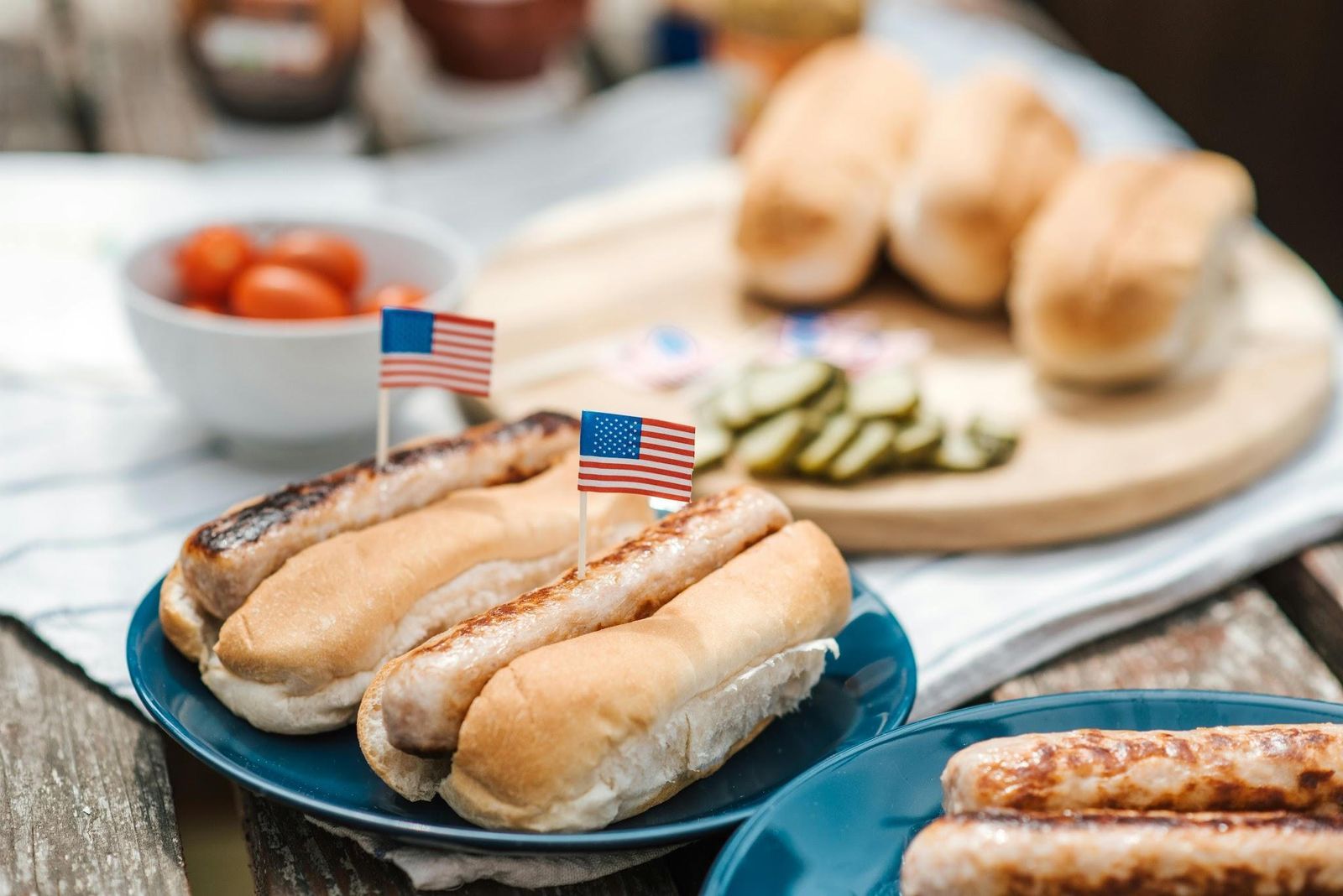
Image: Anete Lusina

In the middle of the Pentagon’s five-acre center courtyard once stood a modest hot dog stand. According to a Cold War legend (one still retold by official Pentagon tour guides on every public tour), between the 60s and the 80s, Soviet satellite images tracked large groups of high-ranking military officials converging on that small building at the same time every day.

Soviet intelligence reportedly concluded the structure must be the entrance to some underground bunker in America. In reality, all it did was sell lunch. In 2006, the original stand was torn down, and a sandwich shop was built in its place.

3
Its construction began on September 11th, exactly 60 years before the attack
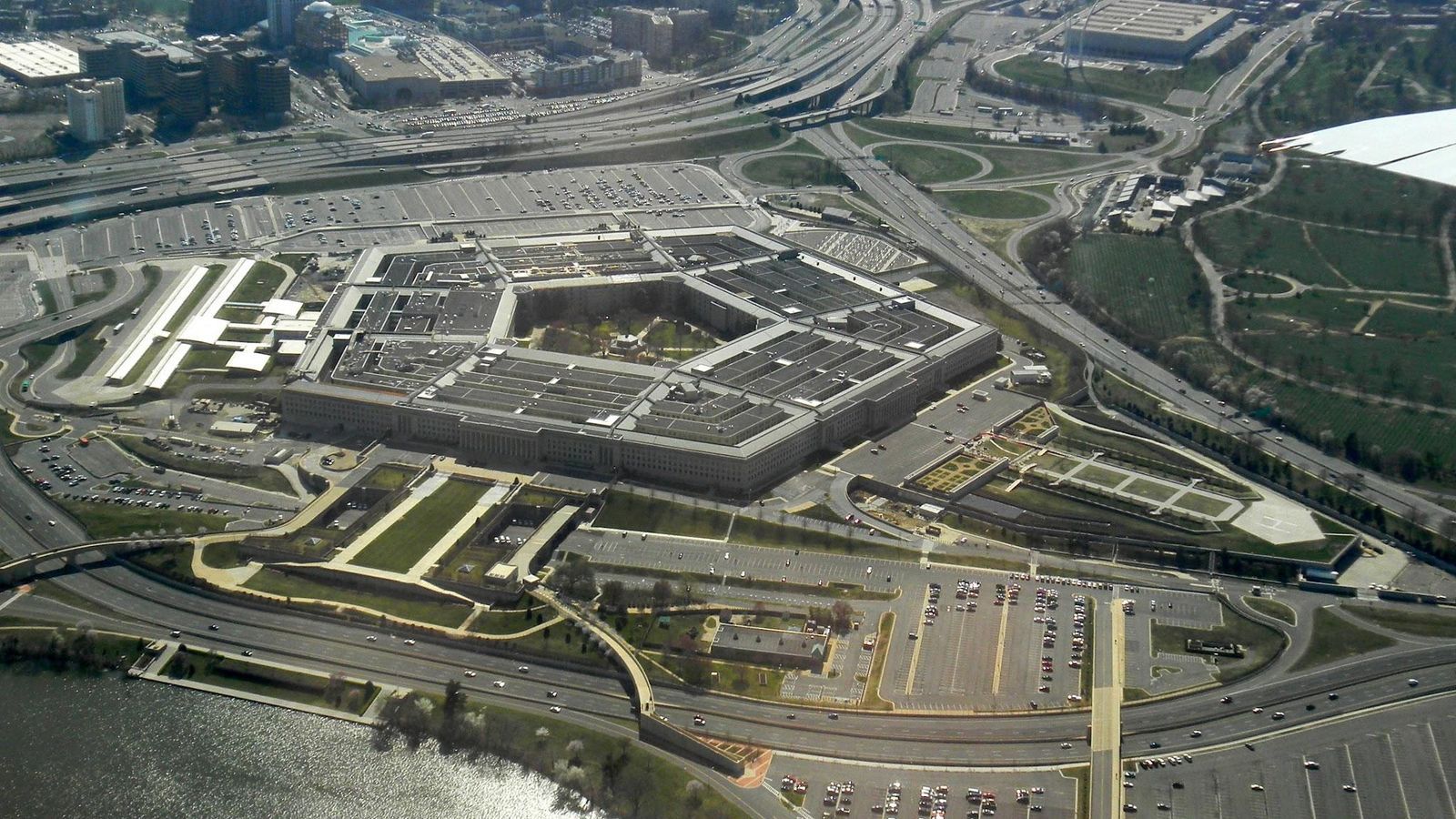
Image: Aber, Marilyn K., Public domain, via Wikimedia Commons

Builders broke ground on the Pentagon on September 11, 1941. That was exactly 60 years to the day before the September 11, 2001, terrorist attacks that would strike the same building.

Construction had been ordered by Army Brigadier General Brehon Somervell, who wanted a permanent headquarters for the Defense Department to replace its then-17 scattered offices across Washington, D.C.

The project was extraordinarily ambitious: plans called for the world’s largest office building to be completed in just 16 months. In the end, the conception, design, and construction of the entire Pentagon building took a total of 15 months.

4
The same person oversaw its construction and the Manhattan Project
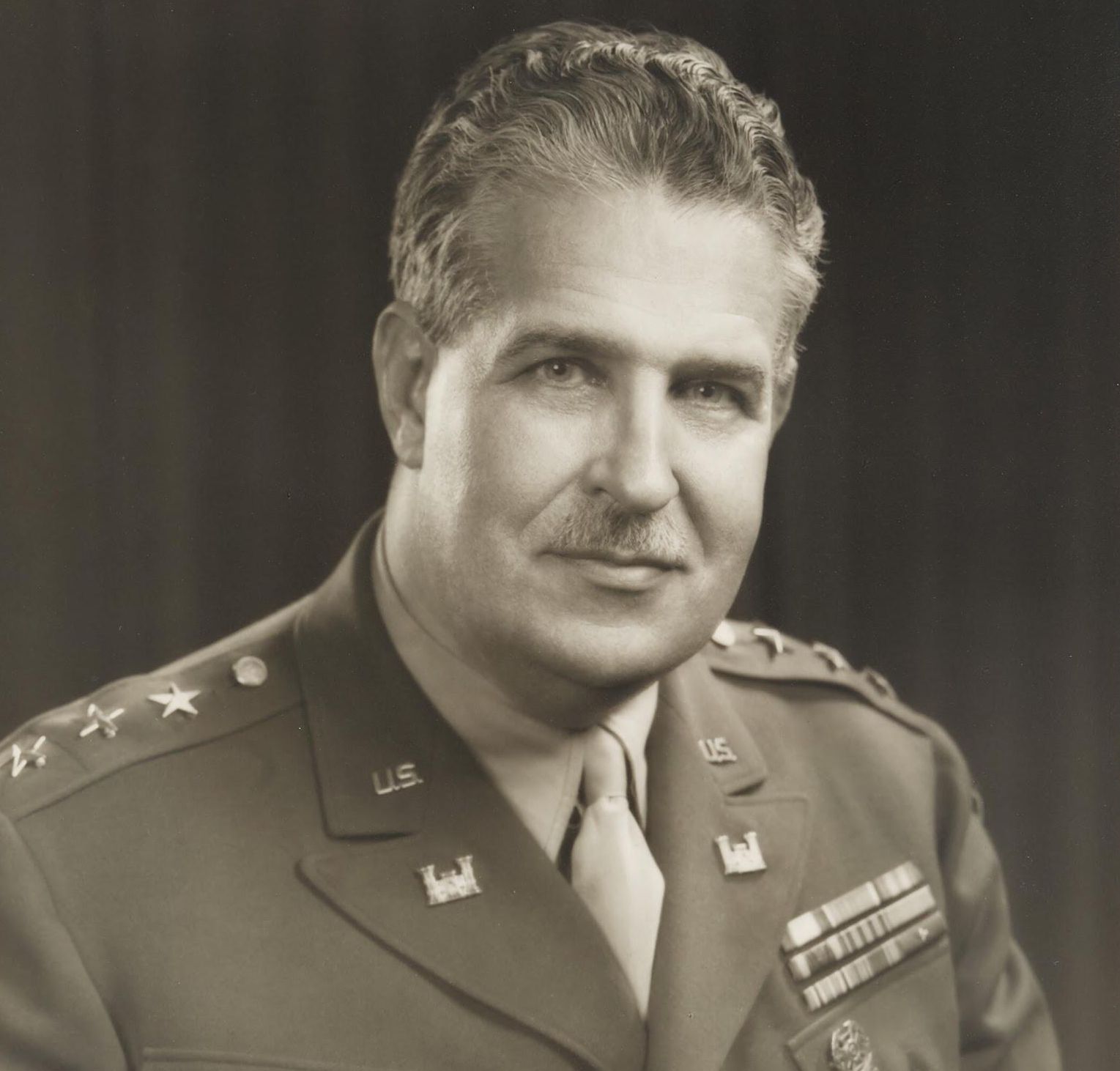
Image: U.S. Army, Public domain, via Wikimedia Commons

Colonel Leslie Groves of the Army Corps of Engineers took charge of Pentagon construction in August 1941. He worked six days a week and drove his team relentlessly, at one point employing more than 15,000 workers around the clock.

When the Pentagon was finished in January 1943, Groves was assigned to lead the Manhattan Project, America’s secret program to build the atomic bomb . His deputy, Captain Robert Furman, followed him into the Manhattan Project as chief of foreign intelligence. Together, the men who built the world’s largest office building went on to produce the weapon that ended World War II.

5
Why is it shaped like that?
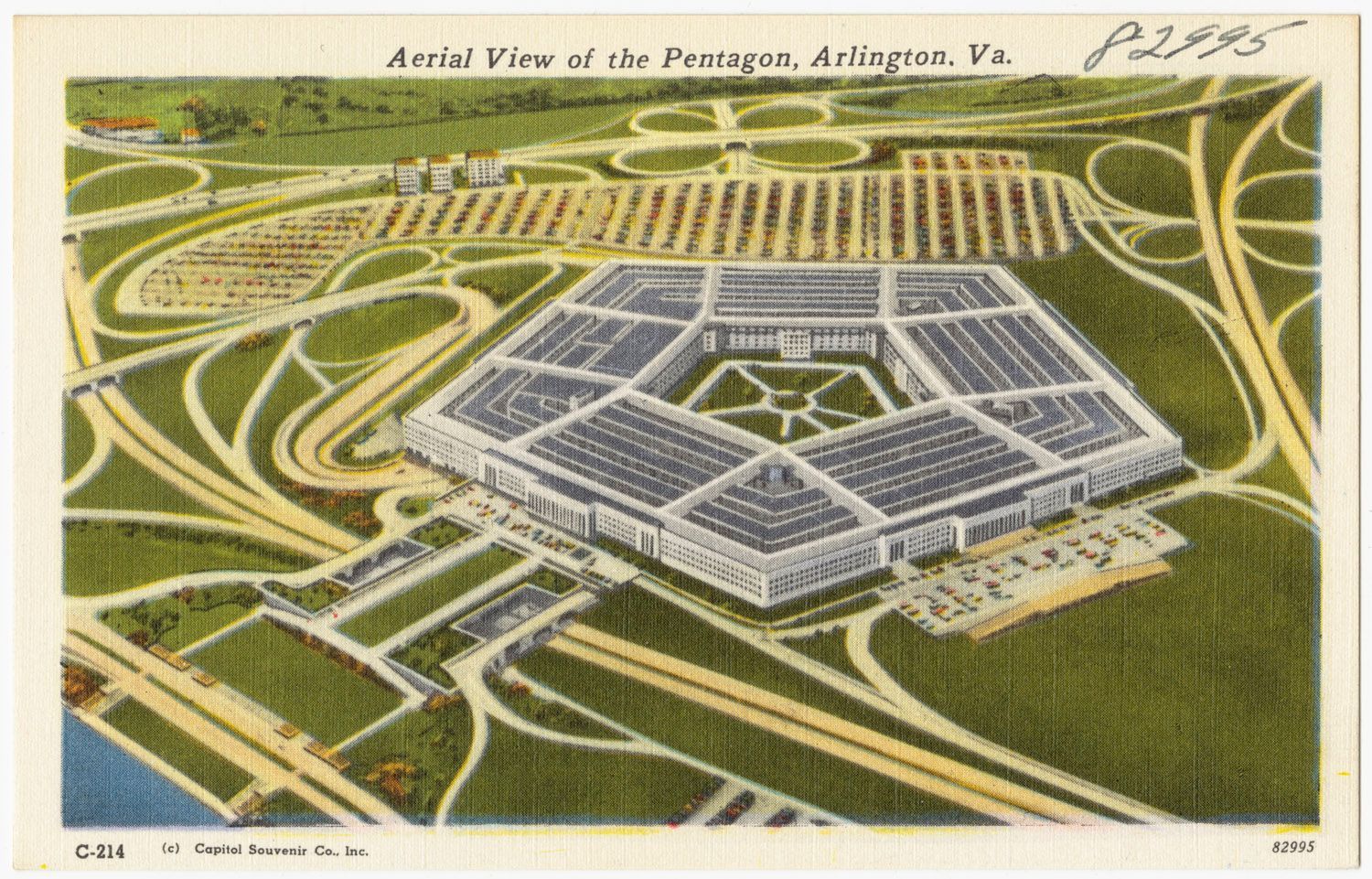
Image: Boston Public Library, CC BY 2.0, via Wikimedia Commons

The Pentagon’s iconic five-sided shape was the consequence of a geographic accident. The original site selected for the building, near Arlington Cemetery, **happened to be bordered on five sides by roads. **Architects designed the structure to fit those boundaries, producing a pentagonal floor plan. Then President Franklin D. Roosevelt intervened: worried the massive building would obstruct the view of Washington, D.C. from Arlington, he ordered the site moved to its current location along the Potomac River. But the five-sided design had already been drawn up, and nobody changed it.

6
It was the first desegregated building in Virginia
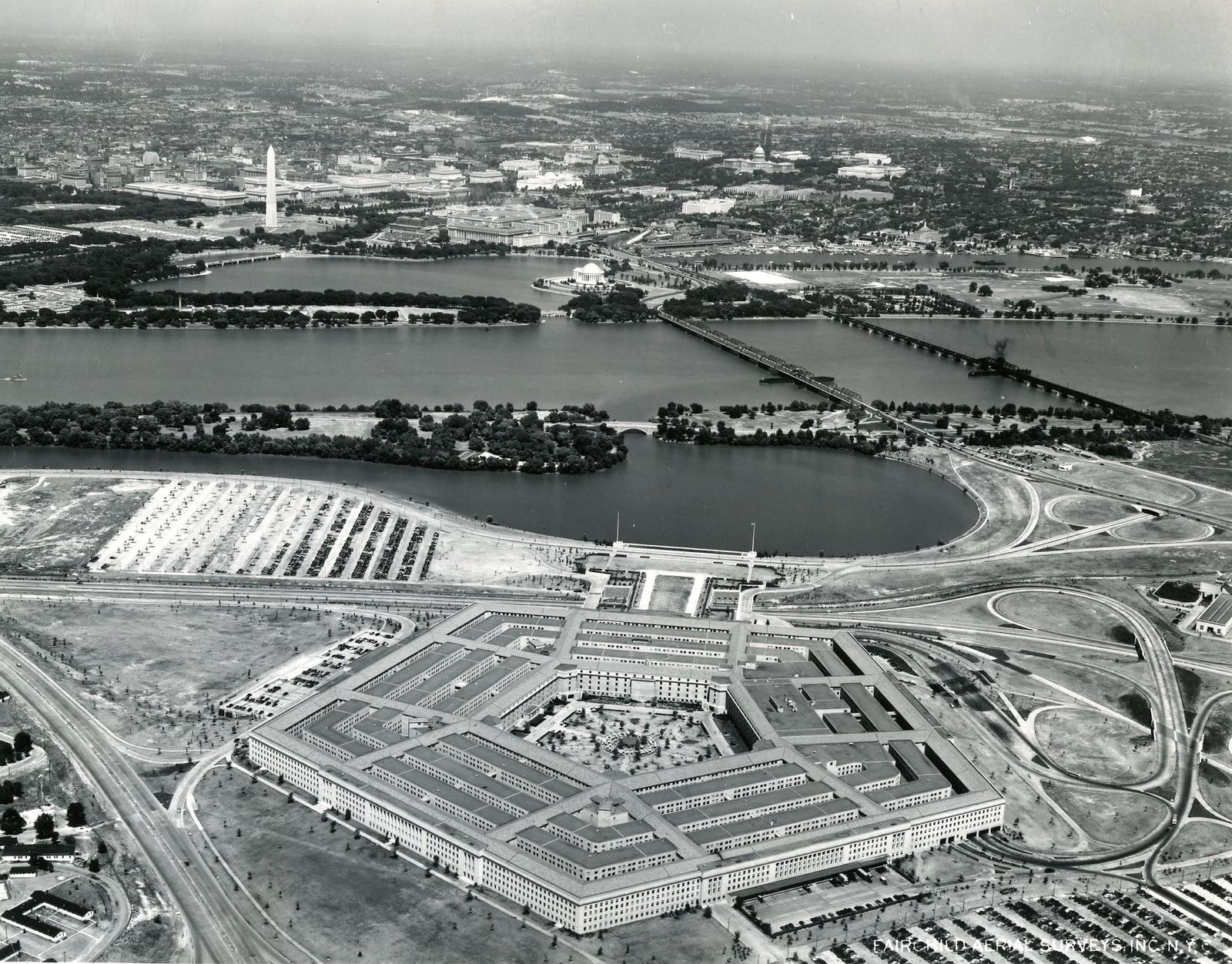
Image: https://ddotlibrary.omeka.net/items/show/100, Public domain, via Wikimedia Commons

When the Pentagon was designed in 1941, segregation was the law in Virginia. Original plans called for doubled bathroom facilities: separate ones for Black and white employees, as required by Virginia statute. But President Roosevelt had signed Executive Order 8802 in June 1941, prohibiting racial discrimination in federal employment and government contracting.

As a federal building, the Pentagon was exempt from Virginia law. It became the only building in the state where segregation was not enforced. A fully desegregated federal workplace that opened in 1943. The doubled bathrooms were built anyway, as the plans were too far along to revise, but were never used as separately designated spaces.

7
Its construction was surprisingly frugal and incredibly fast
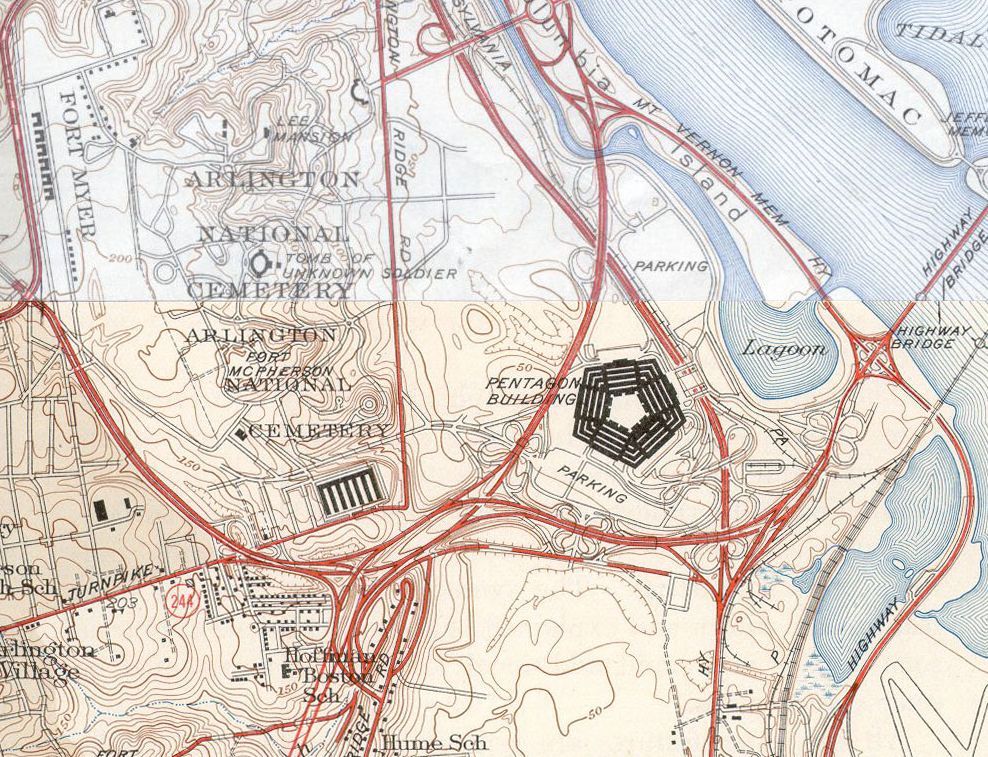
Image: See page for author, Public domain, via Wikimedia Commons

Ground broke on September 11, 1941, and construction finished on January 15, 1943, just 16 months later. More than 15,000 workers were on site around the clock. Wartime office shortages were so severe that employees moved into completed wings before the rest of the building was finished. Steel was too scarce to use extensively, so builders relied almost entirely on reinforced concrete. The 689,000 tons of sand and gravel required came directly from the nearby Potomac River, cutting transportation costs. The project was budgeted at $35 million, but the final bill was $63 million, which would translate to over $900 million in today’s dollars.

8
You can walk between its farthest points in only 7 minutes
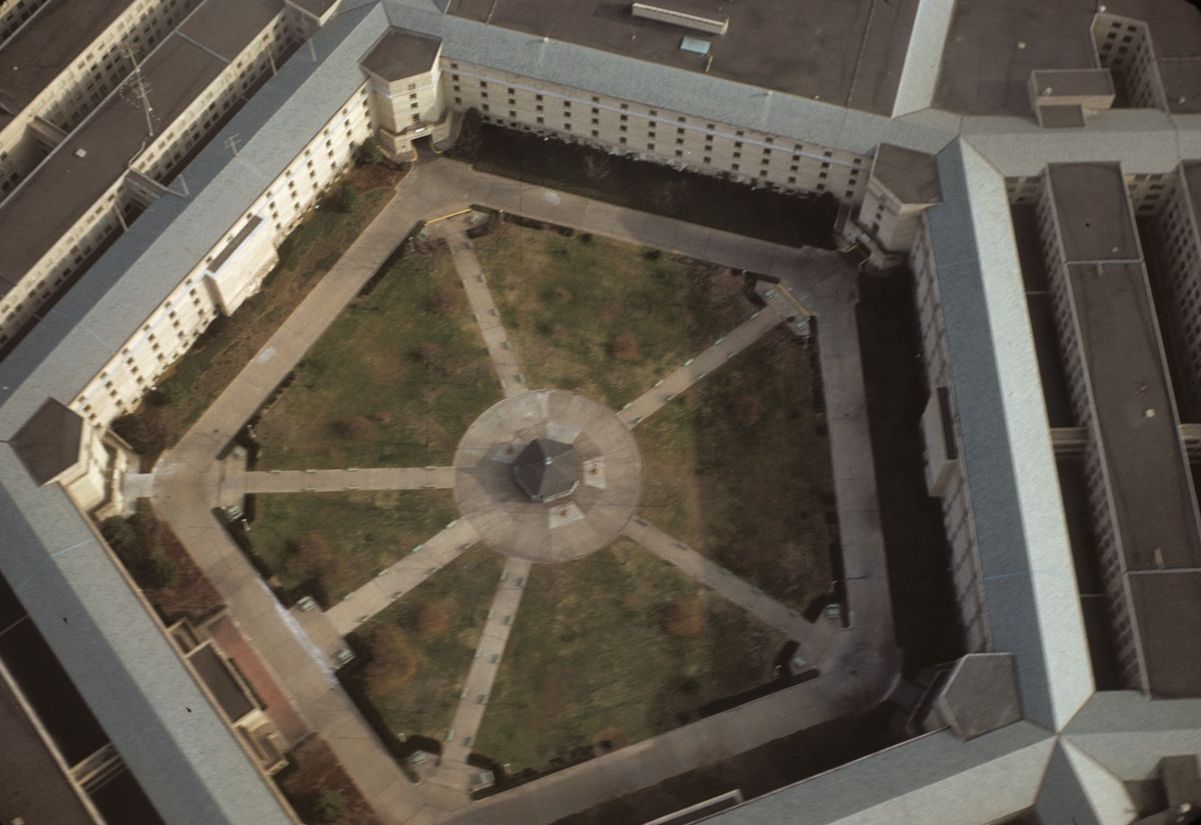
Image: Bea A Carson, CC0, via Wikimedia Commons

The Pentagon is the world’s largest low-rise office building: 6.5 million square feet of space, which is three times the total floor area of the Empire State Building. Each of its five outer walls is 921 feet long. It has 7,754 windows and 17.5 miles of corridors. Approximately 26,000 military and civilian employees report for work there every day.

Despite that scale, the building’s concentric ring design is so efficient that it takes only about seven minutes to walk between its two farthest points.

9
The man who secretly lived inside its walls
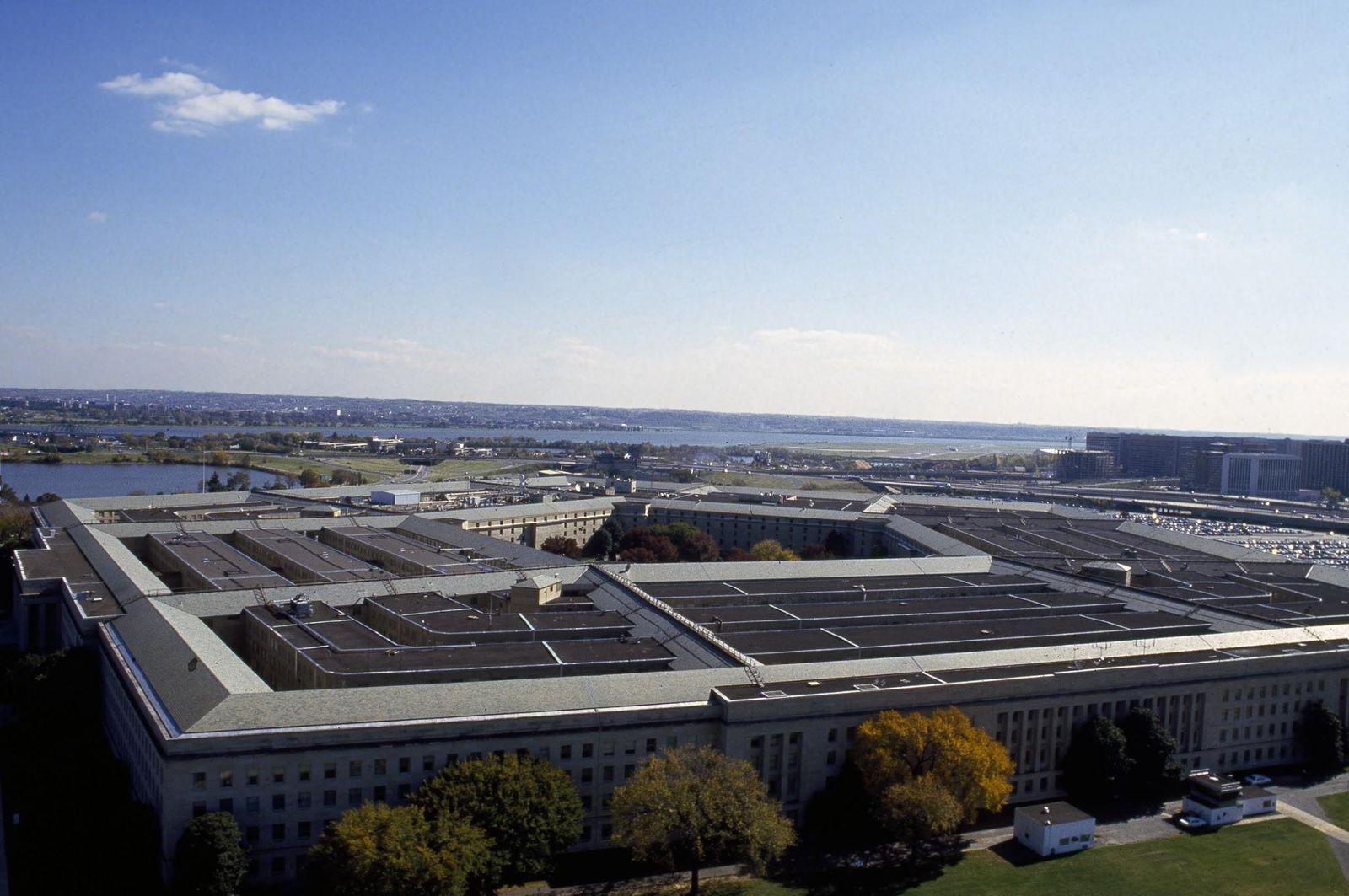
Image: Carol M. Highsmith, Public domain, via Wikimedia Commons

During construction, Colonel Groves drove his deputy, Captain Robert Furman, so relentlessly that Furman rarely left the building. To cope, Furman had contractors build him a small, windowless apartment hidden inside the walls of the Army’s Ordnance Division. In this private room, he could sleep and shower without leaving the premises.

When construction ended and personnel dispersed, knowledge of the hidden room was never passed on to building management. Months later, when Furman returned to Washington on Manhattan Project intelligence business, he found the apartment undiscovered and exactly as he’d left it.

For over a year, he would slip back to the Pentagon, pop open a wall panel, spend the night, and emerge in the morning with his suitcase. He was finally caught in 1943 and forced to surrender the keys. It was never disclosed whether the secret apartment was maintained or eventually absorbed back into the official floor plans.

10
It houses over 30 restaurants, including everyone's favorite chains
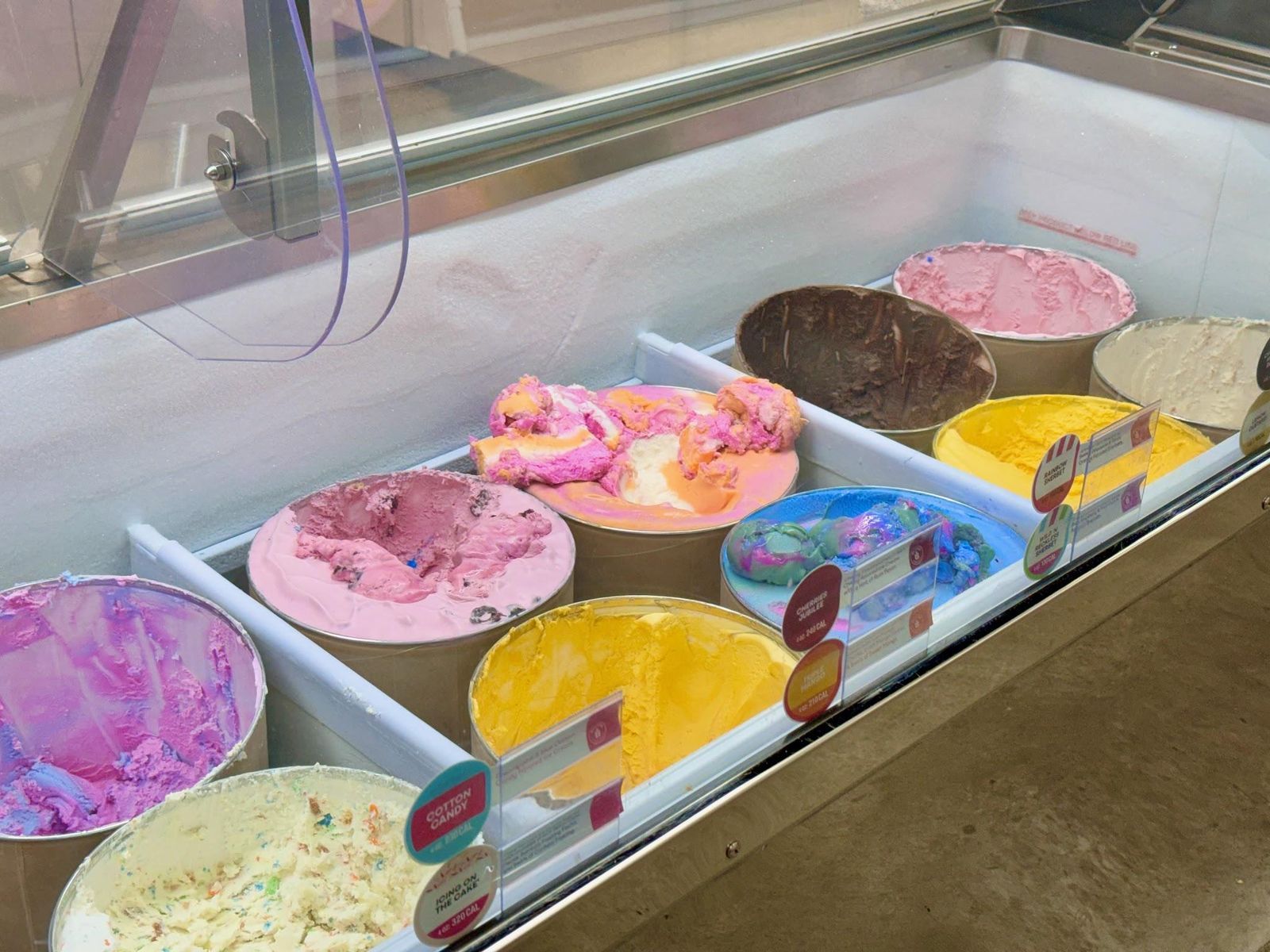
Image: Harrison Keely, CC BY 4.0, via Wikimedia Commons

The Pentagon feeds roughly 26,000 people a day, and its dining options read less like a military headquarters and more like a mall food court. The main Concourse Food Court, which opened in September 2009 and seats 875 people, is the largest of several dining areas.

Confirmed chains currently inside the building include McDonald’s, Five Guys, Subway, Popeyes, Starbucks (multiple locations), Dunkin’ (two locations), Panera Bread, Taco Bell, Panda Express, Baskin-Robbins, Potbelly, Jamba Juice, and Moe’s Southwest Grill, among others. The building also houses a CVS pharmacy, a florist, a jeweler, and a dry cleaner. In the summer of 2024, Potbelly became the first restaurant to open in the center courtyard. Yes, the very spot where the legendary Cold War hot dog stand once stood.
History History 6 min read

Nicknames with lore

What did Delaware do to be called 'The First State'?

Image: Emiliano Bar

U.S states often have more than one nickname, be it those officially adopted or those bestowed on the state by their neighbors (or their adversaries). Some are used as advertisements for their resources and attractions, some are a result of a unique quality of the territory and its people, and some are related to the state’s history and traditions. Here is the history behind 10 state nicknames you have certainly heard of, but never knew how they came to be.

1
New York, The Empire State

Image: Michael Discenza

Probably the most famous and recognizable state nickname, no one really knows who was the first to call New York State the "Empire State", but everyone agrees on the reason for the nickname. The state of New York has always been one of the richest, most developed, and strategically important territories in America , a powerhouse akin to an empire. George Washington himself had described it as "the seat of the Empire" in 1785, and many believe that these words were the source of the nickname.

2
Indiana, The Hoosier State

Image: Ginger Jordan

Another instantly recognisable nickname, the origin of the term ‘Hoosier’ is also widely debated. Believed to have emerged in the 1830s, some say that it is a deformation of the phrase "Who's here?". No matter its actual origin, the term was popularized by John Finley's 1833 poem "The Hoosier's Nest" , a description of rugged but welcoming Indiana pioneers, and it became a source of pride for the state, so much so that ‘Hoosier’ was officially adopted as a demonym by the state of Indiana in 2017.

3
Delaware, The First State

Image: Anthony Garand

Delaware was not the first colony to exist or to become a state. In fact, Delaware wasn’t even a colony: it was technically part of Pennsylvania. The ‘first’ referenced in the nickname alludes to Delaware’s role in the ratification of the U.S. Constitution , a task that took time and political compromise, as several states had concerns about the document and its articles. But while it took nearly two years for all the states to ratify the Constitution, it took less than three months for Delaware to do so unanimously, setting a precedent for other states.

4
Virginia, The Old Dominion

Image: Matthew Lancaster

Probably the oldest state nickname still in use, Virginia’s ‘Old Dominion’ nickname has existed for more than 400 years. The first English colony in America, Virginia was also the main colony to remain faithful to the monarchy during the English Civil War , supporting the exiled King, inviting him to take refuge in their territory, and resisting the siege from the Parliamentary fleet for a long time. After the restoration, King Charles II conferred the colony the title of ‘dominion’ —similar to a kingdom in rank— and affectionately called it "the most Ancient Colloney and Dominion."

5
Oklahoma, The Sooner State

Image: See page for author, Public domain, via Wikimedia Commons

Although it is now used as a symbol of a competitive and pioneering attitude, the term ‘Sooner’ was not always seen as positive. During the Land Rush of April 22, 1889, the U.S. government opened a territory —freed by the forced displacement of thousands on ative Americans— for pioneers to take. At noon, a bugle would signal that settlers could enter and claim areas of land. However, several pioneers broke the rules, entering the territory ‘sooner’ , before the signal. Initially a pejorative nickname, the people of Oklahoma eventually owned the term as a symbol of their ‘can-do’ attitude.

6
Connecticut, The Constitution State

Image: Rusty Watson

Unlike what many people think, Connecticut’s nickname is not related to the U.S. Constitution. In fact, the ‘constitution’ referenced in it predates the American Constitution by more than a century. Unlike other colonies, established by royal charters, the Connecticut Colony was established through The Fundamental Orders , a document delineating a representative government based on "the free consent of the people". The Fundamental Orders are considered to be the first written constitution in Western modern history, a fact that gave Connecticut its nickname.

7
Tennessee, The Volunteer State

Image: Scan by NYPL, Public domain, via Wikimedia Commons

Out of the many things that showcase Tennessee’s patriotism, none is as old or as well-documented as its volunteer vocation. Starting during the Revolutionary War, with the Appalachian Overmountain men volunteering to fight during the Battle of King's Mountain, Tennessee’s men's willingness to volunteer as soldiers became known during the War of 1812 , with hundreds fighting under Andrew Jackson’s command and earning Tennessee the name of the Volunteer State. To further solidify it, when President James K. Polk asked Tennessee for 2,800 volunteers during the Mexican-American War of 1846, the state responded to the call by sending 30,000 volunteer troops.

8
Vermont, The Brave Little State

Image: Bob P. B., CC BY 2.0, via Wikimedia Commons

A relatively more recent nickname than others in this list, the description of Vermont as a ‘brave little state’ dates back to 1928. After a flood in 1927 resulted in nearly 100 casualties and millions of dollars in damages, President Coolidge, a Vermont native, visited the state to assess the situation. Coolidge, often seen as calm and taciturn, gave an emotional speech praising the efforts and the resilience of his fellow Vermonters , and their ties to a land that gave them sustenance but posed the hazard of natural disasters. Coolidge ended his speech by acknowledging the generosity of the people of "this brave little state of Vermont", a phrase that became so popular that it was later inscribed in the Vermont State House and became a common nickname for the state.

9
Wisconsin, The Badger State

Image: Neil Bates

Though badgers can be found across Wisconsin, they are far less common than one would think, especially considering the state’s nickname. But this nickname has little to do with real badgers and much to do with people behaving like a badger. In the 1820s, prospectors all over America travelled to Wisconsin to look for lead ore. Working all day in the mines and lacking proper housing, the miners usually ended up living in the mines or digging holes in the hillsides to serve as shelter , which led people to compare them with burrowing badgers. Eventually, the ‘badger’ nickname became a symbol of the tenacity of the miners, and a point of pride for all Wisconsinites, who campaigned in 1957 to officially adopt the badger as their state animal.

10
Nebraska, The Cornhusker State

Image: Maize & Blue Nation, CC BY 2.0, via Wikimedia Commons

Though this famous nickname for Nebraska has ties with the agricultural identity of the state, it actually originated in the world of college football. Before 1900, the University of Nebraska football team had used several nicknames, such as Bugeaters, Tree Planters, or Rattlesnake Boys. Following a rough patch and wanting to give the team a new direction, sportswriter Charles Sherman suggested the nickname ‘cornhusker’ as a homage to the traditional corn husking done by hand by the Nebraska settlers . The name caught on and was eventually made extensive to all Nebraskans, being officially adopted by the state in 1945.

General General 3 min read

Which one is your favorite?

How word of mouth has changed over the years

Image: Cottonbro Studio

Over the years, how we’ve tuned into news, music, and entertainment in America has undergone serious changes. From the days of gathering around to hear stories passed down through oral traditions, to listening to the radio for the evening broadcast, to the modern age of podcasts, each era has its flavor. Take a look at these 12 media formats that we have used and use today.

1
The human voice

Image: Priscilla Du Preez 🇨🇦

Before modern technology, oral communication and word of mouth were the primary ways people shared news, stories, and music everywhere.

From Native American storytelling traditions to community gatherings, spoken word connected people, passed down history, and spread important information long before any other medium ever existed.

2
Public proclamations

Image: Andrew Ebrahim

Public proclamations were an early form of mass communication in America, used to spread news and official announcements.

Town criers or officials would read proclamations aloud in public squares , ensuring that important information reached everyone, even those who couldn't read, who were more than a handful at the time.

3
Live music

Image: Francesco Giacomini

Before recorded music, people would gather at local events, fairs, or churches to hear musicians perform songs that reflected current events, social issues, or, often, served as entertainment.

In the same way as today, live performances were a major form of entertainment and communication.

4
Gramophones

Image: Tasha

Gramophones and Edison’s musical cylinders revolutionized how Americans consumed music and news in the late 19th and early 20th centuries.

These devices allowed people to listen to recorded sound at home for the first time , offering a new way to enjoy music, speeches, and even news broadcasts.

5
Radio broadcasts

Image: Maximilian Hofer

It is hard to overstate the importance of radio. It was a game-changer in the early 20th century, bringing news, music, and entertainment directly into homes across America.

For the first time, families could listen to live broadcasts of events, catch the latest hits, or hear radio dramas .

6
Television

Image: PJ Gal-Szabo

Television caused a huge impact in the 1950s, blending news, music, and entertainment into one screen . As with radio, families gathered around the TV for nightly broadcasts, from the evening news to variety shows and music performances.

This new visual element added a deeper level of engagement, shaping how Americans consumed information and entertainment, making TV a major force in media for decades.

7
Vinyl record players

Image: Eran Menashri

Vinyl record players became a major music format in the mid-20th century, offering high-quality sound. People could listen to entire albums, making music a personal, immersive activity .

Vinyl records also became a cultural icon, with album artwork and collector’s editions turning listening into a ritual.

8
Magazine players

Image: Ciocan Ciprian

Somewhat of a half-step format between the vinyl records and compact cassettes , magazine players offered a portable way to listen to music and news in the 1960s through the 1980s.

These devices used cartridges or tapes that could hold multiple songs or recordings, making it easy for people to enjoy their favorite tunes on the go.

9
Cassette players

Image: Dave Weatherall

If magazine players made music a portable activity, cassette players and, especially, Walkmans, took it even further.

With the ability to play mixtapes or purchased albums anywhere, these devices gave people personal control over their music while on the go . Walkmans, in particular, became iconic for offering a private, on-demand listening experience.

10
CD players

Image: Lucky Alamanda

CD players became the go-to music format in the 1990s, offering a digital upgrade to cassettes with better sound quality and durability .

Compact discs could store albums without the wear-and-tear issues of tapes, and CD players were easy to use, making them popular in cars, homes, and portable devices.

11
MP3 players

Image: Ben Szymanski

The possibility of holding entire album catalogs and more in a single portable device became real in the early 2000s when MP3 players made their appearance.

Devices like the iPod became cultural icons, shaping how people accessed and enjoyed music, paving the way for the next and last item on our list.

12
Streaming services

Image: Heidi Fin

In the last decade, streaming services and podcasts have transformed the media landscape, allowing everybody to instantly access music, news, and entertainment on demand.

Platforms like Spotify and Apple Music put millions of songs at users' fingertips, while podcasts offer a vast range of topics for all interests .

Explore more American facts

Choose your favorite category!

General
General

As American as apple pie—the very best America has to offer!

Culture
Culture

Delve into the astounding richness of American lore.

Geography
Geography

Hop in and explore vast and diverse American landscapes.

History
History

Discover the key moments that shaped the United States.