Culture Culture 4 min read

Did you know?

What does "R2-D2" mean? Surprising facts about movies we've all seen

Image: Samuel Regan-Asante

What did Martin Scorsese first think about Scarface ? What does R2-D2 mean, exactly? And what type of toy was Woody the Sheriff supposed to be, at first? The answers to these questions are some lesser-known stories behind some of Hollywood’s most memorable titles. Read on to learn a tale or two about movies we’ve all watched.

1
X-Men (2000)

Image: Alex Green

Remember the scene when Magneto and Professor X play a tense, symbolic game of chess? Well, the actors certainly do. Here’s why: Neither Patrick Stewart nor Ian McKellen knew how to play chess before filming.

So, director Bryan Singer brought in a Canadian chess Grandmaster to help design the game the two men would share by choreographing each piece's movement based on the high-strung dialogue they were having —Professor X needed to win.

2
E.T. the Extra-Terrestrial (1982)

Image: Sreevishnu Nair

Did you know that E.T., the beloved extraterrestrial who wanted to phone home, was intentionally designed to have no specified gender ?

Director Steven Spielberg expressed that his intention was to define E.T. as a "plant-like" creature, neither male nor female, and that this was explicitly explained in earlier versions of the script.

However, in the film, young Elliott insists that he knows the gender of his newfound friend: "He’s a boy," he explains to his sister when she asks. The audience went along with Elliott’s interpretation, and hence E.T. is considered to be male.

3
How the Grinch Stole Christmas (2000)

Image: Alex Stone

Jim Carrey loathed the process of becoming The Grinch. Though the Dr. Seuss character was fun to play, sitting for hours and hours for makeup and costume until the green look was perfected, he said, was exhausting.

So, he was shocked one day when he arrived on set, only to find yet another Grinch ready there before him. It was none other than director Ron Howard, who had been up since 3:30 am, getting into full costume in solidarity with him.

4
The Nightmare Before Christmas (1993)

Image: Elin Melaas

Watching Tim Burton’s The Nightmare Before Christmas, one might take for granted that the stop-motion marvel took years of painstaking effort. Around 227 puppets were built for the production because each character had multiple duplicates to allow shooting on many sets simultaneously.

The protagonist Jack Skellington alone needed nearly 400 different heads to capture enough facial expressions.

5
Toy Story (1995)
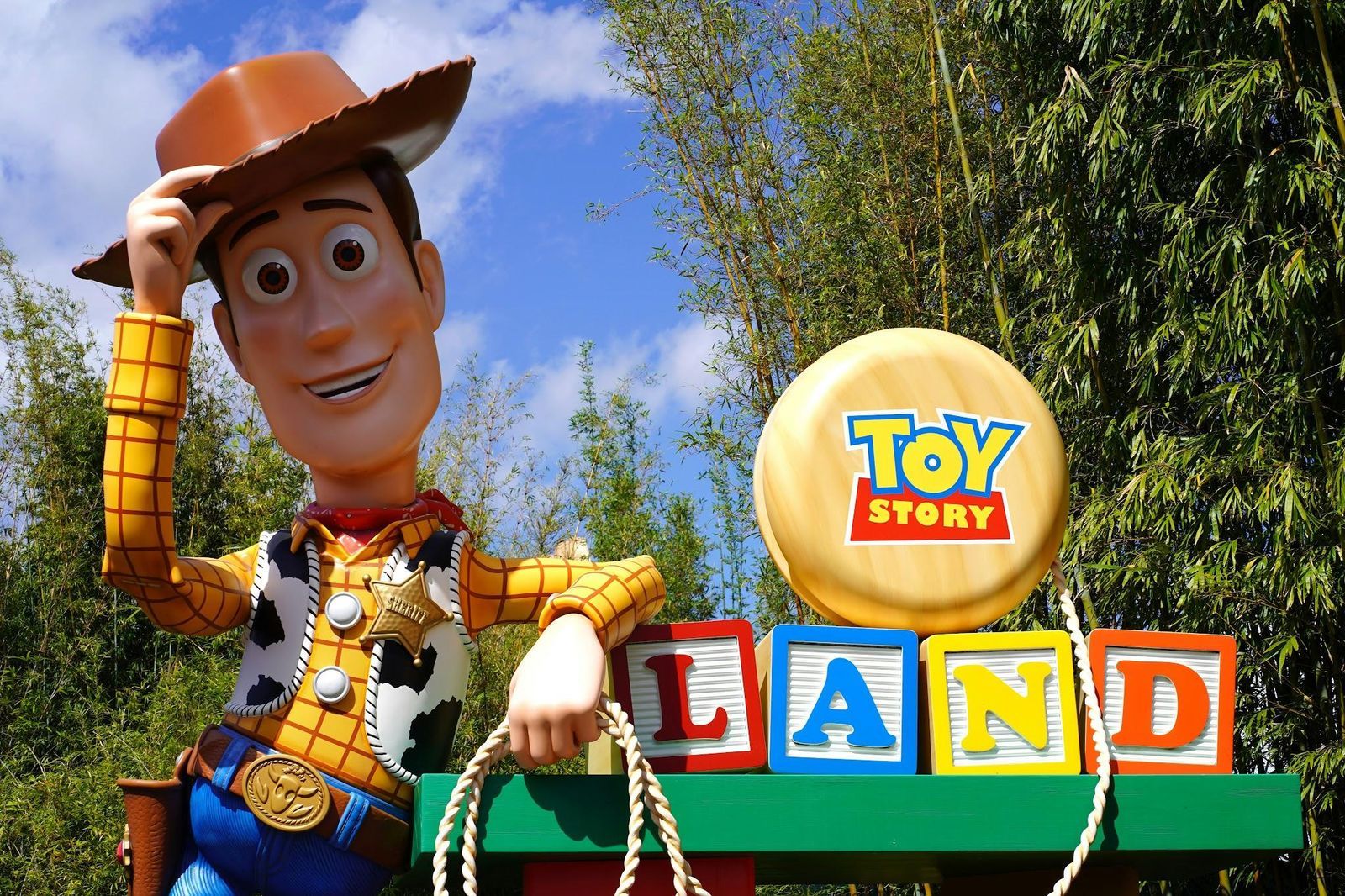
Image: Stone Hood

Even though we all recognize Woody the Cowboy, there was a time when the leading character of Toy Story was going to be… quite different.

Sheriff Woody was at first conceived as a ventriloquist dummy . But the Pixar creators thought that a softer cowboy toy would be a little bit friendlier. What do you think?

6
Star Wars: A New Hope (1977)

Image: Christian Maass

We all know the loyal little robot of the Star Wars world. But R2-D2’s name came about unintentionally. While filming a previous film, George Lucas had liked an abbreviation he heard his sound editor shout one day: "R2, D2".

It referred to "Reel 2, Dialogue Track 2" . But the expression sparked Lucas’s imagination.

7
Home Alone (1990)

Image: Liubomyr Vovchak

Yes, Kevin is nine years old in the movie. But most of his "dangerous" moments were handled by a 30-year-old stuntman in kid-sized clothes!

Still, some injuries were inevitable. And they didn’t come from hanging from a zipline or sliding downstairs: No, young Macauley Culkin got a scar from Joe Pesci accidentally biting his fingers too hard in one scene.

8
Interstellar (2014)
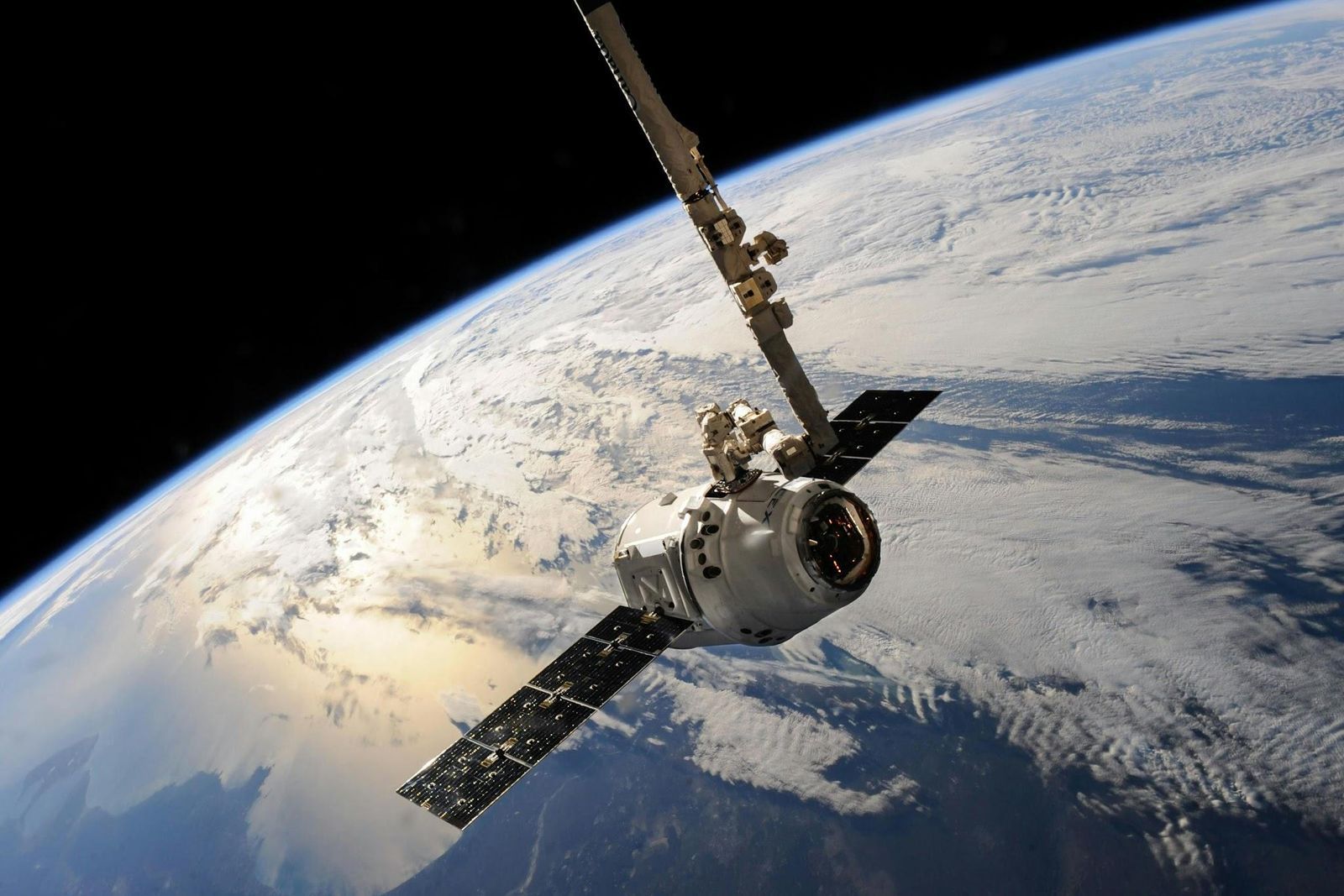
Image: SpaceX

Christopher Nolan’s Interstellar is well known for its ambitious science fiction vision. But Nolan went above and beyond with details. For example, the robot TARS wasn’t a CGI creation: it was physically built (a kind of "puppet-robot").

Plus, the space suits the actors wore were designed with functioning oxygen units and cooling tubes! Needless to say, though, all scenes were filmed on Earth.

9
The Matrix (1999)

Image: Markus Spiske

Did you know that Johnny Depp was the first choice to play Neo for The Matrix ? As an up-and-coming actor in the 90s, the writers had considered him perfect for the role. However, fate decided Keanu Reeves would take the part, and the rest was history.

Reeves didn’t have it easy, though: the Wachowskis had him read philosophical books like Simulacra and Simulation by Jean Baudrillard, Out of Control by Kevin Kelly, and Introducing Evolutionary Psychology by Dylan Evans.

10
Scarface (1983)

Image: Bryant's Juarez

After Martin Scorsese saw Brian De Palma’s Scarface, he reportedly told actor Steven Bauer: "It’s great… but they’re going to hate it ."

He wasn’t wrong. Critics did hate it, at first. They called it vulgar, excessive, hysterical, and violent. Scorsese himself had been criticized for the violence in his own work, so he recognized the pattern instantly. However, as we know, audiences eventually made it a cult classic.

Culture Culture 4 min read

All-American tunes

10 songs that defined American culture

Image: Jason Leung

Can a mere song represent the experiences and feelings of a country? Some can. Throughout American history, there have been songs that, born from specific moments or capturing universal emotions , have left a lasting mark. Here are 10 songs that have remained relevant to Americans since their creation.

1
"The Star-Spangled Banner"

Image: iStrfry , Marcus

Arguably the most quintessential American song of all , its lyrics originated as a poem during the War of 1812, inspired by the experiences of Francis Scott Key during the British bombardment of Fort McHenry.

Surviving several controversies —from the violent content of its full lyrics to whether it is (or isn’t) easy to sing— "The Star-Spangled Banner", officially adopted as the U.S.’s national anthem in 1931, is now a symbol of unity and pride for many Americans.

2
"America the Beautiful"

Image: Alexis Gethin

Once a strong contender for the official U.S. national anthem, this song celebrates the beauty of America, from the ideals upon which it was founded to the natural wonders within its borders .

Written by Katharine Lee Bates in 1893 and inspired by the landscape of Pikes Peak in Colorado, the song reflects the American dream of a more just and unified nation.

3
"This Land Is Your Land"

Image: National Archives at College Park, Public domain, via Wikimedia Commons

A 1940 folk song by Woody Guthrie, this song was written as a response to idealized patriotism that overlooked the everyday struggles of the common American citizen .

A product of a society that was still overcoming the Great Depression, the song emphasizes the idea of the country as belonging to all its people.

4
Yankee Doodle

Image: Goh wz, Public domain, via Wikimedia Commons

Originally written by British soldiers in 1755 to mock colonial soldiers during the French and Indian War, and popularized during the Revolutionary War the song was later reclaimed by American soldiers after the Battle of Yorktown and turned into a symbol of independence.

What was initially meant as a mockery of " Yankee" (a New Englander) " doodle" (a fool or simpleton) became a source of pride and one of the most iconic American nursery rhymes.

5
"Georgia on My Mind"

Image: Abigail Ducote

Composed in the 1930s by Hoagy Carmichael with lyrics by Stuart Gorrell, but famously covered by Ray Charles in 1960, this heartfelt ballad became an anthem for Southern nostalgia and love for the land .

A powerful ode to homesickness, it was adopted as the official state song of Georgia in 1979.

6
"I Walk the Line"

Image: Markus Spiske

Released in 1956 by country legend Johnny Cash, this iconic hit works as a pledge of devotion and faithfulness in the face of temptation.

Despite being written by Cash for his first wife Vivian, the song has since been widely interpreted as a promise of staying true to oneself.

7
"Take Me Home, Country Roads"

Image: Clark Wilson

One of the most well-known country songs of all time, the lyrics of "Take Me Home, Country Roads" were in part inspired by Maryland’s scenery as songwriter John Denver returned home for a family reunion.

Adopted as one of the official state anthems of West Virginia (due to a mention of the state in the lyrics), the song captures the fond feelings and sense of nostalgia associated with one’s hometown .

8
"Fortunate Son"

Image: Annie Spratt

The anti-war anthem of the late 1960s, Creedence Clearwater Revival’s "Fortunate Son" , first recorded in 1969, critiques a flawed system that favors the privileged few .

Addressing inequalities in the U.S. military draft system, which often excused those well-connected or placed them in safe positions while others were sent to the front lines, the song’s message has remained relevant for decades.

9
"Sweet Home Alabama"

Image: MCA Records, Public domain, via Wikimedia Commons

Written in part as a response to Neil Young's "Southern Man" and "Alabama," which were interpreted by some as blaming the entirety of the South for slavery and segregation, the 1974 Lynyrd Skynyrd song "Sweet Home Alabama" became an anthem of Southern pride in the face of prejudice and generalizations.

Sadly, the song has sometimes been misinterpreted as favorable towards segregationist policies, though members of the band have expressed their opposition to these ideas.

10
"Born in the U.S.A."

Image: Jose Antonio Gallego Vázquez

Famously considered an anthem of national pride, many fail to recognize Bruce Springsteen’s "Born in the U.S.A." (1984) as a song of protest, written during the aftermath of the Vietnam War .

Describing the alienation suffered by returning veterans, its lyrics reflect the disillusionment of those who had defended American ideals, only to feel abandoned upon their return.

History History 4 min read

Nature’s wrath unleashed

Wild, wild weather: 10 natural disasters that changed U.S. history

Image: Greg Johnson

America’s vast territories and diverse landscapes make it a hotspot for some of the world’s most remarkable weather and natural phenomena . From raging tornadoes to volcanic eruptions, the U.S. is no stranger to extreme natural events. While some of these events have left deep scars on the nation’s collective memory, many have also driven significant advancements in prevention and disaster response protocols, helping to mitigate the impact of future occurrences. Here’s a look at 10 of the most powerful natural events in American history.

1
Tri-State tornado

Image: Greg Johnson

In 1925, the Tri-State Tornado carved a path of destruction across Missouri, Illinois, and Indiana. With winds exceeding 300 mph, it remains the deadliest tornado in U.S. history, claiming more than 700 lives and leaving thousands homeless.

This record-breaking F5 tornado—classified as such by modern standards—traveled over 200 miles in just three and a half hours, leveling entire towns. Its unprecedented speed and longevity exposed the limitations of early warning systems, prompting significant advancements in tornado research and forecasting.

2
The Dust Bowl

Image: Sophia Simoes

The 1930s Dust Bowl was a man-made disaster exacerbated by a severe drought across the Great Plains. Decades of over-plowing and unsustainable farming practices had left the farmland highly vulnerable to erosion.

When the drought struck, winds swept loose soil into colossal clouds that darkened cities and devastated remaining crops. These massive dust storms, known as "Black Blizzards," choked the skies and forced thousands of families to abandon their homes . Eventually, the disaster led to significant agricultural reforms under the New Deal.

3
Lake Michigan's seiche wave

Image: Silas Baisch

On the morning of June 26, 1954, a 10-foot-high seiche wave crashed onto the Chicago shoreline , sweeping away eight people and injuring many others. But what exactly is a "seiche wave"?

According to researchers, seiche waves are large, sudden standing waves that form in enclosed bodies of water due to extreme atmospheric changes, such as abrupt shifts in air pressure or strong winds. This rare event shocked the Midwest and prompted scientists to study lake oscillations and their connection to storm systems.

4
Great Alaska earthquake

Image: Joris Beugels

In 1964, Alaska was struck by a devastating earthquake with a magnitude of 9.2, making it the most powerful ever recorded in North America and the second most powerful worldwide. Lasting four minutes and thirty-eight seconds, the earthquake triggered massive tsunamis and landslides across the state, along with significant geographic changes —some coastlines sank while others rose dramatically.

The destruction it caused led to major updates in seismic safety protocols and infrastructure standards throughout the U.S. This event emphasized the need for better preparedness and stricter building codes , to handle similar future events, especially in earthquake-prone areas.

5
Hurricane Katrina

Image: NASA

In 2005, Hurricane Katrina ravaged New Orleans and the Gulf Coast, claiming more than 1,300 lives and leaving millions homeless, sparking an urgent humanitarian crisis. The storm caused an estimated $125 billion in damages, making it one of the costliest hurricanes in history , tied with Hurricane Harvey in the Atlantic basin.

Katrina exposed critical flaws in the region's levee systems and emergency response efforts, prompting widespread criticism and driving essential reforms in disaster preparedness and infrastructure.

6
The Peshtigo firestorm

Image: Tim Mossholder

On the same day as the Great Chicago Fire of 1871, a catastrophic firestorm near the small town of Peshtigo, Wisconsin, scorched approximately 1.2 million acres, making it the deadliest wildfire in recorded history . The uncontrolled blaze claimed over 1,500 lives, though the exact number of fatalities remains uncertain.

Since 1883, there has been speculation that the simultaneous outbreaks of major fires across Illinois, Michigan, and Wisconsin, including the Peshtigo and Chicago fires, were not coincidental but caused by burning fragments from Biela's Comet . However, this theory remains unproven.

7
Superstorm Sandy

Image: Matt Hardy

Nicknamed "Superstorm" by the media, Hurricane Sandy wreaked havoc on the Caribbean and the coastal Mid-Atlantic region of the United States in late October 2012. While it affected 24 states, the most severe damage was concentrated in New Jersey and New York .

The storm caused an estimated $70 billion in damages, flooding New York City's subway system and displacing thousands of residents. It also ignited a nationwide debate about the role of man-made climate change in amplifying the intensity of seasonal storms.

8
Death Valley heatwave

Image: Johannes Plenio

Death Valley recorded the world’s hottest temperature —134°F—in 1913. A testament to America’s climatic extremes, the region’s unique topography traps heat, effectively turning it into a natural furnace.

While the record remains a point of fascination for meteorologists and tourists alike, some recent researchers have challenged the accuracy of the 1913 measurement. Regardless, the region has come close to this temperature in recent years, indicating that a new record-breaking summer may be in the cards.

9
The Great Blizzard of 1888

Image: Jan Canty

The "White Hurricane" of 1888 buried the Northeast under as much as 55 inches of snow, crippling major cities and resulting in over 400 fatalities. Railroads were shut down, and many residents were confined to their homes for up to a week.

As one of the most severe blizzards in American history , the storm compelled New York City to bury power lines and redesign its transportation systems to better withstand future extreme weather events.

10
Mount St. Helens eruption

Image: Tetiana Grypachevska

On May 18, 1980, Mount St. Helens erupted in Washington, triggering massive landslides and pyroclastic flows, killing 57 people and causing over $1.1 billion in damages. The violent blast also reduced the mountain’s height by more than 1,300 feet and sent a plume of ash 80,000 feet into the atmosphere, disrupting air travel for weeks.

This volcanic event, the first in the contiguous United States since the much smaller 1915 eruption of Lassen Peak in California, is considered one of the most disastrous volcanic eruptions in U.S. history. Its aftermath raised awareness of volcanic hazards and underscored the importance of geological research in the country.

Explore more American facts

Choose your favorite category!

General
General

As American as apple pie—the very best America has to offer!

Culture
Culture

Delve into the astounding richness of American lore.

Geography
Geography

Hop in and explore vast and diverse American landscapes.

History
History

Discover the key moments that shaped the United States.