History History 6 min read

Traditions with a past

The president who pushed for celebrating the 2nd of July
Image: Joseph Gonzalez

Mardi Gras, the Fourth of July, pumpkin pie on Thanksgiving– these traditions are quintessentially American, but how did they become what they are today? Did you know that one of our founding fathers refused to celebrate on July 4th? Or that pumpkin pie was resisted by many before becoming a holiday staple? Each tradition we take for granted has a story, often unknown to us. Which major holiday was once banned? Which sports event started as a marketing campaign? Keep on reading to find out!

1
The Second of July?
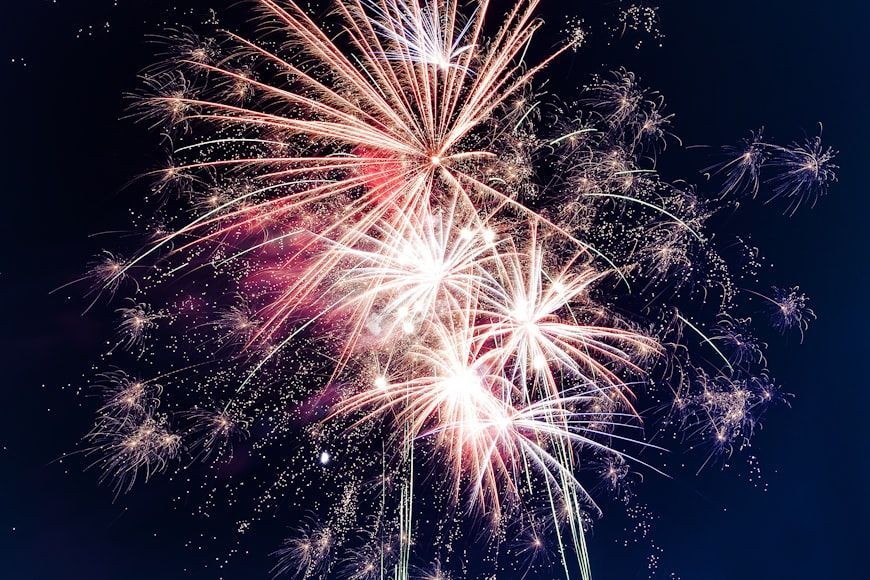
Image: Roven Images

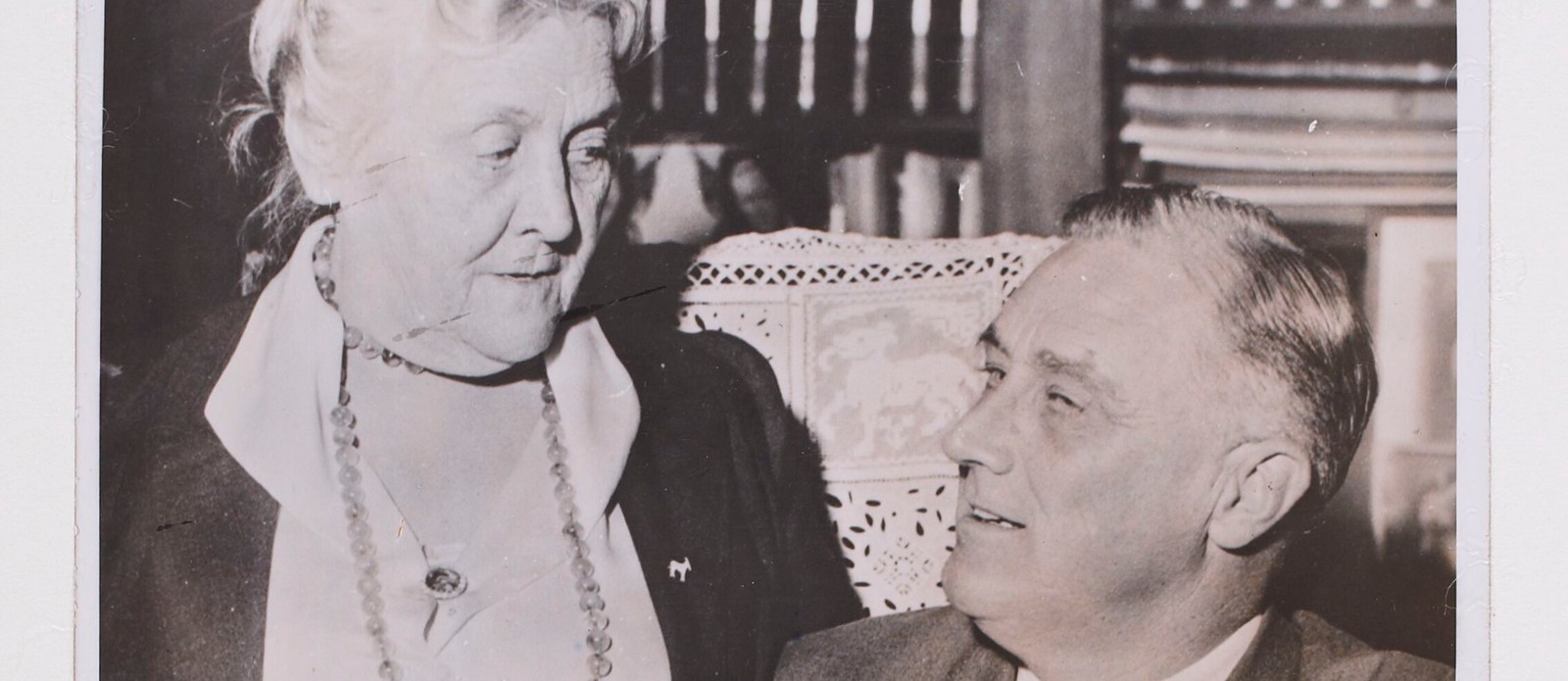
The first 4th of July celebration took place spontaneously in Philadelphia in 1777 and included elements that still persist today, such as bonfires, parades, and fireworks. But not everyone was on board. Founding Father John Adams famously refused all invitations to celebrate on account of disagreeing with the date.

For him, celebrations needed to be held on July 2nd, the day independence was voted on, rather than the 4th, when independence was declared , but July 4th became widely accepted because it was the date that appeared on the distributed copies of the document. In a both poetic and ironic turn of events, Adams — along with Jefferson, who penned the document — died on July 4th, 1826, on the 50th anniversary of the Declaration of Independence.

2
Who came up with the turkey pardon?
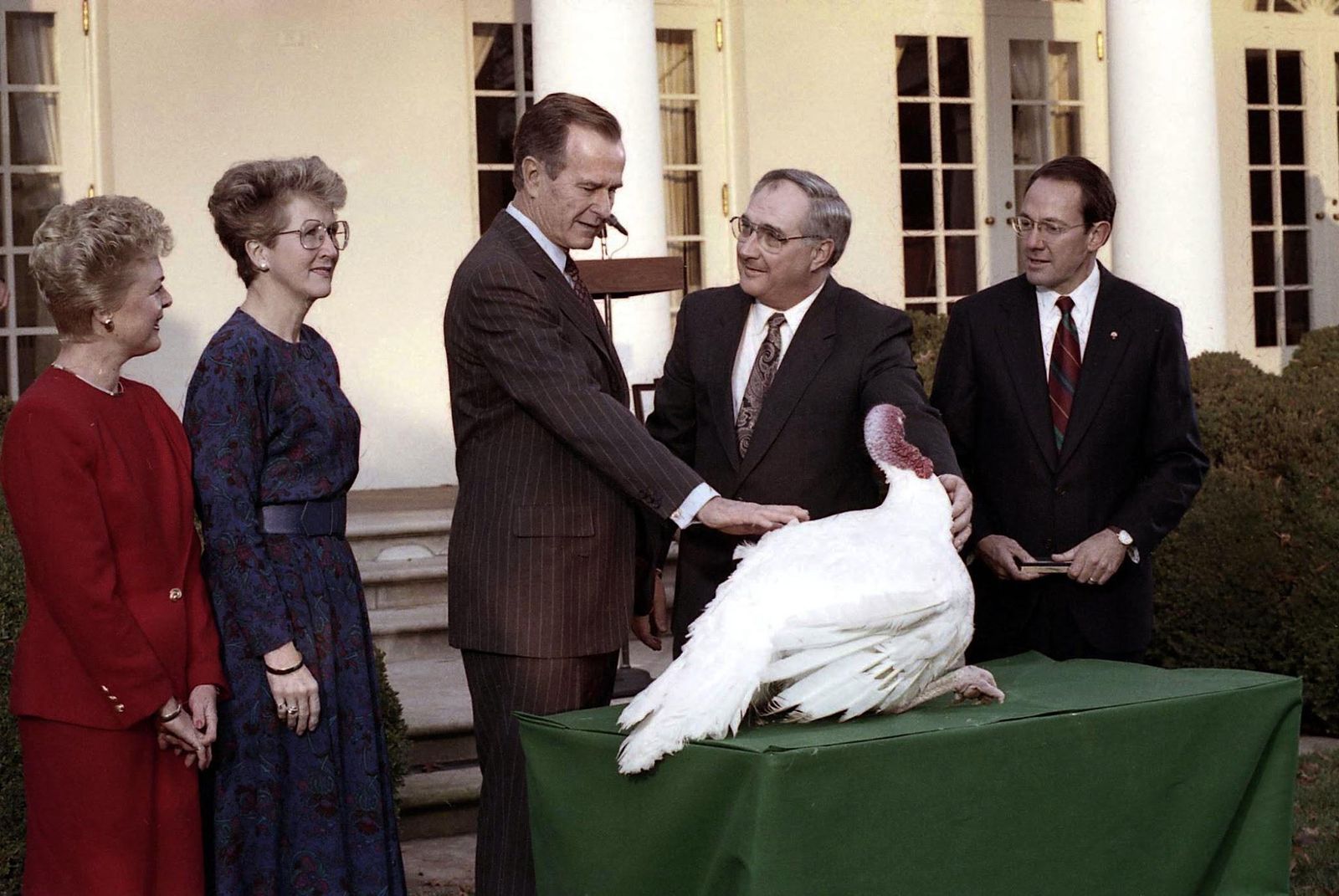
Image: Credit: George H.W. Bush Presidential Library and Museum, Public domain, via Wikimedia Commons

While many correctly assume that the official Presidential turkey pardon on Thanksgiving is an old event, it was not an official tradition until 1989, under the George H.W. Bush administration . But the roots of the tradition are nearly as old as the holiday itself.

In 1863, President Abraham Lincoln’s young son, Tad, asked to adopt the turkey intended for the Christmas dinner and named it Jack. This didn't become a regular tradition, but it set the precedent for President Kennedy to pardon the turkey gifted to the First Family in 1963 , a custom adopted by many of the following presidents, with Reagan being the first to call it the "presidential pardoning".

3
The anti-pumpkin movement
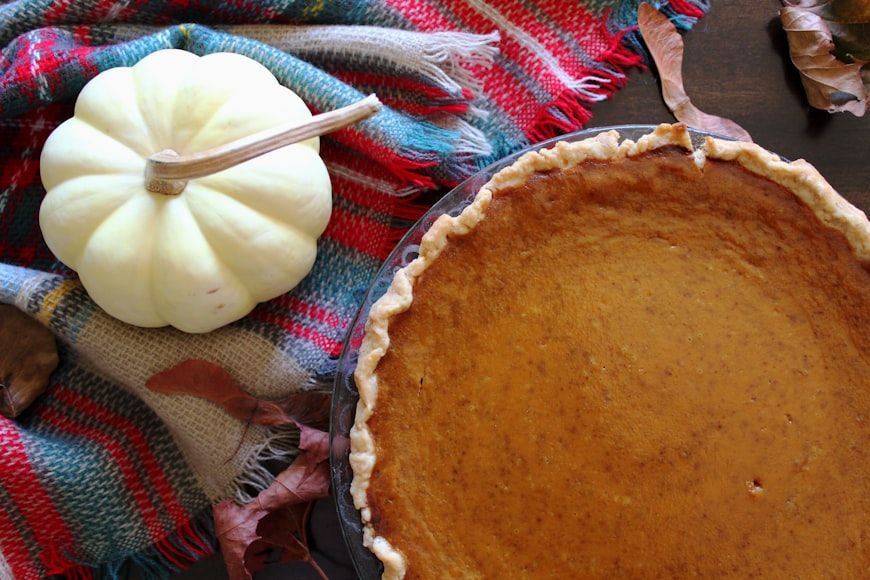
Image: Kelsey Weinkauf

As a crop native to America, pumpkin is mentioned across American history, including the first Thanksgiving. But before pumpkin pie was a symbol of the holiday, it was a New England dessert that divided the nation.

Thanksgiving was instituted as an official holiday by Abraham Lincoln in 1863, with turkey and pumpkin pie quickly becoming the main dishes on the menu. After the Civil War, the Southern states were reluctant to adopt the holiday and its associated pie, claiming it was a "Yankee tradition" and a celebration of Northern culture. As a way of rejecting what they saw as a cultural imposition, many Southern cooks replaced the pumpkin pie with sweet potato pie, which remains much more common in the South.

4
The 22 years without Christmas

Image: Chad Madden

The minute Thanksgiving ends and "All I Want for Christmas Is You" returns to the top of the charts, much of the country gets into the holiday spirit. Surprisingly, just a few centuries ago, and 100 years before the United States was officially formed, Christmas was banned altogether .

During Cromwell’s interregnum (1649-1660), the Puritan-led English Parliament canceled the Christmas festivities of 1644, claiming it was a Catholic festivity of pagan origin. The sentiment echoed across the Atlantic, where the Massachusetts Bay Colony, of Puritan origins, banned Christmas in 1659 and fined those who celebrated or took the day off. The ban remained in place even after the restoration of the Monarchy, and was only lifted in 1681. Ulysses S. Grant declared it a federal holiday in 1870.

5
Mandatory anonymity
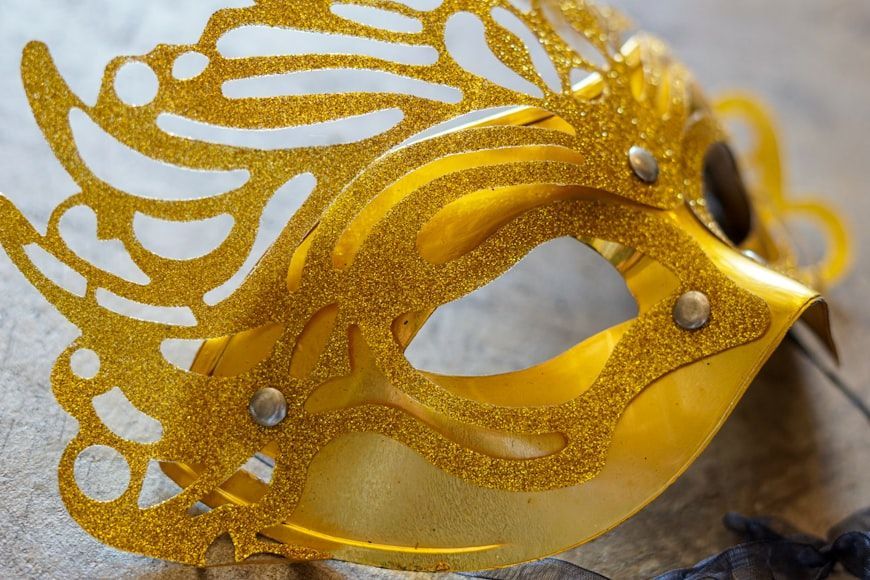
Image: Izzy Park

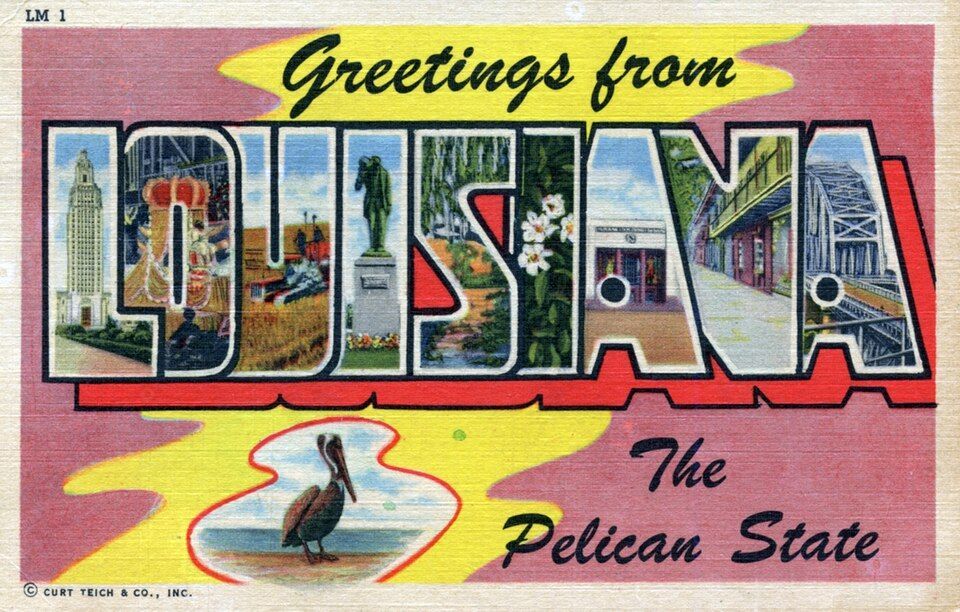
Anyone who ever celebrated Mardi Gras in New Orleans knows that masks are an integral part of the event, with those in the parade and many spectators concealing their identity. What many don’t know is that, per Louisiana law, wearing a mask in public is illegal , a statute passed in the 1920s to counteract the Ku Klux Klan’s influence and its intimidation tactics.

So, what happens during Mardi Gras? In the traditional Carnivals, masks were a way for people of all classes to mingle without endangering their reputation. While it is not a requirement for spectators today, anti-mask laws are suspended during Mardi Gras . However, if you are taking part in the parade, masks are not only allowed but mandatory.

6
A very successful campaign
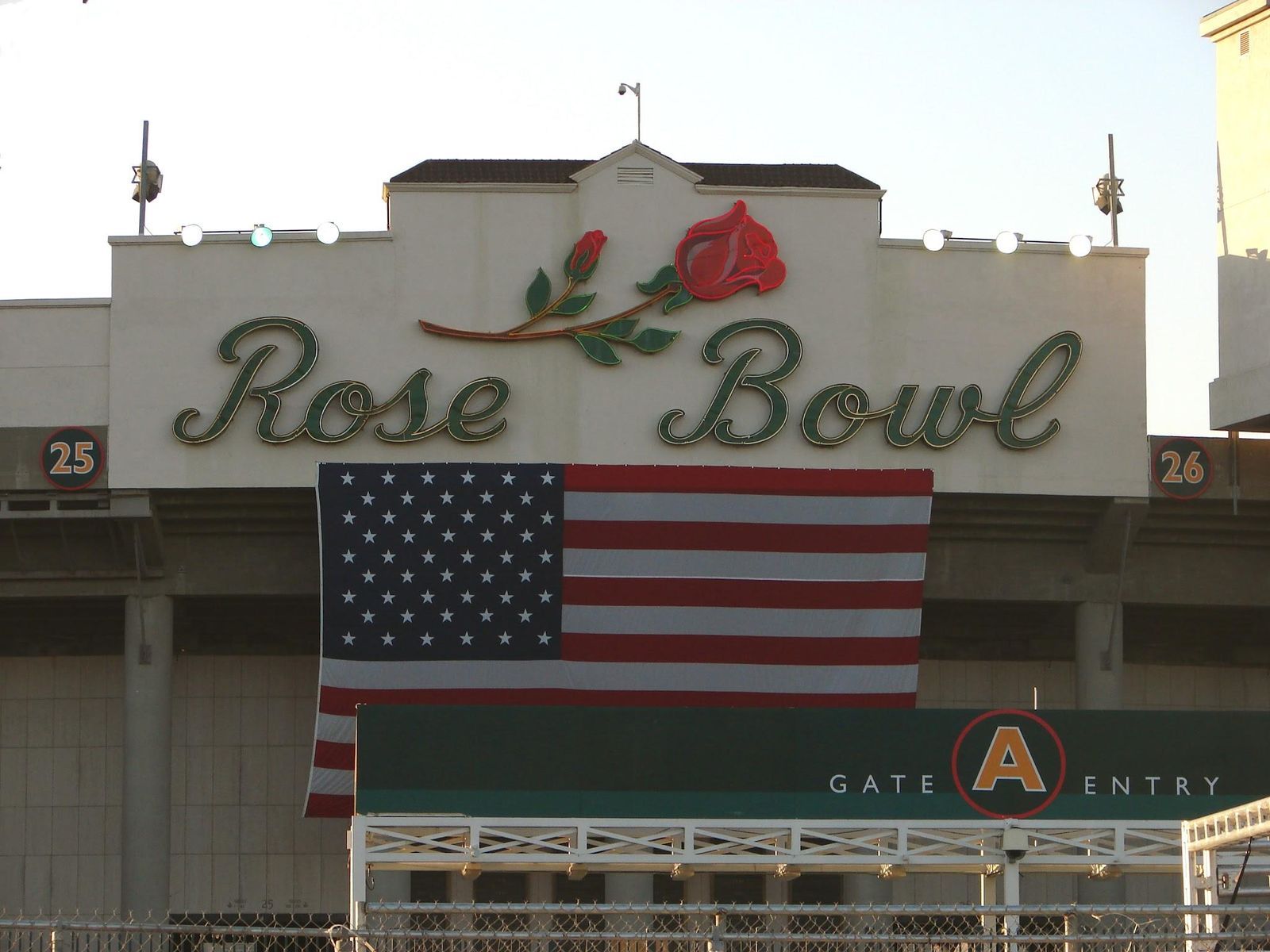
Image: Flickr user Xurble, CC BY 2.0, via Wikimedia Commons

Does your family watch the Rose Bowl Game on January 1st? It’s one of the oldest postseason football games in American history . But, did you know that its origin stems from a tourism campaign?

In the 1890s, the city of Pasadena, California, started celebrating the Tournament of Roses Parade on New Year’s Day as a way to promote the city’s mild weather to tourists on the East Coast . To increase promotion, a postseason college football game was played in 1902, but the result was so lopsided —49-0— that it was not repeated the following years. In 1916, a new game was organized with resounding success, and it has been held annually since then.

7
The original Black Friday

Image: Artem Beliaikin

B efore being synonymous with big sales and discounts, Black Friday was synonymous with crisis . The first recorded use of ‘Black Friday’ dates back to 1869, when the stock market suffered a devastating crash due to financial speculation. The economic effects of the crash were so severe that the name connoted calamity and misery.

How did it become associated with the day after Thanksgiving? In the 1950s, Philadelphia received hordes of tourists who came to shop and attend the annual Army-Navy football game the day after Thanksgiving, creating such chaos that the police forces dubbed it the "Black Friday". To counteract the negativity, retailers adopted the name in association with massive discounts.

8
From Decoration to Memorial Day
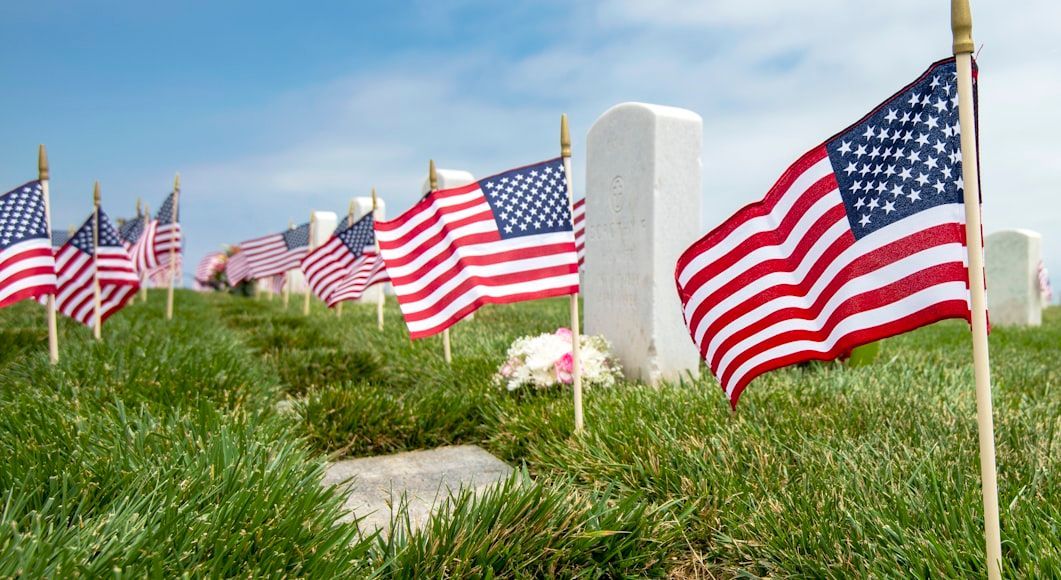
Image: Greg Bulla

The last Monday of May, America remembers and honors those who laid down their lives in defense of the country. Friends and relatives of fallen service members gather to lay wreaths and flags in cemeteries ; the Memorial Day holiday also serves as the unofficial starting point for the summer season. But where does this tradition come from?

It wasn’t always Memorial Day. Originally called ‘Decoration Day’, the tradition of adorning graves started after the Civil War , and it was first celebrated on a national scale in 1868. After World War I, the tradition was expanded to include all American soldiers fallen during a military conflict.

9
Hedgehog Day
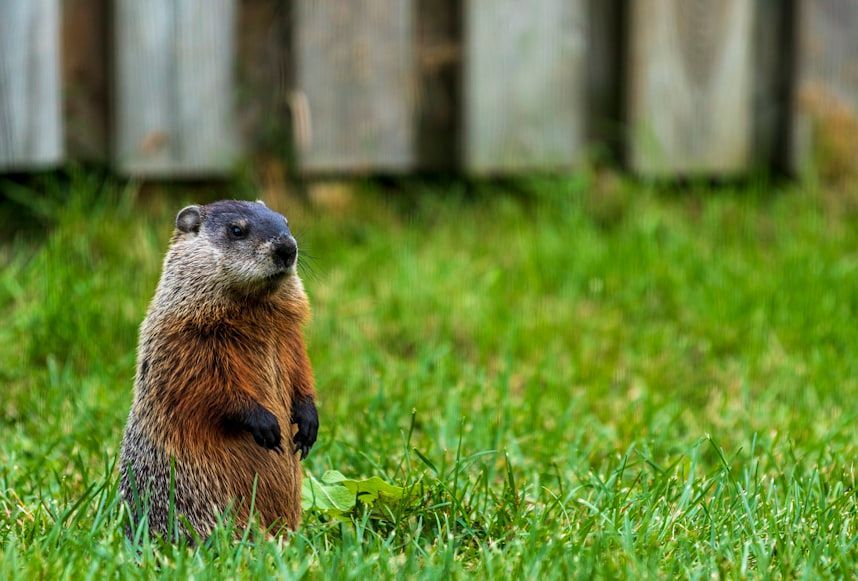
Image: Camerauthor Photos

You might just know about it because of the popular 1993 Bill Murray movie, but Groundhog Day is real, and it’s celebrated every February 2nd. According to tradition, if a groundhog emerging from its burrow sees its shadow, it will go back to hibernate , and there will be six more weeks of winter. If not, spring will come early. But did you know that the tradition usually observed the behavior of a different animal?

Though Groundhog Day is celebrated across America —and even Canada— it was initially a Pennsylvania tradition, brought by German and Dutch immigrants. Back in Europe, they observed the behavior of hedgehogs and badgers to predict the length of winter, but these were not native to America. Looking for a similar local animal, they turned to the groundhog.

10
The 6-month difference
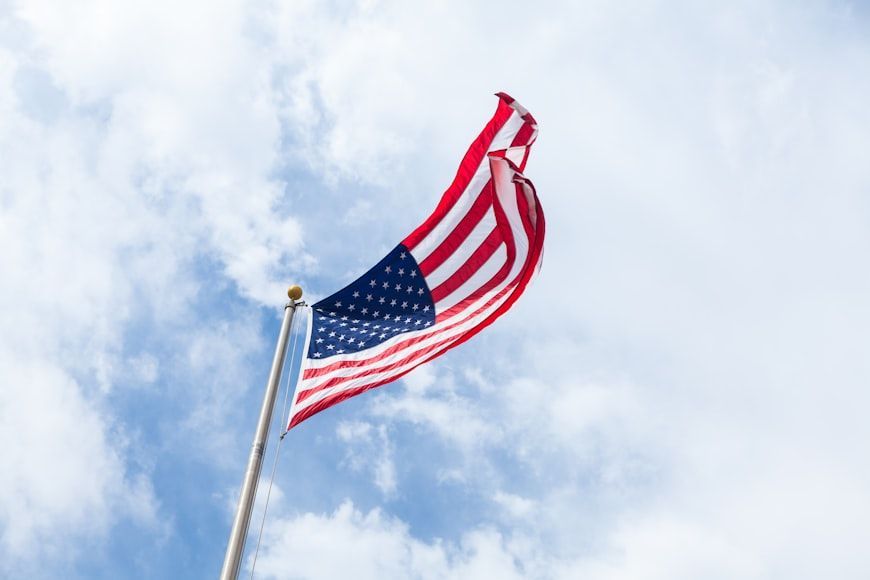
Image: Brandon Day

We can name a select few holidays that are celebrated internationally, such as New Year’s Day or Christmas. But what about Labor Day? While nearly 160 countries across the globe celebrate it on May 1st, the U.S. celebrates it six months later , on the first Monday in September.

Labor Day (also known as International Workers’ Day) started as a commemoration of the 1886 Haymarket Affair in Chicago, where a protest for workers’ rights ended with several casualties. As the protest was linked to socialist labor movements, the U.S. government was wary of celebrating workers on that date . As a compromise with labor activists, President Grover Cleveland instituted Labor Day as a federal holiday in 1894, but deliberately chose a date as far away as possible.
Geography Geography 6 min read

Territorial anomalies

There's a country within the US that was created to avoid double taxation

Image: Pin Adventure Map

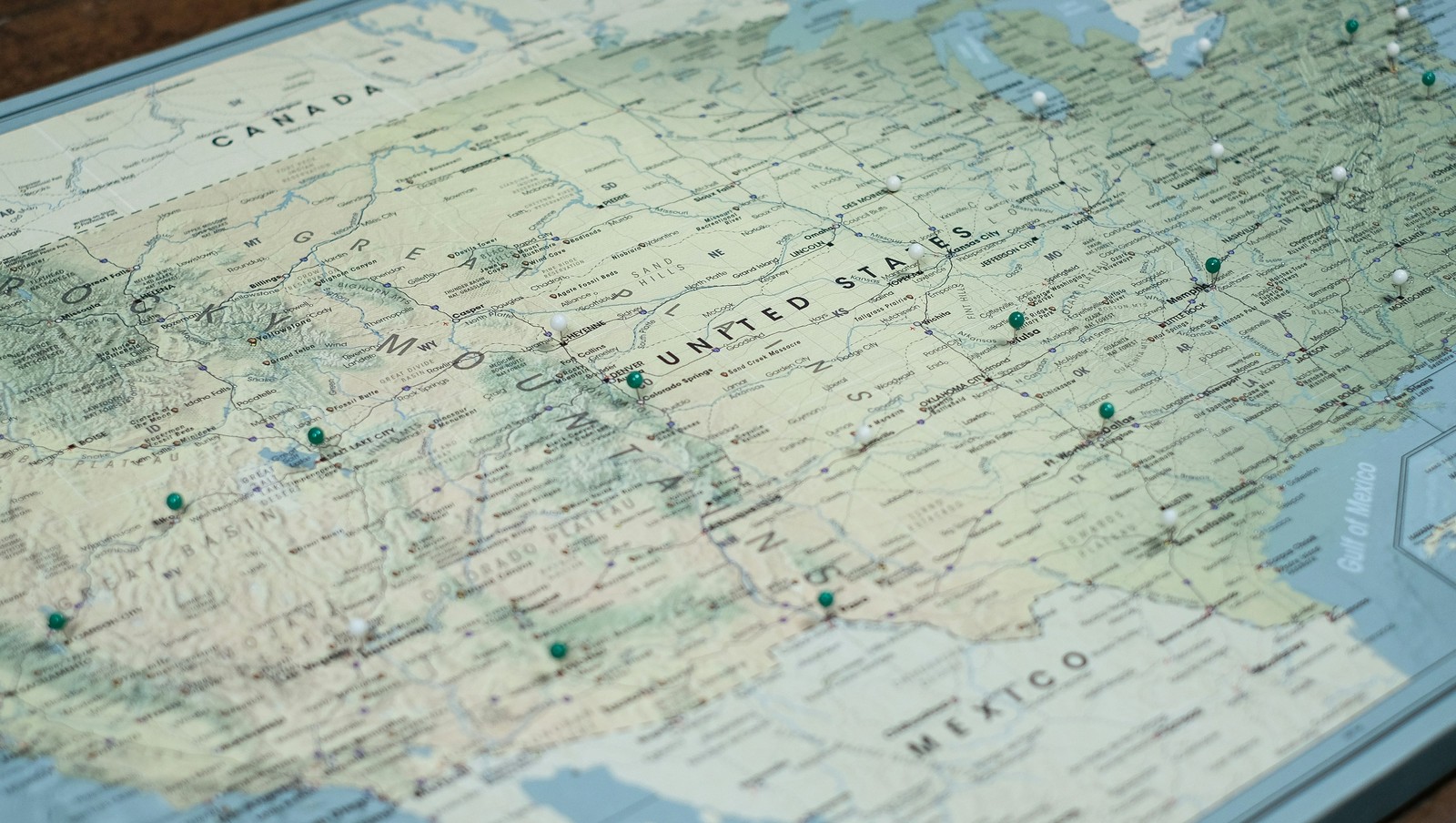
Ever thought about how the borders in our country were defined ? States that almost became official, U.S. points that are only accessible through Canada's borders, territorial feuds over taxes, and more have constructed the limits of the country we know today. Here are 10 territorial quirks you probably never knew of.

1
Point Roberts, WA: The 49th parallel accident

Image: United States Geological Survey, Public domain, via Wikimedia Commons

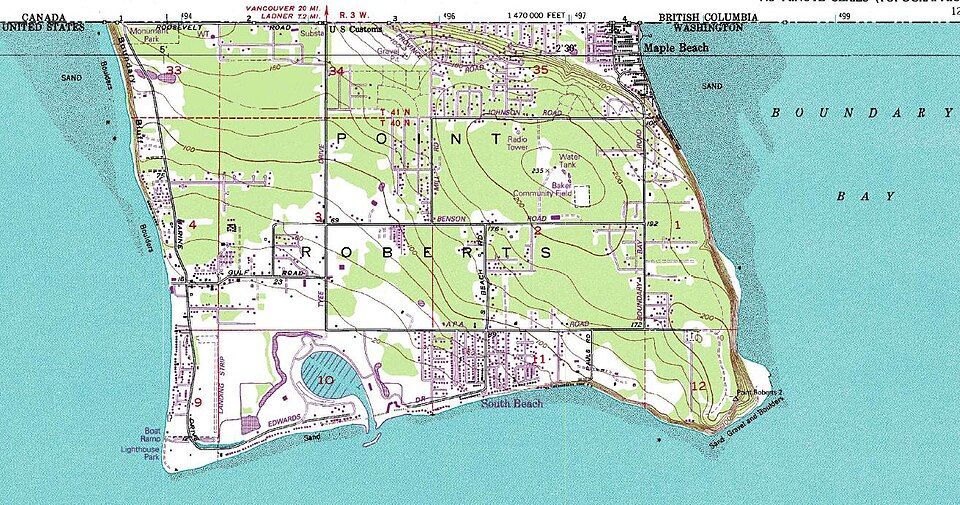
Imagine if you had to cross two borders just to get to the market for a gallon of milk. That’s actually a reality for residents of Point Roberts, Washington. That’s because, following the Anglo-American Convention of 1818, the 49th parallel divided Canada and the U.S. In 1846, the line was extended westward and then officially recognized by the International Boundary Commission in 1925.

However, a tiny tip of the Tsawwassen Peninsula poked out just below that line. Since then, the locals have lived in a boundary quirk. To get to the rest of Washington State by land, they must drive through Canada, show their passports, and do it all over again on the way back.

2
Statue of Liberty: Common misconception

Image: Mohamed Osama

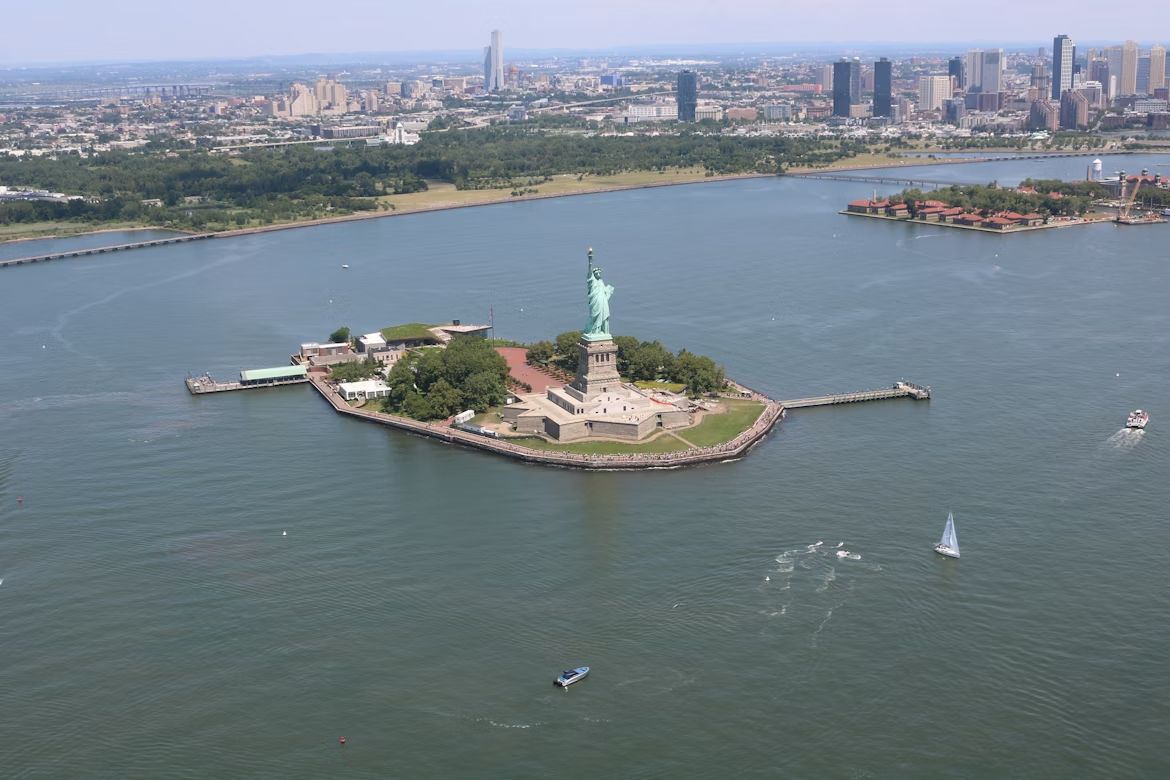
If you want to start a friendly argument at a dinner party, ask whether the Statue of Liberty lives in New York or New Jersey. The funny thing is, both answers are technically right . While the statue physically sits in the waters of the Garden State, Liberty Island is legally an exclave of New York. This dates back to a 1664 land grant by the Duke of York in a document so vague and confusing that it took a 1834 Compact between the two states to settle the deal. New Jersey gets the water and the submerged lands, but New York keeps the monument.

However, the Federal Government actually manages the site through the National Park Service (NPS), providing security and maintenance.

3
The State of Franklin: Failed 14th state

Image: Bennett1203, CC BY-SA 4.0, via Wikimedia Commons

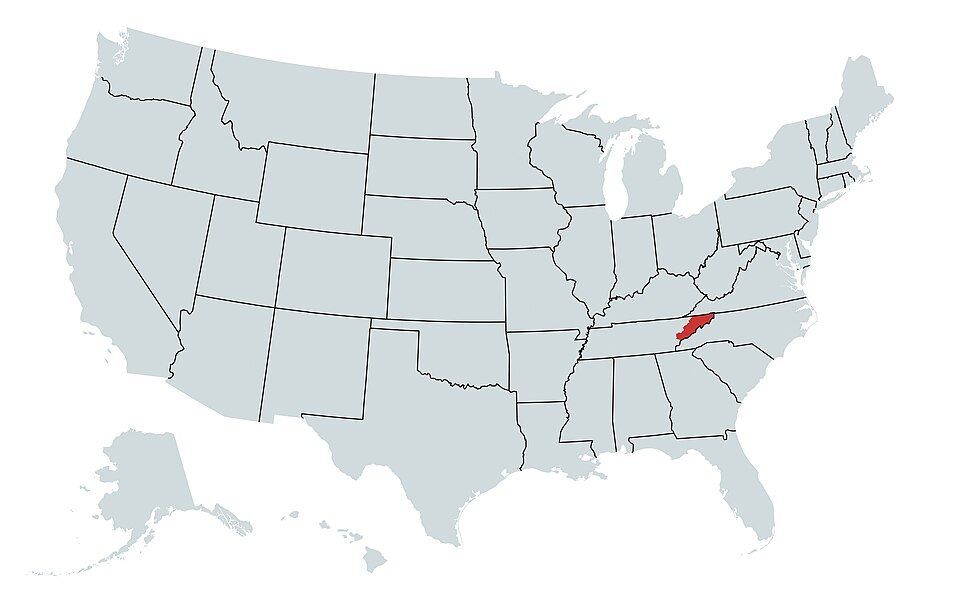
In 1784, three counties in North Carolina felt neglected by their government and decided to strike out on their own . They even elected a governor, John Sevier, and printed their own money. They came just two votes short of being recognized by Congress as a formal state.

Eventually, things got heated, and North Carolina sent troops, leading to a small civil war between the locals. By 1789, the dream of Franklin was buried, and the territory became part of Tennessee.

4
Kentucky Bend

Image: Brian Stansberry, CC BY 4.0, via Wikimedia Commons

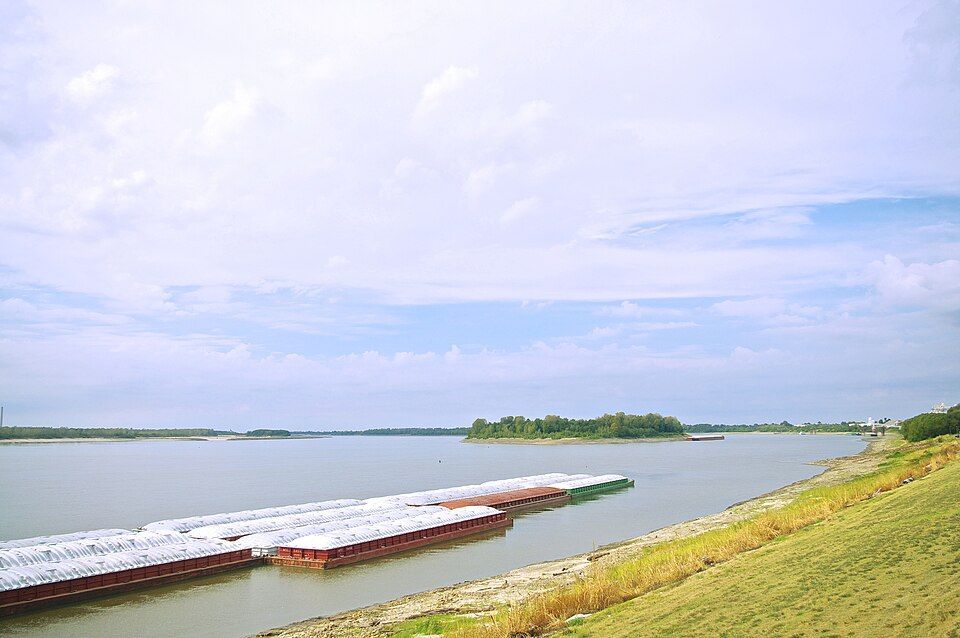
If you look closely at a map, there’s a piece of Kentucky that looks like it doesn’t belong. That’s the Kentucky Bend, also called the New Madrid Bend, a tiny peninsula in Fulton County that is almost completely separated from the rest of the Bluegrass State . The strange situation was the consequence of the massive series of earthquakes that took place in that area between 1811 and 1812, which were so violent they famously caused the Mississippi River to flow backwards for several hours. When the dust settled, the river had carved a new path that looped around this small patch of land, surrounded by Missouri and Tennessee instead of Kentucky. The 9 residents living there today go through Tennessee just to get to their home state.

5
The State of Deseret: The empire that almost was

Image: Carl Radefeld (cartographer); Joseph Meyer (publisher), Public domain, via Wikimedia Commons

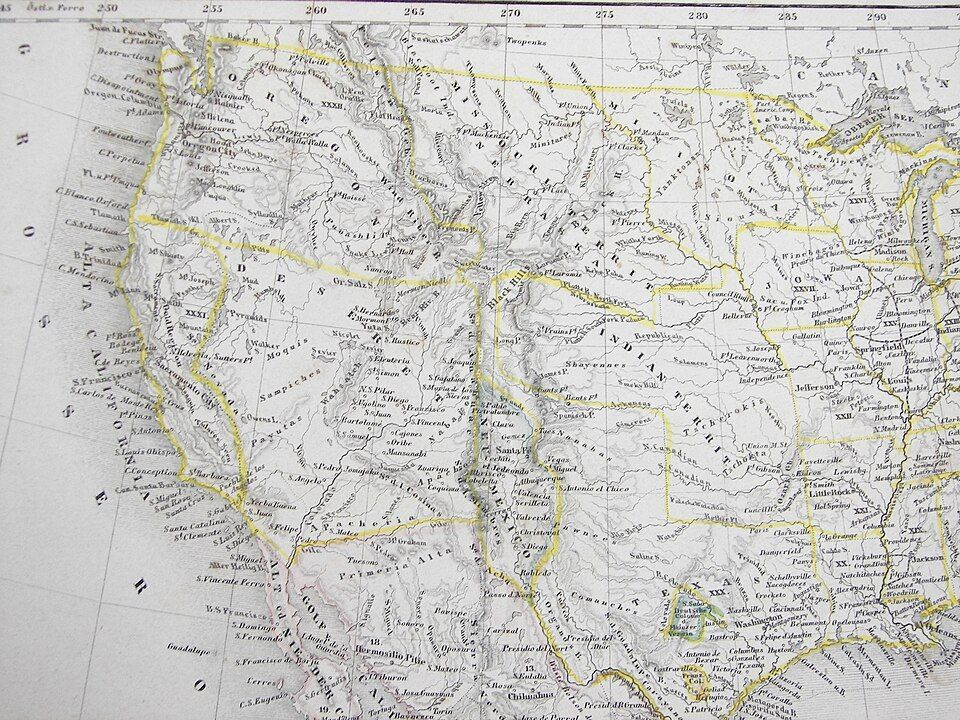
Imagine a state so big it makes Texas look tiny. That almost happened back in 1894, when Mormon pioneers proposed the State of Deseret. The territory comprised what we now know as Utah, most of Nevada, parts of Arizona and Colorado, and a massive chunk of the California coast, including San Diego.

Had it been formalized, it would have been a powerhouse with its own seaport and total control over the West. However, Washington, D.C. wasn’t so keen on one group having that much territory and power, so they whittled it down, and we ended up having the states we know today.

6
The lawless "No Man's Land"

Image: Steve Shook from Moscow, Idaho, USA, CC BY 2.0, via Wikimedia Commons

Have you ever wondered what happens when two governments simply give up on a piece of land? Between 1806 and 1821, there was a strip of land in what is now western Louisiana that was, literally, No Man’s Land. Neither the U.S. nor Spain, which owned part of the territory, could agree on the border, so they declared it "Neutral Ground" to avoid armed conflicts . The plan backfired as, with no laws to contain it, it quickly became a favorite for the outlaws in the West —meaning deserters and bandits hiding there were legally untouchable. The conflict was resolved by the 1819 Adams-Onis Treaty, which officially set the Sabine River as the legal boundary.

7
The Republic of the Indian Stream

Image: Jon Platek, CC BY-SA 3.0, via Wikimedia Commons

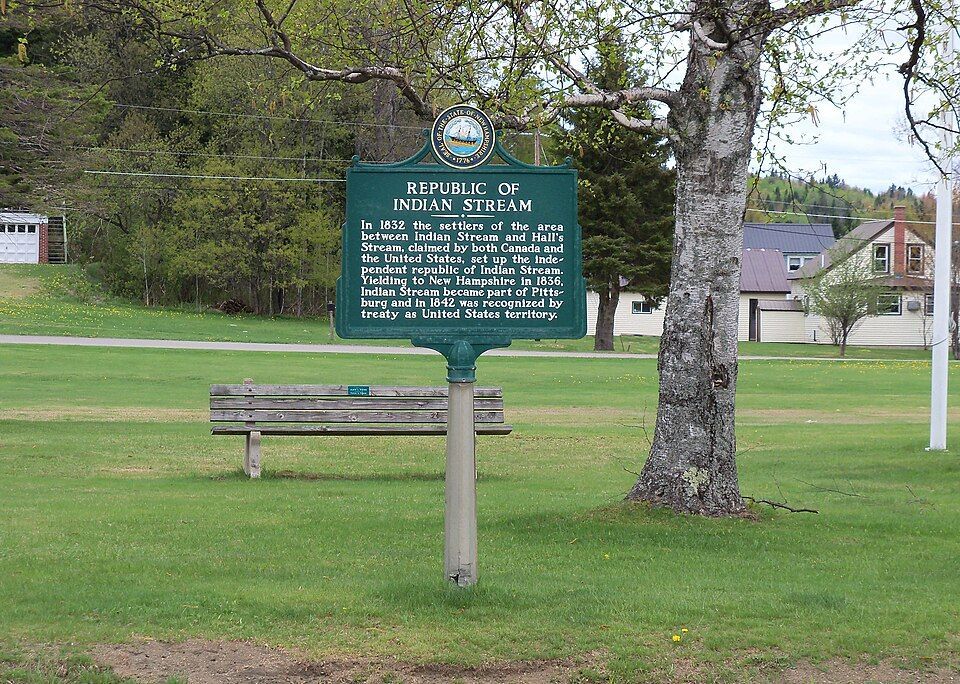
In the early 1830s, people living in a small area between New Hampshire and Quebec were fed up, and in this case, taxes were the problem. Both Canada and the US were trying to collect taxes, and nobody likes being double-billed . In 1832, the residents essentially said "neither of them can tax us" and formed their own country called the Republic of the Indian Stream. They had their own constitution and Capitol for four years, until 1836, when the militia marched on the disputed territory to reclaim the land. It wasn’t until 1842, when the land dispute and the double taxation were definitively resolved by the Webster–Ashburton Treaty, which assigned the land to New Hampshire.

8
The Northwest Angle: Mapping mistake of 1783

Image: Lorie Shaull, CC BY-SA 4.0, via Wikimedia Commons

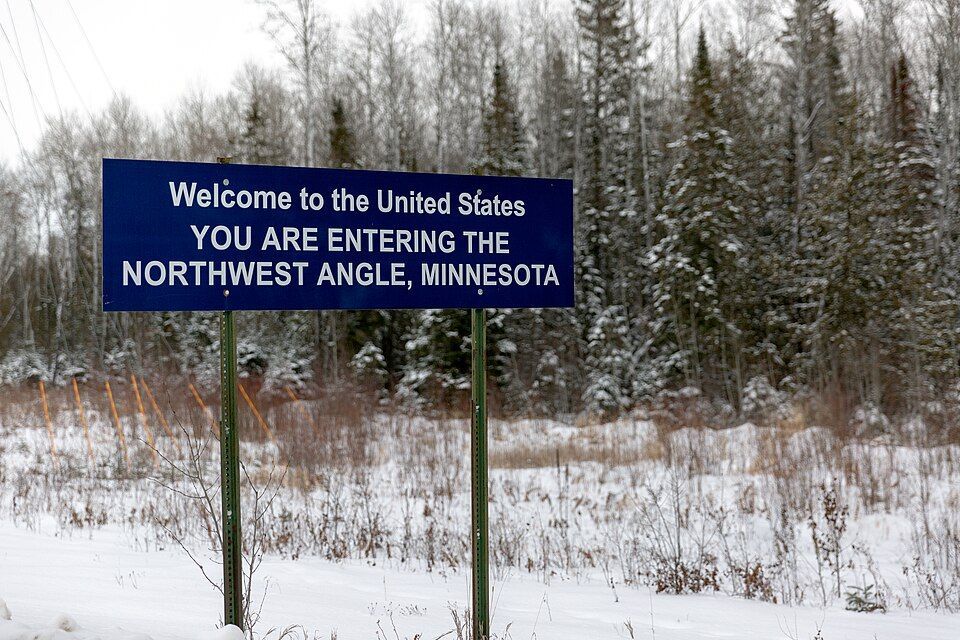
When the Treaty of Paris was signed in 1783 to end the Revolutionary War, the mapmakers used a chart that was flat-out wrong. They thought the Mississippi River started much further north than it actually did. Because of that mistake, a piece of Minnesota got cut off from the rest of the country . To this day, the "Northwest Angle" is the only place in the lower 48 states north of the 49th parallel. Much like Point Roberts, you have to cross a massive lake or drive through Canada just to visit it.

9
The District of Columbia’s "lost" corner

Image: Tim Mossholder

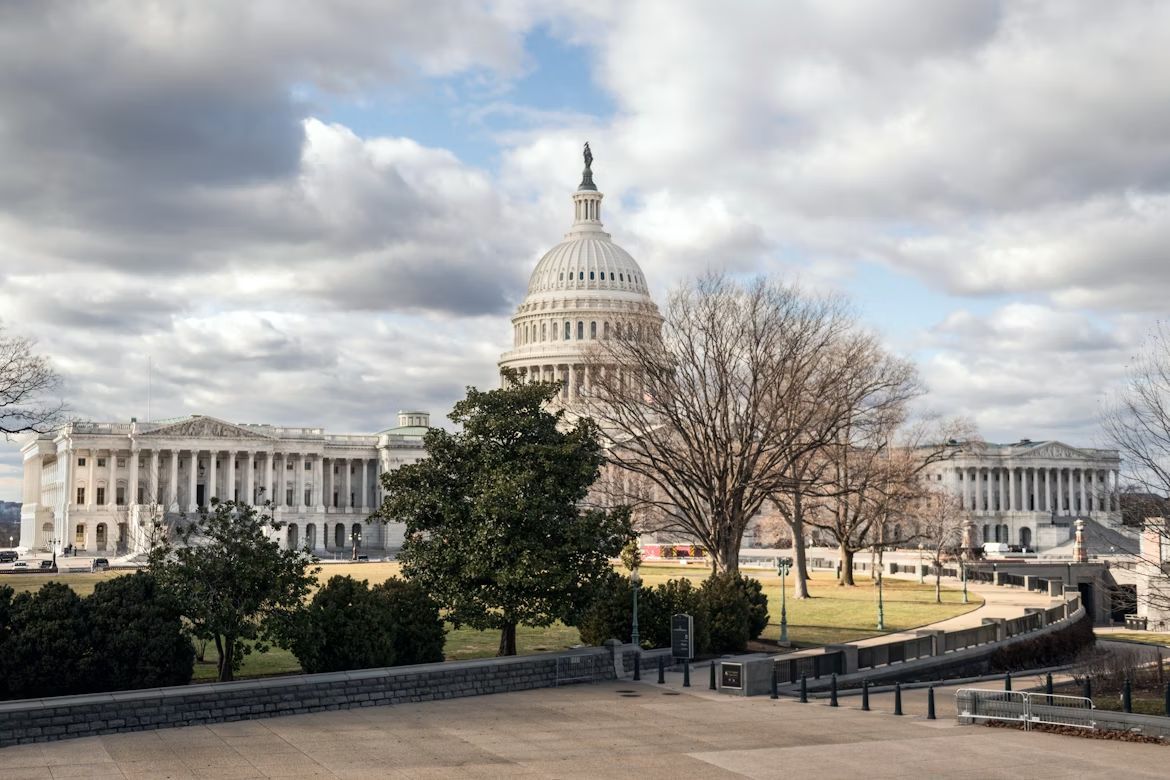
If you look at a map of D.C., you’ll notice it’s missing a chunk; it’s not a perfect square as it was originally intended. Originally, the capital was a perfect ten-mile square diamond , taking land from both Maryland and Virginia. But by 1846, things got tense. Residents in the Virginia portion, which included Alexandria and Arlington, were worried the federal government would abolish slavery in the District, which was the backbone of their economy. They successfully petitioned to have Virginia "take back" that portion of the land and subsequently changed the shape of the national capital forever.

10
UN Headquarters: International territory

Image: LPulecio-WMF, CC BY 4.0, via Wikimedia Commons

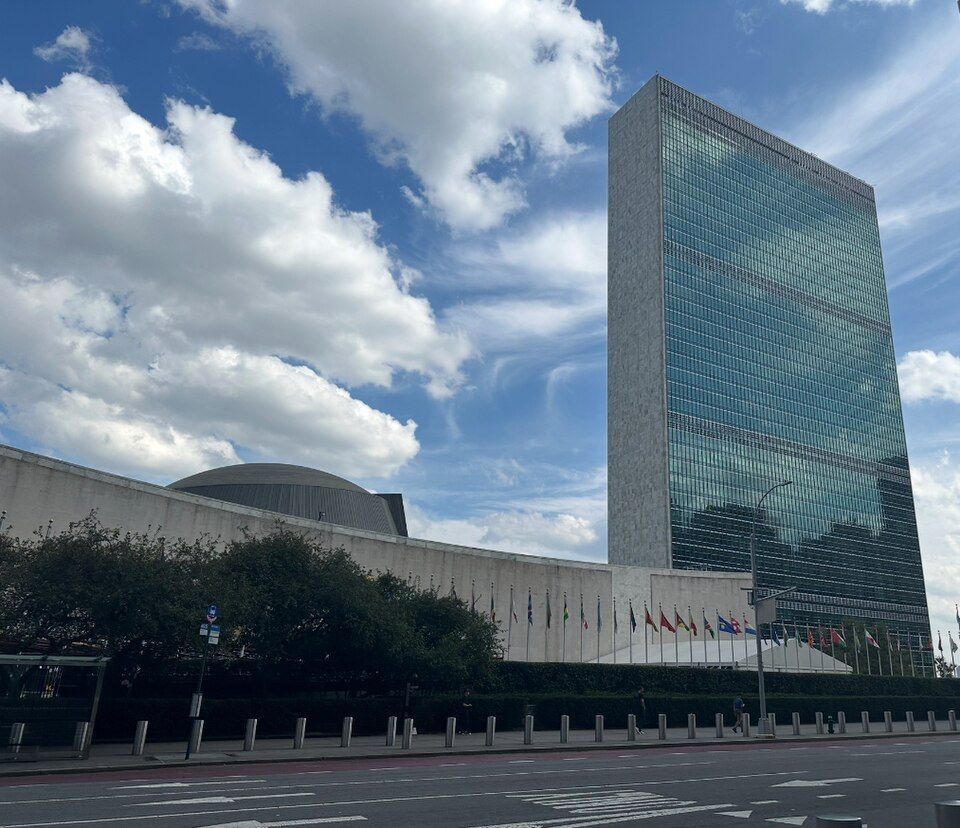
If you want to feel international, go to the United Nations Headquarters on the East River in midtown Manhattan, New York. Once you cross that gate onto the 18-acre site, you are technically leaving the United States. You don’t need to show your passport, but that’s international territory, which means it has its own laws , its own security force, and even its own postal service. It is a legal hole in the middle of New York City.

History History 4 min read

Weird America

Prepare to be shocked: these 10 American mysteries remain unsolved

Image: Susan Q Yin

Everyone loves a good mystery, and American history is teaming with fascinating examples. From vanished aviators to secret codes and missing treasures, these real stories have puzzled experts for decades. Some are dark, others simply strange, but all remain open chapters in our past. Take a look at the following 10 unsolved mysteries. Which ones did you already know?

1
The disappearance of Amelia Earhart (1937)

Image: Job Vermeulen

The first entry on our list is dedicated to a world-renowned flight pioneer, Amelia Earhart, who vanished while attempting to become the first woman to fly around the globe , leaving behind only fragments of her plane and endless speculation. Radio failure, poor visibility, and fuel issues are speculated to be contributing factors to her disappearance.

Even with modern technology and repeated searches, no one has ever found definitive proof of what happened to Amelia or her aircraft.

2
The D.B. Cooper hijacking (1971)

Image: Christine Trefalt

In 1971, Dan Cooper, a seemingly quiet man, boarded a plane in Portland, Oregon, which he promptly hijacked when the aircraft was in the air. He demanded $200,000 over the radio.

The plane landed in Seattle, where authorities met his demands. Cooper released all 36 passengers in exchange for the cash and parachutes. He then ordered the remaining crew to fly toward Mexico City at a low altitude and slow speed. Somewhere over southwest Washington, he lowered the aircraft's aft stairs and jumped into the freezing night, never to be seen again.

3
The disappearance of Jimmy Hoffa (1975)

Image: Pavel Inozemtsev

The powerful union leader left a Detroit restaurant in 1975 and simply vanished . Witnesses last saw him standing by his car in the restaurant’s parking lot, and investigators believe he was coaxed into a car by people he recognized, thinking the meeting location had changed. He was never seen again. Searches in fields, lakes, and construction sites turned up nothing. To this day, it remains one of the most famous unsolved mysteries in American history.

Rumors range from mob connections to government cover-ups, but none have been proven. Ever since then, Hoffa’s name has become shorthand for anything that disappears without a trace.

4
The Yuba County Five (1978)

Image: Sebastian Unrau

In what came to be known as "America’s Dyatlov Pass", five friends vanished after attending a basketball game in the town of Chico, California. Months later, the bodies of four members of the group were found in the mountains under mysterious conditions .

The remaining member of the original party was never located, and their strange route into deep snow remains unexplained.

5
The Sodder Children (1975)

Image: Marita Kavelashvili

A fire destroyed the Sodder family home in West Virginia, but five children were never found among the remains of the house. Because of physical inconsistencies at the scene and strange sightings afterward, the family always believed they survived.

Over the years, strange sightings and letters fueled hope and confusion alike, but no real evidence has ever been found. Because of these clues, the Sodders never held a funeral and instead famously erected a billboard on Route 16, offering a reward for information and keeping the case in the public eye for decades.

6
The Springfield Three (1992)

Image: David Holgerson

On a warm summer night in 1992, Sherrill Sherrill Levitt, her daughter Suzie, and Suzie's friend Stacy vanished from their home in Springfield, Missouri, leaving behind their cars, purses, and even the family dog .

Friends arriving the next morning found the house empty but unlocked. Despite thousands of leads, no evidence or remains have surfaced. The case remains one of the most talked-about disappearances in small-town America to this day.

7
The Gardner Museum Heist (1990)

Image: Dannie Jing

Back in 1990, two men dressed as police officers entered Boston’s Isabella Stewart Gardner Museum and stole 13 works of art worth over $500 million .

No piece has ever been recovered. Empty frames still hang on the museum walls, a quiet tribute to one of history’s most expensive thefts.

8
The Max Headroom broadcast hijack (1987)

Image: Rubenz Arizta

1980s television viewers might remember Max Headroom as a somewhat clumsy computer AI TV personality and ad spokesperson. In 1987, Chicago viewers were startled when a strange figure wearing a Max Headroom mask interrupted TV broadcasts with odd messages .

The stunt lasted only seconds, but no one was ever caught or identified. It remains one of the strangest unsolved moments in television history.

9
The Great Lakes ghost ships

Image: Kyle Larivee

Over the years, s everal ships have vanished or been found adrift on the Great Lakes , their crews gone without explanation. Cold weather, sudden storms, and superstition all play roles in the stories, but some cases defy logic. The vast inland seas are simply too big to be accessible with the current technology.

Among the most notable unsolved cases, we can mention Le Griffon, a ship that vanished during her maiden voyage in 1679, the SS Banockburn, known as the "Flying Dutchman of Lake Superior," disappeared during a storm in 1902, or the SS Chicora, a luxury steamer lost in a violent winter gale while carrying a cargo of flour, in 1895.

10
The Dulce Base Mystery

Image: Pict4life

Beginning in the 1970s, a constant array of strange lights, unmarked aircraft, and talk of secret tunnels near the town of Dulce has fueled decades of conspiracy theories in this otherwise quiet area to this day.

While skeptics blame radar tests or imagination, locals still report odd sightings in the desert skies.

Explore more American facts

Choose your favorite category!

General
General

As American as apple pie—the very best America has to offer!

Culture
Culture

Delve into the astounding richness of American lore.

Geography
Geography

Hop in and explore vast and diverse American landscapes.

History
History

Discover the key moments that shaped the United States.