Culture Culture 3 min read

Memorial facts

Why does the Lincoln Memorial have 87 steps? The real reason
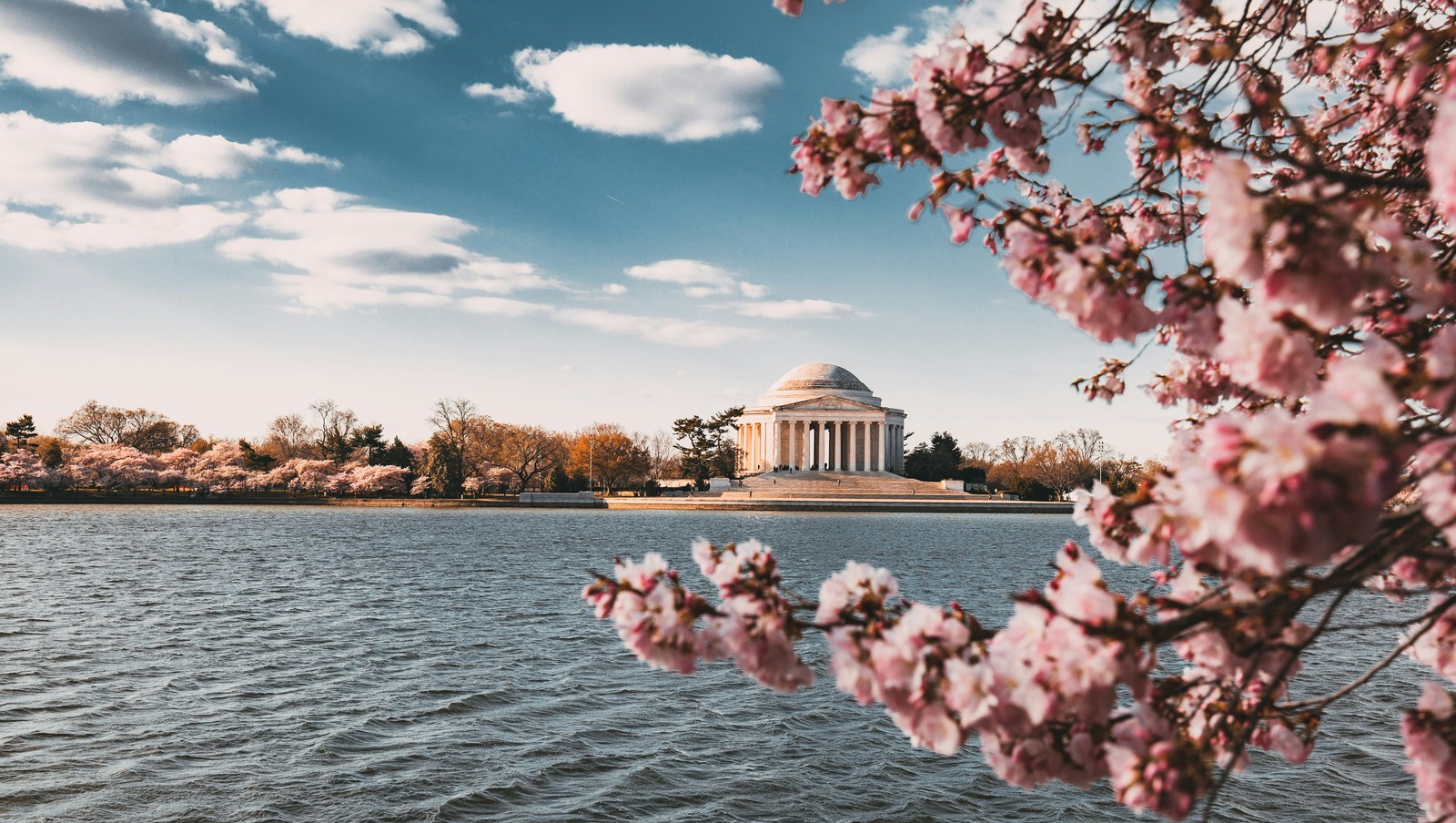
Image: Kyaw Tun

Washington, DC, is known for its many landmarks, but the Jefferson and Lincoln memorials stand out, drawing millions of visitors every year. And even though they’ve been part of the city for decades, there’s still a lot that most people don’t know about them. If you want to discover 10 facts you probably never learned in school, this article is for you!

1
87 steps
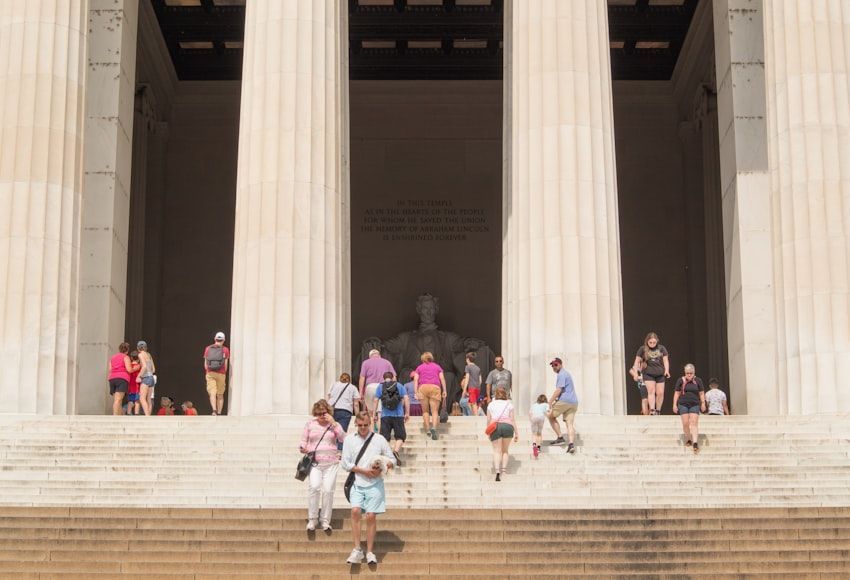
Image: Ryan Stone

In case you haven't counted them, there are exactly 87 steps leading up to the Lincoln Memorial. But why does that number matter? Although the National Park Service says it wasn’t intentional, many people connect it to the opening line of Lincoln’s Gettysburg Address: "Four score and seven years ago..." Coincidentally, 87 is also the number of years between the moment he delivered the speech and the monument’s dedication. Pretty incredible, right?

2
Hidden underground chamber

Image: Kdwk Leung

The Lincoln Memorial is more than what you see at first glance; there’s an entire hidden world beneath it. That’s right! Underground lies a large chamber built as part of the monument’s foundation. Giant concrete columns support the structure above, and there are also narrow corridors where workers once walked. You can even find graffiti and markings left by those builders in the early 1900s. Although the public can’t visit this space yet, the National Park Service has said it hopes to open it in the future.

3
A pyramid?

Image: Andrew Backhouse

Can you imagine a giant pyramid rising over the landscape of Washington, DC? It’s hard to picture, but it could have happened. Among the many design proposals for the Lincoln Memorial were some extravagant ideas, including a huge pyramid. In the end, the Greek temple design we know today won out.

4
The typo
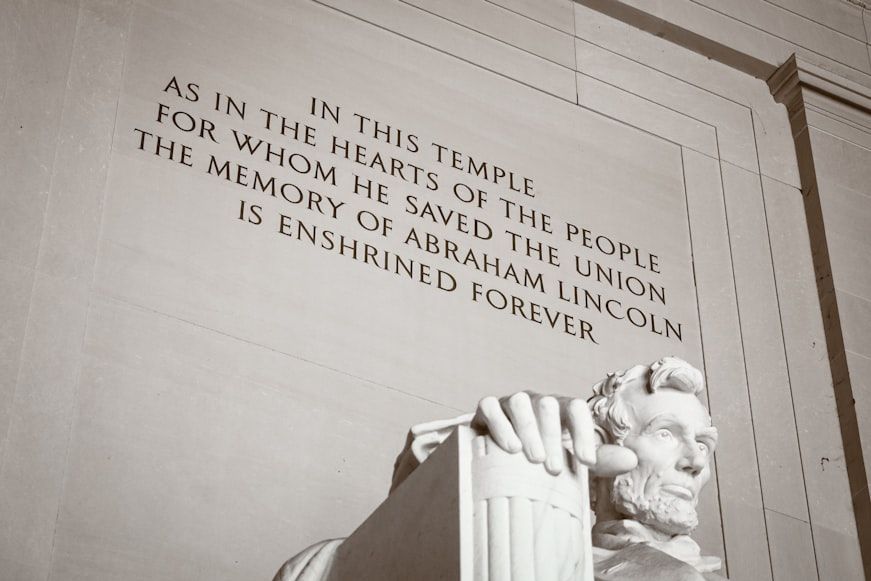
Image: Andre Schofield

To err is human, and the Lincoln Memorial is no exception. As you may know, Lincoln’s Gettysburg Address and his Second Inaugural Address are engraved on the interior walls. But the carver made a small mistake when transcribing the Second Inaugural Address, writing "euture" instead of "future" in the line "high hopes for the future." Although the error was corrected, people say that if you look closely enough, you can still see it.

5
Lincoln's friends made it happen
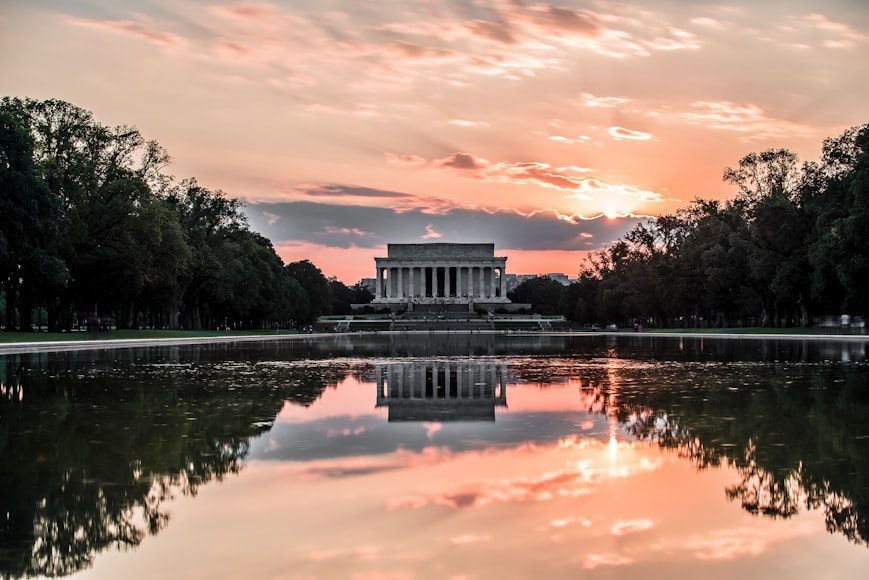
Image: Casey Horner

For years, several proposals to build a memorial to Abraham Lincoln failed in Congress. Fortunately, Senator Shelby Collum and Speaker of the House Joseph Cannon joined forces to get the final bill approved. These men had known Lincoln and felt that a memorial to Honest Abe was both fitting and necessary.

6
Who is Thomas Jefferson looking at?
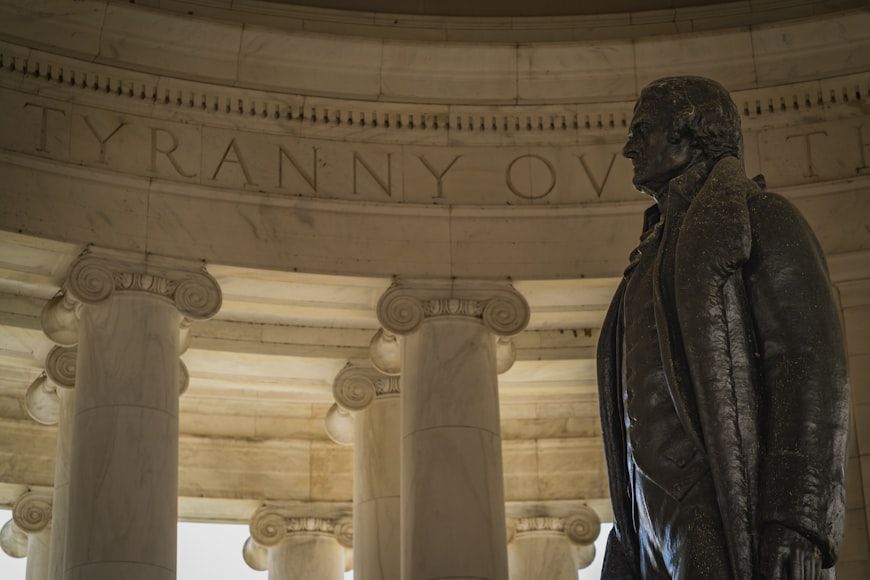
Image: J. Amill Santiago

It’s well known that the statue of Thomas Jefferson inside his memorial faces north toward the White House and the Washington Monument. But there’s another interesting interpretation. Also to the north is the statue of Alexander Hamilton on the south side of the US Treasury Building. Since Jefferson and Hamilton were once colleagues who later became political rivals, some like to imagine that Jefferson’s bronze likeness is keeping a cautious, almost "watchful eye" on Hamilton.

7
FDR specifically requested the Jefferson Memorial
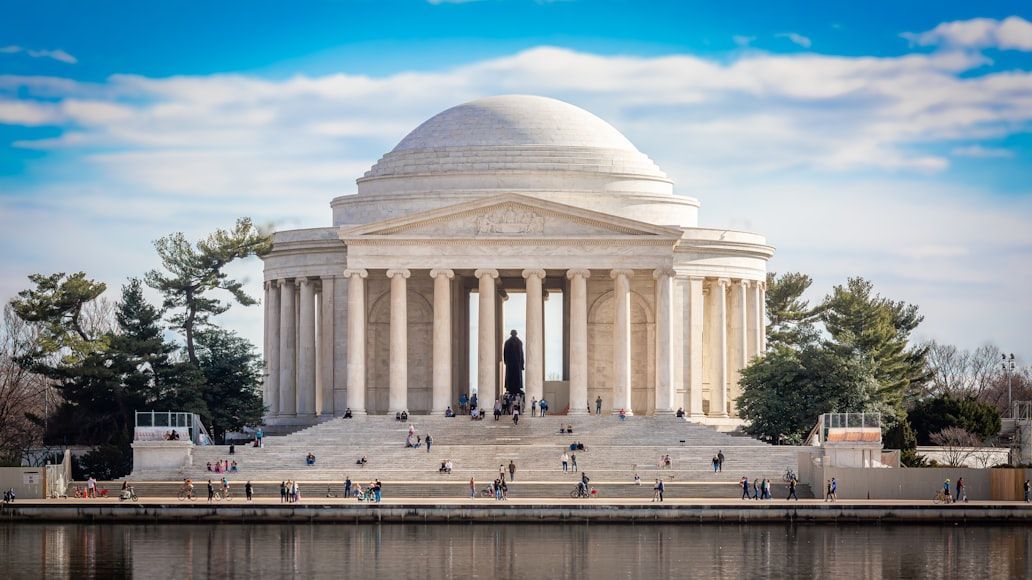
Image: Rafik

Since the early 20th century, there had been talk of building a memorial to honor Thomas Jefferson. But nothing moved forward until Franklin D. Roosevelt took office in 1933. An admirer of Jefferson, FDR pushed tirelessly for the project until Congress approved it. But he was not only the one who requested it; he even delivered the dedication speech when the memorial was completed in 1943.

8
10,000 pounds
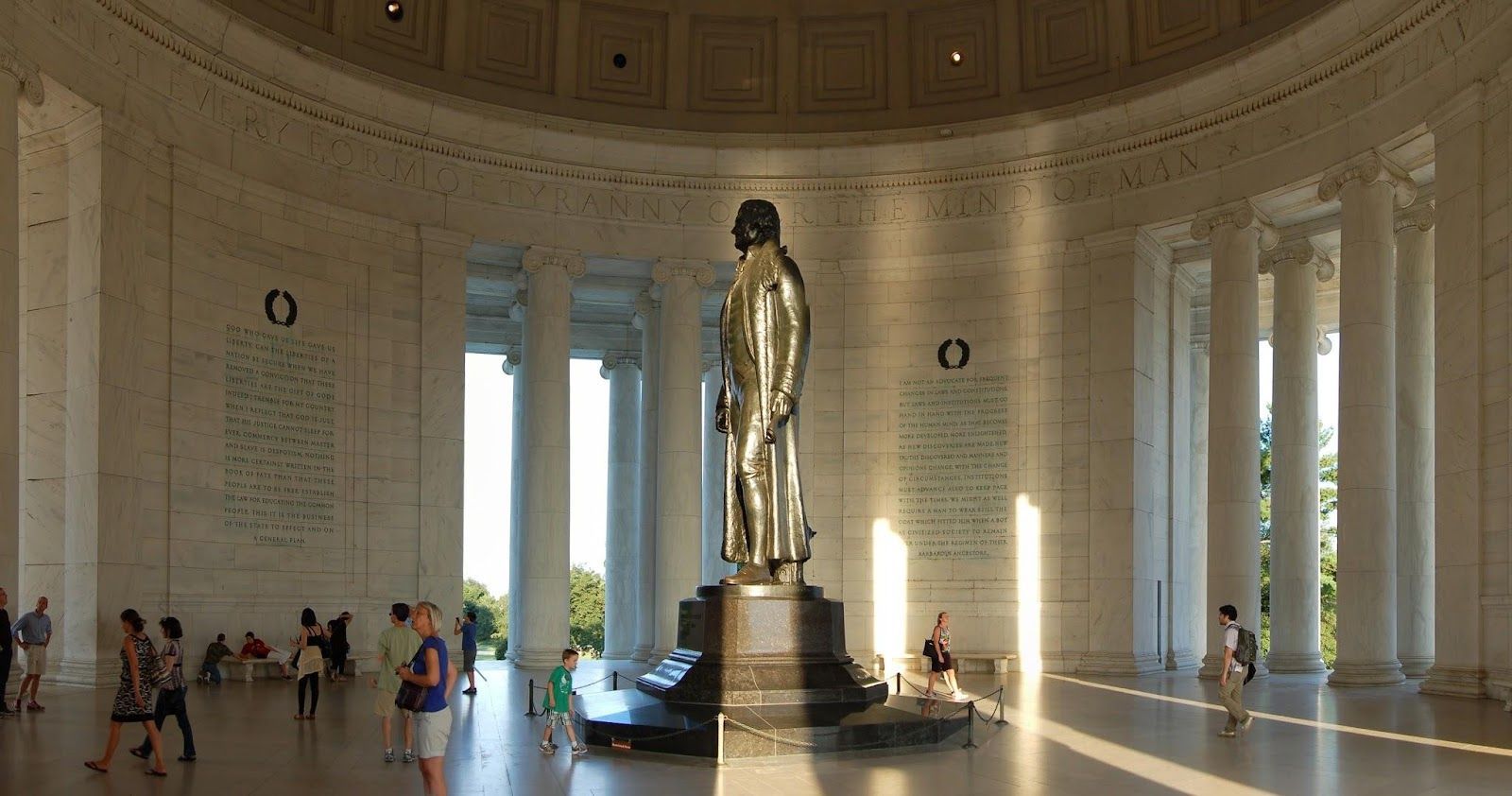
Image: Michael Kranewitter, Public domain, via Wikimedia Commons

We all know Jefferson was a great man, but do you know how big his statue is? It stands around 19 feet tall and weighs an astonishing 10,000 pounds; that’s a lot of bronze! Originally, the statue was a painted plaster model because, when it was dedicated in 1943, metal shortages from World War II made bronze unavailable. Four years later, in 1947, the bronze statue we see today was installed.

9
Once a popular beach

Image: Amelia Cui

Before becoming the site of the Jefferson Memorial, the Tidal Basin Beach was a popular beach in Washington. That's right; at the beginning of the 20th century, the area was used for swimming, boating, and picnics. This, coupled with the need to cut down some cherry blossom trees for construction, sparked controversy and turned some people against the project.

10
Created by a landfill
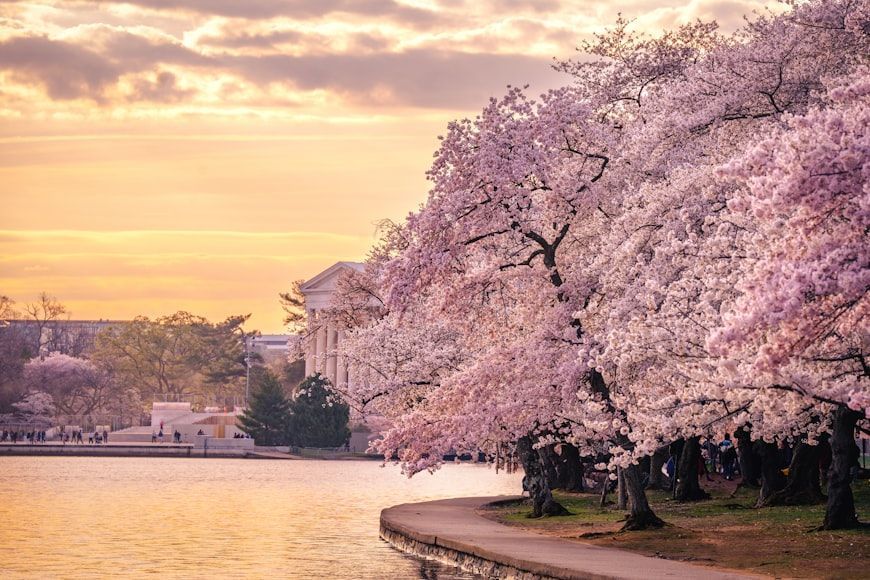
Image: Sharosh Rajasekher

Before the Jefferson Memorial could be built, the area had to be transformed. The Tidal Basin was originally shallow and surrounded by marshland, so workers filled it with material dredged from the Potomac River to create a stable foundation. Definitely a big effort.

Culture Culture 4 min read

American icons by choice

Wait... they're not originally American? 10 famous figures born abroad!

Image: Spencer Davis

They came once and decided to stay to make a difference. From scientists and artists to politicians and businesspeople, many famous figures in American history were actually born in another country before moving here. Take Levi Strauss, the man behind blue jeans; he was actually born in Germany! Join us as we look at 10 iconic faces who weren't born in the US but went on to become American icons.

1
Levi Strauss

Image: Eric Prouzet

Although his name will forever be associated with American business pioneers, Levi Strauss was not born in the United States. That's right! The inventor of the iconic blue jeans was born in Bavaria, Germany, in 1829. In 1847, he came to America along with his siblings in search of new opportunities, settling in New York. Eventually, he moved to San Francisco, where his famous company would be founded.

2
Irving Berlin

Image: Sandra Grünewald

While he can be considered one of the most American of Americans, Irving Berlin was actually born in Russia. That's right; the legendary composer and lyricist was born in 1888 in what was then the Russian Empire, and his family immigrated to the US when he was just a child. How lucky for us! Can you imagine life without classics like "White Christmas," "God Bless America," and "There's No Business Like Show Business"? Neither can we!

3
Alexander Graham Bell

Image: Carlos Eduardo

Although he became a naturalized US citizen in 1882, Alexander Graham Bell was born in 1847 in Edinburgh, Scotland. He arrived in the United States in 1871, where he worked as a teacher and researcher. It was in America, in 1876, that he made his most famous invention: the telephone.

4
Elizabeth Taylor

Image: Color Crescent

Elizabeth Taylor, our Cleopatra, wasn't born in the United States. As you probably know, she saw the world for the first time in England in 1932 and moved to America in 1939, just before World War II started. But here's an important detail: Her parents were American! So, she was a US citizen from birth; she just happened to be born overseas.

5
Alfred Hitchcock

Image: Usha Kiran

Yes, Alfred Hitchcock was born in England, but we probably wouldn't have had the pleasure of enjoying cinema classics like Rear Window (1954), Vertigo (1958), Psycho (1960), and The Birds (1963) if he hadn't come to live and work in America. Although he was already a successful director in his home country, Hitchcock decided to come to the United States in 1939, drawn by the promise of Hollywood's growing film industry.

6
Audrey Hepburn

Image: Paige Johnson

Although she became an American citizen in the 1950s and won our hearts on the big screen, the legendary Audrey Hepburn was actually born in 1929 in Brussels, Belgium. In 1945, she settled in England, where she began taking ballet classes and started landing modeling and acting roles. Finally, in 1951, she came to America to star in the Broadway production of Gigi .

7
Isaac Asimov

Image: Phillip Glickman

Science fiction as we know it wouldn't be the same without the incredible work of Isaac Asimov. However, we may never have had the opportunity to enjoy his brilliant writing if his family hadn't immigrated to America. Asimov was born in 1920 in Petrovichi, Russia. His parents decided to move in 1923, just a year after the Soviet Union was established. At only 3 years old, he arrived in the US, and by the age of 8, he was a full American citizen.

8
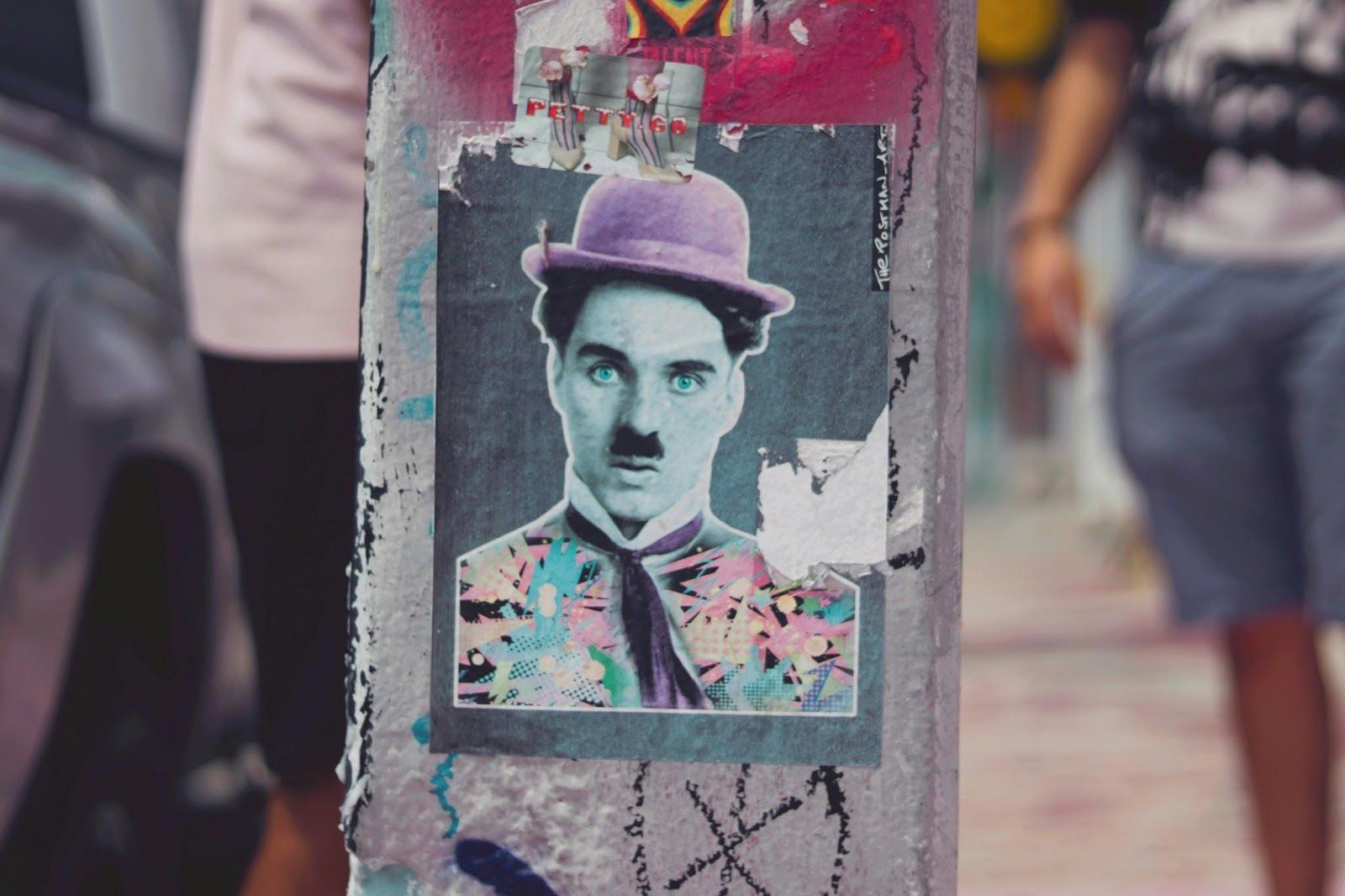
Charles Chaplin

Image: Mimi Di Cianni

The unforgettable Charlie Chaplin was born in London in 1889. Before he turned 20, he arrived in the US as a young performer with a vaudeville company. Here, he found fame and became a global icon of silent film. Surprisingly, even after living and working here for over 40 years, he never officially became an American citizen, but Americans embraced him wholeheartedly all the same.

9
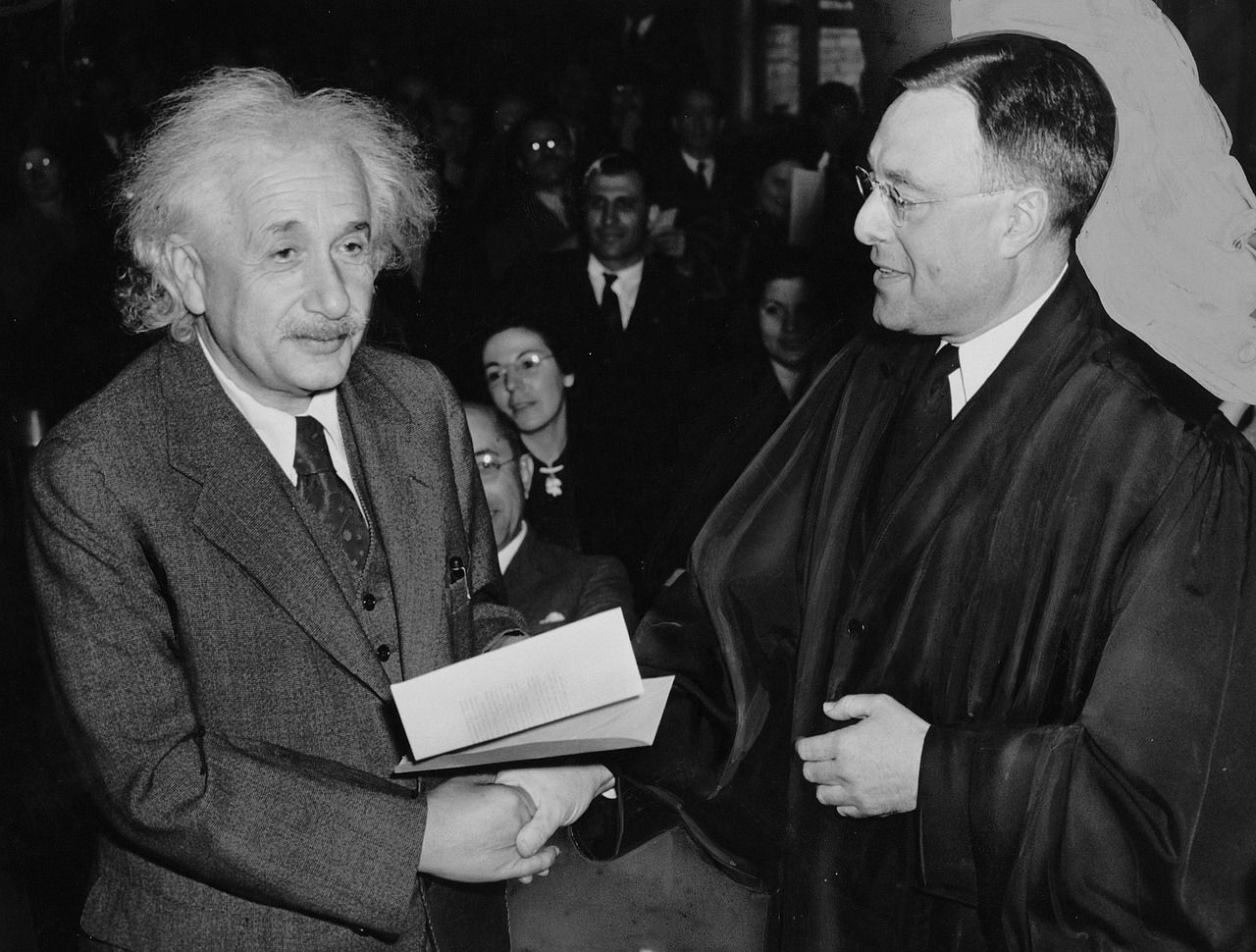
Albert Einstein

Image: WikiImages

Albert Einstein, one of the most famous scientists in the world, was born in Germany. And he chose to be American! He was born in Ulm, Germany, on March 14, 1879, and later became a US citizen in 1940.

His first trip to America was in 1921, when he came to New York as a renowned scientist. Then, in 1933, he returned for good and accepted a position at the Institute for Advanced Study in Princeton, New Jersey, where his former house still stands.

10
Joseph Pulitzer

Image: Jorien Loman

Joseph Pulitzer revolutionized the press in America and around the world, but before becoming a renowned US citizen, he lived in Hungary, the place where he was born in 1847. At the age of 17, he left Europe in search of greater opportunities and arrived in the US in 1864. Here, he went on to become a pioneering journalist and newspaper publisher, even giving his name to the prestigious awards honoring excellence in journalism and the arts.

Culture Culture 5 min read

SILVER SCREEN LEGENDS

The Golden Era: 10 classic American films that helped shape Hollywood

Image: Nathan DeFiesta

The Golden Age of Hollywood, spanning from the early 1930s to the late 1950s, marked a period when American cinema reached new heights, setting the future standards for storytelling, innovation, and star culture. During this era, visionary filmmakers and legendary actors crafted films that became integral to America's cultural identity. Join us as we explore 10 iconic classics that not only defined this golden era but also solidified Hollywood's status as the global beacon of cinematic excellence it remains today.

1
Gone with the Wind

Image: Adam Kring

Released in 1939, Gone with the Wind stands as one of the most iconic films in American cinema. Adapted from Margaret Mitchell's 1936 novel of the same name, the film is set against the backdrop of the Civil War and follows the life of Scarlett O'Hara (played by Vivien Leigh), the strong-willed daughter of a Georgia plantation owner.

Featuring legendary performances by Clark Gable and Leslie Howard, the film captivated audiences around the globe. It not only became the highest-grossing film of its time but also held that record for over 25 years, cementing its place in cinematic history.

2
Casablanca

Image: Craig Whitehead

Casablanca is often hailed as the quintessential American film. Both filmed and set against the tumultuous backdrop of World War II, it weaves a poignant tale of romance and sacrifice in a world on the brink of chaos. The film's unforgettable characters, brought vividly to life by the stellar performances of Humphrey Bogart and Ingrid Bergman, have become emblematic of American cinema.

Its most iconic line, "Here’s looking at you, kid," has etched itself into the collective memory of millions. Over the years, Casablanca has only solidified its legendary status, with its characters, famous lines, and theme song becoming a part of popular culture. It consistently ranks near the top of lists of the greatest films in history.

3
Citizen Kane

Image: Daria Kraplak

Citizen Kane (1941) is frequently acclaimed as the greatest film ever made, offering a profoundly intelligent exploration of the life of Charles Foster Kane, a fictional media mogul inspired by real-life figures like William Randolph Hearst and Joseph Pulitzer.

The brainchild of the visionary Orson Welles, who served as the film’s actor, director, and producer, Citizen Kane delves into themes of wealth, power, and democracy with such depth that it remains relevant to this day. The film caused a stir upon its release, prompting Hearst to ban any mention of it in his newspapers. It was also lauded for its groundbreaking cinematography, introducing innovative techniques that set new creative standards for the industry.

4
The Wizard of Oz

Image: Mateusz Raczynski

A beloved piece of Americana, the 1939 film release of The Wizard of Oz is the most iconic adaptation of L. Frank Baum's 1900 children's fantasy novel of the same name. Dorothy’s journey to the Emerald City has captivated audiences for generations and has brought the original story to worldwide audiences.

The film's groundbreaking use of Technicolor and special effects marked a new era in American cinema. Recognized by the U.S. Library of Congress as the most-watched film in history, The Wizard of Oz remains a timeless classic, with its impact on popular culture enduring to this day.

5
It’s a Wonderful Life

Image: Johannes Roth

Frank Capra’s It’s a Wonderful Life (1946) has become an essential Christmas classic. Starring James Stewart as George Bailey, the film tells the heartwarming story of a man who, facing financial ruin and despair, is shown by his guardian angel what life would have been like if he had never existed.

Loosely based on a 1943 short story that echoes Charles Dickens’ all-time classic A Christmas Carol , the film’s messages of hope and redemption resonated deeply with audiences. Despite an initially lukewarm reception, It’s a Wonderful Life gained popularity through television broadcasts and is now regarded as a timeless holiday favorite.

6
Singin' in the Rain

Image: Ricky Turner

Widely celebrated as one of the greatest musicals in American cinema, Singin' in the Rain (1952) offers a nostalgic look at Hollywood’s transition from silent films to "talkies." Directed by Stanley Donen and Gene Kelly, who also stars in the film, it became famous for its iconic musical numbers, particularly Kelly’s unforgettable dance in the rain, which has since become one of the most iconic scenes in movie history.

The film’s vibrant choreography, catchy songs, and clever commentary on the film industry have solidified its place in American film culture. As a delightful homage to Hollywood’s Golden Age, it immortalizes both the magic and the many challenges of filmmaking.

7
North by Northwest

Image: Blake Harbison

Directed by the master of suspense, Alfred Hitchcock, North by Northwest is one of the most iconic American thrillers. Starring Cary Grant as the charming protagonist Roger Thornhill, the film follows his harrowing journey as he’s mistaken for a government agent and pursued across the country by both law enforcement and international spies.

Iconic scenes like the crop duster chase and the climactic showdown on Mount Rushmore are etched in cinematic history. The film’s influence is still evident in modern thrillers, and it is celebrated to this day for its gripping narrative and stylish execution.

8
The Grapes of Wrath

Image: Sonder Quest

Based on John Steinbeck’s Pulitzer Prize-winning novel, The Grapes of Wrath (1940) is a powerful and poignant portrayal of the struggles faced by American families during the Great Depression. Directed by John Ford and starring Henry Fonda as Tom Joad, the film follows the Joad family as they journey from Oklahoma to California in search of a better life, only to encounter hardship and injustice along the way.

The Grapes of Wrath is lauded for its smart adaptation of Steinbeck’s novel and its brutally honest depiction of the social issues of the time. The film’s carefully crafted cinematography focuses on the Joad family as a unit, its visual style providing a stark contrast to the themes of suffering and perseverance that define the story.

9
The Searchers

Image: Jon Toney

John Ford’s The Searchers (1956) is considered one of the greatest Westerns ever made. Starring John Wayne in one of his most iconic roles, the film tells the story of Ethan Edwards, a hardened Civil War veteran who embarks on a relentless quest to find his niece, who has been kidnapped by Comanche Indians.

The film is both a thrilling adventure and a complex exploration of themes such as racism, obsession, and the American frontier. The movie is also praised for its stunning cinematography, particularly its use of Monument Valley’s vast landscapes, which have become synonymous with the genre.

10
Some Like It Hot

Image: Stephanie Valencia

Some Like It Hot (1959) is a comedy classic that pushed boundaries during the waning years of Hollywood’s golden era. Directed by Billy Wilder, the film stars Tony Curtis and Jack Lemmon as two musicians who witness a mob hit and disguise themselves as women to evade the gangsters pursuing them.

Marilyn Monroe co-stars as Sugar Kane, an endearing singer who unwittingly becomes entangled in their criminal scheme. The film’s sharp wit, impeccable comedic timing, and brilliant performances have made it a staple of American cinema, and it remains as fresh and funny today as it was upon its release.

Explore more American facts

Choose your favorite category!

General
General

As American as apple pie—the very best America has to offer!

Culture
Culture

Delve into the astounding richness of American lore.

Geography
Geography

Hop in and explore vast and diverse American landscapes.

History
History

Discover the key moments that shaped the United States.