General General 3 min read

Absurd laws still on the books

You’re probably breaking these laws and you don’t even know it!

Image: Tingey Injury Law Firm

Yes, we know that laws are meant to keep society running smoothly, but some of them are really puzzling. Across the US, you’ll find laws that ban everything from dancing on Sundays to stealing crawfish. Even if many of these laws are outdated , quirky, or just bizarre, they’re still technically on the books. So, if you’re planning a road trip, you might want to brush up on these strange state laws, just in case!

1
Georgia: No eating fried chicken with utensils
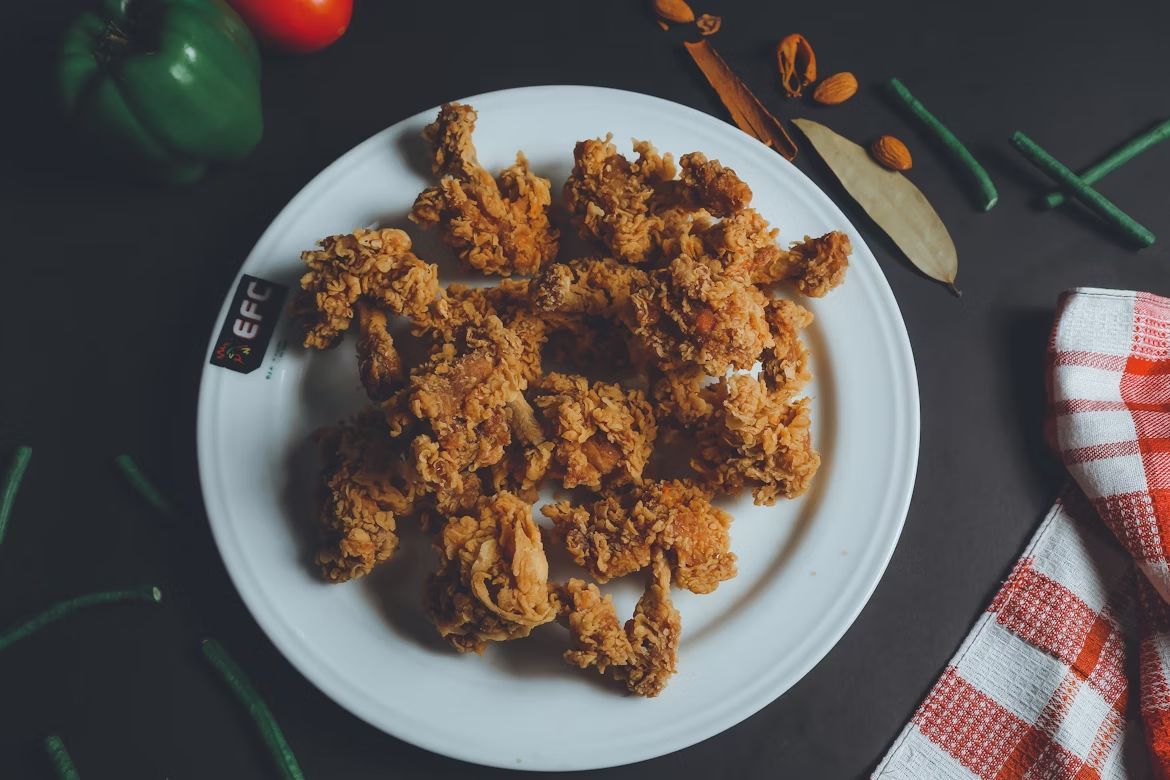
Image: Shourav Sheikh

In Gainesville, Georgia, it’s i llegal to eat fried chicken with a fork . This law, passed in 1961, was meant as a publicity stunt to promote the city’s status as the "poultry capital of the world."

While no one’s actually getting arrested for improper chicken consumption, a tourist was once jokingly "arrested" for breaking this law in 2009. If you visit Gainesville, just remember, fingers only!

2
Alabama: No stink bombs or confetti

Image: Damiano Lingauri

If you love a good prank or enjoy tossing confetti at celebrations, Mobile, Alabama, is not the place for you. The city has made it illegal to possess or use stink bombs , "funk balls," and anything designed to create unpleasant odors.

That’s not all, confetti and spray string are also outlawed, so don’t plan any glittery parades. Mobile prefers its air fresh and its sidewalks clean. We cannot blame them!

3
Arizona: No spitting in public

Image: Pete F

In Goodyear, Arizona, it’s not just bad manners to spit in public, it’s illegal. The law specifically bans spitting on sidewalks, roads, parks, and public buildings, and if you’re caught doing it, you could face a $2,500 fine or even six months in jail.

So, if you have a bad habit of spitting on the sidewalk , you might want to think twice before visiting Goodyear. Besides, it’s just gross!

4
Louisiana: No crawfish theft

Image: Rasmus Gundorff Sæderup

Think stealing crawfish is a minor offense? Not in Louisiana! Swiping someone’s crawfish , especially if the value exceeds $1,500, is taken so seriously that it can lead to a $3,000 fine or up to ten years in prison.

So, next time you’re enjoying a seafood boil in the Bayou State, make sure you’re not swiping from someone else’s plate!

5
Massachusetts: No dancing to the National Anthem

Image: Jeffrey F Lin

Patriotism is important, but nobody gets it like Massachusetts! In this state, a 1917 law makes it illegal to dance to the national anthem , though enforcing it would likely be a First Amendment nightmare.

It’s unclear why lawmakers felt the need to crack down on patriotic grooves, but to be safe, keep your hand over your heart and save the dancing for later!

6
South Carolina: No working (or dancing!) on Sundays

Image: Jess Bailey

Did you know that in South Carolina, you may technically have an excuse to skip work on Sundays?

An old law still on the books prohibits working on Sundays , though it’s rarely enforced. Strangely enough, dancing is also banned on Sundays. If you were hoping for a weekend filled with productivity and footloose fun, you might have to sit this one out!

7
North Dakota: No late-night fireworks

Image: Ray Hennessy

In Devil’s Lake, North Dakota, you can buy fireworks between December 26th and January 1st, but you can’t set them off after 11 p.m. What?

Let us explain: This law was originally passed for the millennium celebrations in 1999, but it’s still on the books today. Are you planning to ring in the New Year with a bang? Make sure you light those fireworks early or risk breaking the law!

8
Montana: No "folf" allowed

Image: Oskar Kadaksoo

Montana’s wide-open spaces might seem perfect for throwing a Frisbee, but in Helena, playing Frisbee golf (also known as "folf") outside of designated areas is illegal.

If you get caught, you could face a $500 fine or even six months in jail. Where are all these weird laws coming from, anyway?

9
Indiana: Black cats must wear bells on Friday the 13th

Image: Andreea Popa

Are you superstitious? You’ll love this one. In French Lick Springs, located in Indiana, black cats must wear bells around their necks on Friday the 13th.

This law was introduced in 1939 as a "war measure" to reduce stress among the public. While it’s unlikely anyone enforces this rule today, it’s still an amusing nod to old-school superstitions!

10
Hawaii: No billboards allowed

Image: Dennis Maliepaard

Ever notice that Hawaii’s landscapes are free of massive billboards ? That’s because billboards are banned statewide! The law, dating back to 1927, is part of an effort to preserve the state’s natural beauty.

Hawaii is one of the few places in the US where advertisements don’t compete with breathtaking ocean views. Now, that’s a law we can all enjoy!
Geography Geography 4 min read

Discovering America

What's the easternmost point of the US? If you say Maine, think again!

Image: Jon Sailer

We’ve all picked up "facts" about the fifty states somewhere along the way, but not all of them hold up. Some are half-truths passed around for generations , others are just plain wrong. So, in an attempt to set the record straight once and for all, we’ve gathered some fun truths that clear up the biggest mix-ups about our states.

1
Arizona skips Daylight Saving Time

Image: Christoph von Gellhorn

This is partly true because most of the state doesn’t bother with Daylight Saving Time . They stopped changing the clocks back in 1967. The exception is the Navajo Nation, which stretches into Utah and New Mexico and keeps DST so all its communities stay on the same schedule. Now, as for the smaller Hopi reservation, inside the Navajo Nation, it sticks with Arizona time… Yes, quite confusing if you’re not a local.

2
Georgia isn’t really the Peach State

Image: Jessica Furtney

Georgia loves its peaches, sure, but the state’s top fruit money-maker is actually blueberries . In recent years, blueberries have brought in several times more cash for farmers than peaches. Meanwhile, California grows far more peaches than Georgia ever has. The nickname stuck from the old days when Georgia peaches were famous for their flavor, not their volume. So while the pride is real, the peaches aren’t quite the powerhouse people may think.

3
Nevada didn’t record the hottest US temperature

Image: tommao wang

You probably think of Nevada’s desert heat as unmatched, but the all-time record belongs to California’s Death Valley . In July 1913, it hit a mind-melting 134 degrees Fahrenheit, the hottest temperature not only in America but the hottest ever recorded on Earth!

4
Minnesota doesn’t have the most lakes

Image: Tom Conway

Minnesota proudly calls itself the "Land of 10,000 Lakes," but that’s selling itself short… The real number is closer to 12,000. However, Alaska wins this battle . The state has more than 3 million lakes over five acres in size. In fact, Alaska contains over 40 percent of the nation’s surface water. If you love fishing, kayaking, or just staring at a quiet stretch of water, the true lake capital of America is far up north.

5
Pineapples aren’t native to Hawaii

Image: Christian Joudrey

Pineapples are everywhere in Hawaiian imagery, but the plant actually comes from South America , mainly Paraguay and southern Brazil. Spanish explorers likely brought them to Hawaii in the 1500s after spreading them across the Pacific to places like the Philippines and Guam. Hawaii’s climate turned out to be perfect for growing them and by the 1900s, the islands were producing so many pineapples that the fruit became a symbol of Hawaii itself.

6
Maine isn’t the country’s easternmost point

Image: Chris Henry

If you’re a Geography geek, you’ll love this one. You might picture Maine’s rocky coast as the eastern tip of America, but the actual easternmost point is thousands of miles away, on Alaska’s Semisopochnoi Island in the Aleutians. How is that possible? Well, that’s because it crosses the 180th meridian, putting it in the Eastern Hemisphere. That means part of Alaska technically sits farther east than anywhere in Maine.

7
The biggest US earthquake didn’t happen in California

Image: Lala Miklós

California has suffered some big earthquakes in its history, but the most powerful earthquake in America struck Alaska in 1964 . It hit Prince William Sound with a magnitude of 9.2. It was so strong it shook the ground for four and a half minutes and triggered massive tsunamis. In today’s dollars, the damage would total more than $2 billion. Alaska sits on a collision zone of tectonic plates, making it one of the world’s most seismically active regions.

8
The Everglades isn’t America’s biggest swamp

Image: Joshua J. Cotten

A lot of people picture the Florida Everglades when they think of swamps, but technically, the Everglades isn’t a swamp at all. The real title of the largest swamp in the United States goes to Louisiana’s Atchafalaya Basin , which spans about 1.4 million acres. This swamp has a vast mix of cypress forests, bayous, and marshes, and it’s more than twice as productive as the Everglades when it comes to wildlife and plant life.

9
Big cities aren’t always capitals

Image: Mackenzie Cruz

It surprises people how often the biggest city isn’t the state capital . New York City? Not the capital… Albany is. Chicago? Nope, that honor goes to Springfield. Pennsylvania’s capital isn’t Philly or Pittsburgh, it’s Harrisburg. Even California’s capital isn’t L.A. or San Francisco, it’s actually Sacramento. Out of fifty states, only seventeen have their most populous city as the capital.

10
Alaska isn’t divided into counties

Image: Rod Long

Alaska likes to do things its own way. Instead of counties, it’s split into boroughs , and a massive area known as the Unorganized Borough has no local government at all. People out there don’t pay property taxes, but that freedom comes with challenges, limited services, fewer job options, and tough living conditions.

History History 5 min read

The American way

Baseball and BBQs: 10 iconic American pastimes that shaped the nation

Image: Leon Contreras

A baseball game under the summer sun, a weekend fishing trip, a barbecue at a family gathering—all of these activities are as American as apple pie. Our favorite pastimes tend to reflect the nation’s values and history, evolving and transforming over the years yet always retaining a part of their essence. Here are 10 iconic pastimes that have shaped life in the United States.

1
Baseball

Image: Chris Chow

Baseball isn’t called America’s favorite pastime for nothing. The heartbeat of American sports, it was already recognized as the national sport in the 19th century, when it originated as a blend of older bat-and-ball games.

Curiously, the first official baseball game on record didn’t take place in the United States but in our northern neighbor, Canada, which is often credited with creating the basis for most modern baseball rules. However, New York City clubs were responsible for further shaping the game into what it is today.

2
Fishing

Image: Greysen Johnson

Fishing has long been a beloved pastime for millions of Americans, luring people in with a peaceful and nature-immersed experience. No longer a necessity for survival in everyday life, most people today enjoy fishing recreationally, with many anglers choosing to release their catch unharmed.

Celebrated American writers like Ernest Hemingway have portrayed fishing as a reflective and rewarding pursuit, capturing the romantic longing for a simpler life and the joy of the great outdoors that remains at the heart of this pastime. Moreover, the hobby encompasses more than just fishing, with many enthusiasts taking pride in creating their own custom lures, often crafted to resemble various types of live bait.

3
Camping

Image: Chris Holder

Camping became popular in the early 20th century as Americans sought respite from growing urbanization. Today, it remains a beloved way to explore the country's vast landscapes, from national parks to remote forests. Extensive networks of protected foot trails crisscross the nation, offering opportunities for both short and long excursions.

In fact, it could be argued that camping is part of the wild heritage of the American frontier spirit, encouraging Americans to reconnect with nature. Much like fishing—and these two pastimes often go hand in hand—camping is about adventure, self-sufficiency, and the pursuit of simplicity away from the hustle of daily life.

4
Football

Image: Carol Highsmith's America

American football—also known as gridiron football or simply football—originated in the 19th century, evolving from various older ball games related to rugby. In recent decades, it has grown into a national obsession, rivaling baseball and even surpassing it in viewership, with millions tuning in every weekend.

The Super Bowl and similar events have become iconic elements of American culture, transforming into major community celebrations that draw more than just football fans. Major events like the Super Bowl bring families and friends together across the country, often featuring entertainment segments and halftime shows that transform these sporting events into full-blown celebrations.

5
Barbecuing

Image: Vincent Keiman

Barbecuing is an art form in America, with roots tracing back to indigenous peoples and early settlers. Whether it’s a Fourth of July cookout or a casual weekend gathering, the grill is central to American social life. The tradition initially spread through pit barbecues, where meats were smoked and cooked over a dug trench filled with burning embers.

Over time, this technique evolved into the conventional backyard grilling we use today. Despite the widespread popularity of standard barbecues, styles vary significantly by region, each with its own distinct flavors and techniques, often featuring elaborate sauces or unique smoking methods.

6
Auto Racing

Image: Tim Trad

Auto racing—and particularly stock car versions of the sport like NASCAR—has captivated the imaginations of Americans almost since the invention of motor cars in the early 20th century. Drawing inspiration from popular European races like the Paris-Rouen contest, the enthusiasm for motor racing quickly took hold in the U.S.

The first American automobile race is generally considered to be the Thanksgiving Day Chicago Times-Herald race on November 28, 1895. As cars became more accessible and the automotive industry developed, racing grew in popularity, eventually evolving into the high-octane spectacle that is now a distinctly American tradition.

7
Gardening

Image: Benjamin Combs

Gardening has always been a cherished American hobby, providing a peaceful retreat within one’s home while also beautifying one’s surroundings. From victory gardens during wartime to modern suburban flower beds, gardening remains a thriving pastime for Americans everywhere.

It’s a way to create something beautiful and sustainable, connecting with nature in a personal and meaningful way. Recently, interest in homegrown vegetables and organic food has surged, with an estimated 40 percent of American households—33 million—growing their own produce.

8
Movies

Image: Kilyan Sockalingum

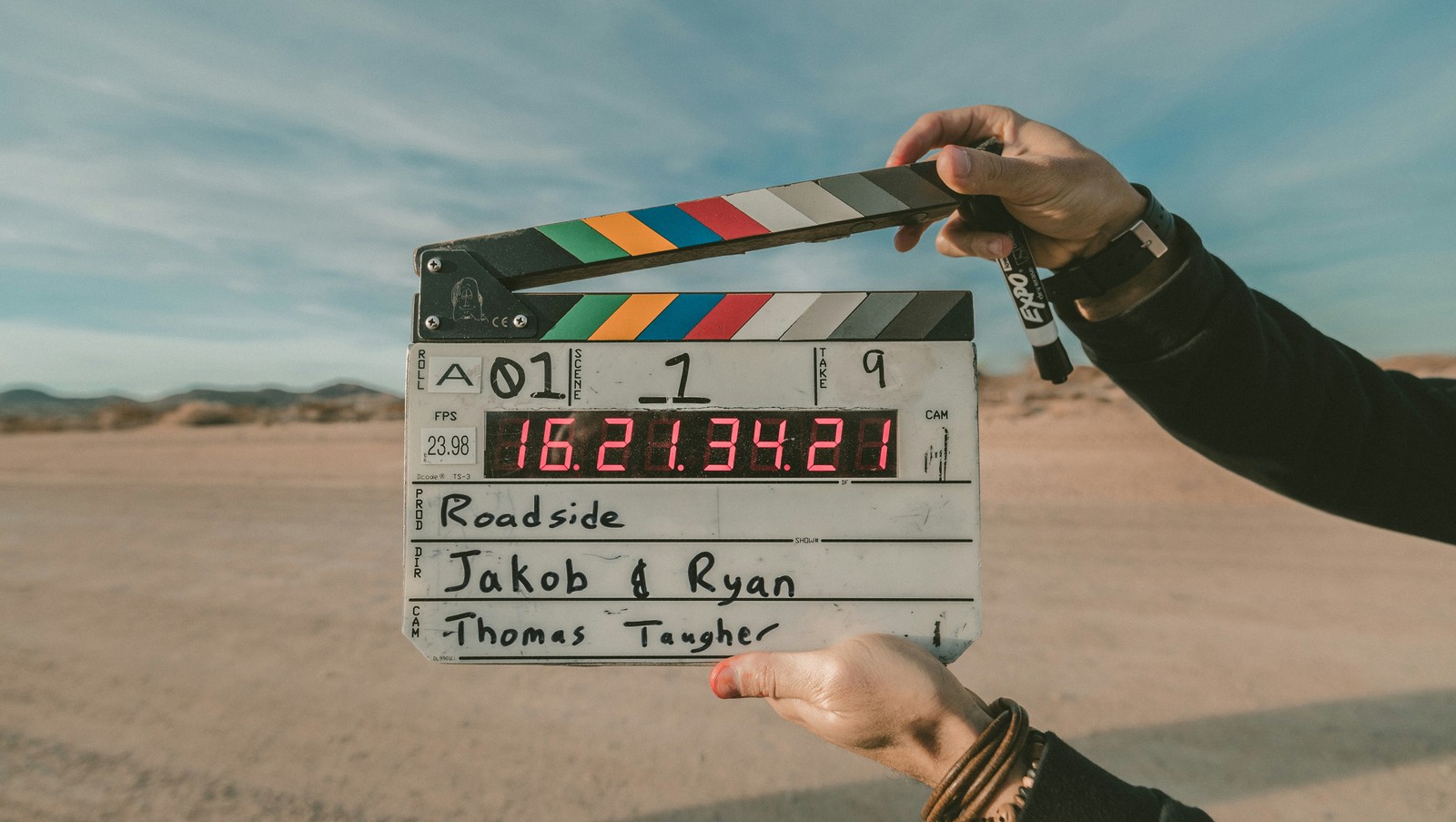
Since the early 20th century, movies have been integral to American culture. Whether going to a local theater or, more recently, enjoying a cozy movie marathon at home, millions of Americans have shared this experience for almost a century. As Hollywood and the film industry evolved, American movies reached audiences worldwide, earning acclaim for their excellence.

Today, the magic of cinema continues to captivate Americans just as it did decades ago. This is no surprise, as the love for good storytelling and innovation—two true American passions—lies at the heart of this cherished tradition. Although the 2020 pandemic dealt a blow to movie attendance, it has been steadily recovering, showing no signs of slowing down.

9
Home-Cooking

Image: Or Hakim

More than just a necessity, home-cooked meals are a true American passion. Food is a key part of a nation's identity, so it’s no surprise that cooking at home holds a special place in the hearts of many Americans. Our country’s incredibly diverse culinary heritage offers a vast array of edible experiences to choose from, and gathering with friends and family to enjoy delicious homemade dishes is one of our favorite pastimes.

Whether preserving family recipes passed down through generations or trying new culinary experiments, home cooking is always a way to connect with loved ones, celebrate traditions, and enjoy the satisfaction of a meal crafted with love and skill.

10
Road Trips

Image: averie woodard

With a country as vast and beautiful as ours, it’s no wonder Americans often choose to spend their vacations exploring its diverse landscapes. From bustling cities to scenic countryside, domestic travel is not always just about relaxation—it can also be an adventure of self-discovery and a journey through our shared history.

And there’s certainly no shortage of sights to see! From the breathtaking vistas of our national parks to meticulously preserved historic sites, few experiences foster a deeper connection to our heritage. Whether it’s the towering peaks of the Rockies, the rolling hills of the Appalachians, or the sun-kissed shores of the coasts, every corner of the country offers something new to discover.

Explore more American facts

Choose your favorite category!

General
General

As American as apple pie—the very best America has to offer!

Culture
Culture

Delve into the astounding richness of American lore.

Geography
Geography

Hop in and explore vast and diverse American landscapes.

History
History

Discover the key moments that shaped the United States.