General General 5 min read

America’s quirkiest pit stops

You won't believe these 10 bizarre roadside attractions exist
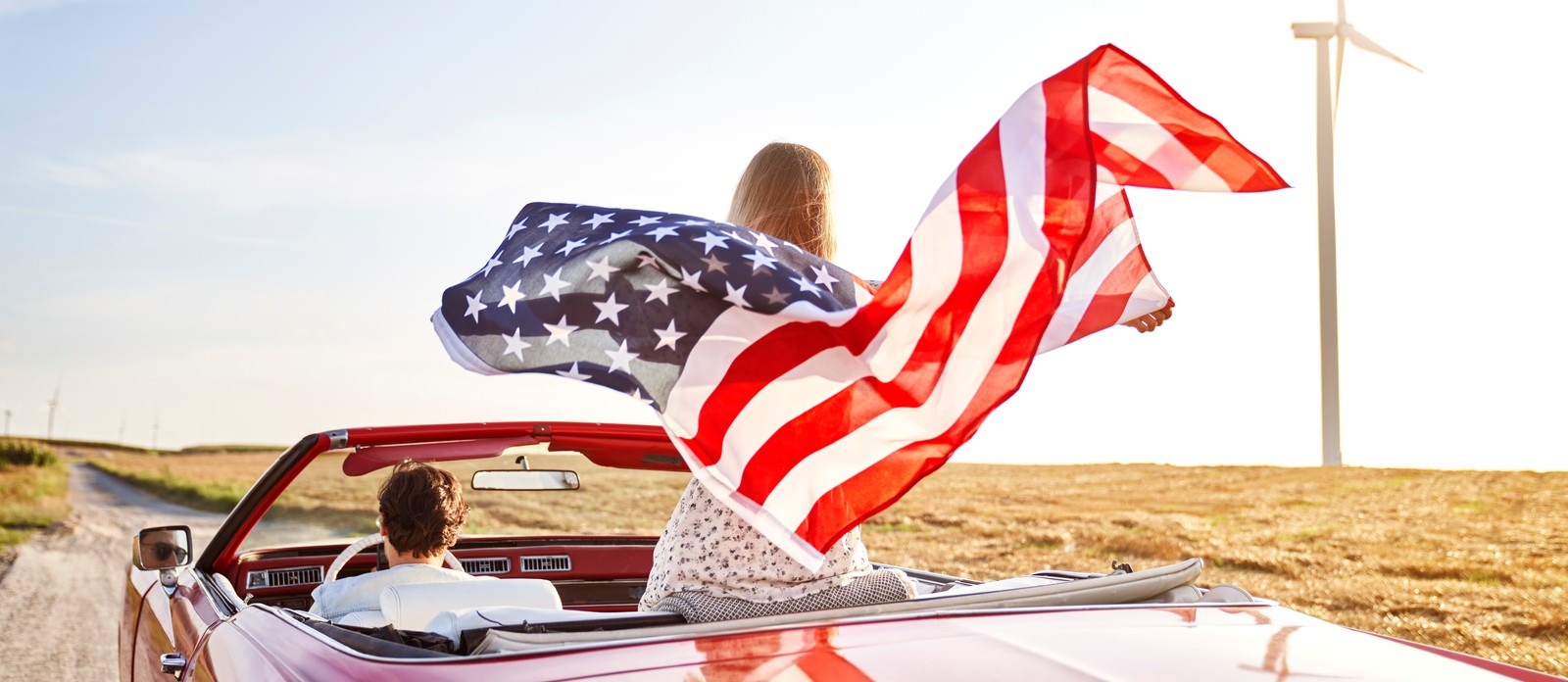
Image: gpointstudio

Ready to turn an ordinary road trip into an unforgettable adventure? You can spray-paint vintage Cadillacs in Texas, walk inside a giant blue whale in Oklahoma, and marvel at a palace covered in corn in South Dakota . And that's just the beginning! These 10 unusual stops prove that sometimes the best part of a road trip is the detour.

1
Spray-paint a Cadillac in Texas
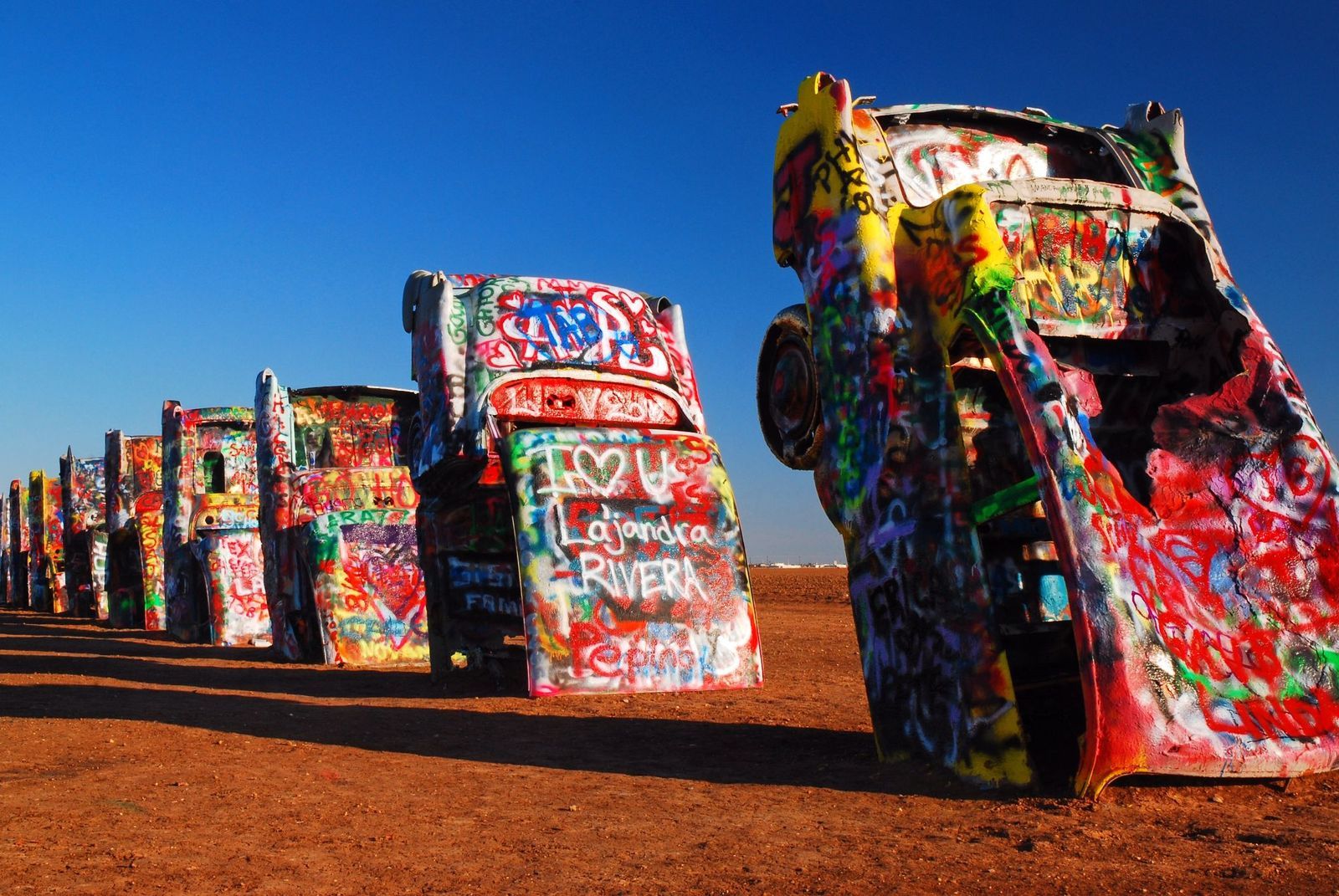
Image: James Kirkikis

Cadillac Ranch in Amarillo, Texas, is an interactive public art installation near historic Route 66, where visitors can spray-paint ten classic Cadillacs buried nose-first in the ground. It's located just off Interstate 40, west of downtown Amarillo. Admission is free, and the site is open 24 hours a day, seven days a week.

The ten vintage cars, dating from 1949 to 1963, are tilted at the same angle as the Great Pyramid of Giza and caked in thick layers of colorful spray paint. Ant Farm, an experimental art and architecture collective, created the installation in 1974. Local businessman and art patron Stanley Marsh III commissioned the project, which celebrates the evolution of Cadillac's iconic tail fins, with each car representing a different stage in their development, while poking fun at America's postwar car culture and consumerism.

2
Walk inside a giant blue whale in Oklahoma
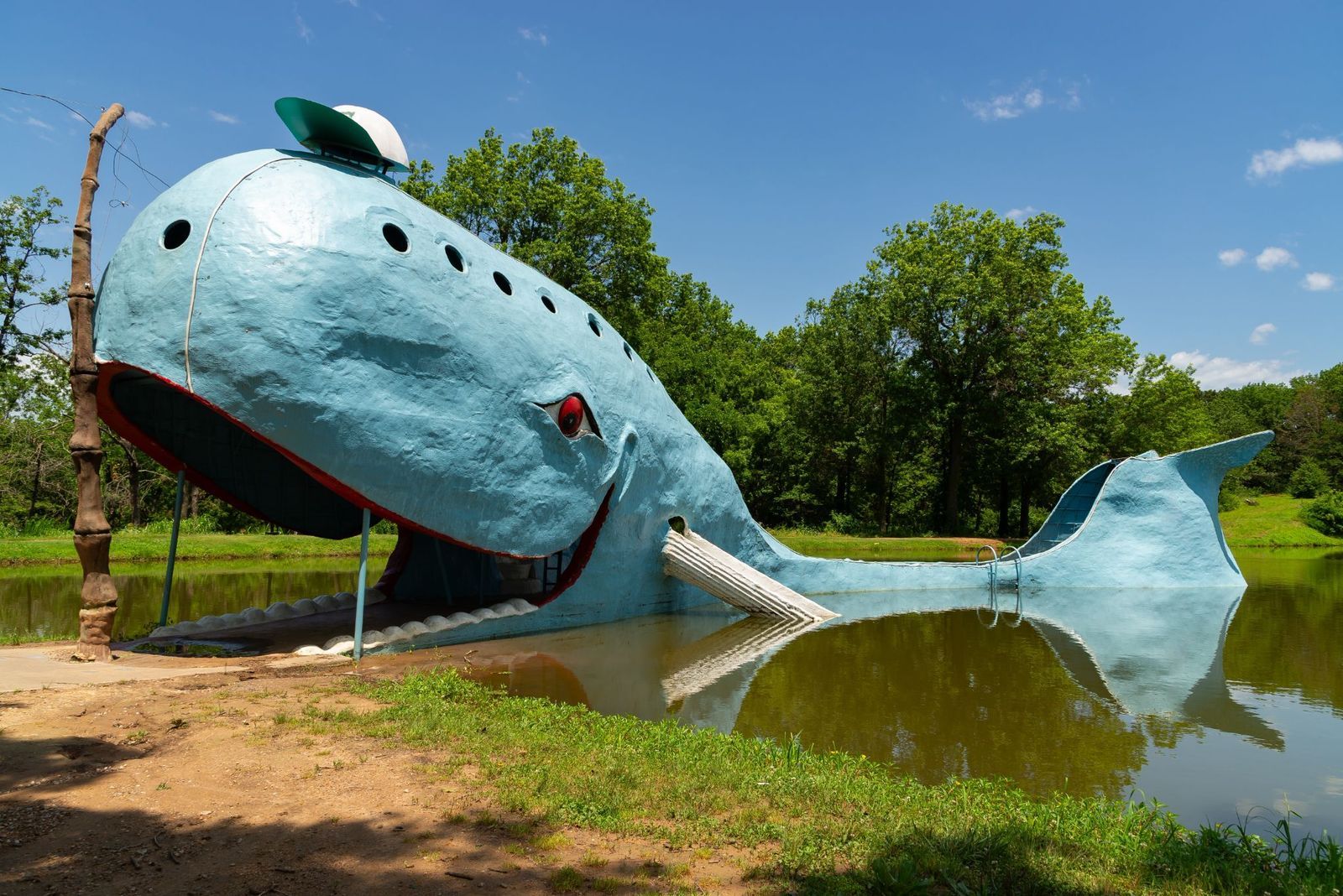
Image: Eddie J. Rodriquez

The Blue Whale of Catoosa is an 80-foot-long and 20-foot-tall roadside attraction on historic Route 66 in Catoosa, Oklahoma, about 20 miles east of Tulsa.

Zoologist Hugh Davis built it in 1972 with his friend Harold Thomas as an anniversary gift for Davis's wife , Zelta. The structure used 126 sacks of concrete, 15 tons of sand, and a metal framework. Visitors can walk inside the whale's head and body via its mouth and explore a secret compartment hidden area accessed through a ladder. Swimming is no longer allowed in the adjacent pond, but the park is free to visit. A new visitor center, gift shop, and upgraded facilities opened on May 30, 2026.

3
Stop at a palace made of corn in South Dakota
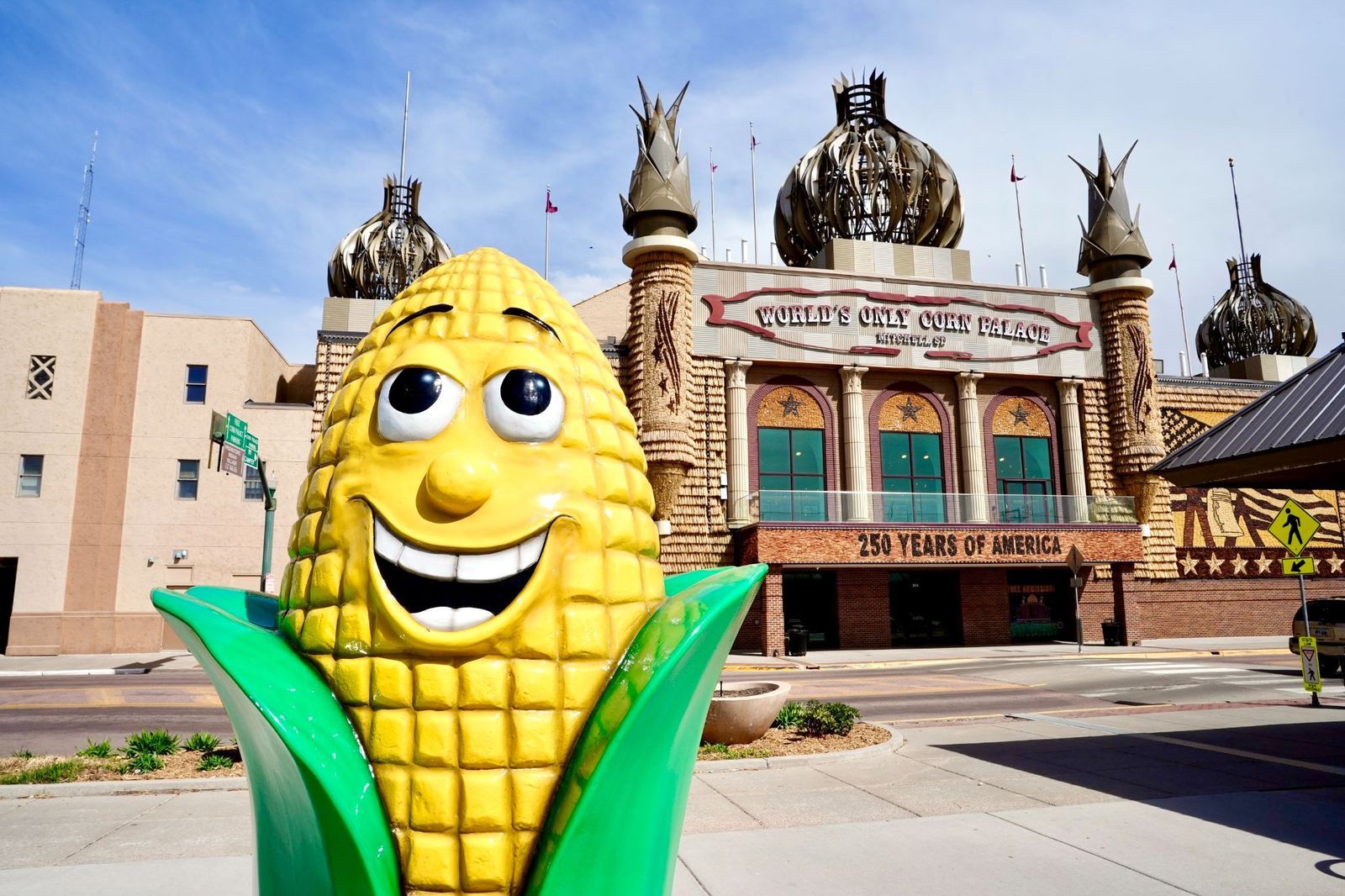
Image: George Wirt

The World's Only Corn Palace in Mitchell, South Dakota, is a roadside landmark covered in massive murals crafted from naturally colored corn and other grains, framed with native grasses. Admission is free, and summer hours extend from 8 a.m. to 9 p.m. daily between Memorial Day and Labor Day.

Built in 1892 (with the current structure completed in 1921), the palace honors the agricultural roots of the Great Plains. Artists create new exterior murals each year around a different theme. The building also serves as a community venue for events and concerts, with historical displays, a gift shop, and concessions.

4
Find America's answer to Stonehenge in Nebraska
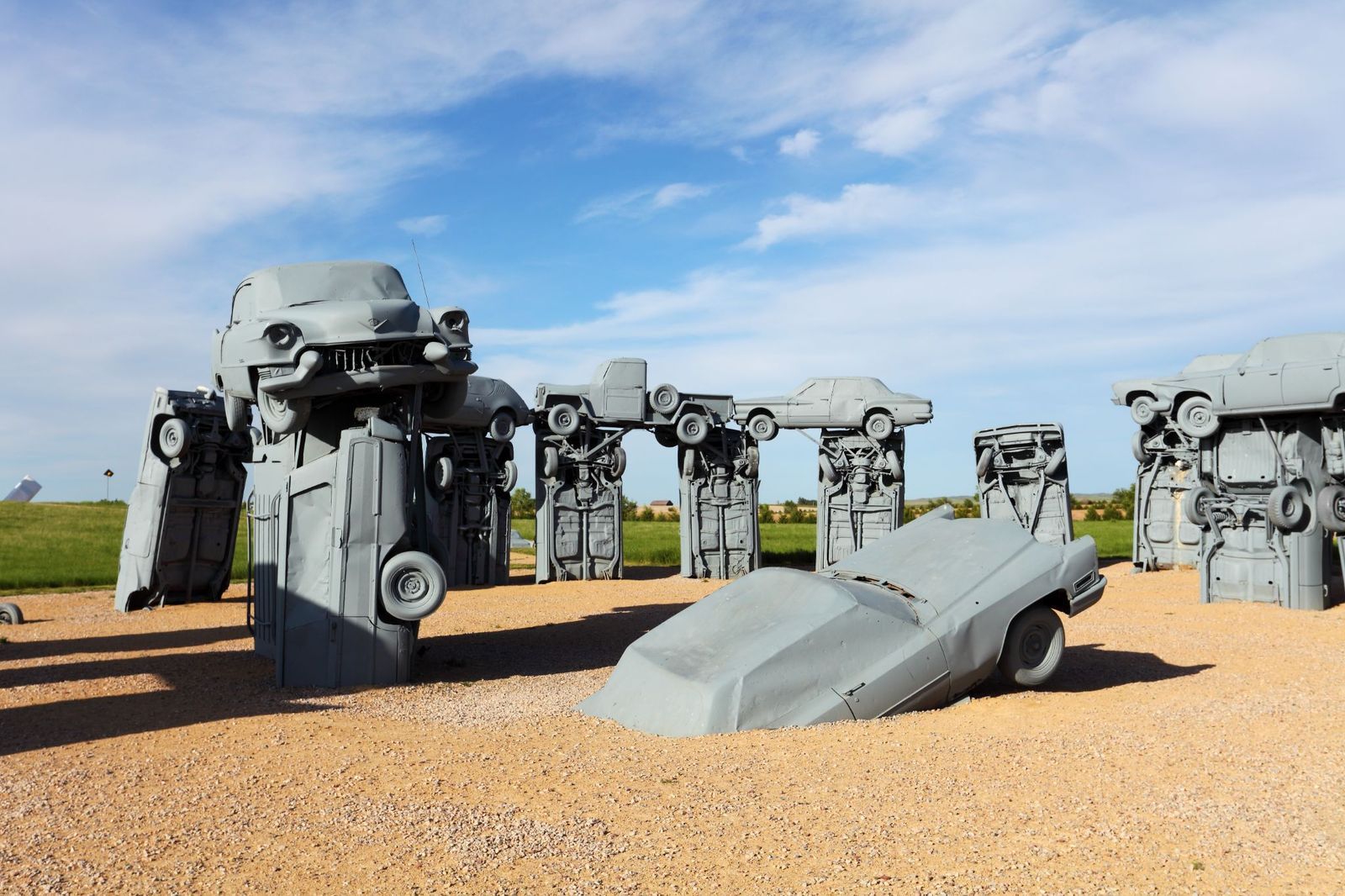
Image: Fotogro

America's answer to Stonehenge is Carhenge, a full-scale replica of England's ancient monument built entirely from vintage American cars located just north of the city of Alliance in Nebraska. Jim Reinders created it in 1987 during a family reunion as a tribute to his late father.

It features 39 cars painted gray and arranged to mimic Stonehenge's circular layout. The surrounding 10-acre site has grown into a larger folk-art installation featuring other vehicle-based sculptures. It’s open year-round from dawn to dusk, with free admission, although donations are appreciated. There’s also parking, picnic tables, and a seasonal gift shop, typically open from May through September.

5
Take a photo with enormous dinosaurs in California
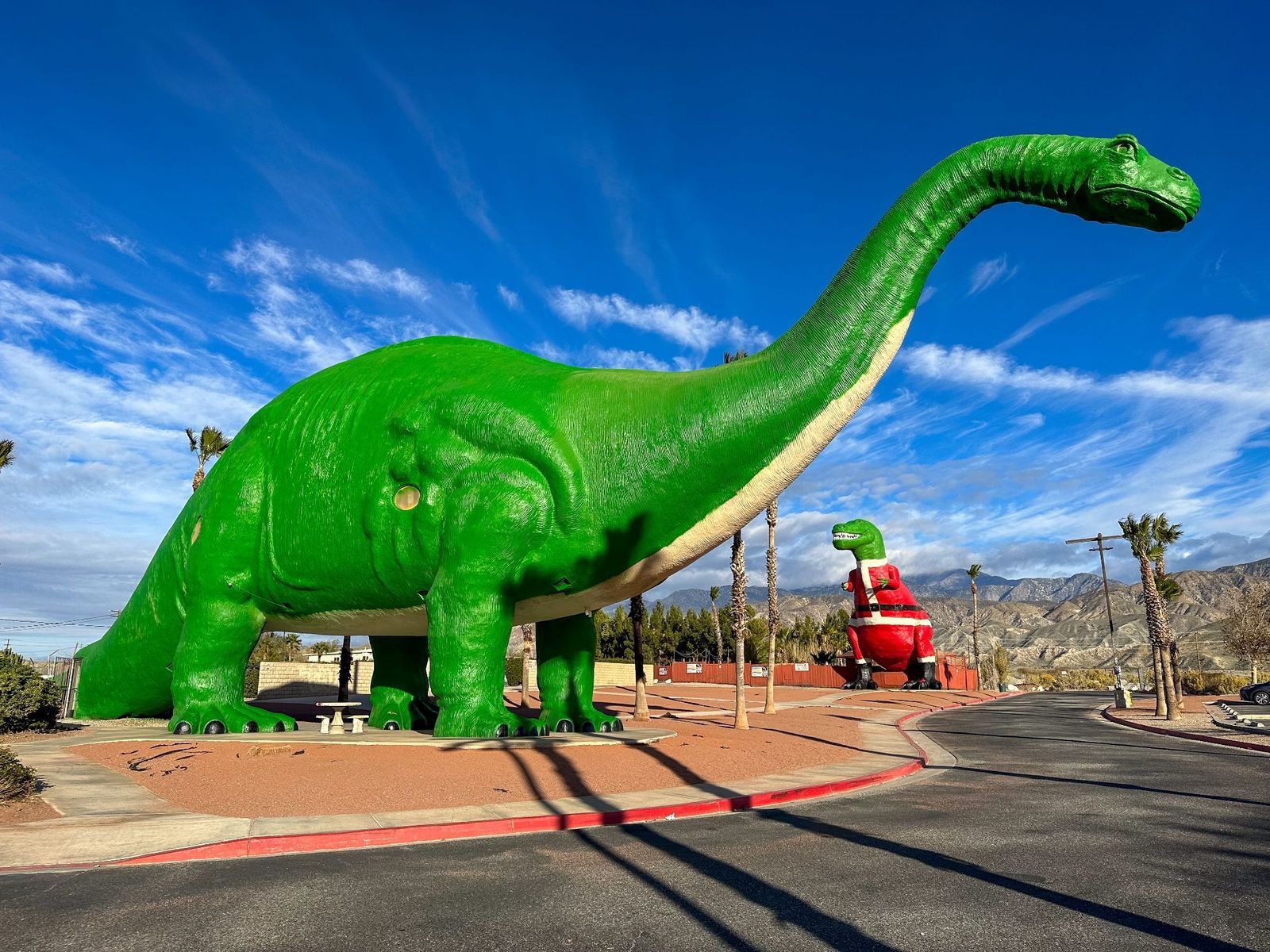
Image: SveKo

The Cabazon Dinosaurs are an iconic roadside attraction located off Interstate 10 in Cabazon, California, near Palm Springs.

Built starting in the 1960s by artist Claude Bell, the site features Dinny, the 150-foot Apatosaurus, and Mr. Rex, the 65-foot Tyrannosaurus Rex. Visitors can view the giant dinosaurs from the parking lot for free or pay an admission fee to explore the dinosaur park, climb inside Mr. Rex's head , or check out the gift shop located inside Dinny's belly.

6
Visit a legendary drugstore in South Dakota
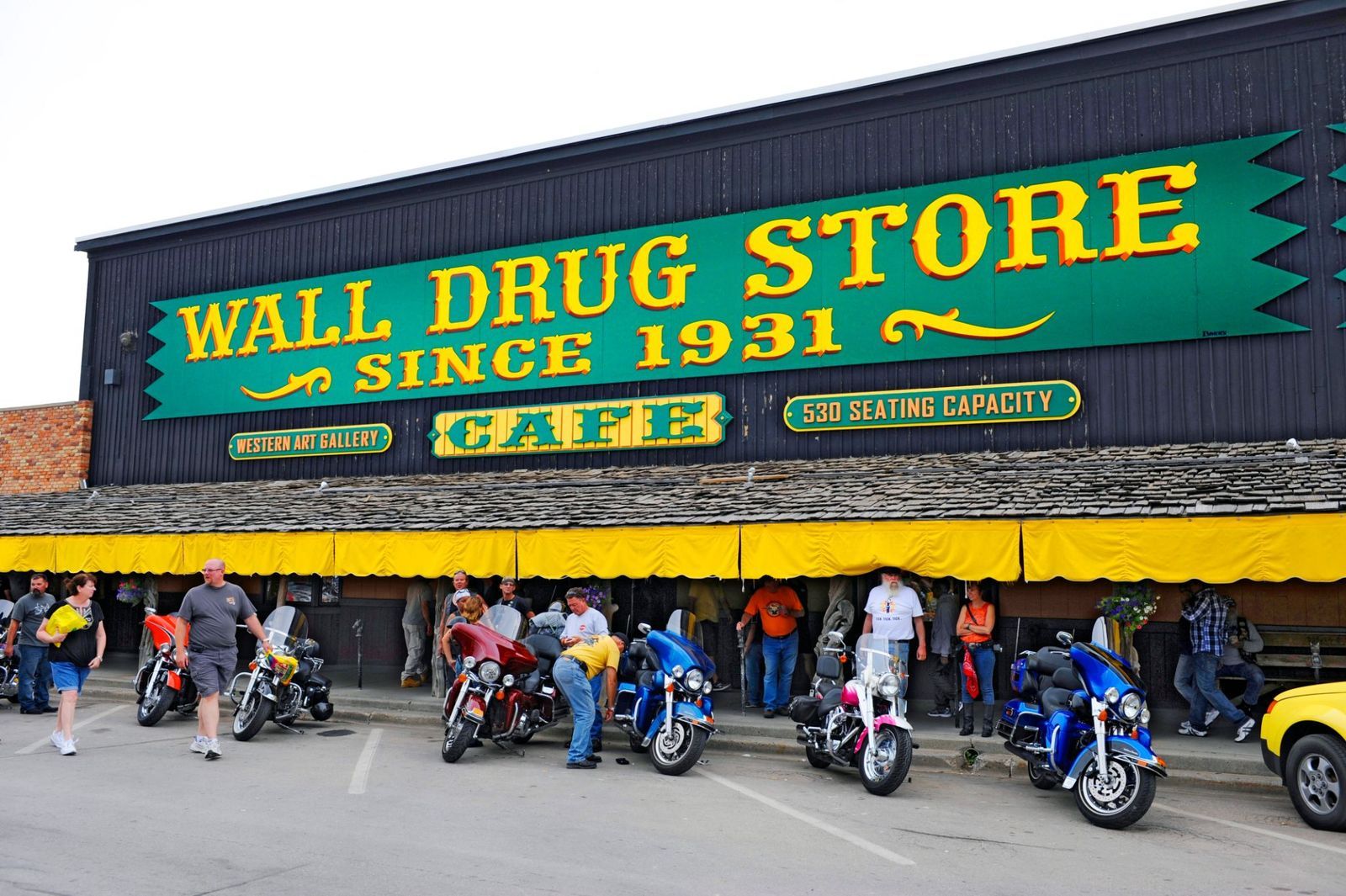
Image: Dennis MacDonald

Wall Drug Store, located in the tiny town of Wall, South Dakota, is one of America’s best-known roadside attractions. Ted and Dorothy Hustead bought the pharmacy in 1931, during the Great Depression.

In 1936, Dorothy came up with the idea to put up highway signs offering free ice water to thirsty travelers driving across the prairie. The clever marketing campaign turned a struggling small-town pharmacy into an iconic American road-trip landmark that now attracts more than two million visitors a year. They still proudly offer free ice water and 5-cent coffee.

7
Meet a giant concrete elephant in New Jersey
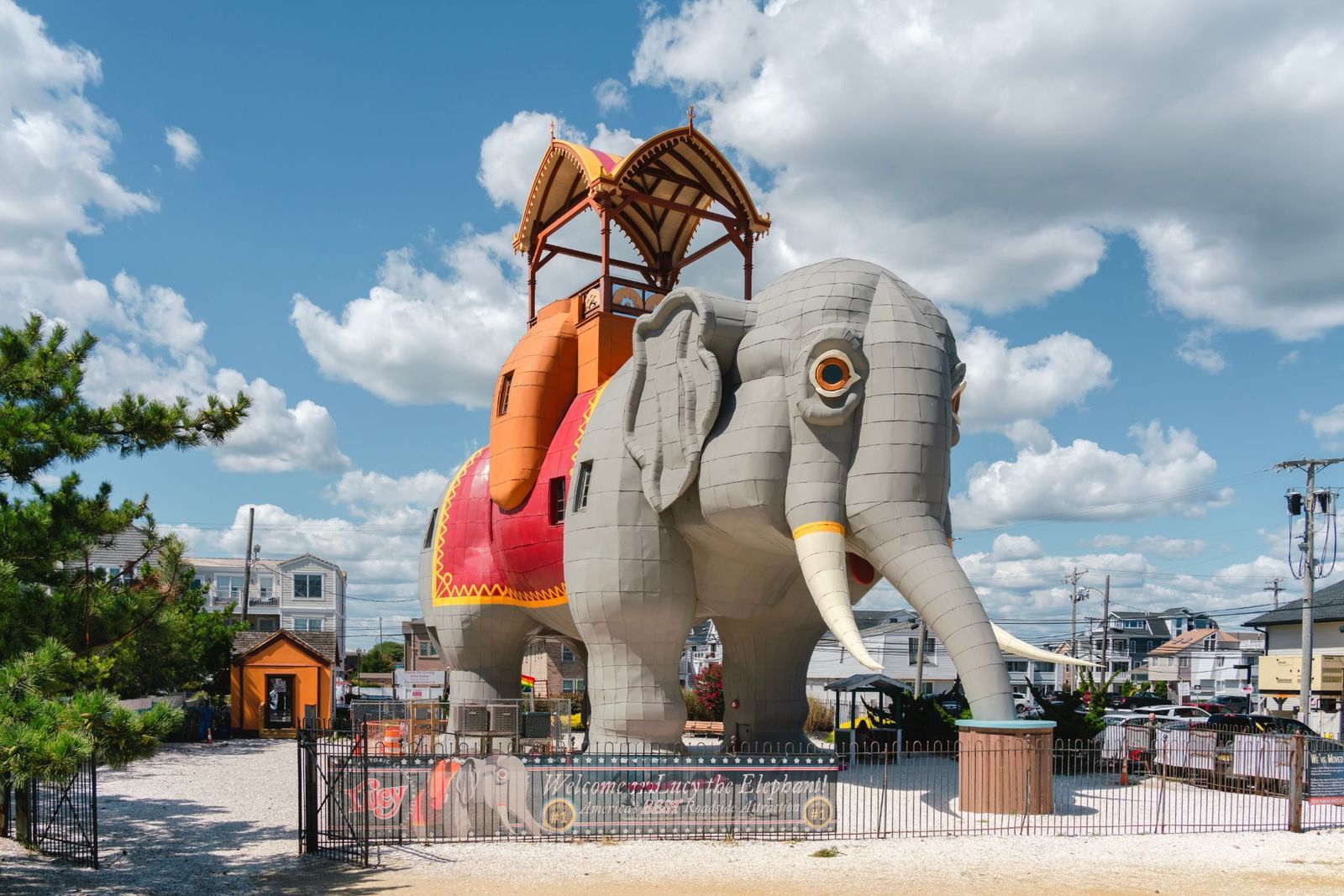
Image: Mahmoud Suhail

Lucy the Elephant in Margate City, New Jersey, is a six-story, 65-foot-tall wood-and-tin building shaped like an elephant. Built in 1881 by real estate developer James V. Lafferty Jr., it was designed to attract buyers to nearby land and is famous for being one of the oldest surviving roadside attractions in the United States .

Lucy weighs approximately 90 tons and is an example of 19th-century "folly" or novelty architecture. Visitors can climb a spiral staircase inside one of her legs to reach a "howdah" (a carriage-like structure) on her back, where they can enjoy panoramic views of the Atlantic Ocean. It’s listed on the National Register of Historic Places (1971) and was designated a National Historic Landmark (1976).

8
Hunt for enormous metal sculptures in North Dakota
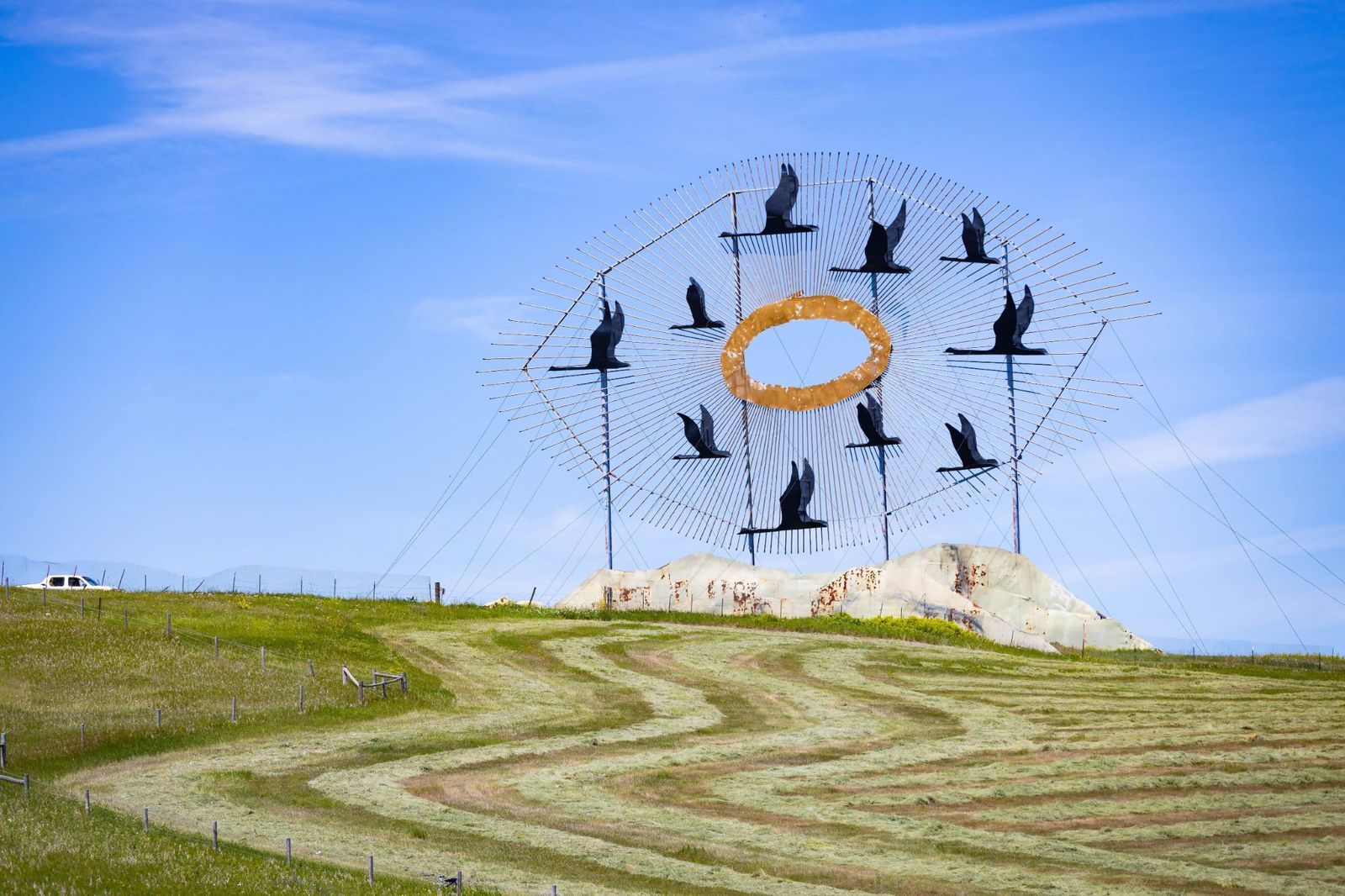
Image: Photo Spirit

The Enchanted Highway is a roughly 32-mile scenic drive in southwestern North Dakota featuring a series of giant scrap metal sculptures.

Created beginning in 1990 by local retired schoolteacher Gary Greff to attract visitors to the area, the self-guided route showcases towering roadside installations including Geese in Flight (which holds the Guinness World Record as the largest scrap-metal sculpture at 110 feet tall), Deer Crossing , Grasshoppers in the Field , Fisherman's Dream , Pheasants on the Prairie , Teddy Roosevelt Rides Again , and the World's Largest Tin Family .

9
See a giant ball of twine in Kansas
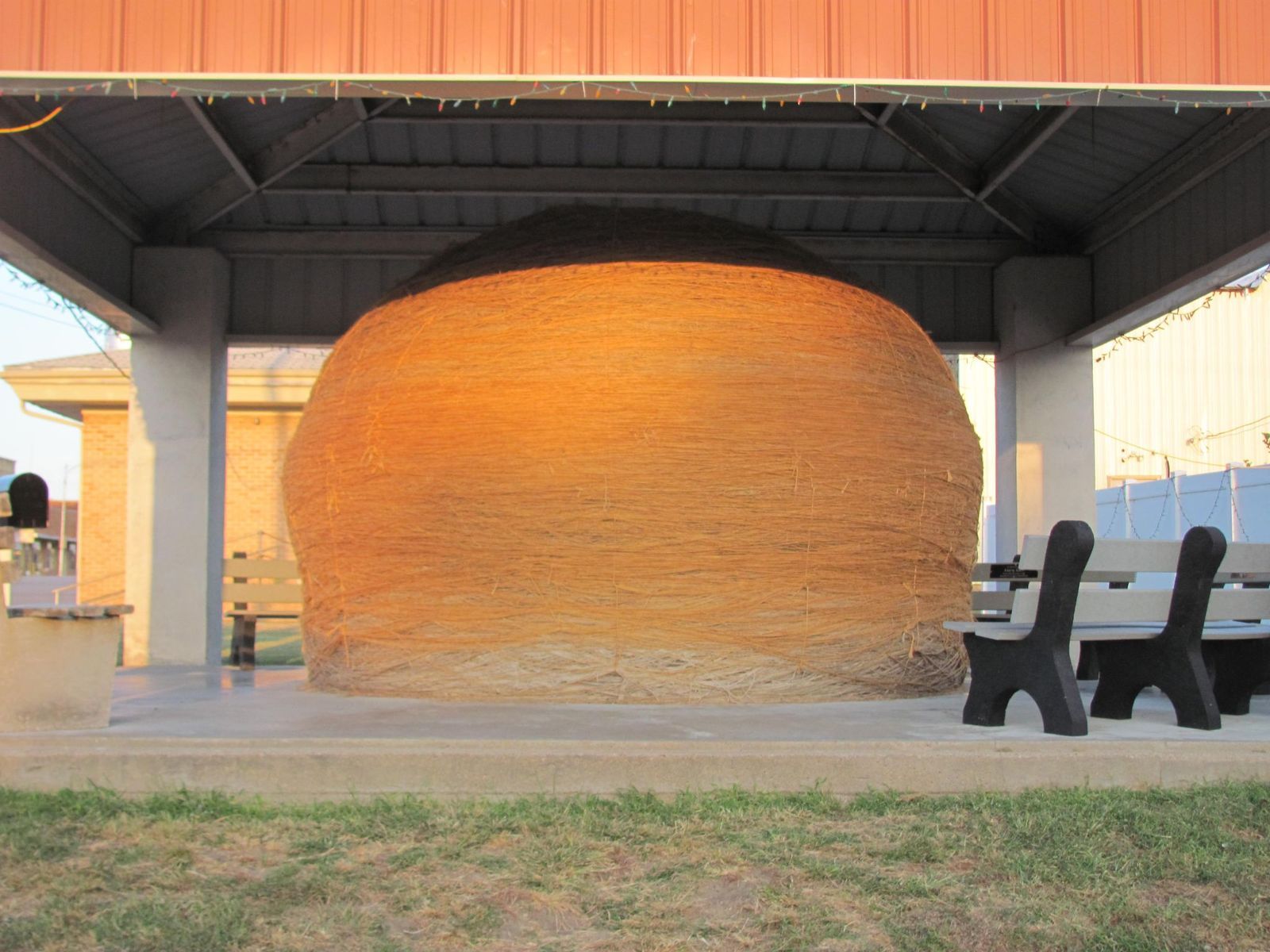
Image: Larry Porges

The World's Largest Ball of Sisal Twine is located in Cawker City, Kansas, where it sits beneath an open-air pavilion on Main Street. Local farmer Frank Stoeber started the ball on Christmas Eve in 1953 using leftover baling twine, and he donated it to the town in 1961.

The community continues to expand the ball during an annual "Twine-a-thon" every August. It now weighs nearly 29,000 pounds, measures over 46 feet in circumference, and contains more than 8.5 million feet of twine. Visitors can stop by for free 24/7 and even tie their own piece of twine to the structure.

10
Stop for a giant concrete totem pole in Oklahoma
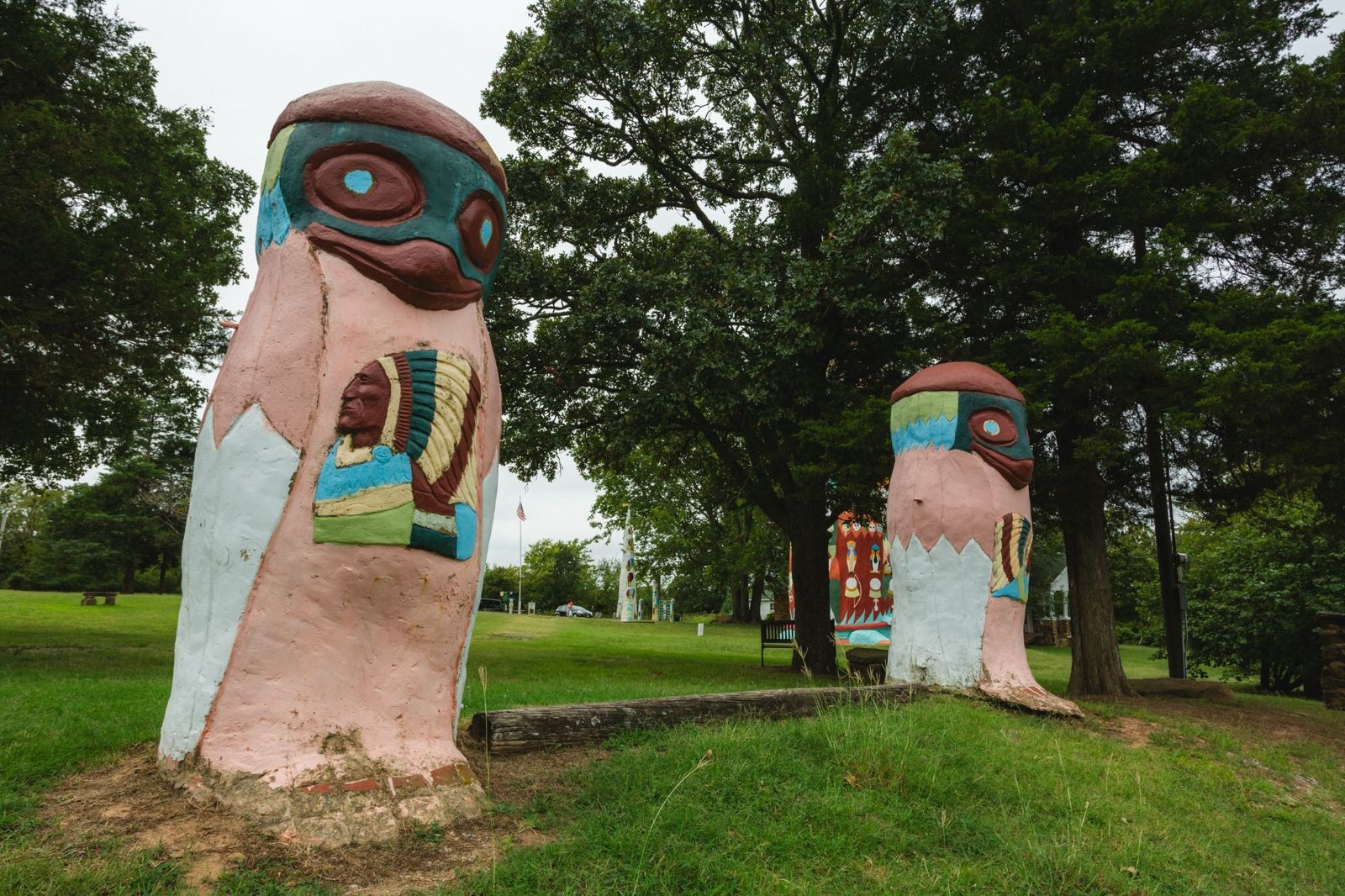
Image: Logan Bush

Ed Galloway’s Totem Pole Park in Foyil, Oklahoma, is home to a remarkable 90-foot-tall totem pole, built between 1937 and 1948, with a giant turtle at its base.

On site, you can also admire intricate bas-relief carvings, walk through the 11-sided Fiddle House museum to view hand-crafted fiddles and inlaid wood art, and take a break at the picnic tables or explore nearby walking trails. It’s listed on the National Register of Historic Places and is folk art inspired by Native American imagery .

General General 4 min read

QUIRKY FRIENDS

America's most beloved characters: 10 mascots we all love

Image: Jacob Rice

Few things are more American than identifying your favorite sports team or favorite breakfast cereal with a beloved mascot. Marketing has found a great way to make consumers feel attached to specific brands and identify with their products and characters. Who doesn’t love Tony the Tiger or our fluffy friend, the Pillsbury Doughboy? They have found their way into our homes and hearts! In this article, we’ll talk about 10 of our favorite American mascots. Read on and enjoy!

1
Rich Uncle Pennybags

Image: Maria Lin Kim

Board games are popular, at least some of them. Clue, Pictionary, Monopoly—we’ve all played at least one of these. But Monopoly’s popularity is something else. And it’s not just the game’s popularity but the fine man who is the face of the brand.

Rich Uncle Pennybags was introduced in 1936 and is widely known as Mr. Monopoly. This rich guy, dressed in a smart tuxedo, turned out to be so popular that he’s been incorporated into the brand’s logo altogether.

2
Tony the Tiger

Image: Franki Chamaki

Introduced in 1951, Tony the Tiger has been a fixture in, possibly, every single household in the United States and many more countries around the world.

With his classic blue background, Tony the Tiger successfully helped Kellogg’s skyrocket as a brand and made not only the mascot but the cereal truly unforgettable. In spite of being a tiger, Tony is known for his courageous messages and friendly smile that invites consumers to take a scoop of cereal and be ready to face the day. Who doesn’t need this shot of inspiration every morning? We can definitely count on Tony the Tiger for that!

3
Pillsbury Doughboy

Image: Kelsey Todd

This fluffy, adorable mascot, affectionately known as Poppin’ Fresh has been making kitchens a little brighter since 1965.

His real name is the Pillsbury Doughboy, and he is famous for his infectious laugh that erupts whenever someone pokes his belly. Dressed in his signature white chef’s hat and scarf, this giggling, chubby fella is the best company one can have when baking. If you have any doubts, you can ask this baking master!

4
Gritty

Image: Lynda Sanchez

If chaos had a face, it would definitely be Gritty! This wild-eyed, orange furball took the world by storm as the official mascot of the Philadelphia Flyers NHL team.

He made his debut in 2018 and soon became a favorite thanks to his unpredictable antics and meme-worthy expressions, which you are surely familiar with!

Both his personality and his color are quite loud, making him quite unforgettable, as orange is also the color of the team. It represents their essence: unapologetically weird and proud of it!

5
Smokey Bear

Image: Brian Wangenheim

Nature is truly a wonder, but in order to keep it that way, we need to protect it. Now, when it comes to this, warning messages have effectively prevented people from accidentally starting wildfires, thanks to a strong brown bear with a powerful message "Only you can prevent wildfires."

The campaign started in 1944 when Smokey Bear was introduced to the nation to spread the message across radio, TV, and print media. In no time, he became a success and a mighty figure of environmental protection.

6
Mr. Met

Image: Lesly Juarez

The spring of 1963 must be a loving memory for Mets fans: that’s when their mascot, Mr. Met, was born. And he came to this world with only one purpose, to cheer the New York Mets for life, and oh-boy did he accomplish it!

For over four decades, and with a partner in crime who joined the family in the mid-1960s, Lady Met, this baseball-loving mascot with a giant baseball for a head, has not only been a mascot but has also become part of the family. Is he a part of yours?

7
Kool-Aid Man

Image: Reba Spike

This brand is one of the most consumed in America and, even though they didn’t need a mascot to be successful, the Kool-Aid man surely brought around a fair dose of cuteness and good marketing.

Originally known as Pitcher Man, which made sense since he is the drawing of a pitcher, he was later renamed Kool-Aid Man with a clear target audience: children. Once again, the brand mascot made it an undeniable success, and it soon became a cultural icon with an iconic "Oh, Yeah!" catchphrase that can make you thirsty just from reading it! Thank goodness we have the Kool-Aid man to assist us there!

8
The Laughing Cow

Image: Kenny Eliason

This brand has a namesake mascot which, ever since it was created in 1921, has undergone quite an evolution! The cheerful cow, known as the Laughing Cow, first appeared to promote high-quality dairy products when packaged cheese was a novelty.

The character, highly recognizable for its red color, has graced all kinds of the company’s product packages and has become a synonym for quality dairy products, so much so, that it continues to be the logo of the brand today!

9
Big Tex

Image: Ray Shrewsberry

If you are from Texas, or if you have attended its State Fair, you are probably familiar with this 55-foot-tall state mascot. Big Tex, the official mascot of the State Fair of Texas was introduced in 1952 as a repurposed Santa Claus figure!

At the time, he was completely transformed into the towering cowboy we all know today. With his classic cowboy hat and his iconic greeting "Howdy, folks!" However, it’s not entirely fair to call him just a mascot, as he actually serves as a cultural ambassador for everyone who visits the State Fair.

10
Cy the Cardinal

Image: Jacob Rice

Cereal, cleaning products, sports teams—mascots are everywhere. And universities also have their furry friends. In the case of Iowa State University, Cy the Cardinal is the one and he has been ever since 1954.

Born from a student contest to create a mascot that embodied the school pride, Cy was inspired by the university’s nickname, the Cyclones. He is characterized by his vibrant red plumage and his big smile, which is key to rallying fans at any sporting event. Isn’t he fierce?

History History 7 min read

Behind the mics

Whose car caught fire while he wrote a song? Stories behind 10 hits

Image: Skitterphoto

Artists never know where their next big idea might come from. A heated debate, a bittersweet farewell, an improvised response, or even a simple guitar warm-up. Each of these has inspired songs that made it into the world’s top charts in their time and are still all-time classics. But did you know, for example, that one of these songs drove its creator to obsession? Or that someone once paid $50,000 to learn the secret behind another? Let’s set the record straight about how these 10 world-famous songs came to be.

1
Sweet Child O' Mine - Guns N’ Roses

Image: Kyle Buss

Fans of Guns N’ Roses will tell you how fast "Sweet Child O’ Mine" was written. In under an hour, the band developed the accompaniment for a melody one of them had come up with—a hand-warming riff that guitarist Slash was playfully improvising. That same riff, by-now famous guitar melody, opens the song.

Hearing the result, Axl Rose wrote lyrics inspired by his then-girlfriend, Erin Everly, whose smile, it seemed to him, reminded him of childhood memories. Remarkably, he completed the poem in a single day. Later, while recording in the studio, the band made another on-the-spot call: they decided to include a sung line that Axl Rose had been repeating while searching for an ending to the song, "Where do we go now?"

2
Billie Jean - Michael Jackson

Image: Call Me Fred

Michael Jackson didn’t shy away from saying that he always knew "Billie Jean" was going to be a hit. While writing it, he was aware that he had hit material in his hands, and he worked on it accordingly. Thanks to his rigorous daily vocal training during the production of Thriller , Jackson recorded the main vocal in a single take. The song was mixed 91 times , while he and producer Quincy Jones strived for perfection. In the end, they settled on mix number two—the version we know today.

But here is the most impressive anecdote behind "Billie Jean." Jackson was driving his Rolls-Royce between recording sessions, obsessed with finding the best ideas for his song. He was so absorbed that he didn’t notice the underside of his car had caught fire —until a passing biker alerted him.

3
You Give Love a Bad Name - Bon Jovi

Image: Benjamin Farren

Can you imagine the iconic opening vocals of "You Give Love a Bad Name" belted out by any other voice than Jon Bon Jovi’s? A female voice, perhaps? Surprisingly, the melody was originally written by hitmaker Desmond Child for Bonnie Tyler . Her version, titled "If You Were a Woman (And I Was a Man)," featured different lyrics, and was released earlier that same year in 1986.

Dissatisfied with the final result of Tyler’s song, Child decided to take the same seed of an anthem and team up with Jon Bon Jovi and Richie Sambora to rework it. The result was a powerhouse anthem that propelled Bon Jovi to the top of the charts. It also marked a radical change in the band’s career, which veered from then on to a more radio-friendly, arena-rock sound that would define their style.

4
Don’t Stop Believin’ - Journey

Image: Kristina Chuprina

If you strip this '80s rock anthem of its drums, bass, guitar, and even its melody, you’re left with a simple yet powerful plea: "Don’t stop believing." Those words have a heartfelt origin. When Jonathan Cain was invited to join Journey, he started working on a song, first deciding that he was going to name it after the words his father would repeat to him over the phone while he was still a struggling musician in L.A.: "Don’t stop believing or you are done , dude."

Cain wrote the emotional chorus first before sharing the project with the band to complete it together. That’s why it’s said that the song was written "backward ." The arrangements were carefully crafted to build up to the climactic final chorus. If you pay attention, this one doesn’t appear until near the end of the song—a structure that sets it apart.

5
We Didn't Start the Fire - Billy Joel

Image: David Clode

119 significant events are mentioned in the famous 1989 song by "Piano Man" Billy Joel. A rapid-fire history lesson, covering science, sports, music, politics, cultural icons, movies, and so many more, is uttered to assemble an image of the 40 years the artist had lived until then—from 1949 to 1989. The story of how he stumbled upon the idea for this musical whirlwind is just as fascinating.

Legend has it that Joel was in the studio one day when Sean Lennon, John Lennon’s son , visited with a young friend. The 20-year-old started complaining about the hardships of growing up in the ‘80s, and Joel replied that the ‘60s weren’t exactly easy either. This sparked a discussion where each mentioned world-relevant events they had lived through. Inspired, Joel jotted down the events and began piecing them together, eventually crafting the iconic song.

6
I Will Always Love You - Dolly Parton

Image: Wes McFee

"I Will Always Love You," immortalized by Whitney Houston ’s rendition for The Bodyguard (1992), was actually written 18 years earlier by Dolly Parton. Although it became a romantic power ballad in the voice of Houston, the original version hadn’t been written with romance or heartbreak in mind—it was a heartfelt farewell.

In 1972, after having become a performing regular in The Porter Wagoner Show , Dolly Parton decided it was time to leave and pursue her own path. Her deep appreciation for Wagoner and her love for her colleague drove her to write a sweet, sincere song to express her feelings. Explaining that, despite needing to move on, and regardless of where life took her, she would always love him. Touched by the song, Wagoner loved it and asked to produce it himself.

7
Maniac - Michael Sembello

Image: David Monje

"Maniac," made famous for its inclusion in the Flashdance (1983) soundtrack, is another example of a song that started with a very different theme. Its original name was still "Maniac," yes. But it wasn’t originally about a passionate dancer—it was about a serial killer.

Dennis Matkosky, the song’s author, had seen in the news a story about a psychotic criminal and conjured in his mind a song that warned of his deeds . Together with his friend Michael Sembello, they finished that version for their own amusement. The demo ended up being one of the songs used in the set of Flashdance for being upbeat, catchy, and danceable. Director Adrian Lyne grew so fond of it that he asked Matkosky and Sembello to rewrite the lyrics to better suit the film. The reworked song became a global hit, reaching the top 10 of pop charts in multiple countries that year.

8
Shout - The Isley Brothers

Image: Brett Sayles

If hearing the song "Shout" by The Isley Brothers makes you think of a festive event where a band interacts with a dancing audience, it means the song retained its original spirit. The iconic phrase "Jump up and shout now" was part of a series of playful instructions the band improvised during a live performance. At the time, they were covering "Lonely Teardrops," a Jackie Wilson hit, and went off on a tangent building on the climax of that song.

The band began shouting ad-libbed lines , encouraging the crowd to participate. That responsorial dynamic became the foundation of "Shout," and evolved further through subsequent performances. Once the song was written down and recorded, it became a timeless classic. Today, this 1959 hit remains a staple at celebrations around the world.

9
You’re So Vain - Carly Simon

Image: Dinielle De Veyra

A song with the famous line "You're so vain, you probably think this song is about you," has sparked decades of speculation about who inspired it. Mick Jagger, James Taylor, and Warren Beatty were all rumored to be the subject behind Carly Simon’s famous song. The singer and songwriter delighted in keeping the identity of any precise man a secret, and at some point declared that it had been written about a type of man in general.

However, in 2003, for a charity auction organized by Martha's Vineyard Possible Dreams organization, Simon decided to offer one big treasure to the highest bidder: The truth behind the song. Her friend Dick Ebersol paid $50,000 for the revelation. Under sworn secrecy, Simon revealed the person to Ebersol. He kept the secret, only telling the public that he found the answer "very surprising."

10
Walk the Line - Johnny Cash

Image: Simon Migaj

"I Walk the Line" was Johnny Cash's declaration of commitment and faithfulness, a song written for his first wife, Vivian Liberto. As he prepared to embark on long tours, Cash penned this song as a vow to assure her that he would remain true to her.

Beyond the inspiration for the lyrics, the song showed an array of singularities that made it stand out back in 1956. For example, each iteration of a verse is sung in a different key, a unique technique that can be heard in the gradual shifts of Cash’s voice. The low hum before each verse is Cash’s preparation for singing in each corresponding key. He also innovated by attaching a piece of paper to his guitar’s end which he would hit while playing, simulating the sound of a snare drum that can be heard in the song.

Explore more American facts

Choose your favorite category!

General
General

As American as apple pie—the very best America has to offer!

Culture
Culture

Delve into the astounding richness of American lore.

Geography
Geography

Hop in and explore vast and diverse American landscapes.

History
History

Discover the key moments that shaped the United States.