General General 5 min read

Why did the Artemis II astronauts wake up to Queen and John Legend?
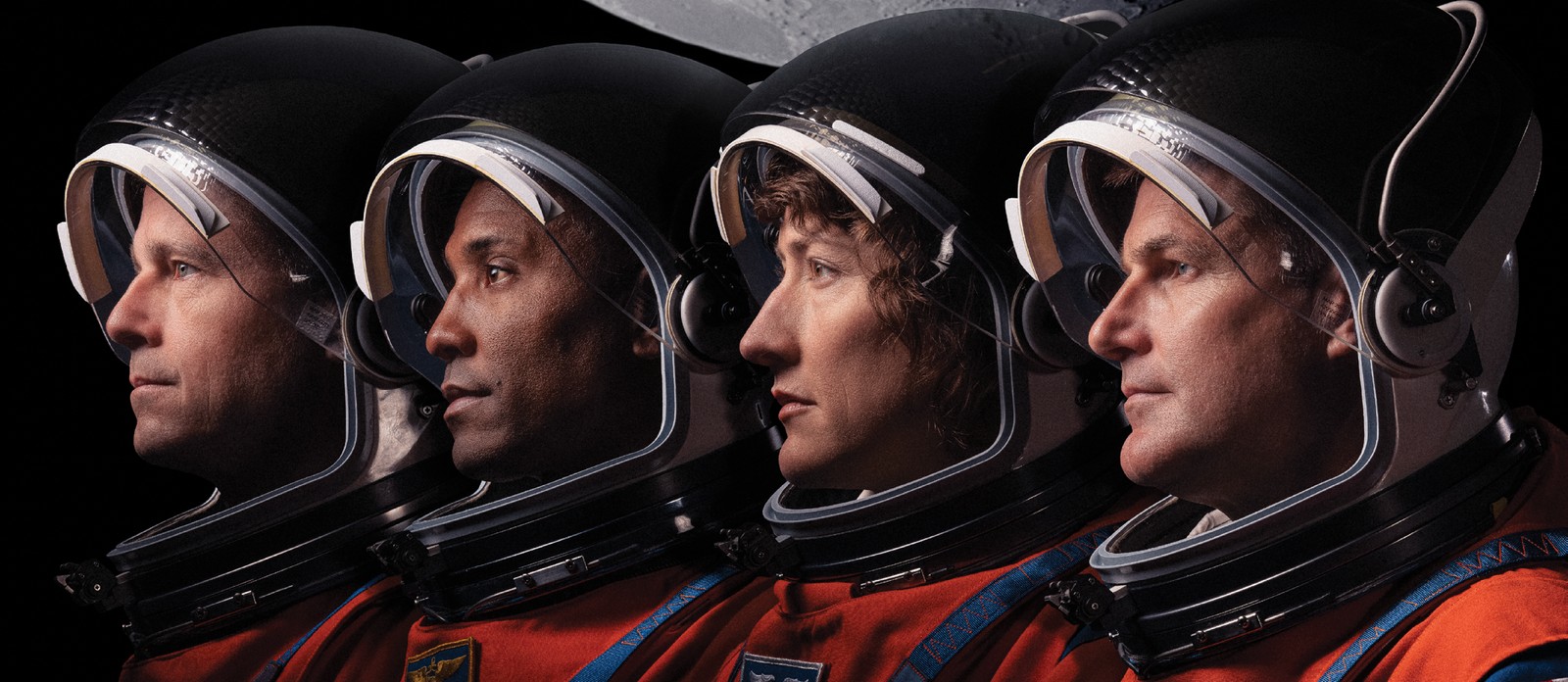
Image: NASA Headquarters / NASA/Daniel O'Neal, Public domain, via Wikimedia Commons

The tradition of the "wake-up call" is one of NASA’s most enduring legacies, stretching back to the Gemini missions of the 1960s. On April 1, 2026, NASA launched the Artemis II mission, sending four astronauts aboard the Orion spacecraft to the Moon and back. This historic flight, the first crewed lunar mission in over half a century, required a soundtrack that balanced the high-stakes precision of deep-space navigation with the sheer human wonder of seeing the Earth rise over the lunar horizon. In this article, we’ll go through the 10-track playlist the crew put together to wake up to and get moving each day.

1
Flight Day 1: "Sleepyhead" by Young & Sick

Image: NASA HQ PHOTO, Public domain, via Wikimedia Commons

The first morning in microgravity is notoriously disorienting. As the crew adjusted to the puffy face caused by fluid shifts and the novelty of floating out of their sleeping bags, "Sleepyhead" by the American band Young & Sick provided a fittingly ethereal backdrop.

The 2018 track’s swirling synths and falsetto vocals mirror the dreamlike quality of looking back at a receding Florida coastline from thousands of miles away. It’s a nice way to start a mission that is anything but gentle during the initial ascent.

2
Flight Day 2: "Green Light" by John Legend

Image: NASA Johnson Space Center / NASA, Public domain, via Wikimedia Commons

By the second day, the adrenaline of launch begins to settle into the reality of the mission's objectives. "Green Light," a collaboration between John Legend and American rapper André 3000, served as the literal and figurative signal to get to work.

For the Artemis II crew, this funk-infused track, released in 2008, played as they performed the first critical proximity operations with the ICPS (Interim Cryogenic Propulsion Stage), testing Orion’s handling before the final "green light" for the Trans-Lunar Injection.

3
Flight Day 3: "In a Daydream" by Freddy Jones Band

Image: Kevin M. Gill, CC BY 4.0, via Wikimedia Commons

As Orion moved further into the void, the Earth, seen through the window, began to shrink. The Freddy Jones Band’s 1993 rock hit "In a Daydream" captured the mid-transit vibe perfectly.

The song is famous for its guitar work and relaxed tempo. It evokes the feeling of being untethered—a literal reality for four humans traveling toward a destination that has remained unvisited for over 50 years.

4
Flight Day 4: "Pink Pony Club" by Chappell Roan
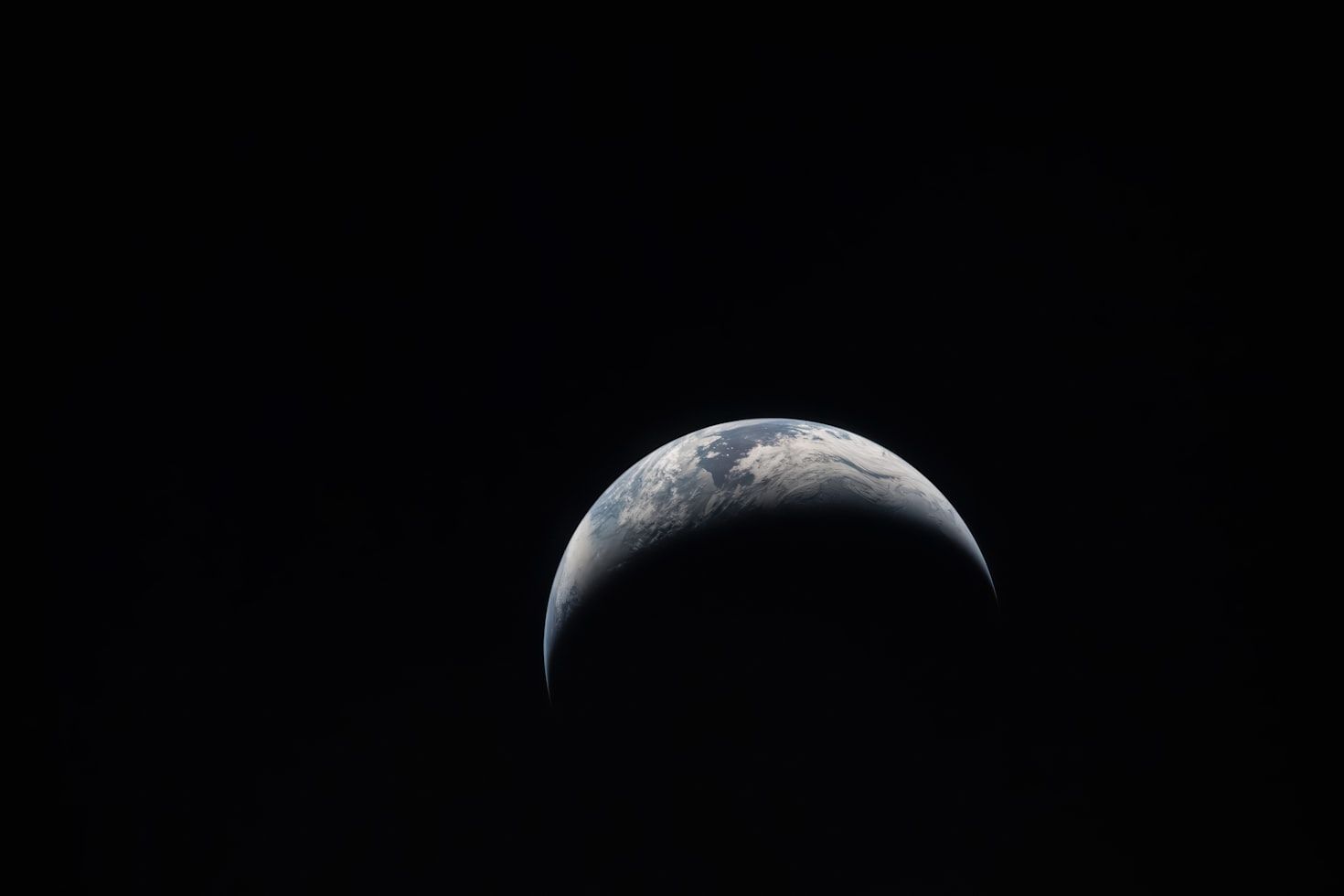
Image: NASA

In space missions, morale is a critical component. The inclusion of Chappell Roan’s 2020 cult hit "Pink Pony Club" brought a burst of high-camp energy and neon-drenched pop to the capsule.

Roan’s anthem about self-discovery and finding your place is a fan favorite on Earth, but it took on a new meaning in the stars. The contrast between the sterile, high-tech interior of Orion and the song’s lyrics about a shimmering dance floor in West Hollywood is the kind of humor and humanity that keeps a crew grounded while they are physically anything but.

5
Flight Day 5: "Working Class Heroes (Work)" by CeeLo Green

Flight Day 5 is the heart of the grind. Deep-space transit involves constant system checks, radiation monitoring, and exercise routines to prevent bone density loss. CeeLo Green’s 2015 "Working Class Heroes (Work)" served as the anthem for the mission's core. The track’s heavy beat and gospel-inflected vocals emphasize the dignity of labor; beneath the glory of the Moon mission is the hard, repetitive work of thousands of engineers on the ground and four highly trained professionals in the sky.

6
Flight Day 6: "Good Morning" by Mandisa, TobyMac
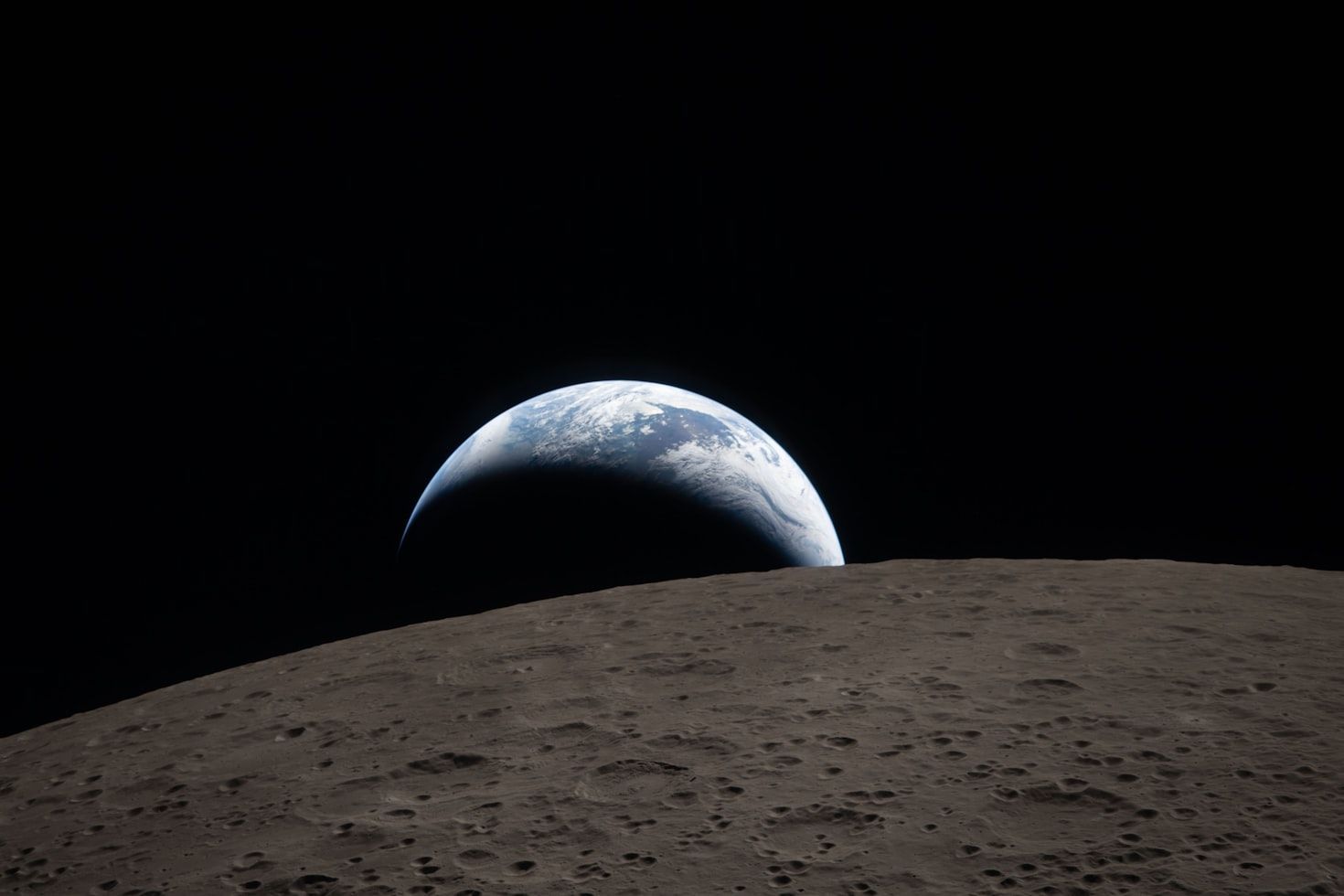
Image: NASA

As the crew prepared for the lunar flyby, they needed a jolt of pure optimism. Mandisa’s 2011 "Good Morning" is a blend of pop and gospel that is impossible to listen to without moving. Mandisa, a Grammy winner and American Idol alumna, often spoke about music as a tool for resilience, a quality the Artemis crew embodied as they crossed the threshold into the Moon’s gravitational sphere of influence.

7
Flight Day 7: "Tokyo Drifting" by Denzel Curry and Glass Animals

Image: NASA

The slingshot around the Moon is the fastest part of the journey. To match the velocity of a lunar gravity assist, the crew chose the frantic energy of "Tokyo Drifting." The brass fanfares and aggressive flow of the 2019 collaboration between Florida rapper Denzel Curry and British indie band Glass Animals provided the perfect sonic environment for the maneuvers as Orion whipped around the lunar far side, briefly losing communication with Earth.

8
Flight Day 8: "Under Pressure" by Queen and David Bowie
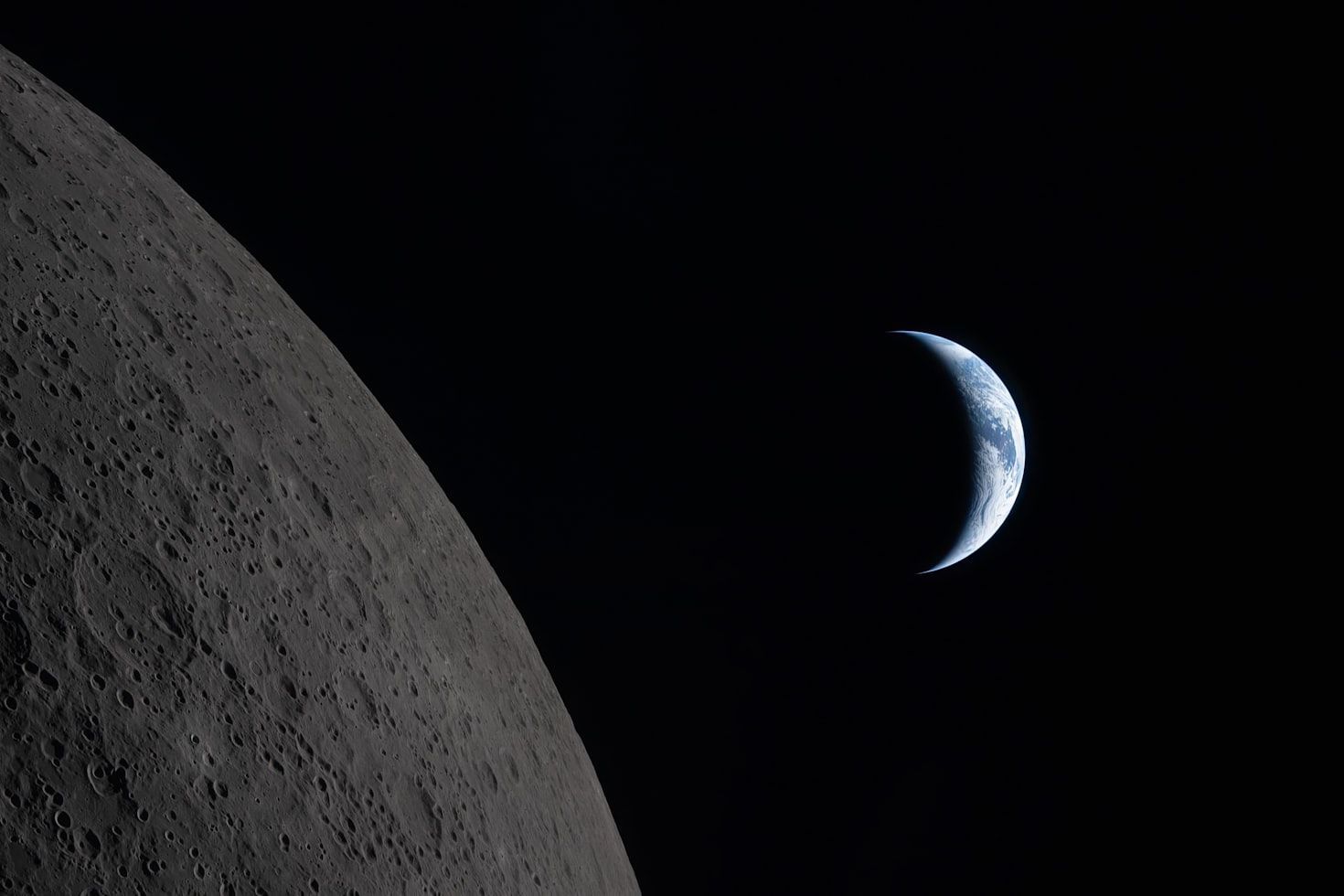
Image: NASA

As Orion turned its nose back toward home, the reality of reentry began to emerge. There is perhaps no song in the history of rock that captures the tension of high-stakes environments better than "Under Pressure" by Queen and David Bowie (1981). The song’s message of empathy and humanity in the face of immense stress is a fitting tribute to the international cooperation that made the Artemis program possible.

9
Flight Day 9: "Lonesome Drifter" by Charley Crockett

Image: Kevin M. Gill, CC BY 4.0, via Wikimedia Commons

The pen-ultimate day of the mission is often a reflective one. Looking back at the Moon while the Earth grows larger in the forward view creates a unique sense of isolation and belonging. Charley Crockett’s "Lonesome Drifter" (2025) provided the neo-country soul necessary for this moment. Crockett’s music often deals with wandering and the search for home. His deep, baritone voice echoing through the Orion cabin emphasized the lonely nature of the long trip back across the cosmos.

10
Flight Day 10: "Run to the Water" by Live

Image: NASA, Public domain, via Wikimedia Commons

The final wake-up call of the mission was a literal instruction. As Orion plummeted through the atmosphere at Mach 25, 2026, aiming for a precision splashdown in the Pacific Ocean, the 1999 hit "Run to the Water" by Live signaled the end of the journey. The song’s soaring chorus and themes of return and renewal coincided with the deployment of Orion’s eleven parachutes. After the capsules finally hit the water, the crew returned to their families, bringing a new era of lunar exploration back to Earth.

History History 6 min read

Would you dare go in?

From Lincoln to Lizzie Borden: The 14 most haunted spots in America

Image: Sandy Flowers

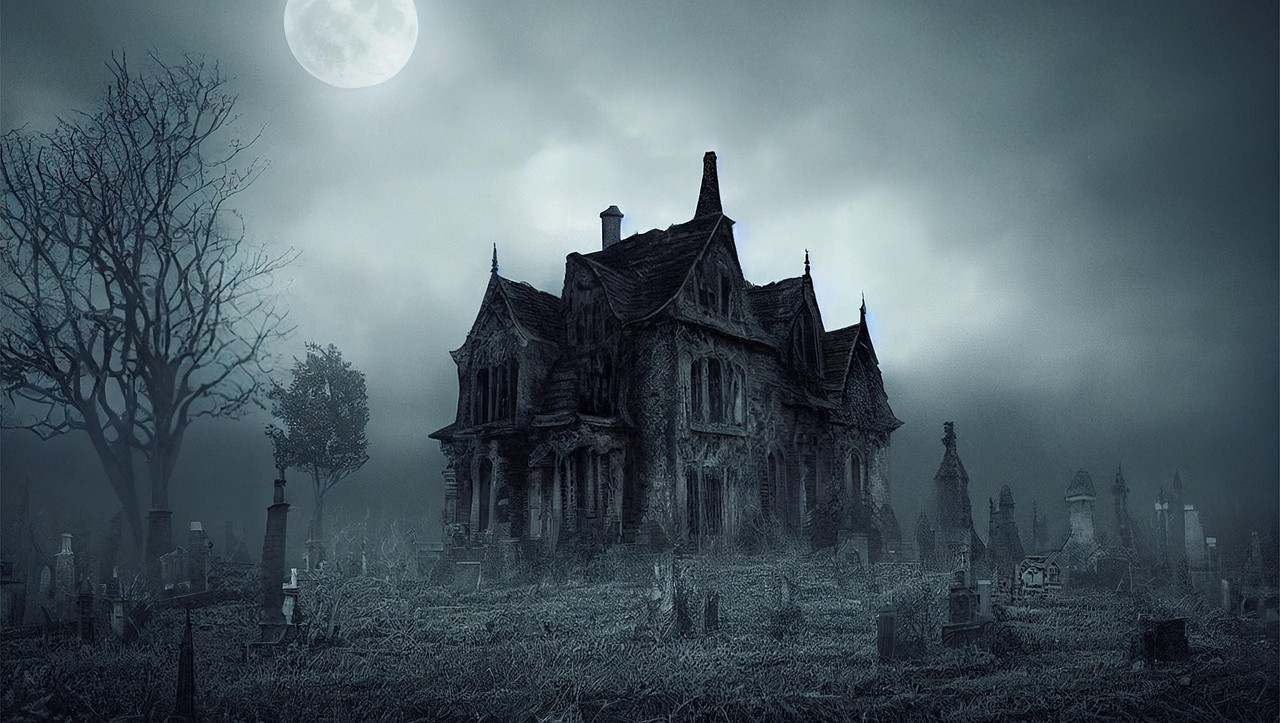
We know—it’s one thing to watch a scary movie hidden behind a giant bag of popcorn, and a very different thing to step into a dark, allegedly haunted house while an eerie, chilly breeze brushes your neck. Here, we’ve made a list of houses, hotels, and mansions in America with the spookiest claims of paranormal activity . Which one would you be brave enough to visit?

1
The Whaley House in San Diego, California

Image: Ivan Borinschi

The Whaley House is one of the few homes officially deemed "haunted" by the US government. Visitors report footsteps echoing in empty hallways, cold spots that won’t go away, and spectral figures on the stairs. How did it come to this? Built in 1857 by Thomas Whaley, the house stands on the site of former gallows. Whaley installed San Diego’s first brick house, which included a courtroom, general store, and theater space.

Unfortunately, Whaley’s daughter died by suicide in the house, and other family members passed away under the same roof. Accumulated tragedies and a spooky old house were enough to turn this eerie spot into a museum.

2
The Roosevelt Hotel in Los Angeles, California

Image: pure julia

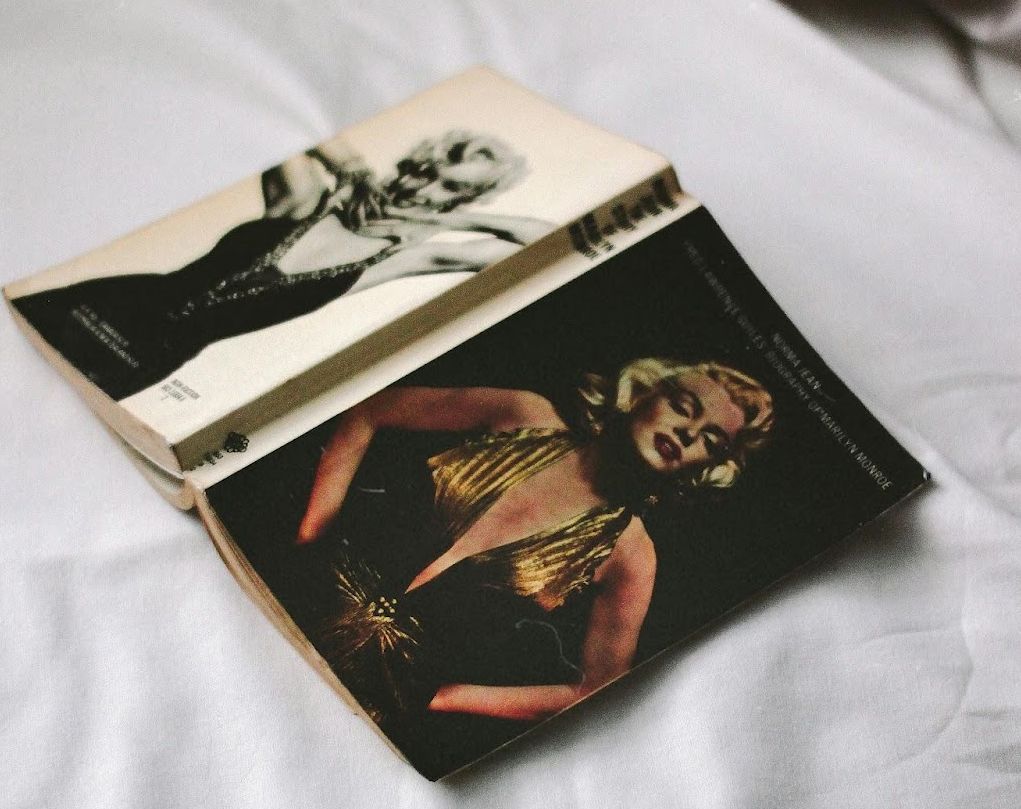
Built in 1927, this glamorous hotel hosted the very first Academy Awards. Stars like Clark Gable, Charlie Chaplin, and Marilyn Monroe were among its esteemed guests. But, according to recent visitors, Monroe never really checked out.

She is said to appear in a mirror that once hung in her poolside suite. Guests have reported seeing the reflection of a blonde woman behind them, only to turn around and find no one there. How would you react?

3
The White House in Washington, D.C.

Image: Suzy Brooks

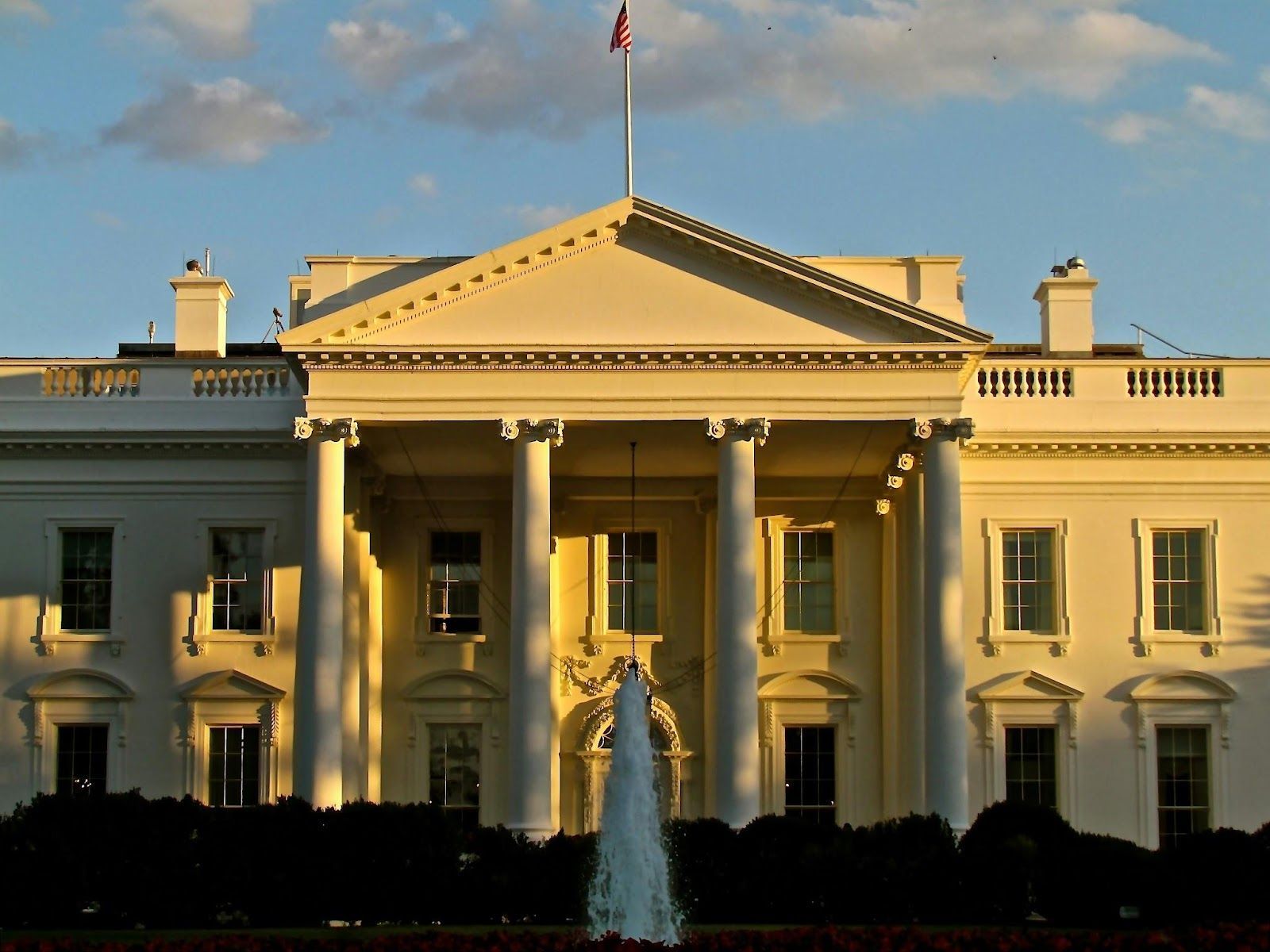
Did you expect to find America’s most powerful address on this list? As it turns out, presidents, first ladies, and staff have all reported eerie encounters over the years, with Abraham Lincoln’s presence as a recurring theme.

Queen Wilhelmina of the Netherlands allegedly fainted after seeing his ghost, and Eleanor Roosevelt claimed to feel his presence. Even Winston Churchill and Ronald Reagan contributed to the stories of a mysterious presence in the Lincoln Bedroom. Reagan famously reported that his dog, Rex, refused to enter the room.

4
The Winchester Mystery House in San Jose, California

Image: Brett Wharton

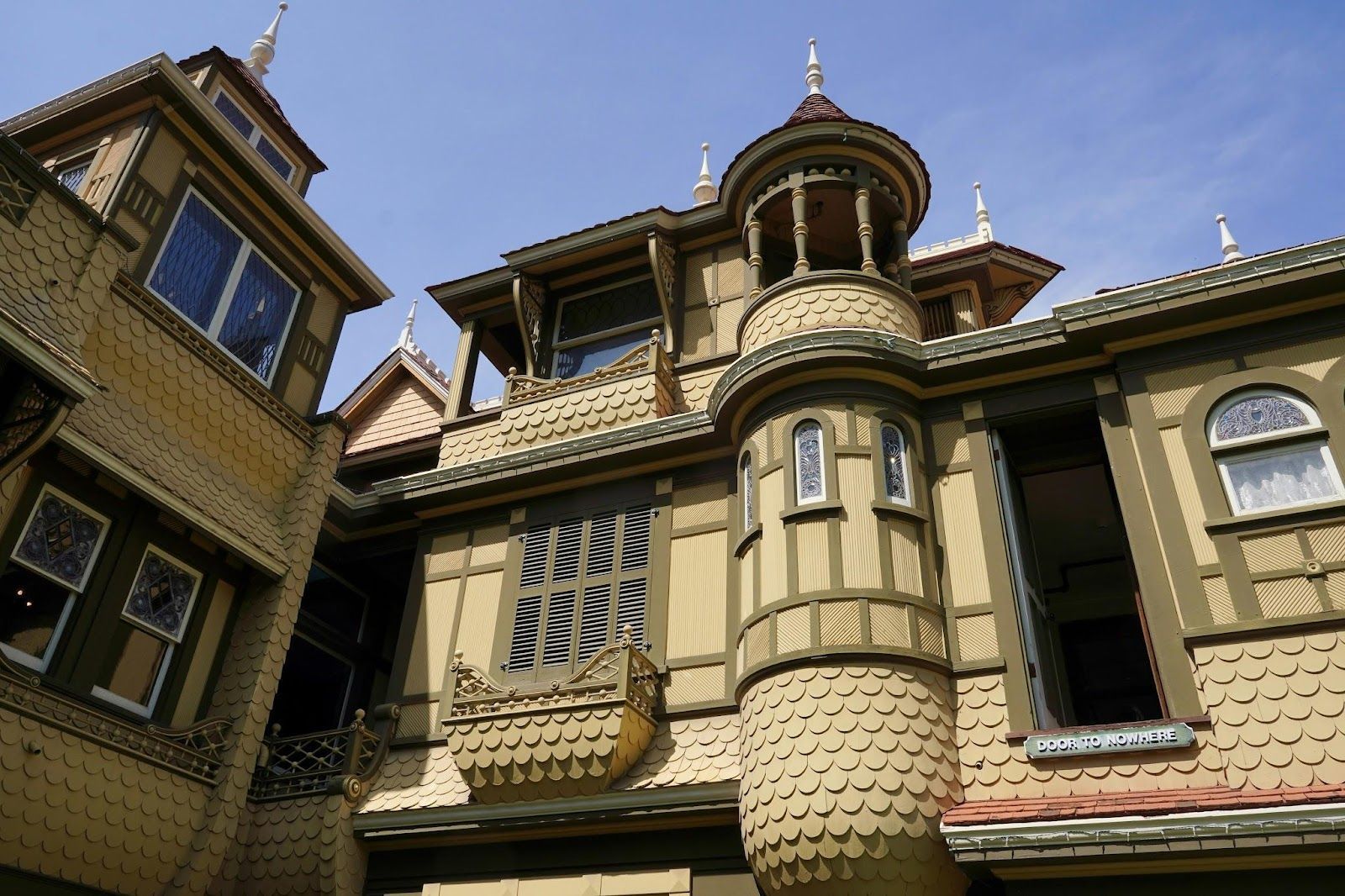
When it comes to haunted mansions, Sara Winchester’s old Victorian-Gothic house will always sit in the podium.

After her wealthy husband and several family members died within months of each other , Sara began commissioning the construction of this puzzling house, which remained under continuous construction for 38 years. Naturally, it’s a bit of a labyrinth.

With staircases that lead nowhere, séance rooms, and flickers of shadowy figures here and there, the house stands as a monument to grief—and to ghosts.

5
The Villisca Axe Murder House in Villisca, Iowa

Image: Kevin Schmid

It might look like a quaint white farmhouse, but in 1912, it was the site of one of America’s most brutal unsolved murders. The Moore family and two guests were killed with an axe while they slept. There were no witnesses, and no real explanation was ever found.

Today, the house remains frozen in time, restored to its 1912 condition. Creaking floors, oil lamps, and a whole lot of uneasy silence.

6
Lizzie Borden House in Fall River, Massachusetts

Image: Bee Felten-Leidel

You know the rhyme: "Lizzie Borden took an axe…" This New England house was the scene of one of America’s most infamous double murders in 1892. Lizzie was acquitted, but many believe she was responsible for the deaths of her father and stepmother, who were found dead under violent and suspicious circumstances.

Today, the house operates as a B&B for the brave and the curious. Guests have reported hearing footsteps, whispers, and even muffled cries coming from empty rooms. Some even choose to sleep in the very bedroom where Abby Borden met her tragic end.

7
The Lemp Mansion in St. Louis, Missouri

Image: Dhruv vishwakarma

Once home to the wealthy Lemp brewing dynasty, the mansion witnessed four family suicides between 1904 and 1949. That’s enough to make anyone who steps inside feel a bit… uncomfortable.

The family was cursed by misfortune: mental illness, failed fortunes, and mysterious deaths. Guests now report heavy footsteps in empty halls, strange knocking, and even ghostly apparitions—especially in the downstairs bathroom, where one Lemp took his own life. Today, it operates as a restaurant and inn.

8
Franklin Castle in Cleveland, Ohio

Image: Rob Potter

This Victorian mansion looks like it was designed to be haunted. Built in 1881 by Hannes Tiedemann, the home witnessed the deaths of several of his children and his wife within a short period.

Since then, tales of secret passageways, Nazi spies, and ghostly weeping have become forever attached to the castle. Owners have come and gone , but as the locals expected, none have chosen to stay.

9
The Sallie House in Atchison, Kansas

Image: Caroline Rogers

What began as a doctor’s residence in the 1800s took a dark turn when a young girl named Sallie allegedly died on the operating table . Her ghost, people say, began tormenting a later male resident, scratching, shoving, and even burning him.

Paranormal teams have confirmed that lights flicker, toys move on their own, and male visitors, especially, report sudden feelings of hostility.

10
The House of Death in New York, New York

Image: With Paul

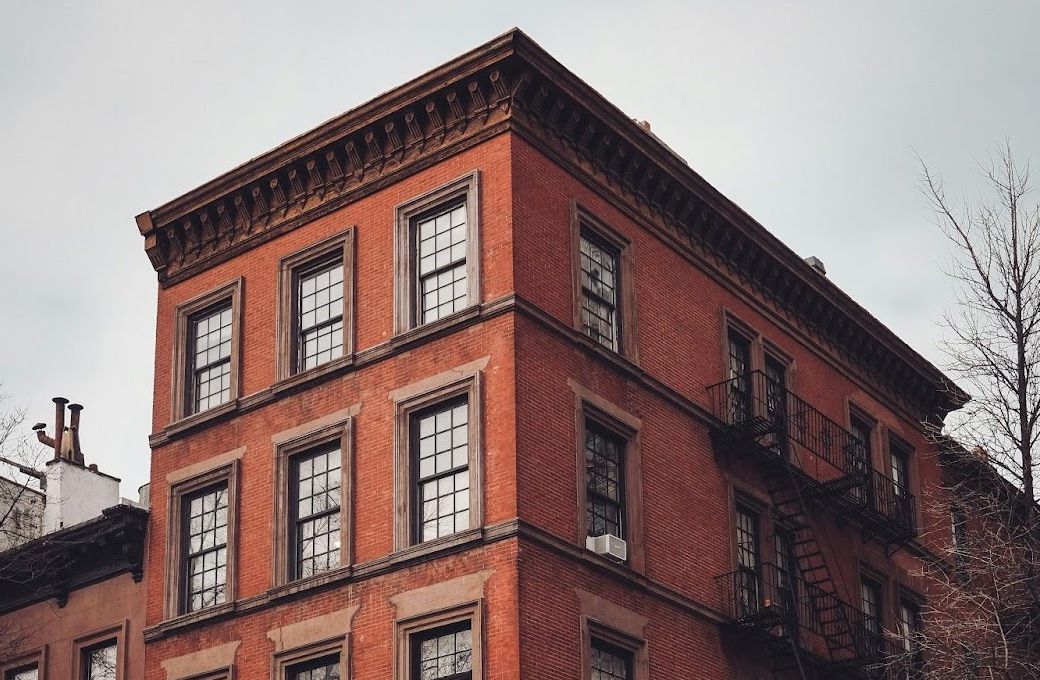
Behind the brownstone elegance of 14 West 10th Street in Greenwich Village lies one of NYC’s darkest secrets: over 20 reported deaths have occurred there.

Mark Twain was its most famous tenant , living there briefly in 1900. He once recounted a story about a floating log inside the house, but insisted that a rodent must have been responsible. Paranormal enthusiasts, however, refuse to believe his explanation and now claim that Twain’s ghost also haunts the house.

11
The Joshua Ward House in Salem, Massachusetts

Image: Blake Cheek

This Georgian brick home sits under a dark curse in Salem. Its original land once held the jail of Sheriff George Corwin, infamous for torturing accused witches during the 1692 Salem Witch Trials. Known as the "Strangler," Corwin died of a heart attack at age 30 and was secretly buried in the basement.

Today’s residents and visitors report strangled sensations, cold drafts, and photographic anomalies—including a famous 1980s photo that appears to show a ghostly woman dressed in black with no eyes.

12
LaLaurie Mansion in New Orleans, Louisiana

Image: Alain Pierre-Lys

Few stories are darker than that of Madame Delphine LaLaurie, a socialite whose elegant French Quarter mansion concealed an appalling secret. In 1834, a fire revealed a hidden attic where enslaved individuals had been cruelly confined under horrific conditions.

LaLaurie fled to Paris, but the ghost stories remained. Visitors claim to hear moans and phantom footsteps and to see shadowy figures. Actor Nicolas Cage once purchased the property but quickly sold it, claiming bad luck followed him.

13
The Bell Witch Cabin in Adams, Tennessee

Image: Alex Vinogradov

This cabin marks the site of one of America’s oldest and most documented hauntings: that of the Bell Witch . This ghost received the nickname for haunting the Bell family in the 1800s. For years, the family endured a spirit that scratched walls, pulled hair, and even spoke in full sentences.

Legend has it that the entity killed patriarch John Bell. To this day, the rebuilt cabin and nearby cave remain popular destinations for ghost hunters.

14
The Riddle House in West Palm Beach, Florida

Image: Braden Wagner

Originally a funeral home (already a chilling start, right?), the Riddle House was later converted into a private residence. The story goes that it became haunted after an employee named Joseph hanged himself in the attic.

The house was eventually moved to Yesteryear Village to be preserved as a historical site, but it seems the ghosts made the trip too.

General General 7 min read

State your colors

Why is there a bleeding animal on this state flag? Read all about it

Image: Dreajc10, CC BY-SA 4.0, via Wikimedia Commons

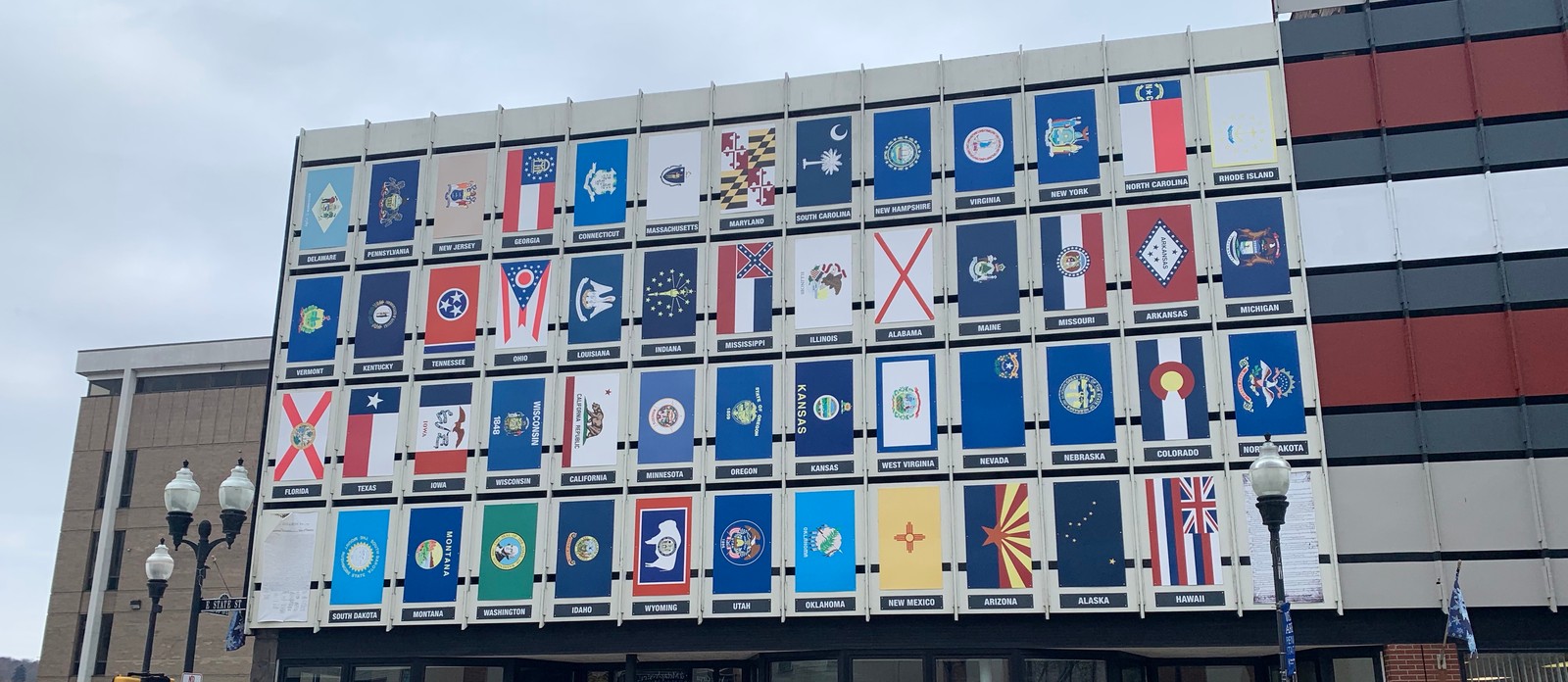
How much do you know about state flags? We see them flying at schools, post offices, and parades, but we rarely stop to think about where they come from. All of them have backstories that are worth learning about. From strange animal motifs to presidential portraits, here's a quick tour of some of the most unique state flags that you may find while touring America.

1
A 13-year-old designed Alaska’s flag

Image: Aerra Carnicom, CC BY-SA 4.0, via Wikimedia Commons

In 1927, while Alaska was still a U.S. territory, officials launched a contest inviting school kids to design territorial flags. Among the 140 entries that arrived in Juneau containing polar bears, mining scenes, or territorial seals, was the design of 13-year-old Benny Benson , an Alaskan Native Aleut.

The design featured eight gold stars against a deep blue field. Seven stars formed the Big Dipper, symbolizing strength through the Great Bear constellation, while the North Star represented Alaska’s future as the northernmost state in the Union. Benson also explained that the blue background honored both the sky and the state flower, the forget-me-not. His design was unanimously selected and officially adopted by the territorial legislature in May 1927, and Benson received a gold watch engraved with the flag and a $1,000 scholarship award.

2
Washington went green and presidential

Image: Malachi Brooks

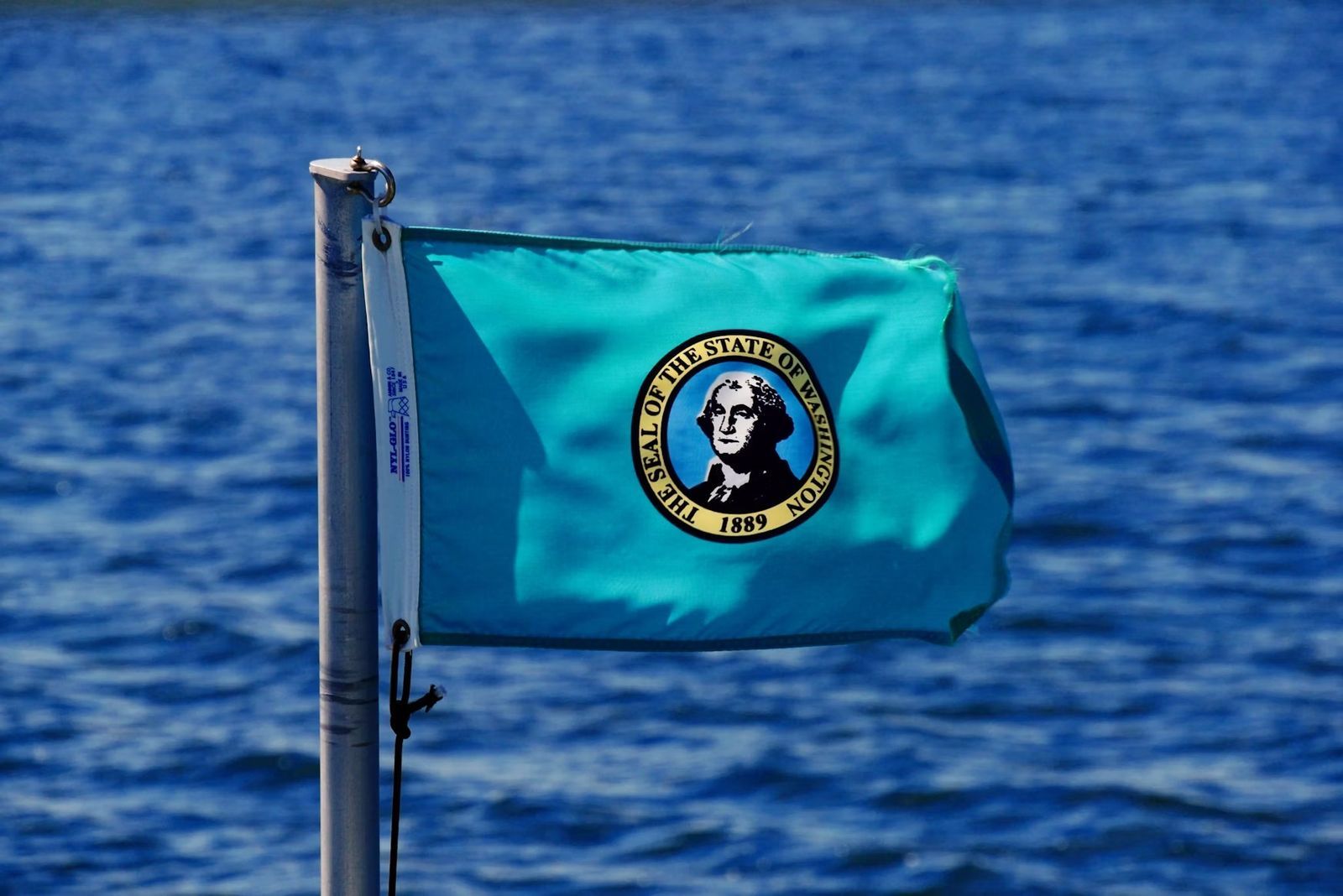
When Washington officially adopted its state flag in 1923, the Legislature made a choice unlike any other state in the country. Instead of following the usual red, white, and blue pattern, they chose a deep green background to reflect the state’s nickname , "The Evergreen State," a reference to its dense forests and year-round greenery. At the center, they placed the state seal featuring George Washington, the first president of the U.S.

The portrait itself was based on a famous painting by Gilbert Stuart, an American artist known for some of the best images of Washington. The portrait represents patriotism and identity. To this day, Washington remains the only U.S. state flag with a green field and the only one to feature an American president’s face.

3
Ohio ditched the rectangle

Image: Hannah Wernecke

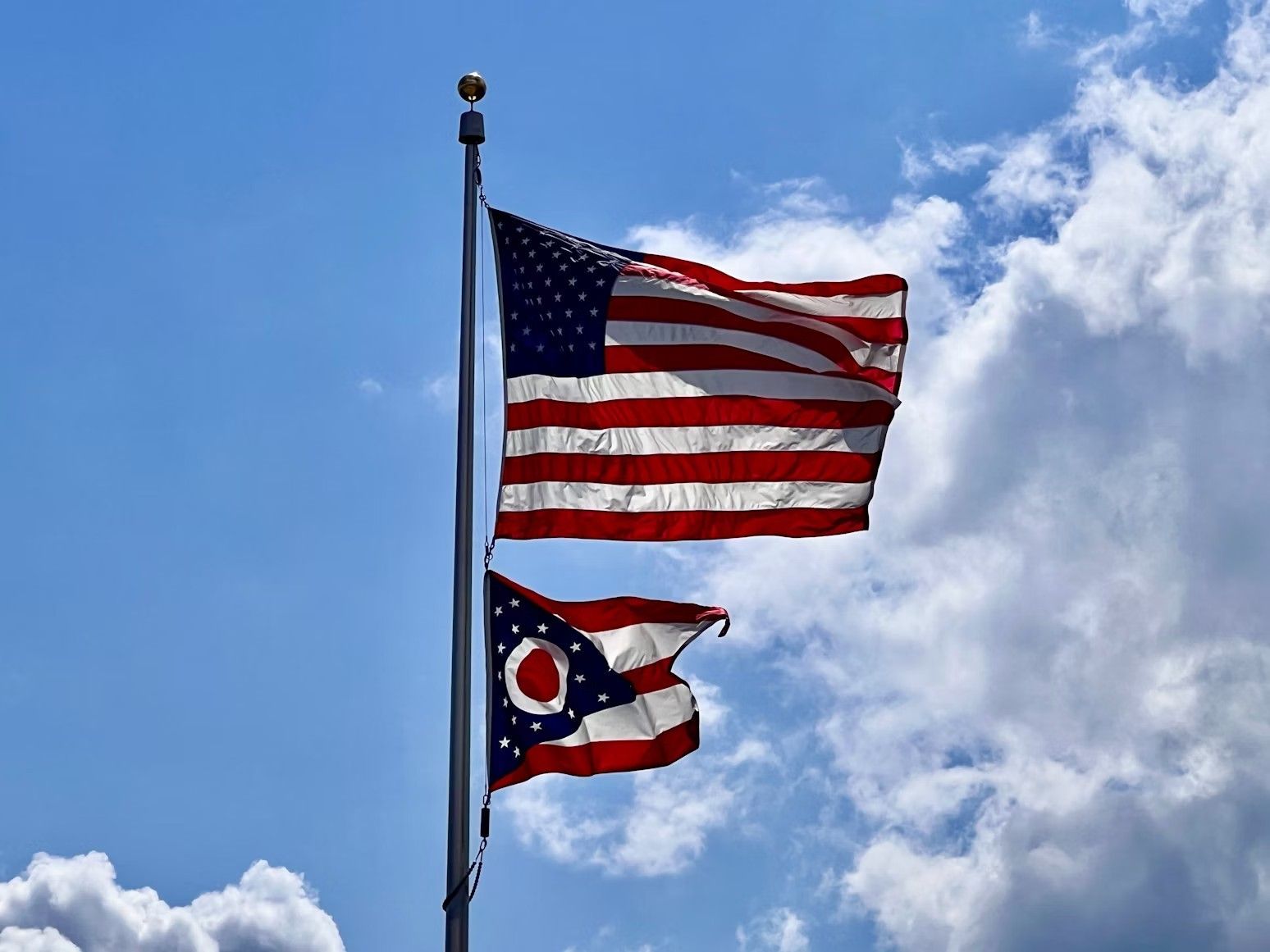
Ohio may have joined the Union in 1803, but for nearly a century, the state had no official flag of its own. But it began turning heads the moment it was introduced in 1902.

Designed by architect John Eisenmann for the Pan-American Exposition in Buffalo, New York, the flag broke one of the oldest traditions in vexillology. Instead of a rectangle, Eisenmann created a burgee, a swallowtail pennant shape more commonly used by naval organizations and cavalry units. Its red and white stripes represent roads and waterways, while the blue triangular field symbolizes Ohio’s hills and valleys. The white "O" stands for both Ohio and the buckeye nut, and the 17 stars honor Ohio as the seventeenth state admitted to the Union.

4
Maryland flew in from the Middle Ages

Image: Aerra Carnicom, CC BY-SA 4.0, via Wikimedia Commons

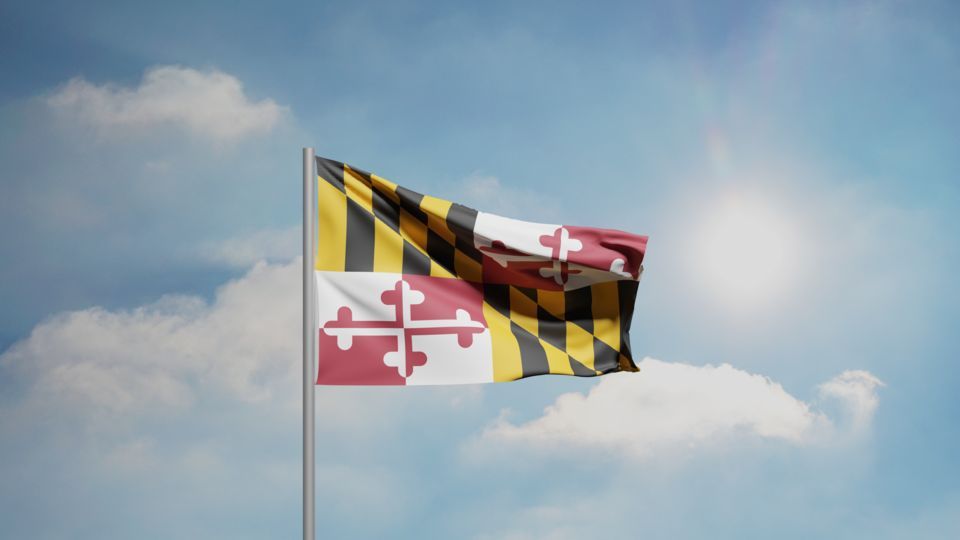
The story behind Maryland’s flag reaches back to English nobility, long before the U.S. existed. Its design comes from the coats of arms of the Calvert and Crossland families , connected to George Calvert, the first Lord Baltimore, whose family founded the Maryland colony in 1632 under a charter granted by King Charles I. The black and gold pattern belonged to the Calvert family, while the red and white cross belonged to the Crossland family through Calvert’s mother, Alicia Crossland.

During the Civil War, the colors gained powerful political meaning. Union supporters in Maryland often displayed the Calvert colors, while Confederate sympathizers adopted the Crossland pattern. Following the war, state leaders sought unity during Reconstruction, and by the 1880s, the two designs were combined into one banner. Maryland officially adopted the flag in 1904, turning former symbols of division into a lasting emblem of reconciliation.

5
California’s bear has a revolutionary past

Image: Drei Kubik

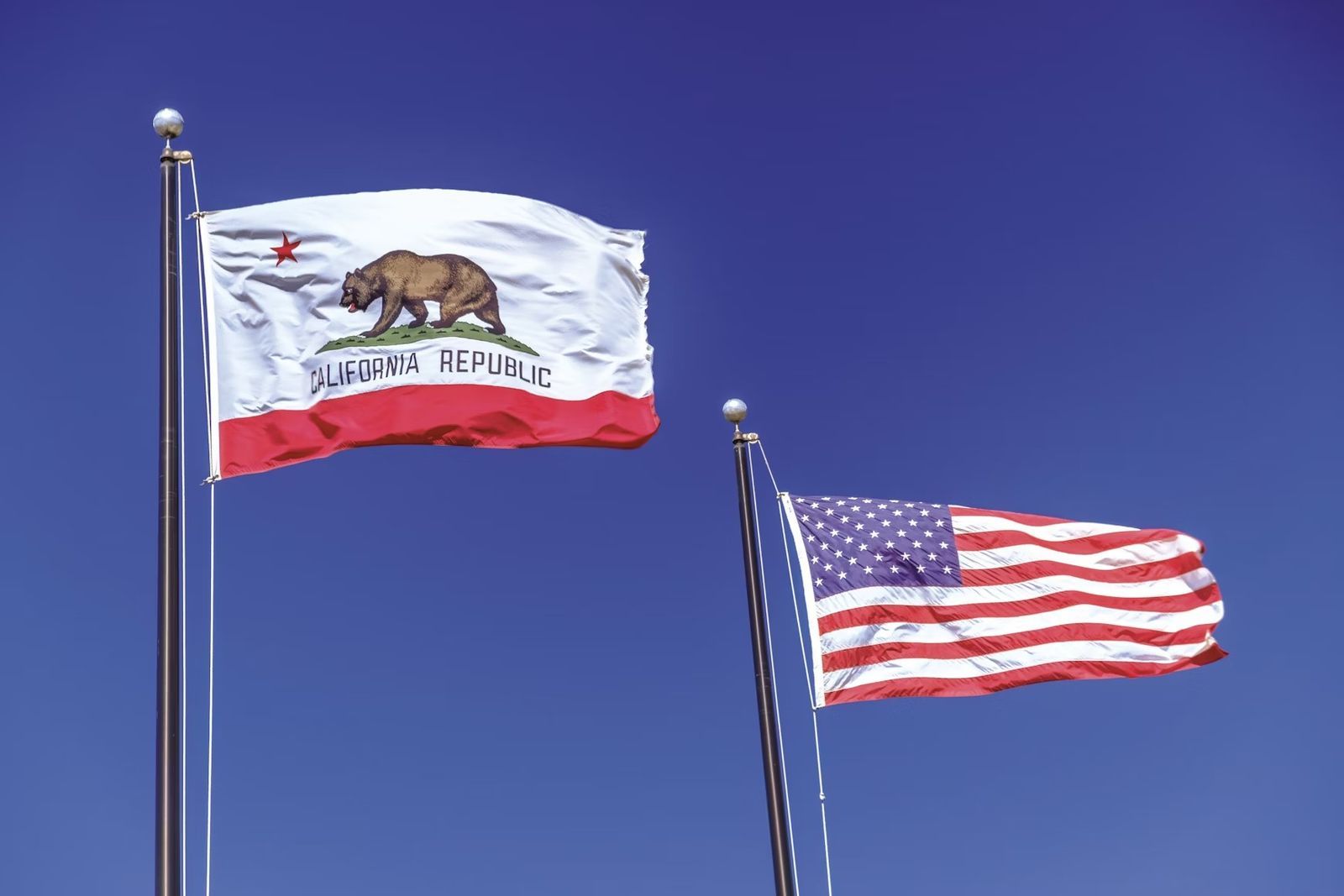
California’s famous Bear Flag began during the Bear Flag Revolt of 1846, when American settlers in Sonoma rebelled against Mexican rule and declared California an independent republic. Their handmade banner featured a grizzly bear, a red star, and the words "California Republic."

The rebellion ended in less than a month after the U.S. forces took control during the American-Mexican War between 1846 and 1848, but the image remained a symbol of independence. The original flag was later destroyed in 1906 in the San Francisco earthquake, though copies had been preserved. It wasn’t until 1911 that lobbying from the historical society, Native Sons of the Golden West, made the legislature adopt the design as the official state flag.

6
Oregon’s two sides

Image: Aerra Carnicom, CC BY-SA 4.0, via Wikimedia Commons

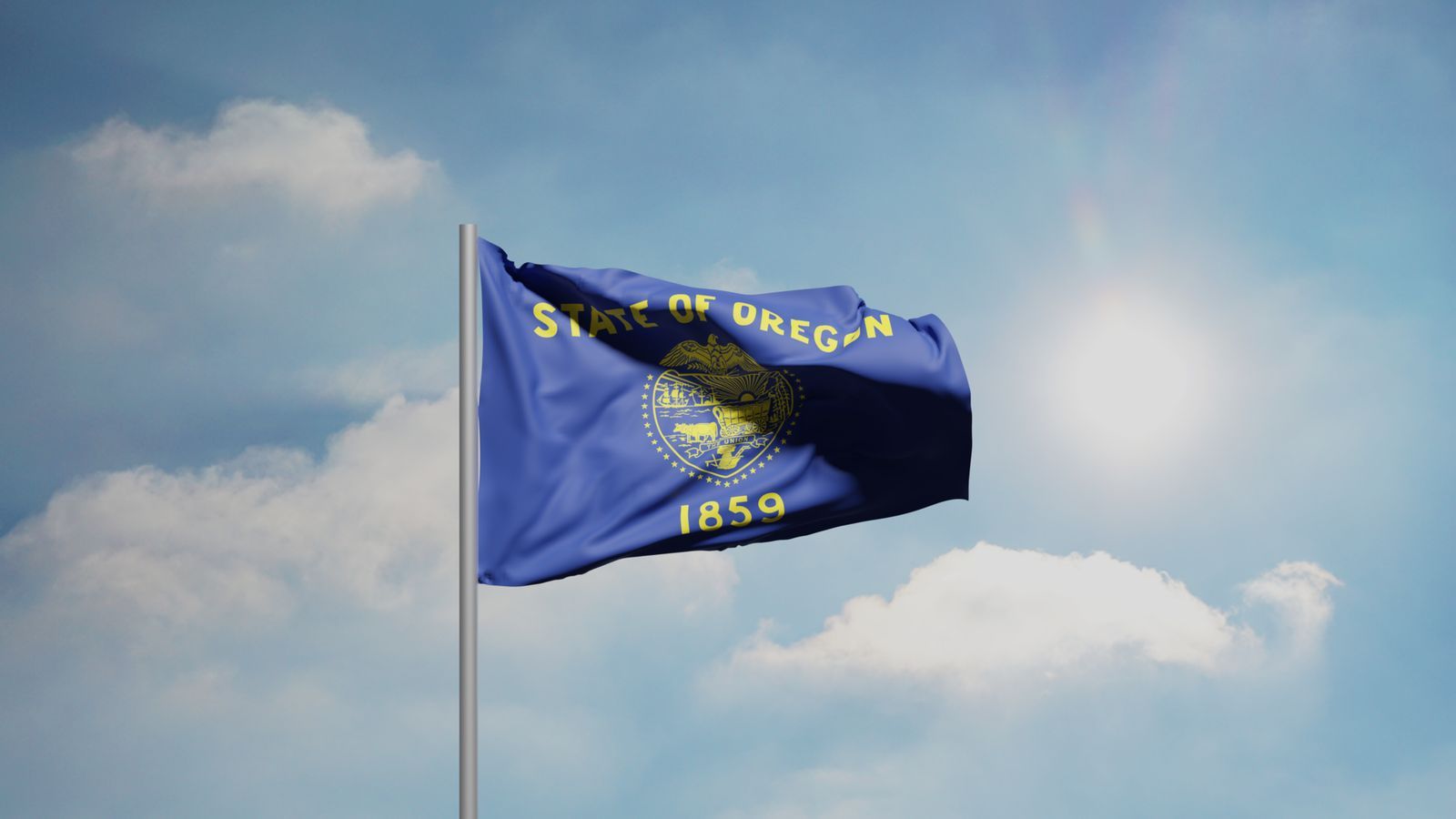
When Oregon adopted its official state flag in 1925, it quietly created one of the rarest flags in the world. Unlike nearly every other state banner, Oregon’s flag features two completely different designs, one on each side.

The front displays the state seal in gold against a navy-blue background, surrounded by 33 stars representing Oregon’s admission as the thirty-third state in 1859. Beneath the shield appears the year of statehood, while symbols such as a covered wagon and an eagle reflect Oregon’s frontier history and connection to the United States. The reverse side tells a simpler story. There, a single gold beaver appears alone on the blue field. The beaver became Oregon’s state animal because the fur trade played a major role in the region’s early economy during the 1800s.

7
Hawaii still nods to the British

Image: little plant

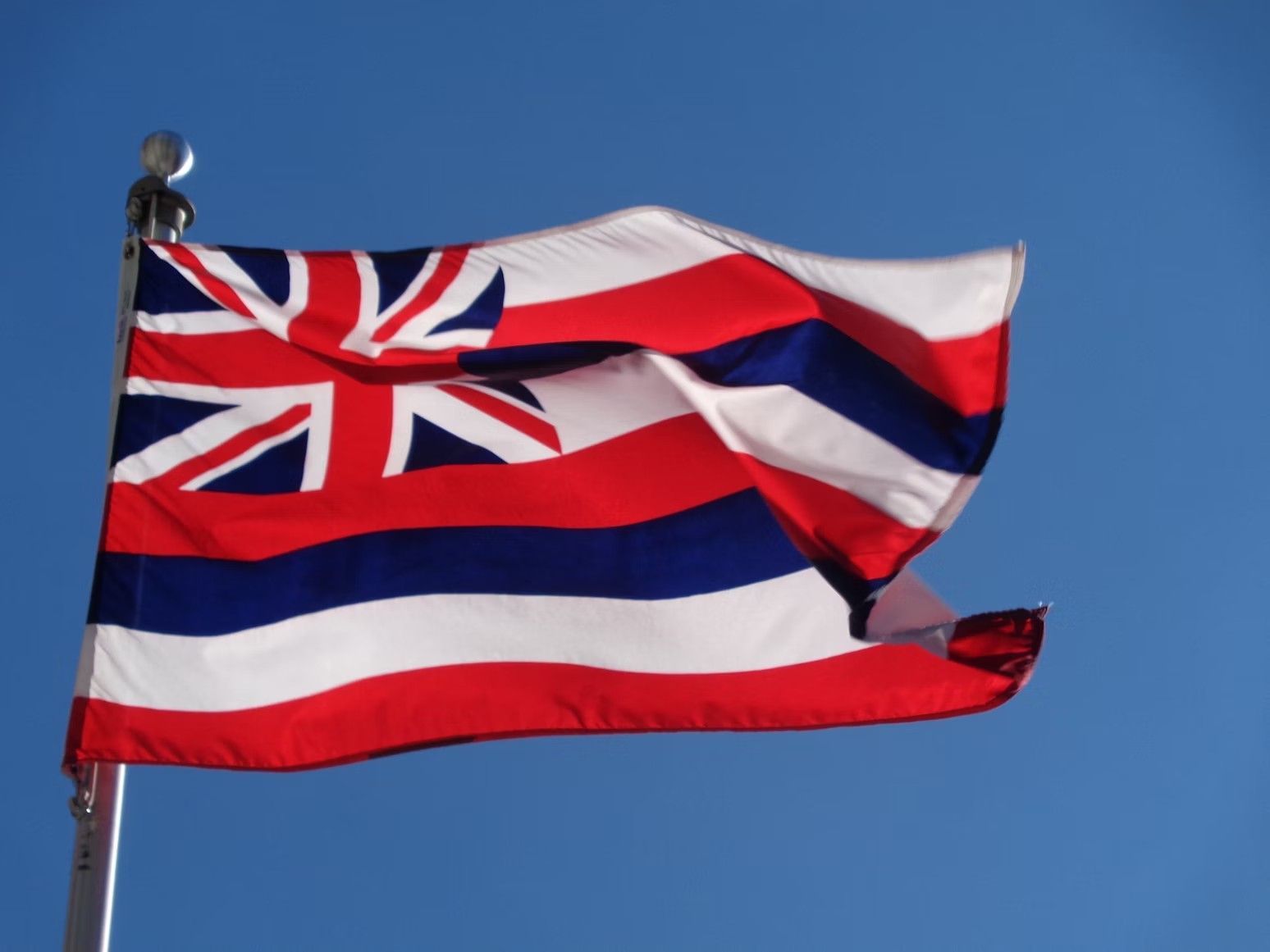
Hawaii’s state flag tells the story of a kingdom caught between powerful nations during the early 1800s. The British Union Jack placed in the corner dates back to the reign of King Kamehameha I, the ruler who united the Hawaiian Islands into a single kingdom.

Ever since the first British flag was raised in that territory in 1794, Hawaii used several variations of flags that blended British and American influences , partly to maintain good relations with both nations during the War of 1812. A combined design was created using the Union Jack alongside horizontal stripes inspired by the American flag. By 1845, the current design with eight stripes, representing the major islands, had been established. When Hawaii became a state in 1959, the historic flag remained unchanged.

8
Louisiana’s bleeding pelican

Image: Clker-Free-Vector-Images

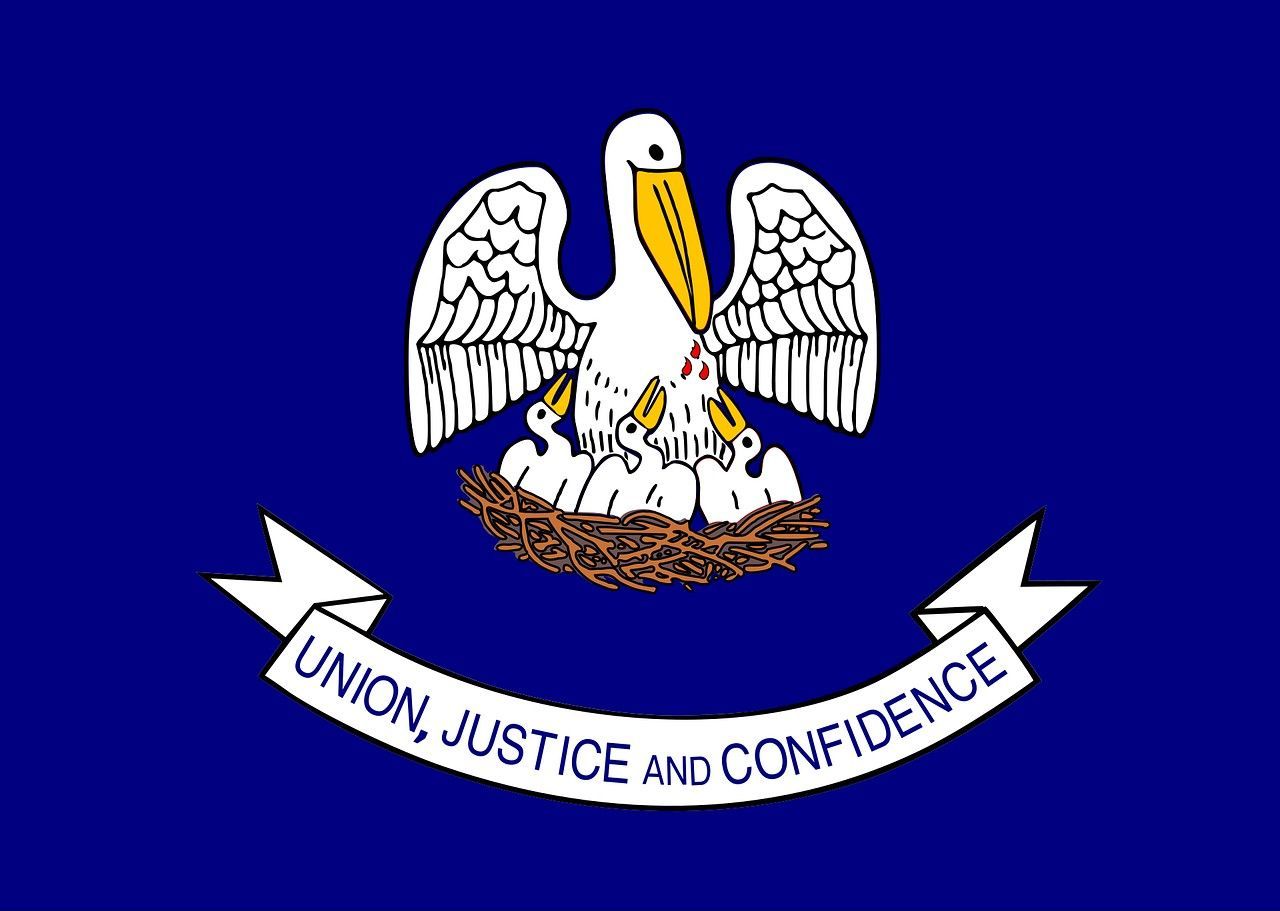
At first sight, Louisiana's choice of flag might seem a bit odd, but the meaning of its symbols carries centuries of meaning. The flag was adopted in 1912 and, at the center, stands a mother pelican feeding her chicks with drops of her own blood, an image taken from Christian traditions. According to legend, pelicans wound themselves during times of famine to keep their young alive. And even though the story is not scientifically accurate, the symbol stands for sacrifice, compassion, and protection. It also represents the bird-filled wetlands and Gulf Coast landscape that shaped the state’s identity.

Over time, different versions of the flag softened the dramatic image and even removed the drops of blood completely, but in 2010, Louisiana officially restored the traditional design and brought it back.

9
South Carolina’s flag is not standardized

Image: Clker-Free-Vector-Images

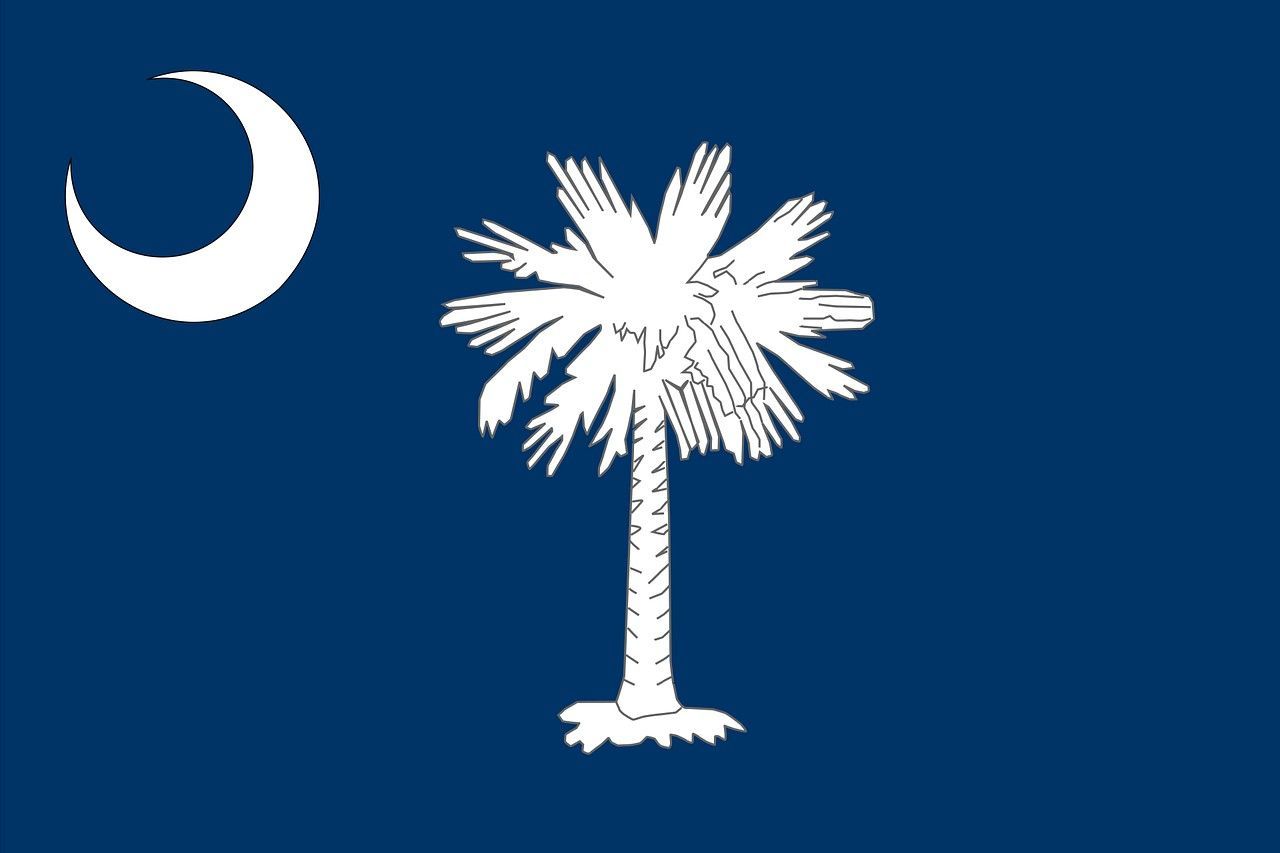
South Carolina’s flag shows a white crescent shape above a palmetto tree, and its design was born during the first days of the American Revolution. In 1775, Colonel William Moultrie designed a simple blue banner with a white crescent based on the uniforms worn by local patriot soldiers defending Charleston Harbor. A year later, the fort’s walls of palmetto logs absorbed British cannon fire instead of shattering. The Unexpected victory turned the palmetto tree into a symbol of South Carolina’s resistance, and it was added to the flag.

As the years passed, different versions appeared across the state, especially during the Civil War, when many were painted by hand. South Carolina officially adopted the familiar flag in 1861, but there were never defined exact shapes or proportions. That is why even today, no two South Carolina flags look exactly alike.

10
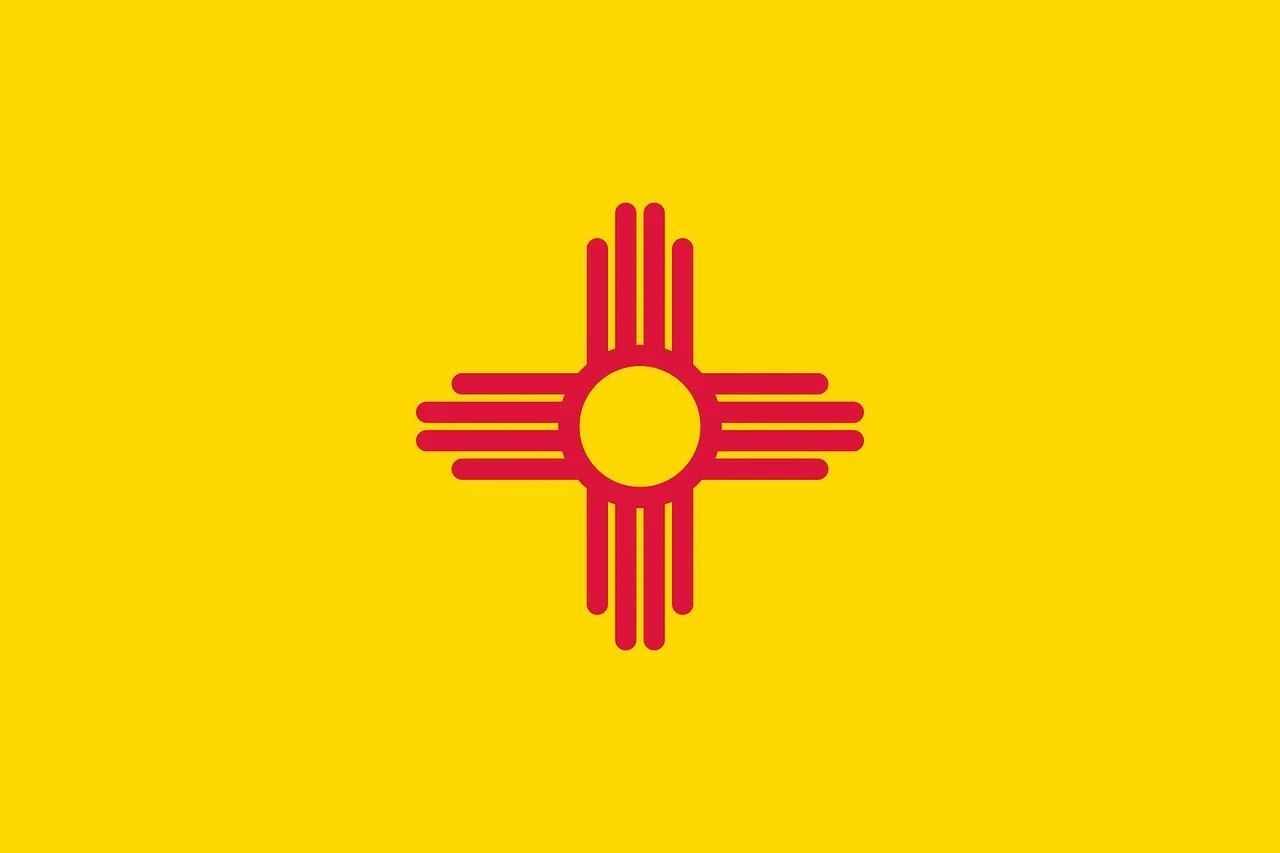
New Mexico went bold and beautiful

Image: Clker-Free-Vector-Images

New Mexico’s first flag looked much like many others of the time. Designed by historian Ralph Emerson Twitchell, it included the American flag, the state seal, and the words "New Mexico" stitched across a blue field. But in 1920, the Daughters of the American Revolution began pushing for a design that truly represented the Southwestern identity.

After winning a statewide contest, Dr. Harry Mera, a Santa Fe physician and archaeologist, and his wife, Reba Mera, presented a design that replaced crowded symbols with something simpler : a red Zia sun symbol centered on a yellow field inspired by the colors carried by Spanish explorers centuries earlier. The sacred Zia symbol represented harmony through the number four, reflected in the seasons, directions, stages of life, and times of day. Adopted in 1925, the design became one of the boldest and most admired flags in America.

Explore more American facts

Choose your favorite category!

General
General

As American as apple pie—the very best America has to offer!

Culture
Culture

Delve into the astounding richness of American lore.

Geography
Geography

Hop in and explore vast and diverse American landscapes.

History
History

Discover the key moments that shaped the United States.