Geography Geography 5 min read

Extraordinary secrets about the capitals of the United States

Which state capital has no McDonald's? Plus 11 more facts
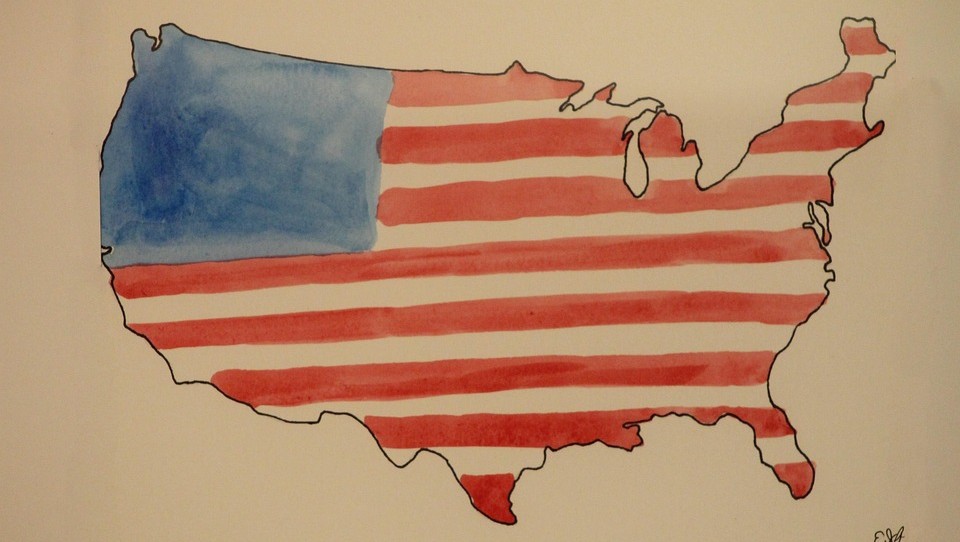
Image: AmericanBenchCraft

Can you guess which is the only U.S. capital built on top of an extinct volcano? What about which is the oldest state capital, the least populated, or the one with the coldest temperature? If you're dying to know the answers to these questions, read on to discover 12 fun facts about our state capitals that you probably didn't know!

1
Jackson, Mississippi

Image: Engineers' office, department of Tennessee, Public domain, via Wikimedia Commons

Did you know Jackson, Mississippi, is named after the 7th U.S. President, Andrew Jackson? It is one of the four state capitals named after American presidents —the other three are Jefferson City (Missouri), Lincoln (Nebraska), and Madison (Wisconsin).

Jackson is the only U.S. capital built on top of an extinct volcano. Interestingly, during the Civil War, the city was burned by Union troops, giving it the nickname "Chimneyville". In addition, Jackson is best known for being the center of the civil rights movement during the 1950s and 1960s.

2
Santa Fe, New Mexico

Image: Wendy Shervington

In 1610, Spanish settlers established Santa Fe as the capital of New Mexico, making it the oldest state capital in the country. But that's not the only peculiarity of this quaint city with a temperate climate and a unique historical and cultural richness. At 7,000 feet above sea level, Santa Fe is also the highest U.S. capital.

3
Honolulu, Hawaii

Image: Daniel Lee

Known for its spectacular beaches and rich cultural heritage, Honolulu is the only state capital not on the North American mainland. Considered the birthplace of modern surfing, it also has the highest average annual temperature of any U.S. state capital.

But those aren't the only interesting facts about Hawaii's capital. Here are a few equally (or more) crazy ones: it hosts the only royal palace in the United States (Iolani Palace), the island is made up of volcanic soil, and it houses the world's largest open-air shopping mall (Ala Moana Center).

4
Annapolis, Maryland

Image: Terry Granger

Annapolis is a historic city on the shores of the Chesapeake Bay, known for its colonial architecture, nautical tradition, and academic value. But did you know it is also the smallest U.S. capital by land size? Just 6.7 square miles!

Annapolis was also one of the nine capitals the United States has had throughout its history. For nine months during the Revolutionary War, Maryland's current state capital served as the seat of the Confederation Congress.

5
Bismarck, North Dakota

Image: NASA Astronaut, Public domain, via Wikimedia Commons

If you thought Juneau, Alaska, had the lowest average winter temperature of all state capitals, think again! It's actually Bismarck, North Dakota, where the coldest temperature ever recorded was -45°F. Imagine that!

Bismarck was founded in 1872 on the banks of the Missouri River. The city was named after Otto von Bismarck, the chancellor of Germany, to attract German investors. Another fun fact? In 1930, Bismarck and Fargo had a dispute, known as the "Capitol Tower War," over which city should be the state capital.

6
Charleston, West Virginia

Image: Carol M. Highsmith, Public domain, via Wikimedia Commons

Did you know that the original name of West Virginia's capital was Charles Town in honor of the father of Colonel George Clendenin, one of the first settlers?

Charleston is best known for offering a unique combination of history, culture, and outdoor adventure.

7
Hartford, Connecticut

Image: Balazs Busznyak

Founded in 1635, Connecticut's capital is one of the oldest cities in the U.S. Hartford is known for being a key cultural center in New England. It was the home of writer Mark Twain and is home to historic sites such as the State Capitol, the Harriet Beecher Stowe House, and Bushnell Park, the oldest public park in the country.

Hartford is also called the "insurance capital of the world" due to the presence of major insurance companies. But the city's most curious fact is that it was where Teddy Roosevelt, aboard the Columbia Electric Victoria Phaeton, took the first presidential automobile ride in history!

8
Harrisburg, Pennsylvania

Image: Katherine McAdoo

Pennsylvania's capital city is best known for its role in the Civil War and the Underground Railroad. Located on the banks of the Susquehanna River, Harrisburg has been an important center of transportation and commerce. Today, it is known for its historic architecture, museums, and special events.

Harrisburg is also home to the longest stone arch bridge in the world, the Rockville Bridge, built in 1902. Oh, and in 1979, it came close to a nuclear disaster due to the accident at the Three Mile Island plant, the worst in U.S. history —but that's a longer story for another article!

9
Olympia, Washington

Image: Peter Robbins

Located at the southern tip of Puget Bay, Washington's state capital is known for its natural beauty and vibrant culture. But did you know Olympia is the northernmost state capital in the contiguous U.S.?

Oh, and it's also a great place to try some of the best craft beer in the country!

10
Salt Lake City, Utah
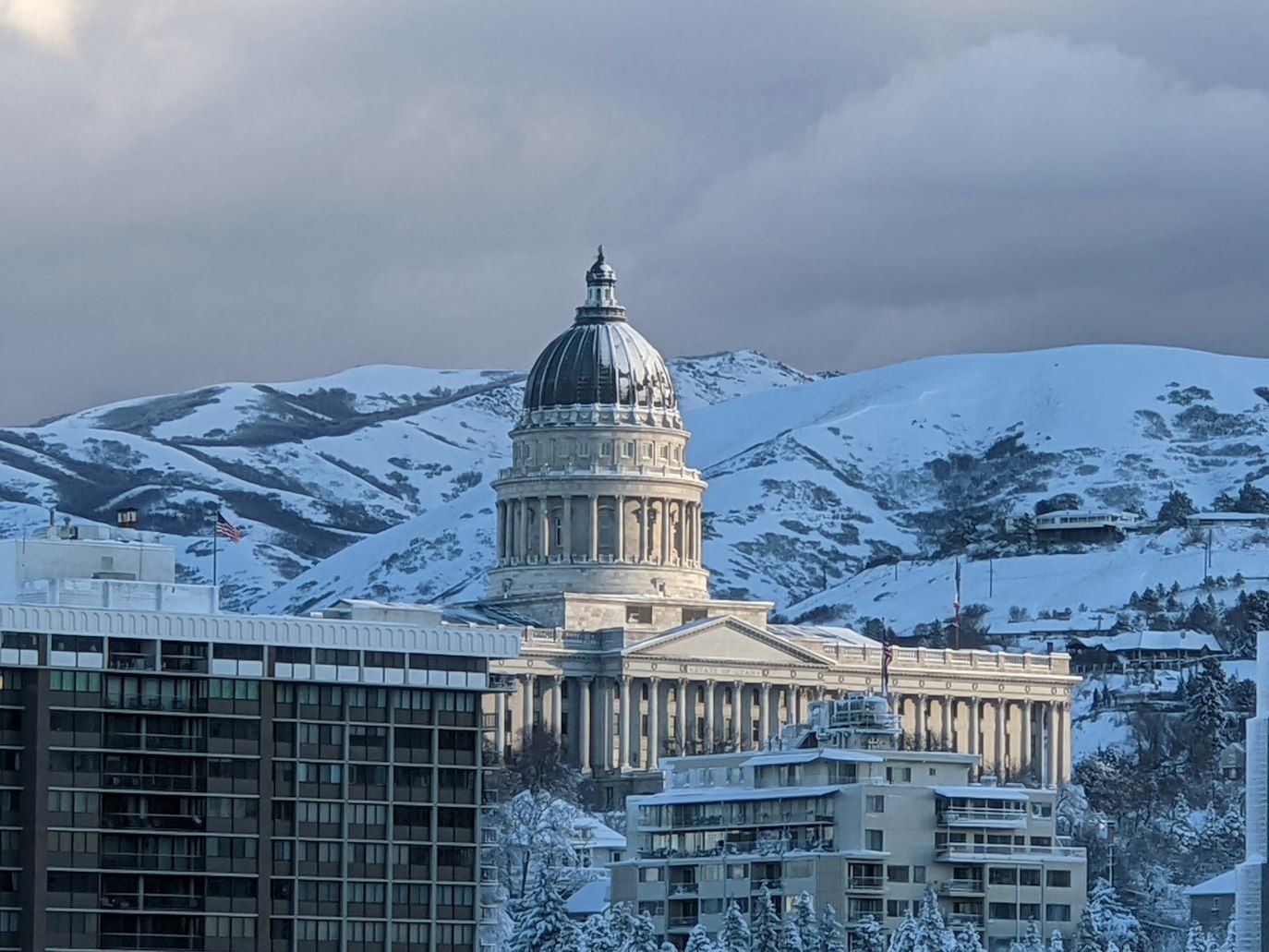
Image: Cong Wang

Utah's state capital is popular for being one of the best places to ski in the United States. But that's not all! Salt Lake City is also the only state capital with three words in its name. Have you ever thought about that?

It has the largest Mormon population in the country and is the world headquarters of the Church of Jesus Christ of Latter-day Saints. Another fun fact? Salt Lake City is home to more plastic surgeons per capita than any other state capital!

11
Montpelier, Vermont

Image: John Holm

Named after the French city of the same name, Montpelier is the least populated state capital, with a population of just 7,900. Probably for that reason, Vermont's capital prides itself on its small local businesses: it is the only state capital that doesn't have a McDonald's or a Starbucks. Could you live without these fast food chains? It doesn't have a Walmart store either!

12
Topeka, Kansas

Image: Nils Huenerfuerst

Topeka, Kansas’s state capital, has several interesting tidbits. For example, did you know its name, of Native American origin, means "a good place to dig potatoes"? Interesting, don’t you think?

In 2010, Topeka temporarily changed its name to "Google, Kansas" to attract the attention of the internet giant and become the capital city of fiber optics. Frivolous facts aside, Topeka was also very important in the history of the civil rights movement.

General General 4 min read

Do you enjoy walking?

A trekker's paradise: Explore 10 amazing American trails

Image: Holly Mandarich

German philosopher Friedrich Nietzsche once said: "All truly great thoughts are conceived by walking." And, while this might be a bit of a metaphorical statement, there is some practical truth to it, as any hiker can testify. With an almost infinite array of trails, America is filled with opportunities to wander through its natural parks and ponder about life or simply enjoy it. The following ten are but a small sample of these trails and we encourage you to look for one near your area and, if possible, maybe even go for a hike yourself!

1
Appalachian Trail, Shenandoah National Park, Virginia

Image: Wes Hicks

Yes, the entire Appalachian Trail is extremely long. Actually, it is over 2,190 miles long. But, the Shenandoah National Park, 75 miles from Washington, D.C., has over 500 miles of hiking trails, including more than 100 miles of the Appalachian Trail ; You can tackle a small section in a day’s hike.

The park is the perfect place to explore the great outdoors in Virginia and it consists of 200,000 acres of protected land that are home to animals like deer and songbirds.

2
Burroughs Mountain Trail, Mount Rainier National Park, Washington

Image: Scott Longerbeam

More than 260 miles of maintained trails lead visitors through peaceful old-growth forests, river valleys, and subalpine meadows on the Mount Rainier National Park in Washington state.

The park is home to one of the most iconic mountains in the world: Mount Rainier rises 14,410 feet above sea level straight into the clouds. Check out the Burroughs Mountain Trail for stunning views of mountain peaks and the alpine landscape.

3
Rim Trail, Bryce Canyon National Park, Utah

Image: Tim Golder

Bryce Canyon National Park in Utah is home to the largest collection of odd-shaped pillars of rock left standing from the forces of erosion, known as hoodoos. Many of them can be viewed from the 5.5-mile Rim Trail .

The park also offers hikes for all levels, including backcountry options for those looking for a little added adventure and guided Full Moon Hikes for night-owl explorers.

4
Upper Emerald Pools Trail, Zion National Park, Utah

Image: Jamie Hagan

A park filled with hiking trails for all experience levels, Zion National Park, Utah's first national park , is famous for its massive cream, pink, and red sandstone cliffs, and freestanding arches.

Hikers should attempt to visit at sunrise and sunset to enjoy the breathtaking views of sunlight splashing off the cliffs and into the rivers below. And if it is an approachable trail they’re looking for, the Upper Emerald Pools Trail is an easy hike leading to sparkling waterfalls.

5
Grinnell Glacier Trail, Glacier National Park, Montana

Image: Aaron Clinard

Over 700 miles of hiking trails, including more than a dozen options around the Many Glacier area , like the popular Grinnell Glacier Trail , can be found at the Glacier National Park.

Lucky visitors can spot some of the park's varied wildlife, including 71 species of mammals, from the tiny pygmy shrew to one of the largest remaining grizzly bear populations in the country.

6
Charlies Bunion Hike, Great Smoky Mountains National Park, Tennessee and North Carolina

Image: Leslie Cross

The Great Smoky Mountains are world-renowned for its animal and plant life diversity, as well as for its miles of official and backcountry trails with views of waterfalls and old-growth forests.

The Great Smoky Mountains National Park spreads across two states and offers plenty of activities for hikers. For a particularly breathtaking vista, hike to Charlies Bunion, a popular outcropping along the Appalachian Trail.

7
Billy Goat Trail, Chesapeake and Ohio Canal National Historical Park, Maryland

Image: Eduardo Gutierrez

Considered a moderate-difficulty trail, Maryland's Billy Goat Trail has three sections totaling eight miles, though portions are strenuous and challenging . Outdoor enthusiasts can experience the raging Potomac River and the rocky crags of Great Falls. The hike is very popular, so early hours are advisable to beat the crowds.

8
Chautauqua Trail, Chautauqua Park, Colorado

Image: Leslie Cross

An old park, Chautauqua Park in Boulder, Colorado, has been around since 1898. The 80-acre park has miles of hiking, much of which are uphill . But there are less strenuous hikes, too, like the Chautauqua Trail, which offers views of the Flatiron mountains and Boulder.

9
Canyon to Rim Loop, Smith Rock State Park, Oregon

Image: Alex Diaz

Hikers of every level can find an appropriate trail at Smith Rock State Park, in Oregon. These vary in length and difficulty, but they all offer beautiful views of the Central Oregon landscape**.**

The park offers hundreds of miles of hiking and biking trails, and visitors may spot golden eagles, prairie falcons, river otters, and beavers throughout the day.

10
Petroglyph Wall Trail, Red Rock Canyon National Conservation Area, Nevada

Image: Kristin Melville

As visitors to the Red Rock Canyon National Conservation Area can testify, not all short-distance hikes are the same. Many are labeled difficult, and it can take four to five hours to complete a five-mile hike.

Along the different routes, desert wildlife can be spotted, including lizards, toads, and hawks. One of the park's most beginner-friendly hikes is the 0.2-mile Petroglyph Wall Trail , where centuries-old rock art can be appreciated.

Geography Geography 5 min read

Special details

Have you heard these fun facts about 10 famous American landmarks?

Image: Joe Richmond

Yes, we all know which cities are home to America's most iconic monuments and attractions, such as the Statue of Liberty, the impressive Gateway Arch, or the unique Hollywood Sign. However, as famous as these landmarks are, there are some hidden details and stories about them that you might have never heard before! If you'd like to surprise your friends in your next conversation, keep reading to discover 10 incredible facts about America's most famous landmarks!

1
A change in plans

Image: Alexey Komissarov

Can a color be a worldwide celebrity? It seems so! This is the case of the famous "international orange" of the Golden Gate Bridge in San Francisco, California.

It's hard to imagine this iconic bridge in any other color. But believe it or not, it was once about to be painted in another hue.

The original idea was to paint the Golden Gate Bridge black with yellow stripes to make it visible to ships and planes. However, the sharp vision of consulting architect Irving Morrow changed the plans. When he saw the reddish color of the primer used on the iron, he realized that this color would work much better and would also give the imposing structure an original touch.

2
Too good to be true?

Image: Hana Oliver

We all know that incredible creatures and breathtaking landscapes await us in Yellowstone. You probably also know that this amazing area that covers more than 3,400 square miles in parts of Wyoming, Montana, and Idaho was the first national park in the United States. Not only that, it was actually the first national park in the entire world!

But, while it's totally famous and celebrated today, there was a time when only a few knew about this place. Early explorers who walked Yellowstone in the 19th century wrote detailed journals about what they saw and experienced there, but when they returned, they found that people didn't believe their stories. We have to admit that those skeptics had a point; such a beautiful place seems out of this world!

3
Capitol's subway

Image: Louis Velazquez

Nobody can deny the metro system is great. Its speed and efficiency allow thousands of people around the world to get to their homes and jobs every day. Did you know that the members of the U.S. Congress have their own subway system right underneath the Capitol building?

That's right! Under the impressive structure that houses U.S. Representatives and Senators lies an entire subway system. This allows workers there to access different parts of the complex in a matter of seconds. It must make things easier on busy days, don't you think?

4
The final detail

Image: MIKE STOLL

But not all of the Capitol's surprises are underground; some are in plain sight. We're talking about the spectacular dome that crowns the famous neoclassical building in Washington, D.C. While the dome is a symbol of our country today, there was a time when the Capitol Building didn't have this gracious final detail.

The construction was considered completed in 1800. However, one last touch was still needed. In 1824, the first and smaller dome arrived, made of wood. Finally, it was replaced in 1866 by the impressive dome we see today, which stands an incredible 288 feet high and is made of cast iron, brick, stone, and copper.

5
A misspelling?

Image: Dan Mall

The Liberty Bell must be one of the most recognized icons of the United States. Preserved as a symbol of our Independence, everyone can visit the famous bell at the Independence Hall in Philadelphia, Pennsylvania.

In addition to its well-known history and its famous "crack," this bell has even more hidden details to discover. When you read the inscription on the Liberty Bell, you'll be able to read "Pensylvania" instead of "Pennsylvania." While you could think that those in charge of inscribing the bell weren't paying attention, it wasn't actually a misspelling; it was one of the accepted spellings for Pennsylvania in those days.

6
Hollywood(land)

Image: Justin Aikin

Whether in person or through the screen, we all had the chance to see the legendary Hollywood sign over Mount Lee in Los Angeles, California.

But, while this landmark is recognized around the world today, it didn't always look as we see it now. The Hollywood sign had several changes throughout its history. It was first erected in 1923 as an advertisement for a real estate development. At the time, it read "Hollywoodland" and even had lights, illuminating the entire area at night.

Many things happened in our country before 1949, when the last four letters were removed, leaving just the current "Hollywood."

7
Good things take time

Image: Jeromey Balderrama

As we grow older, we understand one truth: good things often take time. While patience seems to be in short supply these days, it was certainly in abundance for those who built the impressive Mount Rushmore National Memorial, one of our most famous attractions.

The construction of this imposing monument that features the faces of George Washington, Thomas Jefferson, Theodore Roosevelt, and Abraham Lincoln began in 1927 and took 14 years to complete. Carving four 60-foot-tall heads on a granite hill is no easy task. But, on top of that, some budget difficulties slowed down the process even more.

8
Mount Rushmore's secret door

Image: John Bakator

Mount Rushmore National Memorial has more secrets to disclose! Although not visible to the naked eye, there is a particular detail among the heads of Washington, Jefferson, Roosevelt, and Lincoln. Want to know what it is?

If you haven't heard about it, this might surprise you: there is a small door right there on Mount Rushmore. Mysteries everywhere! The door leads to a chamber known as the "Hall of Records." According to the plans of sculptor Gutzon Borglum, this spot would hold important documents and objects of our history.

9
Time capsule

Image: Mark Serafino

Besides being the tallest human-made monument in the United States and also the tallest arch in the world, the famous Gateway Arch in St Louis has much more to offer.

During its construction in the 1960s, a curious detail was placed inside its iconic metal structure. At the base of the monument, you can find nothing less than a time capsule!

The capsule, which contains various artifacts and relics from our country's history and culture, was thought to give future generations an idea of what the world and the United States were like in those days.

10
19th-century graffiti

Image: Dineda Nyepan

At 555 feet tall, the Washington Monument is one of the most imposing in our country. But besides its height, this landmark also possesses a couple of surprising facts.

It might seem that graffiti is a modern artistic expression that has only been around recently, but this isn't the case, and the Washington Monument is proof of that. At the structure's base, there is a series of graffiti made in the 19th century, during the Civil War.

That's right! Many people and soldiers passing by at the time left signatures, dates, and patriotic messages inscribed on the famous obelisk, and some of them are still visible!

Explore more American facts

Choose your favorite category!

General
General

As American as apple pie—the very best America has to offer!

Culture
Culture

Delve into the astounding richness of American lore.

Geography
Geography

Hop in and explore vast and diverse American landscapes.

History
History

Discover the key moments that shaped the United States.