General General 3 min read

Secret tracks

What's the meaning behind the acorns in Grand Central Terminal?
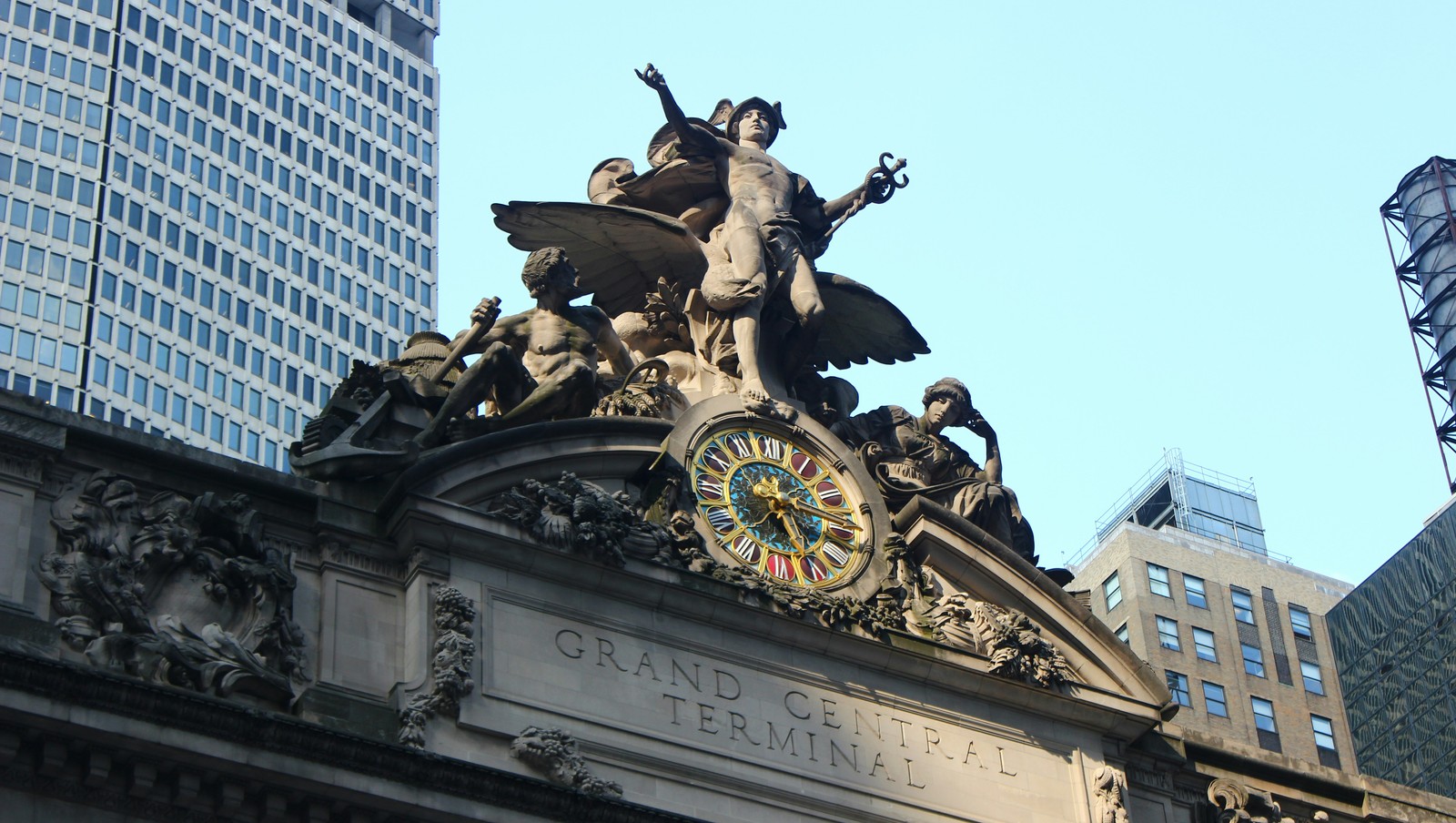
Image: Lāsma Artmane

Ever since its public opening in 1913, Grand Central Terminal has been a living piece of New York history. Millions of travelers pass through its marble halls each year, but few realize just how many surprises hide behind those iconic clocks and grand archways. From secret tunnels to a bar tucked inside an old tycoon’s office, Grand Central holds more than a century’s worth of hidden stories waiting to be uncovered. Let’s take a closer look.

1
A bar hidden in plain sight
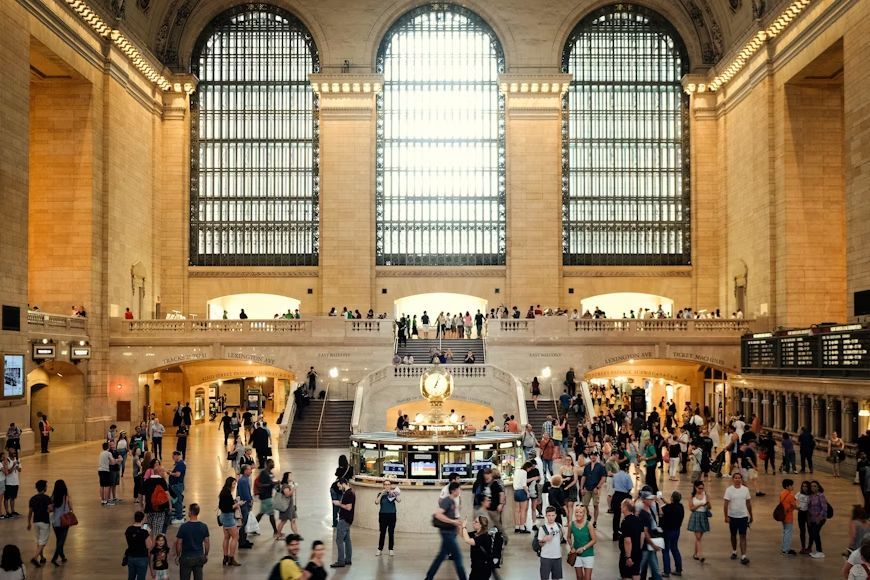
Image: Jad Limcaco

Most visitors know the famous Oyster Bar, but few stumble upon The Campbell, an elegant lounge tucked inside Grand Central. Originally the office of 1920s finance tycoon John W. Campbell , this spot sat forgotten for decades until 1999, before being restored to its former Jazz Age glory. Step inside today, and you’ll find velvet couches, grand rugs, and cocktails that make you feel like you’ve time-traveled back to the roaring 1920s.

2
Two clocks worth a fortune?
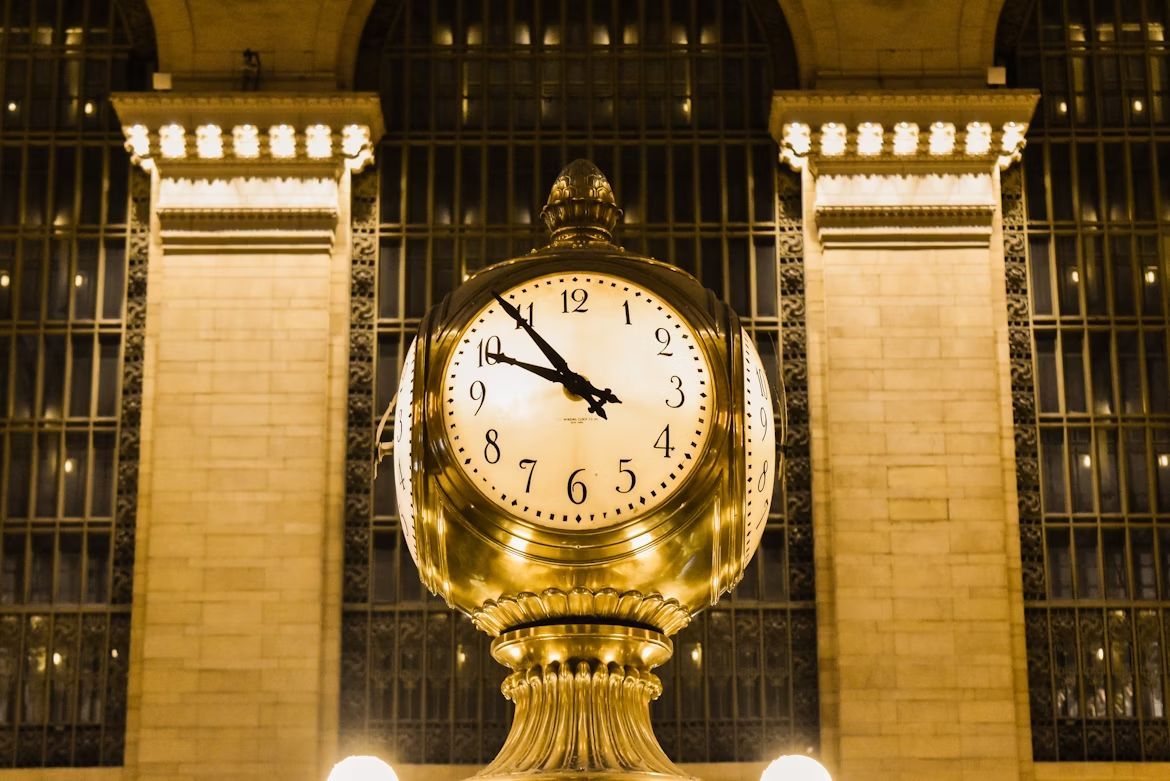
Image: DAVID NIETO

Grand Central has one of the most valuable clocks in the world , although there’s a myth that says there are two. The Tiffany clock outside towers 14 feet across, framed by Roman gods carved in stone. This clock is worth around $20 million. Inside the terminal, the four-faced opal clock crowns the information booth. Contrary to popular belief, this clock was not made of an actual opal, but out of opal glass, so there’s nothing priceless about it.

3
Hidden oaks and acorns
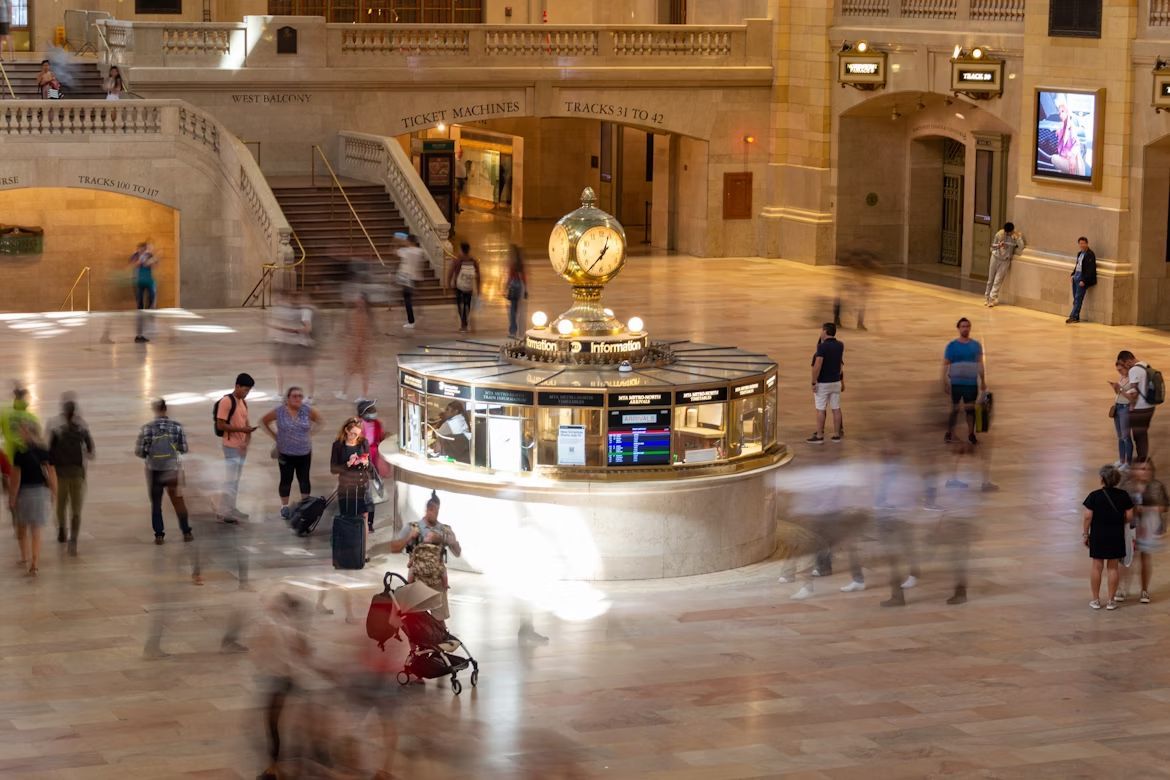
Image: David Vives

Take a closer look around, and you’ll start spotting oak leaves and acorns carved into chandeliers, railings, and stonework. These aren’t random designs. They’re a nod to the Vanderbilt family’s symbol: The acorn. The family funded the terminal’s construction in 1871 and wanted everyone to know it. Now, their family symbol quietly decorates every corner of their legacy.

4
The mysterious whispering gallery
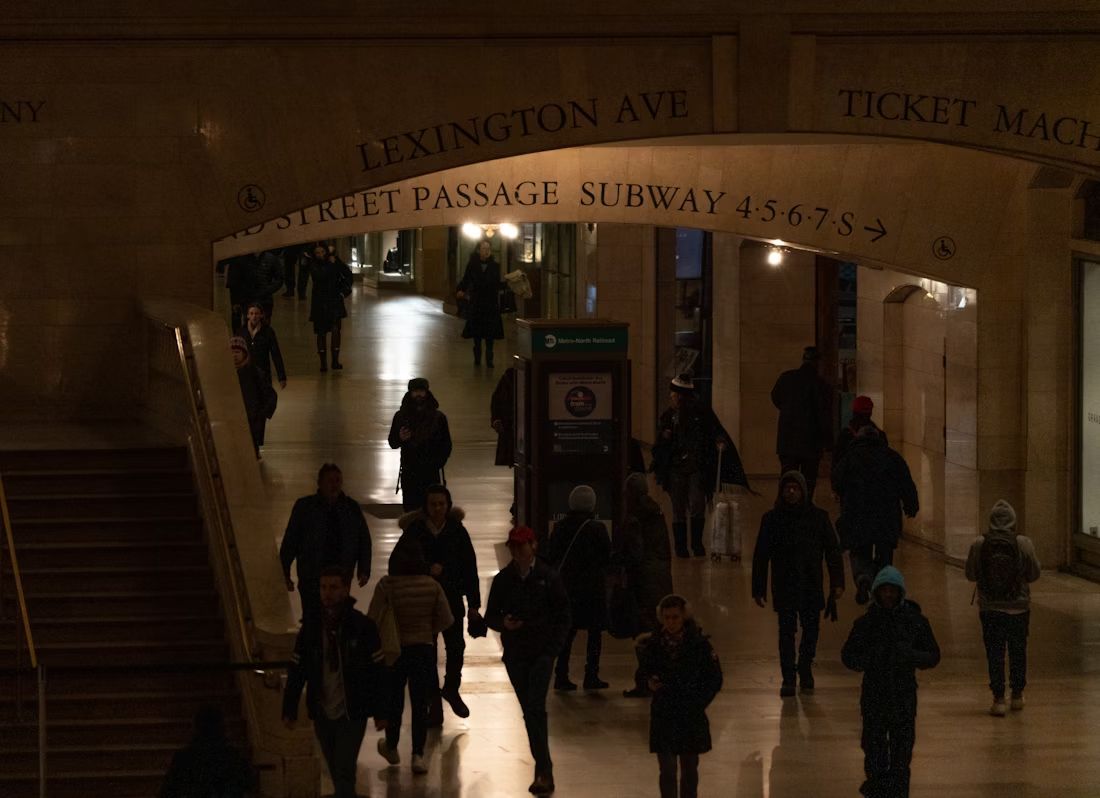
Image: Thierry Biland

If you whisper into one corner of the tiled archway near the Oyster Bar, someone standing diagonally across can hear you perfectly. The "Whispering Gallery" is one of Grand Central’s quirkiest secrets . The Guastavino tiles that make up the arched ceiling carry sound in an odd way, creating an intimate little magic trick, though no one really knows whether it was designed that way or just a happy accident.

5
A sky painted backward
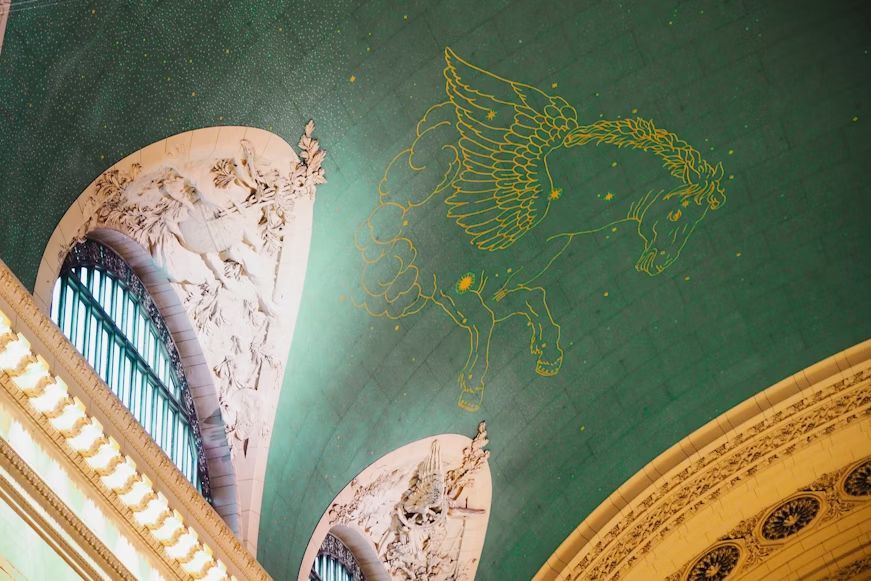
Image: Alexa Soh

Look up, and you’ll see the breathtaking celestial mural that covers the concourse ceiling. But here’s the kicker: the constellations are painted backwards . Whether it was a mistake or an artistic choice remains debated, but the Vanderbilts claimed it was intentional—to give us the "divine perspective" of looking down at the heavens. Either way, it’s still one of the most photographed ceilings in the world.

6
Game, set, match (inside a train station)
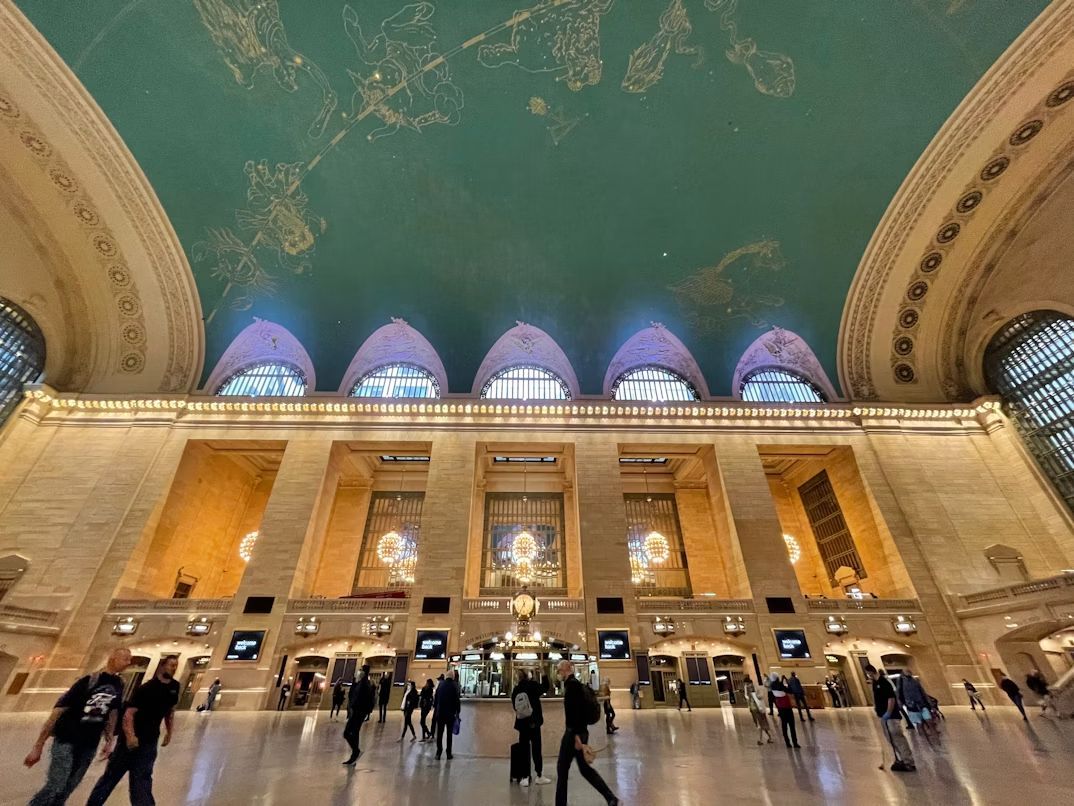
Image: lauren barton

If you think tennis in a train terminal sounds impossible, think again. The Vanderbilt Tennis Club, perched on Grand Central’s fourth floor, is open to the public . You can book a court, take a lesson, or just peek inside to see this unexpected slice of luxury tucked away above the bustling commuters below.

7
Secret walkways above the windows
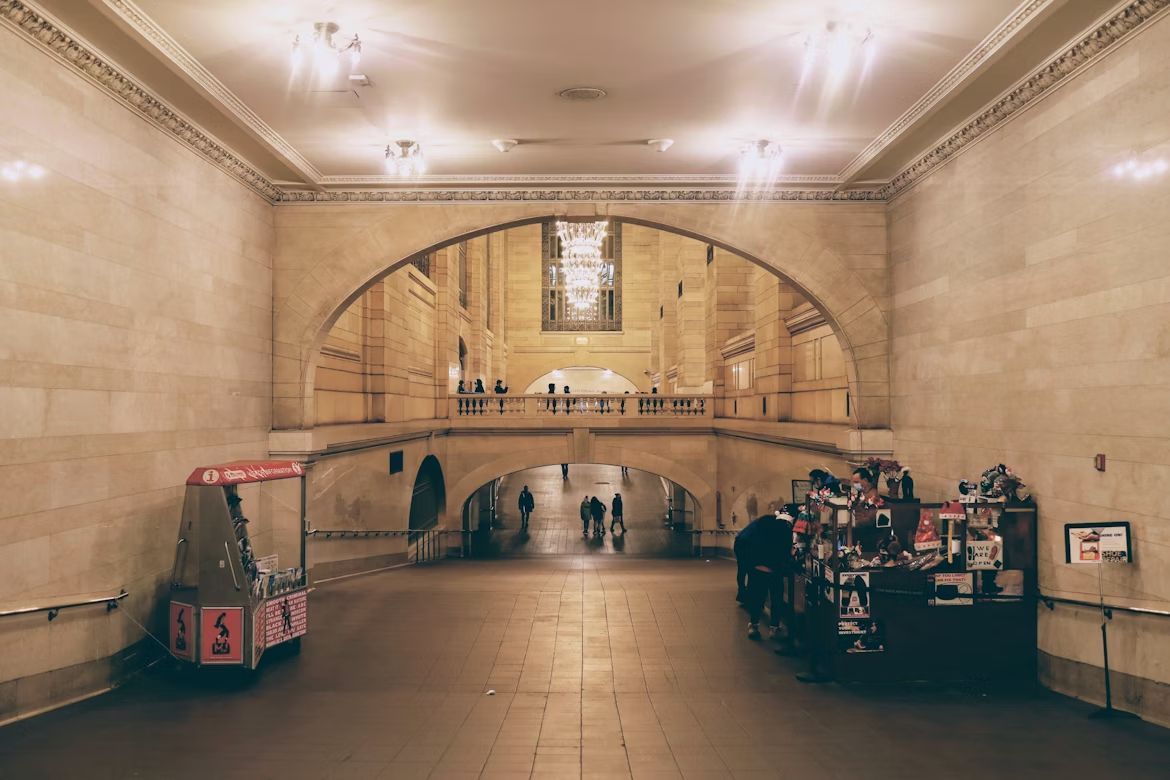
Image: Mitch Hodiono

Those grand arched windows in the main concourse aren’t just decorative; they hide narrow walkways used by staff to move unseen between offices . These catwalks give a bird’s-eye view of the terminal, though they’re strictly off-limits to the public. Only a select few with key passes get to experience the view from up there.

8
A hidden entrance to the Waldorf
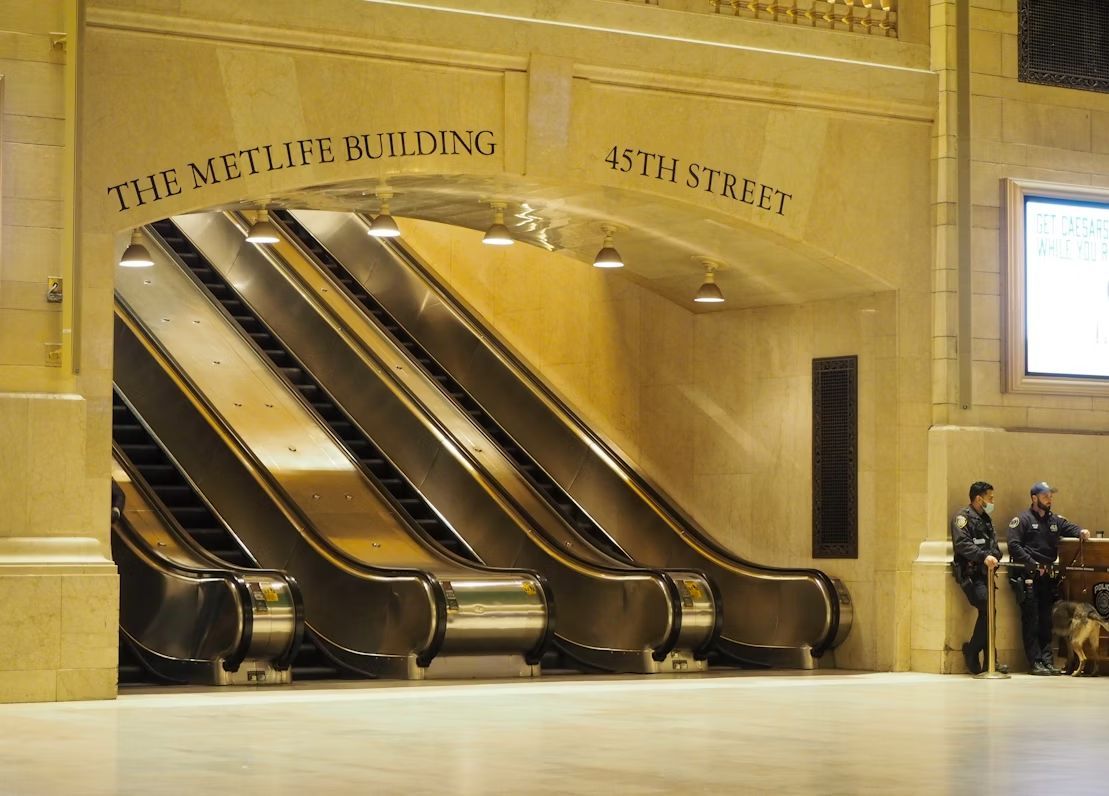
Image: David Jones

Deep beneath Grand Central lies Track 61, a secret passage that once connected directly to the Waldorf Astoria Hotel. It was used by VIPs who preferred to travel without public attention —most famously, President Franklin D. Roosevelt, who used it to conceal his polio and wheelchair from the public eye. Today, it’s sealed off, but the legend remains.

9
Almost lost to the wrecking ball
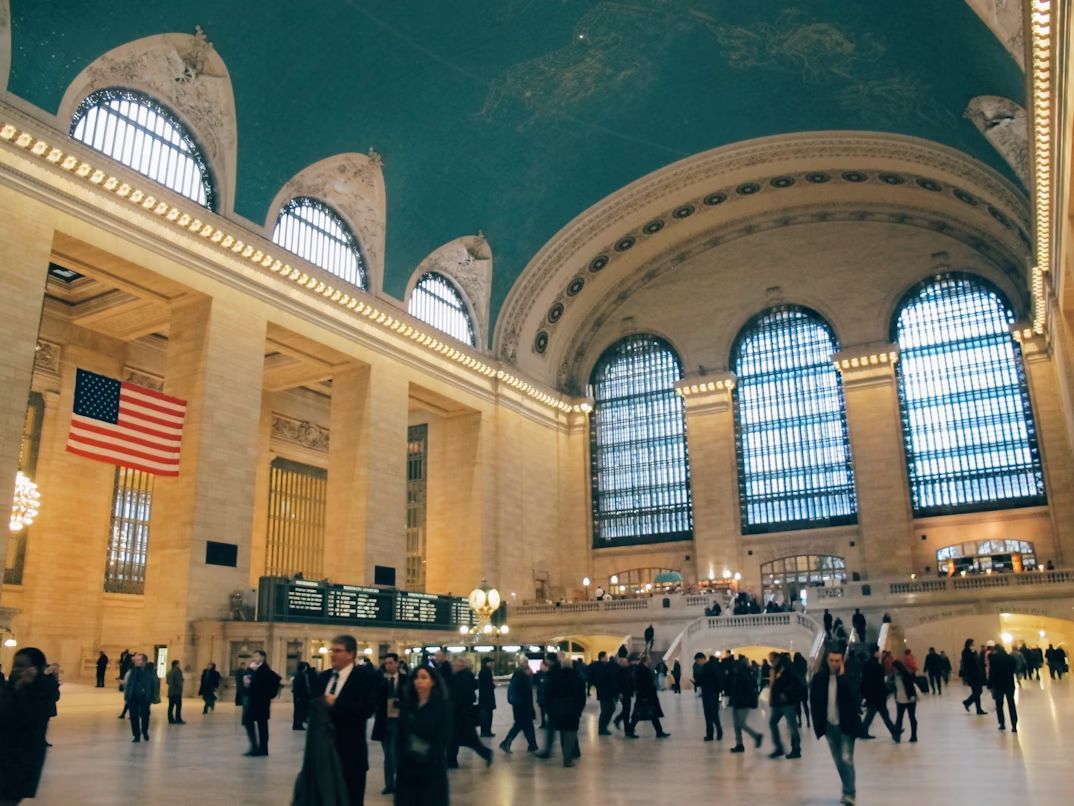
Image: Reiseuhu

In the 1960s, plans were made to tear down Grand Central and replace it with skyscrapers. After the destruction of Penn Station in 1963, New Yorkers were not having it. Thanks to the efforts of preservationists , Grand Central was saved and officially declared a landmark in 1967. Their fight ensured we could still enjoy one of the city’s true architectural gems.

10
A 21st-century makeover

Image: Dominic Kurniawan Suryaputra

While much of Grand Central dates back to 1913, its evolution continues. The massive East Side Access Project, completed in 2023, added a new terminal for Long Island Rail Road passengers, complete with 40 miles of new track buried beneath Park Avenue. It’s a modern expansion of a century-old masterpiece.
History History 3 min read

Who would you write it for?

Mark Twain said what? Remarkable book dedications and their stories

Image: Hưng Lê

These might be memorable titles written by renowned authors, but sometimes the dedications are just as remarkable as the rest of the volume. Have you ever read the lines tucked into the opening pages of famous books? Some are chilling, some funny, some thought-provoking—and we’ve gathered a list of particularly interesting ones!

1
Don’t question the author

Image: Amaan Ali

In his usual sarcastic style, Mark Twain wrote in the opening "Notice" of The Adventures of Huckleberry Finn : "Persons attempting to find a motive in this narrative will be prosecuted; persons attempting to find a moral in it will be banished; persons attempting to find a plot in it will be shot." It’s an unforgettable way to open a classic.

2
What you don’t know…

Image: Markus Spiske

In the book This Boy’s Life, Tobias Wolff wrote: "My first stepfather used to say that what I didn’t know would fill a book. Well, here it is."

It’s a dark but funny recounting of his turbulent youth in this memoir, so the line is a perfect setup for what’s to come.

3
About loyalty

Image: Niranjan V S

In her book Dark Places , thriller writer Gillian Flynn wrote: "What can I say about a man who knows how I think and still sleeps next to me with the lights off?"

The author of Gone Girl tipped her hat to her husband, Brett Nolan, here. Who doesn’t want a partner who accepts us fully—even if we spend our days writing about murky crimes?

4
Cosmic love

Image: Jayshree Sharma

If you’re a romantic, try not to swoon over Carl Sagan’s dedication in Cosmos : "In the vastness of space and the immensity of time, it is my joy to share a planet and an epoch with Annie."

This beautiful line of cosmic love was dedicated to his wife and collaborator, Ann Druyan. And the book that follows is a science classic.

5
A touch of fantasy

Image: Ali Müftüoğulları

Ken Kesey’s famous book One Flew Over the Cuckoo’s Nest , set in a psychiatric ward, wouldn’t be cataloged as fantasy at all. And yet, its memorable dedication reads: "To Vik Lovell, who told me dragons did not exist, then led me to their lairs."

6
The inclusive take

Image: Andrew Neel

John Cheever had a good idea in his dedication of The Wapshot Chronicle : "To M with love, and with best wishes to practically everybody else I know." A playful and inclusive way to make sure you leave out no one who matters! It was his debut novel, and it won the National Book Award.

7
The vengeful one

Image: Gaspar Uhas

This one is dark but packs a memorable punch. The dedication of No Thanks , by E. E. Cummings, is simply a list of names—the 14 publishers who turned his work down. But here’s the unforgettable bit: the words are arranged on the page in the shape of an urn.

8
Thanking the parents

Image: Lucas George Wendt

Comedian Judd Apatow dedicated his book Sick in the Head to his loving parents: "For Mom and Dad. Your support—and the mental health issues you gave me—made all of this possible." Tongue in cheek, just as fans would expect from him.

9
Chilling and sobering

Image: Isaac N.

Powerful: Toni Morrison’s dedication in Beloved is simply the phrase "Sixty million and more," referring to the victims of the transatlantic slave trade. No verbs, no explanations—just five heavy, sobering words to leave readers thinking.

10
About undying love

Image: Girl with red hat

F. Scott Fitzgerald’s The Great Gatsby is, after all, a story steeped in undying love. His dedication was fitting: "Once again, to Zelda." It’s a brief but heartfelt nod to his wife and muse.

11
An offering

Image: Jouwen Wang

John Steinbeck’s East of Eden opens with a sort of letter. It’s longer than this, but it begins with an anecdote in which "Pat" asked him to give him a box to fill with things. The dedication reads:

"Dear Pat… Well, here’s your box… Nearly everything I have is in it… all the gratitude and love I have for you. And still the box is not full. JOHN."

Culture Culture 4 min read

Where did RadioShack go?

From Blockbuster to Pan Am: Remember these 10 giants no longer around?

Image: Sean Benesh

It can be hard to imagine a giant falling, but it happens more often than we might think. Huge companies with thousands of employees, stores across the world, and solid reputations file for bankruptcy every year—some with a loud bang, while others fade away quietly after a long decline. You will likely recognize the following ten names. These companies were once everywhere, only to one day vanish into thin air. Some are gone for good, some were absorbed by other corporate giants, and some still exist but only as a tiny fraction of what they used to be. Do you miss any of these brands?

1
Pan Am

Image: Rob Wilson

If a single name were to represent the airline industry in the 20th century, it would most likely be Pan Am. Founded as Pan American Airways in 1927, the company became an American icon , known for its many airline innovations , its distinctive blue logo, and the crisp white uniforms of its staff.

However, when the airline industry was deregulated in 1978, increased competition set the stage for Pan Am’s downfall. The company declined throughout the 1980s and ultimately declared bankruptcy in 1991.

2
Borders

Image: Araix Rand

Its huge stores were havens for book lovers, who could spend hours wandering its aisles, browsing and perusing its vast catalog of books , magazines , CDs , and more. But, alas, none of these stores had been profitable since the mid-2000s.

In 2011, after the company filed for bankruptcy, every single store was closed. Its trademarks were later purchased by its prominent rival, Barnes & Noble.

3
Circuit City

Image: Austin Distel

Starting its life as Wards Company in 1948, Circuit City became one of America’s most recognizable brands in the consumer electronics retail business . However, the turn of the century brought significant changes and financial difficulties, ultimately leading the company to file for bankruptcy in 2008.

4
Tower Records

Image: Lucía Garó

In a similar vein to Borders, Tower Records was a haven for music lovers who enjoyed the vast selection of music available in its stores. And, much like Borders, music stores have largely gone the way of the dodo.

Managerial blunders and the rise of internet piracy contributed to the company filing for bankruptcy twice—first in 2004 and again in 2006. Its assets were sold at auction to Great American Group, and the last store closed in December 2006.

5
Trans World Airlines (TWA)

Image: Ross Parmly

Pan Am was not the only major airline to disappear. The once-powerful TWA met the same fate, operating from 1930 until it was acquired by American Airlines in 2001 . It was once one of the "Big Four" domestic airlines in the United States, alongside United, Eastern, and the aforementioned American.

6
Blockbuster

Image: Bruno Guerrero

Another demise that hit hard for loyal customers was Blockbuster. While the VHS rental behemoth dominated the market throughout the ’90s and early 2000s —with over 9,000 stores and 84,000 employees—the lethal combination of the internet and piracy proved too much to withstand. As a result, the company gradually closed nearly all its stores, leaving only one remaining today in Bend, Oregon.

7
Amoco

Image: Markus Spiske

The first name on this list to disappear not due to financial difficulties but because of a merger, Amoco was a giant in the oil and gas industry. Founded in 1910, it became the largest natural gas producer in North America by the late ’90s .

In 1998, it merged with British Petroleum in a $61 billion deal. Existing service stations were rebranded under the BP name, and the Amoco brand gradually faded from view.

8
Compaq

Image: ThisisEngineering

In the ’90s, Compaq was a major player in the computer industry and, at one point, the largest supplier of PC systems in the US . However, as the century came to an end, lower-cost competitors like Dell began attracting consumers and chipping away at Compaq’s market share. In 2002, the company merged with Hewlett-Packard, and the Compaq name gradually faded away.

9
Woolworths

Image: Kay Enn

The original five-and-dime store, Woolworths, was a pioneer in the retail industry in the late 1800s . It managed to survive—and even thrive—through most of the 20th century, but by 1989, it had entered a steady decline.

Following a 1993 restructuring that led to the closure of half its 800 stores, the rest gradually shut down. While the Woolworths retail brand and name have disappeared, the company rebranded as the Venator Group in 2001 and shifted its focus to its footwear division. Today, you might know it as Foot Locker.

10
Howard Johnson’s

Image: Francesca Saraco

The last name on our list is a familiar one, especially to travelers. The iconic Howard Johnson’s began as a single ice cream stand outside Boston, Mass., before expanding to over 1,000 restaurants. In the 1950s, the chain introduced motor lodges at nearly 300 of its locations.

Howard Johnson’s was sold to Marriott in the 1980s, and most of its restaurants gradually shut down. The last remaining location, in Lake George, N.Y., closed its doors in 2017.

Explore more American facts

Choose your favorite category!

General
General

As American as apple pie—the very best America has to offer!

Culture
Culture

Delve into the astounding richness of American lore.

Geography
Geography

Hop in and explore vast and diverse American landscapes.

History
History

Discover the key moments that shaped the United States.