History History 4 min read

Old-school education

10 classroom habits that once ruled U.S. schools—but are gone for good
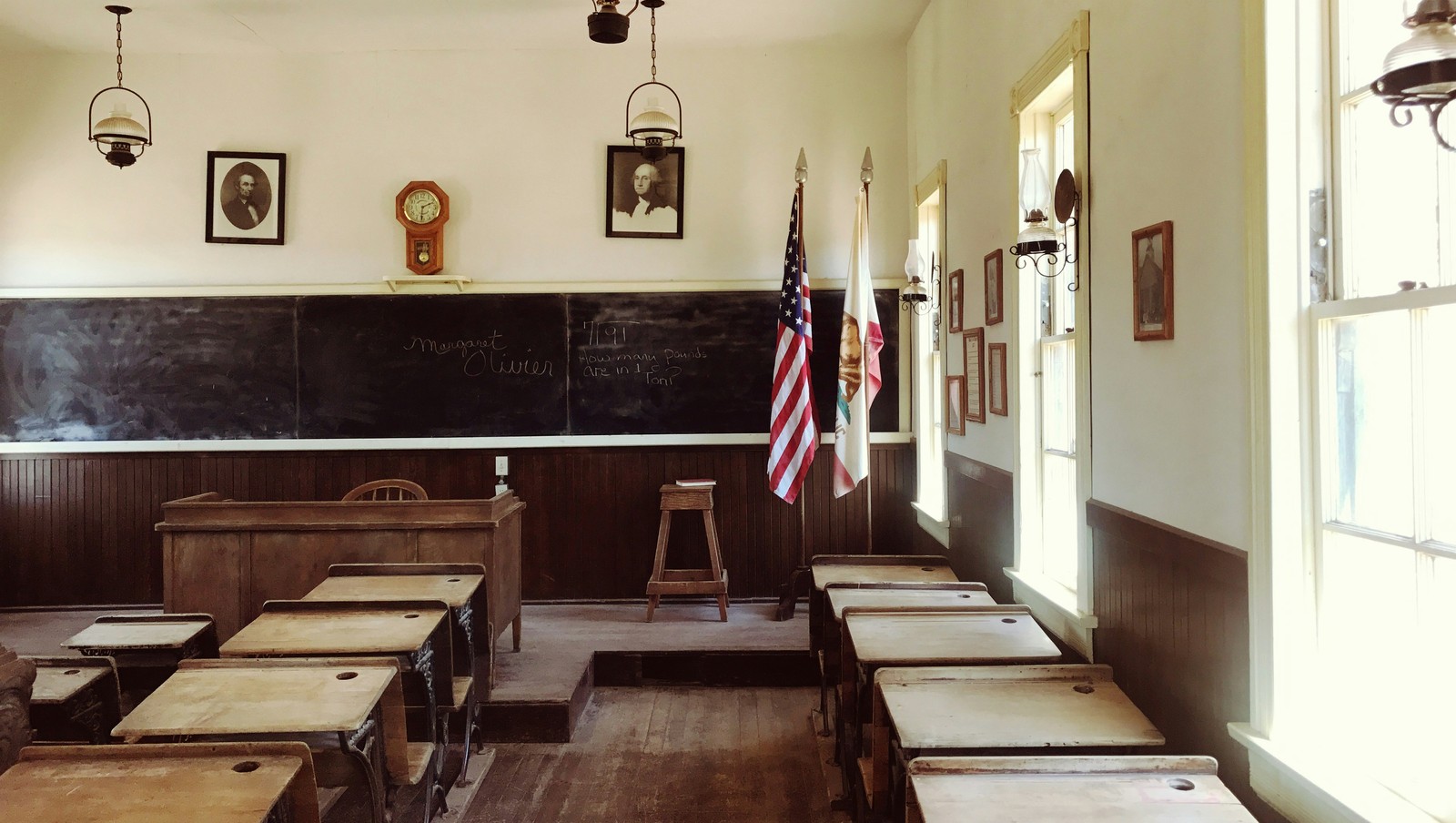
Image: Nicola Tolin

Many once-standard school customs in the U.S. have quietly vanished—phased out by shifting norms, safety rules, and cultural changes. These traditions shaped daily routines for generations, yet few remain today. From daily cursive drills to milk breaks , here are 10 traditions that have disappeared, along with the reasons behind their decline.

1
Home economics class

Image: Merve Sehirli Nasir

Home economics as a school subject peaked in the mid-20th century, teaching sewing, cooking, and budgeting —often aimed at girls.

By the 2000s, however, many states had folded it into a broader "family and consumer sciences" category, as shifting gender roles and changing cultural habits made the old curriculum feel increasingly outdated.

2
Woodshop in every school

Image: benjamin lehman

Lightly supervised children with access to power tools? Today, it seems hard to believe, but woodshop was a standard industrial arts course throughout the 1950s–1980s.

Declines began in the 1990s due to higher liability insurance costs, budget cuts, and a growing emphasis on college-prep academics over practical skills. Some schools still maintain limited woodworking programs, often using them as hands-on, integrated learning tools.

3
The dodgeball era

Image: Wan San Yip

Dodgeball dominated physical education classes well into the 1990s, often using hard rubber balls that were notorious for causing stingers, bruises, and occasional injuries . The game was popular because it required little equipment, could fill an entire class period, and kept large groups of students active.

By the 2000s, however, concerns about safety and bullying led many districts to restrict or replace dodgeball with more structured team sports. Some schools still play modified versions, usually with soft foam balls and strict rules.

4
Chalkboard dusting

Image: Vitaly Gariev

For over a century, green and black chalkboards were the centerpiece of American classrooms, with students regularly assigned to "clap out" erasers outside to clear the built-up dust. Chalk was cheap, durable, and easy for teachers to use in large rooms.

By the 1990s, districts began replacing chalkboards with whiteboards due to dust concerns linked to asthma and indoor air quality. The shift accelerated as overhead projectors, digital displays, and interactive whiteboards provided cleaner surfaces and reduced inhalation hazards.

5
Daily milk breaks

Image: ROBIN WORRALL

Mid-morning milk breaks became common in American elementary schools after the USDA expanded dairy subsidies through programs like the Special Milk Program in 1954. For decades, students lined up for small cartons—usually whole milk—intended to boost childhood nutrition and support U.S. dairy producers during periods of surplus.

By the 1990s and 2000s, milk breaks declined as updated nutrition guidelines shifted schools toward broader meal programs rather than standalone milk service.

6
In-school smoking lounges

Image: Andres Siimon

The idea of teens openly smoking on school grounds would be almost unimaginable under today’s health and liability standards. But through the 1960s and into the early 1980s, many American high schools—especially in the Midwest and Northeast—maintained designated smoking areas for students.

The practice disappeared quickly as federal and state regulations tightened, beginning with widespread adoption of indoor smoking bans in the late 1980s and early 1990s. The 1994 Surgeon General’s report and anti-tobacco campaigns further pushed districts to eliminate student smoking sections altogether.

7
Daily cursive drills

Image: Aaron Burden

For most of the 20th century, daily cursive drills were a nonnegotiable part of American schooling , often reinforced by specific handwriting manuals. Teachers devoted significant class time to perfecting loops, slants, and connected strokes, because cursive was considered essential for legibility, speed, and personal discipline.

The decline accelerated after the rollout of the Common Core State Standards in 2010, which omitted cursive entirely in favor of keyboarding and digital literacy benchmarks. With shrinking instructional time, cursive was often one of the first skills removed from early-grade schedules.

8
Class pet enclosures

Image: Minjae Cho

From the 1960s through the 1990s, class pets—hamsters, guinea pigs, turtles, goldfish, and even the occasional lizard—were staples of American elementary classrooms. Teachers used them to teach responsibility, empathy, and basic biology , and many classes created rotating "pet helper" charts for feeding and tank cleaning.

Today, the idea of a live animal in a crowded classroom, handled daily by students, feels out of step with modern safety, allergy, and sanitation standards. Maintenance costs, humane-treatment rules, and the challenge of caring for animals during breaks led schools to retire these longtime classroom mascots.

9
Student hall monitors
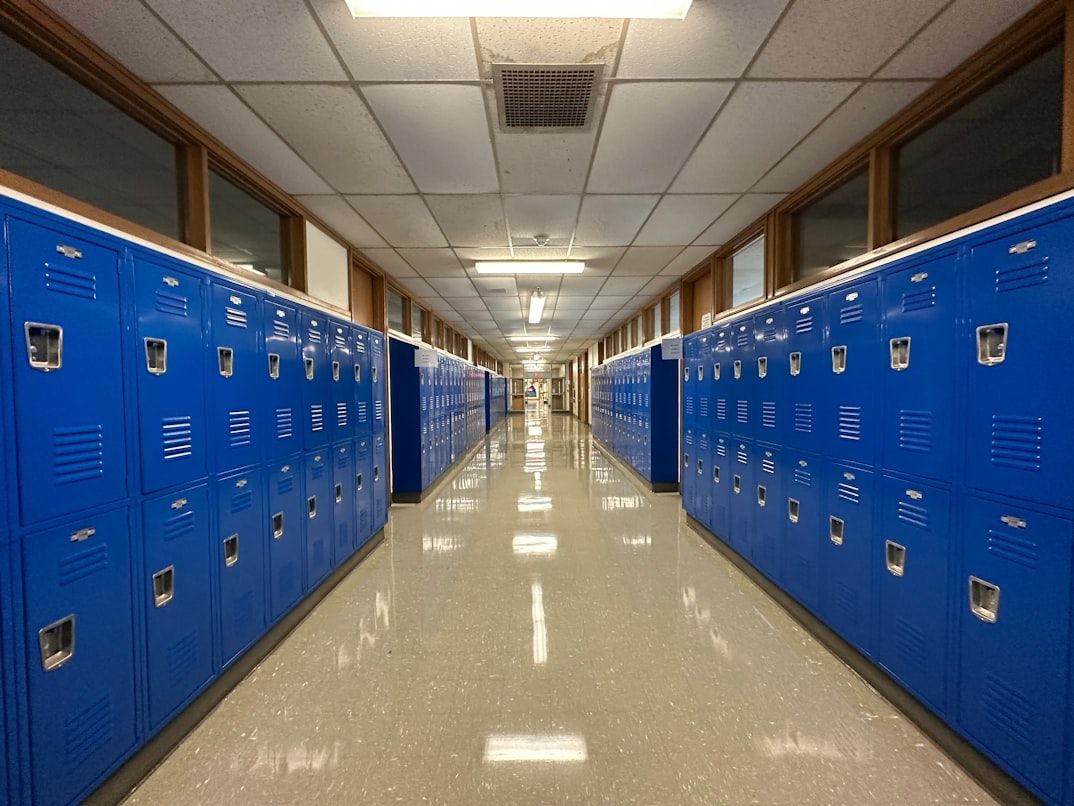
Image: Christopher Ryan

For much of the mid-20th century, student hall monitors were a fixture in American schools. Selected students—often upper-grade or high-performing—wore badges or sashes and were tasked with checking hall passes, reporting loitering, and keeping noise down between classes.

By the 1990s, the role faded as schools adopted professional security staff, stricter attendance protocols, and legal liability rules that made peer enforcement impractical. As districts invested in cameras, campus supervisors, and centralized discipline systems, the traditional hall monitor quietly disappeared from most American schools.

10
Morning physical calisthenics

Image: Philip White

From the 1950s through the early 1970s, influenced by Cold War fitness campaigns, many American schools began the day with school-wide calisthenics —jumping jacks, toe touches, and arm circles—led over the PA system.

The practice faded as schedules tightened and PE moved into dedicated class periods, with research favoring structured fitness over brief daily routines. Today, the idea of entire schools performing synchronized drills feels almost militaristic.

General General 3 min read

GAME ON!

Backyard Bonanza: The Ultimate Guide to America's Favorite Lawn Games

Image: Erol Ahmed

When the sun's out and the grill's fired up, nothing completes the quintessential American backyard gathering like a good old-fashioned lawn game. From classics that evoke nostalgia to modern favorites that keep everyone on their toes, these games have been entertaining families and friends for generations, bringing their own blend of competition and camaraderie to your backyard bash. Here's a rundown of 10 of the most popular lawn games across America!

1
Cornhole

Image: Jon Tyson

Cornhole reigns as the king of backyard games, combining skill and strategy with just the right amount of casual fun. Originating in the Midwest , players take turns tossing bean bags at a slanted board with a hole in it. Points are scored based on where the bag lands, with a perfect shot through the hole earning the coveted "cornhole."

2
Lawn Darts

Image: Afif Ramdhasuma

Once banned for safety concerns, modern lawn darts have undergone a safety makeover, now often sporting darts with plastic tips. Players take turns throwing darts toward a target ring on the ground, with the age-old game focusing on accuracy and a steady hand, making it a favorite for those who enjoy a real challenge .

3
Bocce Ball

Image: Braedon McLeod

Hailing from ancient Rome but finding a home in American yards, bocce ball involves tossing larger balls towards a smaller target ball, or pallino . Similar to curling and other such games, the goal is to get your ball closest to the pallino, all while strategically blocking opponents' shots. It's a game of finesse and strategy, often accompanied by good-natured banter - and what good lawn game isn’t?

4
Horseshoes

Image: Meg MacDonald

Dating back to ancient Greece (through a similar game called "quoits," where iron hoops are thrown instead), horseshoes remain a staple in American backyard culture. Players aim to toss horseshoes around a metal stake, scoring points based on proximity. This game combines skill and luck, with each ringer celebrated as a triumph of accuracy and expertise.

5
Croquet

Image: Troy Taylor

With origins in 19th-century England, croquet has become a refined addition to American backyard gatherings. Players use mallets to hit balls through a series of wickets arranged on the lawn, blending the gentle pace and strategic gameplay to make croquet a favorite among those who enjoy a more leisurely but still competitive game.

6
Ladder Toss

Image: Meritt Thomas

Also known as ladder golf, this game involves tossing bolas (two balls connected by a string) onto a ladder-shaped structure. Points are earned based on where the bolas land—the top rung yielding the most points and the bottom the least. It's easy to learn but challenging to master, keeping players engaged for hours.

7
Giant Jenga

Image: Meritt Thomas

Jenga , upsized to giant proportions, adds a nerve-wracking twist to backyard game nights. Players take turns removing wooden blocks from a tower and placing them on top without causing it to collapse. With each move potentially deciding the tower's fate, just like its smaller counterpart, Giant Jenga is a game that demands steady hands and clear strategic foresight.

8
Tug of War

Image: Anna Samoylova

A test of sheer strength and teamwork, tug of war pits two teams against each other in a battle of brute force. Using a sturdy rope, teams pull in opposite directions, aiming to drag the other team over a designated line. A game as ancient as rope itself , it's a primal display of competitiveness and camaraderie that never fails to energize a crowd.

9
Potato Sack Race

Image: Diego Catto

Bringing back memories of school field days, the potato sack race is a lighthearted sprint that requires nothing more than a burlap sack and some open space. Participants hop their way to the finish line, competing for the thrill of the race and the joy of friendly competition . It's simple, silly, and undeniably fun—a perfect way to wrap up a day of outdoor festivities.

10
Spikeball

Image: Spikeball

A recent phenomenon, spikeball is a competitive lawn game that has surged in popularity, offering a fast-paced twist on traditional volleyball . Played with a small trampoline-like net placed at ankle level, teams of two hit a small ball off the net, aiming to bounce it in such a way that the opposing team cannot return. It's athletic, energetic, and ideal for satisfying competitive spirits on sunny afternoons.

Geography Geography 4 min read

LET’S GIVE THAT TOURIST SPOT A REST

The Unbeaten Path: 10 Not-Too-Famous-Yet Cool Holiday Spots in America

Image: Rusty Watson

Are you tired of being met with hordes of people in every vacation spot you go to? Maybe the Instagram curse ruins every beautiful place making it crowded to no end. Or perhaps it is the fact that most people choose to go to the same places. If this happens to you, then know that you are not alone (no pun intended).

The good news is that many amazing places haven’t been "discovered" yet by the masses. We present you with ten beautiful spots that, while not untouched by the human hand, aren’t nearly as crowded as, say, Miami Beach. Some of them will probably surprise you for their nearness.

1
Block Island, Rhode Island

Image: John Angel

One of the "Last Great Places" in the Western Hemisphere, as declared by the Nature Conservancy, Block Island has done a great job at preserving its natural beauty, with 40% of its territory being devoted to wildlife refuges.

32 miles of coastline and inland trails, along with beaches, biking, and trekking provide ample opportunities for enjoying the great outdoors. And, when the sun goes down, a healthy scene of bars and restaurants with an easy-going atmosphere and great food welcomes visitors.

2
Alamosa, Colorado

Image: Shelby Cohron

Colorado is not just about ski resorts and mountains, as Alamosa proudly demonstrates. If you head down south in the Centennial State you will find this high-altitude agricultural community mainly known to UFO sightings chasers and birdwatchers.

The town, packed with antique shops and craft breweries, is near the Great Sand Dunes National Park, a surreal place that makes visitors feel as if they were in the Sahara desert. The San Luis Valley and the Sangre de Cristo mountains, also near, provide ideal spots for hiking and exploring during the summer months.

3
Ice Age Trail, Wisconsin

Image: Dave Hoefler

Hiking trails might not look like the most crowded places but they can be—the popular ones, at least. Wisconsin’s Ice Age Trail offers 1,200 miles of scenic hiking paths without the heavy foot traffic of places of most known trails.

The trail can be thoroughly enjoyed without the need to traverse it in full, as it has many segments that can be discovered individually. Wooded hills, gorgeous glacial lakes, and plenty of trailside camps and small communities to rest make this trail a great spot for a holiday in nature.

4
Pioneer Valley, Massachusetts

Image: Larry Ferreira

There is much more to Massachusetts than Boston, Cape Cod, and the Berkshires—for example, the Pioneer Valley . Carved by the Connecticut River, this peaceful area is home to several vintage mill cities turned into modern towns full of restaurants and one-off shops.

Hikers can walk the north woods on the New England Trail and Springfield visitors can discover the Naismith Memorial Basketball Hall of Fame, where the sport was born in 1891, as well as the Amazing World of Dr. Seuss Museum & Sculpture Garden.

5
John Day Region, Oregon

Image: Anna Vineyard

While it has managed to avoid massive crowds for all of its existence, it's hard to believe that a natural wonder as picturesque as John Day Region will remain a calm place for much longer in this day and age. Take a moment to Google-search John Day Region’ s Painted Hills and you will get the idea.

And if that is not enough reason to make you plan a visit, the region is packed with old-growth rainforests, canyons, high desert plains, and undammed rivers complete with sandy beaches and gorgeous meadows, all in an easy-to-move-around area.

6
Pennsylvania Wilds

Image: Lera Kogan

When considering the abundance of wildlife and untamed mountain creeks, ancient trees of the Forest Cathedral, and Pine Creek’s own version of the Grand Canyon, it becomes clear that the Pennsylvania Wilds is a region that lives up to its name.

Sprawling across a vast expanse of the rugged Allegheny Plateau, the region boasts 29 state parks, two national wild and scenic rivers, a world-class stargazing center at Cherry Springs, and human relics like the Kinzua Bridge.

7
Tulsa, Oklahoma

Image: Drew Harbour

A city that has a ton of amazing things to offer but never appears on those glamorous Top-Cities-To-Visit lists, Tulsa is a hidden jewel of the Midwest. Its beautiful Art Deco architecture, impressive museums and cultural institutions with collections rivaling those of major cities, lively music scene, and craft breweries make it a great long weekend destination.

The best time window to visit would be from September to November when the temperate weather is ideal for walking tours and bike rides in the historic neighborhoods. The Tulsa International Airport has nonstop flights from all over the country, all year long.

8
Cumberland Island National Seashore, Georgia

Image: Parker Hilton

Combining beach fun and outdoor adventure with copious wildlife, Cumberland Island National Seashore receives visits that usually stay for the day. But staying overnight at beachside campgrounds or the Greyfield Inn is a fun adventure as well.

Georgia’s largest and southernmost barrier island is full of wild horses, sea turtles, wild turkeys, and infinite birds everywhere to be seen along the island’s 18-mile-long beach.

9
Western Tennessee

Image: Joshua J. Cotten

An enticing blend of nature, history, music, and food tells us that there is so much more to Tennessee than the tourist magnet that is Nashville. From the cradle of blues, soul, and rock ‘n’ roll that is Memphis to the historical sites of Shiloh National Military Park and Fort Donelson National Battlefield to the Meeman-Shelby Forest State Park that conserves nearly 13,000 acres of rare hardwood bottomland along the Mississippi River, including eerie bald cypress swamp. Western Tennessee is a place to explore.

10
Ouachita Mountains, Arkansas

Image: Oliver Graham

The few visitors who venture past Hot Springs National Park, and into the highlands of west-central Arkansas are rewarded with a haven of solitude and natural wonder in the form of the Ouachita range.

These mountains are ideal for those who like their hiking, camping, and fishing in a peaceful environment. And, if that proves to be too calm, Magazine Mountain is a regional hang-gliding mecca that also boasts amazing mountain biking routes.

Explore more American facts

Choose your favorite category!

General
General

As American as apple pie—the very best America has to offer!

Culture
Culture

Delve into the astounding richness of American lore.

Geography
Geography

Hop in and explore vast and diverse American landscapes.

History
History

Discover the key moments that shaped the United States.