History History 4 min read

Big Friday instead of Black Friday? That was a flop, this article isn't!

Image: Max Fischer

Ah, Black Friday! A day when we brave the crowds (or click feverishly online) to snag the best deals, right? But how much do you really know about its history? It’s not just about discounts and doorbusters, even if that’s what comes to mind first. From surprising origins to unexpected traditions, Black Friday has plenty of fascinating facts to share. Let’s dive into some fun facts that’ll have you seeing this shopping holiday in a whole new light. Who knows, you might impress your friends at the next dinner with these tidbits!

1
Before bargains, there were stock market crashes

Image: Kelly Sikkema

Long before Black Friday meant shopping sprees, it had a gloomier vibe. Back in the late 1800s, the term was used to describe major stock market crashes . Imagine a Wall Street meltdown, and you’ll get the picture.

One infamous event occurred in 1869 when a financial fiasco involving gold prices rocked the country. While the term’s meaning has flipped over the years, its history isn’t always as rosy as a holiday ad. Thankfully, these days, "Black Friday" is more about spending than stressing—well, unless you’re in line at 5 a.m.!

2
From Santa Claus to shopping sprees

Image: rawkkim

Before malls opened at dawn and websites crashed under traffic, Black Friday was all about parades —specifically, Santa Claus parades! The tradition began in the early 1900s, with department stores like Macy’s sponsoring grand events to usher in the holiday season. These parades were a spectacle of floats, marching bands, and, of course, jolly old St. Nick.

Over time, the day became synonymous with shopping as stores started offering sales to parade-goers. So, if you’ve ever wondered why Santa and Black Friday seem so intertwined, it all started with a parade and a clever marketing move.

3
The plumber’s busiest day

Image: Unseen Histories

Here’s a fun (and slightly gross) fact: Black Friday is a goldmine for plumbers. Why, you may ask? Well, Thanksgiving feasts often lead to… let’s call them plumbing emergencies . From overloaded garbage disposals to bathroom backups, plumbers are busier than ever on this day. In fact, many in the industry refer to it as "Brown Friday" (we don’t need to explain that one to you!). It’s not the most glamorous Black Friday gig, but someone has to do it!

4
Why Thanksgiving got a time-out

Image: Iga Palacz

Did you know that Thanksgiving wasn’t always on the fourth Thursday of November? Back in 1939, retailers panicked over a shorter holiday shopping season, so President Franklin D. Roosevelt decided to push Thanksgiving back by a week to give everyone more time to shop .

The change caused quite an uproar, with people dubbing it "Franksgiving." Eventually, Congress stepped in and settled on the date we know today. So, next time you’re enjoying leftovers and plotting your Black Friday buys, thank FDR for the extra shopping days.

5
"Big Friday" was a big flop

Image: 愚木混株 cdd20

In 1961, officials in Philadelphia tried to give Black Friday a friendlier spin by renaming it "Big Friday." The reason? Local police were fed up with the day’s chaotic traffic and crowds . Unfortunately, the new name didn’t catch on; after all, "Black Friday" had a certain dramatic twist. Over time, the term stuck, and its connotations shifted to something more positive. But can you imagine telling friends, "I’m gearing up for Big Friday sales"? It doesn’t have the same charm, does it?

6
When Saturday stole the spotlight

Image: Kelly Sikkema

Believe it or not, Black Friday wasn’t always the reigning king of shopping days. For decades, the Saturday after Thanksgiving held that title . Can you guess why? Many people preferred to relax on Friday before diving into the holiday hustle. That would be our choice if you asked us!

It wasn’t until the early 2000s, when retailers began offering jaw-dropping deals, that Black Friday took the crown. Long live the king!

7
The global spread of Black Friday

Image: Kelsey Knight

Black Friday isn’t just an American obsession anymore—it’s gone global! Over 15 countries, including Canada, the UK, and even Brazil, have embraced the tradition of post-Thanksgiving sales.

Even if some places don’t celebrate Thanksgiving, they’ve adopted the shopping frenzy with open arms. After all, a good bargain is a universal language. So, if you find yourself traveling during the holidays, don’t be surprised to see Black Friday signs in unexpected places.

8
Thanksgiving evening: The new Black Friday

Image: Libby Penner

In 2011, Walmart threw tradition out the window by opening on Thanksgiving night. This controversial move kickstarted the trend of retailers starting sales earlier and earlier . While some loved getting a head start, others missed the old-school thrill of early-morning Black Friday madness.

In any case, it marked a significant shift in how we approach holiday shopping. These days, "Black Friday" often feels more like "Black Thursday Night," but hey, nobody’s complaining about the extra deals.

9
Contactless is the new black

Image: SumUp

Black Friday shoppers are going cashless in droves; 53% of people prefer using contactless payments when hitting the stores . Are you one of them? With just a tap, you’re out the door, deal in hand—no fumbling for change or wrestling with a wallet while juggling bags! Meanwhile, 30% of shoppers admit they’re not too comfortable using cash anymore. And can you blame them? Between convenience and hygiene, contactless is clearly the king of modern shopping. Which method do you prefer?

10
Shopping under the influence

Image: Douglas Lopez

Here’s a fact that might make you chuckle: about 12% of Black Friday shoppers admit to hitting the stores—or their keyboards— after a drink or two . Maybe it’s leftover wine from Thanksgiving, or perhaps it’s liquid courage for battling the crowds.

Either way, some of those impulse buys might be less about bargains and more about buzzed decision-making. So, if you’ve ever woken up to a mysterious order confirmation, you’re not alone! Black Friday shopping is wild enough; add wine, and it’s a whole new adventure!

Culture Culture 7 min read

A true city of stars

These 10 famous idols were born in Chicagoland

Image: Chait Goli

When Chicagoans mention which city they come from, the same big names are always brought up: Oprah Winfrey, Michael Jordan, and even Al Capone. These are huge public figures known worldwide, of course. But none of them were born anywhere near Chicagoland ! In an attempt to highlight the city’s ability to produce incredible talents, here is a list of 10 icons who were indeed born in the Chicago area—whether they made history there or elsewhere.

1
Harrison Ford

Image: Chris Nguyen

The face of Indiana Jones was born in 1942 in the Windy City. A Boy Scout from Illinois , he attended school in the suburbs before moving to Wisconsin for college and later to California to pursue acting. There, he became a self-taught professional carpenter to support his family. Everything changed for him when writer and director George Lucas took a liking to him and started including him in small roles in his films. Lucas finally gave him a leading role as Han Solo in his space opera, Star Wars (1977).

Ford is one of the most recognizable actors in the world. His long career includes critically acclaimed performances in films like Blade Runner (1982), The Fugitive (1993), and Witness (1985), for which he earned an Academy Award nomination for Best Actor .

2
Walt Disney

Image: Charlottees

Yes, the father of Mickey Mouse was born far from California’s Disneyland. Walt Disney was born in 1901 in the Hermosa neighborhood of Chicago. He grew up in the city until his family moved to Missouri when he was a young boy, but he later returned to study at the then-called Chicago Academy of Fine Arts (now the School of the Art Institute of Chicago). In 1956, Disney purchased his birth home in Chicago with the intention of restoring it, though his plans for the house were never fully realized.

Of course, the founder of The Walt Disney Company was an imaginative mind who led projects that revolutionized the film industry . His endeavors pioneered the introduction of synchronized sound in animation, the production of full-length animated films, and, most notably, the creation of Disneyland, the world’s first theme park of its kind.

3
Bob Fosse

Image: Pixabay

Bob Fosse was one of the most celebrated choreographers and directors in both Broadway and film history. He was born in 1927 on the North Side of Chicago and grew up in the Ravenswood neighborhood. A revolutionary creator who brought a signature Chicago-jazz style to musical theater, Fosse had been exposed to the city’s vaudeville and burlesque scenes, which were popular in the 1930s and 1940s and attended many dance studios in the city during his youth.

His experience as a performer in Chicago probably influenced the recurring theme of showbiz’s dark side , evident in musicals like Cabaret , Chicago , and Sweet Charity , which he directed and choreographed. He also won an Academy Award for Best Director for the film Cabaret and is the only person to have ever won an Oscar, a Tony, and an Emmy in the same year (1973).

4
Quincy Jones

Image: sam99929

Quincy Delight Jones Jr., one of the most influential musicians of modern times, was born on the South Side of Chicago , a rich cultural hub in the city. Though his family moved from Chicago when he was 10, it was in the city that he was first exposed to musical neighbors and the culture of religious singing. Later, as a teen, he picked up a trumpet and thus began his incredible musical career.

Quincy Jones is most famous for producing Michael Jackson’s albums , not least of which is Thriller , the best-selling album of all time. He’s also known for his work as a film and TV producer, creating the music for iconic films like The Color Purple and The Wiz , as well as TV shows like The Fresh Prince of Bel-Air . In 1985, he produced and conducted the charity single "We Are the World" to fight famine in Africa. Jones has won 28 Grammy Awards.

5
Ray Bradbury

Image: Vanessa Sezini

Ray Bradbury, the author of Fahrenheit 451 (1953) and The Martian Chronicles (1950), was also a Chicagoland native. He was born in Waukegan , about 35 miles north of Chicago, in 1920. Despite leaving Chicago early in life, his childhood in Waukegan is reflected in some of his work, particularly in scenes depicting small-town America—nostalgic, yet sometimes eerie.

Bradbury managed to weave Waukegan repeatedly into his fiction by transforming it into his imagined Green Town, Illinois . This fictional town serves as the setting for his semiautobiographical trilogy consisting of Dandelion Wine , Something Wicked This Way Comes , and Farewell Summer , and it appears in several of his short stories. Most of the narrations set in Green Town evoke summer scenes led by children in a small town at the beginning of the century.

6
Bill Murray

Image: Blake Guidry

The famous comedic actor Bill Murray was born in Evanston, Illinois, a suburb north of Chicago. He grew up nearby, attending Loyola Academy, and in the early '70s, he was invited by his brother Brian to join the improvisational comedy troupe The Second City . This helped launch the career of a talented comedic writer and actor, known for his roles in Saturday Night Live , which he joined in 1977, as well as films like Ghostbusters (1984), Groundhog Day (1993), and Lost in Translation (2003).

Murray is a devoted fan of several Chicago sports teams, including the Chicago Cubs , the Bears, and the Bulls . In the '80s, he served as a guest commentator for a Cubs game, and he was famously emotional in 2016 when the Cubs won the World Series after a 108-year drought.

7
Michelle (Robinson) Obama

Image: Sonder Quest

Michelle Obama, née Robinson, was born in the South Shore neighborhood of Chicago. She grew up in a working-class family and attended Whitney M. Young Magnet High School, a prestigious public school in Chicago, where she excelled academically. She later went on to study at Princeton University and Harvard Law School before returning to Chicago to work at a law firm, where she met future President Barack Obama.

While she is most famous for being First Lady of the United States from 2009 to 2017, before having that role she held several positions in Chicago’s public service . For instance, she served as an assistant commissioner for the city mayor and she directed the city’s office for Public Allies, a leadership development organization. She also worked at the University of Chicago and at the University of Chicago Medical Center.

8
Robin Williams

Image: V

The late and beloved actor Robin Williams was originally from the Lake View neighborhood of Chicago, where he was born in 1951. He spent his childhood in the North Shore, where his father was a senior executive at Ford until the family relocated to Michigan. Williams's legendary quick wit and his knack for improvisation and making people laugh landed him one of his first gigs, a TV commercial for Illinois Bell, shown in the Chicago area, in which he already showcased his talent for goofy voices. He also made guest appearances at the Second City stage where he performed memorable improvisational acts.

Williams had an incredible ability to jump from character to character in an instant, and he soon won the hearts of the audience as both a comedic and dramatic actor in films like Aladdin (1992), Mrs. Doubtfire (1993), and Good Will Hunting (1997).

9
Ernest Hemingway

Image: Dan Price

Another writer from the suburbs of Chicago was Ernest Hemingway, born in 1899 in Oak Park. He spent his early years in this upper-middle-class neighborhood. Though he left Chicago as a young man, the Hemingway Birthplace Museum in Oak Park still stands as a tribute to his legacy, and the area honors him with numerous literary festivals and events every year.

During his childhood, he spent summer days in the woods and lakes of Northern Michigan, experiences that likely forged his love for nature and adventure, which are reflected in many of his works. Hemingway is best known for his timeless contributions to American literature, including The Old Man and the Sea (1952) and For Whom the Bell Tolls (1940). In 1954, he was awarded the Nobel Prize for Literature.

10
Betty White

Image: Day_Photo

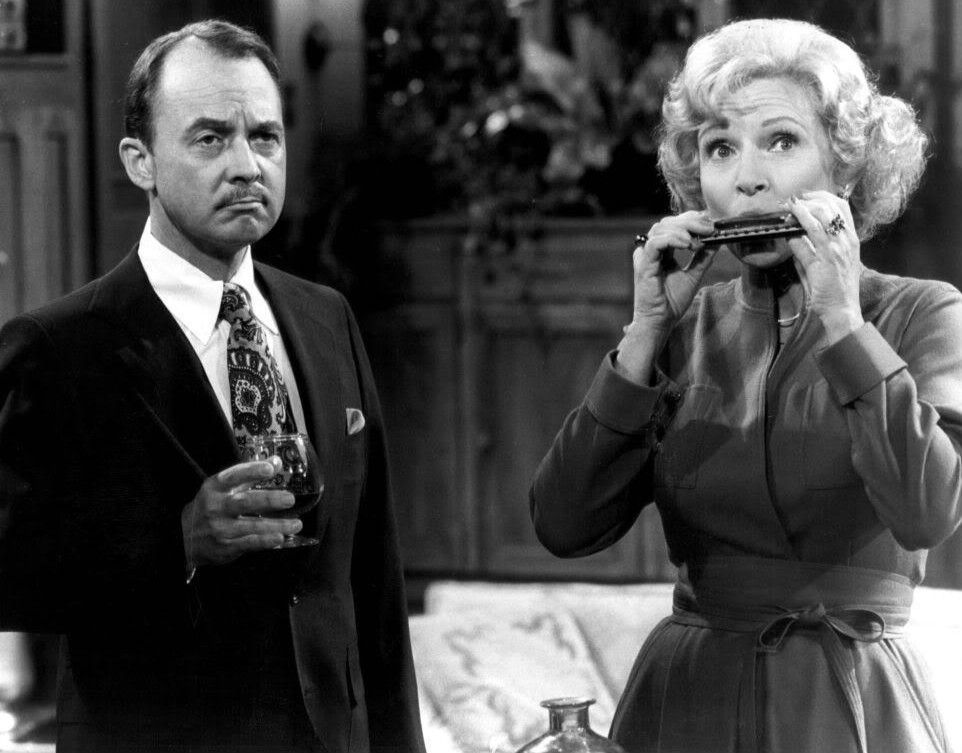
The "Golden Girl," Betty Marion White, was born in Oak Park, just like Hemingway. Even though she was still a toddler when her family moved to California, and she was considered a national treasure, she liked to remind people that her roots were at Oak Park , which made fans from the area very happy.

The village had prepared to celebrate her 100th birthday on January 17, 2022, but sadly, the star passed away just weeks before. Oak Park then proceeded to celebrate her life and career at an event that gathered hundreds of fans despite the freezing weather. White held the Guinness World Record for the longest TV career by an entertainer, starred in iconic shows like The Mary Tyler Moore Show and The Golden Girls , and was also a pioneering female producer behind the camera.

Geography Geography 5 min read

Let’s go on a sightseeing tour

Wander the streets of these 10 iconic American neighborhoods!

Image: Breno Assis

America is truly a wonderful place to live. Take a stroll through any of our busy and vibrant cities, and you’ll come across streets buzzing with culture, breathtaking architecture, and, perhaps most importantly, delightful people. After all, a huge part of what makes our country so great is the generations of Americans who helped build it. In making their homes a better and safer place for the generations to come, these Americans gave our neighborhoods an identity and culture that truly make them unique. With that in mind, we have selected 10 of the most iconic and beautiful neighborhoods in America for you to discover. Enjoy!

1
The French Quarter - New Orleans

Image: João Francisco

We’ll begin this article with a Southern jewel. New Orleans’ French Quarter is the oldest neighborhood in the city, and for a while, it was the central square around which the city was built. In fact, its French name, Vieux Carré ("Old Square") describes its status as an essential location.

Nowadays, the French Quarter serves as a quaint and charming time machine. Millions of tourists visit it for its delightful architecture, delectable restaurants, and buzzing jazz scene. Other attractions include Jackson Square, a public park dedicated to Andrew Jackson, and Bourbon Street, filled with picturesque bars and taverns.

2
Little Havana - Miami

Image: Kian Lem

This neighborhood proves that good things come in small packages. Little Havana got its name in the 1960s after a substantial number of Cuban immigrants moved into the area. With them came the vibrant and colorful culture that has defined this neighborhood for over 60 years.

If you only have time for a quick visit, we recommend taking a stroll through the neighborhood's main street, the world-famous Calle 8 . This strip is filled with stores and restaurants offering traditional (and delicious) Cuban food. You might also visit one of the many live music venues and dance the night away!

3
Chinatown - San Francisco

Image: Madeleine Maguire

We could have taken our pick from the many amazing neighborhoods called "Chinatown" across America, but we ultimately settled on the oldest one in the country. Centered on Grant Avenue and Stockton Street, San Francisco’s Chinatown is instantly recognizable, made famous by amazing movies like The Maltese Falcon or The Pursuit of Happyness .

This neighborhood is also considered largely responsible for popularizing Chinese cuisine in America, and for creating new Chinese-American dishes like chop suey. San Francisco’s Chinatown is also world-known for its spectacular Chinese New Year celebrations, perhaps the biggest of its kind in America.

4
Beverly Hills

Image: David Vives

Since it was incorporated as an American city in 1914, Beverly Hills is technically not a neighborhood. However, because it is completely enveloped by the city of Los Angeles, it is considered a suburb. So, for the sake of argument, we’ll include "90210" on this list, if only because it gives us a chance to talk about the quintessential home of the rich and famous.

Beverly Hills got its name from "Beverly Farms" located in Beverly, Massachusetts, after the landowners realized there was no oil to be found in it and decided to develop it into a town. Nowadays, it is mostly known for its lush scenery, luxury shopping, and, of course, its connection to Hollywood stars. Literally, too many movies and shows feature this city, so we’ll just name a few off the top of our heads: The Beverly Hillbillies , Beverly Hills Cop, and Beverly Hills 90210 .

5
Brooklyn - New York City

Image: Víctor Martín

What is a borough if not a big neighborhood? I know many New Yorkers will disagree with this statement, especially those lucky enough to reside in Brooklyn . After all, many consider Brooklyn to be a separate entity—an independent (albeit small) city. And when you consider all the amazing things this borough has to offer, can you really blame them?

Brooklyn is comprised of over 70 different neighborhoods. If it were a standalone American city, it would rank as the fourth largest in the entire country. However, the sole reason we included it on this list is that the entire borough feels like one massive neighborhood, instantly recognizable by its distinct identity and culture.

6
Haight-Ashbury - San Francisco

Image: Burak Ceviz

San Francisco is world-famous for many reasons: Its slanted streets, cable cars, and the Golden Gate Bridge make it instantly recognizable. Architecture buffs also adore "the City" (as it's known by locals) for a very specific reason: its abundance of "Painted Ladies," the nickname given to the gorgeous Victorian houses built in the 1800s. In that sense, while many of San Francisco’s neighborhoods boast these houses, our top pick goes to those in the Haight-Ashbury neighborhood.

In truth, Haight-Ashbury has so much more to offer than these lovely houses. For starters, this neighborhood was the center of the 1960s counterculture; many claim that the "Hippie" movement began here. Several stores in the area pay tribute to that era, particularly record stores and boutiques.

7
Little Italy - New York City

Image: Alex Haney

Just like with our nation’s Chinatowns, we could have easily picked from a number of locations known as "Little Italy." In fact, New York City houses several of them, from the Morris Park neighborhood in the Bronx to the section formerly known as "Italian Harlem." Ultimately, we decided to focus on what is probably the most famous of them all: the Little Italy neighborhood in Manhattan.

While this area was made famous by Francis Ford Coppola’s legendary Godfather trilogy, the truth is that Little Italy’s charm can’t fully be described by any art form. From its history to its amazing culture and proud heritage, this neighborhood is truly a sight to behold.

8
Pike Place - Seattle

Image: Ben Dutton

We know what you’re thinking: Pike Place is not a neighborhood. And while it’s true that this name is most heavily associated with Seattle’s iconic public market, the area surrounding Pike Place is now considered a neighborhood in its own right—and a gorgeous one at that.

Although small, the Pike Place district is filled to the brim with spectacular landmarks and fantastic gastronomic offers. You can visit the very first Starbucks location, wander around the many offerings in the farmer’s market, or take a stroll through Waterfront Park.

9
The Loop - Chicago

Image: Anthony Fomin

Standing in the heart of "the Windy City" there’s a neighborhood blessed with a unique name: The Loop is Chicago’s commercial district and the true center of the city. It’s named after the central train station located in the neighborhood, where all the city’s train lines meet and form a "loop."

Millions of tourists visit this neighborhood every year, as it is conveniently located near several of Chicago’s main attractions. Anyone staying in the Loop is within walking distance of Millennium Park, the Art Institute of Chicago, and the "Cloud Gate" sculpture, perhaps best known by its nickname, "The Bean."

10
Beacon Hill - Boston

Image: Vanessa Sezini

We’ll end this article with a wonderful historic neighborhood. Beacon Hill ’s name is delightfully straightforward: it refers to a former beacon placed on top of the highest hill in central Boston. As you might have guessed, the function of this beacon was to alert residents to any invasions, which is a true statement of the history of this iconic neighborhood.

Beacon Hill is perhaps Boston’s most famous neighborhood, characterized by its lovely rowhouses, gas-lit streets, and brick sidewalks. It has been home to both the Massachusetts State House and many notable Americans, including author Louisa May Alcott and poet laureate Robert Frost.

Explore more American facts

Choose your favorite category!

General
General

As American as apple pie—the very best America has to offer!

Culture
Culture

Delve into the astounding richness of American lore.

Geography
Geography

Hop in and explore vast and diverse American landscapes.

History
History

Discover the key moments that shaped the United States.