Culture Culture 6 min read

One hit per year

From Elvis to Dylan: 12 of the best 1960s songs everybody still listens

Image: Florian Schmetz

More than half a century has passed since the 1960s, yet there are songs from those years that we still listen to today. This decade saw the emergence of some of the most important musicians in the history of American music. It was an amazingly creative era that followed the initial explosion of rock'n'roll, where pop became more than just a teenage fad. It's very hard to choose just a few representative songs from the psychedelic 60s, but in this article, we'll make an effort: we present to you 12 of the most iconic songs of the decade that marked a before and after in music. We're sure you'll want to go and create a Spotify playlist to listen to non-stop!

1
1959: (Now and Then There's) A Fool Such as I

Image: Victrola Record Players

To better understand the music of the 1960s in the United States, one must first go back to the previous decade and revisit the major influences. The music of this era, especially rock and roll, stood out for its rebellious energy, strident guitar chords, and lyrics with messages of freedom.

And perhaps the greatest representative of this cultural change was the great Elvis Presley. In 1959 Elvis released "(Now and Then There's) A Fool Such as I". The song, composed by Bill Trader, had already been recorded years before by other artists, but the King of Rock 'n' Roll's version became a platinum record. Thanks to Elvis and other iconic musicians such as Bill Haley and His Comets, Chuck Berry, and Fats Domino, at the beginning of the 1960s the music world stood on the verge of a true revolution.

2
1960: Will You Love Me Tomorrow

Image: chienba

One of the groups that defined the sound of the 60s was The Shirelles, and one of the songs that helped them reach the top was "Will You Love Me Tomorrow", released in November 1960.

This song composed by Carole King and Gerry Goffin was not only The Shirelles' first number 1, but also became the first song by an African-American girl group to top the Billboard Hot 100 chart.

3
1961: Stand by Me

Image: Bru-nO

"Stand by Me" is probably one of the most beloved songs of all time. Not only was this song a massive hit when singer-songwriter Ben E. King released it in 1961, it was later listed as "the fourth most performed song of the 20th century". No wonder! It was recorded over 400 times by many notable artists such as Otis Redding, John Lennon, Tracy Chapman, and Florence and the Machine, among others.

4
1962: The Twist

Image: Sprinter_Lucio

Originally this song was released in 1958 by Hank Ballard and the Midnighters and later covered by Chubby Checker in 1960. However, two years later something incredible happened that would not be repeated until 59 years later. Checker's version of "The Twist" resurfaced in January 1962 setting a record as the only song to reach number 1 in two different runs. Do you remember this amazing hit inspired by the twist dance craze?

5
1963: Be My Baby

Image: BRUNO CERVERA

Released in August 1963, "Be My Baby" was The Ronettes' biggest hit. Composed by legendary record producer and songwriter Phil Spector, this song is regarded as the quintessential example of his Wall of Sound recording technique.

"Be My Baby" reached number 2 in the U.S., has been played on radio and TV over 3 million times, and has influenced dozens of artists of the golden era of rock and pop music.

6
1964: Oh, Pretty Woman

Image: Jack de Nijs for Anefo, CC0, via Wikimedia Commons

Long before the famous film starring Julia Roberts and Richard Gere, "Oh, Pretty Woman" was an instant success. Released in August 1964, this song was the biggest hit of Roy Orbison, a major player in American popular music of the 1960s.

Orbison was inspired by his wife Claudette, which seems to have brought him luck: the song quickly reached number 1 and was later inducted into the Grammy Hall of Fame.

7
1965: Like a Rolling Stone

Image: Brett Jordan

Right in the middle of the decade, the leading exponents of the music scene of the time seem to have reached the pinnacle of creativity. Many songs that are still iconic today were released in 1965: "I've Been Loving You Too Long (To Stop Now)" by Otis Redding, "I'll Feel a Whole Lot Better" by The Byrds, "The Sound of Silence" by Simon & Garfunkel, and "California Dreamin'" by the Mamas & the Papas.

But perhaps the one who broke the mold and changed the history of music forever was Bob Dylan with his mythical song "Like a Rolling Stone". The worldwide hit not only remained at number 2 on the US Billboard charts for three months (the first song of its length to do so) but also marked Dylan's transformation from folk singer to rock star.

8
1966: God Only Knows

Image: Photographer: Sam Psoras, Public domain, via Wikimedia Commons

Another turning point in the history of American music is the release of Pet Sounds by the Beach Boys. The album, released in May 1966, is made up of one hit after another: "Wouldn't It Be Nice" and "You Still Believe in Me", just to name a few.

But probably one of the record’s greatest songs is the sophisticated and innovative "God Only Knows". Despite being an unusual sound for the group, some consider it the most beautiful melody ever composed. Even great musicians like Paul McCartney have picked it as their favorite song of all time. Undoubtedly, it is a work of art born from the brilliant mind of Brian Wilson.

9
1967: Sunday Morning

Image: Anastasia Saldatava

The debut studio album by the American rock band The Velvet Underground will forever be remembered for the famous banana on the cover designed by Andy Warhol and for being one of the most influential albums of the 60s.

Although the album was too controversial when it was released in March 1967 and initially was a commercial flop, over time the songs became legendary. For example, "Sunday Morning", with Nico's haunting vocals, a dreamy melody, and cheeky lyrics was recorded with the intention of making a hit. And in our humble opinion, it more than delivers!

10
1968: I Heard It Through the Grapevine

Image: Travis Yewell

Although it had been recorded before by other Motown Records artists, Marvin Gaye’s version of "I Heard It Through the Grapevine" released in October 1968 is the one that went to the top of the Billboard Pop Singles chart and stayed for seven weeks. Since then, the song has been inducted into the Grammy Hall of Fame and is considered an acclaimed soul classic.

11
1969: I Want You Back

Image: Pexels

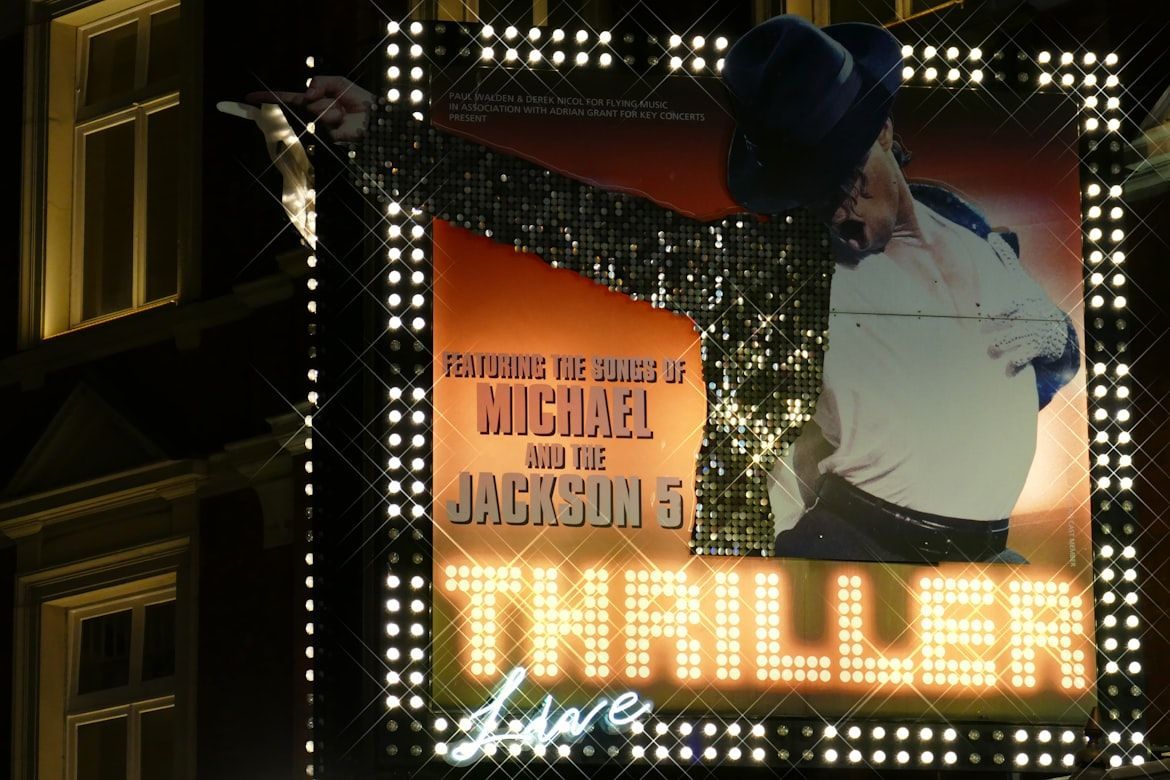
Another of Motown Records' iconic artists of the 1960s were the Jackson 5. "I Want You Back" is the first national single by the band in which a very young Michael Jackson took his first steps.

Released in October 1969 the song was performed on the band's first television appearances and became an instant hit. "I Want You Back" was number 1 on the Billboard charts and has sold over 6 million copies worldwide.

12
Bonus: Bridge Over Troubled Water

Image: Rob Bogaerts / Anefo, CC0, via Wikimedia Commons

Despite the innovation experienced in rock and pop in the previous decade, the most successful song of 1970 was the work of a folk group, proving that the genre had not been forgotten and would forever be a staple of American music.

Recorded with a technique similar to Phil Spector's "Wall of Sound" and inspired by gospel music, "Bridge Over Troubled Water" was Simon & Garfunkel's most successful single. The song won five Grammy Awards, including Song of the Year. Since then, more than 50 artists —including Johnny Cash, Aretha Franklin, and Elvis Presley— have released their own version of the beloved hit.
History History 5 min read

MILLION DOLLAR ARTICLE

10 Fun Facts about American Currency

Image: Jp Valery

We bet you have never stopped to think about the dollar bills and coins you carry in your pocket, even if you do use them every day. The U.S. currency has purchasing power, of course, but it is also full of interesting facts and quirky details that are a testimony of the nation’s culture, history, and values.

Do you know how many folds it takes for a U.S. bill to tear? Do you know what the bills are made of? In this article, we’ll go through some of the most interesting facts about the history of our money. Read on and find them out!

1
Money Materials

Image: Jorge Salvador

We call them paper bills, but do they undergo the same process as any other paper? Naturally, they don’t. U.S. bills are mainly made of two materials: 75% of their composition is cotton and the 25% left is linen. Besides, they have randomly disbursed red and blue security fibers embedded in the paper.

This special blend is made by only one company in America and that is Crane & Co . The company, based in Massachusetts patented this special blend and it has been the sole provider of paper for currency since 1879.

2
Origin of the U.S. dollar symbol

Image: Paris Bilal

The dollar sign is a matter of debate. One line or two across a capital S, the symbol is today a worldwide sign for money, but where does it come from?

Even if there are several theories as to where the U.S. dollar symbol comes from, all of them agree that it was derived from the Spanish peso . When the time came, and the new nation needed its own currency, the basis was that of the Spanish coinage, which was the most common currency in the colonies before the country’s independence.

The adoption of the sign was made official in 1785, and today, the United States is not the only country that uses this symbol, Canada, Australia, and New Zealand do too!

3
Who appears on the bills?

Image: AR

Having your face forever stamped on the little piece of paper that rules the world should be a milestone in your career, right? However, there were certain rules as to who qualifies to be granted this honor .

Probably, the most surprising, yet the most logical one is that no living person can be portrayed in American currency. Since the Founding Fathers considered it unpatriotic to be portrayed while alive, this was first a tradition and then made official in an Act of Congress in 1866 .

However, contrary to popular belief, this honor is not only reserved for presidents! Anyone who contributes to the nation can be portrayed.

4
Folding Papers

Image: Emilio Takas

Bills come and go all the time. We take them out of our pockets and put them in our purses only to take them out again a few hours later and give them to the shop assistant. For a life that busy, we can only hope the paper is tough enough , right?

Well, as a matter of fact, it is. Compared to regular paper, which can only be folded 400 times before it breaks, money paper can be folded up to 8,000 times before it breaks .

It's not that you’re going to try it out and see, but you can rest assured: Fold your bills away, they can handle it!

5
Damaged Goods

Image: Jp Valery

Even if they can be folded that many times, the life of bills is limited, not to mention accidents happen. Who hasn’t sent a bill to the washing machine by chance?

So, what happens when a bill is damaged? Well, at least 50% of it has to be clearly identifiable for the bank to replace it , otherwise, you’ll just lose your money. You don’t feel like folding them much now, right?

On the other hand, and mainly due to time damage, at least 70% of the new bills are used to replace old bills . These bills, once taken out of circulation are shredded and sent to companies that can recycle them!

6
Security Features

Image: Colin Watts

Counterfeiting has been a problem ever since paper money was created and statistics about which countries counterfeited most of the money are simply shocking. But we won’t get into that.

What we will say is that thanks to technological advancement, the U.S. bill is getting harder and harder to counterfeit. In modern bills, there are at least six security features which are: UV security ribbon, raised printing, microprinting, 3D security ribbon, color-shifting ink, and traditional watermarks. Do you pay attention to them?

7
U.S. Coins

Image: Kenny Eliason

Coin production in America is in charge of the U.S. Mint and there are four production facilities across the country. They are located in Philadelphia, Denver, San Francisco, and West Point.

It is estimated that every year the Mint produces about 16 trillion coins which are valued at over $1.09 billion dollars. What is truly impressive is that Americans throw away an estimated 62 million dollars worth of coins every day!

They may not be worth much alone but don’t throw them away, all of them together can make you rich!

8
Green Ink

Image: maria pagan

Have you ever wondered why the U.S. dollar bills were green? It is not about design or aesthetics, even if we think they look pretty.

The decision to use green ink was a matter of security, in order to prevent counterfeiting. Back then, black and white ink made it easier to create photographic fakes. For that reason, green was the color of choice, and, when paper money was standardized in 1929, it had great acceptance due to the positive connotations of the color . Do you like it?

9
Andrew Jackson’s Take on Paper Money

Image: Elsa Olofsson

Every denomination has an important figure stamped on the front. In the case of the 20-dollar bill, Andrew Jackson was the chosen one.

Jackson was the seventh president of the United States and, even if it is not a rule that only presidents can be portrayed, his contributions gained him this honor.

Ironically, Jackson was not in favor of using paper money. For him, only gold and silver coins should have remained legal tender. After learning this, one can only assume he wouldn’t be so happy to be the face of the 20-dollar bill, right?

10
Facelifts and redesigns

Image: Kenny Eliason

One of the ways of keeping paper money safe and hard to counterfeit is by giving the bills new designs.

New faces were expected to appear in future bills, but, in the meantime, the changes always had to do with the proportions of the elements within each denomination. Bigger faces, rearrangement of the signatures, stuff like that.

Now, these changes and facelifts haven’t reached all the bills. 1-dollar bills haven’t been changed or redesigned ever since 1929. Why is that? Because it is not worth the trouble for criminals to counterfeit. One dollar won’t take them too far!

History History 3 min read

High data

Discover the secrets of the Empire State Building!

Image: Kit Suman / Ofuss

The Empire State Building may be an immense structure that's hard to miss, but its history holds events, quirks, and surprising facts that most people have never heard! From lightning constantly striking it to water invading from below, let's uncover 10 things no one ever told you about this iconic American skyscraper.

1
25 times a year

Image: Johannes Plenio

Its tall, elegant steel structure is definitely captivating; no wonder thousands of photographers, painters, and filmmakers have chosen the Empire State Building as the backdrop for their work. However, that imposing height comes with something a little scary: it's estimated that the building is struck by lightning about 25 times a year! Fortunately, it was designed to handle these strikes, so it's completely safe.

2
Really fast

Image: Guilherme Cunha

There are buildings that took decades to complete. But this is not the case with the Empire State Building. In fact, this is one of the fastest skyscrapers ever built: It took only one year and 45 days to erect such an architectural masterpiece. That means it was built at a rate of an incredible 4.5 floors per week!

3
Unlikely survivor

Image: Melanie Dretvic

It was 1945 when the Empire State Building was accidentally struck by a B-25 Mitchell bomber due to the thick fog that covered NYC. A worker named Betty Lou Oliver was on the 80th floor when the plane crashed into the 79th. She was severely injured, but incredibly, she survived. Hours later, while being rescued in an elevator, the damaged cables gave way, and Betty fell 75 floors to the basement. She survived that too!

4
40 million dollars

Image: Pepi Stojanovski

A tremendous building like the Empire State couldn't be built on a shoestring budget. When it was constructed —in the midst of the Great Depression, no less— it cost about $41 million . That's a hefty sum, even today! Adjusted for inflation, that would be around $600 to $700 million in 2025. Wow!

5
Secret floor

Image: roemer overdiep

If you are afraid of heights, be prepared: the Empire State Building has two public observation decks, one on the 86th floor and another on the 102nd. But there's another one, and it's even higher! It's located on the 103rd floor, but it's not open to the public and is mostly used for VIPs or special occasions.

6
High security

Image: Pawel Czerwinski

Although an incredible 4 million people visit the building each year on average, getting in isn't easy. Many visitors say it feels like going through airport security, with X-ray machines and metal detectors everywhere. Visitors must also pass through a security checkpoint before reaching the observation decks, and the building is constantly monitored by cameras and security guards.

7
King Kong

Image: Simon Ray

We all remember the iconic scene of the imposing King Kong climbing the towering mast of the Empire State Building. And while that image lives on in our minds, there's one detail many people overlook: When the original King Kong movie premiered in 1933, the Empire State Building was less than two years old! Plus, at the time, the building still held the title of tallest in the world, making King Kong's climb even more epic.

8
Underground waterways

Image: Evgeniy Smersh

Beneath what is now NYC, there was a network of streams and rivers that flowed freely before Manhattan and other boroughs covered them. The land below the Empire State Building is no exception, and these old underground waterways still occasionally cause complications. For example, during heavy rains, water can rise and seep into the building's wind tunnels, sometimes flooding areas with up to two feet of water.

9
The original plans

Image: Jaunt and Joy

The Empire State Building was originally supposed to have a dirigible anchor! That's right; the mast at the top of the building was meant to serve as a mooring post for dirigibles, with a docking platform and a door for passengers to disembark. However, due to the extreme height, high winds, and overall potential danger, the idea was discarded. Today, the mast is used for antennas and other communications equipment.

10
Green building

Image: Chris Ladouceur

This iconic building that defines New York's skyline is considered a "green building." And no, it has nothing to do with the color of its walls; it's about something much more meaningful. The sustainability modifications that the Empire State has undergone over the years have made it one of the most energy-efficient buildings of its size, minimizing its environmental impact and earning it the title of "green building."

Explore more American facts

Choose your favorite category!

General
General

As American as apple pie—the very best America has to offer!

Culture
Culture

Delve into the astounding richness of American lore.

Geography
Geography

Hop in and explore vast and diverse American landscapes.

History
History

Discover the key moments that shaped the United States.