History History 4 min read

Feel old yet?

What brand was founded when Thomas Jefferson was president?

Image: @felirbe

From Converse footwear to Colgate toothpaste to Jell-O, millions of Americans use these brands every day without realizing how old they really are. Some were around before the Titanic sailed, while others were founded before the Civil War. Despite their modern marketing, updated logos, and constant reinvention, these companies have survived it all. Take a look at 11 brands that have quietly crossed the 100-year mark.

1
Converse (1908)

Image: pure julia

Converse was founded in 1908 by Marquis Mills Converse in Maiden, Massachusetts. The company originally made rubber footwear, including galoshes and winter boots , before expanding into athletic shoes. Its famous Converse All Star basketball shoe debuted in 1917 and would later become one of the most recognizable sneakers in history.

The brand’s biggest boost came from basketball star Chuck Taylor, who joined the company as a salesman and ambassador. His signature was added to the shoe in 1932, creating the legendary Chuck Taylor All Star. More than a century after its founding, Converse remains a global fashion staple.

2
Whirlpool (1911)

Image: Andriy Blokhin

Whirlpool traces its roots to 1911, when Louis Upton and his uncle Emory Upton founded the Upton Machine Company in Benton Harbor, Michigan. Their goal was simple but ambitious: add electric motors to washing machines and make household chores easier .

The company eventually evolved into Whirlpool Corporation and became one of the world’s largest appliance manufacturers. Over the decades, it introduced innovations ranging from automatic washing machines to appliances used in NASA’s Gemini and Apollo-era space programs.

3
Colgate (1806)

Image: Atikah Akhtar

Colgate’s story began in 1806 when English immigrant William Colgate started a starch, soap, and candle business in New York City . At the time, toothpaste in tubes did not even exist.

During the nineteenth century, the company expanded into oral-care products and eventually became one of the most recognized names in dental hygiene. Today, many consumers think of Colgate as a modern toothpaste brand, but its origins go back more than two centuries.

4
L.L. Bean (1912)

Image: Joseph Hendrickson

In 1912, Leon Leonwood Bean launched a mail-order business from Freeport, Maine. His first product was a hunting boot designed to keep outdoorsmen comfortable in wet conditions .

The original boot became known as the Maine Hunting Shoe and helped build a company famous for quality outdoor gear. L.L.Bean remains headquartered in Maine and continues to attract customers seeking durable products inspired by the outdoors.

5
3M (1902)

Image: Dimitri Karastelev

Today, 3M is known for everything from Post-It Notes to industrial products, but it started in 1902 as the Minnesota Mining and Manufacturing Company in Two Harbors, Minnesota . Ironically, its original mining venture failed.

Rather than disappear, the company reinvented itself by producing abrasives and sandpaper. That willingness to innovate eventually led to thousands of products and more than a century of inventions that have been used in homes, offices, hospitals, and factories all around the world.

6
Red Wing Shoes (1905)
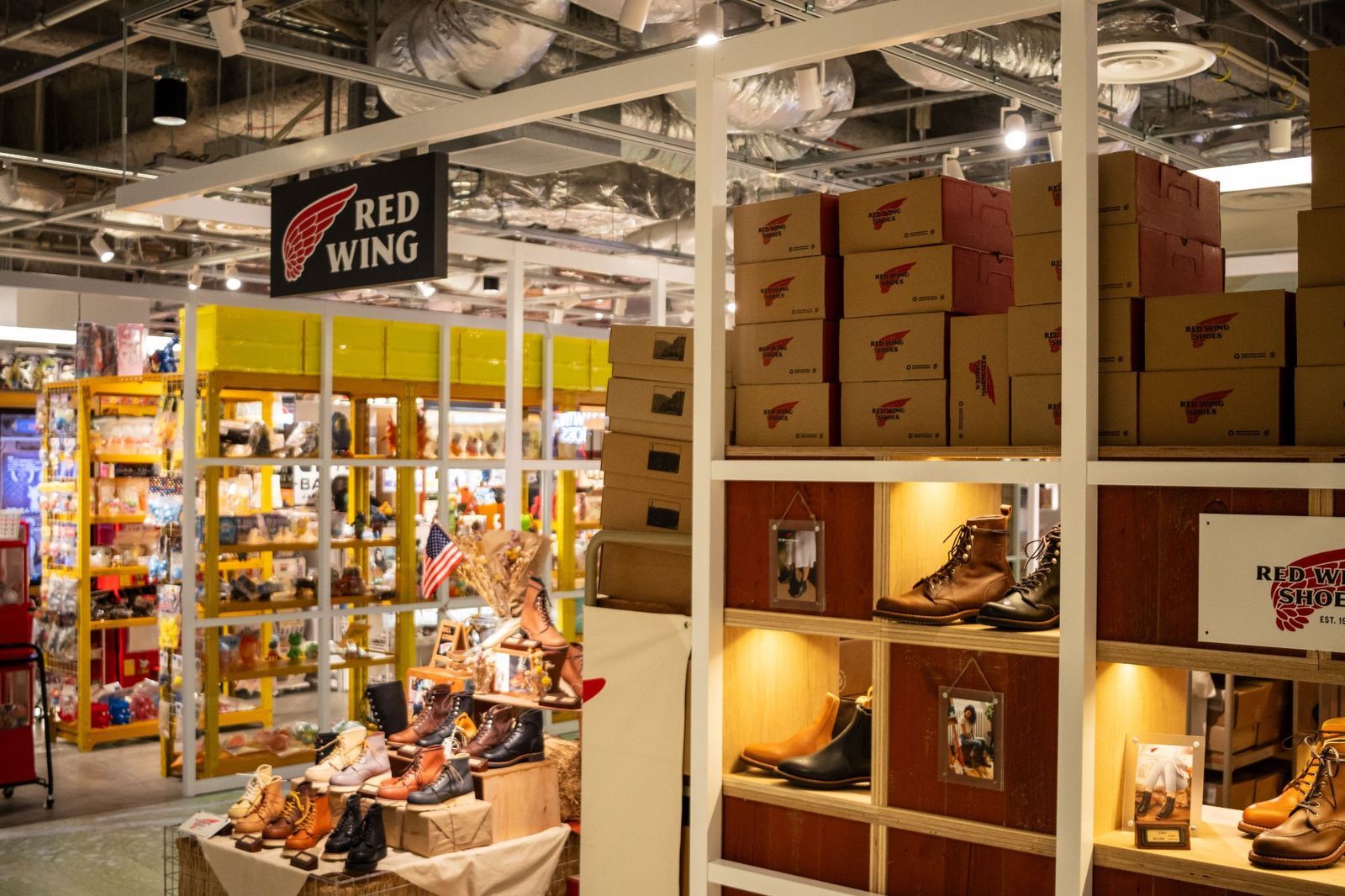
Image: Henry Saint John

Red Wing Shoes was founded in 1905 in the Mississippi River town of Red Wing, Minnesota. The company specialized in rugged footwear for workers in demanding industries such as farming, mining, and construction .

Its reputation for durability has helped it survive dramatic changes in the American industry. More than a century later, Red Wing Boots remain popular among both workers and fashion enthusiasts who appreciate classic American craftsmanship.

7
Fruit of the Loom (1851)
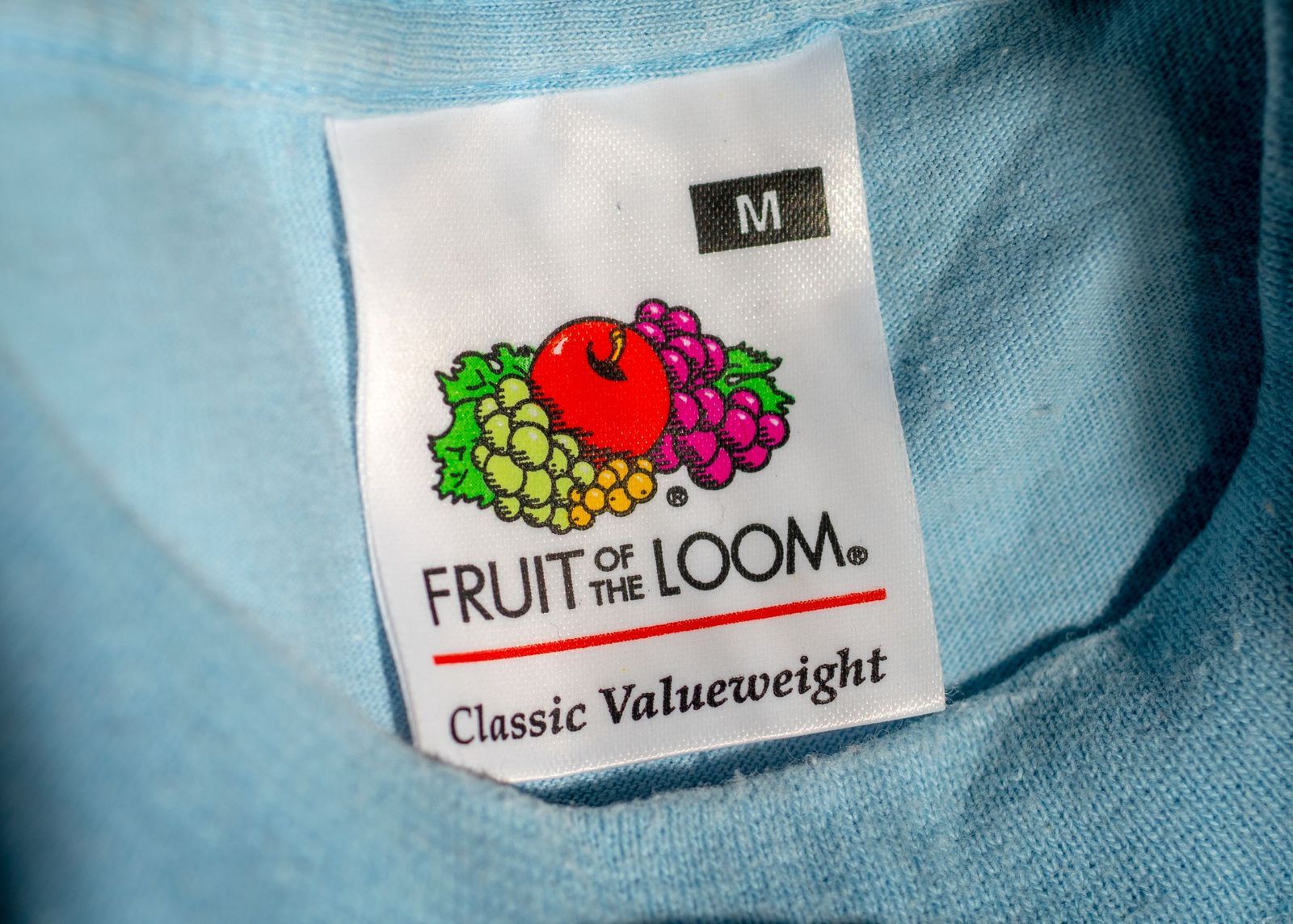
Image: Lenscap Photography

Fruit of the Loom traces its history to 1851, making it one of the oldest brands on this list. The company began as a textile manufacturer in Rhode Island during an era when the country was still expanding westward.

Its colorful fruit logo became one of the most recognizable trademarks in America. Although consumers usually associate the brand with T-shirts and underwear, its roots stretch back to the earliest days of America’s industrial manufacturing.

8
Gibson (1894)

Image: Gabriel Barletta

Founded in Kalamazoo, Michigan, in 1984 by Orville Gibson, this brand became one of the most influential guitar makers in music history. The company helped shape the sound of blues, jazz, country, and rock music .

Its instruments have been played by legendary musicians including B.B. King, Chuck Berry, Jimmy Page, and Slash, among many others. Despite being well over a century old, Gibson remains one of the most relevant and in-demand names in the guitar world.

9
Jell-O (1897)

Image: Girl with red hat

Jell-O began in 1897 when carpenter and cough-syrup manufacturer Pearle Bixby Wait developed a flavored gelatin dessert . His wife, May, suggested the catchy name that would become famous nationwide.

The dessert gained popularity through aggressive advertising and recipe campaigns in the early twentieth century. For generations, Jell-O has been a familiar part of family gatherings, school cafeterias, and holiday meals.

10
New Balance (1906)

Image: @felirbe

New Balance was founded in Boston in 1906 by William J. Riley. Interestingly, the company did not begin by making running shoes. Instead, it produced arch supports and orthopedic products designed to improve comfort and balance, hence the name .

The company later expanded into athletic footwear and became known for emphasizing fit and performance. Today, New Balance competes with much younger sportswear giants while carrying more than a century of history behind it.

11
Stanley (1913)

Image: Shahrouz Nikpoush

Stanley was founded in 1913 when inventor William Stanley Jr. introduced an all-steel vacuum bottle . His innovation improved durability and helped popularize insulated drink containers.

For decades, Stanley products were associated with workers, campers, and outdoor enthusiasts. In recent years, the brand has experienced a surprising resurgence among younger consumers, proving that even a company founded before World War I can find new audiences.

Culture Culture 6 min read

ALL-TIME CLASSICS

Are you looking for the Great American Novel? Explore 10 contenders

Image: Laura Chouette

American literature is rich in stories and authors. Its best examples capture life in the big cities, luxury, and glamour, but also the small rural American towns, diving into their roots and history. Books like Francis Scott Fitzgerald's The Great Gatsby or John Steinbeck's The Grapes of Wrath are classics that have left a lasting mark on generations of readers . Today we have put together a bookshelf with 10 of the best American novels of the 20th century. This list will surely fall short, but we hope you enjoy our selection!

1
The Great Gatsby , F. Scott Fitzgerald (1925)

Image: Girl with red hat

Written by F. Scott Fitzgerald, one of the most iconic authors of the so-called "Lost Generation", The Great Gatsby portrays the dark side of the American dream . The protagonist, the mysterious and apparently frivolous millionaire Jay Gatsby, is obsessed with winning back a woman he loved in his youth. Set in the Jazz Age, Fitzgerald’s book raises the contradictions between the power of money and the most intimate individual aspirations.

Published in 1925, The Great Gatsby is one of the greatest masterpieces of American fiction . Since then, it has sold millions of copies all over the world, has had numerous theatrical and film adaptations, and was chosen as the best American novel of the 20th century on several occasions.

2
The Sound and the Fury , William Faulkner (1929)

Image: Brandi Redd

Published in 1929, The Sound and the Fury is William Faulkner's fourth novel and is considered the greatest opus of this Nobel Laureate . It chronicles the decadence of the Compsons, an aristocratic family in the American South, their secrets, and the relationships of love and hate that sustain and destroy them.

The Sound and the Fury is a profound and heartbreaking exploration of decay, despair, and loss . Faulkner's innovative narrative technique, while challenging, allows for an intimate and visceral portrayal of the characters. The novel also addresses issues of race, gender, and class with admirable narrative prowess.

3
The Old Man and the Sea , Ernest Hemingway (1952)

Image: MonicaVolpin

The Old Man and the Sea was the last novel published by Ernest Hemingway during his lifetime. For it, he won the Pulitzer Prize for Fiction in 1953 and it undoubtedly contributed to the Nobel Prize for Literature he was awarded in 1954.

The novel tells the story of Santiago, an old and experienced fisherman who embarks on a grueling three-day battle when he finally manages to catch a huge marlin. The Old Man and the Sea is considered one of the masterpieces of universal literature that has captivated readers around the world for decades . Its message about perseverance, dignity, and the search for life’s meaning is still relevant today. The novel is a must-read for anyone interested in literature and human nature.

4
In Cold Blood , Truman Capote (1965)

Image: Brandi Redd

On November 15, 1959, in a small Kansas town called Holcomb, the four members of the Clutter family, a married couple and their two teenage children, were savagely murdered by Dick Hickcock and Perry Smith.

Based on these gruesome events, the American novelist Truman Capote managed to turn around his career as a storyteller by writing In Cold Blood , the novel that definitively established him as one of the great authors of twentieth-century American literature. This book catapulted him as the pioneer of the New Journalism literary movement , a non-fiction genre that became popular in the 1960s for narrating stories based on real events.

5
The Catcher in the Rye , J. D. Salinger (1951)

Image: Gratisography

The Catcher in the Rye , written by the great J. D. Salinger, is a contemporary novel that has become a classic of modern literature. At the time of its publication in 1951, it provoked numerous controversies for its provocative language and its unabashed portrayal of teenage struggles, such as sexuality, the loss of innocence, and the transition to adulthood.

The Catcher in the Rye could be framed within the Bildungsroman —a literary genre that focuses on the psychological and moral growth of the protagonist. It follows Holden Caulfield, a teenager who, after being expelled from school, gets lost in New York trying to find his way in the world. The novel is rich in symbolism and themes , and the literary style and narrative technique are unique and exceptional.

6
American Pastoral , Philip Roth (1997)

Image: Arno Senoner

Published in 1997, American Pastoral is the novel that earned Philip Roth the Pulitzer Prize and is the first in the well-known "American Trilogy", a series of novels narrated by Nathan Zuckerman, the author's alter ego. With the Vietnam War as a backdrop, this book is a lucid tale that questions American values during the end of the happy sixties.

In American Pastoral we find Roth at his best: deep, intense, incisive, magnificent . His ability to build a universe of complex characters and dig into their psychologies is astounding and overwhelming. Few writers have managed to capture the contradictions of American society as he has done.

7
Beloved , Toni Morrison (1987)

Image: Artis Kančs

Beloved , published in 1987 by Nobel Prize winner Toni Morrison, takes place in the aftermath of the American Civil War . The novel tells the story of an African-American slave, Margaret Garner, who escapes from Kentucky to Ohio, a free state.

Magic realism runs throughout the entire book and manifests through the ghostly presence of Beloved's character. Morrison uses this technique to explore collective memory and the persistence of the past . The novel is considered a masterpiece of contemporary literature and has been acclaimed for its innovative writing style and its exploration of sensitive subjects such as slavery, freedom, identity, and memory.

8
On the Road , Jack Kerouac (1957)

Image: Daria Kraplak

On the Road is a semi-autobiographical novel in which Jack Kerouac recounts a series of trips he made across the United States and Mexico with his friend Neal Cassady. Inspired by his passion for jazz, Kerouac developed the idea of a book that would be a great improvised prose solo . He wrote it on his typewriter on a long, single roll of paper in just three weeks.

A cornerstone of the so-called "Beat Generation," On the Road was published in September 1957, after 6 years of delay due to the publisher's reservations about the explicit contents. At the time, this emblematic book had a major impact, especially on the younger readers of the 60s. Today, On the Road is still considered one of the great American novels of the 20th century for capturing the rebellious spirit of an entire generation.

9
The Heart is a Lonely Hunter , Carson McCullers (1940)

Image: Faith Enck

The Heart is a Lonely Hunter is a literary masterpiece that continues to resonate in the hearts of readers, even though it was published more than 60 years ago. Set in a small southern town, it tells the story of a group of people who have in common the rejection of a society that ignores them.

This is Carson McCullers' first novel, written when she was only twenty-three years old. She masterfully captures the essence of loneliness and the search for human connection in a way that transcends time. With a moving narrative and unforgettable characters, the novel has received critical acclaim and has earned a prominent place in literary history.

10
The Grapes of Wrath , John Steinbeck (1939)

Image: Sonder Quest

We couldn't leave The Grapes of Wrath, 1940 Pulitzer Prize winner , out of this list. In this harrowing book, Nobel laureate John Steinbeck narrates the difficult journey of a family of farmers who, beset by hunger and misery, leave the fields of Oklahoma to reach the golden shores of California, the promised land.

First published in 1939, The Grapes of Wrath is a seminal work in American literature that explores the conflict between the rich and the poor and reflects the horrors of the Great Depression with sensitivity and sharp insight. Steinbeck's chronicle of the shameful mistreatment of 1930s families is perhaps the most "American" of all American classics.

History History 5 min read

First Family, regular domestic problems

Ten ways the First Family changed the White House

Image: Edoardo Cuoghi

Since 1800, the house at 1600 Pennsylvania Avenue has served as the president’s official residence. In the more than 200 years since, the presidential mansion has seen it all, from being set on fire by British forces to having planes crash on its lawn. Each administration has left its mark on the White House, with many presidents and first ladies expanding, renovating, and reimagining it while creating new traditions and customs. Let’s dive into 10 ways First Families changed the presidential residence.

1
New Year Reception (John and Abigail Adams)

Image: Ray Hennessy

John Adams was the first U.S. president to live in the White House—then referred to as the President’s Palace or the Presidential Mansion—alongside his wife, Abigail, who played a significant role in furnishing the newly built residence.

On New Year’s Day in 1801, the Adamses held a public reception for anyone who wanted to shake hands with the president and his wife. This tradition continued (with some interruptions) until 1932, when it was ended by Franklin D. Roosevelt, who allegedly wanted to avoid being seen using a wheelchair.

2
Indoor Toilets (Thomas Jefferson)

Image: Tim Mossholder

When Thomas Jefferson assumed the presidency, he discovered that the White House lacked indoor plumbing, toilets, and had only an outdoor wooden privy. He ordered the construction of two "water closets," one on each side of the residence.

During Jefferson’s tenure, the White House underwent several modernizations, including improvements to the lighting system, the kitchen, and exterior features such as gutters. He also had an outdoor wine cellar built to store his extensive collection.

3
White House China (James Monroe)

Image: Anne Nygård

Did you know the White House has a special room dedicated to displaying the porcelain sets designed for each administration? The tradition of commissioning presidential china designs started in 1817, with President James Monroe.

Monroe’s china was designed and crafted in Paris, featuring an eagle carrying a red, white, and blue banner inscribed with "E Pluribus Unum." Following criticism over the presidential mansion’s purchase of foreign-made goods, Congress decided that future presidential china should be manufactured in the United States, though some presidential couples still chose to commission French china.

4
The Library (Abigail Fillmore)

Image: Iñaki del Olmo

When Millard and Abigail Fillmore moved into the White House, their approach to decoration and improvement differed from that of previous First Families. None of them came from a wealthy background, so they prioritized expanding the heating system and modernizing the kitchen.

More interested in intellectual pursuits than in socializing, Abigail noticed that the Presidential Mansion lacked a library and set out to create one. She personally organized the room, selected the books, and arranged them to her liking. The library became her main parlor, where she received literary figures of the time and listened to music.

5
Floral Arrangements (Lucy Webb Hayes)

Image: Alexander Simonsen

A passionate abolitionist and the first First Lady to earn a college degree, Lucy Webb Hayes moved into the White House at the end of the Reconstruction era, and after a highly controversial election. With limited funds to renovate the presidential mansion, Mrs. Hayes found ingenious ways to conceal holes in the carpets and worn-down furniture.

Lucy Hayes was the first president’s wife to be referred to as "First Lady." She made several improvements to the White House, but she is most remembered for turning the billiard room into a greenhouse filled with flowers, which she then used for floral arrangements for the residence.

6
The West Wing (Theodore Roosevelt)

Image: Tabrez Syed

We all know that the West Wing is where the presidential office is located, but not everyone knows that it was not part of the original design of the White House. Before 1902, the president’s offices were located on the second floor.

When Theodore Roosevelt moved into the White House, he discovered there wasn’t enough space for his six children and the growing staff. His wife, Edith, suggested that the second floor be converted entirely into family living quarters and that the offices be moved elsewhere. The West Wing was then built as a temporary structure on the site of the old stables, but in the end, it became a permanent fixture of the residence.

7
The Oval Office (William Taft)

Image: Benjamin Ashton

This office is known as the place where major decisions are made, but it wasn’t part of the White House’s original design. When President William Taft decided to make the temporary West Wing permanent, he also doubled its size and created the first Oval Office.

Its distinctive shape was inspired by the semicircular Blue Room in the main residence, where presidents traditionally received guests. That design, in turn, paid homage to the bow windows from which George Washington once greeted visitors at his presidential homes in New York and Philadelphia.

8
Interior Reconstruction (Harry S. Truman)

Image: Philipp Katzenberger

By 1949, the White House had endured a century and a half of wars, fires, political scandals, and modernization. With few renovations made during the Great Depression and World War II, President Truman and his family moved into a mansion that was literally falling apart—it was declared unsafe after a piano leg crashed through the floor of the family quarters.

The Trumans moved across the street during the three years the reconstruction took place. Due to the need for extensive renovations, a total demolition of the building was considered but not enacted. In the end, the decision was to preserve the exterior walls and completely rebuild and expand the interior.

9
Themed Christmases (Jackie Kennedy)

Image: freestocks

The White House’s themed Christmas celebrations are now a beloved tradition, complete with a spectacular tree and elaborate decorations. This lovely tradition was started in 1961 by Jackie Kennedy, who then chose The Nutcracker as a theme, and featured decorations crafted by disabled and elderly citizens.

Since then, First Families have carried on the themed Christmas tradition, honoring topics and interests relevant to the nation and highlighting causes dear to the presidential family.

10
Office of the First Lady (Rosalynn Carter)

Image: Jean-Louis Paulin

First Ladies have always played an important role in supporting the president, managing the Presidential Mansion, and championing various causes. However, this role wasn’t always officially recognized or included in the White House budget.

Although some First Ladies before her had hired official staff, Rosalynn Carter was the first to organize hers into a formal Office of the First Lady , complete with departments dedicated to press, social causes, campaigns, and community outreach.

Explore more American facts

Choose your favorite category!

General
General

As American as apple pie—the very best America has to offer!

Culture
Culture

Delve into the astounding richness of American lore.

Geography
Geography

Hop in and explore vast and diverse American landscapes.

History
History

Discover the key moments that shaped the United States.