History History 4 min read

Is a slap really a feud?

Was the Will Smith-Chris Rock slap scripted? 12 famous feuds

Image: Andrew Le

Hollywood isn’t always glitz and glam—sometimes it’s full-on drama. From shady tweets to onstage outbursts and headline-making slaps, celebrity feuds have a way of stealing the spotlight just as much as any blockbuster. You probably know about some of these incidents, but a few will surprise you!

1
Joan Crawford vs. Bette Davis
Image: Shubham Panwar

The feud between Joan Crawford and Bette Davis began in 1935 when Bette fell for her co-star Franchot Tone, only for Joan to marry him soon after filming ended .

Their rivalry peaked during the tense 1962 shoot of What Ever Happened to Baby Jane? The tension never eased, and the two reportedly never reconciled before their deaths.

2
Kim Cattrall vs. Sarah Jessica Parker
Image: Erhan Çoban

On Sex and the City , Kim Cattrall and Sarah Jessica Parker played close friends, but off-screen their relationship was far from warm . Tensions reportedly surfaced when Kim declined to join a third Sex and the City movie.

In 2018, things worsened after Sarah publicly offered condolences over the death of Kim’s brother. Kim responded sharply on Instagram, writing, "You are not my friend. You are not my family.

3
David Letterman vs. Jay Leno
Image: Diogo Cardoso

The biggest late-night feud kicked off in 1992 when Johnny Carson retired from The Tonight Show . Many expected David Letterman to take over, but NBC chose Jay Leno instead.

Letterman left for CBS to launch The Late Show , going head-to-head with Leno. Their rivalry, known as the "Late-Night Wars," lasted for years as both battled for ratings before eventually retiring .

4
Gwyneth Paltrow vs. Martha Stewart
Image: Lesya Tyutrina Andrey Biyanov

The feud between Gwyneth Paltrow and Martha Stewart began in 2014, when Martha criticized Gwyneth’s lifestyle brand , saying she should stick to acting.

Things escalated with cheeky recipe jabs—Martha’s "Conscious Coupling" and Gwyneth’s "Jailbird Cake," a nod to Martha’s past prison time.

5
Vin Diesel vs. Dwayne "The Rock" Johnson
Image: Ayu Anggraini

The rivalry between Dwayne "The Rock" Johnson and Vin Diesel began during the filming of The Fate of the Furious in 2016, when The Rock called out unnamed co-stars for unprofessional behavior on social media .

Fans quickly guessed he was referring to Vin, especially after The Rock thanked the cast and crew in a post, but noticeably left out Vin Diesel.

6
Elton John vs. Madonna
Image: Mélody P

Elton John and Madonna’s feud began in 2002, when Elton slammed her Bond theme, calling it "the worst of all time." He later accused her of lip-syncing during live shows.

Things heated up again in 2012, when both were nominated for a Golden Globe. Elton claimed Madonna had "no chance"—but she won. Backstage, Madonna said she adored him and hoped he’d win another award.

7
Elizabeth Taylor vs. Debbie Reynolds
Image: Venti Views

The drama between Debbie Reynolds and Elizabeth Taylor began when Debbie's husband, Eddie Fisher, left her for Elizabeth, who was her close friend at the time.

Their affair began after Eddie comforted Elizabeth following the death of her husband, Mike Todd, in 1958. Years later, after Elizabeth and Eddie split, Debbie and Elizabeth reconciled and remained friends until Taylor’s death.

8
Frank Sinatra vs. Marlon Brando
Image: David Clode

Frank Sinatra and Marlon Brando clashed while filming Guys and Dolls (1955), thanks to their huge egos and very different acting styles .

Sinatra gave Brando rude nicknames, while Brando deliberately ruined takes during a cheesecake scene, forcing Sinatra to eat far more than he wanted.

9
Dean Martin vs. Jerry Lewis
Image: Akbar Nemati

Dean Martin and Jerry Lewis were a wildly popular comedy duo from 1946 to 1956, dominating film, radio, and television. But behind the scenes, tensions grew.

Martin felt Lewis was taking over the act , leading to their split in 1956. Though both went on to solo success, their friendship suffered for years. They finally reconciled in 1976, thanks in part to Frank Sinatra.

10
Angelina Jolie vs. Jon Voight

Image: Daniil Komov

Family ties don’t always guarantee harmony in Hollywood. The feud between Jon Voight and Angelina Jolie largely stems from Voight’s infidelity toward Jolie’s mother , Marcheline Bertrand.

Though they’ve had brief periods of reconciliation, their relationship has repeatedly broken down over the years, making their feud long-lasting and complicated.

11
Will Smith vs. Chris Rock
Image: Frida Lannerström

Will Smith and Chris Rock’s feud exploded publicly at the 94th Academy Awards in 2022, when Will slapped Chris after a joke about Jada Pinkett Smith . The slap was not scripted and took everyone—especially Rock—by surprise.

The incident went viral and had major consequences for Smith. Despite the fallout, there are hints that the two might eventually repair their friendship.

12
Johnny Carson vs. Joan Rivers
Image: Long Ma

The legendary Johnny Carson often featured Joan Rivers as a guest and occasional guest host on The Tonight Show. But when Rivers launched her own late-night show without telling Carson , he saw it as a major betrayal.

Carson never forgave her, and their feud lasted until his death. Sadly, Rivers’ show struggled and never quite matched his success.
History History 7 min read

The history before the history

What were the thirteen colonies named after?

Image: Aaron Burden

The thirteen original colonies are the birthplace of America as a free country, but their history started way before 1776 . Did you know that there were actually only twelve proper colonies? Or that not all colonies were originally settled by the British? How did they come to be? What is the origin of their names? Let’s explore all these questions and more!

1
Virginia (1607)

Image: Praswin Prakashan

Before being an established colony, the entirety of England’s territories in North America was referred to as Virginia. While it is commonly accepted that Sir Walter Raleigh named it after Elizabeth I, the Virgin Queen , some historians have suggested that it is the European rendering of Wingina , the name of that region’s native ruler.

The first two English settlements (in modern-day Newfoundland and North Carolina) were not successful. The third one, Jamestown, was settled by the Virginia Company as a charter (a sovereign’s permission to establish a colony). Eventually returned to the crown’s authority, it was officially known as the Virginia Colony. After the English Civil War, Charles II conferred on it the title of "Old Dominion" as a token of gratitude, a name that survives as the state’s current nickname.

2
Massachusetts (1620)

Image: Pascal Bernardon

Also established by charter, the Massachusetts Bay Colony was not only created for trading purposes, like other settlements. It was also intended as a safe haven for English Puritans who desired to escape persecution . Its charter and name changed several times due to the Civil War and political unrest. Eventually, several colonies were merged into the Dominion of New England and later into the Province of Massachusetts Bay.

The name Massachusetts was taken from the indigenous population of the region, an Algonquian tribe called the Massachusett or Muhsachuweesut . It is believed that the name means ‘by the great hills’ or ' at the range of hills’, in reference to the Blue Hills.

3
New Hampshire (1623)

Image: Peter Lewis

The first settlements in New Hampshire were the result of land being granted to John Mason and Sir Ferdinando Gorges , neither of whom ever traveled to the region. Additional settlements in the area were established by colonists from Massachusetts Bay, who were unhappy with the strict Puritan rule of the colony.

Although John Mason had been born in Norfolk, he had ties to Hampshire County in South East England, after whom he decided to name his newly granted land . After Mason’s death, the region lacked a proper authority, and the settlers voted to be part of the Massachusetts Bay Colony. After the Civil War, the Province of New Hampshire was established by Charles II.

4
Maryland (1634)

Image: Liz Guertin

A similar situation to the Massachusetts colony, Maryland was also established as a refuge from religious persecution, this time for Roman Catholics . With this purpose in mind, George Calvert, 1st Baron Baltimore, secured a land grant from Charles I. Despite several religious conflicts, Maryland remained one of the most tolerant colonies.

Maryland was named after Charles I’s wife, Henrietta Maria , who was a devout Catholic. Lord Baltimore had initially intended to use the name Crescentia (or ‘the land of growth’), but he decided to let the King choose the name. Charles named it Terra Mariae (Maria’s land), although the English version quickly became more widely used.

5
Connecticut (1636)

Image: Rusty Watson

The first settlements in the area were established by Dutch explorers, but English settlers soon arrived from the Plymouth colony in Massachusetts. The colony took its name from the Connecticut River , a corrupted form of the native words quinetucket and kwinitekw , meaning ‘beside the long, tidal river’.

Connecticut's current nickname, ‘the Constitution State’, is a reference to the Colony’s constitution, the Fundamental Orders of Connecticut , one of the earliest constitutions in modern history.

6
Rhode Island (1636)

Image: Steve Anton

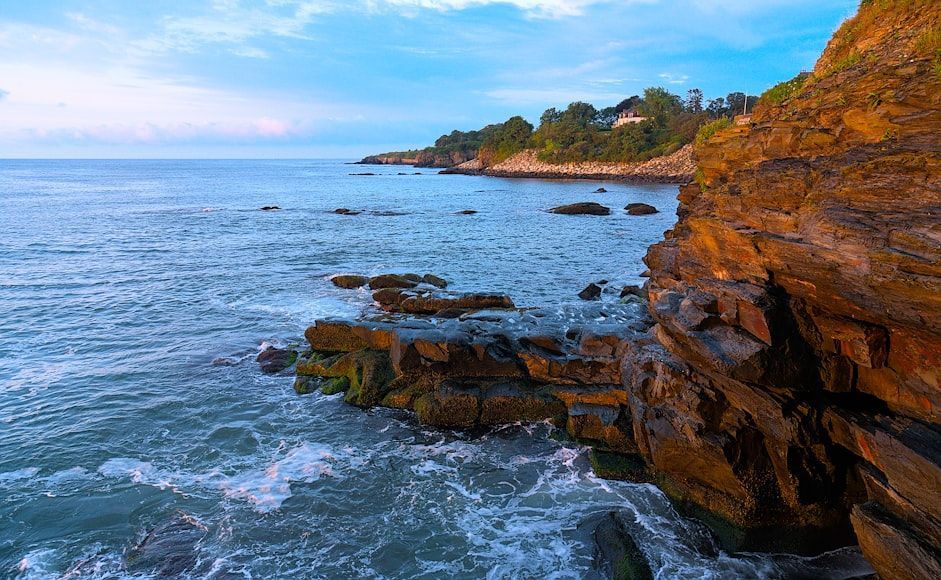
Founded by a Puritan minister who had been expelled from the Massachusetts Colony, Rhode Island was initially named Providence Plantations . Committed to ensuring religious freedom, it became a refuge for religious dissenters who found it difficult to live in the strict Puritan colonies. Later on, it merged with several other settlements —among them, Aquidneck Island, also known as Rhode Island— and took the name of the Colony of Rhode Island and Providence Plantations.

It’s uncertain where the name Rhode Island came from, but the two most likely theories cite either a connection with the Greek island of Rhodes or the Dutch phrase "een rodlich eylande" (‘a reddish island’) . All three names (Rhode Island, Island of Rhodes, and Red Island) are used in 17th-century documents.

7
North and South Carolina (1663)

Image: Clint Patterson

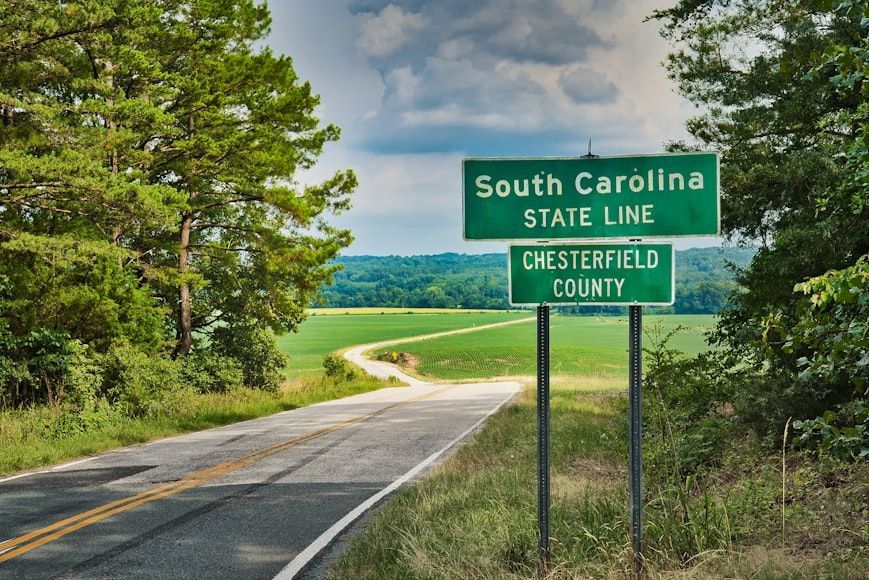
Before there was a North and a South Carolina, there was just Carolina . The land of both colonies had been granted to various nobles as a reward for their role in the restoration of the monarchy. The charter granting the lands —which included areas from present-day North Carolina, Tennessee, South Carolina, Georgia, Alabama, Mississippi, and Florida— named them Carolina (from the Latin Carolus ) after King Charles I .

The area covered by the province of Carolina was divided into two distinct parts, and communication and transportation between the two proved difficult. A deputy governor for the northern region was initially appointed, but the noble proprietors eventually decided to divide the province into two , North Carolina and South Carolina.

8
New York (1664)

Image: Matthias Kinsella

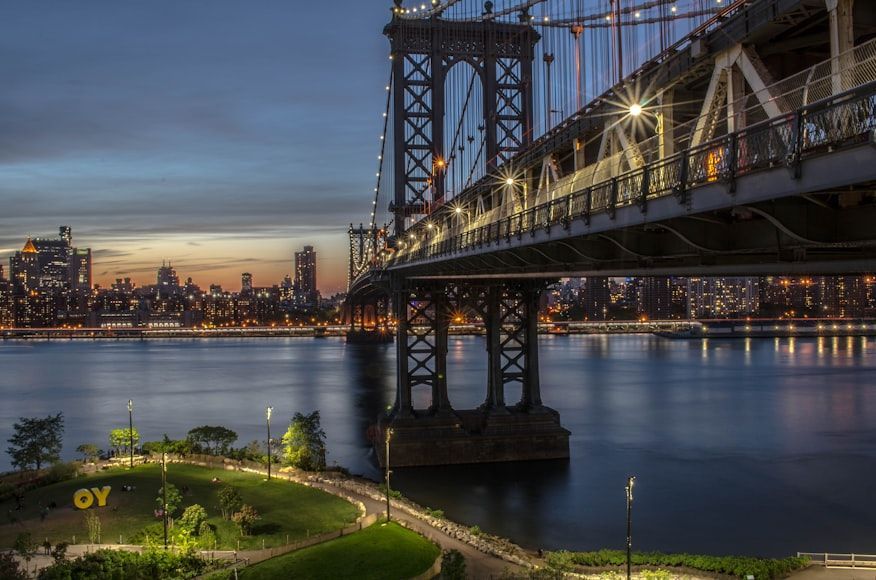
It is a widely known fact that modern-day New York was initially colonized by Dutch settlers under the name ‘New Netherland’, with ‘New Amsterdam’ as its capital city . In 1664, King Charles II and his brother, the Duke of York, gathered a fleet to seize the New Netherland territories, a conquest disputed by the Dutch West India Company, the colony administrator.

The Duke of York was made proprietor of the territory, now renamed ‘New York’. In the following decade, the ownership of the territory was disputed, and the Dutch made several attempts to recover it. Eventually, the Treaty of Westminster was signed in 1674, where the Dutch forfeited the New York territories in exchange for the Suriname colony in South America.

9
Delaware (1664)

Image: Gökhan Kara

The territory of Delaware was originally part of New Netherland, which made it part of the New York Province after British conquest, but it was never effectively controlled by the New York government. These counties had taken their name from the neighboring Delaware River , which in turn had been named after Thomas West, 3rd Baron De La Warr, governor of Virginia at the time the English gained control of that territory.

While they were never a colony of their own, the Delaware counties had an independent legislature and functioned as a de facto colony. Later included in the land granted to William Penn, they refused to merge with the Pennsylvania government and were eventually granted their own assembly. At the start of the Revolutionary War, the Delaware assembly voted for separation from Britain, thus creating the state of Delaware.

10
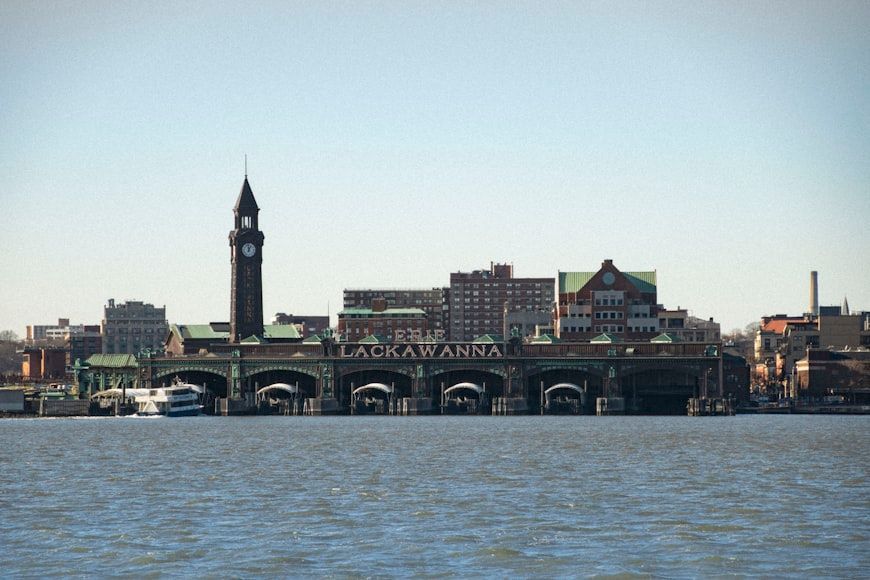
New Jersey (1665)

Image: R

Originally part of the New Netherland territory, half of the New Jersey territory was conferred by the Duke of York to Sir George Carteret as a reward, while the other half was sold to Lord Berkeley of Stratton. The territory was named after Carteret’s homeland, the island of Jersey .

A few years later, New Jersey was divided into two provinces, East and West Jersey , with their respective governors and constitutions, which were eventually incorporated into the New England Dominion, alongside the province of New York. However, the Dominion was dissolved after a few years, and the East and West Jersey territories were unified as the Province of New Jersey.

11
Pennsylvania (1681)

Image: Donnie Rosie

Pennsylvania, alongside Carolina, is one of the two major Restoration colonies, chartered by Charles II to reward loyal subjects after the war. In this case, it was conferred on William Penn, an influential Quaker thinker, to settle a debt owed to his father. Penn and his associates had already purchased most of the New Jersey territory to establish a Quaker haven, but religious tensions in England made him propose a mass emigration of Quakers to the King.

The king conferred Penn a large territory —which made him the largest private non-royal landowner— with almost absolute rights. While Penn intended to name the colony either ‘New Wales’ or ‘Sylvania’ (Latin for ‘forests’), the king named it Pennsylvania after Penn’s father . Penn personally travelled to the territory to establish the first settlements, signed treaties with the Lenape tribes of the area, and established a proto-constitution which guaranteed freedom of religion, elections, and trials by jury.

12
Georgia (1732)

Image: Jacob Mathers

The last colony to be established, Georgia was chartered to James Oglethorpe by King George II, after whom it was named . A social reformer, Oglethorpe, wanted to establish the territory as a haven for debtors and poor people, and implemented measures such as the banning of alcohol and slavery. He also disliked the large plantation system, favoring smallholdings.

The colony was also intended to be a ‘buffer’ between the British colonies and the Spanish territories in Florida. Despite Oglethorpe’s well-intentioned designs, the colony was difficult to manage, and it was returned to the crown two decades later. Upon becoming a royal colony, Oglethorpe’s measures against slavery and the plantation system were overturned.

History History 5 min read

A LESSON IN CULTURE HISTORY

Travel back in time to the fads and movements that defined America!

Image: Florida Memory

Do you remember the fads from your childhood and teenage years? Think back on those toys, objects, and clothing items that were once so dear to you: They might seem tacky or downright ridiculous now, but they surely hold a special place in our memories. America has gone through some rather spectacular fads and movements in the past century, so we have selected 10 of the most era-defying fads in our country’s history. We hope they bring back some good memories! Enjoy!

1
The Roaring Twenties

Image: Carrie Borden

We’ll begin with one of the first fads invented right here in America. The 1920s in America were characterized by a period of prosperity and well-being that resulted in a dynamic and distinct cultural rise in major American metropolises. There’s a reason why this period was known as "The Roaring 20s": It signified an upheaval in American music, arts, and fashion.

The 20s saw the birth of avant-garde art forms like jazz music, as well as groundbreaking novels by authors like F. Scott Fitzgerald and Ernest Hemingway. This era is also remembered for the surge of the "Flapper" subculture: Modern, young women with a more carefree attitude toward entertainment.

2
Pin-up models

Image: Florida Memory

Who do you think about whenever you think of the word "pin-up model"? Chances are your answer is Marilyn Monroe or Betty Grable : After all, they both got their start as pin-up models, portrayed in thousands of mass-produced photographs. However, these actresses helped cement the notion of what defines a pin-up model, now considered to be an essential icon in American pop culture history.

Pin-ups defined the aesthetic of an entire period, present in everything from movies to advertisements. Not only that, pin-up models were often depicted on the side of American fighter planes during World War 2, helping raise the morale of our troops.

3
Greasers

Image: Sümeyye Candan

Although the word "greaser" definitively got its start as a derogatory term for this subculture, it ended up being the name of one of America’s most beloved periods. The 1950s are still revered as a golden age by millions of Americans, particularly because of the surge of many icons that make our country so wonderful: Things like Cadillacs, Rock N’ Roll music, and soda fountains were all born in this era.

In that sense, the "Greaser" look was heavily influenced by musicians and actors like Elvis Presley and James Dean . Greasers would showcase their fast motorcycles, stylish hairstyles, and leather jackets wherever they went. By the 1970s, this style was so well-known that it provided the basis of one of America’s favorite TV characters: Fonzie, perhaps now considered the quintessential greaser.

4
The Hippie movement

Image: Jamie Street

The Hippie movement is synonymous with 1960s America: This subculture influenced almost every art form during this period, from music to television, film, and literature. While it is nowadays mostly looked at as an aesthetic or cultural movement, the influence of hippies in American politics and society shouldn’t be overlooked.

Perhaps the biggest representatives of the hippie movement are those groundbreaking bands and musicians aligned with this movement, like Jimi Hendrix, Janis Joplin, or Jefferson Airplane. Hippies were also characterized by their groundbreaking fashion, which featured bell-bottom jeans, sunglasses, and colorful shirts.

5
Beatnik movement

Image: Pereanu Sebastian

Speaking of hippies, let’s take a little detour and focus on an American artistic movement that laid the foundation from which the hippie movement emerged. Much like with "greaser," the term "beatnik" was first coined as an insult, aimed at followers of the "Beat Generation," a literary movement that included names like Jack Kerouac or William S. Burroughs.

The beatnik subculture had a defining image, often exaggerated by detractors: Think about the caricature of a modern poet, complete with a black turtleneck, beret, and bongos, and you’ll be thinking about a stereotypical beatnik. Regardless, historians believe that the term "hippie" comes from "hipsters," which is a term first used to describe the beatnik subculture.

6
The 80s

Image: Eric Nopanen

Fashion during the 1980s can be best summed up by this phrase from Charles Dickens's "A Tale of Two Cities": "It was the best of times, it was the worst of times." While it can’t be denied that this decade brought forward groundbreaking styles to music, films, and culture, it should also be noted that some of these changes were extreme, to say the least. At the end of the day, whether the 80s were good or bad will ultimately depend on who you are asking.

Personally, we would like to focus on those 80s things that we absolutely love: Things like synthesizer music, mullet hairstyles, and neon-bright clothing. This decade was also the birthplace of several subcultures, including the post-punk, preppy, and new-wave movements.

7
The 90s

Image: Panos Sakalakis

If the 70s and 80s were characterized by their loud and flamboyant styles, the 90s were defined by a more minimalist approach: Bands like Nirvana or Pearl Jam helped promote the "grunge" aesthetic, which featured simple items of clothing like jeans, flannel shirts or hoodies.

Although definitively minimalist, the 90s were also the birthplace of subcultures like the goth movement. During this era, numerous extreme sports like skateboarding gained popularity, in line with this decade’s alternative outlook on culture.

8
Disco

Image: Dustin Tramel

Ready to dance "The Hustle"? The late 60s and early 70s were determined by the emergence of one of America’s most remembered subcultures. While disco music first appeared in New York City and Philadelphia, it quickly swept over the nation: Think of a tornado filled with disco balls, roller skates, and nightclubs, and you might be able to paint a picture of how influential this subculture was.

Although disco got its start in iconic nightclubs like Studio 54, it soon expanded to other mediums like movies and television. Most notably, shows like "Soul Train" helped promote this genre’s appeal, while films like "Saturday Night Fever" cemented the ultimate aesthetic of the disco subculture.

9
Digital age

Image: Xiong Yan

We have now arrived at our modern times ! The advent of the internet represented such a groundbreaking innovation in our everyday lives that it stands to reason that the digital age also influenced many of our fads and movements. The late 2000s and early 2010s were determined by this new massive access to information, which completely changed the way we consume culture and entertainment.

In that sense, this new, instant way to share information immediately meant that culture was now not only limited to geographical locations: Your favorite band or fashion icon could easily live on the other side of the world. This cultural exchange resulted in a rich and diverse movement, which is still developing to this very day.

10
All those wonderful memories…

Image: COSMOH LOVE

We have reserved the final entry on this list for the many objects that defined each of these decades. It is sometimes easier to picture an era through a specific item: Think about the 50s and their timeless jukeboxes, or the 90s and the above-mentioned flannel shirts.

In that sense, we have selected a few of our top picks. Some, like the Hula Hoop or the Frisbee, have truly transcended time: Although they were created decades ago, they are still thoroughly enjoyed by children and adults alike. Time hasn’t been that kind with others, though, like with the now practically extinct Tamagotchi. This digital pet was all the rage during the late 90s and early 2000s, but it ultimately fell into obscurity thanks to other digital mediums.

Explore more American facts

Choose your favorite category!

General
General

As American as apple pie—the very best America has to offer!

Culture
Culture

Delve into the astounding richness of American lore.

Geography
Geography

Hop in and explore vast and diverse American landscapes.

History
History

Discover the key moments that shaped the United States.