General General 4 min read

Can you recall any example?

Cheaper or costly? Items that have sunk or raised in price over the years

Image: Sora Shimazaki

There was a time when lobster was a cheap, poor man’s dish. And there was also a time when air flights were only for the wealthy. But not anymore. Countless products’ prices have gone up or down over the years. Things that once were very exclusive and expensive became accessible due to their production methods. And many things that used to be cheaper are now harder to come by due to scarcity or marketing tactics. Take a look at the following 10 examples of such situations.

1
Clothing (cheaper)

Image: Nick de Partee

Back in the mid-20th century, average American families spent about 10% to 12% of their household income on clothing. That figure has dropped to around 3%. That is not because people buy fewer clothes but because the prices have dropped significantly over the last decades.

Starting about fifty years ago, most U.S. clothing production moved overseas, where labor costs are lower and production output is higher . Those savings were passed onto consumers, and as fast-fashion brands proliferated, Americans had more options at lower prices than ever before.

2
Magazines (more expensive)

Image: Rhamely

While younger generations will not remember this, 25 years ago, magazines were an Internet of sorts : it was the quickest way to access information and color pictures of any subject you were interested in. Magazines were a ubiquitous item, sold everywhere at modest prices. Since the World Wide Web came along, magazines became less important and less demanded products.

If you have bought magazines lately or have inquired about their price, you might be surprised to discover how pricey these items have become.

3
Bananas (cheaper)

Image: John Vid

Believe it or not, back in the day, bananas used to be quite an expensive fruit. These days, this product is one of the cheapest and most popular fruits in the supermarket but when it first became available in the U.S., following the Civil War, it was sold for about 10 cents a piece — that’s about $3 per banana today.

The price of tropical fruit has hovered between 50 and 60 cents per pound for the last 20 years — a significant drop from its early cost. Despite being imported from faraway places and requiring cooling containers, banana sellers produce only one variety, the Cavendish, meaning the fruit can be harvested in abundant volumes and ripened at the same time .

4
Concert tickets (more expensive)

Image: Nainoa Shizuru

There was a time when going to a concert was a pretty accessible event. The ticket prices were low, even for well-known artists. But then, a couple of big players came along into the business and the prices skyrocketed like never before . Besides the ticket price itself, the service charge and taxes make for a hefty sum, not affordable by everyone anymore.

5
Television sets (cheaper)

Image: Peter Geo

It’s a well-known fact that as technology improves and becomes more efficient, prices come down. However, one consumer electronics category stands out from the rest for its drastic price cuts: televisions. The first color TV set debuted in 1954 with a $1000 price tag , and a 15" screen. According to the U.S. Bureau of Labor Statistics’ inflation calculator, that would be more than $11,600 today.

Compare that number to a 65-inch, high-definition smart TV that might cost around $500 in today’s dollars and the price drop is nothing short of amazing.

6
Car insurance (more expensive)

Image: Herson Rodriguez

Car insurance was never the cheapest service in the world, but it used to be a much more accessible price, with options for every pocket. In recent decades, auto insurance premiums have been steadily climbing , making car ownership a more exclusive deal altogether than it used to be.

7
Air flight tickets (cheaper)

Image: Suhyeon Choi

Yes, it may feel like airline ticket prices have surged in recent years due to airport taxes and fuel prices, but if we look at the price evolution over the last decades, we can see that tickets have become much more affordable than before .

Commercial air travel used to be a luxurious experience available only to the wealthy. In 1941, an average flight from Los Angeles to Boston would have cost more than $5,000 in today’s money. These days, a one-way flight from Los Angeles to Boston commonly costs around $300.

8
Fast Food (more expensive)

Image: Kenny Eliason

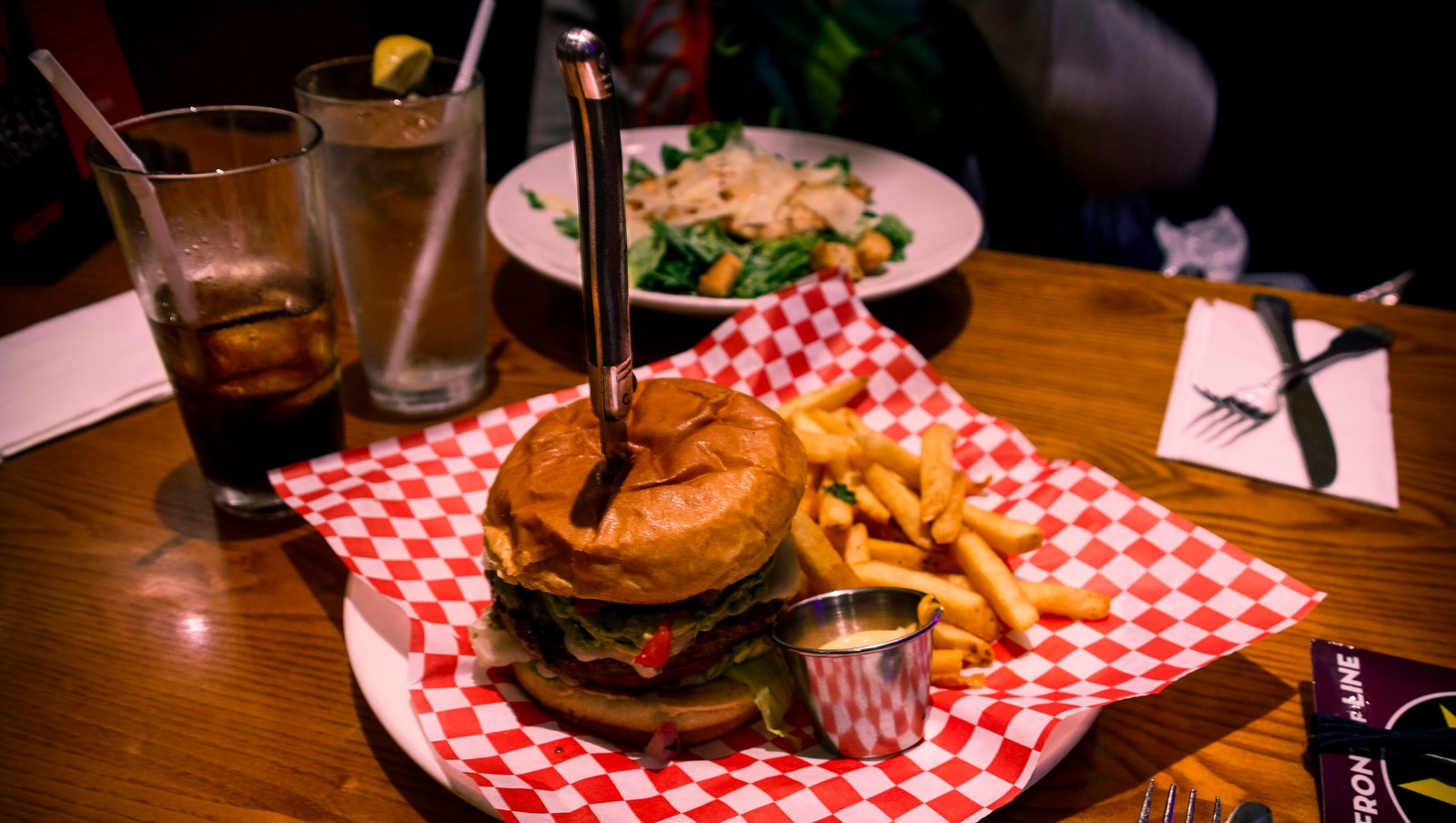
Getting a burger with fries and a soda for a couple of dollars was a standard deal back in the day, but not anymore. Fast food prices have steadily increased in the last few decades , making the tag for a standard menu almost the same and sometimes even more expensive than a meal at a regular restaurant.

9
Washing machines (cheaper)

Image: engin akyurt

In the same way that TVs have dropped the price, most other appliances have gone down the same path, and washing machines are no exception . These devices, an invaluable addition to modern life, have changed significantly from the 1950s to today.

In 1959, a Kenmore washer was advertised for $209.95. Today, that amount inflates to more than $2,200, which is a $1,600 difference from a basic $500 to $600 top-loading Kenmore machine today.

10
Prescription medicine (more expensive)

Image: Haley Lawrence

Healthcare costs in America have been a complicated problem for years. Not just health insurance but also essential medicines have been raising their prices steadily for a very long time.

It can’t be said that medicines used to be cheap but definitely were far more accessible than these days.

General General 5 min read

PIZZA TIME!

Want a Slice? Enjoy These 10 Tasty Facts About American Pizza!

Image: Quin Engle

Who doesn’t love pizza? This tasty Italian treat is truly the great equalizer: If there is something that can bring every American from across the aisle together, that is a good old slice of delicious pizza.

The United States has a proud pizza history that encompasses the better half of the 20th century, and continues to this very day. Let’s take a look at different styles, iconic parlors, and fun facts about America’s favorite street food.

1
New York-style Pizza

Image: Alex Haney

Let’s start with a city synonymous with excellent pizza . New York-style pizza is an iconic variety, universally recognizable for its thin crust, delicious sauce, and melted mozzarella cheese. Nothing says New York City as folding a mouth-watering slice and enjoying this delicacy while the sounds of "The City that Never Sleeps" seem to fade in the background.

New York style is remarkably similar to the Neapolitan style, an Italian recipe considered by many to be close to perfection . Many historians believe that Naples is the birthplace of pizza, so it seems almost poetic that what many consider to be the first truly American style was inspired by this iconic city.

2
Chicago-style pizza

Image: Marit & Toomas Hinnosaar

Unlike its New York City counterpart, the Windy City’s pizza has no Italian ancestor. While its exact origins are still debated, we do know that Chicago-style pizza was developed at some point between the 1920s and 1940s. However our Italian friends might feel about this style, the good people of Chicago proudly stand by this beloved deep-dish, high-edge cheesy treat.

One of the most interesting things about Chicago-style pizza is how it turns around the traditional way in which pizza ingredients are placed: Its chunky tomato sauce covers the copious amounts of cheese used. The result is a hearty and delicious meal , sought after by both locals and tourists alike.

3
Pepperoni

Image: Alan Hardman

While no one can deny that Italy is the birthplace of pizza, this delicious ingredient comes straight from America . Granted, it is a variation of the Italian salami invented by immigrants in New York City at the start of the 20th century, but it has grown to become one of the most iconic toppings associated with American pizza.

Pepperoni comes from " peperoni ," which is the Italian word for "bell peppers". This spicy sausage is fairly similar to the salamis from Southern Italy, like " salsiccia" or " soppressata ."

4
California style pizza

Image: Prayitno

This is one of the youngest entities on this list. In the 1980s, several California chefs simultaneously came up with a new idea for pizza: a pie that combines New York’s thin crust with traditional toppings from California cuisine. The result is known as the California-style pizza, an amalgamation of traditional characteristics and innovative new flavors .

Among the many toppings that might be included in this type of pizza, a few that particularly stand out are zucchini flowers, smoked salmon, eggs, and bacon. However, perhaps the most well-known contribution from this style is the now-iconic barbecue chicken pizza , created by chef Ed LaDou in 1985.

5
Detroit Style

Image: Parker Hilton

If Detroit-style pizza teaches us anything, is that pizza is delicious no matter which shape it’s in . Known for its characteristic rectangular shape, this variety’s crust resembles a typical focaccia , a type of Italian bread. It was created in the 1940s, allegedly invented in a former speakeasy at the corner of Six Mile Road and Conant Street.

Interestingly, the unusual shape of this delicious pizza is associated with Detroit’s impressive automotive industry. Many believe that the first pies of this style were baked in steel trays used in car factories, either as dripping pans or to hold small parts.

6
Famous Pizza Places

Image: Dylan Mullins

In 1905, Italian immigrant Gennaro Lombardi opened the very first pizza restaurant in America, located in the heart of Manhattan. And while the still-operational Lombardi’s was the first American parlor, it certainly wasn’t the last. Let’s take a memento to recognize a few of the very best pizza places America has to offer.

If you are looking for an unusual yet unforgettable pie, you might want to visit Frank Pepe's in New Haven, Connecticut, and try their unique clam pizza, topped with olive oil, garlic, and freshly shucked clams. Should you want a nice deep-dish pizza, try the original Uno Pizzeria & Grill, which claims to be the birthplace of Chicago-style pizza . Or, if you want to stick with a classic, you can always visit Lombardi’s and try their 119-year-old recipe.

7
Hawaiian pizza

Image: bckfwd

The origins of this pizza are controversial , and almost as divisive as this peculiar flavor is. For starters, let’s start with the elephant in the room: This pizza was not invented in America. It was created by Sam Panopoulos, a Greek-born Canadian cook who wished to experiment with sweet and savory flavors and decided to try adding bits of pineapple to a ham pizza.

However, this pizza is named after America’s 50th state for a reason, since pineapples are probably Hawaii’s most iconic product . In fact, Panopoulos named his creation after the brand of canned pineapple he was using at the time. In any case, the matter of whether Hawaiian pizza was a hit or a miss is still debatable. Some praise its unique taste, while others openly loathe it.

8
Pizza Chains

Image: Alexandra Gorn

After the American public was introduced to it in the 20th century, pizza unsurprisingly became an extremely profitable consumer good. In the 1960s, many now-massive pizza chains came into existence, providing the market with a massively popular and easily produced fast food.

Just to name a few, brands like Pizza Hut, Domino’s or Little Caesar’s became household names in no time. Besides their massive success and worldwide locations, these pizza chains share a common characteristic: they all started as small businesses, that eventually became beloved behemoths through hard work and resilience.

9
Tomato pie

Image: NASA

Just like with Hawaiian pizza, prepare for a controversial subject , which can be summed up into a single, self-contained question: Are tomato pies pizzas? Let’s see the arguments for both sides. On one hand, tomato pies are usually not served straight from the oven, and in some areas, they are even completely cheeseless. On the other, we can take an "if it looks like a duck" mentality regarding tomato pies: If they look like pizza and taste like pizza, then how can we consider them anything else but pizza?

In any case, whatever classification this tasty treat might fall into, it should be said that tomato pies are a must-try delicacy while visiting the Northeastern United States. They are also known as bakery pizza and church pie in Rhode Island and Philadelphia.

10
Pizza Delivery

Image: Rowan Freeman

The history of pizza wouldn’t be complete without the advent of this game-changing innovation. Deliveries allowed us to enjoy all the cheesy goodness of pizza in the comfort and convenience of our homes. A lot could be said about the unsung heroes who made pizza and movie nights possible, so we’ll pay tribute to them by retelling two turning points in pizza delivery history.

In 1994, Pizza Hut made history by launching the very first viable online ordering system. While primitive, this service registered thousands of orders: To this date, Pizza Hut claims that the very first online purchase ever was a Pizza Hut pizza. Not content with this record, in 2001 Pizza Hut decided to go against "the Final Frontier" and delivered a salami pizza to the International Space Station, the very first pizza successfully delivered to outer space.

History History 4 min read

Let’s take a tour

Alcatraz: The secrets, myths, and history of America’s prison

Image: Leon Bastain

Alcatraz, also known as "The Rock," is one of the most famous prisons in American history. But there’s more to this island than just high-security cells and daring escape attempts. From its unexpected origins to some weird inmate requests, Alcatraz is packed with stories that go far beyond what Hollywood has shown us. Whether you've visited before or just love a good history lesson, these 12 fascinating facts will give you a fresh perspective on this legendary landmark.

1
Alcatraz wasn’t always a prison

Image: Maxim Babichev

Before housing America’s most dangerous criminals, Alcatraz served as a military fort. In 1850, President Millard Fillmore designated the island as a military reservation, and by the Civil War, it held prisoners of war. Its strategic location in San Francisco Bay made it ideal for defense. It wasn’t until 1933 that it officially became a federal penitentiary. Over the years, its role shifted dramatically, but its reputation as an isolated fortress remained constant.

2
Prisoners built their own cells

Image: Oxana Melis

Talk about a tough day on the job! When Alcatraz transitioned from a military prison to a federal one, military prisoners were put to work constructing their own confinement. Between 1909 and 1911, they reinforced the existing structures to prepare for the worst of the worst. By the time the Department of Justice took over, the prison was ready to house America’s most notorious inmates. Imagine building the very walls that would later trap you inside!

3
Guards and their families lived on the island

Image: Tyler Rutherford

Alcatraz wasn’t just a prison; it was also home to families. The guards and their families lived in houses and apartments on the island, creating a tight-knit community. Children took a ferry to school in San Francisco every day and played safely away from the prison yard. Some even recall watching movies in the recreation hall while criminals like Al Capone were locked up just a few feet away. Life on Alcatraz wasn’t all gloomy for those outside the cells.

4
No executions took place on Alcatraz

Image: Rita Morais

Despite its reputation, Alcatraz never had an execution chamber. While prisoner violence did lead to some deaths, executions were not carried out on the island. Inmates sentenced to death were transferred to facilities like San Quentin. That didn’t make life any easier in Alcatraz; many prisoners still feared the harsh conditions and inescapable isolation of The Rock.

5
The Pacific Coast’s first lighthouse was on Alcatraz

Image: Bruce Warrington

Before it became infamous for its prison, Alcatraz played a vital role in maritime safety . In 1854, it became home to the first lighthouse on the Pacific Coast, guiding ships through the often foggy San Francisco Bay. Though a larger lighthouse replaced it in 1909, the original helped countless sailors navigate the treacherous waters surrounding the island. Today, it stands as a historic landmark, reminding visitors of Alcatraz’s earlier days.

6
No inmate officially escaped

Image: Leo_Visions

While Hollywood loves a good prison break story, no prisoner ever successfully escaped Alcatraz, at least not officially. The closest attempt came in 1962 when three inmates, including Frank Morris, disappeared after digging their way out using spoons. Their bodies were never found, leading to decades of speculation. Did they drown in the freezing bay or make it to freedom? The mystery remains unsolved.

7
Alcatraz shut down due to high costs

Image: Jack Walker

Despite its reputation as America’s toughest prison, Alcatraz didn’t close due to security issues: It was just too expensive to maintain . The constant exposure to salt water eroded the buildings, and the cost of housing each inmate was three times higher than in other federal prisons. By 1963, the government decided to shut it down. The island was abandoned for years before turning into the tourist attraction it is today.

8
Some inmates requested transfers to Alcatraz

Image: Mylo Kaye

Despite its harsh image, some prisoners actually wanted to be transferred to Alcatraz. The prison provided single cells, which meant no cellmates to fight with . It also had some of the best food in the federal system because officers believed that well-fed inmates were less likely to cause trouble. For some, the strict routine and isolation were preferable to overcrowded, violent prisons elsewhere.

9
Alcatraz was named after pelicans

Image: Mollie Sivaram

Before it became synonymous with crime and punishment, Alcatraz was simply an island full of birds. Spanish explorer Juan Manuel de Ayala named it La Isla de los Alcatraces in 1775, which translates to "Island of the Pelicans." Over time, the name was anglicized to Alcatraz. Even today, the island remains a haven for seabirds, making it a birdwatcher’s paradise.

10
Alcatraz was never packed to capacity

Image: Kenny Eliason

Alcatraz was never overflowing with inmates . The prison had a maximum capacity of 336, but on average, only about 260 prisoners lived there at any given time. Sometimes, there were as few as 222. This was intentional—authorities wanted to ensure strict control over the inmates. It’s a far cry from the overcrowded prisons we hear about today.

11
Warm water showers had a hidden purpose

Image: David Castellón

Prisoners at Alcatraz were given warm water showers, not necessarily out of kindness, but as a security measure. Authorities believed that if inmates were used to warm water, they’d be less likely to brave the freezing bay in an escape attempt. Whether it worked or not is up for debate, but it certainly added another layer to Alcatraz’s infamous reputation.

12
Officers and inmates tended the gardens

Image: Maxim Babichev

Alcatraz wasn’t all cold concrete and iron bars; there were actually gardens on the island. Prison officers and even some inmates planted flowers and hardy greenery to make the island more livable. The tradition continued for decades, and today, the National Park Service maintains the Gardens of Alcatraz . It’s a surprising touch of beauty in a place best known for its harshness.

Explore more American facts

Choose your favorite category!

General
General

As American as apple pie—the very best America has to offer!

Culture
Culture

Delve into the astounding richness of American lore.

Geography
Geography

Hop in and explore vast and diverse American landscapes.

History
History

Discover the key moments that shaped the United States.