Geography Geography 4 min read

The sharpest minds

Top US cities with the highest IQs revealed! Did your city make the list?

Image: Olav Ahrens Røtne

Intelligence comes in many forms, but when it comes to education, things like graduation rates, quality, and achievement speak loudest. With this in mind, we've put together a list revealing the smartest cities in the United States, starting with Boston (after all, it's not called "The Athens of America" for nothing!) Want to know which cities made the list? Keep reading to find out if your city is on it!

1
Boston, Massachusetts

Image: Aubrey Odom

The vast majority of Boston residents hold college degrees. With research-driven institutions like Harvard and Boston University, the city enables a rich academic environment that promotes learning, innovation, and scientific advancement in different fields. In addition, Boston's public schools and statewide educational standards rank among the best in the country!

2
Seattle, Washington

Image: S Edward

Seattle is definitely considered one of the smartest cities in the US! But why? Well, there are several factors. First, most of its population over age 25 (53.8%) holds a bachelor's degree or higher. And it's no surprise: Seattle is home to the University of Washington, one of the top-ranked universities in the world. In addition, the city is a tech hub, with one in five residents working in STEM fields (Science, Technology, Engineering, and Mathematics).

3
Chicago, Illinois

Image: Willian Justen de Vasconcellos

Chicago is a city everyone should experience at least once. Its rich cultural, intellectual, and innovative atmosphere secures its spot on this list. The city has a well-established education scene, with prestigious institutions like the University of Chicago and Northwestern University, and a high percentage of residents holding professional degrees in fields like law, medicine, and business. Plus, its smart use of technology to enhance life quality makes it stand out even more.

4
Atlanta, Georgia

Image: Jessica Furtney

Atlanta, Georgia, is succeeding in today's world thanks to its growing tech job market and fast internet speeds, making it an ideal place for anyone interested in science and technology. The city is also proud of its academic presence, with standout institutions like Emory University, Georgia Institute of Technology, and Georgia State University.

5
San Jose, California

Image: Zetong Li

If you're into technology, San Jose, California, might be your ideal city. As the heart of Silicon Valley, San Jose boasts an elevated number of highly educated residents: Over 26% hold a graduate or professional degree. It's also home to tech giants like Apple and Google, making it a hub of innovation and opportunity.

6
Durham-Chapel Hill, North Carolina

Image: Brandon Griggs

The metropolitan area composed of Durham and Chapel Hill in North Carolina is part of the renowned Research Triangle, named for the three major research universities in the region: Duke University, UNC Chapel Hill, and North Carolina State University. A significant portion of residents in this region hold graduate degrees, particularly in fields like medicine, science, and technology.

7
Boulder, Colorado
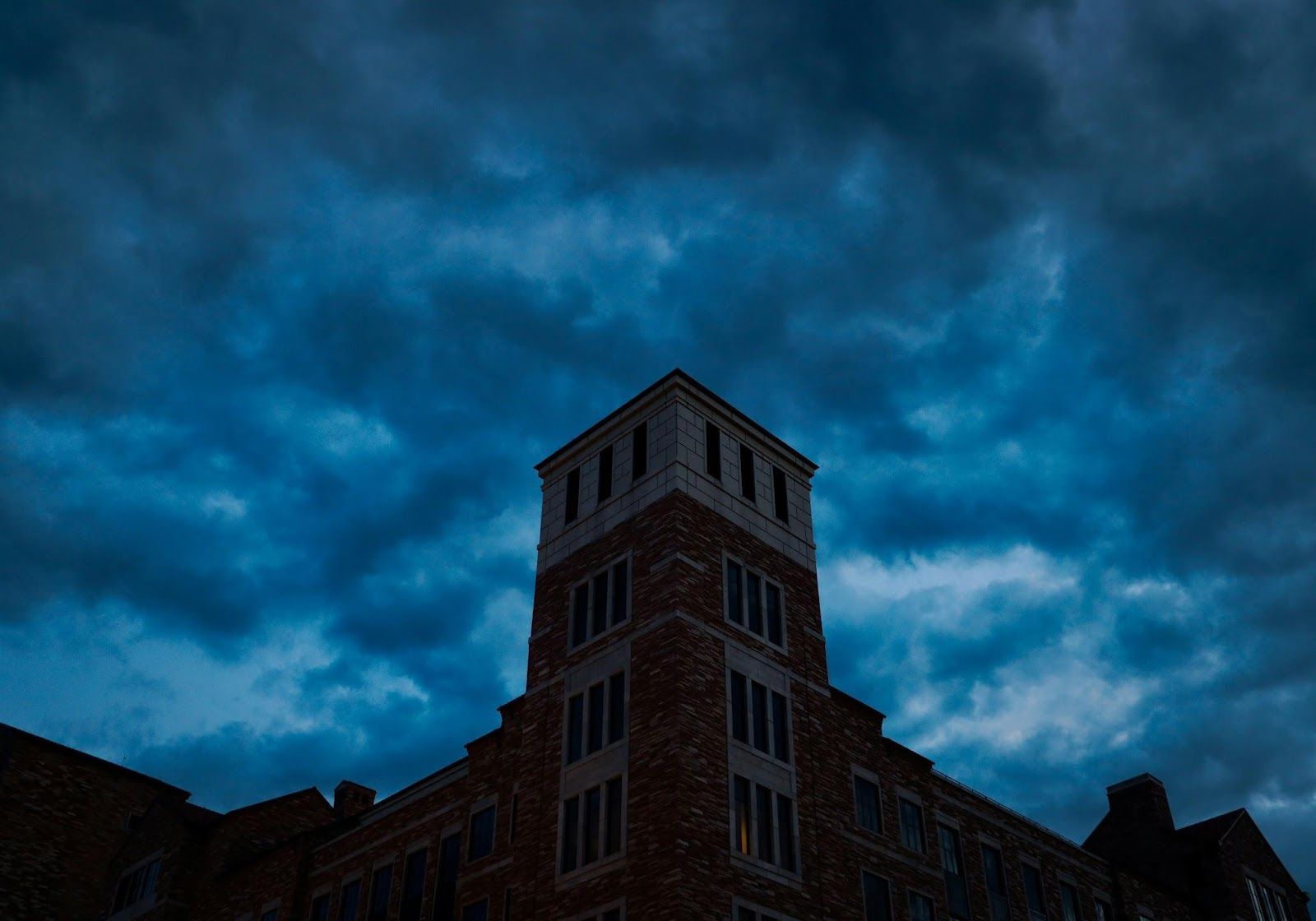
Image: Hongtao Cai

Sustainability, innovation, and education are top priorities in Boulder, Colorado. The city has been recognized for its commitment to the environment, including a bold goal of reaching 100% renewable energy by 2030. On top of that, Boulder was highlighted by Forbes as a major "intellectual center," ranking among the US cities with the highest percentage of residents holding a bachelor's degree or higher.

8
Austin, Texas

Image: Alexander Williams

With over 19% of its residents holding a professional degree, Austin, Texas, has earned its spot on the list. In addition to the prestigious University of Texas fueling its educated population, Austin also has a rapidly growing tech industry. Its young, creative, and highly skilled workforce makes the city stand out even more.

9
Ann Arbor, Michigan

Image: Brad Switzer

Thanks to its high concentration of highly educated residents, Ann Arbor, Michigan, regularly earns a spot on the list of the smartest cities in the United States. Much of that reputation comes from the University of Michigan, a major science, research, and tech hub, and the city's overall high level of educational attainment.

10
Washington, DC

Image: Kyaw Tun

Washington, DC, also ranks as one of the smartest cities in the country thanks to its high concentration of highly educated professionals, policy experts, and researchers. The capital city also boasts one of the highest graduation rates nationwide. From the Smithsonian Museums and the Library of Congress to the Kennedy Center and the National Archives, the city offers endless opportunities to enrich your cultural experience.

General General 3 min read

About the Star-Spangled Banner

Did you know these 11 obscure facts about our National Anthem?

Image: RDNE Stock project

How much do you really know about "The Star-Spangled Banner" ? It’s the song that kicks off baseball games, gives stadiums goosebumps, and has been passionately performed—or completely butchered—by countless singers. Its colorful story starts by crossing a poem and the tune of a British drinking song, runs through an electric guitar at Woodstock in the 60s, and keeps going. Read on to discover some surprising facts about America’s most patriotic anthem!

1
It had a different name

Image: Luke Michael

Originally, the lyrics came from a poem titled "Defence of Fort M’Henry," written by Francis Scott Key in 1814 after he witnessed the bombardment of Fort McHenry during the War of 1812. The sight of the American flag still flying after the battle inspired him.

The poem was printed in newspapers and set to music, but it wasn’t until more than a century later that it officially became the national anthem we know today.

2
It has four verses

Image: Serena Koi

Most of us only belt out the first one, but did you know "The Star-Spangled Banner" actually has four verses? The other three are rarely heard .

Francis Scott Key wrote additional verses exploring themes of resilience and freedom, but most people have never read those stanzas.

3
Key wasn’t a musician

Image: Steve Johnson

Contrary to what you might expect from the author of the nation’s most patriotic song, Francis Scott Key wasn’t a musician .

He was a lawyer and an amateur poet. He didn’t collaborate with a composer or choose a melody to set his lyrics to, either. He simply wrote the poem, which was later published nationally by The Analectic Magazine .

4
The tune was actually borrowed

Image: Ylanite Koppens

So how did the anthem get its music, then? A relative of Key realized that the lyrics of his poem fit perfectly with the tune of an already popular song, "To Anacreon in Heaven."

That song was actually a British drinking tune frequently sung in 18th-century gentlemen’s clubs. The melody was catchy, but its origins were anything but patriotic.

5
It was first sung in a Baltimore tavern

Image: andrew welch

One account claims that the anthem’s first public performance wasn’t at a grand concert or a government event, but in a Baltimore tavern in 1814.

According to the story, just weeks after Key wrote the lyrics, a local actor sang them to the tune of "To Anacreon in Heaven." The crowd loved it, and the song quickly spread.

6
It wasn’t the first choice

Image: Wesley Tingey

Believe it or not, "The Star-Spangled Banner" wasn’t America’s first choice for a national anthem. For over a century, songs like "Hail, Columbia" and "My Country, ’Tis of Thee" filled the role. It wasn’t until 1931 that Congress, under President Herbert Hoover, officially designated Key’s anthem as the nation’s song.

7
The tradition of singing it before sports

Image: Frankie Lopez

The tradition of singing the anthem at sporting events began during the 1918 World Series . The crowd’s emotional response was so powerful that more and more baseball games adopted the practice.

Today, it’s hard to imagine a baseball game without it. Many other sports—including American football, hockey, and basketball—have since followed suit.

8
Aretha Franklin’s rendition is the longest

Image: Stas Knop

Aretha Franklin's rendition of "Star-Spangled Banner" is the longest recorded performance of the national anthem, lasting an impressive 4 minutes and 55 seconds . In contrast, most renditions take under two minutes!

She performed it in 2016 at an NFL game, breaking the previous record set by Alicia Keys three years earlier, whose version lasted 2 minutes and 36 seconds.

9
An unsuspected first recording voice

Image: Sudhith Xavier

The first known recording of "The Star-Spangled Banner" was made in 1915 by Margaret Woodrow Wilson . Yes, the daughter of President Woodrow Wilson.

Her rendition, though not as polished as modern versions, marked the anthem’s entry into the world of recorded music. Who would have thought the president’s daughter would be a trailblazer?

10
Jimi Hendrix’s Woodstock performance

Image: Xie lipton

Jimi Hendrix’s electric guitar rendition of "The Star-Spangled Banner" at Woodstock in 1969 remains one of the most famous—and controversial—performances of the anthem.

His distorted, soulful, and modern interpretation hypnotized the crowds and became a powerful cultural statement amid the turbulence of the 1960s. Some saw it as a protest; others, as a masterpiece. Either way, we still talk about it.

11
A song for all occasions

Image: frank mckenna

Originally, "The Star-Spangled Banner" wasn’t intended solely as a national anthem. It was a patriotic song for all occasions —political rallies, public celebrations, and more. The anthem is as popular as it is versatile, and so it has been played in endless scenarios—and in countless versions!

General General 6 min read

Into the wild

Boost your animal instincts with 10 fascinating mammals that roam America

Image: christie greene

Mammals form one of the greatest classes of vertebrate animals. There are more than 5400 known species of mammals in the world, and more than 400 of these species are found in the United States. From terrestrial to aquatic, carnivorous to herbivorous, we have some of the most interesting mammals on the planet. In this article, we have chosen 10 animals that, due to their special characteristics, are already an essential part of our culture. Can you guess which ones they are?

1
Grizzly Bear

Image: Joshua J. Cotten

Grizzly bears ( Ursus arctos horribilis ) are one of the most famous North American mammals, but do you know why they are called that? The grizzly bear is a subspecies of the brown bear. However, although grizzlies are mostly brown, their fur can appear white-tipped or grizzled , which explains their name.

The grizzly bear once lived throughout much of the North American West. Unfortunately, the arrival of Europeans gradually drove it from its original habitat, considerably reducing its population. In 1975, they were listed as threatened under the U.S. Endangered Species Act, and much has been done since then to protect the species. Today, grizzlies can still be found in parts of Wyoming, Montana, Idaho, Washington, and the Alaskan wilderness. They are also one of the most iconic residents of Yellowstone National Park.

2
Gray Wolf

Image: Yannick Menard

We all know that wolves are legendary for their eerie howl, but there are many other interesting facts about this peculiar animal. Gray wolves ( Canis lupus ) are the largest members of the dog family and are native to North America and Eurasia. The size of an adult gray wolf is similar to that of an average dog and it can weigh up to 145 pounds. However, their tracks would outshine those of any dog, as they measure about 5 inches long by 4 inches wide.

Wolves live and hunt in packs of 6 to 10 animals. They are known to travel great distances, even covering 30 miles in a single day. In the United States, gray wolves were hunted to near extinction, although some populations survived and others have since been reintroduced. Today gray wolves can be found in areas such as the Great Lakes states of Minnesota, Wisconsin, and Michigan, the northern Rocky Mountains region, and the northwest.

3
North American River Otter

Image: lovelooking

The North American River Otter ( Lontra canadensis ) is a species of semi-aquatic, carnivorous mammal endemic to the North American continent that can be found along the coasts and rivers of the United States and Canada. Because they are very susceptible to environmental pollution, their population has been reduced considerably in recent years.

It is a mostly nocturnal animal, often seen at dusk or dawn. During the day it takes refuge in burrows with an underwater entrance that leads to a nest chamber lined with plant material and hair. North American River Otters are robust (11 to 31 pounds) and feed on fish and other aquatic prey, such as turtles, frogs, and crabs.

4
Red Fox

Image: Jeremy Hynes

The red fox ( Vulpes vulpes ) is a species of mammal in the canid family. It is the most abundant fox species in the northern hemisphere and can be found in many national parks across the country. As its name suggests, its fur is reddish in color. The tips of the ears and the ends of the legs, however, are black. They have a bushy tail whose tip is usually white, as is their belly.

Although classified as a carnivore, the red fox is actually an omnivore and, above all, a great opportunist. They are astute, have excellent eyesight, and have a keen sense of smell and hearing. They can hunt prey of a wide variety of sizes, from insects and worms to small mammals, birds, and fish. They also feed on certain vegetables, berries, and fruits.

5
Mountain Lion

Image: Robert Sachowski

The cougar ( Puma concolor ), also known as the mountain lion, is a mammal native to the Americas. These large, tan cats are found from the Yukon in Canada to the southern Andes Mountains and Patagonia in South America. In the United States, mountain lions can be found mainly in the western part of the country. However, because of their solitary nature and constant threats from humans, it is difficult to estimate exact population numbers.

Mountain lions are slender and agile felines that can adapt to different conditions and environments. They are strict carnivores and have extraordinary vision and acute hearing, which allows them to capture almost any animal, from insects to squirrels, beavers, elk, and deer.

6
North American Beaver

Image: kidmoses

Beavers are known to be one of the only animals that can affect the ecosystem around them, building watertight dams that help preserve water in streams and rivers. The North American beaver ( Castor canadensis ) is the largest rodent in North America and one of the largest in the world —it can weigh between 24 and 71 pounds! The species is widely distributed throughout the continent, from northern Canada to northern Mexico.

The North American beaver's coat can range from dark brown to reddish brown, and its most distinctive feature, a flattened paddle-shaped tail, allows it to swim. It is perfectly adapted to semi-aquatic life; its ears and nose have valves that close when submerged, and it can close its lips behind its prominent incisors to cut wood underwater.

7
Hawaiian Monk Seal

Image: Sebastian Coman Travel

The Hawaiian Monk Seal ( Neomonachus schauinslandi ) is a species native to the Hawaiian Islands. With its friendly face and long whiskers, it is perhaps one of the most endearing mammals that can be found in our country. Unfortunately, this seal species is endangered because of the large amount of chemical waste produced by the fishing industry on the reefs and beaches of the northern Pacific Ocean.

The Hawaiian Monk Seal is usually solitary but is always seen accompanied by other specimens. It is known to be piscivorous, that is, it feeds mainly on fish and other marine creatures, such as crustaceans and some species of mollusks. Since it is a predator by nature, when hunting it makes the most of its length (approximately 7 feet) and its large body (between 300 to 600 lb) to catch its prey.

8
American Red Squirrel

Image: Rusty Watson

The American red squirrel ( Tamiasciurus hudsonicus ) lives in the United States and much of Canada. It is a rodent mammal easily recognized for its deep reddish fur, long bushy tail, and prominent lower teeth. It can be differentiated from other North American squirrel species because of its smaller size, 11 to 14 inches.

American red squirrels normally live in the shady areas of coniferous forests and are primarily granivores. They feed on seeds, pine cones, nuts, fruit, and occasionally insects, eggs, and birds. It is mainly active in trees but also swims freely, using its tail as a rudder to change its direction.

9
Elk

Image: Judy Beth Morris

Elk ( Cervus canadensis ), also known as wapiti in several Native American cultures, is a species of deer that lives in North America, Central and East Asia. Today, most elk in our country are found primarily in the West, especially in mountainous regions such as Wyoming's National Elk Refuge and Yellowstone National Park. Some eastern states have also reintroduced small herds into natural forest areas.

The most prominent feature of elks is their massive antlers. Each March they shed their antlers, which begin to grow back in May to be ready for the breeding season in late summer. During this time the bellowing of the males echoes through the mountains, announcing the violent battles that serve to decide who mates with whom. The males with the largest antlers, usually the oldest, often win these duels and get to dominate the herd.

10
American Bison

Image: Stephen Leonardi

The American bison is a true symbol of American identity. Not only is it the largest mammal in North America, it is also the national mammal of the United States. In addition, it's one of the greatest conservation success stories of all time.

In prehistoric times, there were millions of specimens of American bison ( Bison bison ) roaming our territory. But by the late 19th century, there were only a few hundred left. Fortunately, thanks to the efforts of several organizations and individuals, the species was reintroduced and today it can be found in a few national parks and reserves as well as in the wild.

Explore more American facts

Choose your favorite category!

General
General

As American as apple pie—the very best America has to offer!

Culture
Culture

Delve into the astounding richness of American lore.

Geography
Geography

Hop in and explore vast and diverse American landscapes.

History
History

Discover the key moments that shaped the United States.