General General 4 min read

Slippery, spotty, and surprising

These local amphibians can regrow limbs, release toxins, and much more!
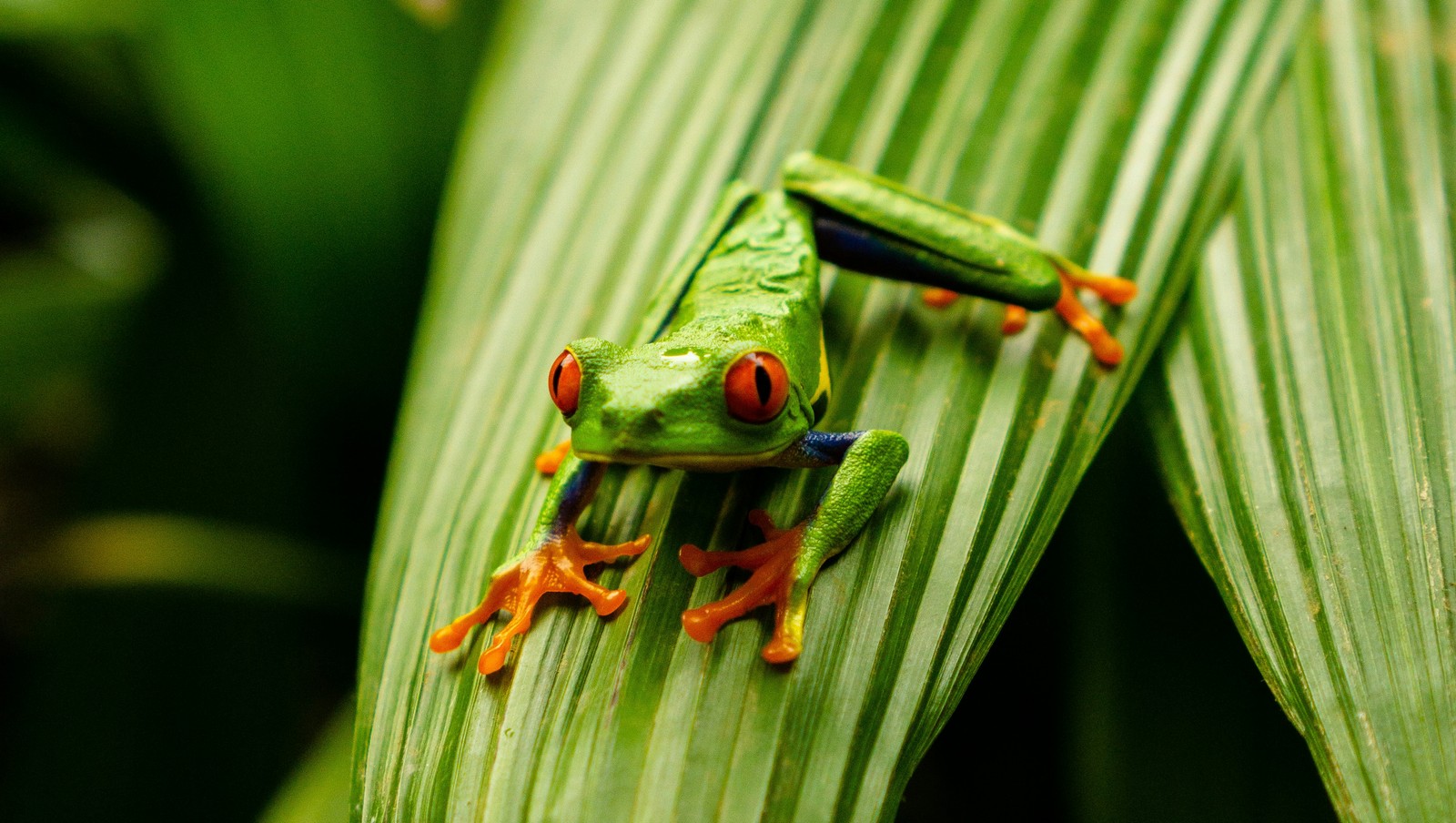
Image: Pixabay

Given America's vast territory and rich biodiversity, our land holds a wide variety of mammals, reptiles, and birds—but let's not forget the amphibians! The United States is home to a great and extravagant range of amphibians that are far more fascinating than just regrowing tails: Some well-known and others that you'll definitely want to discover. Join us as we explore the unique traits of these 10 incredible amphibians found across the US!

1
Tiger salamander

Image: Anastasia Pirri

Meet the tiger salamander—one of the largest terrestrial salamanders in North America. While its size is certainly impressive, the tiger salamander also has other traits that make it stand out. Take its appearance, for example: its dark brown body with bright yellow blotches resembles tiger stripes, which is why it has such a peculiar name. But there's more! Unlike many other salamanders, this one spends much of its time underground, using its large, powerful limbs to dig.

Fun fact: Some states, like Colorado and Kansas, have named it their official state amphibian!

2
Eastern Hellbender

Image: laura adai

Although the tiger salamander is impressively large, another salamander stands out for its huge size: the Eastern Hellbender.

Cryptobranchus alleganiensis alleganiensis is its scientific name (quite a mouthful, right?). It holds the title of the largest salamander in North America. In fact, it's sometimes nicknamed "snot otter" due to its large body and the slippery texture of its skin.

3
Amphiuma

Image: Wolfgang Hasselmann

When you first see this creature, you might mistake it for a snake or an eel. But it's actually an amphibian—more specifically, an aquatic salamander known as the amphiuma. Its appearance, let’s just say, isn’t exactly what most would call "cute."

This unusual amphibian can grow up to 3 feet long! And while not immediately noticeable, it has tiny legs with only one, two, or three toes, depending on the species. Its limbs aren't very useful, but they do make the amphiuma look just a bit creepier.

4
Colorado River Toad

Image: Crystal McClernon

The Colorado River Toad may not be the cutest or most dazzling creature out there, but it's certainly one of the most fascinating. Native to the southwestern United States, this amphibian is one of the largest toads in North America, but what sets it apart isn't its size. So, while it may look slow and harmless, this toad is capable of releasing a dangerous, highly psychoactive toxin that acts as a defense mechanism and can be fatal to many species, including dogs.

5
Common Mudpuppy

Image: Tommy Bond

Now, it's time for an amphibian whose cuteness is one of its most distinctive features; even its name reflects that! We're talking about the Common Mudpuppy, an aquatic salamander that inhabits streams, rivers, ponds, and lakes. It's also one of the few salamanders that remain fully aquatic throughout their entire life. And that’s precisely why it sports a pair of large, red external gills on the sides of its head, giving it an almost 16th-century European look!

6
Gray Tree Frog

Image: Aurora K

The small Gray Tree Frog inhabits the forests and woodlands of the eastern United States. And while it's true you might find it on trees and plants, its nickname isn't entirely accurate when it comes to color. Yes, it can be gray, but this amphibian has the ability to change its color to blend in with its surroundings! It also has another superpower: the ability to survive freezing temperatures. By producing a natural antifreeze, it protects its organs during cold conditions that most of us couldn’t begin to handle.

7
Spotted Salamander

Image: Kristina Kutleša

As its name suggests, what distinguishes the Spotted Salamander is its shocking look. But beware, its mottled appearance isn't just for show. It also acts as a warning to ward off predators! If you've ever seen one in the wild, consider yourself lucky because although it’s fairly widespread, this salamander spends most of its time underground.

8
Pacific Giant Salamander

Image: wallace Henry

If you venture into the mountainous regions of the Pacific Northwest, you might come face-to-face with the Pacific Giant Salamander, one of the largest terrestrial salamanders in North America.

Reaching up to 14 inches in length, this amphibian is striking to see—but it’s even more surprising when you hear it. That’s right: unlike most of its kind, the Pacific giant salamander can make audible barking sounds!

9
Barking Tree Frog

Image: José M. Alarcón

We have a contestant that could go head-to-head with the Pacific Giant Salamander in a barking contest: the aptly named Barking Tree Frog.

Let’s just say the frog’s striking features are perfectly summed up by its name. In states like Florida, Georgia, and South Carolina, you can find this little amphibian calling from the treetops or near freshwater shores.

10
Dusky Gopher Frog

Image: Geraldine Dukes

Finally, we have the most mysterious and elusive of all: the Dusky Gopher Frog. As one of the rarest frog species in the U.S., the Dusky Gopher Frog is incredibly elusive and critically endangered, with fewer than 200 individuals left in the wild. The dusky frog spends most of its life hidden underground and only comes out during the mating season.


General General 4 min read

Fast-food flops

Do you recall these 11 big McDonald's menu fails?

Image: Lucas van Oort

Around 2014, McDonald's received a lot of criticism for not including healthier, more nutritious options on its menu, especially for kids. In response, the company embarked on a mission to create bubblegum-flavored broccoli. Needless to say, it was a complete failure. But this was not the only unsuccessful attempt to introduce new recipes and flavors. Throughout its several decades of existence, the Golden Arches has ventured into a wide variety of products that didn’t receive the expected reception. Do McPizza, Hula Burger, or McDLT ring a bell? Join us as we look back at 11 McDonald's products that were complete misfires!

1
McLean Deluxe

Image: Szabo Viktor

Remember the low-fat diet craze of the 1990s? Well, McDonald's was no stranger to it. To attract customers seeking "healthier" options, Mickey D's introduced the McLean Deluxe—a supposedly lighter burger than the Big Mac . The patty, developed by food scientists at Auburn University, was made with 90% meat and seaweed extract.

The company’s intentions were noble, but most consumers weren’t convinced by the "low fat but tastes great" slogan. Apparently, it was not tasty enough for the American palate and was ultimately pulled from stores in 1996 .

2
McHotDog

Image: sstoyanov

It doesn’t seem far-fetched for McDonald's to offer a hot dog on its menu. Yet, for many years, the company avoided it because Ray Kroc—the man who transformed McDonald's into the megafranchise we know today—had banned them on the grounds that sausages were of questionable quality.

Despite his reservations, McDonald's introduced the McHotDog in several locations in the mid-1990s. For unknown reasons, however, the product never took off. Have you ever tried it? What did you think?

3
McDLT

Image: Aaron Boucicault

No, it has nothing to do with Subway's BMT or the classic BLT sandwich. The McDLT, introduced in 1984, was a lettuce and tomato burger with only one novelty: it was sold in a Styrofoam container, separated in two, and you had to assemble it yourself.

The most likely reason for the McDLT’s demise was the backlash against Styrofoam in the late 1980s, due to its environmental impact. And let’s be honest—how many people actually want to assemble their own hamburger?

4
Hula Burger

Image: Irene Kredenets

Long before vegan options became popular, Ray Kroc attempted to offer a meatless option for Roman Catholics to eat during Lent. Introduced in 1963, the Hula Burger was essentially a cheeseburger with a slice of pineapple instead of a meat patty.

The idea was a complete flop and was quickly replaced by the Filet-O-Fish, which served the same purpose but was much better received by the public.

5
McLobster

Image: ucomedia

Believe it or not, McDonald's once had a lobster roll on its menu. Introduced in 1993, the McLobster was a sandwich served in a hot dog bun with lobster sauce and shredded lettuce.

Why did it fail? Mostly because of the price . Not only was it expensive for a fast food chain, but if you wanted lobster, you’d probably go to a seafood restaurant instead—don’t you agree?

6
Arch Deluxe

Image: HamZa NOUASRIA

Flavor-wise, the burger "with the grown-up taste" was decent enough, the problem was the marketing campaign that went along with it. The Arch Deluxe was designed for adults , featuring more sophisticated and expensive ingredients.

However, the ads showed Ronald McDonald engaging in adult activities and young rappers saying, "Yuck," which failed to resonate with anyone. The product flopped and was discontinued in 2000 . After all, no matter how old we are, when we go to McDonald's, we all want to feel like kids again.

7
McPizza

Image: dankeck, CC0, via Wikimedia Commons

In hindsight, McDonald's should have stuck to selling burgers. But we have to give them credit for trying something different. In the late 1980s, the Golden Arches attempted to expand its menu with dinner options, introducing the McPizza. Sold only after 4 p.m. , it was heavily promoted through a major marketing campaign.

However, it was doomed to fail. Pizza takes much longer to prepare than a burger, and most people prefer to buy theirs from traditional pizza parlors. The McPizza was discontinued around 2000 and hasn’t returned to the menu since.

8
McPasta

Image: Lance Lozano

Just as pizza was a bad idea, offering pasta dishes at a burger joint was an even bigger stretch. Since the 1970s , McDonald's has attempted to market pasta, adding items like spaghetti and meatballs, lasagna, and fettuccine to its menu.

Needless to say, despite multiple attempts, all of McDonald's pasta products eventually flopped.

9
Onion Nuggets

Image: Brett Jordan

In 1975, a year after Burger King debuted its famous Onion Rings, McDonald's introduced Onion Nuggets. As the name suggests, this side dish consisted of small, fried onion pieces .

Unfortunately for vegetable lovers, Onion Nuggets were not as successful as their ring-shaped competitors and were finally removed from the menu in the mid-1980s. Just a few months later, McDonald's launched Chicken McNuggets, which proved to be a far bigger success.

10
McSalad Shakers

Image: Hermes Rivera

It seems that most of McDonald's attempts to offer healthier options were fruitless. The McSalad Shakers were salads sold in plastic cup-like containers that you had to shake to distribute the dressing evenly.

Although they featured three appealing flavors—Chef, Grilled Chicken Caesar, and Garden—McSalad Shakers lasted only a few years on the market. In 2003, the cups were replaced by traditional bowls, which, you’ll probably agree, make much more sense.

11
McDonaldland Cookies

Image: 三岁 陈

It remains a mystery why this item disappeared from the McDonald's menu, as it was a favorite among many for years. First introduced in 1974, this dessert consisted of crunchy lemon-flavored cookies shaped like the classic McDonaldland characters—Grimace, Hamburglar, The Fry Kids, Birdie, and Ronald himself!

McDonaldland Cookies came with the Happy Meal but were discontinued in the early 2000s , likely due to health concerns. The good news is, if you want to bring back this childhood flavor, you can still find them in Australia!

General General 4 min read

When was the last time you went to an aquarium?

10 incredible aquariums well worth a visit

Image: Garrett Hayes / Hanson Lu

Being able to exist in an environment so radically different from ours is one of the things that makes sea life so mysterious. Aquariums give us a glimpse into their world, separated from ours by thick glass walls, acting as a hypnotic and transparent barrier between dimensions. America has several amazing aquariums where visitors can take a close look at these underwater worlds. Take a look at the following ten and see if you might feel like taking a trip to visit one!

1
Alaska SeaLife Center - Seward, Alaska

Image: David Clode

Alaska truly is the last frontier. Its wildlife is as vast as its land, and its sealife is equally incredible. To get a closer look at many of these creatures, the Alaska SeaLife Center in Seward offers an excellent opportunity.

The only public aquarium in the state, the center combines regional exhibits with marine research, education, and wildlife rehabilitation. At this unique facility, visitors can observe regional birds in the aviary, view an undersea kelp forest, or watch seals and Steller sea lions at play in the Rocky Coast exhibit.

2
National Aquarium - Baltimore

Image: naomi tamar

The National Aquarium in Baltimore is home to a wide range of exhibits, from an Amazon River forest to an Atlantic coral reef and more. Visitors can encounter an incredible array of creatures , enjoy interactive experiences , watch 4D films , and even participate in aquarium sleepovers .

Aside from its exhibitions, the National Aquarium's conservation work is geared toward combating climate change, protecting wildlife and their habitats, and reducing plastic pollution. Recent visitors have also raved about the dolphin show.

3
Shedd Aquarium - Chicago

Image: Caroline Hernandez

The Shedd Aquarium in Chicago gives visitors an up-close view of a variety of aquatic animals, including jellyfish, seahorses, and giant Pacific octopuses. The aquarium offers animal encounter experiences with beluga whales, sharks, penguins, stingrays, and sea otters.

There are also plenty of exhibits to explore. Pacific white-sided dolphins, belugas, California sea lions, and sea otters can be observed from both underwater and above-water viewing areas. The Polar Play Zone allows children to learn about life at the North and South poles in a kid-sized submarine, feeling the texture of a starfish in the touch pool, and admiring the underwater viewing area.

4
Tennessee Aquarium - Chattanooga, Tennessee

Image: Shane Rounce

The Tennessee Aquarium is divided into two separate buildings for freshwater and ocean exhibits , showcasing thousands of animals, including the macaroni penguin, sand tiger shark, alligator snapping turtle, hellbender, and giant Japanese spider crab.

The River Journey building features the Turtles of the World gallery, an Appalachian cove forest habitat, the River Giants exhibit, and more. In Ocean Journey , visitors will find a butterfly garden, a tropical cove habitat, and the Boneless Beauties exhibit, among other highlights.

5
Seattle Aquarium - Seattle

Image: Craig Lovelidge

Aquatic life in Puget Sound can be witnessed through the Seattle Aquarium's one-of-a-kind, 360-degree Underwater Dome , which displays local fish in a 400,000-gallon habitat . Set on two historic piers, the aquarium educates visitors about Puget Sound and the ocean at large through exhibits, events, conservation and education programs, research activities, and more.

At the Family Activity Center, guests of all ages can participate in hands-on activities to learn about the majestic orcas of the Pacific Northwest. The aquarium's species recovery program works to save animals from extinction through research, field conservation, and more.

6
Aquarium of the Pacific - Long Beach, California

Image: Julien Maculan

The Aquarium of the Pacific, in Long Beach, California, features habitats from the tropical Pacific Ocean, northern Pacific waters, and the Southern California/Baja region. As Southern California's largest aquarium, it houses more than 12,000 animals across 100-plus exhibits highlighting aquatic life in the Pacific Ocean.

The state-of-the-art Pacific Visions wing offers guests an interactive experience through film, art, and technology. Visitors can see what it's like to be an aquatic vet at the Molina Animal Care Center, and then learn about water sources and conservation at the Our Water Future exhibit.

7
New England Aquarium - Boston

Image: David Clode

The New England Aquarium features an open-air exhibit space for seal and sea lion training, the four-story Giant Ocean Tank, an Indo-Pacific coral reef habitat, an exhibit spotlighting Atlantic harbor seals , and the Simons Theatre with its nearly five-story-tall movie screen.

Aside from the indoor and outdoor exhibits, the aquarium's research division conducts ocean exploration and conservation through a plethora of initiatives like saving sea turtles and protecting North Atlantic right whales.

8
Shark Reef Aquarium - Las Vegas

Image: SGR

An aquarium is probably not the first thing that comes to one’s mind when thinking about Las Vegas, but the Shark Reef Aquarium is well worth a visit. With more than 2,000 animals, it features jellyfish, sharks, sea turtles, and even crocodiles.

Guests can feed stingrays, sea turtles, or even a zebra shark, or try out the Undersea Explorer VR Theater for an immersive digital experience.

9
Aquarium of Niagara - Niagara Falls, New York

Image: Shaun Low

Visitors can find more than 120 animal species at the Aquarium of Niagara, including many rescues that are unable to survive in the wild. The Penguin Coast exhibit is home to a colony of 14 Humboldt penguins , and the aquarium showcases over 100 species of fish and invertebrates from both freshwater and saltwater ecosystems , as well as several species of seals and sea lions .

In the summer of 2024, the aquarium unveiled the Great Lakes 360 experience with an interactive sturgeon touch pool and 16 new exhibits highlighting animals from the Great Lakes and Niagara River ecosystems.

10
Georgia Aquarium - Atlanta

Image: David Clode

At the enormous Georgia Aquarium, visitors can get close to rays, dolphins, sea lions, penguins, and sea otters, or even go behind the scenes at a dolphin training session. The aquarium focuses on conservation education and fostering positive connections between humans and animals.

The Ocean Voyager exhibit features a 100-foot-long underwater walk-through tunnel that displays more than 50 species.

Explore more American facts

Choose your favorite category!

General
General

As American as apple pie—the very best America has to offer!

Culture
Culture

Delve into the astounding richness of American lore.

Geography
Geography

Hop in and explore vast and diverse American landscapes.

History
History

Discover the key moments that shaped the United States.