History History 3 min read

No bad titles here

These 12 popular movies have very different names in other countries

Image: Yuvraj Singh

Granted, not every name sounds as great in its original language as it does when translated. Therefore, a certain degree of artistic liberty is granted when coming up with good movie title translations. However, some of these adaptations take a bit too much freedom in their detachment from the original title. Take a look at the following 12 examples and marvel at the creativity and sense of humor of their translators.

1
The Blues Brothers - Rogues at Full Speed (Spain)

Image: Tanner Boriack

The Blues Brothers sounds like a pretty straightforward name, right? Not for the Spanish , who are very protective of their native language and translate every movie title that comes across their border. When this 1980 movie was released in Spain, its title could have been easily translated as " Los Hermanos del Blues ," but, for some reason, it was named Rogues at Full Speed .

2
Die Hard - The Crystal Jungle (Spain)

Image: Yns Plt

The second entry on the list is also awarded to Spain for its creative title translation of Bruce Willis’ Die Hard as The Crystal Jungle . The reasons for this name remain a mystery . Perhaps it had something to do with the fact that the city can be considered a jungle, and a significant part of the movie takes place in a city. Other than that, we're stumped.

3
Leon The Professional - This Hit Man is Not as Cold as He Thought (China)

Image: Matt Seymour

The Chinese translators of the French movie Léon: The Professional decided that the title wasn’t descriptive enough and opted instead for a name that served as a commentary on the main character .

4
Airplane - The Unbelievable Trip in A Wacky Aeroplane (Germany)

Image: Niels And Marco

Apparently, the Chinese are not alone when it comes to inventing more descriptive names for the movies they translate. The German version of the slapstick comedy Airplane! is translated as The Unbelievable Trip in a Wacky Aeroplane .

5
Thelma and Louise - An Unexpected Ending (Mexico)

Image: Amanda Sandlin

An implied rule when it comes to movie titles is that they should not be spoilers . Mexican translators decided to partially, at least, ignore this rule and went with An Unexpected Ending for the local version of Thelma and Louise . Yes, there could be countless possible unexpected endings, but still...

6
Willy Wonka and the Chocolate Factory - The Boy Who Drowned in Chocolate Sauce (Denmark)

Image: Kaffee Meister

It's well known that Scandinavians have a dark sense of humor , but some things are still surprising. Willy Wonka & the Chocolate Factory , the 1971 movie featuring Gene Wilder in the title role, received an odd translation from the Danish.

7
Ghostbusters - Exorcists of Spirits (Serbia)

Image: Winston Chen

Serbians are no strangers to the supernatural . Many ghost stories and myths can be found in their beautiful and mysterious land. Perhaps that is why the people responsible for translating Ghostbusters thought it was acceptable to modify the original name to Exorcists of Spirits .

8
Grease - Pomade (Hungary)

Image: Lachlan Rennie

This one is not as far off as the previous examples, but there is something about it that just doesn’t sound quite as right as the original title. Who knows? Maybe that’s what Hungarians call their hair gel .

9
Home Alone - Mom, I Missed the Plane (France)

Image: Liubomyr Vovchak

The French translators could have done a lot worse with this one. After all, while the film’s storyline involves Kevin being stuck home alone, he ends up stuck at home because he missed his flight in the first place .

10
Annie Hall - The Urban Neurotic (Germany)

Image: Dylan Freedom

Yes, this is a Woody Allen movie, and yes, the main character, aside from Annie herself, is an urban neurotic. Maybe that’s why the German translators decided, once again, to change the simple original title of the movie to a description of the leading man’s character .

11
Cloudy with a Chance of Meatballs - It’s Raining Falafel (Israel)

Image: Clark Douglas

Similar, but not the same— not by a long shot. The Israeli title for this children’s movie evokes a somewhat similar image to the one in the original title, but it does so with a more local dish as the element replacing the rain .

12
Deep Impact - The End of the World, the Sky Collapsed, and the Land Collapsed (Thailand)

Image: Viktor Mindt

Some movie title translations seem as if they were written by small children. But then, maybe that’s the kind of content their audience demands, in which case, more power to them. Deep Impact sounds ominous enough, sure. But a title like The End of the World, the Sky Collapsed, and the Land Collapsed is much more exciting , isn’t it?
History History 3 min read

Alternative history

The strange tale of Deseret—and other U.S. states that almost were

Image: Chris Lawton

Ever looked at a U.S. map and thought it could use a few adjustments? You wouldn’t be the first. Over the past 250 years, dozens of proposed states nearly joined the Union —born from bold ideas, local rebellions, or just geographic quirks. While none made it through Congress, they left fascinating marks on American history. From the mysterious lost state of Deseret to the proposed Native American haven of Sequoyah, here are 10 would-be states that nearly carved out a place in the stars and stripes.

1
Franklin

Image: Brett Wharton

Also known as the Free Republic of Franklin or the State of Frankland, this short-lived territory in eastern Tennessee declared independence from North Carolina in 1784. Its founders even petitioned Congress and appealed to Benjamin Franklin for support—hence the name—but it never gained official recognition.

By 1788, the movement had collapsed, and the area was reabsorbed into North Carolina before eventually becoming part of Tennessee in 1796. Today, the "State of Franklin" lives on mostly in U.S. law school exams as a fictional stand-in for a generic state —often where the imaginary property Blackacre is located.

2
Jefferson

Image: Shelby White

This proposed state has its origins in the 19th-century California Gold Rush, when settlers in the remote, resource-rich region between northern California and southern Oregon pushed for self-governance.

Though their efforts were largely ignored, the movement resurfaced over time. In 1941, frustrated locals staged a symbolic one-day secession. Armed men stopped traffic near Yreka, handing out a Proclamation of Independence declaring the State of Jefferson in "patriotic rebellion" and vowing to "secede every Thursday until further notice."

3
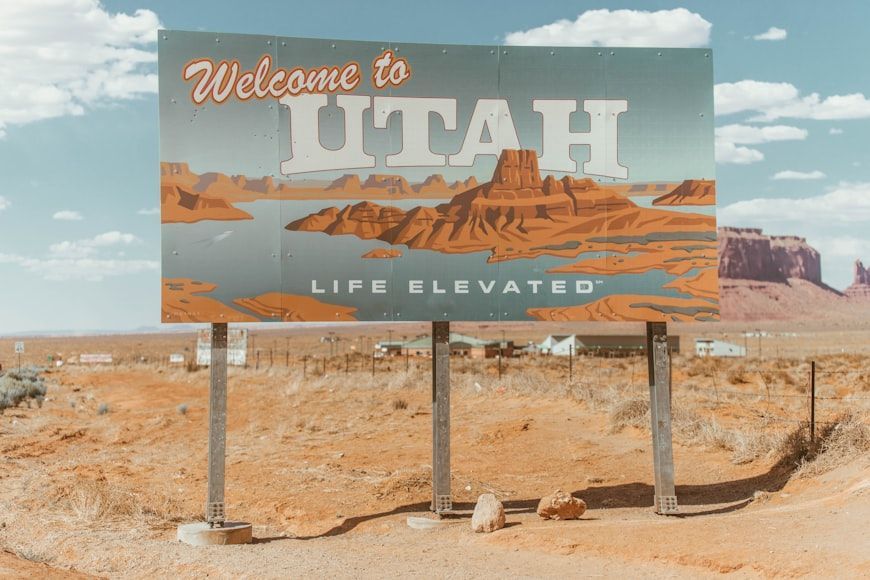
Deseret

Image: SoloTravelGoals

Proposed by Mormon settlers in 1849, the State of Deseret would’ve spanned a massive portion of the West. The name Deseret is derived from the word for "honeybee" in the Book of Mormon, and the vision was of a theocratic state encompassing parts of present-day Utah, Nevada, Arizona, and beyond.

Congress denied the proposal due to its size and religious nature, but a stone donated by Deseret’s supporters in 1853 was still placed in the Washington Monument.

4
Sequoyah

Image: MJ Tangonan

Proposed in 1905, this would’ve been a Native American–majority state in what is now eastern Oklahoma. Despite extensive lobbying by representatives of the Five Civilized Tribes, Congress refused, preferring a single Oklahoma Territory.

Despite its failure, the proposed state’s constitution left a lasting legacy —much of its content was later adopted into the Oklahoma Constitution.

5
Absaroka

Image: Michael Bourgault

Named after the Crow word for "children of the large-beaked bird," the State of Absaroka was proposed in 1939. Comprising parts of Wyoming, Montana, and South Dakota, the idea emerged mainly as a protest against New Deal policies, which were deeply resented by the rural population.

Leaders of the movement even issued license plates, but the effort never gained serious traction and remained a largely symbolic gesture.

6
Westsylvania

Image: Matthew Lancaster

Proposed during the Revolutionary War, Westsylvania would have been a new state formed from the western parts of Virginia and Pennsylvania . Backwoods settlers, feeling neglected by distant colonial governments, sought self-governance.

However, Congress rejected the plan to avoid stirring further conflict during wartime.

7
Superior

Image: Mikaela Charette

With such a strong regional identity, it was perhaps inevitable that Michigan’s Upper Peninsula would eventually seek statehood. Efforts began as early as the 1850s and resurfaced repeatedly due to the region’s political and economic isolation.

Another proposed name for the state was Ontonagon. Despite these repeated attempts, the Upper Peninsula remained part of Michigan.

8
Lincoln

Image: K. Mitch Hodge

Named for Abraham Lincoln, this proposed state would have split the Texas Panhandle from the rest of the state. Throughout the 1860s and again in the 1880s, residents of the Panhandle and surrounding areas sought separation due to the region’s distance from Austin and cultural differences.

While none of the proposals gained enough federal support, residents of the area still feel distinct today and take pride in their unique identity.

9
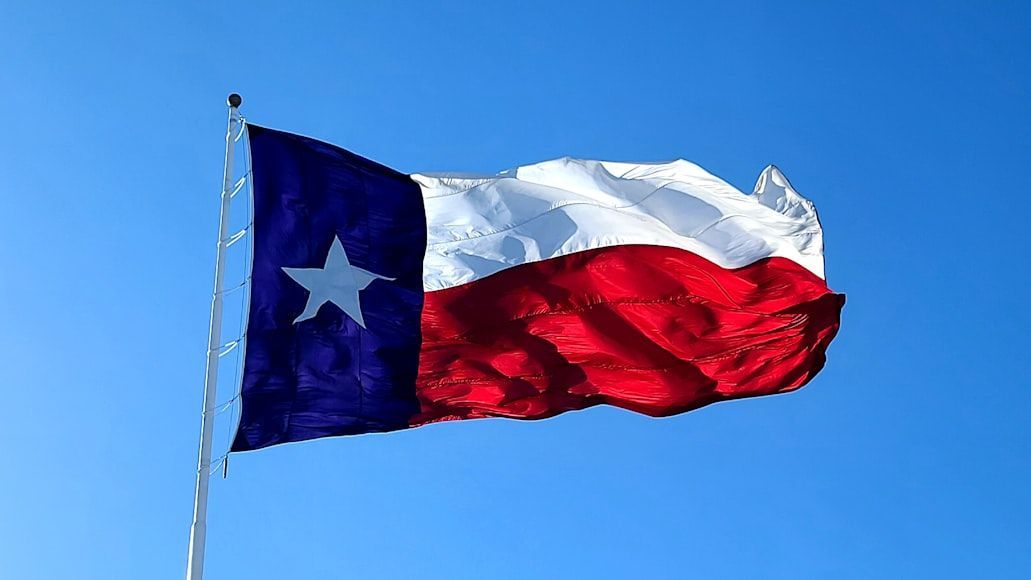
Texlahoma

Image: Tommy Bond

Another failed attempt at carving out part of one of the largest states in the U.S., the State of Texlahoma would have—as its name suggests—combined portions of Texas and Oklahoma into a single state.

The push for autonomy was especially strong during the Dust Bowl, when a shared economy and perceived neglect by local governments united residents of both regions.

10
Columbia (D.C. Statehood)

Image: Heidi Kaden

Washington, D.C., has long been considered for statehood under the name of Columbia . Multiple bills and referenda have tried to turn the federal district into the 51st state, as residents pay federal taxes but lack voting representation in Congress.

Despite strong support among D.C. residents, the idea has yet to gain serious traction at the national level.

Culture Culture 2 min read

Wild words

Hold your horses! 10 phrases born on the American frontier

Image: Documerica

The American frontier shaped more than just maps—it shaped the way people talked. From cattle trails to mining camps, settlers coined many blunt and vivid expressions that have stuck. These everyday phrases still carry the grit of survival, the humor of hardship, and the improvisation of a world built fast. Here are 10 common sayings whose roots run straight into frontier soil.

1
Circle the wagons

Image: Dana Davis

Pioneer wagon trains literally circled their wagons at night for protection.

Creating a closed ring helped shield families, livestock, and supplies from raids, wild animals, and harsh weather—and the formation later evolved into a metaphor for any type of unified, defensive action.

2
Hold your horses

Image: Cemrecan Yurtman

Frontier riders needed to keep horses steady at all times, but particularly in chaotic and potentially dangerous settings like stage stops and river crossings.

By the mid-1800s, the phrase became a common command, later evolving into a figurative call for patience.

3
On the warpath

Image: Andrew James

This term originated as an English rendering of a Native American expression for wartime mobilization—specifically the route or course taken toward an impending conflict.

Euro-American settlers later adopted the phrase, and by the late 19th, century newspapers were using it metaphorically to describe anyone behaving aggressively or angrily.

4
Branding iron

Image: Jonny Gios

Ever wonder where the term "brand name" comes from? Frontier ranchers used heated irons to mark ownership on their cattle.

The idea of a distinctive identifying mark later moved into the commercial world, where "brand name" came to signify a recognizable product or company identity.

5
Come hell or high water

Image: Furkan Elveren

Ranchers driving cattle across rough terrain used this phrase to signal determination despite floods, storms, conflict, and whatever else the wild frontier could throw at them.

The earliest known printed use appears in an 1882 issue of The Burlington Weekly Hawk Eye, an Iowa newspaper. Railroads later adopted it in contracts requiring delivery despite natural obstacles.

6
Riding shotgun

Image: Paul Einerhand

In Wyatt Earp’s era, the seat beside a stagecoach driver was reserved for an armed guard carrying a shotgun to deter bandits.

By the early 20th century, the job had vanished, but the expression endured as a casual claim for the front passenger seat.

7
Belly up to the bar

Image: Vidar Nordli-Mathisen

Saloon bars on the frontier often lacked stools, so patrons had to stand and lean their bellies directly against the counter.

The phrase soon came to mean approaching something boldly, whether at a bar or any other challenge.

8
Kick the bucket

Image: Lucas van Oort

Rural butchers often suspended animals from a beam called a "bucket," and they sometimes kicked during slaughter.

The phrase was popular on farms and frontier towns, eventually becoming a euphemism for dying.

9
Dead ringer

Image: Annie Spratt

Frontier horse racers engaged in plenty of shady practices—and one of the most common was substituting a horse with a look-alike, a "ringer," to scam bets.

When the substitute was an exceptionally close match, it was called a "dead ringer," emphasizing its perfect likeness.

10
High noon

Image: CHUTTERSNAP

Before standardized clocks or reliable rail schedules, "high noon" was an easy way to tell time by noting the sun at its highest point.

It also became associated with showdowns and other events because midday offered the clearest visibility.

Explore more American facts

Choose your favorite category!

General
General

As American as apple pie—the very best America has to offer!

Culture
Culture

Delve into the astounding richness of American lore.

Geography
Geography

Hop in and explore vast and diverse American landscapes.

History
History

Discover the key moments that shaped the United States.