Culture Culture 7 min read

A true city of stars

These 10 famous idols were born in Chicagoland

Image: Chait Goli

When Chicagoans mention which city they come from, the same big names are always brought up: Oprah Winfrey, Michael Jordan, and even Al Capone. These are huge public figures known worldwide, of course. But none of them were born anywhere near Chicagoland ! In an attempt to highlight the city’s ability to produce incredible talents, here is a list of 10 icons who were indeed born in the Chicago area—whether they made history there or elsewhere.

1
Harrison Ford

Image: Chris Nguyen

The face of Indiana Jones was born in 1942 in the Windy City. A Boy Scout from Illinois , he attended school in the suburbs before moving to Wisconsin for college and later to California to pursue acting. There, he became a self-taught professional carpenter to support his family. Everything changed for him when writer and director George Lucas took a liking to him and started including him in small roles in his films. Lucas finally gave him a leading role as Han Solo in his space opera, Star Wars (1977).

Ford is one of the most recognizable actors in the world. His long career includes critically acclaimed performances in films like Blade Runner (1982), The Fugitive (1993), and Witness (1985), for which he earned an Academy Award nomination for Best Actor .

2
Walt Disney

Image: Charlottees

Yes, the father of Mickey Mouse was born far from California’s Disneyland. Walt Disney was born in 1901 in the Hermosa neighborhood of Chicago. He grew up in the city until his family moved to Missouri when he was a young boy, but he later returned to study at the then-called Chicago Academy of Fine Arts (now the School of the Art Institute of Chicago). In 1956, Disney purchased his birth home in Chicago with the intention of restoring it, though his plans for the house were never fully realized.

Of course, the founder of The Walt Disney Company was an imaginative mind who led projects that revolutionized the film industry . His endeavors pioneered the introduction of synchronized sound in animation, the production of full-length animated films, and, most notably, the creation of Disneyland, the world’s first theme park of its kind.

3
Bob Fosse

Image: Pixabay

Bob Fosse was one of the most celebrated choreographers and directors in both Broadway and film history. He was born in 1927 on the North Side of Chicago and grew up in the Ravenswood neighborhood. A revolutionary creator who brought a signature Chicago-jazz style to musical theater, Fosse had been exposed to the city’s vaudeville and burlesque scenes, which were popular in the 1930s and 1940s and attended many dance studios in the city during his youth.

His experience as a performer in Chicago probably influenced the recurring theme of showbiz’s dark side , evident in musicals like Cabaret , Chicago , and Sweet Charity , which he directed and choreographed. He also won an Academy Award for Best Director for the film Cabaret and is the only person to have ever won an Oscar, a Tony, and an Emmy in the same year (1973).

4
Quincy Jones

Image: sam99929

Quincy Delight Jones Jr., one of the most influential musicians of modern times, was born on the South Side of Chicago , a rich cultural hub in the city. Though his family moved from Chicago when he was 10, it was in the city that he was first exposed to musical neighbors and the culture of religious singing. Later, as a teen, he picked up a trumpet and thus began his incredible musical career.

Quincy Jones is most famous for producing Michael Jackson’s albums , not least of which is Thriller , the best-selling album of all time. He’s also known for his work as a film and TV producer, creating the music for iconic films like The Color Purple and The Wiz , as well as TV shows like The Fresh Prince of Bel-Air . In 1985, he produced and conducted the charity single "We Are the World" to fight famine in Africa. Jones has won 28 Grammy Awards.

5
Ray Bradbury

Image: Vanessa Sezini

Ray Bradbury, the author of Fahrenheit 451 (1953) and The Martian Chronicles (1950), was also a Chicagoland native. He was born in Waukegan , about 35 miles north of Chicago, in 1920. Despite leaving Chicago early in life, his childhood in Waukegan is reflected in some of his work, particularly in scenes depicting small-town America—nostalgic, yet sometimes eerie.

Bradbury managed to weave Waukegan repeatedly into his fiction by transforming it into his imagined Green Town, Illinois . This fictional town serves as the setting for his semiautobiographical trilogy consisting of Dandelion Wine , Something Wicked This Way Comes , and Farewell Summer , and it appears in several of his short stories. Most of the narrations set in Green Town evoke summer scenes led by children in a small town at the beginning of the century.

6
Bill Murray

Image: Blake Guidry

The famous comedic actor Bill Murray was born in Evanston, Illinois, a suburb north of Chicago. He grew up nearby, attending Loyola Academy, and in the early '70s, he was invited by his brother Brian to join the improvisational comedy troupe The Second City . This helped launch the career of a talented comedic writer and actor, known for his roles in Saturday Night Live , which he joined in 1977, as well as films like Ghostbusters (1984), Groundhog Day (1993), and Lost in Translation (2003).

Murray is a devoted fan of several Chicago sports teams, including the Chicago Cubs , the Bears, and the Bulls . In the '80s, he served as a guest commentator for a Cubs game, and he was famously emotional in 2016 when the Cubs won the World Series after a 108-year drought.

7
Michelle (Robinson) Obama

Image: Sonder Quest

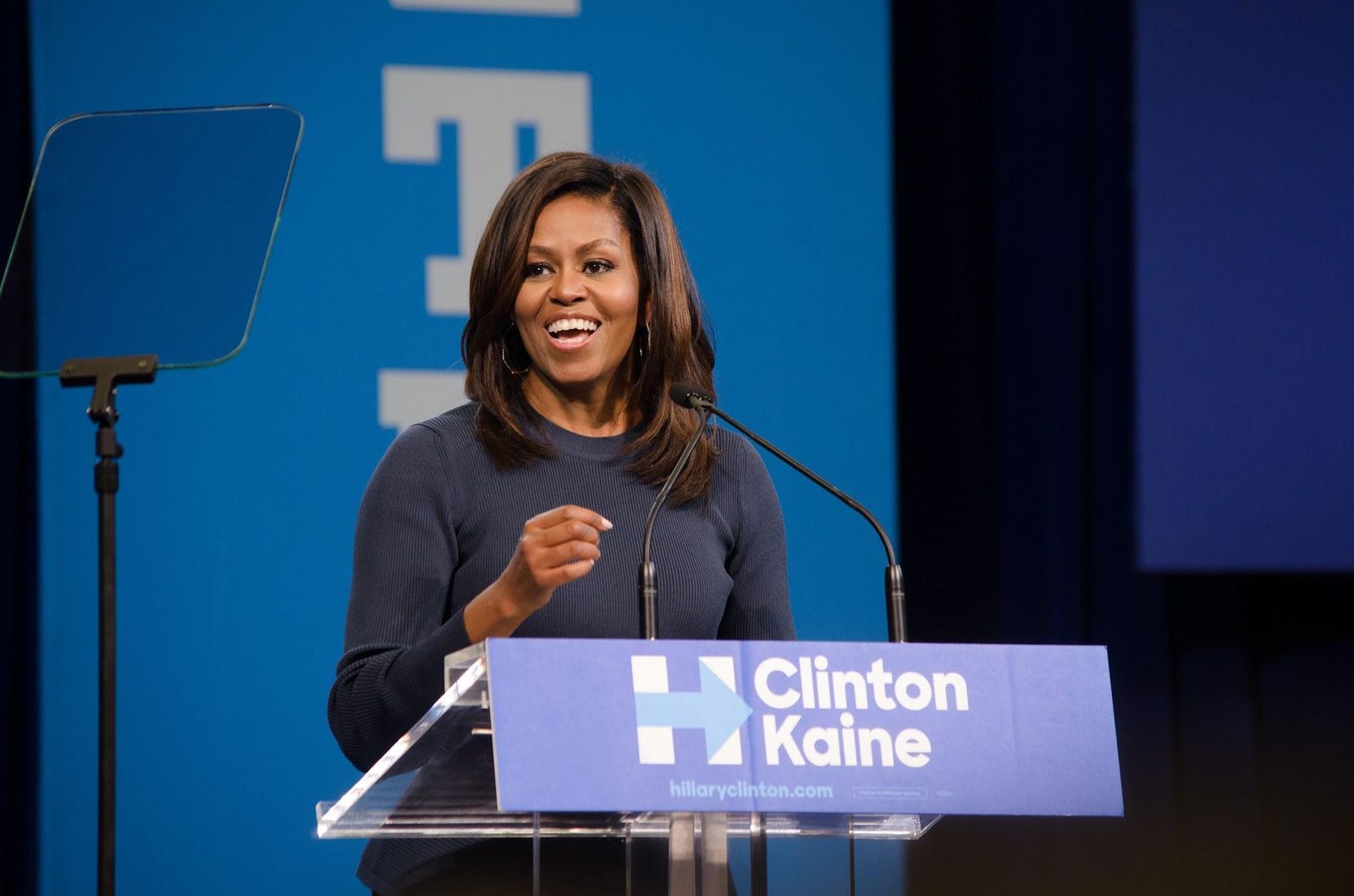
Michelle Obama, née Robinson, was born in the South Shore neighborhood of Chicago. She grew up in a working-class family and attended Whitney M. Young Magnet High School, a prestigious public school in Chicago, where she excelled academically. She later went on to study at Princeton University and Harvard Law School before returning to Chicago to work at a law firm, where she met future President Barack Obama.

While she is most famous for being First Lady of the United States from 2009 to 2017, before having that role she held several positions in Chicago’s public service . For instance, she served as an assistant commissioner for the city mayor and she directed the city’s office for Public Allies, a leadership development organization. She also worked at the University of Chicago and at the University of Chicago Medical Center.

8
Robin Williams

Image: V

The late and beloved actor Robin Williams was originally from the Lake View neighborhood of Chicago, where he was born in 1951. He spent his childhood in the North Shore, where his father was a senior executive at Ford until the family relocated to Michigan. Williams's legendary quick wit and his knack for improvisation and making people laugh landed him one of his first gigs, a TV commercial for Illinois Bell, shown in the Chicago area, in which he already showcased his talent for goofy voices. He also made guest appearances at the Second City stage where he performed memorable improvisational acts.

Williams had an incredible ability to jump from character to character in an instant, and he soon won the hearts of the audience as both a comedic and dramatic actor in films like Aladdin (1992), Mrs. Doubtfire (1993), and Good Will Hunting (1997).

9
Ernest Hemingway

Image: Dan Price

Another writer from the suburbs of Chicago was Ernest Hemingway, born in 1899 in Oak Park. He spent his early years in this upper-middle-class neighborhood. Though he left Chicago as a young man, the Hemingway Birthplace Museum in Oak Park still stands as a tribute to his legacy, and the area honors him with numerous literary festivals and events every year.

During his childhood, he spent summer days in the woods and lakes of Northern Michigan, experiences that likely forged his love for nature and adventure, which are reflected in many of his works. Hemingway is best known for his timeless contributions to American literature, including The Old Man and the Sea (1952) and For Whom the Bell Tolls (1940). In 1954, he was awarded the Nobel Prize for Literature.

10
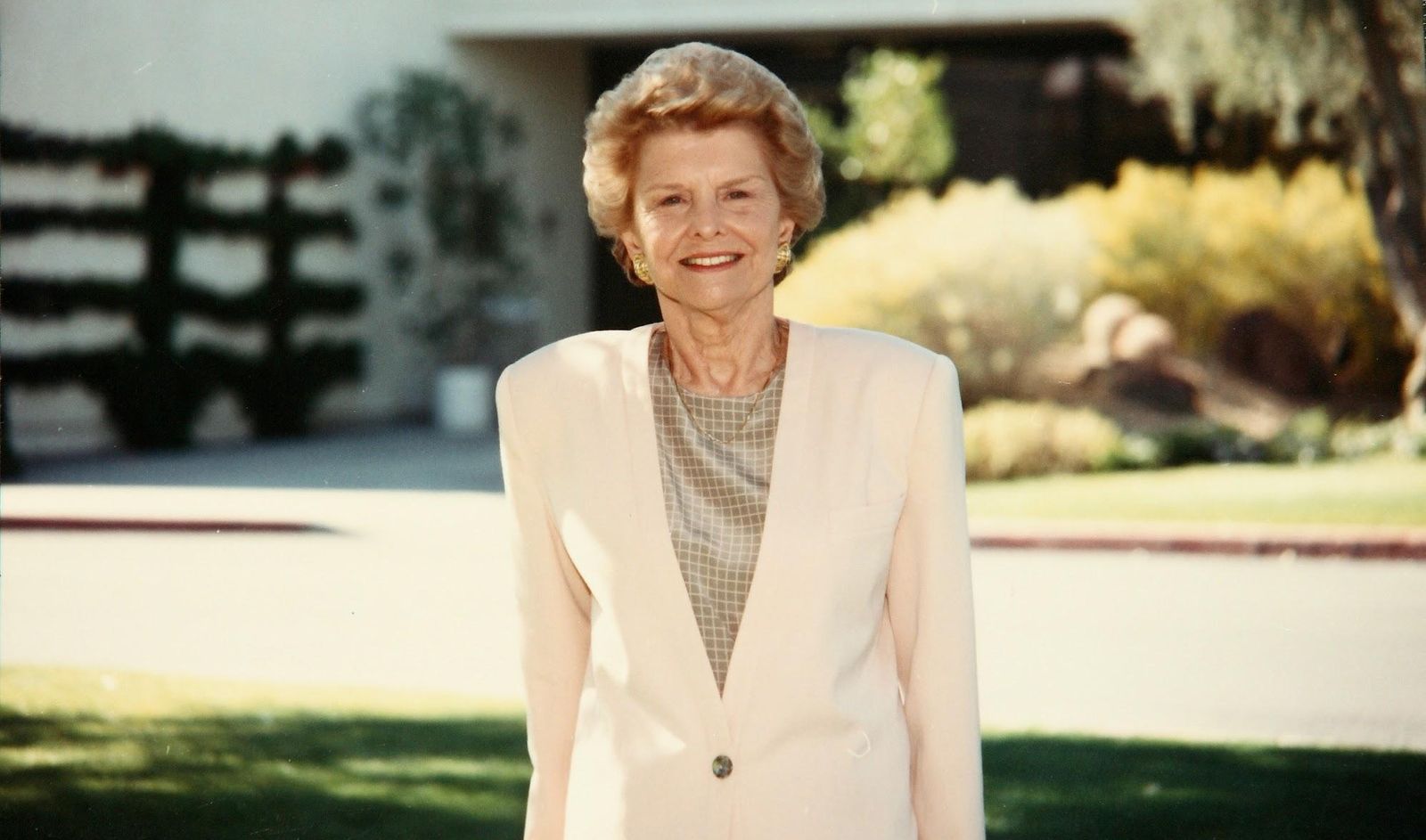
Betty White

Image: Day_Photo

The "Golden Girl," Betty Marion White, was born in Oak Park, just like Hemingway. Even though she was still a toddler when her family moved to California, and she was considered a national treasure, she liked to remind people that her roots were at Oak Park , which made fans from the area very happy.

The village had prepared to celebrate her 100th birthday on January 17, 2022, but sadly, the star passed away just weeks before. Oak Park then proceeded to celebrate her life and career at an event that gathered hundreds of fans despite the freezing weather. White held the Guinness World Record for the longest TV career by an entertainer, starred in iconic shows like The Mary Tyler Moore Show and The Golden Girls , and was also a pioneering female producer behind the camera.
History History 3 min read

Tales of The Rock

Convicts wanted to stay at Alcatraz? Myths and truths about the prison

Image: Andrew Patrick Photo

For decades, Alcatraz has been sold as America’s most terrifying prison: an island no one escaped, designed to break the worst criminals alive. But, as it turns out, the true stories are stranger and far more interesting. Behind the barbed wire were hot meals, music floating across the bay, children riding bikes, and inmates who actually asked to stay. Read on to learn more historical details about the prison !

1
"No one ever escaped alive"

Image: Kelly

Alcatraz loved to sell itself as inescapable. According to official records, no inmate ever made it off the island alive . But the fine print matters…

Five men were not listed as dead, only as "missing and presumed drowned." No bodies were ever recovered… But, considering the cold, fast-moving waters of San Francisco Bay, drowning was a plausible explanation.

2
A 1962 escape still haunts the FBI

Image: Line Knipst

For example, there’s this one story. In June 1962, Frank Morris and brothers John and Clarence Anglin vanished from their cells. They left behind dummy heads made of soap, toothpaste, and toilet paper . Using spoons, they had widened ventilation holes and built a raft from raincoats.

The FBI closed the case in 1979, concluding they drowned. But decades later, new evidence and family testimony reopened the question: What if they didn’t? No bodies were ever found.

3
It was not the harshest prison in America

Image: Klemens Köpfle

Despite its fearsome reputation, Alcatraz was not physically brutal by prison standards of the 1930s. Inmates had single cells, decent sanitation, and regular hot meals, which was not common at the time. In fact, after transfers to other prisons, some inmates requested to return.

4
Prisoners ate shockingly well

Image: Grant Durr

Alcatraz did not believe in hunger as punishment. As mentioned, inmates were served hot breakfasts, fresh bread, meat, and even desserts. The logic was simple: well-fed prisoners were calmer prisoners.

During the Great Depression, some inmates ate better on the Rock than they had on the outside.

5
Al Capone was just another prisoner

Image: Sindre Fjerdingby

Al Capone might have arrived at Alcatraz expecting influence, but he found none there. Stripped of his power, he became inmate number 85, assigned to cleaning duty.

He received no special treatment and no protection from other inmates. His mob connections meant nothing behind those walls. All of this proves that Alcatraz was designed to erase reputations.

6
There was music

Image: Clément Falize

Did you know that Alcatraz had music? Inmates were allowed instruments , and a small prison band rehearsed regularly. There are records of even Al Capone participating in its band.

Legend has it that on quiet evenings, the sound carried across the water to San Francisco. But that may be only local lore.

7
"The Hole" was a real nightmare

Image: Vanessa Werder

Solitary confinement at Alcatraz was called D Block, but inmates knew it as "the Hole." Prisoners were kept in near darkness and silence for days or weeks.

There, meals were restricted, sometimes to bread and water. Inmates came to fear the Hole, as it meant no talking, no reading, no escape from your thoughts, and no sense of time.

8
Nearby sharks were not a threat

Image: Rodrigo Soares

Hollywood seems to love the idea of man-eating sharks circling Alcatraz. But, in reality, the bay’s sharks are small and harmless to humans.

What truly made escape deadly was the near-freezing water and violent tidal currents . Temperatures could drop below 55°F, which would cause rapid muscle failure.

9
Not all inmates were America’s worst criminals

Image: Rita Morais

Alcatraz housed famous gangsters, but many inmates were sent there for different reasons. Some were transferred simply for disciplinary issues, breaking rules, or attempting escape elsewhere.

The figure of the island was a control tool, not just a punishment for violent crime. The threat of being sent to the island seemed to keep other prisons in line.

10
Families lived next to the cells

Image: Liberty Jay

Guards lived on the island with their wives and children . So, you could say that Alcatraz was a whole neighborhood. Kids played baseball, rode bikes, and attended school by ferry.

There were birthday parties and movie nights, because normal life unfolded just steps away from locked cells.

11
Alcatraz closed because it was too expensive

Image: Malcolm Hill

The prison shut down in 1963 because it was financially unsustainable . Everything from fresh water to fuel had to be shipped by boat. Plus, salt air corroded buildings constantly, driving maintenance costs sky-high.

General General 5 min read

Sing it proudly!

Patriotic beats: do you know our anthem’s backstory?

Image: Tim Mossholder / Christina Petsos

The US national anthem, "The Star-Spangled Banner," is more than just a patriotic tune; it symbolizes American history, resilience, and unity. And that’s natural, it has a backstory dating back over two centuries, so you can imagine all the interesting, fun details it carries with it. It is filled with historical moments and a few surprises . In this article, we’ll explore 10 intriguing facts about the anthem that you may not know. Let’s dive into the journey of this iconic song and discover how it became a central part of American identity.

1
A song born from the battle

Image: Benjamin Faust

Our anthem was written in mid-September 1814 by Francis Scott Key. But what was it that brought those words to his mind? Well, the lyrics were inspired by the sight of the American flag flying after the British navy was defeated at the Battle of Baltimore.

Key penned the words while observing the conflict at Fort McHenry during the War of 1812. Originally, the anthem began as a poem, not as a song.

It celebrated the fort’s resilience, symbolizing hope for a young nation. Key’s words quickly gained popularity and were eventually set to the tune of an old British song. Little did he know, it would go on to become the anthem we sing today.

2
What’s in a name?

Image: Joshua Woods

Considering what we said before, it’s logical to think The Star-Spangled Banner wasn’t the original title, do you know what it was?

Key’s poem was originally titled "The Defence of Fort McHenry," a clear reference to the conflict that served as his inspiration.

It wasn’t until October or November of 1814, when the first sheet music was printed, that the title changed to the more poetic "The Star-Spangled Banner."

The new name broadened its appeal, allowing it to reach a larger audience who quickly embraced it. It was a name that spoke not just to the battle, but to the pride of the entire nation. This small change made a big difference in how the song was received.

3
A song for all languages

Image: Etienne Girardet

You probably already knew part of these details, but what about this one? Did you know the anthem was translated into German?

During the Civil War, Key’s anthem found a new life: Union supporters translated it into German to recruit German-speaking volunteers for the militia.

That was just the beginning, but it certainly wasn’t the last time it was translated. Over the years, the song has been translated into more than a dozen languages, making it accessible to Americans from diverse backgrounds. This highlights the anthem’s flexibility, which adapts to the times and reaches new groups. After all, freedom and perseverance aren’t exclusively American traits, don’t you think?

4
Baseball’s favorite tune

Image: Wade Austin Ellis

We are all very much used to starting important ceremonies or sporting events by proudly singing the national anthem, but, as you can imagine, there was a first time for that too. Do you know about it?

"The Star-Spangled Banner" made its debut at a sporting event in 1862 during the opening of a baseball stadium in Brooklyn, New York. This marked the first time it was played at a professional game.

Its connection to sports grew stronger over the years, and now it’s a tradition to hear the anthem at nearly every major sporting event. It’s the perfect way to kick off the game, uniting fans in a shared moment of patriotism before the competition begins.

5
Congress made it official… eventually

Image: Joshua Sukoff

The military had already embraced it as an inspirational song, and it had become a tradition to play it at sporting events, but it wasn’t really official until Congress said so and that didn’t happen until 1931. What about that?

The process wasn’t simple, either. Congress debated the decision, facing opposition from various groups—Prohibitionists, pacifists, and even music teachers—but we’ll explore those details in the next section.

Alternatives like "America, the Beautiful" were suggested, but in the end, Key’s song won out. President Herbert Hoover signed the act, and the rest was history: we finally had a national anthem!

6
It’s not easy to sing!

Image: Laith Abuabdu

Remember we said teachers were against it? Can you imagine why? On their side, one of the main complaints about "The Star-Spangled Banner" was that it’s too difficult to sing . And we have to hand it to them, the anthem is notoriously hard to perform.

In terms of scales, the original melody spans an octave and a fifth, a range that challenges even professional vocalists. This explains why many groups struggle with the anthem during public performances. How many can say they’ve truly mastered it—are you one of them?

In any case, the tune, originally a British drinking song, wasn’t designed for mass sing-alongs. No wonder it’s become a patriotic rite of passage to attempt singing it!

7
Women fought for its adoption

Image: Library of Congress

Although it’s not always mentioned first when narrating our history, women have been instrumental in many key moments, and the story of "The Star-Spangled Banner" is no exception.

Women played a significant role in pushing for the anthem’s adoption as the national anthem, how so? The Daughters of the War of 1812, a patriotic women’s organization, were among the most vocal advocates. While some groups opposed it, this organization was very much in favor of it.

Their activism helped build momentum for the 1931 legislation that ultimately led to the anthem’s adoption. In an era when political opportunities for women were limited, this cause offered them a platform to engage in national issues. They succeeded, of course, because persistence pays off!

8
There is no "official" version

Image: Alessio Fiorentino

This might sound far-fetched, but it doesn’t mean there are alternate lyrics to our anthem. Rather, there’s no single, official version of "The Star-Spangled Banner." While various states have tried to legislate performance styles and etiquette, there isn’t a definitive version set in stone.

This flexibility has allowed for creative interpretations, ranging from traditional orchestral performances to more modern adaptations, depending on the context and the event.

And even if it would be nice to have an official version, this gives everyone the possibility to bring new aspects to our national hymn!

9
Jimi Hendrix’s legendary performance

Image: Aditya Wardhana

Proof of what we just said, that the lack of an official version gives place to create amazing new interpretations is Jimi Hendrix’s legendary performance. The psychedelic rock guitarist brought a fresh, rebellious spin to "The Star-Spangled Banner" when he performed it at the 1969 Woodstock Festival . While many are familiar with his electrifying Woodstock rendition, Hendrix actually performed the anthem in concert many more times, over 60 times to be specific.

His interpretation added a new layer of meaning, capturing the turbulent spirit of the era. And even though not everyone liked it, no one can deny that, given the context, it was a powerful message!

10
Do you know the four verses?

Image: Towfiqu barbhuiya

Most of us are familiar with only the first verse of "The Star-Spangled Banner," but did you know the anthem actually has four verses ?

Now, four verses were enough and we can understand that tradition is to sing only the first due to time constraints. But, as it turns out, in 1861, Oliver Wendell Holmes Sr. added a fifth verse, advocating for the end of slavery.

While the additional verses are rarely sung, they tell a richer story of American values and challenges. So, even if you never sing it, you can read the full version and enjoy learning about American ideals!

Explore more American facts

Choose your favorite category!

General
General

As American as apple pie—the very best America has to offer!

Culture
Culture

Delve into the astounding richness of American lore.

Geography
Geography

Hop in and explore vast and diverse American landscapes.

History
History

Discover the key moments that shaped the United States.