Geography Geography 5 min read

Special details

Have you heard these fun facts about 10 famous American landmarks?

Image: Joe Richmond

Yes, we all know which cities are home to America's most iconic monuments and attractions, such as the Statue of Liberty, the impressive Gateway Arch, or the unique Hollywood Sign. However, as famous as these landmarks are, there are some hidden details and stories about them that you might have never heard before! If you'd like to surprise your friends in your next conversation, keep reading to discover 10 incredible facts about America's most famous landmarks!

1
A change in plans

Image: Alexey Komissarov

Can a color be a worldwide celebrity? It seems so! This is the case of the famous "international orange" of the Golden Gate Bridge in San Francisco, California.

It's hard to imagine this iconic bridge in any other color. But believe it or not, it was once about to be painted in another hue.

The original idea was to paint the Golden Gate Bridge black with yellow stripes to make it visible to ships and planes. However, the sharp vision of consulting architect Irving Morrow changed the plans. When he saw the reddish color of the primer used on the iron, he realized that this color would work much better and would also give the imposing structure an original touch.

2
Too good to be true?

Image: Hana Oliver

We all know that incredible creatures and breathtaking landscapes await us in Yellowstone. You probably also know that this amazing area that covers more than 3,400 square miles in parts of Wyoming, Montana, and Idaho was the first national park in the United States. Not only that, it was actually the first national park in the entire world!

But, while it's totally famous and celebrated today, there was a time when only a few knew about this place. Early explorers who walked Yellowstone in the 19th century wrote detailed journals about what they saw and experienced there, but when they returned, they found that people didn't believe their stories. We have to admit that those skeptics had a point; such a beautiful place seems out of this world!

3
Capitol's subway

Image: Louis Velazquez

Nobody can deny the metro system is great. Its speed and efficiency allow thousands of people around the world to get to their homes and jobs every day. Did you know that the members of the U.S. Congress have their own subway system right underneath the Capitol building?

That's right! Under the impressive structure that houses U.S. Representatives and Senators lies an entire subway system. This allows workers there to access different parts of the complex in a matter of seconds. It must make things easier on busy days, don't you think?

4
The final detail

Image: MIKE STOLL

But not all of the Capitol's surprises are underground; some are in plain sight. We're talking about the spectacular dome that crowns the famous neoclassical building in Washington, D.C. While the dome is a symbol of our country today, there was a time when the Capitol Building didn't have this gracious final detail.

The construction was considered completed in 1800. However, one last touch was still needed. In 1824, the first and smaller dome arrived, made of wood. Finally, it was replaced in 1866 by the impressive dome we see today, which stands an incredible 288 feet high and is made of cast iron, brick, stone, and copper.

5
A misspelling?

Image: Dan Mall

The Liberty Bell must be one of the most recognized icons of the United States. Preserved as a symbol of our Independence, everyone can visit the famous bell at the Independence Hall in Philadelphia, Pennsylvania.

In addition to its well-known history and its famous "crack," this bell has even more hidden details to discover. When you read the inscription on the Liberty Bell, you'll be able to read "Pensylvania" instead of "Pennsylvania." While you could think that those in charge of inscribing the bell weren't paying attention, it wasn't actually a misspelling; it was one of the accepted spellings for Pennsylvania in those days.

6
Hollywood(land)

Image: Justin Aikin

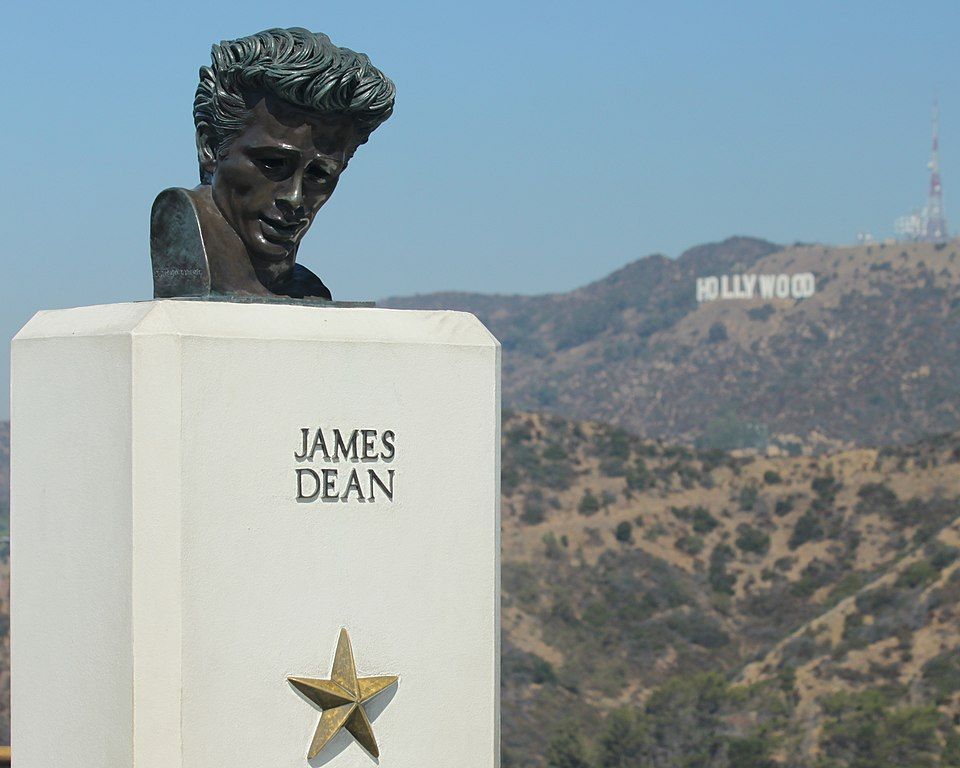
Whether in person or through the screen, we all had the chance to see the legendary Hollywood sign over Mount Lee in Los Angeles, California.

But, while this landmark is recognized around the world today, it didn't always look as we see it now. The Hollywood sign had several changes throughout its history. It was first erected in 1923 as an advertisement for a real estate development. At the time, it read "Hollywoodland" and even had lights, illuminating the entire area at night.

Many things happened in our country before 1949, when the last four letters were removed, leaving just the current "Hollywood."

7
Good things take time

Image: Jeromey Balderrama

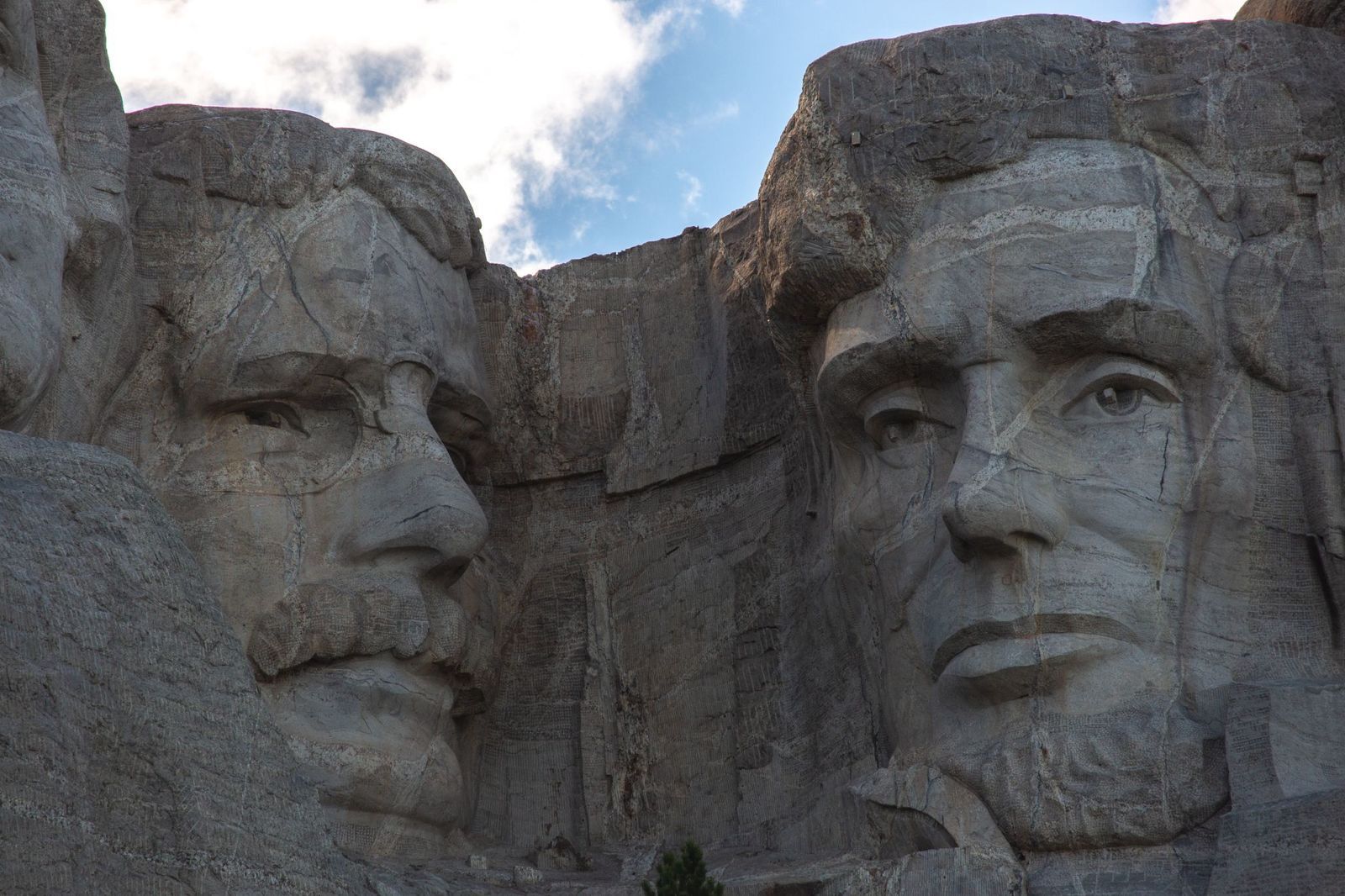
As we grow older, we understand one truth: good things often take time. While patience seems to be in short supply these days, it was certainly in abundance for those who built the impressive Mount Rushmore National Memorial, one of our most famous attractions.

The construction of this imposing monument that features the faces of George Washington, Thomas Jefferson, Theodore Roosevelt, and Abraham Lincoln began in 1927 and took 14 years to complete. Carving four 60-foot-tall heads on a granite hill is no easy task. But, on top of that, some budget difficulties slowed down the process even more.

8
Mount Rushmore's secret door

Image: John Bakator

Mount Rushmore National Memorial has more secrets to disclose! Although not visible to the naked eye, there is a particular detail among the heads of Washington, Jefferson, Roosevelt, and Lincoln. Want to know what it is?

If you haven't heard about it, this might surprise you: there is a small door right there on Mount Rushmore. Mysteries everywhere! The door leads to a chamber known as the "Hall of Records." According to the plans of sculptor Gutzon Borglum, this spot would hold important documents and objects of our history.

9
Time capsule

Image: Mark Serafino

Besides being the tallest human-made monument in the United States and also the tallest arch in the world, the famous Gateway Arch in St Louis has much more to offer.

During its construction in the 1960s, a curious detail was placed inside its iconic metal structure. At the base of the monument, you can find nothing less than a time capsule!

The capsule, which contains various artifacts and relics from our country's history and culture, was thought to give future generations an idea of what the world and the United States were like in those days.

10
19th-century graffiti

Image: Dineda Nyepan

At 555 feet tall, the Washington Monument is one of the most imposing in our country. But besides its height, this landmark also possesses a couple of surprising facts.

It might seem that graffiti is a modern artistic expression that has only been around recently, but this isn't the case, and the Washington Monument is proof of that. At the structure's base, there is a series of graffiti made in the 19th century, during the Civil War.

That's right! Many people and soldiers passing by at the time left signatures, dates, and patriotic messages inscribed on the famous obelisk, and some of them are still visible!

General General 4 min read

A guide to America's most unconventional museums

The bizarre American museums you never knew existed (but need to visit)

Image: Flickch

Forget the Louvre and the Smithsonian. If you're craving something a little more... unusual on your next museum outing, America has you covered. From pickles to parasites, these wonderfully weird institutions prove that literally anything can be museum-worthy if you're passionate enough about it.

1
The Museum of Bad Art (Massachusetts)

Image: Jerry Wang

Founded in 1994, MOBA showcases art "too bad to be ignored," featuring paintings so spectacularly awful they circle back to being captivating . We're talking off-kilter portraits, baffling subject matter, and techniques that defy explanation.

The collection includes masterpieces like "Lucy in the Field with Flowers," featuring a grandmother dancing in a meadow while wearing what might be a nightgown. Each piece comes with a tongue-in-cheek description that treats these disasters with the same reverence the Met gives to Rembrandts.

2
The International Banana Museum (California)

Image: Deon Black

This museum holds the Guinness World Record for the largest collection of banana-related items . With over 25,000 banana things crammed into one yellow-painted space, it's exactly as bonkers as it sounds. Banana phones, banana lamps, banana art—if you can slap a banana on it, it's here.

The museum's motto is "Yes, we have no bananas... we have more!" which pretty much sums up the gloriously ridiculous vibe.

3
The Museum of Broken Relationships (California)

Image: Kelly Sikkema

This surprisingly poignant museum displays donated objects from failed romances , each accompanied by a brief story from the heartbroken donor. Started in Croatia and now with an outpost in Los Angeles, it transforms personal pain into shared human experience. You'll find everything from wedding dresses to an actual prosthetic leg, each item representing a relationship that didn't quite make it.

What could be depressing is actually oddly uplifting: there's humor, anger, relief, and occasionally shocking pettiness on display. One exhibit features an axe someone used to destroy their ex's furniture, piece by therapeutic piece.

4
The International Cryptozoology Museum (Maine)

Image: Jon Sailer

This Portland museum is dedicated to creatures that may or may not exist , from Sasquatch and the Loch Ness Monster to the Chupacabra. Founded by cryptozoologist Loren Coleman, it houses hair samples, plaster casts of mysterious footprints, and endless speculation about what's lurking in our forests and lakes.

5
The Mustard Museum (Wisconsin)

Image: Pedro Durigan

Wisconsin's National Mustard Museum celebrates that yellow squeeze-bottle staple with 6,000+ varieties of mustard from all 50 states and over 70 countries . Curator Barry Levenson started collecting after his beloved Boston Red Sox lost the World Series in 1986, and a voice in a grocery store told him to pursue mustard instead. As one does.

The museum offers free tastings because, apparently, there's a whole world of mustard beyond French's that many of us have been missing. From champagne mustard to chocolate mustard to varieties with names you can't pronounce, it's a full-on condiment education.

6
The Museum of Clean (Idaho)

Image: JESHOOTS.COM

Spanning 75,000 square feet, it chronicles the history of cleaning from ancient times to modern day . It features vintage vacuum cleaners, washing machines, and cleaning products that would horrify today's safety inspectors.

The museum makes a compelling case that cleaning technology has shaped civilization more than we realize. You'll see how our ancestors scrubbed, swept, and sanitized before electricity, and gain a weird appreciation for your Swiffer.

7
The Mutter Museum (Pennsylvania)

Image: Tibor Dányi

This Philadelphia institution houses medical oddities, anatomical specimens, and antique medical equipment that can look more like torture devices. Think preserved organs, skeletal anomalies, and a wall of skulls that's both educational and nightmare-inducing.

The museum's most famous resident is the "Soap Lady," whose body turned into a soap-like substance after burial. There is also a sample of Albert Einstein’s brain tissue on display, because why not?

8
The American Toby Jug Museum (Illinois)

Image: agmclellan

Toby jugs are those quirky ceramic pitchers shaped like people's heads and bodies, usually depicting jolly characters in tricorn hats. This Evanston museum houses over 8,000 of them, representing the world's largest collection of these peculiar drinking vessels .

The collection spans centuries and includes rare jugs worth thousands of dollars alongside kitschy modern versions. You'll learn that Toby jugs have depicted everyone from Winston Churchill and Sherlock Holmes to characters from literature and politics.

9
The Spam Museum (Minnesota)

Image: ZHIJIAN DAI

This 14,000-square-foot museum in Austin, Minnesota, celebrates the canned pork product that fed armies and annoyed email users everywhere . Interactive exhibits let you pretend to work on the Spam production line, and you'll learn more about processed meat than you thought possible.

10
The International UFO Museum and Research Center (New Mexico)

Image: Danie Franco

Located in Roswell, the site of the most famous alleged UFO crash in history, this museum is ground zero for alien conspiracy theories. Founded by people who claim firsthand knowledge of the 1947 incident, it presents eyewitness accounts, declassified government documents, and enough speculation to keep you wondering all night .

Beyond Roswell, the museum explores UFO sightings worldwide, alien abduction stories, and government cover-up theories that range from plausible to completely bonkers.

Culture Culture 6 min read

ALL-TIME CLASSICS

Are you looking for the Great American Novel? Explore 10 contenders

Image: Laura Chouette

American literature is rich in stories and authors. Its best examples capture life in the big cities, luxury, and glamour, but also the small rural American towns, diving into their roots and history. Books like Francis Scott Fitzgerald's The Great Gatsby or John Steinbeck's The Grapes of Wrath are classics that have left a lasting mark on generations of readers . Today we have put together a bookshelf with 10 of the best American novels of the 20th century. This list will surely fall short, but we hope you enjoy our selection!

1
The Great Gatsby , F. Scott Fitzgerald (1925)

Image: Girl with red hat

Written by F. Scott Fitzgerald, one of the most iconic authors of the so-called "Lost Generation", The Great Gatsby portrays the dark side of the American dream . The protagonist, the mysterious and apparently frivolous millionaire Jay Gatsby, is obsessed with winning back a woman he loved in his youth. Set in the Jazz Age, Fitzgerald’s book raises the contradictions between the power of money and the most intimate individual aspirations.

Published in 1925, The Great Gatsby is one of the greatest masterpieces of American fiction . Since then, it has sold millions of copies all over the world, has had numerous theatrical and film adaptations, and was chosen as the best American novel of the 20th century on several occasions.

2
The Sound and the Fury , William Faulkner (1929)

Image: Brandi Redd

Published in 1929, The Sound and the Fury is William Faulkner's fourth novel and is considered the greatest opus of this Nobel Laureate . It chronicles the decadence of the Compsons, an aristocratic family in the American South, their secrets, and the relationships of love and hate that sustain and destroy them.

The Sound and the Fury is a profound and heartbreaking exploration of decay, despair, and loss . Faulkner's innovative narrative technique, while challenging, allows for an intimate and visceral portrayal of the characters. The novel also addresses issues of race, gender, and class with admirable narrative prowess.

3
The Old Man and the Sea , Ernest Hemingway (1952)

Image: MonicaVolpin

The Old Man and the Sea was the last novel published by Ernest Hemingway during his lifetime. For it, he won the Pulitzer Prize for Fiction in 1953 and it undoubtedly contributed to the Nobel Prize for Literature he was awarded in 1954.

The novel tells the story of Santiago, an old and experienced fisherman who embarks on a grueling three-day battle when he finally manages to catch a huge marlin. The Old Man and the Sea is considered one of the masterpieces of universal literature that has captivated readers around the world for decades . Its message about perseverance, dignity, and the search for life’s meaning is still relevant today. The novel is a must-read for anyone interested in literature and human nature.

4
In Cold Blood , Truman Capote (1965)

Image: Brandi Redd

On November 15, 1959, in a small Kansas town called Holcomb, the four members of the Clutter family, a married couple and their two teenage children, were savagely murdered by Dick Hickcock and Perry Smith.

Based on these gruesome events, the American novelist Truman Capote managed to turn around his career as a storyteller by writing In Cold Blood , the novel that definitively established him as one of the great authors of twentieth-century American literature. This book catapulted him as the pioneer of the New Journalism literary movement , a non-fiction genre that became popular in the 1960s for narrating stories based on real events.

5
The Catcher in the Rye , J. D. Salinger (1951)

Image: Gratisography

The Catcher in the Rye , written by the great J. D. Salinger, is a contemporary novel that has become a classic of modern literature. At the time of its publication in 1951, it provoked numerous controversies for its provocative language and its unabashed portrayal of teenage struggles, such as sexuality, the loss of innocence, and the transition to adulthood.

The Catcher in the Rye could be framed within the Bildungsroman —a literary genre that focuses on the psychological and moral growth of the protagonist. It follows Holden Caulfield, a teenager who, after being expelled from school, gets lost in New York trying to find his way in the world. The novel is rich in symbolism and themes , and the literary style and narrative technique are unique and exceptional.

6
American Pastoral , Philip Roth (1997)

Image: Arno Senoner

Published in 1997, American Pastoral is the novel that earned Philip Roth the Pulitzer Prize and is the first in the well-known "American Trilogy", a series of novels narrated by Nathan Zuckerman, the author's alter ego. With the Vietnam War as a backdrop, this book is a lucid tale that questions American values during the end of the happy sixties.

In American Pastoral we find Roth at his best: deep, intense, incisive, magnificent . His ability to build a universe of complex characters and dig into their psychologies is astounding and overwhelming. Few writers have managed to capture the contradictions of American society as he has done.

7
Beloved , Toni Morrison (1987)

Image: Artis Kančs

Beloved , published in 1987 by Nobel Prize winner Toni Morrison, takes place in the aftermath of the American Civil War . The novel tells the story of an African-American slave, Margaret Garner, who escapes from Kentucky to Ohio, a free state.

Magic realism runs throughout the entire book and manifests through the ghostly presence of Beloved's character. Morrison uses this technique to explore collective memory and the persistence of the past . The novel is considered a masterpiece of contemporary literature and has been acclaimed for its innovative writing style and its exploration of sensitive subjects such as slavery, freedom, identity, and memory.

8
On the Road , Jack Kerouac (1957)

Image: Daria Kraplak

On the Road is a semi-autobiographical novel in which Jack Kerouac recounts a series of trips he made across the United States and Mexico with his friend Neal Cassady. Inspired by his passion for jazz, Kerouac developed the idea of a book that would be a great improvised prose solo . He wrote it on his typewriter on a long, single roll of paper in just three weeks.

A cornerstone of the so-called "Beat Generation," On the Road was published in September 1957, after 6 years of delay due to the publisher's reservations about the explicit contents. At the time, this emblematic book had a major impact, especially on the younger readers of the 60s. Today, On the Road is still considered one of the great American novels of the 20th century for capturing the rebellious spirit of an entire generation.

9
The Heart is a Lonely Hunter , Carson McCullers (1940)

Image: Faith Enck

The Heart is a Lonely Hunter is a literary masterpiece that continues to resonate in the hearts of readers, even though it was published more than 60 years ago. Set in a small southern town, it tells the story of a group of people who have in common the rejection of a society that ignores them.

This is Carson McCullers' first novel, written when she was only twenty-three years old. She masterfully captures the essence of loneliness and the search for human connection in a way that transcends time. With a moving narrative and unforgettable characters, the novel has received critical acclaim and has earned a prominent place in literary history.

10
The Grapes of Wrath , John Steinbeck (1939)

Image: Sonder Quest

We couldn't leave The Grapes of Wrath, 1940 Pulitzer Prize winner , out of this list. In this harrowing book, Nobel laureate John Steinbeck narrates the difficult journey of a family of farmers who, beset by hunger and misery, leave the fields of Oklahoma to reach the golden shores of California, the promised land.

First published in 1939, The Grapes of Wrath is a seminal work in American literature that explores the conflict between the rich and the poor and reflects the horrors of the Great Depression with sensitivity and sharp insight. Steinbeck's chronicle of the shameful mistreatment of 1930s families is perhaps the most "American" of all American classics.

Explore more American facts

Choose your favorite category!

General
General

As American as apple pie—the very best America has to offer!

Culture
Culture

Delve into the astounding richness of American lore.

Geography
Geography

Hop in and explore vast and diverse American landscapes.

History
History

Discover the key moments that shaped the United States.