History History 4 min read

Nature’s wrath unleashed

The comet that sparked a wildfire and 9 more tales of nature's might

Image: Greg Johnson

America’s vast territories and diverse landscapes make it a hotspot for some of the world’s most remarkable weather and natural phenomena . From raging tornadoes to volcanic eruptions, the U.S. is no stranger to extreme natural events. While some of these events have left deep scars on the nation’s collective memory, many have also driven significant advancements in prevention and disaster response protocols, helping to mitigate the impact of future occurrences. Here’s a look at 10 of the most powerful natural events in American history.

1
Tri-State tornado

Image: Greg Johnson

In 1925, the Tri-State Tornado carved a path of destruction across Missouri, Illinois, and Indiana. With winds exceeding 300 mph, it remains the deadliest tornado in U.S. history, claiming more than 700 lives and leaving thousands homeless.

This record-breaking F5 tornado—classified as such by modern standards—traveled over 200 miles in just three and a half hours, leveling entire towns. Its unprecedented speed and longevity exposed the limitations of early warning systems, prompting significant advancements in tornado research and forecasting.

2
The Dust Bowl

Image: Sophia Simoes

The 1930s Dust Bowl was a man-made disaster exacerbated by a severe drought across the Great Plains. Decades of over-plowing and unsustainable farming practices had left the farmland highly vulnerable to erosion.

When the drought struck, winds swept loose soil into colossal clouds that darkened cities and devastated remaining crops. These massive dust storms, known as "Black Blizzards," choked the skies and forced thousands of families to abandon their homes . Eventually, the disaster led to significant agricultural reforms under the New Deal.

3
Lake Michigan's seiche wave

Image: Silas Baisch

On the morning of June 26, 1954, a 10-foot-high seiche wave crashed onto the Chicago shoreline , sweeping away eight people and injuring many others. But what exactly is a "seiche wave"?

According to researchers, seiche waves are large, sudden standing waves that form in enclosed bodies of water due to extreme atmospheric changes, such as abrupt shifts in air pressure or strong winds. This rare event shocked the Midwest and prompted scientists to study lake oscillations and their connection to storm systems.

4
Great Alaska earthquake

Image: Joris Beugels

In 1964, Alaska was struck by a devastating earthquake with a magnitude of 9.2, making it the most powerful ever recorded in North America and the second most powerful worldwide. Lasting four minutes and thirty-eight seconds, the earthquake triggered massive tsunamis and landslides across the state, along with significant geographic changes —some coastlines sank while others rose dramatically.

The destruction it caused led to major updates in seismic safety protocols and infrastructure standards throughout the U.S. This event emphasized the need for better preparedness and stricter building codes , to handle similar future events, especially in earthquake-prone areas.

5
Hurricane Katrina
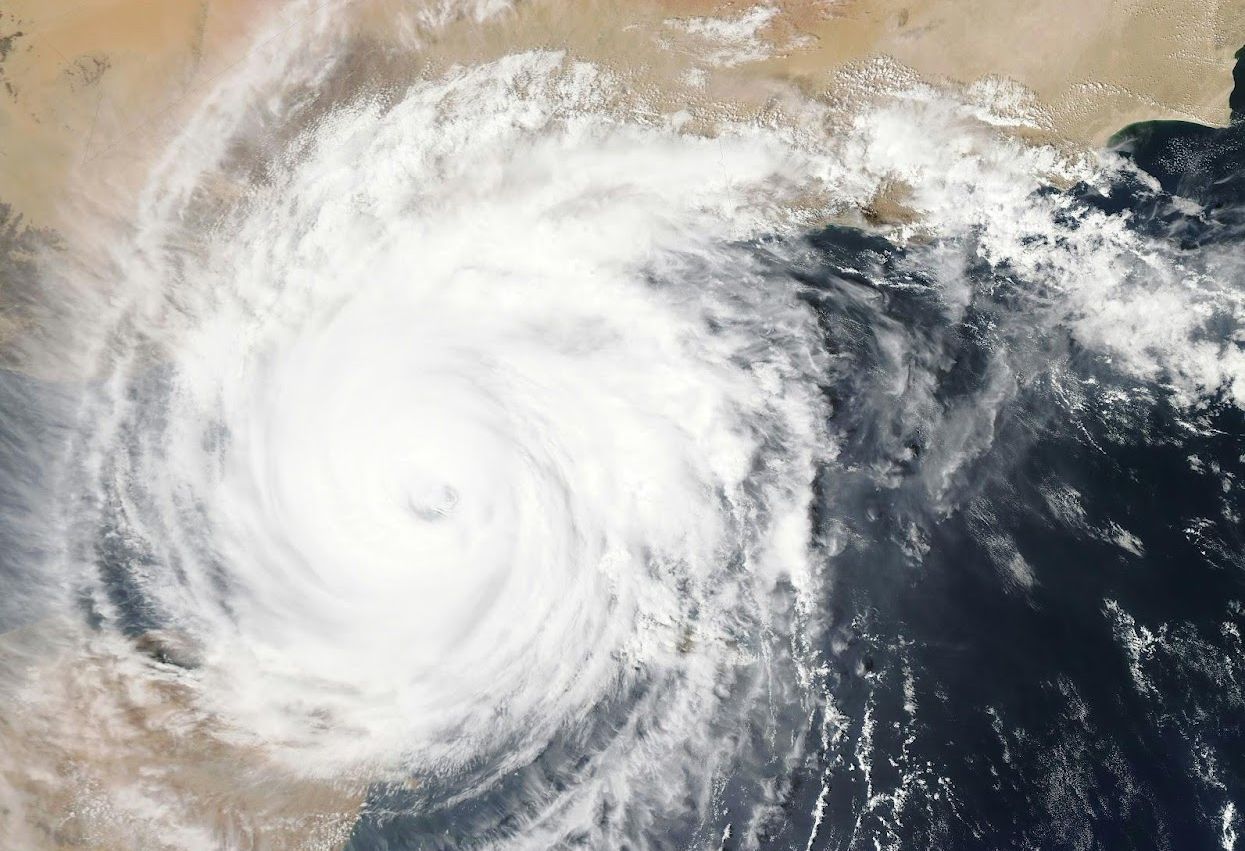
Image: NASA

In 2005, Hurricane Katrina ravaged New Orleans and the Gulf Coast, claiming more than 1,300 lives and leaving millions homeless, sparking an urgent humanitarian crisis. The storm caused an estimated $125 billion in damages, making it one of the costliest hurricanes in history , tied with Hurricane Harvey in the Atlantic basin.

Katrina exposed critical flaws in the region's levee systems and emergency response efforts, prompting widespread criticism and driving essential reforms in disaster preparedness and infrastructure.

6
The Peshtigo firestorm

Image: Tim Mossholder

On the same day as the Great Chicago Fire of 1871, a catastrophic firestorm near the small town of Peshtigo, Wisconsin, scorched approximately 1.2 million acres, making it the deadliest wildfire in recorded history . The uncontrolled blaze claimed over 1,500 lives, though the exact number of fatalities remains uncertain.

Since 1883, there has been speculation that the simultaneous outbreaks of major fires across Illinois, Michigan, and Wisconsin, including the Peshtigo and Chicago fires, were not coincidental but caused by burning fragments from Biela's Comet . However, this theory remains unproven.

7
Superstorm Sandy

Image: Matt Hardy

Nicknamed "Superstorm" by the media, Hurricane Sandy wreaked havoc on the Caribbean and the coastal Mid-Atlantic region of the United States in late October 2012. While it affected 24 states, the most severe damage was concentrated in New Jersey and New York .

The storm caused an estimated $70 billion in damages, flooding New York City's subway system and displacing thousands of residents. It also ignited a nationwide debate about the role of man-made climate change in amplifying the intensity of seasonal storms.

8
Death Valley heatwave

Image: Johannes Plenio

Death Valley recorded the world’s hottest temperature —134°F—in 1913. A testament to America’s climatic extremes, the region’s unique topography traps heat, effectively turning it into a natural furnace.

While the record remains a point of fascination for meteorologists and tourists alike, some recent researchers have challenged the accuracy of the 1913 measurement. Regardless, the region has come close to this temperature in recent years, indicating that a new record-breaking summer may be in the cards.

9
The Great Blizzard of 1888

Image: Jan Canty

The "White Hurricane" of 1888 buried the Northeast under as much as 55 inches of snow, crippling major cities and resulting in over 400 fatalities. Railroads were shut down, and many residents were confined to their homes for up to a week.

As one of the most severe blizzards in American history , the storm compelled New York City to bury power lines and redesign its transportation systems to better withstand future extreme weather events.

10
Mount St. Helens eruption

Image: Tetiana Grypachevska

On May 18, 1980, Mount St. Helens erupted in Washington, triggering massive landslides and pyroclastic flows, killing 57 people and causing over $1.1 billion in damages. The violent blast also reduced the mountain’s height by more than 1,300 feet and sent a plume of ash 80,000 feet into the atmosphere, disrupting air travel for weeks.

This volcanic event, the first in the contiguous United States since the much smaller 1915 eruption of Lassen Peak in California, is considered one of the most disastrous volcanic eruptions in U.S. history. Its aftermath raised awareness of volcanic hazards and underscored the importance of geological research in the country.

Culture Culture 5 min read

LIVES ON FILM

Celebrate The Ten American Lives Portrayed In These Iconic Biopics!

Image: Jon Tyson

An actor's biggest weapon is their ability to get into the skin of an entirely new person. In that regard, the ten actors and actresses on this list had the daunting task of portraying the lives of some of the most remarkable Americans in our country’s history. We decided to celebrate the extraordinary talent of these thespians and the way they brought the stories of these exceptional Americans to the big screen. Enjoy!

1
Lincoln (Daniel Day-Lewis)

Image: Maarten Brakkee

Legendary method actor Daniel Day-Lewis definitively had big shoes to fill when he portrayed our 16th President. And we mean that quite literally: Historians believe that Lincoln had the largest feet of any U.S. President in history. In any case, Day-Lewis stood up to the task and his acting prowess earned him both an Academy Award and a Golden Globe for Best Actor.

Directed by Steven Spielberg, Lincoln focuses on the year 1885 and President Lincoln’s struggles to abolish slavery. Famously, Day-Lewis requested everyone on the filming set to only refer to him as "Mr. President" or "Mr. Lincoln", in order to immerse himself in the role.

2
Jackie Kennedy (Natalie Portman)

Image: Cornelia Ng

Pablo Larrain’s 2016 film Jackie depicts the life of former First Lady Jaqueline Kennedy, both during her time at the White House and after the assassination of President Kennedy. Natalie Portman does an outstanding job in her role as Jackie, portraying her characteristic charm and quiet strength.

The film was nominated for three Academy Awards, including Best Actress for Portman. Although she ultimately lost the Oscar to Emma Stone’s character in La La Land , movie critics acclaimed Natalie’s performance.

3
Johnny Cash (Joaquin Phoenix)

Image: Dominik Scythe

Few musicians have the mysterious and fabled aura as " The Man in Black ", but American actor Joaquin Phoenix was able to faithfully portray Johnny Cash’s gritty character in the 2005 biopic Walk the Line . Directed by James Mangold, this film focuses on Cash’s rise to fame and turbulent career, as well as his relationship with singer June Carter, wonderfully played by Reese Witherspoon.

Phoenix and Witherspoon’s acting was universally praised by film critics, and they both received Best Actor and Actress nominations at the Oscars. While only Witherspoon won the Academy Award, this film remains an impressive highlight in Joaquin Phoenix’s career.

4
John Nash (Russell Crowe)

Image: Roman Mager

Ron Howard’s 2001 film A Beautiful Mind depicts the life of American mathematician and Nobel Laureate John Nash. Russell Crowe does a wonderful job portraying this brilliant American’s life, representing both his brilliance as well as his struggles with mental health.

While the film was based on a 1998 biography by Sylvia Nasar, Howard’s spin on Nash’s life results in a daunting yet inspiring movie. A Beautiful Mind received several nominations at the Academy Awards, winning four Oscars that included "Best Picture" and "Best Director".

5
Mark Zuckerberg (Jessee Eisenberg)

Image: Deeksha Pahariya

David Fincher’s 2010 movie The Social Network took on the formidable task of depicting the rise of the world’s largest social media company as well as the legal battles between two former best friends. Actor Jesse Eisenberg amazingly plays two sides of Facebook founder Mark Zuckerberg, both as a 19-year-old college student and as the CEO of one of the biggest companies in the world.

While many critiqued the movie’s lack of historical accuracy, Eisenberg’s portrayal was almost universally praised, earning the then-young actor his first nomination for an Academy Award.

6
Truman Capote (Phillip Seymour Hoffman)

Image: CHUTTERSNAP

Truman Capote is revered as one of the greatest authors in American history: His groundbreaking book In Cold Blood is credited as starting the genre of non-fiction literature. The 2005 film Capote is a deep-dive into this author’s investigation into the murders that inspired this iconic book, as well as his interviews with Perry Smith, one of the criminals.

Phillip Seymour Hoffman’s inspiring portrayal of Capote is considered one of the peak performances of this amazing actor’s outstanding career. Hoffman earned a well-deserved Oscar for Best Actor, while the film was nominated in four other categories.

7
Howard Hughes (Leonardo Di Caprio)

Image: Rafael Garcin

Martin Scorsese is certainly a Hollywood legend: Few movie directors have such an incredible filmmaking record as he does. We could have chosen from many iconic Scorsese biopics (including Robert De Niro’s astounding performance in Raging Bull ), but we ultimately chose his depiction of American business magnate and pilot, Howard Hughes .

In that regard, Leonardo Di Caprio’s impressive range allowed him to portray the life of this American legend, faithfully representing both his business acumen as well as his fight against obsessive-compulsive disorder.

8
Muhammad Ali (Will Smith)

Image: Johann Walter Bantz

You might be surprised to learn that the 2001 film Ali , which depicts the life of the most famous American boxer in history, was a huge box office failure. However, this film was beloved by movie critics, particularly due to Will Smith’s outstanding performance as Muhammad Ali.

The film focuses on most turning points in Ali’s remarkable career, from his first heavyweight title win to his iconic "Rumble in the Jungle" fight against George Foreman. Will Smith was nominated for Best Actor at the 2001 Academy Awards, while Jon Voight’s portrayal of a journalist received a Best Supporting Actor nomination.

9
Charlie Chaplin (Robert Downey Jr.)

Image: Olesia Libra

Now, we know what you are thinking: Why is British legendary actor Charlie Chaplin in this list of American biopics? While it is true that Chaplin was not born in the United States, he was instrumental in building the American film industry, and his films are still revered as icons of our country’s culture. In that regard, Robert Downey Jr’s performance in the 1992 film Chaplin serves as a magnificent tribute to this Hollywood legend.

Directed by Richard Attenborough, this film also stars Chaplin’s daughter , Geraldine Chaplin, who portrays the actor’s mother. While Chaplin wasn’t a huge blockbuster, Downey Jr’s portrayal of the silent actor was particularly well-received.

10
Ray Charles (Jamie Fox)

Image: Andrik Langfield

We’ll end this article with one of America’s most iconic voices. American actor Jamie Foxx got in the skin of iconic musician Ray Charles in the 2004 film Ray . Directed by Taylor Hackford, this film focuses on Charles’ troubled youth and rise to fame, as well as his tragic sight loss.

Foxx’s amazing portrayal of the insanely talented Ray fooled audiences everywhere: Many to this day believe that the actor was actually singing in the film. Foxx was able to convincingly adopt Charles’ mannerisms and habits, which earned him his first Academy Award for Best Actor.

Culture Culture 7 min read

Foreign gems

These 12 iconic Americans weren't actually born in the U.S.

Image: cytis

Alexander Hamilton wasn’t the only prominent American to be born abroad. Some personalities are so ingrained in American culture that we just assume they were born in the United States. However, many of the major contributors to American science, art, and politics didn’t begin life in our country. Although some iconic figures of American history were immigrants, their stories are absolutely inspirational. Continue reading to learn more about the lives of 12 great Americans you might not have realized were born outside the U.S.

1
Alexander Hamilton

Image: John Trumbull, CC0, via Wikimedia Commons

On January 11, 1757, in the remote Colony of Nevis, British Leeward Islands, a boy was born. He went from having nothing to being a key player in the history of the United States of America. Alexander Hamilton, the illegitimate son of a Scottish trader and a French-English woman, would become George Washington's right hand and one of the nation's Founding Fathers.

At the age of 16, he landed in New York, where he began to study law. But his studies were interrupted when the Revolutionary War broke out. During his lifetime, Hamilton was an influential promoter of the U.S. Constitution, as well as the founder of the nation's financial system, the Federalist Party, the U.S. Coast Guard, and The New York Post .

2
Bob Hope

Image: d

"I left England when I realized I couldn't be king," Bob Hope liked to say. Leslie Townes Hope was so American that his audience was unaware he was actually born in London. When he was five years old, however, his family emigrated to the United States and settled in Cleveland, Ohio.

He began working in show business when he finished high school, appearing in countless Broadway plays, Hollywood films, and television shows. Throughout his more than 60-year career, Hope was not only one of the most influential comedians of his time; he was also one of the most awarded actors in history, the unofficial entertainer of the American troops, and the presenter who hosted the Oscars ceremony the most times.

3
Henry Kissinger

Image: White House Photographic Office, Public domain, via Wikimedia Commons

During the 20th century, this controversial diplomat played a key role in American politics. However, Heinz Alfred Kissinger was born into a Bavarian Jewish family on May 27, 1923. Escaping Nazi Germany, he emigrated to the United States, where his name was changed to Henry.

Henry Kissinger soon obtained citizenship. He served in the Army, studied at Harvard University, and had a long and active life in our country's politics. During the Eisenhower, Kennedy, and Johnson administrations, he worked as a security consultant for various agencies. His reputation led him to be appointed National Security Advisor by President Richard Nixon in 1969, and Secretary of State in 1973, the first person in history to hold both positions simultaneously.

4
Charlie Chaplin

Image: Bain News Service, publisher.Library of Congress, Prints & Photographs Division, Public domain, via Wikimedia Commons

Charles Chaplin, one of the greatest Hollywood legends, was born in London in 1889. At the age of 20, Chaplin crossed the Atlantic to try his fortune in the United States. It was here that he came up with his signature character, Charlot, an endearing tramp who has become a universal icon.

From then on, Charlot appeared in dozens of films that allowed Chaplin to consolidate his reputation as one of the industry's most beloved actors. In 1972, the Academy of Motion Picture Arts and Sciences awarded him an Honorary Oscar for his outstanding career. The audience applauded for twelve uninterrupted minutes.

5
Alexander Graham Bell

Image: Harris & Ewing, photographer, Public domain, via Wikimedia Commons

​​Known for being the inventor of the first patented telephone, Alexander Graham Bell also worked on the development of deaf-friendly systems, was one of the founders of the National Geographic Society, and made great contributions to the U.S. telecommunications industry. Yet, he was born in 1847 in Edinburgh, Scotland.

In 1871, Bell settled in Boston, Massachusetts, where he worked as a teacher and tutor of deaf students. His influence on American science and culture was so important that on the day of his death, all telephone services in the United States stopped for one minute in his honor.

6
Samuel Goldwyn

Image: Metro-Goldwyn-Mayer, Public domain, via Wikimedia Commons

Films, perhaps the most representative industry of American culture, would not be the same without the contribution of numerous foreigners who settled in California since the beginning of the 20th century. This is the case of Samuel Goldwin, one of the most influential magnates in the history of Hollywood, born in Warsaw, Poland, in 1879.

During his more than 50 years of activity, Goldwyn founded several film studios and produced the first feature film entirely made in Hollywood. His reputation in the industry grew steadily, based on his incredible eye for finding great talent. There is a theater named after him in Beverly Hills, and he received a star on the Hollywood Walk of Fame for his invaluable contributions to cinema.

7
Joseph Pulitzer

Image: Allen & Ginter, CC0, via Wikimedia Commons

This self-made, foreign man became an American media mogul and inspired the world's most prestigious journalism award. Born in 1847 in Hungary, young Joseph Pulitzer emigrated to the United States at the age of 17 without knowing a word of English.

After fighting in the Civil War, Pulitzer began to study law. He soon discovered his talent for journalism. Within a few years, he became a leading national figure in the U.S. Democratic Party, began running the New York World newspaper, and became a pioneer of tabloid journalism.

8
Albert Einstein

Image: Archivo General de la Nación, Public domain, via Wikimedia Commons

Despite being born in Germany, the most famous scientist of the 20th century ended his days in the United States, where he was able to continue his research after Nazism took power. In 1933, Albert Einstein was visiting our country, and given the context in Europe, he decided not to return to the old continent and renounced his German citizenship.

Einstein accepted a position at the Institute for Advanced Study in Princeton, where he continued his scientific work until his death. During his stay in America, he remained active in the academic world and received multiple awards. His scientific legacy remains fundamental to modern physics and the understanding of the cosmos.

9
Madeline Albright

Image: U.S. Department of State, Public domain, via Wikimedia Commons

Madeleine Albright was the first woman in the history of the United States to serve as Secretary of State. What you may not know is that the diplomat was born in Prague, Czechoslovakia, as Marie Jana Korbelová. In 1948, Albright immigrated with her family to America and settled in Denver, Colorado.

After graduating from Wellesley College, she worked as a journalist and editor for different newspapers. She later earned her doctorate and began her political career working in the White House. She was a senior advisor to the Democratic Party, and when Bill Clinton became president, she was first appointed Ambassador to the United Nations. A few years later, she became Secretary of State.

10
Alfred Hitchcock

Image: Shamley Productions , Paramount Pictures, Public domain, via Wikimedia Commons

The great Alfred Hitchcock began his film career in England, where he was born, but it was in the United States where he was really able to display all his genius. While in Hollywood, he directed more than 30 films, some of which are considered masterpieces to this day.

Although Hitchcock was relatively successful in his country, in 1939, producer David O. Selznick convinced him to cross the pond and settle in our country. And thank goodness he did! The master of suspense is considered one of the most influential directors of all time and is regarded as one of the most important artists of the seventh art.

11
Meyer Guggenheim

Image: Joe Dudeck

The patriarch of the Guggenheim family, known for playing a decisive role in the transformation of the American mining and smelting industries, was actually born in Lengnau, Canton Aargau, Switzerland. Meyer Guggenheim emigrated to the United States in 1847, where he started working as a salesman.

After earning a considerable sum of money buying and selling stocks, he began investing in silver mines. In a short time, he amassed one of the largest fortunes of the 19th century. Meyer died in 1905 in Palm Beach, but his legacy still influences many sectors today, from industry to philanthropy.

12
Levi Strauss

Image: manusama

Is there anything more American than a pair of blue jeans? What started as a strong and durable pair of pants became the garment that revolutionized the fashion market. Worn by miners, cowboys, rock stars, presidents, and men and women all over the world, blue jeans have been a favorite for generations. However, their creator was not born in the United States.

Levi Strauss, the founder of the first jeans manufacturing company, was born in 1829 in Buttenheim, Germany, as Loeb Strauss. In 1847, he emigrated to New York, but when the California gold rush began, he decided to move to the West Coast and open a branch of the family business in San Francisco. And the rest is history!

Explore more American facts

Choose your favorite category!

General
General

As American as apple pie—the very best America has to offer!

Culture
Culture

Delve into the astounding richness of American lore.

Geography
Geography

Hop in and explore vast and diverse American landscapes.

History
History

Discover the key moments that shaped the United States.