History History 5 min read

Spirits in the halls

The White House After Dark: Whose spirits linger in the Mansion?

Image: Tom Fisk / Photo By: Kaboompics.com

The White House was completed in the 1800s and has served as the home to every US president since. Just imagine the countless people, events, conversations, and even incidents that have taken place there. With six floors and 132 rooms, it's no surprise that the White House has a good dose of paranormal stories. From creepy footsteps and noises to the apparitions of presidential ghosts, the iconic mansion at 1600 Pennsylvania Avenue is full of supernatural tales that will give you goosebumps!

1
Abraham Lincoln

Image: Girma Nigusse

One of the most famous ghosts in the White House is none other than that of Abraham Lincoln. But this is nothing new. Shortly after the president's passing, employees of the Mansion began reporting sightings of a tall, shadowy figure dressed in a black suit. Several First Ladies, including Eleanor Roosevelt and Grace Coolidge, also claimed to have encountered Lincoln's spectral figure.

One of the best stories about his ghost involves a famous statesman from another country: Winston Churchill. During WWII, Churchill visited the White House. The story goes that after a night shower, he encountered Lincoln's ghost standing by the fireplace. Churchill greeted him calmly, saying, "Good evening, Mr. President. You seem to have me at a disadvantage."

2
Andrew Jackson

Image: Peter Oswald

Andrew Jackson, 7th President of the US, was famous for his strong, commanding personality. Perhaps it was this aspect of his character that gave rise to the tales of his loud –some say "angry"– ghost haunting the White House.

Jackson's ghost was said to appear regularly during Theodore Roosevelt's administration. Stories describe his presence as impossible to ignore, with loud footsteps and objects inexplicably falling. Another famous anecdote narrates a dinner party held by President Harry S. Truman at the White House. Many guests allegedly saw Jackson's figure standing in one of the hallways, appearing and disappearing right in front of them.

3
Thomas Jefferson

Image: Dominik Scythe

Thomas Jefferson was not only a Founding Father, the main author of the Declaration of Independence, the 3rd President of the United States, and the man behind the Louisiana Purchase. He was also a skilled violinist.

As a polymath, Jefferson was a wise, educated man with many talents. He played several instruments, but his favorite was the violin. Over the years, several stories have emerged about staff members and even other presidents hearing the haunting sound of a violin, seemingly coming from the Yellow Oval Room.

4
Dolley Madison and the Rose Garden

Image: KaLisa Veer

But paranormal stories aren't just about presidents; First Ladies also star in similar anecdotes.

One such tale is about Dolley Madison, First Lady to James Madison, who lived in the White House from 1809 to 1817 during his two terms. Dolley Madison was known to spend long hours in the gardens during her time at the House, particularly in the Rose Garden, which she loved. After her passing in 1849, many reported seeing a ghostly figure in the Rose Garden, hearing a woman's voice, or feeling as if they were being watched.

5
Abigail Adams

Image: Hugo

John Adams was the first president to ever live in the White House. He was there with his wife, Abigail Adams, during the last year of his term (1800-1801).

After Abigail's passing, many people working in the White House reported sightings of her ghost in the East Room, where she was said to hang laundry. Even today, some staff members claim to smell wet laundry near that room.

6
John Tyler

Image: Madara

Another of the haunted rooms in the White House is the Blue Room, apparently visited by the ghost of President John Tyler.

Tyler married his second wife, Julia Gardiner, in 1844 while still in office. As the story goes, the president had proposed to Julia on several occasions before she finally said yes. Over the years, reports emerged about the Blue Room of the White House, where it is suggested that footsteps are heard, and a man's voice seemingly declaring love or proposing marriage.

7
David Burnes
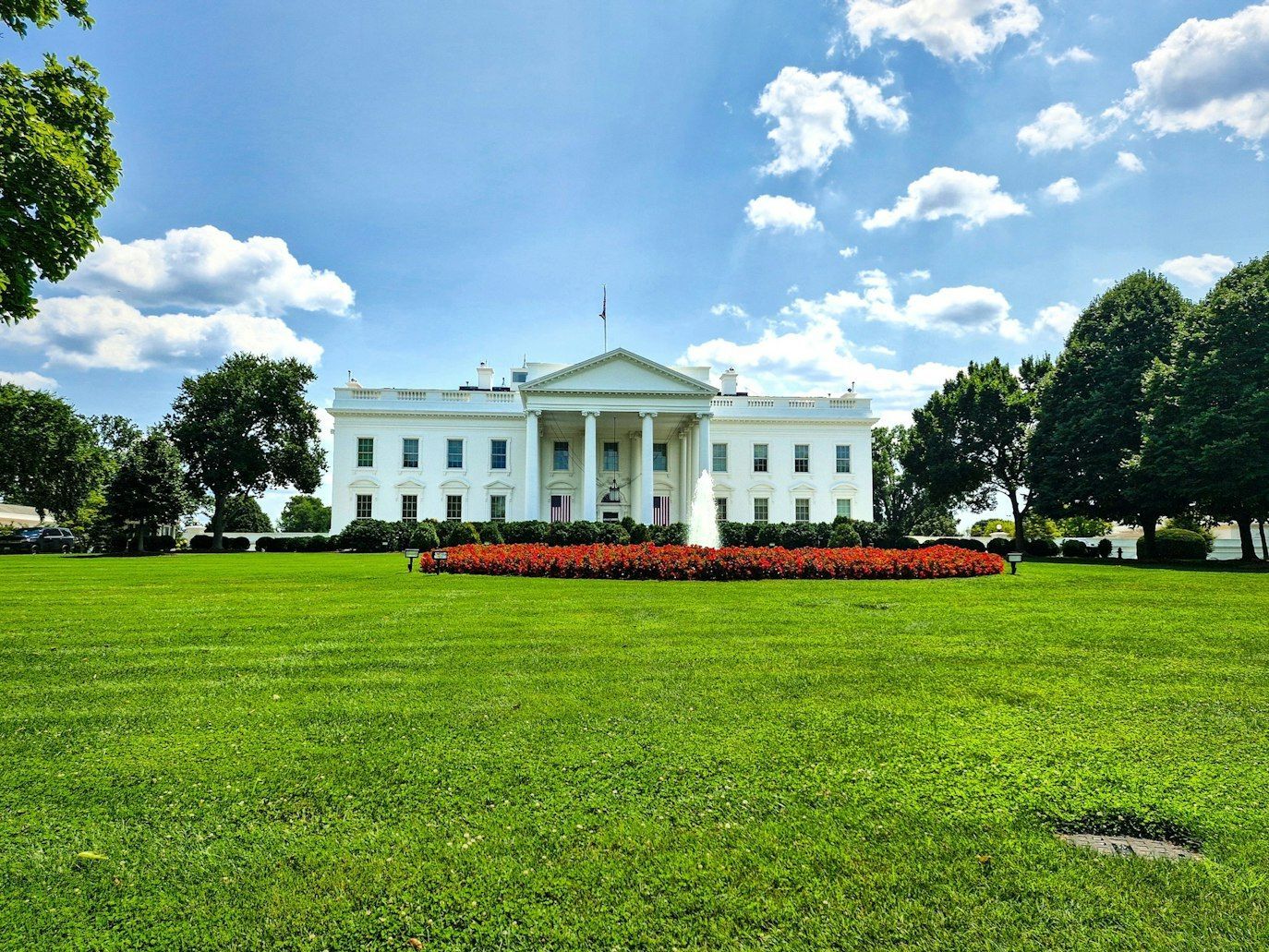
Image: Vihan Dalal

The White House has stood at 1600 Pennsylvania Avenue since 1800. But before that, the land it occupies belonged to someone else.

David Burnes was one of the original landowners, living there before the government purchased it. Legend has it that he wasn't totally pleased with the sale of his land. After his death, several residents –including Abigail Adams– reportedly saw a figure resembling Burnes walking near the house, often watching it from a distance.

8
William Henry Harrison

Image: Peter Herrmann

It seems ghosts might be lurking in every corner of the White House. As we've seen, several rooms and even the gardens have been the setting for various paranormal tales. But that's not all: The attic holds its secrets, too.

This story involves William Henry Harrison, the 9th president of the US and the first to pass away during his time in the White House. It's said that his spirit now haunts the attic of the mansion, where footsteps and a wailing voice can be heard at times.

9
The Thing

Image: Steinar Engeland

Legend has it that a mysterious entity has been haunting the White House for some time, one not tied to any known historical figure.

Several members of the White House staff have reported strange experiences attributed to "the Thing." That's the name given to this presence that makes those nearby feel as if they are being watched. But here's the creepiest part: Several employees reported feeling pressure on their shoulders as if someone was lightly leaning on them.

10
The Demon Cat

Image: Abdu Rahman

Now, it's time for a ghost that doesn't take human form. It's the well-known " Demon cat" (or "DC"), a spectral black cat said to haunt several government buildings in Washington, DC.

According to legend, cats were brought to the city to control the rat population in the 19th century. But one of those cats never left. It's now a ghost haunting landmarks like the White House and the US Capitol. Some people say the ghostly cat appears small at first but grows to a creepy large size as it approaches. Some even describe it as reaching the size of a "huge tiger."

General General 5 min read

20th-century marvels

Architecture in the Jazz Age: 10 Art Deco buildings that shaped America

Image: Kit Suman

Characterized by sleek lines, geometric shapes, and luxurious materials, the Art Deco style was a favorite among American architects during the 1920s and 1930s. They designed opulent skyscrapers and glamorous buildings that celebrated progress and modernity. Join us to learn more about this Jazz Age style, explore its fascinating history, and tour 10 of the most beautiful Art Deco buildings in the United States.

1
Empire State Building, New York City

Image: William Wachter

Undoubtedly, the Empire State is the most famous building in New York City. Every year, about 2.5 million people visit it, and it has been featured in countless movies and TV shows. Designed by American architect William F. Lamb, it was inaugurated in 1931.

For forty-one years, the Empire State Building was the tallest skyscraper in the world. The symmetry, limestone façade, huge windows, and the monumental and luxurious lobby are some of its main features. The design of this Art Deco masterpiece is so spectacular and breathtaking that in 1986 it was designated a National Historic Landmark.

2
The Carlyle, Miami Beach

Image: Luis Erives

Miami has the largest concentration of Art Deco buildings in the world. The city has a remarkable collection of around 800 structures built in this style. Visiting the Art Deco district along Collins Avenue, Ocean Drive, and Washington Avenue is like traveling back in time. And perhaps the Carlyle, for its sophisticated combination of horizontals and verticals, is one of the most emblematic.

It was built in 1939 by German-American architect Richard Kiehnel, and its façade has barely changed since then. Its interior, on the other hand, went from hotel rooms to apartments.

3
Boston Avenue United Methodist Church, Tulsa

Image: Quang Vuong

The Boston Avenue United Methodist Church in Tulsa, Oklahoma, is one of the few examples of an Art Deco church. Beginning in the 1920s, little Tulsa became the oil capital of the U.S., and the sudden influx of resources encouraged investors to build increasingly grandiose buildings. Thus, this church is considered the first ecclesiastical building strictly designed for an emerging automobile culture.

Constructed from Indiana limestone, the church features a steel-frame tower topped with a copper and glass lantern. A seven-pointed star symbolizes seven virtues: patience, purity, knowledge, suffering, kindness, love, and truth. The complex also includes a sanctuary, a small chapel, and offices, while the lobby serves as a social center.

4
Union Terminal, Cincinnati

Image: Fred Copley

Cincinnati Union Terminal in Ohio is one of the finest examples of Art Deco architecture in the United States. Its green terrazzo floors, fine-grained Indiana limestone façade, and vast rotunda adorned with industrial murals by Winold Reiss make the station a true architectural masterpiece. In fact, it is considered the pinnacle work of Alfred T. Fellheimer, who had previously designed Grand Central Terminal in New York.

Unfortunately, Union Terminal began construction in 1928, during one of the worst periods in the country's economic history. The Great Depression was marked by a decline in train travel, and the opulent Union Terminal was considered a white elephant. In 1972, it was finally closed. Years later, however, the building regained its former luster. Today, it is served by Amtrak’s Cardinal line, while the rest of the complex houses several museums.

5
Carbide & Carbon Building, Chicago

Image: Anthony Fomin

The Carbide & Carbon Building, a 37-story skyscraper completed in 1929, is one of Chicago's most striking architectural achievements. A bold example of Art Deco design , the building is clad in black granite and green terra cotta, with genuine gold leaf adorning its tower.

It is so luxurious that the Burnham Brothers architectural firm is said to have designed it to resemble a champagne bottle. In 1996, it was designated a Chicago Landmark, and in 2021, it was renovated and reopened as the Pendry Chicago Hotel.

6
The Guardian Building, Detroit

Image: G + L

This 43-story Art Deco skyscraper is located in downtown Detroit, Michigan. Nicknamed the Cathedral of Finance , it was planned by architect Wirt C. Rowland and completed in 1929. Both the interior and exterior feature numerous modern decorative elements, including mosaics, murals, stained glass, and even a historic Tiffany clock.

Forty craftsmen worked on its design and construction, which required granite, stone, terra cotta, and more than two million distinctive "Union Guardian Orange" bricks. In 1989, the Guardian Building was designated a National Historic Landmark.

7
Chrysler Building, New York City

Image: William Wachter

The Chrysler Building in New York City is one of the greatest examples of the Art Deco style in the world. It was designed by architect William Van Alen at the request of industrial magnate Walter Percy Chrysler and completed in 1930.

The building exhibits great attention to detail, featuring many elements that mimic Chrysler automobile pieces, such as the ostentatious ornamentation of the tower. In the lobby, the ceiling mural—once the largest in the United States—was painted by artist Edward Trumbull. Following the building’s automotive theme, it depicts scenes of progress, transportation, and energy.

8
Eastern Columbia Building, Los Angeles

Image: Jordan Rubin

Located in downtown Los Angeles, this emblematic 1930s building features a striking turquoise terra cotta exterior. The Eastern Columbia Building was designed by renowned architect Claud Beelman, who also created several of the city’s notable Art Deco structures. At the time of its construction, the building was so unique that the city allowed it to exceed the maximum height limit.

Its unique color, majestic vertical lines, iconic clock, and golden ornamentation attracted Hollywood moguls and stars from the beginning. It was first used as office space and was later converted into luxury apartments. In 1985, the Eastern Columbia Building was declared a Historic-Cultural Monument.

9
Circle Tower, Indianapolis

Image: Alejandro, CC0, via Wikimedia Commons

The construction of a 14-story skyscraper in Indianapolis was a major news event in the early 20th century. "Circle Tower Is Rising," declared the Indianapolis Times in 1929. Circle Tower stands as a magnificent example of Art Deco architecture.

Built of ornately carved granite and limestone and decorated with Egyptian figures, Circle Tower has a unique, trapezoidal shape. This unusual silhouette was promoted as an icon of luxurious office space. The interior, on the other hand, features marble and terrazzo floors, bronze elevator doors, geometric flowers, zigzags, and concentric swirls. Details in the lavishly marble-clad lobby exude elegance.

10
Griffith Observatory, Los Angeles

Image: David Vives

The Griffith Observatory is one of Los Angeles’ most important cultural attractions. This Art Deco icon opened in 1935 and was designed with a revolutionary idea in mind: the cosmos should be accessible to everyone, not just astronomers.

Built of reinforced concrete on a 3,015-acre site donated by Colonel Griffith J. Griffith, it is a blend of modern design and Greek and Beaux-Arts influences. The building's most emblematic feature? The planetarium in the central dome!

General General 6 min read

A slice of America

The great American pie road trip: 10 must-try flavors

Image: Maksim Goncharenok

Americans love pies and with good reason! They come in all kinds of shapes and forms. From basic ingredients like chocolate to riskier ones like a cheddar crust (yes, that is very much a thing!). Each state in our country has found a way to take a classic pie and come up with its own unique version of it , and even create new pies altogether. Now, in an attempt to take a culinary road trip, we’ve gathered 10 pies that are big in 10 different states. Will your state make the list? Are you willing to try any of these? Keep reading and see for yourself! Enjoy the ride!

1
Massachusetts - Apple pie with a twist

Image: Priscilla Du Preez 🇨🇦

Apple pie is the nation’s pie—it’s the classic dessert served on the 4th of July, so it doesn’t belong to any particular state. However, Massachusetts thought the classic recipe could do with a twist and they went all the way: Apple pie with a cheddar crust .

This may sound unusual, but it’s actually quite a popular recipe in the Bay State. Some choose to fill the pie with the cheese, while others prefer to lay some slices on top and bake it until a crust forms. In any case, this one is only for those who keep their minds and palates open to new experiences. Are you one of them?

2
Kentucky - Bourbon Chocolate Pecan pie

Image: nikohoshi

In Kentucky, bourbon flows as freely as hospitality, and it’s no surprise that the state’s beloved Bourbon Chocolate Pecan Pie is a crowd favorite—especially on Derby Day. This dessert combines crunchy pecans, smooth chocolate, and a splash of Kentucky bourbon for a sweet, boozy finish.

Now, here’s the thing with this one: You can’t call it a Derby Pie unless you are Kern’s Kitchen. Why not? Because they own the trademark. But that didn’t stop the locals—they came up with creative alternatives like "Not Derby Pie" or "Derby Dessert."

To make it yourself, try mixing a bit of melted butter with your chocolate for an extra velvety texture. Just don’t forget to sip a little bourbon on the side while you’re baking—it’s only fitting!

3
New Jersey - Green tomato pie

Image: Sophie Dale

New Jersey’s Green Tomato Pie might sound odd to some, but locals know it’s a delicious treat . Made from either ripe green tomatoes (which often have lovely stripes) or unripe red ones, this pie has a flavor that is surprisingly similar to apples. The tomatoes soften as they cook, and they blend beautifully with the cinnamon and the sugar. The result? A refreshing, unique filling.

If you’re giving it a go at home, make sure to use the ripest green tomatoes you can find—they add a more vibrant flavor to each bite.

4
Pennsylvania - Shoofly pie

Image: Kenneth Schipper

Pennsylvania’s Shoofly Pie is one of those old-time desserts that never goes out of style. Based on molasses, the pie comes in two styles: a dry-bottom version that’s more like a cake, or a wet-bottom version with a gooey custard layer.

But what about the name? Traditionally, it’s believed that the name came from the flies that bakers had to "shoo" away while the pie cooled. However, some say it's named after Shoofly the Boxing Mule, a celebrity from the 19th century.

Either way, this pie is a taste of Pennsylvania's Dutch heritage. If you’re up for a baking challenge, aim for the wet-bottom style—its sticky, rich filling is worth the extra effort. Just be ready to shoo some flies away!

5
Georgia - Peanut pie

Image: Isaac Quesada

Were you expecting to see a peach-based pie in this section? Not today, sir! Though Georgia is often called the Peach State, its real star crop is peanuts. Thousands of peanut farmers call Georgia home, including one very famous name. Do you know it? Jimmy Carter, the peanut-farming president!

Peanut Pie might not be as well-known as peanut butter, but it’s just as flavorful and rich. This Southern staple blends sweet, salty, and nutty goodness in every bite. Serve it with whipped cream, and you’ve got a crowd-pleaser that’s simple to make and even easier to enjoy.

Now, in case you were wondering, Carter wasn’t the only one: Thomas Jefferson was also a fan of peanuts! With a history like that, you know this pie is something worth trying.

6
Vermont - Maple pie

Image: Mary West

This one lives up to our expectations: Vermont’s connection with maple syrup is legendary, and Maple Pie is the sweet—and logical—result. As the nation’s leader in maple syrup production, Vermont has turned this delicious treat into a delicious pie.

In the 1860s, maple sugar was cheaper than cane sugar , making it the go-to sweetener, and today, it still holds that place of honor. Maple Pie is rich, buttery, and perfectly sweet… So, Vermont in a nutshell.

Are you giving this pie a go? Use a deep-flavored maple for an intense result!

7
Alaska - Blueberry Rhubarb pie

Image: Erol Ahmed

We may all know Alaska for its rugged wilderness, but it’s also home to some fantastic pie ingredients, like blueberries and rhubarb. These two grow in abundance, especially thanks to Alaska’s long summer days. And did you know? Back in the early 1900s, Henry Clark, who was nicknamed "The Rhubarb King," helped feed Gold Rush workers with fresh rhubarb.

You can use any kind of berry in this pie, but wild Alaskan blueberries are especially tasty! Add a dollop of vanilla ice cream on top, and you’ve got a true Alaskan treat. It’s tart, sweet, and perfect for any adventure. Just be sure to gather your berries before the bears do!

8
Colorado - Rocky road pie

Image: Dagmara Dombrovska

When you think of Colorado, the mighty Rocky Mountains are the first thing to come to mind, right? What better way to honor them than with a Rocky Road Pie? Done and done, thanks to the locals.

This pie brings together chocolate, marshmallows, and nuts, just like the famous ice cream flavor. Now, here is a fun fact: legend says the original Rocky Road ice cream was made by cutting marshmallows with sewing scissors!

We can’t really confirm whether that’s true or not, but you can’t deny the charm of the story. The pie version is just as rich and satisfying, with layers of melted chocolate and fluffy marshmallows. If you’re a fan of sweet and crunchy, this one’s for you.

9
Maryland - White potato pie

Image: Josephine Amalie Paysen

Most people think of sweet potatoes when they hear "potato pie," and that makes sense, but in Maryland, it’s all about the white potato .

This pie has been a local favorite for over 150 years, and early recipes date back to nothing less than the 1850s! Baked in a buttery crust, this pie is sweet and custard-like, with just a hint of cinnamon. It’s a bit like pumpkin pie’s lighter cousin.

Don’t be surprised if it becomes your new holiday go-to! Marylanders have been enjoying it for generations, and it’s easy to see why. Serve warm or cold—it’s the perfect ending to any meal.

10
Ohio - Buckeye pie

Image: Tanya Semenchuk

And we come to the end with Ohio’s signature pie: Buckeye pie take center stage , please! This delicious pie, along with its name, is inspired by the famous buckeye candy that mimics the state tree’s nut.

Though the real buckeye nut is toxic, you can eat this version without any worries. The pie is pure indulgence, layered with chocolate and peanut butter. The combination of creamy peanut butter filling and rich chocolate is hard to resist, and it looks just as good as it tastes. Simply mouthwatering!

Explore more American facts

Choose your favorite category!

General
General

As American as apple pie—the very best America has to offer!

Culture
Culture

Delve into the astounding richness of American lore.

Geography
Geography

Hop in and explore vast and diverse American landscapes.

History
History

Discover the key moments that shaped the United States.