Geography Geography 4 min read

LET’S GIVE THAT TOURIST SPOT A REST

The Unbeaten Path: 10 Not-Too-Famous-Yet Cool Holiday Spots in America

Image: Rusty Watson

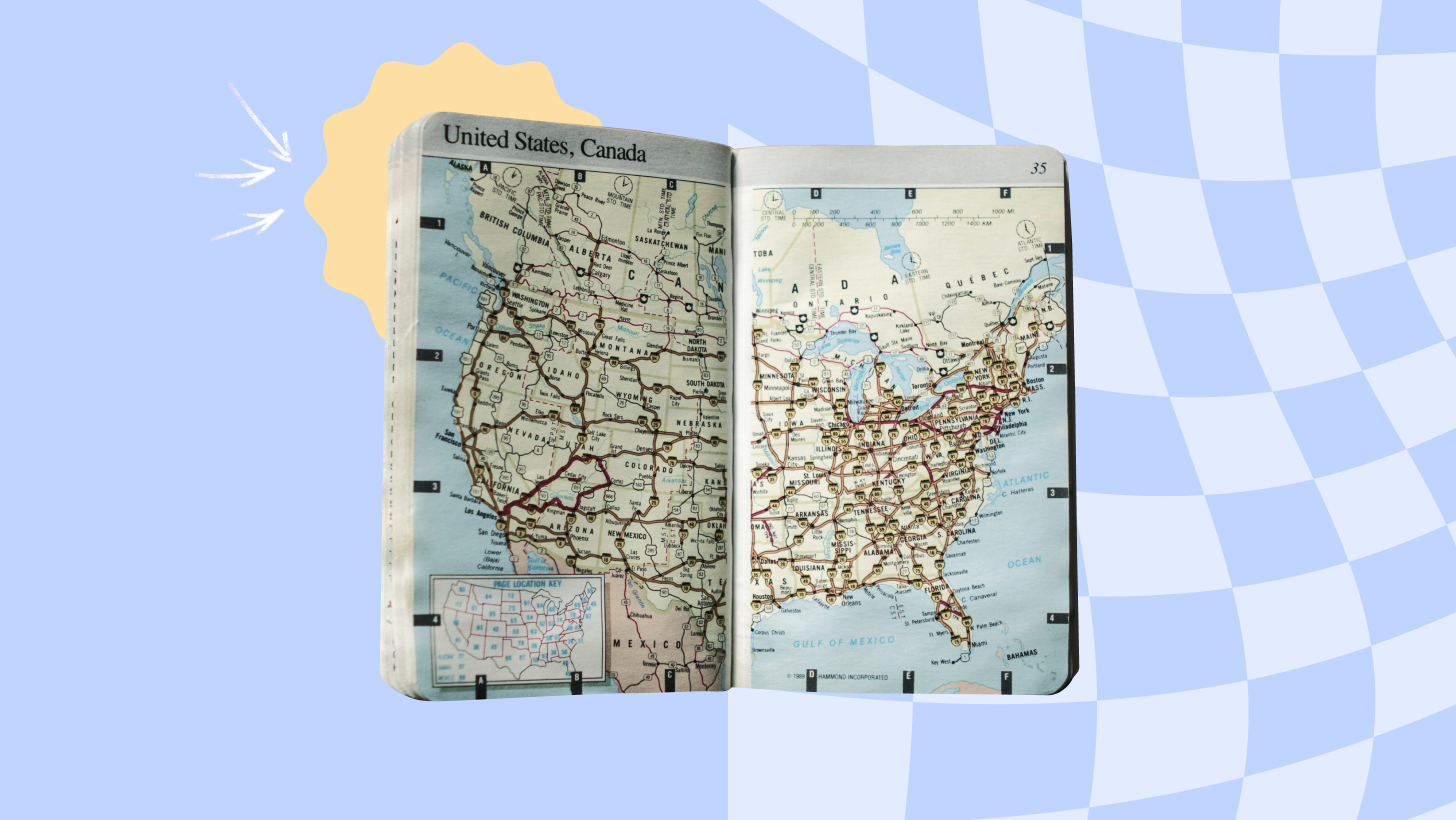
Are you tired of being met with hordes of people in every vacation spot you go to? Maybe the Instagram curse ruins every beautiful place making it crowded to no end. Or perhaps it is the fact that most people choose to go to the same places. If this happens to you, then know that you are not alone (no pun intended).

The good news is that many amazing places haven’t been "discovered" yet by the masses. We present you with ten beautiful spots that, while not untouched by the human hand, aren’t nearly as crowded as, say, Miami Beach. Some of them will probably surprise you for their nearness.

1
Block Island, Rhode Island

Image: John Angel

One of the "Last Great Places" in the Western Hemisphere, as declared by the Nature Conservancy, Block Island has done a great job at preserving its natural beauty, with 40% of its territory being devoted to wildlife refuges.

32 miles of coastline and inland trails, along with beaches, biking, and trekking provide ample opportunities for enjoying the great outdoors. And, when the sun goes down, a healthy scene of bars and restaurants with an easy-going atmosphere and great food welcomes visitors.

2
Alamosa, Colorado

Image: Shelby Cohron

Colorado is not just about ski resorts and mountains, as Alamosa proudly demonstrates. If you head down south in the Centennial State you will find this high-altitude agricultural community mainly known to UFO sightings chasers and birdwatchers.

The town, packed with antique shops and craft breweries, is near the Great Sand Dunes National Park, a surreal place that makes visitors feel as if they were in the Sahara desert. The San Luis Valley and the Sangre de Cristo mountains, also near, provide ideal spots for hiking and exploring during the summer months.

3
Ice Age Trail, Wisconsin

Image: Dave Hoefler

Hiking trails might not look like the most crowded places but they can be—the popular ones, at least. Wisconsin’s Ice Age Trail offers 1,200 miles of scenic hiking paths without the heavy foot traffic of places of most known trails.

The trail can be thoroughly enjoyed without the need to traverse it in full, as it has many segments that can be discovered individually. Wooded hills, gorgeous glacial lakes, and plenty of trailside camps and small communities to rest make this trail a great spot for a holiday in nature.

4
Pioneer Valley, Massachusetts

Image: Larry Ferreira

There is much more to Massachusetts than Boston, Cape Cod, and the Berkshires—for example, the Pioneer Valley . Carved by the Connecticut River, this peaceful area is home to several vintage mill cities turned into modern towns full of restaurants and one-off shops.

Hikers can walk the north woods on the New England Trail and Springfield visitors can discover the Naismith Memorial Basketball Hall of Fame, where the sport was born in 1891, as well as the Amazing World of Dr. Seuss Museum & Sculpture Garden.

5
John Day Region, Oregon

Image: Anna Vineyard

While it has managed to avoid massive crowds for all of its existence, it's hard to believe that a natural wonder as picturesque as John Day Region will remain a calm place for much longer in this day and age. Take a moment to Google-search John Day Region’ s Painted Hills and you will get the idea.

And if that is not enough reason to make you plan a visit, the region is packed with old-growth rainforests, canyons, high desert plains, and undammed rivers complete with sandy beaches and gorgeous meadows, all in an easy-to-move-around area.

6
Pennsylvania Wilds

Image: Lera Kogan

When considering the abundance of wildlife and untamed mountain creeks, ancient trees of the Forest Cathedral, and Pine Creek’s own version of the Grand Canyon, it becomes clear that the Pennsylvania Wilds is a region that lives up to its name.

Sprawling across a vast expanse of the rugged Allegheny Plateau, the region boasts 29 state parks, two national wild and scenic rivers, a world-class stargazing center at Cherry Springs, and human relics like the Kinzua Bridge.

7
Tulsa, Oklahoma

Image: Drew Harbour

A city that has a ton of amazing things to offer but never appears on those glamorous Top-Cities-To-Visit lists, Tulsa is a hidden jewel of the Midwest. Its beautiful Art Deco architecture, impressive museums and cultural institutions with collections rivaling those of major cities, lively music scene, and craft breweries make it a great long weekend destination.

The best time window to visit would be from September to November when the temperate weather is ideal for walking tours and bike rides in the historic neighborhoods. The Tulsa International Airport has nonstop flights from all over the country, all year long.

8
Cumberland Island National Seashore, Georgia

Image: Parker Hilton

Combining beach fun and outdoor adventure with copious wildlife, Cumberland Island National Seashore receives visits that usually stay for the day. But staying overnight at beachside campgrounds or the Greyfield Inn is a fun adventure as well.

Georgia’s largest and southernmost barrier island is full of wild horses, sea turtles, wild turkeys, and infinite birds everywhere to be seen along the island’s 18-mile-long beach.

9
Western Tennessee

Image: Joshua J. Cotten

An enticing blend of nature, history, music, and food tells us that there is so much more to Tennessee than the tourist magnet that is Nashville. From the cradle of blues, soul, and rock ‘n’ roll that is Memphis to the historical sites of Shiloh National Military Park and Fort Donelson National Battlefield to the Meeman-Shelby Forest State Park that conserves nearly 13,000 acres of rare hardwood bottomland along the Mississippi River, including eerie bald cypress swamp. Western Tennessee is a place to explore.

10
Ouachita Mountains, Arkansas

Image: Oliver Graham

The few visitors who venture past Hot Springs National Park, and into the highlands of west-central Arkansas are rewarded with a haven of solitude and natural wonder in the form of the Ouachita range.

These mountains are ideal for those who like their hiking, camping, and fishing in a peaceful environment. And, if that proves to be too calm, Magazine Mountain is a regional hang-gliding mecca that also boasts amazing mountain biking routes.
General General 5 min read

Dusting off some old memories

Playground love: 12 outdoor games everyone played as a child

Image: cottonbro studio

Playing outdoors is one of the most enjoyable and memorable experiences of childhood. Our childhoods didn’t require modern technology to feel complete or entertaining. We could spend hours at the park or during school breaks playing tag, jumping rope, or hiding for our friends to find us. Do you remember these games? If you’d like to jog your memory, read on to revisit the games you played most as a kid!

1
Hopscotch

Image: MOHAMMADREZA Kr

When we were kids, before computer games and smartphones, we didn’t need much to keep us entertained in the afternoons. Playing hopscotch, for example, required only a piece of chalk and a large enough asphalt area to draw on and jump around.

There are numerous variations, but children have played hopscotch for centuries . The basic principle remains the same: a series of numbered rectangles is outlined on the ground, and the player tosses a pebble into each one in turn. The player then hops through the course without touching the lines, picking up the pebble along the way, and returns—still hopping—to the starting point.

2
Tag

Image: Aleksandar Andreev

Tag is undoubtedly the most famous chasing and catching game of all time. It also serves as the foundation for many other games. This is no coincidence—tag has existed since ancient times, with different versions in civilizations as dissimilar as Greece and India.

In the simplest form of tag, one player tries to tap another player; the tagged player then becomes "it —a.k.a. "the chaser"—and it all starts all over again. Which version was your favorite? Ours was freeze tag!

3
Jump-rope and Double Dutch

Image: cottonbro studio

Jumping rope was another childhood favorite, whether on street corners or in school playgrounds. Whether alone or in a group, it kept us entertained for hours. Among the countless variations, Double Dutch—a version in which one or more players jump between two long ropes turning in opposite directions—was probably the most fun and most challenging of all.

The origin of Double Dutch is not entirely clear. Some claim Dutch settlers brought it to America, while others argue it was invented in the early 1900s in the U.S. What is certain is that this game, which combines motor skill training and physical exercise , became so popular that it evolved into a competitive sport with worldwide tournaments.

4
Simon says

Image: Arthur Krijgsman

"Simon says… touch your nose!" Remember these commands? As kids, we could spend hours playing this game, where one player took on the role of "Simon" and gave instructions that the rest of us had to follow to the letter.

Records of this game’s existence in the United States date back to the mid-19th century ; however, its origins may be traced back to ancient Rome. Some historians suggest that the name Simon comes from Simon de Montfort, a 13th-century French-English nobleman who was known for his ability to command authority over his subjects.

5
Hide-and-seek

Image: Annie Spratt

Hide-and-seek is one of the simplest games but, at the same time, one of the most fun when we were children. In this game, one player would close their eyes and count to a certain number while the others searched for a place to hide. The challenge was to find as many hidden players as possible before they reached "home base."

Hide-and-seek, which has different variants worldwide, has been played since ancient times. In fact, historians have discovered a strikingly similar game in ancient Greece called apodidraskinda , which followed rules much like the ones we know today.

6
Hula Hoop contest

Image: Annie Spratt

The hula hoop became popular in the late 1950s when the American toy company Wham-O introduced a plastic version to the market. However, hula hoops have been used by children since ancient times. Over the centuries, they have been made from a variety of materials, including willow, grapevines, rattan, stiff grasses, wood, and metal.

Growing up, most schools had hula hoops available during PE classes. It was the ideal game for young children to have fun and get fit at the same time. Teachers often organized contests in which players twirled the hula hoop around their waist for as long as possible. The winner was the one who kept the hoop spinning the longest before it dropped to the floor.

7
Marco Polo

Image: Library of Congress

This game, which shares its name with the 13th-century Italian explorer, was a summer-exclusive tradition we eagerly anticipated all year long. Many of us still vividly remember our friends, siblings, and cousins shouting "Marco!" and responding "Polo!" as kids.

Played in a swimming pool, Marco Polo is a location-based game in which players must find each other using auditory clues. It became popular in America in the 1960s and is now played worldwide with various adaptations.

8
Musical statues

Image: Robert Collins

Musical Statues, also known as Freeze Dance, is a variation of Musical Chairs that can be played outdoors. It was a popular game at birthday parties and involved running around while music played. When the music stopped, players had to freeze in place. Anyone who moved was instantly out, and the last one remaining won the game.

Musical Statues originated in the United Kingdom, likely in the mid-1950s , when music players became more common in people's homes.

9
Tug of war

Image: RDNE Stock project

Did you know that before the 19th century, the game we now call tug of war was known as French and English ? Tug of war—or rope pulling—is an ancient game , with different versions found in Egypt, Greece, India, China, and Cambodia.

In tug of war, two teams compete in a test of strength and strategy, pulling a rope in opposite directions. Though this game is popular at school events for its mix of teamwork, exercise, and friendly competition, it was once an official sport . In fact, from 1900 to 1920, tug of war was part of the Olympic Games.

10
Dodgeball

Image: Wan San Yip

Dodgeball is another game we used to play in school that is now also considered a sport . In this game, the objective is to eliminate all members of the opposing team by hitting them with thrown balls.

Though it’s now a fun and friendly game, that wasn’t always the case. Dodgeball originated in Africa approximately two hundred years ago. Back then, it was much more dangerous and violent. Instead of using soft balls, participants threw rocks found in nature. Fortunately, in the mid-19th century, an English missionary saw the game and transformed it into a more enjoyable, non-life-threatening activity.

11
Duck, duck, goose!

Image: Kampus Production

You probably haven’t played this game since preschool or kindergarten, and you might have even forgotten about it completely. However, it was one of the most popular games on the playground .

In this traditional children's game, participants sit in a circle, and one is chosen to touch the heads of the others. The player who is "it" goes around saying "duck" until they choose someone and say "goose." Then the chase begins!

12
Scavenger hunt

Image: Nellie Adamyan

This was a more complex game that required much more development and preparation time. But perhaps because of that, it was so appealing to us. Scavenger hunts were so much fun that we still play them as adults, and they remain a popular activity at some universities , for example.

This game, which involves finding specific items from a list, evolved from ancient folk games. The modern version we play today, however, was popularized by American gossip columnist and socialite Elsa Maxwell in New York City during the 1930s .

General General 5 min read

SUGAR RUSH!

These 10 American Candies Make Our Lives Sweeter!

Image: Jamie Albright

Got a sweet tooth? You are not alone. From the hundreds of brightly colored wrappers filling Halloween baskets to that delicious chocolate bar that makes a morning commute more pleasant, candy tends to play an essential role in the lives of most Americans. We have selected ten of the most iconic American candies that sweeten the days of both children and adults alike. Take a trip down this sugary road and enjoy!

1
Snickers

Image: Joshua Fernandez

We’ll start this article with an absolute classic. In the 1930s, Mars came up with a now-iconic candy bar packed with peanuts and covered in delicious chocolate. When it came the time to name it, inspiration came from an unlikely source: Snickers are named after the Mars family's favorite horse.

Snickers quickly became a global icon, becoming available in grocery stores and supermarkets worldwide. Nowadays, they come in a huge variety of flavors, including white and milk chocolate, as well as in different products like ice cream.

2
Hershey’s chocolate bar

Image: Janne Simoes

Known as "The Great American Chocolate Bar" , the Hershey’s bar is truly an American tradition. It was first sold in 1900, making it one of the oldest chocolate bars in the United States. However, they continue to be a delicious treat long past their one-hundredth anniversary.

This chocolate bar’s origin is rather interesting. In 1893, Milton Hershey visited the Chicago World’s Fair, where he was impressed with the chocolate manufacturing machinery displayed by the German delegation. The following year, he founded the Hershey Chocolate Company, which developed its own kind of chocolate products.

3
Twizzlers

Image: Filip Mroz

Let’s step away from the chocolatey goodness of our previous entries (don’t worry, there’s a lot more chocolate to go on), and focus on the delightful "Twist You Can't Resist". Twizzlers are one of the most unique candies out there: Their distinctive flavor and fun shape truly set them apart from other products in the market.

You might be surprised to learn that Twizzlers are made by one of the oldest confectioneries in the country: Young and Smylie, the company behind their creation, was founded as far back as 1845. Another fun fact is that, while only their black flavor contains ingredients from the licorice plants, Twizzlers as a whole are considered licorice-type candy.

4
M&Ms

Image: Christopher Ott

Many surveys state that M&Ms are the most popular candy in America. And, to be honest, anyone who has tried these brightly colored pieces of chocolate confectionary probably agrees. With their classic slogan "the milk chocolate that melts in your mouth, not in your hand", M&Ms have been a beloved part of American life since 1941.

Just as cherished as M&Ms themselves are their iconic mascots, which are anthropomorphized pieces of candy. These colorful "spokescandies" have been the company’s representatives since the ‘90s, and have grown to be considered icons of American pop culture.

5
Jelly Belly

Image: Patrick Fore

Choosing a single brand of jelly beans to include in this article was no easy task, but we ultimately decided to give Jelly Belly this spot. After all, they were famously the most beloved snack of Ronald Reagan, and share a long and fun history with our 40th President.

This love story began in the 1960s when Reagan decided to quit smoking and turned to jelly beans as a replacement. By the time he reached the White House, Jelly Belly had become the de-facto presidential snack: A jar filled with jelly beans was regularly seen on the president’s desk.

6
Baby Ruth

Image: Ric Matkowski

No one can deny that Baby Ruth is a popular product: This delicious nougat-filled candy bar has been around since 1920. However, did you know that they were originally called "Kandy Kakes"? Not only that, there’s a small controversy related to the current name we know and love.

According to the Curtiss Candy Company, the name "Baby Ruth" was inspired by Ruth Cleveland , daughter of President Grover Cleveland. However, it doesn’t take a keen observer to realize that this is particularly similar to the name of baseball legend Babe Ruth, whose fame was skyrocketing in the 1920s. "The Sultan of Swat" even sued the candy company for using his name, but ultimately lost the case.

7
Candy corn

Image: Debby Hudson

This is perhaps the most polarizing piece of candy on this list. With its distinctive shape and bright colors, Candy Corn is either beloved or hated. In any case, it is one of the most popular candies during Halloween, becoming synonymous with this festivity.

Candy Corn is also one of the oldest candies in America, having been produced since the 1880s by the Wunderle Candy Company. It was originally known as " Chicken Feed " because of its resemblance to corn kernels used to feed poultry.

8
Sour Patch Kids

Image: Vinicius Amano

We’ve been mostly focusing on sweet products so far, so let’s take a small jump in the opposite direction. Sour Patch Kids, known for their slogan "Sour Then Sweet" , are famous for their initial tart and sharp taste that gradually gives way to a sweeter flavor. The contrast of both sensations is what makes this soft candy so iconic, which has been standing strong for almost 40 years.

Created in the 1970s, Sour Patch Kids were originally named "Mars Men". However, by 1985 the product was rebranded to the name we now know, possibly to capitalize on the popularity of the Cabbage Patch Kids, an extremely popular toy at the time.

9
Reese’s Peanut Butter Cups

Image: Heather Barnes

We would like to take a moment to honor the innovator who realized that peanut butter and chocolate are a match made in heaven : Whoever you are, good sir or madam, we salute you. And while we can’t celebrate this anonymous hero, we can thank the man who brought us the quintessential pairing of these ingredients: H. B. Reese, creator of Reese's Peanut Butter Cups.

In 1928, the H.B. Reese Candy Company started selling their peanut butter cups, at the time known as " Penny Cups " since they were sold for one cent. Reese, who formerly worked at a Hershey dairy farm, used Hershey chocolate in all his products. By the 1960s, the company merged with the Hershey Chocolate Corporation, which continues to produce these delicious cups.

10
Milk duds

Image: Moritz Kindler

Milk Duds are truly living proof that mistakes can lead to wonderful opportunities. These delicious pieces of chocolate candy are known for their irregular shape , which is a direct result of a lucky accident.

In 1928, Hoffman and Company of Chicago attempted to create a perfectly spherical chocolate-covered candy but failed in every attempt to achieve this shape. These failed attempts were called "duds", which is a term used to describe a device or equipment that failed to work as intended. Over time, these duds inspired the name of this product and eventually evolved to become our beloved Milk Duds.

Explore more American facts

Choose your favorite category!

General
General

As American as apple pie—the very best America has to offer!

Culture
Culture

Delve into the astounding richness of American lore.

Geography
Geography

Hop in and explore vast and diverse American landscapes.

History
History

Discover the key moments that shaped the United States.