History History 5 min read

The Supreme Law of the Land

The U.S. state that was misspelled in the Constitution
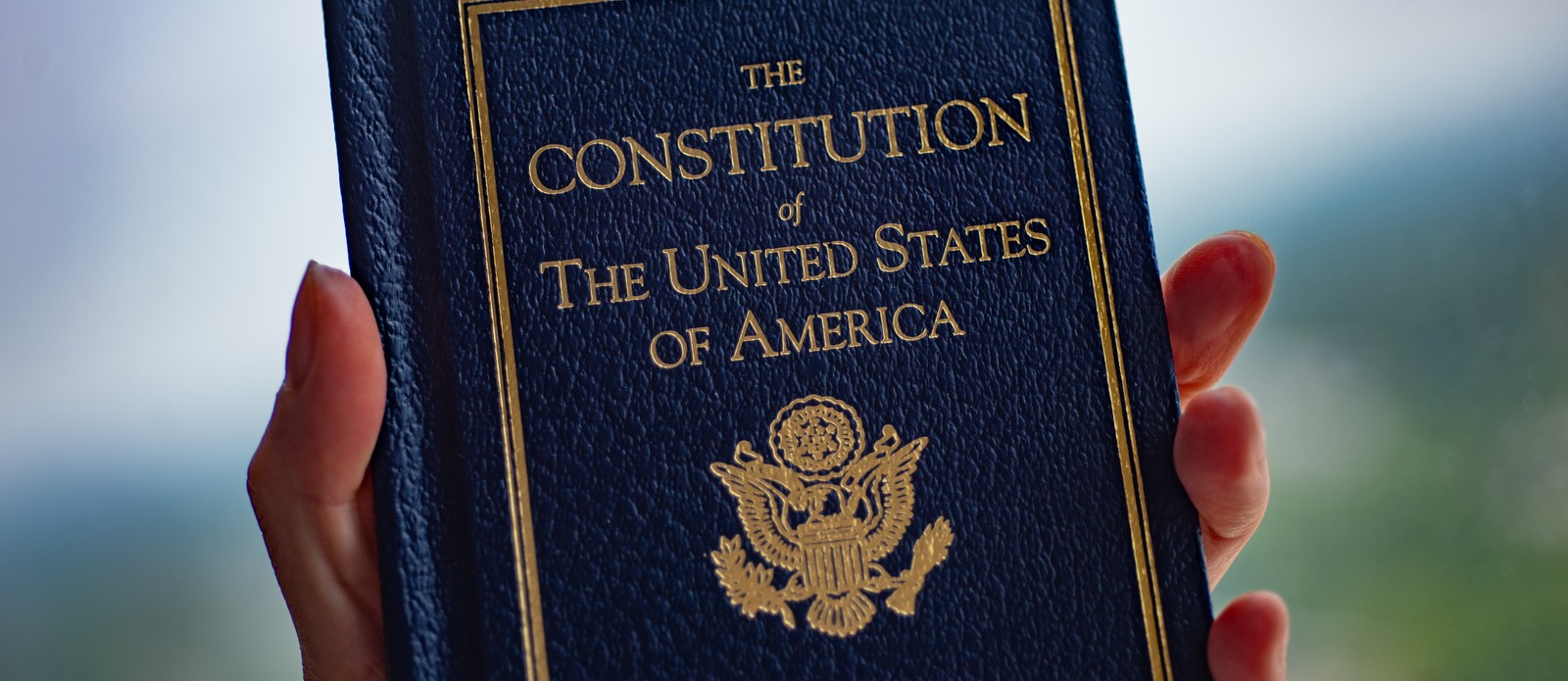
Image: Evgenia Parajanian

On March 4, 1789, the Constitution of the United States replaced the Articles of Confederation as the foundational document of the country. Drafted over several months and the subject of heated debates among the drafters, the final text outlined the basis of the federal government of the United States. But who were the minds behind it? Which points were considered controversial? Let’s have a look at some facts about our national Constitution.

1
A secret convention
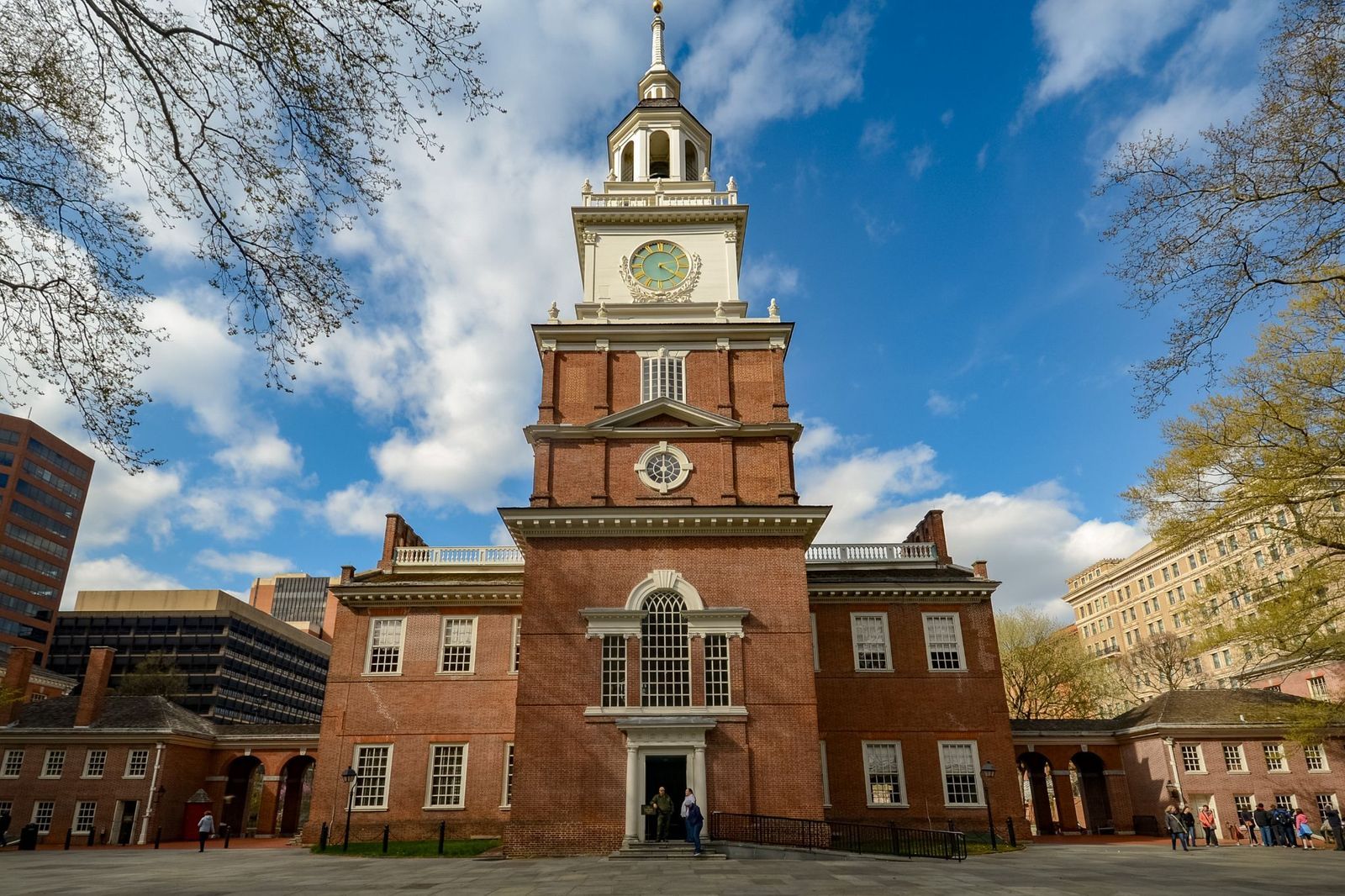
Image: xiquinhosilva, CC BY 2.0, via Wikimedia Commons

The Constitutional Convention gathered between May 25 and September 17, 1787, in Independence Hall, Philadelphia, at that moment the seat of the U.S. government. Although the initial intention had been to "fix" the government delineated in the Articles of the Confederation, the constituents, also known as the "Framers", decided to write a new document altogether. For nearly five months, delegates from 12 states (Rhode Island had refused to participate) deliberated in secret , wanting to avoid external pressure but also any leak or rumor that could lead to mass panic.

2
A controversial document
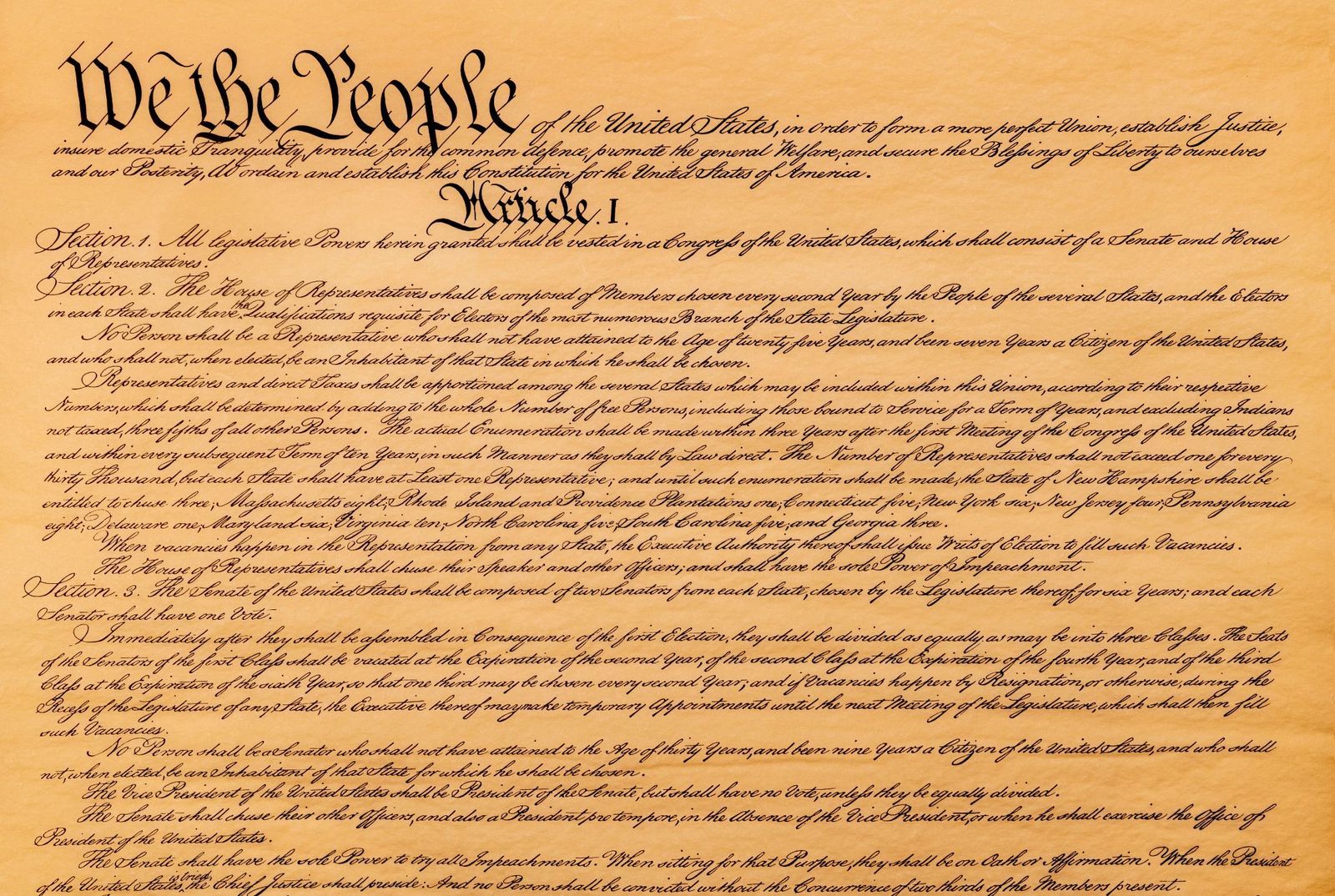
Image: Joe Belanger

While James Madison is hailed as the "Father of the Constitution" for his role in shaping our government, the document as we know it was mainly drafted by Pennsylvania delegate Gouverneur Morris. Although the convention had reluctantly agreed on 23 points, the final draft only contained seven, plus a preamble and a closing endorsement . This result, caused by several necessary compromises, disappointed many delegates, including Benjamin Franklin, who still voted in favor because they believed that they couldn’t reach a better agreement.

3
Spelling errors
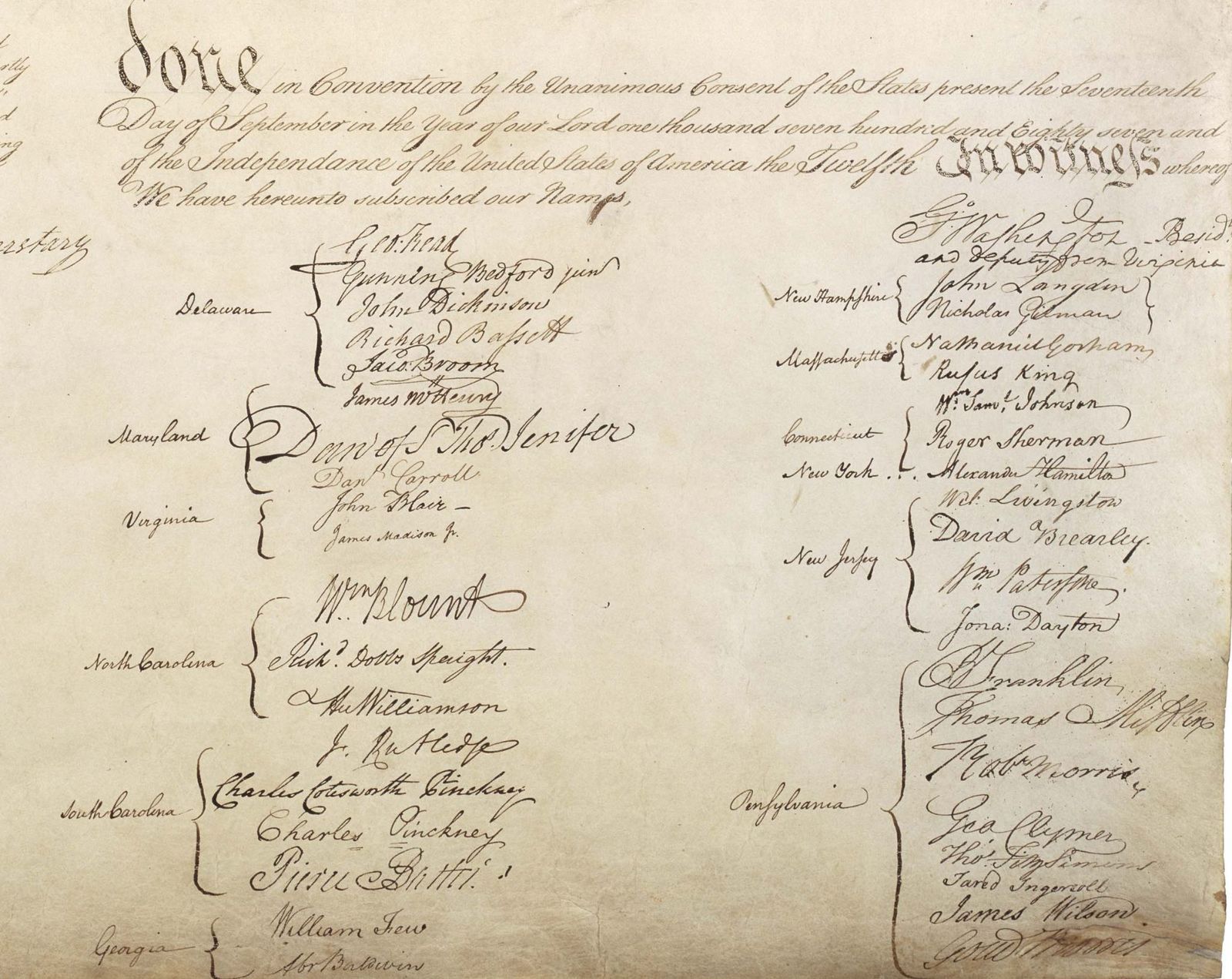
Image: Constitutional Convention of 1787, Public domain, via Wikimedia Commons

The text for the Constitution had been drafted by Gouverneur Morris, but the document to be signed was penned on five parchment pages by Jacob Shallus, an assistant clerk to the Pennsylvania General Assembly. Shallus received $30 for his work (equivalent to about $750 today). The document was written quite hastily, which led to misspellings in the text , although some of them might have been common alternative spellings at that time, such as "chuse" instead of "choose". The most famous error is "Pensylvania" in the list of signatory states, a list written by Alexander Hamilton, not by Shallus.

4
The compromises
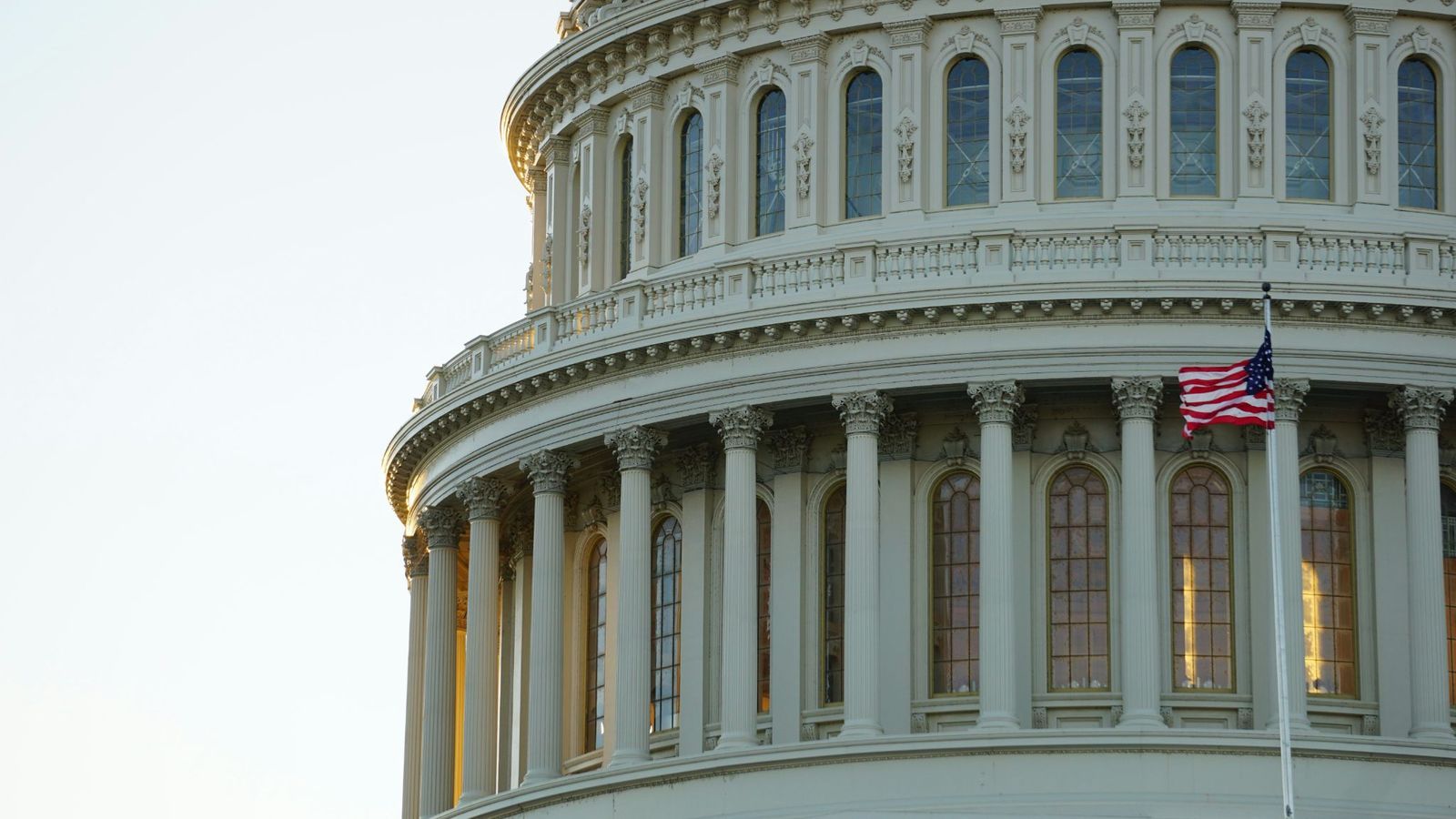
Image: Ian Hutchinson

The heated debates about the new government forced the delegates to reach a series of compromises. The most significant concerned state representation (larger states wanted proportional votes, smaller states demanded equal representation), whether enslaved people counted towards state population, and the executive government’s election method. As a result, the Convention decided on a Bicameral legislature (the House of Representatives with proportional representation and the Senate with equal representation), counted three-fifths of the enslaved population towards representation and taxation, and decided on an electoral college to balance popular votes and state electors.

5
The constituents
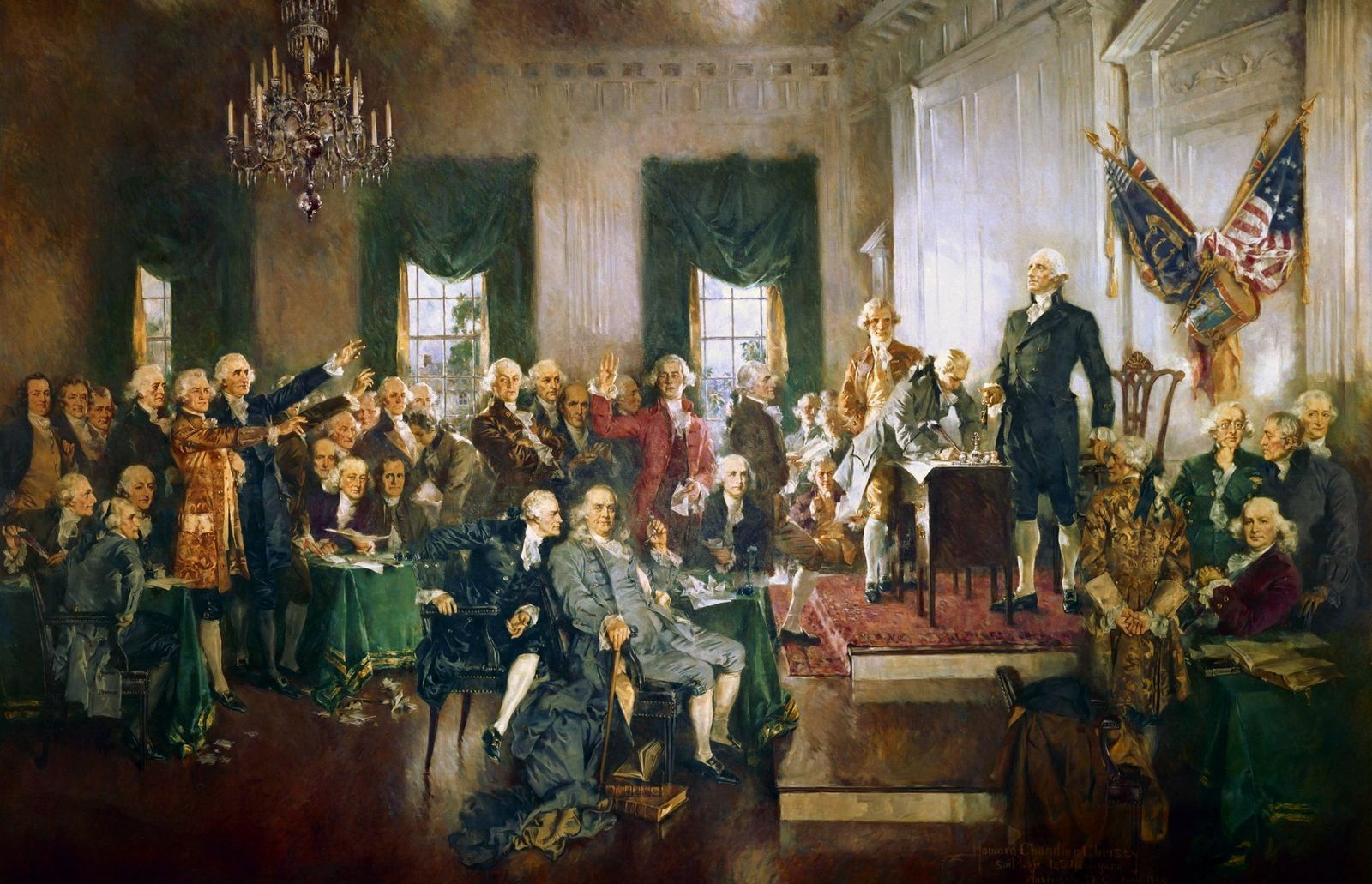
Image: Howard Chandler Christy, Public domain, via Wikimedia Commons

The convention, presided over by George Washington, was comprised of delegates from 12 states, a mix of lawyers, merchants, landowners, physicians, and public officials. All of them had political experience, having served in the Continental Congress, the Confederation Congress, or as signers of the Declaration of Independence , although their ages varied. New Jersey delegate Jonathan Dayton was the youngest constituent, at 26 years old, while Pennsylvania delegate Benjamin Franklin was the oldest, at 81 years old.

6
The men who refused
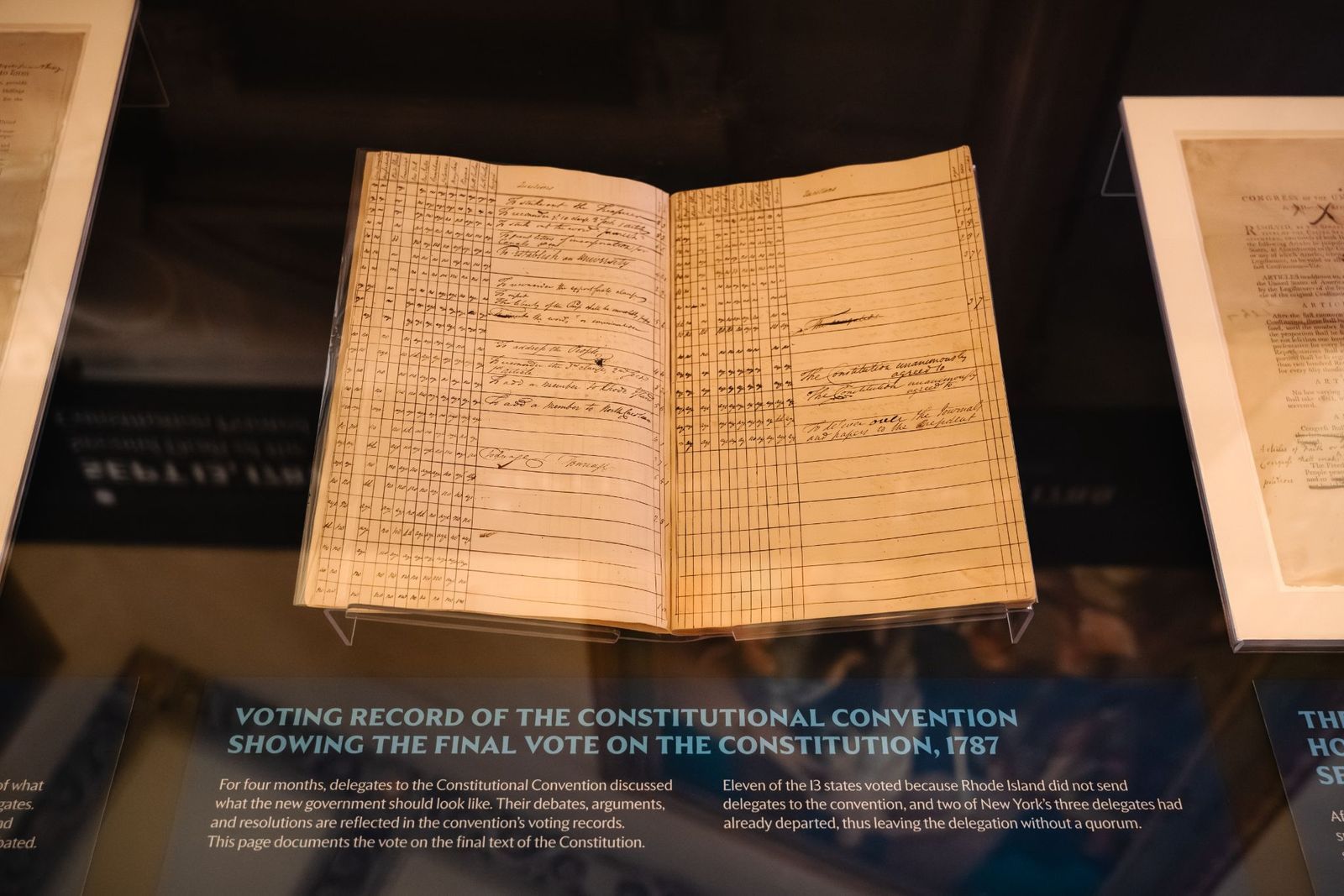
Image: Logan Bush

The Constitutional Convention had 55 delegates in total, but not all of them signed the Constitution or were even present at the signing. Thirteen of them had returned to their states due to professional or personal reasons, or as a form of protest. George Mason, Elbridge Gerry, and Edmund Randolph remained at the convention, but refused to sign the Constitution without a Bill of Rights. In the end, only 39 out of 55 delegates signed the final document.

7
Delaware, the First State
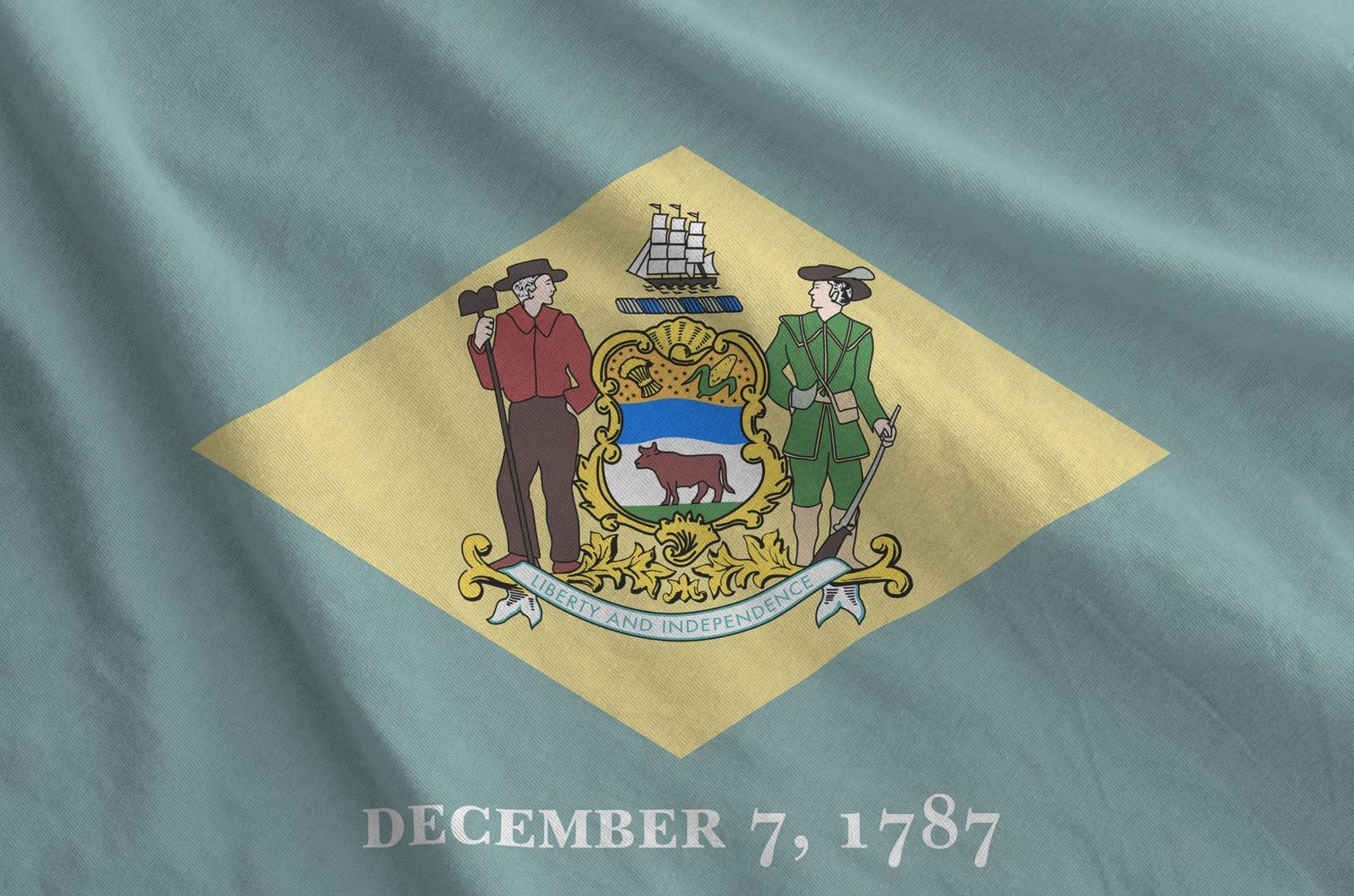
Image: Mehaniq

Although Delaware is traditionally regarded as the 13th colony, and it functioned as such with its own assembly, it had always been part of Pennsylvania, only becoming an independent state with the start of the Revolutionary War. The second-smallest state beside Rhode Island, Delaware was the first to unanimously ratify the new U.S. Constitution , less than three months after it was signed, making it the first state to join the Union and earning it the nickname of "The First State".

8
The Bill of Rights
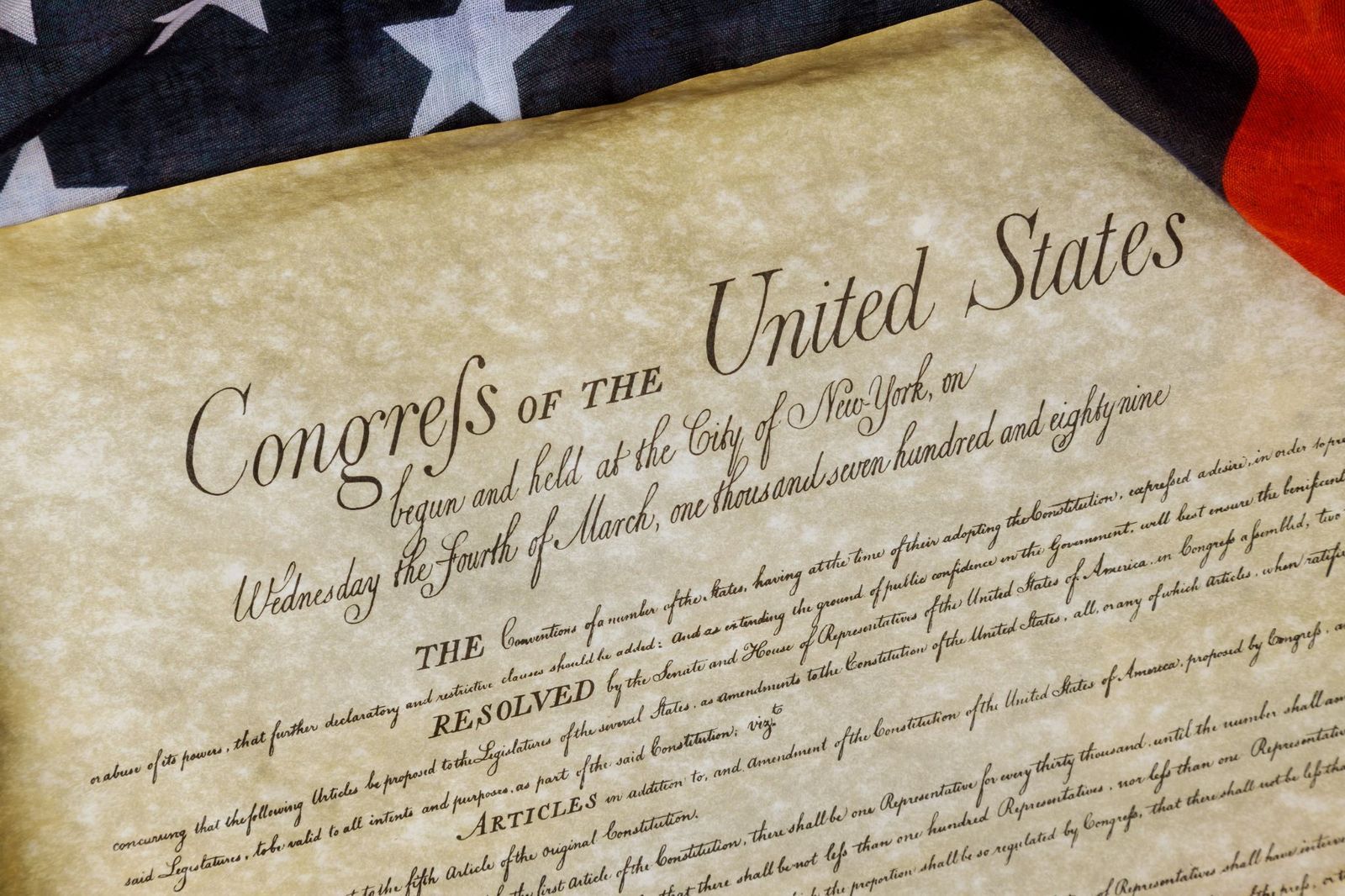
Image: ungvar

The inclusion of a Bill of Rights had been debated during the Constitutional Convention, but it had been rejected under the argument that it could imply that any right not mentioned did not exist. However, this posed a later issue, as some states flat-out refused to ratify a Constitution that lacked protection of individual rights. To ensure ratification, these states were promised that a bill of rights would be added. The Constitution was fully ratified on May 29, 1790, and the Bill of Rights, composed of ten amendments, was added on December 15, 1791.

9
What about slavery?
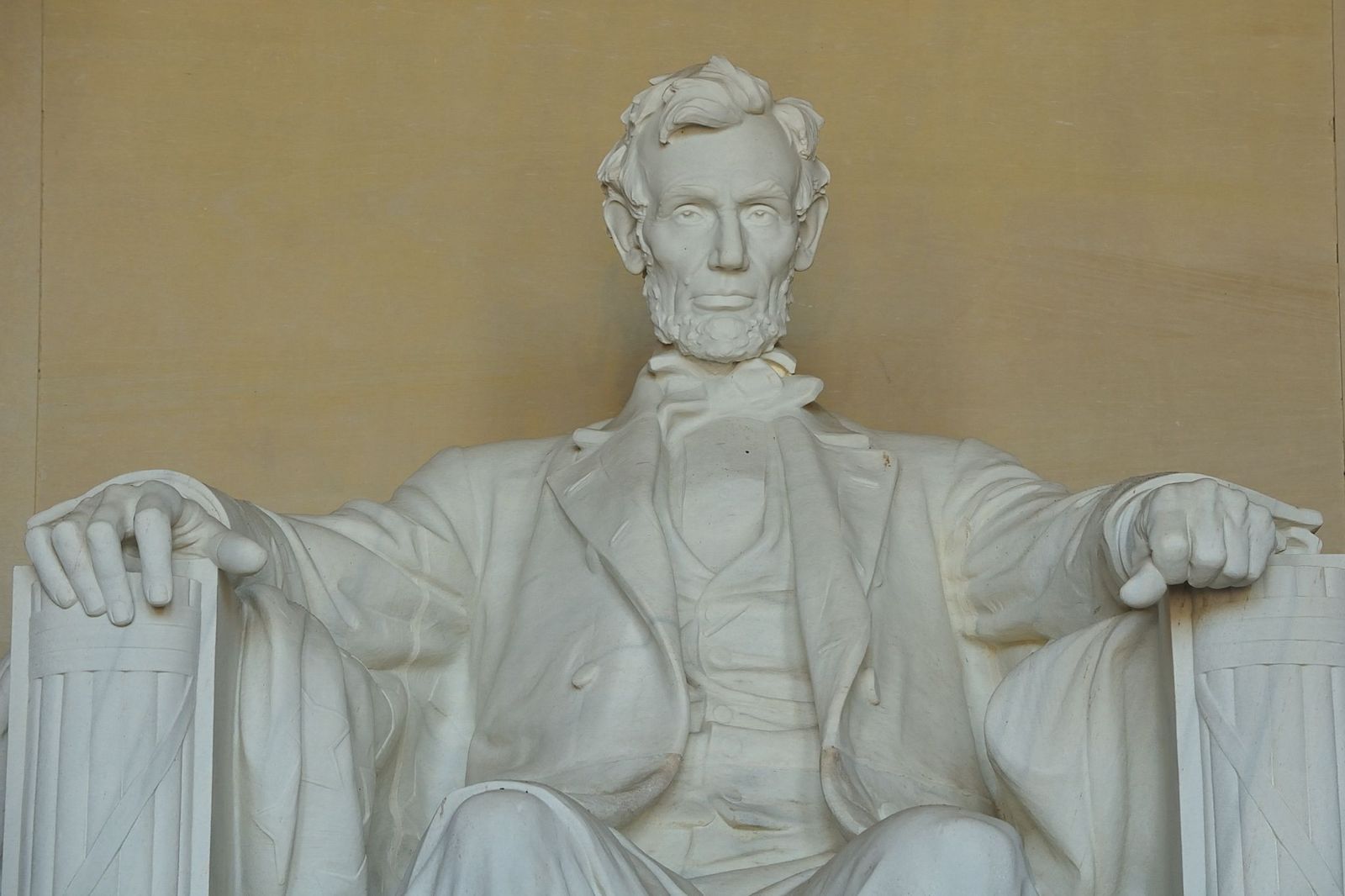
Image: Jerric Ramos

The terms "slave" or "slavery" do not appear in the original text of the Constitution, but this doesn’t mean the institution was not contemplated or protected in the document. The text spoke of people "bound to service", counted three-fifths of them towards a state’s population, prevented Congress from banning the import of enslaved people until 1808, and included a clause to return fugitives to their enslavers. It was not until 1865, with the ratification of the Thirteenth Amendment, that the text of the Constitution formally addressed slavery, abolishing it across the U.S.

10
Amendments
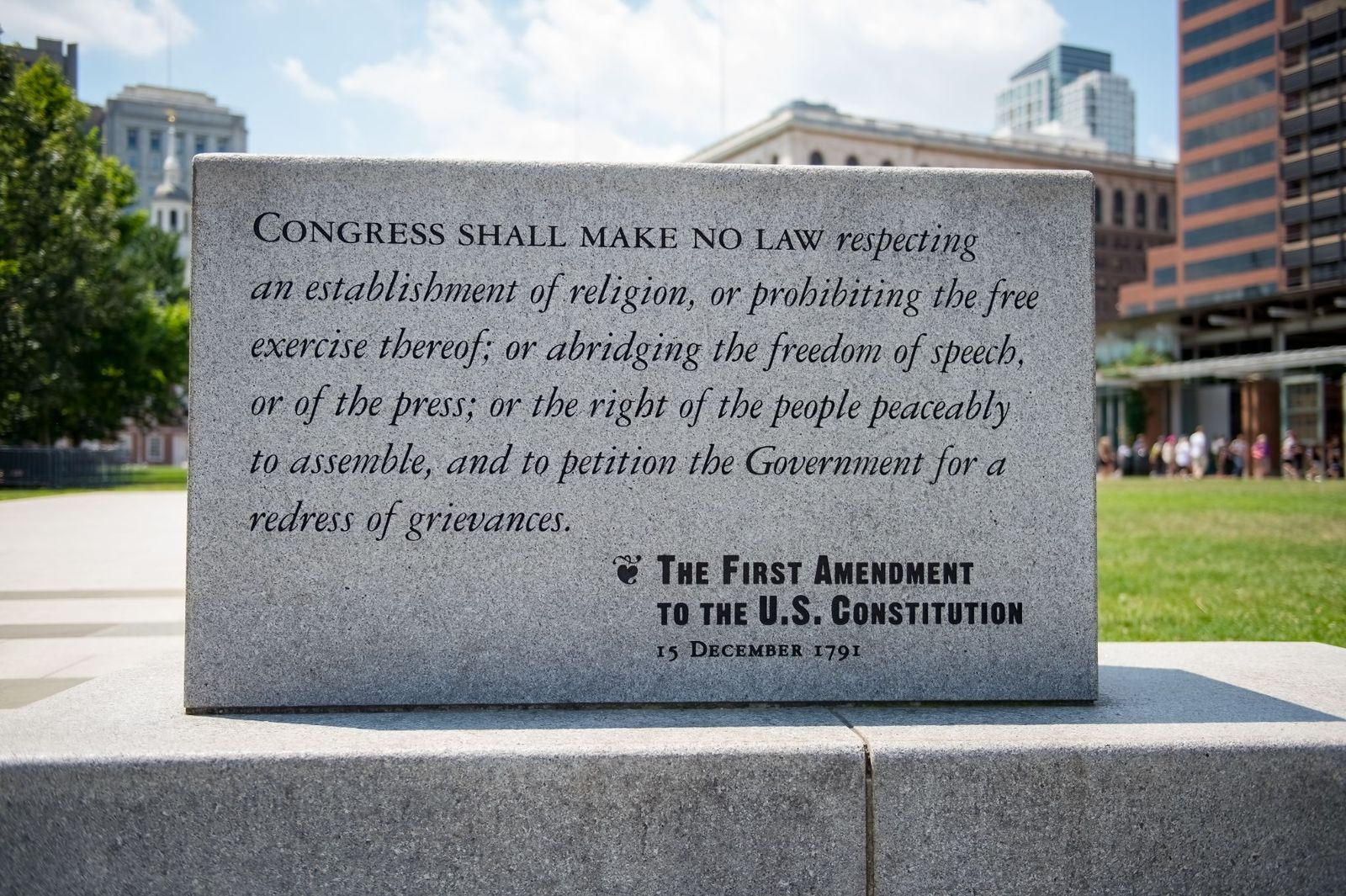
Image: Mohannad Khatib

Article V of the original text delineated the mechanism to amend the Constitution, contemplating that the government should be able to change as the nation changed. Any amendment requires a majority vote (two-thirds) of both chambers of Congress, plus the ratification of three-fourths of the states. Since the inception of the Constitution, more than 11,000 amendments have been proposed to Congress, but only 33 have been approved and sent to be ratified by the states. Of those, only 27 have been effectively ratified, the last one, concerning changes in congressional pay, fully ratified in 1992.

Culture Culture 4 min read

WHERE IS KAMCHATKA, ANYWAY?

Which Are The 10 Most Popular Board Games In America?

Image: Mesh

Even in this day and age, most board games are stacked and forgotten in some dusty closet. However, everyone holds memories of sharing many hours playing with friends and family over a board of Monopoly, Scrabble, or one of thousands of other options. We have narrowed that number to a mere ten, focusing on the most popular ones in America. Which ones have you played?

1
Pictionary

Image: Kelly Sikkema

Who hasn’t played Pictionary at least once in their life? The whole gameplay boils down to drawing a picture so that others can guess what it is. It’s like "charades" with drawings instead of actions.

While this is a board game, the board itself is the least important part of the game. The only things that matter are the drawings and how people guess what they are. Anybody of any age can get into the game and have a good time.

2
Game of Life

Image: Jaciel Melnik

One of the most popular board games of all time, the Game of Life, was created in 1960. The idea is that you want to end the game with more assets than anyone else. The basic gameplay involves spinning the spinner and making a handful of key decisions at intersections. It is in those moments that you influence which way your "life" will turn out.

The whole game is, like life itself, very luck-driven and not very strategic. This game laid the groundwork for many modern, narrative-driven games.

3
Clue

Image: Towfiqu barbhuiya

Clue was the first mass-market game to make bluffing and deduction an explicit part of the game. During gameplay, you’re always trying to analyze your opponents’ moves and react accordingly.

A game that spawned a million more games, Clue takes its participants on a journey to solve a murder using a series of clues given throughout the session. Even if you never played it (and chances are that you have), you know it.

4
Chutes And Ladders

Image: Biao Xie

Chutes and Ladders was inspired by an ancient Indian board game that originated around the year 200 BC. The game is luck-driven; there is no strategic element to either the ancient or the modern version.

Just like in The Game of Life, the gameplay involves spinning a spinner and advancing the specified amount of spaces it indicates. Ladders move you up higher on the board, and chutes drop you down to lower spaces.

5
Risk

Image: Dave Photoz

Risk has one of the most recognizable boards of any board game, with its colorful map divided into strange countries. The focus is set on one of the oldest of human ambitions: to conquer the world.

It is not the kind of game you want to play if you only have a few minutes to spare, since the entire gameplay can take up to a few hours. But, if you have the time and at least one other player, it is well worth it.

6
Trivial Pursuit

Image: Claudia Wolff

If answering questions about different topics of general human knowledge is your thing, then Trivial Pursuit is definitely your game. The board itself is not the center of the game. It serves the purpose of marking which theme must be answered in each turn and where each player is in the gameplay.

Some prefer the questions about sports, while others hope to get the questions about culture. But there is always something for everyone.

7
Scrabble

Image: John Benitez

Another well-known board game, Scrabble is the foundation of just about every word-based tabletop game that has come since its first appearance in 1948. In this game, the pieces you work with are thrown into a bag and doled out by random chance.

You can make maneuvers to benefit yourself and to block others, but the real advantage is in the hands of those with a strong vocabulary and a good memory to recall the words at the right time.

8
Checkers

Image: Gabriel Meinert

A game so simple that it can be played and enjoyed by children, Checkers is a very straightforward strategy game, similar to Chess in some aspects (especially the board) but simpler in many others.

The gameplay, intended for two players, involves forward movements of uniform game pieces and mandatory captures by jumping over opponent pieces.

9
Monopoly

Image: Joshua Hoehne

Another all-time modern classic, Monopoly shares a similar objective as the previously mentioned The Game of Life: finishing the game with the most properties and money possible.

Monopoly has many themed versions and variants, including popular culture themes, and digital versions. But the gist in all of them is: roll the dice, buy properties, pay rent to other players, and pray not to land on Boardwalk or Parkway Avenue, especially if there are hotels (unless you own those two).

10
Chess

Image: Randy Fath

Let us finish this list with the Game of Kings itself, Chess : the best-selling game of all time, played by countless generations across the globe. Learning the basic moves is simple; mastering them is something different altogether.

Whether you are an advanced player, an aficionado, or someone who is considering learning it, Chess is good for you. It provides excellent exercise for your brain, infinite hours of fun, and can be played at any age.

Geography Geography 6 min read

AMERICA’S BEST MANSIONS AND ESTATES

Luxury living: 10 impressive historic homes worth visiting

Image: Ramith Bhasuka

You don't have to travel all the way up to Europe to enjoy grand estates and castles. The United States is full of historic mansions that tell stories of times past, from the Gilded Age to the Roaring 20s. Today, many of these architectural marvels have been carefully restored and are available for public tours. Read on to discover 10 breathtaking mansions where the country's wealthiest and most distinguished American families used to live.

1
Vanderbilt Mansion

Image: Michael Denning

The Vanderbilt Mansion was one of several homes owned by Frederick William Vanderbilt and his wife Louise Holmes Anthony. Built between 1896 and 1899, this 54-room marvel is an excellent example of the Beaux-Arts architectural style , characterized by its grandeur and ornate detailing. In addition, the mansion's interiors are representative of the American Renaissance.

Historically known as Hyde Park, the estate includes 211 acres and is built on a hilltop overlooking the Hudson River. It includes well-groomed flowerbeds, formal gardens, woodlands, and ancillary buildings. In 1940 the Vanderbilt Mansion was designated a National Historic Landmark. Today it’s a historic house museum operated by the National Park Service.

2
Hildene Mansion

Image: sarahlawrence603

Hildene Mansion was built in 1905 by Robert Todd Lincoln, eldest son of President Abraham Lincoln. This Georgian Revival-style mansion is set on a 200-foot promontory, which offers a panoramic view of the Battenkill Valley. The name "Hildene" comes from Old English words meaning "hill" and "valley with stream".

Hildene Mansion remained in the possession of the Lincoln family until 1975. Then, in 1978, the property was acquired by a non-profit organization that restored it, preserving its historic integrity. Today this former summer home is one of Vermont's most popular tourist attractions. Visitors can wander around the large estate and contemplate its opulence: from the grand entry staircase to the original furnishings.

3
Swan House

Image: Michael Starkie

Swan House, located in Atlanta, Georgia, is a historic mansion built in 1928 by Edward and Emily Inman, heirs to a cotton fortune. The mansion's eclectic design combines neo-Renaissance styles with a classical approach. The 28-acre estate features terraced gardens and a cascading fountain on the hillside. Carved or painted swans are a recurring motif throughout the house and gardens.

In 1966, the Atlanta Historical Society acquired the house and grounds. Today, Swan House is part of the Atlanta History Center and operates as a museum documenting 1920s American history. Many of the Inmans' original furniture pieces are still on display, offering visitors a glimpse into the past.

4
Hearst Castle

Image: Mike Hsieh

On the west coast, halfway between San Francisco and Los Angeles, there’s a magnificent mansion, a combination of a medieval castle , a Spanish cathedral , and a Roman temple. Hearst Castle is the result of the feverish dreams of one of the greatest tycoons of the 20th century: William Randolph Hearst.

Facing the Pacific Ocean, this four-building palace has 175 rooms, 40 bathrooms, and gigantic extensions of gardens. An immense semicircular outdoor swimming pool, a private zoo, tennis courts, a huge Gothic-style library, a movie theater, and an airfield are also part of this estate that took almost thirty years to build. Once visited by the most prominent Hollywood stars and politicians of the time, today Hearst Castle is registered as a National Historic Landmark and functions as a museum.

5
Ca d’Zan

Image: Tessa Edmiston

This estate located on the shores of Sarasota Bay was once the exquisite winter residence of American circus magnate John Ringling and his wife Mable. The majestic Ca' d'Zan —Venetian for "John's House"— is an incredible Mediterranean-style architectural beauty built in 1926 to resemble a palace on the Grand Canal in Venice.

The extravagant 5-story building is adorned with stained glass, stucco, and terra cotta details. It features 56 rooms, an 82-foot observation tower, and an impressive marble terrace overlooking the ocean. This residence, an icon of the Florida Boom Years of the 1920s, was restored by the state and opened to the public in 2002.

6
Old Westbury Gardens

Image: Jialin Hu

Old Westbury Gardens, listed on the National Register of Historic Places, is located in Nassau County on New York's Long Island peninsula. The 23-room estate was once the home of businessman John S. Phipps, his wife Margarita Grace, and their four children.

Completed in 1906 by English designer George A. Crawley, the magnificent Charles II-style mansion is set amid 160 acres of formal gardens, woodlands, ponds, and lakes. This former private estate is now a museum that can be visited from April through October. It is also regularly used for cultural events, private parties, and as a film set for Hollywood productions.

7
Oheka Castle

Image: Peter Oswald

Believed to have inspired "The Great Gatsby," Oheka Castle is the largest private home in New York and the third largest in the United States. Although now it’s a hotel, this estate was once the country home of financier and philanthropist Otto Hermann Kahn and his family. In fact, the name "Oheka" is an abbreviation derived from the first letters of his name.

The mansion, located on the North Shore of Long Island in West Hills, New York, was built between 1914 and 1919. In recent years Oheka Castle has gained popularity as a wedding venue for socialites and celebrities and was used for photo shoots , films , and television series. The castle also houses a bar and a restaurant and offers guided tours for regular visitors.

8
Lyndhurst Mansion

Image: Pixabay

Designed in 1838 by the famous American architect Alexander Jackson Davis, Lyndhurst Mansion is a remarkable example of Gothic Revival architecture. This country house is located in Tarrytown, New York, along the Hudson River, and was owned by New York Mayor William Paulding Jr, merchant George Merritt, and railroad magnate Jay Gould.

In 1961, Gould's daughter, Anna Gould, donated it to the National Trust for Historic Preservation. In 1966, Lyndhurst was recognized as a National Historic Landmark, a testament to its historical and architectural significance. Today, the house is open to the public, allowing visitors to explore its unique features and learn about its rich history.

9
Villa Vizcaya

Image: Zoshua Colah

Between 1914 and 1923 philanthropist and conservationist James Deering built this sumptuous mansion as his winter home. Born in South Paris, Maine, Deering suffered from anemia, so his doctors recommended that he seek refuge in a sunny, warm climate. South Florida was the perfect place to recuperate. He lived in Miami until his death in 1925.

In the mid-20th century, the county took possession of the complex and its extensive Italian Renaissance gardens and began operating as a museum. Over the years Villa Vizcaya has hosted countless historic events, such as the meeting between Ronald Reagan and Pope John Paul II, and the first Summit of the Americas. In 1994 it was designated a National Historic Landmark and today is open to the public for tours.

10
The Biltmore Estate

Image: Stephanie Klepacki

In the Blue Ridge Mountains of Asheville, North Carolina stands a true architectural marvel: the Biltmore Estate. At more than 178,926 square feet, this legendary residence with 250 rooms, 35 bedrooms, 43 bathrooms, and 65 fireplaces is the largest privately owned house in the country . Biltmore Estate is also a monument that reflects the grandeur and luxury of the American Gilded Age.

Inspired by the landscape, George Washington Vanderbilt, grandson of industrial titan Cornelius Vanderbilt, set out to build an estate that would combine European elegance with American nature. Designed in the Châteauesque style, the mansion —which reportedly cost $5 million (equivalent to about $183 million today)— was finally inaugurated on Christmas Eve of 1895. Today, the Biltmore Estate attracts millions of visitors every year who are amazed by its architectural splendor and history.

Explore more American facts

Choose your favorite category!

General
General

As American as apple pie—the very best America has to offer!

Culture
Culture

Delve into the astounding richness of American lore.

Geography
Geography

Hop in and explore vast and diverse American landscapes.

History
History

Discover the key moments that shaped the United States.