Culture Culture 4 min read

More than machines: 10 robots that taught us what it means to be human

Image: Mathieu Stern

Across more than a century of filmmaking, robots have appeared on screen in countless roles: assistants, threats, companions, and quiet observers of human behavior. Their designs and functions have shifted with changing technology, storytelling styles, and cultural concerns. Some arrived in the age of space optimism, others during periods of skepticism about machines. Together, these 10 robots reflect how American cinema has imagined technology and how those images have stayed familiar over time.

1
C-3PO ( Star Wars , 1977)

Image: Lyman Hansel Gerona

Few film robots are as easy to recognize as C-3PO. Introduced in Star Wars: A New Hope in 1977, this tall, golden droid was designed to handle translation and communication. Voiced in an unmistakable British accent by Anthony Daniels, his smooth metal surface, rigid stance, and gentle manner make his role in the story immediately clear. C-3PO appears in nearly every main installment of the franchise, and he was even made into toys and theme park attractions.

2
R2-D2 ( Star Wars , 1977)
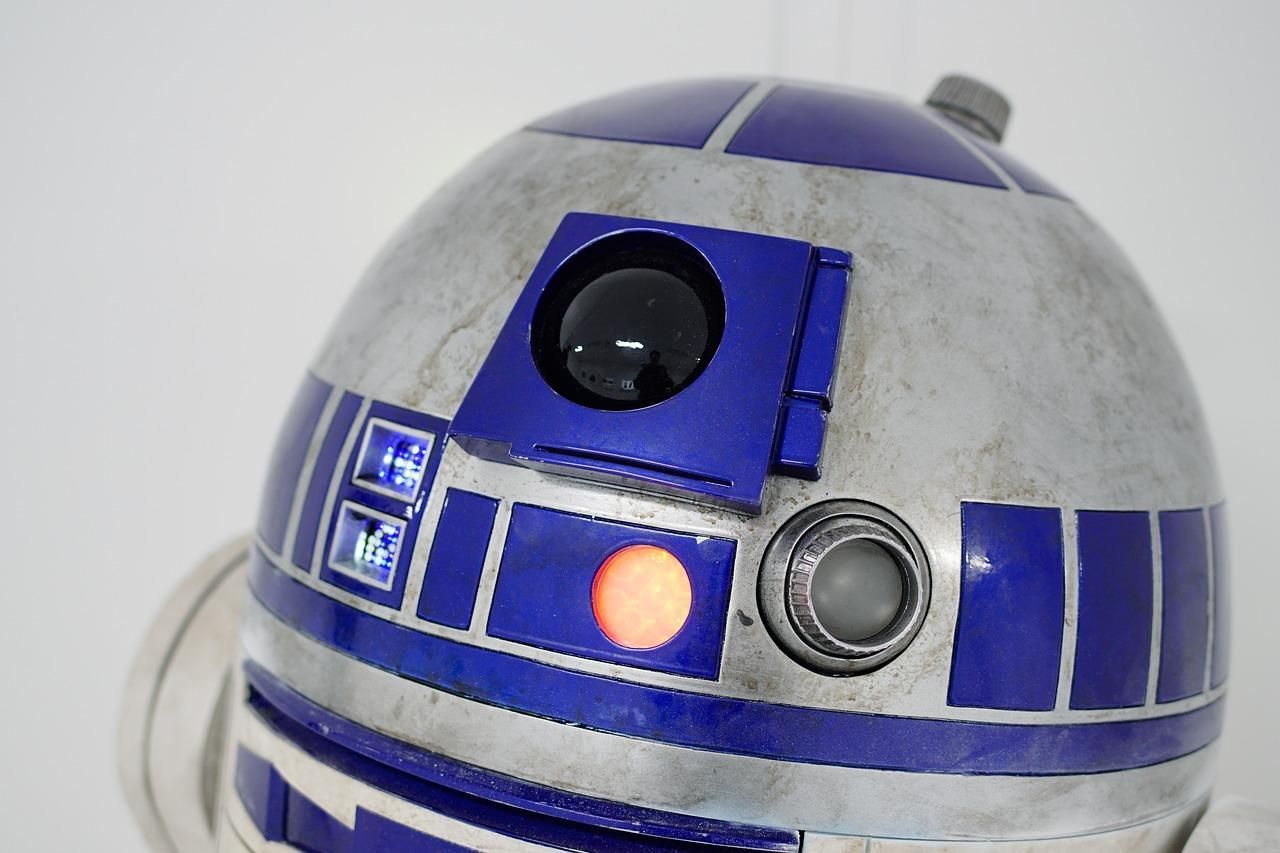
Image: gromit15

Not all iconic robots speak in words. C-3PO’s companion R2-D2, first seen in Star Wars: A New Hope (1977), communicates through "beeps and whistles" rather than spoken language. He is a droid designed to assist with navigation, maintenance, and technical repairs. Within the story, he frequently carries information, fixes equipment, or helps characters escape danger. His "trashcan" shape is a masterclass in functional design, and his bravery as a "swiss-army-knife" repair droid made him arguably the most heroic character in the franchise.

3
T-800 ( The Terminator , 1984)

Is it human, or only pretending to be? When The Terminator was released in 1984, the T-800, played by Arnold Schwarzenegger in his breakout role, stood apart from earlier robots by appearing human. In fact, he’s more of a cyborg, since it combines an internal metal structure with external living tissue. Thanks to his appearance, he can move unnoticed among people, which is essential to his role in the story. Lines like "I'll be back" and "Hasta la vista, baby" are embedded in pop culture, making the T-800 one of the most iconic in cinema history.

4
Robby the Robot ( Forbidden Planet , 1956)

Image: Farbsynthese

In 1956, long before sleek digital effects, Robby the Robot arrived on screen. His bulky metal body, exposed wiring, and clear dome head first appeared in the film Forbidden Planet . Robby can speak in full sentences, follow complex instructions, and perform tasks such as cooking, transporting people, and providing protection. After the film’s release, a similar aesthetic appeared in several television shows and movies. He was the first on-screen robot to have both a lovable personality and a complex design.

5
EVE ( WALL·E , 2008)

Image: Aman Pal

EVE’s design is iconic for its minimalism: she has no visible joints and no exposed mechanics. She first appears in Pixar’s 2008 animated film WALL·E . Her name means Extraterrestrial Vegetation Evaluator, and she has a limited vocabulary. Her smooth white exterior, compact shape, and floating movement make her very different from her older, more mechanical-looking predecessors. Despite her coldness, she eventually learns the warm emotions of love.

6
Dot Matrix ( Spaceballs , 1987)
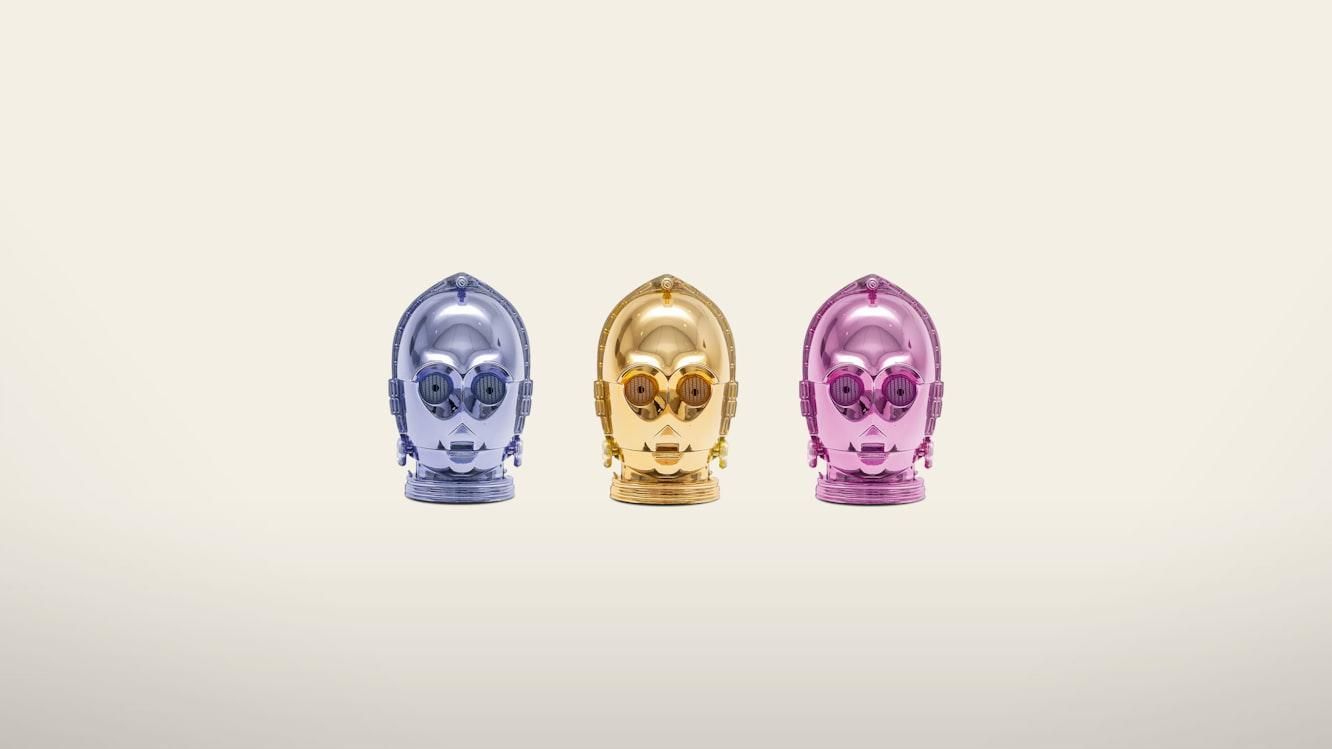
Image: Pedro Miguel Aires

With her metallic gold body, upright posture, and humanlike mannerisms, Dot Matrix, introduced in Spaceballs (1987), was designed to resemble a "protocol droid." Yes, she is a clear parody of _Star Wars_’ C-3PO, born from the genius mind of Mel Brooks. Voiced by Joan Rivers, Dot Matrix is famous for her "Virgin Alarm" and her role as a sarcastic, overprotective governess to Princess Vespa (Daphne Zuniga) rather than a technical aid.

7
RoboCop ( RoboCop , 1987)

Image: magocarlosyo

RoboCop, played by Peter Weller, is introduced as a law-enforcement cyborg, combining human elements with heavy metallic armor. In the story, he carries out police duties such as patrol, investigation, and public order enforcement using advanced technology. The design—a silver-visored helmet and hydraulic movements— symbolized 1980s corporate greed and the loss of individual identity to the machine.

8
Johnny 5 ( Short Circuit , 1986)

Image: JUNXUAN BAO

Unlike the sleek EVE from WALL·E , Johnny 5 looks like a prototype, with exposed wires and tank treads. He is a small robot built for military testing, with large camera-like eyes and movable arms. After an accident alters his programming, he begins to act independently rather than following commands. He asks questions, observes everyday objects, and interacts closely with human characters. This combination of curiosity, humor, and a non-threatening appearance helped make Johnny 5 an icon of 1980s science fiction.

9
Gort ( The Day the Earth Stood Still , 1951)
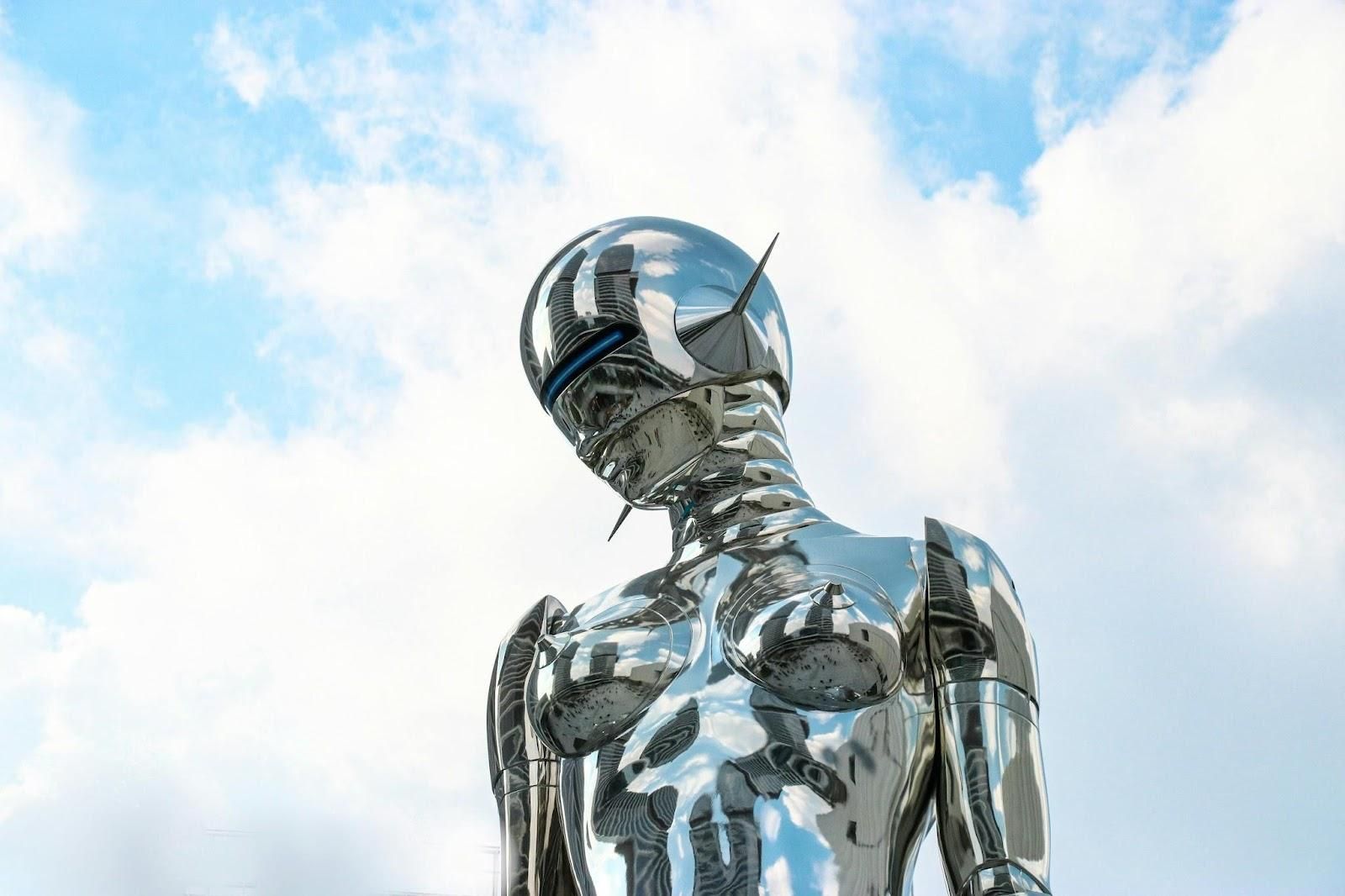
Image: Sun God Apolo

Appearing in The Day the Earth Stood Still (1951), Gort is a seamless, 8-foot-tall silver sentinel who represents the terrifying potential of nuclear-age technology. He follows instructions precisely and does not engage in conversation with humans. In the film, his purpose is to enforce rules rather than explain them, acting only when necessary. His iconic "visored" eye that fires a disintegration beam and the phrase "Klaatu barada nikto" remain his enduring legacy.

10
Rachael (Blade Runner, 1982)

Image: Alexandra_Koch

At first glance, Rachael (played by Sean Young) does not appear to be a robot at all. Introduced in Blade Runner (1982), she is an android created to blend into human society, with natural speech, human behavior, and no visible mechanical parts. Unlike earlier film robots, her design relies on appearance and memory rather than metal or machinery. In the story, she believes her memories and feelings are real. This focus on memory and identity, rather than physical ability or function, is why her role is still discussed in relation to artificial intelligence and what defines a human being.


General General 3 min read

You are using one of these now.

From microwaves to bug spray: 12 items originally made for the military

Image: Everyday basics

You might be surprised to learn how many everyday items in your home started as military inventions. From your kitchen to your closet, many tools and technologies first created for soldiers have since marched their way into civilian life. Take a look at 12 of these army-born innovations you probably use every day without even realizing it.

1
Duct tape

Image: Lucas van Oort

One of the most useful things to have around is, without a doubt, duct tape. This product can help fix an endless number of everyday problems in virtually any environment.

This adhesive tape was invented during World War II by a division of Johnson & Johnson called Revolite. It was initially used to seal ammunition cases because of its water-resistant properties.

2
GPS

Image: henry perks

The GPS technology we all use daily on our smartphones to navigate from point A to point B was originally developed by the U.S. military. It was designed to track the position of military units and help them find their way efficiently across any terrain —much like how we use it today for civilian purposes.

3
Internet

Image: Glenn Carstens-Peters

Few technologies have become such a big part of our lives in just a couple of decades as the Internet. Its origins trace back to the 1970s, when the Defense Advanced Research Projects Agency (DARPA) created an interconnected network linking military centers to enable resource sharing.

The connection of commercial networks and enterprises by the early 1990s, along with the advent of the World Wide Web, marked the beginning of the transition to the modern Internet.

4
Walkie-talkie

Image: garrett parker

From children’s toys to invaluable communication devices used in critical situations, walkie-talkies are a common fixture in modern life. Their development during World War II has been variously credited to Donald Hings, radio engineer Alfred J. Gross, Henryk Magnuski, and engineering teams at Motorola.

Initially used by infantry, similar designs were created for field artillery and tank units. After the war, walkie-talkies spread to public safety and eventually commercial use.

5
Microwave oven

Image: Erik Mclean

Believe it or not, microwave cooking was accidentally discovered during a military-related project just after World War II.

In 1946, Percy Spencer, a scientist working on a magnetron at Raytheon, noticed that a peanut cluster candy bar in his pocket had melted from the magnetron’s microwave radiation. Curious to experiment further, he brought in some kernels of corn and made the first-ever microwave popcorn—leading to the invention of the microwave oven.

6
Super glue

Image: Scott Sanker

In 1942, a research chemist working for a defense contractor was developing a high-precision targeting sight for weapons. Although the project didn’t produce the expected results, the resulting product was incredibly sticky , leading to the creation of the now-famous Super Glue.

7
Aviator sunglasses

Image: Griffin Wooldridge

Aviator sunglasses were developed in the 1930s as a lighter alternative to the bulky goggles worn by pilots during the early years of aviation. Those goggles were heavy, uncomfortable to wear, and prone to fogging up mid-flight.

Colonel John Macready of the U.S. Army Air Corps helped develop the first set of aviator sunglasses, which became known as Ray-Bans—named for their purpose: banning the sun’s rays from a pilot’s eyes.

8
Packaged salad mixes

Image: Nathenia Landers

The bags of packaged salad mixes found at any local supermarket use "modified atmosphere packaging" to delay ripening and spoilage.

This technology was developed in the 1960s through a collaboration between Whirlpool Corp. and the U.S. Navy to send fresh lettuce and celery to troops in Vietnam .

9
Bug spray

Image: Wolfgang Hasselmann

The active ingredient in most insect repellents, known as DEET, was developed by the U.S. Army in 1946 for use by military personnel operating in insect-infested areas . The product’s success led to its commercial release.

10
Disposable sanitary pads

Image: Annika Gordon

During World War I, Kimberly-Clark invented Cellucotton, a wood pulp–based material designed to be more absorbent and cost-effective for use in bandages.

After the war, the company discovered that Army nurses had repurposed Cellucotton as sanitary napkins , which inspired the creation of Kotex—the first disposable sanitary pads.

11
Frozen juice concentrate

Image: Fotografía de Alimentos

In 1942, USDA scientists developed frozen concentrated orange juice during World War II to help provide soldiers with sufficient Vitamin C . Although it was never distributed to the military, the product was later introduced to consumers by Minute Maid.

12
WD-40

Image: Daniel Campbell

WD-40, now a common household product, was originally developed in 1953 to prevent rust and corrosion on the outer shell of the Atlas missile . Created by the Rocket Chemical Company, the name WD-40 stands for "water displacement," with the "40" representing the number of attempts it took to perfect the formula.

General General 6 min read

Into the wild

Boost your animal instincts with 10 fascinating mammals that roam America

Image: christie greene

Mammals form one of the greatest classes of vertebrate animals. There are more than 5400 known species of mammals in the world, and more than 400 of these species are found in the United States. From terrestrial to aquatic, carnivorous to herbivorous, we have some of the most interesting mammals on the planet. In this article, we have chosen 10 animals that, due to their special characteristics, are already an essential part of our culture. Can you guess which ones they are?

1
Grizzly Bear

Image: Joshua J. Cotten

Grizzly bears ( Ursus arctos horribilis ) are one of the most famous North American mammals, but do you know why they are called that? The grizzly bear is a subspecies of the brown bear. However, although grizzlies are mostly brown, their fur can appear white-tipped or grizzled , which explains their name.

The grizzly bear once lived throughout much of the North American West. Unfortunately, the arrival of Europeans gradually drove it from its original habitat, considerably reducing its population. In 1975, they were listed as threatened under the U.S. Endangered Species Act, and much has been done since then to protect the species. Today, grizzlies can still be found in parts of Wyoming, Montana, Idaho, Washington, and the Alaskan wilderness. They are also one of the most iconic residents of Yellowstone National Park.

2
Gray Wolf

Image: Yannick Menard

We all know that wolves are legendary for their eerie howl, but there are many other interesting facts about this peculiar animal. Gray wolves ( Canis lupus ) are the largest members of the dog family and are native to North America and Eurasia. The size of an adult gray wolf is similar to that of an average dog and it can weigh up to 145 pounds. However, their tracks would outshine those of any dog, as they measure about 5 inches long by 4 inches wide.

Wolves live and hunt in packs of 6 to 10 animals. They are known to travel great distances, even covering 30 miles in a single day. In the United States, gray wolves were hunted to near extinction, although some populations survived and others have since been reintroduced. Today gray wolves can be found in areas such as the Great Lakes states of Minnesota, Wisconsin, and Michigan, the northern Rocky Mountains region, and the northwest.

3
North American River Otter

Image: lovelooking

The North American River Otter ( Lontra canadensis ) is a species of semi-aquatic, carnivorous mammal endemic to the North American continent that can be found along the coasts and rivers of the United States and Canada. Because they are very susceptible to environmental pollution, their population has been reduced considerably in recent years.

It is a mostly nocturnal animal, often seen at dusk or dawn. During the day it takes refuge in burrows with an underwater entrance that leads to a nest chamber lined with plant material and hair. North American River Otters are robust (11 to 31 pounds) and feed on fish and other aquatic prey, such as turtles, frogs, and crabs.

4
Red Fox

Image: Jeremy Hynes

The red fox ( Vulpes vulpes ) is a species of mammal in the canid family. It is the most abundant fox species in the northern hemisphere and can be found in many national parks across the country. As its name suggests, its fur is reddish in color. The tips of the ears and the ends of the legs, however, are black. They have a bushy tail whose tip is usually white, as is their belly.

Although classified as a carnivore, the red fox is actually an omnivore and, above all, a great opportunist. They are astute, have excellent eyesight, and have a keen sense of smell and hearing. They can hunt prey of a wide variety of sizes, from insects and worms to small mammals, birds, and fish. They also feed on certain vegetables, berries, and fruits.

5
Mountain Lion

Image: Robert Sachowski

The cougar ( Puma concolor ), also known as the mountain lion, is a mammal native to the Americas. These large, tan cats are found from the Yukon in Canada to the southern Andes Mountains and Patagonia in South America. In the United States, mountain lions can be found mainly in the western part of the country. However, because of their solitary nature and constant threats from humans, it is difficult to estimate exact population numbers.

Mountain lions are slender and agile felines that can adapt to different conditions and environments. They are strict carnivores and have extraordinary vision and acute hearing, which allows them to capture almost any animal, from insects to squirrels, beavers, elk, and deer.

6
North American Beaver

Image: kidmoses

Beavers are known to be one of the only animals that can affect the ecosystem around them, building watertight dams that help preserve water in streams and rivers. The North American beaver ( Castor canadensis ) is the largest rodent in North America and one of the largest in the world —it can weigh between 24 and 71 pounds! The species is widely distributed throughout the continent, from northern Canada to northern Mexico.

The North American beaver's coat can range from dark brown to reddish brown, and its most distinctive feature, a flattened paddle-shaped tail, allows it to swim. It is perfectly adapted to semi-aquatic life; its ears and nose have valves that close when submerged, and it can close its lips behind its prominent incisors to cut wood underwater.

7
Hawaiian Monk Seal

Image: Sebastian Coman Travel

The Hawaiian Monk Seal ( Neomonachus schauinslandi ) is a species native to the Hawaiian Islands. With its friendly face and long whiskers, it is perhaps one of the most endearing mammals that can be found in our country. Unfortunately, this seal species is endangered because of the large amount of chemical waste produced by the fishing industry on the reefs and beaches of the northern Pacific Ocean.

The Hawaiian Monk Seal is usually solitary but is always seen accompanied by other specimens. It is known to be piscivorous, that is, it feeds mainly on fish and other marine creatures, such as crustaceans and some species of mollusks. Since it is a predator by nature, when hunting it makes the most of its length (approximately 7 feet) and its large body (between 300 to 600 lb) to catch its prey.

8
American Red Squirrel

Image: Rusty Watson

The American red squirrel ( Tamiasciurus hudsonicus ) lives in the United States and much of Canada. It is a rodent mammal easily recognized for its deep reddish fur, long bushy tail, and prominent lower teeth. It can be differentiated from other North American squirrel species because of its smaller size, 11 to 14 inches.

American red squirrels normally live in the shady areas of coniferous forests and are primarily granivores. They feed on seeds, pine cones, nuts, fruit, and occasionally insects, eggs, and birds. It is mainly active in trees but also swims freely, using its tail as a rudder to change its direction.

9
Elk

Image: Judy Beth Morris

Elk ( Cervus canadensis ), also known as wapiti in several Native American cultures, is a species of deer that lives in North America, Central and East Asia. Today, most elk in our country are found primarily in the West, especially in mountainous regions such as Wyoming's National Elk Refuge and Yellowstone National Park. Some eastern states have also reintroduced small herds into natural forest areas.

The most prominent feature of elks is their massive antlers. Each March they shed their antlers, which begin to grow back in May to be ready for the breeding season in late summer. During this time the bellowing of the males echoes through the mountains, announcing the violent battles that serve to decide who mates with whom. The males with the largest antlers, usually the oldest, often win these duels and get to dominate the herd.

10
American Bison

Image: Stephen Leonardi

The American bison is a true symbol of American identity. Not only is it the largest mammal in North America, it is also the national mammal of the United States. In addition, it's one of the greatest conservation success stories of all time.

In prehistoric times, there were millions of specimens of American bison ( Bison bison ) roaming our territory. But by the late 19th century, there were only a few hundred left. Fortunately, thanks to the efforts of several organizations and individuals, the species was reintroduced and today it can be found in a few national parks and reserves as well as in the wild.

Explore more American facts

Choose your favorite category!

General
General

As American as apple pie—the very best America has to offer!

Culture
Culture

Delve into the astounding richness of American lore.

Geography
Geography

Hop in and explore vast and diverse American landscapes.

History
History

Discover the key moments that shaped the United States.