Geography Geography 3 min read

Carved in stone

The Secret Room and 10 Secrets about Mount Rushmore
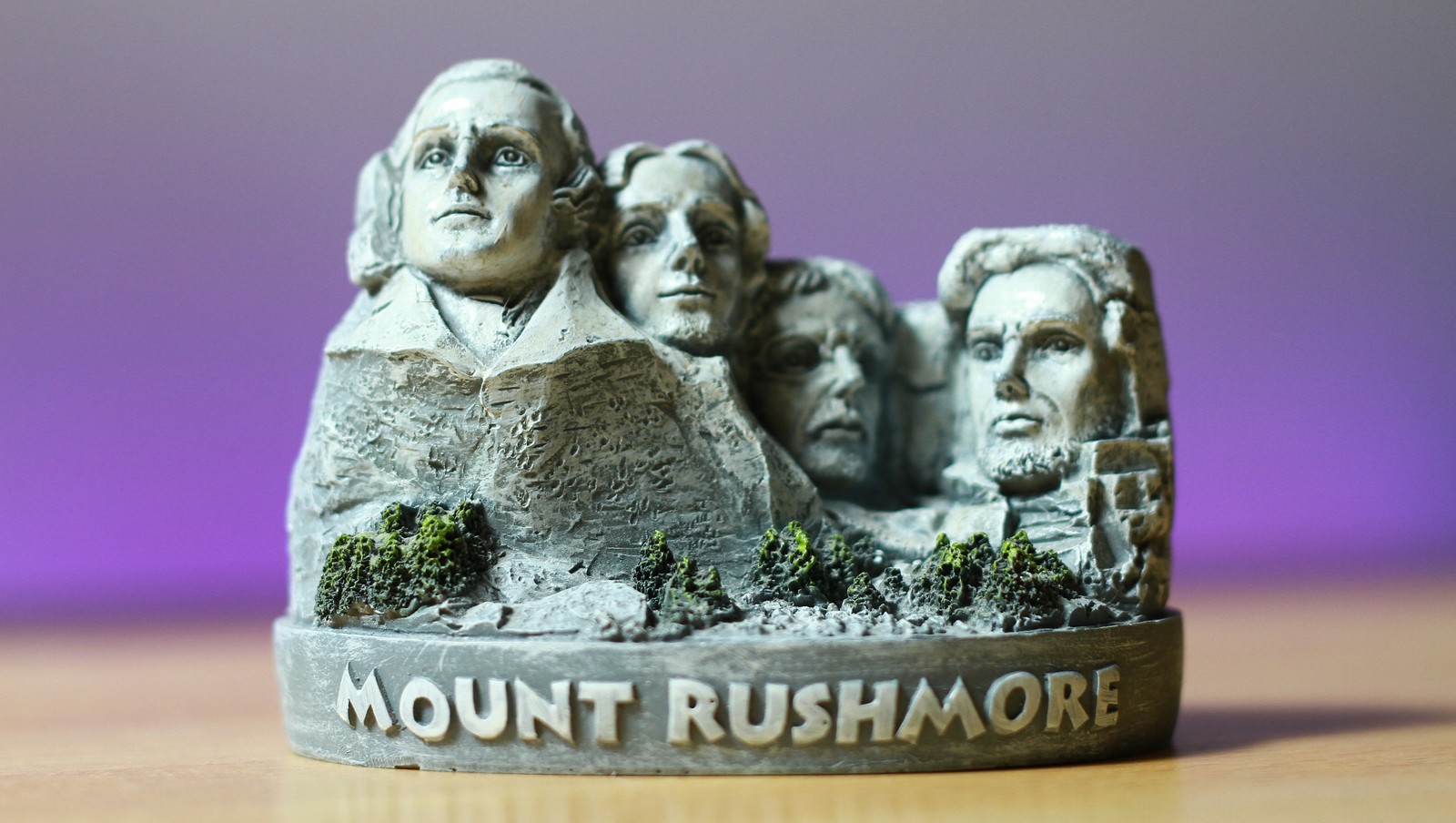
Image: Takefreebies

We've all seen Mount Rushmore, whether in person or on screen. But this monumental landmark is more than just four giant heads carved into granite. If you want to discover some surprising facts they don't teach in schools, read on!

1
A tough decision

Image: Spencer James Lucas

While the first three figures —Washington, Jefferson, and Lincoln— were almost unanimously agreed upon, there was some debate over who should be the fourth face on Mount Rushmore. Gutzon Borglum, the sculptor, advocated for Theodore Roosevelt, but others believed Woodrow Wilson should be included. In the end, Borglum stuck with his original choice, and that's why today we see Teddy Roosevelt up there on America's Shrine of Democracy.

2
The original plan

Image: Jon Sailer

While it's hard to picture the Black Hills without the iconic faces of Washington, Jefferson, Roosevelt, and Lincoln, the original idea for Mount Rushmore was actually quite different. At first, Sculptor Gutzon Borglum envisioned a more complex job (yes, even more complicated than it already is!) In his original plan, he imagined not just the presidents' heads but their upper bodies as well! There was even talk of including other key figures from American history, like explorers Lewis and Clark.

3
14 long years

Image: piotr sawejko

We can assume that carving the giant heads of 4 presidents into the granite was no easy task. But do you know how long it took to complete the monument we see today? 14 years! That's right; 14 years of hard work, 400 men, and a whole lot of dynamite went into bringing this colossal project to life.

4
The first

Image: Spencer James Lucas

As the first President of the United States and widely known as the "Father of His Country," George Washington was a must for this incredible monument. In fact, his face was the first to be completed and was officially dedicated in a grand ceremony. In addition, as part of the powerful symbolism behind the work, Washington's sculpture is also the most prominent.

5
Starting over

Image: Raimund Schlager

One of the many unexpected construction challenges involved the placement of Thomas Jefferson's sculpture.

The original plan was to place Jefferson's face to the left of Washington. However, when the dynamiting process began, they found quartz beneath the surface, which made it impossible to continue carving in that spot. After 18 months of work, they "erased" (yes, again, with dynamite) what they had of Jefferson and started over to the right of Washington, where it is today.

6
The secret door

Image: Tommy Bond

Did you know there's a secret room hidden behind the 60-foot-tall heads on Mount Rushmore? The sculptor had big plans for the monument, including a Hall of Records carved into the mountain to store important national documents like the Constitution. And he started to build it! However, when Congress found out that part of the budget was set aside for the Hall of Records, they asked Borglum to focus solely on carving the heads.

7
The last one

Image: caleb weiner

After Washington's, the other faces followed: Jefferson's was dedicated second, and Lincoln's was officially unveiled in 1937. So, which one came last? That's right! The last to be completed was Theodore Roosevelt's, with his iconic mustache included! Of course, members of the Roosevelt family attended the big ceremony.

8
The legacy

Image: Ashim D’Silva

Building Mount Rushmore took many years. Unfortunately, Gutzon Borglum, the mind behind the project, didn't get to see it fully completed, as he passed away just a few months before the work officially ended. However, it was his son Lincoln who stepped in to complete the great work his father had started.

9
An extra foot

Image: Andrew Ling

Borglum believed this monument should stand the test of time, built to inspire and be admired for thousands of years to come. So, how did he achieve that? Some historical sources suggest one of Borglum's techniques was adding extra material to certain angled areas of the sculpture, like Washington's nose, for example. That's right! It's believed that the author added an extra foot to George Washington's nose to help it better withstand erosion over time.

10
The man behind the name

Image: Pamela Huber

Long before the presidents were carved into the Black Hills, a New York lawyer paid a visit to the area, and that visit wouldn't go unnoticed. In 1885, attorney Charles E. Rushmore was at the site for business, and he asked for the name of a particular peak. When they told him it didn't have a name, he jokingly suggested they could call it "Rushmore Peak." Charles E. Rushmore was actually the first person to make a private donation to get the project started: $5,000! And so it was that his name stuck.
General General 3 min read

Middle matters

Guess which president didn’t even have a real middle name!

Image: Tim Mossholder

Ever wonder about the names of our presidents? Turns out those middle names often tell family stories, reveal forgotten traditions, or, sometimes, just show how human our most powerful leaders really are. Some honored relatives, others used their middle names to stand out, and one didn’t have a middle name at all. Here are some fascinating tales hidden in the middle of history.

1
John Adams

Image: Mark Olsen

Middle name: Quincy

Our sixth president, John Quincy Adams, was the son of the second president, John Adams. He was named "Quincy" after his maternal great-grandfather, John Quincy, and later signed his initials as "JQA" to avoid confusion with his father. A strong mind clearly ran in the family.

2
William Harrison

Image: STEPHEN POORE

Middle name: Henry

William Henry Harrison, the ninth president, was named for both his grandfather and uncle. Sadly, his presidency was the shortest in history, just one month after he caught pneumonia giving a long speech in the rain.

3
James Polk

Image: Daniel Weiss

Middle name: Knox

James Knox Polk carried his grandfather’s name with pride. Born in North Carolina in 1795, he expanded the nation’s territory by more than a third during his single term, finally stretching the U.S. from coast to coast. Quite an accomplishment for one presidency.

4
Ulysses Grant

Image: Jake Blucker

Middle name: Ulysses

Fun fact: "Ulysses S. Grant" wasn’t his real name. He was born Hiram Ulysses Grant, but a paperwork mix-up at West Point changed it forever. The "S" came later as a nickname, "US" Grant, something that fit a general far better than "H.U.G." ever could.

5
Rutherford Hayes

Image: Matt Koffel

Middle name: Birchard

Rutherford Birchard Hayes got his middle name from his mother’s maiden name. Born in 1822, he lost his father before birth but grew up to become the 19th president. He’s remembered for restoring faith in the presidency after a rough patch in American politics.

6
Grover Cleveland

Image: Manisha Raghunath

Middle name: Grover

Stephen Grover Cleveland dropped his first name early in life and stuck with Grover. It worked out well for him: he’s the only president in history to serve two nonconsecutive terms, making him both the 22nd and 24th president. That’s a comeback story.

7
William Taft

Image: Jake Blucker

Middle name: Howard

William Howard Taft’s middle name honored his grandmother’s family, the Howards. He remains the only person to ever serve as both U.S. president and Chief Justice of the Supreme Court. That’s two of the toughest jobs in one lifetime.

8
Woodrow Wilson

Image: STEPHEN POORE

Middle name: Woodrow

Born Thomas Woodrow Wilson, he eventually dropped his first name and went by Woodrow instead. It sounded distinguished, and clearly, it worked for him. As our 28th president, he guided the nation through World War I and helped shape modern international relations.

9
Warren Harding

Image: Oz Seyrek

Middle name: Gamaliel

Warren Gamaliel Harding, born in Ohio in 1865, left his mark on American vocabulary by coining the word "normalcy." He wanted life to return to normal after World War I. His middle name, likely biblical, matched his calm, reassuring image.

10
Calvin Coolidge

Image: John Holm

Middle name: Calvin

John Calvin Coolidge, our 30th president, was named for his father but went by his middle name from childhood. Known as "Silent Cal," he led with few words and steady leadership during the Roaring Twenties.

11
Herbert Hoover

Image: Niko Vassios

Middle name: Clark

Herbert Clark Hoover shared his middle name with his father, Jesse Clark Hoover. Born in Iowa in 1874, he was a self-made man long before entering politics. Sadly, his presidency became synonymous with the Great Depression, but he remained known for his work ethic and humanitarian efforts.

12
Harry Truman

Image: Mike Gattorna

Middle name: S.

Harry S. Truman’s middle initial doesn’t stand for anything at all. His parents couldn’t decide between his two grandfathers, Solomon and Shippe, so they settled on "S." It’s a fitting story for a man known for making tough choices, including some of history’s most remembered.

13
Gerald Ford

Image: John Matychuk

Middle name: Lynch / Rudolph

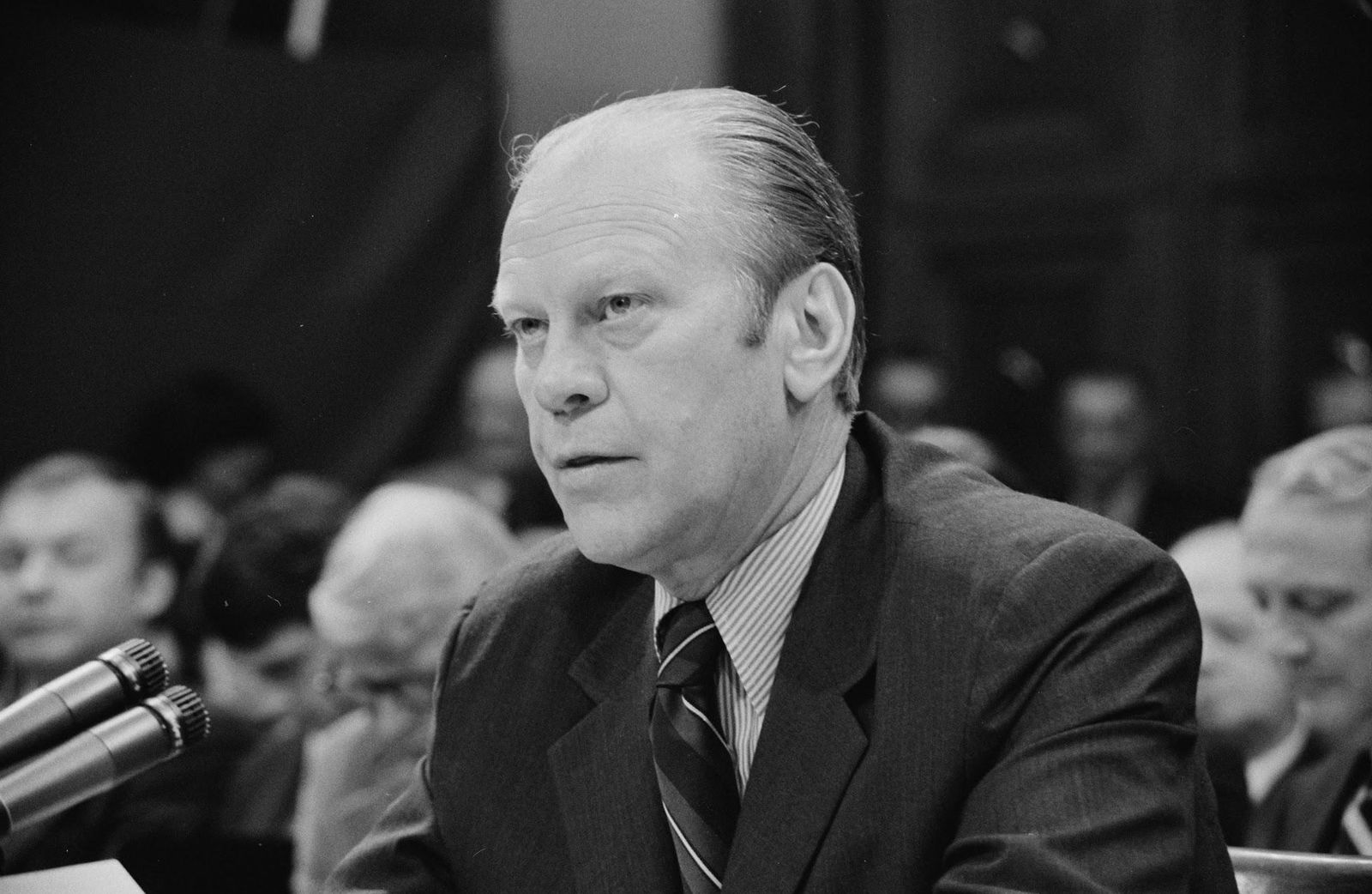
Gerald Ford had two middle names in his lifetime. He was born Leslie Lynch King Jr., but after his mother remarried, his name was changed to Gerald Rudolph Ford Jr., in honor of his stepfather. He’s also the only president who never won an election but took office after Nixon’s resignation.

General General 5 min read

Were you watching?

What is the most-watched show in American TV history?

Image: freestocks / Oscar Nord

Were you among the 76 million people who watched the ending of Seinfeld live? Or one of those who waited to see who shot J.R.? Some American TV shows became so popular that they operated as a social ritual. We would sit and watch, all of us at the same time, and wait to discuss the plot twists and cliffhangers with our friends. Let’s look at some TV shows that had the largest sustained audiences in U.S. history!

1
Friends

Image: Ilse Orsel

Who couldn’t sing along to the opening song of Friends ? "I'll be there for you" is an anthem that sparks instant nostalgia. Friends was the comfort blanket of the '90s and early 2000s: Six pals navigating life and love in a surprisingly affordable New York apartment.

Rachel, Ross, Monica, Chandler, Joey, and Phoebe. Over 52 million viewers watched the finale. For ten years, Friends made millions feel like part of the gang.

2
The Ed Sullivan Show

Image: william f. santos

For over two decades, between 1948 and 1971, The Ed Sullivan Show was America’s Sunday night ritual. It had over 20 million average weekly viewers!

Families gathered in living rooms across the country to watch this variety show that brought together everything from opera to Elvis . And in 1964, over 73 million viewers tuned in to see four mop-topped Brits called The Beatles make their U.S. debut!

3
All in the Family

Image: Daniel von Appen

At the center of the 70s sitcom All in the Family was Archie Bunker, a prejudiced but lovable working-class man played by Carroll O’Connor, whose outdated views clashed with his liberal son-in-law "Meathead" (Rob Reiner).

The show tackled topics like racism, women’s rights, and the Vietnam War, and viewers loved seeing arguments they were having at home play out on screen.

4
Bonanza

Image: Olivier Piquer

Bonanza was the number one show between 1964 and 1967, although it aired from 1959 to 1973. Set on Ponderosa Ranch, near Lake Tahoe, Bonanza was a cowboy family drama .

Audiences fell in love with the Cartwrights: Ben, the wise patriarch, and his three very different sons. The show stood out for its lush color cinematography (very rare at the time) and storylines that combined action with moral lessons.

5
Gunsmoke

Image: Brice Cooper

Gunsmoke, which also boasted the Western genre, remained number 1 for multiple years as well. It was one of the first TV titans to accomplish such a thing. It held the record for the longest-running primetime drama for decades. Set in Dodge City, it followed law-upholding Marshal Matt Dillon (James Arness).

When Chester, Dillon’s original deputy, left the show, fans were devastated. With over 600 episodes , Gunsmoke redefined the genre and left a permanent mark on American pop culture.

6
Jeopardy!

Image: Gift Habeshaw

Jeopardy! is a legacy that started in 1984 and is still going strong! That has led to its amassing over 10 million average viewers over the decades. How many TV shows share the same claim?

For generations, it’s been the show that makes you feel smarter just for watching (if you can outsmart the participants, that is). The answer-first, question-last format ("What is the Eiffel Tower?") became iconic, and the theme music is forever ingrained in America’s collective brain.

7
Who Wants to Be a Millionaire

Image: Jordon Conner

Whenever Regis Philbin asked, "Is that your final answer?" America held its breath. Who Wants to Be a Millionaire exploded onto U.S. screens in 1999 at the turn of the millennium.

The phenomenon drew 28 million viewers at its peak. The first winner, John Carpenter, made headlines for not using a single lifeline until the final question, when he used "Phone a Friend" just to call his dad and say, "I’m about to win a million dollars." That moment alone is a TV legend.

8
Survivor

Image: Rowan Heuvel

Sixteen strangers marooned on a tropical island, forced to build shelter, find food, and outwit each other for a million dollars. This had a social-experiment factor that made it impossible for America to look away.

The very first season, set in Borneo, was an instant smash, with 28 million viewers. Host Jeff Probst’s fire-snuffing catchphrase ("The tribe has spoken") became iconic.

9
American Idol

Image: Eduardo Balderas

Did you watch live as the life of American Idol’s first-ever winner (Kelly Clarkson!) changed forever? In the early 2000s, American Idol turned everyday dreamers into superstars and had the whole country voting on their fates.

At its peak, it drew over 30 million viewers each week.

10
60 Minutes

Image: Alla Eddine Taleb

Do you remember a 60 Minutes episode that had you at the edge of your seat? Beginning in 1968, this show proved that journalism could be far more riveting than fiction.

Its secret was in smart and human storytelling, no-nonsense interviews, and a lineup of legendary correspondents like Mike Wallace, Morley Safer, and Ed Bradley.

11
The Cosby Show

Image: Francisco Andreotti

In the 1980s, The Cosby Show was the cultural touchstone. At its heart was the Huxtable family, an upper-middle-class Black household in Brooklyn, led by Cliff (Bill Cosby), an affable obstetrician, and Clair (Phylicia Rashad), a sharp attorney. Plus their chaotic five kids.

One of the most beloved moments was the family lip-syncing Ray Charles' "Night Time Is the Right Time" for Cliff’s birthday.

12
Seinfeld

Image: Rob Laughter

The premise of Seinfeld was a show about nothing . The sitcom ended up stealing the show. Between 1989 and 1998, Seinfeld cast a light on mundane life (you know, waiting in line, losing socks, awkward small talk) and turned it into comedy gold.

This "show about nothing" gave us four unforgettable New Yorkers: Jerry, George, Elaine, and Kramer. Its finale drew 76 million viewers, making it one of the most-watched episodes ever.

13
Cheers

Image: Andrea Mininni

This gem of the 80s invited America into a cozy Boston bar that felt like home. Centered around bartender Sam Malone (Ted Danson) and a colorful cast of barflies, waitstaff, and neurotic patrons, it delivered laughs, heart, and genuine warmth.

The chemistry of the ensemble was golden. And what people loved the most was that "Cheers," much like the "Central Perk" of Friends , was a place of belonging.

14
Dallas

Image: K. Mitch Hodge

Of course, Dallas, the ultimate primetime soap, cannot be left out of this list! This dramatic master of cliffhangers left the nation gasping. At its core was J.R. Ewing (Larry Hagman), one of TV’s most devious villains, who still had fans rooting for him.

The show became a cultural phenomenon, especially in 1980 when America asked, "Who shot J.R.?" That season finale was watched by more than 80 million people.

15
MAS H

Image: Robert Ruggiero

Set during the Korean War, MASH was unlike anything else on TV. It mixed satire and unforgettable characters in a mobile army surgical hospital. Alan Alda led the cast as Hawkeye Pierce, backed by a beloved ensemble that included Loretta Swit, Jamie Farr, and Mike Farrell.

The show’s final episode, "Goodbye, Farewell and Amen," aired in 1983 and drew 106 million viewers. That was a record that stood for decades!

Explore more American facts

Choose your favorite category!

General
General

As American as apple pie—the very best America has to offer!

Culture
Culture

Delve into the astounding richness of American lore.

Geography
Geography

Hop in and explore vast and diverse American landscapes.

History
History

Discover the key moments that shaped the United States.