Culture Culture 4 min read

FOLK HEROES

Tales From The Heartland: 10 Larger-Than-Life American Folk Figures

Image: Tim Mossholder

Nations make their heroes as embodiments of their shared values. Woven into their tales of might and their bold adventures are valuable lessons that are passed down through the ages. American legends are no exception, and these larger-than-life characters have captivated our imaginations for generations. From colossal lumberjacks to legendary steel-driving men, join us to explore the fascinating tales behind 10 of America’s most enduring folk heroes.

1
Paul Bunyan

Image: Abby Savage

Paul Bunyan , the colossal lumberjack of American folklore, is said to have cleared forests from the Northeast to the Pacific Northwest. With his blue ox, Babe , he performed incredible feats of strength, like carving out the Grand Canyon just by dragging his axe behind him, and creating the Great Lakes with his footprints.

Originating in oral traditions among lumberjacks, Bunyan’s exaggerated exploits gained momentum with the American westward expansion during the 19th century and soon became deeply ingrained in the popular imagination.

2
Johnny Appleseed

Image: Aarón Blanco Tejedor

Born John Chapman, Johnny Appleseed wandered the American frontier planting apple trees and spreading goodwill in the early 19th century. A devout Christian, he became a folk hero for his kindness, environmentalism, and pioneering spirit.

Contrary to the popular image of Johnny Appleseed randomly scattering apple seeds, he was a skilled nurseryman who meticulously planted apple tree nurseries. Each nursery was carefully fenced to shield the saplings from livestock and wildlife. After establishing these nurseries, he entrusted them to neighbors but revisited them periodically.

3
Pecos Bill

Image: JosephHershMedia

Pecos Bill , a fictional cowboy raised by coyotes in the wilds of Texas, became a larger-than-life figure known for taming cyclones and roping tornadoes. His adventures, first popularized in the early 20th century, embody the frontier spirit and Texas mythology, blending humor with tales of rugged individualism.

Among his many tales, one credits him with creating the Gulf of Mexico . According to legend, during a severe drought in Texas, Pecos Bill lassoed a storm cloud in California and brought it to Texas. The resulting deluge caused extensive flooding, ultimately forming the Gulf.

4
Davy Crockett

Image: Joseph Corl

Davy Crockett , known as the "King of the Wild Frontier," was a real-life frontiersman later turned politician whose exploits were mythologized even during his lifetime. Born in East Tennessee, he quickly gained fame for his sharp hunting skills and captivating storytelling.

During his time in the U.S. Congress, he staunchly opposed many of President Andrew Jackson’s policies, particularly the Indian Removal Act, and championed the rights of small landowners. Crockett’s life ended with valor at the Battle of the Alamo , solidifying his folk legend as a symbol of courage and patriotism. His legacy remains an enduring part of American history.

5
Calamity Jane

Image: Vidar Nordli-Mathisen

Martha Jane Canary, better known by her alias Calamity Jane, was a frontierswoman and scout famed for her sharpshooting skills and daredevil exploits. During her youth, she stepped up to provide for her large family, taking on various jobs, from ox team driver to scout for Fort Russell. Eventually, she embraced the rough and adventurous lifestyle that made her a legend.

Despite her fearsome reputation, Calamity Jane was compassionate and often helped those in need. Her adventures in the Wild West alongside figures like Wild Bill Hickok cemented her status as a legend of the American frontier.

6
Molly Pitcher

Image: Garry T

Molly Pitcher, the nickname given to Mary Ludwig Hays McCauley, became famous for her bravery during the American Revolutionary War. Although several historical figures are known by this moniker for similar deeds, Mary Ludwig Hays distinguished herself during the Battle of Monmouth in June 1778, where she served as a water carrier for the soldiers.

When her husband, an artilleryman in the Continental Army, fell to enemy fire, she took his place, swabbing and loading the cannon with such bravery and determination that she earned a commendation from George Washington.

7
Daniel Boone

Image: Scott Longerbeam

Daniel Boone was a legendary frontiersman and explorer who blazed trails through the Appalachian Mountains and into Kentucky. Born in 1734, Boone became famous for his expert hunting and survival skills, as well as his role in establishing the Wilderness Road, a trail that facilitated westward migration through the Cumberland Gap.

After serving as a militia officer during the Revolutionary War, he was briefly taken in by the Shawnees in the Northeastern Woodlands. After a few years, he returned and continued to help protect the Kentucky settlements.

8
Buffalo Bill

Image: Judy Beth Morris

William Frederick "Buffalo Bill" Cody was a legendary figure of the American West, known for his Wild West shows that toured the United States and Europe. Born in 1846, Cody was a skilled buffalo hunter, Army scout, and showman who brought cowboy skills and frontier life to audiences worldwide.

He earned his nickname after the Civil War by providing Kansas Pacific Railroad workers with buffalo meat, hunting record numbers of the animal. He even engaged in hunting competitions with his partner, Bill Comstock. His legendary figure has been frequently portrayed in film and television, especially during the height of the Western genre in the 1960s.

9
Wild Bill Hickok

Image: Pablò

James Butler Hickok, famously known as Wild Bill Hickok, was a legendary figure of the American Old West. Born in 1837, Hickok gained fame as a skilled marksman, gambler, and lawman.

Though his exploits were certainly exaggerated by the outlandish tales he told about himself, he was involved in several notorious gunfights during his life. Most notably, he dueled with Davis Tutt, a local gambler with whom he had various disagreements, particularly over their mutual affection for the same woman.

10
John Henry

Image: Lucio Patone

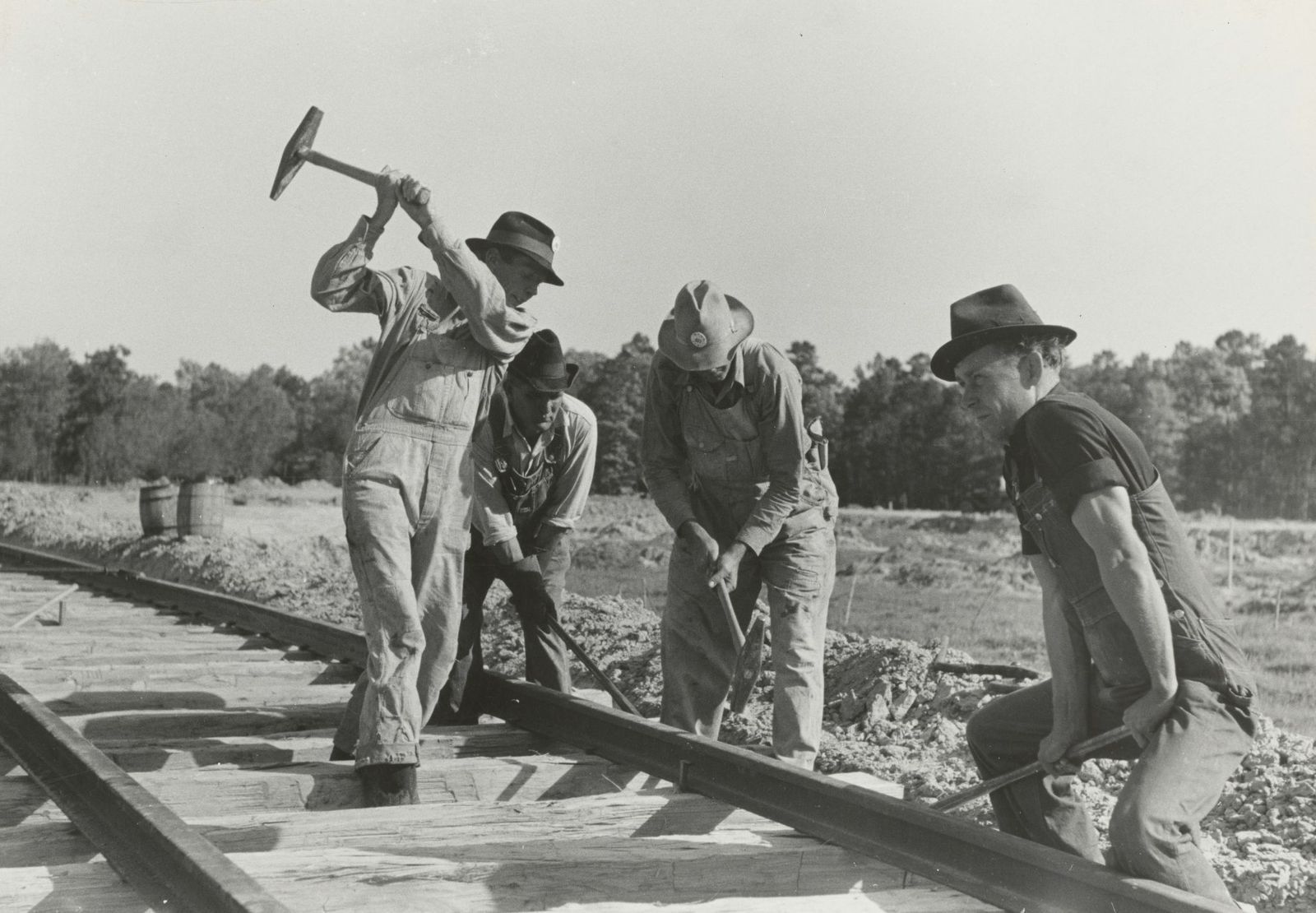
John Henry was a legendary steel-driving man whose man-against-machine tale epitomized the strength and resilience of the American worker. An African American freedman, his dangerous job involved hammering steel drills into rocks to create holes for explosives used to blast open railroad tunnels.

According to the legend, John Henry's prowess was tested in a race against a steam-powered drill. He won the race but tragically died after victory, hammer in hand when his heart gave out from the immense physical stress.

History History 5 min read

CHEERS TO ALL

Sipping through history: 10 cocktails from the Prohibition Era

Image: Frames For Your Heart

Isn’t it crazy to think there was a time when alcohol was prohibited? Now, some things simply can’t be taken from society. It’s only logical that as liquor was prohibited, the ways to disguise it flourished across the country. After all, crises do create opportunities! That is what bartenders thought anyway, and that is how many of the best cocktails came to be during the dry years. From Ward 8 to the classic Old Fashioned, the drinks we love today have been around for a long time, and we’ll tell you all about them in this article.

1
Ward 8

Image: Alex Kubsch

The Ward 8 is a cocktail with a bit of political history . Created in 1898, it is believed to have been made in Boston to celebrate a victory: Martin M. Lomasney’s seat at the state’s legislature. This mix of rye whiskey, lemon juice, orange juice, and grenadine offers a sweet and slightly tart taste that was a hit in the speakeasies.

The drink’s vibrant color and balanced flavor made it a favorite during Prohibition. It’s a bit more complex than some of the other cocktails of the time, but it’s worth every sip. Shake with ice, strain, and serve in a chilled glass for a sip of political history. Or to celebrate a victory of your own!

2
The South Side

Image: Bri Tucker

This refreshing drink's origin is a matter of speculation. The main theories suggest that it was either created after the South Side district of Chicago , Illinois, or the Southside Sportsmen’s Club on Long Island. Whichever the origin, the popularity of the drink is connected to Al Capone’s preference for it.

It’s a blend of gin, fresh mint, lime juice, and simple syrup, making it crisp and revitalizing. The mint and lime give it a fresh, lively flavor that’s perfect for any occasion. Shake with ice, strain into a chilled glass, and garnish with a mint sprig for a touch of elegance.

3
Sidecar

Image: Jia Jia Shum

The drinks were quite inventive, but the names? We’ll have to see about that. The Sidecar cocktail is believed to have been named after the motorcycle attachment in London or Paris around the 1920s. Nevertheless, the drink found it’s way across the Atlantic and into every bartender’s guide during the Prohibition.

Made with cognac, orange liqueur, and lemon juice, it’s a smooth, tangy cocktail that packs a punch. Its balanced flavor profile made it a favorite among those who sought both style and substance in their drinks. Shake it with ice, strain it into a sugar-rimmed glass, and you’ve got yourself a ride worth taking.

4
Highball

Image: Timothé Durand

If a cocktail’s name comes from a phrase that means "you’re good to go," you simply have to drink it, don’t you think? Well, that’s the case with the Highball cocktail. This drink’s name may come from railroad signs, where a raised globe meant that the track ahead was clear.

Now, as for the ingredients, the drink has several variations, but the classic ones are scotch and soda. The Highball is a simple yet elegant cocktail that has stood the test of time. It’s made by mixing whiskey (or gin) with a generous amount of ginger ale or soda water, served over ice in a tall glass. Garnish a Collin-type glass with a lemon or lime wedge, and you’ve got a drink that’s both easygoing and refreshing.

5
Old Fashioned

Image: Johann Trasch

If we’re discussing the classics, we can’t ignore the Old Fashioned, the number one drink of all time . Do you need any proof? Ask as many bartenders as you like, and they’ll each give you a different recipe. That’s because, as old as the drink is, it is also highly popular and has been the subject of countless versions ever since it was created.

The Old Fashioned dates back to the early 19th century, but it truly came into its own during Prohibition. This classic drink combines whiskey, a sugar cube, bitters, and a twist of citrus. The simplicity of the recipe made it a reliable choice when quality ingredients were hard to come by.

6
Corpse Reviver

Image: Timothé Durand

Mornings after can be quite tough, and these names aren’t making them any easier! The Corpse Reviver was so named because it was intended as a "hair of the dog" remedy to revive the drinker from a hangover . This cocktail is a complex mix of gin, lemon juice, Cointreau, Lillet Blanc, and a dash of absinthe. It’s a drink that packs a punch but is also surprisingly smooth and balanced.

The Corpse Reviver No. 2, in particular, became popular during the Prohibition era for its bold flavor and reputed restorative properties. Have you ever tried this one?

7
Mary Pickford

Image: Kurt Liebhaeuser

Named after the silent film star Mary Pickford, this cocktail is as glamorous as its namesake . It’s a fruity blend of white rum, pineapple juice, grenadine, and maraschino liqueur. The drink is sweet and vibrant, with a striking pink color that was as eye-catching in the 1920s as it is today.

Created in Havana, Cuba, it quickly became popular among Hollywood’s elite during the Prohibition era. Shake all the ingredients with ice, strain into a chilled glass, and then garnish with a cherry for a touch of old Hollywood glamour.

8
Gin Rickey

Image: Rajasekhar R

The Gin Rickey was a Prohibition favorite for its simple ingredients and refreshing taste. Made with gin, fresh lime juice, and soda water, it’s light, crisp, and perfect for warm summer nights. This drink was named after Colonel Joe Rickey, a lobbyist known for his love of mixing bourbon with sparkling water.

During Prohibition, gin replaced bourbon as the spirit of choice due to its easy availability. It’s a low-calorie, no-sugar-added option that was as much a hit then as it is now. Simply pour over ice and garnish with a lime wedge for a zesty kick.

9
Bee’s Knees

Image: Ash Edmonds

The Bee’s Knees is a classic example of how Prohibition-era bartenders used sweeteners to mask the harsh taste of homemade gin. You may think using honey for a cocktail is quite ordinary, but back in the day, this was quite an innovation. This delightful cocktail mixes gin, fresh lemon juice, and honey for a sweet and tangy flavor.

The name itself is a slang term from the 1920s, meaning "the best," and this drink certainly lives up to it. It’s refreshing and light, perfect for sipping on a sunny afternoon. Shake with ice and serve in a chilled glass for a taste of history’s sweeter side.

10
French 75

Image: Stephen Harlan

The French 75 is as powerful as the artillery piece it’s named after. This cocktail combines gin, lemon juice, sugar, and a bubbly splash of champagne, making it both elegant and dangerously easy to drink.

Legend has it that the drink was invented in Paris and quickly became popular in American speakeasies. The effervescence of champagne made it a celebratory favorite, while the gin added just the right amount of kick. Serve it in a champagne flute with a lemon twist, and you’ll feel like you’re celebrating in style.

Geography Geography 6 min read

Take note: These 12 US bridges are road trip worth it!

Image: Joseph Corl

Bridges aren’t just structures of stone and steel—they’re storytellers in their own right. Each one holds a legend, whether of a nation’s earliest days or a bold leap in engineering. Some rise like monuments that mark the passage of time, while others capture the imagination with elegance or daring design. From quiet covered spans in New England to soaring marvels out West, every bridge reveals a chapter of America’s journey. Let’s explore 12 structures that stand out for their legacy and grandeur.

1
Frankford Avenue Bridge, Philadelphia, Pennsylvania

Image: See page for author, Public domain, via Wikimedia Commons

Long before America declared independence, a bridge was already standing strong in Philadelphia. Built in 1697, the Frankford Avenue Bridge holds the title of the oldest bridge still in use in the United States. Picture stagecoaches rattling across its stone arches, carrying passengers between Philadelphia and New York. Today, cars hum across the same path, hardly noticing they’re rolling over a structure that has endured for more than three centuries —a quiet survivor of colonial times still woven into modern city life.

2
Golden Gate Bridge, San Francisco, California

Image: Maarten van den Heuvel

What if we told you that a bridge once called "impossible" now defines an entire city? When it opened in 1937, the Golden Gate spanned an incredible 4,200 feet, a record that stunned engineers across the globe. Its sweeping cables and graceful towers are much more than just steel —it’s poetry over water. Painted in its famous "international orange," this bridge doesn’t just stand tall against the fog, it glows through it, serving as both a practical crossing and a proud emblem of San Francisco’s scenic location.

3
Sunshine Skyway Bridge, Tampa Bay, Florida

Image: Joseph Corl

Reaching gracefully across 4.1 miles of Tampa Bay, the Sunshine Skyway Bridge rises like a fleet of white sails frozen in motion. Finished in 1987, it was designed to do more than just connect two shores—it was built to inspire. Its towering piers and broad cables give it the look of a ship setting out to sea, a fitting image for Florida’s sunlit coast. On bright days, motorists often describe the drive as more than a commute; it feels like gliding above the Gulf itself, where the horizon stretches endlessly and the water sparkles below like glass.

4
Brooklyn Bridge, New York, New York

Image: Alexander Rotker

Here’s a tale worth telling: when the Brooklyn Bridge first opened in 1883, many New Yorkers doubted its strength. To calm their fears, showman P. T. Barnum led 21 elephants across the span, proving once and for all that the monumental structure could hold far more than horse-drawn carriages. With its stone Gothic towers rising like cathedrals and its web of cables fanning out in graceful arcs, the Brooklyn Bridge is both an engineering triumph and a work of art. More than a century later, it still stands as a symbol of American ingenuity.

5
Memorial Bridge, Washington, D.C.

Image: Devansh Bajaj

Picture this: a bridge that doesn’t just link two shores, but two chapters of American history. The Arlington Memorial Bridge, completed in 1932, was designed to align the Lincoln Memorial with Arlington House, symbolizing a nation healing after the Civil War. Its central span works like an enormous see-saw—an elegant bascule that tips upward, heavy as a freight train, to open the way for ships on the Potomac. More than steel and stone, it’s a gesture of reconciliation and remembrance.

6
Tunkhannock Creek Viaduct, Nicholson, Pennsylvania

Image: WallyFromColumbia at English Wikipedia, Public domain, via Wikimedia Commons

Imagine standing at the foot of a concrete wall as high as a 20-story tower, stretching farther than the eye expects a bridge could go. That’s what people experienced in 1915 when the Tunkhannock Creek Viaduct—better known as the Nicholson Bridge—first appeared on the Pennsylvania landscape. Spanning 2,375 feet with arches rising 240 feet above the valley, it was the largest concrete bridge in the world at its completion. More than a century later, trains still roll across its 12 arches, looking like miniature toys against the bridge’s sheer immensity.

7
Roebling Suspension Bridge, Cincinnati, Ohio

Image: Thomas Rupp

If the Brooklyn Bridge impressed you, the Roebling Suspension Bridge in Ohio will blow your mind, as it was built years earlier by the same man. When it opened in 1867, it set a world record as the longest suspension bridge, stretching an impressive 1,057 feet across the Ohio River. It was John A. Roebling’s first marvel, only overtaken by his own later New York landmark. For the people of Cincinnati, the bridge was proof that American engineering could rival anything in the world, a daring leap that linked two cities and paved the way for future icons.

8
North Bridge, Concord, Massachusetts

Image: Christopher Ryan

Set foot on the North Bridge in Concord and you’re not just crossing the Concord River—you’re walking into the pages of history. It was in this exact place that, in April 1775, a musket fire rang out, sparking the first battle of the American Revolution and changing the course of a nation forever. The bridge visitors see today is a careful 1956 reconstruction, built to honor the original. Yet, the setting remains almost the same: the quiet river below, the fields beyond, and the sense that this unassuming wooden span still carries the echoes of liberty’s first call.

9
Middle Covered Bridge, Woodstock, Vermont

Image: Michelle_Pitzel

There’s a certain mystique about covered bridges, and Woodstock’s Middle Bridge feels like it was lifted straight from a storybook. Though built in 1969, it was crafted with traditional techniques, giving it the spirit of a much older landmark. Stretching 135 feet across the Ottauquechee River, its peaked wooden roof frames a perfect New England scene —red barns, rolling hills, and the steady flow of water beneath. Beyond its whimsical charm, the roof serves a purpose: protecting the bridge’s sturdy timbers from Vermont’s long, snowy winters so it can stand strong for generations.

10
New River Gorge Bridge, Fayetteville, West Virginia

Image: Ian Pearthree

From a distance, the New River Gorge Bridge might seem like any other stretch of highway. But step onto it, and it’s a different story. Opened in 1977, this steel arch rises 876 feet above the rushing waters below—higher than stacking two Statues of Liberty end to end. It is a symbol of West Virginia’s rugged beauty, celebrated each October during "Bridge Day," when traffic halts, and the bridge transforms into a stage for daring jumps, local crafts, and awe-struck visitors soaking in one of the most breathtaking views in America.

11
Bow Bridge, Central Park, New York, New York

Image: Pierre Blaché

As light as lace yet forged from iron, Bow Bridge sweeps in a gentle curve across Central Park’s shimmering lake. Completed in 1862, it quickly became more than a passage—it turned into a stage for the city’s daily rhythms. Artists set up easels to capture its elegance, photographers frame it against the water, and couples linger at its railings, savoring the view. Street musicians often fill the air with music, while beyond the trees, New York’s skyline stretches high. Amid the steel and stone of the metropolis, Bow Bridge endures as a quiet piece of poetry shaped in metal.

12
Harbor Bridge, Corpus Christi, Texas

Image: Vladislav Osterman

You now know what the oldest bridge in America is, but what about the newest? Unveiled in 2025, the new Harbor Bridge in Texas was designed to last up to 170 years. Its sleek towers and graceful cables rise 205 feet above the water, high enough for massive cargo ships to glide underneath without pause. By day, it’s a marvel of modern engineering, but when night falls, it completely transforms. A sophisticated computer system of LED lights ripples across its frame, painting Corpus Christi’s shoreline in vivid colors. More than a crossing, it’s a staple of economic growth.

Explore more American facts

Choose your favorite category!

General
General

As American as apple pie—the very best America has to offer!

Culture
Culture

Delve into the astounding richness of American lore.

Geography
Geography

Hop in and explore vast and diverse American landscapes.

History
History

Discover the key moments that shaped the United States.