General General 5 min read

From coast to coast

You probably haven't heard of these 10 fascinating facts about America!

The United States is one of the largest, most famous, and most diverse countries in the world. But beyond the well-known facts and features of America, there are many surprising details that even some of us may not know. If you want to learn interesting things, such as the number of versions of the American flag, which famous landmark has a controversial addition, or which state has the fastest-speaking population, keep reading! Today, we're discovering 10 fun facts about our country that you may have never heard before.

1
World's largest office building

Image: Clem Onojeghuo

Among its many record-breaking achievements, America has one lesser-known record that also deserves attention.

Our country is home to the largest office building in the world. Want to know which one? The world's largest office building by floor area is the United States Department of Defense, also known as the Pentagon.

Ok, but how big is it? Located in Arlington, Virginia, and famous not only for its size but also for its distinctive five-sided design, the building has a total floor area of approximately 6.5 million square feet.

2
People in New York

Image: Nicolai Berntsen

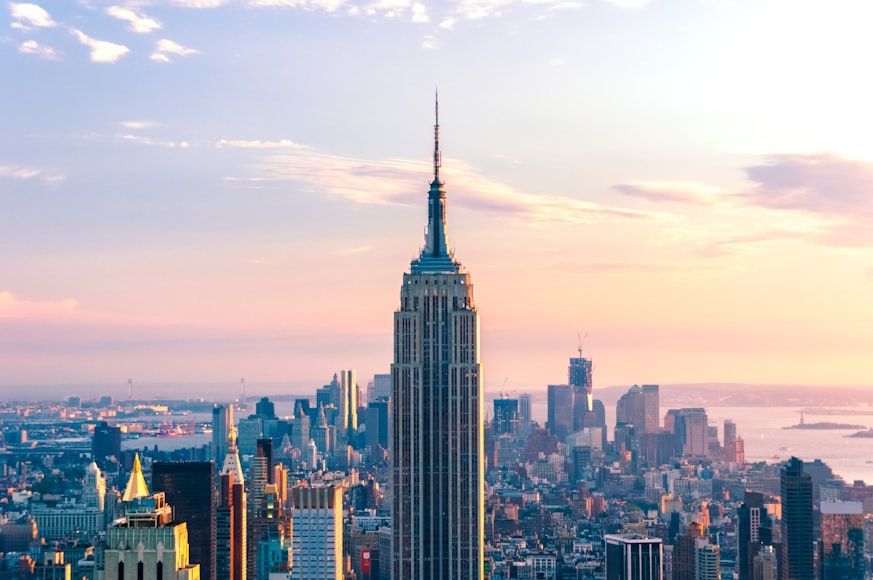
We all know that New York City is packed with people. In fact, it's the most populous city in our country. But how many live there?

As of 2024, around 8.8 million people call NYC their home. That's a huge number on its own, but it might be even more impressive when you consider that NYC's population surpasses that of 40 US states, including Montana, New Hampshire, and Mississippi, to name a few. In other words, NYC has more residents than each of those 40 states individually.

After all, New York City is famously known as "the city that never sleeps" for a reason!

3
Many versions of the flag

Image: Chris Hardy

The US flag is one of our most beautiful and beloved symbols and also one of the most recognized worldwide. With its distinctive stripes, stars, and classic red, white, and blue colors, it is an unmistakable icon. But did you know it has undergone several changes over the years?

The US flag has not just had 1, 2, or 3 versions; in fact, there have been 27 official versions! Each of these versions served an important purpose, reflecting some key changes throughout our history. For example, whenever a new state joined the Union, an additional star was added. This is how we arrived at the 50 white stars you see in the upper left corner of our beautiful flag. The current version was made official on July 4, 1960.

4
No official language

Image: Ben Duchac

While English is the most widely spoken language in the United States, the country does not have an official language at the federal level.

This might surprise some people, given that English is the primary language for most Americans and is used for government and legal purposes.

On the other hand, many other languages are spoken here as well. For instance, Spanish is the second most spoken language, though it is used considerably less than English. And that's not all; Chinese, Filipino, and French also have a notable number of speakers in the US!

5
The fastest-speaking states

Image: Chris Liverani

We all have that friend who speaks so fast it's hard to keep up, even if you know them well. Would you like to know how fast Americans speak?

Fortunately, there's not just data on the languages we use but also on how quickly we speak in our daily lives. And it turns out that a few states lead the pack in this speed race.

According to the Smithsonian Institution, Oregon, Minnesota, and Massachusetts are the states where residents speak the fastest . So, if you know someone from those states, why not give it a try and see if you can keep up with their speedy conversations?

6
Most airports in the world

Image: Alex Underwood

Americans seem to love air travel, and there's a good reason for that: the US holds the record for the most airports in the world!

This isn't just a coincidence. The vast size of our territory— yes, we're one of the largest countries in the world—requires fast, safe, and efficient ways to travel to all corners.

With thousands of airports of all kinds spread across the country, it's no wonder that so many movies feature airport scenes or are even filmed inside airplanes, right?

7
Alaska's price

Image: Joris Beugels

We have the great advantage of having the gorgeous state of Alaska as one of the 50 states. Beyond its natural beauty, it holds another impressive distinction: it's the largest state by area, covering approximately 663,300 square miles.

As you may know, Alaska was purchased in 1867 when US Secretary of State William H. Seward sealed a deal with Russia to acquire the territory. However, what some people may not know is just how affordable it was: the purchase cost $7.2 million, which means we acquired Alaska for about 2 cents per acre! To put it in perspective, adjusted for inflation, that $7.2 million would be equivalent to about $140 million today.

8
The first national park in the world

Image: Nicolasintravel

The United States is home to some of the most spectacular and diverse national parks in the world. And not only that, but we also have the honor of being the country that established the world's very first national park.

Inaugurated on March 1, 1872, Yellowstone National Park became the Earth's first national park. This event marked a turning point, leading to the creation of many other national parks and protected areas both in America and around the globe.

The incredible Yellowstone spans approximately 3,472 square miles , primarily in Wyoming, with portions extending into Montana and Idaho. Have you had the chance to visit it?

9
A special feature on Washington National Cathedral

Image: Ryan Arnst

The Washington National Cathedral offers many attractions for visitors, starting with its beautiful Gothic-style architecture. However, it also holds some secrets and fun facts within its walls.

Construction began in 1907 and took 83 years to complete. The wait was well worth it, as the Washington National Cathedral is now the sixth-largest in the world! And here's a fun fact: its famous Space Window features a real piece of moon rock at its center. Amazing!

Additionally, there's also a quirky feature that some visitors overlook: on the Cathedral's façade, there's a gargoyle with the face of none other than Darth Vader! This Star Wars character was added to the building's northwest tower in the 1980s after a children's design competition. A curious touch, isn't it?

10
Miles of bookshelves

Image: Roman Kraft

The Library of Congress is much more than a beautiful complex of buildings. Located on Capitol Hill in Washington, D.C., this famous landmark was established over 200 years ago in 1800 . Since then, it has preserved and protected countless documents, treaties, and books that reflect and constitute our nation's history.

Adding to our list of world records, the Library of Congress holds the title of the largest library in the world. It boasts an incredible 164 million items, which translates to 838 miles of bookshelves. That's enough to cover the distance from Atlanta, GA, to New York City, NY!

General General 6 min read

Timeless inventions

12 amazing American patents that shaped technology and culture

Image: Markus Winkler

The United States Patent and Trademark Office has issued over 12 million patents since its establishment in 1836. Many of the inventors who applied for these patents are well known—such as Elisha Graves Otis or Orville and Wilbur Wright —while others may come as a complete surprise, like President Abraham Lincoln . Some of the patents listed in this article are grandiose; others are smaller and seemingly insignificant. However, they all have something in common: they were invented in our country and changed the course of history. Wondering what they might be? Read on to find out!

1
Locomotive steam-engine for rail (Patent #1)

Image: National Archives at College Park - Textual Reference, Public domain, via Wikimedia Commons

Between 1790 and 1836, the United States granted 9,802 patents that were not awarded on their merits and didn’t have an identification number. The Patent Act of 1836, which established the official Patent Office, aimed to make the system more transparent. Among other reforms, it introduced a numbering system for easier identification.

This system started on July 13, 1836, and remains in effect today. United States Patent No. 1 was issued to John Ruggles —an inventor, attorney, and senator from Maine—for improvements in locomotive traction.

2
Anesthesia (Patent #4,848)

Image: National Library of Medicine

How did patients endure surgery before anesthesia? Before the discovery of an effective anesthetic, surgery was synonymous with excruciating pain. Many large hospitals placed their operating rooms in isolated and remote sections of the hospitals so patients’ screams couldn’t be heard. Alcohol, opium, and even hypnotism were tried as methods of pain relief, but these had little effect.

Fortunately, we no longer have to endure such experiences, thanks to a Boston dentist named William T. G. Morton, who—along with Charles T. Jackson—received the first United States patent for an anesthetic in November 1846.

3
Buoying vessels over shoals (Patent #6,469)

Image: invented by Abraham Lincoln. Issued by United States government Patent Office, Public domain, via Wikimedia Commons

This may be the most unique patent ever issued by the United States Patent Office: it is the first and only U.S. patent granted to an inventor who later became president. Although at least three presidents—George Washington, Thomas Jefferson, and Abraham Lincoln—were inventors, Lincoln is the only one who formally applied for and received a patent .

In 1849, he was awarded Patent No. 6,469 for a flotation device designed to lift boats over shoals and other obstacles in the water. While the invention itself had little bearing on his election, Lincoln’s inventive mindset and mechanical curiosity served him well during his presidency. Although the device was never commercially produced, his appreciation for innovation helped shape the nation's future.

4
Beehive (Patent #9,300)

Image: Bianca Ackermann

Beekeeping arrived in America with the early settlers, and by the end of the 18th century, bee colonies were widespread. However, early efforts met with only partial success.

The first U.S. patent for a practical and effective movable-frame beehive—which revolutionized traditional methods of beekeeping—was granted to American apiarist, clergyman, and teacher Lorenzo Lorraine Langstroth on October 5, 1852. His invention of the "bee space" laid the foundation for all modern beekeeping and hive management.

5
Elevator (Patent #31,128)

Image: Copie de gravure ancienne, Public domain, via Wikimedia Commons

The New York skyline would look very different today had it not been for the invention of the elevator. The man responsible for the forerunner of the modern elevator was American industrialist Elisha Graves Otis , who, on January 15, 1861, received the first U.S. patent for a safety-type passenger elevator.

The concept of vertical travel was not new. However, the first successful passenger safety elevator was installed in 1857 by Otis in the E. V. Haughwout & Company building, a department store in Manhattan. Otis also held patents for other inventions, including railroad trucks and brakes, a steam plow, and a bake oven. But it was the elevator with its safety feature that brought him fame and his sons great fortune.

6
Lock (Patent #31,278)

Image: Parastoo Maleki

The idea of the lock probably stems from the time man first acquired goods he wanted to safeguard from others. However, the first commercially successful modern lock and key system was invented by American mechanical engineer and metalsmith Linus Yale Jr., who received a U.S. patent in 1861.

Yale developed several types of locks, including the Yale Double Treasury Bank Lock, created at the request of the U.S. government. These designs brought him nationwide recognition, but the invention that made him truly famous was the pin-tumbler cylinder lock . Yale died just a few years after receiving his patent. However, every lock and key produced by the Yale & Towne Lock Company since then has proudly carried the Yale name.

7
Barbed wire (Patent #157,124)

Image: Lexis Chadwick

In an age of video surveillance, barbed wire might seem obsolete. Yet it was crucial to the settlement of the American plains in the late 19th century—and it remains widely used around the world today .

On November 24, 1874, Joseph F. Glidden, a farmer from Illinois, received a U.S. patent for the first commercially successful barbed wire . While several earlier patents had been granted for wire fencing, it was Glidden’s design that proved durable, affordable, and easy to mass-produce—making it the dominant form of fencing on the frontier**.**

8
Air conditioner (Patent #808,897)

Image: Prasopchok

On those hot and humid days of summer, we should all be thankful for the work of Willis Haviland Carrier, often called the father of air conditioning. For his efforts, he received the first U.S. patent for a modern air conditioning system on January 2, 1906.

Air conditioning is a complex process that involves refrigeration, dehumidification, air purification, and circulation. Before Carrier’s invention, various individuals had worked on these individual components. But it was Carrier, an American engineer, who successfully integrated them —focusing on the crucial relationship between temperature and humidity.

9
Airplane (Patent #821,393)

Image: John T. Daniels, Public domain, via Wikimedia Commons

Orville and Wilbur Wright are credited with achieving the first controlled, manned flight in history. For their pioneering work, they received the first U.S. patent for an airplane, issued on May 22, 1906.

Many had been intrigued by the idea of human flight before them. However, it was the Wright brothers who succeeded in building, flying, and promoting the world's first successful airplane —an invention that revolutionized transportation.

10
Bakelite (Patent #942,809)

Image: Call Me Fred

The modern plastics industry wouldn’t exist without Belgian-American chemist Leo Hendrik Baekeland , who received the first U.S. patent for a thermosetting plastic in 1909. Before him, others had attempted to produce synthetic resins but were unsuccessful.

Baekeland corrected his predecessors’ mistakes. The result was the first thermosetting resin —one that, once set, would not soften under heat. Bakelite was the first in a long series of resins that shaped the U.S. economy, paving the way for materials such as cellophane, acetate, vinyl, Plexiglas, acrylic, Formica, and polyester.

11
Frozen food (Patent #1,773,080)

Image: United States Patent Office (Clarence Birdseye, inventor)., Public domain, via Wikimedia Commons

Do you know where the name Birds Eye Frozen Food comes from? From its inventor! In 1930, American entrepreneur Clarence Birdseye received the first U.S. patent for this type of product.

Food preservation has been a concern since the beginning of time. Techniques such as salting, pickling, smoking, curing, canning, and later inventions like the icebox and home refrigerator have all contributed to preserving food.

However, one of the most successful methods was developed and commercialized by Birdseye. His process involved quick-freezing meat, seafood, vegetables, and fruit in convenient packages without altering their original taste. Birdseye’s name became a household word, and his innovation created a multibillion-dollar industry.

12
Instant photography (Patent #2,543,181)

Image: Missouri Historical Society, Public domain, via Wikimedia Commons

When we think of instant photography, Polaroid is often the first name that comes to mind. But how much do we know about the man behind the company? American scientist, inventor, and co-founder of the Polaroid Corporation, Edwin Herbert Land , was granted the first U.S. patent for a one-step photographic process in 1951.

While on vacation with his family, Land conceived the idea for a camera and film that could produce an immediate photograph. In 1948, the first Polaroid Land Camera went on sale, though without much public approval. Polaroid continued to improve the Land Camera and, in 1965, introduced the affordable Swinger model , which became an immediate success. Throughout his life, Land was granted more than 533 patents, was inducted into the National Inventors Hall of Fame, and received the Presidential Medal of Freedom.

History History 3 min read

Got mail?

Did you know these 12 facts about the evolution of mail delivery?

Image: Wolfgang Vrede

We take many things for granted, especially when they have been around forever. Their stability is reassuring and commanding. But everything has to start somewhere, and mail delivery certainly has had an interesting history in America. From humble tavern-based post offices to airplanes and ZIP codes, the postal service has a few stories to share. Did you know about these 12?

1
The first post office? A Boston tavern

Image: Mick Haupt

In 1639, the first organized mail service in British North America started at Richard Fairbank’s tavern . The owner collected and distributed mail brought by ship.

Although informal and modest by today’s standards, this post office laid the foundation for communal mail collection and delivery.

2
Enter Benjamin Franklin

Image: Brett Wharton

From 1753, Franklin served as joint Postmaster General for the colonies and undertook a sweeping reform: he organized delivery routes, aligned them with major roads and rivers, and cut the mail travel time between Philadelphia and New York to about 33 hours .

He also introduced the first rate chart, standardizing delivery costs based on weight and distance, turning what had been a scattered courier network into a more reliable, structured mail system.

3
National Postal System founded

Image: David Trinks

With the American Revolution underway, the Second Continental Congress established the first national postal agency in 1775 , appointing Benjamin Franklin as the first Postmaster General.

This new postal service initially handled mostly military and diplomatic correspondence, but the agency laid the groundwork for what would become a national communications service.

4
The Age of Steam: mail by steamboat

Image: mandylin

In 1813, Congress authorized the Postmaster General to contract steamboat companies to carry mail. Soon, steamboats were ferrying mail up and down the East Coast and the Mississippi River .

By 1848, mail even traveled to California via steamship and across the Isthmus of Panama, a three-week voyage.

5
Overland stagecoaches and the Butterfield Overland Mail

Image: Ricky BiggsSr

Between 1858 and 1861, the Butterfield Overland Mail stagecoach service carried U.S. mail across the western frontier, from eastern posts like Memphis and St. Louis to San Francisco .

This service helped connect the eastern U.S. with rapidly growing western settlements long before the completion of the transcontinental railroad.

6
Railroads enter the picture

Image: Jay Kettle-Williams

As railroads expanded, the postal service started to use this new technology: in 1832, the first mail deliveries by train were made.

Rail transport vastly improved speed and reliability compared to horse and stagecoach travel , and became a key advance as mail traffic increased and the nation expanded westward.

7
First U.S. postage stamps

Image: The New York Public Library

In 1847, the first official U.S. postage stamps were issued: a 5-cent stamp featuring none Ben Franklin and a 10-cent stamp featuring George Washington .

Prepaid stamps simplified payment and collection of postage, removing complications from pay-on-delivery systems and helping the postal system function more efficiently.

8
The Pony Express

Image: The New York Public Library

In 1860, the Pony Express started its overland mail route between Missouri and California, nearly 1800 miles of relay horseback riding . The mail took 10 days between endpoints.

Although short-lived (it ended in 1861), the Pony Express demonstrated the demand for rapid cross-country communication.

9
City-wide home delivery

Image: Lesli Whitecotton

In 1863, free city mail delivery began , allowing residents in major cities to receive letters directly at their homes rather than picking them up at a post office.

This represented a major shift: mail became a part of everyday domestic life, not just something dropped off and picked up by hand.

10
Pneumatic tube mail in NYC

Image: The New York Public Library

In 1897, a pneumatic-tube mail system began operation in New York City. Mail could travel underground at high speeds, from the General Post Office to other offices in Manhattan within minutes .

At its peak, the system carried thousands of letters daily: at one point, nearly 30% of New York City mail went through this immense underground network.

11
Parcel post service launches

Image: Olivier Rouge

On New Year’s Day 1913, the U.S. Post Office inaugurated the first official parcel post service , allowing packages, not just letters, to be sent through the mail.

The impact was immediate: within the first five days, millions of packets passed through post offices, fueling mail-order business and expanding commerce everywhere.

12
First airmail route

Image: Qihao Wang

In 1918, the postal service launched the first regularly scheduled air mail route between Washington, D.C., and New York , marking the beginning of mail carried by airplane.

Airplane mail allowed far faster coast-to-coast and long-distance communication, a major leap from sailboats, stagecoaches, or railroads.

Explore more American facts

Choose your favorite category!

General
General

As American as apple pie—the very best America has to offer!

Culture
Culture

Delve into the astounding richness of American lore.

Geography
Geography

Hop in and explore vast and diverse American landscapes.

History
History

Discover the key moments that shaped the United States.