Culture Culture 5 min read

Quick on the draw: The 12 greatest cartoon characters of all time

Image: Elsa Tonkinwise

Comic strips are way more than just cute cartoons on a page—they’ve been the heartbeat of American newspapers for decades. Morning routines often aren’t complete without flipping to the "funnies." In just a few panels, they manage to bottle up humor and creativity while reflecting everyday life in ways that feel both simple and profound. For generations of readers, these characters have grown into familiar companions, as real and reliable as neighbors down the street. What follows is a look back at some of the most beloved comic strip icons—characters whose charm hasn’t faded with time.

1
Thelma from The Family Circus
Image: Angel Sanchez

Here’s a little bit of trivia: cartoonist Bil Keane didn’t just imagine Thelma—he sketched her straight from life, inspired by his own wife. Far from being a background character, she stands as an anchor in a house full of wild little adventurers. College-educated and quick on her feet, she is the quiet balance that keeps the comic’s playful family from tipping over.

Since its debut in 1960, fans of The Family Circus have seen in Thelma not just a mother, but the steady rhythm that turns chaos into charm. She reminds everyone that even in the middle of a circus, there’s always someone holding the tent poles steady.

2
Snoopy from Peanuts
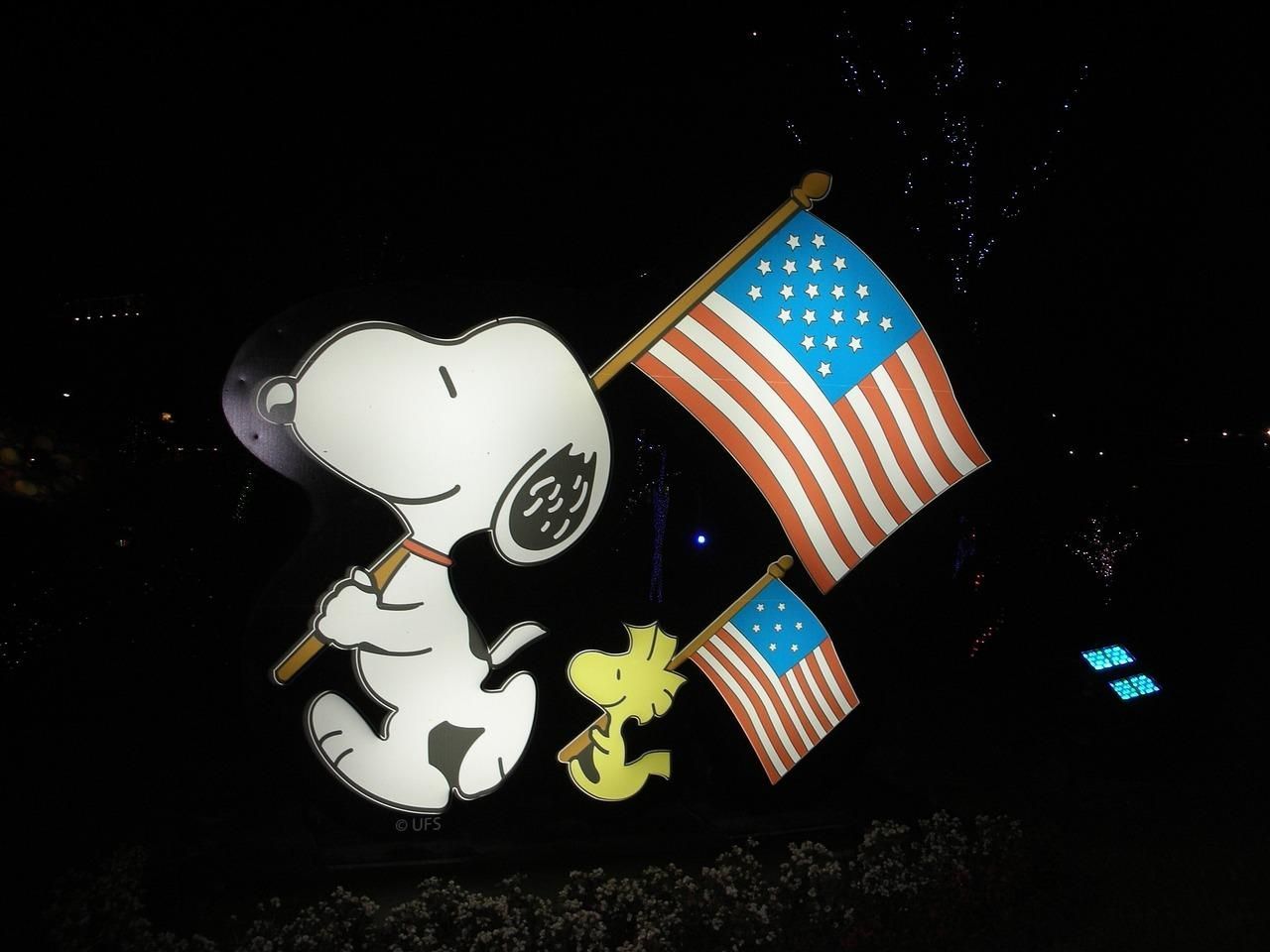
Image: somecomputer

What if a simple old beagle could slip into the role of a daring fighter pilot or a famous novelist without ever leaving his doghouse? That’s the magic of Snoopy.

From the 1950s onward, Charles Schulz gave this iconic, innocent dog a wildly imaginative life, where a simple nap on the roof could turn into a trip across the skies. He rarely speaks, yet every tilt of his ear and twitch of his eyebrow says more than words ever could. Snoopy shows readers that the biggest adventures often happen in our heads, proving that silence can tell a story louder than any punchline.

3
Garfield
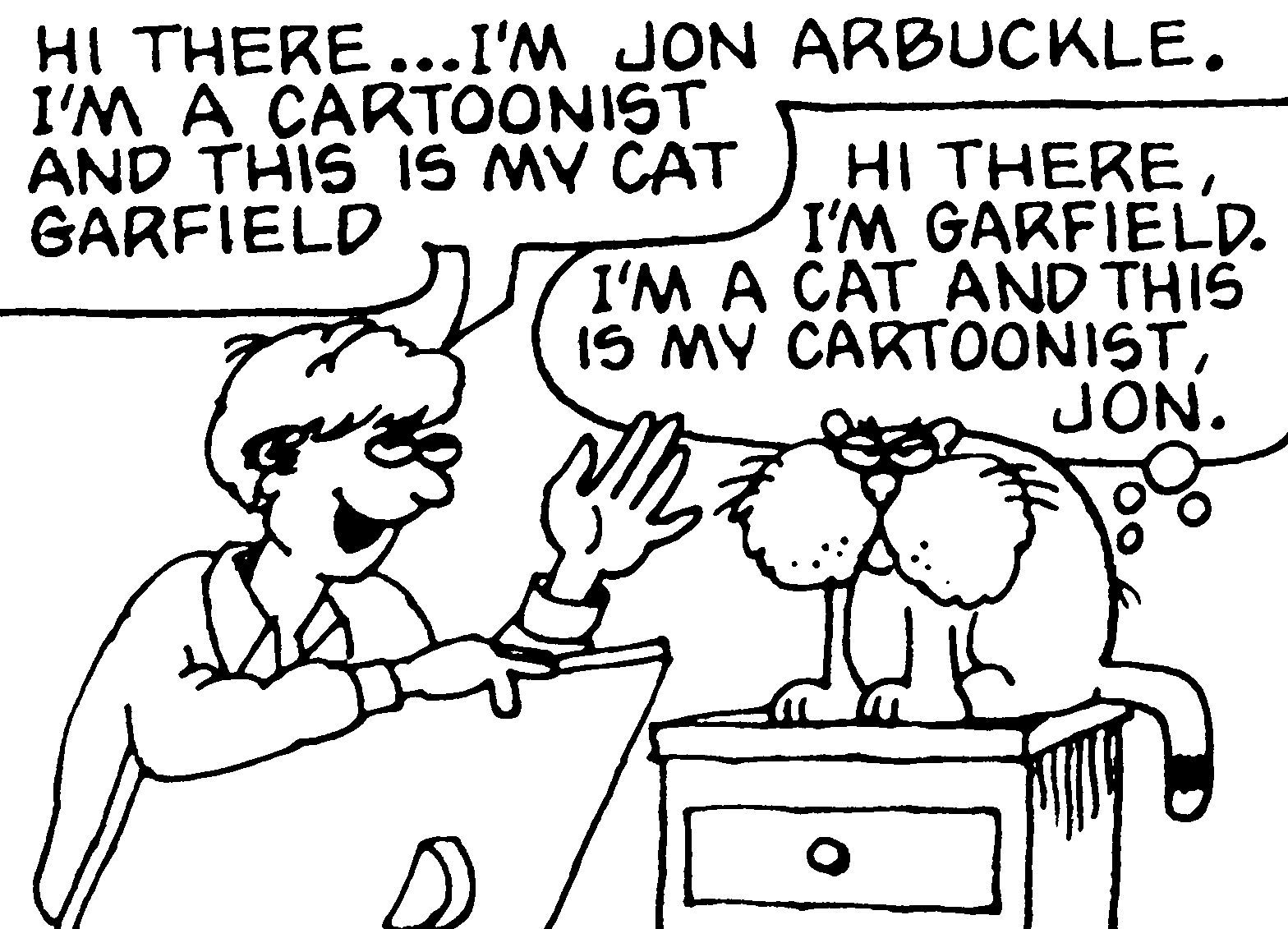
Image: Jim Davis, Public domain, via Wikimedia Commons

Who would have guessed that a fat, sleepy cat introduced in 1978 would become one of the sharpest minds in comic strip history? Garfield never bothers chasing mice or protecting the house—he lets others do the hard work while he perfects the art of comfort.

Fueled by lasagna and armed with sarcasm, he turns laziness into a lifestyle. His famous dislike of Mondays isn’t just a joke—it’s a philosophy. Why suffer through the grind when you can nap through it? In his own sly way, Garfield teaches readers that brains sometimes triumph over brawn, especially when pasta is involved.

4
Calvin from Calvin and Hobbes

Image: Michał Turkiewicz

What happens when childhood curiosity meets mischievous behavior? Calvin happens. Bill Watterson’s rebellious and cynical six-year-old, born in the 1980s, can transform an ordinary backyard into a galaxy of adventures.

One moment, he’s a space explorer dodging aliens; the next, a philosopher debating life with a stuffed tiger. All his alter egos are playful but also surreal monuments of imagination. Beneath the pranks and wild schemes, Calvin reminds us that messy questions often lead to the brightest discoveries.

5
Wednesday from The Addams Family

Image: Jon Tyson

Imagine a child who never giggles at the obvious but instead tilts her head and asks the questions no one else dares. That’s Wednesday. When Charles Addams first sketched her in the 1930s, she wasn’t just another character in a gothic family—she was the sharp thinker in braids.

While her relatives reveled in the bizarre, Wednesday cuts straight to the harsh reality with calm precision. Her curiosity is fearless, her observations unflinching, and her wit so dry it makes readers smirk. In a household full of quirks, she is the quiet compass pointing toward reason.

6
Nancy Ritz from Nancy
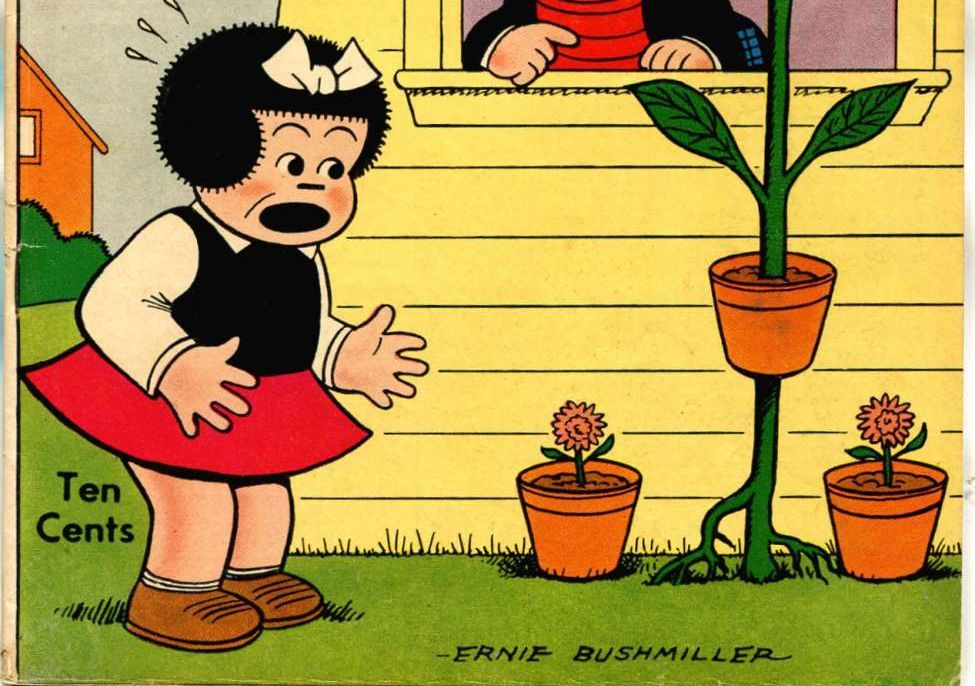
Image: Tip Top Comics / United Features / Ernie Bushmiller, Public domain, via Wikimedia Commons

Long before "less is more" became a fashion motto, Ernie Bushmiller’s Nancy was already proving the point. With just a few lines, Bushmiller built a character who could provoke laughs sharper than most elaborate gags. Nancy’s jokes landed fast, like little surprise jabs, and her clean, minimalist style made her humor feel universal. Decade after decade, her zingers have stayed as fresh as if they were written yesterday.

7
Popeye the Sailor Man from Thimble Theatre
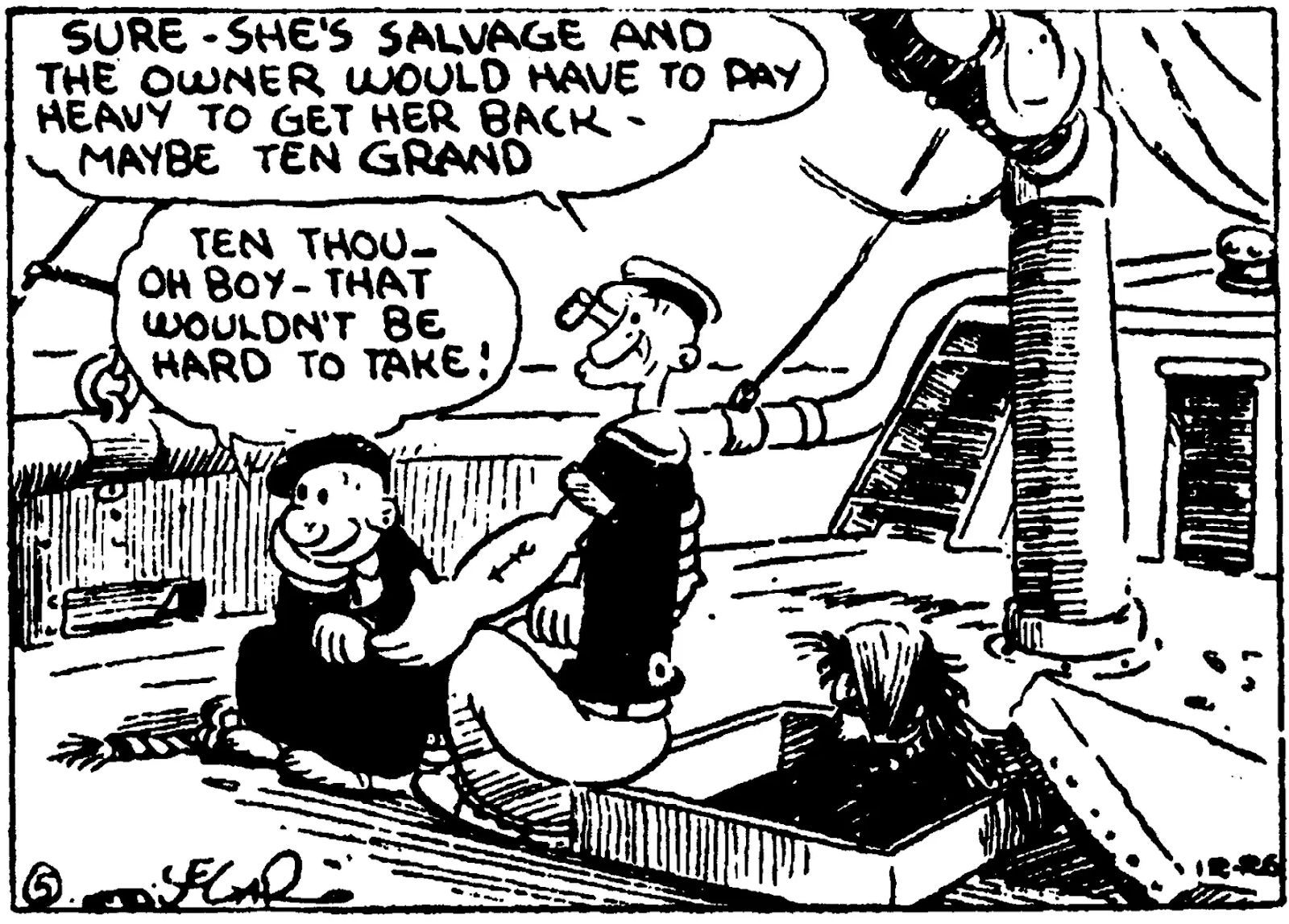
Image: E. C. Segar, Public domain, via Wikimedia Commons

Believe it or not, a cartoon sailor managed to change America’s dinner plates. When Popeye appeared in 1929, kids suddenly wanted to eat spinach, and sales of the leafy green soared by nearly a third.

With his anchor tattoos, squinty eye, and gravelly mumble, Popeye wasn’t exactly polished—he was tough, funny, and unforgettable. Every can of spinach he cracked open turned into instant muscle, proving that strength, humor, and even vegetables could be downright heroic.

8
Dick Tracy
Image: R Jangaard

Imagine picking up a newspaper in 1931 and spotting a hard-boiled detective with a futuristic radio strapped to his wrist. For readers of the day, it looked like pure science fiction. Chester Gould’s Dick Tracy wasn’t only solving crimes—he was predicting the kind of technology that wouldn’t appear in real life for decades.

Sharp as a tack, with a no-nonsense style, Tracy blends American gothic with futuristic flair, making every strip feel like a peek into tomorrow’s world.

9
Dennis from Dennis the Menace

Image: Alexandra_Koch

On the surface, Dennis seems like every parent’s headache: a freckle-faced kid with a knack for trouble. But dig a little deeper, and you’ll find a sharp mind hiding behind that mischievous grin.

Since the 1950s, his pranks have been less about chaos and more about clever planning and outsmarting the grown-ups. While Mr. Wilson might sigh in defeat, readers can’t help but laugh, knowing Dennis exposes truths adults often tiptoe around. Mischief is his tool; curiosity is his true engine.

10
Archie Andrews from Archie Comics
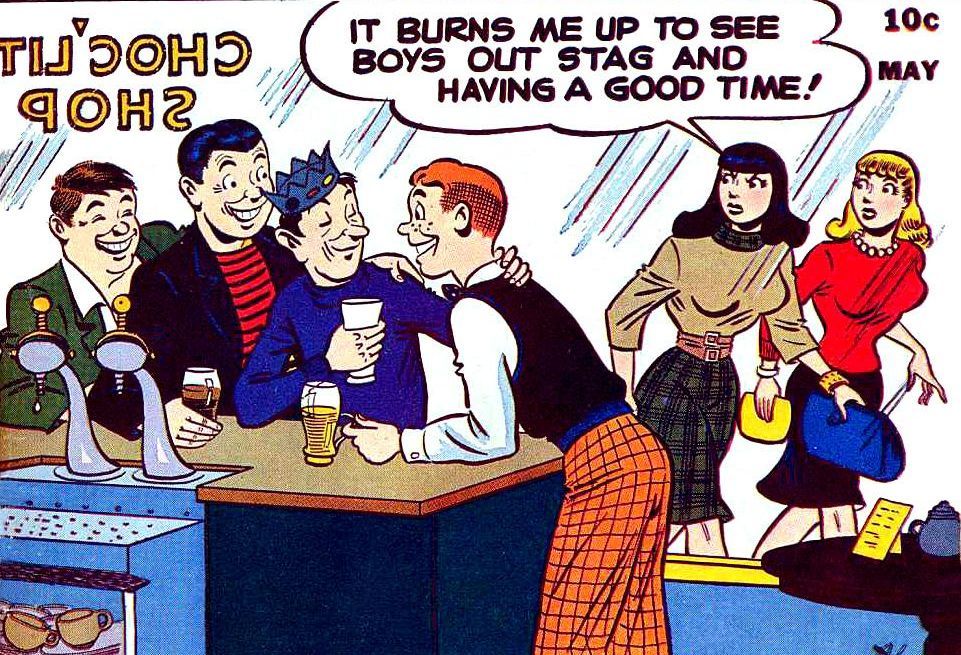
Image: Al Fagaly, Public domain, via Wikimedia Commons

Picture a small town where jukeboxes hum, soda fountains buzz, and Friday night dances are packed with teenagers. That’s the world Archie Andrews introduces us to. With his bright red hair and everyday charm, Archie isn’t a superhero—he’s the kid next door.

Yet, he manages to shine thanks to his relatable stumbles, from juggling homework to choosing between Betty’s sweetness and Veronica’s sparkle. His stories are funny snapshots of small-town America, frozen in time like a favorite old record.

11
Mooch and Earl from MUTTS

Image: PNW Production

At first glance, they’re just a cat and a dog. But look closer, and Mooch and Earl are small philosophers wrapped in fur. Patrick McDonnell gave Mooch his playful "Yesh" and Earl his gentle kindness, creating a duo that speaks volumes in just a few words.

MUTTS isn’t about big adventures, it’s about simple, tender moments: a nap in the sun, a wagging tail, a shared silence that feels like music. Through their quirks and quiet humor, Mooch and Earl remind readers that wisdom often comes from uncomplicated friendship.

12
Private Carl James "Beetle" Bailey from Beetle Bailey

Image: Mort Walker, Public domain, via Wikimedia Commons

When Mort Walker introduced Private "Beetle" Bailey in 1950, he proved that not every comic hero needs ambition—sometimes a nap is enough. Beetle isn’t just lazy; he turns slacking into a survival skill. While others march, plan, or panic, Beetle drifts away with a smirk, always finding the shortest route around hard work.

Although Camp Swampy is a tough setting, the punchline is clear: Beetle’s effortless way of avoiding obligations is almost genius. Somehow, doing nothing becomes his greatest talent.

General General 4 min read

Lights out!

10 tips to save electricity at home and save money

Image: Kelly Sikkema

The many electrical appliances and systems in a modern home can quickly raise your electricity bill if you don’t take steps to minimize consumption. Fortunately for us, there are many ways to save energy at home. From choosing energy-saving appliances to avoiding leaving lights on in empty rooms, there are countless techniques to save both power and money. Take a look at the following 10 tips. You may already know a few, but perhaps you’ll learn something new that can help!

1
If it’s not in use, turn it off

Image: Chris Haws

We start the list with this well-known advice: turn off the lights when nobody is in the room .

Additionally, switch off appliances completely rather than leaving them on standby, as standby mode continues to consume electricity. Most computers have energy-saving settings that automatically turn off the computer and screen after a period of inactivity.

2
Keep the temperature where you need it

Image: Natalia Y.

Whenever you are heating or cooling a room, remember to close the doors and windows that connect to other unoccupied parts of the building . This way, the heating or cooling equipment you are using will not require more energy than is necessary to maintain the desired temperature where you are.

During cooler months, ensure your curtains or blinds are properly sealed to keep the cold out. In warmer months, keep your curtains closed during the day to prevent heat from entering.

3
Wash and dry clothes once the basket is full

Image: engin akyurt

Avoid using your washing machine when your laundry basket is only half full; instead, use it when you have accumulated a full charge. Also, remember to select the appropriate washing cycle to optimize energy use.

On a related note, clothes dryers consume a significant amount of energy, so consider hanging clothes outside to dry or using a fan to help dry them indoors.

4
Save energy in the kitchen

Image: Jason Briscoe

Your kitchen offers many energy-saving opportunities. The fridge, one of the most energy-intensive appliances, runs 24/7 for obvious reasons but measures can be taken to make it a more efficient device. The ideal fridge temperature for the fridge is between 35° and 38°F. Make sure the door seal is tight, with no gaps or cracks that allow cold air to escape.

As for cooking, always put frozen food in your fridge in the morning to thaw out and reduce cooking time in the evening. Whenever possible, use a microwave, as it consumes significantly less energy than an electric oven. Plan to cook more and have leftover meals for the next day or the week ahead. Keep leftover meals in the freezer for convenience and minimal waste.

5
Smart heating and cooling

Image: Everett Pachmann

It may be tempting to adjust the thermostat a degree or two above or below the recommended settings depending on the season, but there is good reason to avoid doing that. Every degree above 20 can increase your heating bill by up to 10%. In winter, set your thermostat between 18 and 20 degrees. In summer, aim for 26 degrees or higher.

Additionally, some ducted systems allow you to disable heating or cooling in unoccupied rooms, which can help save energy.

6
Use energy-saving LED lights

Image: Anton Belashov

LED lighting has been around for a while and can save up to 80% on lighting costs. LED bulbs consume less power and last longer, which means that users spend less money and time replacing them.

Another perk, LEDs generate very little heat compared to incandescent and halogen bulbs, which convert much of their energy into heat. This can reduce cooling costs, especially in warm climates.

7
Solar energy

Image: Andreas Gücklhorn

The energy given to us by the sun can be harvested in solar panels that reduce the amount of energy we need to buy from the electricity company . Similarly, solar hot water systems can minimize gas usage, reducing reliance on gas-fired water heaters.

Solar panels and solar hot water systems used to be very expensive and had to be replaced much more often but, their costs have dropped significantly in recent years, making them more accessible.

8
TV settings

Image: Jonas Leupe

Today's high-definition televisions use around 60% less energy than earlier models. However, some Internet-ready models consume extra power even when turned off due to a "quick start" feature that enables faster boot-up . You can disable that option in your television's settings .

While perusing through the settings, you can also see if your model has an automatic brightness control, which will adjust the picture brightness to the level of light in the room. This can make a big difference in energy consumption.

9
Efficient appliances

Image: Vlad Zaytsev

Most of today's new appliances use half the energy of those from a couple of decades ago. If you're thinking of buying a new one, look for products with the Energy Star label, as they typically use 10 to 40 percent less energy than other models.

If you are going to buy a new computer, keep in mind that laptops use significantly less energy than desktop versions.

10
Insulate your roof

Image: Erik Mclean

Temperature affects air in different ways: heat rises, while cool air sinks. This means that if a house's roof is not properly insulated, heat will escape in the winter, and the cold from outside will seep in through the roof.

An insulated ceiling can make a big difference to your energy bills . Effective ceiling insulation can save up to 20% on cooling and heating costs.

General General 7 min read

REVOLUTIONARY ACHIEVEMENTS

The 10 Means Of Transportation That Changed America

Image: Jacob Norrie

From the time of the invention of the wheel more than 5000 years ago, human beings have found ways to move themselves and goods across the territory. But the last 250 years have brought groundbreaking innovations that changed the way we conceive transportation . In this sense, Americans have contributed a great deal to the development of new modes of transport that even allowed us to leave the atmosphere and travel to the moon.

In this article, we have compiled a list of the 10 means of transportation that changed the history of the United States and how all of humanity connects. Keep reading to discover the first American car, subway, and bike!

1
The Mayflower

Image: William Halsall, Public domain, via Wikimedia Commons

In 1620, about 100 passengers set sail on the Mayflower , a merchant ship that usually carried goods, to start a life in the New World. They left England in September and in November landed in Cape Cod, Massachusetts, putting the first stone in the foundation of the future American Nation.

The trip lasted two long months full of storms and perils. Finally, the ship, which was intended to land in Virginia, spotted the coastline up North in New England. The Mayflower pilgrims decided to stay in the area previously named Plymouth by famous explorer John Smith. During the first winter, the Mayflower served as a source of shelter . Although only half of the Pilgrims survived, they eventually founded the Plymouth Colony, celebrated the first American Thanksgiving with the Pokanoket people, and were able to establish a self-sufficient economy based on hunting, farming, and trading.

2
The Stagecoach

Image: Edward Joseph Holslag, Public domain, via Wikimedia Commons

Before the invention of trains and automobiles, animal power was the main form of transportation. People, goods, and even mail would travel by horse, donkey, oxen, and pulled coaches and wagons, connecting cities with rural parts of the country. In the United States, the carriage era started in the late 17th century and lasted until the early 1900s when the automobile replaced horse-drawn vehicles.

The stagecoach, in particular, was the main public vehicle responsible for the conquest of the American West. It traveled along predetermined routes and had stops every 12 or 50 miles where people could rest and grab a bite to eat and horses could be changed. Moving goods and people throughout the territory meant the growth of cities, the settling of rural areas, and the creation of wealth . In this sense, carriages played a key role in the transportation revolution that transformed American life forever.

3
The Clermont

Image: Samuel Ward Stanton (d1912), Public domain, via Wikimedia Commons

Although steamboats began to be developed in the late 1700s by the Scottish engineer James Watt, and that John Fitch was technically the first to build a steamboat in the United States in 1787, the North River Steamboat would be the one to make it into the history books .

This boat, also known as The Clermont , was designed by American inventor Robert Fulton. On August 17, 1807, this 142-foot-long vessel left New York City for Albany, constituting the first commercial steamboat service in the world . With a group of special guests aboard, the trip up the Hudson River took a total of 32 hours, at about 5 miles per hour. After this inaugural expedition, Fulton continued to build more boats, improving engine and propulsion design and making the steamboat a practical means of transportation. The success of The Clermont certainly changed river traffic and trade on major American rivers for years to come.

4
The American Railway System

Image: Popular Graphic Arts, Public domain, via Wikimedia Commons

There’s no doubt that trains had a significant role in shaping the landscape of the country. The origins of trains can be found in the ancient world, back when causeways and wooden rails were used to guide wagons. However, it would not be until the invention of the steam locomotive in the early 1800s that the history of transportation would be forever changed , spurring an industrial revolution around the world. And The United States was no exception.

The construction of new factories drove the need for materials to be transported over large distances, and railway travel provided the perfect solution. The concept of constructing a railroad in the U.S. was first conceived in 1812 by Colonel John Stevens. Yet, the first American railroad, the Baltimore and Ohio Railroad, was built in 1827 . For the next 50 years, the government would issue grants to build railroads across the country, which became a very lucrative investment for companies, leading to economic growth and the development of new towns and cities.

5
The San Francisco Cable Car

Image: Public domain, via Wikimedia Commons

Did you know that the cable car was invented in San Francisco in the late 1800s? It was developed by Andrew Smith Hallidie based on mining systems and is a symbol of the city still today. Clay Street Hill Railroad began public service on September 1, 1873, and it was an instant success. Other companies followed suit and launched their versions of Hallidie's patented system in the following years, totaling 53 miles of track across the city.

Later, although the electric street car, a lot cheaper to build and maintain, became the vehicle of choice for city transit, cable cars continued to be better equipped for steep hills. In 1947 the city Mayor urged to "get rid of all cable lines" leading a committee to launch a public campaign to save this iconic vehicle. Even celebrities rallied for the cause and ultimately the cable car system survived the attempt, specifically because of its great cultural value, especially among the thousands of tourists who visit San Francisco every year.

6
The Columbia Bicycle

Image: Boston Public Library, Public domain, via Wikimedia Commons

In 1878, Civil War veteran Colonel Albert A. Pope, inspired by a British bike he saw at the Philadelphia World’s Fair, hired a sewing machine company to make the first American bicycle . The brand went on to be called Columbia , and by 1888 was manufacturing about 5,000 high-quality bikes a year. However, for a couple of years, it would not be seen as a means of transportation but as pure entertainment.

Later, with the development of the British Rover safety bike, bicycles were no longer limited to athletes and the brave. Pope started selling these easier-to-ride vehicles and the American bicycle industry finally took off in 1890. By the beginning of the 20th century, 1 million bikes were produced in the U.S. yearly and people were even riding them to work every day.

7
The First American Car

Image: Public domain, via Wikimedia Commons

Few people know that the first successfully American manufactured car was actually developed by bicycle makers. In the Autumn of 1893, brothers Charles and Frank Duryea road-tested the first gasoline-powered automobile in Chicopee, Massachusetts . It was, in fact, an old horse-drawn buggy into which the brothers installed a 4 HP, single-cylinder gasoline engine.

By 1899 there were around thirty companies manufacturing cars in the U.S. One of the most representative staples of the history of automotive manufacturing in the country is, no doubt about it, the Ford Model T . This "affordable" car was intended for the American middle class and it was first produced in 1908 in Detroit. Within days of its release, over 15,000 Ford cars were sold and the popularity of this iconic American company is still relevant today.

8
The Tremont Street Line

Image: Boston Transit Commission, Public domain, via Wikimedia Commons

The first subway in America was built during the second phase of the Industrial Revolution in Boston, Massachusetts in 1897. This cutting-edge mode of transport was possible thanks to the invention of the electric motor by Frank Sprague in 1866 . But, why Boston? In the late 19th century, bustling Boston had a street congestion problem due to overcrowding and frequent blizzards and needed an out-of-the-box solution.

City officials agreed the best thing to do in a city with narrow colonial streets was to build an underground subway. Finally, on September 1, 1897, a four-track subway line between Boylston Street and Park Street was opened to the public . Additional lines and stations have been added throughout the following centuries, ushering in a new era in American public transportation.

9
The 1903 Wright Flyer

Image: John T. Daniels, Public domain, via Wikimedia Commons

On December 17, 1903, a powered airplane invented by brothers Orville and Wilbur Wright made the first sustained flight over the skies of North Carolina . The Wright Flyer —also known as the _Kitty Hawk_— was a single-place biplane that managed to fly 852 ft on its fourth attempt before it was blown over on landing. The aircraft was later repaired but never flew again —although you can now visit it at the National Air and Space Museum in Washington, D.C.

After this exceptional achievement by the Wright brothers, the progress of American aviation never ceased to amaze. For example, in 1910 the St. Petersburg–Tampa Airboat Line started to operate and although it lasted only three months, it is now considered the United States’ first airline. By 1918 the U.S. Post Office was using airplanes to transport mail across the country . Finally, in 1958 Pan American ushered in the Jet Age with the iconic Boeing 707.

10
The Apollo 11

Image: Project Apollo Archive, Public domain, via Wikimedia Commons

From the 1950s onwards, the Soviet Union and the United States embarked on a space race that made possible an unprecedented program of scientific exploration. On April 12, 1961

the Soviets managed to send the first person into space. In response, just 23 days after Yuri Gagarin, the first American man entered space aboard the Freedom 7 Mercury capsule . Alan Shepard’s trip lasted only 15 minutes and 28 seconds but it was more than enough to mark the beginning of an unprecedented revolution. Who would have thought that only 8 years later we would be transporting humans to the moon?

The story of Apollo 11 is well known, yet it deserves a special place in the history of American transportation , which is by no means limited to the Earth. Without the development of space shuttles, it would be impossible to imagine the future of transportation, a future that will surely be defined by the conquest of the unknown.

Explore more American facts

Choose your favorite category!

General
General

As American as apple pie—the very best America has to offer!

Culture
Culture

Delve into the astounding richness of American lore.

Geography
Geography

Hop in and explore vast and diverse American landscapes.

History
History

Discover the key moments that shaped the United States.