Culture Culture 3 min read

Powerful styles

How can a beard change history? 10 US presidents with iconic facial hair!

Image: Library of Congress

Can you guess how many US presidents have had beards? And how many grew a mustache? Which one comes to mind first? For some, it's Lincoln's unmistakable beard; for others, Roosevelt's distinguished mustache; and some will remember John Quincy Adams' sideburns. From the most classic mustaches to eccentric beards, today, we're taking a look at 10 unforgettable presidential styles!

1
Abraham Lincoln

Image: Library of Congress

Probably one of the most remembered presidential beards is that of the 16th US President and author of the unforgettable Gettysburg Address, Abraham Lincoln. But, while his image is forever linked to his top hat and distinctive, mustache-free beard, he actually didn't always have it.

Before he was elected president, an 11-year-old girl wrote him a letter suggesting he grow a beard. Fortunately, Lincoln took her advice! Thus, he became the first president to grow a beard while in office.

2
Theodore Roosevelt

Image: Library of Congress

Another iconic style was that of Teddy Roosevelt. His handlebar mustache is not only seen in photos and portraits from his time in office but is also forever etched on the imposing Mount Rushmore. Many men of his era imitated his dramatic, thick, and bushy mustache, which perfectly matched the vigor and toughness that defined the 26th US president.

3
Ulysses S. Grant

Image: Sergei Starostin

Beard? Yes! Sideburns? Of course. Mustache? That too! That is the case with Ulysses S. Grant, a president with a full look, fitting for a Civil War hero.

Grant's beard and mustache were thick -though not long- covering his jawline and also much of his cheeks. Thus, the 18th US president set a fashion trend that would be followed by several other presidents of the 19th century.

4
Grover Cleveland

Image: Dave Sherrill

Another president with a well-remembered mustache was Grover Cleveland, the first US president to serve two non-consecutive terms.

Cleveland's mustache was fluffy and extended just past the edges of his mouth. Although this might have been a problem when dining with guests, his mustache always looked neatly trimmed.

5
William Howard Taft

Image: Ronaldo Guiraldelli

Now, it's time to talk about the only person in the history of the US to have served as both President and Chief Justice of the Supreme Court: William Howard Taft.

Taft sported a bushy mustache, like Teddy Roosevelt, who served right before him. But, unlike his predecessor, the tips of Taft's mustache didn't point downward; instead, they bent upward, making it much more theatrical.

6
John Quincy Adams

Image: Library of Congress

John Quincy Adams didn't need a mustache to stand out with his style. His hallmark was something quite original: sideburns.

Remembered for being bushy and always well and neatly groomed, the 6th president's memorable sideburns extended down the sides of his face, even connecting beneath his chin!

7
Rutherford B. Hayes

Image: Nikolaos Dimou

Rutherford B. Hayes was another 19th-century president known for sporting a full beard. In addition to being thick, his beard and mustache were quite long and even joined together, fully covering his lips, as seen in portraits from the time. While the 19th President looked really distinguished, we can't help but wonder how he handled summer with that style!

8
James A. Garfield

Image: Sean Foster

James A. Garfield had a look strikingly similar to that of his predecessor, Rutherford B. Hayes.

Also sporting a thick, long, full beard, Garfield's mustache was slightly shorter than Hayes', and his beard extended further onto his cheeks. It seems that you had to put some serious effort into perfecting your facial hair to be trendy in the late 19th century!

9
Martin Van Buren
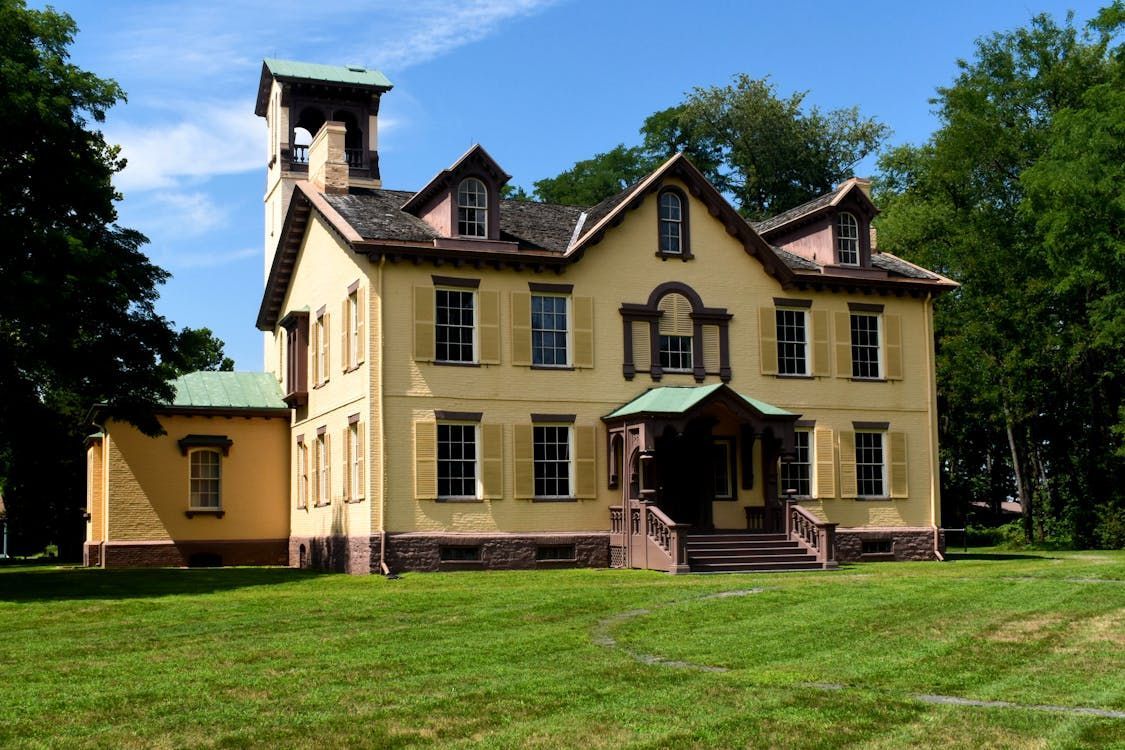
Image: Jack Bulmer

"Mutton chops" is the term for the thick, bushy sideburns worn by Martin Van Buren, the 8th president of the United States, a style known more for its volume than its tidiness.

As seen in portraits from different moments of his life, Van Buren had sideburns from a young age, but they definitely stood out during his presidency. In fact, political cartoons of his time often emphasized that very feature, making his sideburns exaggeratedly large.

10
Zachary Taylor

Image: Josh Sorenson

Before Lincoln, the dominant fashion was a clean-shaven look. But Zachary Taylor -just like John Quincy Adams and Martin Van Buren- came to revolutionize things with his sideburns.

We have to admit Taylor's sideburns were far more modest than those of his predecessors, but he remains one of the few presidents to have worn any facial hair before Honest Abe made it a trend!
General General 3 min read

The language of today

Could you make a "GRWM"? Here's modern slang you need to know!

Image: Cup Of Couple

If you scroll through social media for even a few minutes, you'll likely come across terms like "bussin'" or "amped" and unusual abbreviations like "GRWM" or "IYKYK." Do you know what they mean? If you want to stay up to date with these and other trending slang terms, don't miss this article!

1
Extra

Image: Obie Fernandez

Some people are reserved and discreet, while others are just "extra." This slang term describes someone who is exaggerated, overly dramatic , or excessive—does anyone come to mind?

If a friend shows up to a casual hangout in an extravagant outfit or makes a big deal out of something insignificant, you can call them "extra."

2
GRWM

Image: Alexander Shatov

A popular abbreviation on TikTok is "GRWM." It's so well-known that you've probably heard it before.

Since fashion influencers often share videos about their outfits or ask for clothing advice, "GRWM" stands for "Get Ready With Me." With this phrase, video creators make viewers feel like part of their daily lives and invite them to join their digital adventures.

3
Bussin'

Image: Jackson Sophat

When it comes to flattery, "bussin'" is the term you need to speak today’s language. Something described as "bussin'" is exceptionally good, impressive, or exquisite. While it's most commonly used to describe food—like in "That Burger was just bussin'"—it can also be used to compliment other things or actions.

4
Mid

Image: Eran Menashri

Contrary to the previous term, "mid" is used to describe something as average or unimpressive. While it isn’t necessarily negative, it implies that a performance, dish, or speech wasn’t exactly the best you’ve seen.

"Mid" comes from the word "middle," suggesting that what you're referring to is neither good nor bad—it's just somewhere in the middle.

5
Spill the tea

Image: Manki Kim

If someone asks you to spill the tea, they’re not asking you to make a mess on the snack table—they want something much more interesting.

"Spill the tea" is a slang expression used to ask someone to share juicy gossip . If you love drama or want to stay up to date with the latest news and scandals, this phrase will come in handy. As for its origin, some suggest that "spill the tea" may have evolved from an earlier phrase with a similar meaning: "spill the beans."

6
IYKYK

Image: Melissa Askew

While it may look like a word from a strange, distant language, "IYKYK" is actually an abbreviation for "If you know, you know." It's great for those inside jokes you share with your friends or recalling moments that only a select group was part of. You know, something intimate, secret, or exclusive.

7
GOAT

Image: Nandhu Kumar

What do Michael Jordan, Aretha Franklin, Babe Ruth, Frank Sinatra, Anthony Hopkins, and Serena Williams have in common? Well, they're all GOATs! But what does that mean?

"GOAT" doesn’t refer to the adorable animal—it stands for "Greatest of All Time." That's right! This term is used to describe those who truly stand out as the best in their field, discipline, or art.

8
No Cap/Cap

Image: Jakob Owens

It seems that saying "true" or "false" has gone out of fashion. The new trend is to say "no cap" or its opposite, "cap." As you might guess, these terms relate to truthfulness, honesty, and authenticity .

If a friend says, "The show was incredible, no cap," they’re assuring you they’re telling the truth. But if someone hears a suspicious story and calls out "cap," they’re likely calling it a lie.

9
Amped

Image: Austin Schmid

Have you been on Cloud Nine lately? If so, there's a perfect slang term for you: "amped." This adjective describes someone who’s excited about something or simply feeling really, really happy .

The term originated in the 1980s as a shortened form of "amplified," originally referring to someone highly charged with energy. Over time, it became associated with excitement and joy and has recently made a comeback, especially on social media.

10
Bet

Image: Ursula Castillo

If you're talking with a group of teens and you want to express your agreement with something, just say, "Bet." This short word is commonly used today to mean "Yes," "Exactly," "That’s it," or "Let’s do it."

As you might have guessed, it was born in the gambling world and is tied to that feeling of confidence or certainty needed when placing a bet.

Explore more American facts

Choose your favorite category!

General
General

As American as apple pie—the very best America has to offer!

Culture
Culture

Delve into the astounding richness of American lore.

Geography
Geography

Hop in and explore vast and diverse American landscapes.

History
History

Discover the key moments that shaped the United States.