Geography Geography 4 min read

FUN FOR FREE

Free of Charge: Visit These 10 Attractions In The U.S.

Image: Elijah Chen

The United States has many things to offer, there are sights and views aplenty. Museums, parks, historical sites, UNESCO sites, and the biggest amusement park in the world: Disney World! However, free activities and attractions receive much less attention so, we’ve gathered a list of ten things you can do for free to get to know our country better. Are you curious? Read on and find out!

1
Central Park

Image: Harry Gillen

Let’s open the list with a classic one: Central Park. Located in the heart of New York, Central Park attracts local and foreign visitors by the millions. The reasons are just one too many to list in this article but to put it simply, the park offers a wide variety of activities with some of the most astounding views in the city.

Within the 843 acres, visitors can enjoy views of the Ramble and Lake, the Central Park Zoo, Hallett Nature Sanctuary, and more. No visit to New York is truly complete without a visit to Central Park!

2
Independence National Historical Park

Image: Miguel Ángel Sanz

Our vast country has proudly fought its way to independence and the landmarks that narrate that history are scattered all over the country. However, one city has more landmarks than any other: Philadelphia, Pennsylvania.

Here, you’ll find the Independence National Historical Park, a federally protected area that comprises several historic buildings like the Independence Hall or the Liberty Bell. Do you want to go over history? This is the place for you, and it’s free!

3
Great Smoky Mountains National Park

Image: NATHAN MULLET

If nature is your thing, National Parks are the best options. They offer the best views for a free entrance, what’s better than that?

The Great Smoky Mountains National Park is the most visited park in our country and, big as it is, it offers more than just stunning mountain views. The park spans across the border of Tennessee and North Carolina and, in it, you can choose to visit the historic structures, walk along the hiking trails, enjoy the waterfalls, and more!

4
Cape May County Park & Zoo

Image: Daiga Ellaby

After two Snow Leopard cubs, the Cape May County Zoo was under the spotlight, and for good reason. This attraction will keep you entertained and won’t make you break the bank.

The animal exhibits, which feature more than 500 creatures , are amazing. Besides, you can also enjoy picnic areas, playgrounds, and walking trails.

Open every day except Christmas day, the zoo is a perfect opportunity to get to know the wildlife and enjoy an outdoor activity day for free!

5
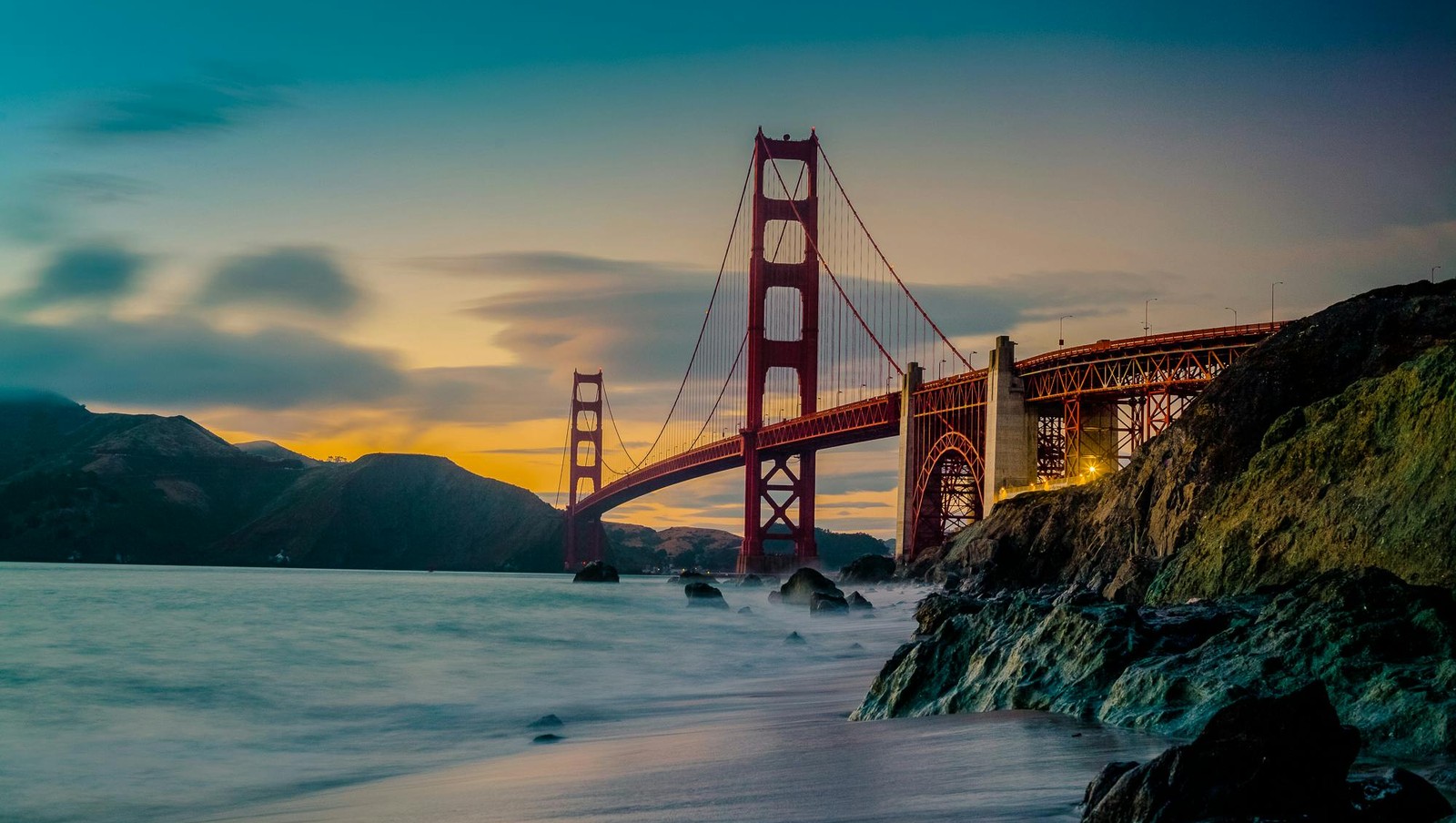
Golden Gate Bridge

Image: Maarten van den Heuvel

This magnificent bridge has been the main character in many films and TV shows, it’s extraordinary, and imposing and it attracts thousands of visitors every year.

The Golden Gate Bridge is one of the most recognizable constructions in America and the World. It is one of San Francisco’s gems and crossing it is just a must for anyone paying a visit to the city. Moreover, visitors can enjoy the Golden Gate National Recreational Area and the Golden Gate Park. Just amazing, isn’t it?

6
U.S. Mint

Image: Adam Nir

Have you ever wondered where the coins you handle every day come from? If that is so, you have to pay a visit to the U.S. Mint in Philadelphia.

Visitors can learn more about the history of the nation’s coins through a self-guided tour that takes only 45 minutes. Additionally, there is a gift shop that offers collectible coins and tokens about the U.S. financial system. And of course, you’ll be able to see how the coins are actually produced. If that’s not enough, meeting Peter the Mint Eagle, a real bald eagle will surely convince you, right?

7
Freedom Trail

Image: Brett Wharton

This is no short trail. The Freedom Trail spans for 2.5 miles and it goes through a variety of locations that are significant in the construction of our nation.

Starting in Boston Common, in downtown Boston, the Trail takes you through historic sites , important buildings, and churches. Note that not every stop in the Trail admits visitors for free, but most of them do at the same time accept donations.

8
JC Raulston Arboretum

Image: micheile henderson

In Raleigh, North Carolina, you can find JC Raulston Arboretum, a 10-acre botanical garden that features a massive collection of plants, bulbs, trees, and more from over 50 countries!

With just a visit, you’ll get to know the most diverse plant collection . In the Arboretum, you’ll find more than ten carefully curated gardens and enjoy educational programs and workshops for all ages.

9
Loggerhead Marinelife Center

Image: Giorgia Doglioni

Located in Juno Beach, Florida, Loggerhead Marinelife Center is devoted to marine conservation. It specializes in the treatment and rehabilitation of sea turtles and it offers its visitors the possibility to learn about sea animals’ ecosystems for free.

This place is perfect for children, but people of all ages can enjoy a visit through the guided tours and the educational programs it has. Now, the highlight of this place? You can also adopt a turtle and contribute to ocean conservation! How cute is that?

10
National Infantry Museum and Soldier Center

Image: Levi Meir Clancy

Located in Columbus, Georgia, this museum with free admission goes over the history of the U.S. Army Infantry . The archive collects pieces from the American Revolution to the more current military operations. The exhibits are curated and displayed in different galleries depending on the era.

It is an interactive museum that takes visitors through the values that guide the military task, such as duty, loyalty, service, honor, integrity, and more. Which of these places are you visiting next?
History History 3 min read

The many faces of the flag

Our flag has changed 27 times: Explore its evolution

Image: Joshua Hoehne

The Stars and Stripes are now recognized around the world, but the US flag didn’t always look the way it does today. While the red, white, and blue colors have been there from the beginning, the design has changed about 27 times! And so have the rules for handling it. If you want to see what our flag looked like in the past, or learn more about the protocols and traditions surrounding it, keep reading!

1
1776

Image: Bureau of Engraving and Printing., Public domain, via Wikimedia Commons

During the American Revolution, the Grand Union Flag, also called the Continental Colors, was created to represent the colonies. It featured 13 alternating red and white stripes (symbolizing the original colonies), but instead of stars in the upper left corner like we see today, it displayed the Union Jack.

2
1777

Image: Bureau of Engraving and Printing., Public domain, via Wikimedia Commons

In 1777, following the Declaration of Independence, the Continental Congress adopted the first official flag of the United States. It featured 13 alternating red and white stripes, which still honor the original colonies today. Replacing the Union Jack, it introduced a new element that would be key for the rest of its history: 13 white stars set in a blue field, or canton, arranged in a circle to symbolize equality and unity among the states.

3
1795

Image: Nyttend, Public domain, via Wikimedia Commons

It wasn’t until 1795 that the flag changed again, when two more stars and two additional stripes were added to represent the recently admitted states of Vermont (1791) and Kentucky (1792). This version was the only US flag to feature more than 13 stripes and later became known as "The Star-Spangled Banner", since it was the very flag that inspired Francis Scott Key to write the poem that would later be the lyrics of the national anthem.

4
1818

Image: Michael Rivera, CC BY-SA 4.0 <https://creativecommons.org/licenses/by-sa/4.0>, via Wikimedia Commons

In 1818, the flag’s design changed once again. The 15 stripes were reduced back to 13 to permanently honor the original colonies. Five new states had joined the Union, bringing the total number of stars to 20. These stars were sometimes arranged in straight rows and other times in the shape of a large star, which earned this version the nickname "The Great Star Flag."

5
1912

Image: This image is a work by Wikipedia and Wikimedia Commons user Aktron.When reusing, please credit me as: Aktron / Wikimedia Commons. I would appreciate being notified if you use my work outside Wikimedia.More of my work can be found in my personal gallery.csen+/−csenmkplsr+/−, CC BY-SA 3.0 <https://creativecommons.org/licenses/by-sa/3.0>, via Wikimedia Commons

Each new state joining the Union meant one more star on the flag. In 1912, when New Mexico and Arizona were added, the number of states reached 48, so their stars also took their place. That year, President Taft issued an executive order setting the official proportions of the flag and specifying that the stars should be arranged in six horizontal rows of eight.

6
1960

Image: chris robert

The most recent design change came in 1960. After Alaska and Hawaii joined the Union in 1959, two more stars were added, bringing the total to 50. They were arranged in nine alternating rows of six and five stars, like the official flags you see displayed across the country today.

7
Flag time

Image: Jon Sailer

Beyond its official design, the US flag follows a set of protocols established over the years. One key rule specifies the time to display it: generally, the flag should be flown from sunrise to sunset. If displayed at night, it must be properly illuminated.

8
Weather conditions

Image: Anandu Vinod

The flag code doesn’t just set the time of day; it also indicates the proper weather conditions for display. According to the protocol, the flag should not be flown in bad weather, such as rain, snow, or storms, unless it’s an all-weather flag designed for such conditions.

9
Position

Image: Roger Starnes Sr

Of course, the flag must always have the blue canton in the upper left corner. But there are more rules for its position. When flown with other symbols, such as state flags, the national flag must be in the center and slightly higher. Additionally, if it needs to be lowered from the flagpole, the flag must never touch the ground.

10
Don'ts

Image: Alex Martinez

If you need to handle the flag, it’s important to know the proper way. But it's also crucial to know what not to do. Some of the key "don'ts" include never letting it touch the ground, avoiding creasing it, not writing or drawing on it, and one that might surprise many: don’t use it as clothing or decoration.

Culture Culture 3 min read

No Empire State on this list

It is hard to believe, but these architectural gems are often overlooked

Image: Kyoshi Reyes

When most people think of American architecture, famous structures like the Chrysler Building or the Golden Gate usually come to mind. But tucked away in quiet towns and unexpected corners are some truly stunning, lesser-known architectural gems. Let’s take a tour of 11 of these under-the-radar buildings that deserve a second look.

1
Forestiere Underground Gardens

Image: Francesco Ungaro

Baldassare Forestiere, a Scicilan immigrant built a series of subterranean structures over a period of 40 years in Fresno, California.

Initially created as a small cellar to escape the summer heat, Baldassare carved a series of attached rooms, with underground trees , creating an incredible structure that can be visited today.

2
Swaminarayan Akshardham

Image: Usha Kiran

A structure that most people would associate with a very different part of the world was built between 2015 and 2023 in Robbinsville, New Jersey: a large Hindu temple . It is the largest building of this kind in the United States and the second largest in the world.

3
Cathedral of Learning

Image: henry perks

A 42-story skyscraper that looks like an Art Deco cathedral, the Cathedral of Learning is part of the University of Pittsburgh’s main campus in Pittsburgh, Pennsylvania.

Standing at 535 feet, this Late Gothic Revival structure is the tallest educational building in the Western Hemisphere and the second-tallest university building in the world. It is also the second-tallest gothic-style building in the world, after the Woolworth Building in Manhattan.

4
Hammond Castle

Image: Ted Gracz

An impressive feature of the Atlantic coast in the Magnolia area of Gloucester, Massachusetts, the Hammond Castle was the home, laboratory, and museum of John Hays Hammond Jr., an inventor and pioneer in the study of remote control .

The building is composed of modern and 15th-, 16th-, and 18th-century architectural elements, and operates as the Hammond Castle Museum, displaying Hammond's collection of Roman, medieval, and Renaissance artifacts as well as exhibits about his life and inventions.

5
San Antonio Japanese Tea Garden

Image: Annie Spratt

Imagine a Japanese Tea Garden set in an abandoned limestone rock quarry, and you will be picturing the San Antonio Japanese Tea Garden, or Sunken Gardens in Brackenridge Park, San Antonio, Texas.

After several years working as a quarry, the area was redeveloped as the tea garden that it is today, with walkways, stone arch bridges, an island, a Japanese pagoda, and, of course, a tea room .

6
Ashbel Smith Building

Image: Mario La Pergola

The huge Romanesque Revival building in Galveston, Texas, familiarly known as Old Red, was built in 1891 with red brick and sandstone . The Ashbel Smith Building, as it is officially named, was the first University of Texas Medical Branch edifice.

7
Mission San Xavier del Bac

Image: Sean Benesh

The oldest European structure in Arizona is the Mission San Xavier del Balc. This historical Spanish Catholic mission is 10 miles south of Tucson and was founded in 1692. It is an outstanding example of Spanish Colonial architecture in the United States and it is a well-known pilgrimage site, with thousands visiting each year on foot and on horseback, some among ceremonial cavalcades or cabalgatas.

8
New River Gorge Bridge

Image: Ashley Knedler

The New River Gorge Bridge is a steel arch bridge 3,030 feet long over the New River Gorge near Fayetteville, West Virginia, in the Appalachian Mountains. With an arch 1,700 feet long, the New River Gorge Bridge was t he world's longest single-span arch bridge when completed in 1977.

9
National Park Seminary

Image: Charles Marleau

National Park Seminary was a private girls' school open from 1894 to 1942 , located in Forest Glen Park, Maryland. Its name refers to the nearby Rock Creek Park. The historic campus boasts a massive building dating from the late 1800s.

10
Mercer Museum

Image: Camila Credidio

The incredible Mercer Museum is a poured-in-place concrete structure built by the museum's founder, archeologist Henry Chapman Mercer, originally meant as his private residence. It is located in Doylestown, Pennsylvania.

11
Annunciation Greek Orthodox Church

Image: Charles Marleau

The Annunciation Greek Orthodox Church in Wauwatosa, Wisconsin, United States, was designed by architect Frank Lloyd Wright in 1956, and completed in 1961.

Created according to traditional Byzantine architectural forms , but reinterpreted by Wright to suit the modern context, this building offers a striking view to its visitors.

Explore more American facts

Choose your favorite category!

General
General

As American as apple pie—the very best America has to offer!

Culture
Culture

Delve into the astounding richness of American lore.

Geography
Geography

Hop in and explore vast and diverse American landscapes.

History
History

Discover the key moments that shaped the United States.