Culture Culture 4 min read

Hollywood wars

Frank Sinatra had a rival: 10 celebrity feuds you won't believe
Image: Justin Aikin

It happens to everyone: you get along better with some people than with others. Among celebrities, it’s no different: clashing egos, feuds, and rivalries are far from uncommon. From endless disputes over trivial matters to major betrayals and public fights, today we’re going to look back at 10 celebrity rivalries that made headlines. If you think celebrity feuds can’t surprise you anymore, think again.

1
Marlon Brando vs. Frank Sinatra
Image: Dushawn Jovic

Frank Sinatra and Marlon Brando are names that hardly go unnoticed anywhere in the world. These stars of music and cinema crossed paths during the filming of Guys and Dolls in 1955, and it didn’t take long for a clash of egos. Brando’s method-acting style often conflicted with Sinatra’s more traditional approach, while Sinatra saw Brando’s performance as pure pretension. Their very different ways of thinking and working led to a long-standing animosity that lasted for years and, according to some sources, included everything from insults to threats.

2
Betty White vs. Bea Arthur
Image: Joshua Hoehne

It’s hard to believe that these two women, who played best friends on The Golden Girls (1985-1992), couldn’t stand each other in real life. Apparently, Bea Arthur, who was more reserved, was often irritated by Betty White’s cheerful, outgoing humor. According to people who worked on the set, the two actresses didn’t get along at all, but they remained totally professional, and we have to admit that, on this side of the screen, you’d never know it.

3
Joan Crawford vs. Bette Davis
Image: philippe collard

Joan Crawford and Bette Davis were divas of Hollywood’s Golden Age, both highly successful and Oscar winners. Ironically, it was their similarities that led to one of the most famous feuds in the industry, as professional competition slowly turned into personal resentment. In 1962, they finally worked together on What Ever Happened to Baby Jane? , and according to reports, fights, insults, pranks, and even acts of sabotage were constant throughout filming.

4
Debbie Reynolds vs. Elizabeth Taylor
Image: Satria Aditya

Love triangles don’t exist only in fiction. And that’s what happened between Debbie Reynolds and Elizabeth Taylor. The two were close friends before Elizabeth had an affair with Debbie’s husband, singer Eddie Fisher. The scandal ended Reynolds’ marriage in the late 1950s and dominated headlines and magazine covers.

Surprisingly, it didn’t end there. Years later, Reynolds reached out, and the two actresses reconciled. Their bond was sealed when they worked together on These Old Broads (2001), a comedy written by Carrie Fisher, one of the daughters Reynolds had with Eddie Fisher.

5
Johnny Carson vs. Joan Rivers
Image: Ioann-Mark Kuznietsov

American late-night television wouldn’t be the same without Johnny Carson and Joan Rivers. Carson was the king of TV, hosting The Tonight Show for 30 years, while Rivers was a frequent guest host. Their friendship ended when Rivers accepted her own competing show on Fox. Carson reportedly never forgave her and banned her from The Tonight Show for the rest of his life.

6
Sylvester Stallone vs. Arnold Schwarzenegger
Image: Nemesia Production

Sylvester Stallone and Arnold Schwarzenegger are undeniable icons of action cinema, which boomed in the 1980s and 1990s. But the battles weren’t just on screen; they spilled into real life. The two actors developed a long-running rivalry fueled by intense professional competition to be seen as the ultimate action star and land the biggest roles. They often criticized each other on TV and clashed at public events, but over the years, tensions eased, and these rivals eventually became close friends.

7
Madonna vs. Elton John
Image: Jason Leung

The music world is not immune to feuds. In fact, one of the most famous rivalries unfolded in pop music between two giants of the genre: Madonna and Elton John. The fight began in the early 2000s, when Elton publicly criticized the Queen of Pop, accusing her of lip-syncing. Although the tension lasted for years, there is good news: in 2025, the British singer apologized to Madonna, and the two reconciled, announcing it in a post on her Instagram.

8
Richard Gere vs. Sylvester Stallone
Image: Markus Spiske

The Terminator wasn’t Stallone’s only rival. The star of Rocky also had a major feud with Richard Gere that nearly turned into a real fistfight. Tension began while filming The Lords of Flatbush (1974), when Stallone reportedly felt Gere was showing off in his role and openly criticized him. Things boiled over during a lunch break in a car, when Gere splashed mustard on Stallone, who reacted by elbowing him and throwing him out of the vehicle. The incident ultimately led to Gere being let go from the film.

9
Magic Johnson vs. Larry Bird
Image: Markus Spiske

Two NBA superstars collided in the 1980s. We’re talking about Magic Johnson and Larry Bird, who had different playing styles and approaches to the game and were constantly compared by the press and the public. This intense on-court rivalry eventually jumped off the court, creating real personal tension between them. Over time, however, both stars lowered their guard, grew closer, and ultimately formed a strong friendship.

10
Sarah Jessica Parker vs. Kim Cattrall
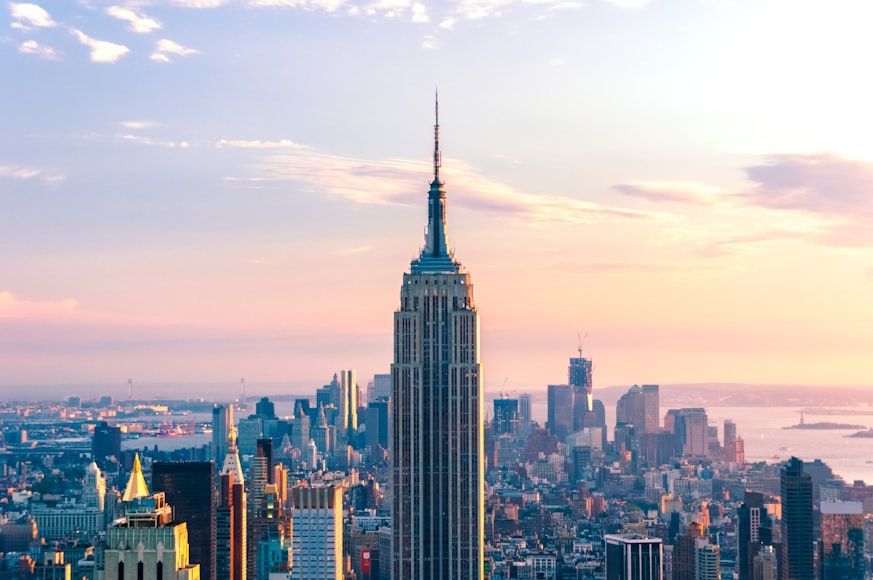
Image: Kit Suman

Although Carrie and Samantha were best friends on Sex and the City , the actresses behind them didn’t share that bond in real life. The rivalry reportedly began during filming, as they never got along. Kim Cattrall openly criticized the pay gap between Sarah Jessica Parker and the rest of the cast, and these professional tensions gradually turned personal. Cattrall later stated, "We were never friends," and after the series ended, their relationship did not improve.

History History 5 min read

Stages that made history

Were you there? 10 legendary music concerts held in the U.S.

Image: Johannes Havn

Some performances stay with us forever. Moments like Jimi Hendrix setting his guitar on fire, Prince playing Purple Rain in the pouring rain, or The Beatles being drowned out by the roaring crowd at Shea Stadium are etched in the minds of millions. Some people witnessed them live, while others saw them in documentaries or YouTube videos that continue to amass views decade after decade. Regardless of the medium, generations agree that these 10 performances are among the most unforgettable shows ever staged in the US.

1
The Beatle’s Shea Stadium Concert

Image: Fedor

The Beatles couldn’t hear themselves over the overwhelming roar of the crowd during their first U.S. performance. The concert that the band from Liverpool gave at Shea Stadium in the summer of 1965 made history. It drew 55,000 fans—the largest rock concert audience at the time—and marked the first time a rock band played in a large stadium.

This event set a new standard for live music performances, highlighting the need for stadium sound systems capable of supporting massive concerts—since the one used that day was rudimentary. Though the band arrived by helicopter, sparked a frenzy of Beatlemania hysteria, and delivered a performance that would be rewatched for decades, they played only 12 songs in just 30 minutes .

2
1985’s Live Aid

Image: Andreas Talseth

Did you know that Phil Collins insisted on performing at both the U.K. and U.S. venues on the same day for 1985’s Live Aid? He boarded a Concorde jet to fly from Wembley Stadium to JFK Stadium in Philadelphia, where the U.S. leg of the famine relief fundraiser for Ethiopia was taking place.

The event was broadcast in 150 countries and reached nearly 1.9 billion people. The U.S. stage of Live Aid raised over $125 million and set the standard for large-scale charity concerts, inspiring similar events in the years that followed. Madonna, Bob Dylan, Mick Jagger with Tina Turner, Duran Duran, and Eric Clapton were just a few of the stars who performed that day.

3
Bob Dylan at Newport Folk Festival

Image: Nikoloz Gachechiladze

The 1965 Newport Folk Festival will always be remembered as the day Bob Dylan "went electric." His decision was controversial—he had long been associated with folk and blues, and his unexpected leap into rock divided the audience, with some cheering and others booing. Some believe the booing was directed at the poor sound quality rather than his choice to go electric. Regardless, Dylan left the stage after just three songs .

This moment is seen as a pivotal merger of folk and rock music. Afterward, Dylan fully embraced rock, releasing albums that included his hit "Like a Rolling Stone."

4
Simon & Garfunkel’s Concert in Central Park

Image: David Vives

In September 1981, Simon & Garfunkel reunited at Central Park in New York for their first performance together in over a decade. The duo had publicly announced their breakup in 1970, after friction and disagreements that had forced them apart. Their immense popularity drew a crowd of half a million people to Central Park to witness the event.

The duo performed some of their biggest hits along with a few of Paul Simon’s solo songs. The concert was a benefit to raise funds for the park’s restoration. It was broadcast live, and the recording was later released as a live album . The event reignited their popularity and led to a successful reunion tour.

5
The Allman Brothers Band’s Fillmore East Concerts

Image: Pixabay

During the spring of 1971, The Allman Brothers Band performed for three nights at the Fillmore East in New York City. These performances were recorded and released as the live album At Fillmore East , which became one of the greatest live albums in rock history.

What made these recordings particularly compelling for fans was the inclusion of extended jam versions of songs like "Whipping Post," "You Don't Love Me," and "In Memory of Elizabeth Reed." The band’s improvisational skills and seamless fusion of blues, jazz, and rock made this weekend in New York a legendary and widely acclaimed performance.

6
Johnny Cash at Folsom Prison

Image: M Shiva

In 1968, Johnny Cash made a decision that would revive his career and solidify his image as both empathetic and rebellious. Following a decline in popularity and struggles with addiction, he arranged a performance for the inmates at California’s Folsom Prison, about which he had written the hit Folsom Prison Blues years earlier.

Cash had played in prisons before, but this time, he chose to record it. The resulting album captured the raw energy of his direct engagement with the audience. At Folsom Prison became a massive success, marking the first in a series of prison concerts that would go on to become some of his best-selling records .

7
The Last Waltz of The Band

Image: William Krause

The Last Waltz was billed as The Band’s farewell concert , designed as a celebration of their remarkable career. Filmed by Martin Scorsese, the event featured an all-star lineup of guest musicians, including Bob Dylan, Joni Mitchell, Van Morrison, Muddy Waters, and Ringo Starr—just to name a few.

Held in 1976 at San Francisco’s Winterland Ballroom, the concert was later released as a documentary film , becoming one of the greatest concert films of all time. With its chandeliers and grand ballroom atmosphere , The Last Waltz set a new standard for farewell concerts.

8
Prince’s Super Bowl Halftime Show

Image: Daniel Robert Dinu

Many will always remember when Prince performed "Purple Rain" in the pouring rain during the 2007 Super Bowl Halftime Show . Despite the adverse weather, he commanded the "P"-shaped stage at Miami’s Dolphin Stadium during the break in the game between the Colts and the Bears.

He opened with his anthem "Let's Go Crazy" and included covers of songs by Bob Dylan and Foo Fighters. Legend has it that before the show, Prince was asked if he was worried about performing in the rain. His alleged response? A playful, " Can you make it rain harder ?" He then stepped out and delivered one of the greatest halftime shows in history.

9
Jimi Hendrix at the Monterey Pop Festival

Image: mirkosajkov

Until the Monterey Pop Festival in 1967, Jimi Hendrix had yet to break through in the US. It was none other than Paul McCartney who convinced organizers that the festival would be incomplete without the rising star.

American audiences were introduced to Hendrix’s guitar wizardry at this concert, where he showcased his newly released album Are You Experienced. The moment that cemented him as a force to be reckoned with came during a dramatic rendition of "Wild Thing," when he set his guitar on fire before smashing it.

10
Woodstock Music and Art Fair

Image: PeterKraayvanger

Finally, we can’t overlook the legendary Woodstock Music and Art Fair, forever known simply as "Woodstock." Held on a dairy farm in Bethel, New York, the festival became a symbol of the 1960s counterculture . Nearly half a million people gathered for this three-day event, which was originally planned as a profit-making venture but turned into an open festival when the crowds became overwhelming.

The lineup featured many stars who became emblems of the era, including Jimi Hendrix, Janis Joplin, The Who, Santana, and Joe Cocker, among others. Despite its iconic status today, Woodstock faced challenges such as food and water shortages, heavy rain, and overwhelmed medical services. Although the festival initially resulted in a financial loss , the costs were eventually recovered through profits from the film and soundtrack releases.

Geography Geography 8 min read

Big cities’ secrets

There's a city buried under Seattle, and most people never see it

Image: Stefan Steinbauer

You probably think you’ve seen everything America has to offer, from the bright lights of the Big Apple to the Hollywood sites in Los Angeles. But hidden in the big cities are places that don’t get much of the spotlight but deserve more. Beneath Seattle are buried streets frozen in time. In Chicago, engineers actually made a river flow backward. And in Portland, there’s a tiny park supposedly built for leprechauns. These and more unusual spots are hiding in plain sight. Here’s the story behind them and where you can find them.

1
Seattle: The Seattle Underground

Image: Ronincmc, CC BY-SA 4.0, via Wikimedia Commons

People usually visit Seattle for the seafood, waterfront views, coffee culture, and the famous Space Needle. But underneath the busy sidewalks lies part of the city most tourists never realize exists. Beneath Pioneer Square sits the Seattle Underground, a network of old streets and storefronts buried below modern Seattle.

This area dates back to the Great Seattle Fire of 1889, which destroyed much of downtown. City leaders decided to rebuild the streets one story higher to improve drainage problems that had plagued the city for years. For a while, businesses operated below street level, but eventually this lower level was abandoned. Today, guided tours take visitors through the underground passageways and old sidewalks and mix ghost stories and old city legends with the real story below Emerald City.

2
Chicago: The Chicago River

Image: Alex Azabache

Between deep-dish pizza, Wrigley Field, jazz clubs, and the towering skyscrapers, few cities feel more American than Chicago. It’s also home to the magical Chicago River, which, in 1900, actually flowed backwards.

Back in the late 1800s, Chicago faced a dangerous problem. The river carried sewage and industrial waste into Lake Michigan, the same lake supplying the city’s drinking water. Disease outbreaks of typhoid and cholera became increasingly serious, and engineers realized something drastic had to happen. In 1900, after years of planning and digging canals, they built a series of canals and locks, like the prominent Chicago Sanitary and Ship Canal, connecting the Chicago River to the Des Plaines River, forcing the water to flow toward the Mississippi River watershed. That way, they reversed the river’s direction so the contaminated water would flow away from the lake instead of into it. The natural flow was forever altered, but it remains central to city life, especially during St. Patrick’s Day when, according to tradition, it’s dyed bright green every year.

3
New York City: NYPL hidden apartment

Image: Detroit Publishing Company, Public domain, via Wikimedia Commons

Yellow taxies, Central Park, Broadway shows, and nonstop energy have made New York City feel magical. The Big Apple hides many secrets, and the apartment inside the New York Public Library Main Branch is just one of them.

In 1910, the library superintendent, John Fedeler, and his family moved into a private eight-room apartment tucked inside the library. This was so that someone would always be available to maintain the huge building. With bedrooms, a kitchen, and a living area, a full home is hidden behind doors that most visitors passed by. The family lived there until 1941, when the space was converted into offices and storage areas. However, the library still offers tours where visitors can learn about its history.

4
Portland: Mill Ends Park

Image: daveynin, CC BY 2.0, via Wikimedia Commons

When you think of Portland, you may think of Washington Park or Forest Park. But if you pay close attention, you can also visit Mill Ends Park. At just two feet across, it holds the Guinness World Record as the world’s smallest park.

At first glance, it looks more like a flowerpot than a public landmark, but the story goes back to 1948, when journalist Dick Fagan noticed an empty hole that had been meant for a light pole. Tired of staring at it from his office window, he planted flowers there and jokingly claimed that, since it was so small, it was a park for leprechauns. The joke took on a life of its own, and in 1976, it was dedicated on St. Patrick's Day. Today, it’s a must-do for travelers going through Portland, and locals continue treating it with surprising seriousness.

5
Houston: The Beer Can House

Image: Andrew Wiseman, CC BY-SA 3.0, via Wikimedia Commons

Everything is bigger in Texas, and Houston is no exception. If you’ve been there, you’ve probably visited NASA, the Museum District, and tried a local barbecue joint. But you’ve probably missed a quirky house hidden among the neighborhoods. Located at 222 Malone St, sits the Beer Can House. The name is self-explanatory, since it’s a house covered with beer cans.

In 1968, John Milkovish decided he was tired of painting and maintaining the exterior of his property. Instead, he began flattening beer cans and attaching them to the house. What started as a hobby slowly turned into a full-blown obsession involving more than 50,000 cans. The house went from being a neighborhood curiosity to a roadside attraction to finally being a protected local landmark in 2001. In 2010, Time magazine even ranked it as one of America's top 50 roadside attractions. True to his Texan blood, John Milkovish built something big.

6
San Francisco: The Wave Organ

Image: The wub, CC BY-SA 4.0, via Wikimedia Commons

No trip to San Francisco is complete without taking the cable car or a picture at the Golden Gate. But tucked away near the Marina District is an attraction many tourists completely miss. The Wave Organ is a gigantic acoustic sculpture that turns ocean waves into music.

Completed in 1986 by artist Peter Richards, t he installation consists of a series of pipes extending into the bay. As tides rise and waves move through the pipes, they create eerie sounds ranging from soft bubbling to deep echoes. Richards was inspired by recordings of artist Bill Fontana, made of sounds coming from a vent pipe of a floating concrete dock in Sydney, Australia. In 1980, he received a grant from the National Endowment for the Arts and tested the first prototypes during the 1981 New Music Festival. Five years later, he completed this sonic sculpture that runs entirely on nature.

7
Los Angeles: La Brea Tar Pits

Image: WikiWhens, CC BY-SA 4.0, via Wikimedia Commons

Los Angeles is all about Hollywood, palm trees, and the beaches. But it’s also home to one of the world’s most important prehistoric sites. The bubbling black pools at La Brea Tar Pits have been trapping animals for tens of thousands of years.

Long before Los Angeles was the city it is today, natural asphalt constantly came up from underground. Mammoths, saber-toothed cats, dire wolves, and other Ice Age animals became trapped there, preserving their skeletons remarkably well. Scientists began excavating fossils in the early 1900s, and discoveries continue to this day. The fossils recovered from the site are countless. Visitors can explore the museum for $18 and watch active excavations while surrounded by modern office buildings and traffic.

8
Seattle: The Giant Shoe Museum

Image: Another Believer, CC BY-SA 4.0, via Wikimedia Commons

Seattle already has its share of unusual attractions, especially around Pike Place Market, where fishmongers toss salmon through the air, and crowds line up for fresh pastries. But the Giant Shoe Museum, located there, is even stranger. A single exhibit wall dedicated to oversized footwear , the museum works like an arcade peep show. Visitors drop coins into viewing slots to reveal displays featuring enormous boots, giant clown shoes, and other gigantic footwear.

The museum was founded in 1997 by Danny Eskenazi after he became obsessed with his grandfather’s missing item: the shoe of Robert Wadlow, the tallest man in history. He even offered $1,000 to anyone who could find that Wadlow shoe. Sadly, the shoe remains lost, but his obsession led to the discovery of other shoes worn by Wadlow and more footwear that is now displayed in the museum.

9
Boston: Great Molasses Flood Site

Image: MLHalsey, CC BY-SA 3.0, via Wikimedia Commons

Boston's most popular spots blend colonial and Revolutionary War history with vibrant neighborhoods that feature top attractions like the Freedom Trail, Fenway Park, and the Boston Public Garden. But it’s also home to the remains of a disaster.

In 1919, Boston experienced the Great Molasses Flood. A massive molasses storage tank burst in the North End neighborhood, unleashing more than two million gallons of syrup into the streets. After 21 people lost their lives, the disaster led to stricter construction safety regulations across the country, and the tank was never rebuilt. Today, visitors can still walk through the neighborhood where it happened. There’s no giant syrup wave anymore, thankfully, but plaques and local tours continue telling the story.

10
Lake Havasu City: The London Bridge

Image: Ken Lund from Las Vegas, Nevada, USA, CC BY-SA 2.0, via Wikimedia Commons

Driving through Lake Havasu City in Arizona, you expect desert landscapes, boating, and blazing summer heat. You probably don’t expect to stumble across a famous bridge from England, especially not the original London Bridge itself.

In 1831, John Rennie designed and opened the London Bridge spanning the River Thames. By the 1960s, the bridge started sinking under the weight of modern cars and traffic. Robert P. McCulloch, founder of Lake Havasu City, saw this as an opportunity and, in 1968, he purchased the bridge for $2.4 million. The bridge was dismantled and reconstructed in the Arizona desert, and completed in 1971. What once connected two sides of London now links mainland Lake Havasu City with Pittsburgh Point that visitors and locals enjoy every day.

11
Atlanta: The Center for Puppetry Arts

Image: Tyler Lahti, CC BY-SA 4.0, via Wikimedia Commons

Atlanta is often associated with Southern cooking, a busy airport, and its important role in the Civil Rights Movement. But tucked inside the city is also the Center for Puppetry Arts, which houses the world’s largest collection of Jim Henson’s original Muppets.

The center opened in 1978, when puppeteer Vincent Anthony transformed a former elementary school into a home for puppet arts. From the very beginning, the project had a special connection to Jim Henson himself. He and Kermit the Frog helped inaugurate the center, and over the years, Henson became one of its biggest supporters. The center expanded significantly between 2007 and 2015, adding the permanent Jim Henson Collection and the impressive Worlds of Puppetry Museum. Unlike many museums, this place is hands-on. Guests can watch live performances, explore exhibits from puppet traditions, and revisit characters that shaped generations of childhood memories.

Explore more American facts

Choose your favorite category!

General
General

As American as apple pie—the very best America has to offer!

Culture
Culture

Delve into the astounding richness of American lore.

Geography
Geography

Hop in and explore vast and diverse American landscapes.

History
History

Discover the key moments that shaped the United States.