Culture Culture 3 min read

From fame to oblivion

Forgotten, not gone: 10 American heroes who changed history
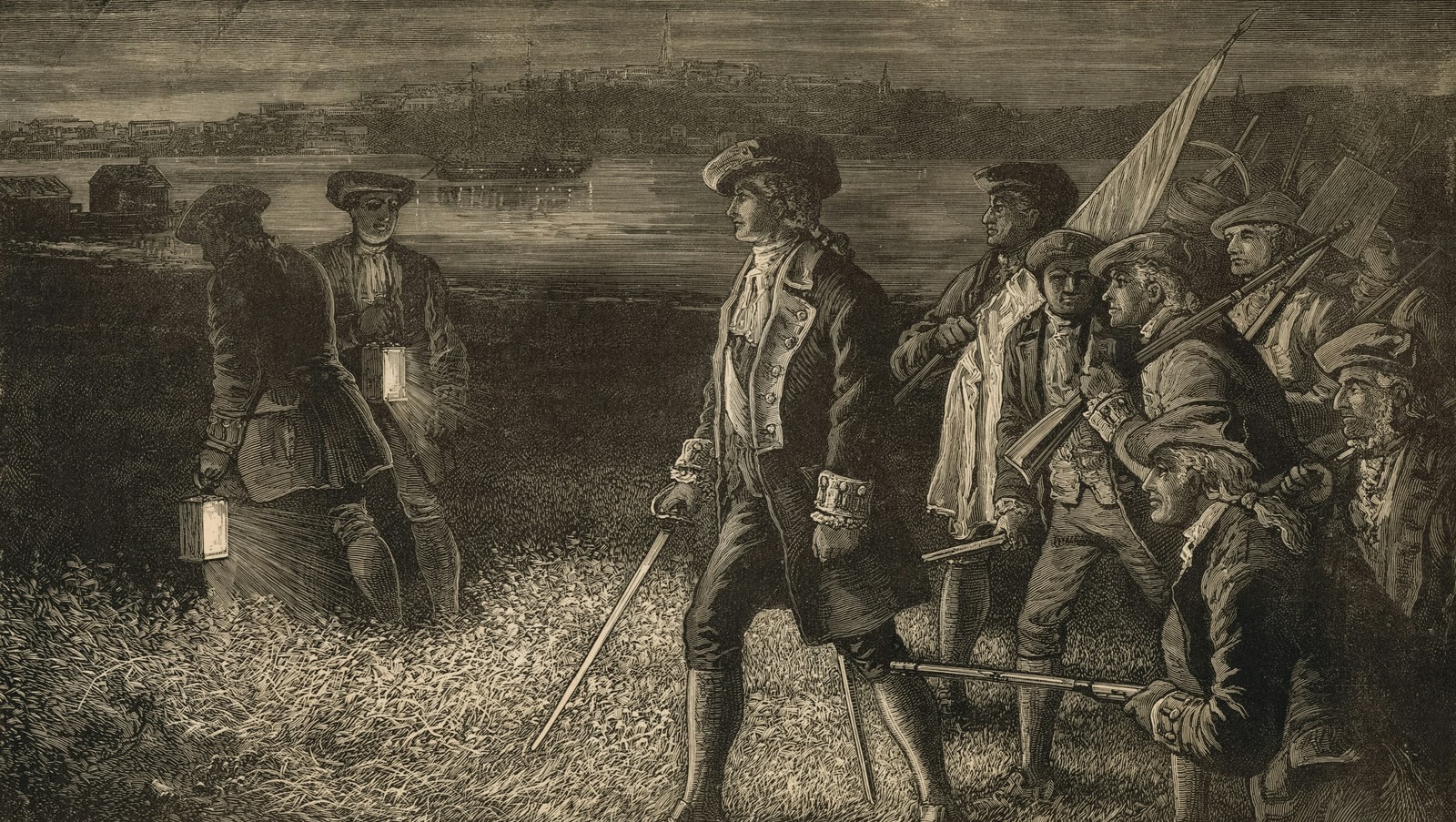
Image: The New York Public Library

America has produced more than its fair share of legends, but not all are remembered equally. From pioneers of technology to forgotten war heroes, each of these names once meant something big in the U.S. Here's a look at 10 American icons whose legacies deserve a second glance.

1
Hedy Lamarr

Image: Geoffroy Berlioz

Best known for her 1930s–40s film career, Hollywood icon Hedy Lamarr also co-invented frequency-hopping spread spectrum technology to prevent enemy jamming in WWII. And if you think it’s no big deal, know it’s the basis for modern Bluetooth and Wi-Fi!

While largely overlooked as an inventor at her time, she was posthumously inducted into the National Inventors Hall of Fame in 2014.

2
Sybil Ludington

Image: Taylor Brandon

According to many historians, at just 16 years old, Sybil Ludington rode about 40 miles through the night in 1777 to alert American militia of a British attack on Danbury, Connecticut.

This would make her ride roughly twice as long as Paul Revere’s . While some scholars question the veracity of her story, a statue stands in her honor in Putnam County, New York.

3
Bass Reeves

Image: Pramod Tiwari

Born into slavery in 1838, Reeves became one of the first Black U.S. Deputy Marshals west of the Mississippi. He made over 3,000 arrests during his law enforcement career.

Many historians believe his exploits may have inspired the Lone Ranger character, although his name rarely appears in history textbooks.

4
Mary Edwards Walker

Image: David Trinks

A Civil War surgeon and suffragist, Walker treated soldiers on the front lines and was even captured as a prisoner of war.

In 1865, she became the first woman to ever receive the Medal of Honor. Her unorthodox dress style and fearless activism made her a striking figure in 19th-century America.

5
Clara Barton

Image: Kevin Paes

Known as the "Angel of the Battlefield," Barton provided medical care during the Civil War and later founded the American Red Cross in 1881.

Though once a household name, her legacy has faded compared to other, more widely remembered wartime figures.

6
Joshua Lawrence Chamberlain

Image: Chris Chow

A college professor turned Union colonel, Chamberlain famously held Little Round Top during the Battle of Gettysburg, a pivotal moment in the Civil War.

He was awarded the Medal of Honor and later became governor of Maine, but his unexpected battlefield brilliance is often overlooked in Civil War discussions.

7
Robert Smalls

Image: Ian Hutchinson

In 1862, Smalls, a formerly enslaved sailor, seized a Confederate ship and delivered it to Union forces, securing freedom for himself and his crew.

He later served five terms in Congress, advocating for Black education and civil rights.

8
Harvey Wiley

Image: Diana Polekhina

Known as the "Father of the FDA," Harvey Wiley was a chief chemist in the late 1800s whose "Poison Squad" tested various food additives, leading to the 1906 Pure Food and Drug Act.

This law laid the foundation for the FDA and led to the removal of many dangerous substances from consumer products. Notably, it prompted Coca-Cola to eliminate cocaine from its formula in the early 20th century.

9
George Washington Carver

Image: Dan Meyers

More than just being associated with peanuts, George Washington Carver developed numerous innovative crop rotation methods and created over 300 uses for peanuts, sweet potatoes, and other plants to help Southern agriculture recover after the Civil War.

10
Joe Medicine Crow

Image: Boston Public Library

The last war chief of the Crow Nation, Joe Medicine Crow, completed several traditional war deeds during WWII—including counting coup and stealing enemy horses —and earned both the Bronze Star and the French Légion d’honneur.

Part of his legacy was bridging Native American warrior traditions with modern military service, honoring both cultural heritage and patriotic duty.
Geography Geography 3 min read

Which is your favorite season?

Beyond Vermont: Discover 12 amazing places to watch the fall foliage

Image: Pixabay

Everybody knows that Vermont is a popular destination for watching the leaves change color in the fall. However, as locals know, there are many other places in our gorgeous country where one can marvel at the rainbow created by nature during the autumn months. Did you know about these 12?

1
McKenzie River Scenic Byway, Oregon

Image: Atanas Malamov

Oregon is famous for its stunning landscapes, and autumn months are no exception. The McKenzie River Scenic Byway stretches from the vineyards of the Willamette Valley to the forests of the Cascade Mountains .

The best time of the year to visit if you want to enjoy the vibrant colors is mid-to-late October.

2
Charlottesville, Virginia

Image: Mitchell Kmetz

The endless forests and rolling hills of Virginia, especially in the foothills of the Blue Ridge Mountains, create breathtaking landscapes painted in red, orange, yellow, and green during October and November.

3
French Lick West Baden, Indiana

Image: Adam Bouse

Nestled in the hills of Hoosier National Forest, French Lick West Baden is a resort town that showcases some amazing views when it comes to fall foliage . The best time to visit is from mid-October to early November.

4
Mississippi River Valley, Minnesota

Image: Josh Hild

The Mississippi River Valley in southern Minnesota is home to vibrant forests, steep hillsides, and picturesque river towns , waiting to be explored by those eager to make the trip.

The best time to see the foliage change is from late September to mid-October.

5
Breckenridge, Colorado

Image: Thomas Morse

Breckenridge, Colorado, bursts into vivid colors every late September, with the changing leaves of the aspen trees creating a gold, red, and orange rainbow in the heart of the Rocky Mountains.

6
Northwoods, Wisconsin

Image: Dave Hoefler

Thousands of lakes and vast forests that stretch across five counties can be found in the Northwoods of Wisconsin. From mid-September to early October, visitors are treated to some of the best foliage in the region, with vibrant shades of orange, red, yellow, and purple.

7
Highlands, North Carolina

Image: Wes Hicks

Imagine a lush rainforest with waterfalls, rivers, and lakes to explore, combined with the typical colors of the leaf change season. Such a place exists in North Carolina. The mountain town of Highlands, perched at over 4,100 feet on the Highlands Plateau in Nantahala National Forest, offers breathtaking fall foliage, with the best viewing time in mid-October.

8
Whidbey Island, Washington

Image: Toan Chu

Washington’s ultimate road trip, the Cascade Loop, winds along the Puget Sound via the Whidbey Island Scenic Byway . Peak fall colors along this drive commonly occur between late September and mid-October showcasing brilliant shades of gold, orange, and red.

9
Tunnel of Trees, Michigan

Image: AJ Yorio

A place known as the Tunnel of Trees will hardly disappoint visitors who come during the foliage change season. This 20-mile scenic route follows the historic Michigan 119 highway between Harbor Springs and Cross Village . The canopy of gold, orange, yellow, and purple leaves is typically on display from late September to mid-October.

10
North Lake Tahoe, California & Nevada

Image: Ben Carless

The stunning Lake Tahoe is framed by the peaks of the Sierra Nevada range on its north shore. Its hundreds of hiking trails wind through diverse tree species that display vivid red, orange, and yellow foliage from mid-September to late October.

11
The Ozarks, Arkansas

Image: Derek Livingston

The Ozark Mountains are most famous for their neighboring lake of the same name, but the amazing autumn colors are a spectacle that deserves all the attention during October. The palette of bright golds, reds, and oranges is especially stunning in the Buffalo National River area near the small town of Ponca.

12
Anchorage to Kenai drive, Alaska

Image: Derek Livingston

Alaska is nothing short of breathtaking, and fall is no exception. Its vast landscapes come alive with vibrant shades of red, purple, yellow, and orange from late August through September.

One of the best ways to experience the season is on the 160-mile drive along the Seward and Sterling highways from Anchorage to Kenai, following two National Scenic Byways.

Culture Culture 6 min read

Stories of blockbusters

Otherworldly budgets: The most expensive movies ever made

Image: 金 运 / Denise Jans

Alien invasions, superhero fights, and sinking ships are never easy to stage. Although Hollywood production companies don’t always disclose exact expenditures, some reports allow us to calculate which mega-productions were the most expensive at the time of their creation. A major movie production typically has a budget of around $100 million . However, the lowest budget on this list of blockbusters was $258 million–and that was in 2007. Which iconic scenes specifically made incredible bumps in these budgets? Were they worth it? Discover surprising facts about ten incredibly expensive movies in this article.

1
Spider-Man 3 (2007)

Image: Dante Muñoz

Tobey Maguire’s Spider-Man had been one of the most successful hits of the 2000s . That’s why, when Spider-Man 3 (2007) began production in 2005, it was given the highest budget of any movie in history at the time: around $258 million.

If you’ve seen this movie, you might have guessed that the biggest portion of the budget went into special effects for its three different villains. The New Goblin, Venom, and Sandman were three separate challenges for the visual effects team, particularly Sandman , played by Thomas Haden Church. Groundbreaking technology had to be developed to animate explosive sand fists and parting bodies of sand, making the character’s action scenes cost millions of dollars each.

2
Titanic (1997)

Image: Derek Oyen

To begin with, building the full-scale ship model and massive water tank for Titanic (1997) cost over $150 million. Director James Cameron was very particular about authenticity, so the ship’s interior design was meticulously designed to match that of the original Titanic. At the time, it was also the most expensive movie ever made. But one might argue it was all worth it.

The CGI, stunts, and practical effects used for replicating the sinking sequence were especially costly. Bear in mind that Leonardo DiCaprio and Kate Winslet were already known young talents by the time they were cast for this movie, so they took a small share of the fortune—around $5 million between them. Famously, though, James Cameron forfeited his paycheck to keep the movie under budget, much like Jack climbing down from the door to keep Rose afloat. It worked out in the end because he earned $97 million from backend profits.

3
Avengers: Infinity War (2018)

Image: André Volkmann

Balancing the stories of all of these superheroes was just as challenging as paying all the corresponding actors. Avengers: Infinity War (2018) had an estimated budget of almost $400 million. Who could forget the battle scenes filled with as many timeless superheroes as A-list actors? Reportedly, Robert Downey Jr. alone took home around $75 million after backend deals.

This two-hour-and-a-half movie had over 2,500 visual effects shots, which included the destruction of a planet and a ship, as well as an epic battle in the fictional Wakanda . Not to mention the advanced motion-capture technology required for Josh Brolin’s portrayal of Thanos, the villain of the film.

4
Avengers: Endgame (2019)

Image: Igor Bumba

When Avengers: Infinity War was released, it became the highest-grossing superhero film in history, amassing over $2 billion at the box office. But that title lasted it around a year, until its sister sequel Avengers: Endgame (2019) surpassed it. The sequel cost roughly the same as the previous installment but came just shy of earning $3 billion .

Just like the previous ones, this Avengers installment had a star-studded cast that included Scarlett Johansson, Chris Evans, and Chris Hemsworth. A feast of 3 hours worth of cameos, the movie ended with a climactic final battle scene, where almost every hero from the Marvel Cinematic Universe assembled. Making this movie involved hundreds of extras, an enormous amount of CGI, masterful choreography, and an unprecedented skill for star scheduling .

5
Pirates of the Caribbean: At World’s End (2007)

Image: cottonbro studio

Pirates of the Caribbean: At World’s End had a budget of around $300 million, making it one of the most expensive films ever at the time of its 2007 release. Whoever watched this film will remember a waterfall at the edge of the world or a massive final battle between two ships over a maelstrom. Those takes relied heavily on CGI, but not entirely. As with previous productions in the franchise, filming required large-scale water sets and multiple ships to be built. The cost of both practical and visual effects for these scenes was astronomical.

Admittedly, a significant portion of the budget went to the ensemble cast, particularly Johnny Depp, who received a notable pay bump following the massive success of the first two films. Keith Richards , the Rolling Stones guitarist, was also famously featured, adding to the film’s star power.

6
Avengers: Age of Ultron (2015)

Image: Deepak Rastogi

Surprise! The Avengers movie with the most colossal budget was the least liked of the four. It sometimes puzzles fans to learn that it cost $365 million in 2015, which, adjusted for inflation, would be over $430 million today.

Avengers: Age of Ultron (2015) had to use massive amounts of CGI to create cinematic takes on the levitating fictional city of Sokovia. Destruction, flying characters, drones, and explosions contributed significantly to the costs. More importantly, filming on location and flying so many celebrities around the globe added to the expense. This movie showed scenes filmed all over the world, including the U.S., South Africa, Italy, South Korea, and England.

7
Star Wars: The Rise of Skywalker (2019)

Image: LJ

Lightsaber battles have never been cheap. Star Wars: The Rise of Skywalker (2019) had a reported production budget of around $275 million. It was the third Star Wars movie produced by Disney, and while the budget had decreased compared to the previous installments, it was still a financial success.

The final battle sequence on the Sith planet Exegol required a fortune, but it needed to: as it served as the climax of Disney’s trilogy. Special effects even included the scenes of characters like General Leia, played by the late Carrie Fisher . The film faced the unique challenge of incorporating footage of Fisher filmed for previous Star Wars movies after her passing in 2016.

8
Pirates of the Caribbean: On Stranger Tides (2011)

Image: Pixabay

Even though the 4th installment of the Pirates franchise had relatively low reviews, it became the second film in the saga to surpass a billion dollars in box office revenue. Released in 2011, Pirates of the Caribbean: On Stranger Tides had a staggering budget of $379 million.

Mermaids, zombies, splitting ships, boats on fire, and a Fountain of Youth all required the coordination of several visual effects teams. The salaries of new stars like Penélope Cruz , along with filming locations across Hawaii, the UK, California, and Puerto Rico, added to the costs. Also, this was the first movie in the franchise to be shot for 3D screenings .

9
Jurassic World: Fallen Kingdom (2018)

Image: Nick Wehrli

A movie that revolves around dinosaurs fleeing from a volcanic eruption , Jurassic World: Fallen Kingdom (2018), received an estimated budget of around $432 million. How are dinosaurs created? Much like the earlier films of the saga, this one used a mix of CGI and animatronics , especially for the more up-close, intimate scenes involving Velociraptors and an Indoraptor.

For the dinosaur auction scene, a whole large-scale set was built. Filming also took place in Hawaii, England, and Spain. The stars of the Jurassic World trilogy, Chris Pratt and Bryce Dallas Howard, reportedly earned around $10 million each.

10
Star Wars: The Force Awakens (2015)

Image: Rod Long

When Disney acquired the rights to produce movies from Lucasfilm , it proceeded to give the first installment of their Star Wars reboot the biggest budget it had ever given. That was over $447 million in 2015.

With J.J. Abrams directing a Star Wars movie after so long, he could indulge in creating a full-size Millennium Falcon , animatronic creatures, and remote-controlled puppetry. The Starkiller Base destruction sequence was one of the most expensive scenes. Not to mention that the legendary face of Star Wars , Mark Hamill, had a very short cameo at the end of this movie; that one-minute feature alone earned him $3 million .

Explore more American facts

Choose your favorite category!

General
General

As American as apple pie—the very best America has to offer!

Culture
Culture

Delve into the astounding richness of American lore.

Geography
Geography

Hop in and explore vast and diverse American landscapes.

History
History

Discover the key moments that shaped the United States.