Culture Culture 3 min read

Not-so-hidden talents

Did you know these celebrities had these other talents?

Image: LuckyLife11

Sure, we all know Bob Dylan wrote "Like a Rolling Stone." But did you know that he is also an iron sculptor? And have you heard that Angelina Jolie flies her own planes? Many celebrated icons have secret hobbies that differ greatly from what made them famous. From Oscar-winning sports stars to ice-skating comedians, let’s explore icons who have proven that talent knows no bounds!

1
Bob Dylan

Image: Laura Ockel

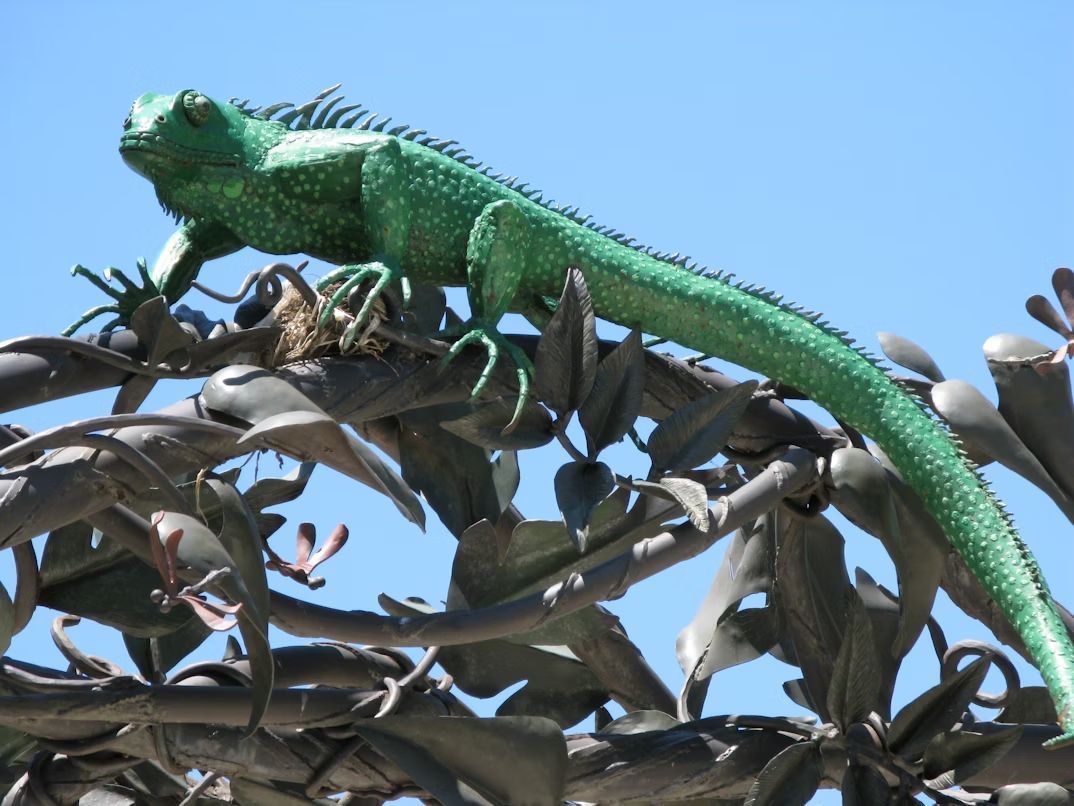
The Nobel Prize-winning singer-songwriter who gave us anthems like "Blowin' in the Wind" is also a passionate metalworker. Dylan spends his downtime in his Black Buffalo Ironworks studio, crafting intricate gates and sculptures from found objects such as farm equipment, tools, and antique firearms.

2
Angelina Jolie

Image: Joshua Sukoff

Angelina Jolie is world-renowned for her celebrated Hollywood career and humanitarian work. But this actress-director also has a license to thrill in the air. Jolie is a certified pilot who owns a Cirrus SR-22 single-engine aircraft, often taking to the skies for both personal adventures and humanitarian missions.

3
Patrick Dempsey

Image: Carl Gelin

There’s more to Patrick Dempsey than being the charming neurosurgeon Dr. Derek Shepherd (aka "McDreamy") on Grey's Anatomy . The actor has developed a passion for race car driving , competing in prestigious events such as the 24 Hours of Le Mans and the Rolex 24 at Daytona. He even owns his own racing team, Dempsey Racing!

4
Bob Barker

Image: Thao LEE

The iconic game show host who entertained millions on The Price Is Right for 35 years had a surprising secret weapon up his sleeve: karate. Trained by none other than Chuck Norris , he practiced for decades and even earned his black belt.

5
Steve Martin

Image: Chen Mizrach

He's a comedian, actor, writer... and a banjo virtuoso? That's right! The "wild and crazy guy" who brought us hilarious classics like The Jerk and Planes, Trains and Automobiles is also an accomplished banjo player and composer . Steve Martin has released several bluegrass albums, collaborated with legends like Earl Scruggs, and even won a Grammy for his exceptional work.

6
Steve Carell

Image: Matthew Fournier

Known for his hilarious roles and versatile acting career, Steve Carell is also a whiz on the ice. A passionate hockey player since childhood, he has been lacing up his skates whenever possible. He even got the chance to display his skill on an early episode of The Office .

7
Michael Phelps

Image: Will Porada

He’s the most decorated Olympian of all time, boasting 28 swimming medals. But Michael Phelps didn’t stop at the pool—he also picked up a golf club. He is the holder of a Guinness World Record for the longest televised putt . That was an impressive 159 feet.

8
Kobe Bryant

Image: Mirko Fabian

The late NBA legend was not only a basketball icon but also a gifted storyteller. He proved it after retiring from basketball when he founded Granity Studios, a multimedia company focused on creating inspiring content for young athletes .

One of its standout works was the animated short film Dear Basketball —a heartfelt tribute to Bryant’s lifelong passion for the game.

9
Venus Williams

Image: Jean-Philippe Delberghe

Venus Williams, the tennis superstar with seven Grand Slam singles titles and four Olympic gold medals, also has a passion for interior design. She founded V Starr Interiors, a company specializing in creating stylish and functional spaces for both residential and commercial clients. She even has a degree in fashion design !

10
Viggo Mortensen

Image: Karolina Grabowska

Viggo Mortensen is celebrated for his captivating performances in films like The Lord of the Rings and Eastern Promises , but he’s also a man of many talents. In addition to acting, he is a poet, musician, photographer, and publisher .

He founded Perceval Press, an independent publishing house dedicated to promoting the work of artists and writers.

11
Terry Crews

Image: KOBU Agency

Before delivering laughs on Brooklyn Nine-Nine or throwing action-packed punches in The Expendables , Terry Crews was an NFL linebacker. But even before that, this multi-talented actor was a skilled artist. He still creates detailed paintings and illustrations in his spare time.

12
Shaquille O’Neal

Image: Yomex Owo

Shaquille O'Neal earned a place in the Hall of Fame for his legendary basketball career, but his talents extend far beyond sports. He's also an entertainment icon with numerous endorsements and a DJ performing under the name " DJ Diesel ."
Culture Culture 3 min read

From fame to oblivion

History's hidden legends: How these Americans defied the odds

Image: The New York Public Library

America has produced more than its fair share of legends, but not all are remembered equally. From pioneers of technology to forgotten war heroes, each of these names once meant something big in the U.S. Here's a look at 10 American icons whose legacies deserve a second glance.

1
Hedy Lamarr

Image: Geoffroy Berlioz

Best known for her 1930s–40s film career, Hollywood icon Hedy Lamarr also co-invented frequency-hopping spread spectrum technology to prevent enemy jamming in WWII. And if you think it’s no big deal, know it’s the basis for modern Bluetooth and Wi-Fi!

While largely overlooked as an inventor at her time, she was posthumously inducted into the National Inventors Hall of Fame in 2014.

2
Sybil Ludington

Image: Taylor Brandon

According to many historians, at just 16 years old, Sybil Ludington rode about 40 miles through the night in 1777 to alert American militia of a British attack on Danbury, Connecticut.

This would make her ride roughly twice as long as Paul Revere’s . While some scholars question the veracity of her story, a statue stands in her honor in Putnam County, New York.

3
Bass Reeves

Image: Pramod Tiwari

Born into slavery in 1838, Reeves became one of the first Black U.S. Deputy Marshals west of the Mississippi. He made over 3,000 arrests during his law enforcement career.

Many historians believe his exploits may have inspired the Lone Ranger character, although his name rarely appears in history textbooks.

4
Mary Edwards Walker

Image: David Trinks

A Civil War surgeon and suffragist, Walker treated soldiers on the front lines and was even captured as a prisoner of war.

In 1865, she became the first woman to ever receive the Medal of Honor. Her unorthodox dress style and fearless activism made her a striking figure in 19th-century America.

5
Clara Barton

Image: Kevin Paes

Known as the "Angel of the Battlefield," Barton provided medical care during the Civil War and later founded the American Red Cross in 1881.

Though once a household name, her legacy has faded compared to other, more widely remembered wartime figures.

6
Joshua Lawrence Chamberlain

Image: Chris Chow

A college professor turned Union colonel, Chamberlain famously held Little Round Top during the Battle of Gettysburg, a pivotal moment in the Civil War.

He was awarded the Medal of Honor and later became governor of Maine, but his unexpected battlefield brilliance is often overlooked in Civil War discussions.

7
Robert Smalls

Image: Ian Hutchinson

In 1862, Smalls, a formerly enslaved sailor, seized a Confederate ship and delivered it to Union forces, securing freedom for himself and his crew.

He later served five terms in Congress, advocating for Black education and civil rights.

8
Harvey Wiley

Image: Diana Polekhina

Known as the "Father of the FDA," Harvey Wiley was a chief chemist in the late 1800s whose "Poison Squad" tested various food additives, leading to the 1906 Pure Food and Drug Act.

This law laid the foundation for the FDA and led to the removal of many dangerous substances from consumer products. Notably, it prompted Coca-Cola to eliminate cocaine from its formula in the early 20th century.

9
George Washington Carver

Image: Dan Meyers

More than just being associated with peanuts, George Washington Carver developed numerous innovative crop rotation methods and created over 300 uses for peanuts, sweet potatoes, and other plants to help Southern agriculture recover after the Civil War.

10
Joe Medicine Crow

Image: Boston Public Library

The last war chief of the Crow Nation, Joe Medicine Crow, completed several traditional war deeds during WWII—including counting coup and stealing enemy horses —and earned both the Bronze Star and the French Légion d’honneur.

Part of his legacy was bridging Native American warrior traditions with modern military service, honoring both cultural heritage and patriotic duty.

History History 5 min read

FORGING OF A NATION

10 Key Moments in the Fight for American Independence

Image: John Trumbull

A pivotal period in our history, the American Revolutionary War saw the original thirteen colonies break free from British rule and establish an independent nation. This era was crucial not only for the struggle that liberated the country from colonial rule but also because it was when the nation and its ideals were conceived and envisioned. Here are 10 key moments that defined the American Revolution, shedding light on our forefathers' immense bravery and genius.

1
No Taxation Without Representation

Image: Board of Stamps

After the French and Indian War in 1763, American colonists were surprised to find that, instead of being rewarded for their efforts, the British Parliament raised their taxes and enacted new ones, such as the Stamp Act and Townshend Acts. Soon, these burdensome laws sparked widespread protests and boycotts under the rallying cry of "No Taxation Without Representation."

Initially, most colonists only wanted to be recognized as rightful British citizens. However, the brutal reaction of the Crown—sending troops to contain the unrest and force compliance—convinced many that independence was the only way to achieve their rights. The tragic incident known as the Boston Massacre on March 5, 1770, was the tipping point in this chain of events, inflaming anti-British sentiment.

2
Boston Tea Party

Image: W.D. Cooper

The Tea Act, enacted on May 10, 1773, granted the British East India Company a monopoly on tea sales in the colonies, further enraging the already weary colonists. This led a group of rebel colonists, known as the Sons of Liberty, to take matters into their own hands. In direct response to the Tea Act, they boarded British ships and dumped 342 chests of tea into Boston Harbor, worth £9,659 (equivalent to $1,700,000 today).

This act of defiance, later known as the Boston Tea Party , was a bold statement against British taxation and control. However, it also prompted the British government to further restrict colonial autonomy by implementing the Intolerable Acts (also known as the Coercive Acts).

3
The Midnight Ride

Image: National Archives and Records Administration

The British government's punitive measures only fueled the burgeoning revolutionary movement. In 1774, the First Continental Congress was convened, with representatives from each colony attending. During these meetings, the delegates agreed to coordinate militia training and resistance.

The situation remained tense for a year until King George ordered British troops to seize the rebels' weapons and arrest their leaders. However, the colonial militia was warned of the approaching British forces the night before, thanks to the heroic midnight ride of Paul Revere and other patriots. Their ride was crucial in mobilizing the Minutemen and ensuring they were prepared for the British assault.

4
Shot Heard 'Round the World

Image: William Barnes Wollen

The first shots of the American Revolutionary War were fired on April 19, 1775, in Massachusetts. British troops aimed to seize colonial arms, but the Minutemen refused to comply and confronted them, leading to a series of skirmishes known as the Battles of Lexington and Concord. These clashes demonstrated the colonies' determination to fight for their rights and ignited an all-out war.

The first significant military encounter of the American Revolutionary War, it resulted in a resounding American victory that encouraged other colonists to support and join the revolutionary efforts. Due to its significance and lasting consequences, the event was later referred to as the "shot heard round the world," a phrase that stems from the first stanza of Ralph Waldo Emerson’s 1837 commemorative poem.

5
Raising the Banner

Image: Winthrop Chandler

The Battle of Bunker Hill, fought on June 17, 1775, proved that the colonists could stand up to the British army. As Loyalist forces sought to capture the strategically important hills surrounding the besieged city of Boston, Patriot Colonel William Prescott directed his troops to occupy these positions in advance.

Though the battle was technically a British victory, the colonial forces inflicted heavy casualties on the British—approximately 1,000 British soldiers compared to around 500 American casualties. This showed the Crown that quelling the fight for independence would be a long and costly campaign, while simultaneously boosting American morale and convincing many that victory was within reach.

6
A Declaration of Independence

Image: John Trumbull

Emboldened by their success, on July 4, 1776, the Continental Congress—at the time the de facto unified colonial government representing each of the former colonies—adopted the Declaration of Independence .

Drafted primarily by Thomas Jefferson, the document declared the colonies' separation from Britain and articulated a vision of liberty and democracy , rejecting monarchy and aristocracy. It was a bold assertion of the colonies' right to self-governance, inspiring similar revolutionary movements around the world and influencing future generations.

7
Crossing the Delaware

Image: Emanuel Leutze

On Christmas night of 1776, General Washington led a daring and successful surprise attack across the icy Delaware River. This bold maneuver demonstrated both Washington's genius and leadership, as well as the Continental Army's resolve to defeat the British forces at any cost.

The subsequent victory at the Battle of Trenton significantly boosted morale and reinvigorated the revolutionary cause across the continent. Despite the British having considerable advantages, including a highly trained and battle-tested army, they systematically underestimated the revolutionaries, believing them to be merely a group of renegades whose defeat would restore loyalist allegiance to the Crown.

8
Turning the Tide

Image: John Trumbull

The American victory at the Battle of Saratoga in late 1777 marked a turning point in the war. Not only did American forces manage to capture a large British invasion army and halt the British advance in the north, but the triumph also resonated across Europe.

When news of General Burgoyne's surrender reached France, it convinced King Louis XVI to join the conflict as an ally to the Americans, providing much-needed military support and resources. This alliance significantly bolstered the American cause and forced the British to view the war as part of a larger global campaign, further straining their already depleted resources.

9
The French Connection

Image: Eugène Delacroix

The Siege of Yorktown in 1781 was the last major land battle of the Revolutionary War. American and French forces, led by General Washington and General Rochambeau, successfully trapped British General Cornwallis's army.

The Franco-American alliance proved decisive, compelling Cornwallis to surrender and prompting the British government to negotiate an end to the increasingly costly conflict. This effectively ended major combat operations and marked the beginning of the end for British rule in America.

10
Negotiating Peace

Image: John D. Morris & Co. after Wilhelm Anton Seiler

The Treaty of Paris , signed on September 3, 1783, officially ended the Revolutionary War. Negotiated by American diplomats Benjamin Franklin, John Adams, and John Jay, it recognized American independence and established borders for the new nation. The treaty delineated the boundaries between British North America, later known as Canada, and the nascent United States.

Although British efforts to undermine the American colonies persisted for decades, eventually leading to the War of 1812, the treaty granted legitimacy to the revolutionaries' efforts on the world stage and marked the beginning of a new era.

Explore more American facts

Choose your favorite category!

General
General

As American as apple pie—the very best America has to offer!

Culture
Culture

Delve into the astounding richness of American lore.

Geography
Geography

Hop in and explore vast and diverse American landscapes.

History
History

Discover the key moments that shaped the United States.