General General 3 min read

Iconic façades

Can you recognize these architectural styles that were used in America?
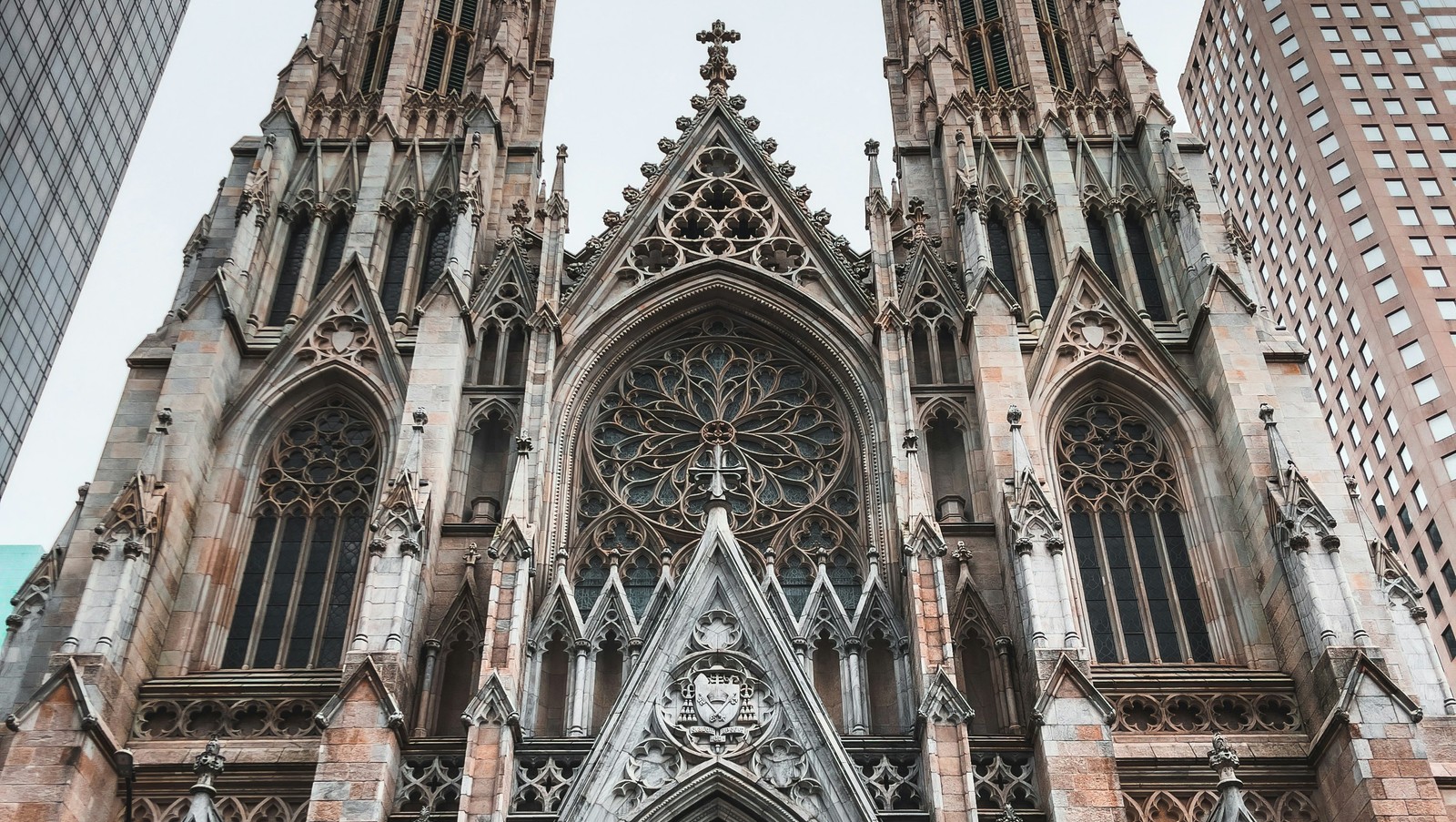
Image: Eugene Kucheruk

When you picture America’s most famous buildings , you’re also looking at a time in history. Taste, identity, and ambition all became written in stone, wood, and steel. Many eras in America left their mark in distinctive styles, from classical Greek Revival to playful Art Deco. Let’s look at famous façades from around the US and what they say about the times that built them!

1
Federal Style
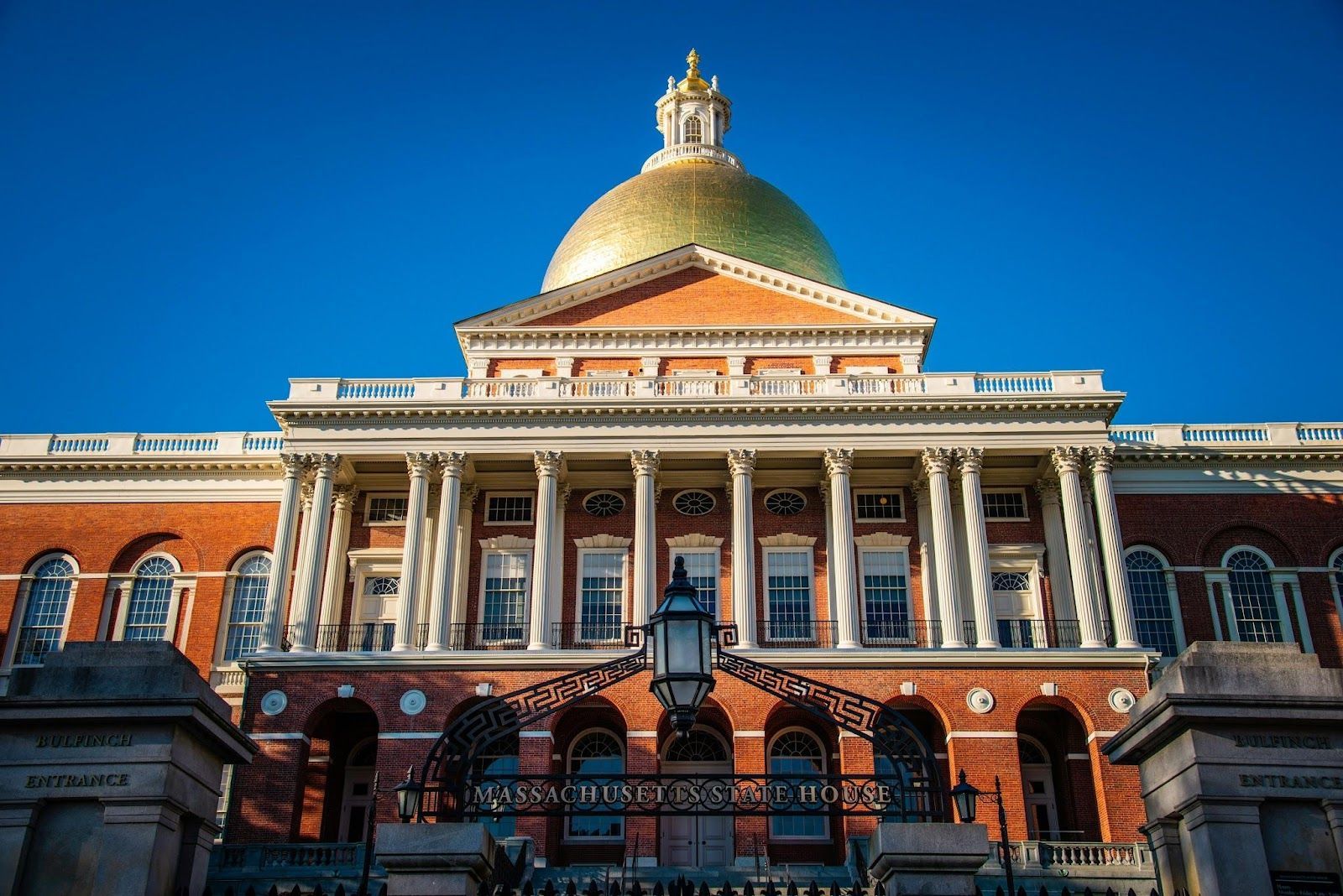
Image: Khay Edwards

It emerged after the American Revolution. The Federal style gave the young nation its first distinctly American architectural voice. You can recognize it for its symmetry, fanlights above doors, delicate columns, and Palladian windows.

Famous examples include the Massachusetts State House in Boston and early townhouses in Washington, D.C.

2
Greek Revival
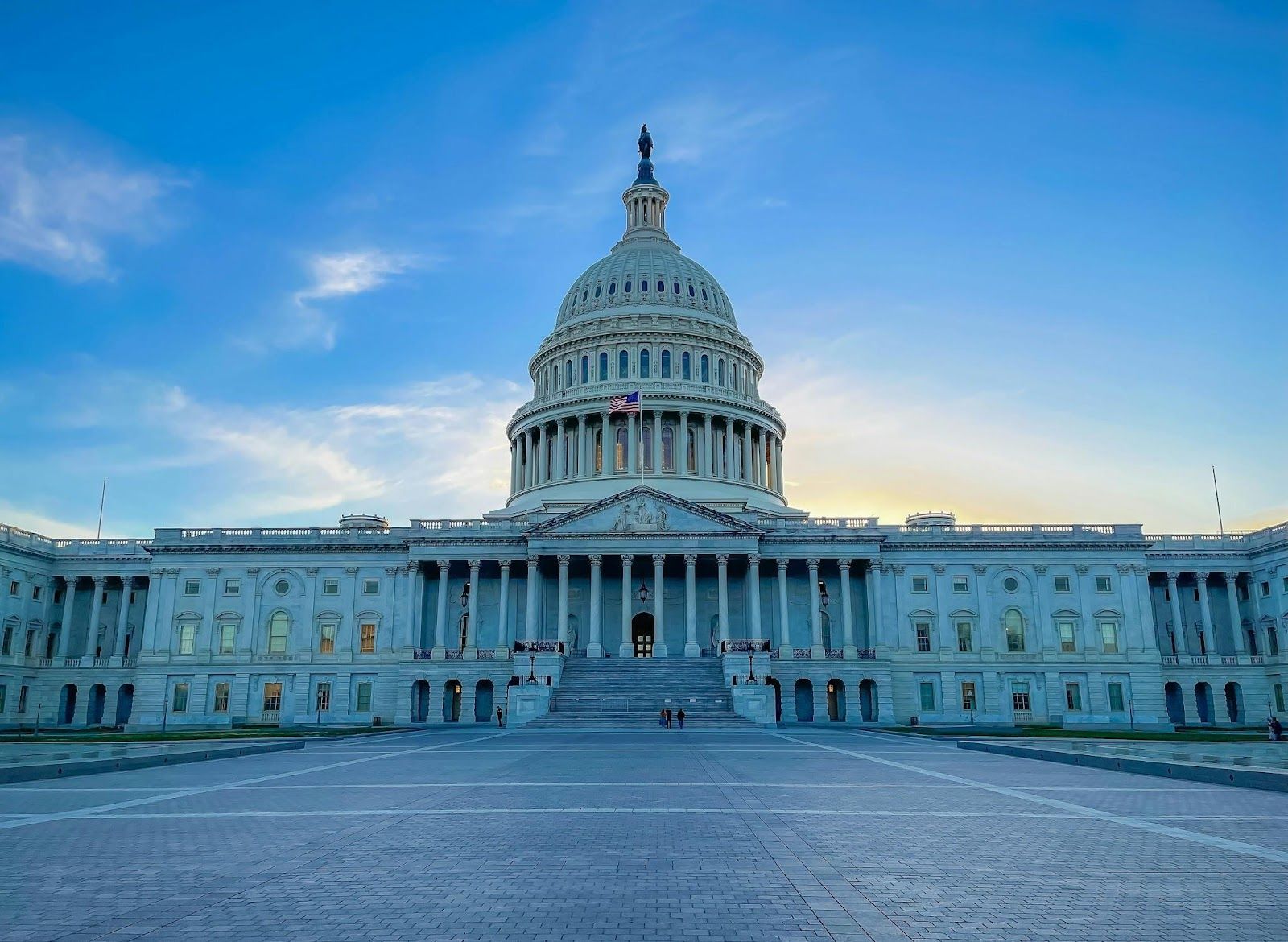
Image: Wilmer Olano

The U.S. Capitol is a hallmark example of the Greek Revival style. In the early 19th century, Americans embraced this design as a symbolic nod to democracy , borrowing the grandeur of ancient temples.

Tall Doric or Ionic columns, triangular pediments, and white-painted façades became common in courthouses and banks.

3
Gothic Revival
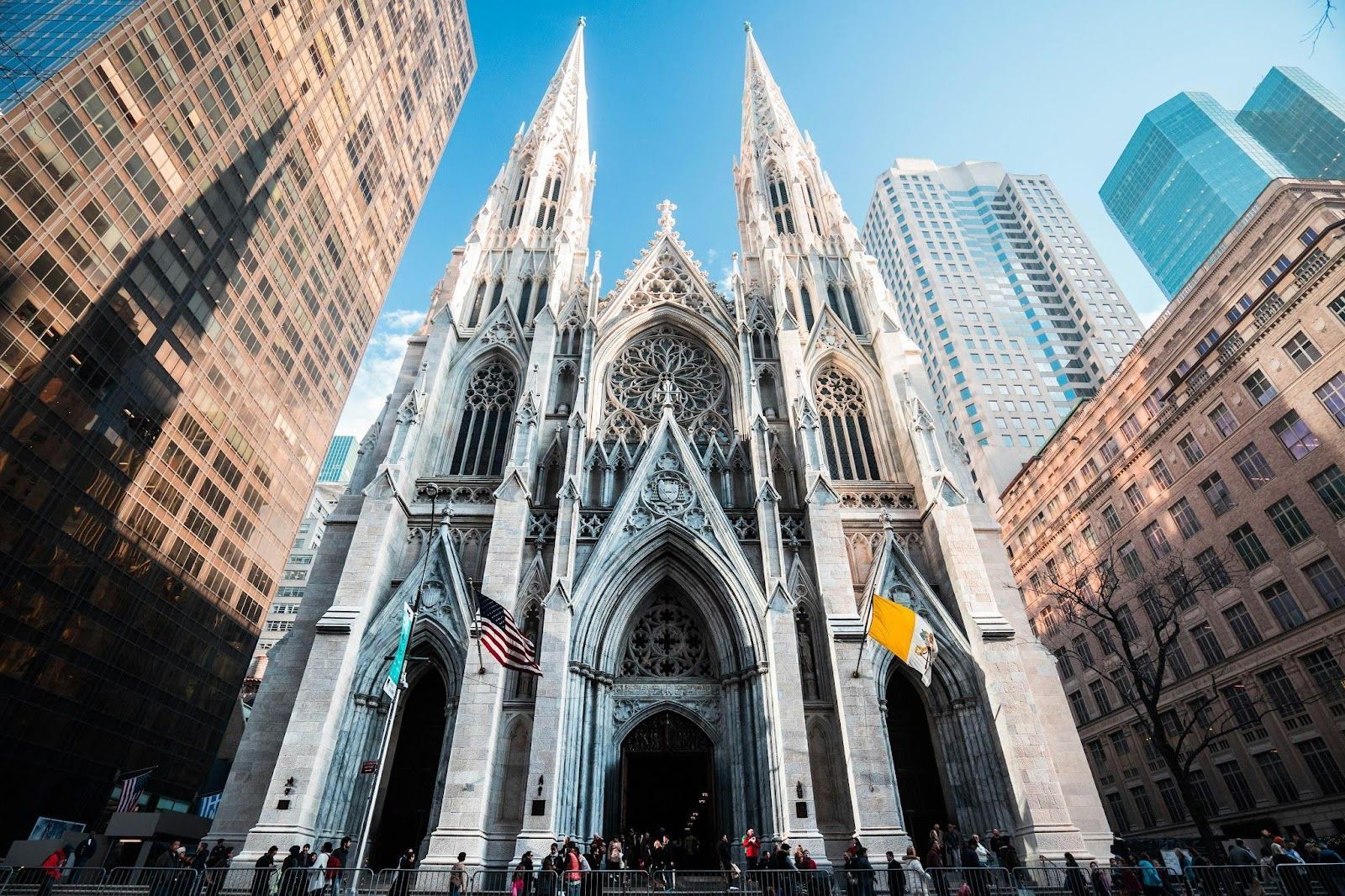
Image: Joseph Barrientos

Pointed arches, steep gables, and intricate wooden trim turned homes and churches into miniature medieval castles. The Gothic Revival style brought a romantic, storybook quality to American landscapes in the mid-1800s.

New York’s Trinity Church is a famous example of this style’s grandeur.

4
Italianate
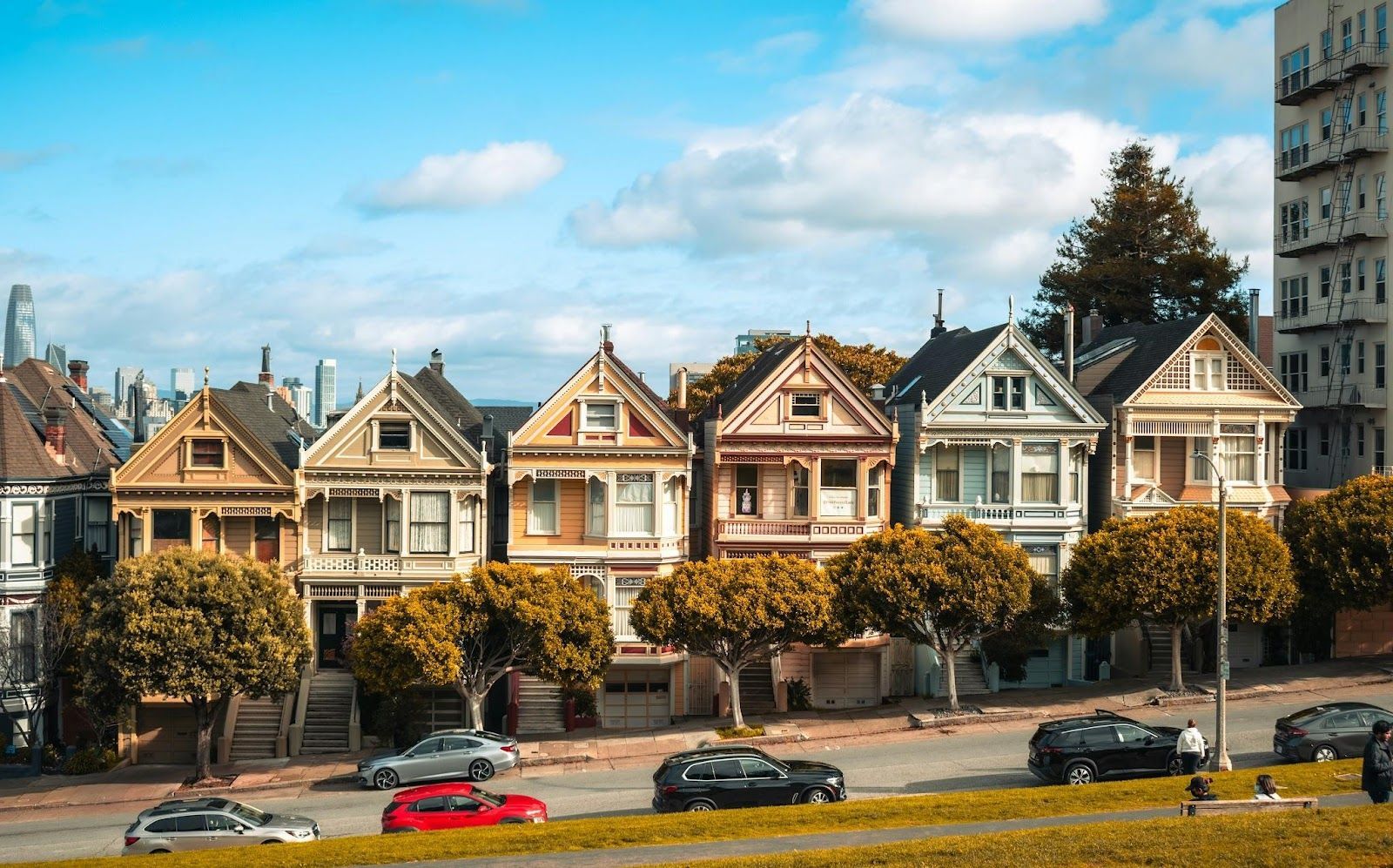
Image: Nikhil Mistry

By the mid-1800s, Italianate houses became a staple in American cities, drawing from the romantic look of Italian villas. They feature low-pitched or flat roofs, wide eaves with ornate brackets, and tall arched windows.

San Francisco’s "Painted Ladies" rowhouses are iconic examples. This style was rooted in European design, but it flourished in the U.S. as an urban favorite for middle-class families.

5
American Craftsman
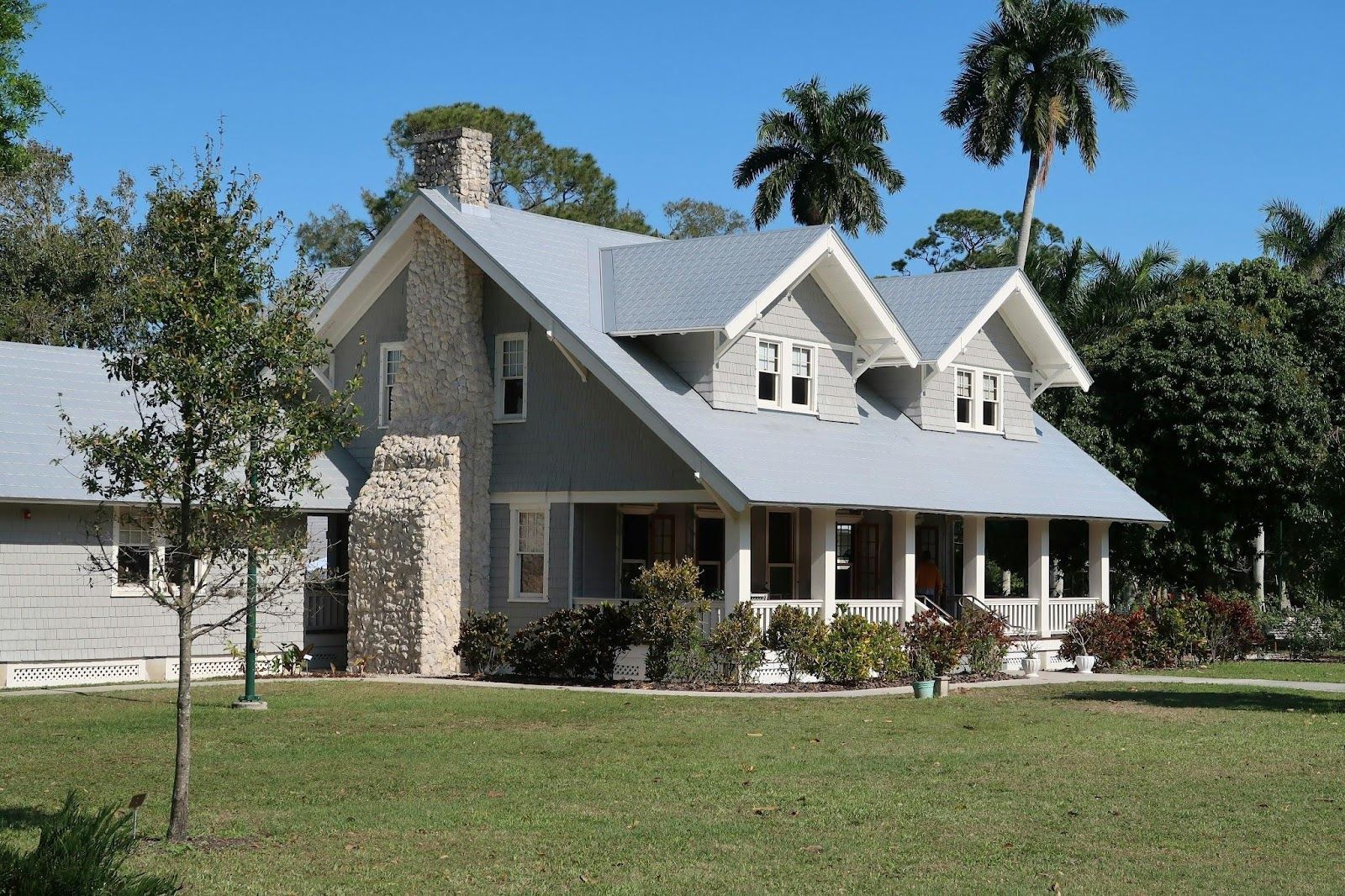
Image: Sieuwert Otterloo

Born from the Arts and Crafts movement, the Craftsman style celebrated simplicity , natural materials, and honest workmanship. Low-pitched gabled roofs, exposed beams, wide porches, and built-in furniture became trademarks.

Pasadena’s Gamble House is one of the best-known examples.

6
American Foursquare
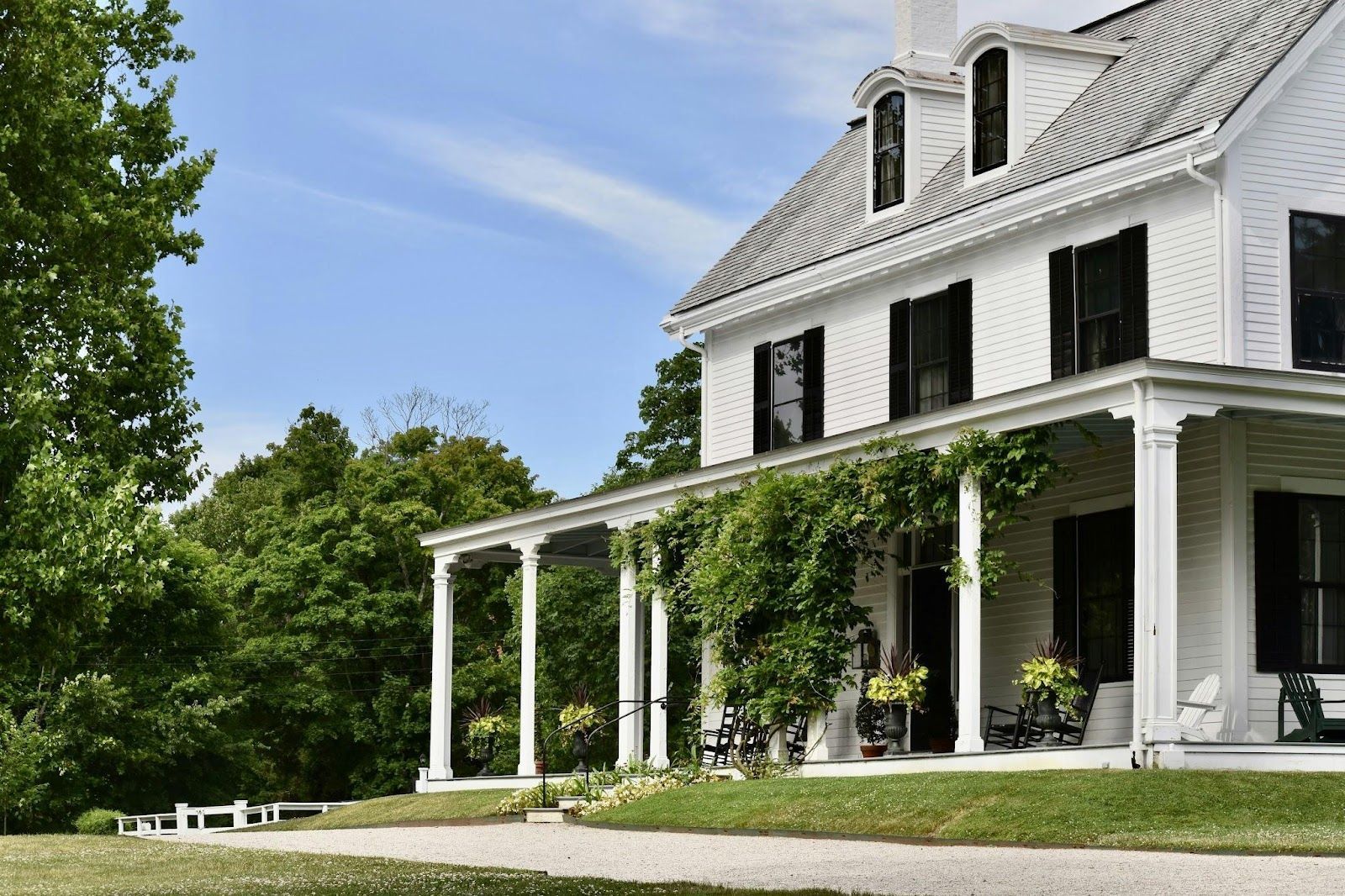
Image: Praswin Prakashan

Practical and no-nonsense, the American Foursquare dominated neighborhoods from the 1890s through the 1930s. Its hallmark was a simple boxy shape with four rooms per floor, a wide front porch, and a hipped roof with a central dormer.

Chicago and Midwestern towns saw countless examples rise quickly thanks to mail-order kits from Sears. It became the quintessential "everyman’s house."

7
Prairie School
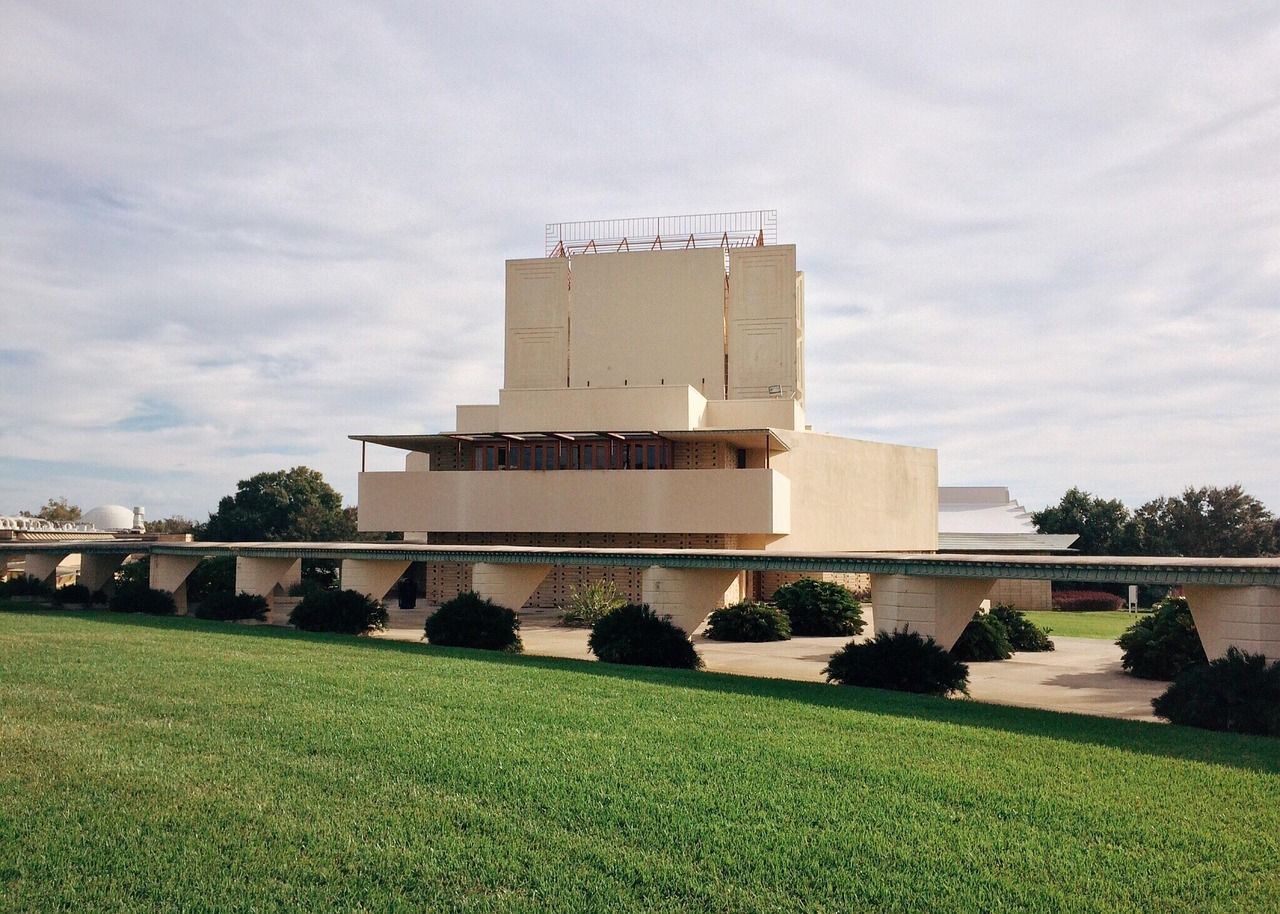
Image: WOKANDAPIX

Frank Lloyd Wright and his contemporaries pioneered the Prairie School, reshaping American architecture at the turn of the 20th century. Its designs emphasized horizontal lines, low-pitched roofs, open interiors, and harmony with the landscape.

Wright’s Robie House in Chicago is a textbook example. The style was deeply tied to the Midwest, reflecting its wide, flat horizons.

8
Mission Revival
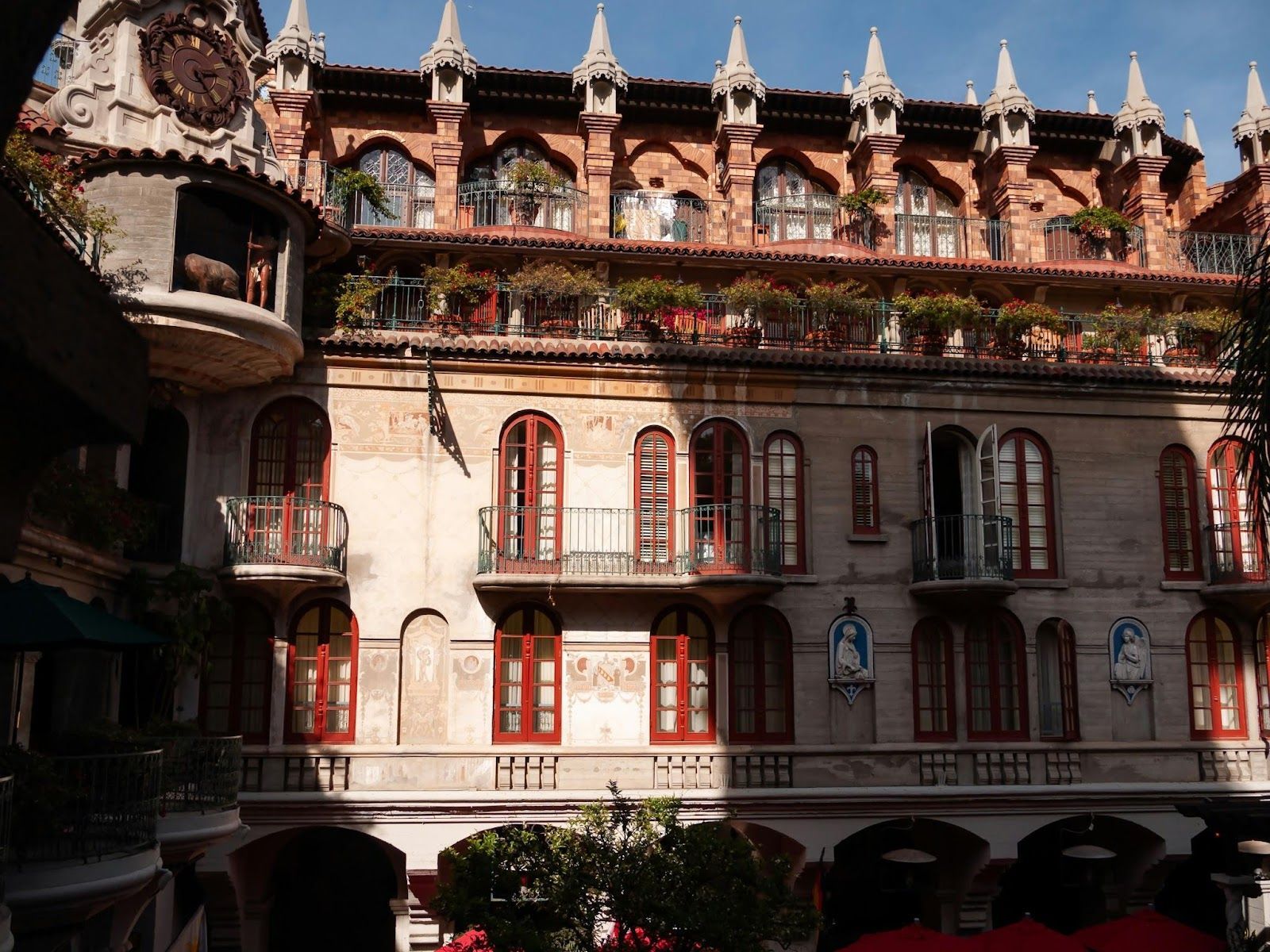
Image: Jim Witkowski

Inspired by California’s Spanish missions , Mission Revival emerged in the late 19th century with stucco walls, red tile roofs, arches, and bell towers. Iconic examples include the Mission Inn in Riverside, California, and numerous railway hotels in the Southwest.

It became especially popular in California and the Southwest for homes and public buildings.

9
Art Deco
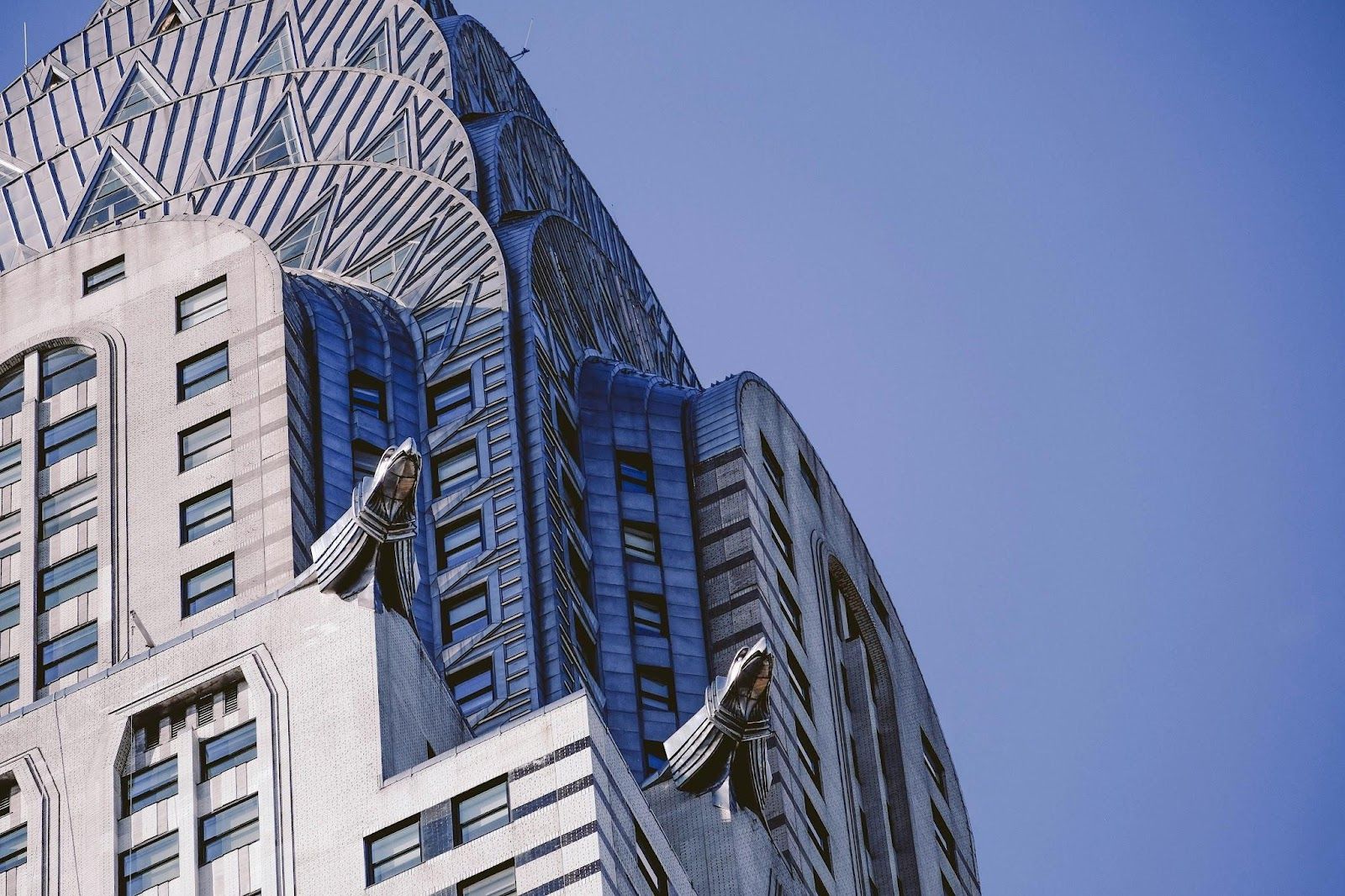
Image: William Wachter

Though the Art Deco style was born in France, some of the world’s most famous representative buildings stand in America. The details of New York’s Chrysler Building are a clear example, with sleek, geometric forms, vertical emphasis, and stylized ornamentation.

The Empire State Building and the Miami Art Deco District are other remarkable examples.

10
Ranch
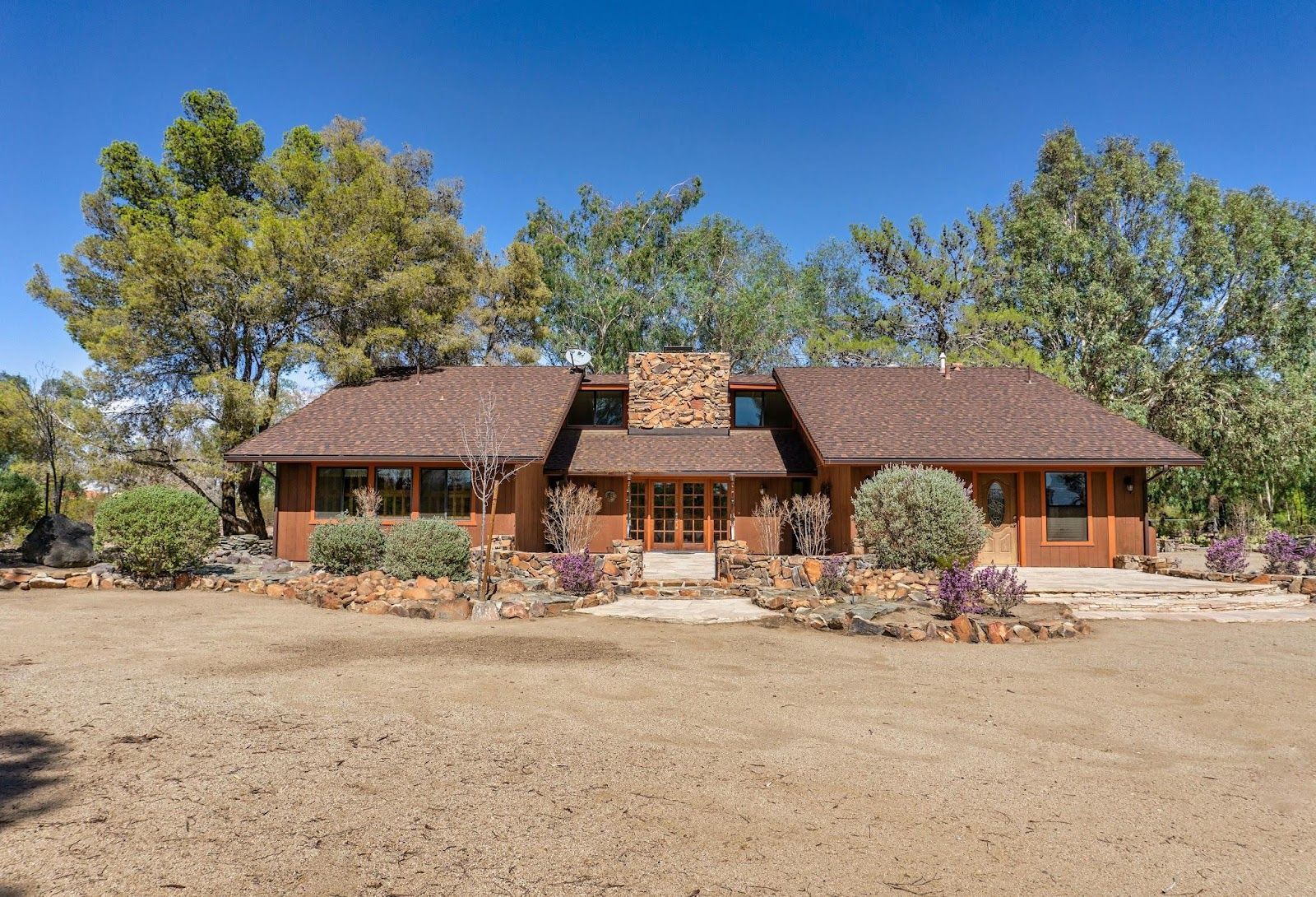
Image: Brian Wangenheim

The Ranch style spread across postwar suburbs, focused on casual, single-story living with long, low profiles and open floor plans. Large windows and sliding glass doors connected indoor spaces to backyards.

Classic examples appear throughout California, such as Eichler homes in the Bay Area.

Culture Culture 5 min read

It’s called popular wisdom for a reason

What should you do in the woods? Popular wisdom has the answer

Image: Peter Burdon

The United States of America is a melting pot of cultures and traditions, which means many superstitious beliefs can be traced back to other places. Think, for example, of beliefs around black cats or cemeteries. But some superstitions were born here, out of the unique idiosyncrasies of each American region. Why is the color of a porch such a big deal? Why are the woods dangerous? Is it crucial where I place my hat? Popular wisdom has an answer for all these questions, and more.

1
The cowboy hat on the bed

Image: Olivier Piquer

For a proper cowboy, a hat is as important as their horse or saddle. This means that there’s a protocol around this garment that needs to be followed, one important rule being that a hat should never be placed on top of a bed.

Why? There are several explanations, including the idea of bad spirits living in your hair, the old custom of placing a deceased person’s hat on top of their coffin, or the more practical reasoning of wanting to avoid lice. No matter the origin, no respectable cowboy would place his hat on the bed unless he wanted to attract misfortune his way.

2
The Appalachian woods

Image: Elijah Mears

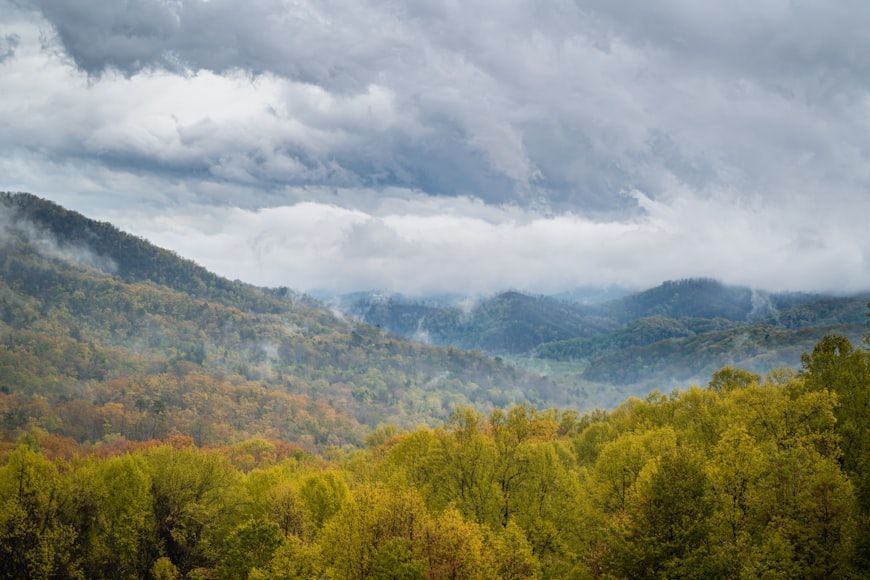
The Appalachian Mountains are filled with myths and legends, and certain rules are passed down and followed by nearly everyone, even those most skeptical about the supernatural. Many of these rules concern the woods and how one should behave in them : don’t go into the woods from dusk till dawn, don’t leave the marked trail, ignore any unknown voice calling you, and don’t look too closely into the trees.

While these rules could be explained by the simple reason of the woods being the hiding place of bandits in the past, and a difficult place to navigate in the dark, they have also been regarded as a place filled with spirits and supernatural beings, which no one wants to come across.

3
Seeing Mothman

Image: James Wainscoat

A local cryptid celebrity in Point Pleasant, West Virginia, the Mothman has allegedly been sighted several times since the 1960s. Many legends and beliefs have formed around his figure, one of them being that coming across the Mothman is a sign of an impending tragedy .

This belief gained strength after several reported sightings occurred just before the collapse of the Silver Bridge in 1967. Since then, the Mothman has been considered a harbinger of doom and a bad omen.

4
A mirror to ward off the devil

Image: Denny Müller

Louisianans have many myths and beliefs, especially those rooted in Cajun culture. Influences from French Acadia, Spain, and Western Africa have been incorporated into popular wisdom in a distinctly unique way.

One Cajun custom advises the use of a mirror to repel M’su Diable or "Mr. Devil." M’su Diable is known for being very vain, so he will never waste the opportunity to admire himself. If you hang a mirror in the porch, next to the door, he will stay there all night instead of entering the house, and the sunrise will scare him off.

5
Eating black-eyed peas on New Year’s Eve

Image: Nguyen Dang Hoang Nhu

Each holiday has certain foods associated with it, many of which are considered non-negotiable. For many Southern households, New Year’s Eve is synonymous with black-eyed peas, which are said to attract good luck and prosperity for the coming year.

While it’s a popular belief, this custom has distinctly historical origins. After the Civil War, black-eyed peas became a staple food across the South and saved more than one family from starvation. Today, they are often paired with collard greens, which are said to represent dollar bills.

6
Rocking an empty chair

Image: Robin Jonathan Deutsch

Irish and Scottish settlers brought with them a deeply rooted belief: you shouldn’t rock an empty cradle, cause you might wake the spirits. Across the South and the Appalachians, this belief transformed over time and became attached to another object: the rocking chair.

Often placed on porches or near the fire, a rocking chair moving on its own was believed to be occupied by a supernatural being . If someone rocked an empty chair, the spirits might consider this an invitation into the house.

7
The color of the porch

Image: Thomas Park

If you like the look of Southern front porches, you may have noticed that they often feature a pale blue ceiling. The use of haint blue—a collection of pale blue-green shades —is not an aesthetic choice, but a spirit-warding custom stemming from the enslaved Gullah Geechee people.

By painting the ceiling (and sometimes doors, windows, and shutters) blue, spirits might confuse it with the sky and pass through it, or with water, and avoid it. Over time, the tradition of haint blue— haint being an alternative spelling of _haunt_—spread throughout the South.

8
Bananas on a boat

Image: Ian Talmacs

Bananas are a pretty convenient fruit: they’re tasty, nutritious, and come naturally prepackaged. But don’t try saying that to Alaskan fishermen. They’ll tell you that bananas should never be brought on a boat, or no fish will be caught.

There are two possible origins of this belief. Some say the aversion to bananas stems from the old ships that carried this fruit—they sailed as fast as possible to prevent the cargo from spoiling, which disturbed the water and scared away fish. Others say that overripe bananas attract fruit flies and were believed to cause other food to spoil.

9
The tail of the cow

Image: Screenroad

Florida has historically been the state most prone to hurricanes, which has led to the development of superstitions and beliefs around the subject. A common belief involves cows, or more specifically, their tails.

If a cow holds its tail straight up, many Floridians say it means a hurricane is on the way . There are many scientific reasons for cows to hold their tail upright, and none have to do with weather prediction, but as far as we know, Floridians have not been proven wrong yet.

10
Whistling at night

Image: Lukas Robertson

Many cultures across the world refrain from whistling at night to avoid attracting spirits and malevolent beings. For Hawaiians, it is not just any spirit**. A whistle after dark might attract the** Huakaʻi pō or Nightmarchers , the ghosts of ancient Hawaiian warriors.

If you happen to come across them, your only hope is to lie on your stomach and avoid looking at them as a sign of respect. If you are lucky enough to be a descendant of a warrior, they will recognize you and protect you. But just to be on the safe side, it’s best to leave the whistling for daytime.

Culture Culture 4 min read

When Hollywood breaks the bank

$400 million spent on what!? Discover Hollywood's most expensive movies

Image: Mackenzie Marco

What would you do with $465 million? Buy a private island? Maybe 5 of them! If that sounds over the top, Hollywood might disagree. Big studios spend unimaginable amounts of money, with numbers that can be mind-blowing. Keep reading if you want to learn more about the most expensive movies ever made and where all that money went; there’s one title you definitely won’t see coming!

1
Jurassic World Dominion

Image: Christopher Stark

We understand; bringing giant reptiles from millions of years ago to life isn’t easy… or cheap. Maybe that’s why Jurassic World: Dominion (2022) cost an incredible $465 million! But not all of that went to special effects. Filmed during the pandemic, the costs of safety measures and protocols for the large cast and crew were anything but low. The actors even spent months quarantining in the luxurious Langley Hotel near Pinewood Studios, which also inflated the film’s budget.

2
Star Wars: The Force Awakens

Image: Lyman Hansel Gerona

There are Star Wars fans everywhere, and for good reason, as it’s considered one of the greatest movie franchises of all time. But creating something this good comes at a high price: $447 million, to be precise. In addition to the visual effects and incredibly detailed costumes, the movie was shot across multiple countries: England, Iceland, Ireland, and even the United Arab Emirates. On top of that, the production counted with a top-tier cast, including Harrison Ford and Carrie Fisher.

3
Fast X

Image: Cook aynne

Fast X (2023) ranks among the most expensive movies ever made, with an incredible budget of $379 million. But it wasn’t just the explosions, wild rollovers, and high-speed chases that elevated the costs; a big part went into reuniting much of the original cast. On top of that, the production didn’t stick to Los Angeles alone; it also filmed in beautiful international locations such as Rome, Turin, and Lisbon.

4
Pirates of the Caribbean: On Stranger Tides

Image: Intricate Explorer

This film cost about the same as Fast X , but it came out 12 years earlier, when that budget was even more impressive. Pirates of the Caribbean: On Stranger Tides (2011) accumulated around $378.5 million in production costs, much of it going to star salaries, especially Johnny Depp, who reportedly earned $55 million for his role. And that’s not all; the film’s visual effects and far shooting locations (Hawaii, the UK, Puerto Rico) drove the budget even higher.

5
Avengers: Age of Ultron

Image: Jason Leung

The superheroes’ suits, the incredible effects that brought their powers to life, the amazing battle scenes, and all the destruction they caused pushed the budget of Avengers: Age of Ultron (2015) to $365 million. But here’s the most interesting part: another film from the same saga, Avengers: Endgame , was released four years later and actually cost less (about $356 million).

6
Avatar: The Way of Water

Image: Luke Tanis

One thing’s for sure: making a movie is never easy, especially when it features a giant blue alien species living in an underwater world. That’s the case with Avatar: The Way of Water , released in 2022 with an astounding budget of $350 million. Costs climbed even higher thanks to its long filming schedule, which stretched from 2017 all the way through 2020!

7
Indiana Jones and the Dial of Destiny

Image: Intricate Explorer

Indiana Jones always gives his all, and his latest adventure, Indiana Jones and the Dial of Destiny (2023), was proof of that. The film cost around $327 million to produce, and the action didn’t stay confined to a studio, as the cast, crew, and equipment traveled to locations across the UK, Morocco, and Italy. In addition, the innovative visual effects and de-aging technology used to bring Harrison Ford’s character to life weren’t exactly cheap.

8
Mission: Impossible – The Final Reckoning

Image: Nao Takabayashi

Powerful action scenes and chases, biplanes performing aerial stunts, fierce battles, and underwater sequences: you’ll find all this and more in Mission: Impossible – The Final Reckoning (2025). But all this didn't come out of nowhere; it cost $300 million! Beyond the vehicles and specialized equipment, security measures had to be a serious matter. On the other hand, bringing Tom Cruise back to the saga and having him perform his own stunts added more dollars to the equation, with the actor reportedly earning between $70 million and $120 million for the movie.

9
No Time to Die

Image: Marcel Eberle

We were all excited to see Daniel Craig back in James Bond’s shoes, and we were lucky enough to watch him do it! But, of course, it didn’t come cheap. Beyond Craig’s generous salary and advanced visual effects, the film’s $250 million budget also covered the costs of filming across multiple, distant locations, including Italy, Jamaica, Norway, the Faroe Islands, and the UK!

10
Snow White

Image: Priscilla Du Preez 🇨🇦

After so many scenes of action, aliens, weapons, and explosions, you probably didn’t expect Snow White (2025) to make this list, right? But it did! While the film’s budget wasn’t officially confirmed, estimates put it at around $270 million. So, where did all that money go? First of all, the film relied on high-quality visual effects to bring the magic and fantasy of the fairy tale to life. But that wasn’t all; lead actresses Rachel Zegler and Gal Gadot reportedly requested substantial salaries.

Explore more American facts

Choose your favorite category!

General
General

As American as apple pie—the very best America has to offer!

Culture
Culture

Delve into the astounding richness of American lore.

Geography
Geography

Hop in and explore vast and diverse American landscapes.

History
History

Discover the key moments that shaped the United States.