General General 6 min read

Into the wild

Boost your animal instincts with 10 fascinating mammals that roam America

Image: christie greene

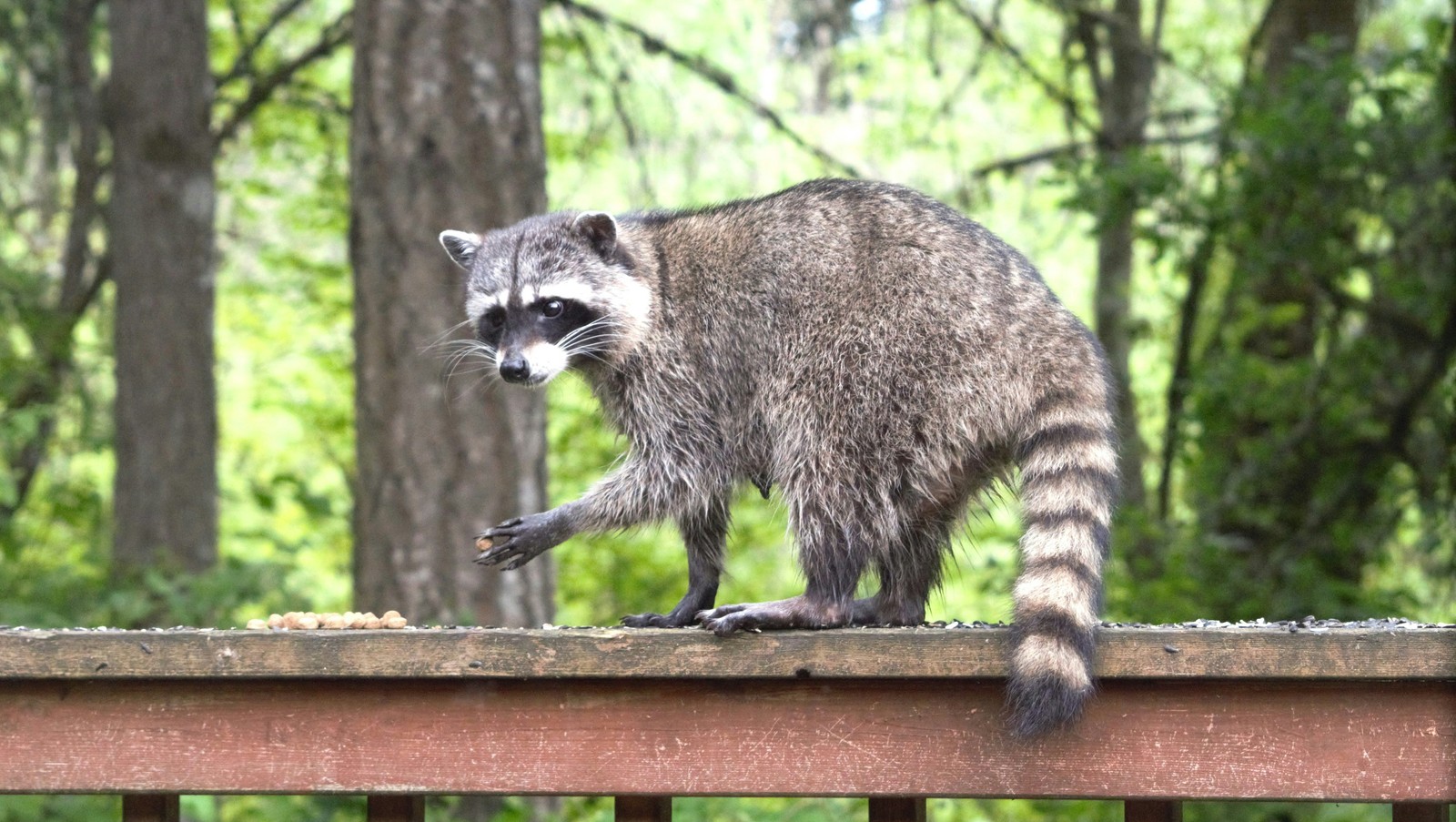
Mammals form one of the greatest classes of vertebrate animals. There are more than 5400 known species of mammals in the world, and more than 400 of these species are found in the United States. From terrestrial to aquatic, carnivorous to herbivorous, we have some of the most interesting mammals on the planet. In this article, we have chosen 10 animals that, due to their special characteristics, are already an essential part of our culture. Can you guess which ones they are?

1
Grizzly Bear

Image: Joshua J. Cotten

Grizzly bears ( Ursus arctos horribilis ) are one of the most famous North American mammals, but do you know why they are called that? The grizzly bear is a subspecies of the brown bear. However, although grizzlies are mostly brown, their fur can appear white-tipped or grizzled , which explains their name.

The grizzly bear once lived throughout much of the North American West. Unfortunately, the arrival of Europeans gradually drove it from its original habitat, considerably reducing its population. In 1975, they were listed as threatened under the U.S. Endangered Species Act, and much has been done since then to protect the species. Today, grizzlies can still be found in parts of Wyoming, Montana, Idaho, Washington, and the Alaskan wilderness. They are also one of the most iconic residents of Yellowstone National Park.

2
Gray Wolf

Image: Yannick Menard

We all know that wolves are legendary for their eerie howl, but there are many other interesting facts about this peculiar animal. Gray wolves ( Canis lupus ) are the largest members of the dog family and are native to North America and Eurasia. The size of an adult gray wolf is similar to that of an average dog and it can weigh up to 145 pounds. However, their tracks would outshine those of any dog, as they measure about 5 inches long by 4 inches wide.

Wolves live and hunt in packs of 6 to 10 animals. They are known to travel great distances, even covering 30 miles in a single day. In the United States, gray wolves were hunted to near extinction, although some populations survived and others have since been reintroduced. Today gray wolves can be found in areas such as the Great Lakes states of Minnesota, Wisconsin, and Michigan, the northern Rocky Mountains region, and the northwest.

3
North American River Otter

Image: lovelooking

The North American River Otter ( Lontra canadensis ) is a species of semi-aquatic, carnivorous mammal endemic to the North American continent that can be found along the coasts and rivers of the United States and Canada. Because they are very susceptible to environmental pollution, their population has been reduced considerably in recent years.

It is a mostly nocturnal animal, often seen at dusk or dawn. During the day it takes refuge in burrows with an underwater entrance that leads to a nest chamber lined with plant material and hair. North American River Otters are robust (11 to 31 pounds) and feed on fish and other aquatic prey, such as turtles, frogs, and crabs.

4
Red Fox

Image: Jeremy Hynes

The red fox ( Vulpes vulpes ) is a species of mammal in the canid family. It is the most abundant fox species in the northern hemisphere and can be found in many national parks across the country. As its name suggests, its fur is reddish in color. The tips of the ears and the ends of the legs, however, are black. They have a bushy tail whose tip is usually white, as is their belly.

Although classified as a carnivore, the red fox is actually an omnivore and, above all, a great opportunist. They are astute, have excellent eyesight, and have a keen sense of smell and hearing. They can hunt prey of a wide variety of sizes, from insects and worms to small mammals, birds, and fish. They also feed on certain vegetables, berries, and fruits.

5
Mountain Lion

Image: Robert Sachowski

The cougar ( Puma concolor ), also known as the mountain lion, is a mammal native to the Americas. These large, tan cats are found from the Yukon in Canada to the southern Andes Mountains and Patagonia in South America. In the United States, mountain lions can be found mainly in the western part of the country. However, because of their solitary nature and constant threats from humans, it is difficult to estimate exact population numbers.

Mountain lions are slender and agile felines that can adapt to different conditions and environments. They are strict carnivores and have extraordinary vision and acute hearing, which allows them to capture almost any animal, from insects to squirrels, beavers, elk, and deer.

6
North American Beaver

Image: kidmoses

Beavers are known to be one of the only animals that can affect the ecosystem around them, building watertight dams that help preserve water in streams and rivers. The North American beaver ( Castor canadensis ) is the largest rodent in North America and one of the largest in the world —it can weigh between 24 and 71 pounds! The species is widely distributed throughout the continent, from northern Canada to northern Mexico.

The North American beaver's coat can range from dark brown to reddish brown, and its most distinctive feature, a flattened paddle-shaped tail, allows it to swim. It is perfectly adapted to semi-aquatic life; its ears and nose have valves that close when submerged, and it can close its lips behind its prominent incisors to cut wood underwater.

7
Hawaiian Monk Seal

Image: Sebastian Coman Travel

The Hawaiian Monk Seal ( Neomonachus schauinslandi ) is a species native to the Hawaiian Islands. With its friendly face and long whiskers, it is perhaps one of the most endearing mammals that can be found in our country. Unfortunately, this seal species is endangered because of the large amount of chemical waste produced by the fishing industry on the reefs and beaches of the northern Pacific Ocean.

The Hawaiian Monk Seal is usually solitary but is always seen accompanied by other specimens. It is known to be piscivorous, that is, it feeds mainly on fish and other marine creatures, such as crustaceans and some species of mollusks. Since it is a predator by nature, when hunting it makes the most of its length (approximately 7 feet) and its large body (between 300 to 600 lb) to catch its prey.

8
American Red Squirrel

Image: Rusty Watson

The American red squirrel ( Tamiasciurus hudsonicus ) lives in the United States and much of Canada. It is a rodent mammal easily recognized for its deep reddish fur, long bushy tail, and prominent lower teeth. It can be differentiated from other North American squirrel species because of its smaller size, 11 to 14 inches.

American red squirrels normally live in the shady areas of coniferous forests and are primarily granivores. They feed on seeds, pine cones, nuts, fruit, and occasionally insects, eggs, and birds. It is mainly active in trees but also swims freely, using its tail as a rudder to change its direction.

9
Elk

Image: Judy Beth Morris

Elk ( Cervus canadensis ), also known as wapiti in several Native American cultures, is a species of deer that lives in North America, Central and East Asia. Today, most elk in our country are found primarily in the West, especially in mountainous regions such as Wyoming's National Elk Refuge and Yellowstone National Park. Some eastern states have also reintroduced small herds into natural forest areas.

The most prominent feature of elks is their massive antlers. Each March they shed their antlers, which begin to grow back in May to be ready for the breeding season in late summer. During this time the bellowing of the males echoes through the mountains, announcing the violent battles that serve to decide who mates with whom. The males with the largest antlers, usually the oldest, often win these duels and get to dominate the herd.

10
American Bison

Image: Stephen Leonardi

The American bison is a true symbol of American identity. Not only is it the largest mammal in North America, it is also the national mammal of the United States. In addition, it's one of the greatest conservation success stories of all time.

In prehistoric times, there were millions of specimens of American bison ( Bison bison ) roaming our territory. But by the late 19th century, there were only a few hundred left. Fortunately, thanks to the efforts of several organizations and individuals, the species was reintroduced and today it can be found in a few national parks and reserves as well as in the wild.

Geography Geography 4 min read

Let’s ride!

Enjoying America while exercising: discover 10 great bike trails

Image: Pixabay

The vast American landscapes offer a virtually infinite array of opportunities to explore nature from various perspectives. Hikers, drivers, cyclists, campers, motorhome travelers, and more can enjoy this beautiful country in their own unique ways. Exploring it on a bicycle has numerous benefits : it provides valuable physical exercise, fosters closer contact with the environment compared to motorized vehicles, and allows for a deeper exploration of the surroundings. To say that the country has many bicycle trails would be a huge understatement. There are trails within city and town limits, inside national parks, and in almost any other location you can think of. The following 10 trails are meant to inspire anyone willing to explore and take their bike for a spin.

1
Florence Trail, Vermont

Image: Rod Long

Intermediate mountain bikers will love this berm-and-jump-filled descent, which can be incorporated into a 5-mile ride at Cady Hill . The Florence Trail is known as the best flow trail in Stowe, and one of the finest trails in the state of Vermont.

Advanced riders seeking to add some swoop and flow to their biking adventures will also find this trail enjoyable.

2
Devil's Den, Arkansas

Image: Oliver Graham

A mountain bike trail with history attached to it, Devil's Den State Park is a hallmark in the Arkansas mountain biking scene. At the very trailhead, a sign proudly declares that the lower area of the park, known as Fossil Flats, was the "Birthplace of Arkansas Mountain Biking" in 1989.

Recently designated as a "Monument Trail," the park underwent renovations to update sections of the historic trail while expanding the network with brand-new segments. Featuring impressive rock formations, jumps, and drops, Devil's Den truly is a biker’s paradise.

3
Citrus Tech Trail, Michigan

Image: Aishwarya MV

Despite being the most remote mountain bike destination in the Lower 48, Copper Harbor is home to some of the highest-quality trails in the nation. The newest additions to the network, located on Rock Solid's privately owned East Bluff mountain, include some of the best trails that have been built in the nation . Among them, the Citrus Tech trail stands out, earning praise from every mountain biker who has ridden it.

4
South Boundary Trail, New Mexico

Image: Richard Hedrick

An epic trail that winds through stunning mountain meadows and aspen groves before descending into the desert town of Taos , the South Boundary Trail features 4,500 vertical feet of downhill riding. However, it’s worth noting that bikers will face 2,000 feet of climbing along the way—but the breathtaking ride more than makes up for the effort.

5
Doctor Park, Colorado

Image: Holly Mandarich

One of the most thrilling descents in the country, the Doctor Park singletrack takes riders on an unforgettable journey. Starting at a high elevation, the trail winds through an alpine meadow , descends into an aspen grove, and continues down into pine forests before reaching a dry, lower-elevation climate zone .

Bikers from across the country and around the world can either shuttle to the top or pedal their way up to experience this incredible ride.

6
The Presidio, California

Image: Tim Trad

California is brimming with bike trails, making it difficult to recommend just one. However, this former military base turned national park stands out with its 25 miles of paved or hard-packed trails. Offering sightlines to the bay, coastal cliffs, beaches, forests, Alcatraz, the city skyline, and, of course**,** the iconic Golden Gate Bridge , it’s an unforgettable biking destination.

7
DuPont State Forest Slickrock, North Carolina

Image: Leslie Cross

The DuPont State Forest is a rarity on the East Coast due to its exposed bedrock trail. The biking experience in the North Carolina mountains offers epic descents, small mountains, and trails that flow nicely on soft rocky terrain , giving visitors a great experience, with the Slickrock (Cedar Rock, Big Rock, and Burnt Mountain) trail being one of its highlights.

8
Alpine Trail, Oregon

Image: everett mcintire

There are many trails named "Alpine Trail" but this one, at least, honors its name. Beginning high in the mountains, it goes downhill on soft and beautiful black dirt . A few open meadows and exposed outcroppings provide brief panoramic views of the Cascade Mountains, before dropping back into the timber for more high-speed ripping.

9
Tahoe Rim and Flume Trails, Nevada

Image: Abhi Verma

The Flume Trail wasn’t originally designed for bicycles—it began as the grade for a water flume that delivered lumber from high in the mountains above Lake Tahoe to the towns below. Today, remnants of the flume are still visible, but the old flume bed has been repurposed for use by mountain bikers and hikers.

10
Osberg Ridgeline Epic, Idaho

Image: Karsten Winegeart

The Osberg Ridgeline Epic isn’t for everyone. While it requires a shuttle to reach the trail’s starting point, bikers are still faced with over 3,000 feet of uphill pedaling. However, on the other hand, that 3,000 feet of climbing rewards riders with 5,500 feet of thrilling descent, along with a 15-mile ridge traverse with amazing views .

History History 5 min read

Leading the way

Can you guess who was the first US president to visit the 50 states?

Image: Mohan Nannapaneni

We all know that George Washington was the very first President of the United States. But throughout history, many other US presidents have achieved memorable "firsts." Who was the first Chief Executive to inhabit the White House? Who was the first to make a phone call from there? And who was the first Commander-in-Chief to appear on TV? If you want to know the answers to these and other exciting questions, don't miss this article on 10 iconic presidential "firsts"!

1
First president to live in the White House

Image: Raymond M.E. Aguirre

In 1790, President George Washington signed an act of Congress declaring that the government would reside in a district "not exceeding ten miles square […] on the river Potomac." Today, we all know what stands at 1600 Pennsylvania Avenue NW in Washington, DC. That's right! We're talking about the White House, an enduring symbol of the US presidency.

But it hasn't always been that way. The construction of the White House began in 1792 and only had its first resident 8 years later. He was President John Adams, who moved into the Executive Mansion with his wife Abigail in 1800.

2
First president with telephone in Office

Image: Carlos Eduardo

Nowadays, many of us can’t imagine getting anywhere without our cell phones. But in the 19th century, things were entirely different.

The landline telephone arrived at 1600 Pennsylvania Avenue in the late 1870s, during the presidency of Rutherford B. Hayes, shortly after Alexander Graham Bell had unveiled the communication device. It's said that President Hayes was interested in the technology and recognized its potential.

However, because the invention was so new, calls from the White House were rare. The first president to use the telephone frequently and regularly is considered to be William McKinley, who took office in 1897.

3
First president to serve two non-consecutive terms

Image: Josh Carter

Several men have had the honor of serving as president of the United States on more than one occasion, starting with none other than George Washington. Thomas Jefferson, James Madison, and others have served two consecutive terms.

But there was someone who, for the first time, served two non-consecutive terms as president: Grover Cleveland. That's right, Cleveland first took office in 1885 after defeating Republican candidate James G. Blaine in the election. In 1888, he lost the presidency to Benjamin Harrison. However, in 1892, Cleveland won again, assuming his second mandate in 1893.

4
First president to win the Nobel Peace Prize

Image: Sunguk Kim

Winning a Nobel Peace Prize is not something that happens every day, right? Fortunately, four US presidents have achieved this remarkable recognition.

The first was Theodore Roosevelt, who received the Nobel Peace Prize in 1906 for his role in negotiating the end of the Russo-Japanese War. The other three presidents who received the Nobel were Woodrow Wilson, Jimmy Carter (who was awarded the prize after leaving office), and Barack Obama.

5
First president born in the 20th century

Image: Florida Memory

The turn of the century is always a momentous and exciting event, and the first decades of the last century were quite... shall we say, "busy." The first president to serve during the 20th century was William McKinley, who was already in office at the turn of the century. But here’s a different question: who was the first future president born in the 20th century?

We're referring to none other than John F. Kennedy, who was born on May 29, 1917, in Brookline, Massachusetts. At the age of 29, he won a seat in the House of Representatives, and six years later, he secured a position in the Senate.

Finally, in 1961, JFK was inaugurated as the 35th president of the United States.

6
First president to light the National Christmas Tree

Image: Gaby Dyson

The lighting of the National Christmas Tree by the president of the country has become a cherished tradition that beautifully reflects the American Christmas spirit.

This tradition began on December 24, 1923, when President Calvin Coolidge became the first to light the National Christmas Tree located at the Ellipse near the White House. The imposing tree stood 48 feet tall and was decorated with over 2,500 electric lights. Beautiful!

Fortunately, the presidents who followed Coolidge have continued this delightful Christmas custom, keeping the tradition alive for generations to enjoy.

7
First president on TV

Image: Yle Archives

In the 1930s, it wasn't common to see the president's face on TV. In fact, before 1939, no president had ever appeared on television while in office.

The first American president on TV was Franklin D. Roosevelt, who made his television debut on April 30, 1939, at the New York World's Fair. Although this might not seem so revolutionary today, at the time, it marked a turning point in political communication and how leaders connected with citizens. His speech is remembered for addressing important issues, such as the future of the nation and the world.

8
First president on color TV

Image: Aleks Dorohovich

Yes, Franklin D. Roosevelt was the first US president to appear on TV, but Dwight D. Eisenhower was the first sitting US president who was lucky enough to appear on color television!

This detail, which seems trivial today, was a radical change at the time. When color TV arose, everything people watched on their living room screens began to better reflect the reality outside. Eisenhower made his color TV debut during the 1950s , delivering a speech as part of his re-election campaign—a moment that symbolized the merging of politics and modern technology.

9
First president to visit all 50 states

Image: David Lusvardi

We know that the United States of America is a big country. In fact, we're one of the largest countries in the world in terms of territory. For this reason, it can be a challenge to get to visit all 50 states that make up our nation in a short period of time. However, one president managed to accomplish this feat for the first time.

The president who achieved this milestone was Richard Nixon, the 37th president (1969-1974), when he visited Maine on October 22, 1972, marking the completion of his goal.

It’s worth noting, in fairness to all previous presidents, that Hawaii and Alaska didn’t become states until 1959.

10
First president on the internet

Image: Anthony Massaro

Although the origins of the Internet can be traced back to the 1960s, it wasn’t until the late 1980s that it became a widely popular and accessible phenomenon.

In line with global technological advances, the White House decided to incorporate the use of the Internet during the presidency of Bill Clinton, who officially became the first president to use the Internet for work purposes while in office.

But that wasn't all! Clinton also hosted an event that seemed unimaginable before —he organized a live chat from the White House. With that, Clinton was establishing the first direct communication between a US president and the public through the Internet.

Explore more American facts

Choose your favorite category!

General
General

As American as apple pie—the very best America has to offer!

Culture
Culture

Delve into the astounding richness of American lore.

Geography
Geography

Hop in and explore vast and diverse American landscapes.

History
History

Discover the key moments that shaped the United States.