Geography Geography 3 min read

More than a map

America, you’re full of surprises! 12 Geography facts you overlooked
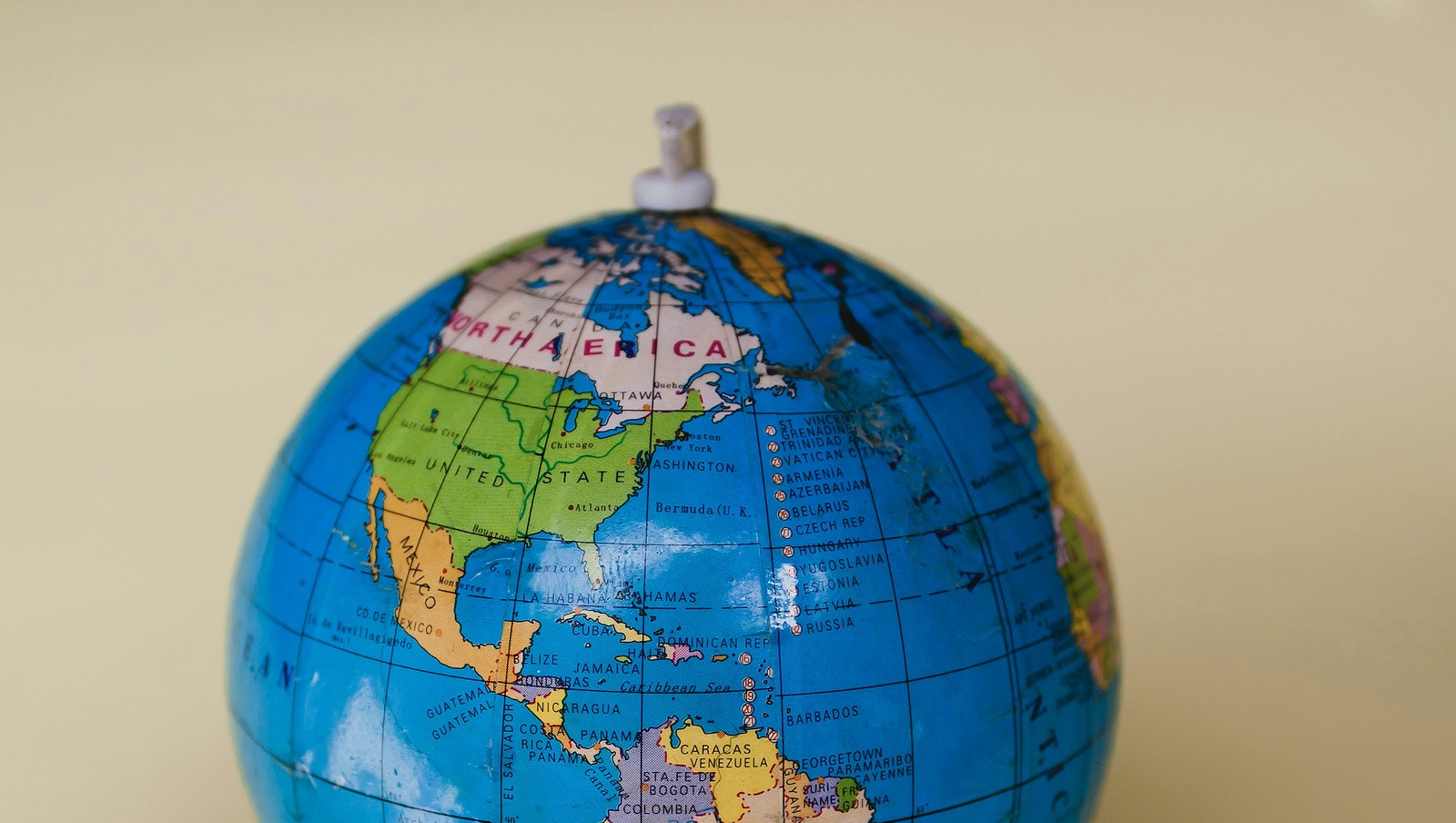
Image: Arthur A

Maybe geography class wasn’t your favorite back in the day, but now that there are no pop quizzes, it’s actually pretty fascinating, don’t you think? The United States is full of quirky facts and surprising stories that most people never hear about: long coastlines, westernmost points, short rivers, and many more. American geography is anything but boring. So grab your coffee (or tea), kick back, and enjoy some bite-sized facts about this big, beautiful country of ours.

1
The US touches three oceans
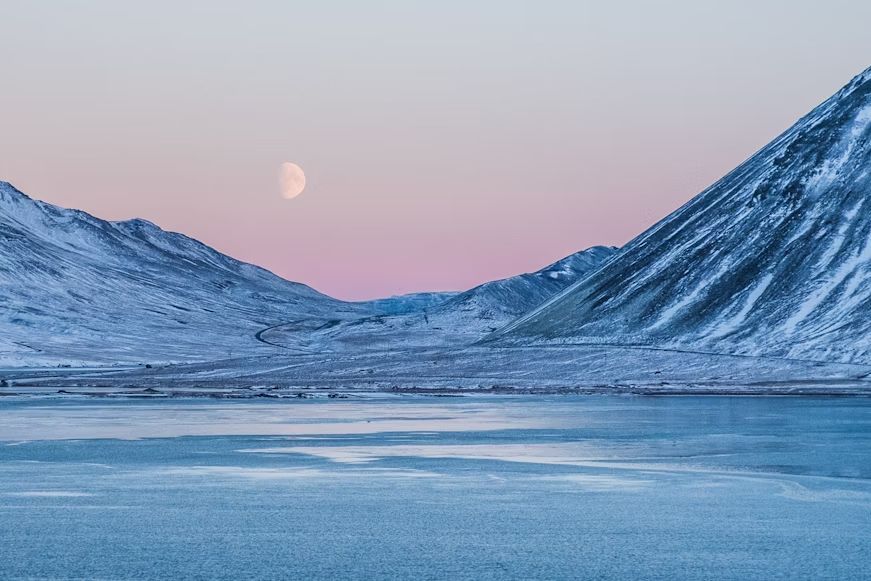
Image: Daiwei Lu

Most people remember the Atlantic and the Pacific, but the Arctic often gets overlooked. Alaska’s northern edge dips into icy Arctic waters, technically giving the US access to all three. From sunbathing to snowshoeing, we’ve got the full spectrum of ocean vibes covered!

2
America has the shortest river in the world
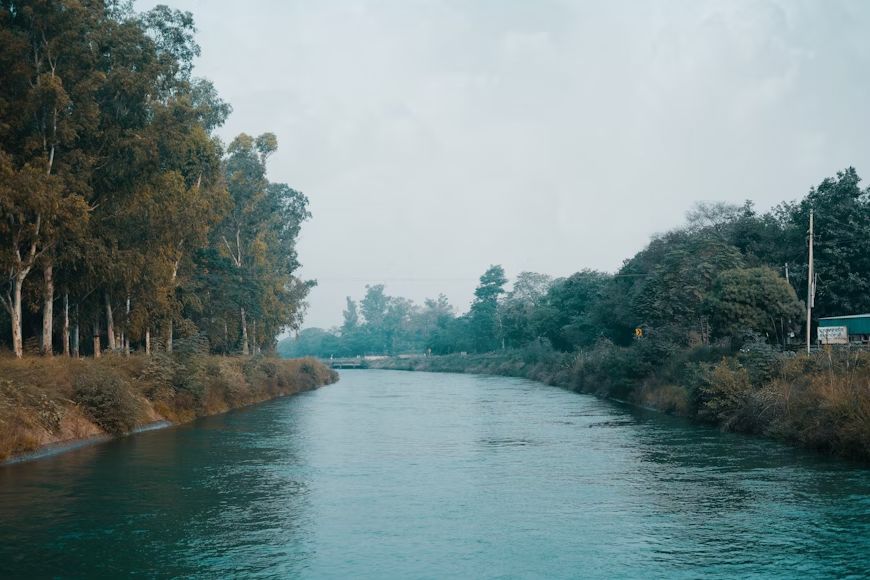
Image: Gaurav Kumar

Montana is home to the Roe River, which runs for just 201 feet. That’s shorter than a city block! It flows from its source at Giant Springs to the Missouri River near Great Falls. Sure, it’s not as mighty as the Mississippi, but it holds the record for shortest river, and that’s enough to brag about.

3
Some NYC buildings are big enough to have their own zip codes
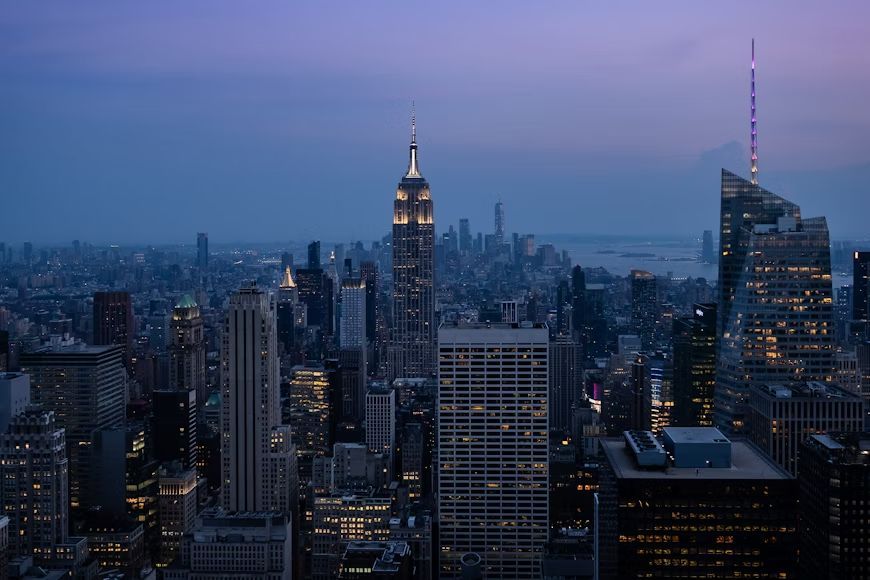
Image: Andrew Jephson

Most of us share a zip code with our neighbors. In New York City, though, some skyscrapers are so massive they have one all to themselves. You know the Empire State Building? Yep, it has its own zip code: 10118. The same goes for the MetLife and Chrysler Buildings. Manhattan alone has over 300 zip codes!

4
Alaska is the westernmost and easternmost state
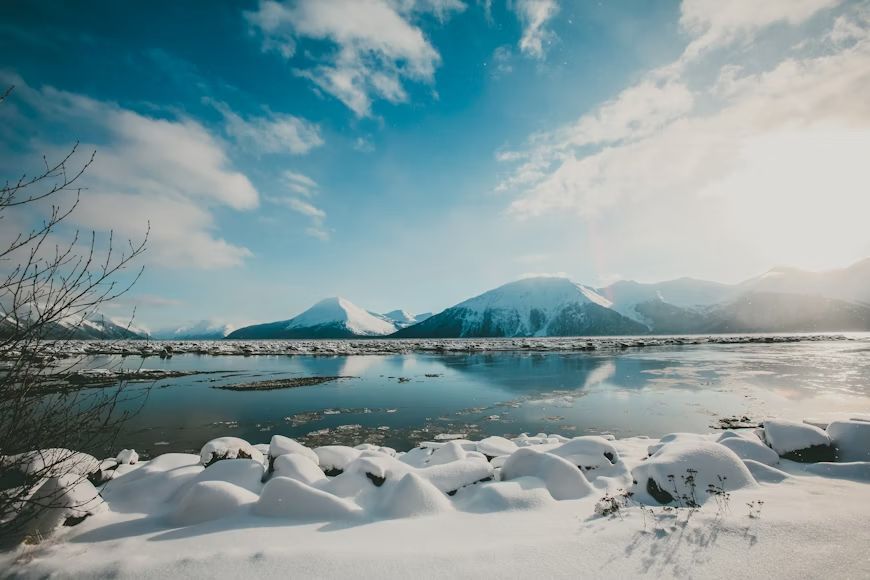
Image: Rod Long

That’s right: Alaska holds the title as both the farthest west and farthest east state in the United States. How is that possible? Well, the Aleutian Islands, which belong to Alaska, stretch so far out that they cross the International Date Line and enter the Eastern Hemisphere. Isn’t that just fascinating?

5
From Stamford, CT, all roads lead to New York
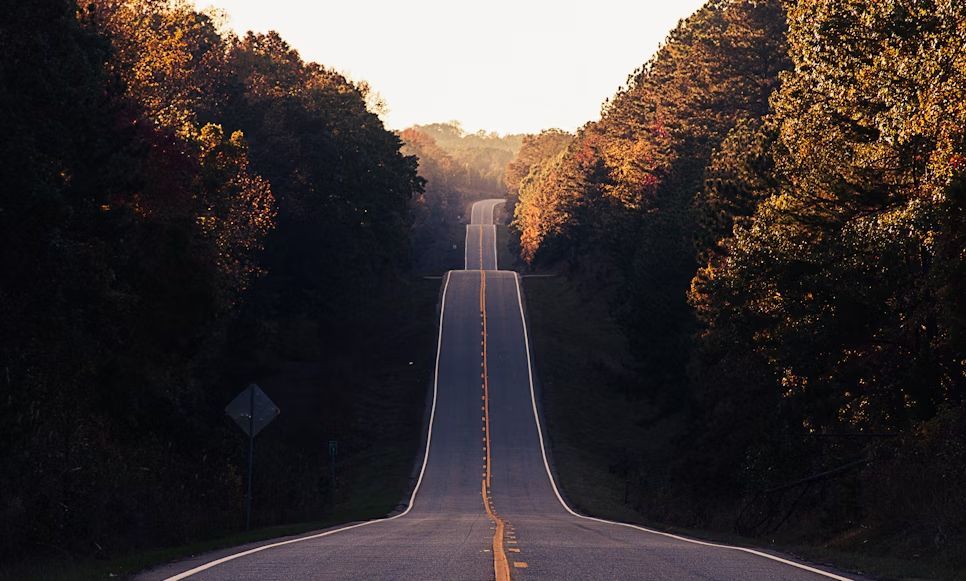
Image: Matt Foxx

Picture this: no matter which direction you drive—north, south, east, or west— you can end up in New York if you start in Stamford, Connecticut. Heading east requires a boat, of course, but it still counts!

6
Florida and California don’t have the longest coastline
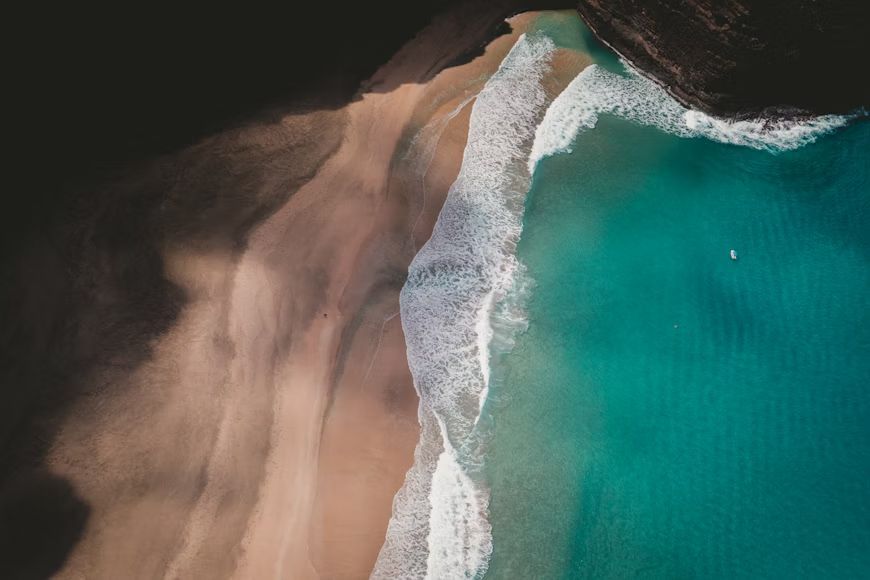
Image: Jakob Owens

Think sun and sand, and Florida or California might come to mind. But the state with the longest coastline is actually Alaska, by a long shot. With over 6,600 miles of shoreline, it beats the combined coastlines of all other states. Snow lovers will enjoy this one!

7
California has almost as many people as all of Canada
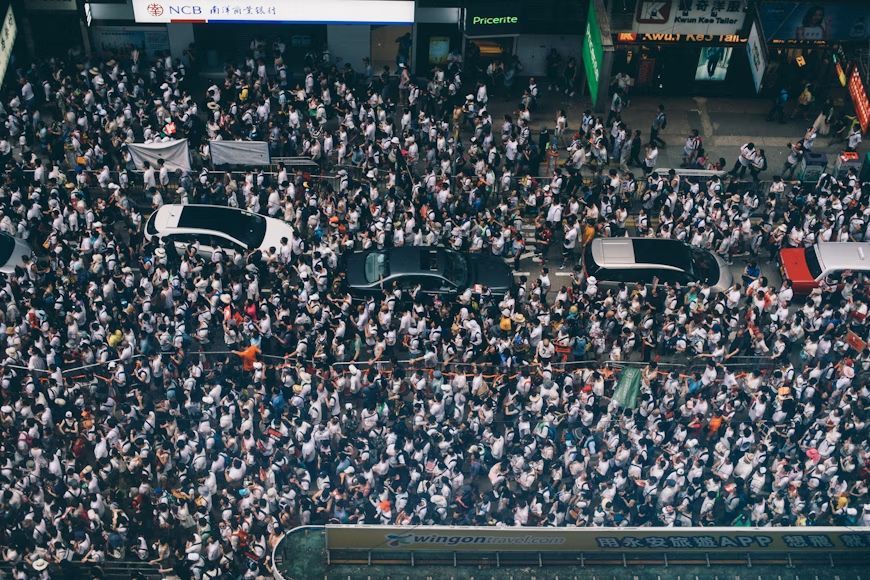
Image: Joseph Chan

Yes, the Golden State is that packed. California’s population hovers around 39 million, not enough to beat Canada, which has roughly 41 million. But give it two more years, and we’ll discuss this again. This may not sound so surprising, but bear in mind that we’re comparing a single state to a whole country!

8
Only two states are truly off on their own
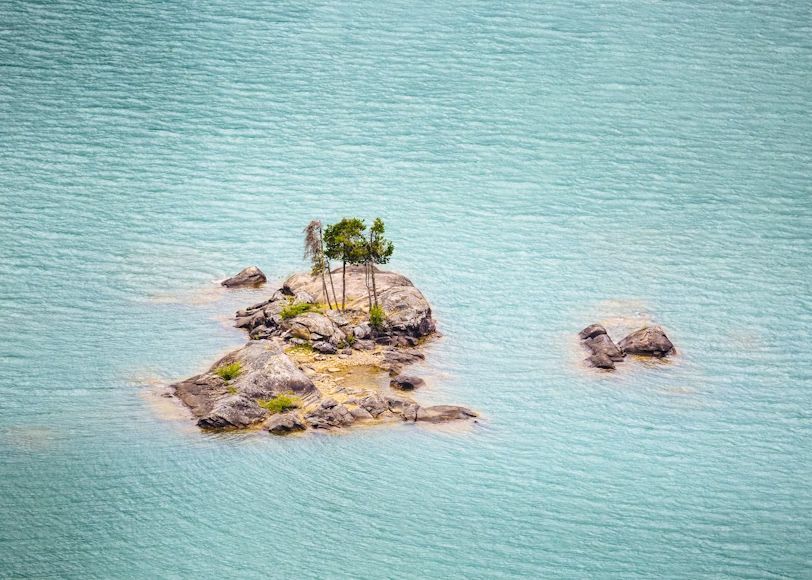
Image: Dave Hoefler

Most states have neighbors, but that’s not the case for Alaska and Hawaii. They’re the loners of the country, separated by either the ocean or international borders. Meanwhile, Missouri and Tennessee are the social butterflies of the map, each touching eight other states. Whatever the number of neighbors, we love them all!

9
The four largest US cities (by area) are in Alaska
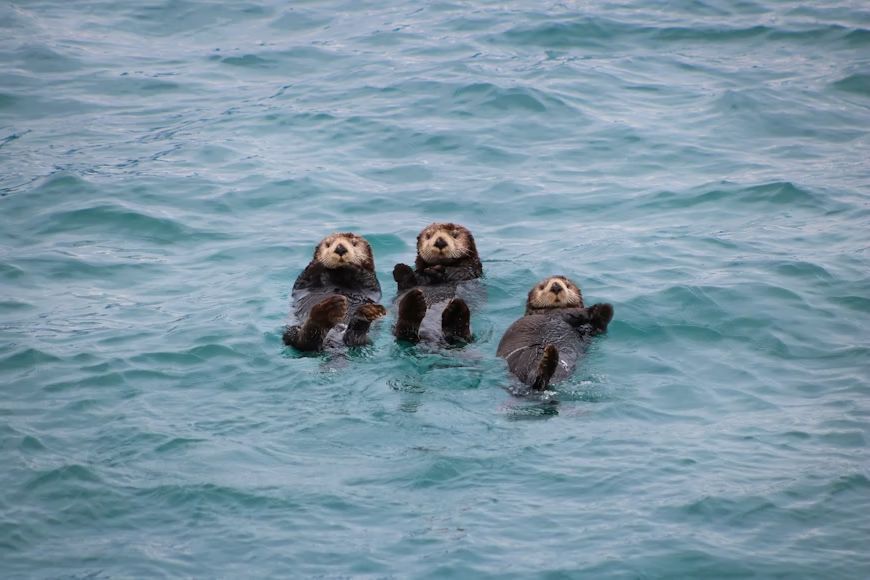
Image: Kedar Gadge

When we talk about big cities, most folks think of population. But if you’re measuring square miles, Alaska takes the cake. Sitka, Juneau, Wrangell, and Anchorage are the four largest cities by land area. You could fit entire states inside some of these!

10
The first US capital wasn’t D.C. or Philly
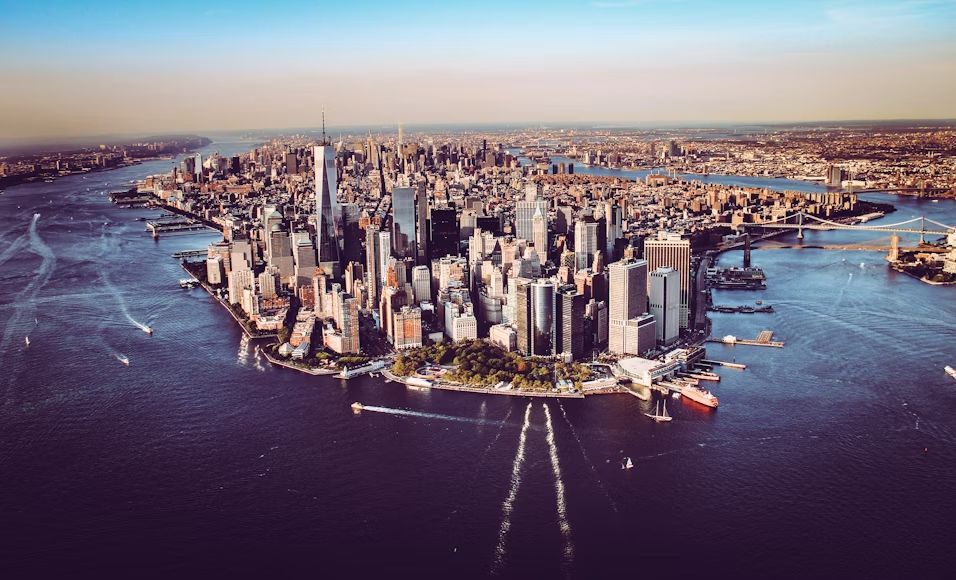
Image: Florian Wehde

Washington, D.C., may be the capital now, but it wasn’t the first, you know? That honor goes to New York City, which held the title for a couple of years after the Constitution was ratified. The capital later moved to Philadelphia and then finally settled in D.C.

11
Los Angeles had a name as long as your arm
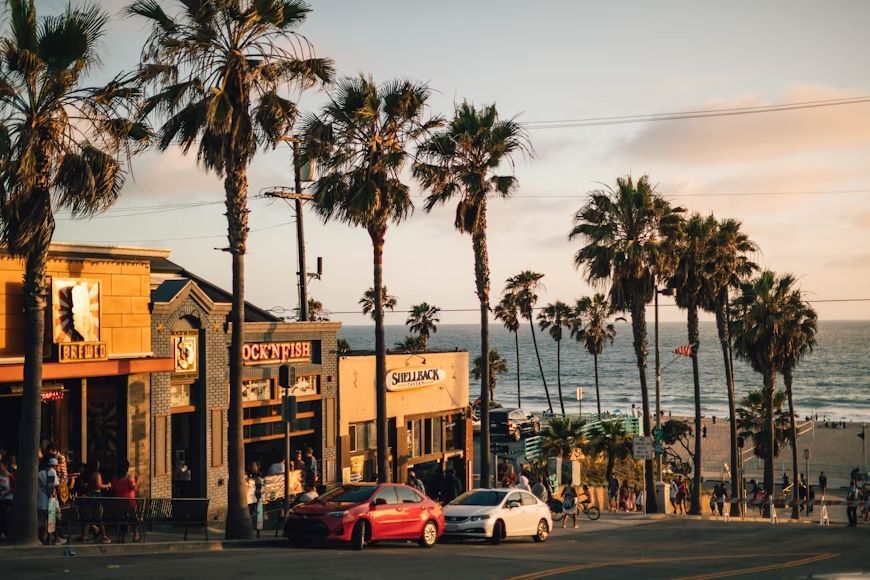
Image: Roberto Nickson

Before it was known for Hollywood, Los Angeles had a name that would never fit on a postcard. The original Spanish settlers called it El Pueblo de Nuestra Señora la Reina de los Ángeles de Porciúncula . Translation? You try saying that! Thankfully, we shortened it. "L.A." is just easier for everyone.

12
Nebraska is the only triply landlocked state
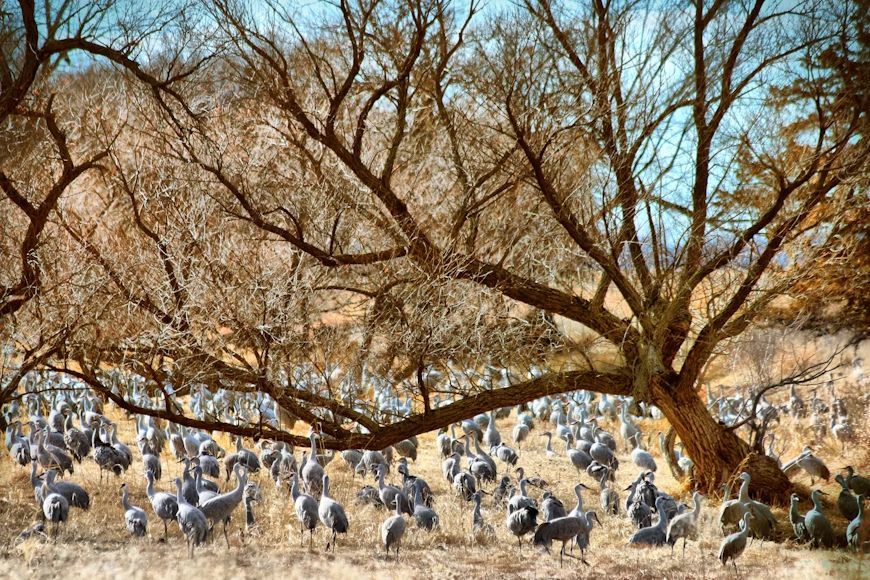
Image: Laura Seaman

If you’re in Nebraska and want to see the ocean, you’ll have to cross at least three states. That makes it the most landlocked state in the U.S.—"triply landlocked," to be exact. For those craving a beach day, that’s a bit of a hike. But for folks who love open plains, it’s prime real estate.

General General 7 min read

Made in the US

Inventing America: Discover the roots of these 10 national classics

Image: Tara Winstead

Ever wonder how everyday favorites like the Frisbee, Gatorade, or even the Zamboni came to be? Behind each one is a quirky story of chance, innovation, and a bit of luck, like most of the best inventions! From playground toys to sports essentials, these simple creations have become cultural icons. Let’s take a look at the surprising origins of these classic inventions and the clever minds that brought them to life. You might be amazed by how much history is hidden in the things we love!

1
The frisbee

Image: Robin Jonathan Deutsch

The best things are often created by accident, and you never know when that accident will strike. For example, did you know the Frisbee was born from a humble cake pan?

In 1938, Fred Morrison and his girlfriend were tossing a pan around on a beach in Connecticut when a passerby offered to buy it. That moment sparked an idea that stayed with Morrison through his service in World War II, where he learned about aerodynamics and began to dream of creating the perfect flying disk. After several failed attempts, he finally hit on a design in the 1950s, calling it the "Pluto-Platter."

Enter Wham-O, a company known for quirky toys like the Hula-Hoop. They bought the rights in 1957, gave it the now-iconic name "Frisbee" (inspired by Yale students tossing pie tins from the Frisbie Pie Company), and refined the design. The Frisbee took off—quite literally—spinning its way into parks, beaches, and backyards across America.

2
The slinky

Image: Adam Valstar

The slinky was also the result of accidental creativity in 1943 when Richard James, a naval engineer, knocked a spring off a shelf and noticed it "walked" in a curious way. Intrigued, he refined the design, and with his wife Betty’s help, they turned it into a toy sensation. Although the name was purely her idea!

In 1945, a demo at Gimbels Department Store sold 400 units in 90 minutes, and the Slinky quickly became a household name.

Without going into too much detail, Richard later took a wrong turn, and it was Betty who stepped in as CEO, saving the company from financial ruin. She even commissioned the iconic Slinky jingle! Under her leadership, the Slinky sold 300 million units before she finally sold the company in 1998. Talk about female power, huh?

3
The Ferris wheel

Image: Steve Shreve

Did you know the Ferris wheel was named after a person? That person was George Ferris who, in 1893, introduced the Ferris wheel at the Chicago Columbian Exposition.

Ferris, a young engineer, proposed the idea of a massive steel wheel that would rival the Eiffel Tower both in size and symbolism. He certainly set quite the challenge for himself!

Though initially rejected, Ferris funded his own research to prove the design’s safety, and his persistence paid off. The Ferris wheel became the star attraction—naturally since it stood 250 feet tall and offered visitors a thrilling 20-minute ride for fifty cents.

Sadly, Ferris’s success was short-lived. After the fair, he faced legal battles and financial ruin, and so the original wheel had one last appearance at the St. Louis World's Fair in 1904 before being destroyed.

4
Gatorade

Image: Jacob Rice

Sports legends become such because they strive to get better. And because they had a good coach who had their back. An example of a coach who went above and beyond was that of Florida’s football team.

In 1965, the Florida Gators’ football coach asked a group of professors if there was a way to help players reload fluids lost during games. Led by Dr. Robert Cade, the team created a mix of water, sodium, sugar, and lemon juice, later called "Gatorade," you can imagine why.

Of course, the first few versions tasted awful, but after some adjustments, the drink became more palatable. The Gators credited their improved performance, including their 1967 Orange Bowl win, to this new beverage.

No gatekeeping on the teams’ side, word spread, and by 1970, Gatorade was under the national spotlight when the Kansas City Chiefs used it in their Super Bowl victory.

5
The super ball

Image: Shubham Dhage

Some toys became popular after being discovered to be useless for anything else! That was the case with the Super Ball.

In 1964, chemist Norman Stingley invented a unique synthetic rubber but couldn't find an industrial use for it. However, he quickly found a solution: he turned to Wham-O, the toy company behind the Hula-Hoop and they released the Super Ball in 1966. The ball, made from the secret ingredient "Zectron," could bounce to incredible heights.

Aside from the fun, we have something else to thank the Super Ball for—it inspired the name of one of the biggest events in sports today. Lamar Hunt, owner of the Kansas City Chiefs, saw his daughter play with the toy and jokingly suggested to NFL Commissioner Pete Rozelle that the first championship game between the NFL and AFL should be called the "Super Bowl." The rest is history!

6
Fritos

Image: Roberto Carlos Román Don

Few things are as American as snacks, don’t you think? Let’s take a look at how Fritos came to be!

In 1932, Charles E. Doolin, a San Antonio confectioner, was looking for a new product when he bought a fried corn recipe from a man named Gustavo Olguin for $100.

After tweaking the recipe, Doolin created bite-sized corn chips called Fritos, which quickly became a hit. By 1933, Fritos were being mass-produced, and Doolin pioneered new marketing strategies, like direct stocking and placing clip-racks near cash registers—making his product even more accessible. (We all fall for that one, don’t deny it!)

But that’s not all. Doolin’s business success led him to invest in Disneyland, where his "Casa de Fritos" restaurant accidentally gave birth to Doritos.

7
Crossword puzzle

Image: Ross Sneddon

It feels like the crossword puzzle has been around forever, but it wasn’t actually invented until 1913. Arthur Wynne, working for the New York World newspaper, was asked to create a challenging puzzle for the "Fun" section. The concept of fun is indeed a time-sensitive concept!

The inspiration came from a childhood word game: he designed a puzzle with clues instead of words and the first crossword was published on December 21, 1913. Want to hear a fun fact? One of the clues was "What this puzzle is." The answer? "Hard."

And this invention is full of interesting tidbits. For instance, the name "Cross-word" was the result of a typing mistake—but it stuck! And, over a hundred years later, here we are!

8
Alka-Seltzer

Image: Daniel Gregoire

Alka-Seltzer was born in 1928 when Hub Beardsley, president of the Dr. Miles Medical Company, noticed a local newspaper staff staying healthy during a flu epidemic. The editor told him their secret: aspirin with baking soda dissolved in water. Inspired by this, Beardsley asked his chief chemist, Maurice Treneer, to create a remedy based on the idea, leading to a compound of aspirin, bicarbonate of soda, and Vitamin C. When Beardsley tested it on flu sufferers, the results were promising—and Alka-Seltzer was born.

You can imagine what happened next, a strong advertising campaign in the 1930s, turned Alka-Seltzer into the go-to remedy for everything from colds to hangovers. The company rebranded as Miles Laboratories in 1935 and was later acquired by Bayer in 1979. Even today, Alka-Seltzer remains a staple of American medicine cabinets.

9
Zamboni

Image: Aleksi Partanen

One would think that a machine like the Zamboni, which is used to make ice smooth was created in a place like Alaska, right? Or at least a place where snow is present almost all year round. Surprisingly, it wasn’t—the Zamboni was invented in sunny Paramount, California.

Frank Zamboni, a man who came from the ice and refrigeration business, built the machine to save time at his Skateland Skating Rink. Before the Zamboni, resurfacing the ice was a 90-minute task done manually by five workers. Can you imagine how tedious that must have been?

Using parts from an airplane, oil derrick, Jeep, and wooden bin, Zamboni created a machine that could clean and smooth the ice in only a few minutes. Realizing its potential, Zamboni turned his invention into a business, with the first orders coming from Olympic skater Sonja Henie and the Chicago Black Hawks.

10
Baseball scoreboard

Image: Taiki Ishikawa

It goes without saying that baseball is one of Americans’ favorite pastimes. Everything about it is fun; it’s not just the game.

In the late 1800s, English immigrant Harry M. Stevens saw that and made the most of it. After moving to Ohio, Stevens started a business providing food and drinks at baseball games and eventually secured contracts with major league ballparks. While he’s often credited with popularizing the hot dog, his real innovation was the creation of the modern baseball scorecard. Using Henry Chadwick's shorthand scoring system, Stevens designed a simple grid fans could use to track the game. Does the phrase "You can't tell the players without a scorecard" ring any bells?

Stevens’s scorecard caught on, and fans began scoring games themselves. Today, his scorecard system is still in use, and we all love it!

History History 4 min read

Lands that were only dreams

Superior, Transylvania, Sequoyah, and other states that never were

Image: Chris Lawton

The map of the United States could have looked very different—perhaps with around 70 states, each having its own capital and constitution. For example, have you ever heard of the proposed states of Franklin or Westsylvania? And can you guess where Superior was supposed to be located? Let’s dive into 13 states that almost—but never—found a place on the map.

1
Superior

Image: Brian Beckwith

As we know, Michigan is divided into the Upper and Lower Peninsulas. The discussion about whether the Upper Peninsula should become its own state dates back as far as 1858.

During the 19th and 20th centuries, residents of the region proposed creating the State of Superior , named after the Great Lake that defines the region. Although the movement never gained enough traction, some people still support the idea today, even though Superior would become the state with the smallest population.

2
Jefferson

Image: Kirk Thornton

Jefferson was a proposed state, much like Washington was before it became a state. Picture this: a state straddling Northern California and Southern Oregon, rich in timber and minerals. This was the vision for Jefferson , first proposed in the mid-19th century and revived in 1941.

Residents even declared a symbolic "secession" and distributed pamphlets proclaiming their independence. However, World War II shifted priorities , and the movement eventually fizzled out.

3
Deseret

Image: Wolfgang Hasselmann

Mormon settlers had big dreams in 1849—they proposed Deseret , a massive theocratic state . The name, meaning "honeybee" in the Book of Mormon , symbolized industry and cooperation. But Congress wasn’t exactly buzzing with enthusiasm.

Instead, Congress created the smaller Utah Territory , which at the time included present-day Utah as well as parts of Nevada, Colorado, and Wyoming.

4
Sequoyah

Image: Nina Luong

In 1905, Native American tribes in eastern Oklahoma proposed the State of Sequoyah , named after the Cherokee scholar who created the Cherokee syllabary .

It was a bold move to create a Native-majority state. However, Congress chose instead to merge the area with Oklahoma Territory to form the state of Oklahoma . The constitution drafted for the proposed State of Sequoyah went on to influence the final Constitution of Oklahoma.

5
Lincoln

Image: Clark Van Der Beken

The proposed State of Lincoln had multiple identities. One version placed it in eastern Washington and northern Idaho. Although the name was intended to honor Abraham Lincoln, other names, such as Columbia and Eastern (East) Washington , were also considered.

Another proposal envisioned Lincoln in southern Texas. This version reportedly had a prepared constitution and a distinctive red flag featuring Lincoln’s face inside a yellow circle.

6
East and West Jersey

Image: Nick Fewings

Can you imagine two New Jerseys? Back in 1674, when the area was still a British province, New Jersey was divided into East Jersey and West Jersey , each with its own government and constitution.

But the separation lasted only 28 years . The territories were rejoined in 1702, and the first New Jersey state constitution wasn’t adopted until 1776, following independence from Britain.

7
Franklin

Image: Dan Mall

The State of Franklin was another plan, except this one worked, for a while. In 1784, settlers in eastern Tennessee had had enough with what they saw as North Carolina’s neglect. They declared independence and formed the State of Franklin , named after Benjamin Franklin, of course.

For four years, Franklin operated as a de facto state , complete with its own constitution and government. However, Congress refused to recognize it, and by 1788, the State of Franklin ceased to exist.

8
Transylvania

Image: Julia Volk

Transylvania (from the Latin for "beyond the woods" ) is more than just a remote land of vampire legends—it was also nearly the name of a short-lived American colony in what is now mostly Tennessee and parts of Kentucky.

In 1775, land speculator Richard Henderson struck a deal with the Cherokee to create the Colony of Transylvania , in parts of Kentucky, Tennessee, and Virginia. But Virginia and North Carolina declared the venture illegal. Still, the name lives on today in Transylvania University in Lexington, Kentucky.

9
Nickajack

Image: lauren barton

During the Civil War, Union sympathizers in northern Alabama, northern Georgia, and eastern Tennessee proposed the creation of the State of Nickajack . The name came from a Cherokee village, but the idea never gained much traction.

Today, the Nickajack Dam and Nickajack Lake reservoir mark areas that would have fallen within the boundaries of this proposed state.

10
Absaroka

Image: Mohan Nannapaneni

Have you ever heard of Absaroka ? During the Great Depression, residents of parts of Wyoming, South Dakota, and Montana proposed the creation of the State of Absaroka , named after the Crow Nation’s word for "children of the large-beaked bird."

The movement was largely a symbolic protest against federal neglect. Absaroka even had its own license plates and a self-declared "governor," but the state never came to fruition.

11
Westsylvania

Image: Isaac Wendland

Yet another -vania . In the late 18th century, settlers west of the Appalachian Mountains proposed the creation of the State of Westsylvania . Frustrated by neglect from eastern state governments—especially Virginia and Pennsylvania—they wanted a state of their own.

But like many other separatist efforts, the proposal was rejected by Congress and never became a reality.

12
Madison

Image: Library of Congress

Another president nearly had a state named after him—but didn’t. The name of the fourth U.S. president, James Madison, was once proposed for the area that is now part of the Dakotas.

In the late 19th century, residents of what is now southwestern North Dakota proposed the creation of the State of Madison . However, the idea faced a major hurdle: Congress was already considering dividing the Dakota Territory into two separate states. In 1889, North and South Dakota were admitted to the Union, and the Madison proposal was quietly shelved.

Explore more American facts

Choose your favorite category!

General
General

As American as apple pie—the very best America has to offer!

Culture
Culture

Delve into the astounding richness of American lore.

Geography
Geography

Hop in and explore vast and diverse American landscapes.

History
History

Discover the key moments that shaped the United States.