Geography Geography 5 min read

Bucket list-worthy!

Grab your backpack and prepare to visit the 12 best day hikes in the U.S.

Image: Vi Nowak

Selecting the best day hikes in a country as vast and diverse as the United States is no easy task. With thousands of incredible hikes, parks, and trail systems, choosing your next adventure can feel overwhelming. So, where should you go next? We know it’s a tough decision, so we’ve narrowed it down to 12 unique and equally amazing options. Join us as we explore the most beautiful day hikes in the U.S.!

1
Chain Lakes Loop Trailhead

Image: Pavł Polø

If you’re looking for stunning views and vibrant fall colors, Chain Lakes is the place to go. Located in Washington’s Mount Baker National Forest, this 6.5-mile trail takes about 4 to 5 hours to complete.

The Chain Lakes Loop is one of the most scenic hikes in the country, offering a glimpse of Northern Washington’s breathtaking landscapes . A paradise for outdoor explorers and landscape photographers, it features turquoise glacial lakes, rugged mountain chains, alpine meadows, snow-capped volcanic peaks, and towering conifers—it truly has it all!

2
Tom Dick and Harry Mountain
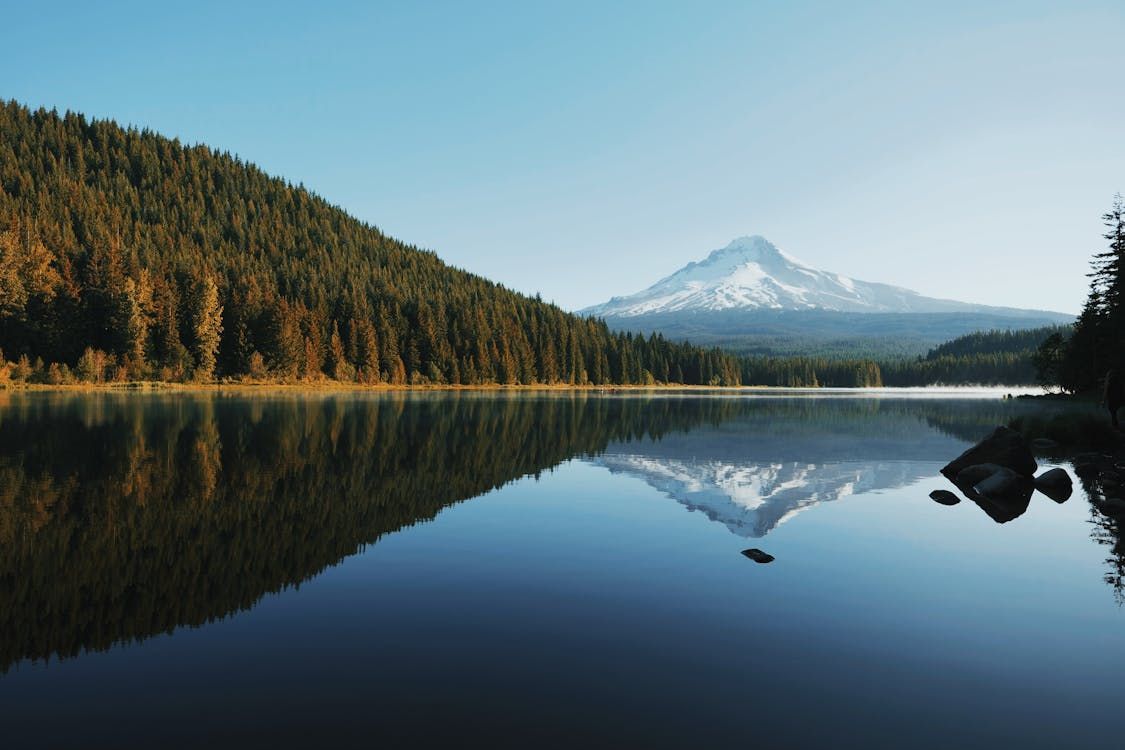
Image: Aleksey Kuprikov

Mirror Lake, located in Oregon’s Mount Hood National Forest, is a scenic trail popular for picnicking and swimming. But for even better views, hike another mile—you’ll be rewarded with the breathtaking sights of Mount Hood, a stunning perspective of the lake below, Mount Jefferson to the south, and, on a clear day, even Mount Rainier .

Tom Dick and Harry Mountain features three distinct peaks, which inspired its name—referencing the old phrase "any Tom, Dick, or Harry," used to describe three generic people. This 7.8-mile trail takes about 4 to 5 hours to complete.

3
Miners Ridge and James Irvine Trail Loop

Image: wallace Henry

This 13-mile trail in Prairie Creek Redwoods State Park, California, is long but has relatively little elevation gain. Though it takes 6 to 9 hours to complete, the breathtaking views are totally worth it.

The Miners Ridge and James Irvine Trail Loop is one of the best places to experience the majesty of the redwoods . Staring up at these massive, ancient old-growth trees is truly awe-inspiring. But while the trees are the main attraction, they’re not the only highlight. This loop also takes you across a scenic stretch of beach—offering the perfect opportunity to cool off in the ocean midway through your hike.

4
Clouds Rest From Tenaya Lake

Image: Jess Polley

When people think of Yosemite, Half Dome usually steals the spotlight. But what if we told you there’s a less crowded hike with unique landscapes and unforgettable views?

At nearly 13 miles, the Clouds Rest Trail from Tenaya Lake is a challenging yet rewarding day hike. The trail itself is beautiful, featuring rolling terrain with several ups and downs. Reaching the summit of Clouds Rest will reward you with breathtaking 360-degree views of the national park . From the top, you can spot Tenaya Lake, the Cathedral Spires, Mount Dana, and, of course, Half Dome.

5
Angels Landing

Image: Carl Nenzen Loven

Contemplating the world from atop a jaw-dropping mountain view is a humbling experience everyone should go through at least once. At Angels Landing in Zion National Park, Utah, that sense of majesty is within reach.

Though stunning, this 4.8-mile hike is not to be taken lightly. It has some dangerous cliffs that make it a bit challenging. If you have vertigo, perhaps this trail is not for you. However, if you are in good shape and have an adventurous soul, the stunning scenery at the summit is something not to be missed.

6
Alkali Flat Trail

Image: PublicDomainPictures

For a truly unique experience, travel to White Sands National Monument in New Mexico. The breathtaking blue skies and otherworldly white dunes of the Alkali Flat Trail will transport you to a desert worthy of the best adventure films.

On regular terrain, this 5-mile hike would be considered easy. However, the desert environment and lack of shade make it far more demanding than you might expect. To stay safe, avoid hiking in the summer and be mindful of the heat.

7
Mount Bierstadt

Image: caleb weiner

Did you know Colorado is home to more than 50 fourteeners? Mountains above 14,000 feet in height are the ultimate challenge for any self-respecting hiker. Mount Bierstadt, one of the more accessible 14ers, offers a rewarding climb just a short drive from Denver.

This 7.4-mile trail provides stunning views of Mount Evans, Torreys Peak, and Grays Peak. However, no mountain should be tackled without proper preparation and planning. That said, summiting Bierstadt is an excellent test of your abilities—especially if you're gearing up for a more challenging climb.

8
Cascade Canyon Trail
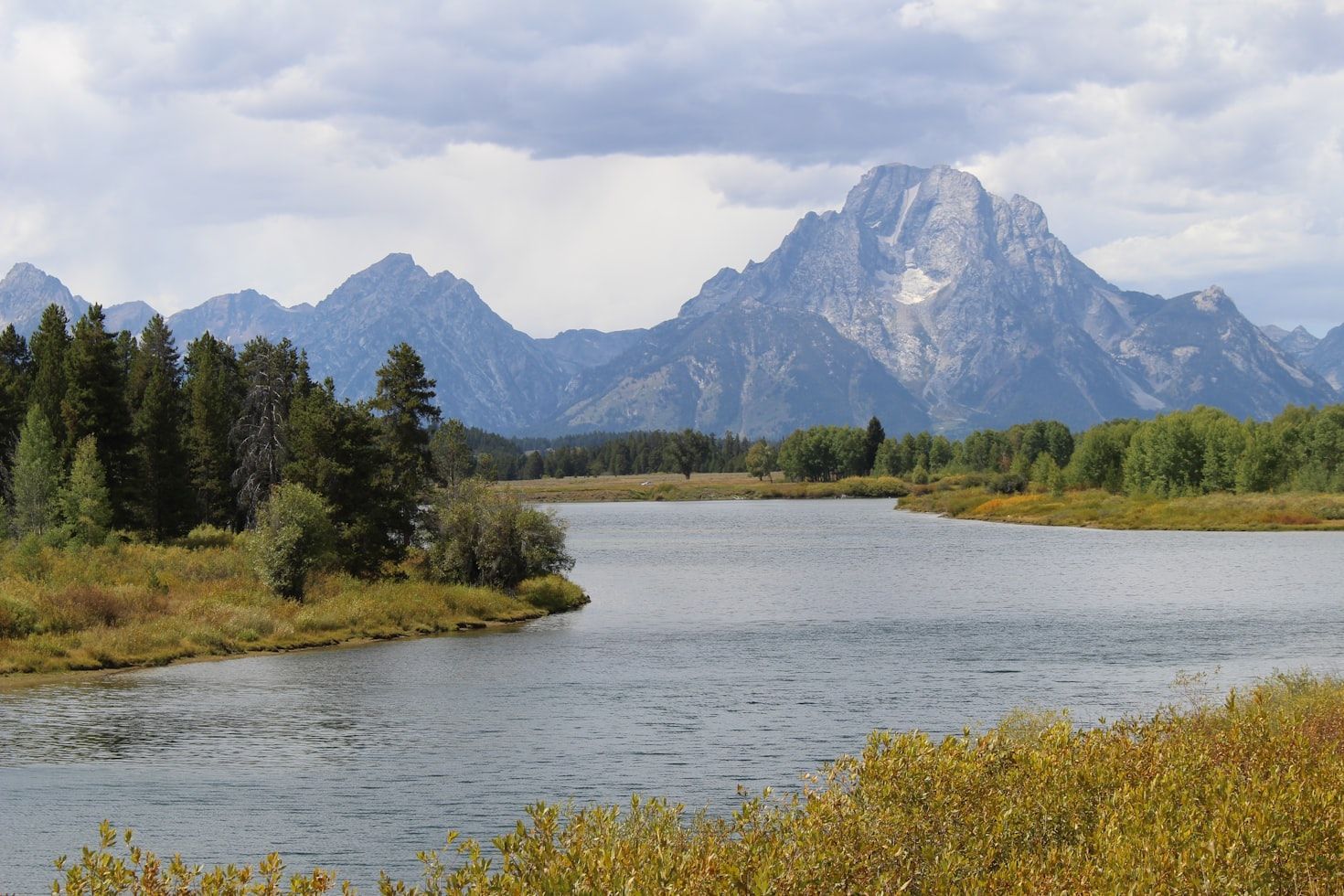
Image: ELTON MENEFEE

The Cascade Canyon Trail in Grand Teton National Park, Wyoming, is a must-explore for any hiker. Just a mile from Jenny Lake, the trail features two stunning landmarks: Hidden Falls and Inspiration Point.

Many visitors turn back at this point, missing out on eight more miles of breathtaking canyon scenery. If you're up for a longer trek, continue onward to experience the true grandeur of the Tetons up close. Along the way, keep an eye out for wildlife—you might even spot moose or bears!

9
Grinnell Glacier Trail

Image: Mick Kirchman

Glacier National Park is one of the most breathtaking places in America. With its turquoise lakes and jagged, arrowhead-like peaks , it stands apart from any other park in the U.S. Among its many trails, the Grinnell Glacier hike is one of the most popular in the Montana park.

This 10.5-mile trek offers stunning views, with the massive Mount Gould dominating the horizon. A word of advice: add this hike to your bucket list ASAP. Grinnell Glacier is rapidly shrinking and may disappear within the next few decades.

10
Ricketts Glen Falls Loop

Image: Venti Views

Hiking isn’t just about summiting mountains—waterfalls can offer spectacular views too! This 6.8-mile loop in Pennsylvania features more than 20 waterfalls, making it one of the best waterfall hikes in the eastern United States . While some trails lead to taller, more dramatic falls, few offer the sheer number and variety found here.

Each waterfall is unique and beautiful in its own way, ranging from 15 to 50 feet in height, with the tallest reaching nearly 100 feet. But that’s not all—along this trail, you’ll also encounter fascinating rock formations and ancient old-growth forests.

11
Giant Mountain

Image: Ty Finck

Although New England peaks are only a third the height of the Rockies, East Coast hikes can be even more challenging due to their rugged trails, steep descents, and tricky terrain. Tackling Giant Mountain in the Adirondack High Peaks Wilderness is no small feat.

This New York trail takes 4 to 6 hours to complete, but the effort is well worth it. You’ll be rewarded with breathtaking views and a picturesque forest , making it a must-visit for those confident in their ability to take on a strenuous climb.

12
Precipice Trail

Image: Raphael Assouline

With its rocky cliffs and oceanside forests , Maine’s Acadia National Park offers a hiking experience unlike any other in the eastern United States. While all of its rugged peaks provide stunning views, no trail in Acadia is as memorable—or as challenging—as the Precipice Trail.

Despite the trail’s short length (just 2.6 miles), this is a challenging hike not recommended if you have a fear of heights. Once you reach the summit of Champlain Mountain, after nearly a thousand feet of climbing, you will be rewarded with sprawling views looking out over the park, Frenchman Bay, and the Mount Desert Narrows stretching out to the Atlantic.


General General 3 min read

Say cheese!

Did you know your phone's camera can do this?

Image: César Guadarrama Cantú

Each year, our smartphones’ cameras improve, with superior lenses and new features that allow savvy users to take incredible photos. Many of those same capabilities are already available on your device. How many of these tricks do you know?

1
Clean your lens

Image: Mika Baumeister

We’ll start with probably the most essential—and somehow most overlooked—tip: take a moment to clean your smartphone’s camera lens. Over time, it can accumulate dust and smudges, which can result in hazy or blurry photos.

Give it a quick wipe with a soft, lint-free cloth . It can make a significant difference in the clarity of your shots.

2
Investigate your camera app

Image: Brett Jordan

Almost every single smartphone comes with a default camera app that’s user-friendly and packed with features. Take some time to explore it , learn how to switch between photo and video modes, and familiarize yourself with settings like Portrait Mode, Night Mode for low-light shots, and Panorama Mode for landscapes.

3
Use gridlines

Image: Jonathan Kemper

Gridlines allow you to center your focal points and enhance the visual appeal of your photos. Most mobile camera apps let you turn them on easily. These gridlines strategically divide your screen into thirds , both horizontally and vertically, adding balance and symmetry to your shot .

4
Focus and exposure control

Image: François Genon

Focus and exposure are two of the most important settings you can adjust in a manual camera to achieve different effects in photography. Fortunately, both functions are available on most modern smartphones.

By playing with different focus and exposure points, you can highlight a specific subject against a blurred background or ensure a well-balanced shot in difficult lighting conditions.

5
Lighting

Image: Ben White

Always try shooting in natural light, often referred to as available light, whenever the opportunity arises. Natural light gives a gentle, even illumination that can significantly enhance the quality of your photos.

Avoid harsh, direct sunlight, which can create intense and unflattering shadows, potentially leading to overexposed or underexposed areas. If you're shooting in low light, rest your phone on a flat surface to stabilize it for long exposures.

6
Play with composition

Image: Eaters Collective

Experiment with different angles and perspectives to enhance your subject. Don't be afraid to get low or high for a unique viewpoint. Also, pay attention to what’s in the background and eliminate any distractions that might detract from your subject.

7
Take pictures often

Image: Ferdinand Stöhr

Practice makes perfect. Since your phone is always with you, it’s easy to integrate photography into your daily routine. Whether you snap a selfie or take a few shots on your way to work, there’s no wrong way to be a smartphone photographer. Great photos often come from everyday life.

8
Take many shots

Image: The Free Birds

Long gone are the days when you had only 36 exposures in your camera and had to choose each shot carefully. One of the best things about smartphones is that you can take as many photos as you want, and there is no need to print them to see the results . This makes it much easier to learn and improve as you go.

9
Avoid digital zoom

Image: Redd Francisco

Digital zoom generally produces poor-quality images, even on the best smartphones. Avoiding it is one of the basic photography tips for taking better photos. Instead of using a digital zoom, simply move closer to your subject to maintain image quality.

10
Use HDR

Image: Kote Puerto

HDR stands for High Dynamic Range, and it’s a common feature on many smartphones. It enhances detail in both dark and light areas to provide a more balanced exposure . HDR prevents the sky from becoming too bright or the ground from appearing too dark, making it especially useful for landscape photography.

11
Set a high resolution

Image: TheRegisti

Simply put, the higher the resolution of your photo, the better quality it is . When taking pictures, try to get as close to the subject as possible, rather than zooming in. Take advantage of the higher pixel count.

12
Aspect ratio

Image: Alice Donovan Rouse

The aspect ratio determines the width and height of your photograph . The standard 4:3 ratio is versatile, but you can also choose widescreen 16:9 for a cinematic look or square 1:1 for Instagram-ready shots.

General General 3 min read

Life finds a way

From raccoons to foxes: take a look at 12 types of "urban wildlife"

Image: jennifer uppendahl

For many Americans, seeing a black bear scratching its back on a pole in a city street is not that strange. Many mammals, birds, reptiles, and insects that eat a wide variety of foods are moving in and changing their behaviors as they learn urban survival skills.

1
Coyotes

Image: Ray Hennessy

Coyotes have a natural talent for survival, and they are built to thrive in any environment, including cities where food is readily available everywhere.

As it has been noticed multiple times, coyotes have deciphered how semaphors work and wait for the red light to cross the street.

2
Black bears

Image: Bruce Warrington

Studies have shown that female black bears living in urban areas aged one to one and a half years weighed nearly twice as much as their country counterparts. Some of those urban female bears produced cubs, while none of the rural bears of the same age reproduced.

Curiously, bears seem to know when it is trash day and will scavenge for food in trash cans on those dates specifically.

3
Raccoons

Image: Ralf Volkmer

Raccoons that live in urban environments are more exploratory than their country cousins, taking more time to investigate the squares. Some raccoons even figure out how to yank bungee cords off of trash cans .

These city animals are also more social, traveling in pairs more often than their rural relatives.

4
Bald eagles

Image: Alexas_Fotos

Believe it or not, in the 1960s, the bald eagle was on the verge of extinction due to the use of pesticides. But since those pesticides have been banned, their population has rebounded, and they're no longer on the list of endangered species.

City eagles need only a place to nest and a clean source of food, which can even be a trashcan, and they’ve figured out how to use city infrastructure like cellphone towers, bridges, and cranes along waterways .

5
Pigeons

Image: Dawood Javed

Possibly the most urban animal on the list, aside from rats, pigeons are uniquely suited to urban life. They can recognize human faces , so they know which people have fed them before.

These creatures have an incredible ability to distribute themselves, so there are never more pigeons than available food. A park with twice as much food as another park will also have twice as many pigeons.

6
Booklice

Image: Brett Jordan

Whether we see it or not, our homes are filled with insect life. One of them, booklice, has found that the starch in book bindings makes an ideal food source.

Booklice have adapted to suck the moisture directly out of the air and can live off that vapour for three weeks, avoiding dehydration.

7
Squirrels

Image: Mark Brennan

Squirrels and urban environments have gotten along for a long time now. There’s ample food and shelter, and few natural predators. They’ve learned to live in much greater densities in cities than they do in other environments, and they can tell which humans will feed them .

8
Sparrows

Image: Carlos Quintero

The sparrows that live in New York City have become night owls, staying out later to feed because the bright lights around buildings draw plenty of insects .

9
Rats

Image: Joshua J. Cotten

Almost no one would call a rat clean, but contrary to popular belief, city rats tend to carry fewer diseases and parasites than rural ones because they have less contact with livestock excrement from farms, and their human neighbors don’t harbor many parasites.

10
Ospreys

Image: KaroGraphix Photography

Ospreys have seen their numbers grow in North America partially because they have forsaken trees in favor of building their 250-pound nests on power poles, cell phone towers, channel markers , and other human-made structures.

11
Crows

Image: Veronica Dudarev

Crows are very smart creatures, and they have learned to use the city infrastructure to their advantage. These birds drop nuts and bones from great heights to crack the hard outer shells so that they can reach the food inside. City crows simply drop the previously impenetrable food into the street and let the cars crack it open .

12
Tomcods

Image: John Werner

Nature can adapt to almost anything, and tomcods are living proof of this. A very polluted segment of the Hudson River is home to these humble fish, who have adapted to its contaminated waters through genetic variations that allow them to thrive in such conditions.

Explore more American facts

Choose your favorite category!

General
General

As American as apple pie—the very best America has to offer!

Culture
Culture

Delve into the astounding richness of American lore.

Geography
Geography

Hop in and explore vast and diverse American landscapes.

History
History

Discover the key moments that shaped the United States.