Culture Culture 6 min read

Advertising legends

Who paid for the third O? 10 Hollywood Sign secrets
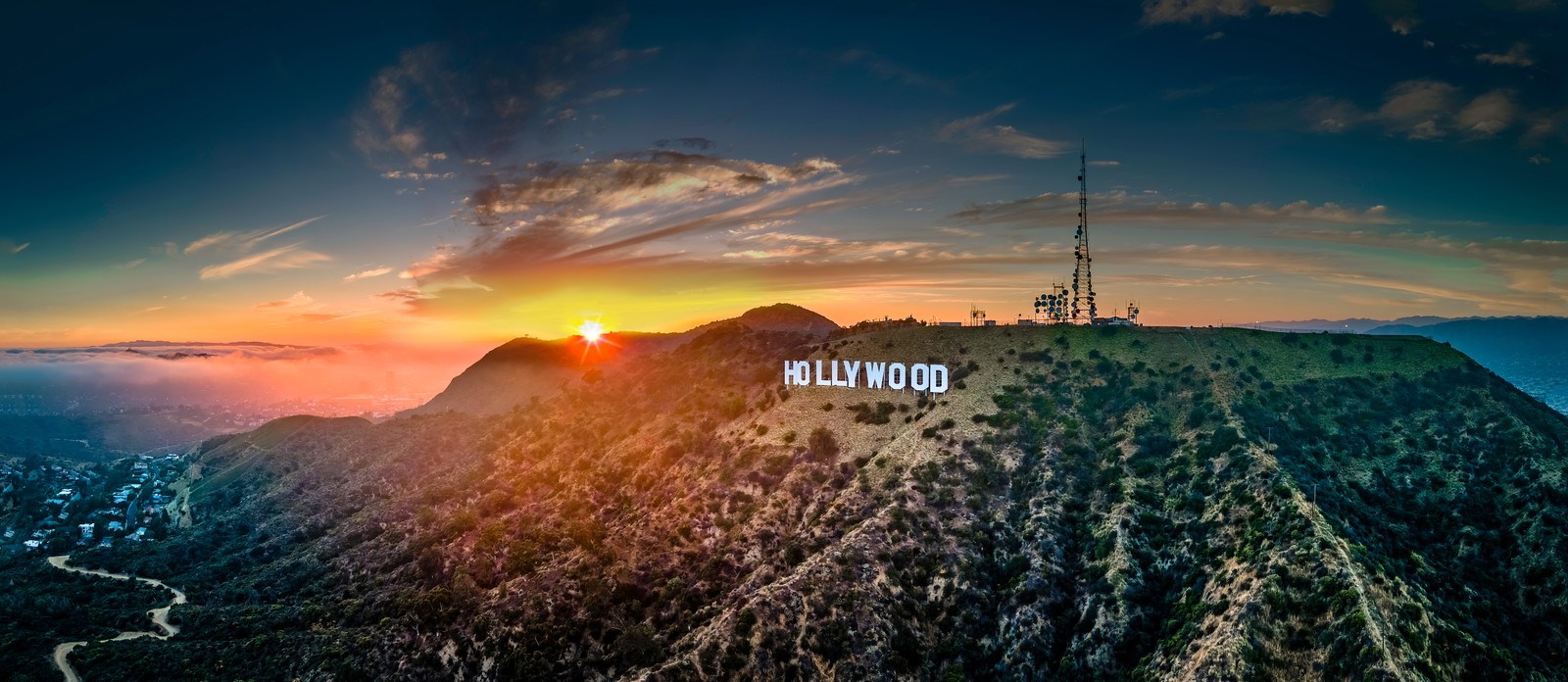
Image: Shutterstock

Can you imagine Los Angeles or the entertainment industry without the iconic, endlessly reproduced Hollywood Sign? Yet the landmark was never meant to represent the movies or fame at all. It started as an advertisement for a new neighborhood and was supposed to stay up for less than two years. Instead, it lost four letters, survived years of damage, and became a beloved and unforgettable symbol. Here is the surprising story behind the sign.

1
The original sign read "Hollywoodland"
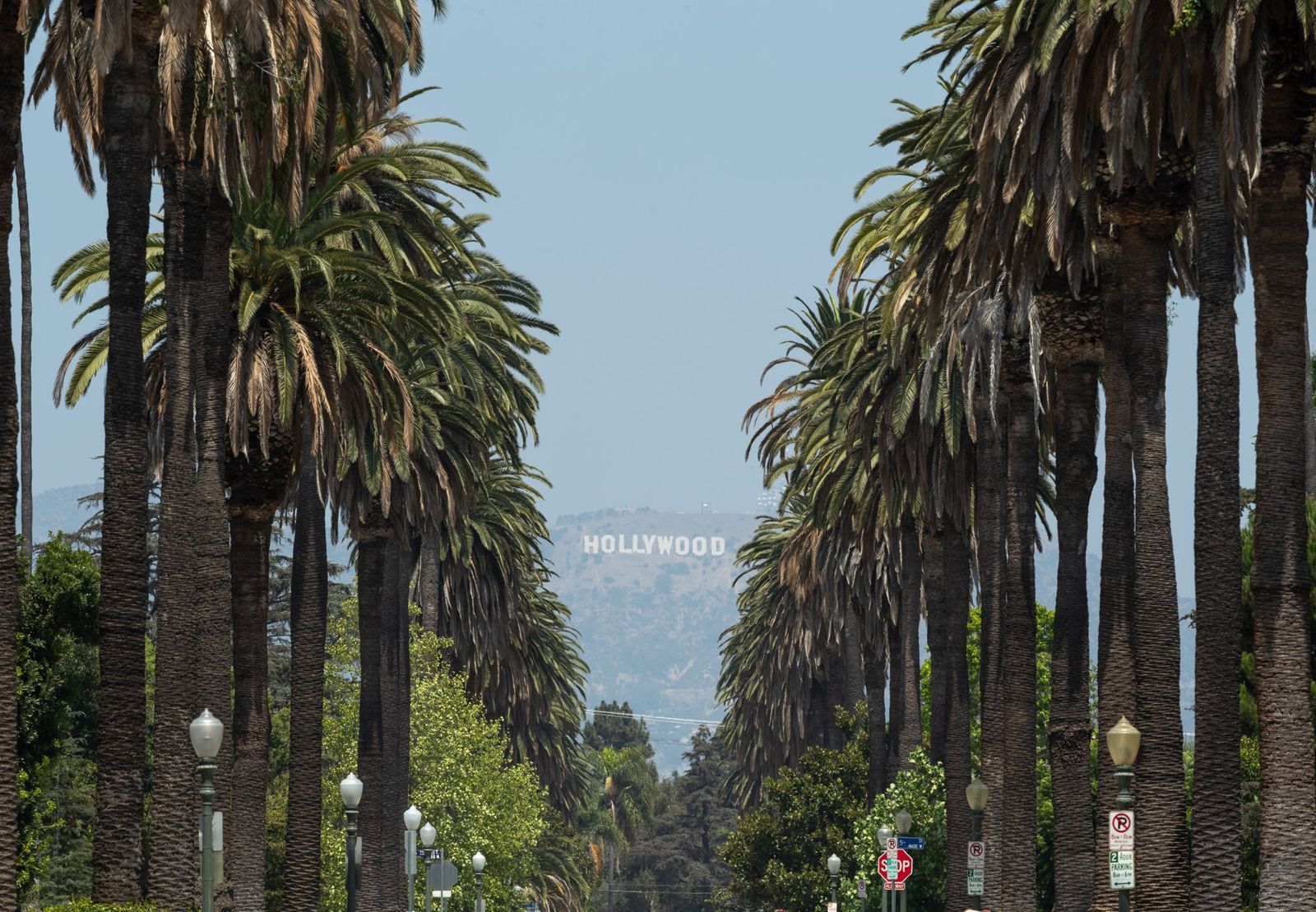
Image: Shutterstock

Imagine driving through Los Angeles and suddenly seeing a giant new word stretched across a hillside, where nothing had stood before. The sign that appeared on Mount Lee in 1923 read "Hollywoodland," with 13 enormous letters rising above Beachwood Canyon. Each letter was about 43 feet tall and 30 feet wide, making the advertisement impossible to miss.

Modern period movies sometimes restore that original view. Ruben Fleischer’s 2013 film Gangster Squad is set in 1949 and opens with a shot that moves from Griffith Observatory toward the complete "Hollywoodland" sign. The extra four letters immediately place the story in an earlier Los Angeles, before the landmark took its familiar form.

2
It advertised real estate
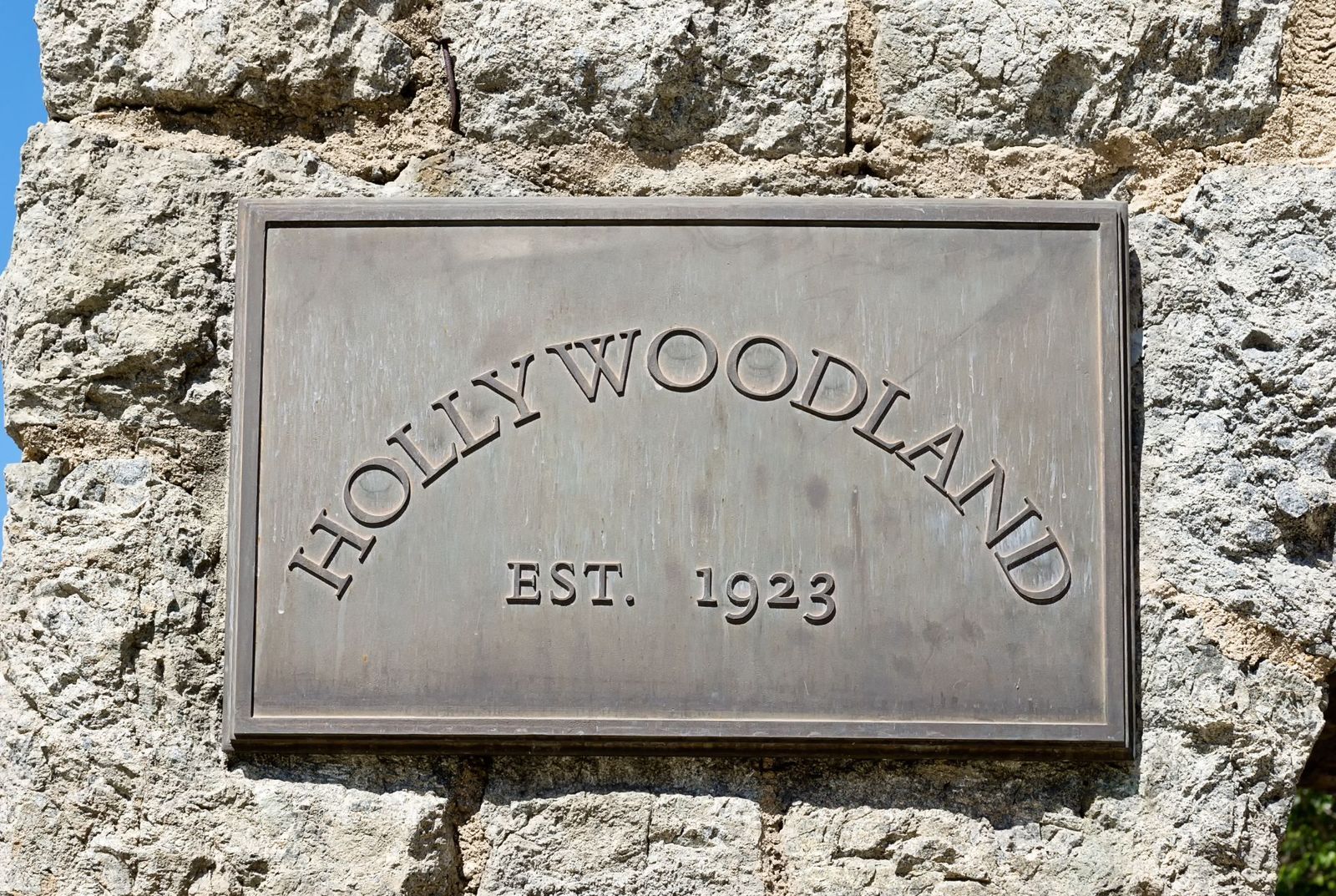
Image: Shutterstock

No one involved in putting up the sign could have imagined how iconic it would become. Before the sign was a celebration of Hollywood’s film industry, it advertised Hollywoodland, a new upscale neighborhood in the hills . A group of real estate investors, including Los Angeles Times publisher Harry Chandler, supported the project and spent about $21,000 on the giant sign.

The development itself was already a large project. A 1923 advertisement said that 200 men were working there, seven miles of roads had been built, and huge amounts of dirt had been removed. The sign was simply the biggest part of the sales campaign.

3
It was supposed to be temporary
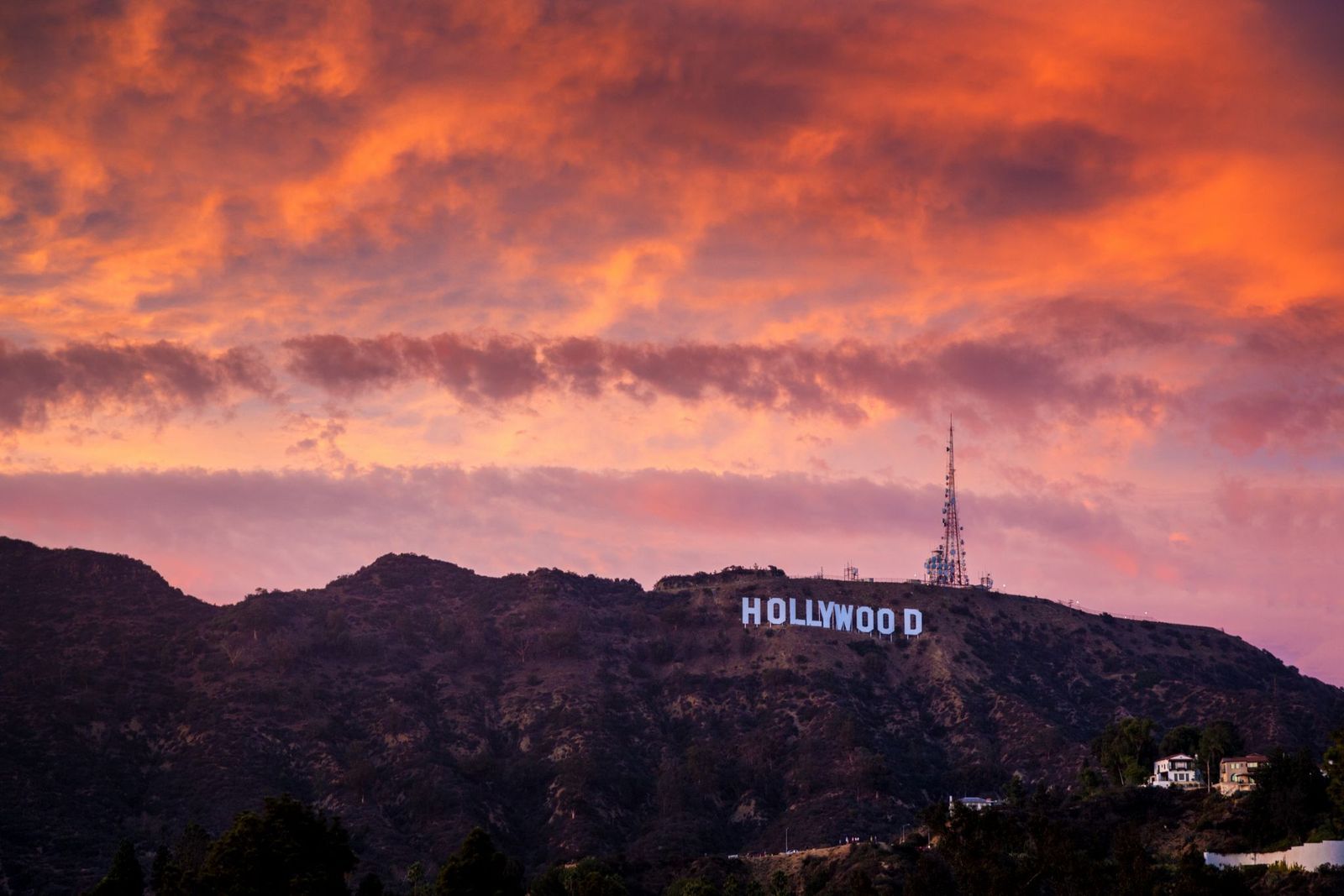
Image: Shutterstock

The Hollywood sign wasn’t meant to last forever. The developers expected it to stay on the hillside for only about 18 months. But that deadline passed, and the sign was still useful for attracting buyers to Hollywoodland, so no one rushed to take it down.

As the years went by, the giant letters became a familiar part of the Los Angeles landscape, especially as the movie industry nearby continued to grow. After the development had sold its properties, the company transferred the sign and the surrounding land to the City of Los Angeles in 1944. By then, the temporary billboard had already been standing over the city for more than 20 years.

4
Thousands of bulbs lit the letters
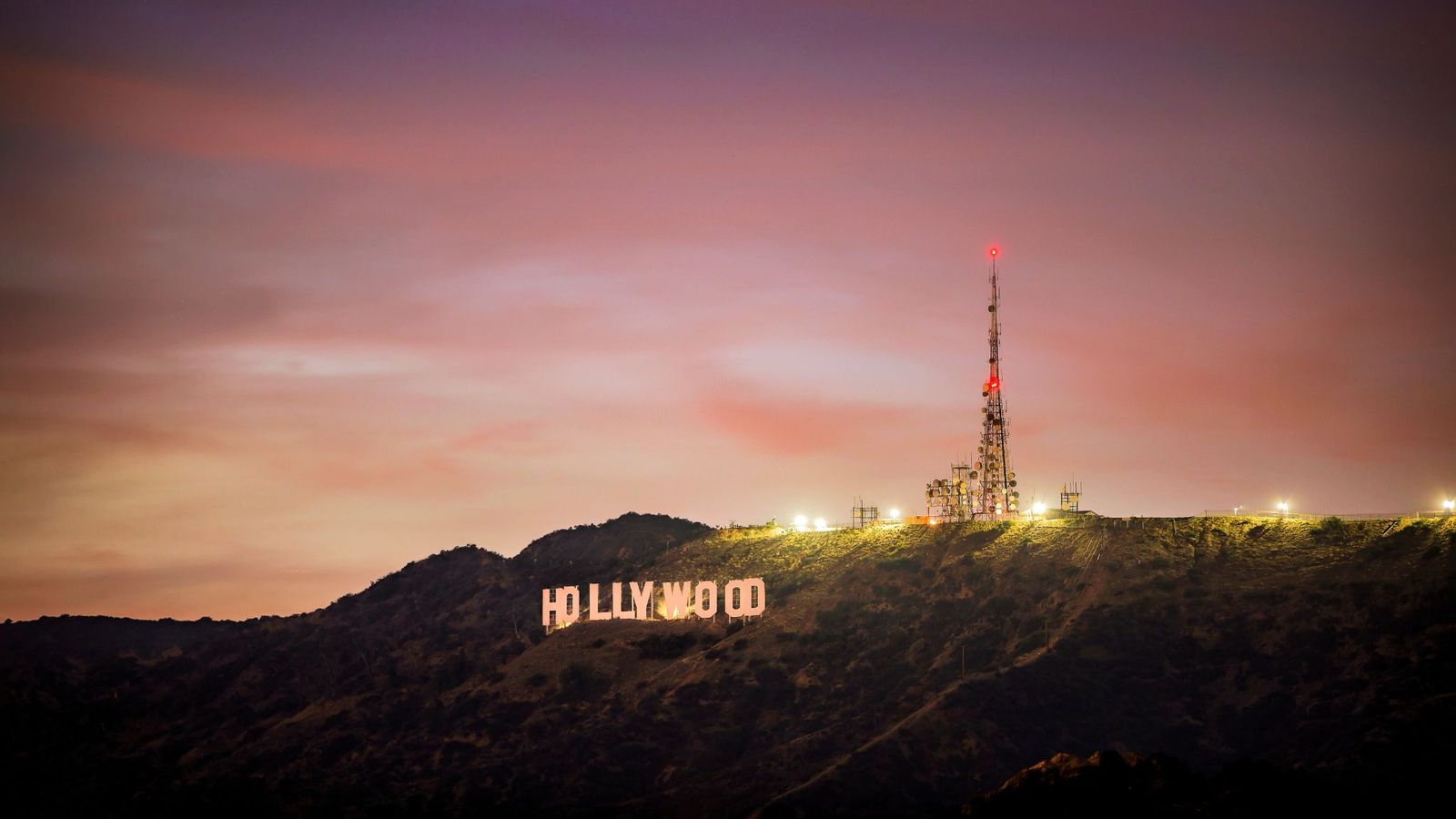
Image: Shutterstock

For Los Angeles residents in the 1920s, the Hollywoodland sign must have looked more like a giant theater marquee than a roadside billboard. As it was designed to stand out after dark just as much as during the day, about 4,000 light bulbs, each rated at 20 watts, covered its metal panels. Placed only eight inches apart, they turned the hillside into an enormous electric display.

And the whole sign didn’t light up at once. First came "Holly," followed by "wood" and then "land," before the complete name appeared. There was even a 35-foot illuminated dot beneath the letters, acting like a giant period at the end of the word.

5
The "Land" section disappeared in 1949
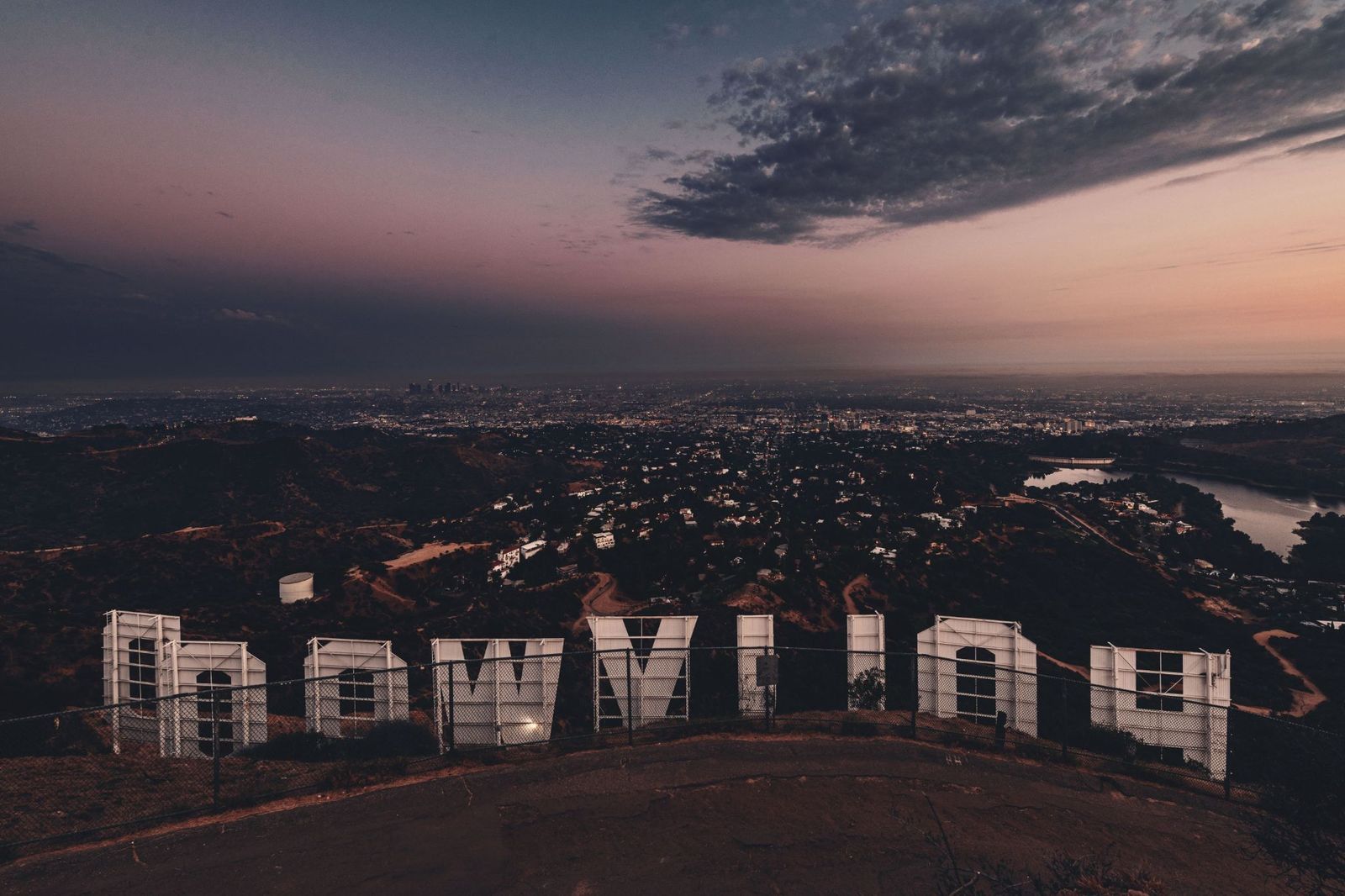
Image: Shutterstock

By the late 1940s, the sign had fallen into such poor condition that city officials considered tearing it down. Residents pushed back, and the Hollywood Chamber of Commerce offered to help restore it. But there was one major change: the last four letters had to disappear.

In April 1949, the city approved a plan to rebuild the missing "H," remove "LAND," and repair the remaining letters. On September 26, "Hollywoodland" officially became "Hollywood." That small change gave the sign a completely new meaning. It no longer advertised a housing development; it now represented the entire Hollywood district.

6
The original letters slowly collapsed
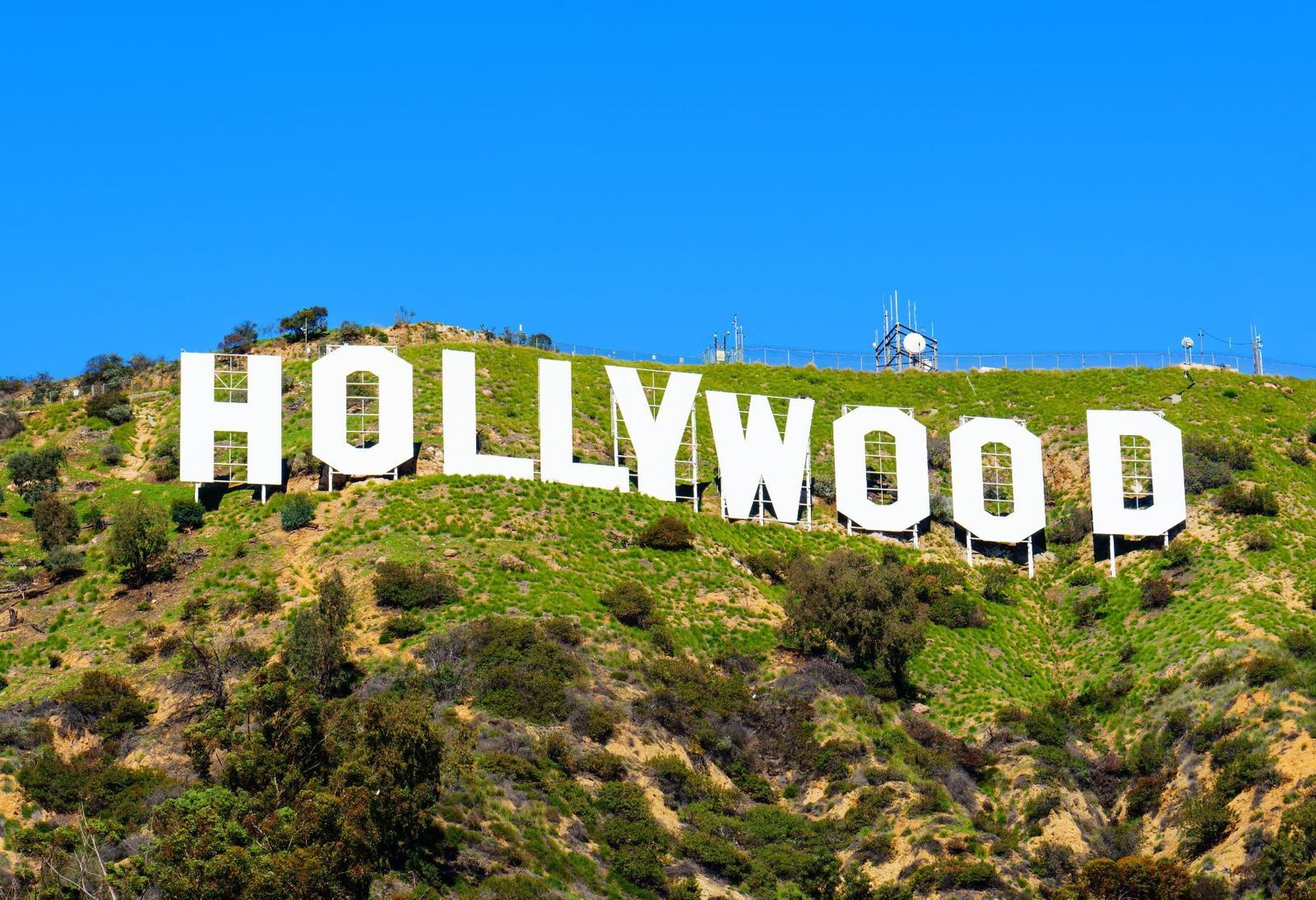
Image: Shutterstock

The 1949 repairs helped for a while, but they didn’t fix the sign’s deeper structural problems. Its metal panels and supporting framework were still exposed to years of sun, rain, wind, termites, neglect, and vandalism. By the 1960s and 1970s, the landmark looked rusty, uneven, and was close to falling apart.

In fact, parts of it did fall down the mountain. The top of the "D" collapsed, the third "O" disappeared completely, and an arsonist damaged the bottom of the second "L." Even after Los Angeles designated the sign a Historic-Cultural Monument in 1973, its condition continued to deteriorate. At that point, another coat of paint was not going to be enough.

7
The sign was rebuilt in 1978
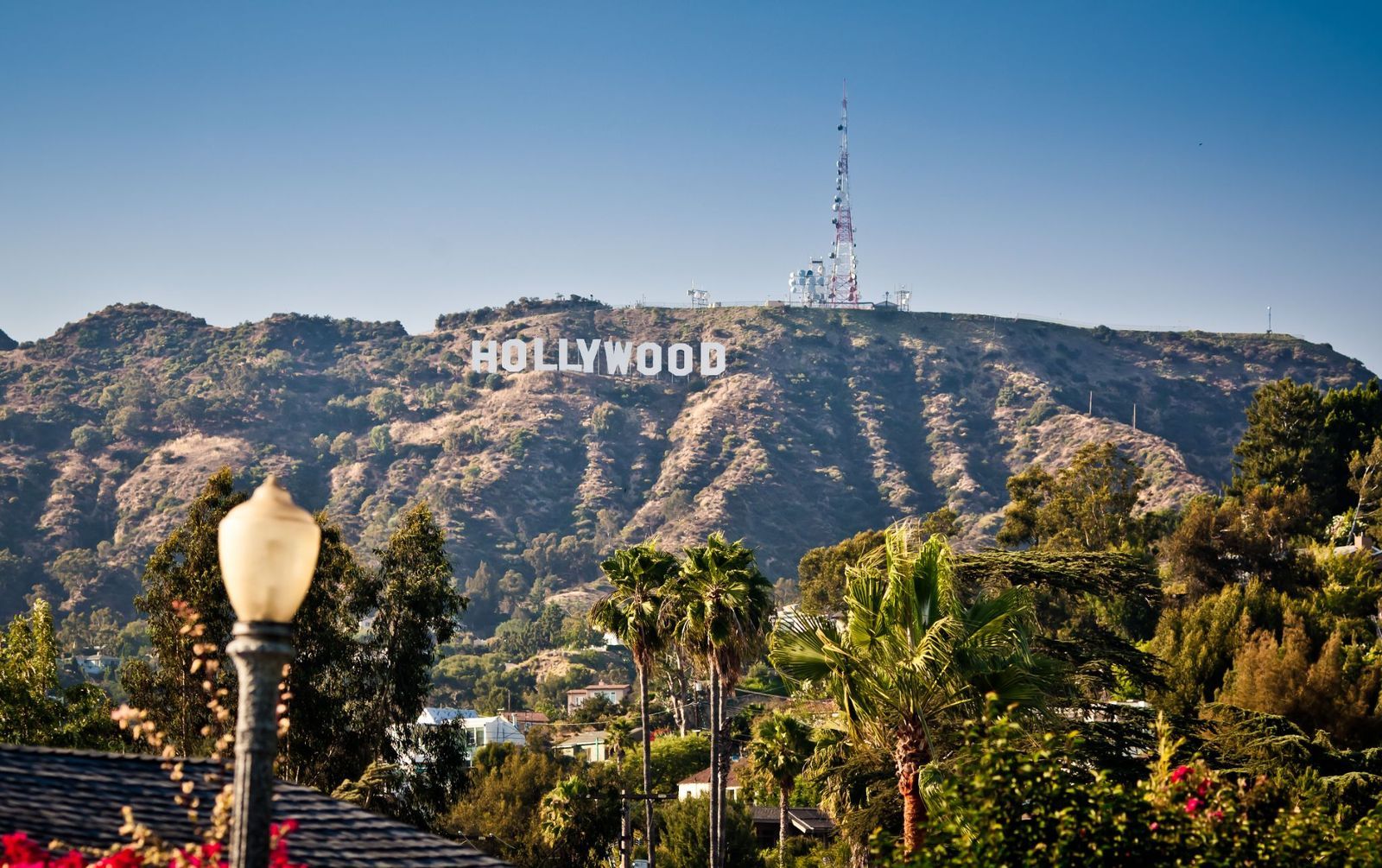
Image: Shutterstock

What would Hollywood do if its most famous sign disappeared? Small repairs were no longer enough by the end of the 1970s. The Hollywood Chamber of Commerce decided that all nine letters had to be replaced, and workers took down the original sign in August 1978, leaving the hillside completely bare for about three months.

This time, the sign was built to last. The new letters were made of steel and enamel and secured with concrete, creating a structure of about 194 tons. The new sign imitated the original and was completed in November 1978. So, t he letters visitors see today aren’t from 1923, but a recovered version of the landmark.

8
Celebrities helped pay for new letters
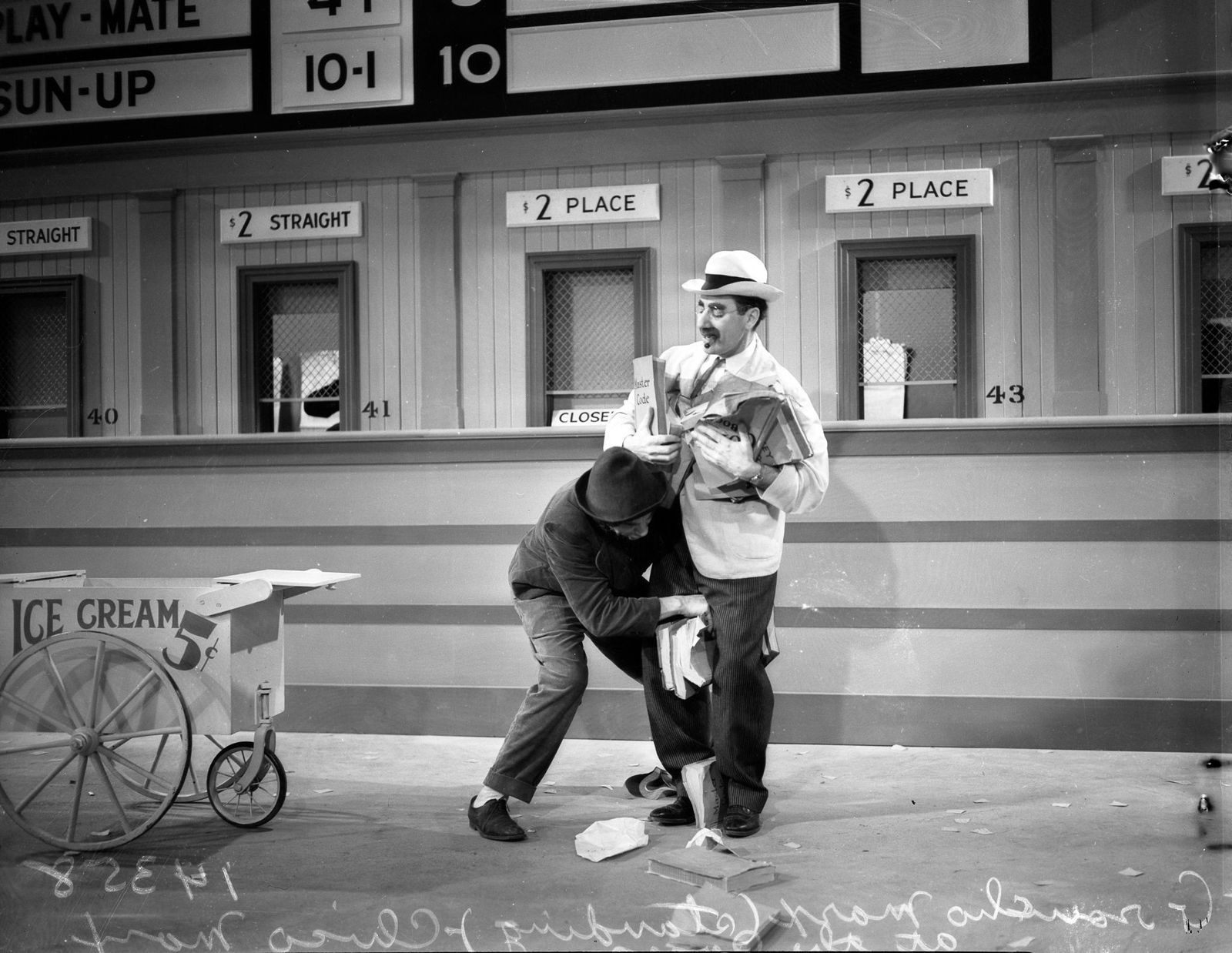
Image: Los Angeles Daily News, CC BY 4.0, via Wikimedia Commons

The project cost about $250,000, and Hollywood raised it the only way it knew how: with famous names and a big party. Hugh Hefner held a party at the Playboy Mansion, where donors could pay about $27,700 to sponsor one of the nine new letters.

Several famous names joined the campaign. Alice Cooper paid for the third "O" in honor of comedian Groucho Marx. Singer Andy Williams sponsored the "W," while Gene Autry and television station KTLA helped pay for the second "L." Warner Bros. Records, Kelley Blue Book founder Les Kelley, and other supporters also helped rebuild the famous sign.

9
The sign has been altered several times
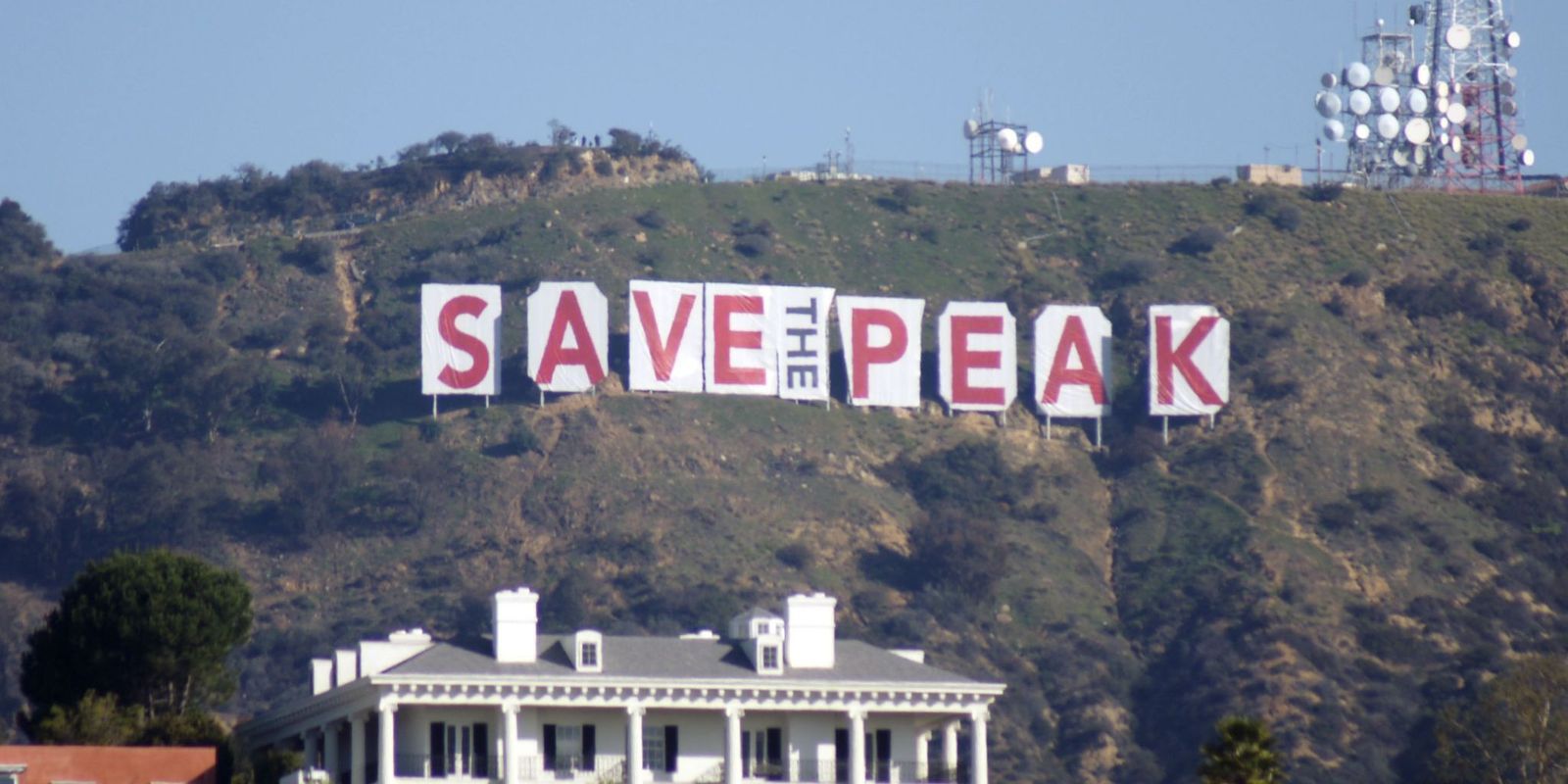
Those giant white letters have always attracted pranksters, students, activists, and advertisers who wanted to display their own messages above Los Angeles. Most of them didn’t remove or damage the original letters. By covering only certain parts of the sign with fabric, plastic, or curtains, they could make the sign appear to spell a completely different word . These changes were usually temporary, lasting only long enough to promote an event, support a cause, or play a public joke.

On New Year’s Day in 1976, art student Daniel Finegood used about $50 worth of curtains to change the sign to "Hollyweed." In 1987, it became "Holywood" during Pope John Paul II’s visit. The sign has also been changed for official promotions, including "FOX" for the television network and "Go Navy" for an Army-Navy football game.

10
An advertisement became an icon
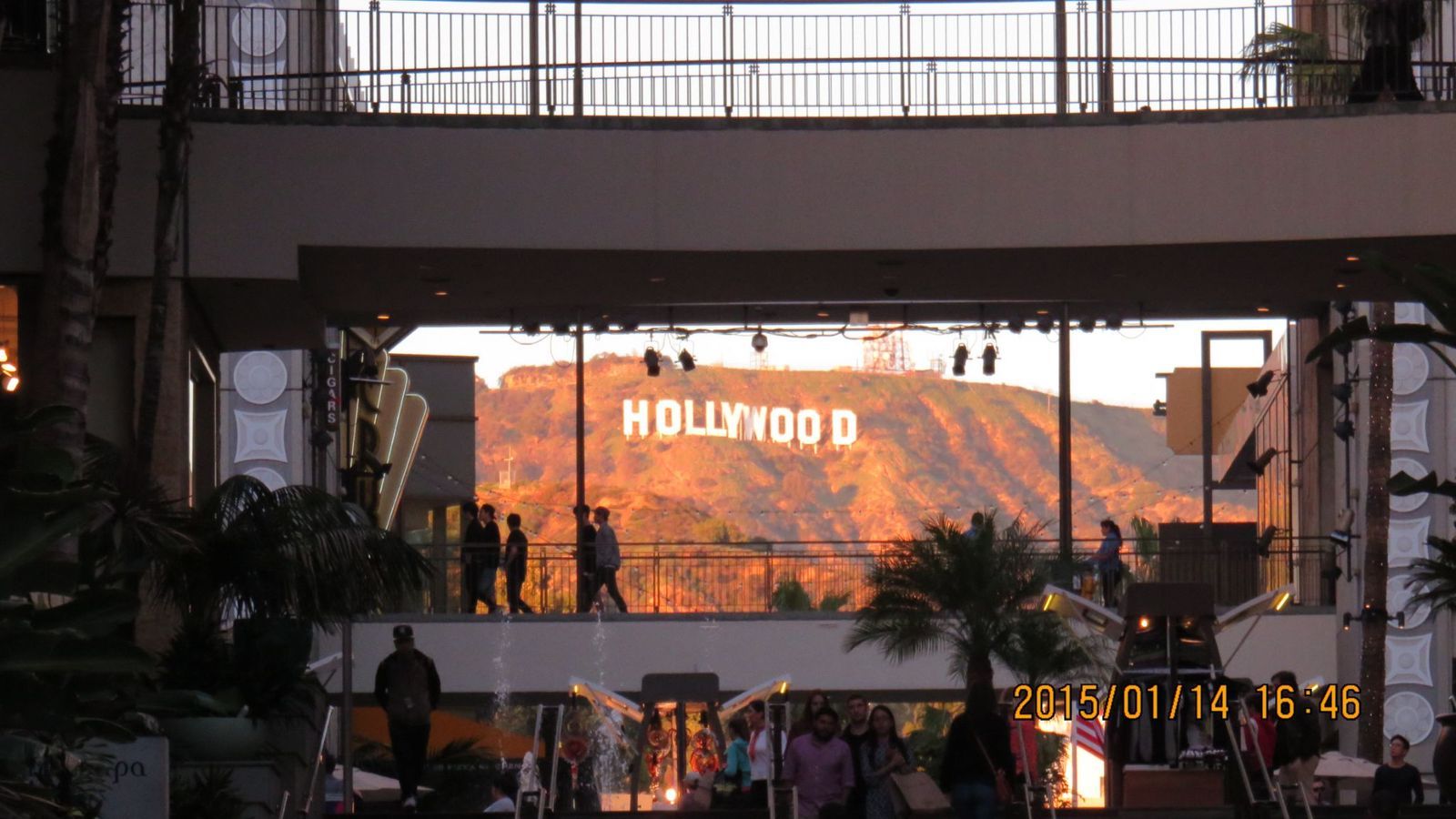
Image: Shutterstock

Los Angeles officially named the sign Historic-Cultural Monument No. 111 in 1973, recognizing that the former advertisement had become an important part of the city’s history. Five years later, during the campaign to rebuild the damaged letters, the Hollywood Sign Trust was created to help protect the landmark for future generations.

Since then, the organization has overseen repairs, repainting, security, and other improvements needed to keep the sign standing on the hillside. The sign represented much more than a place on a map; it’s a symbol of Hollywood dreams and the hope of turning them real.
General General 3 min read

Secret tracks

What's the meaning behind the acorns in Grand Central Terminal?

Image: Lāsma Artmane

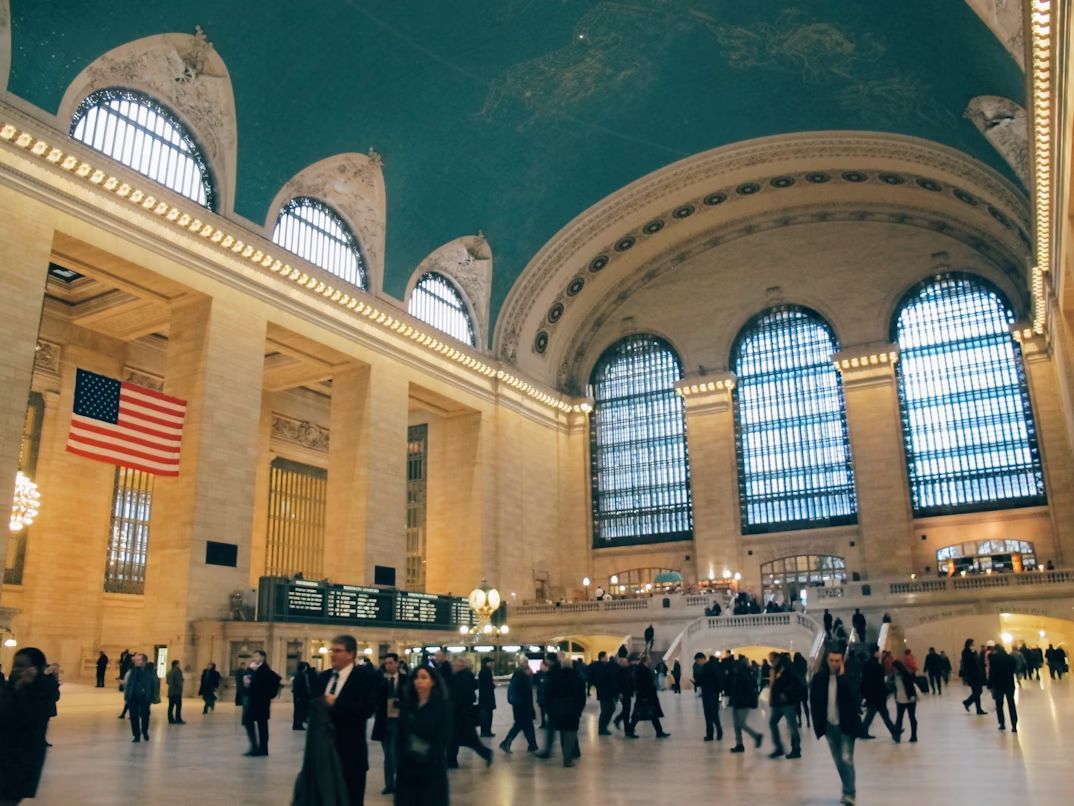
Ever since its public opening in 1913, Grand Central Terminal has been a living piece of New York history. Millions of travelers pass through its marble halls each year, but few realize just how many surprises hide behind those iconic clocks and grand archways. From secret tunnels to a bar tucked inside an old tycoon’s office, Grand Central holds more than a century’s worth of hidden stories waiting to be uncovered. Let’s take a closer look.

1
A bar hidden in plain sight

Image: Jad Limcaco

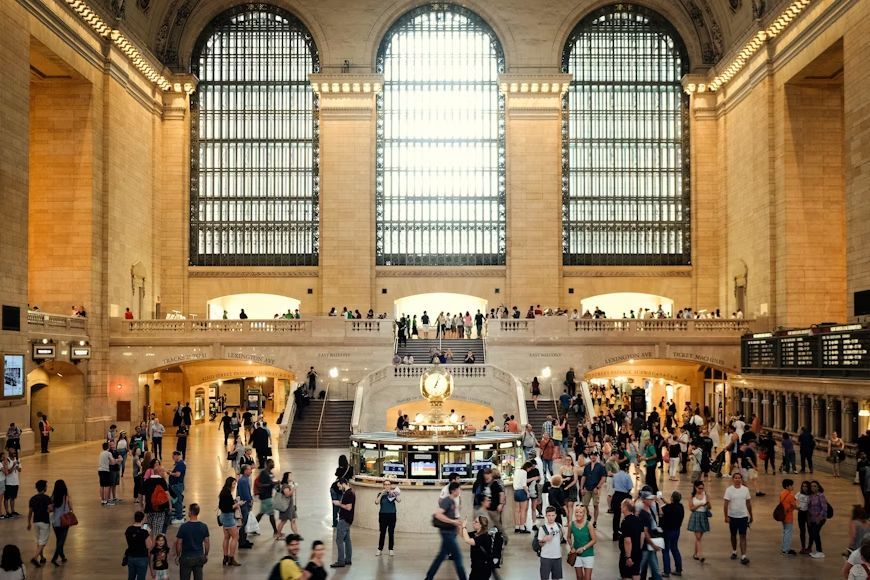
Most visitors know the famous Oyster Bar, but few stumble upon The Campbell, an elegant lounge tucked inside Grand Central. Originally the office of 1920s finance tycoon John W. Campbell , this spot sat forgotten for decades until 1999, before being restored to its former Jazz Age glory. Step inside today, and you’ll find velvet couches, grand rugs, and cocktails that make you feel like you’ve time-traveled back to the roaring 1920s.

2
Two clocks worth a fortune?

Image: DAVID NIETO

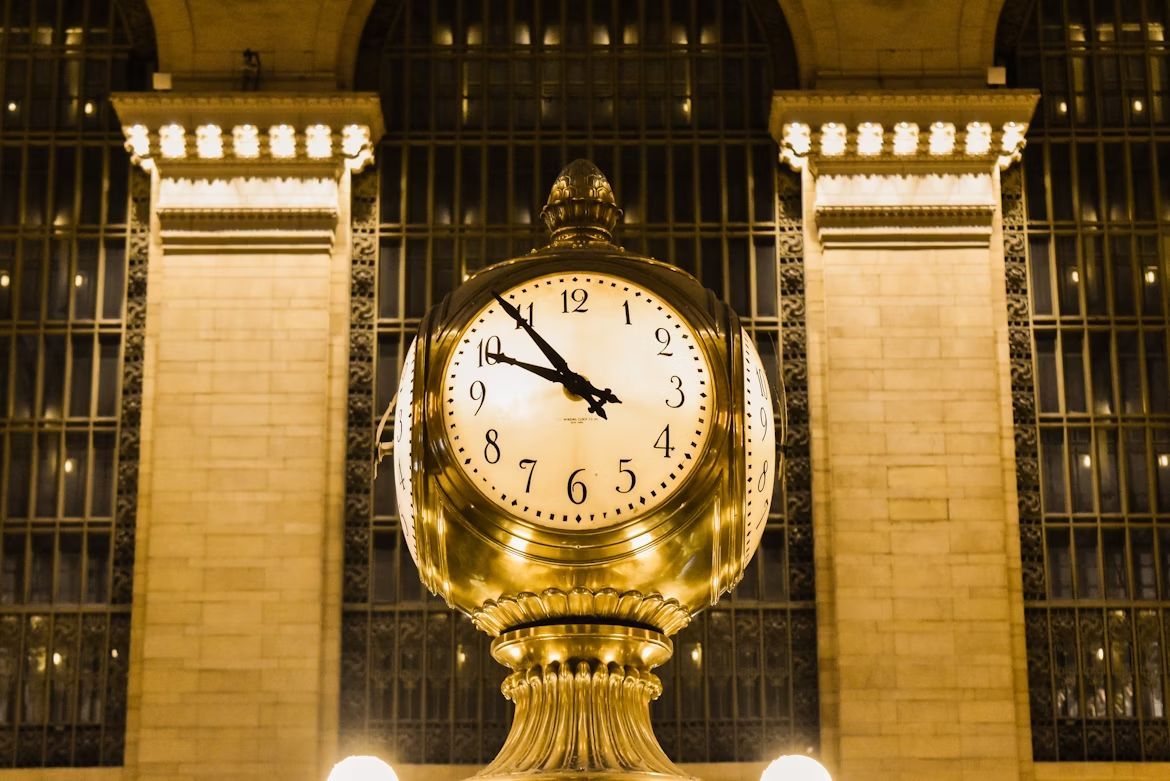
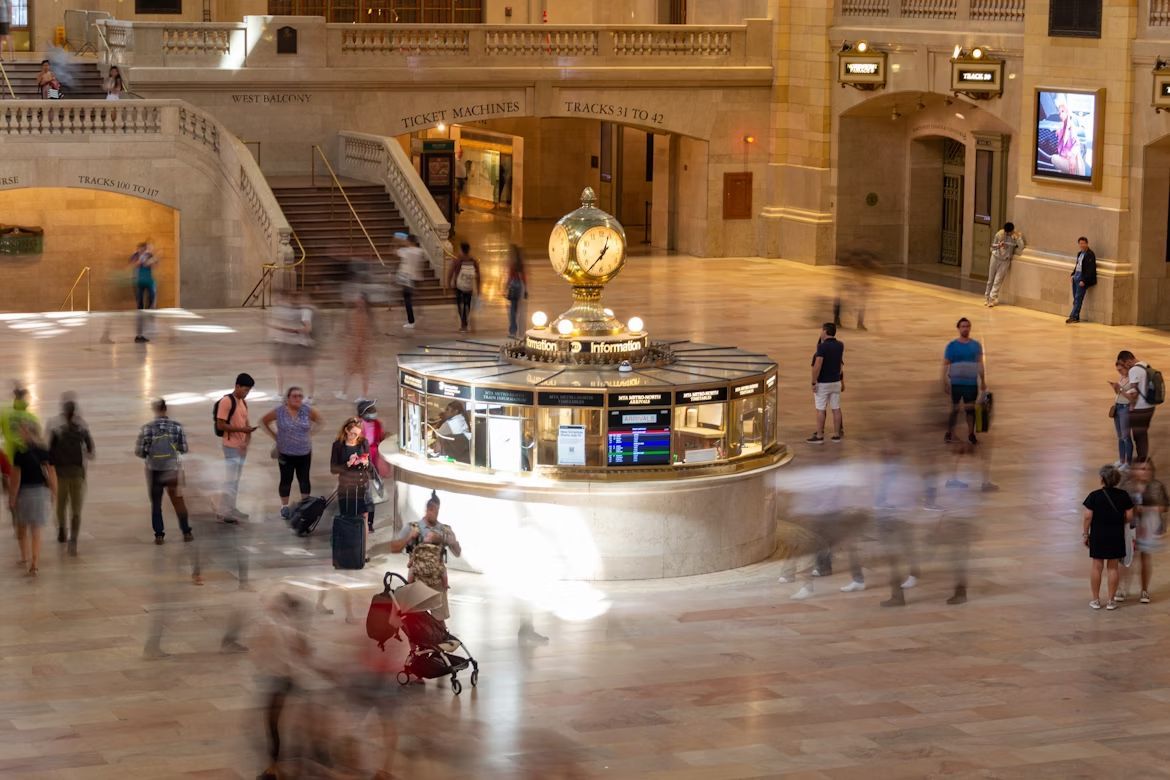
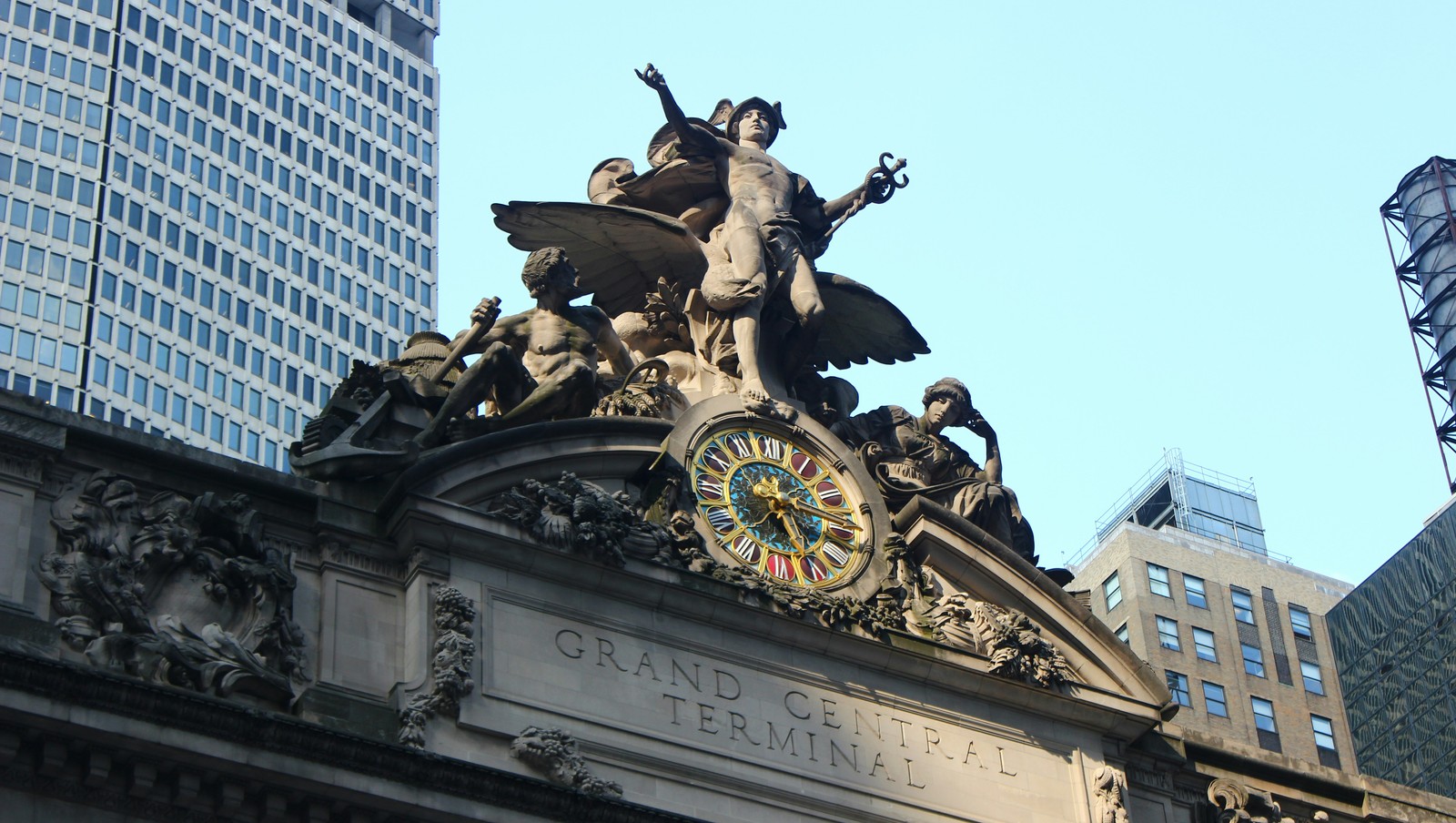
Grand Central has one of the most valuable clocks in the world , although there’s a myth that says there are two. The Tiffany clock outside towers 14 feet across, framed by Roman gods carved in stone. This clock is worth around $20 million. Inside the terminal, the four-faced opal clock crowns the information booth. Contrary to popular belief, this clock was not made of an actual opal, but out of opal glass, so there’s nothing priceless about it.

3
Hidden oaks and acorns

Image: David Vives

Take a closer look around, and you’ll start spotting oak leaves and acorns carved into chandeliers, railings, and stonework. These aren’t random designs. They’re a nod to the Vanderbilt family’s symbol: The acorn. The family funded the terminal’s construction in 1871 and wanted everyone to know it. Now, their family symbol quietly decorates every corner of their legacy.

4
The mysterious whispering gallery

Image: Thierry Biland

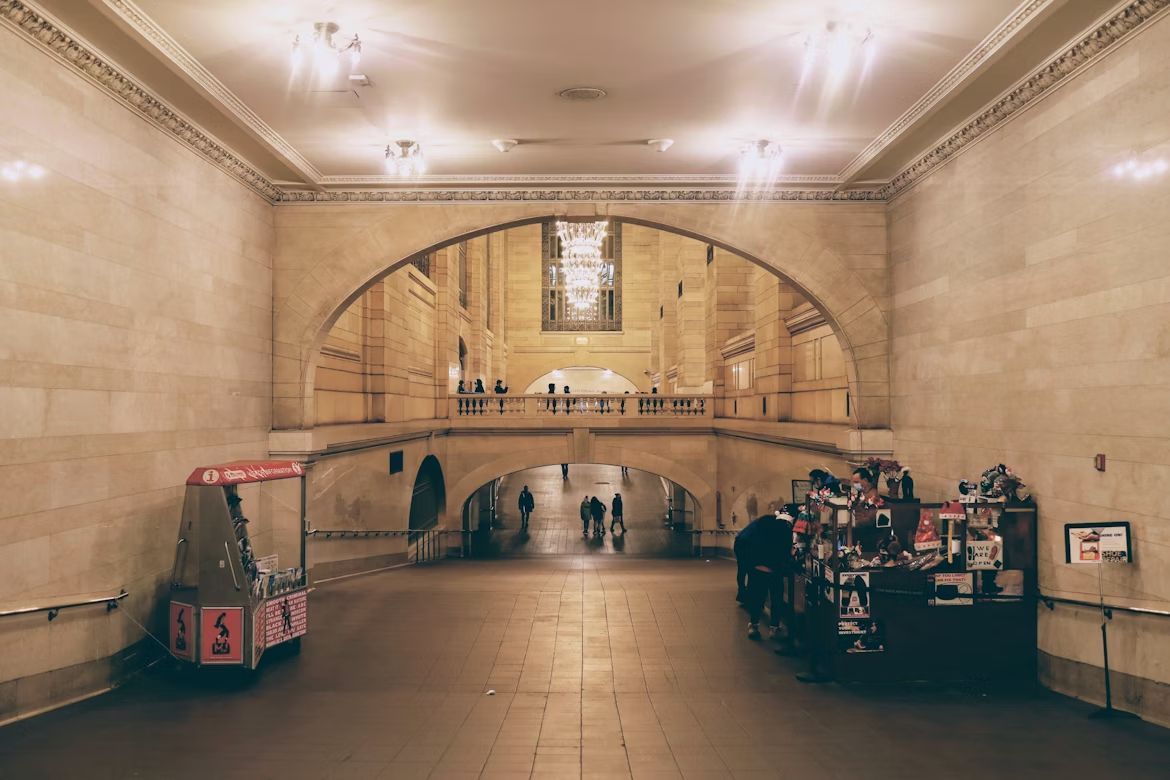
If you whisper into one corner of the tiled archway near the Oyster Bar, someone standing diagonally across can hear you perfectly. The "Whispering Gallery" is one of Grand Central’s quirkiest secrets . The Guastavino tiles that make up the arched ceiling carry sound in an odd way, creating an intimate little magic trick, though no one really knows whether it was designed that way or just a happy accident.

5
A sky painted backward

Image: Alexa Soh

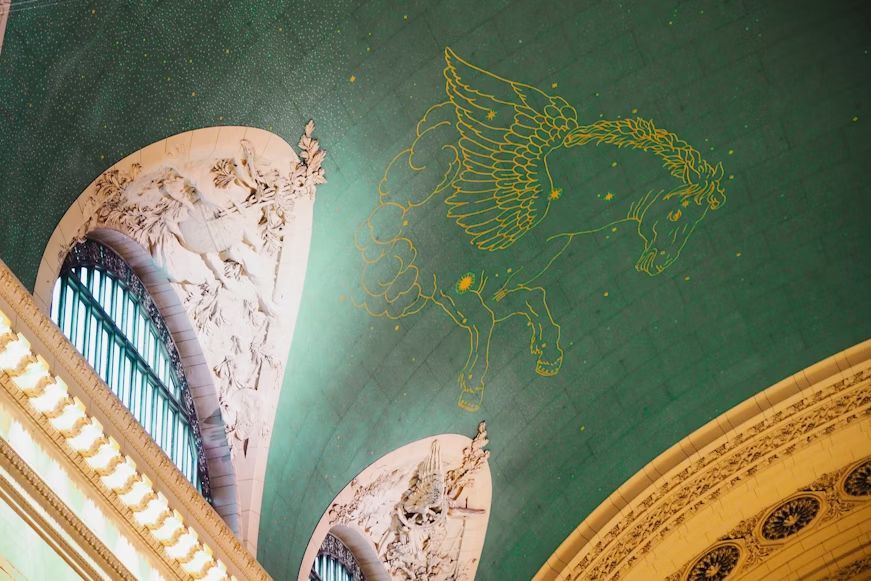
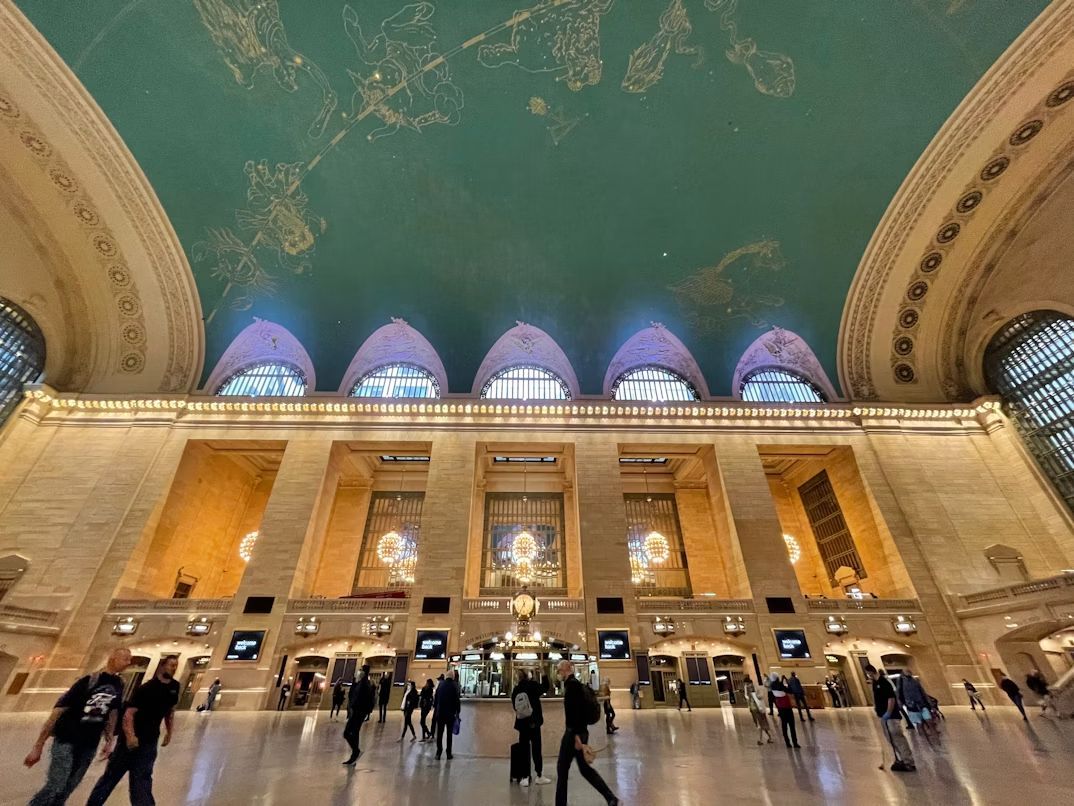
Look up, and you’ll see the breathtaking celestial mural that covers the concourse ceiling. But here’s the kicker: the constellations are painted backwards . Whether it was a mistake or an artistic choice remains debated, but the Vanderbilts claimed it was intentional—to give us the "divine perspective" of looking down at the heavens. Either way, it’s still one of the most photographed ceilings in the world.

6
Game, set, match (inside a train station)

Image: lauren barton

If you think tennis in a train terminal sounds impossible, think again. The Vanderbilt Tennis Club, perched on Grand Central’s fourth floor, is open to the public . You can book a court, take a lesson, or just peek inside to see this unexpected slice of luxury tucked away above the bustling commuters below.

7
Secret walkways above the windows

Image: Mitch Hodiono

Those grand arched windows in the main concourse aren’t just decorative; they hide narrow walkways used by staff to move unseen between offices . These catwalks give a bird’s-eye view of the terminal, though they’re strictly off-limits to the public. Only a select few with key passes get to experience the view from up there.

8
A hidden entrance to the Waldorf

Image: David Jones

Deep beneath Grand Central lies Track 61, a secret passage that once connected directly to the Waldorf Astoria Hotel. It was used by VIPs who preferred to travel without public attention —most famously, President Franklin D. Roosevelt, who used it to conceal his polio and wheelchair from the public eye. Today, it’s sealed off, but the legend remains.

9
Almost lost to the wrecking ball

Image: Reiseuhu

In the 1960s, plans were made to tear down Grand Central and replace it with skyscrapers. After the destruction of Penn Station in 1963, New Yorkers were not having it. Thanks to the efforts of preservationists , Grand Central was saved and officially declared a landmark in 1967. Their fight ensured we could still enjoy one of the city’s true architectural gems.

10
A 21st-century makeover

Image: Dominic Kurniawan Suryaputra

While much of Grand Central dates back to 1913, its evolution continues. The massive East Side Access Project, completed in 2023, added a new terminal for Long Island Rail Road passengers, complete with 40 miles of new track buried beneath Park Avenue. It’s a modern expansion of a century-old masterpiece.

Culture Culture 6 min read

HITMAKERS

Remember These 10 Boy Bands And Girl Groups That Dominated America?

What was your favorite band when you were a teenager? Over the decades, different boy bands and girl groups have dominated the American music scene, leaving their mark on pop music. From the timeless "I'm a Believer" to the unforgettable "I Want It That Way," these bands and groups have given us hits that every American recognizes. If you're a music fan, let's dance to the rhythm as we remember these 10 boy bands and girl groups that absolutely made you sing out loud!

1
The Supremes

Image: Namroud Gorguis

The ‘60s gave us The Supremes, which was not only one of the most successful girl groups ever but also had the iconic Diana Ross among its members.

Have you heard "Stop! In the name of love / Before you break my heart / Think it over / Think it over"? But that unforgettable 1965 hit was not the Supremes' only success. They created many other hits, such as the famous "You Can't Hurry Love" from 1966. In fact, the group had 12 number-one singles on the Billboard Hot 100!

The influence of this successful group was so deep that it inspired and contributed to the flourishing and recognition of many other girl groups in the decades that followed, some of which are also on this list.

2
The Jackson 5

Image: Markus Spiske

The Supremes were not the only musical group that gave rise to an iconic solo star. The Jackson 5 appeared in 1964, featuring a very young Michael Jackson and his four brothers: Jackie, Tito, Jermaine, and Marlon.

In the late ‘60s and ‘70s, the Jackson brothers achieved great success. In fact, one of their first singles, "I Want You Back," from 1969, became a number-one hit. When that song was played all over America, Michael Jackson was only 11 years old! Tunes like "The Love You Save" and "I'll Be There" are just a few of the other hits that followed.

In addition, The Jackson 5 had their own TV show, "The Jacksons" (from 1976 to 1977), and they were even inducted into the Rock and Roll Hall of Fame in 1997!

3
The Monkees

Image: Austin Prock

If you hear, "I thought love was only true in fairy tales..." you know how the lyrics of that song go on, right?

The Beatles' film A Hard Day's Night inspired an American series called The Monkees , televised from 1966 to 1968. If you watched it, you probably remember the musical band of the same name, created specifically for the show. Originally composed of Micky Dolenz, Michael Nesmith, Peter Tork, and Davy Jones, The Monkees achieved great musical success, particularly with the hit we just mentioned, "I'm a Believer," which remains famous worldwide.

4
The Ronettes

Image: Gayatri Pandkar

The '60s were prolific in musical groups, and one of the most popular was The Ronettes, a girl group formed by sisters Veronica Bennett (later known as Ronnie Spector) and Estelle Bennett, along with their cousin Nedra Talley. Have you listened to some of their hits, such as "Be My Baby," "Baby, I Love You," and "Walking in the Rain"?

In addition to their catchy tunes, what distinguished The Ronettes was their style, characterized by dramatic makeup, beehive hairstyles , and iconic outfits.

Despite their influence, many years passed before they were inducted into the Rock and Roll Hall of Fame in 2007 .

5
The Pointer Sisters

Image: Haley Lawrence

Pop, soul, R&B, jazz, country, and even dance music were some of the genres played by The Pointer Sisters, the girl group from Oakland, California, that rose to fame in the 70s. Their talent and versatility kept them going for several decades!

As their name suggests, The Pointer Sisters were a trio made up of sisters Anita, June, and Ruth Pointer. "I'm So Excited," "Jump (For My Love)," and "Fire" were some of the most famous hits of this three-time Grammy Award-winning group. Have you listened to them? You probably have!

6
New Kids on the Block

Image: Florian Schmetz

NKOTB was the coolest way to refer to the legendary New Kids on the Block (in fact, their fan base called themselves "NKOTB Nation"). Formed in 1984 in Boston, Massachusetts, this boy band triumphed in the late ‘80s and early ‘90s.

NKOTB paved the way for other boy bands that emerged in the '90s, reshaping our concept of pop music. "You Got It (The Right Stuff)," "Hangin' Tough," and "Step by Step" were just a few of their many hits, which made them winners of several American Music Awards during their peak years. They also sold more than 80 million records worldwide!

If you want to remember NKOTB, you can listen to their songs, of course, but you can also visit their star on the Hollywood Walk of Fame, where they've been honored since 2014.

7
Salt-N-Pepa

Image: Ben Wiens

In 1985, Queens , New York, saw the birth of Salt-N-Pepa, a legendary hip-hop group that became one of the first female groups in the genre.

Did you ever dream of forming a band when you were in college? We did! So did the members of Salt-N-Pepa. They not only made it happen, but they also became a huge success.

With hits like "Push It," "Shoop," "Whatta Man," and many others, these girls were everywhere. They had so much flow and rhythm that, in 2005, they were inducted into the Dance Music Hall of Fame!

8
Backstreet Boys

Image: Steve Johnson

If someone says, "Tell me why," many of us would probably respond with, "Ain't nothing but a heartache." And that's just one of the many ways the Backstreet Boys have left their mark across generations.

As one of the best-selling boy bands, Nick Carter, Howie Dorough, AJ McLean, Brian Littrell, and Kevin Richardson were a sensation in the late '90s and early 2000s . Their music was everywhere, and fans were desperate to meet them.

As you know, they had several hits that we still remember, such as "I Want It That Way," "Quit Playing Games (With My Heart)," and "As Long As You Love Me." You've probably danced to the beat of some of these hit songs, right? Did you have a favorite?

9
Destiny's Child

Image: Rob Sarmiento

Beyoncé Knowles, Kelly Rowland, and Michelle Williams were the final and best-known members of a girl group called Destiny's Child. Do any of these names ring a bell?

Big hits like "Say My Name" and "Bills, Bills, Bills"—which won them a couple of Grammy Awards, by the way—launched these women to total stardom. Destiny's Child was a constant presence on the charts during the late ‘90s and early 2000s, and had us all singing catchy lyrics like "Say my name, say my name / If no one is around you, say baby I love you."

In addition to several major hits that still live on in many people's minds and hearts, Destiny's Child gave us the incredible, iconic, record-breaking Beyoncé . What more could we ask for?

10
'N Sync

Image: Alphacolor

This list could never be complete without mentioning the unforgettable 'N Sync.

Not only was this one of pop's most legendary boy bands, but it also featured one member who eventually became a solo superstar. Yes, you guessed it— we're talking about Justin Timberlake! He, along with JC Chasez, Chris Kirkpatrick, Joey Fatone, and Lance Bass, formed 'N Sync in 1995. Their first album, released in 1998, sold over 10 million copies in the U.S. alone and included hits like "I Want You Back."

The faces of the 'N Sync members were everywhere: on posters, T-shirts, dolls, and all sorts of merchandise, selling out not just in the U.S. but also in other parts of the world. Remember their performance at the 2001 Super Bowl ?

Explore more American facts

Choose your favorite category!

General
General

As American as apple pie—the very best America has to offer!

Culture
Culture

Delve into the astounding richness of American lore.

Geography
Geography

Hop in and explore vast and diverse American landscapes.

History
History

Discover the key moments that shaped the United States.