Culture Culture 5 min read

Yes, that was normal

These old childhood rules and traditions would shock parents today

Image: Rohan Mathur

There was a time when childhood looked very different. Often unsupervised, kids would roam, explore, improvise, and occasionally scare their parents half to death. Cultural norms have changed, and many of the routines and traditions that once defined the all-American childhood now seem reckless . Let’s look at some of them and see how drastically things have changed.

1
Leaving with your bike in the morning and coming back for suppertime
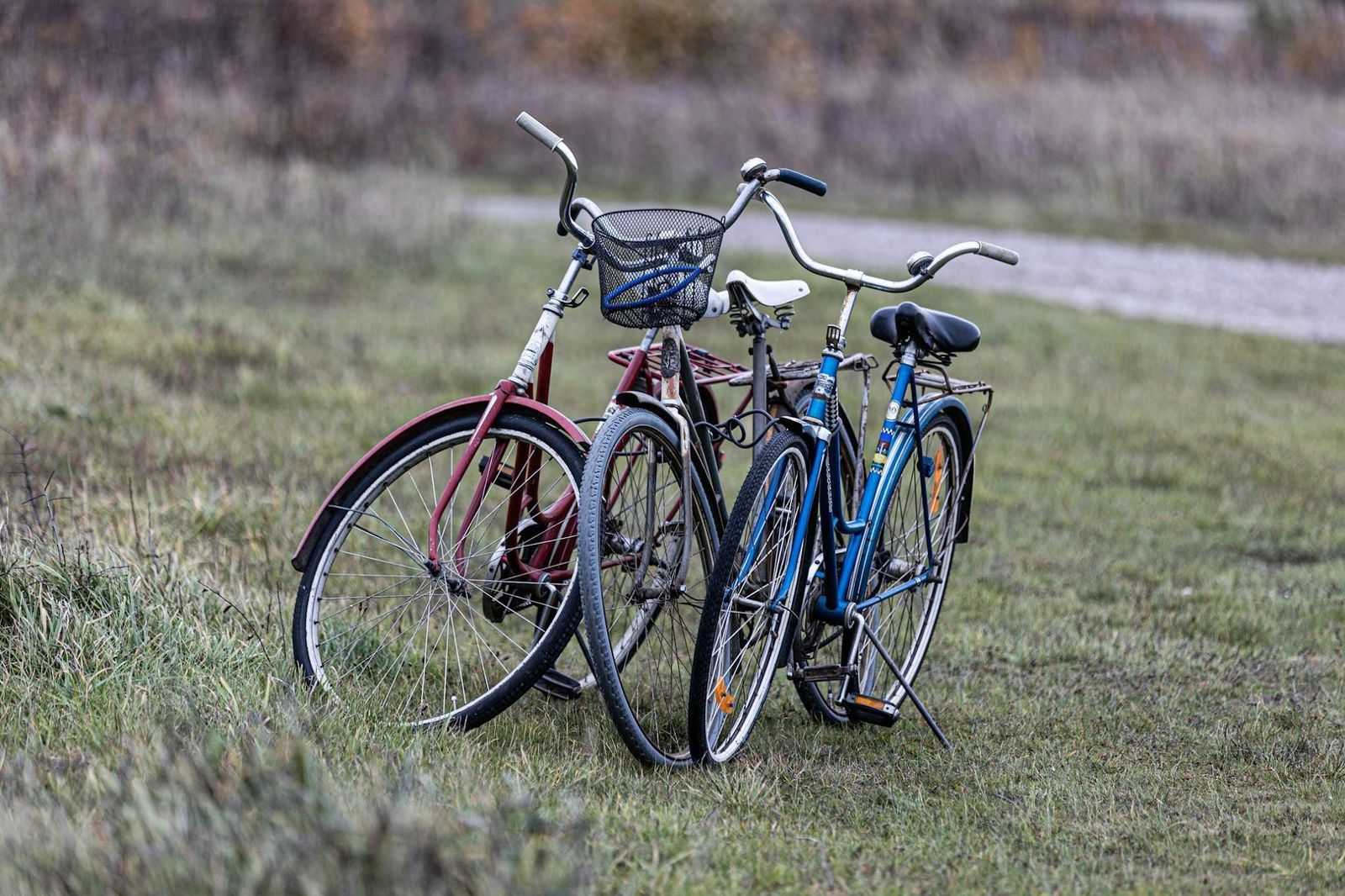
Image: Carl Tronders

For a few generations of American kids, a bicycle meant freedom. From the 1940s through the 1980s, children often left home after breakfast with little more than a vague instruction: "Be back before dinner."

Neighborhoods were informal safety nets, and kids were free to navigate them without phones or GPS trackers.

2
Foraging fruit from neighbors’ yards

Image: Libby Penner

It was a risky gamble: Picking and eating fruit from unknown plants in your neighborhood could result in a yummy treat…or abdominal trouble.

There was a time when kids freely grabbed berries, apples, or other fruit growing along sidewalks or in neighbors’ gardens. Today, property boundaries have grown, and kids are reminded not to forage without permission.

3
Riding public transportation alone
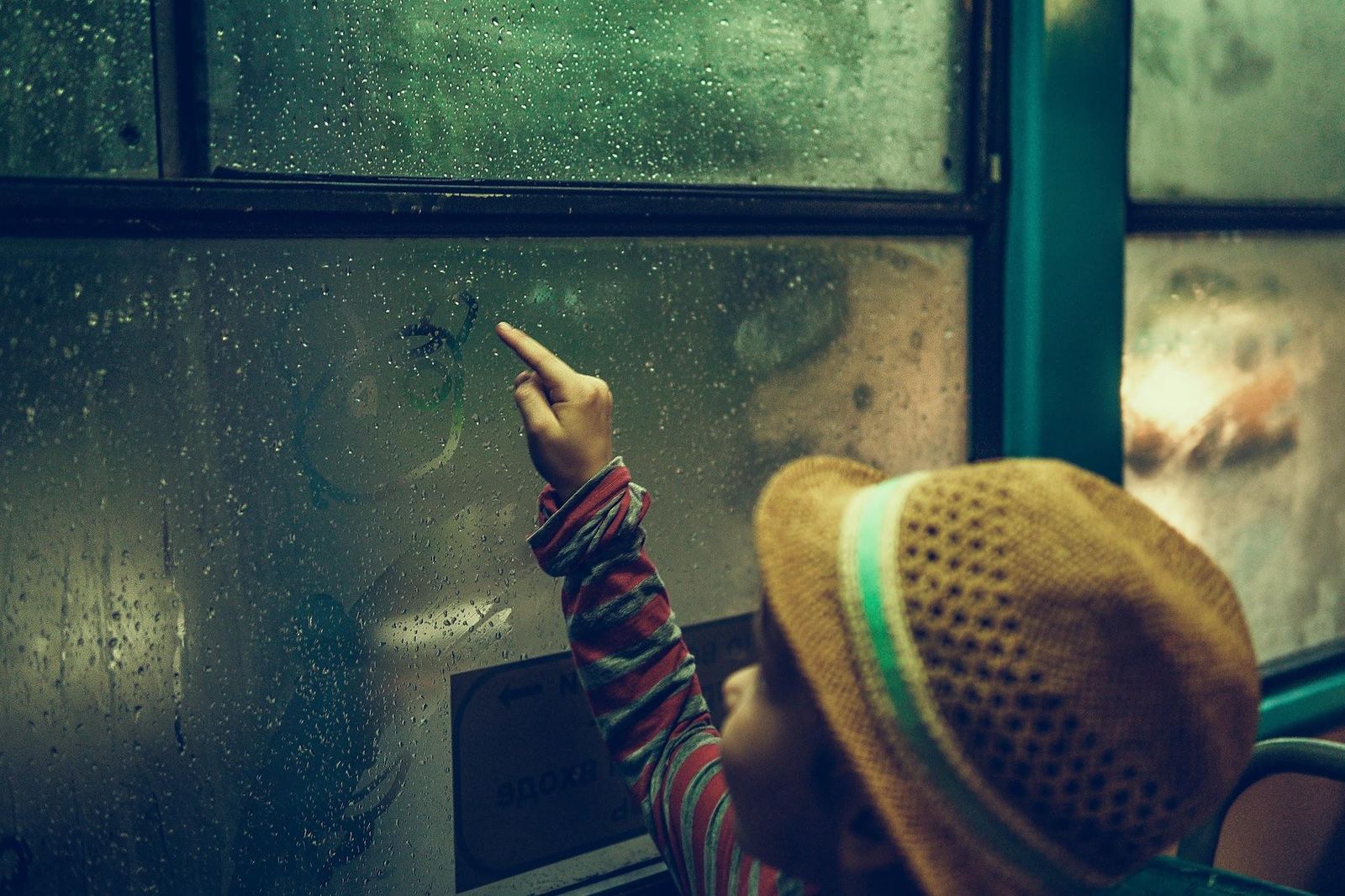
Image: Vitolda Klein

For much of the 20th century, it wasn’t unusual for children as young as 7 to ride buses, subways, or streetcars alone, especially in large cities like New York, Chicago, and Boston.

Kids commuting to school independently was considered a practical life skill. Parents expect children to learn responsibility through real-world experience , handling routes, change, and unexpected delays.

4
Roller coasters had no belts and no headrests
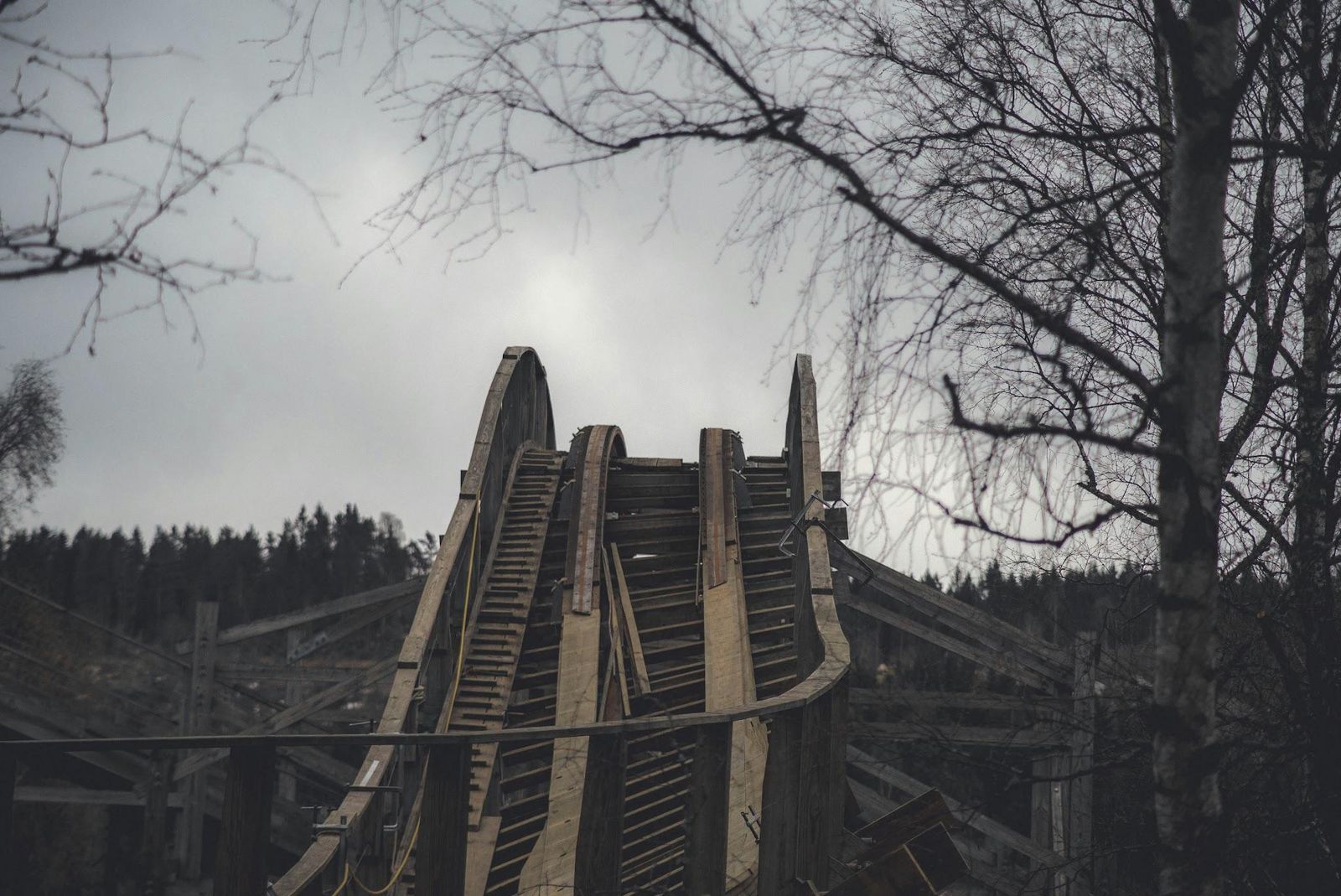
Image: Tore Odiin

Do you have memories of rickety rollercoasters? You might correctly remember that earlier rides were thrilling in ways that might give modern safety inspectors pause.

Many of the rides made popular in the 50s relied primarily on simple lap bars and operated with minimal restraints. Designers assumed riders would hold on tightly. Safety rules have evolved drastically since then, and now we have over-the-shoulder harnesses and improved lap restraints.

5
Walking miles to a friend’s house alone
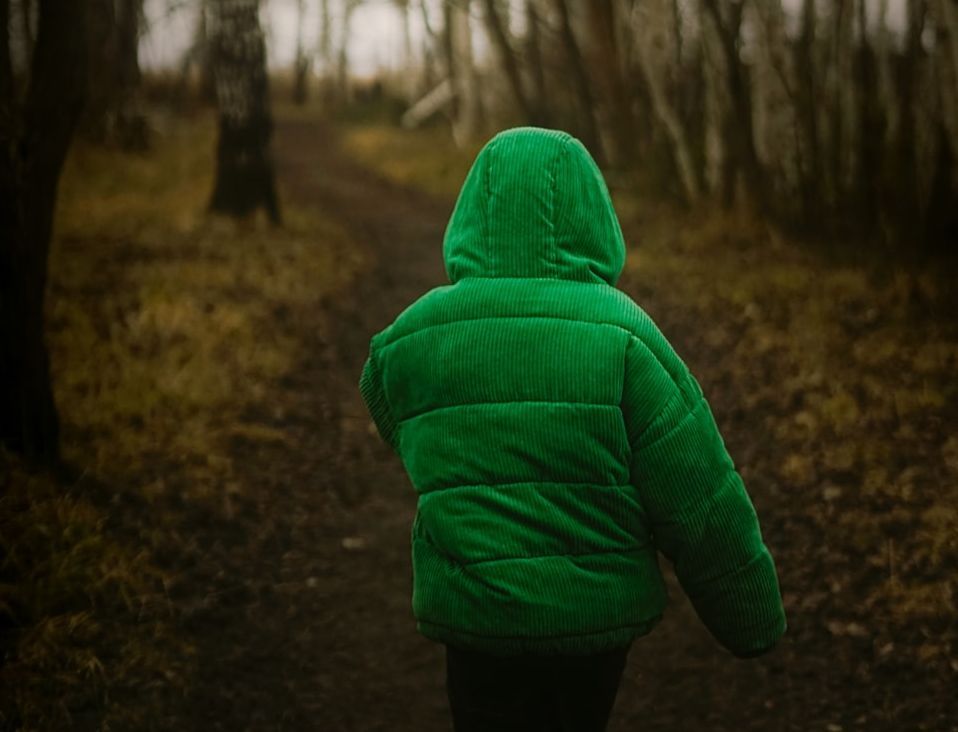
Image: Ansis Kančs

Kids routinely walked long distances across neighborhoods or even between towns without adult accompaniment, guided by landmarks and memory. While this independence helped build confidence, it also reflected a different perception of risk.

6
Not ringing the bell: just yelling your friend’s name from outside
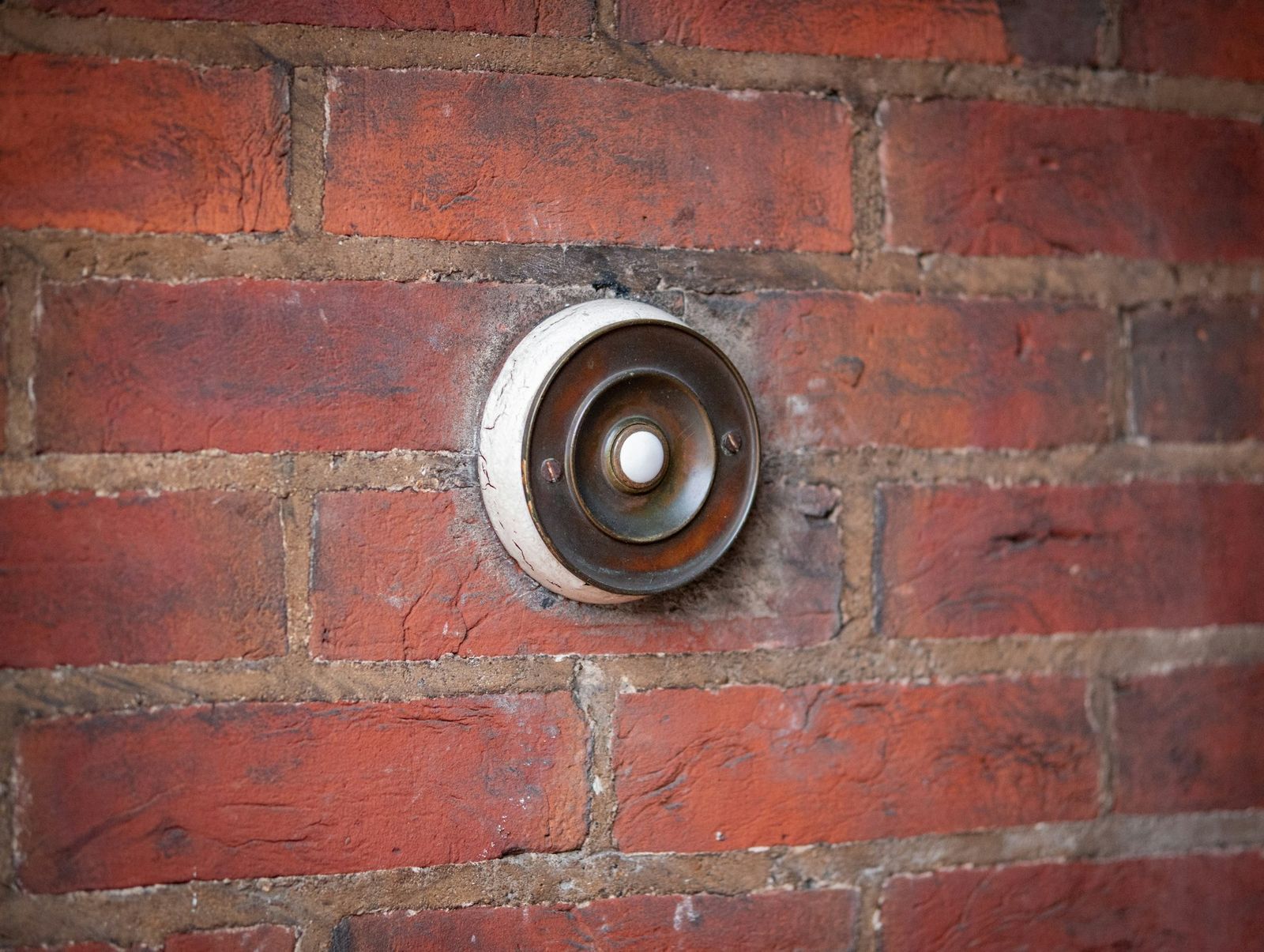
Image: the blowup

Before texting "I’m here" or coordinating playdates through apps, kids often announced their arrival the old-fashioned way: by standing outside and shouting a friend’s name.

Front yards, sidewalks, and porches acted as social hubs where everyone recognized familiar voices. As concerns about privacy, safety, and structured schedules grew with the years, the casual shout-from-the-street culture slowly disappeared.

7
Spending long days at the beach without adults
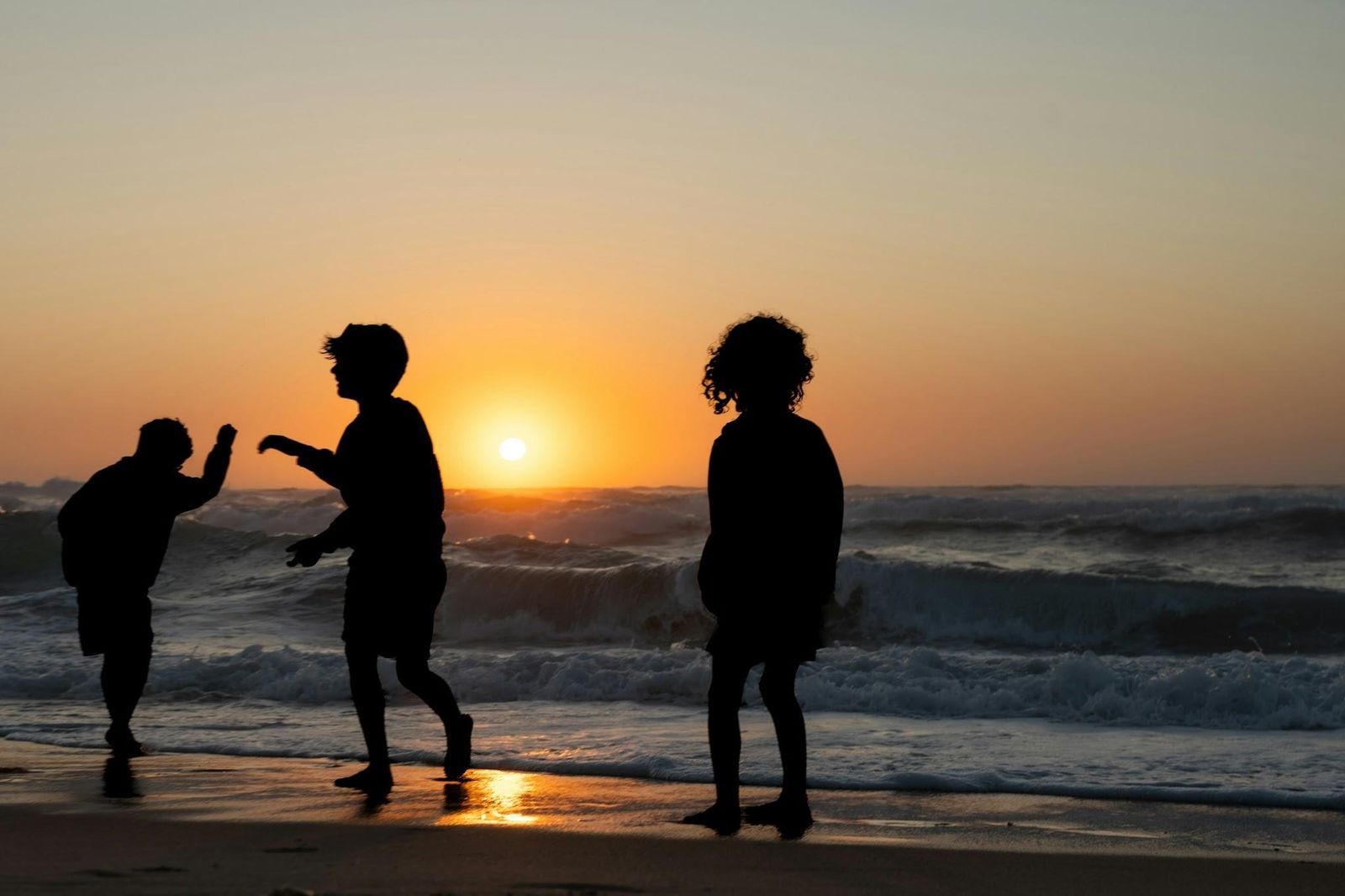
Image: Gaëtan De Cuyper

Surf culture in places like California and Hawaii, as well as East Coast boardwalk towns, normalized groups of kids swimming, riding the waves, and returning home only at sunset.

Public beaches were seen as community environments where lifeguards and familiar locals provided informal oversight . Today, increased safety standards, liability concerns, and changing parenting norms mean most children visit beaches with close adult supervision.

8
Exploring woods alone
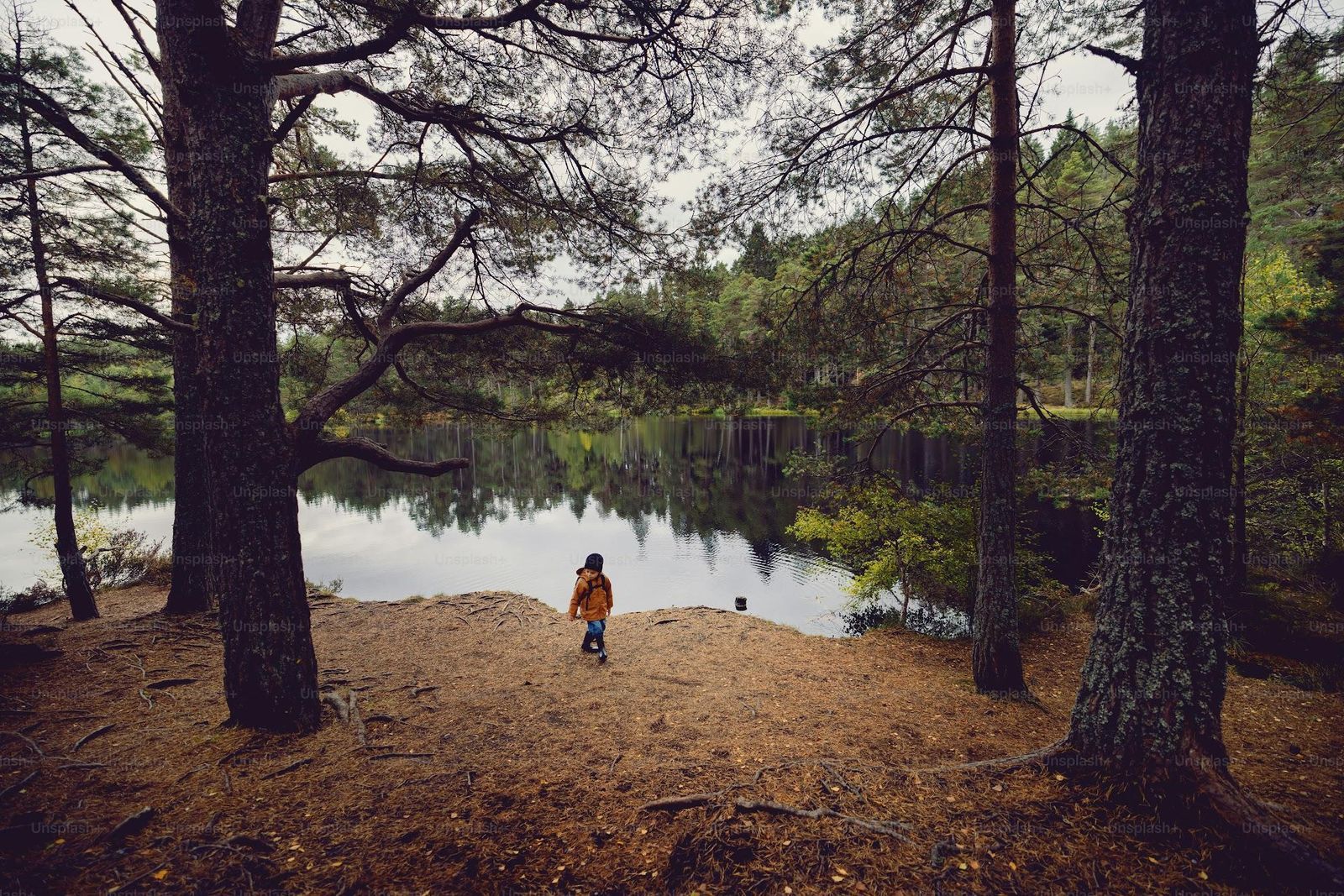
Image: Joshua Earle

Few children who lived near a forest or rural area could resist the pull to explore it, either alone or with friends. Building forts, climbing trees, and learning their way around nature were influenced by scouting movements and postwar ideas about resilience and independence.

Psychologists today even describe this kind of unstructured outdoor play as beneficial for creativity and risk assessment skills. However, modern concerns about safety, traffic, and environmental hazards have reduced opportunities for unsupervised exploration.

9
Staying home alone or being babysat by older siblings

Image: Kelly Sikkema

The rise of the "latchkey kid" became especially visible in the United States during the 1970s and 1980s, when increasing numbers of dual-income households, or single-parent homes, meant children returned home from school to empty houses.

Many kids carried house keys, prepared snacks, and entertained themselves until their parents finished work. Today, research on changing childhood independence shows that unsupervised play and autonomy have significantly declined compared to previous generations.

10
Collecting glass bottles for some cents back

Image: Lacey Williams

Long before recycling bins appeared on every curb, kids learned about value through bottle returns. Soda and milk bottles carried deposits, and children would collect empties from their own homes or even from neighbors to trade for a few coins at local stores.

It was a first taste of earning money independently, although it often funded candy purchases or comic books.

11
Climbing trees or rooftops, unsupervised
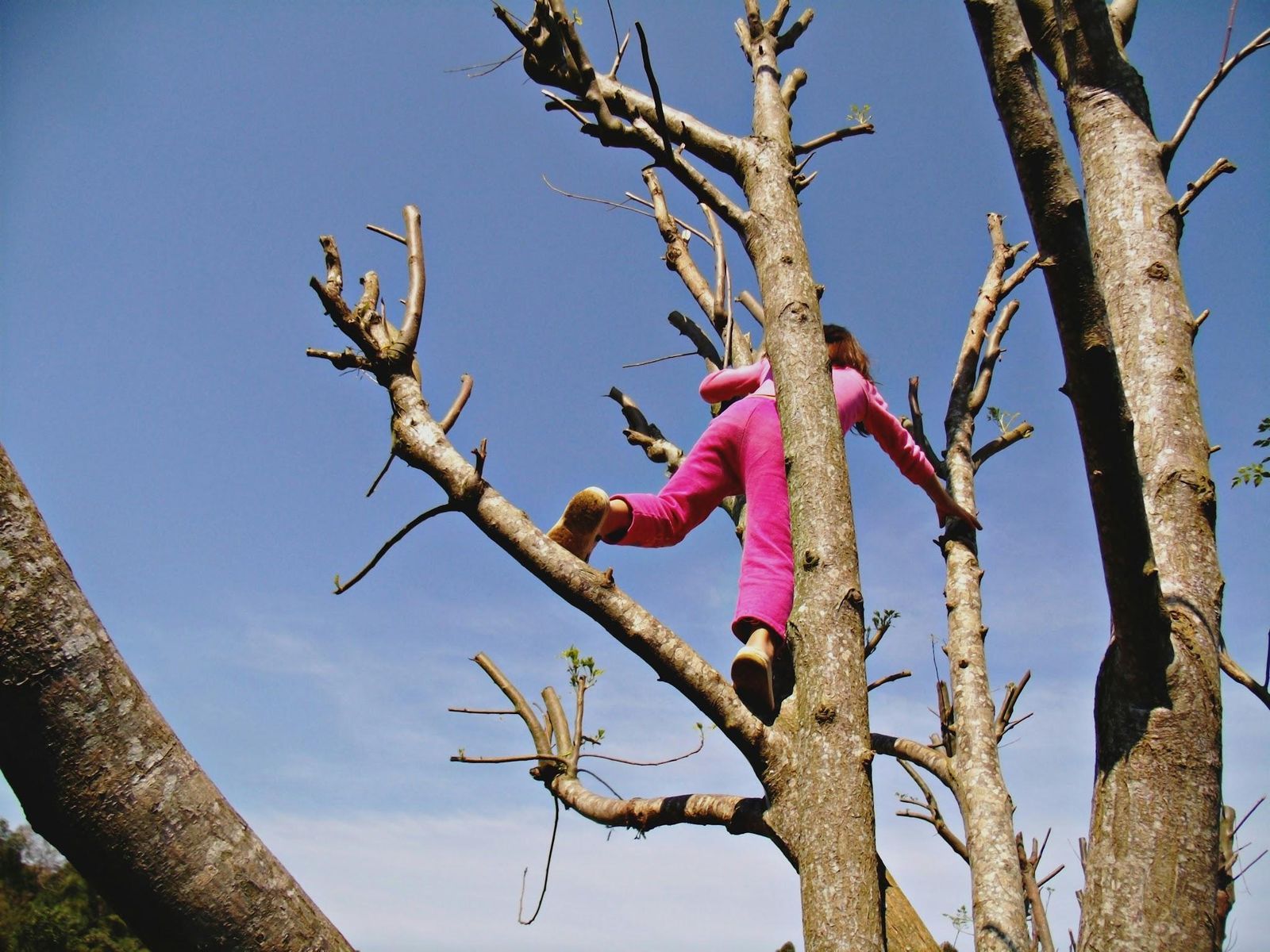
Image: Victória Kubiaki

When you are a kid, climbing a tree is decidedly an adventure. There was a time when this was considered a universal childhood activity in America, even encouraged as a playful challenge, since mid-century parenting often embraced manageable risk.

But current safety standards and greater awareness of injury risks have dramatically reduced these kinds of unsupervised play environments.

12
Casually hanging out in abandoned buildings
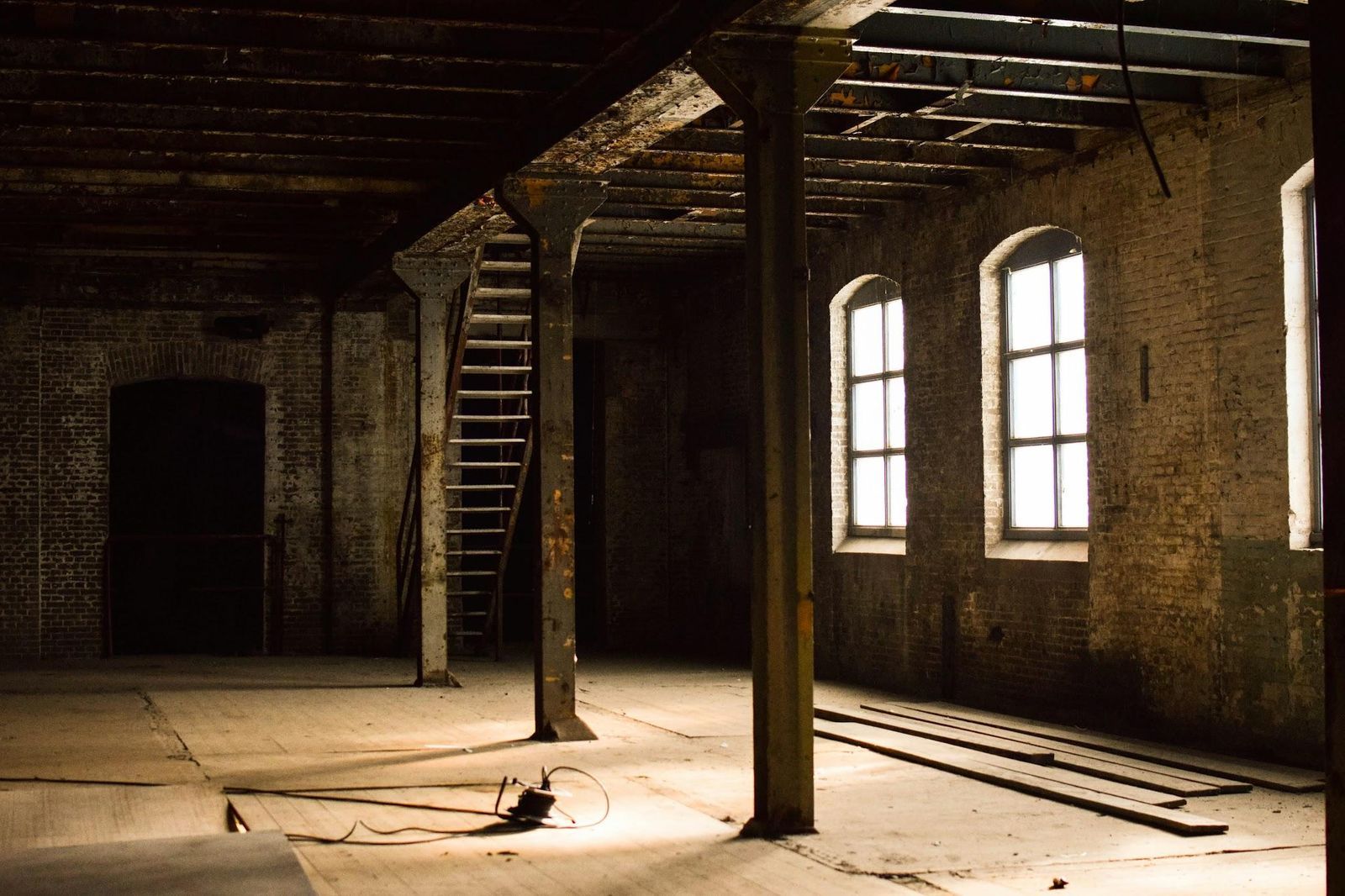
Image: Ljubica

Another tempting area for children happened to be empty lots, half-built structures, and abandoned buildings . It was difficult to keep out curious and brave kids. This pastime is not entirely eradicated today, although it seems to be teenagers or young adults who engage in it.

13
Riding in cars without seatbelts
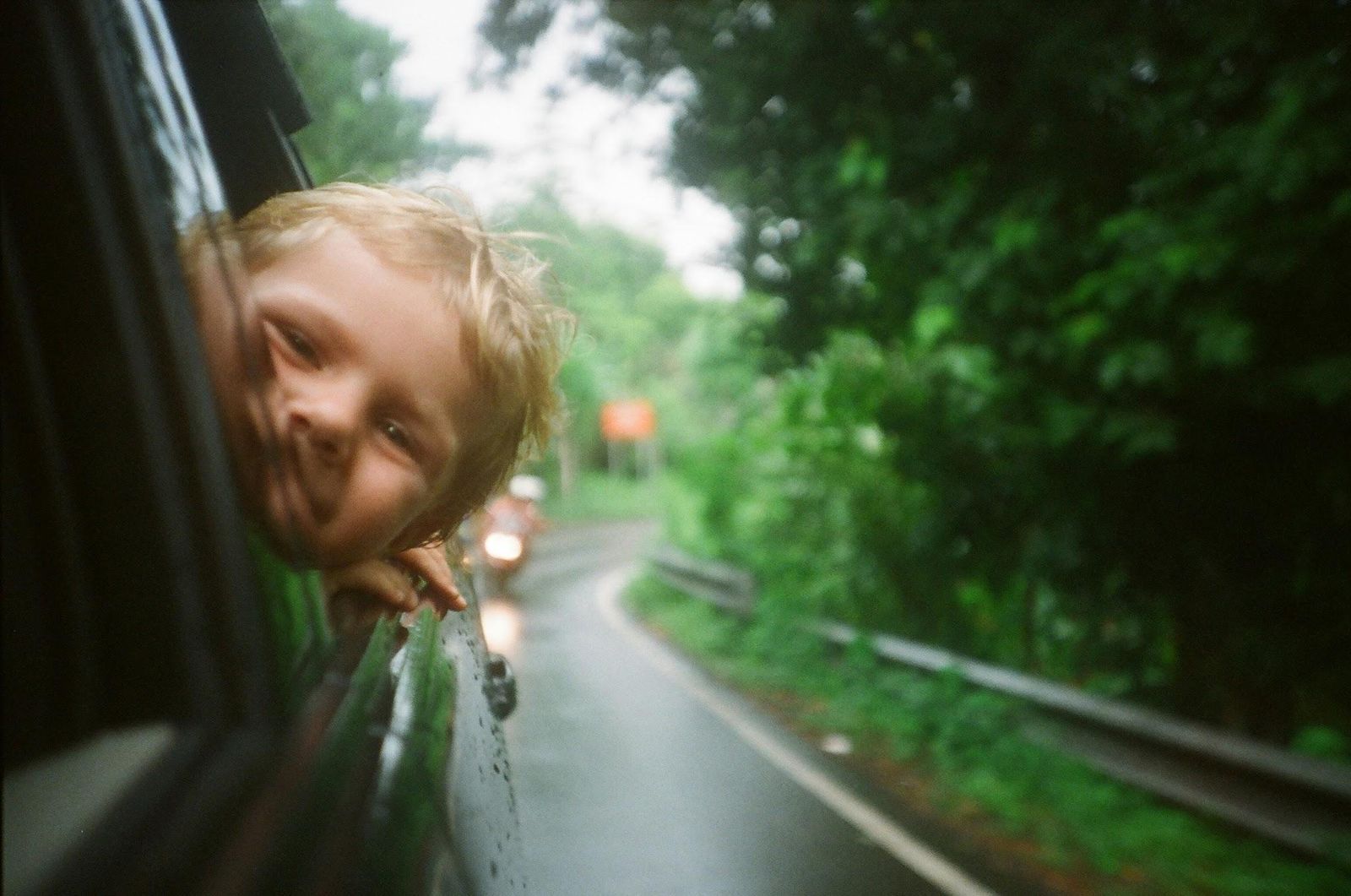
Image: Anton Luzhkovsky

For decades, families piled into cars without buckling up, simply because seatbelts weren’t standard equipment. Although basic seatbelt designs existed earlier, widespread adoption didn’t begin until the late 1950s and 1960s.

Even then, many Americans resisted using them, seeing belts as unnecessary or uncomfortable . Laws requiring seatbelt use didn’t become common until the 1980s and beyond, meaning generations of kids grew up riding freely in the back seat.

14
Playing in flooded streets after a storm
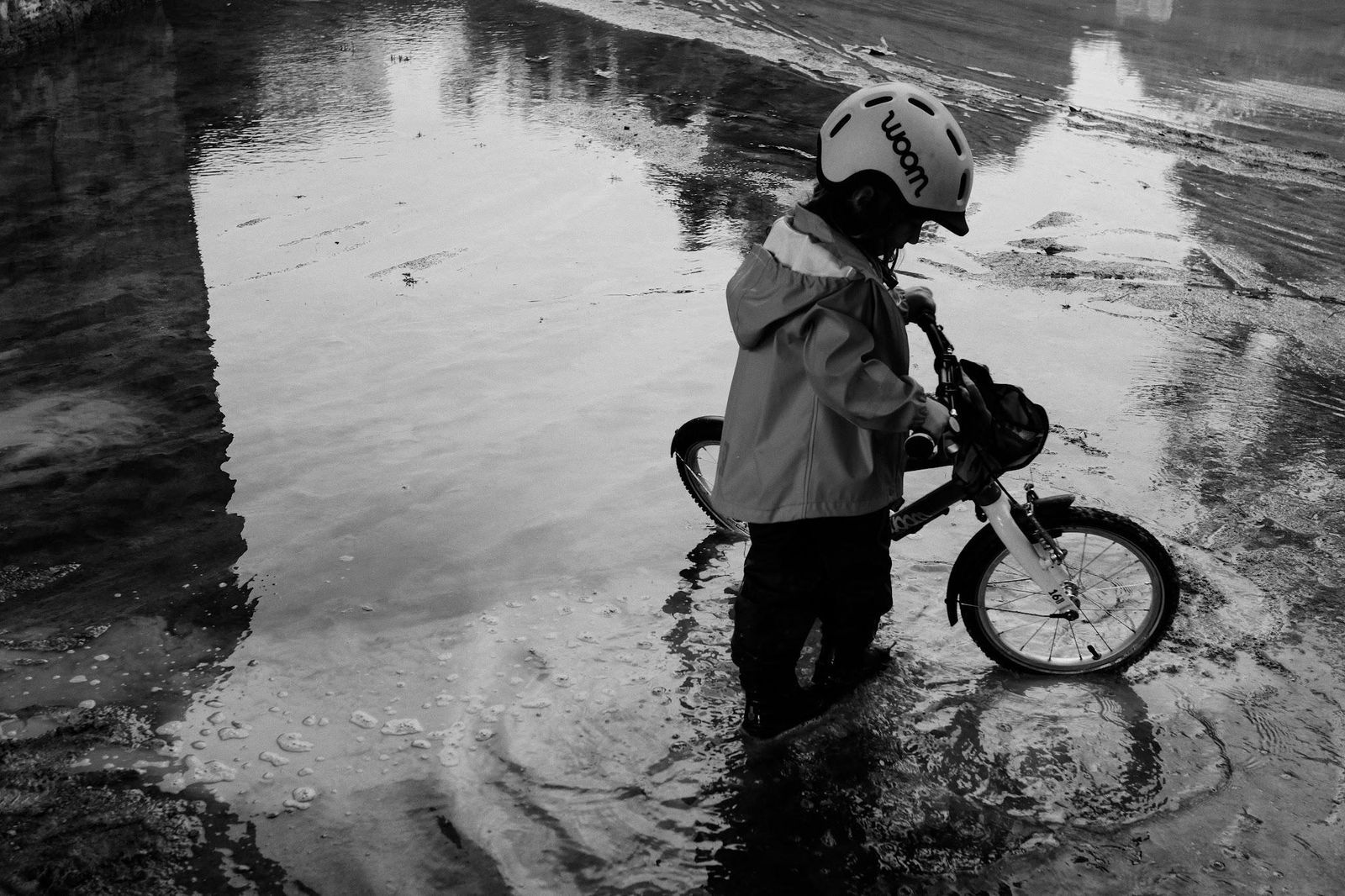
Image: Ayla Meinberg

Children once treated flooded streets like temporary playgrounds. Heavy rain expanded the available activities for a suburban child. They could splash barefoot through puddles or float makeshift boats down rushing gutters.

Over time, public health campaigns highlighted dangers such as contaminated runoff, hidden debris, electrical hazards, and traffic risks. Enough to scare modern parents!
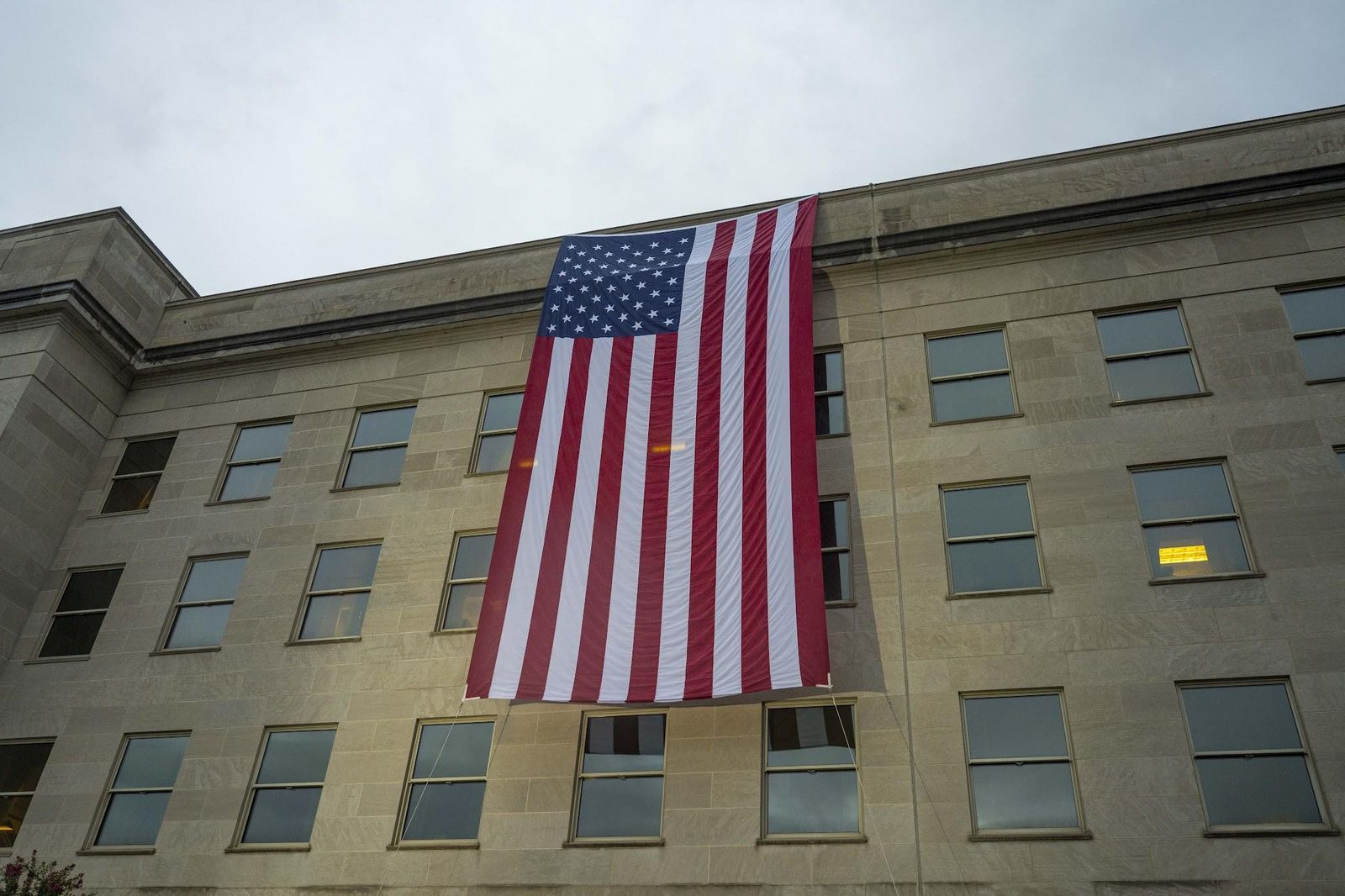
Culture Culture 6 min read

The Five-Sided Puzzle Palace

A man lived there secretly? Stunning facts about the Pentagon

Image: Touch Of Light, CC BY-SA 4.0, via Wikimedia Commons

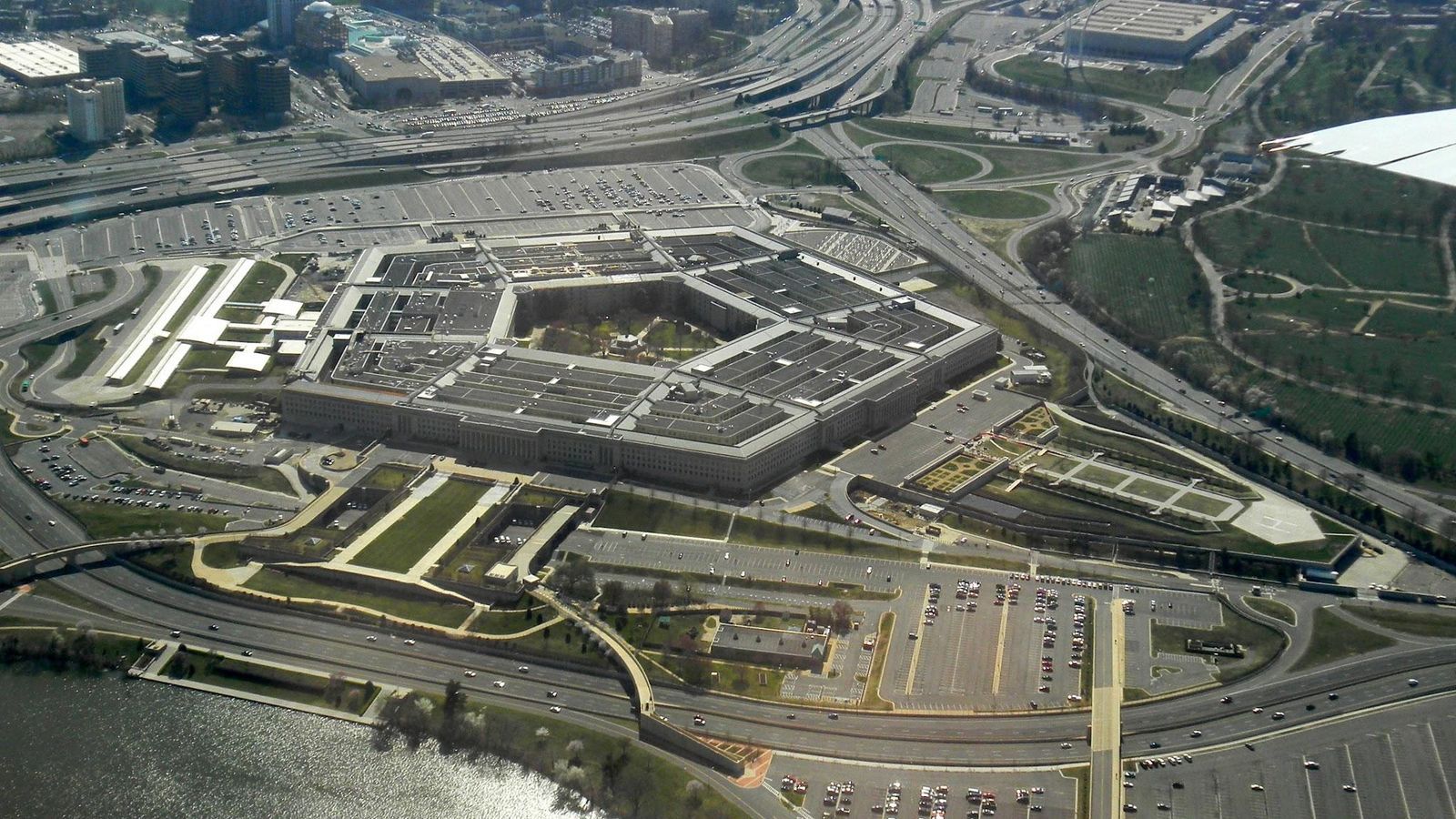
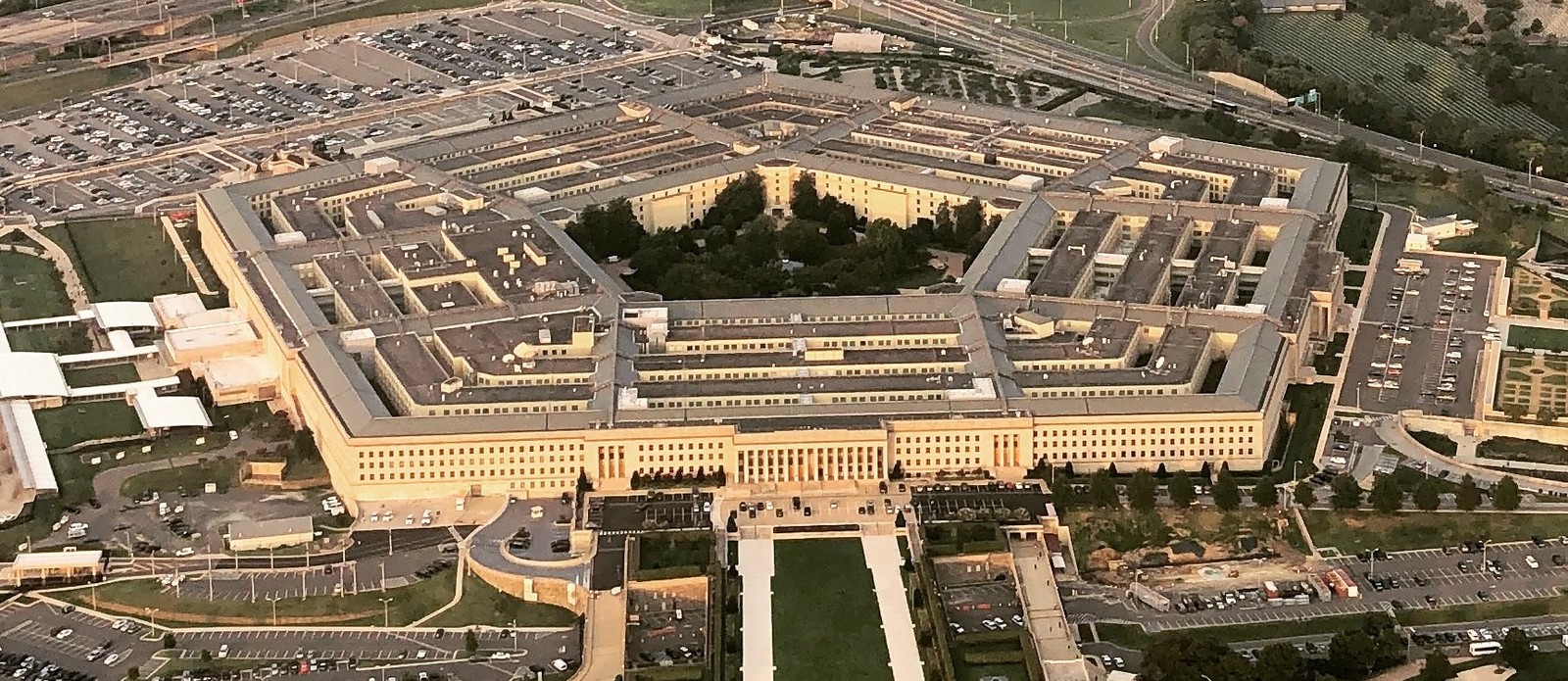
Did you know that construction on the Pentagon building began on September 11, 1941, exactly 60 years before it was attacked? The home of the US Department of Defense has stood for more than 80 years. Although its iconic shape is intriguing in itself, it hides deeper secrets that many Americans have never heard of. Did you know it feeds 26,000 people a day—at a McDonald's, a Five Guys, a Taco Bell, and over 30 other restaurants? Or that a man secretly lived inside its walls for years? Let’s dive into the Pentagon building’s secrets.

1
A renovation project saved thousands of lives on 9/11

Image: Office of the Secretary of Defense - Public Affair, Public domain, via Wikimedia Commons

On September 11, 2001, American Airlines Flight 77 struck the Pentagon at 9:37 a.m., killing 189 people. Few people know this part: the death toll could have been much higher. But there was a renovation project underway at the time of the attacks.

The Pentagon’s five-sided structure is divided into five "wedges," and workers had been renovating them one at a time. Flight 77 struck the wedge that had just been completed. Of the 4,500 people who normally worked in that section, only about 800 had moved back in. Without the reinforced construction and the incomplete occupancy, experts believe the casualties would have been catastrophically higher.

2
The Cold War and the hot dog stand

Image: Anete Lusina

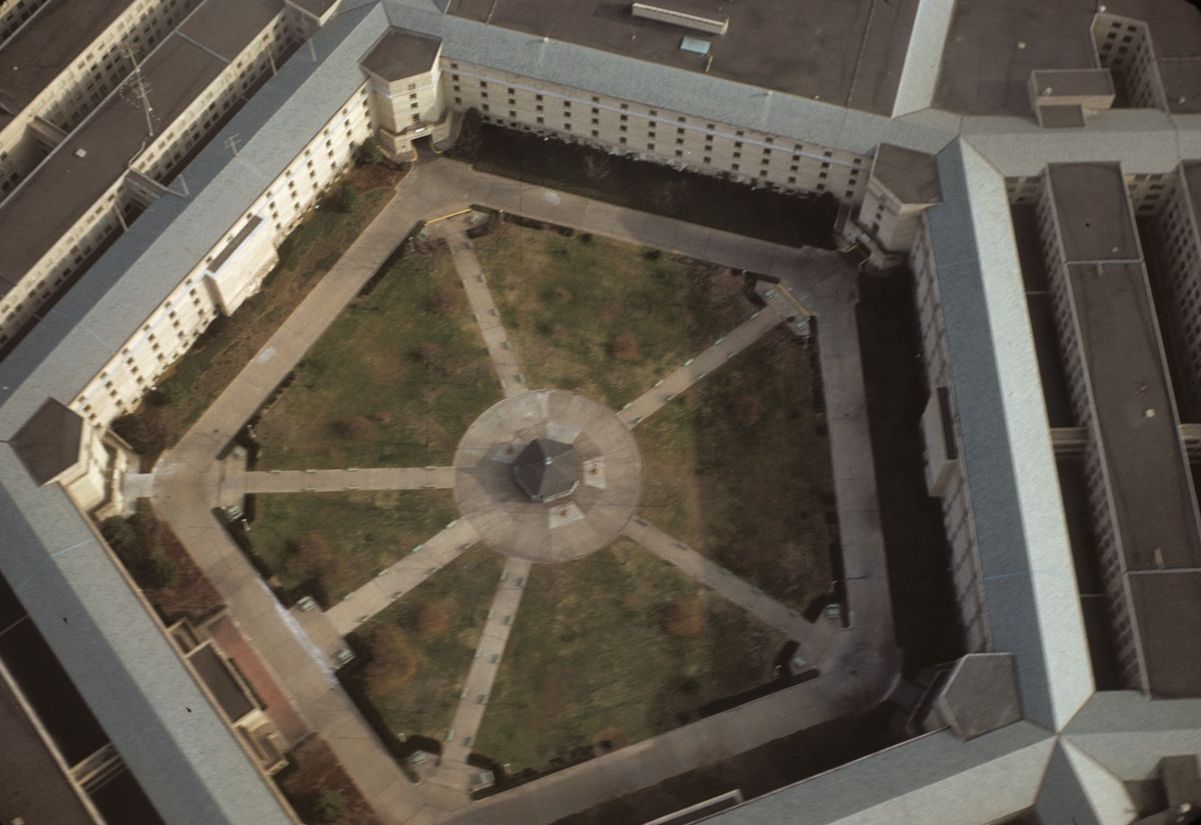
In the middle of the Pentagon’s five-acre center courtyard once stood a modest hot dog stand. According to a Cold War legend (one still retold by official Pentagon tour guides on every public tour), between the 60s and the 80s, Soviet satellite images tracked large groups of high-ranking military officials converging on that small building at the same time every day.

Soviet intelligence reportedly concluded the structure must be the entrance to some underground bunker in America. In reality, all it did was sell lunch. In 2006, the original stand was torn down, and a sandwich shop was built in its place.

3
Its construction began on September 11th, exactly 60 years before the attack

Image: Aber, Marilyn K., Public domain, via Wikimedia Commons

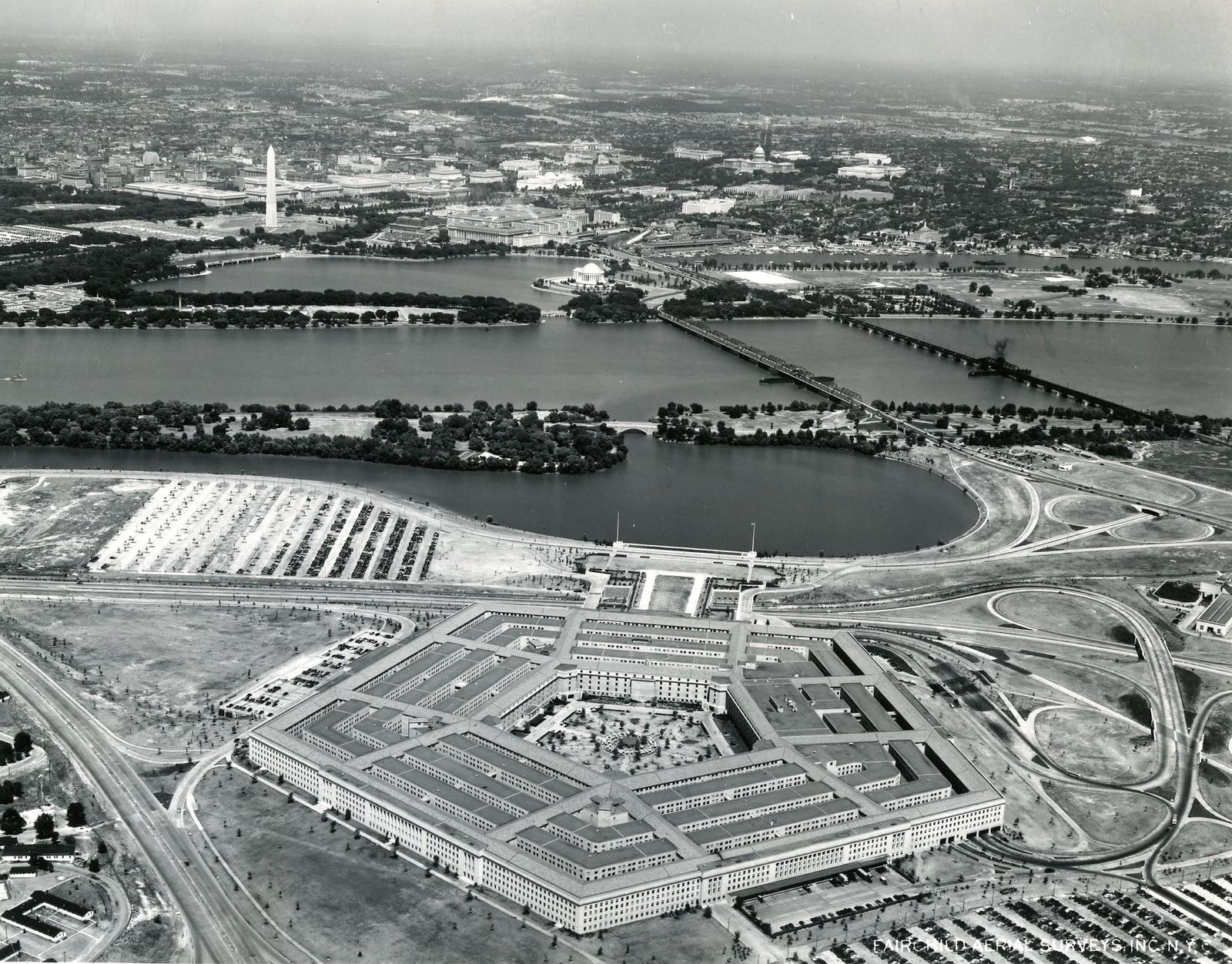
Builders broke ground on the Pentagon on September 11, 1941. That was exactly 60 years to the day before the September 11, 2001, terrorist attacks that would strike the same building.

Construction had been ordered by Army Brigadier General Brehon Somervell, who wanted a permanent headquarters for the Defense Department to replace its then-17 scattered offices across Washington, D.C.

The project was extraordinarily ambitious: plans called for the world’s largest office building to be completed in just 16 months. In the end, the conception, design, and construction of the entire Pentagon building took a total of 15 months.

4
The same person oversaw its construction and the Manhattan Project

Image: U.S. Army, Public domain, via Wikimedia Commons

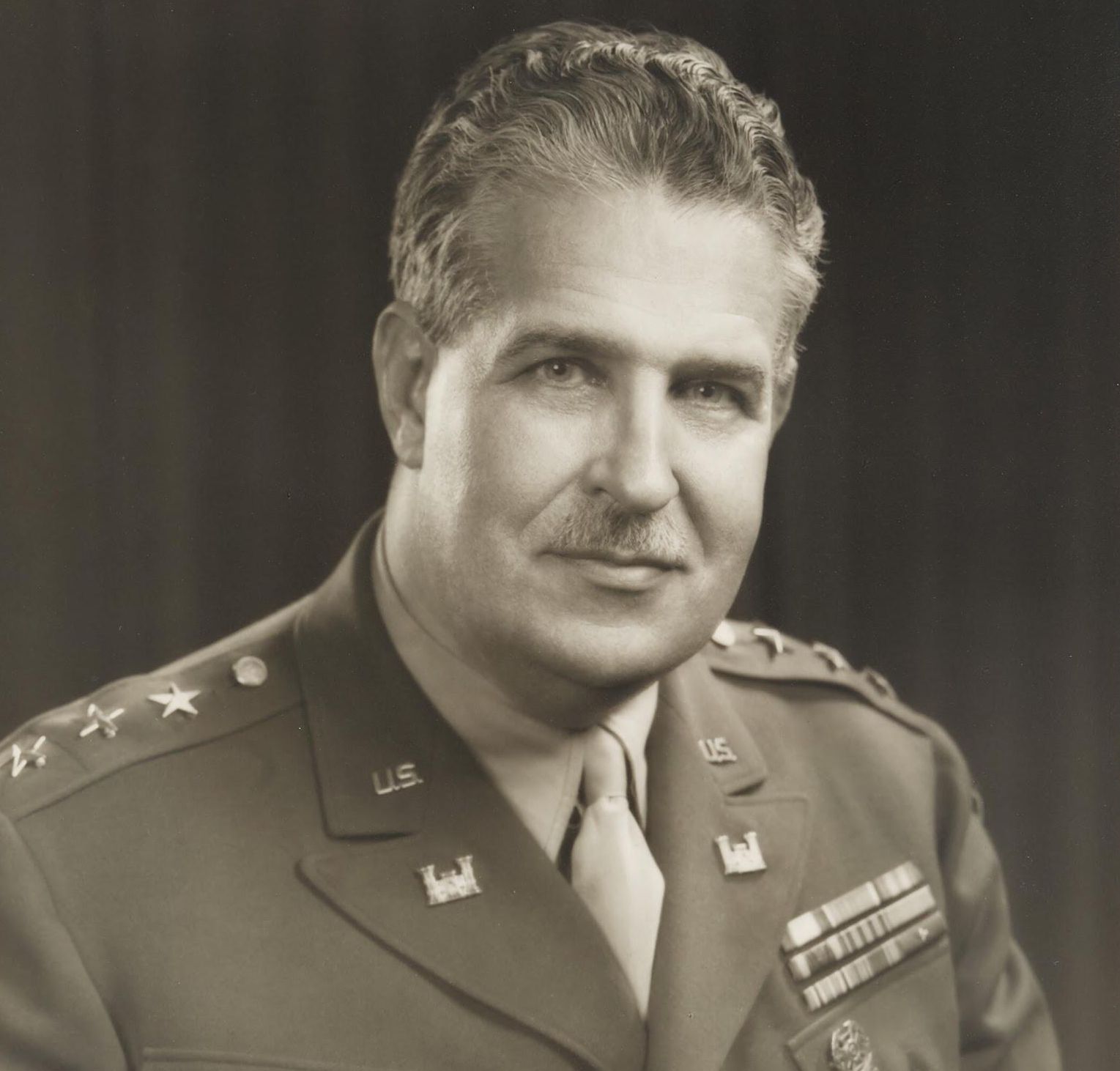
Colonel Leslie Groves of the Army Corps of Engineers took charge of Pentagon construction in August 1941. He worked six days a week and drove his team relentlessly, at one point employing more than 15,000 workers around the clock.

When the Pentagon was finished in January 1943, Groves was assigned to lead the Manhattan Project, America’s secret program to build the atomic bomb . His deputy, Captain Robert Furman, followed him into the Manhattan Project as chief of foreign intelligence. Together, the men who built the world’s largest office building went on to produce the weapon that ended World War II.

5
Why is it shaped like that?

Image: Boston Public Library, CC BY 2.0, via Wikimedia Commons

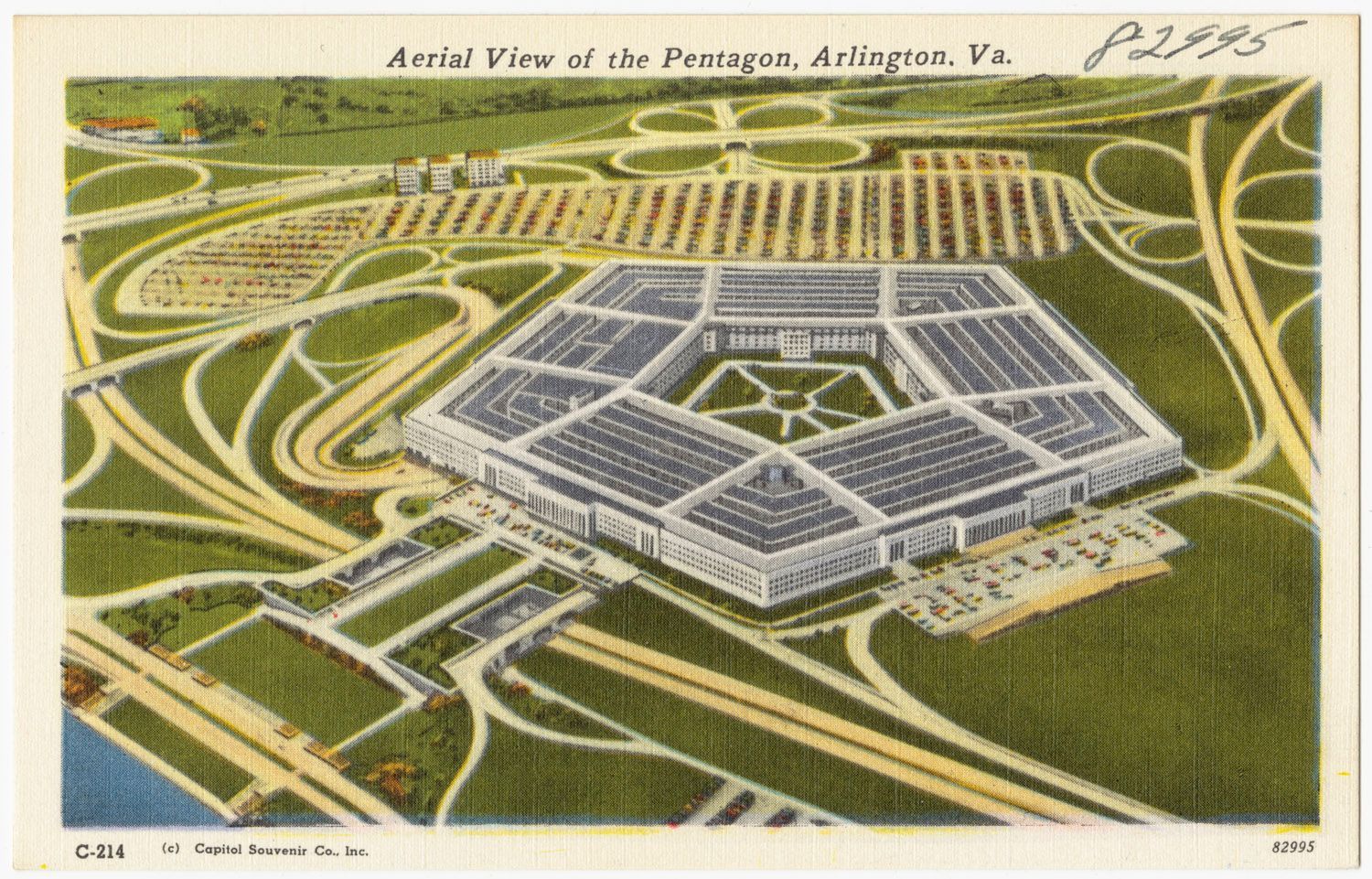
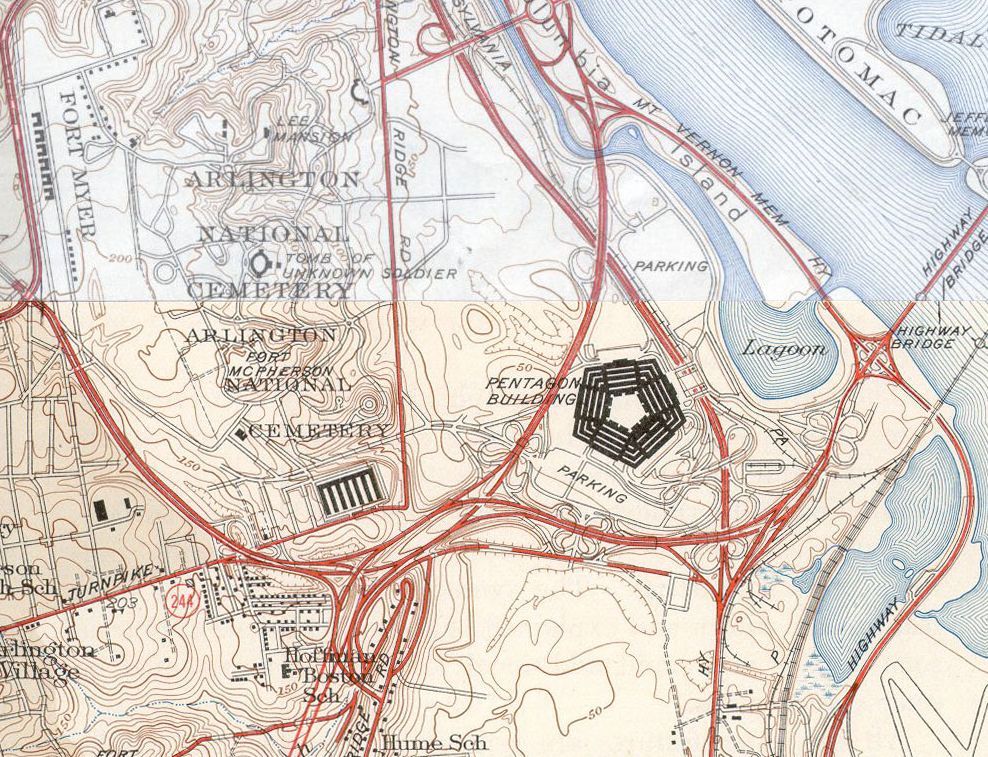
The Pentagon’s iconic five-sided shape was the consequence of a geographic accident. The original site selected for the building, near Arlington Cemetery, **happened to be bordered on five sides by roads. **Architects designed the structure to fit those boundaries, producing a pentagonal floor plan. Then President Franklin D. Roosevelt intervened: worried the massive building would obstruct the view of Washington, D.C. from Arlington, he ordered the site moved to its current location along the Potomac River. But the five-sided design had already been drawn up, and nobody changed it.

6
It was the first desegregated building in Virginia

Image: https://ddotlibrary.omeka.net/items/show/100, Public domain, via Wikimedia Commons

When the Pentagon was designed in 1941, segregation was the law in Virginia. Original plans called for doubled bathroom facilities: separate ones for Black and white employees, as required by Virginia statute. But President Roosevelt had signed Executive Order 8802 in June 1941, prohibiting racial discrimination in federal employment and government contracting.

As a federal building, the Pentagon was exempt from Virginia law. It became the only building in the state where segregation was not enforced. A fully desegregated federal workplace that opened in 1943. The doubled bathrooms were built anyway, as the plans were too far along to revise, but were never used as separately designated spaces.

7
Its construction was surprisingly frugal and incredibly fast

Image: See page for author, Public domain, via Wikimedia Commons

Ground broke on September 11, 1941, and construction finished on January 15, 1943, just 16 months later. More than 15,000 workers were on site around the clock. Wartime office shortages were so severe that employees moved into completed wings before the rest of the building was finished. Steel was too scarce to use extensively, so builders relied almost entirely on reinforced concrete. The 689,000 tons of sand and gravel required came directly from the nearby Potomac River, cutting transportation costs. The project was budgeted at $35 million, but the final bill was $63 million, which would translate to over $900 million in today’s dollars.

8
You can walk between its farthest points in only 7 minutes

Image: Bea A Carson, CC0, via Wikimedia Commons

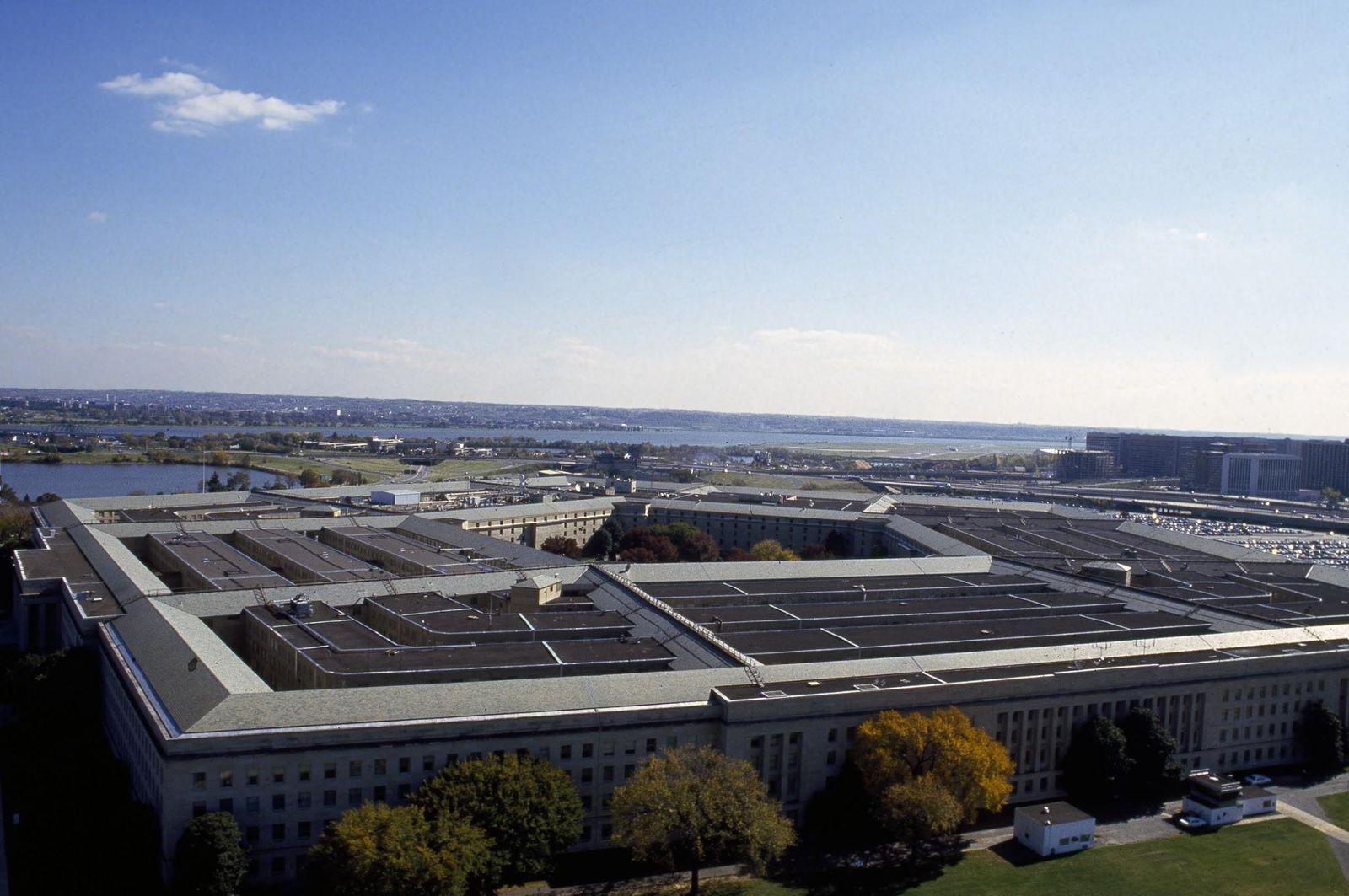
The Pentagon is the world’s largest low-rise office building: 6.5 million square feet of space, which is three times the total floor area of the Empire State Building. Each of its five outer walls is 921 feet long. It has 7,754 windows and 17.5 miles of corridors. Approximately 26,000 military and civilian employees report for work there every day.

Despite that scale, the building’s concentric ring design is so efficient that it takes only about seven minutes to walk between its two farthest points.

9
The man who secretly lived inside its walls

Image: Carol M. Highsmith, Public domain, via Wikimedia Commons

During construction, Colonel Groves drove his deputy, Captain Robert Furman, so relentlessly that Furman rarely left the building. To cope, Furman had contractors build him a small, windowless apartment hidden inside the walls of the Army’s Ordnance Division. In this private room, he could sleep and shower without leaving the premises.

When construction ended and personnel dispersed, knowledge of the hidden room was never passed on to building management. Months later, when Furman returned to Washington on Manhattan Project intelligence business, he found the apartment undiscovered and exactly as he’d left it.

For over a year, he would slip back to the Pentagon, pop open a wall panel, spend the night, and emerge in the morning with his suitcase. He was finally caught in 1943 and forced to surrender the keys. It was never disclosed whether the secret apartment was maintained or eventually absorbed back into the official floor plans.

10
It houses over 30 restaurants, including everyone's favorite chains

Image: Harrison Keely, CC BY 4.0, via Wikimedia Commons

The Pentagon feeds roughly 26,000 people a day, and its dining options read less like a military headquarters and more like a mall food court. The main Concourse Food Court, which opened in September 2009 and seats 875 people, is the largest of several dining areas.

Confirmed chains currently inside the building include McDonald’s, Five Guys, Subway, Popeyes, Starbucks (multiple locations), Dunkin’ (two locations), Panera Bread, Taco Bell, Panda Express, Baskin-Robbins, Potbelly, Jamba Juice, and Moe’s Southwest Grill, among others. The building also houses a CVS pharmacy, a florist, a jeweler, and a dry cleaner. In the summer of 2024, Potbelly became the first restaurant to open in the center courtyard. Yes, the very spot where the legendary Cold War hot dog stand once stood.

General General 3 min read

Say cheese!

Did you know your phone's camera can do this?

Image: César Guadarrama Cantú

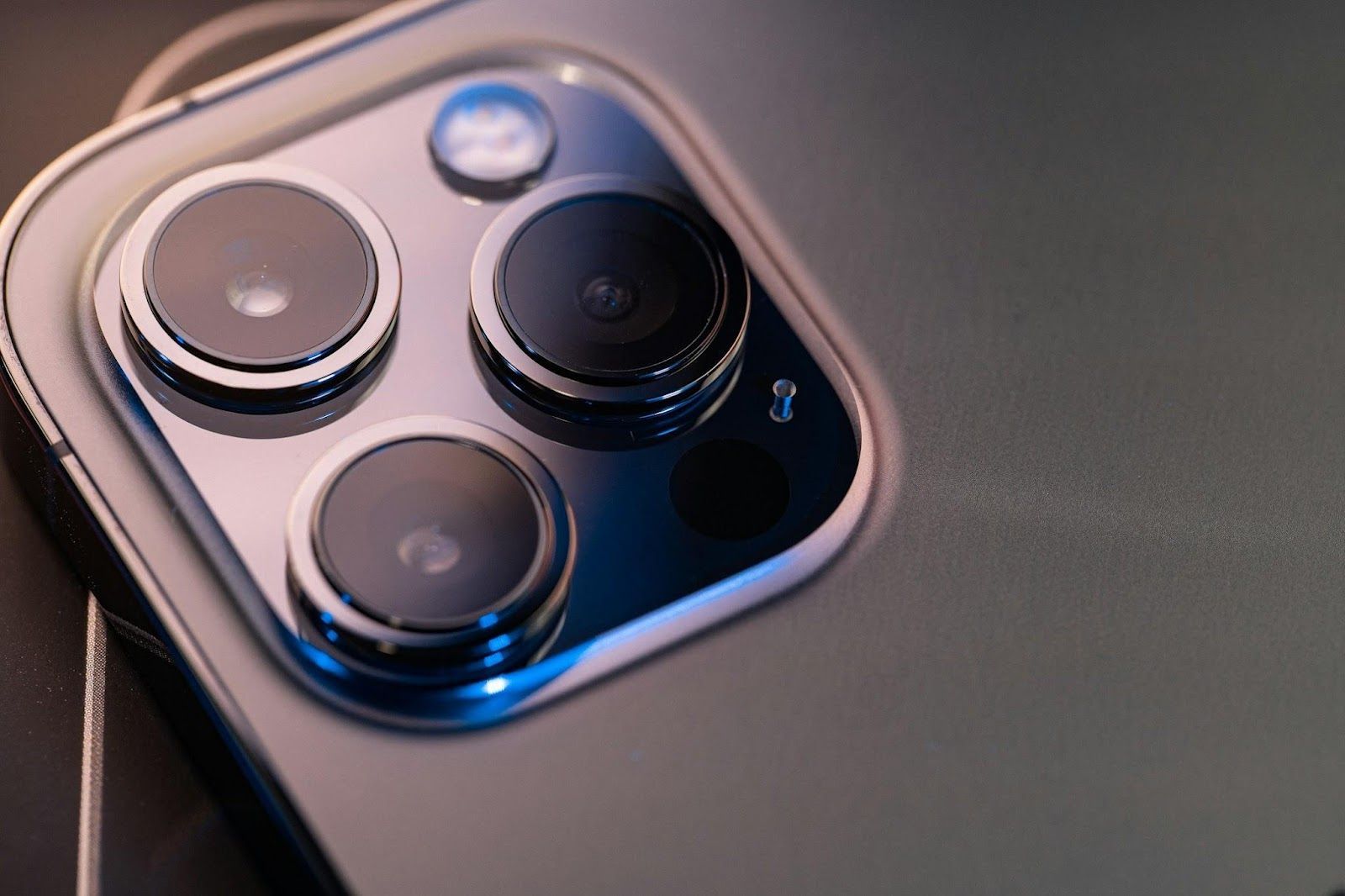
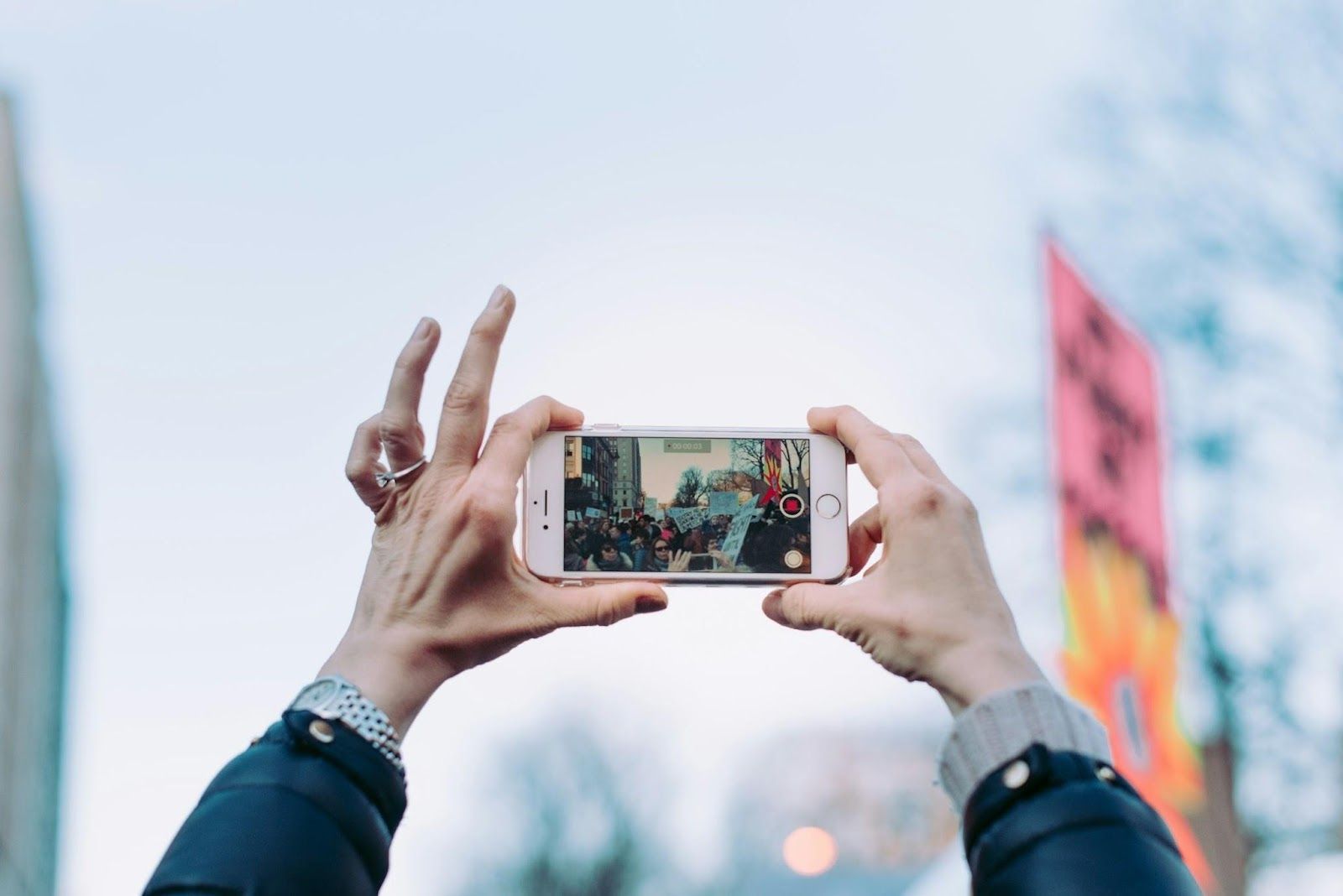
Each year, our smartphones’ cameras improve, with superior lenses and new features that allow savvy users to take incredible photos. Many of those same capabilities are already available on your device. How many of these tricks do you know?

1
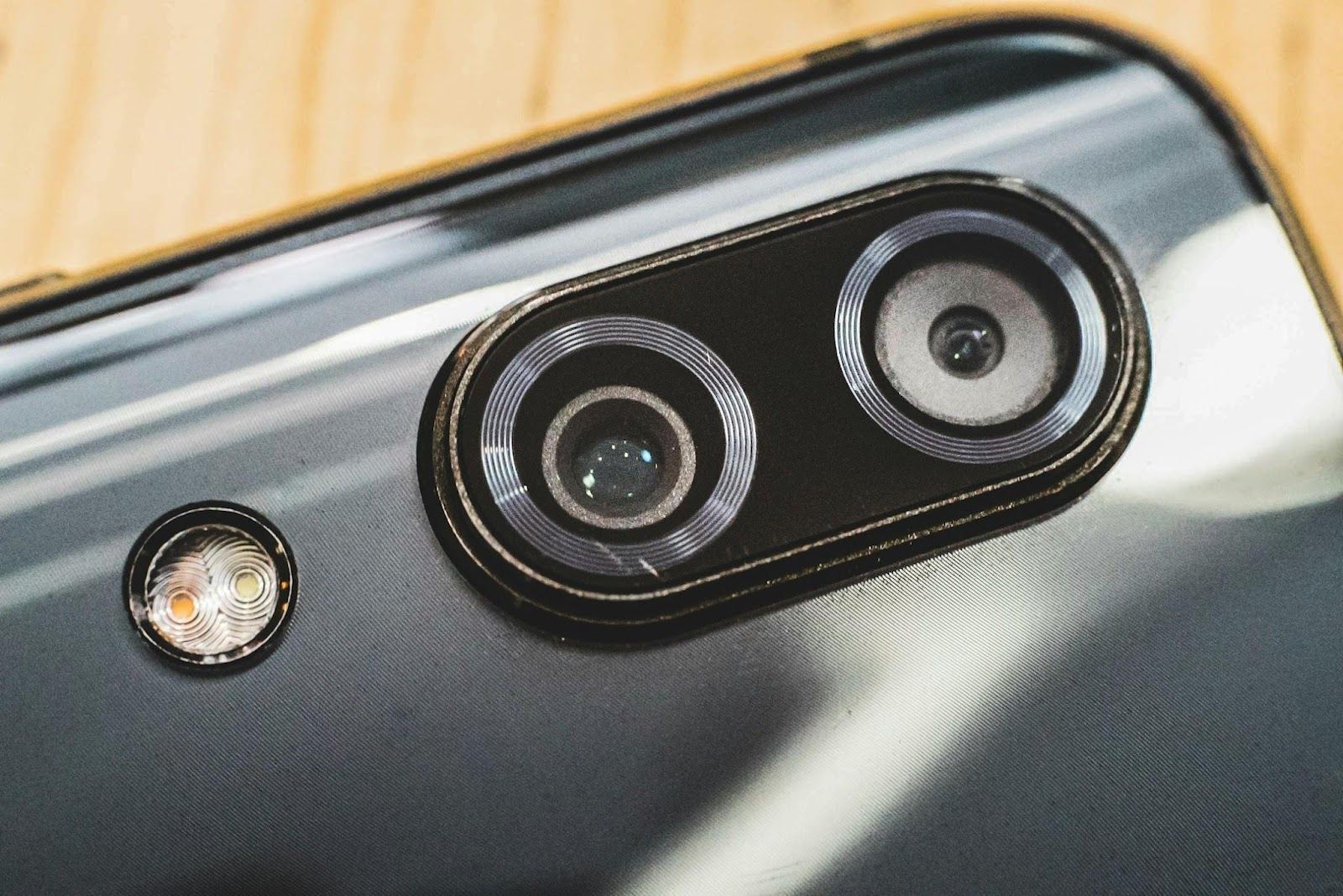
Clean your lens

Image: Mika Baumeister

We’ll start with probably the most essential—and somehow most overlooked—tip: take a moment to clean your smartphone’s camera lens. Over time, it can accumulate dust and smudges, which can result in hazy or blurry photos.

Give it a quick wipe with a soft, lint-free cloth . It can make a significant difference in the clarity of your shots.

2
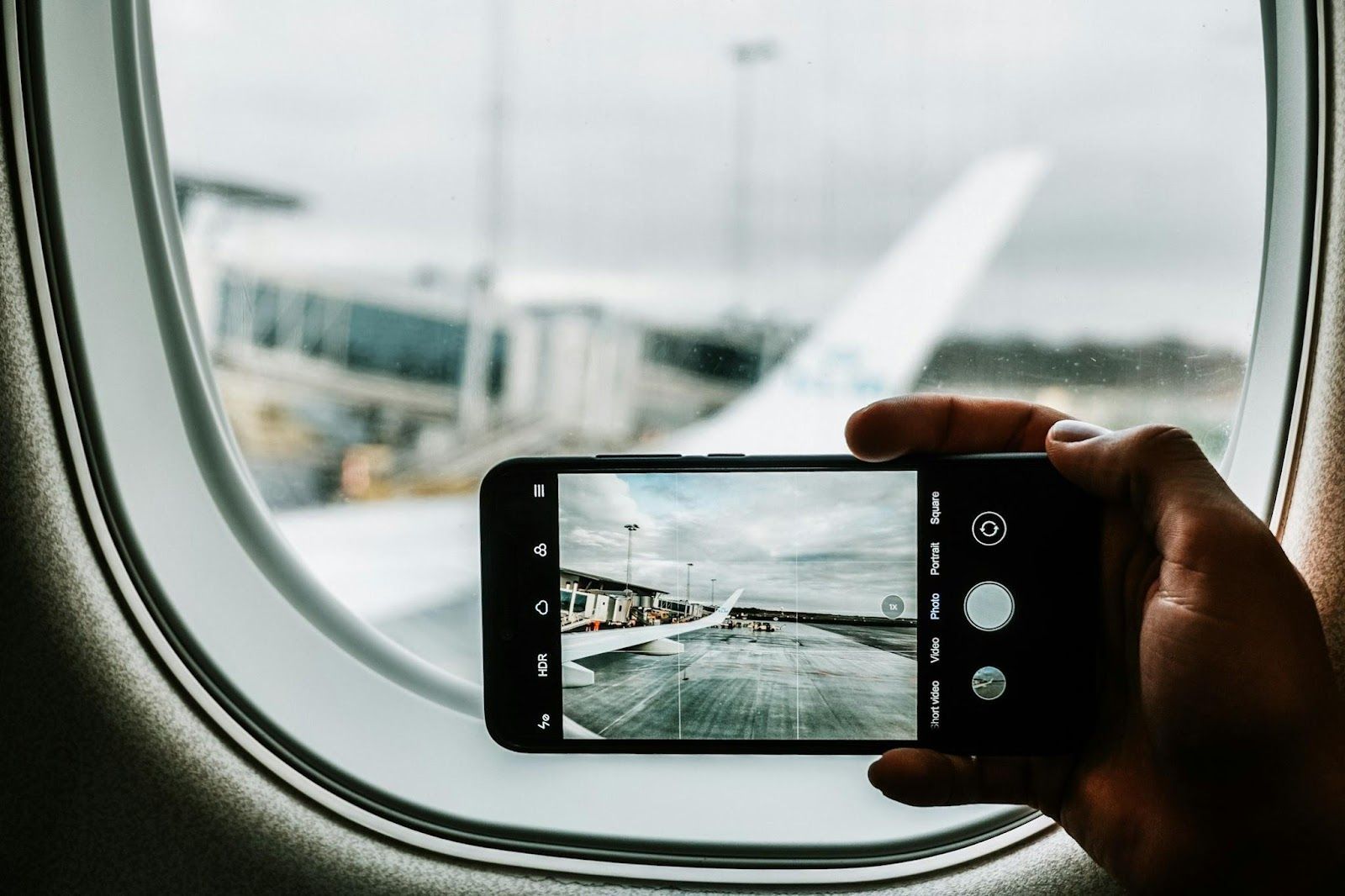
Investigate your camera app

Image: Brett Jordan

Almost every single smartphone comes with a default camera app that’s user-friendly and packed with features. Take some time to explore it , learn how to switch between photo and video modes, and familiarize yourself with settings like Portrait Mode, Night Mode for low-light shots, and Panorama Mode for landscapes.

3
Use gridlines

Image: Jonathan Kemper

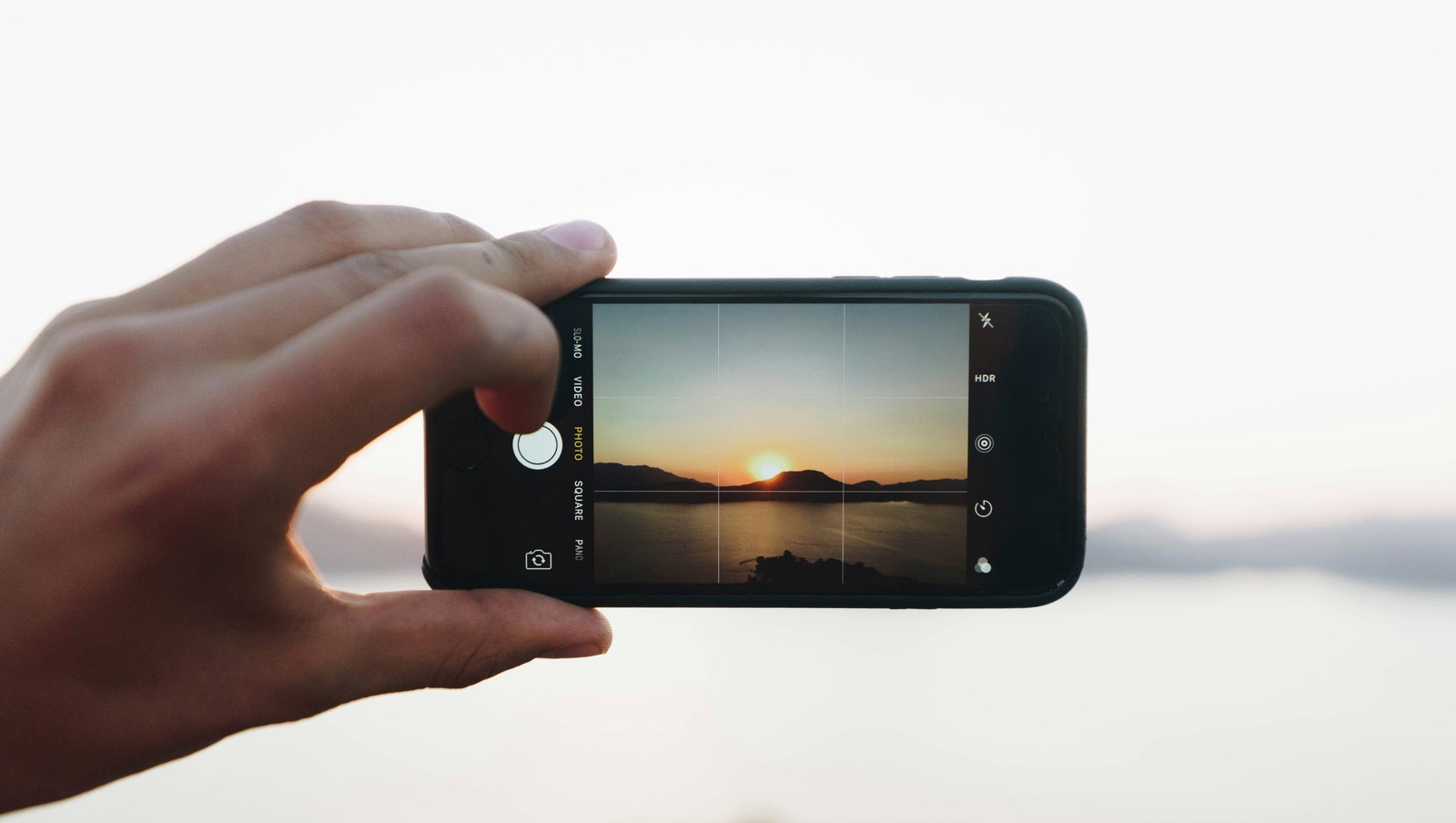
Gridlines allow you to center your focal points and enhance the visual appeal of your photos. Most mobile camera apps let you turn them on easily. These gridlines strategically divide your screen into thirds , both horizontally and vertically, adding balance and symmetry to your shot .

4
Focus and exposure control

Image: François Genon

Focus and exposure are two of the most important settings you can adjust in a manual camera to achieve different effects in photography. Fortunately, both functions are available on most modern smartphones.

By playing with different focus and exposure points, you can highlight a specific subject against a blurred background or ensure a well-balanced shot in difficult lighting conditions.

5
Lighting

Image: Ben White

Always try shooting in natural light, often referred to as available light, whenever the opportunity arises. Natural light gives a gentle, even illumination that can significantly enhance the quality of your photos.

Avoid harsh, direct sunlight, which can create intense and unflattering shadows, potentially leading to overexposed or underexposed areas. If you're shooting in low light, rest your phone on a flat surface to stabilize it for long exposures.

6
Play with composition

Image: Eaters Collective

Experiment with different angles and perspectives to enhance your subject. Don't be afraid to get low or high for a unique viewpoint. Also, pay attention to what’s in the background and eliminate any distractions that might detract from your subject.

7
Take pictures often

Image: Ferdinand Stöhr

Practice makes perfect. Since your phone is always with you, it’s easy to integrate photography into your daily routine. Whether you snap a selfie or take a few shots on your way to work, there’s no wrong way to be a smartphone photographer. Great photos often come from everyday life.

8
Take many shots

Image: The Free Birds

Long gone are the days when you had only 36 exposures in your camera and had to choose each shot carefully. One of the best things about smartphones is that you can take as many photos as you want, and there is no need to print them to see the results . This makes it much easier to learn and improve as you go.

9
Avoid digital zoom

Image: Redd Francisco

Digital zoom generally produces poor-quality images, even on the best smartphones. Avoiding it is one of the basic photography tips for taking better photos. Instead of using a digital zoom, simply move closer to your subject to maintain image quality.

10
Use HDR

Image: Kote Puerto

HDR stands for High Dynamic Range, and it’s a common feature on many smartphones. It enhances detail in both dark and light areas to provide a more balanced exposure . HDR prevents the sky from becoming too bright or the ground from appearing too dark, making it especially useful for landscape photography.

11
Set a high resolution

Image: TheRegisti

Simply put, the higher the resolution of your photo, the better quality it is . When taking pictures, try to get as close to the subject as possible, rather than zooming in. Take advantage of the higher pixel count.

12
Aspect ratio

Image: Alice Donovan Rouse

The aspect ratio determines the width and height of your photograph . The standard 4:3 ratio is versatile, but you can also choose widescreen 16:9 for a cinematic look or square 1:1 for Instagram-ready shots.

Explore more American facts

Choose your favorite category!

General
General

As American as apple pie—the very best America has to offer!

Culture
Culture

Delve into the astounding richness of American lore.

Geography
Geography

Hop in and explore vast and diverse American landscapes.

History
History

Discover the key moments that shaped the United States.